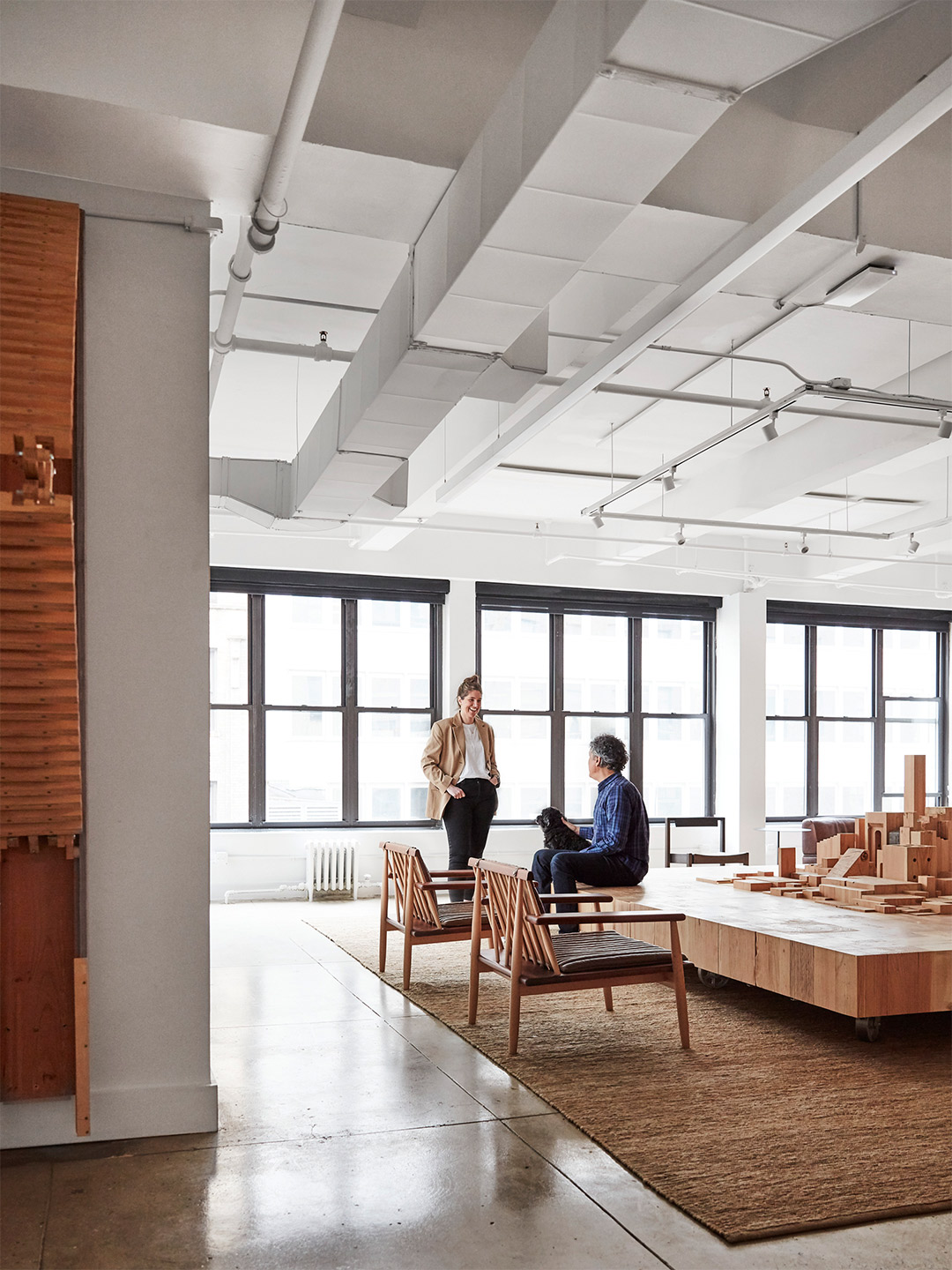
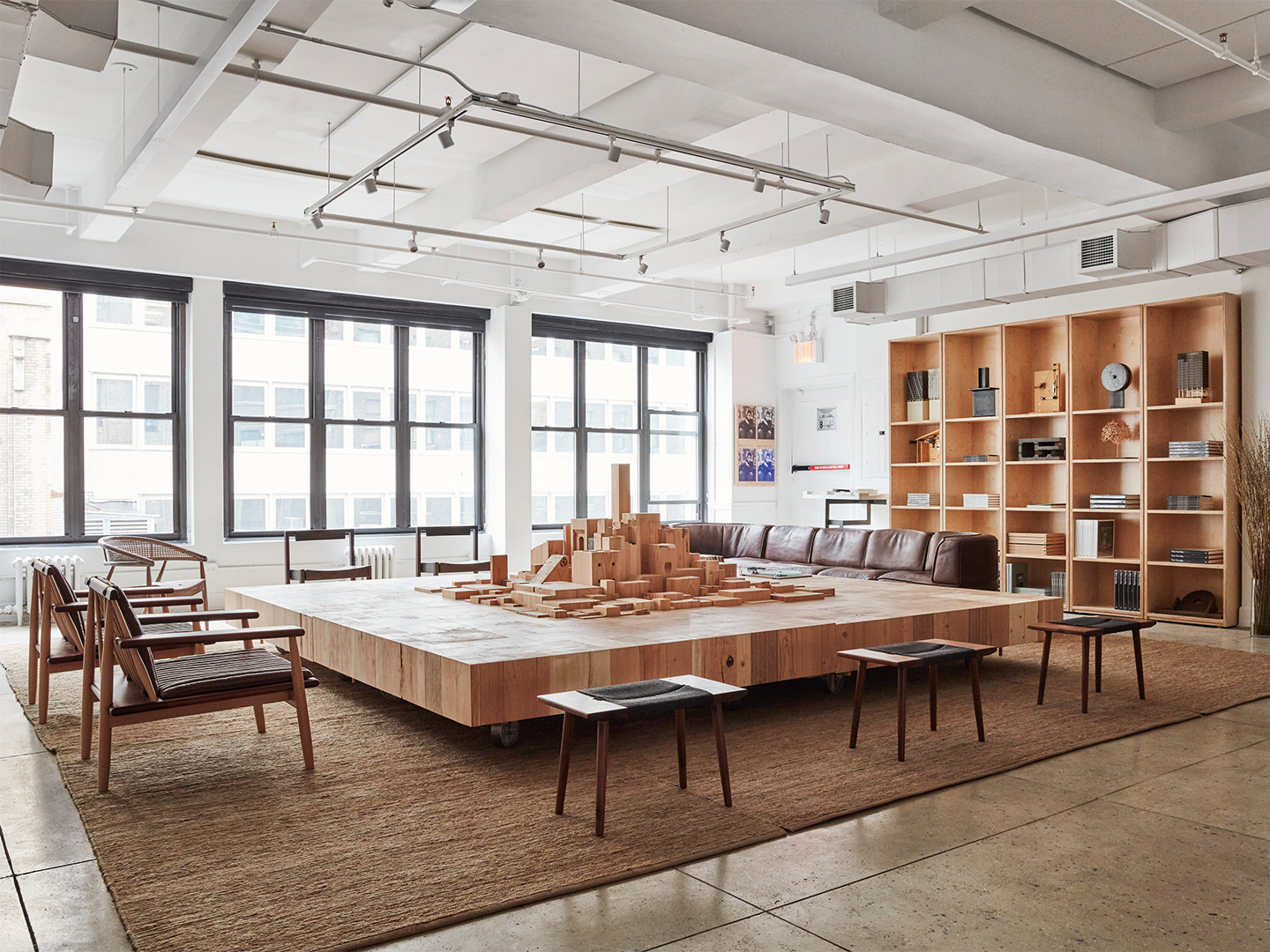
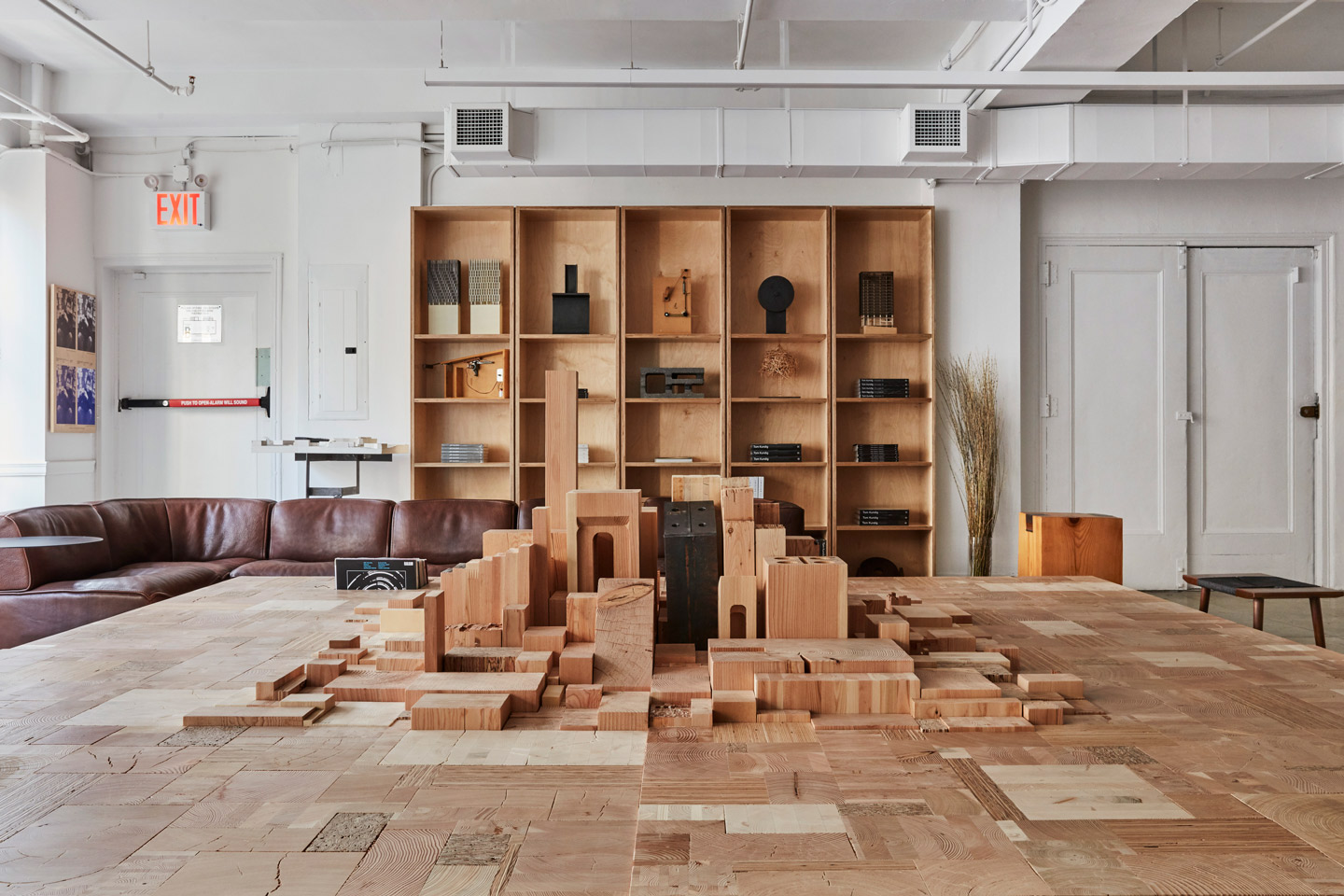
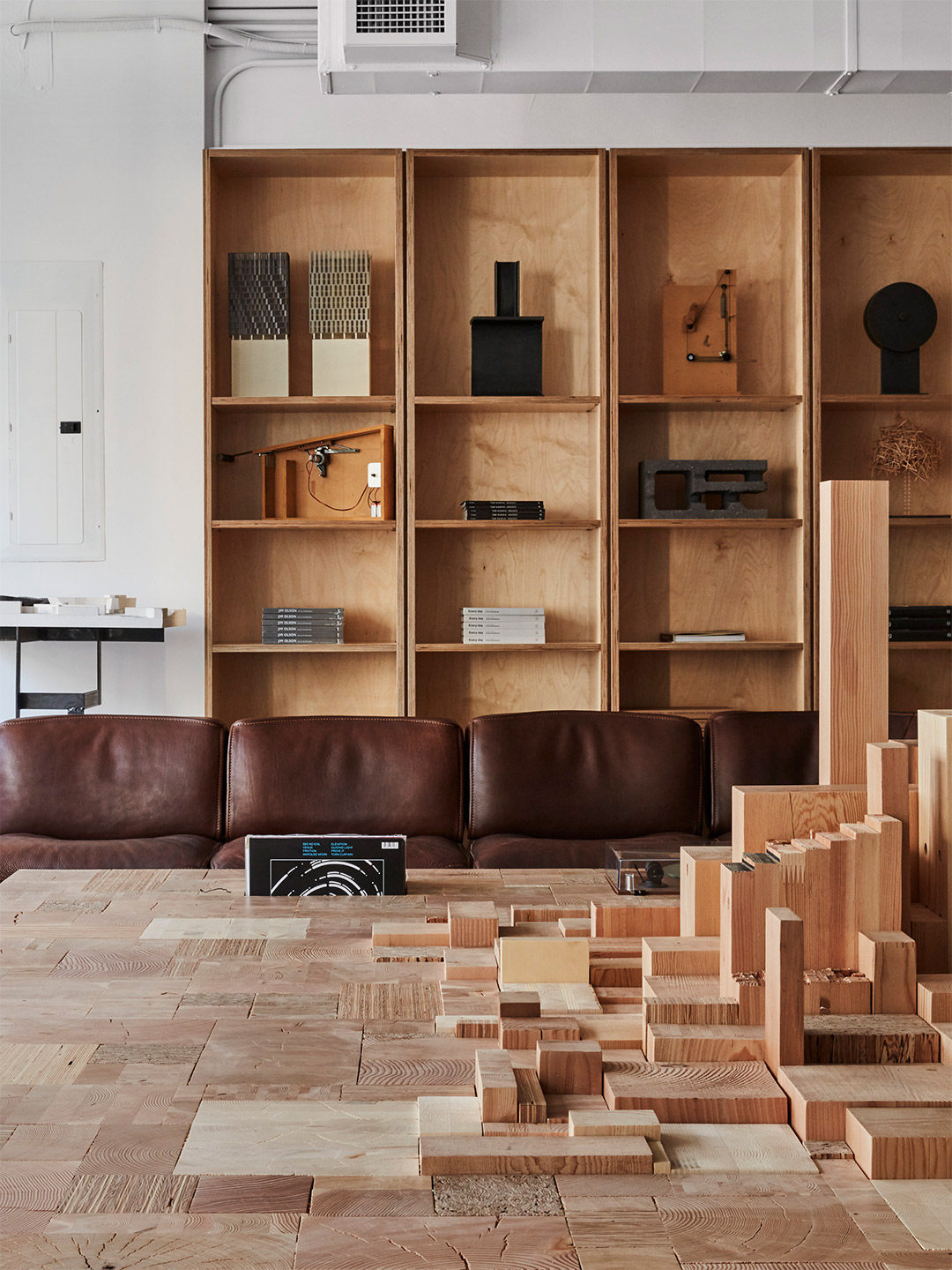
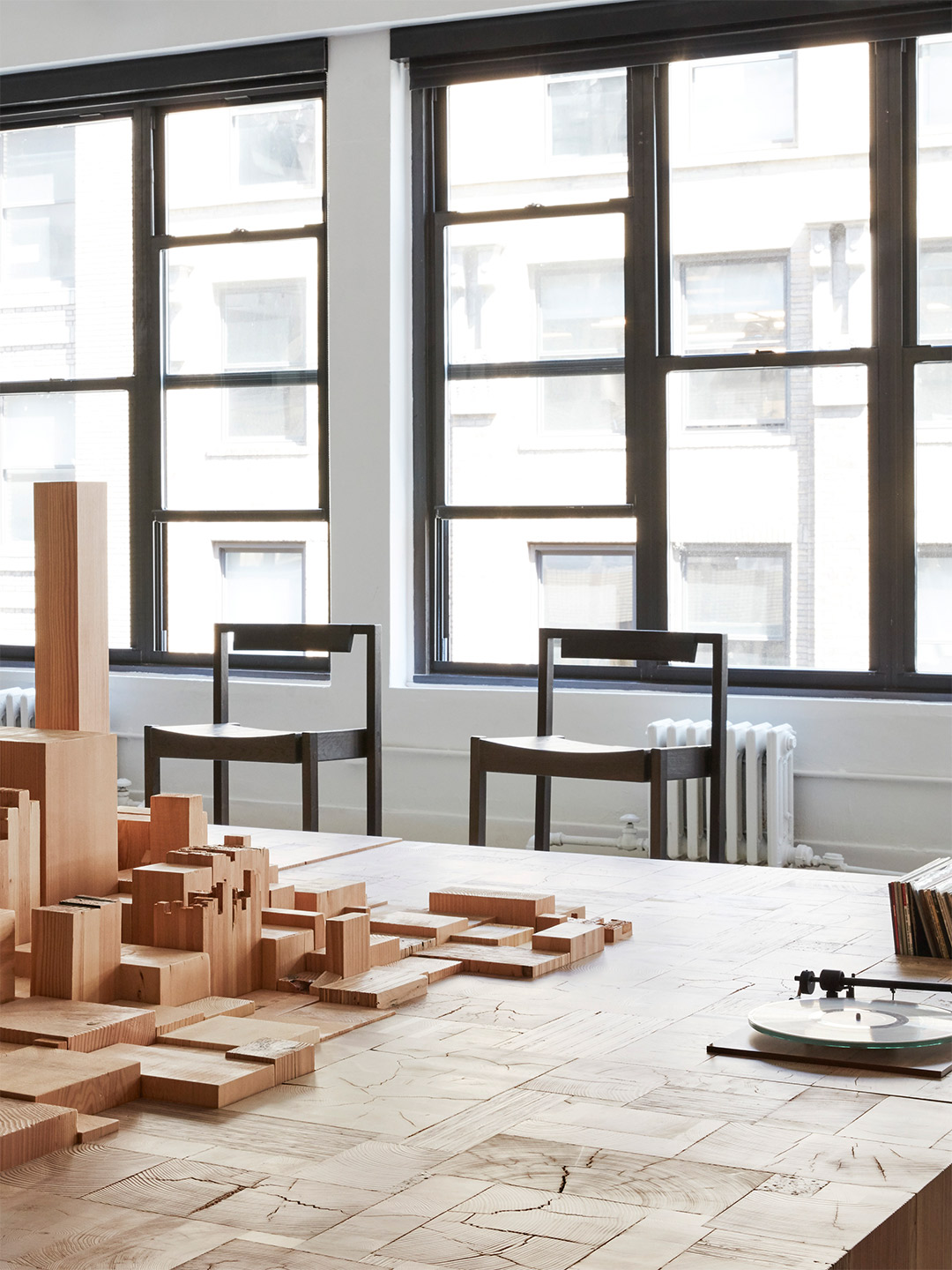
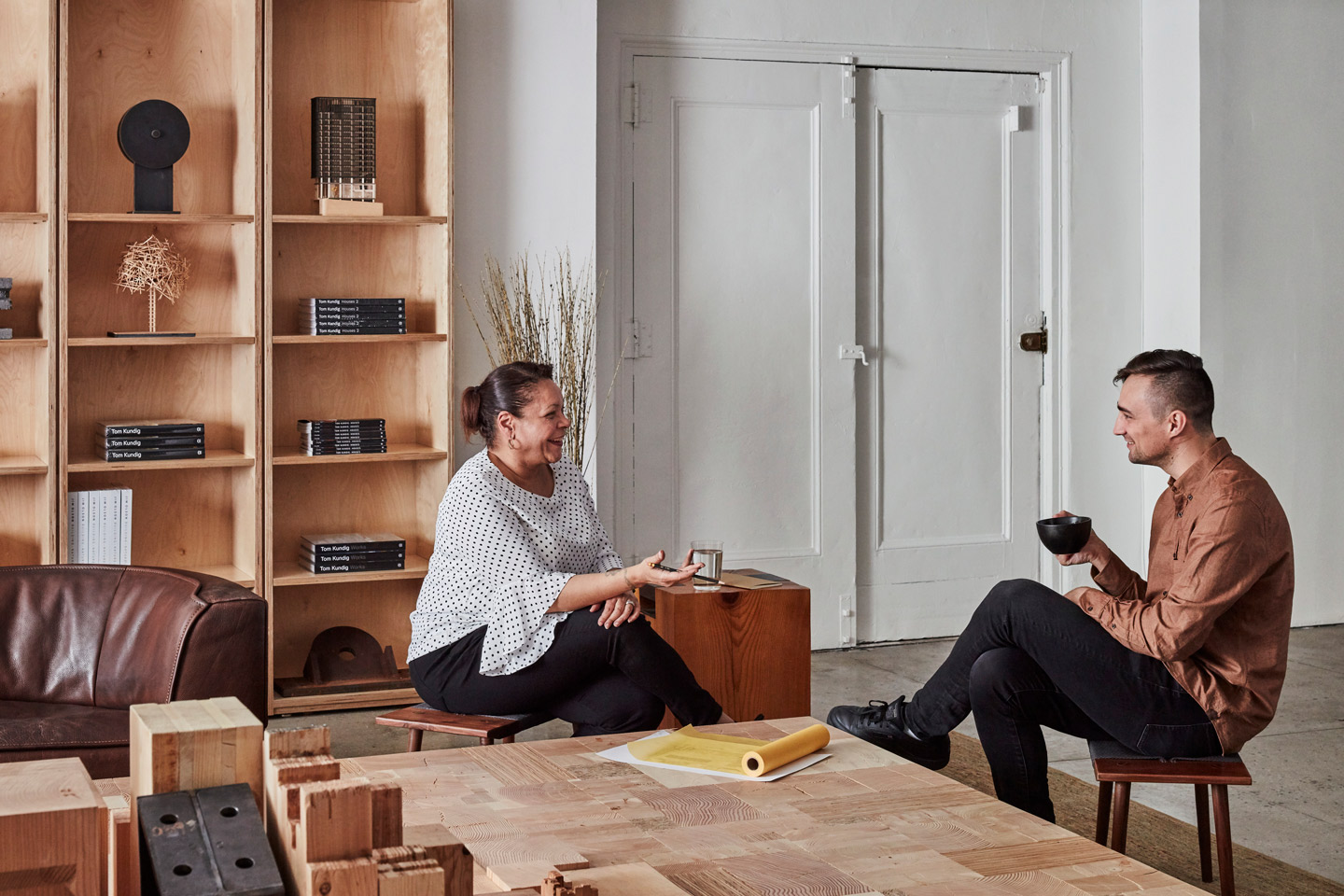
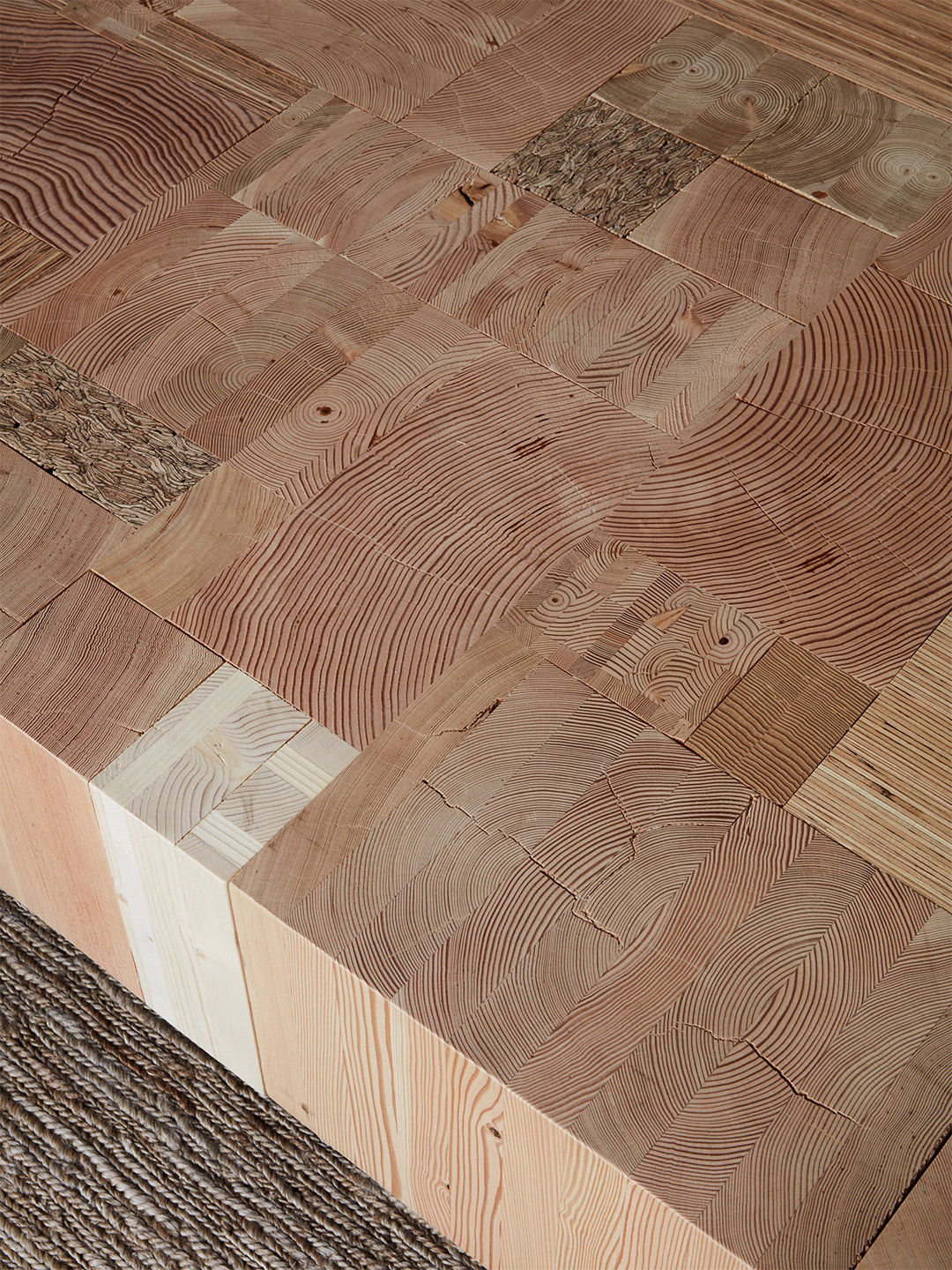
In the middle of Olson Kundig’s new office, in a gathering space called the Living Room, a conceptual cityscape rises from a large, low-slung table. Pieced together from a tapestry of raw timber offcuts, the imagined metropolis places replicas of built works by Olson Kundig on the same city grid as structures by other architects. It’s the centrepiece of the firm’s recently completed New York outpost and just sharing the same room as the sculpture, considering the location in Midtown Manhattan, feels rather meta. Here, in a city that adopts a role of inspiration for countless creative pursuits, the miniature cluster of equally impressive towers forms the influential backdrop to future works of architecture.
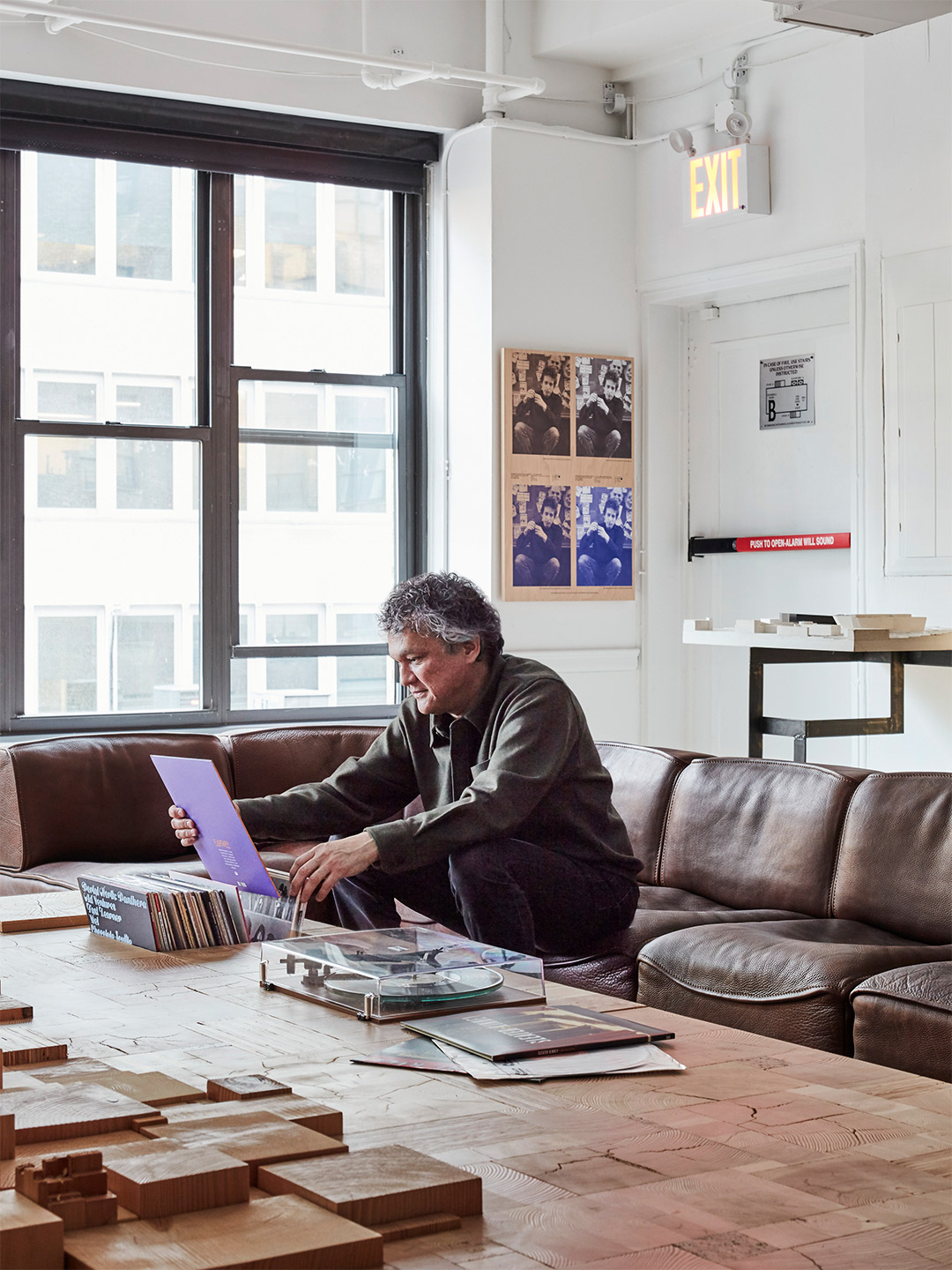
“The table introduces a physical embodiment of Pacific Northwest design culture within the new office space,” suggests the Olson Kundig team, whose architecture practice was born in 1967 in Seattle – the largest metropolitan area in the Pacific Northwest. The table also includes an integrated turntable and vinyl record collection, curated by Seattle’s Sub Pop Records, which further underscores connections to the architects’ home in Washington State and the wider culture of the firm. But beyond the gimmicks, the aim of the table is to support the staff on a daily basis. Mounted on wheels and divided into quarters – each measuring 180 by 180 centimetres and weighing 360 kilograms – the table can be split up and employed in a variety of configurations, enabling all kinds of practical interactions.
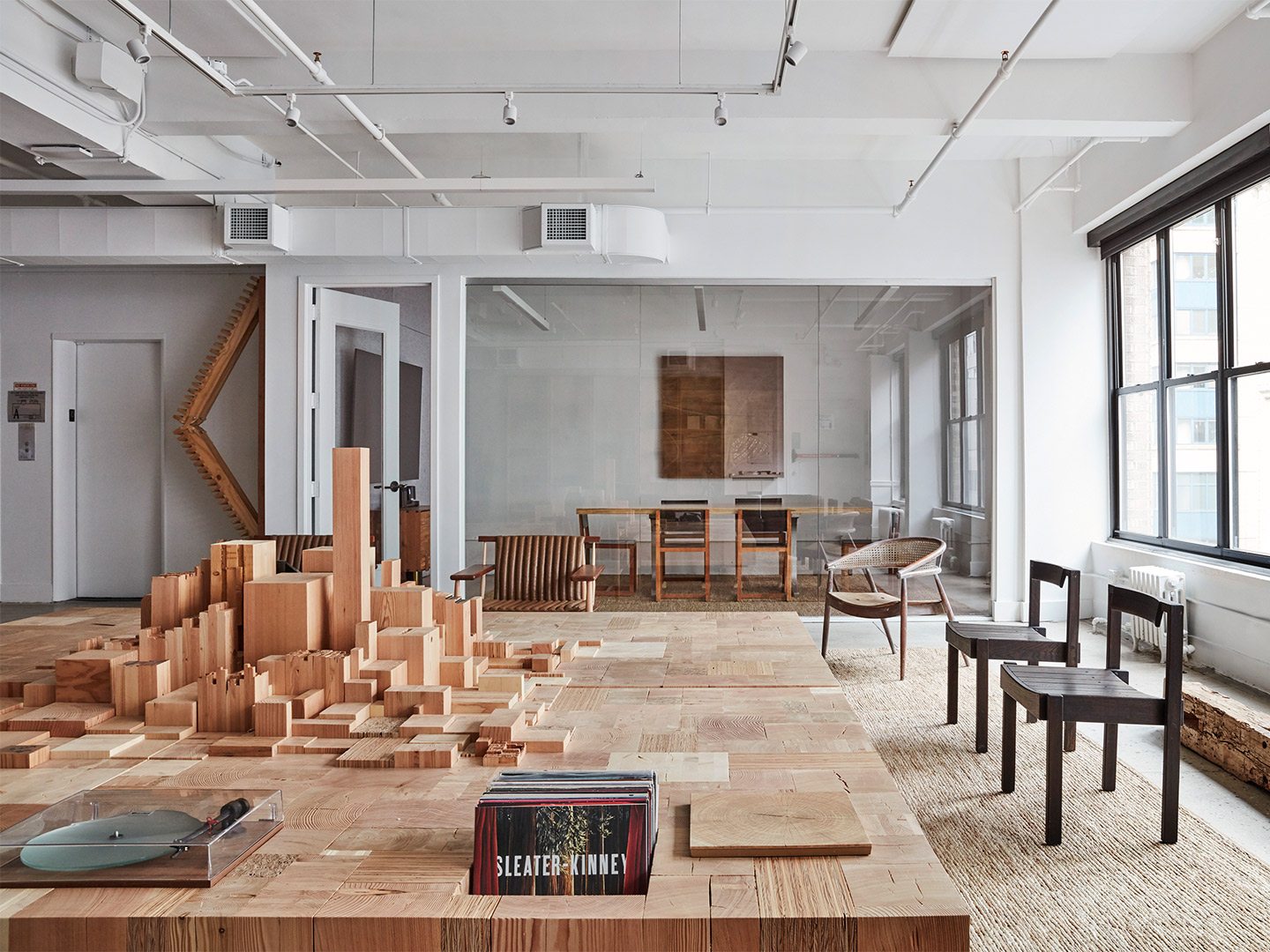
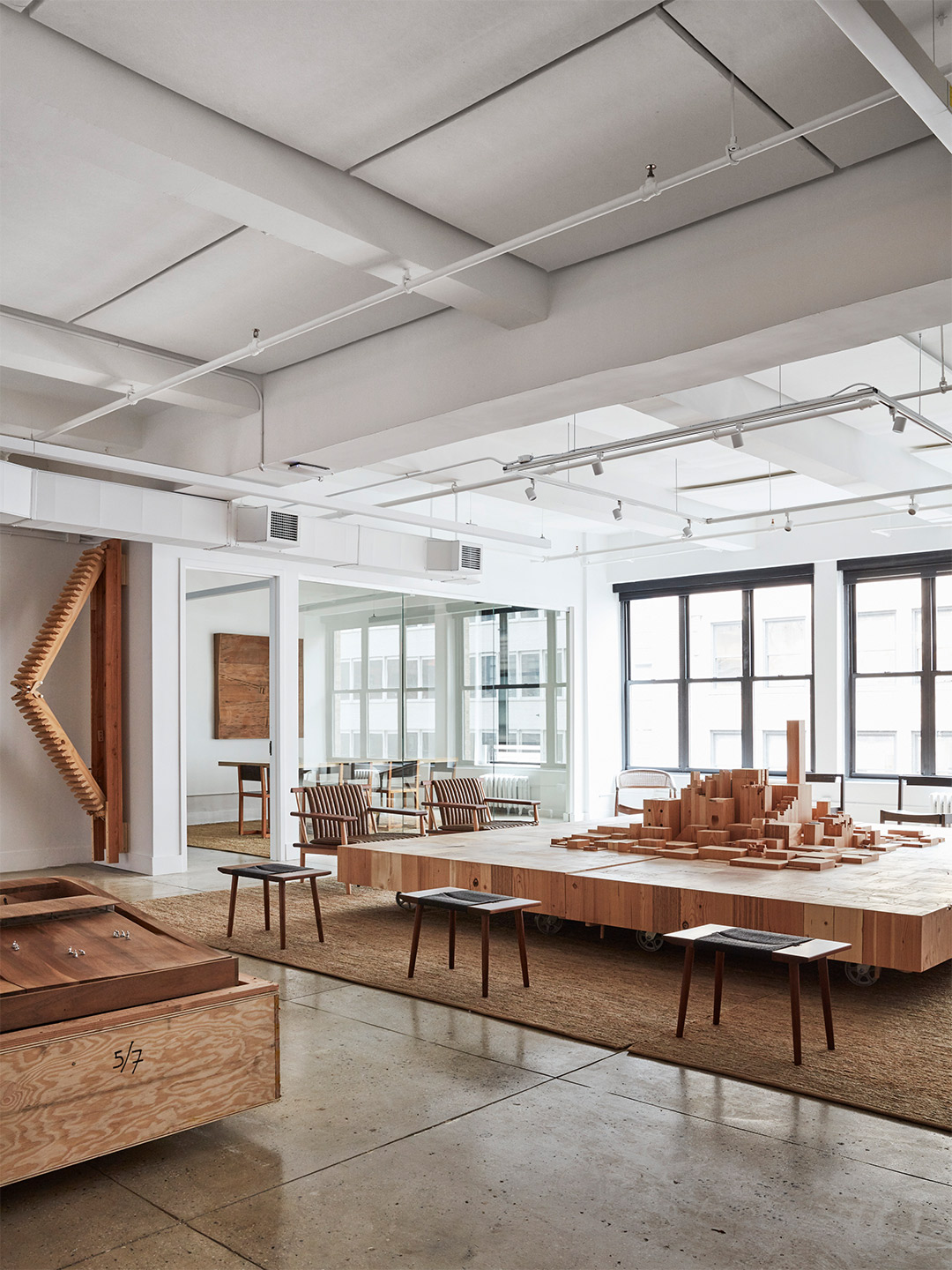
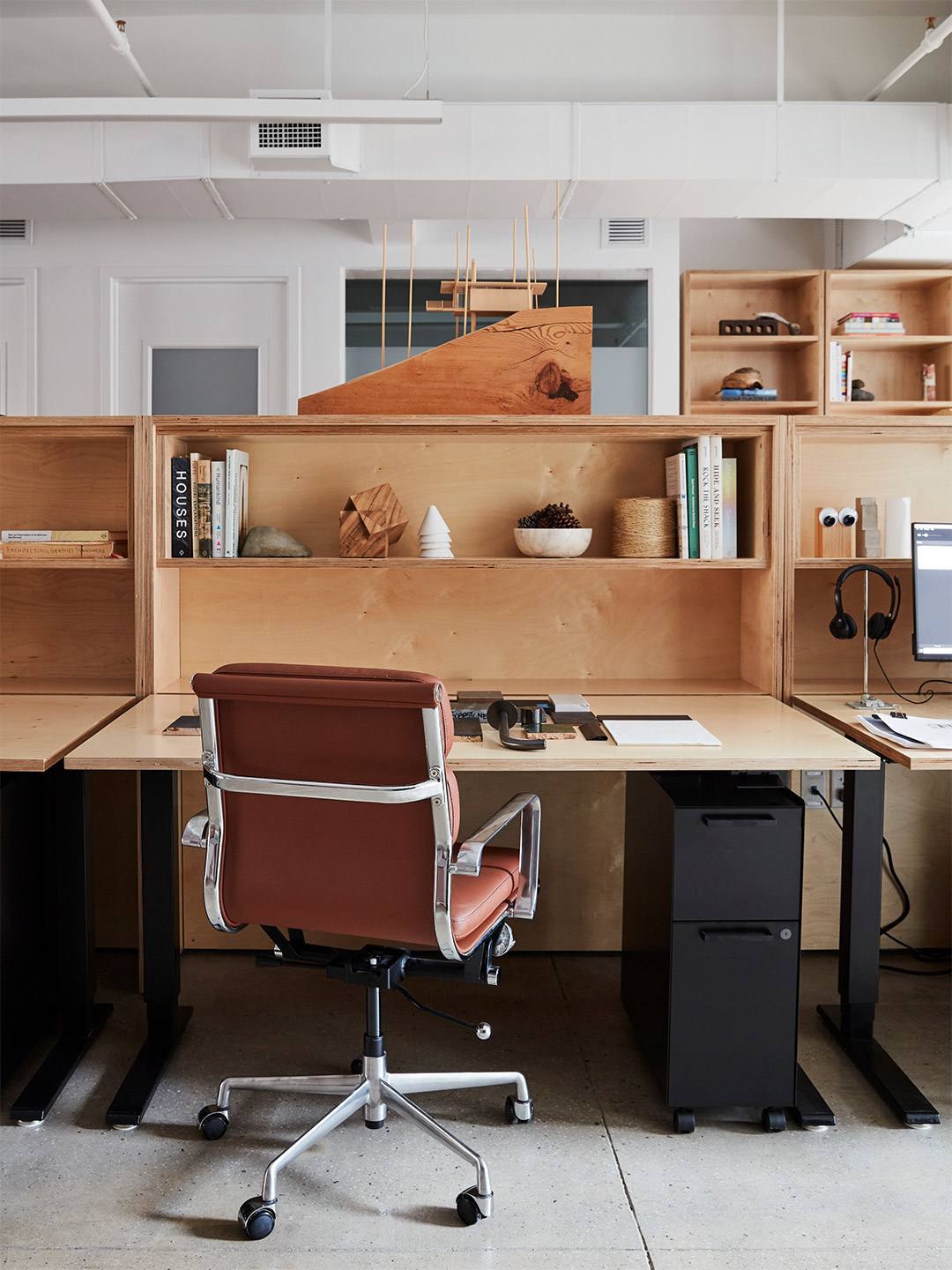
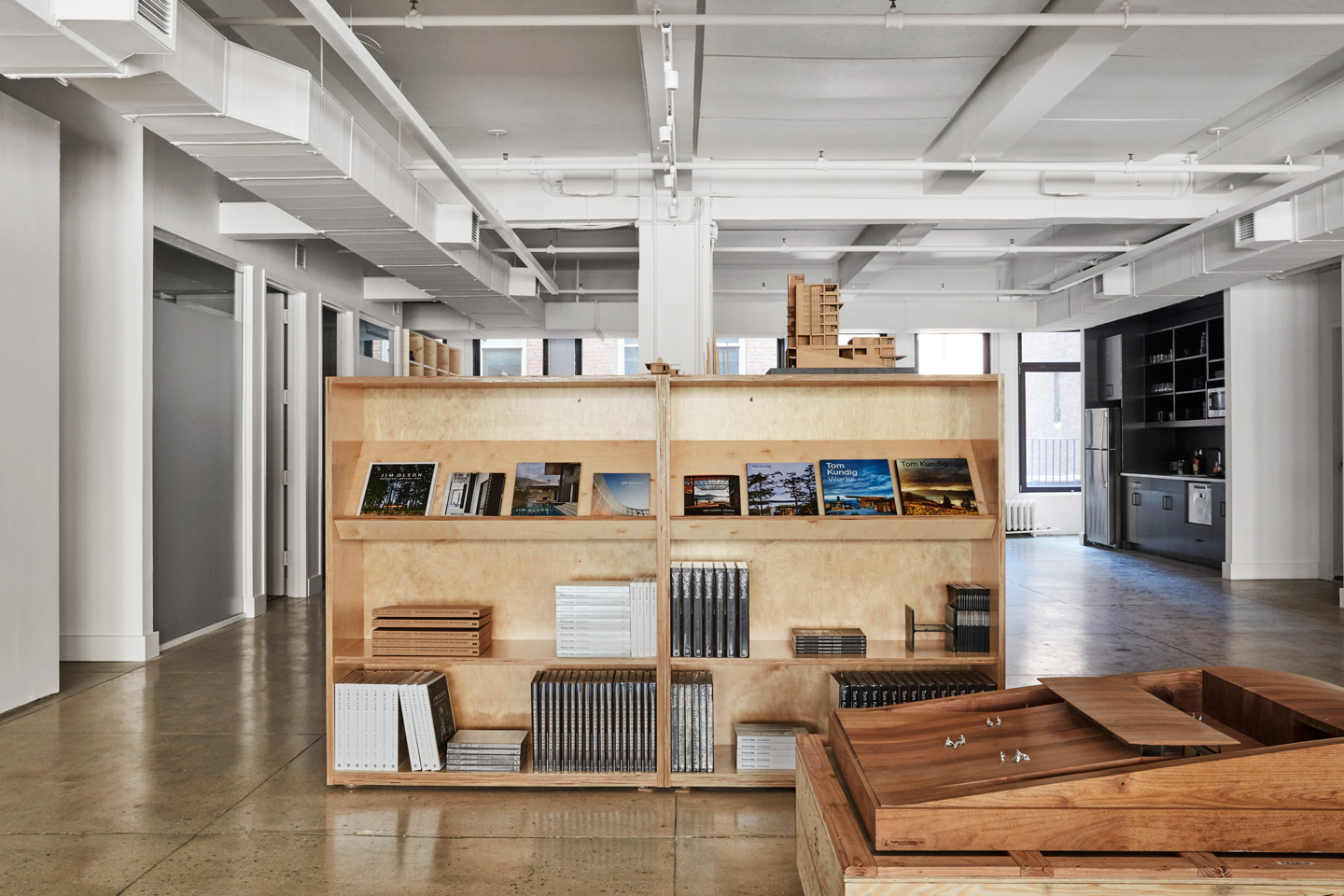
Olson Kundig architecture office in New York City
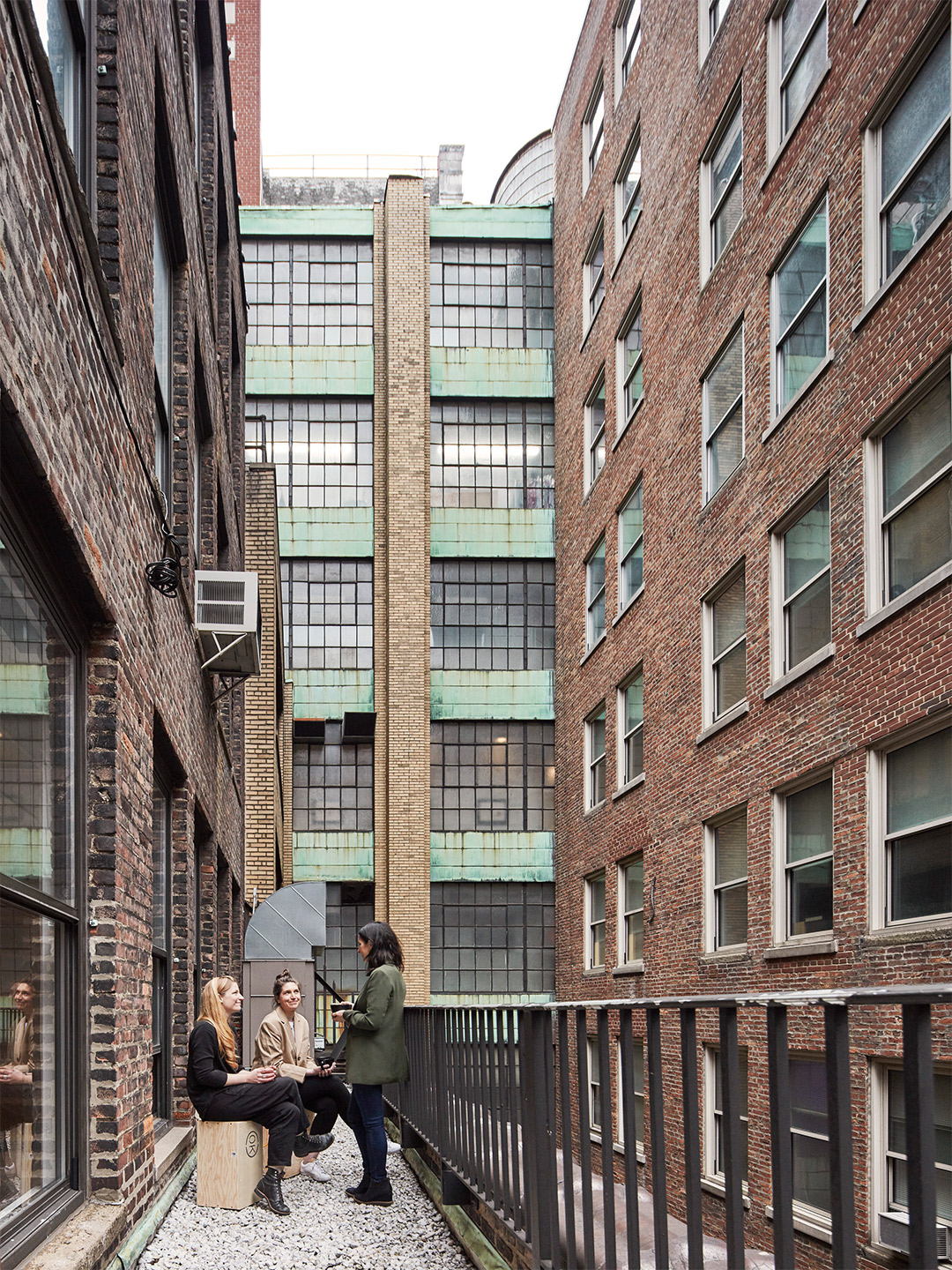
Drinking in views of the bustling urban streetscape to the north and the rich architectural interest of surrounding buildings to the south, the office occupies the 10th floor of a mid-rise tower built in 1923. Situated within walking distance of Bryant Park, the Morgan Library and the Empire State Building – among other iconic attractions – the recently completed office forms a vibrant hub from which the firm will nimbly support clients and projects. Concurrently, the space will foster cultural exchange and design dialogue between New York and the company’s home-base in Seattle.
“Opening a New York office space allows us to share a bit of the Pacific Rim and our ‘unstable edge’ mentality with the East Coast,” says Alan Maskin, one of fourteen principal-owners at Olson Kundig and the design lead for the Midtown Manhattan office. He adds that the venture is set to forge new relationships and opportunities for collaboration. “That influence goes both ways, of course,” Alan says. “Shared cultural events and firm culture creates a river that flows between the two cities, exchanging ideas and energy back and forth.”
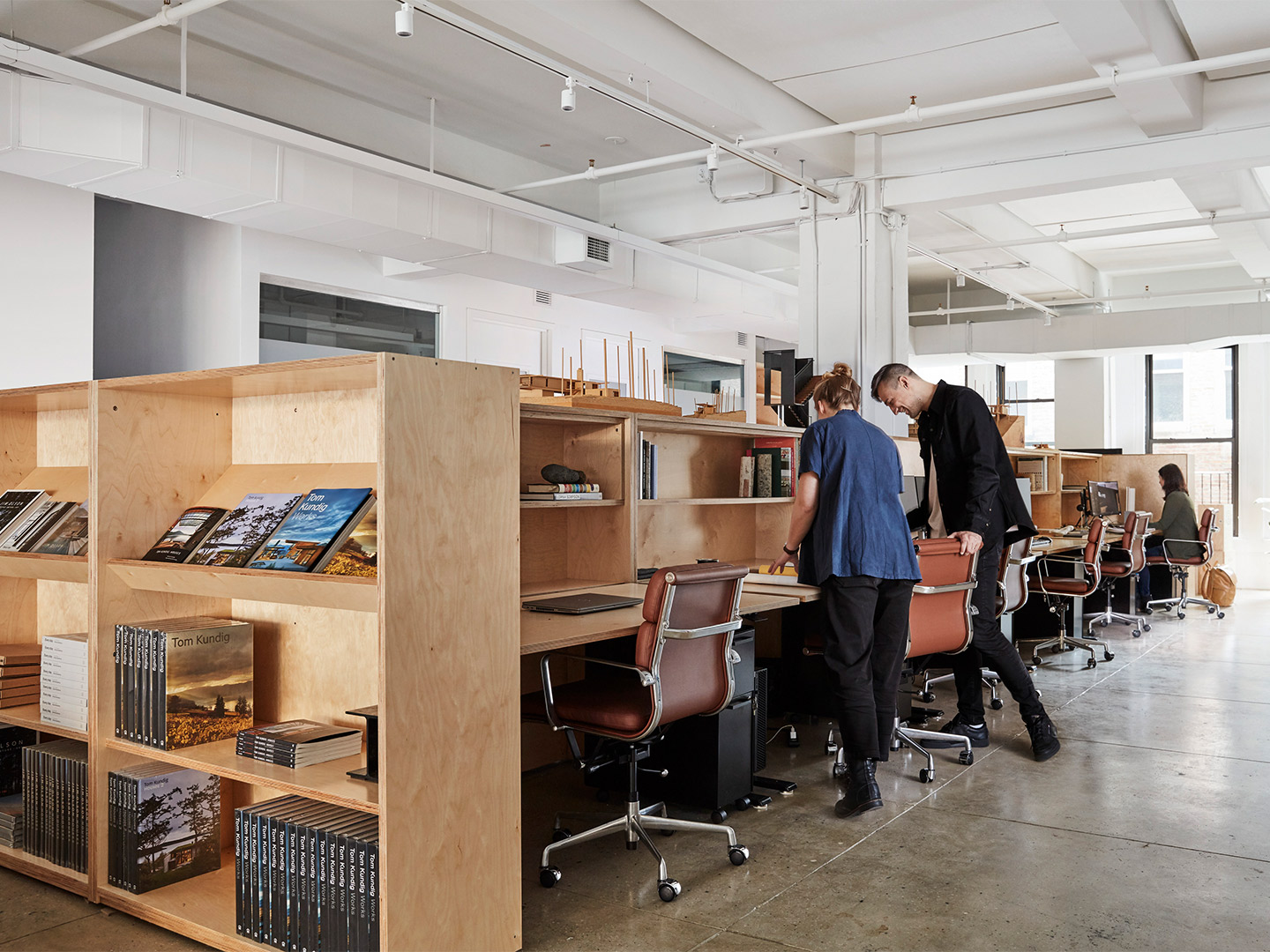
While this isn’t the first workspace that Olson Kundig has occupied in the Big Apple (the architects previously operated out of a smaller office in the city), this new development represents a more significant investment in office space and greater participation with the design culture of the city. “From a business perspective, it will improve client relations and project delivery throughout the East Coast and international markets, while allowing us to recruit top design talent,” insists Hemanshu Parwani, principal-owner and CEO of Olson Kundig, and Maskin’s collaborator.
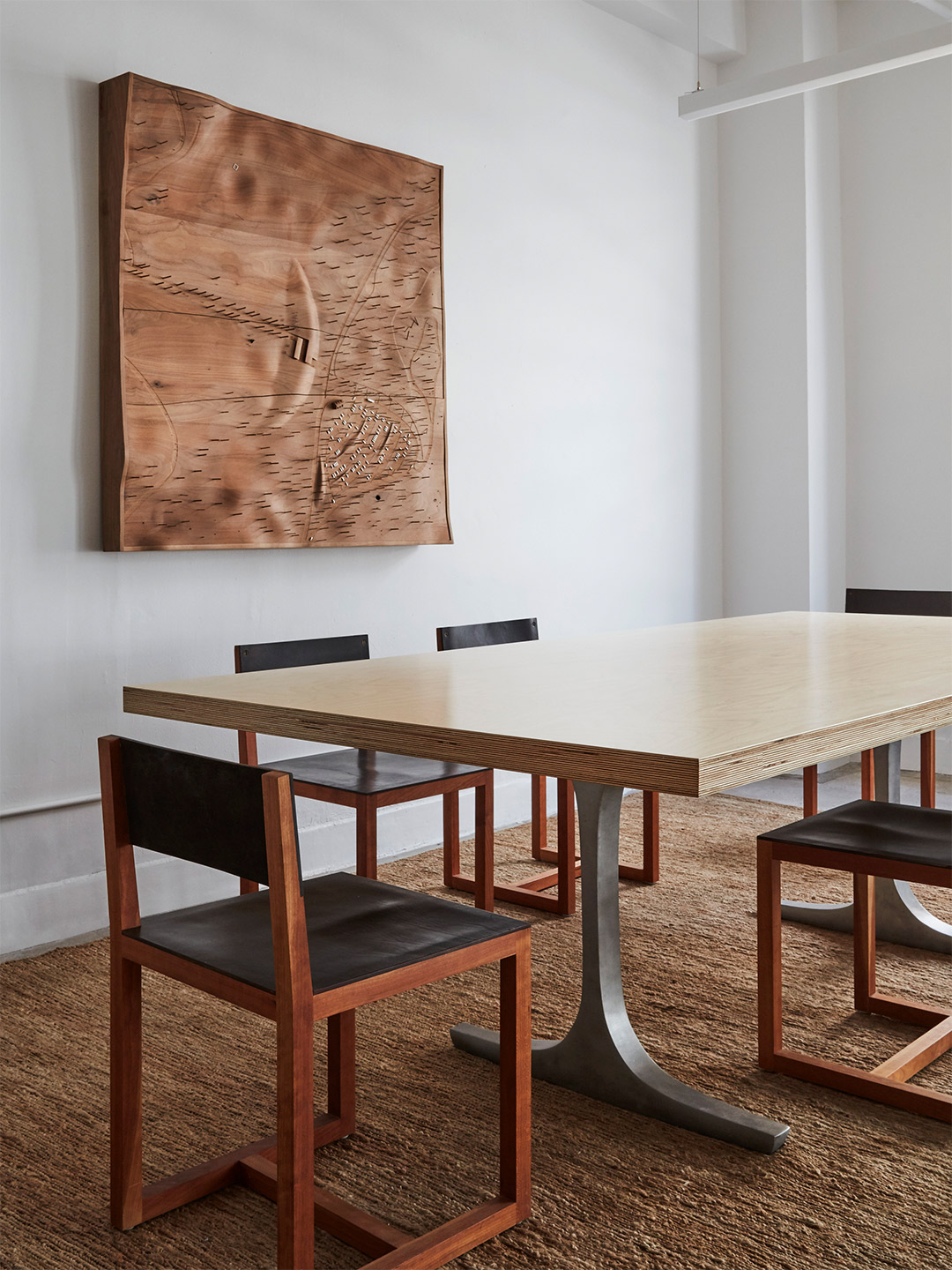
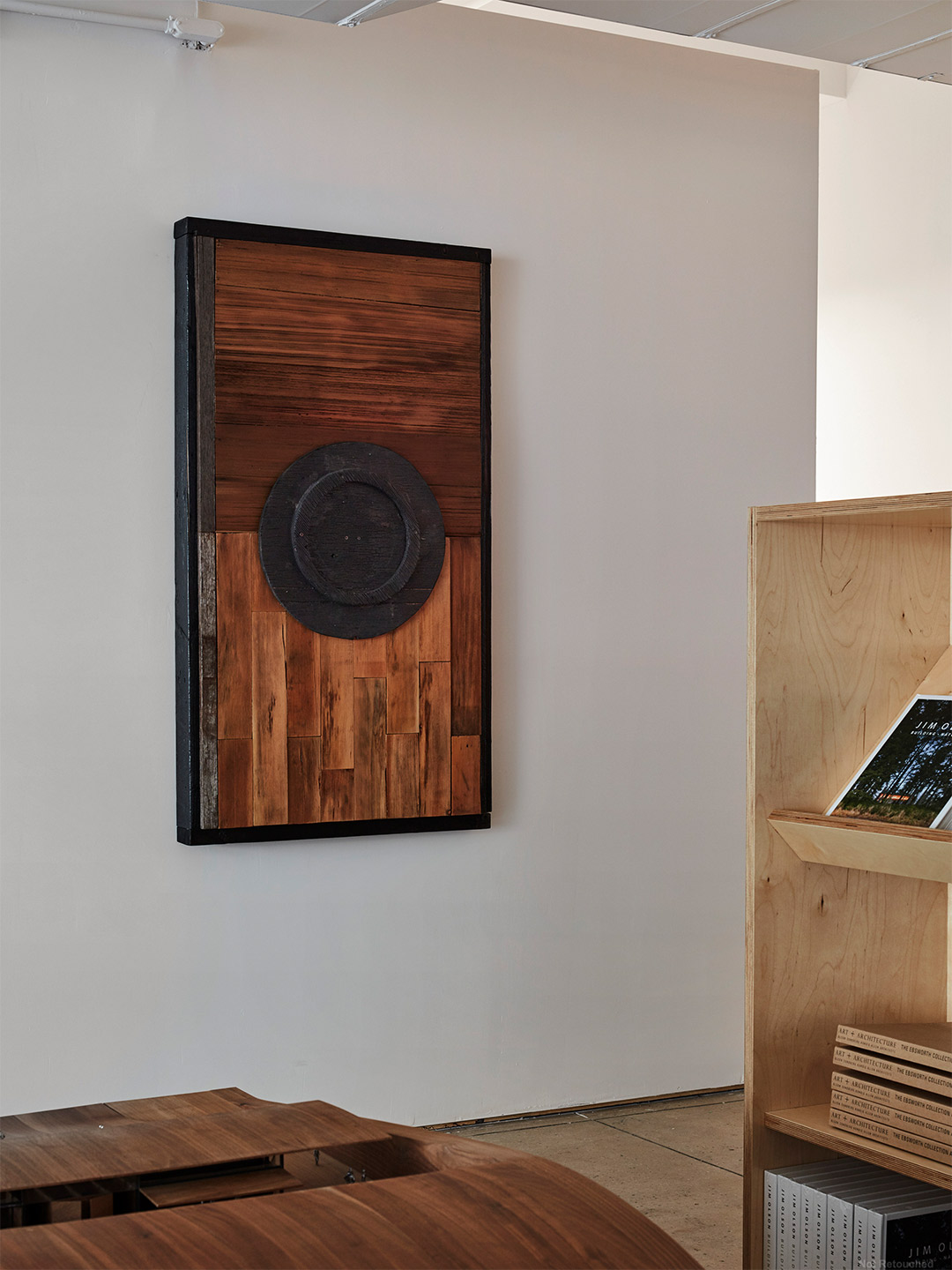
Continuing the firm’s longstanding tradition of “making art a part of everyday life” and integrating diverse forms of creative expression into its workspace, a rotation of curated art pieces will feature heavily in the new office. Facilitating this, a raised platform between a bank of workstations frames a small display area that brings to New York the vision of The Ledge, a gallery first established within Olson Kundig’s Seattle office in 2011. Dedicated wall space throughout the office is also reserved to host paintings and other works, while a wide “runway” between workstations and the kitchen can host sculptures and free-standing pieces.

Opening a New York office space allows us to share a bit of the Pacific Rim and our ‘unstable edge’ mentality with the East Coast.
Love the office fit-out by Olson Kundig? Catch up on more architecture and design highlights. Plus, subscribe to receive the Daily Architecture News e-letter direct to your inbox.
Related stories
- Home tour: Bilgola Beach House in Sydney by Olson Kundig.
- ANOHA museum: 150 animals made from recycled materials inhabit a ‘spaceship’ by Olson Kundig.
- A 1960s London post office is now a swinging sushi restaurant.
- Hot desks: Spacial co-working office in Montreal by Ivy Studio.
- The YAP design office in Japan.
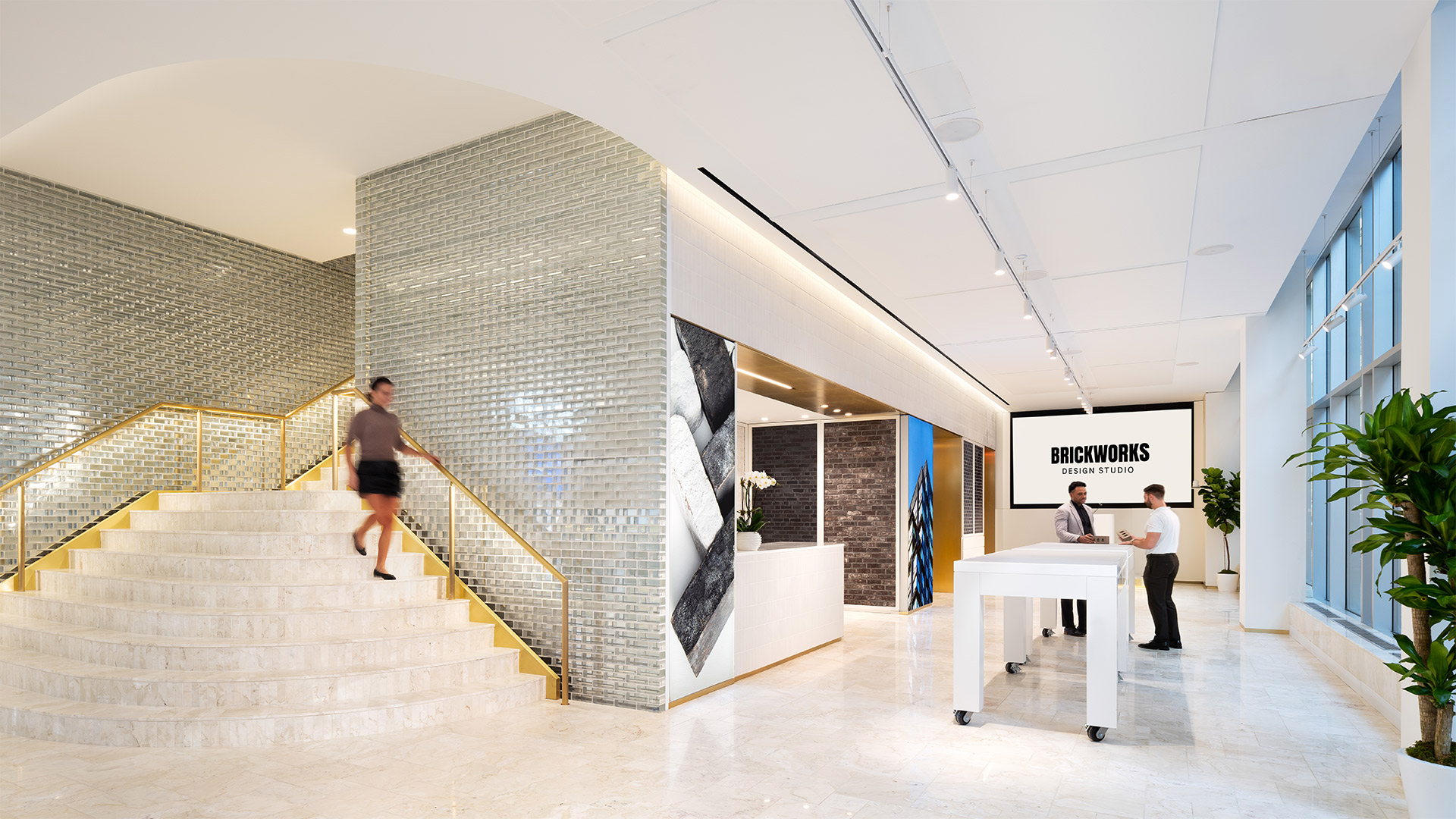
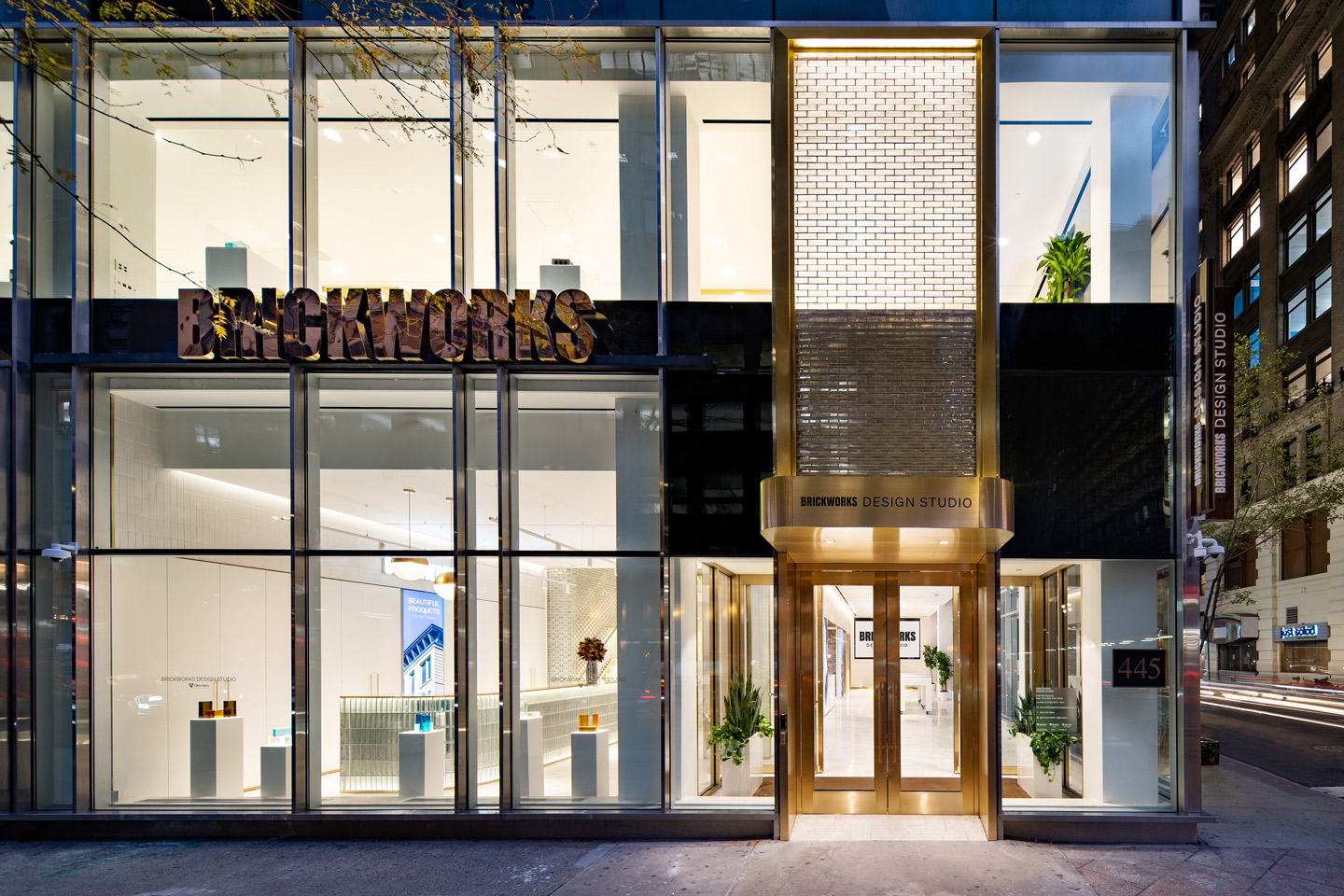
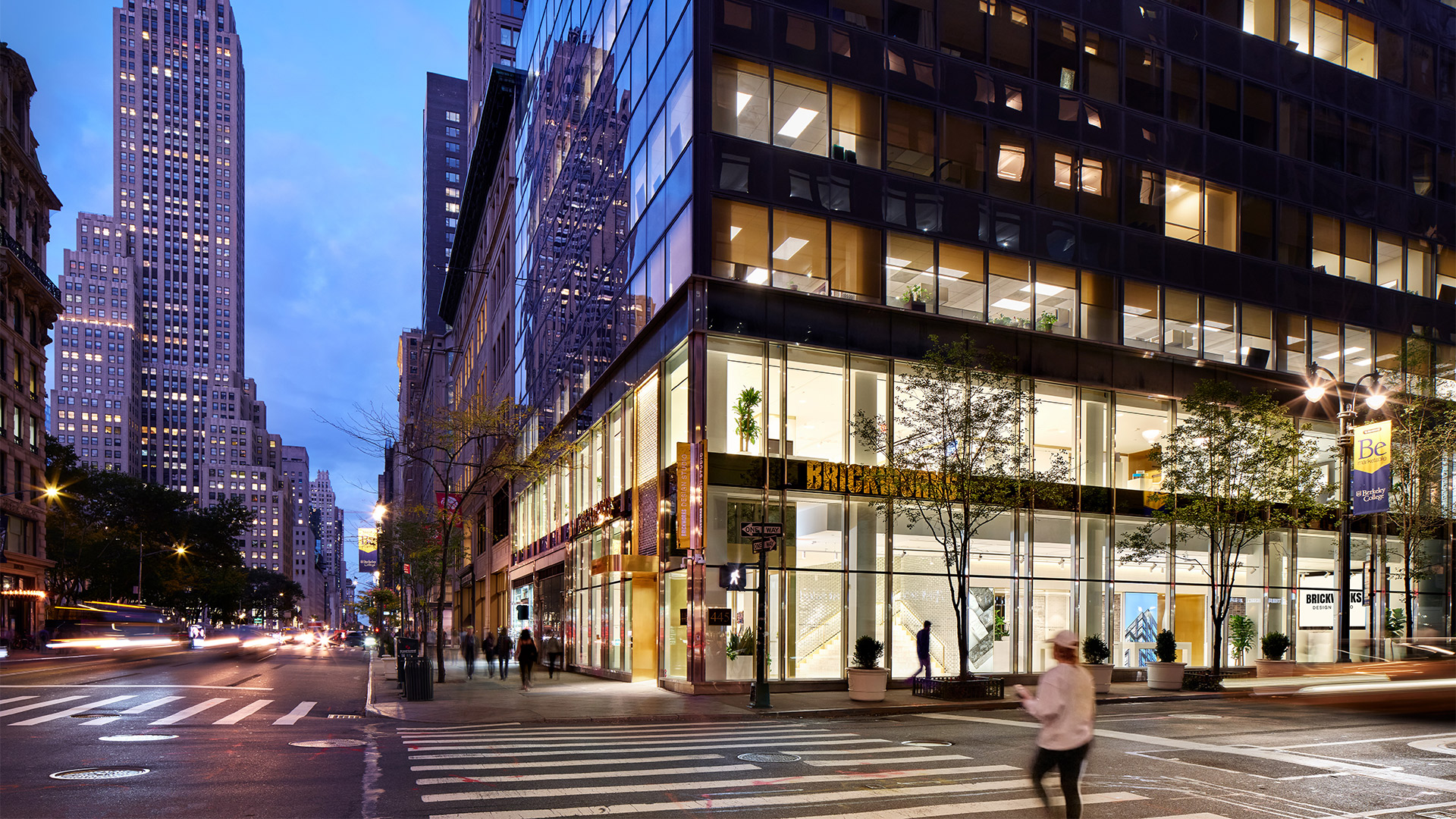
A monogrammed trunk from Louis Vuitton. Solid gold bracelets from Cartier. The latest Apple watch. And a batch of premium designer bricks. Not often are these luxurious products available to procure in the same place, but as of this month they are all on offer to peruse and purchase from one of the world’s most glamorous shopping strips. Brickworks Building Products – the maker of super-fine construction materials and parent company of North America’s Glen-Gery Bricks – has opened the doors to its flagship store on New York’s Fifth Avenue. Rubbing shoulders with the likes of Rolex, Saks and Tiffany & Co, the studio welcomes the Big Apple’s brimming pool of design talent to consult with experts, specify spectacular products and – most importantly – stay inspired.
Lindsay Partridge, managing director of Brickworks, says the company is “thrilled” to have opened its global flagship on New York’s most famous shopping street among other legendary brands, a stone’s throw from famed buildings such as the Empire State and Chrysler. “[The Design Studio] is a pivotal milestone for Brickworks,” he declares, referencing the continued expansion of the brand in North America. “It’s an honour to bring our expertise to New York City, home to some of the most diverse, lively and iconic architectural structures in the world.”
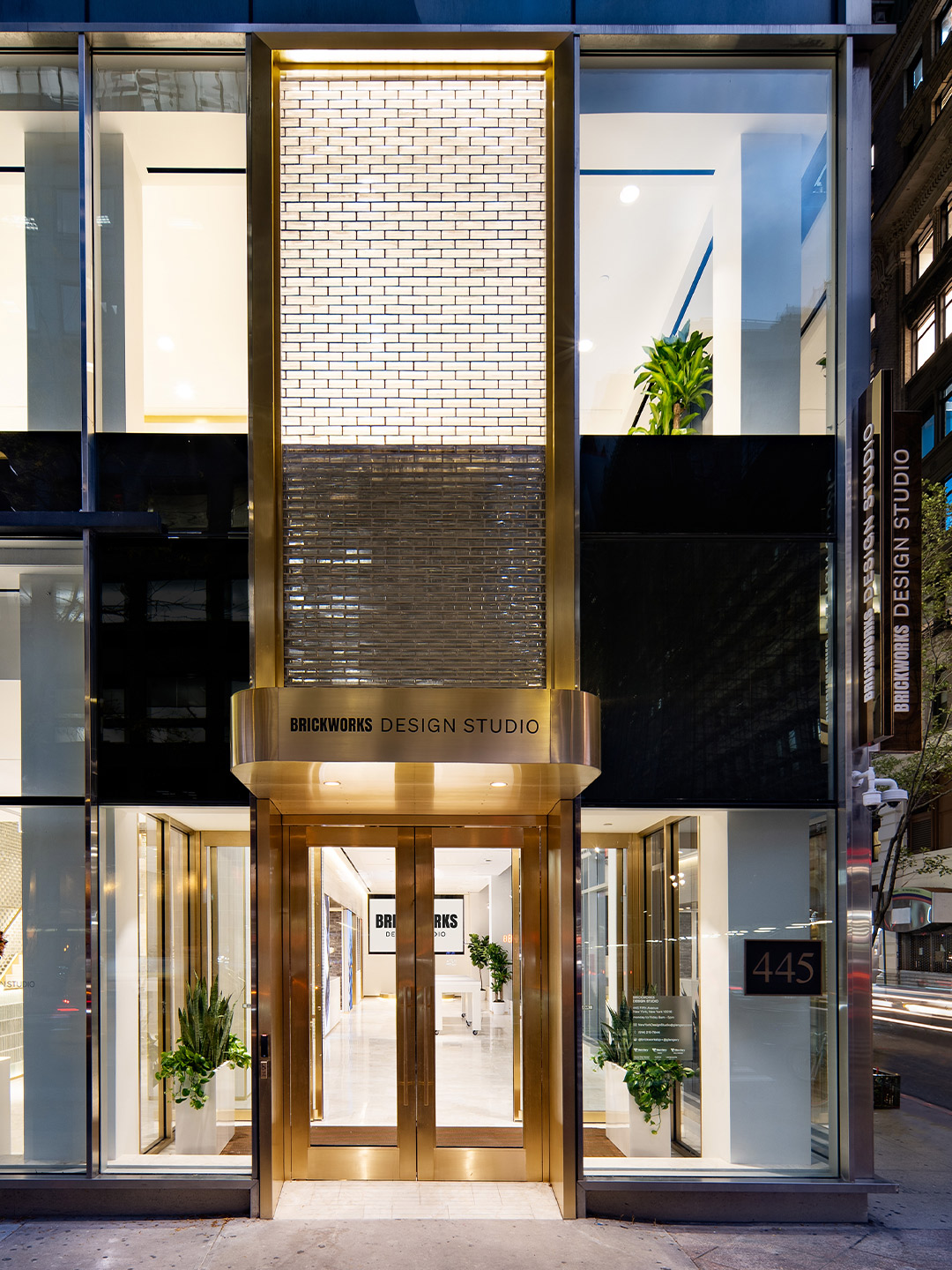
Brickworks opens New York Design Studio on Fifth Avenue
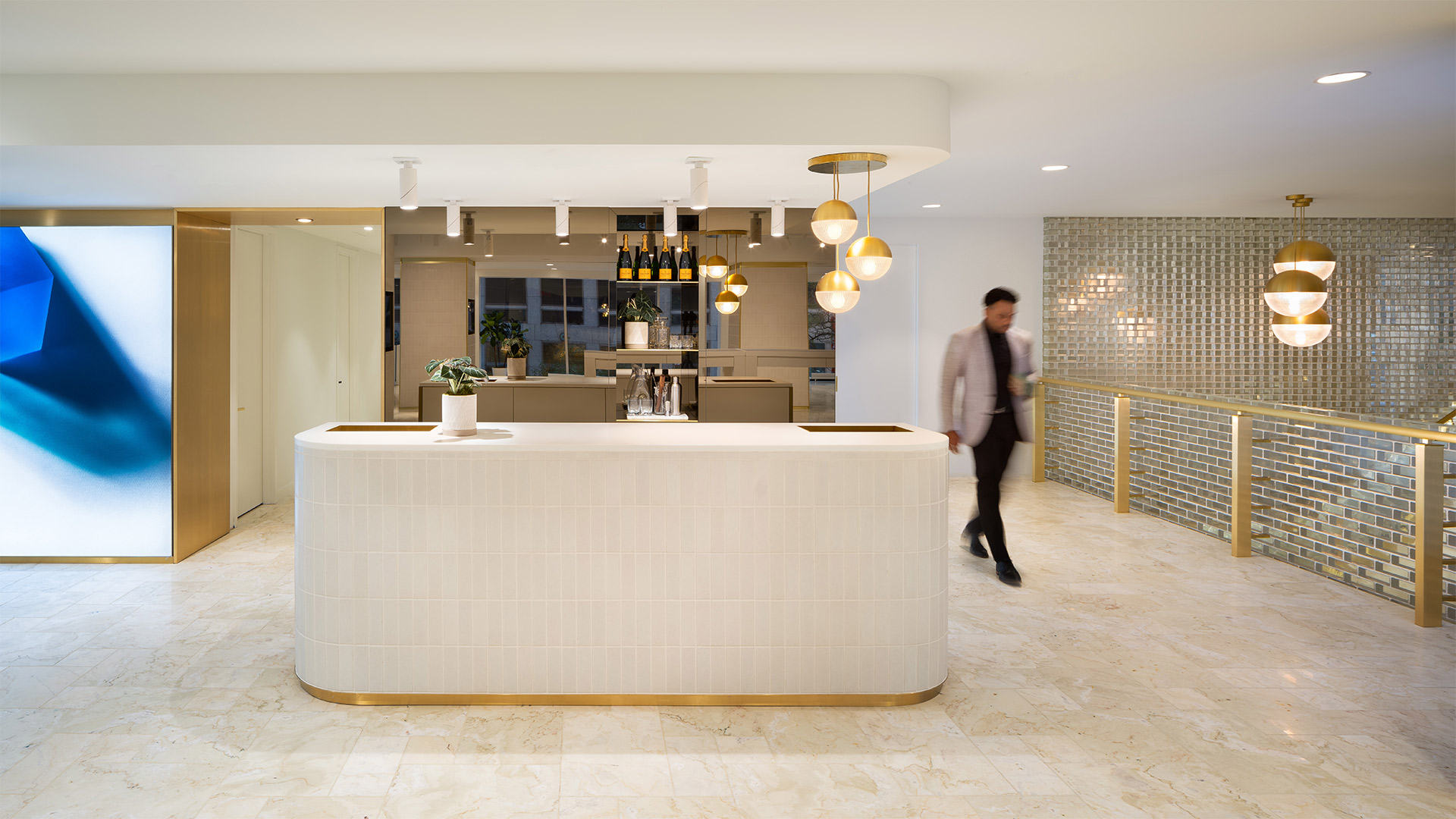
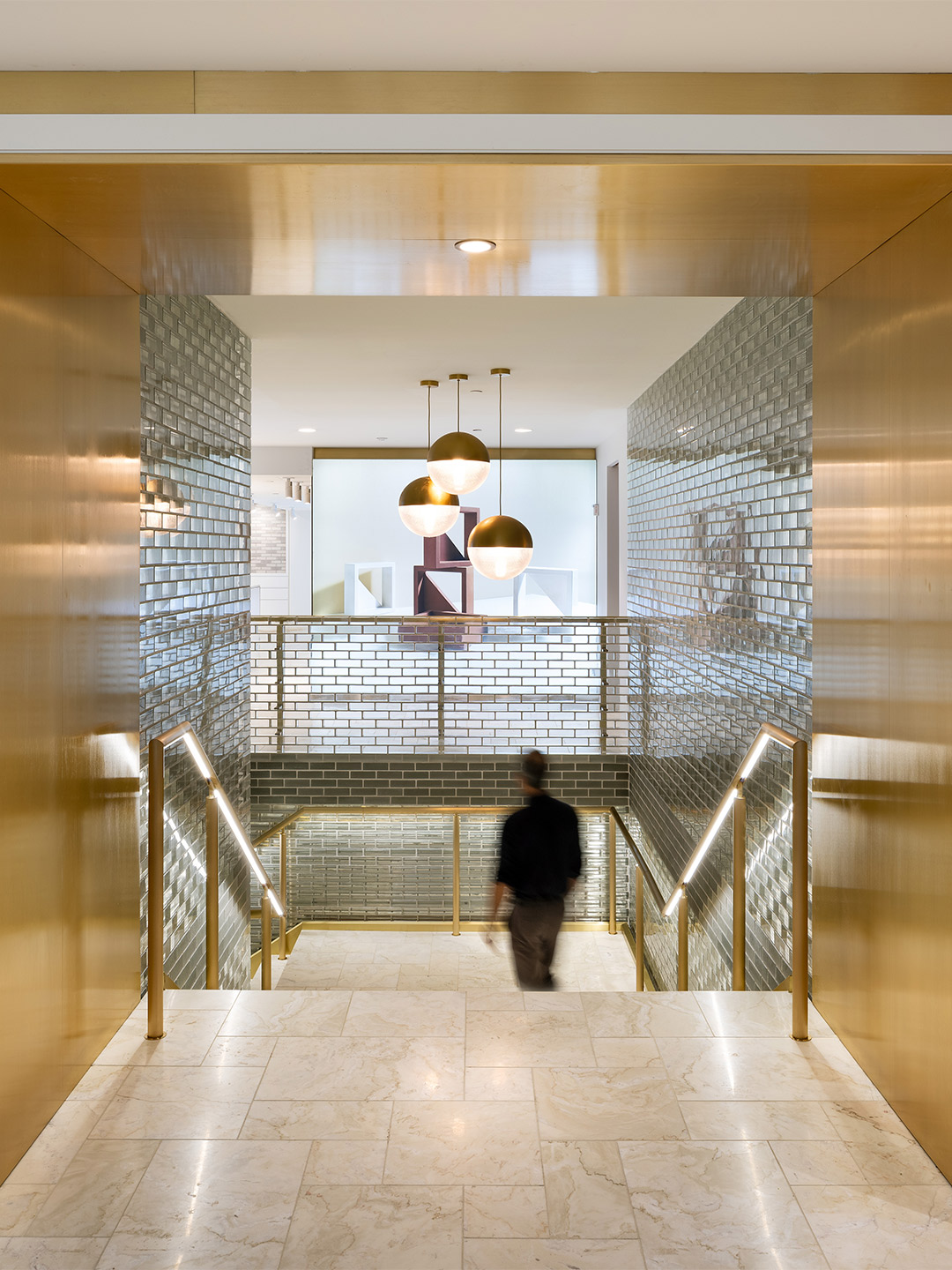
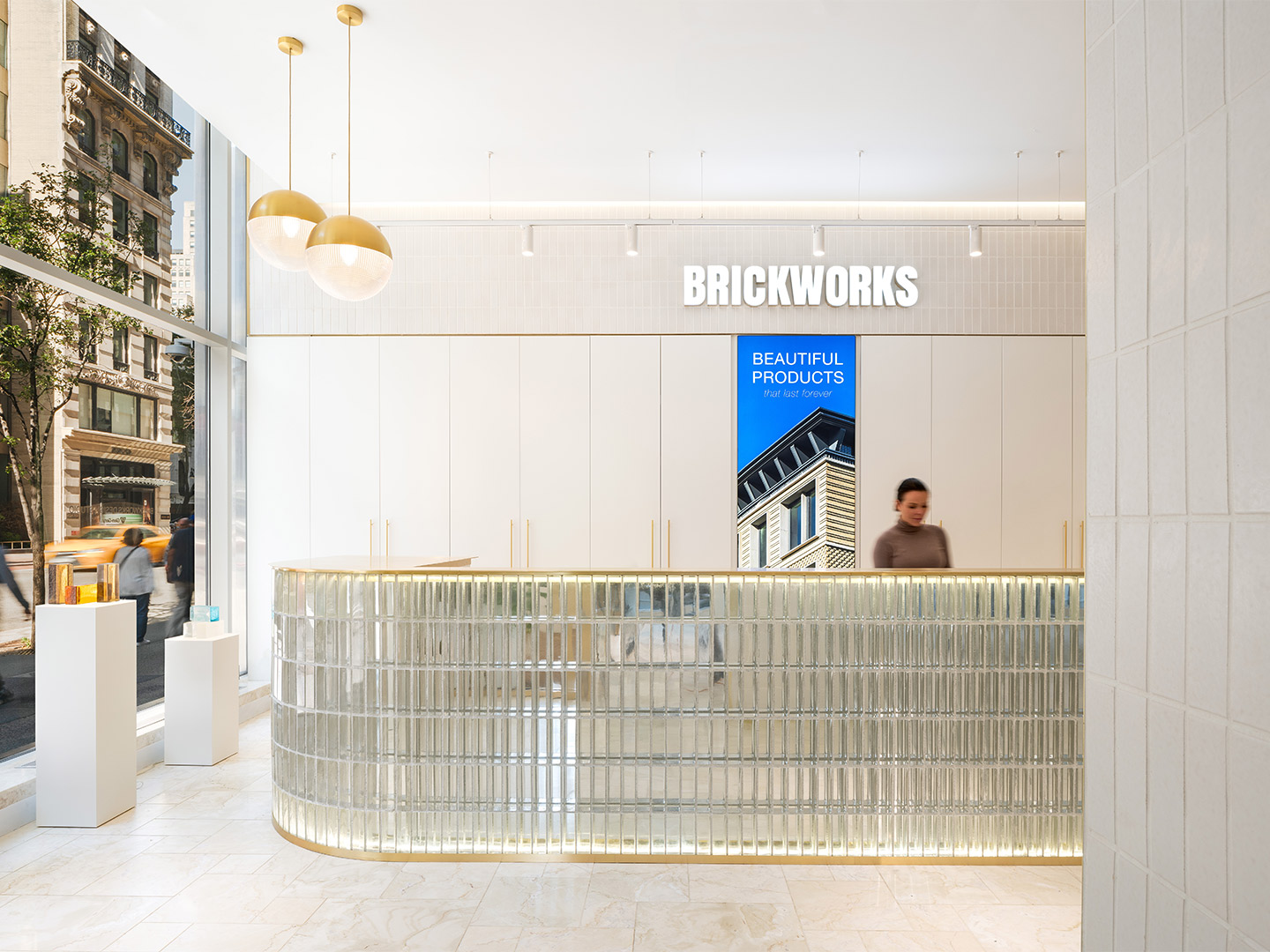
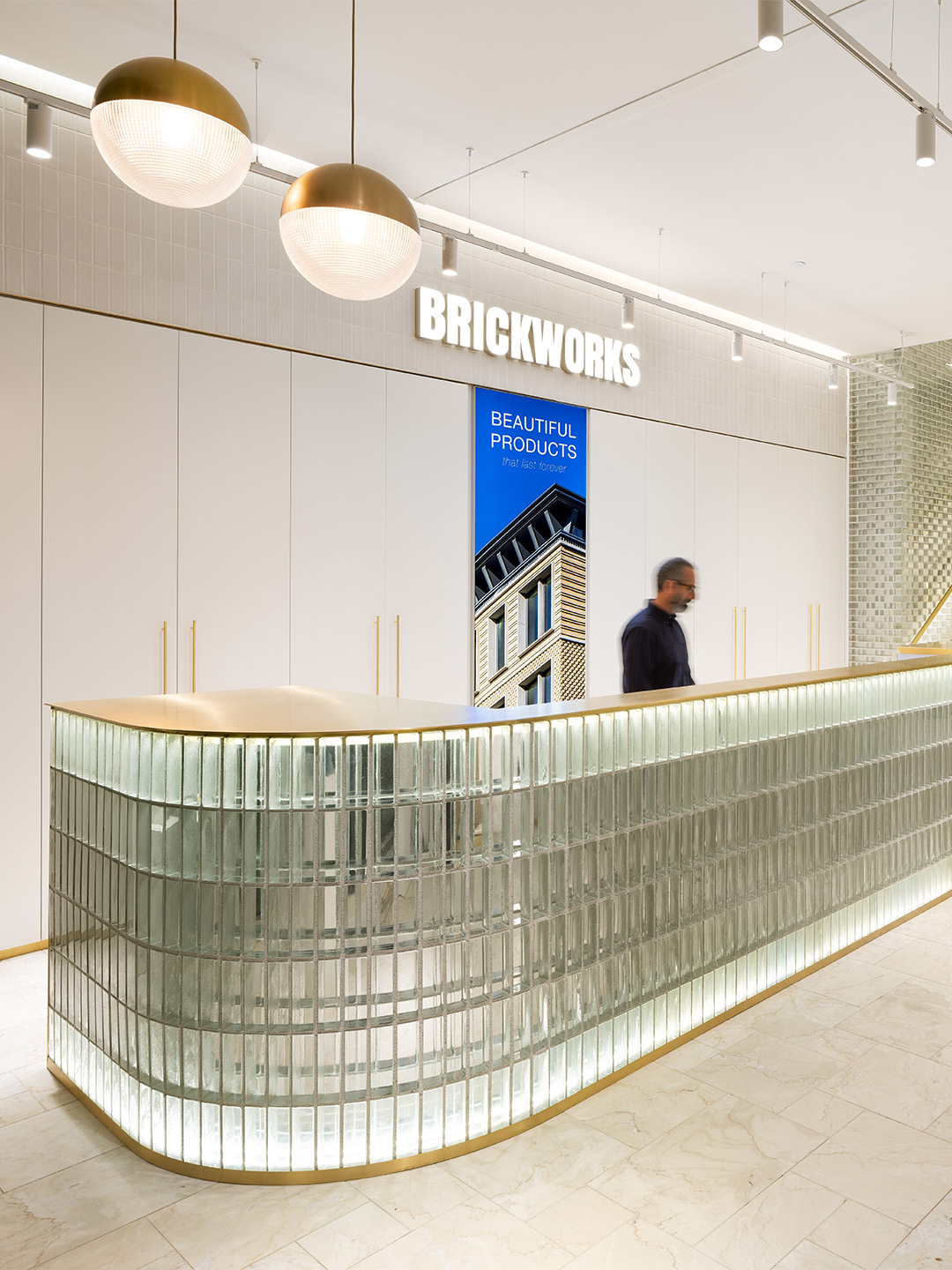
Synching up with the ambience created in other Brickworks Design Studios, including in Sydney, Brisbane and Melbourne, the New York showroom offers a light-filled canvas for the range of products to take centrestage. Set over two levels, walls of clear glass brick meet shimmering golden metallic surfaces. Product nooks filled with samples offer a modern take on apothecary-style drawers, beckoning visitors to touch and feel. And moveable consultation tables allow designers to lay-out their selections, backdropped by all-white surfaces.
It’s this ability to get up-close with Glen-Gery’s range that opens endless possibilities for trade professionals such as architects, designers, developers and builders. The studio features at least 20 product displays, including Glen-Gery’s 2022 releases, as well as international products from GB Masonry, Urbanstone and the award-winning ‘Kite Breeze’ breezeblock by celebrated Australian designer Adam Goodrum.
But as the suave-looking bar on the upper level suggests, Brickworks isn’t just about selling bricks. The company is well-regarded for spearheading industry events, architect speaker series’ and launching hefty monographs – all of which can be accommodated in the New York studio. Not confined to the limits of its four glittering walls, the showroom is also equipped with a state-of-the-art broadcast studio, offering a connection point with creatives from all around the world and a space to create engaging content for local and international audiences.
Brickworks New York Design Studio is located at 445 5th Avenue, New York.
glengery.com; brickworks.com.au
It’s an honour to bring our expertise to New York City, home to some of the most diverse, lively and iconic architectural structures in the world.
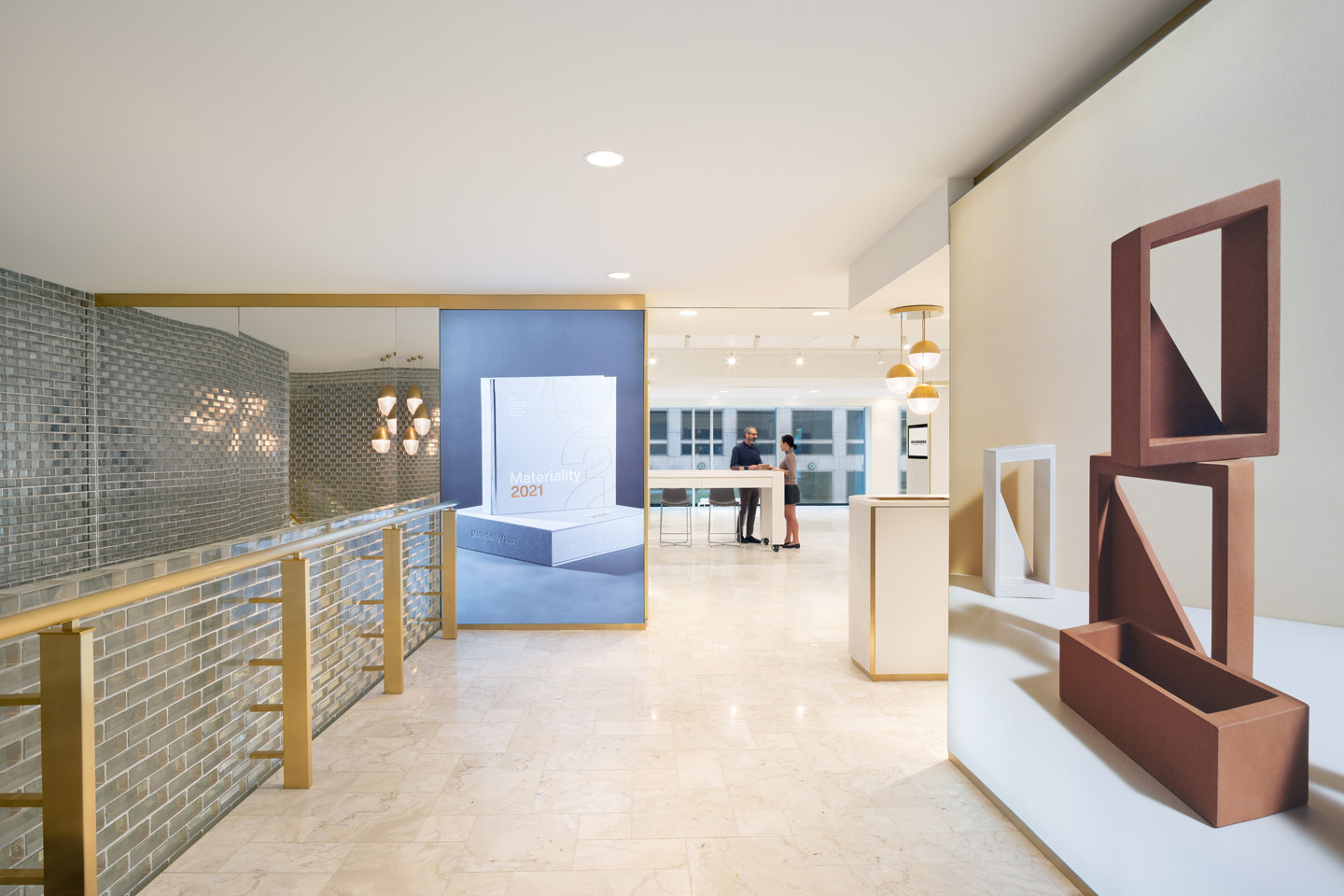
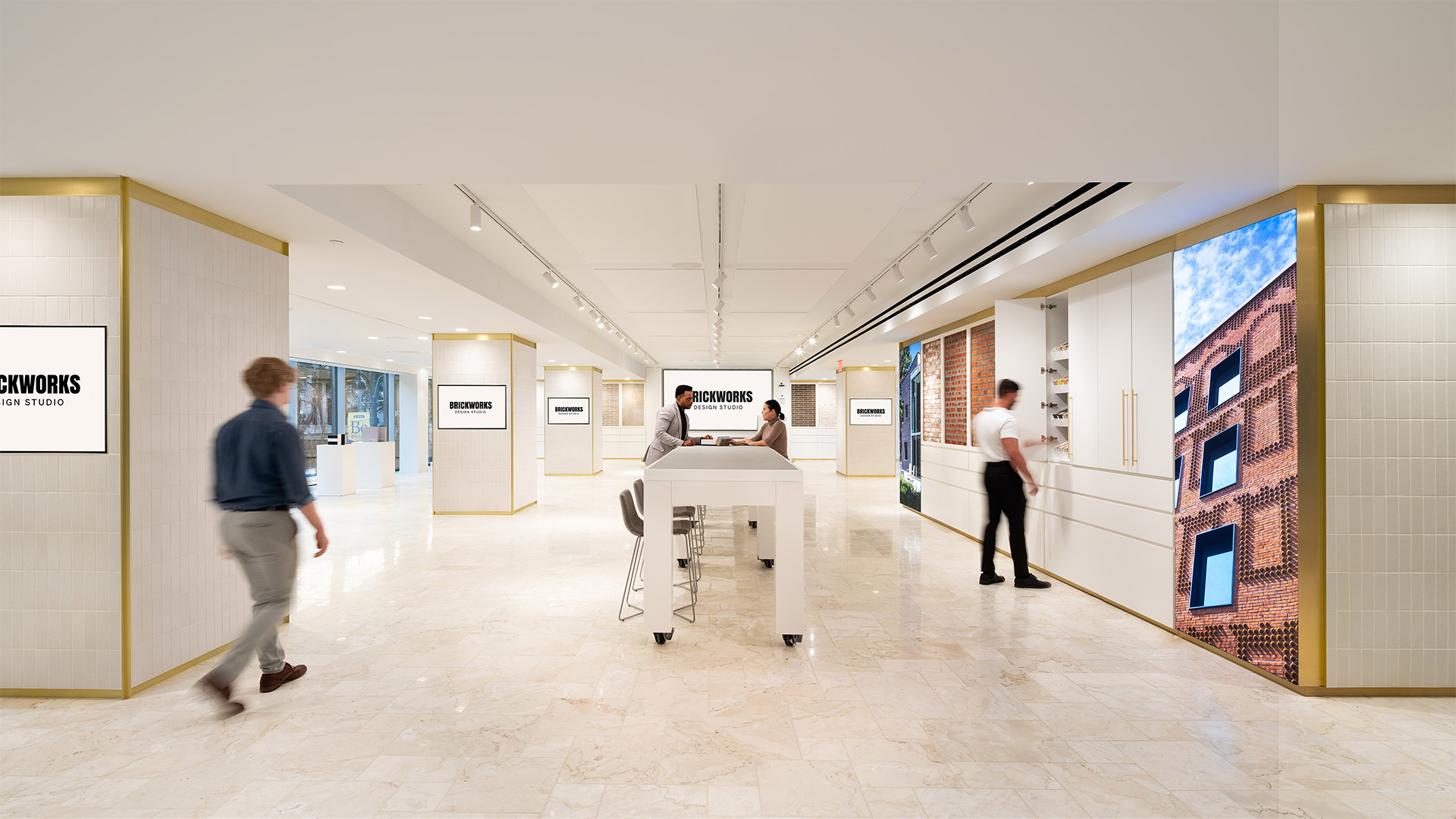
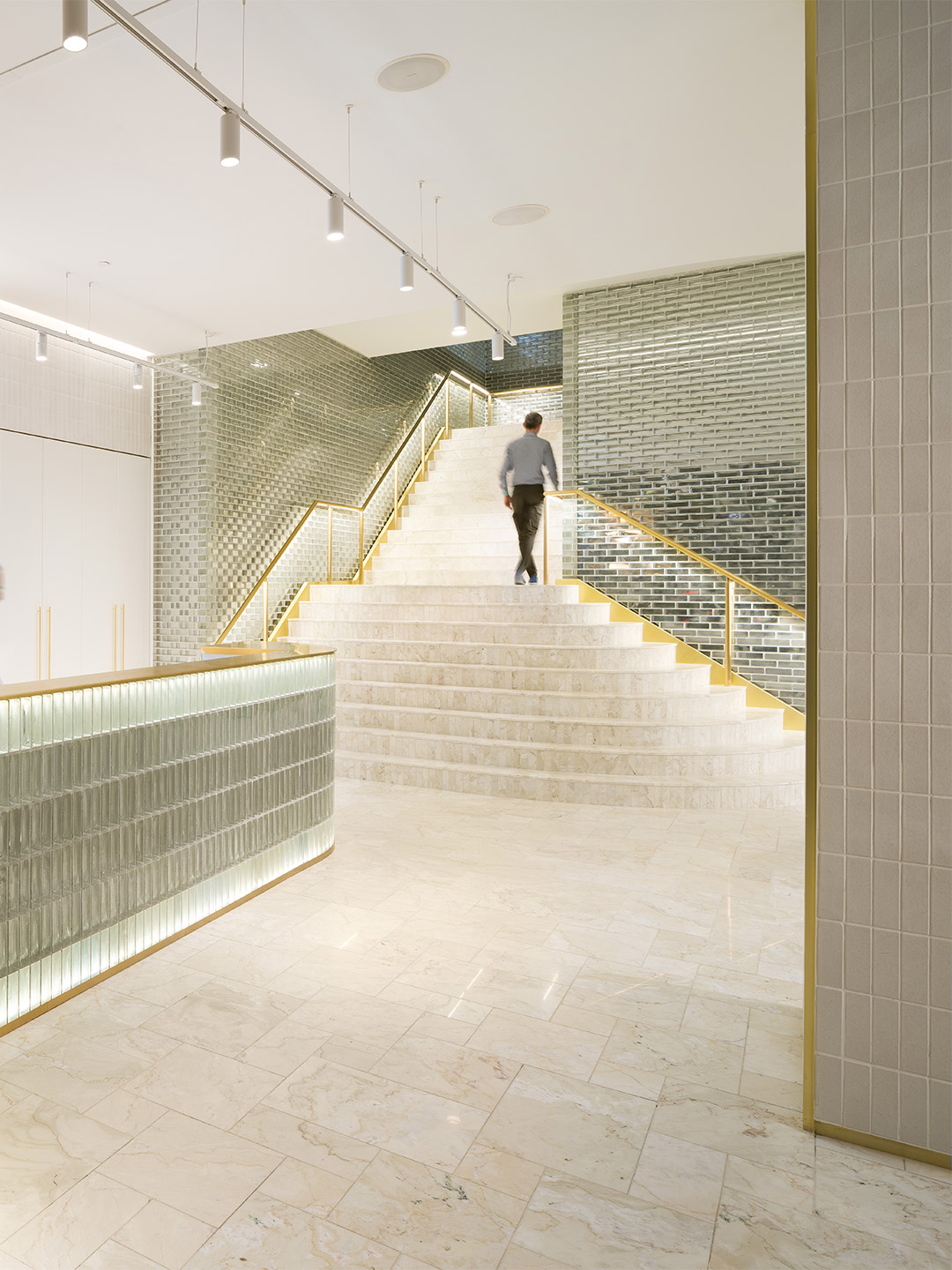
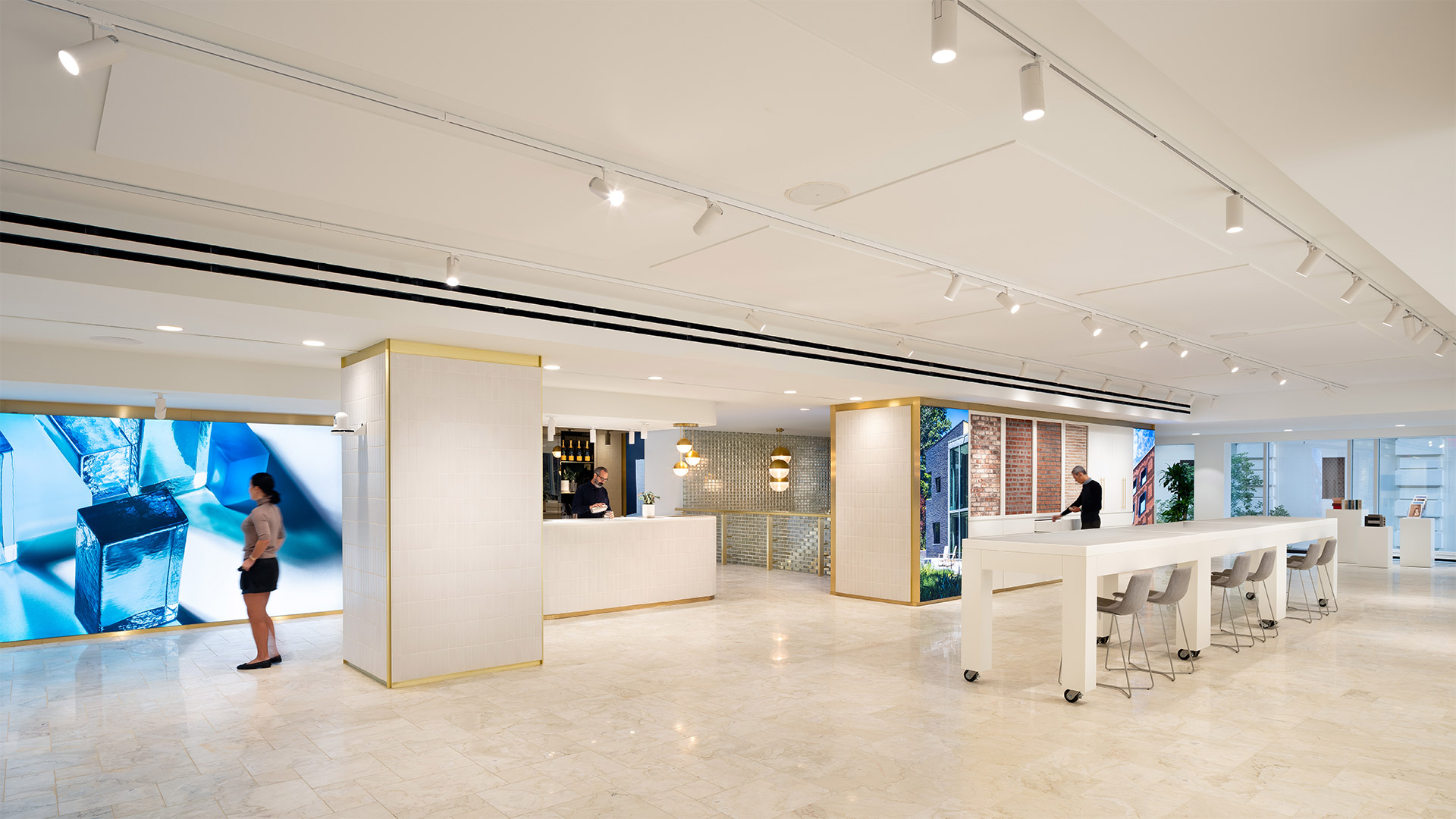
Brickworks Building Products is the owner of this masthead.
Catch up on more architecture, art and design highlights. Plus, subscribe to receive the Daily Architecture News e-letter direct to your inbox.
Related stories
- Venus Power collection of rugs by Patricia Urquiola for cc-tapis.
- Bitossi celebrates centenary in Florence with new museum and 7000-piece display.
- Casa R+1 residence in southern Spain by Puntofilipino.
After Hurricane Sandy rendered Pier 54 in New York irreparable, businessman and philanthropist Barry Diller recognised a rare opportunity to replace the pier with a completely different kind of public park – one where nature and art could unite. “What was in my mind was to build something for the people of New York and for anyone who visits; a space that on first sight was dazzling and upon use made people happy,” Barry said at the time.
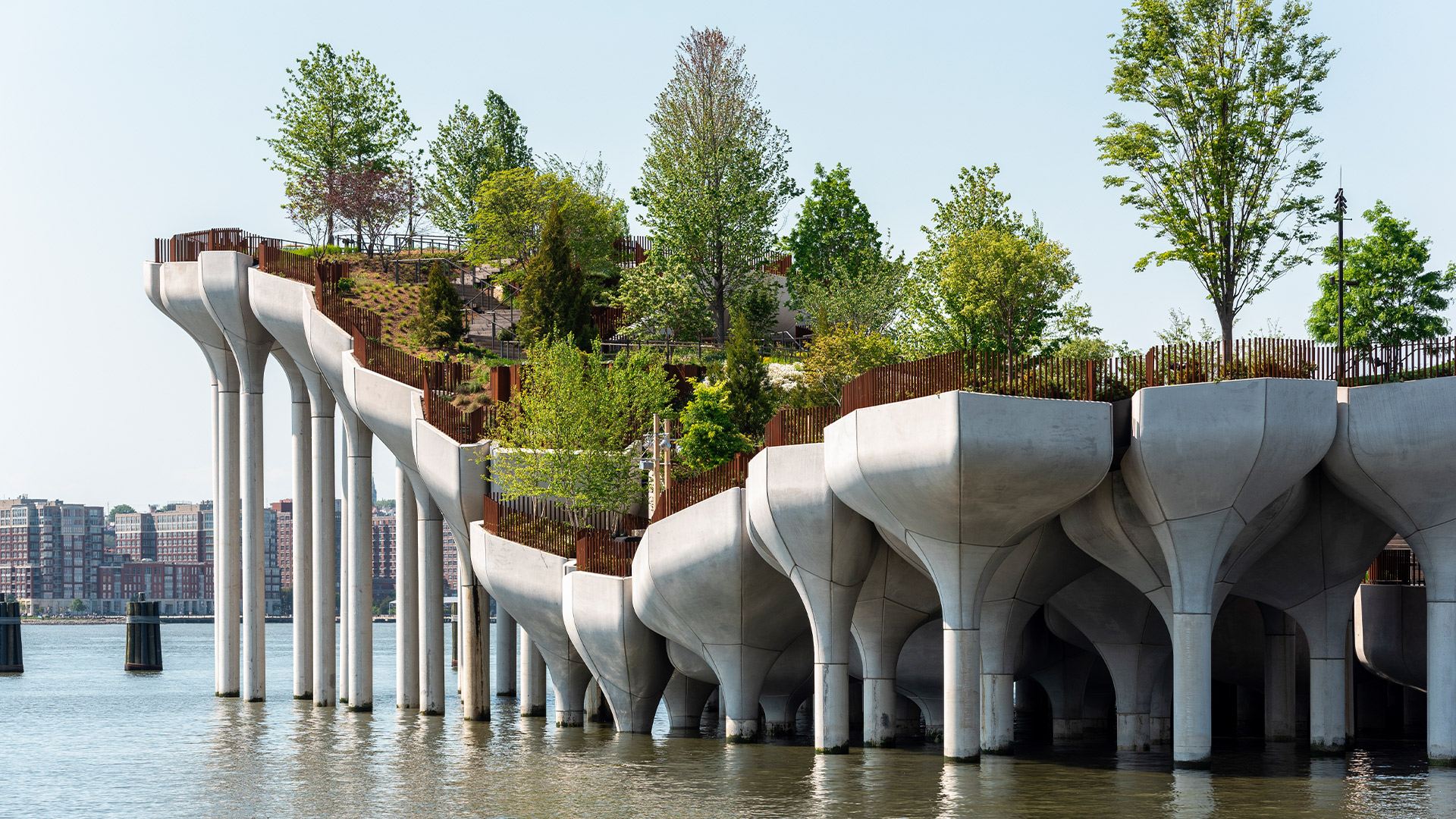
A design competition followed in 2013, resulting in British architecture practice Heatherwick Studio and New York-based landscape architects MNLA being chosen to spearhead the bold vision. The design team combined architectural innovation with a captivating landscape to imagine a ‘floating’ park, then named Pier 55, and construction began in 2016. But work came to a halt in 2017 after advocacy group The City Club of New York lobbied against it. Relaunched two years later and renamed Little Island, the recently completed project is a 2.4-acre oasis amid urban life where residents and visitors of New York can relax, imagine and recharge.
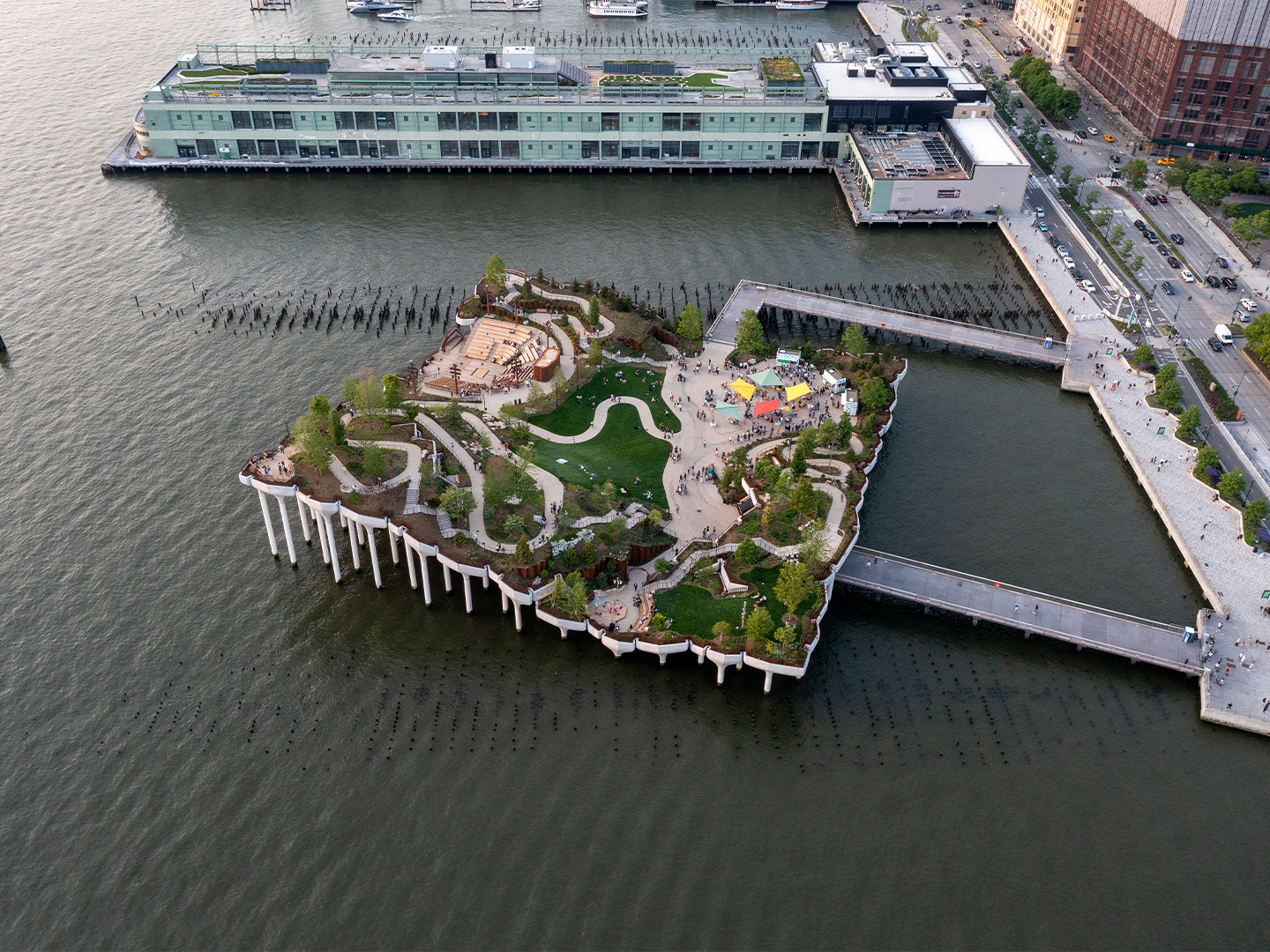
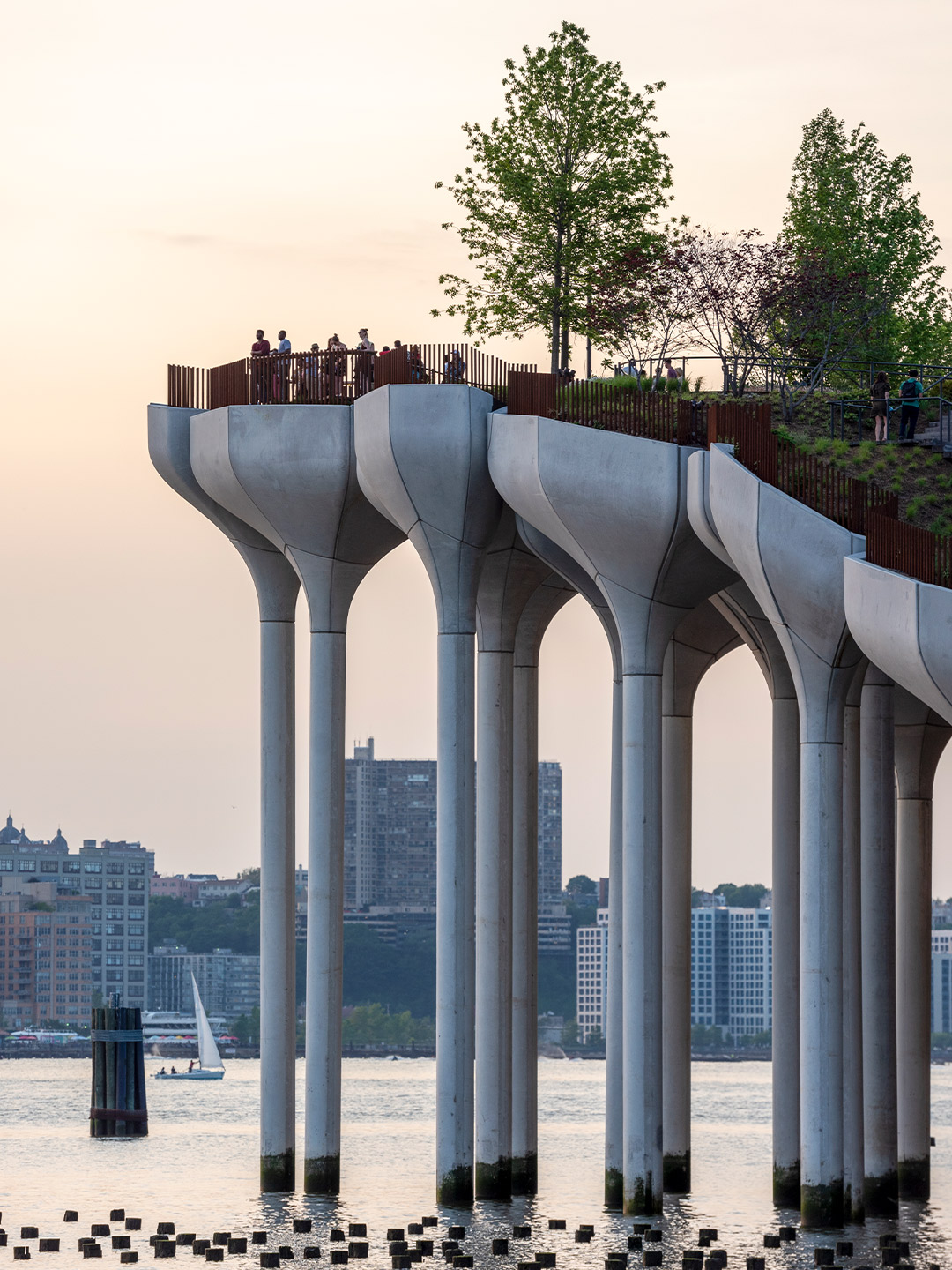
Little Island in New York by Heathwerwick Studio and MNLA
Early discussions about the project toyed with a pavilion-style structure occupying the site, further connecting Manhattan’s West Side waterfront precinct with the Hudson River. But the Heatherwick team felt this was a chance to make a significant urban space that reimagined what a pier could be. “The project was interesting, but we saw the opportunity to create a more engaging experience for New Yorkers and to build on the city’s heritage of inventing exciting new public spaces,” says Thomas Heatherwick, founder of Heatherwick Studio.
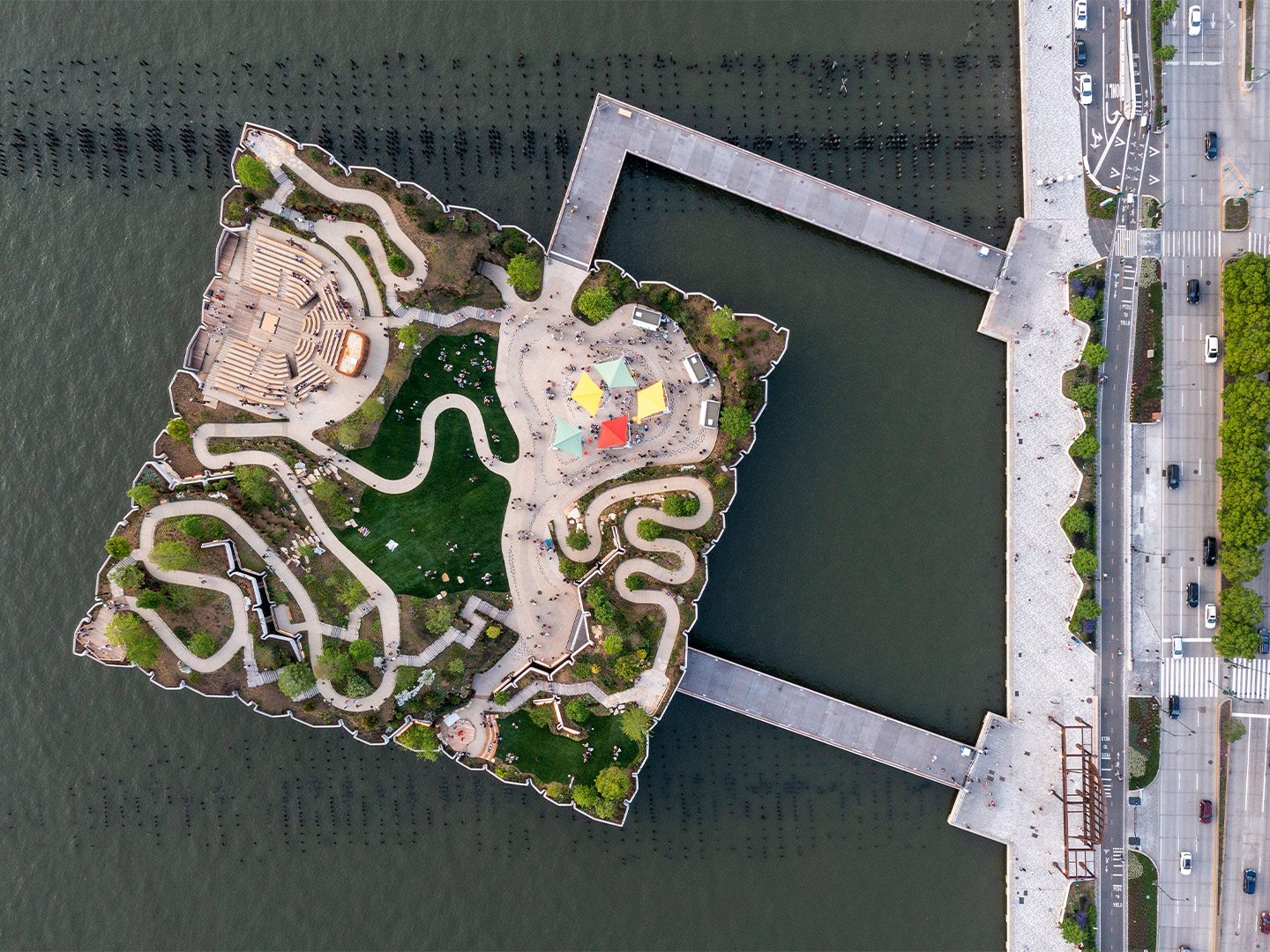
Rather than creating “another flat jetty”, the architects worked with Arup civil engineers to develop a new piece of topography that would rise and fall to form a variety of spaces and functions, including performance facilities. “We had the idea to make an entirely new type of pier as a lush rectangular garden island, connected to the land with generous gang-planks as bridges, aligned to the street grid of New York,” Thomas adds.
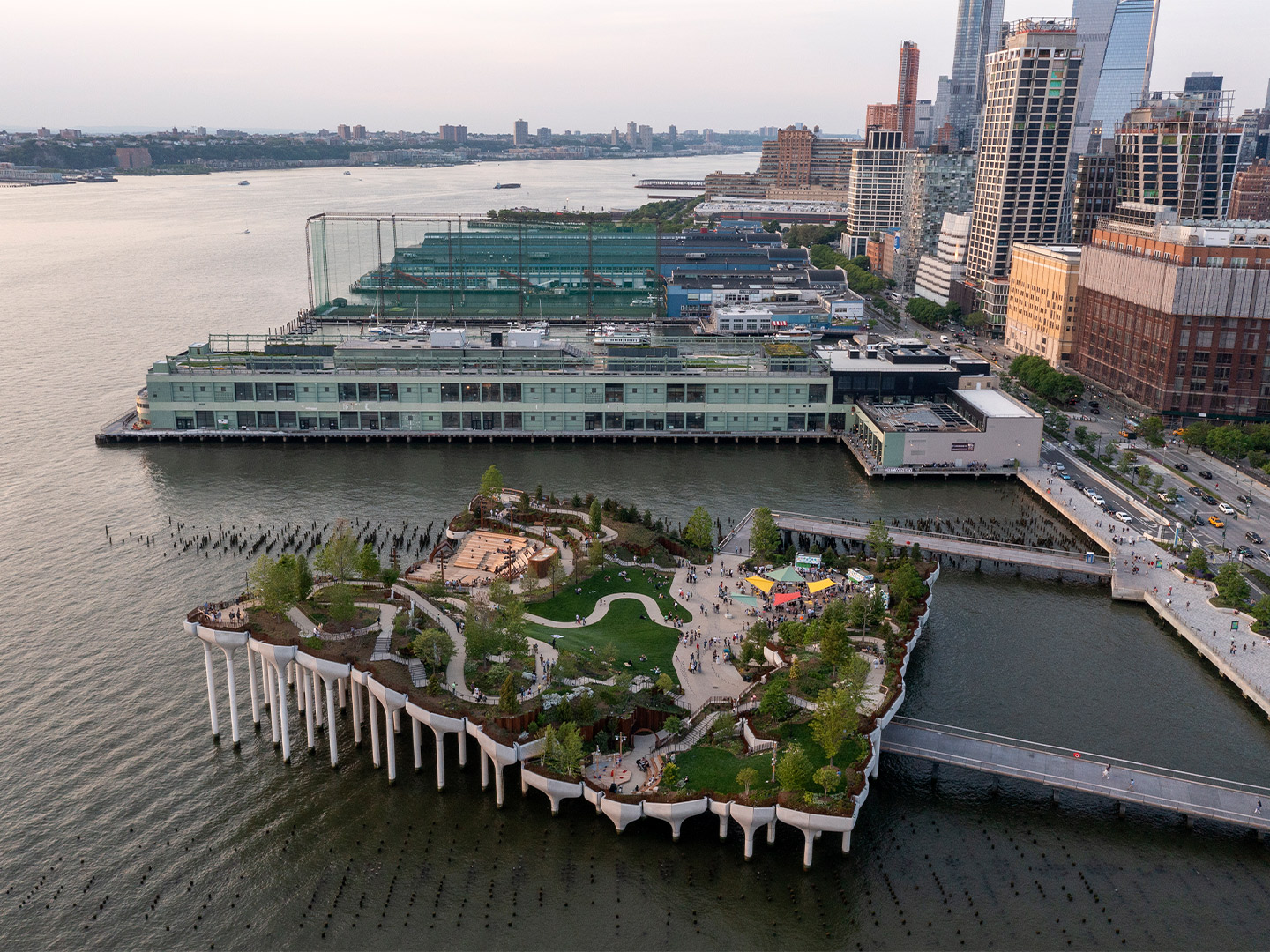
We saw the opportunity to create a more engaging experience for New Yorkers and to build on the city’s heritage of inventing exciting new public spaces.
Raising the park up into the air could not only counteract the windswept quality of the adjacent roadway but also assist the need for outdoor theatre and performance spaces, as amphitheatre-style seating could be embedded into the landscape to give the audience better views. “As well as making multiple spaces for different activities and performances, this new public space could also take advantage of the water to create a more meaningful threshold that allows visitors to feel they’re having a break from the hecticness of the city,” says Thomas.
Fascinated by the hundreds of old timber piles which jut out from the Hudson River (the structural remains of the old piers), Heatherwick Studio wondered if the identity of the new gesture could come from focusing on these structural piles, making them the “heroes” of the project rather than hiding them away. This idea stuck, and evolved into taking the 132 concrete piers that would be needed to hold up the new structure and continuing them further out of the water, extending skyward to support the landscape.
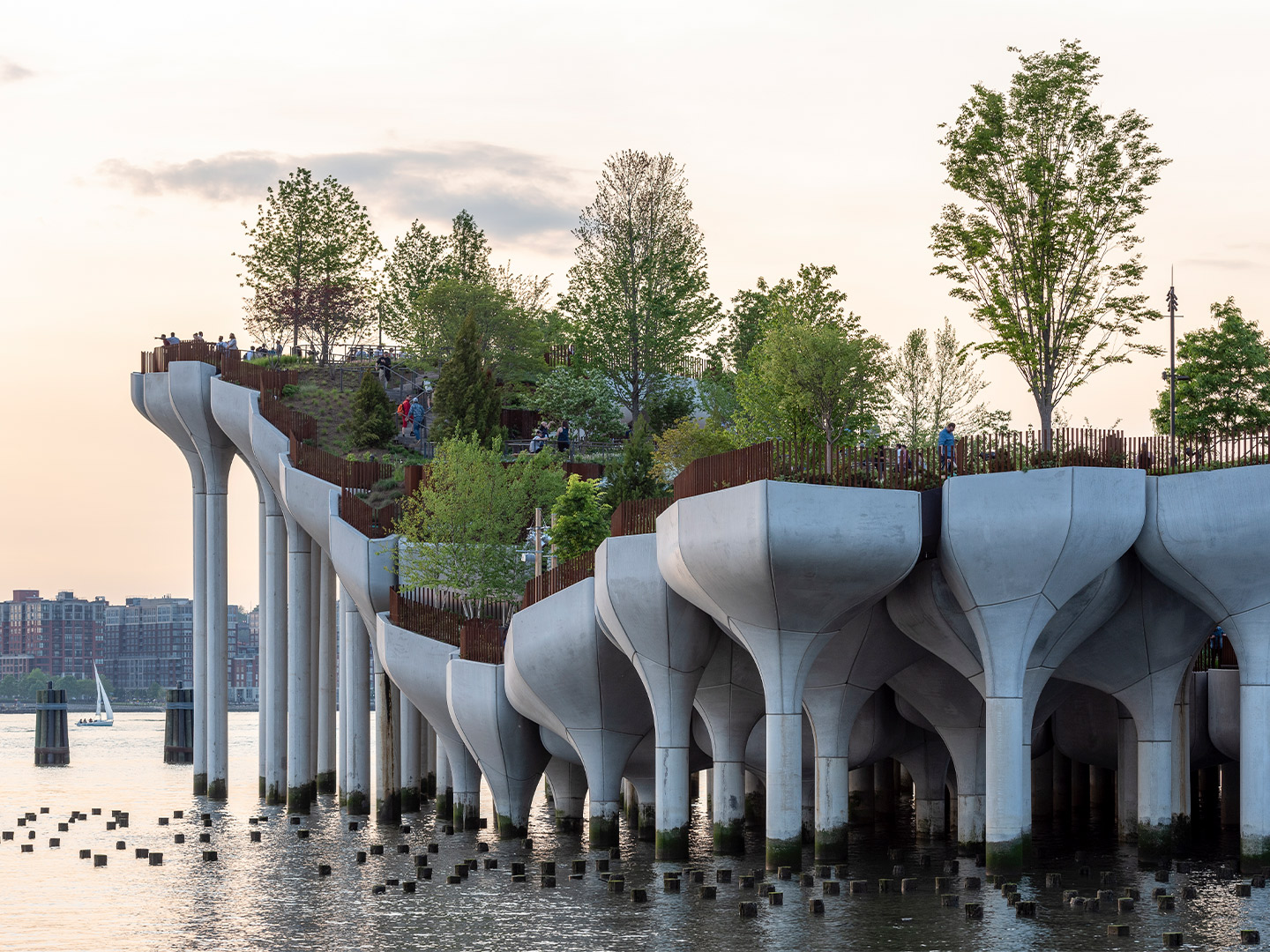
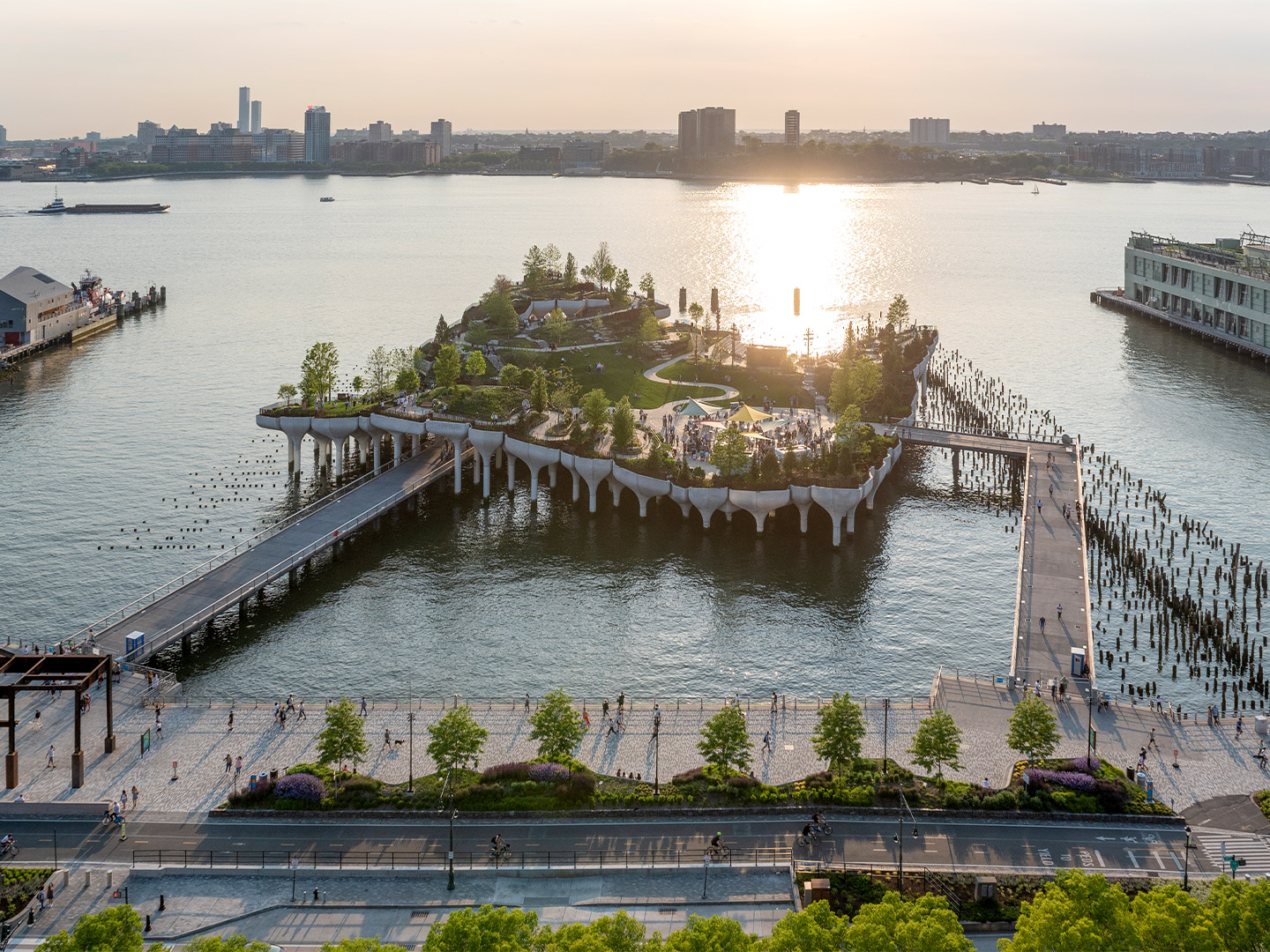
The resulting design developed as a system of repeating piles which each form a generous planter at their top. Every soil-filled planter then connects in a tessellating pattern at different heights to create a manipulated landscape. Visitors now stroll underneath the island to enter the park where the peaks and troughs of the site can be experienced. They can also take in the blossoming biodiversity; the piles have become a habitat for marine life and are a protected breeding ground for fish while the different species of indigenous trees and plants afford food, shelter and nesting sites for birds and pollinators.
Different planting typologies define three distinct overlooks – the northeast, the southwest and the northwest. “Each of these is engulfed by a unique landscape that transitions from a rich diversity of colours and textures to open grasslands as one ascends the three hills,” says Signe Nielsen, founding principal of MNLA. The effects of four seasons are displayed through flowering trees and shrubs in spring, evolving perennial displays in summer, foliage blended with softer hues of grasses in autumn and evergreen trees and shrubs in winter. “My hope is that visitors are surprised and delighted each time they come,” Signe adds.
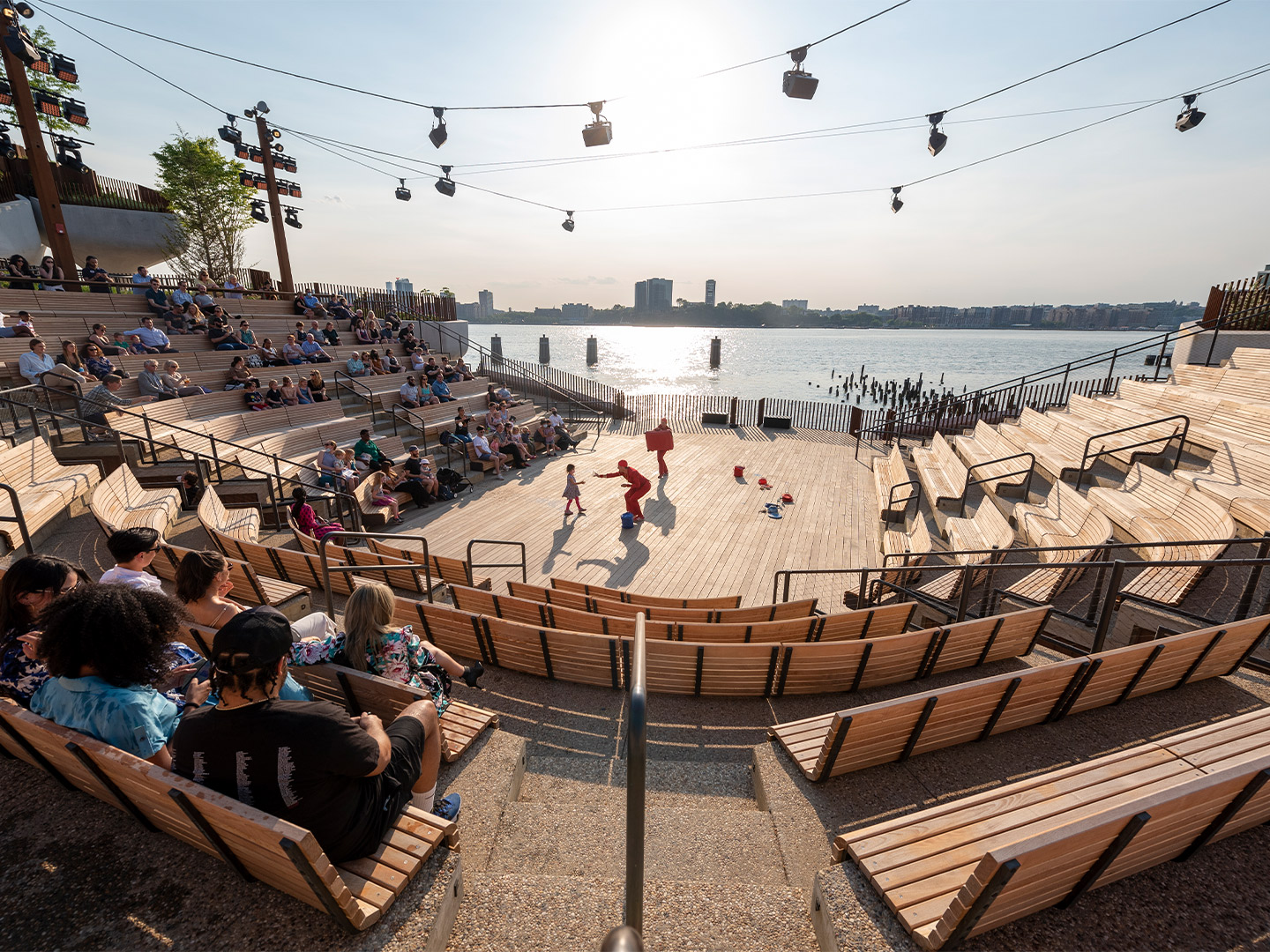
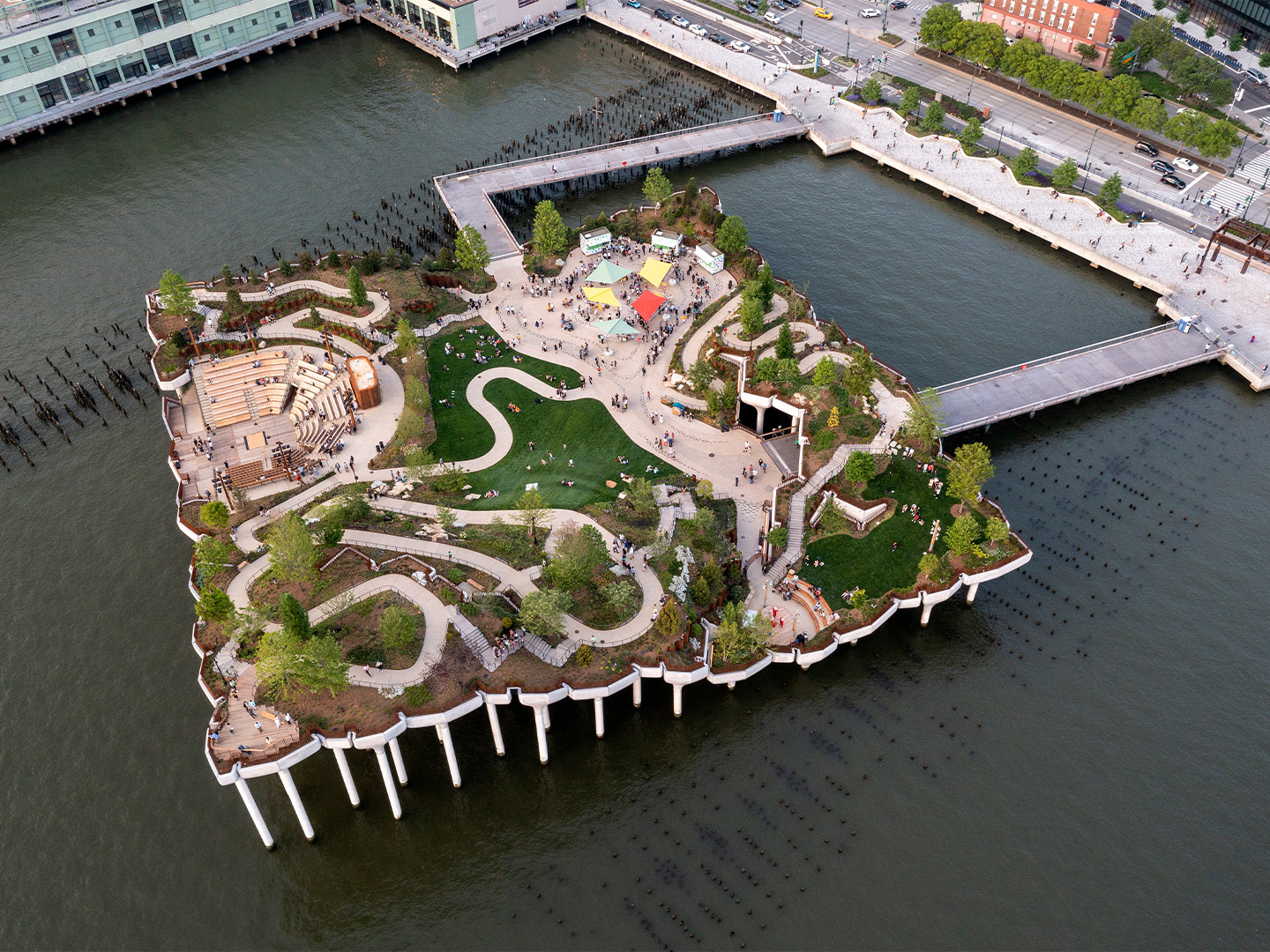
Half a kilometre of walking paths meander through the trees, past cultural venues with ever-changing programs, sloping lawns for picnics and seating nooks with contemplative sights. “As one strolls through the park many destinations beckon,” enthuses Signe. Evergreen trees buffer the winter winds and highway views, gathering and cultural venues receive ample sun to facilitate comfortable use in the “shoulder seasons”, and plant material is carefully calibrated to the ecological forces, creating suitable micro-environments to activate the spaces year-round.
Restoring the entertainment quarter that was lost when Pier 54 fell into disrepair – a key component of the brief – Little Island integrates three rather large performance spaces: an acoustically-optimised 700-seat amphitheatre, a more intimate 200-seat theatre and a flexible venue with capacity for 3500 people at the centre. Arup’s venue experts utilised Arup SoundLab technology to aid in the development of soundscaping, acoustics, sightline and seating strategies that optimise performance quality and user comfort.
All the bells and whistles aside, the project’s primary objective was to create a public park where people could come together; a welcome pause in the pace of Manhattan and a place where New Yorkers and visitors to the city can cross the river to lie under a tree, watch the sun go down and feel connected to the Hudson River. “We saw this as an unmissable opportunity to make a more dynamic social experience for visitors,” Thomas says. “Our intention has been to make an exciting space that is free for everybody to come to.”
Little Island in New York by Heatherwick Studio and MNLA is now open to the public and can be accessed with free timed ticketing.
heatherwick.com; mnlandscape.com
Our intention has been to make an exciting space that is free for everybody to come to.
Catch up on more architecture and design highlights. Plus, subscribe to receive the Daily Architecture News e-letter direct to your inbox.
Related stories
- Ateliers Jean Nouvel wins competition to build opera house in Shenzhen.
- Tattoo-like illustrations embellish the silk-inspired theatre by Steven Chilton Architects.
- The Tower C ‘superscape’ in Shenzhen by Zaha Hadid Architects.
- The Tsingpu Yangzhou Retreat in China by Neri&Hu.
After Hurricane Sandy rendered Pier 54 in New York irreparable, businessman and philanthropist Barry Diller recognised a rare opportunity to replace the pier with a completely different kind of public park – one where nature and art could unite. “What was in my mind was to build something for the people of New York and for anyone who visits; a space that on first sight was dazzling and upon use made people happy,” Barry said at the time.
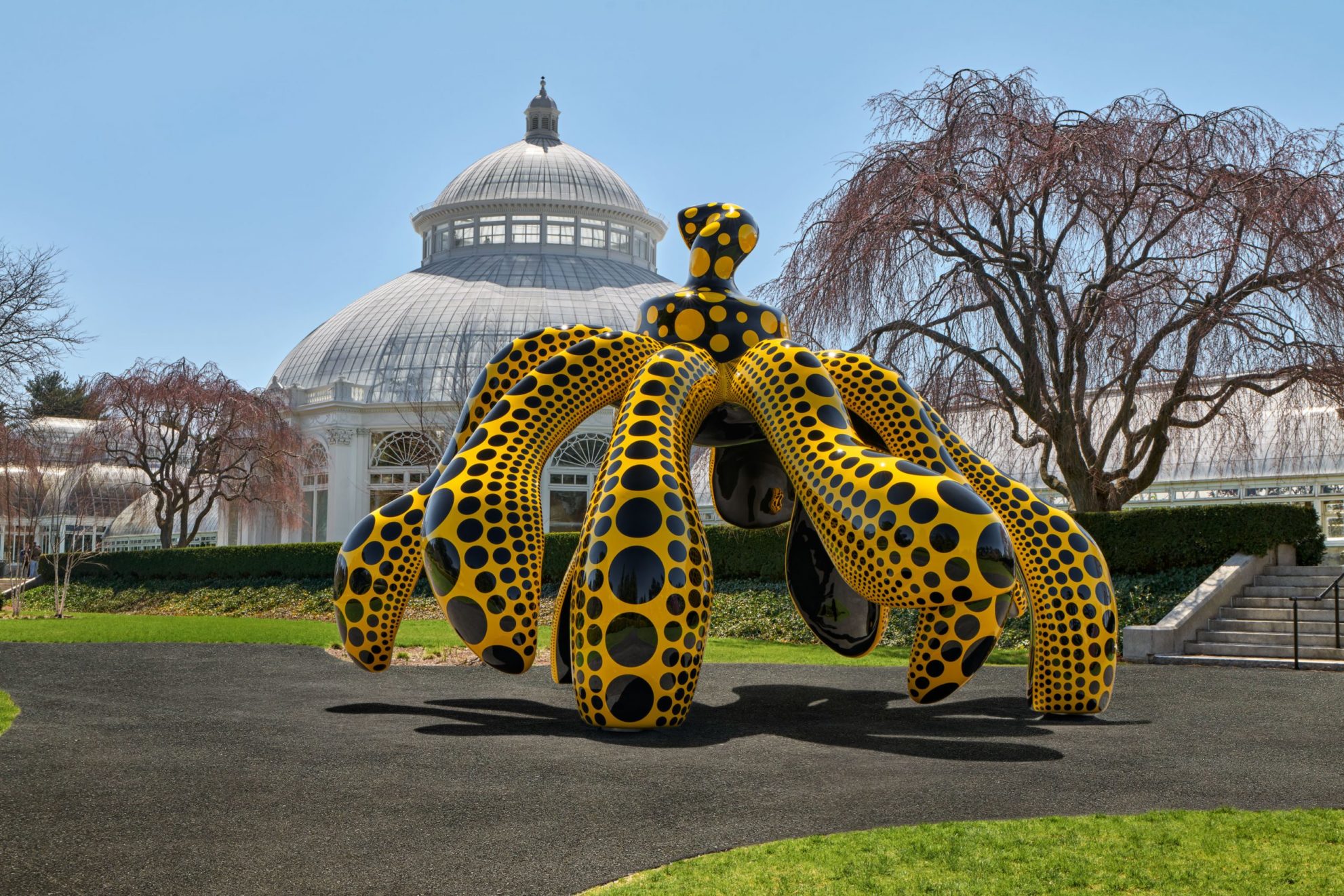
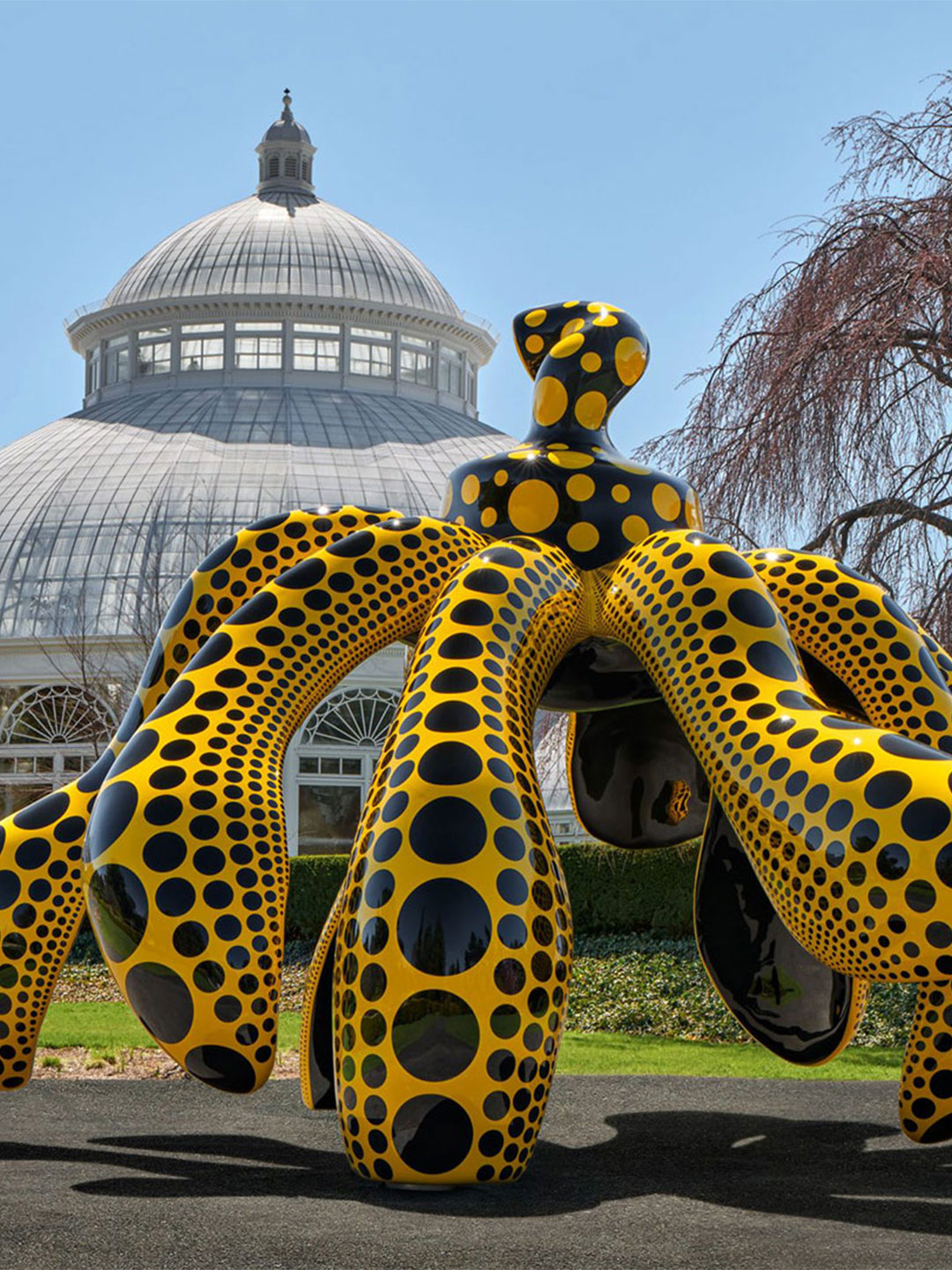
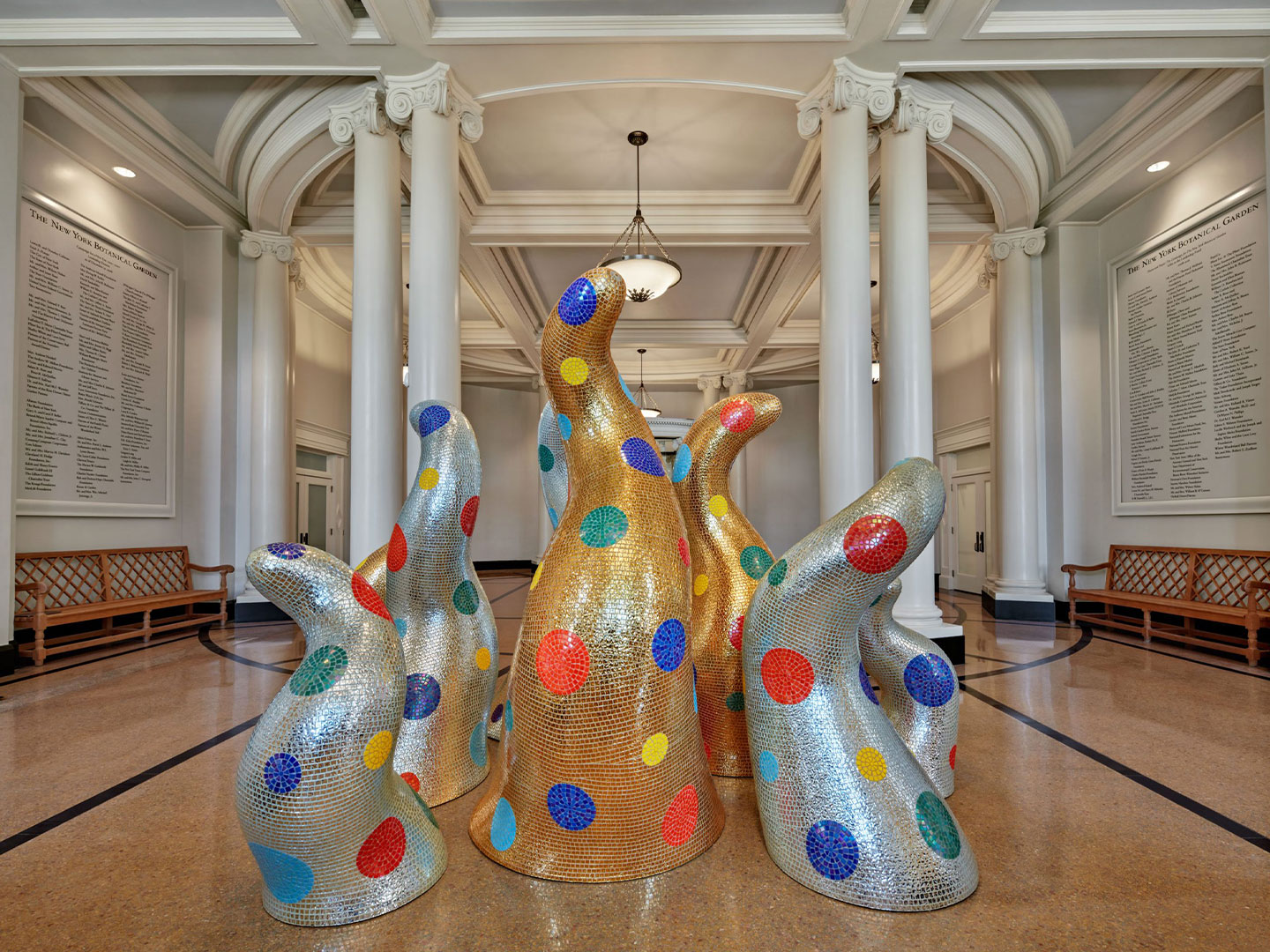
Kusama’s otherworldly paintings of plants and flowers plus works that have never been publicly displayed are joined by some of her most ambitious and recognisable sculptures, installed in and around the majestic Conservatory, Library Building and throughout the 250-acre garden landscape.
Yayoi Kusama at The New York Botanical Garden
- The New York Botanical Garden has announced the opening of ‘KUSAMA: Cosmic Nature’, a survey of work by Japanese artist Yayoi Kusama.
- The exhibition is on display in the Garden’s Conservatory, Library Building and throughout the 250-acre garden landscape.
- Stunning floral displays that change each season have been carefully choreographed to complement the exhibition.
- Timed tickets are on sale until the exhibition closes on October 31.
The exhibition, its related programs and accompanying publication offer a glimpse into Kusama’s lifelong fascination with the natural world and its countless manifestations, beginning in her childhood in the greenhouses and fields of her family’s seed nursery in Matsumoto, Japan.
“For Kusama, cosmic nature is a life force that integrates the terrestrial and celestial orders of the universe from both the micro- and macro-cosmic perspectives she investigates in her practice,” says exhibition curator Mika Yoshitake.
“Her explorations evoke meanings that are both personal and universal. Nature is not only a central source of inspiration, but also integral to the visceral effects of Kusama’s artistic language in which organic growth and the proliferation of life are made ever-present.”
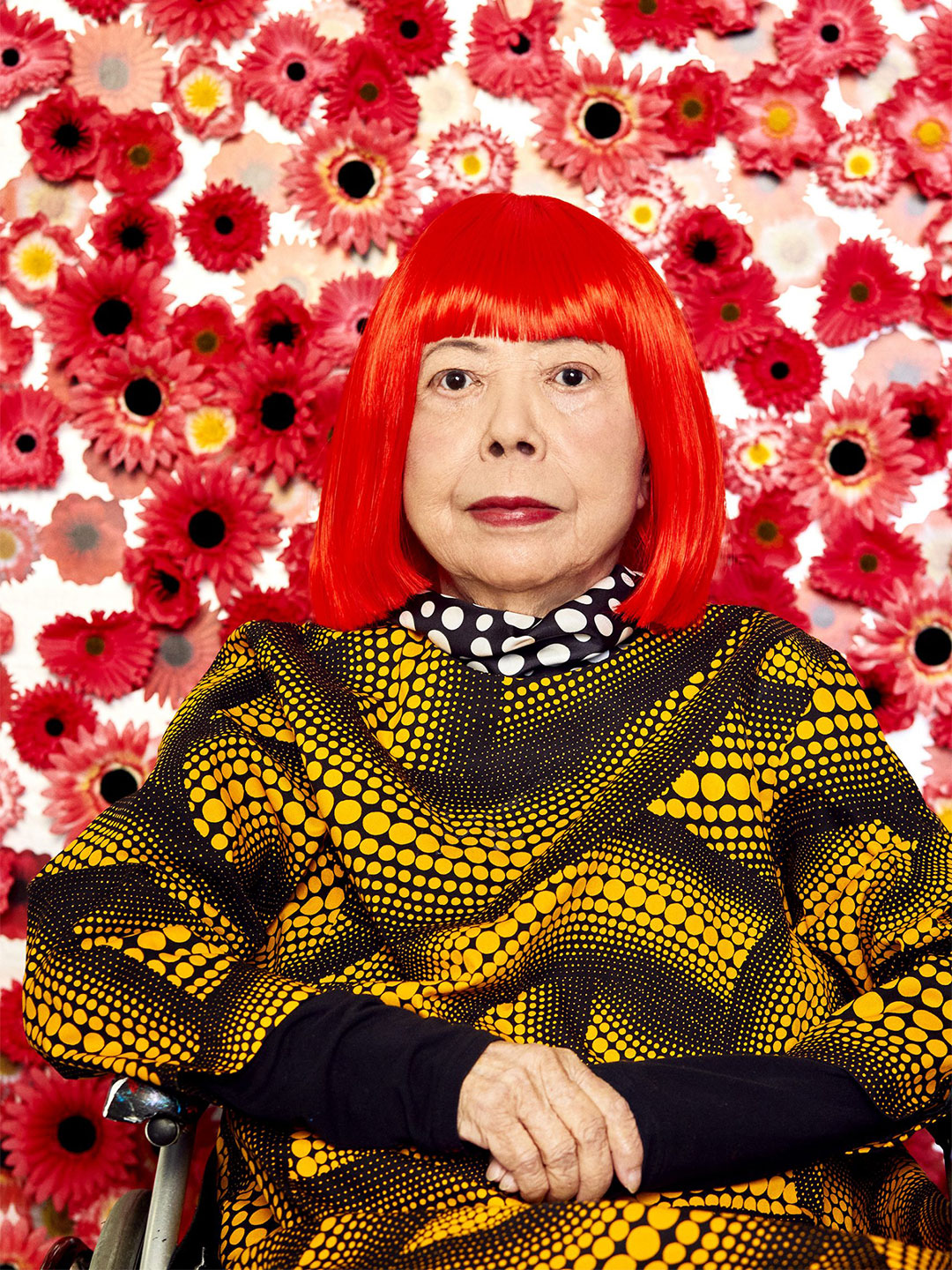
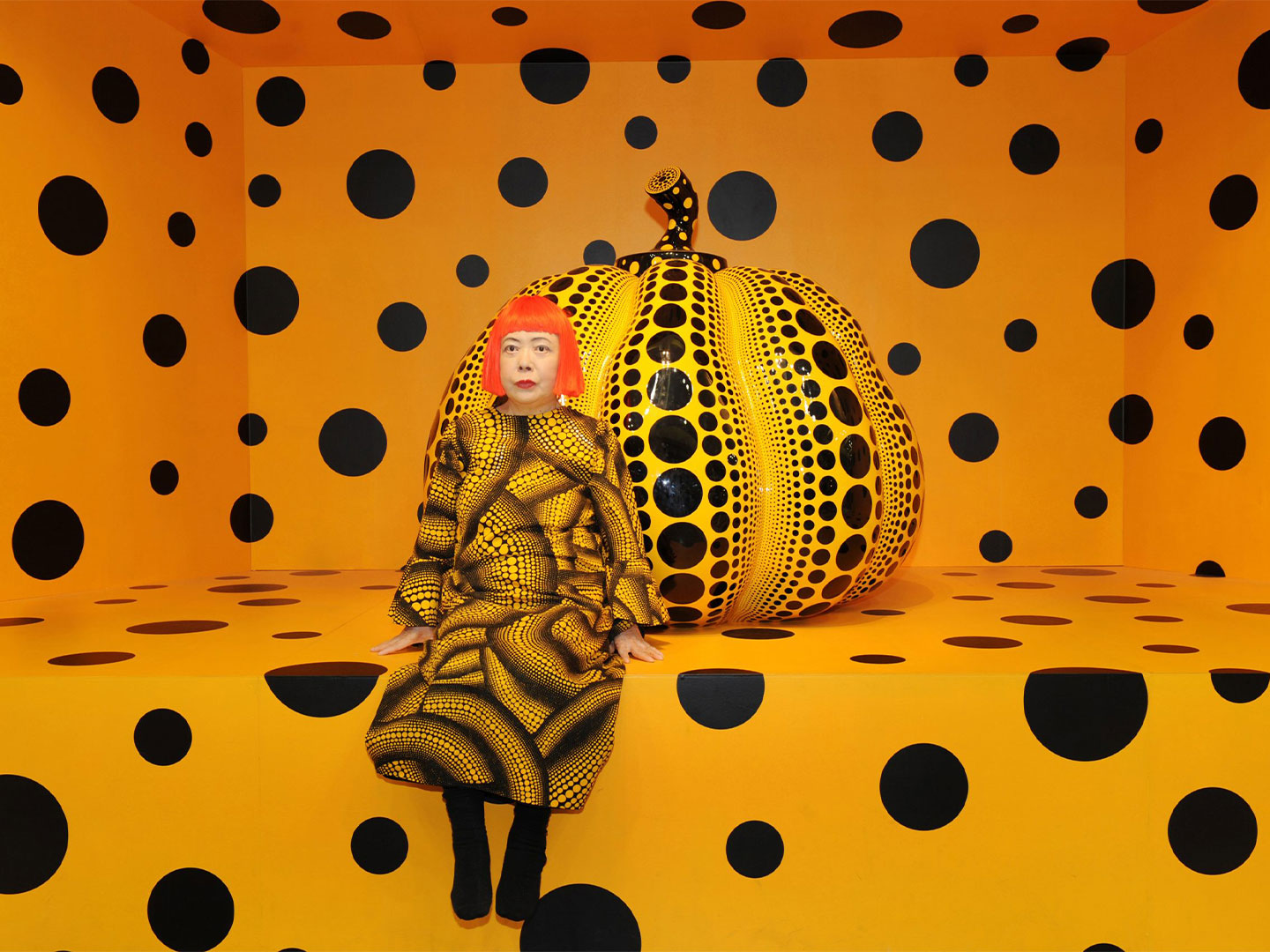
Kusama in Flower Obsession. Photo: Yuzuke Miyazake.
Highlights of the display begin on the Conservatory Lawn where visitors are confronted by the monumental Dancing Pumpkin (2020), a nearly 5-metre high bronze sculpture painted in an unforgettable combination of black and yellow. As playful as it is powerful, the piece is sited in a verdant landscape of flowering shrubs, grasses, ferns, and river birches – a nod to the forests that surrounded Kusama’s childhood home.
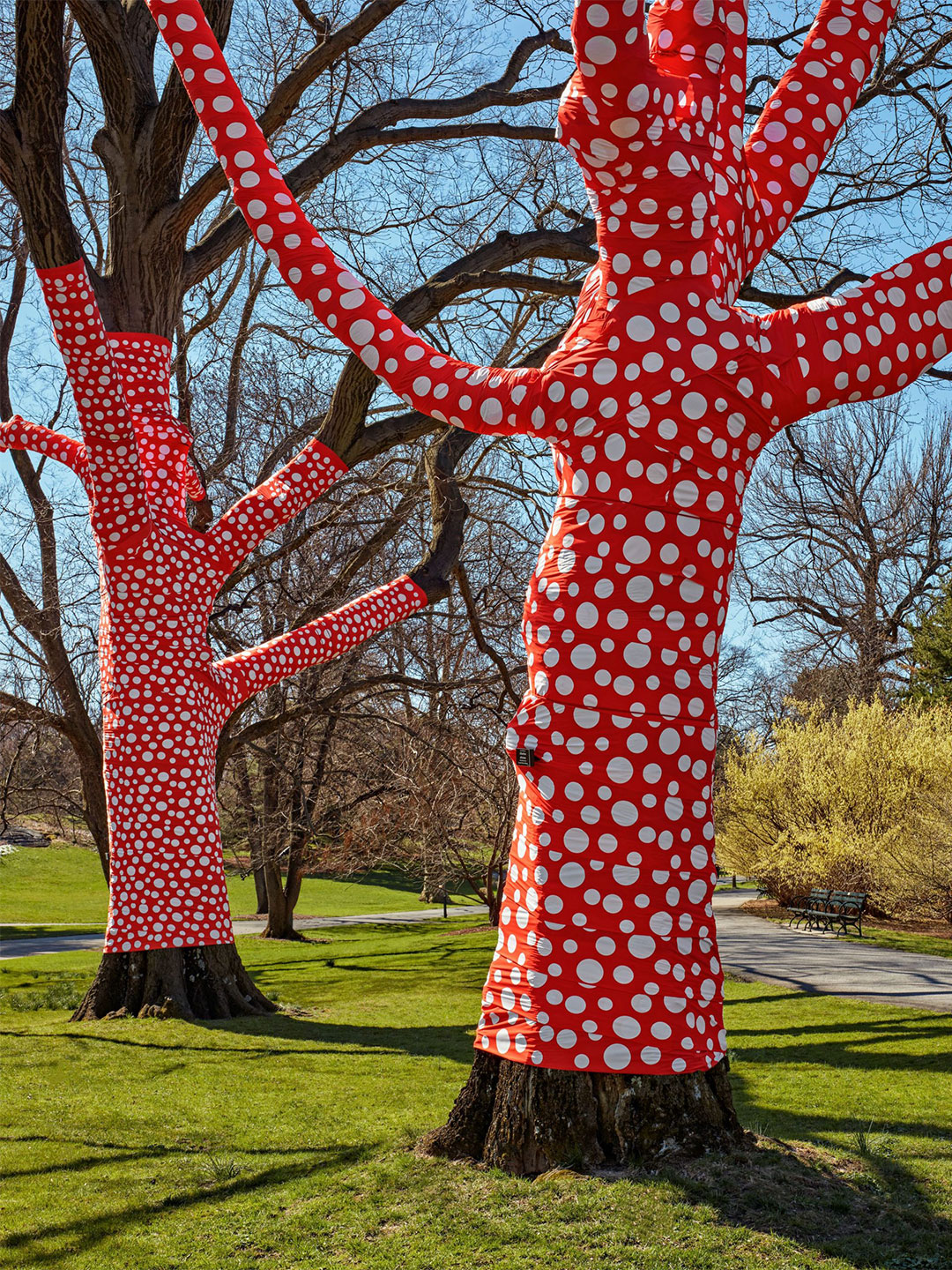
From there, visitors might marvel at the psychedelic, purple-tentacled floral form of I Want to Fly to the Universe (2020) in the Visitor Center Reflecting Pool, and then behold Ascension of Polka Dots on the Trees (2002/2021), where the trunks of soaring trees are sheathed in vibrant red with white polka dots along Garden Way.
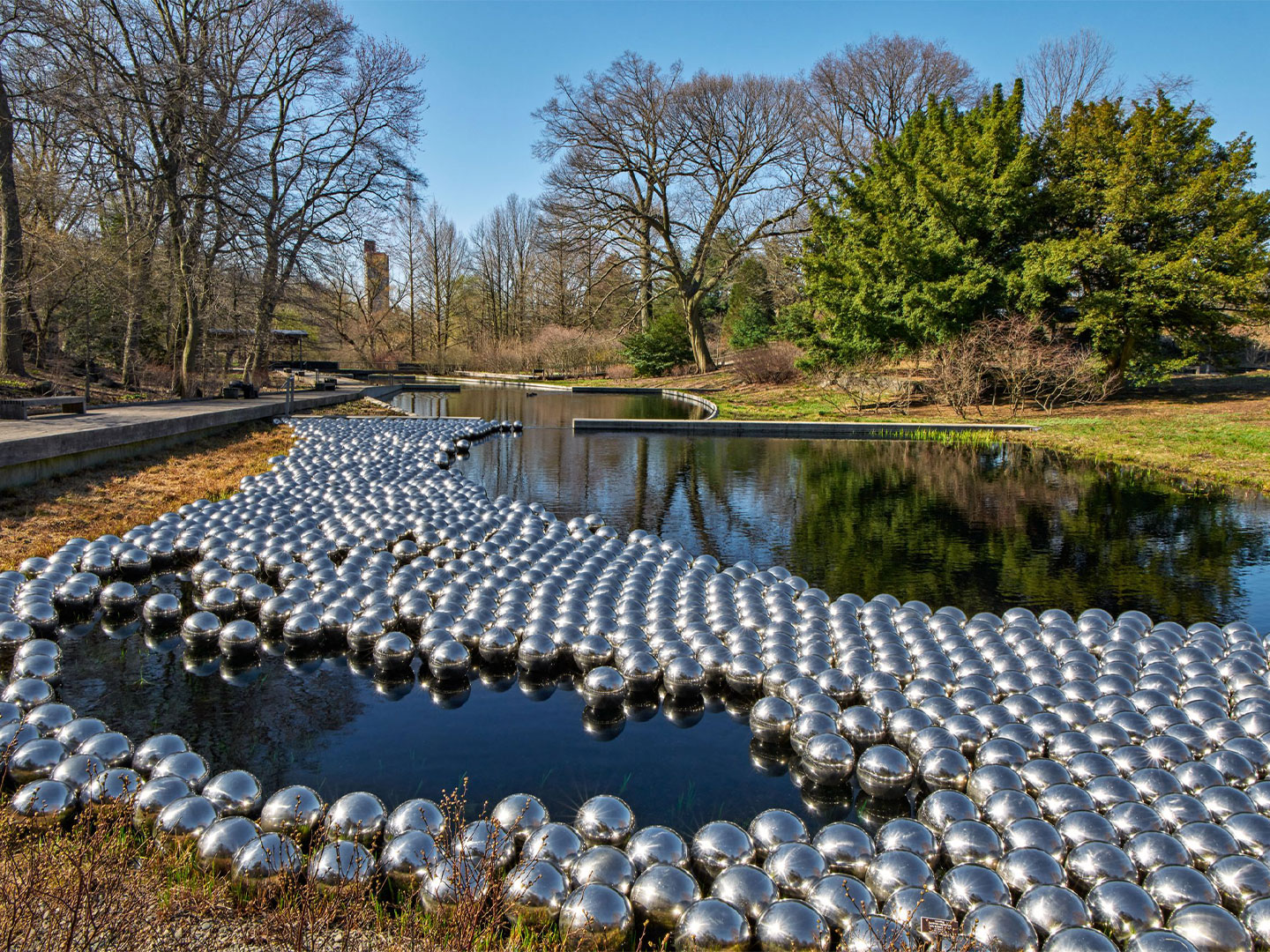
Among the resident ducks, the 1400 stainless-steel spheres of Narcissus Garden (1966/2021) are installed in the 70-metre-long water feature of the Native Plant Garden. Each measuring in at nearly 30 centimetres in diameter, the reflective orbs float on the water’s surface, spinning and drifting in the wind while mirroring the environment around them to mesmerising effect.
Kusama’s otherworldly paintings of plants and flowers plus works that have never been publicly displayed are joined by some of her most ambitious and recognisable sculptures.
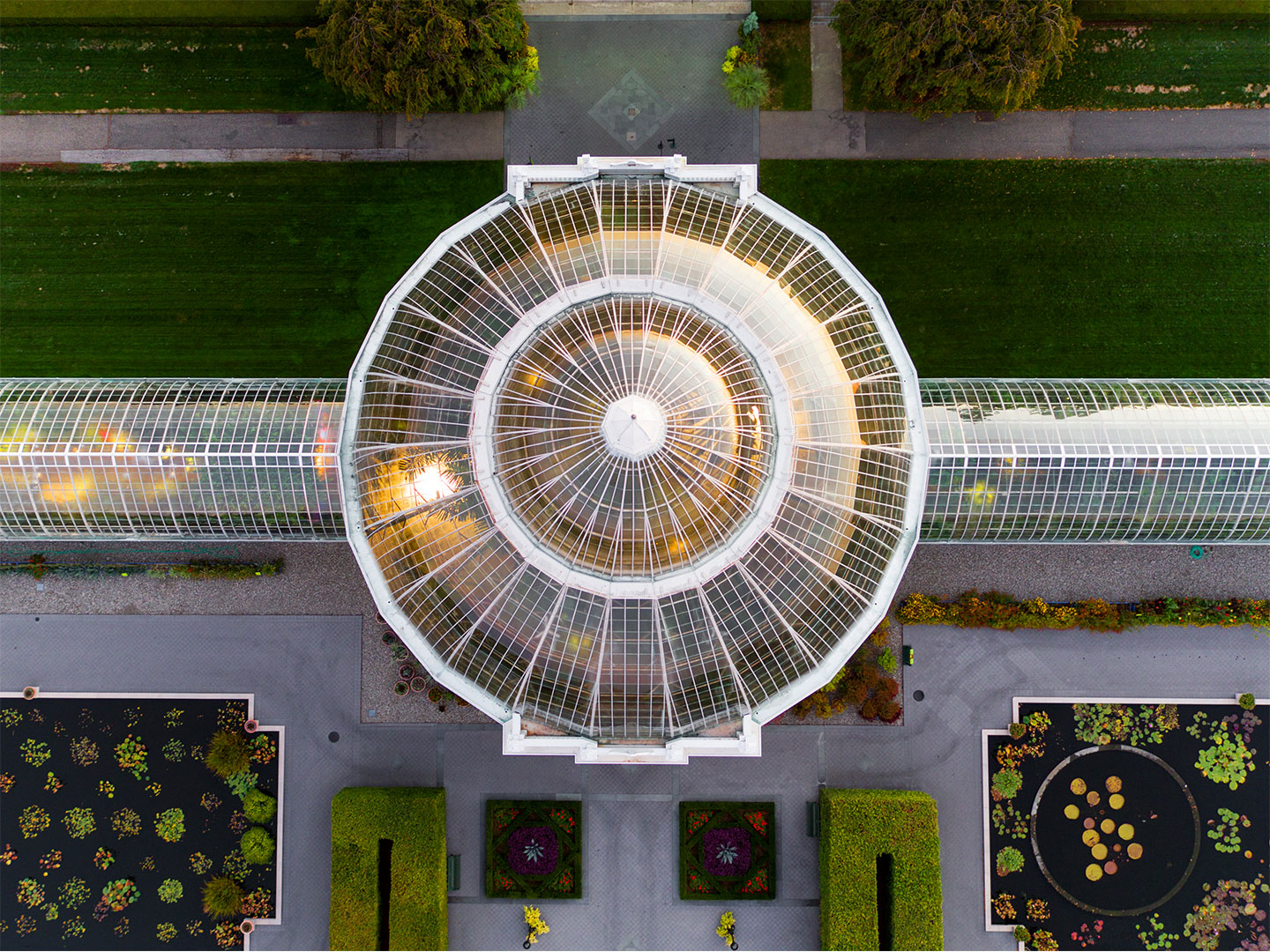
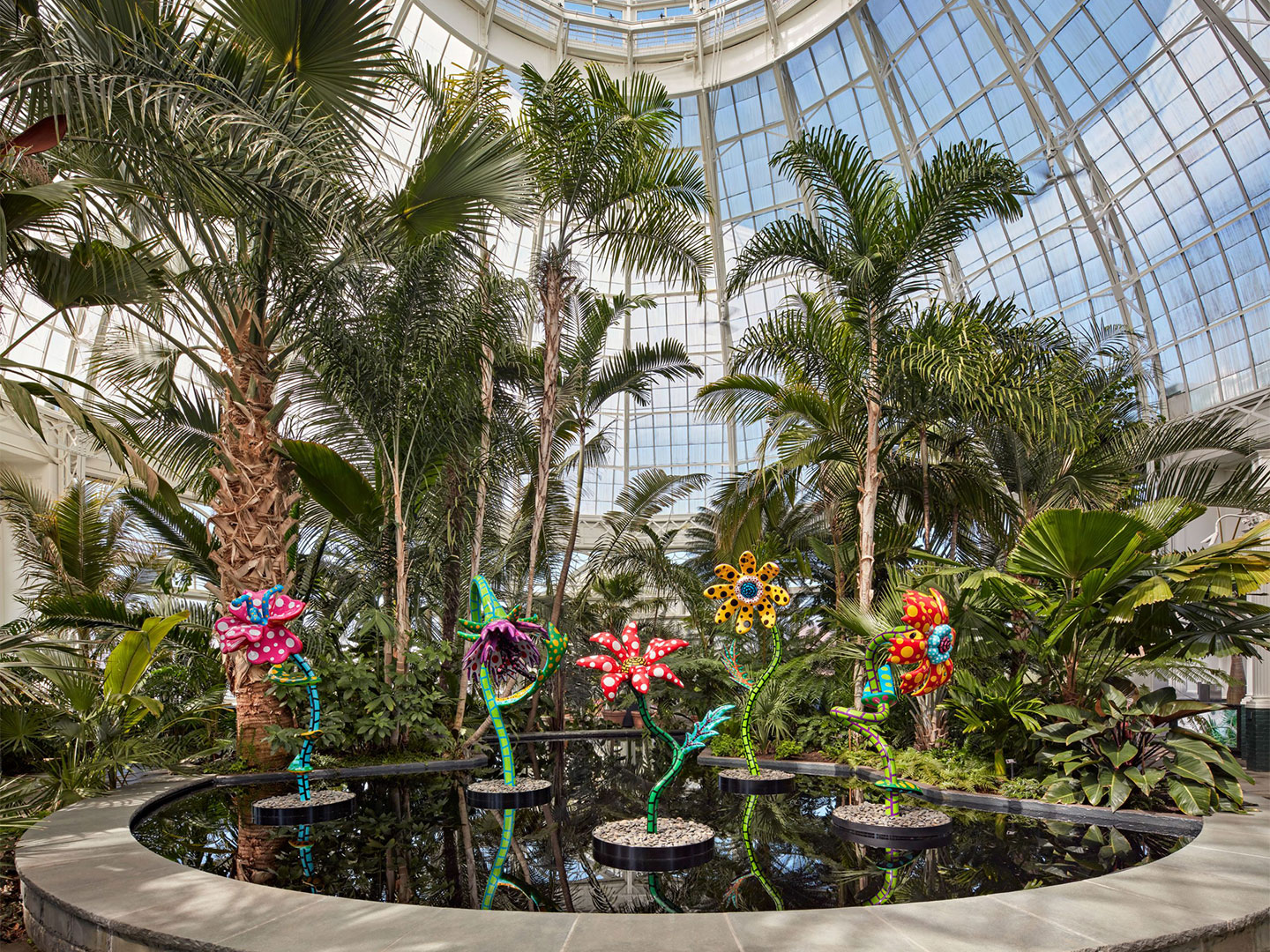
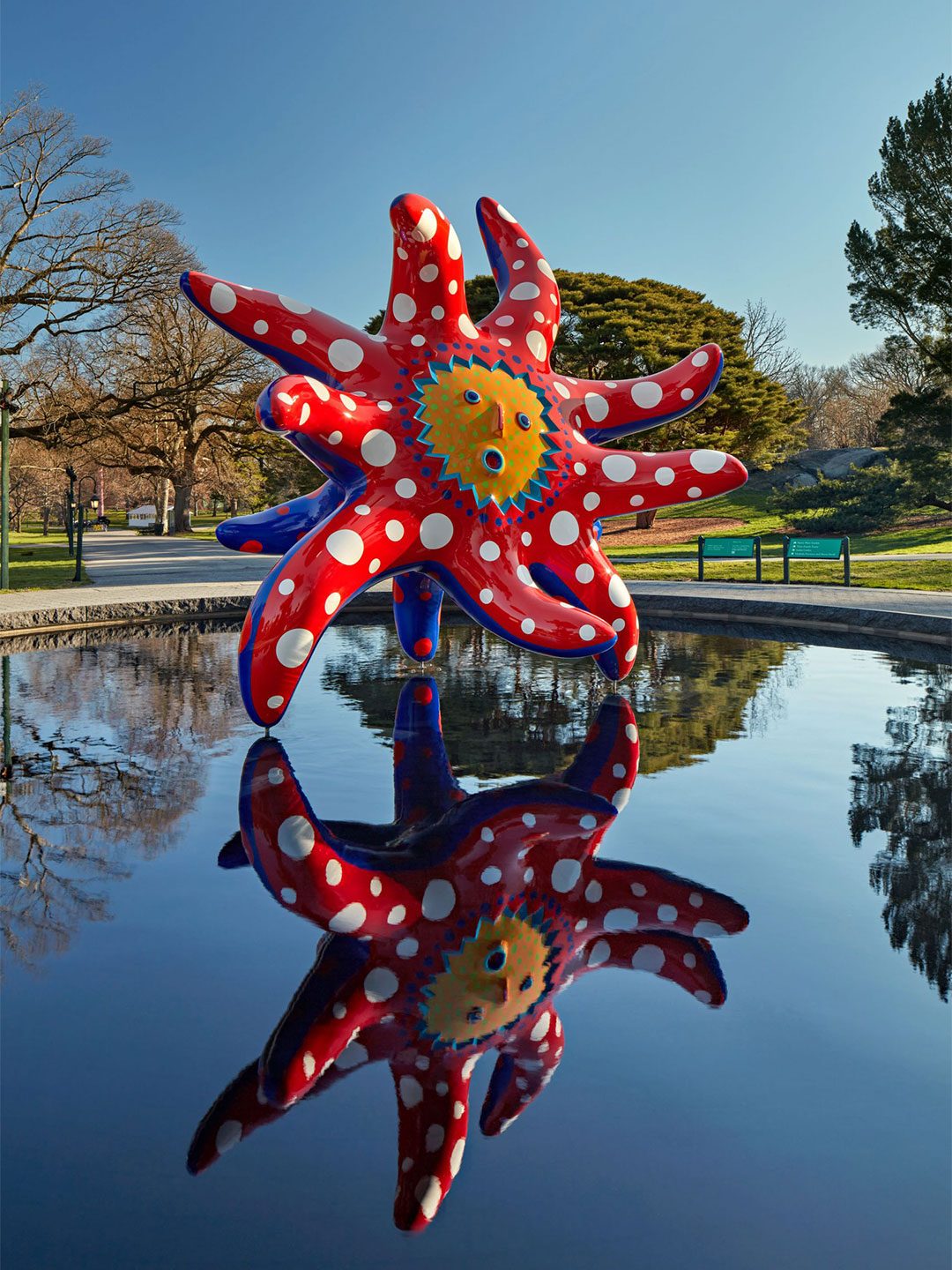
Spectacular seasonal displays complement the artworks on view, making each visit to the exhibition unique as new plantings, textures, and painterly palettes burst into life. Glorious outdoor displays of tulips and irises in spring give way to dahlias and sunflowers in summer, and masses of pumpkins and autumnal flowers in autumn.
Stunning floral presentations bring to life one of Kusama’s paintings on view in the library through a seasonal progression of violas, salvias, zinnias, and other colourful annuals. In autumn, displays of meticulously trained kiku (Japanese for chrysanthemum, one of that country’s most heralded autumn-flowering plants) will create a dramatic finale for the Conservatory displays.
Timed entry tickets are available for ‘KUSAMA: Cosmic Nature’ until October 31.
Catch up on more exhibitions and events. Plus, subscribe to receive the Daily Architecture News e-letter direct to your inbox.
Related stories
- Introducing the New Wave collection of 80s-inspired vases by Greg Natale.
- Carla Sozzani curates new colours for classic Arne Jacobsen chairs.
- Adam Goodrum stamps all-Australian style on new breezeblock design.
The first restaurant in New York City for both chef Alain Verzeroli and designer Joseph Dirand, Le Jardinier attracts local New Yorkers alongside gourmet travellers, each with a penchant for sophisticated style and thoughtful cuisine. As we look forward to a world that returns to some sort of normality, Karine Monié bumps this designer destination to the top of our must-visit list in 2021 and beyond.
In Midtown Manhattan, Le Jardinier is a delicious feast for both the eyes and the palate. Inaugurated in early 2019, the 62-seat restaurant – its name French for ‘the gardener’ – focuses its sights on high-quality vegetables, seasonal ingredients and garden-fresh herbs. A subject which chef Alain Verzeroli believes is aligned with worldwide culinary trends. “This is the way sophisticated diners are eating globally,” he says.
Tucked within a luxury condominium tower developed by Aby Rosen and designed by architect Norman Foster, the restaurant is dressed in the inimitable stylings of French architect and interior designer Joseph Dirand. The designer is responsible for other illustrious hospitality projects including Loulou, Monsieur Bleu and Le Flandrin in his beloved Paris, and the Four Seasons Hotel at The Surf Club and Le Sirenuse restaurant in Miami.
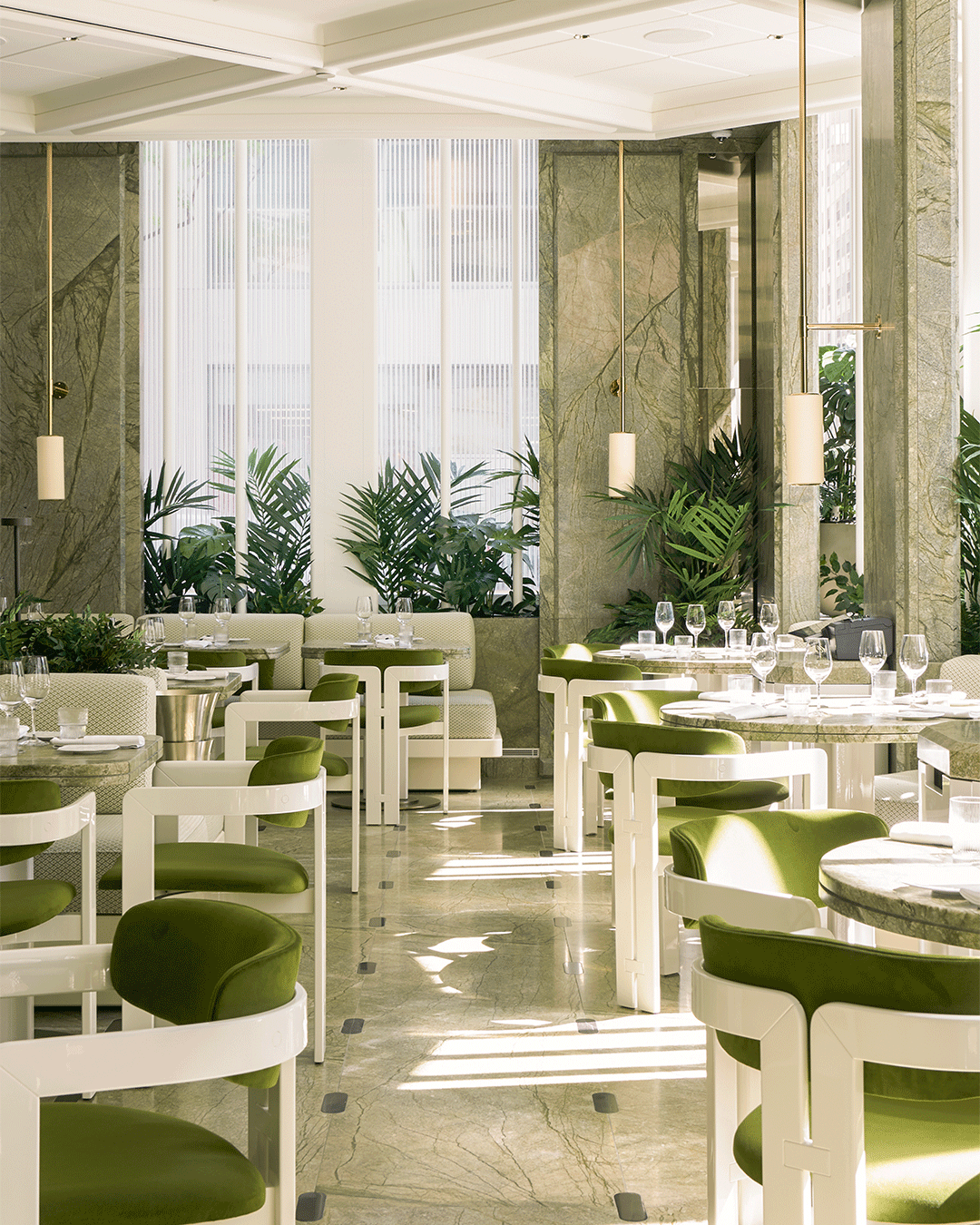
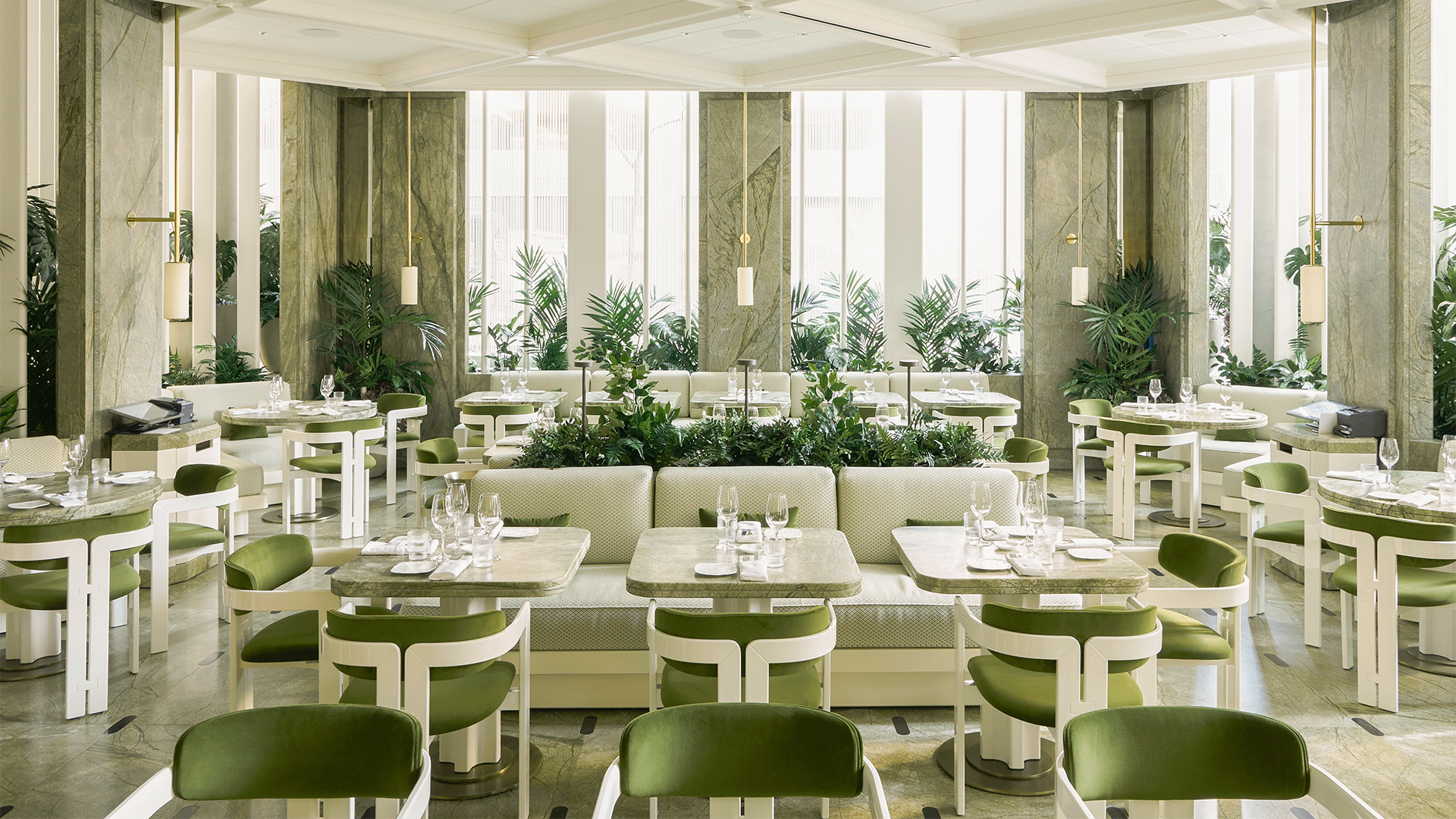
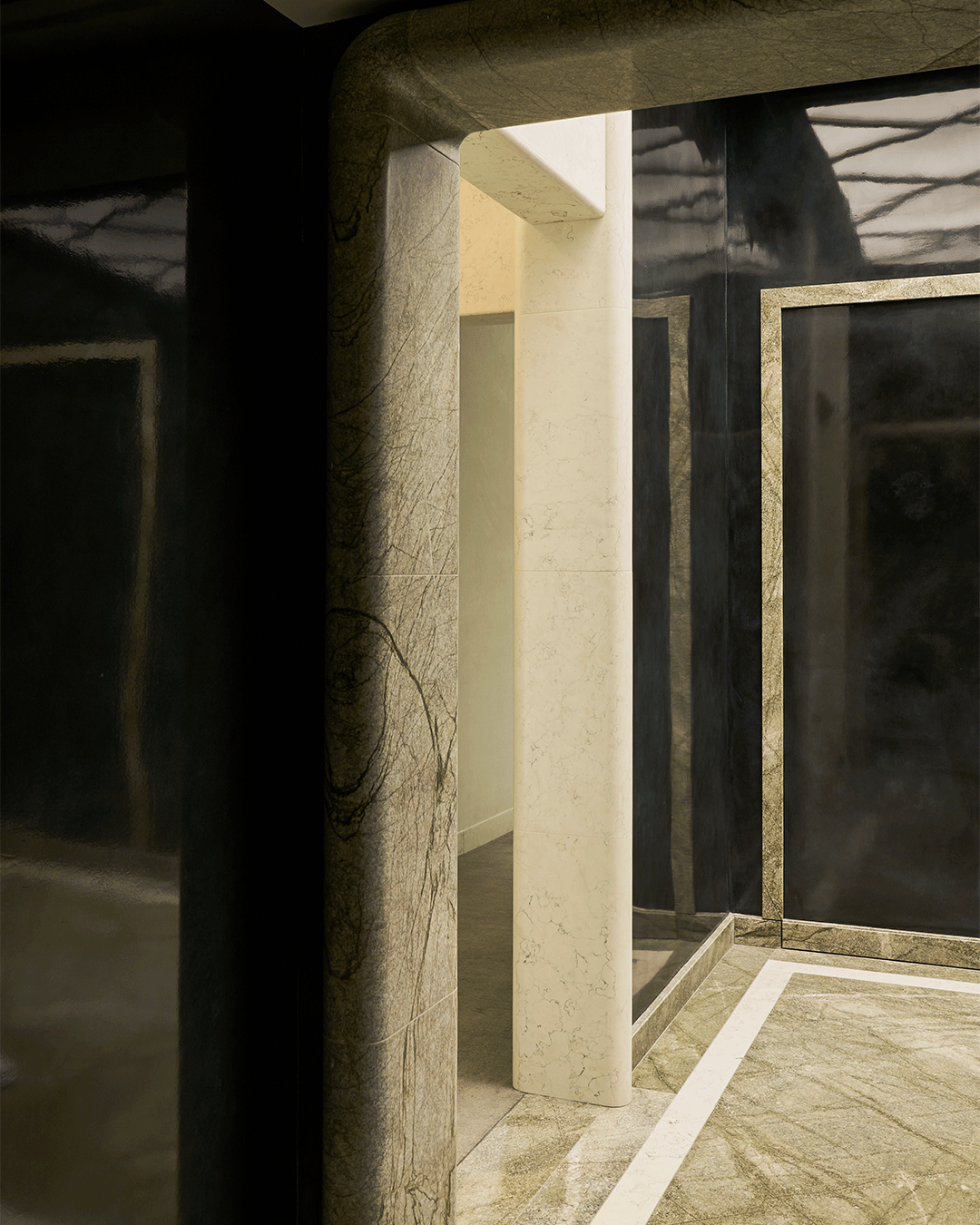
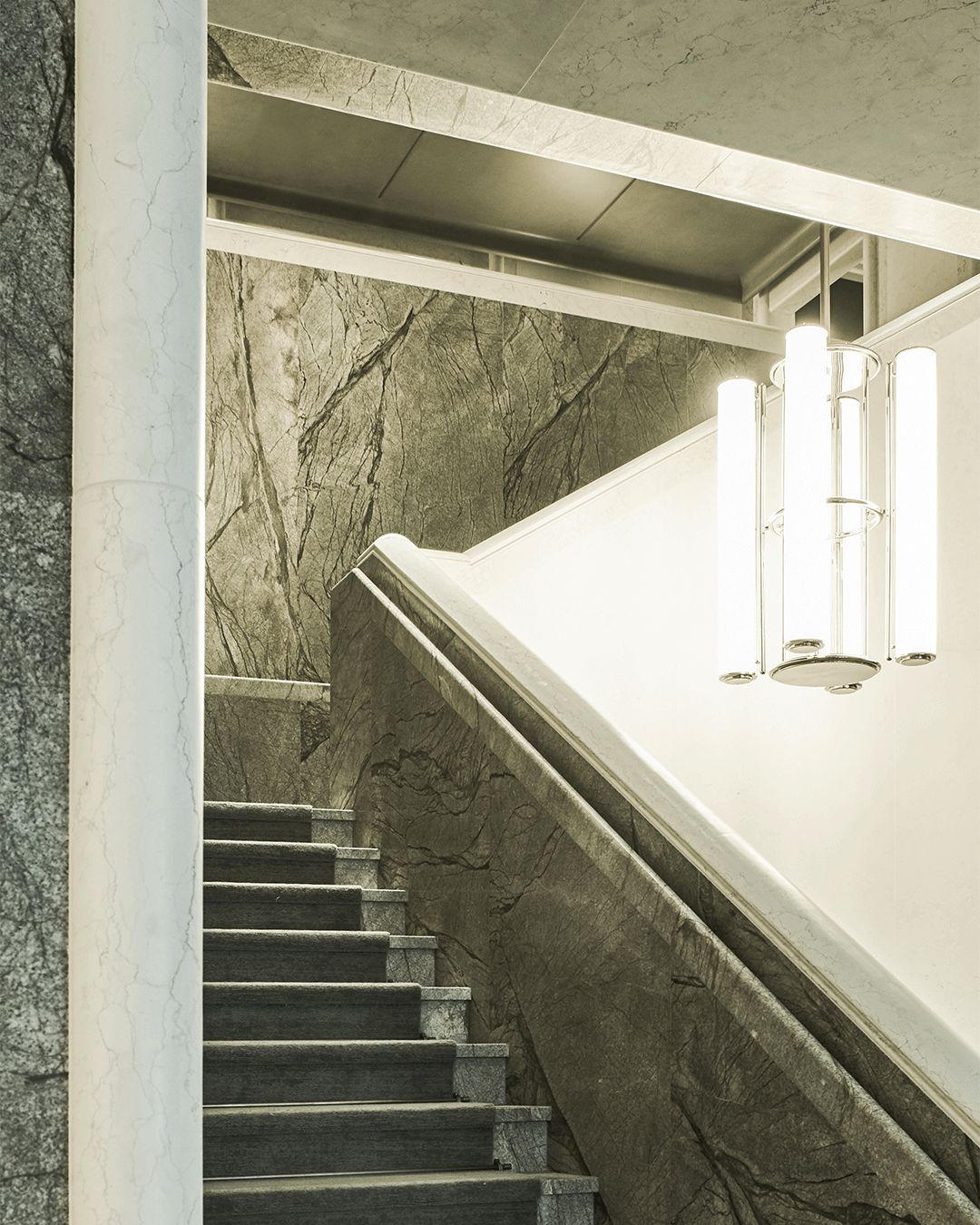
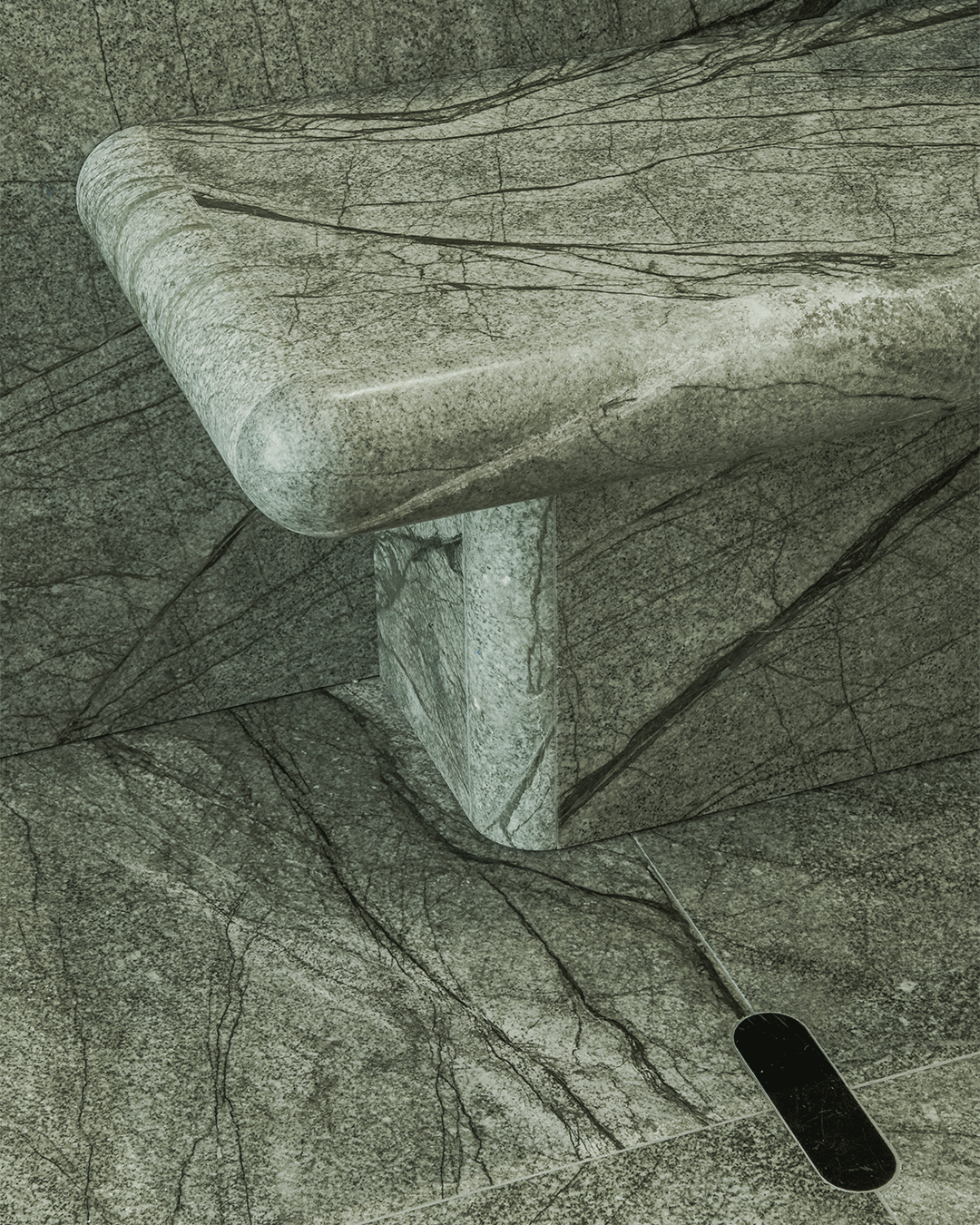
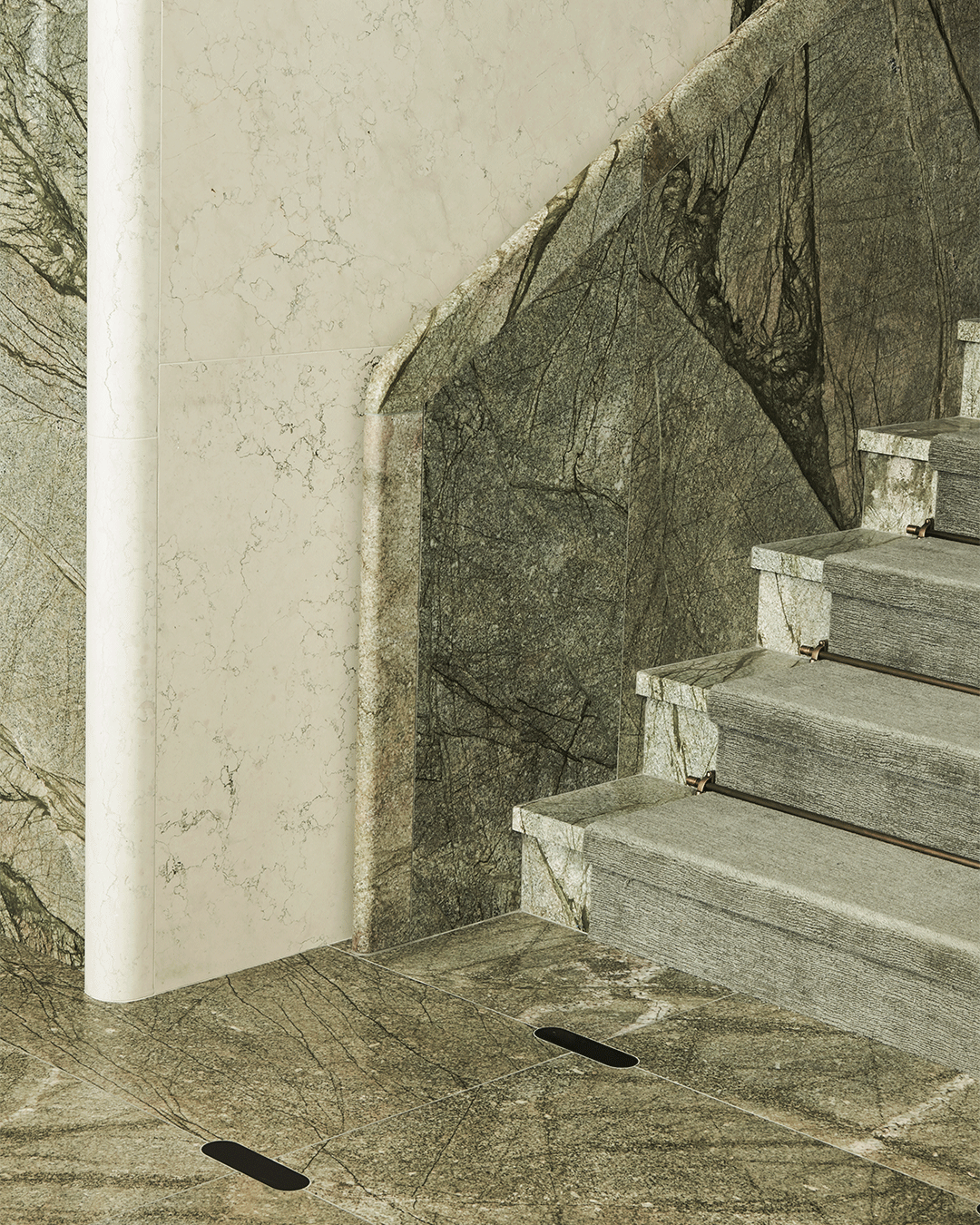
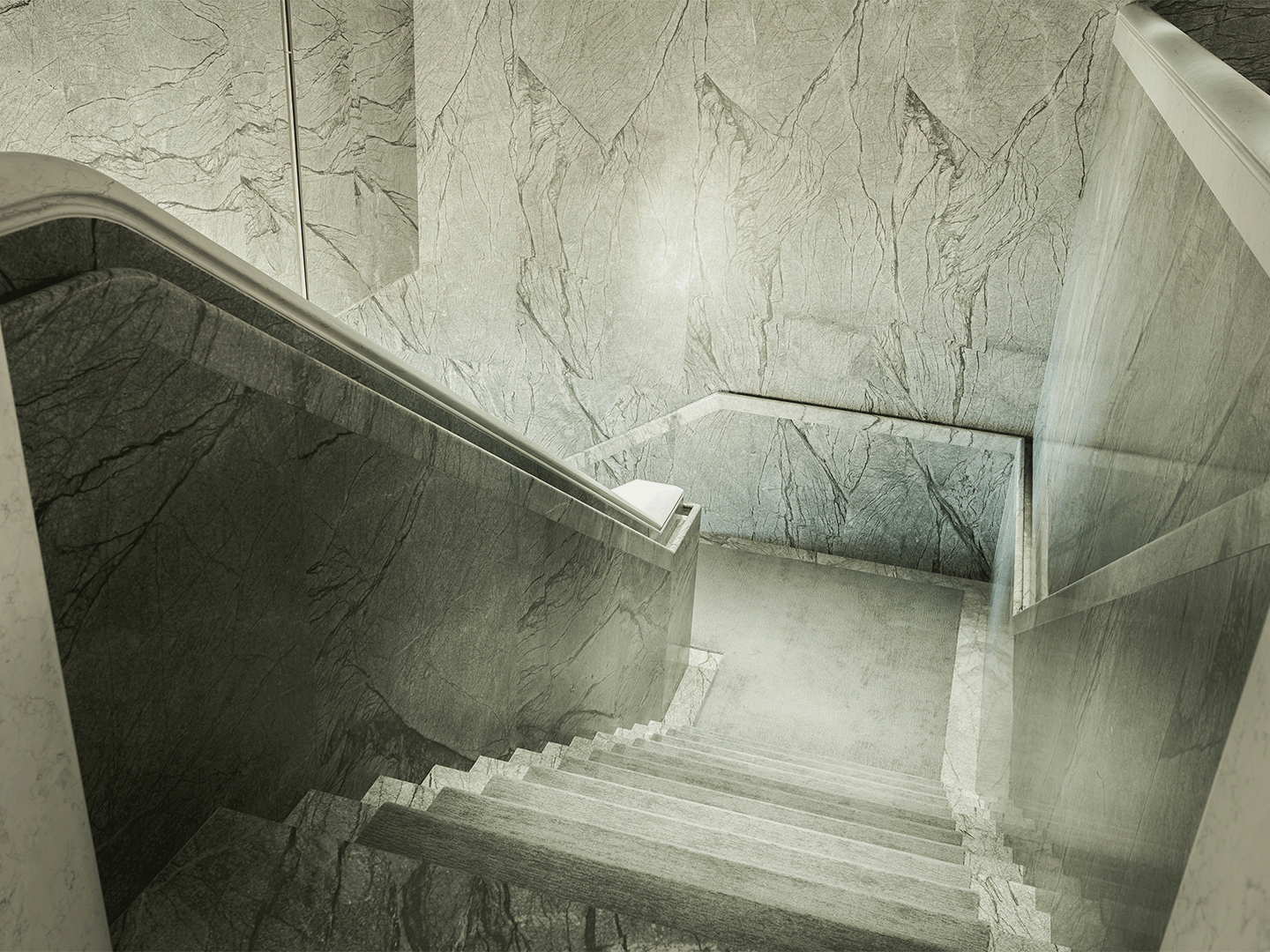
Timeless in appearance and flooded with natural light that enters the restaurant through floor-to-ceiling windows, Le Jardinier affords patrons the feeling of dining in a glittering greenhouse in the beating heart of New York City. The sumptuous space is adorned with lush vegetation, lavish green marble on the walls and floors, and vertical louvres. As a nod to his homeland, Joseph called upon French artisans living in The Big Apple to lend their talents to most of the intricate craftsmanship throughout.
Le Jardinier is connected via a monumental marble staircase to Shun, a contemporary French restaurant with Japanese influences that was also brought to life by Joseph. Here, custom-made velvet-upholstered banquettes, armchairs, tables and consoles create an atmosphere where Alcantara fabrics, bespoke lacquer, Italian ivory marble, dark woods and mirrored glass mingle as glamorously as the patrons who secure a reservation.
josephdirand.com; lejardinier-nyc.com
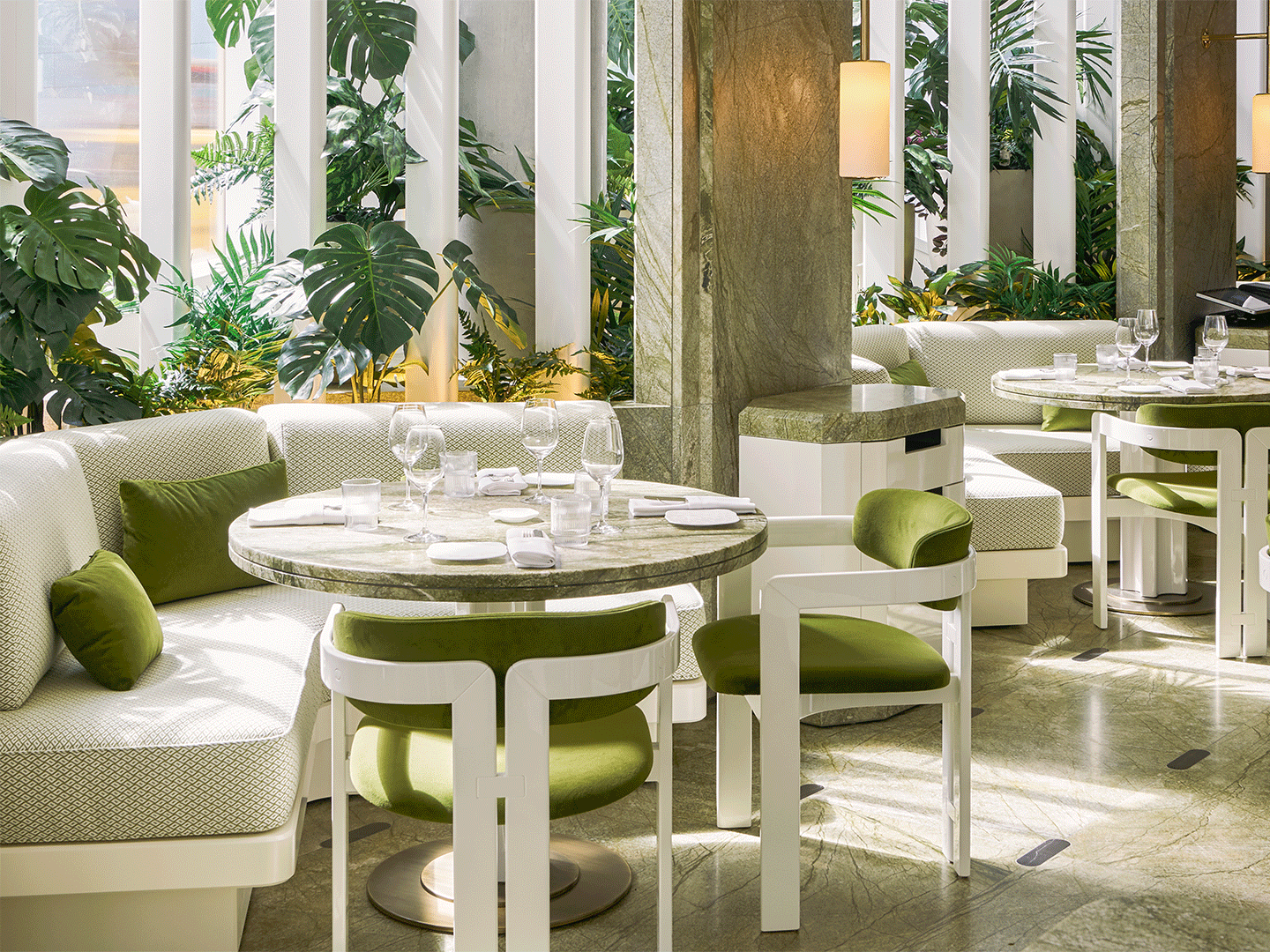
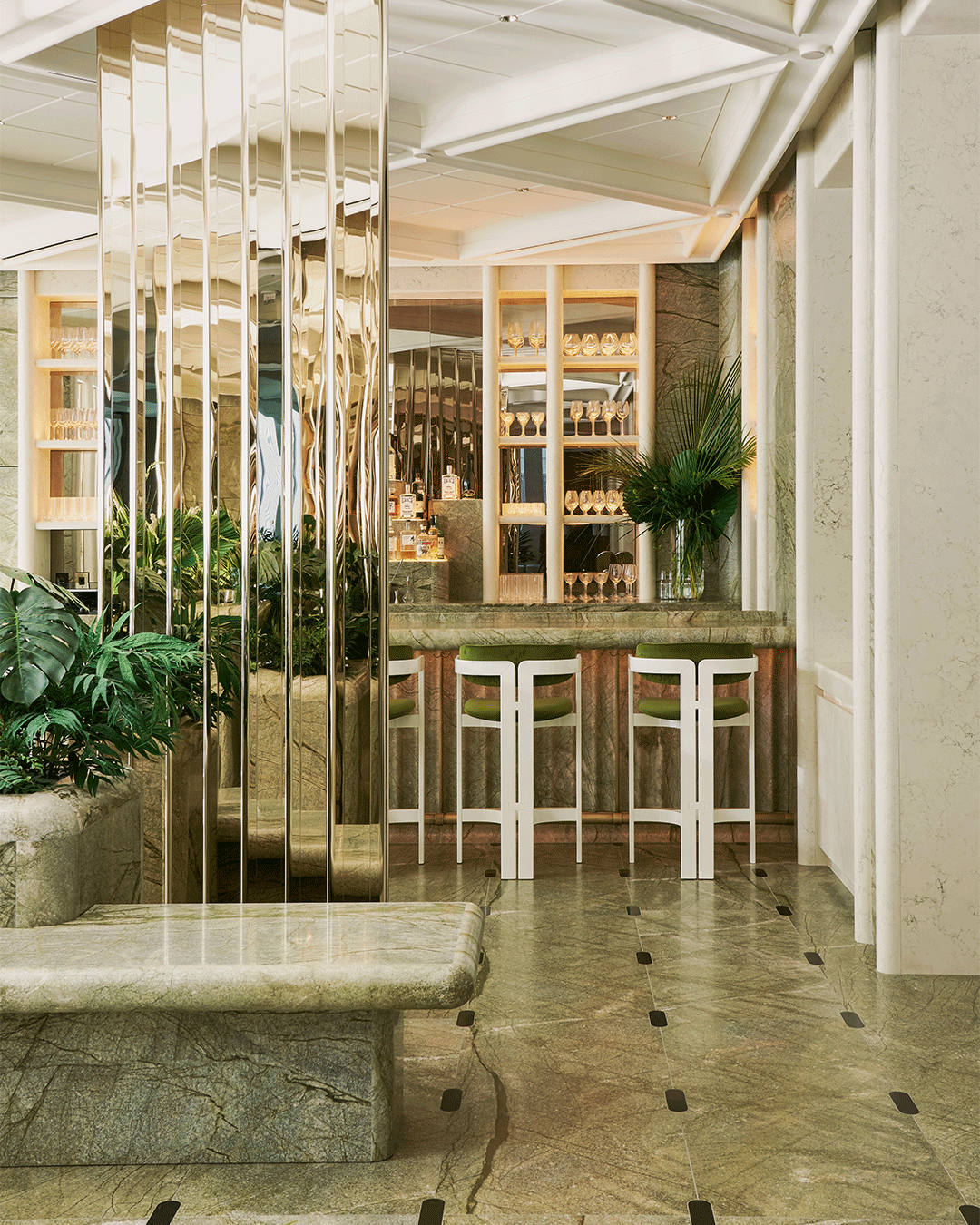
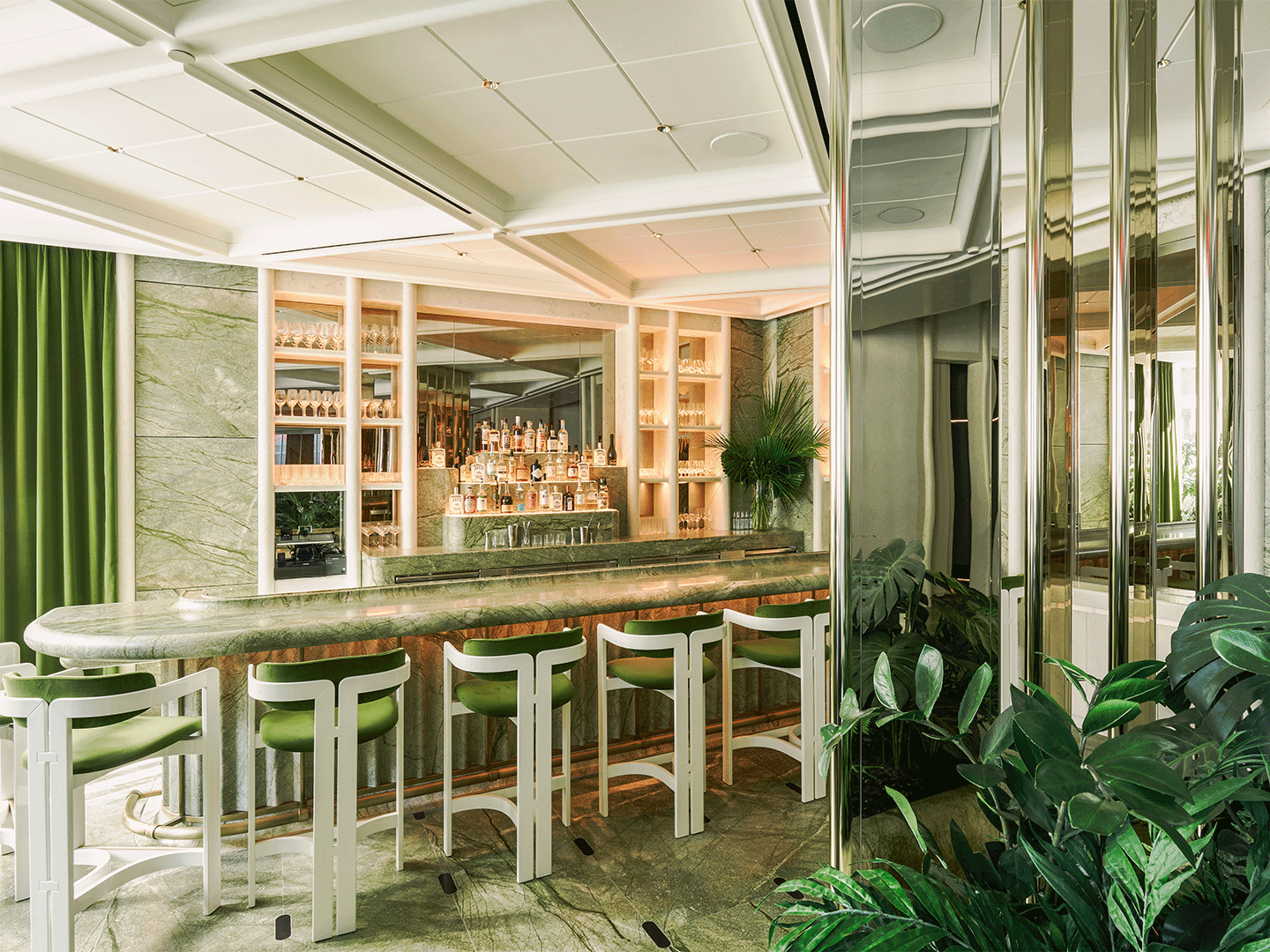
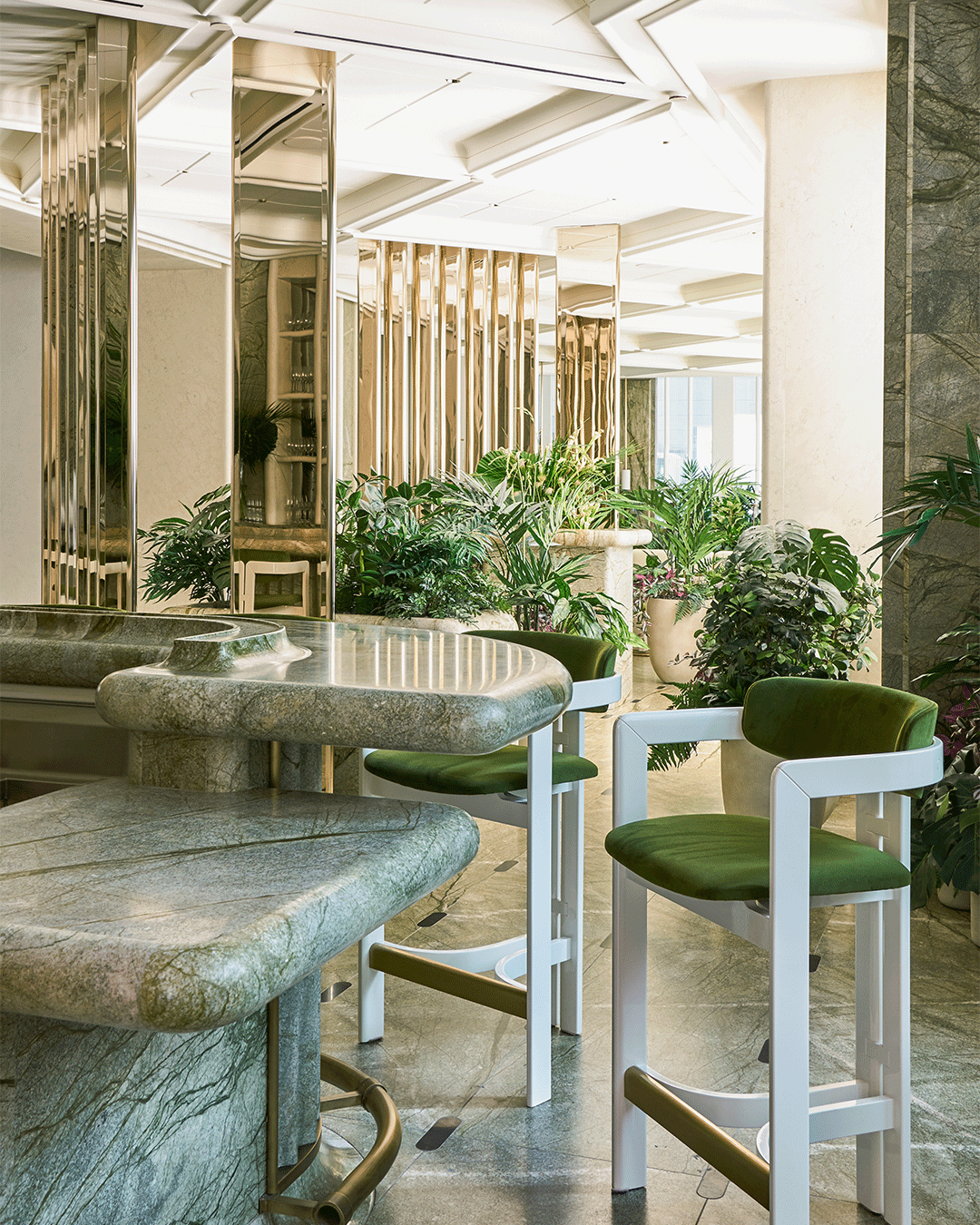
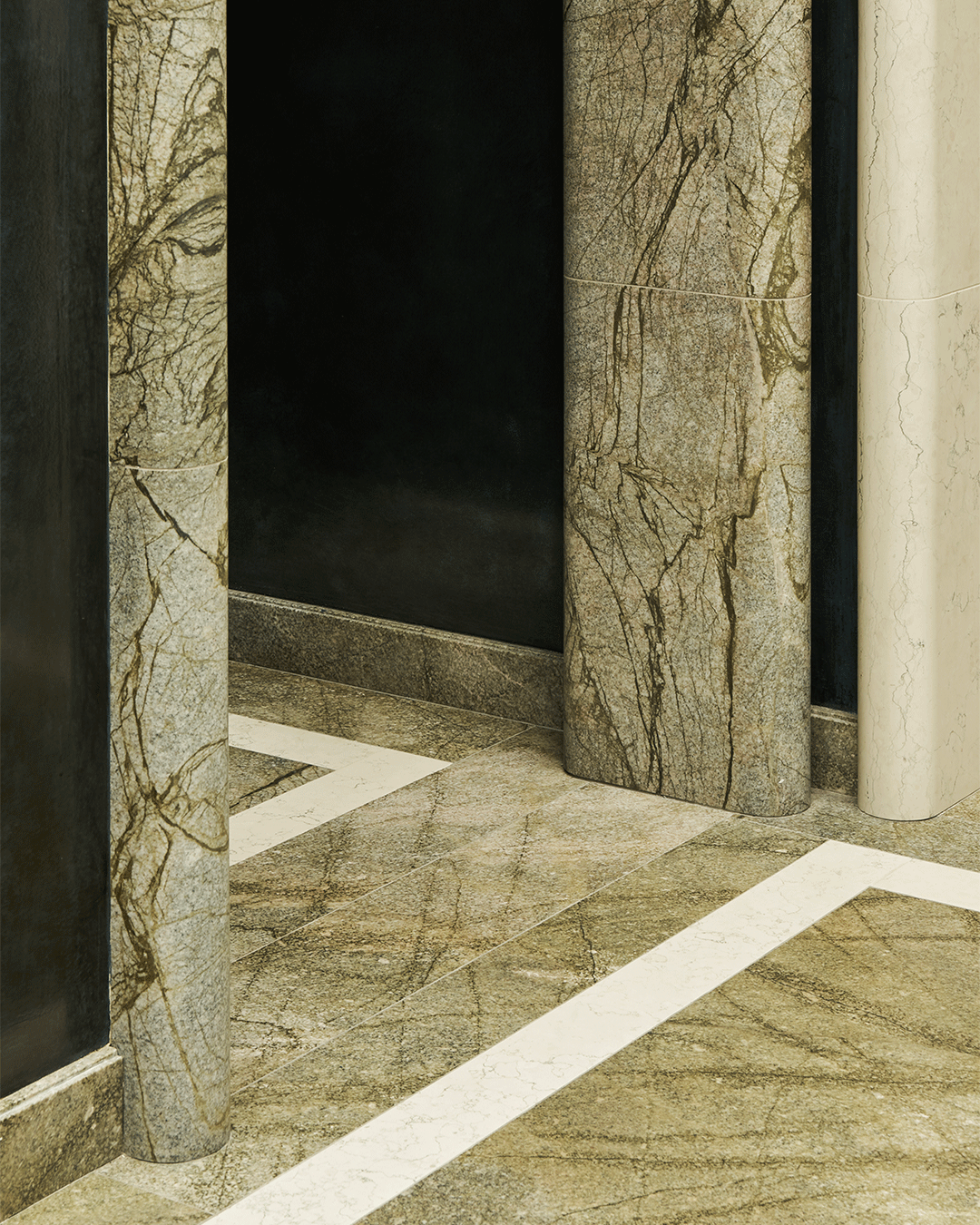
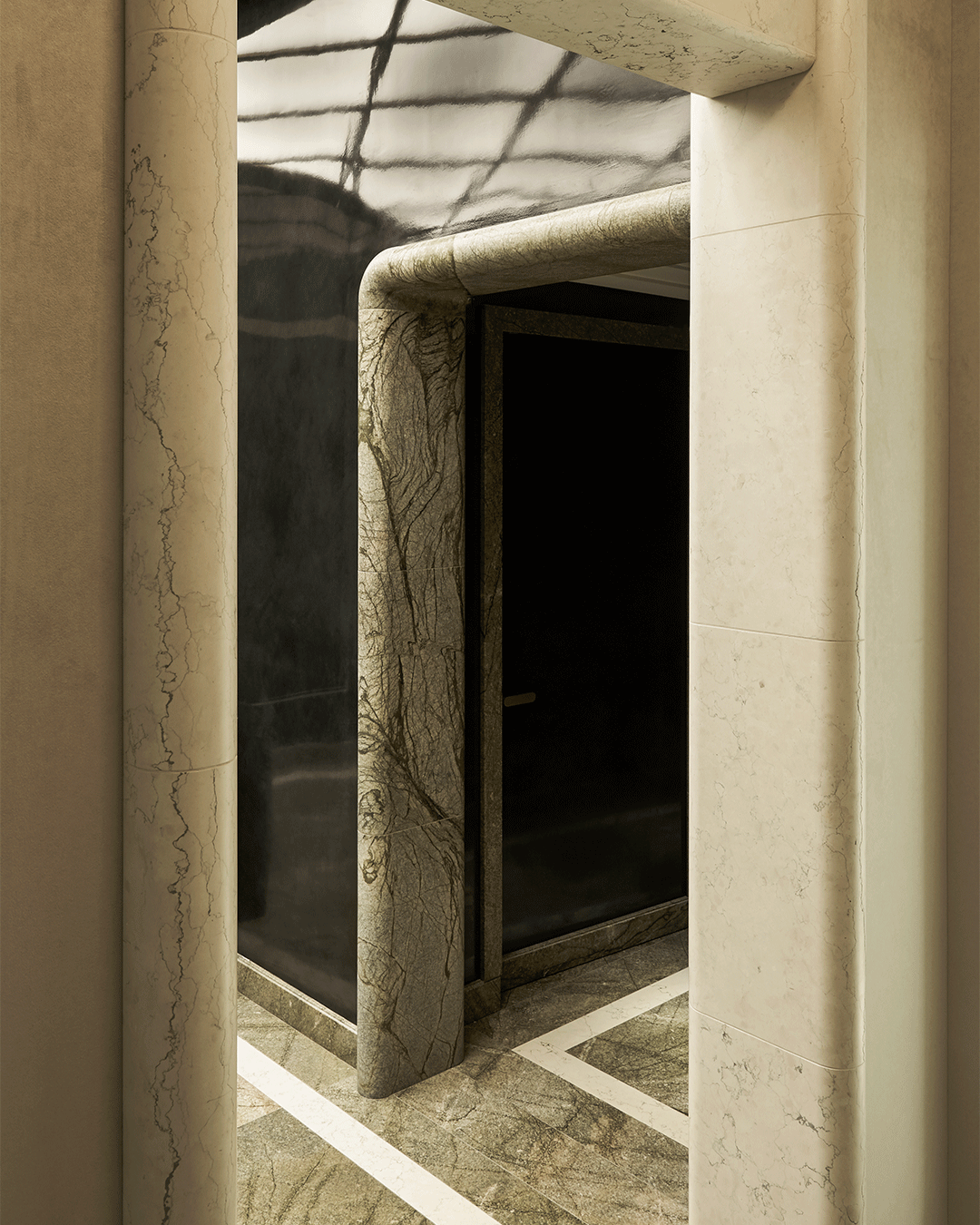
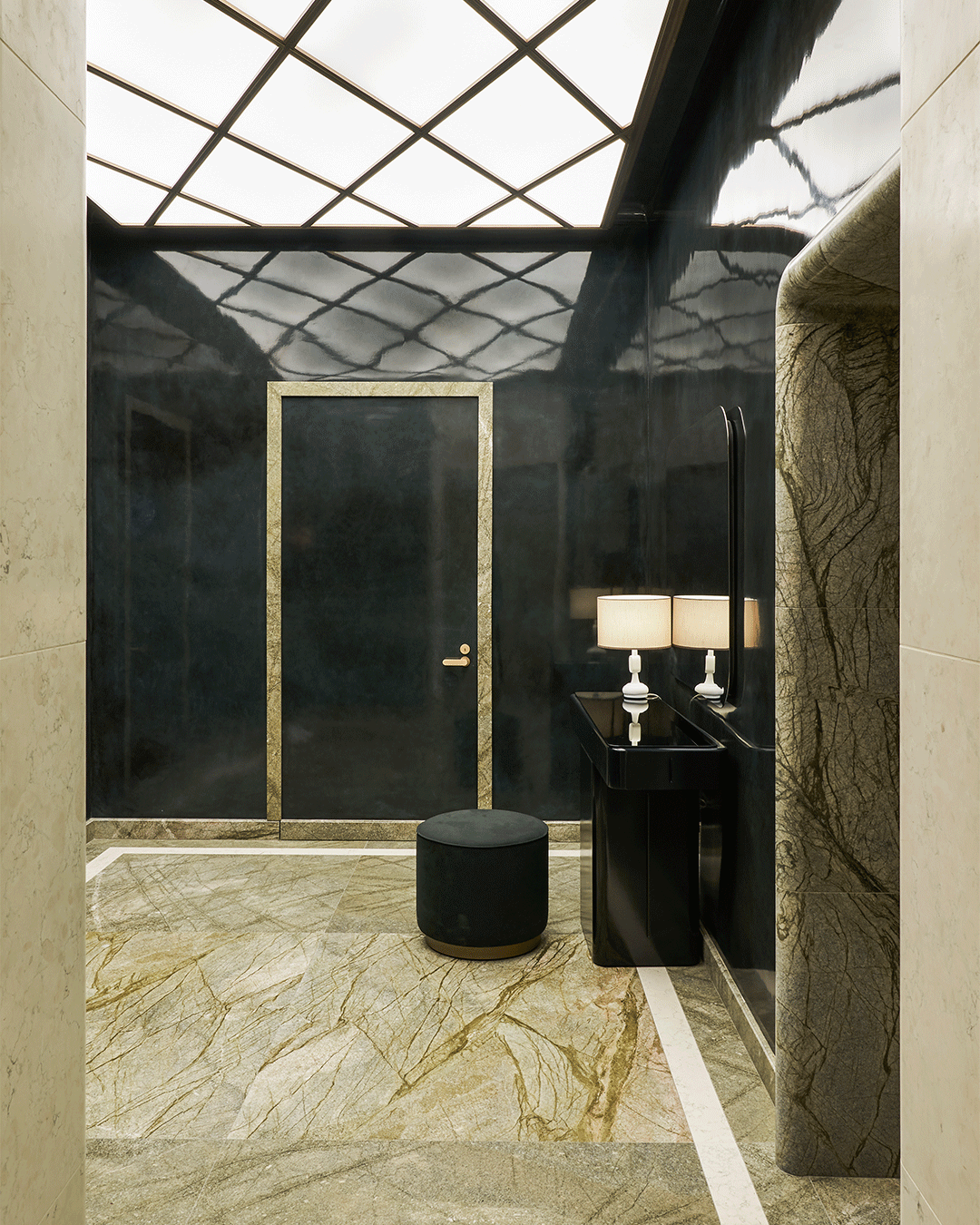
Le Jardinier affords patrons the feeling of dining in a glittering greenhouse in the beating heart of New York City.