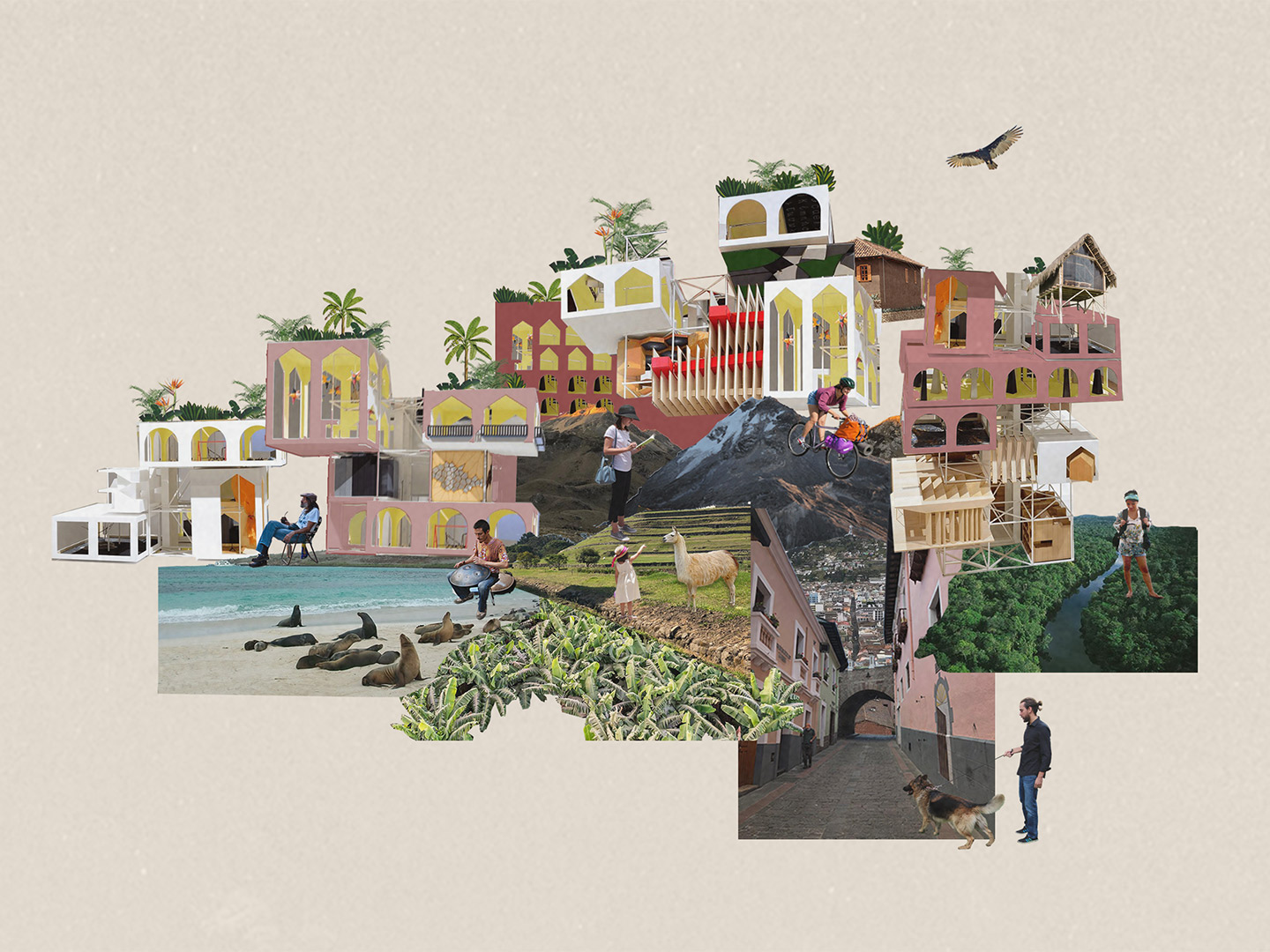
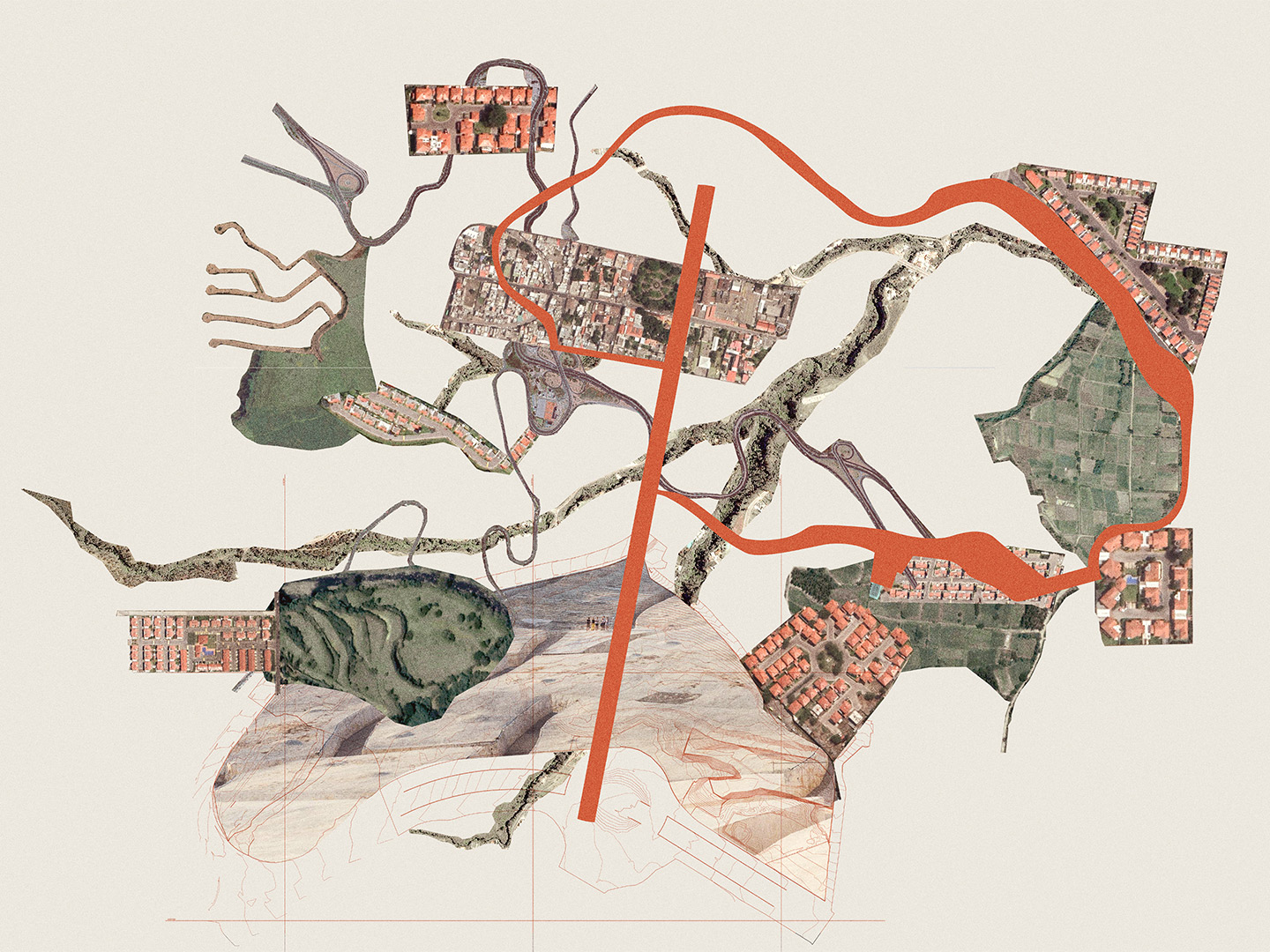
Located in the burgeoning Cumbayá neighbourhood, a vibrant area within the greater Quito Metropolitan District of Ecuador, Botániqo is a comprehensive new residential precinct that’s due for completion in 2024. Designed by Mexico City-based architecture firm Tatiana Bilbao Estudio, the development will span over three acres, with an additional acre of terrain to be transferred to the city by its developer, Uribe Schwarzkopf, for the creation of a much-needed transportation hub. Upon its unveiling, the ambitious project will provide an accessible entry point for people who wish to live in the neighbourhood, where each of the residential units are surrounded by lush green space.
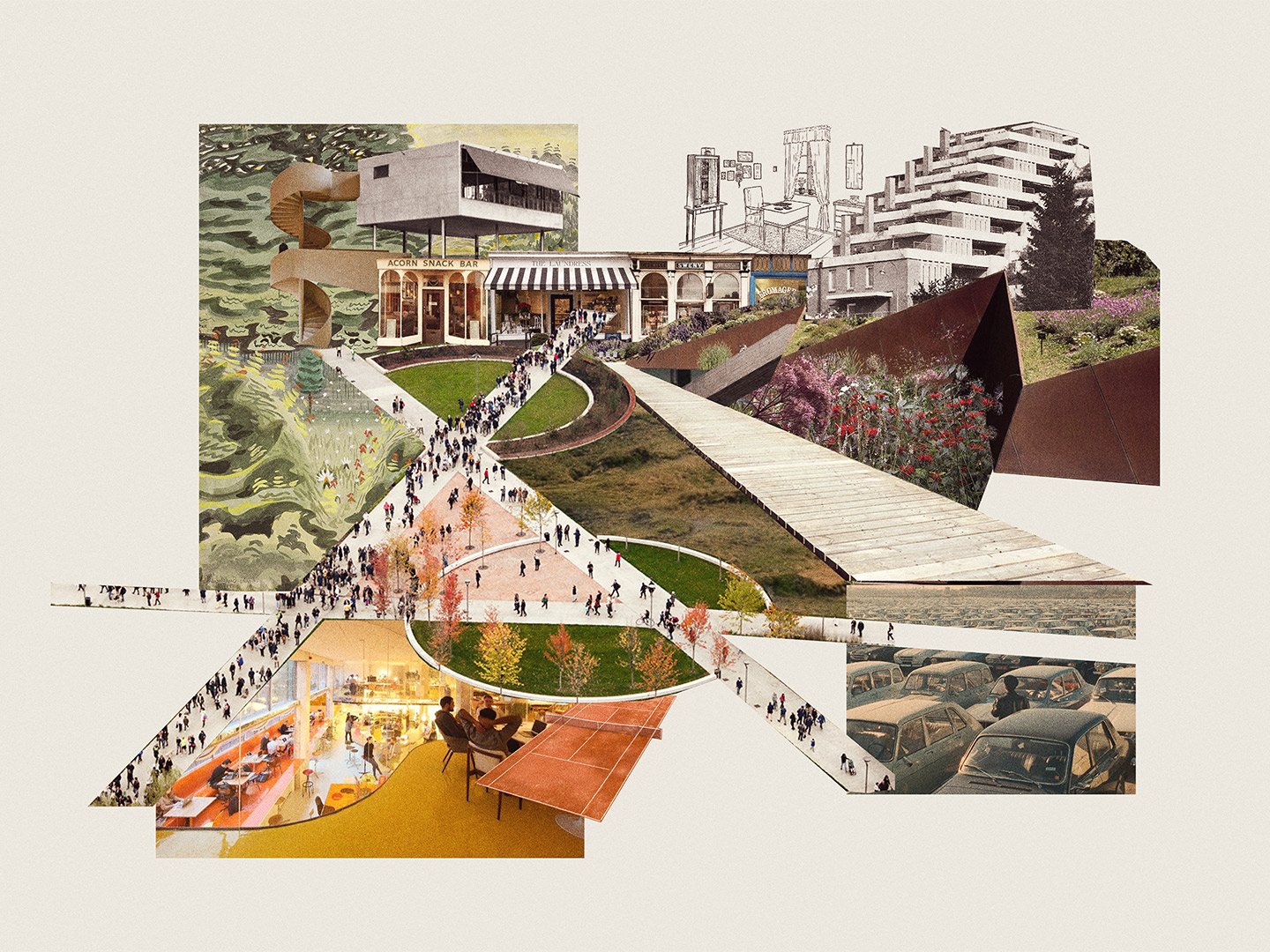
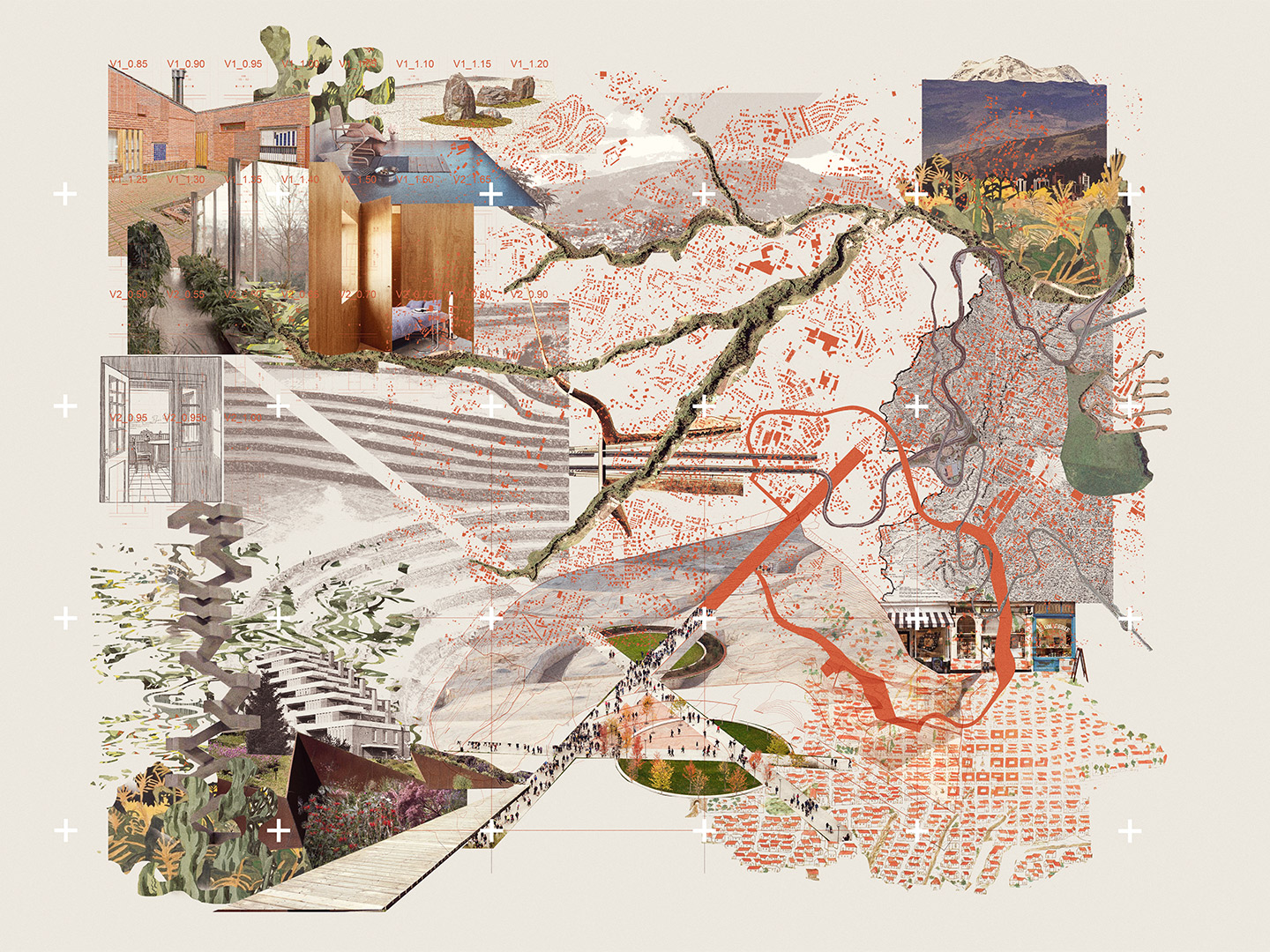
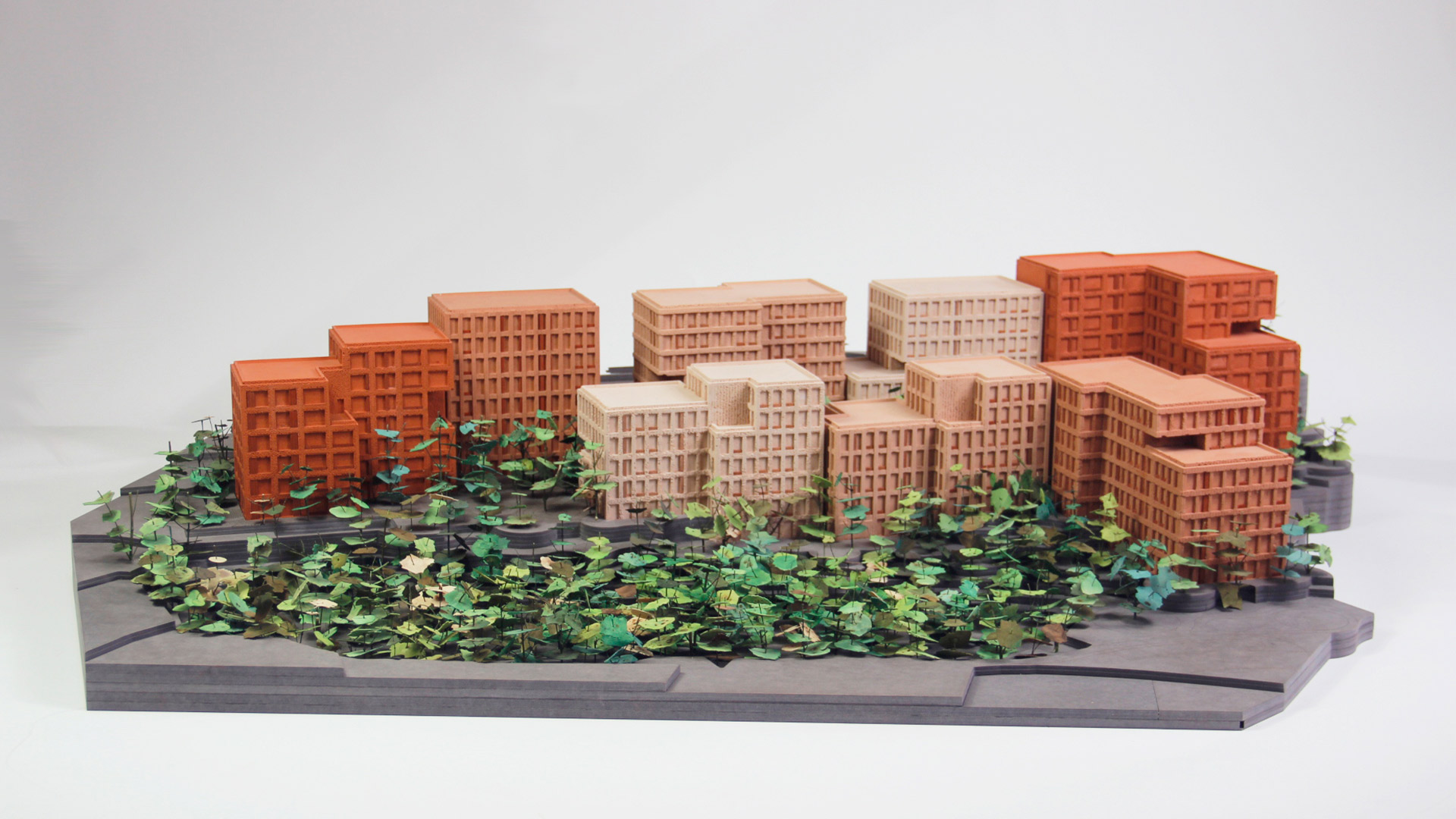
Created with a community-centred approach, the layout of Botániqo is expected to encourage human connection through its healthy supply of shared spaces and facilities. As part of her design, Tatiana created a series of linked modules interspersed with open and closed spaces (both public and private) which generate a series of shapes so that each apartment is unique to its resident. Comprising a total of 277 units, the nine towers of Botániqo each feature communal foliage-filled terraces around the midpoints of the buildings.
Botániqo residences in Ecuador by Tatiana Bilbao Estudio for Uribe Schwarzkopf
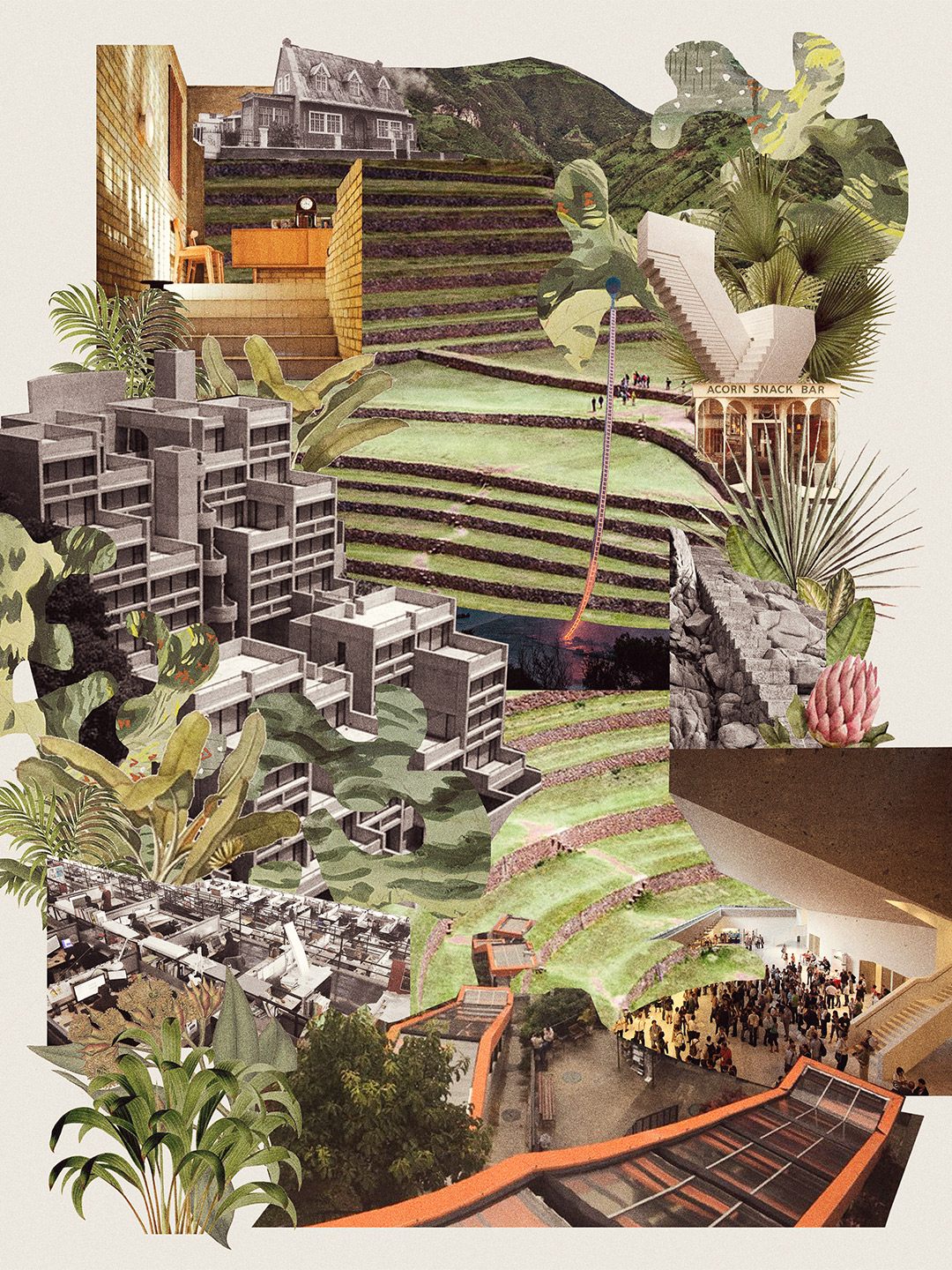
At ground level, the project’s footprint is planned to take up just 35% of the allowable space, making way for extensive recreational areas which connect the towers and link the overall property. “I deeply believe that architecture must become a platform for each inhabitant to develop their own existence,” Tatiana says of her design response. “In Botániqo, the human being is at the centre of both the concept and the space itself,” she adds.
As displayed in her energetic collage style, greenery is also at the heart of Tatiana’s design for Botániqo. The development will accommodate more than 5000 square metres of planted areas as the project’s master plan aims to create harmony between the buildings and the natural environment. Each exisiting tree on-site will be preserved and transplanted through a careful adaptation process (and then relocated within the project) maintaining the endemic vegetation of the area. Additionally, the exteriors of Botániqo shall feature a “living facade”, where native plants from the region will eventually intertwine with the vertical surfaces of the building.
“The collaboration with Tatiana Bilbao Estudio has been an extraordinary experience for us,” says Joseph Schwarzkopf, general manager of Uribe Schwarzkopf. “Her design of the public and private spaces, [coupled] with a visionary weaving together of a masterplan that will enhance residents and neighbours’ lives alike, has helped us completely advance our approach to healthy and sustainable urbanism. We pride ourselves on developing projects unique to Ecuador by incorporating principles that foster a strong sense of community and wellbeing. This project encapsulates these principles in an entirely new way.”
uribeschwarzkopf.com; tatianabilbao.com
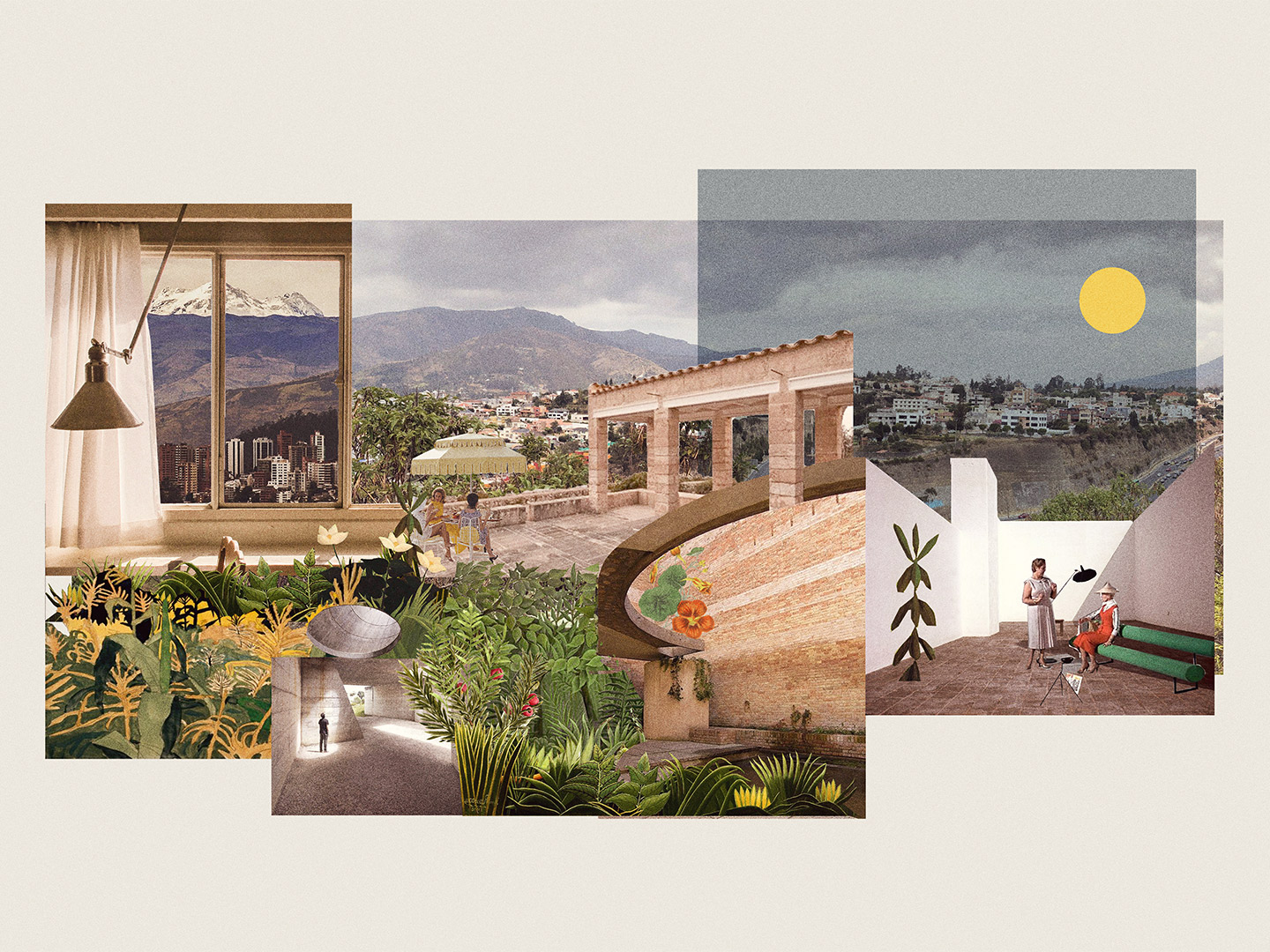
I deeply believe that architecture must necessarily become a platform for each inhabitant to develop their own existence.

Catch up on more architecture, art and design highlights. Plus, subscribe to receive the Daily Architecture News e-letter direct to your inbox each week.
Related stories
- Adam Goodrum stamps all-Australian style on new breezeblock design.
- Bitossi celebrates centenary in Florence with new museum and 7000-piece display.
- Casa R+1 residence in southern Spain by Puntofilipino.
When Japanese architect Kiyoaki Takeda happened upon an article in a 2020 edition of the Nature science journal, little did he realise the impact it would have on his Tokyo-based practice. The publication highlighted how the mass of human-made artefacts (referred to as anthropogenic mass) has begun to surpass all global living biomass. In other words, man-made materials now outweigh all living things on earth. “Furthermore, it is reported that the dominant cause of this trend is construction materials,” Takeda-san says.
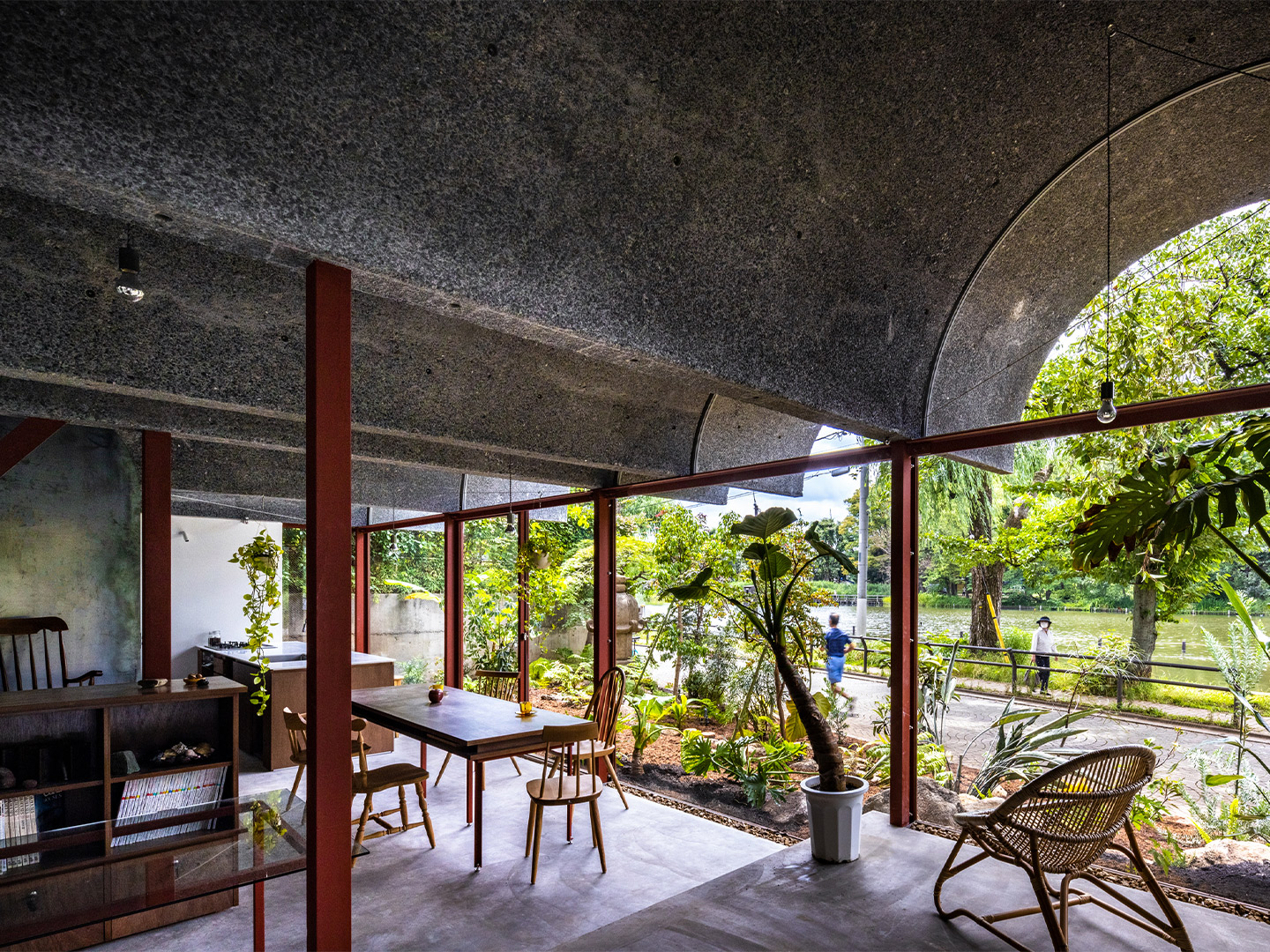
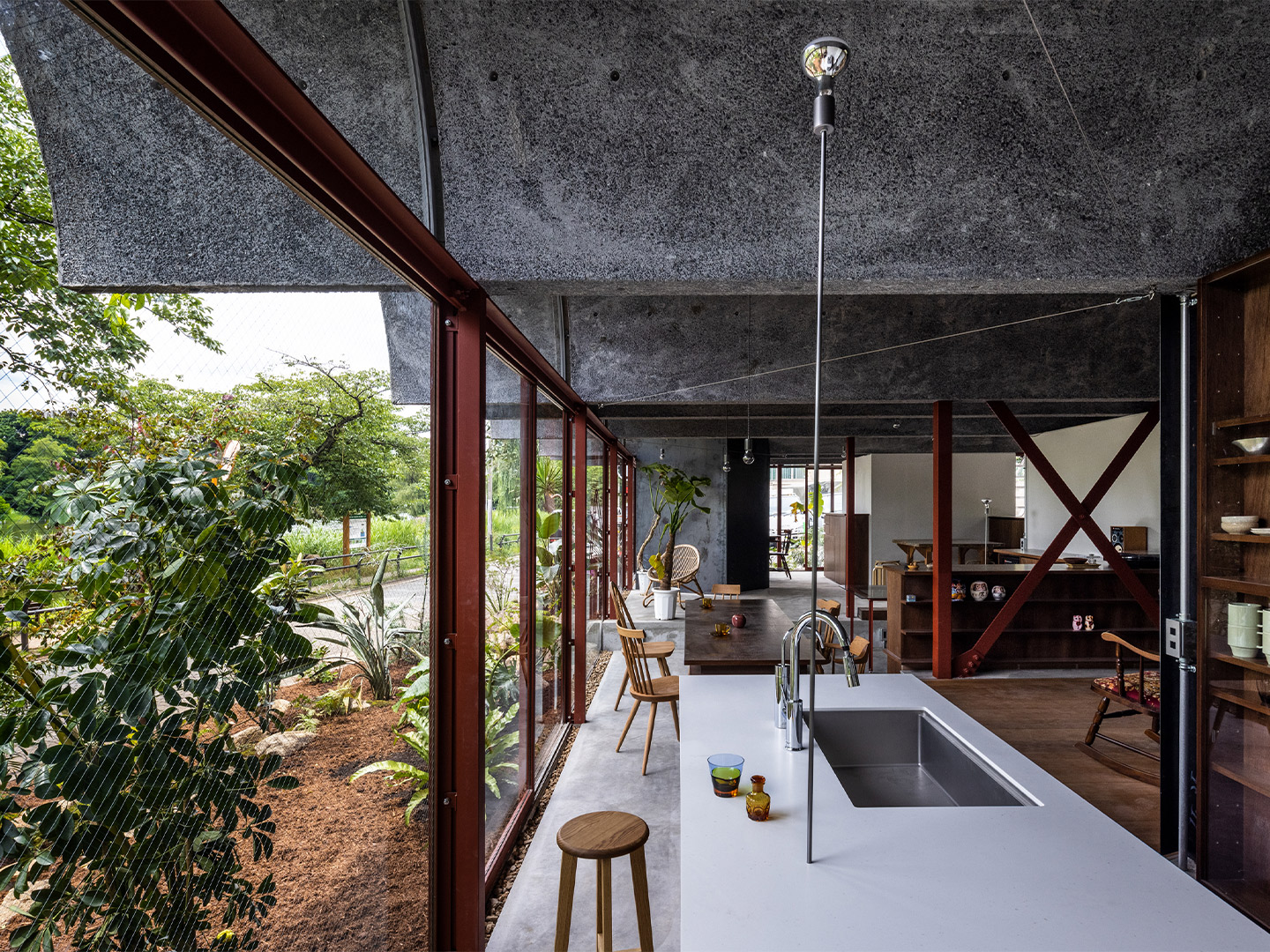
As an architect who contributes to this alarming trend, Takeda set himself a personal challenge. He was driven to design a home in Tokyo – for humans – that could also support an ecosystem of plants, insects and wildlife. In turn, offsetting his impact on the natural environment and perhaps establishing a blueprint for future residences. Tsuruoka House is the result of his pursuits; a place where “architecture attempted to hold not only people but also other life forms,” the architect explains.
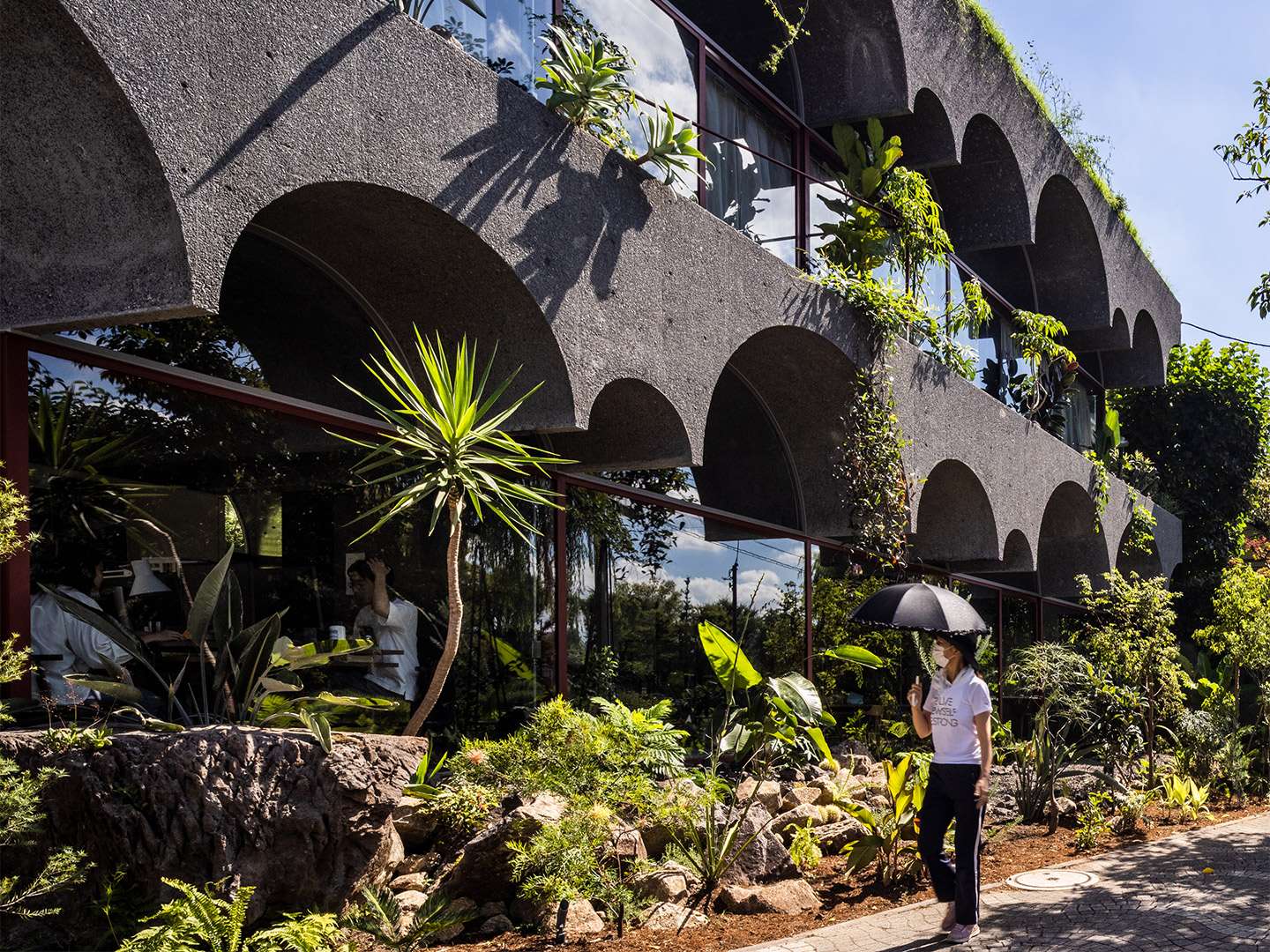
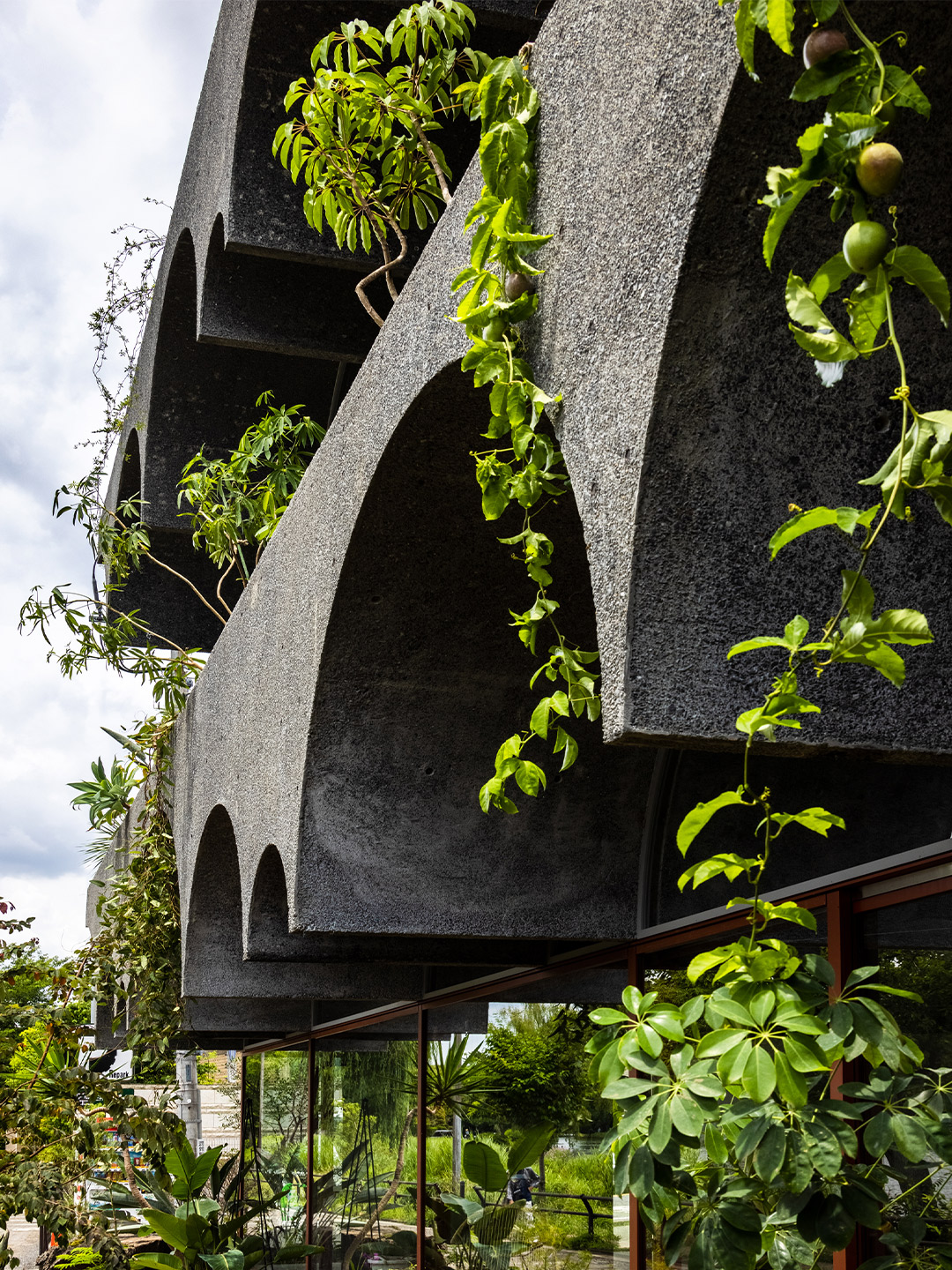
Tsuruoka House in Tokyo by Kiyoaki Takeda Architects
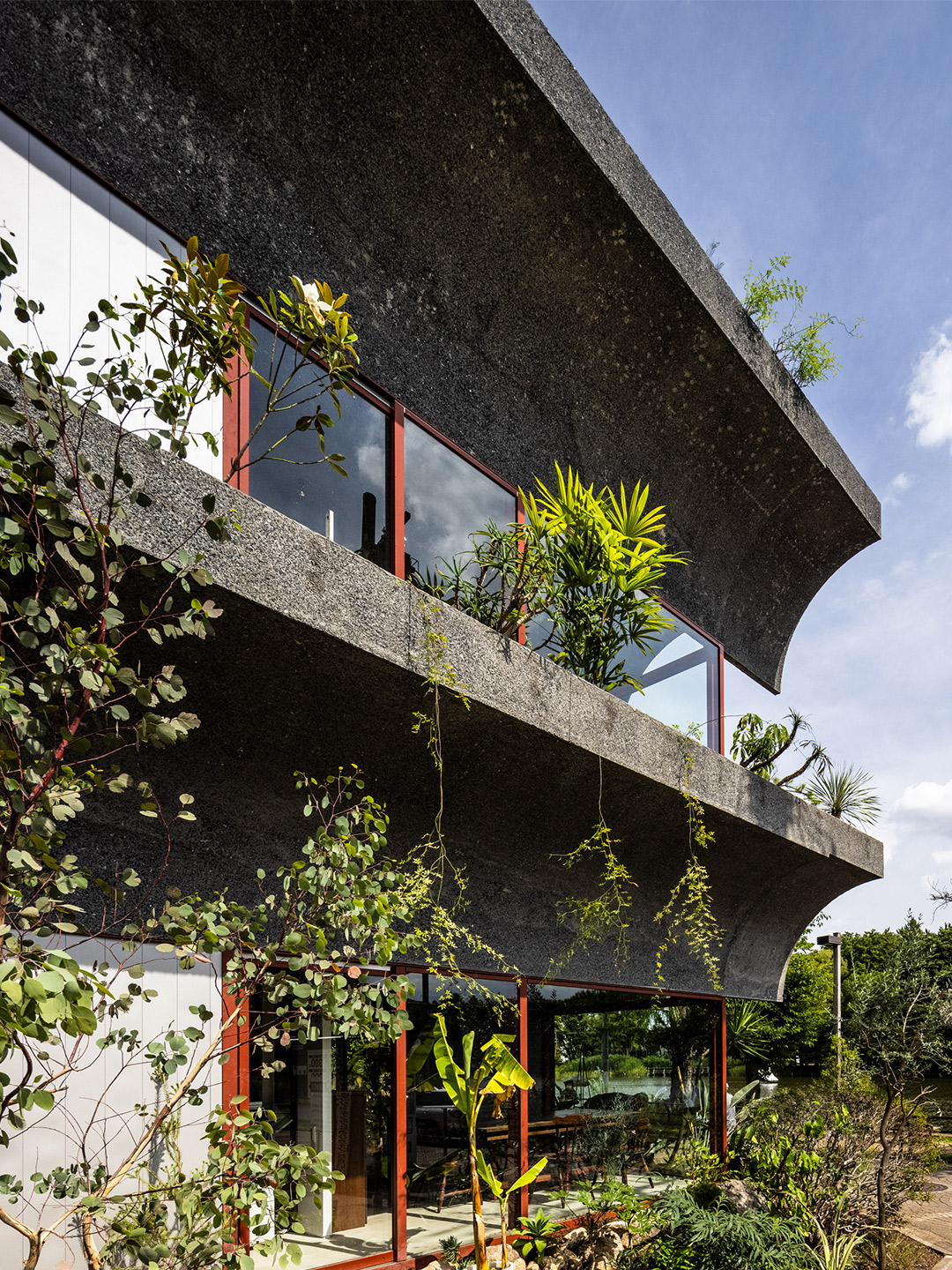
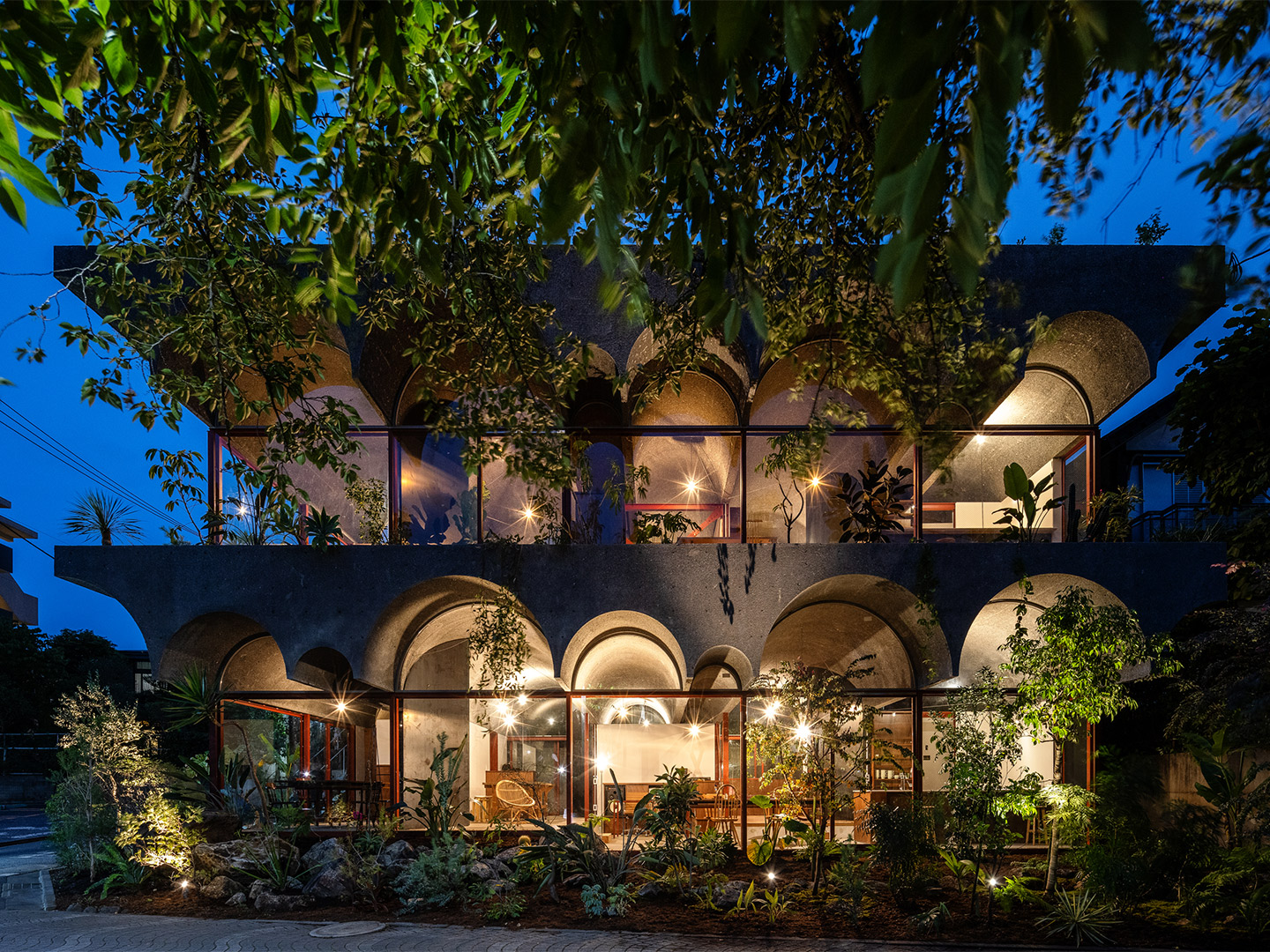
The design of Tsuruoka House began by reexamining the traditional division of indoor and outdoor spaces. Rather than simply splitting the site into two categories on a two-dimensional plan, where one section is dedicated to the house and the other to the garden, Takeda thought about stacking each of these components on top of each other in a cross-sectional plan. “All floors would be the ground level, providing underground-ish space below them,” the architect says, insisting that a symbiotic relationship between indoors and out “was likely to emerge.”
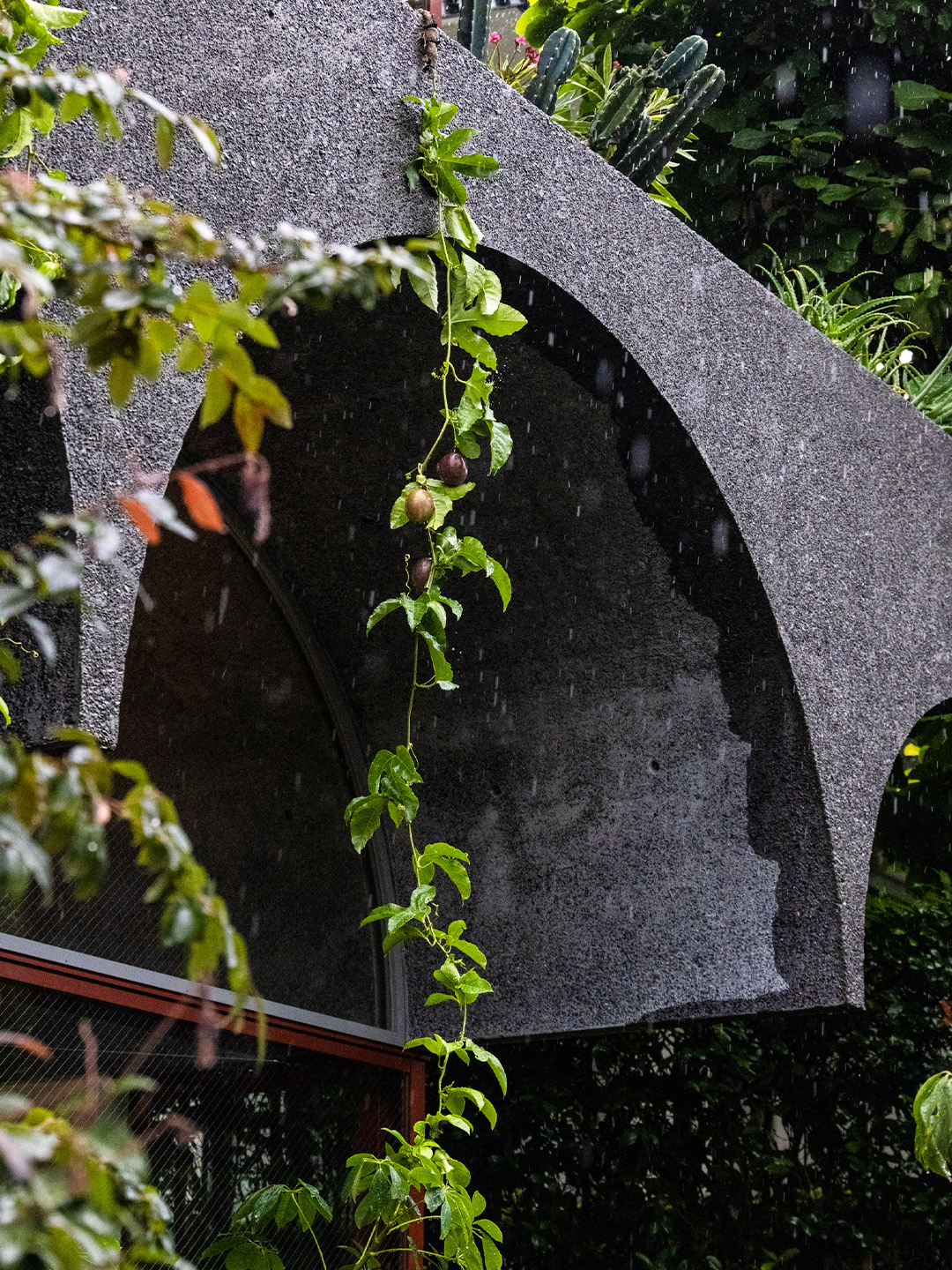
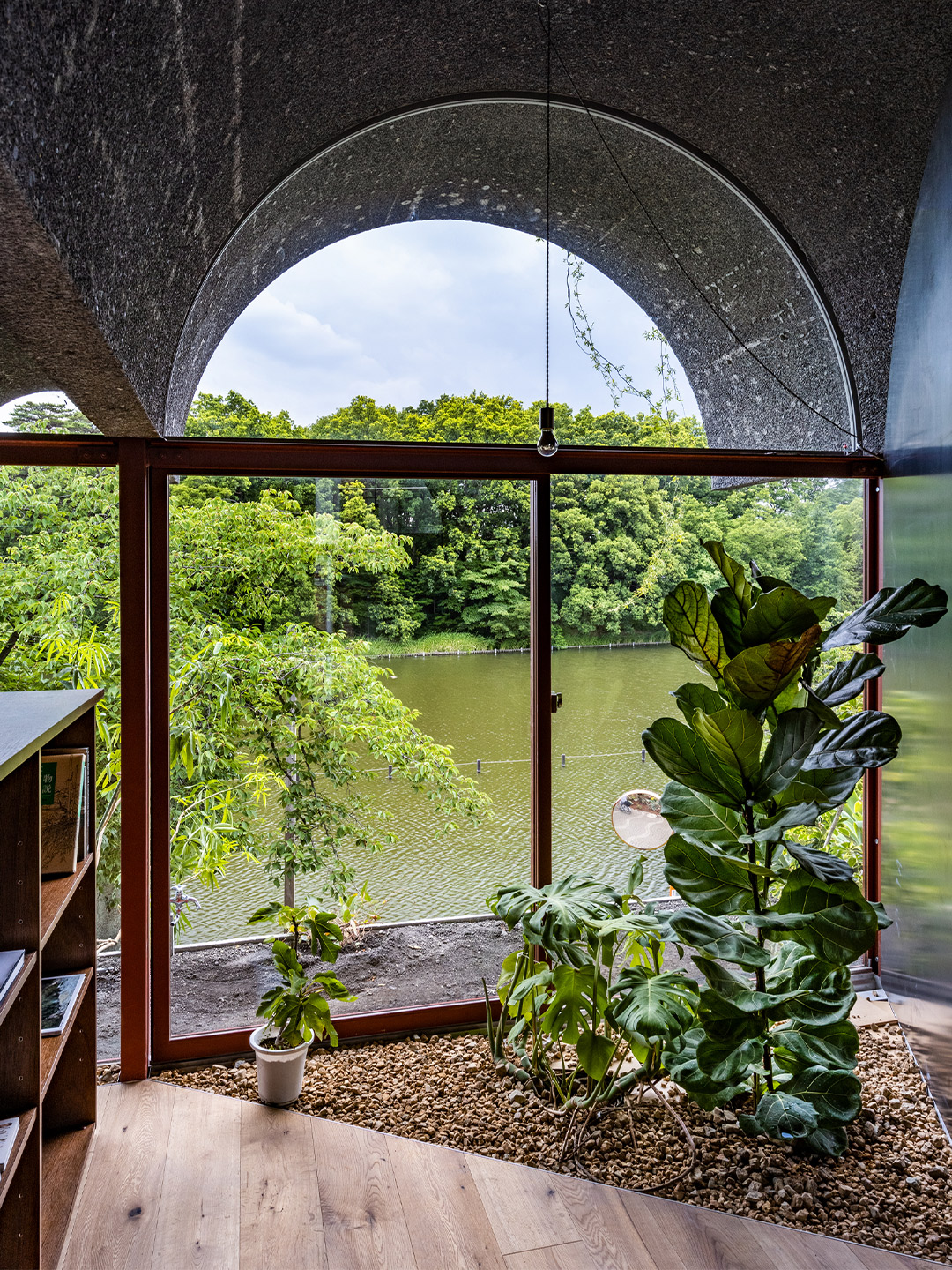
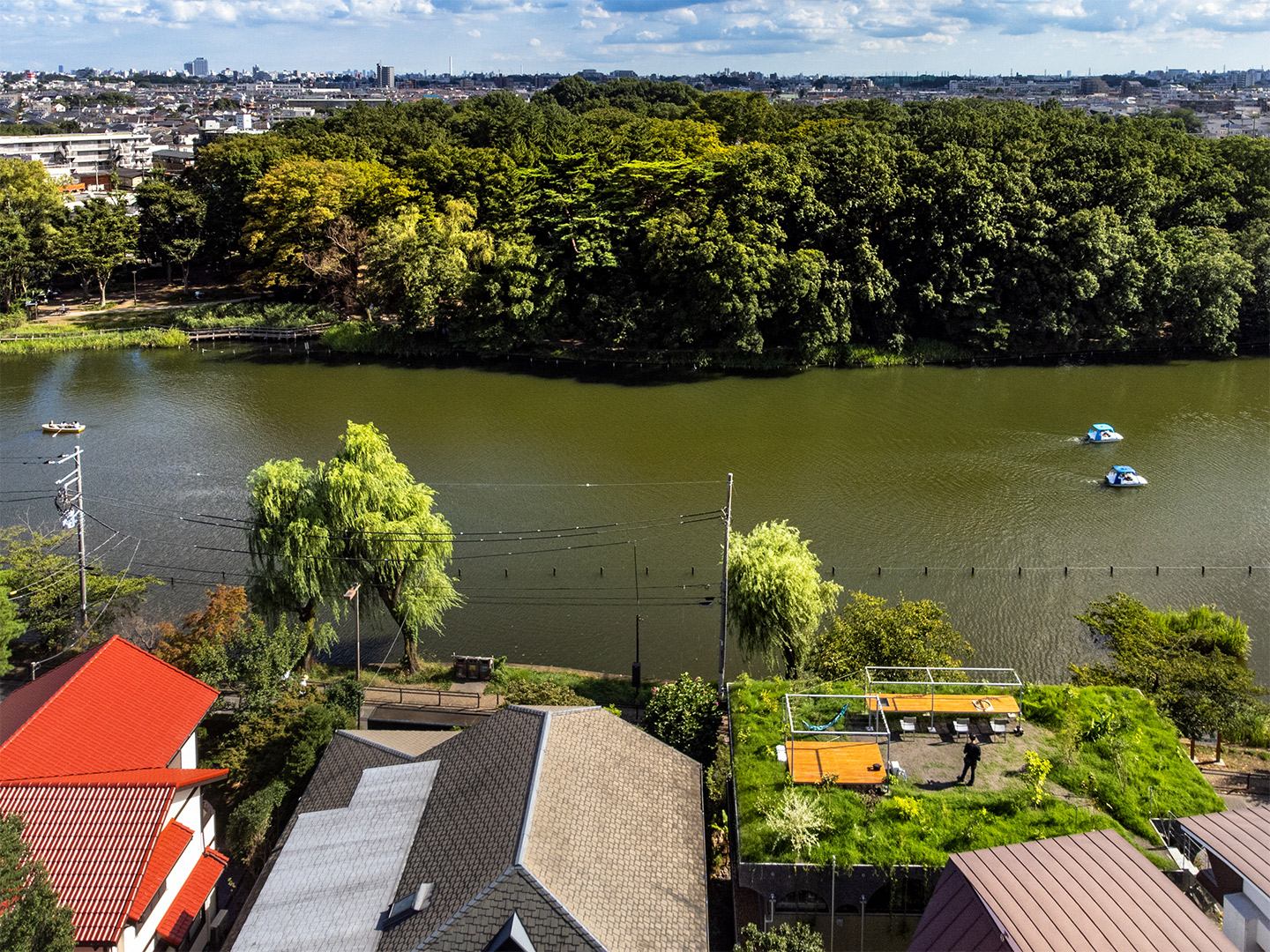
The process of integrating the garden with the house began with a focus on the thickness of the soil, which was required to be as deep as possible so that the layered garden areas could grow to become lush forests, hosting a mixture of edible plants, ornamental shrubs and small trees. “This approach goes against modern rooftop greening, which pursues thinner [layers of] soil,” Takeda says. “By opening the garden to other available life forms, providing them with a place to inhabit, and co-creating the community, the ‘garden’ becomes an ‘environment’.”
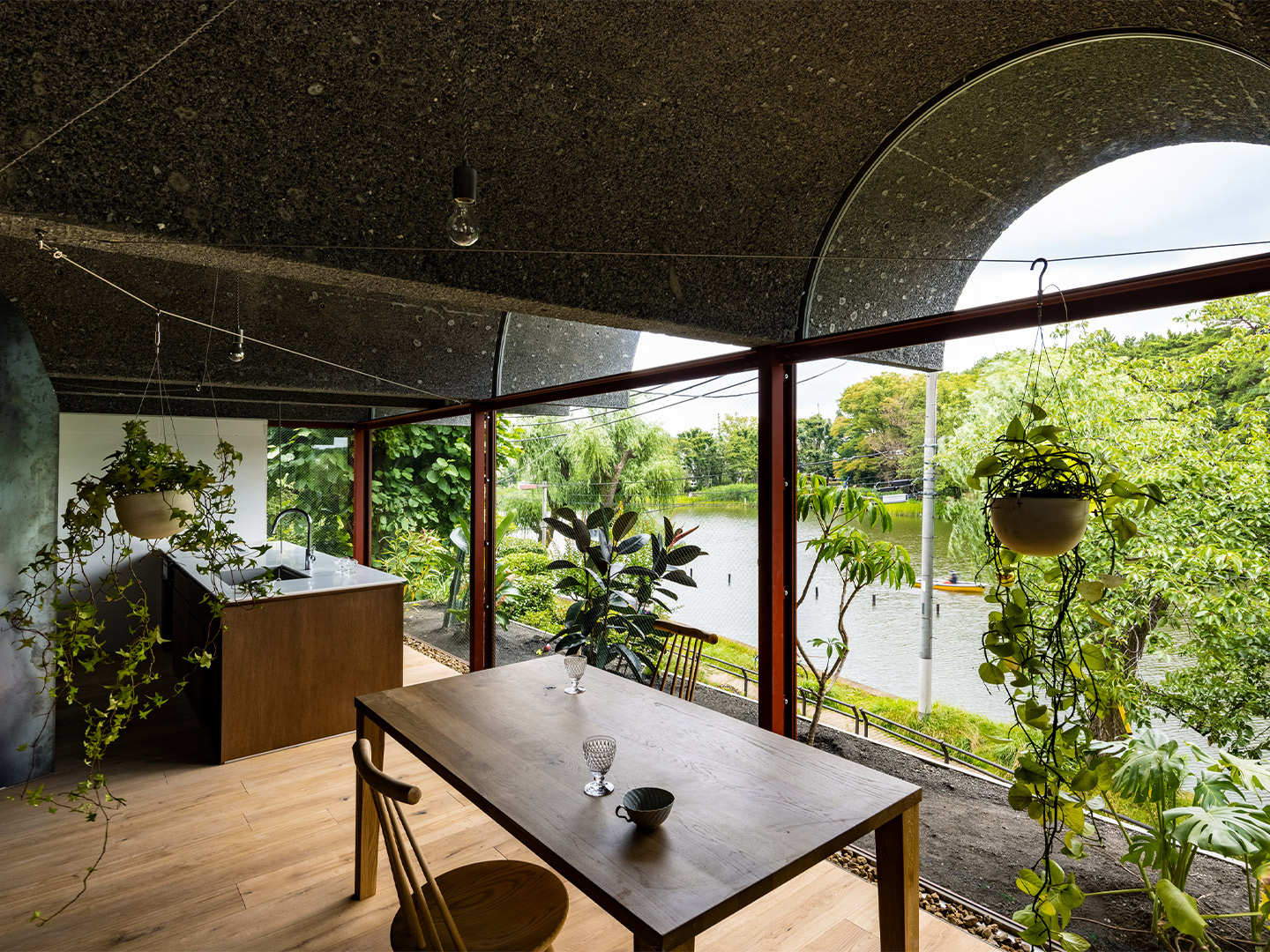
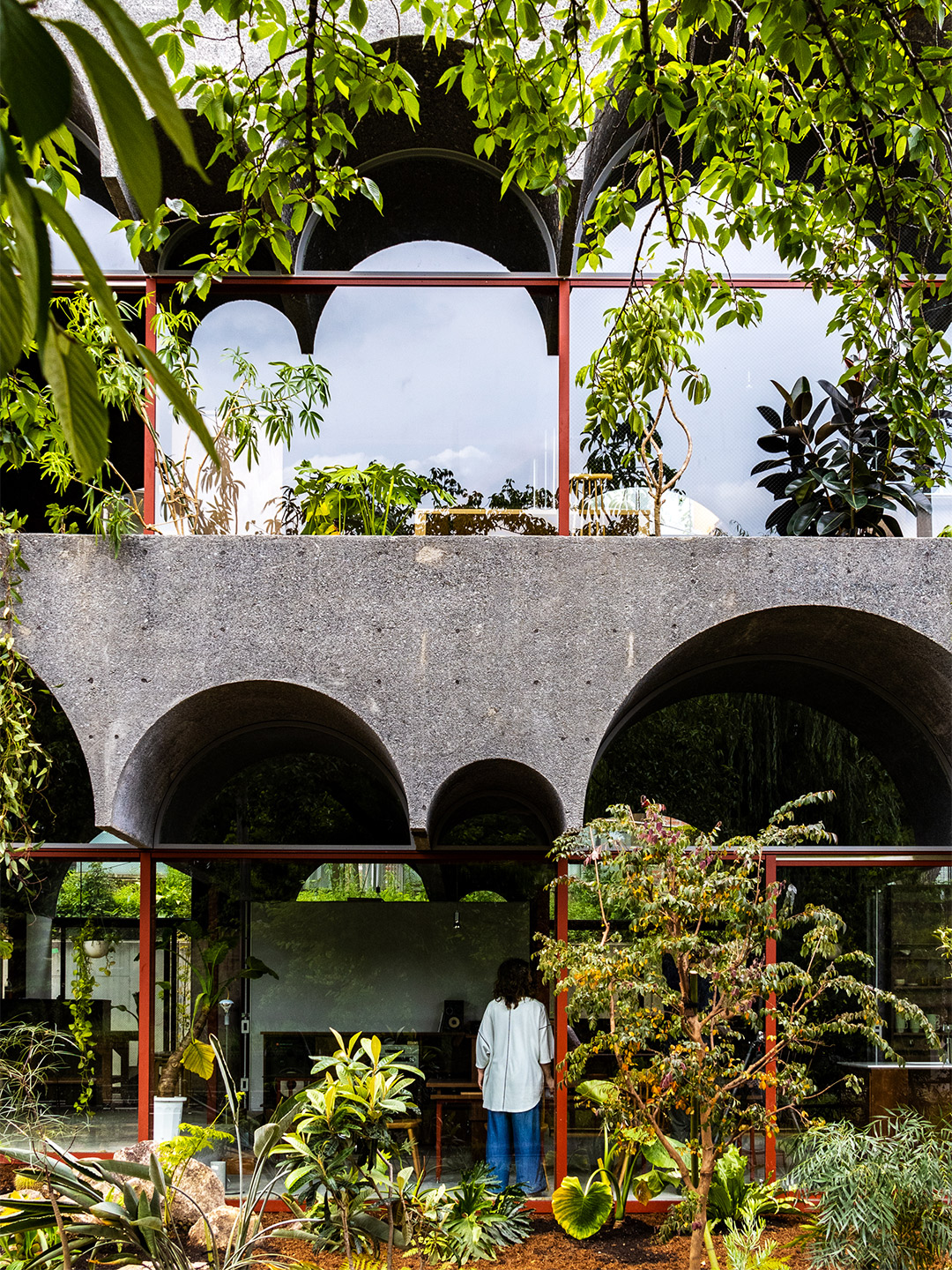
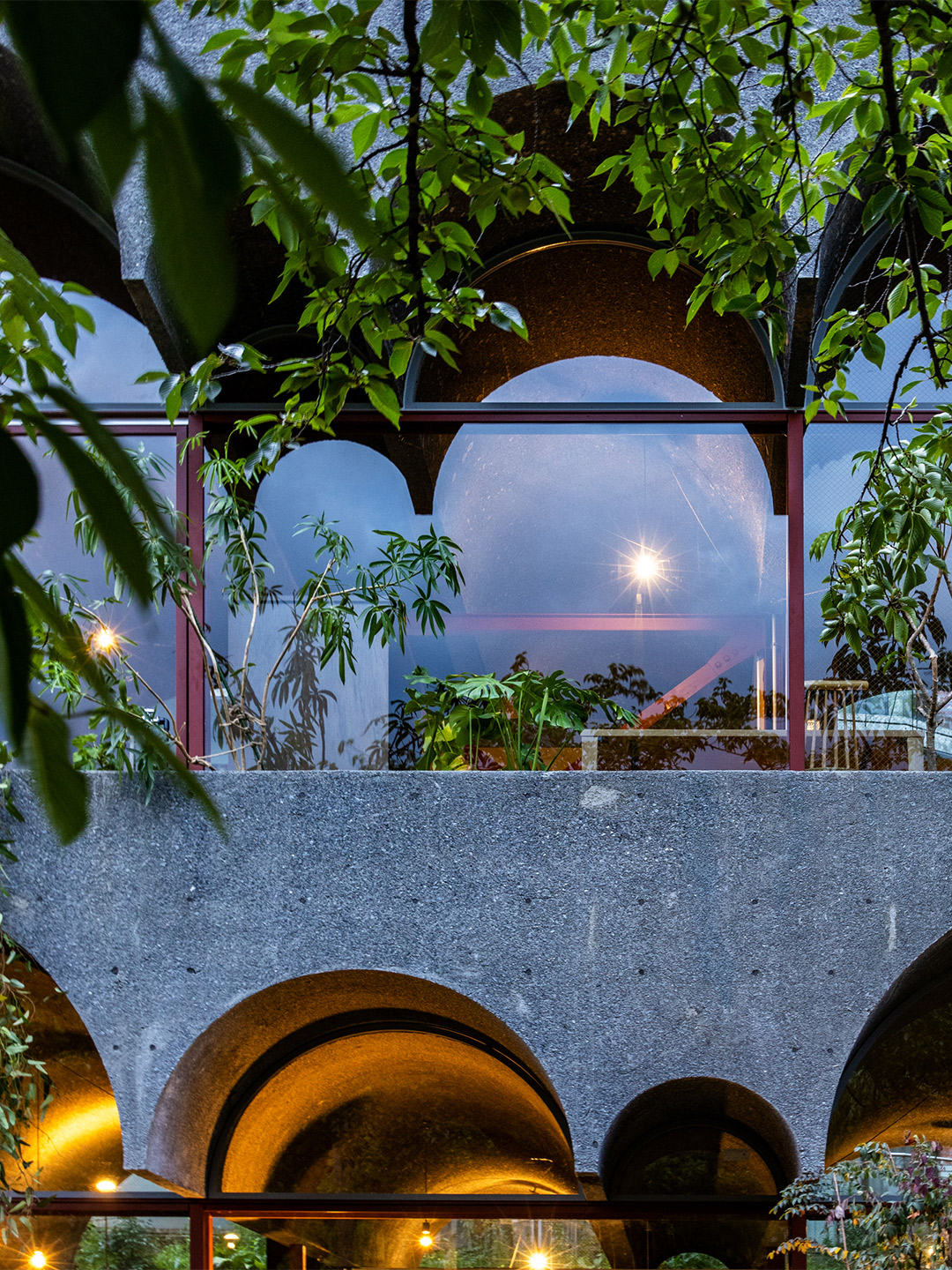
The way that rainwater was captured and filtered through this new environment was an essential consideration in the design. Following multiple studies of the home’s cross-section, observing how rainwater would naturally travel down through the layers, the architect arrived at the decision to introduce continuous vaulted slabs as the divisions between each level. “The water flow generated the shape of the building,” admits Takeda, who compares the flow of rainwater through the vaulted slabs to water travelling from “mountains to valleys”. This approach, he says, is similar to strategies used in civil engineering projects, such as irrigation channels and dams.
But monitoring the rainfall didn’t only highlight the need for efficient drainage. The weight placed on the structure, provided by light showers or torrential rains, also came into play, joined by the weight of the soil as well as the yearly growth and multiplication of the plants. Described by the architect as “unpredictable”, the garden environment suddenly became a major factor in his architectural response, making it much “scarier” to embrace the challenge. “We faced unpredicted risks,” Takeda says. “[But we] managed to build infrastructure for the environment by installing over-flow pipes to cope with a downpour”, as well as design the soil foundation in layers, he adds. This included the careful distribution of high- and low-density compost, and reducing load by limiting soil on the rooftop and around the outside edges of the building.
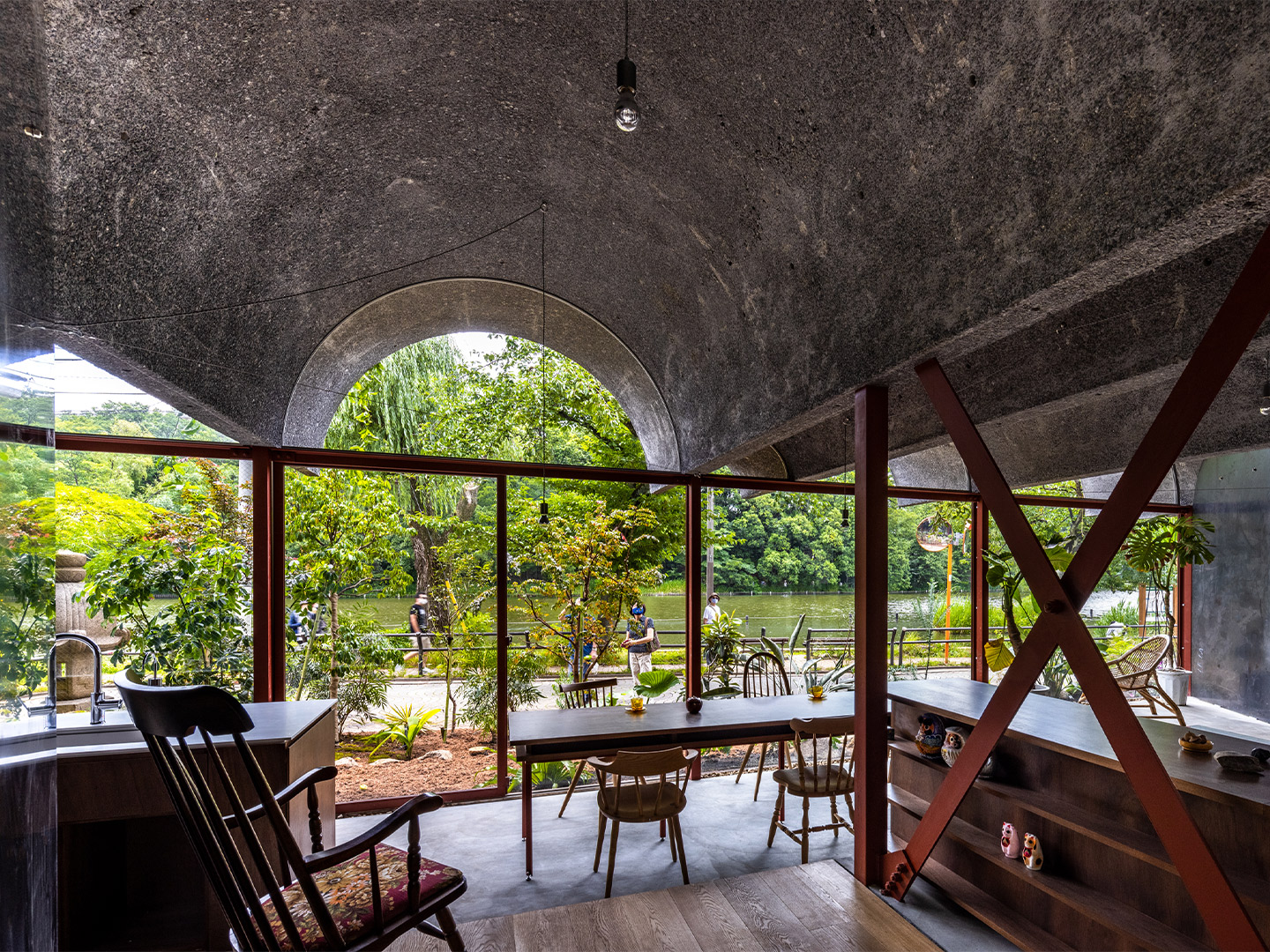
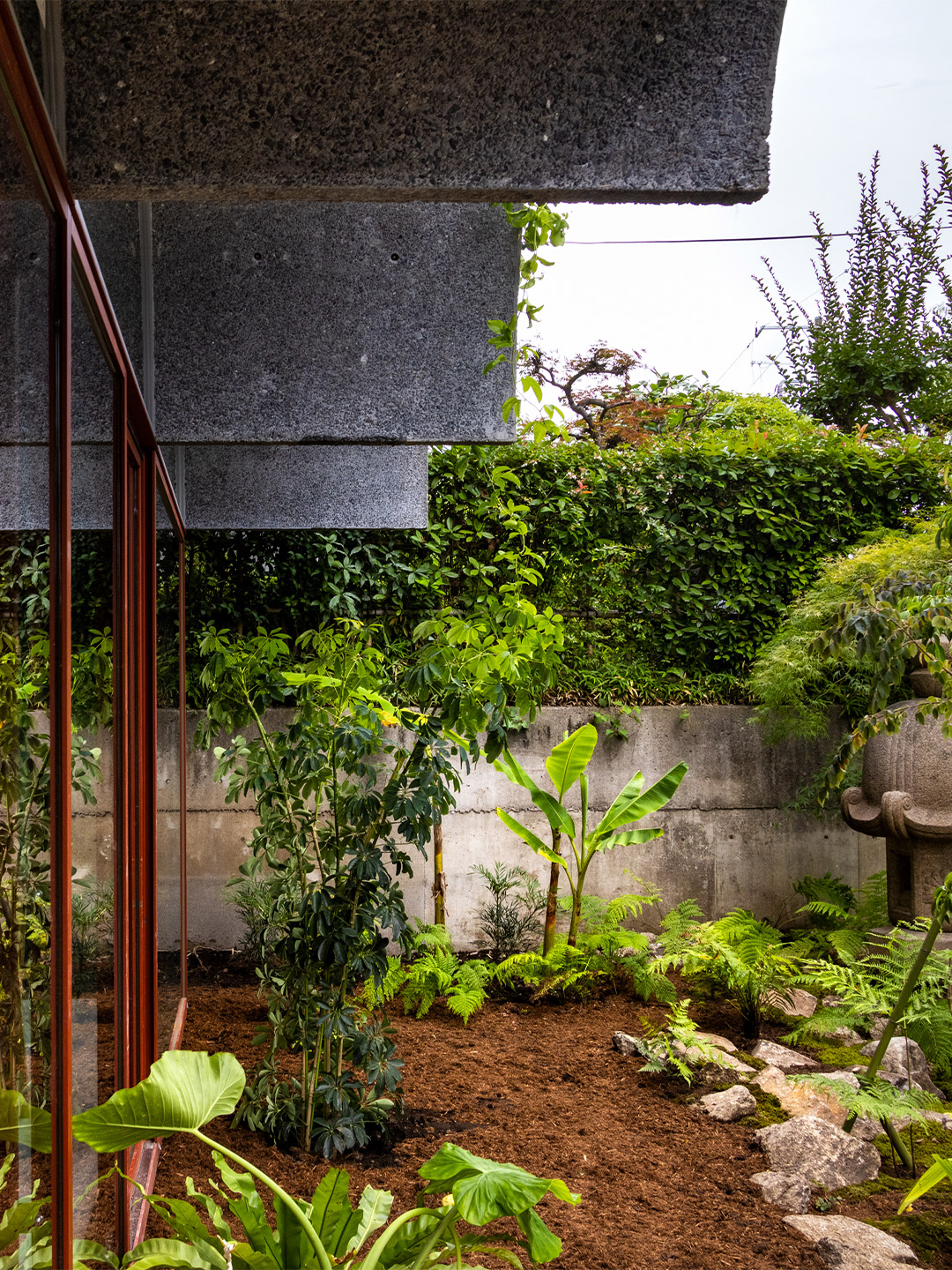
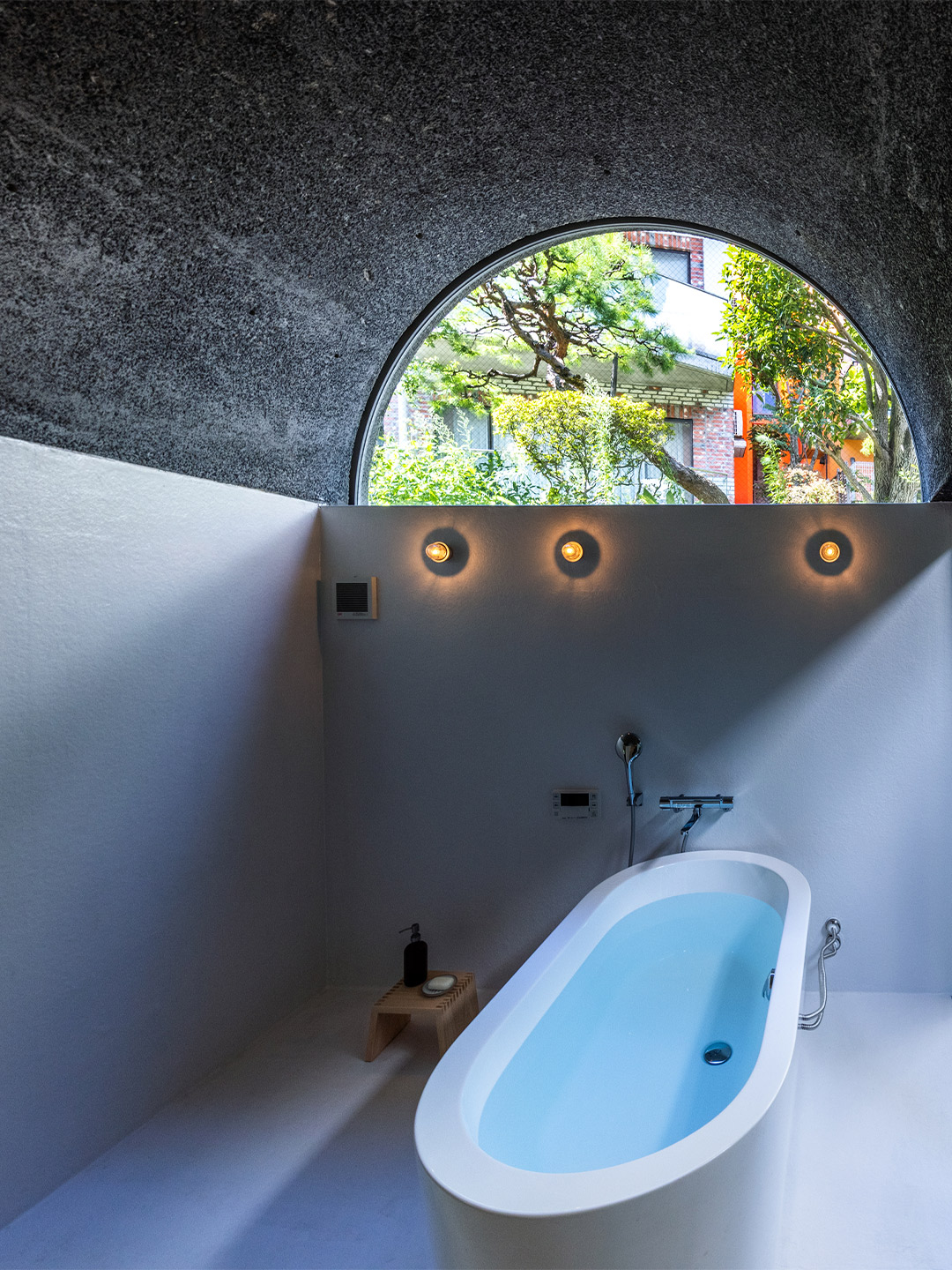
In addition to seasonal rain throughout the year, Tokyo is well-known for its sweltering days around August as well as extremely brisk weather in January and February. Relief from the heat in high summer is an added benefit of stacking the garden environment and the interior spaces, and filling the pockets created by the concrete vaults with soil. “By enveloping the space with fairly thick soil, there could be a cave-like place where you feel cooler, not feeling the heat from outside in summer,” Takeda says. He adds that there could also be “a snuggly place around the floor and the core with warmed soil from the floor heating in winter.”
Another side effect of the vaulted concrete slabs is that the interior spaces are at times afforded a shallow ceiling height. “This may seem negative at a glance,” Takeda explains. “But it would be a much more beckoning structure for one’s living compared to the general flat slab,” he suggests. At its highest point, the vaulted slab provides a ceiling height of 3.5 metres; at the lowest valley, the slab drops to just two metres – a level that is “reachable by hand,” says the architect. “If the structure is reachable, eye bolts, ring nuts and wires could be attached … [to] allow us to hang hammocks, pendant lights, planters at the desired location. Reachable structures might be able to generate creativity in one’s daily life – it would become the structure to support not only the environment but also one’s living.”
While Takeda-san acknowledges that “this one house would not bring any potential effect to improve the global environment”, the architect finds comfort in imagining what the future holds for the residence and how it might inspire other projects. Over time, the plants should grow to engulf Tsuruoka House, and the birds and insects who call the place home are likely to introduce unplanned species of flora. “Eventually, a small forest could appear,” Takeda says. Then as decades pass, a dense canopy of foliage is expected to hide the building entirely, and ultimately, the architect believes, the bio-mass of the garden environment “must surpass the mass of human-made architecture”.
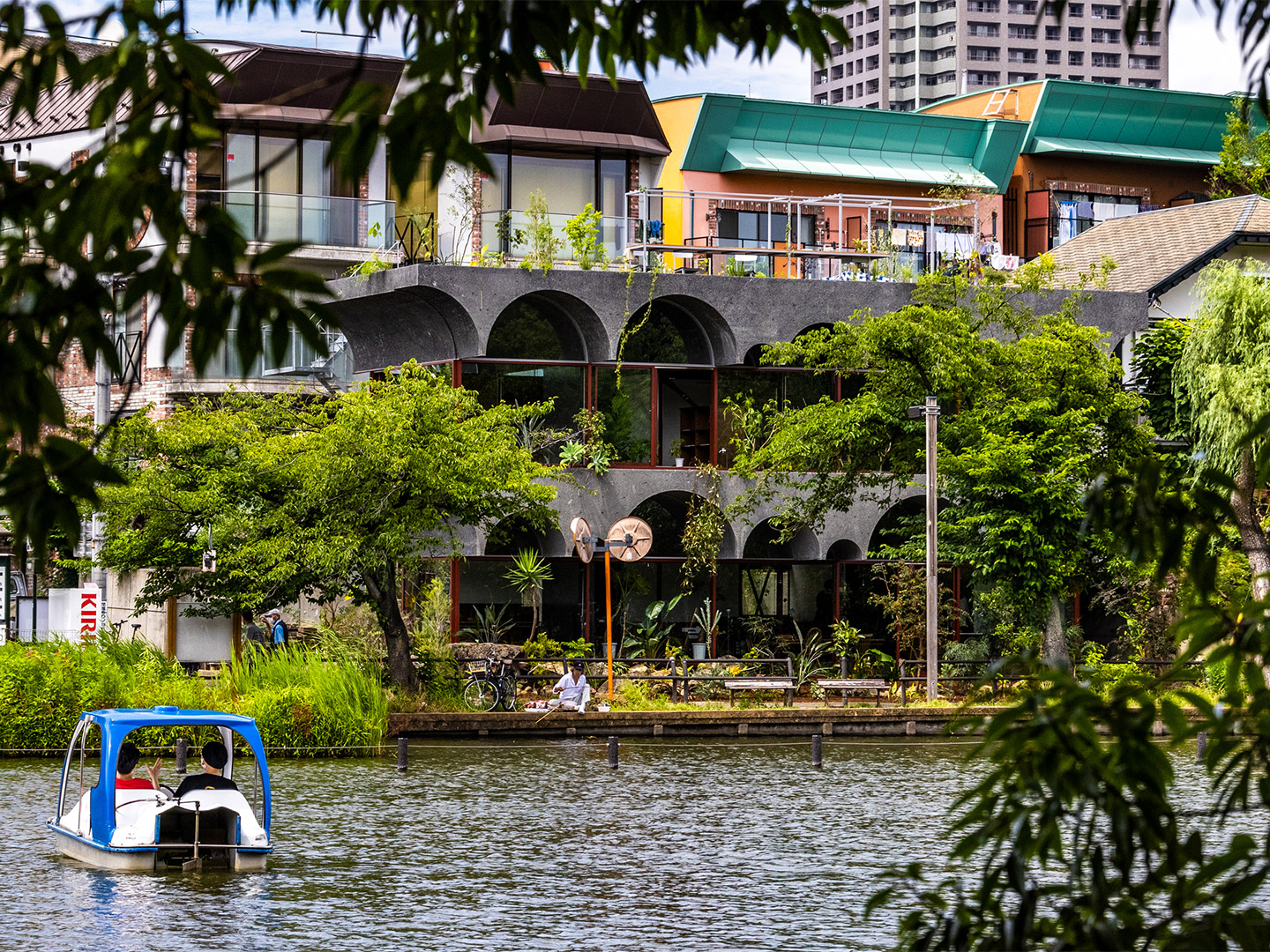
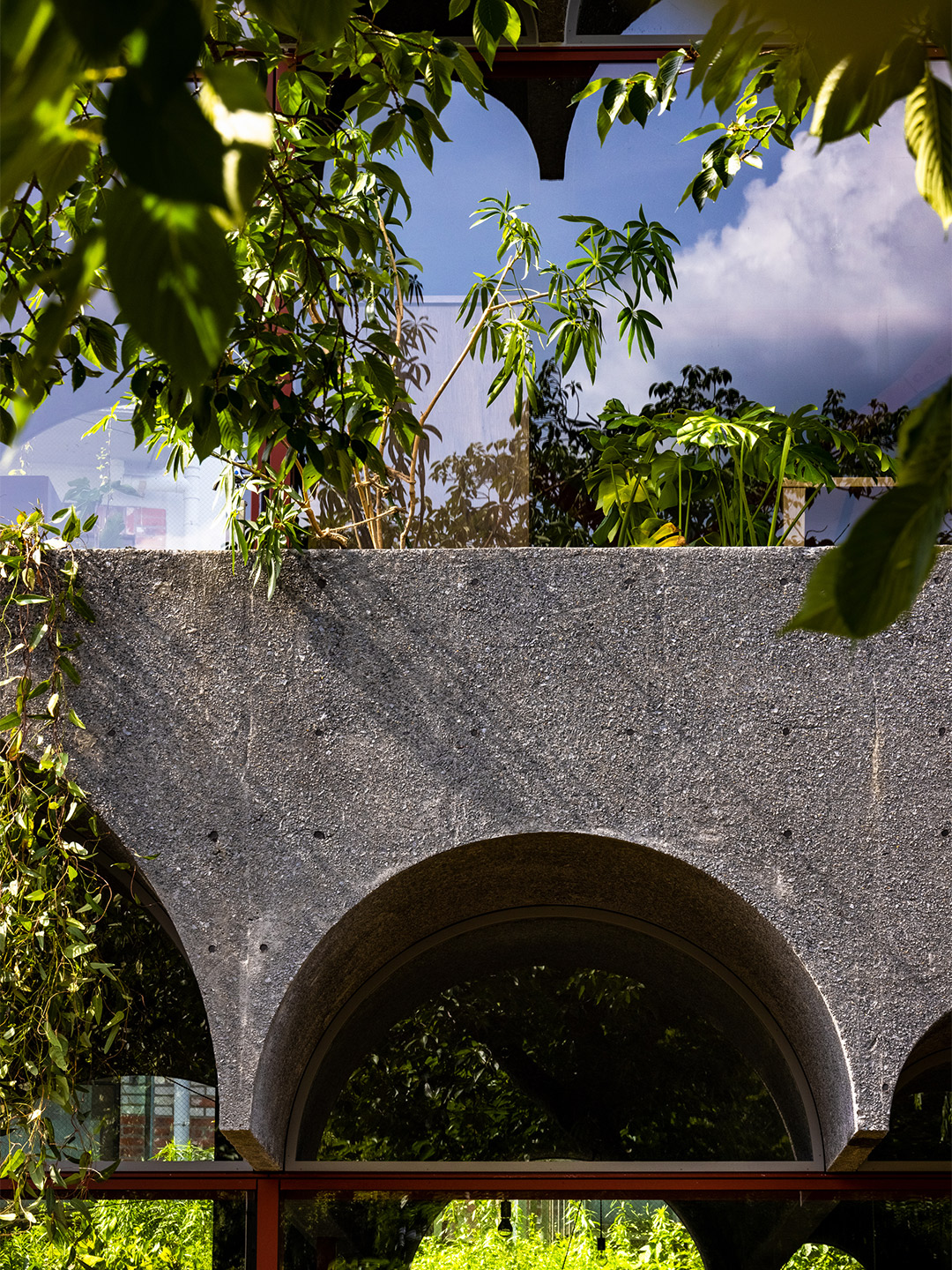
Over time, the plants should grow to engulf Tsuruoka House, and the birds and insects who call the place home are likely to introduce unplanned species of flora.
Catch up on more architecture, art and design highlights. Plus, subscribe to receive the Daily Architecture News e-letter direct to your inbox.
Related stories
- Brooklyn’s famed brownstones inspired the Aesop Park Slope store.
- A 1960s London post office is now a swinging sushi restaurant.
- Designer diner: Los Alexis taquería in Mexico City by RA!.
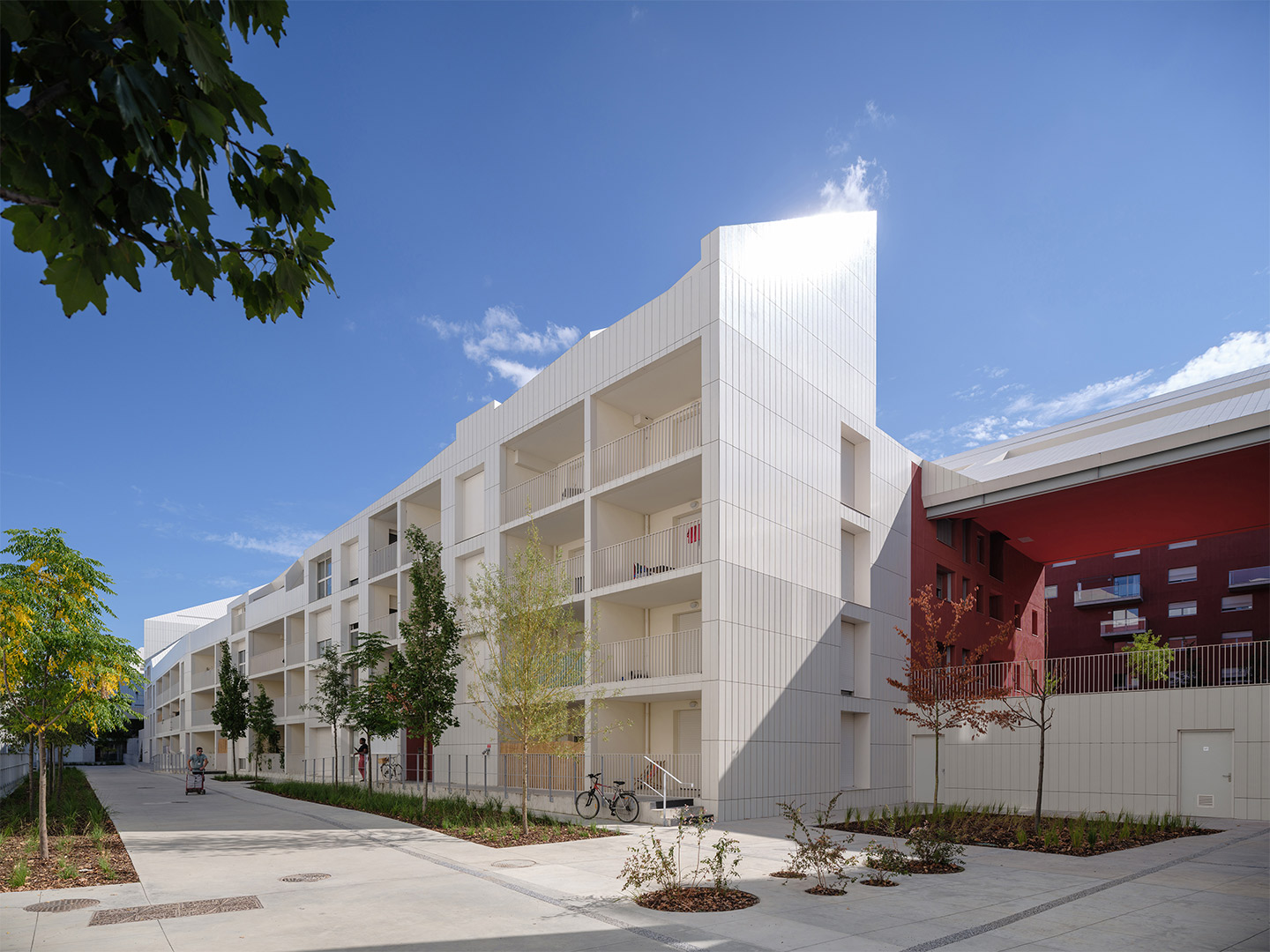
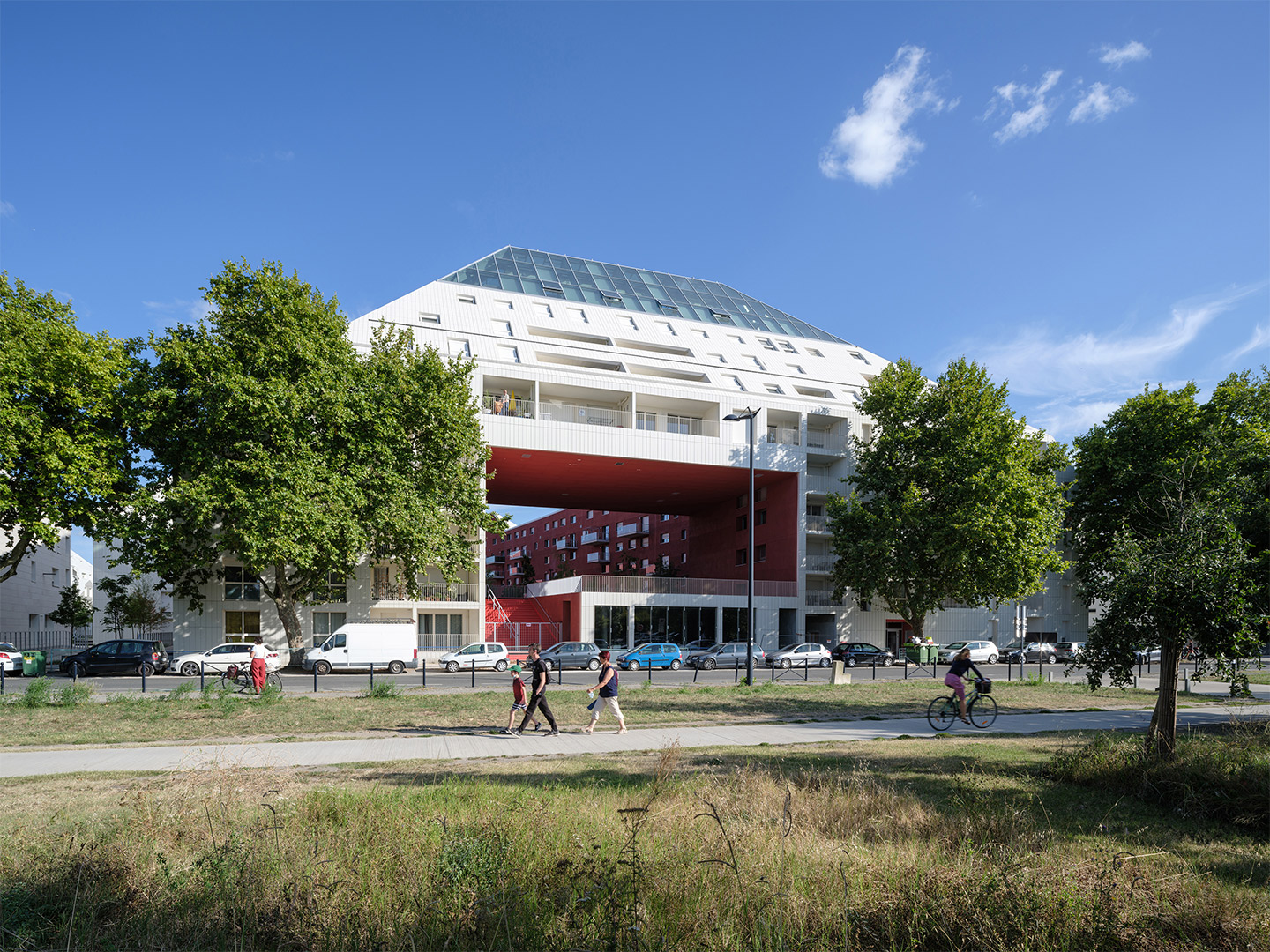
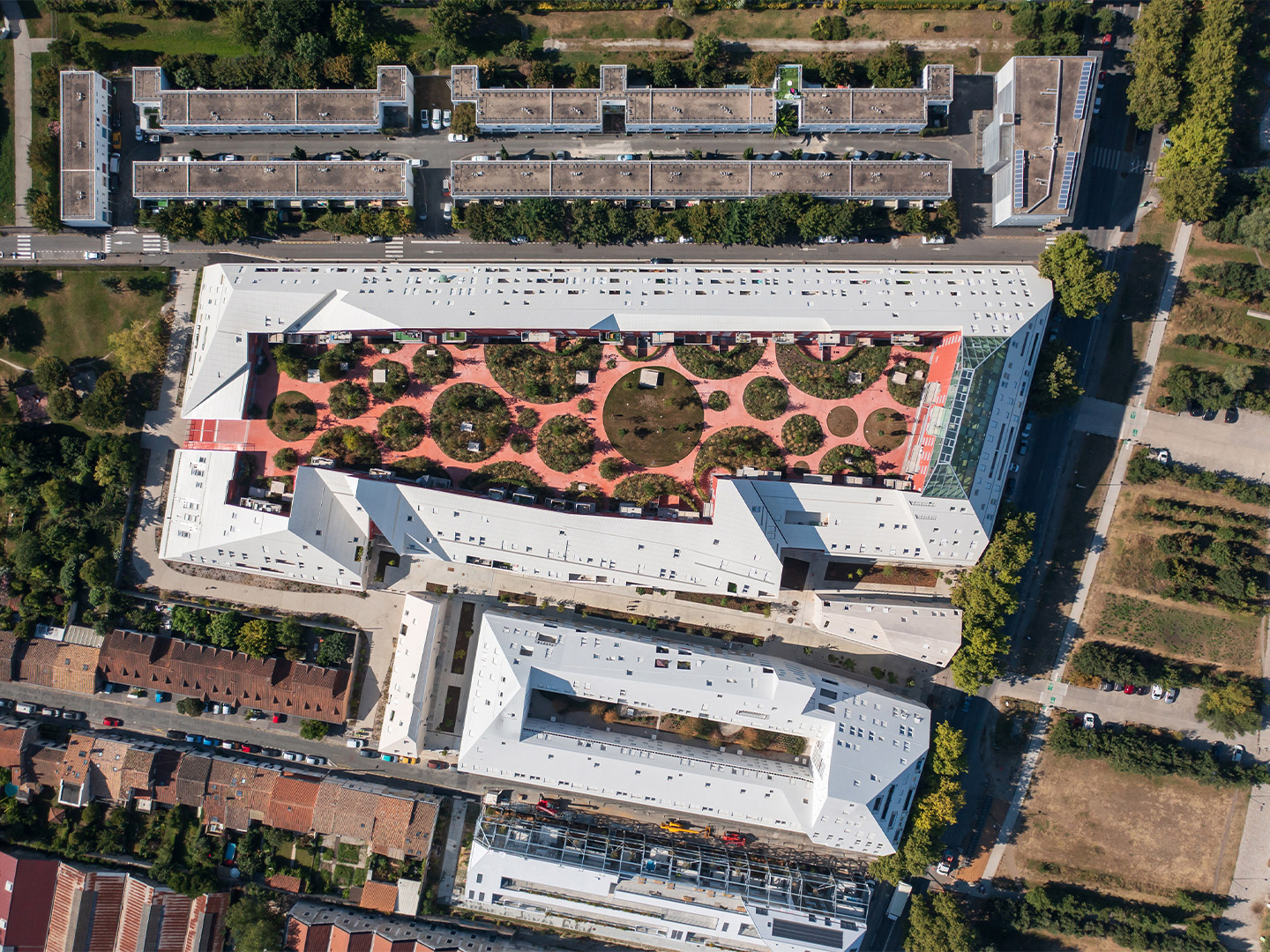
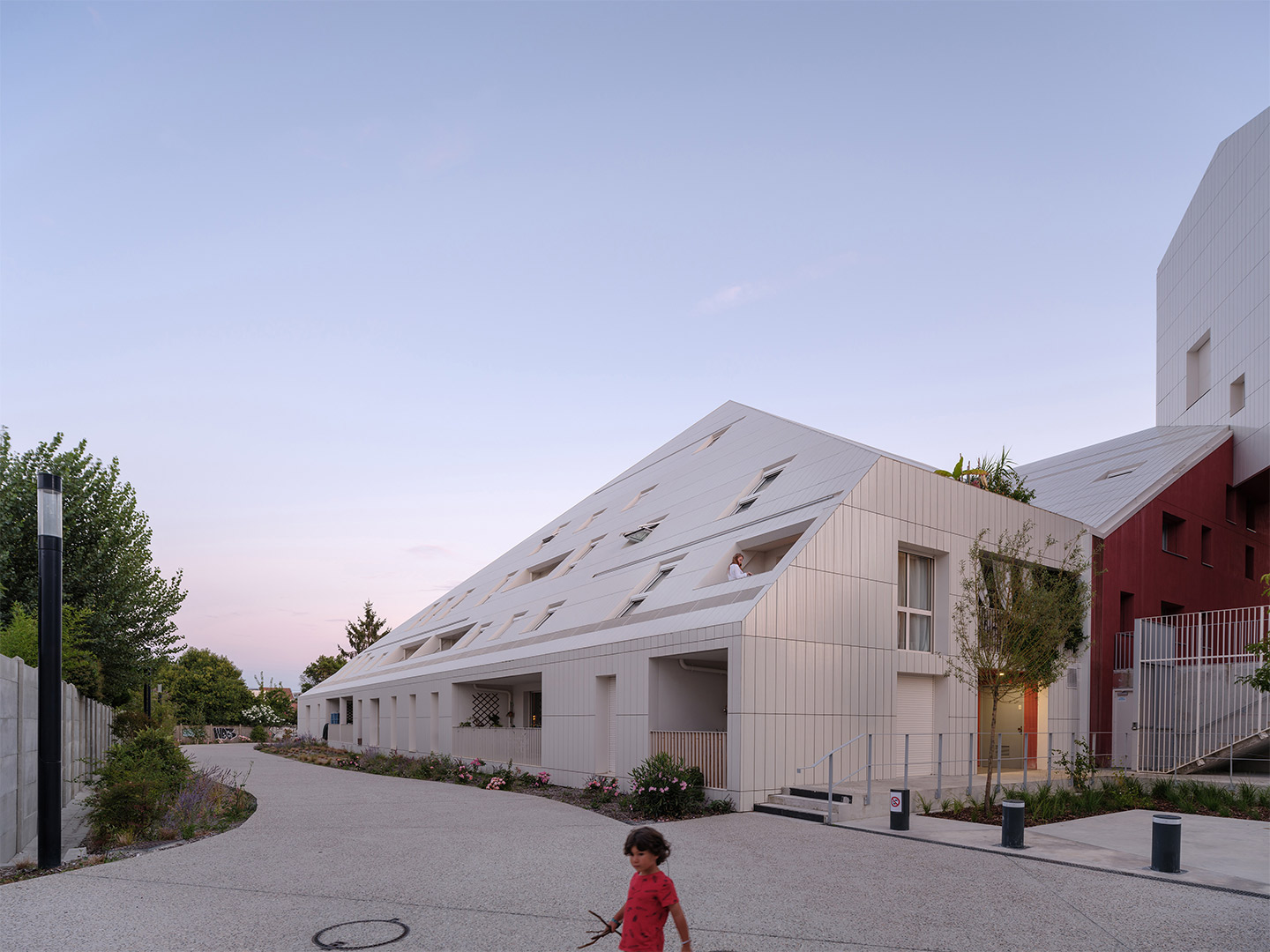
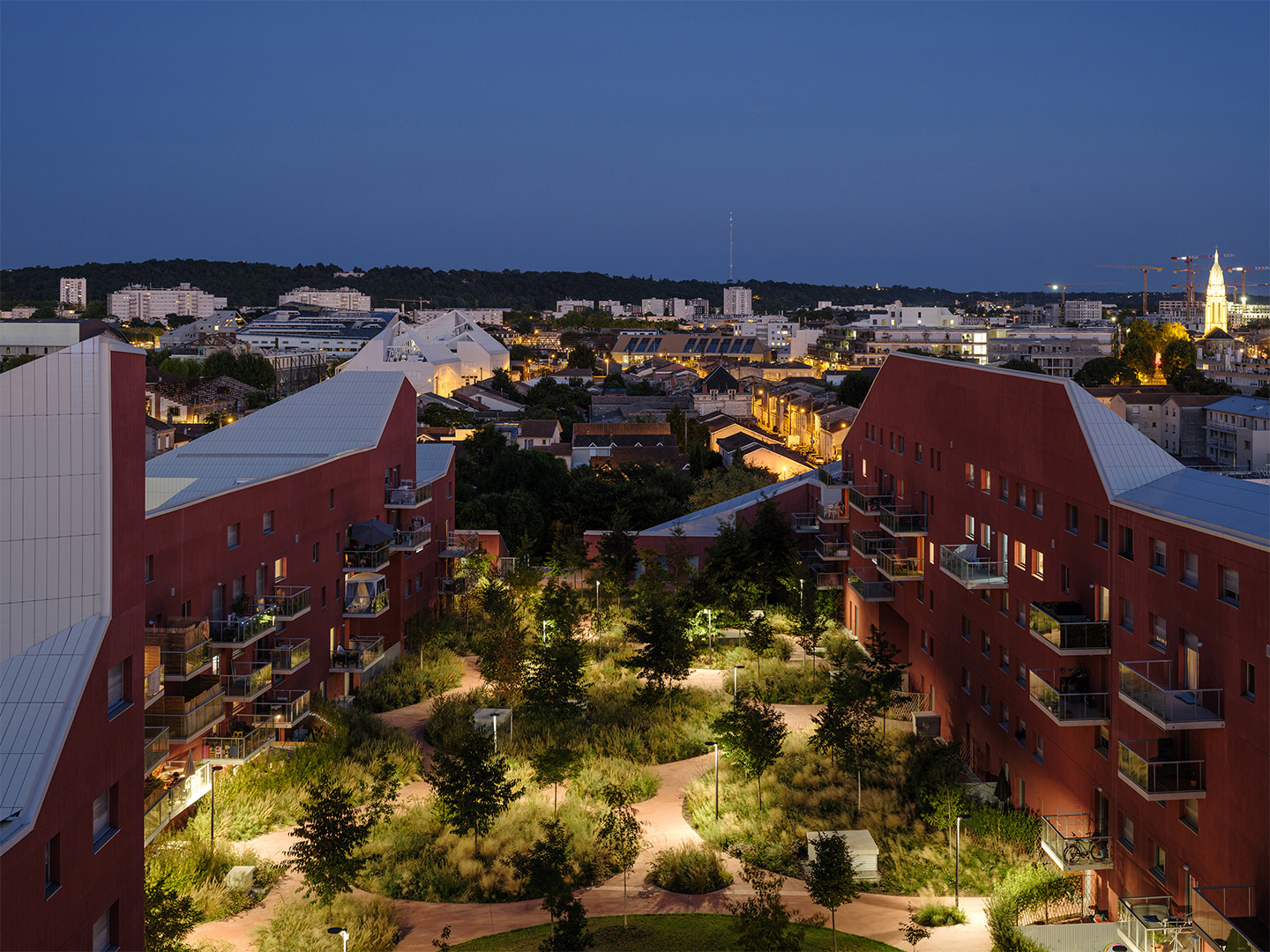
MVRDV has completed the development of Ilot Queyries, a courtyard apartment complex comprising 282 homes – including 128 for social housing – with “plenty of light, air, and a large collective green space,” say the Netherlands-based architects. Located to the east of the River Garonne in Bordeaux, France, just across from the city’s historic centre, the project also includes vehicle parking and commercial space, and a rooftop restaurant in an intimate urban setting. The development joins a new neighbourhood of four buildings masterplanned by MVRDV in collaboration with Joubert Architecture.
The Ilot Queyries project is envisaged as a “test-bed” for the principles of the neighbouring Bastide-Niel masterplan, also designed by MVRDV, which aims to combine the virtues of intimacy, surprise and liveliness with the density, ecology, light and comfort of the modern city. “The [Ilot Queyries] building fills the site to its boundaries, lending an intimate feeling to the streetscape,” the MVRDV team say. “The roofs are arranged into carefully calibrated slopes to provide maximum ventilation, daylight, and sun to the building itself and to its neighbours.”
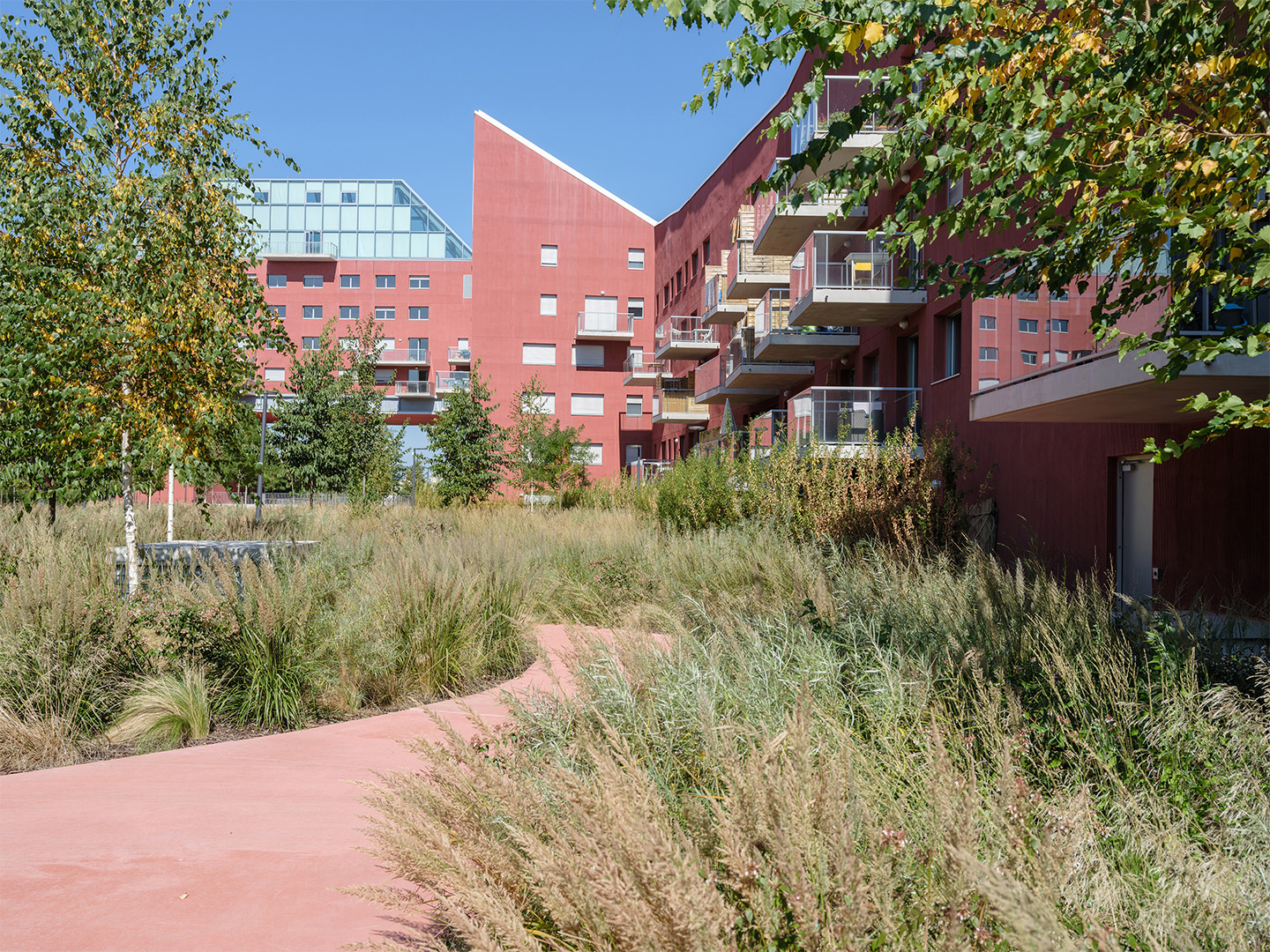
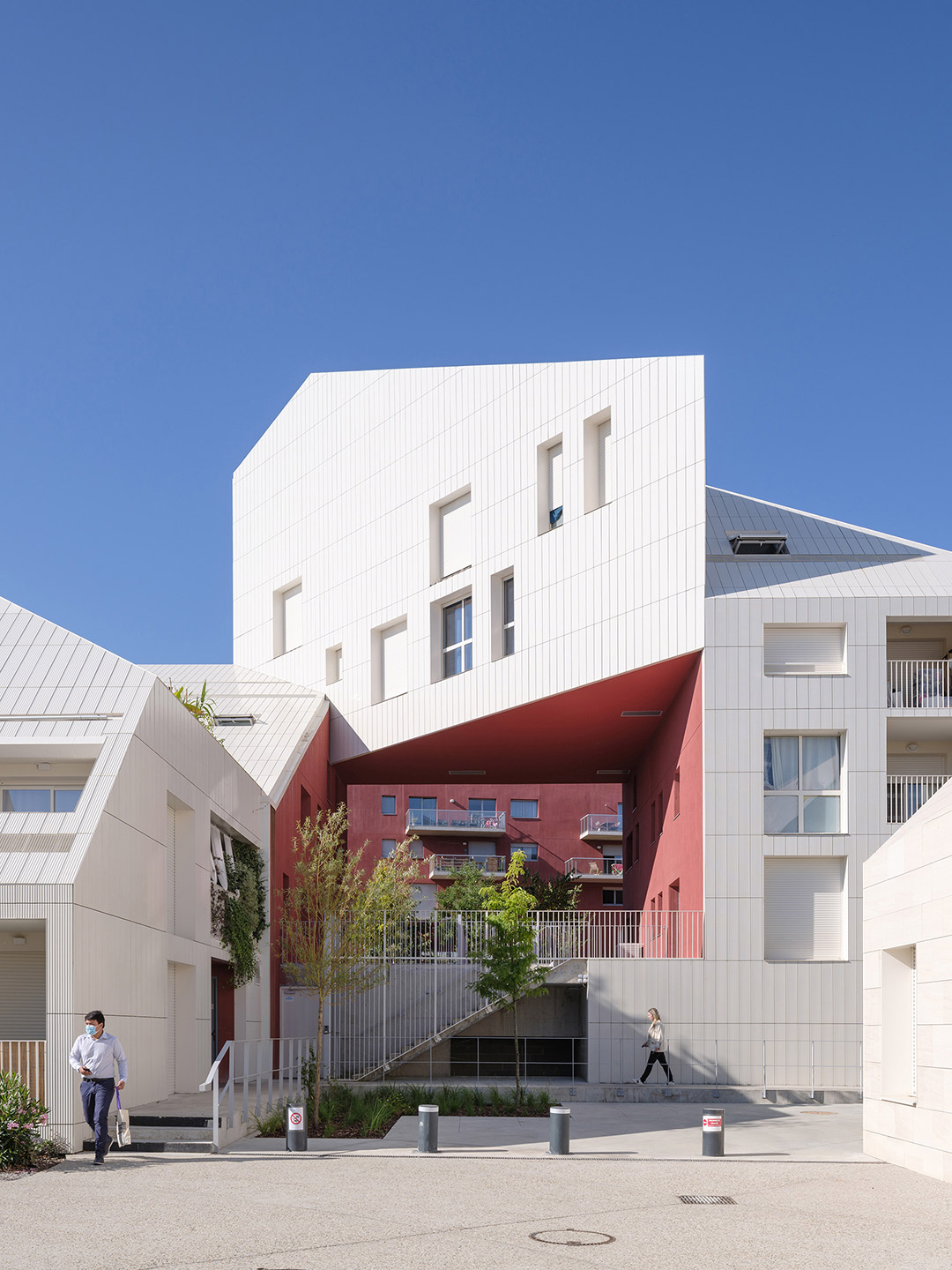
Courtyard living: Ilot Queyries apartments in Bordeaux by MVRDV
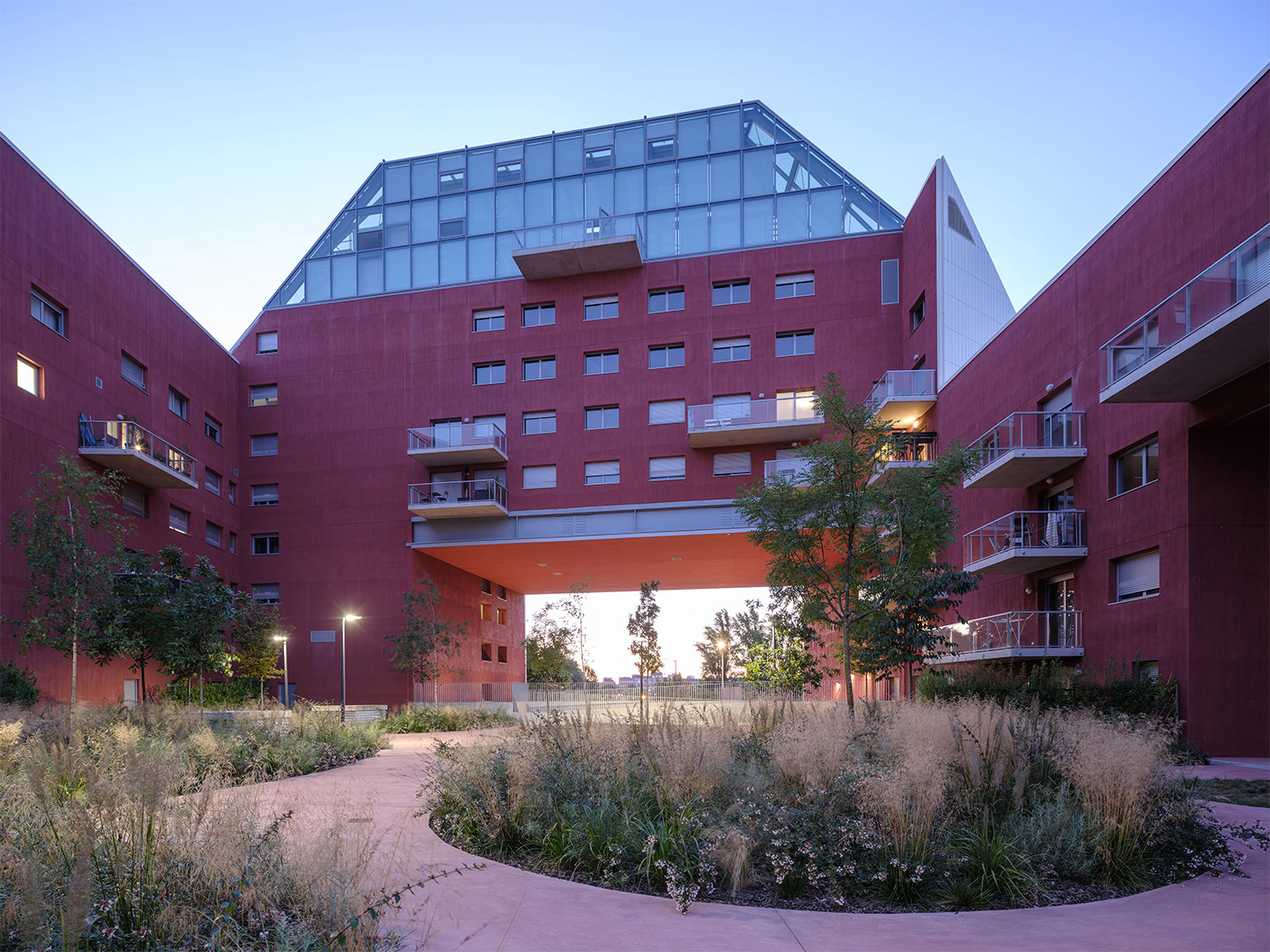
The building is irregularly shaped and spans a length of almost 200 metres. Furthermore, it responds to its surroundings on all sides, including on the south-eastern end of the building where sections as low as one storey relate to the low-rise neighbours. On the north-east, facing the river, it rises as high as nine storeys. At the high point, a glass crown houses a restaurant with views of the river and the city of Bordeaux beyond.
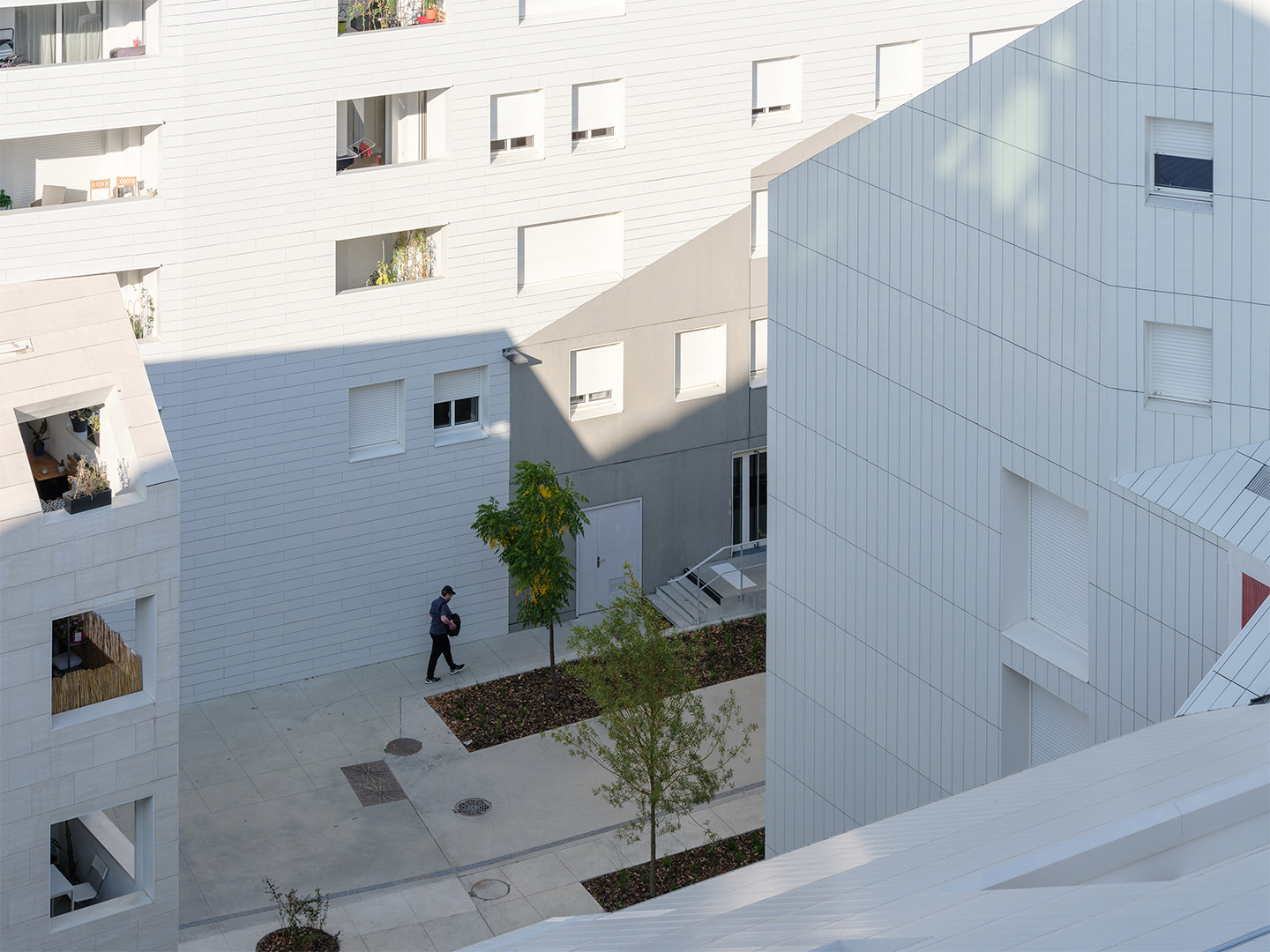
The facades that present to the street are lower than those facing the central courtyard. And in accordance with the rules developed in the Bastide-Niel masterplan, the roof slopes vary between 14 degrees and 45 degrees depending on their relation to the sun. “These slopes create complex and interesting interior spaces, which help to define varied apartments in a wide range of sizes – making the building home to many different types of resident, while also giving a unique and homely feel to each living space,” the architects explain.
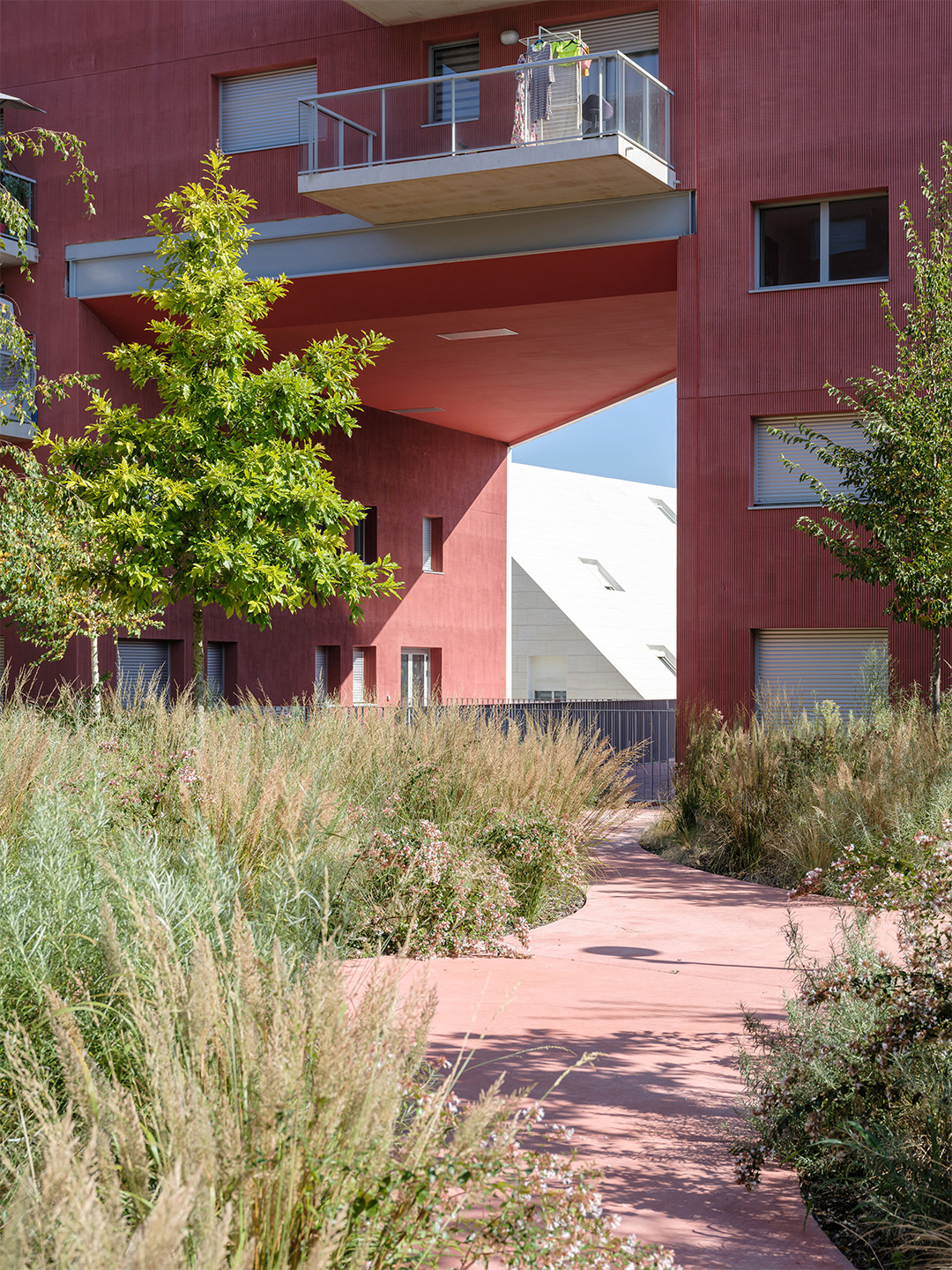
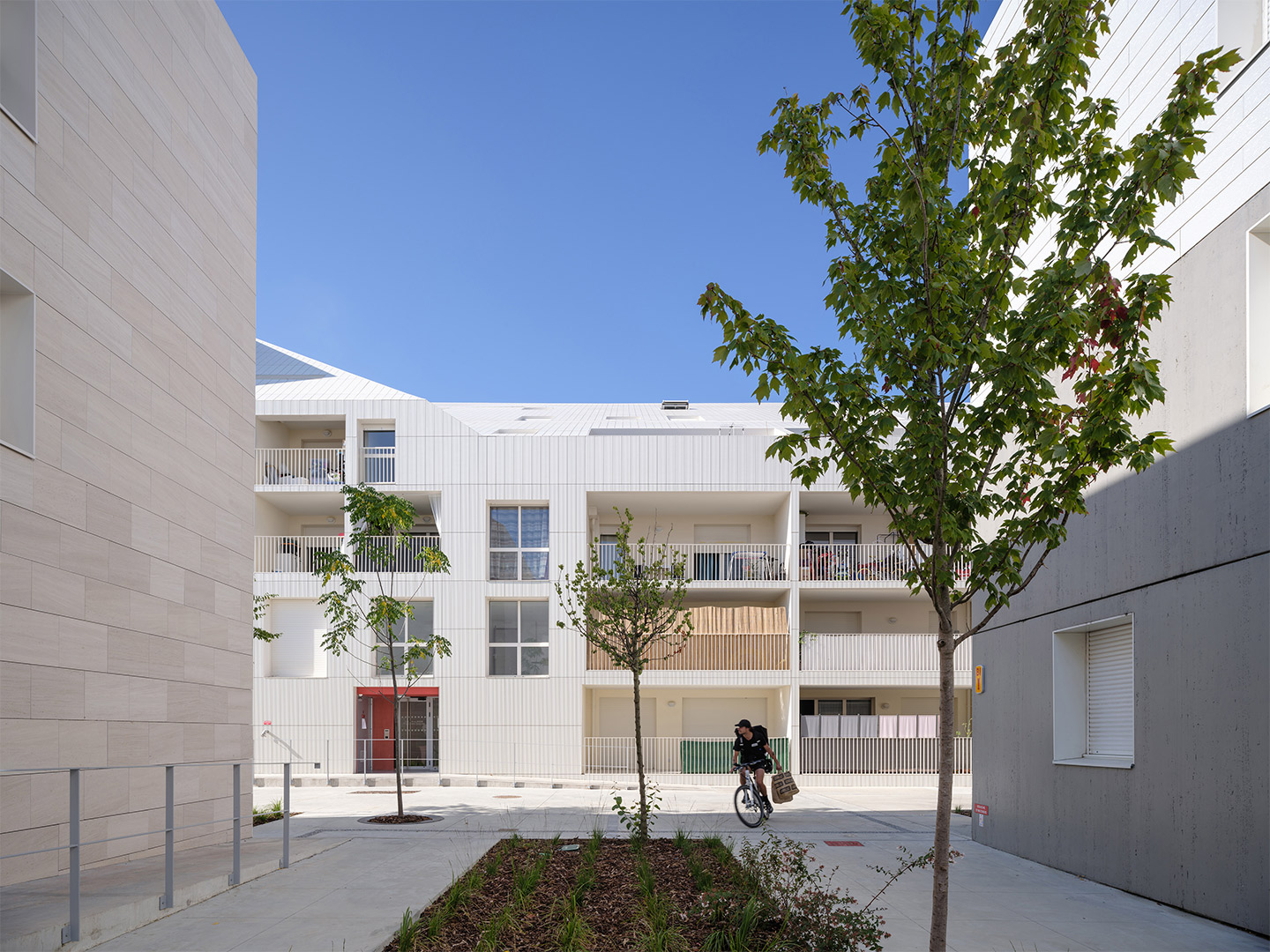
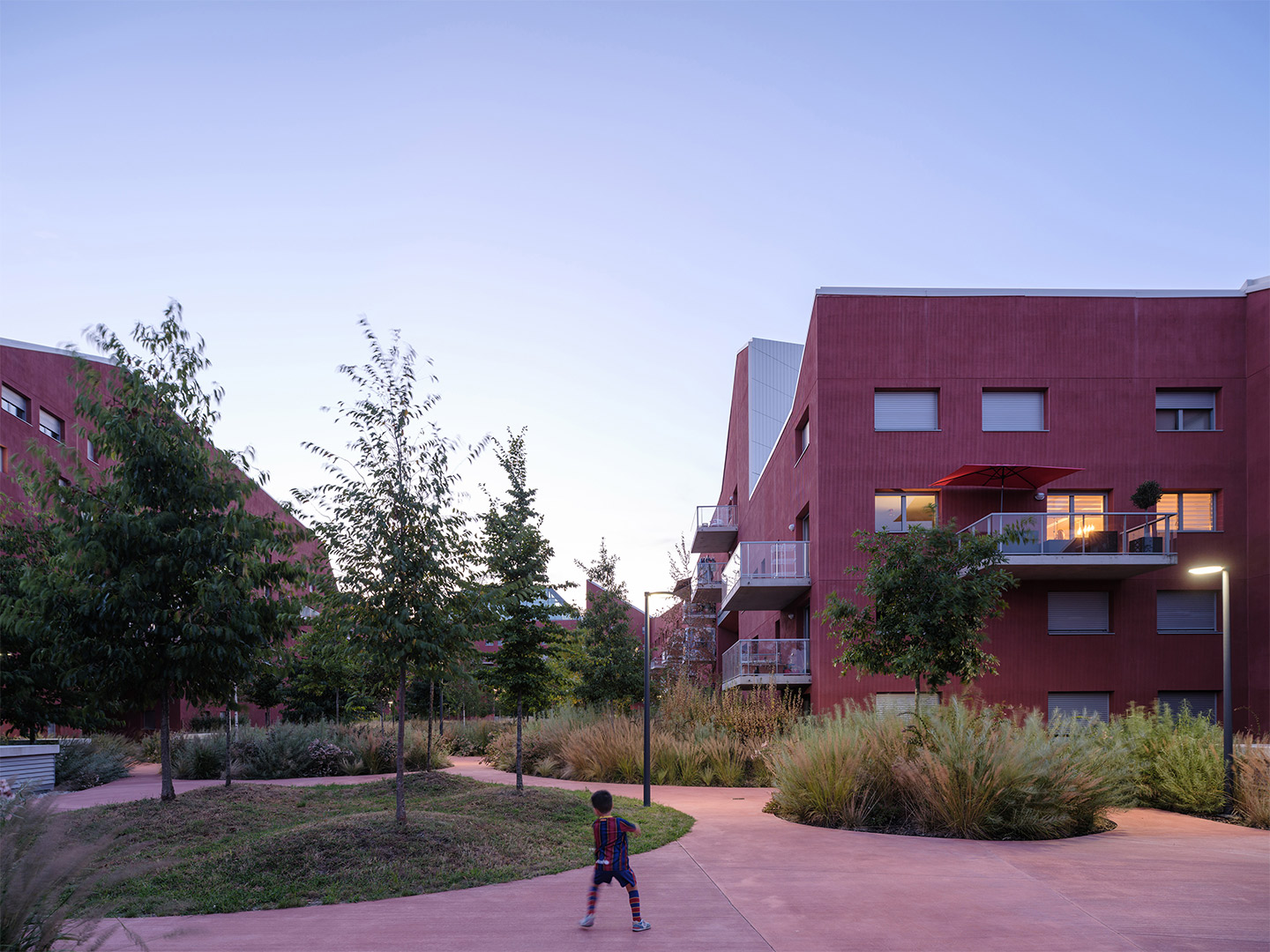
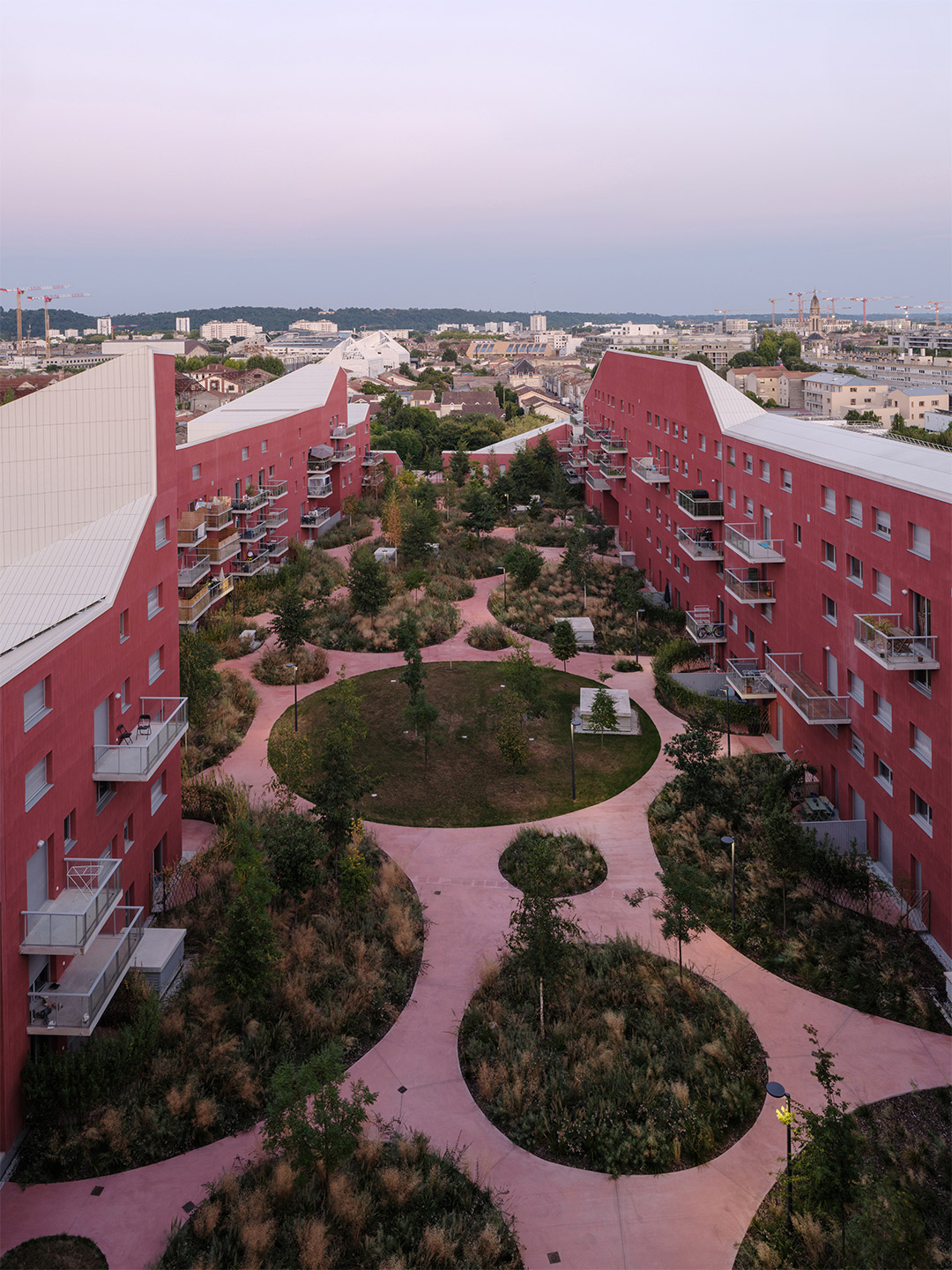
The project’s street-facing facades present a muted, cream-coloured palette that sits in harmony with the surroundings. However, the courtyard-facing facades are finished in a bright red textured stucco. Together with the green courtyard landscape, filled with alder and birch trees and a variety of grasses, this presents a visually exciting environment to complement the liveliness of the park. At various locations, large portals through the building connect the interior courtyard to the outside, introducing flashes of colour that draw the attention of passers-by and inspire curiosity about the space inside.
“The COVID-19 pandemic showed everyone how valuable outdoor spaces close to their homes can be, and I hope Ilot Queyries can show that such amenities don’t require compromise,” says MVRDV founding partner Winy Maas. “The building creates close and intimate streets without ugly parked cars thanks to its ample car parking. At the same time every apartment is provided a balcony or loggia, while the green park space becomes a wonderful community amenity.”
“This project served as preparation for the grander plan of the Bastide Niel development,” Winy adds. “With this project we were able to test some of our ideas, which resulted in a masterplan with more greenery in the streets, better cost optimisation for facades and more open courtyards.”
Ilot Queyries is the largest building in a development of four buildings masterplanned by MVRDV and Joubert Architecture. Ilot Queyries itself was designed by MVRDV with co-architects Flint, while Joubert Architecture and Flint also designed the other buildings in the development. The landscape architecture of Ilot Queyries was designed by MVRDV in collaboration with Sabine Haristoy and Flint.
mvrdv.nl; joubertarchitecture.nl; flint.fr
With this project we were able to test some of our ideas, which resulted in a masterplan with more greenery in the streets, better cost optimisation for facades and more open courtyards.
Catch up on more architecture, art and design highlights. Plus, subscribe to receive the Daily Architecture News e-letter direct to your inbox.
Related stories
- Venus Power collection of rugs by Patricia Urquiola for cc-tapis.
- Bitossi celebrates centenary in Florence with new museum and 7000-piece display.
- Casa R+1 residence in southern Spain by Puntofilipino.
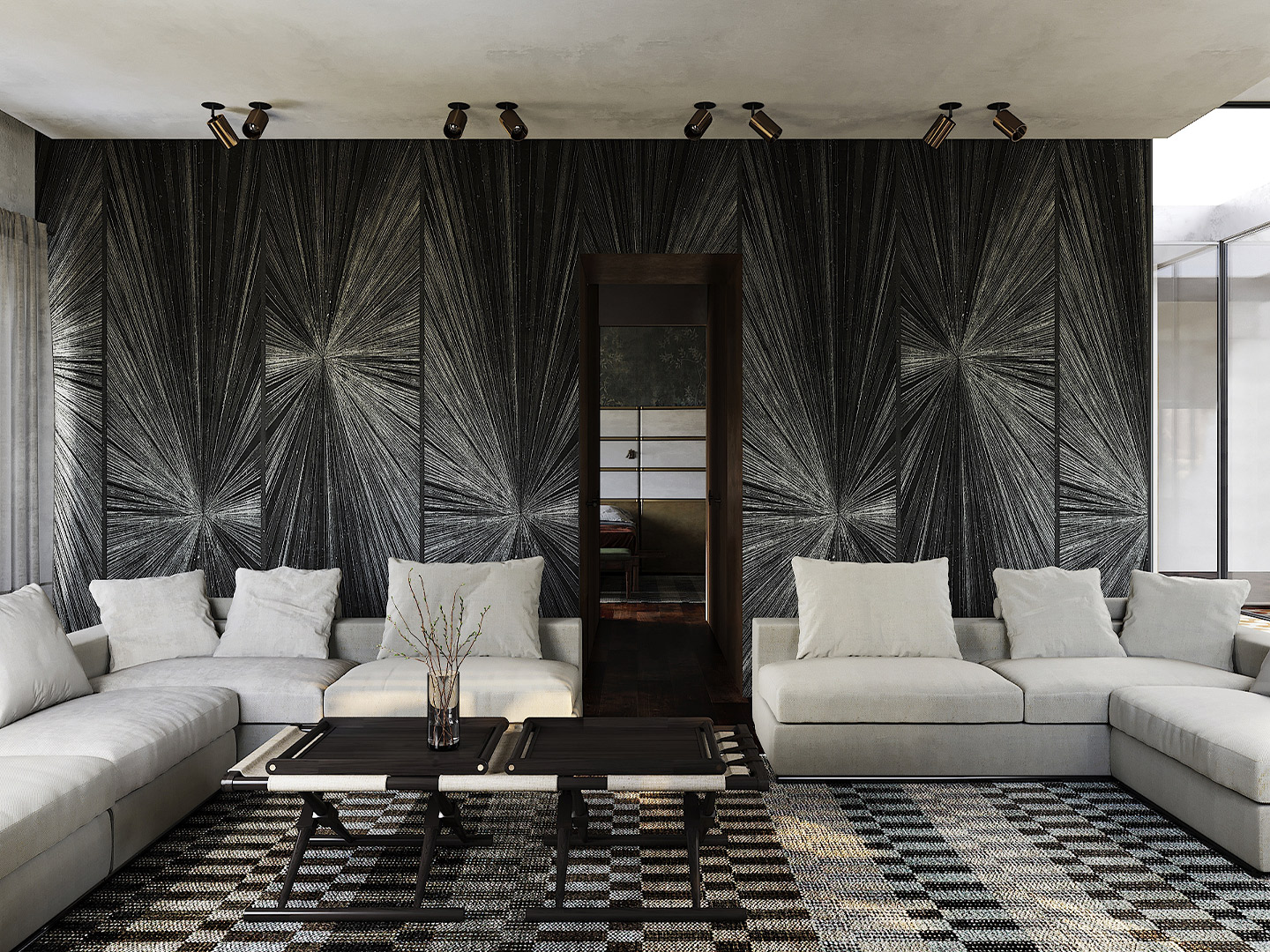
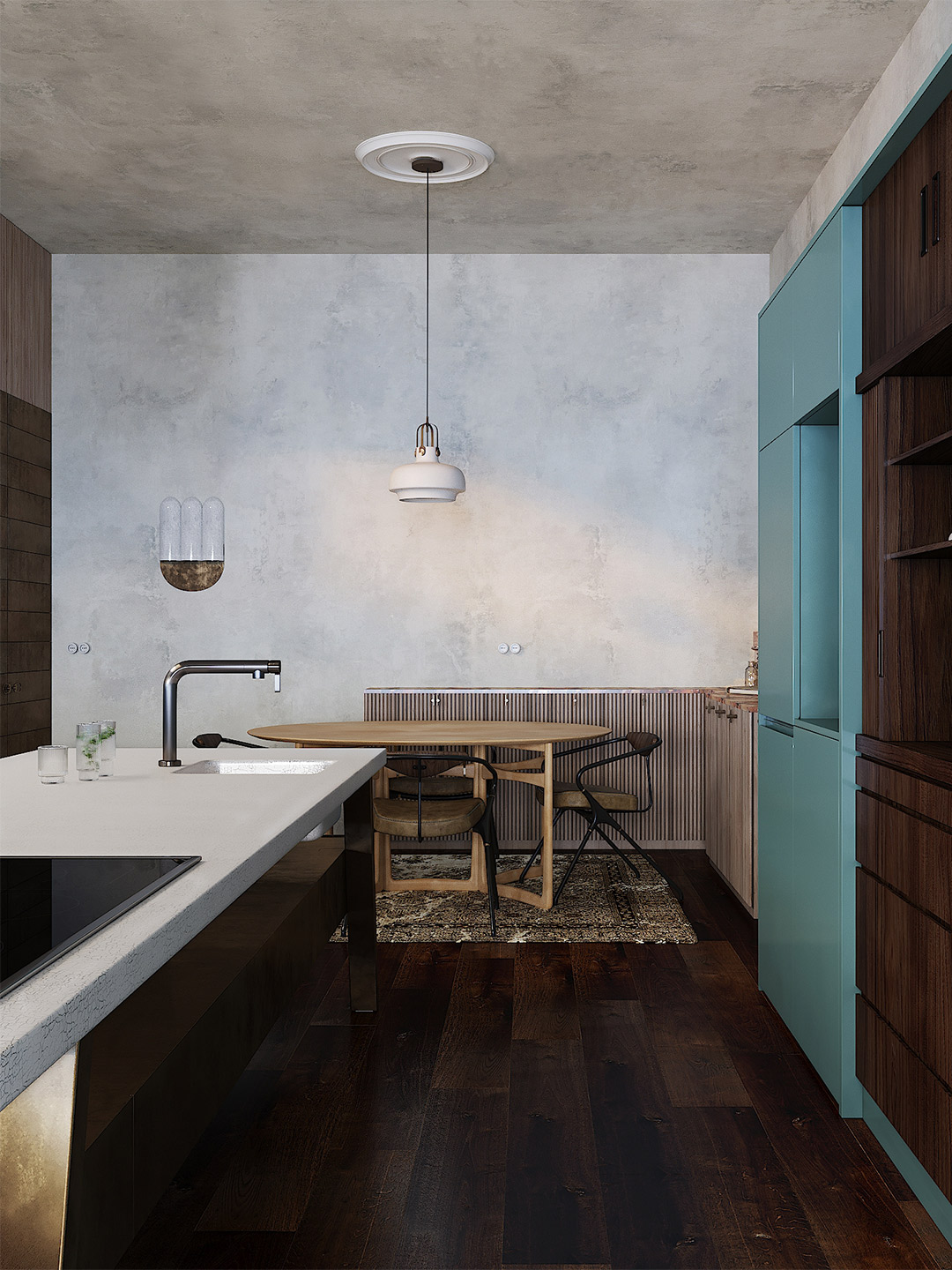
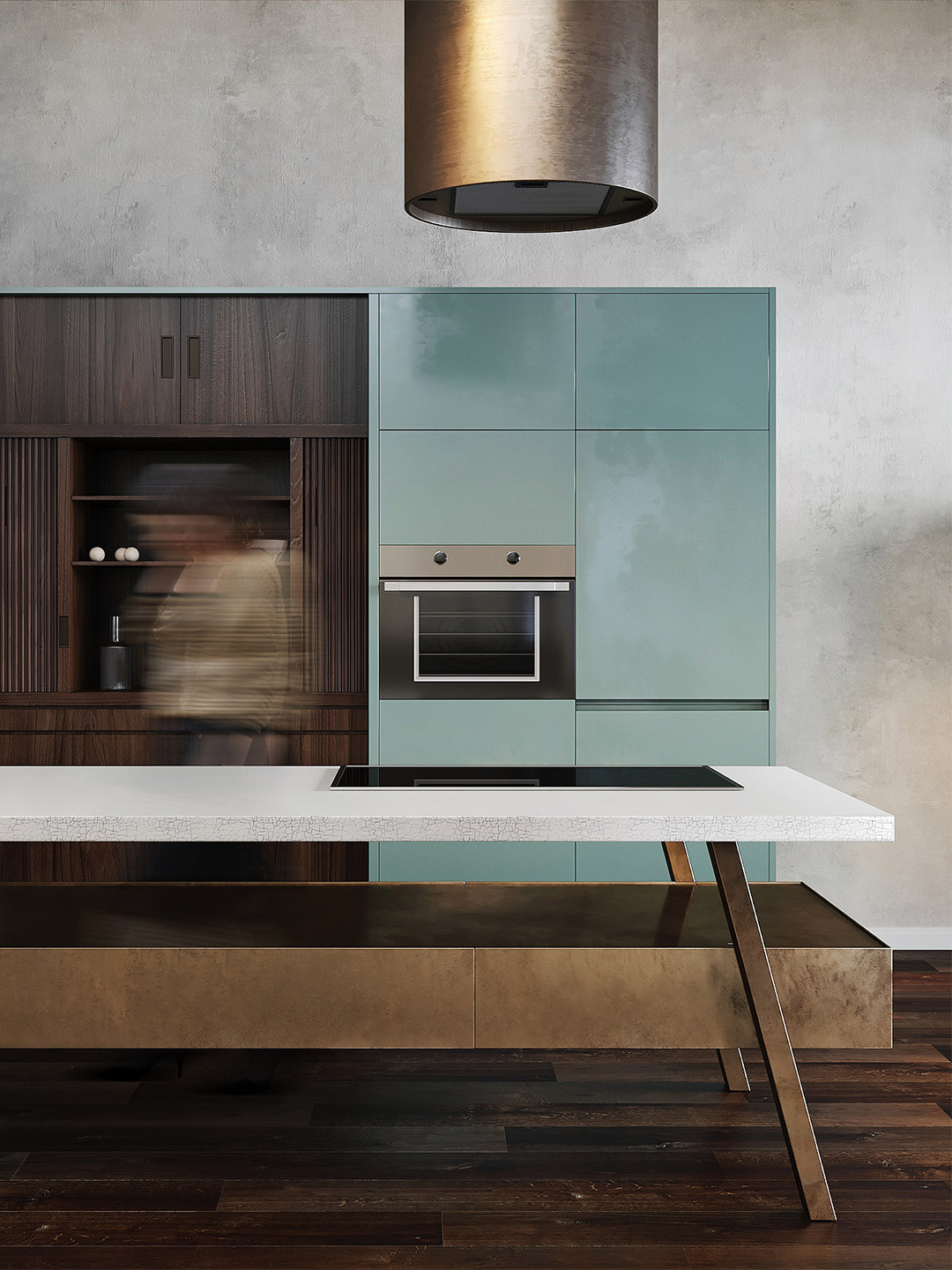
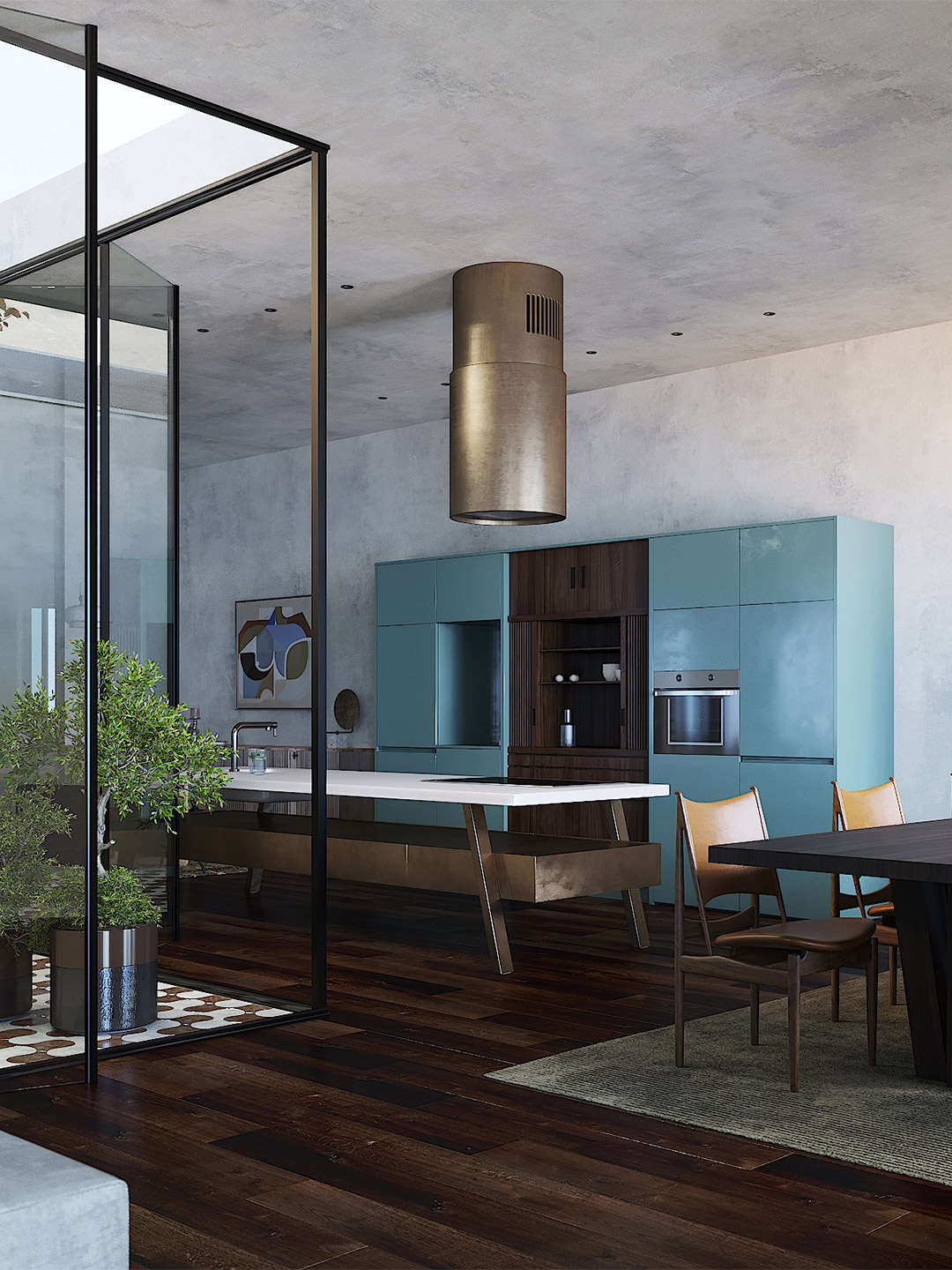
Conceived as an urban oasis for a couple working in the construction industry, the Casa R+1 residence in Almería is inspired by artists who have long travelled to Spain’s Andalusian coast in search of a tranquil retreat. The home’s interiors, created by Madrid-based design office Puntofilipino, feature a symphony of minimalist, richly textured and exquisitely detailed spaces. Central to the floor plan, an open-air ‘room’ connects the combined kitchen, living and dining spaces, allowing for the seamless transition between indoors and out: “a must in southern Spain,” insists Gema Gutiérrez, Puntofilipino’s founder and principal designer.
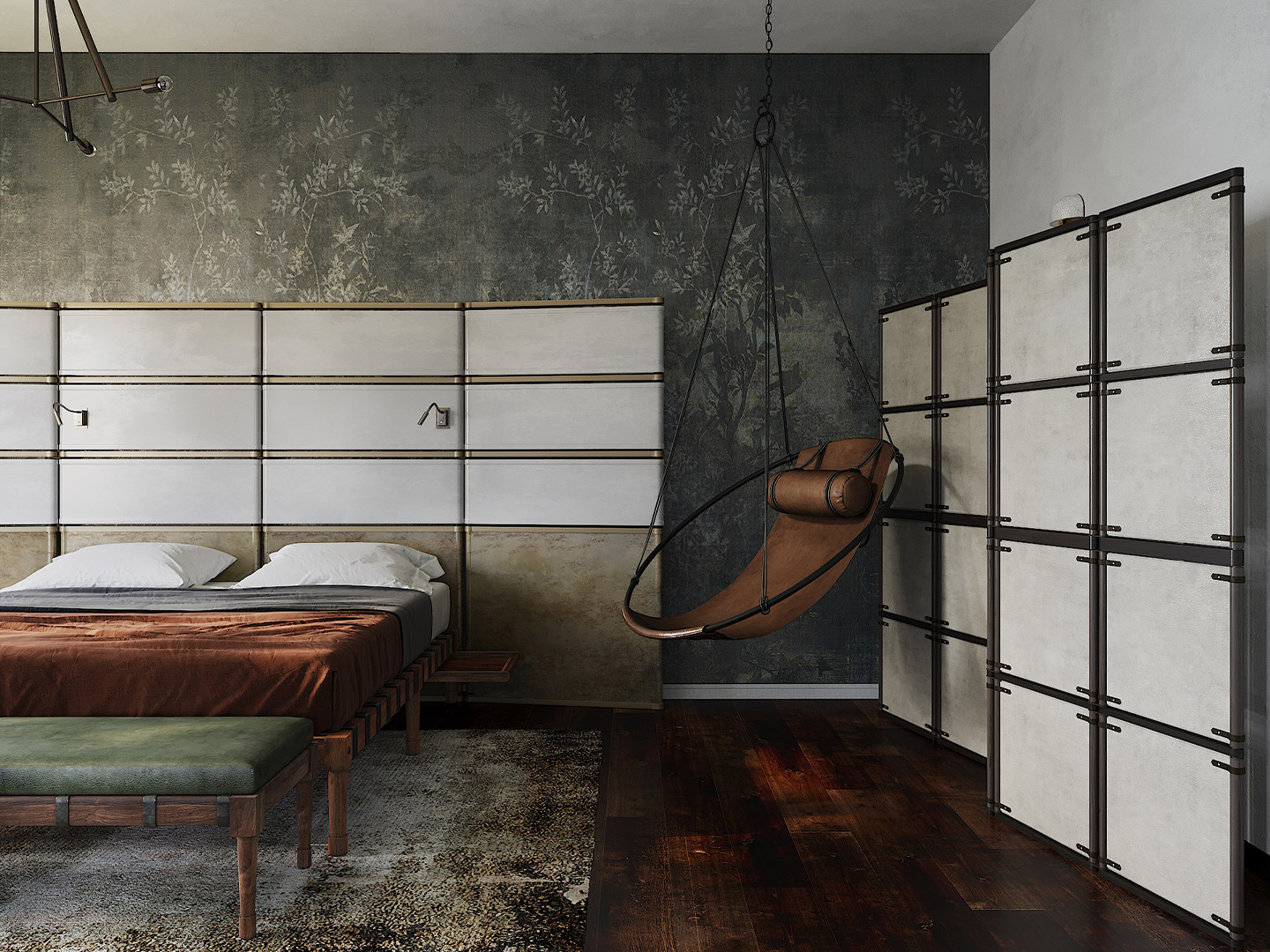
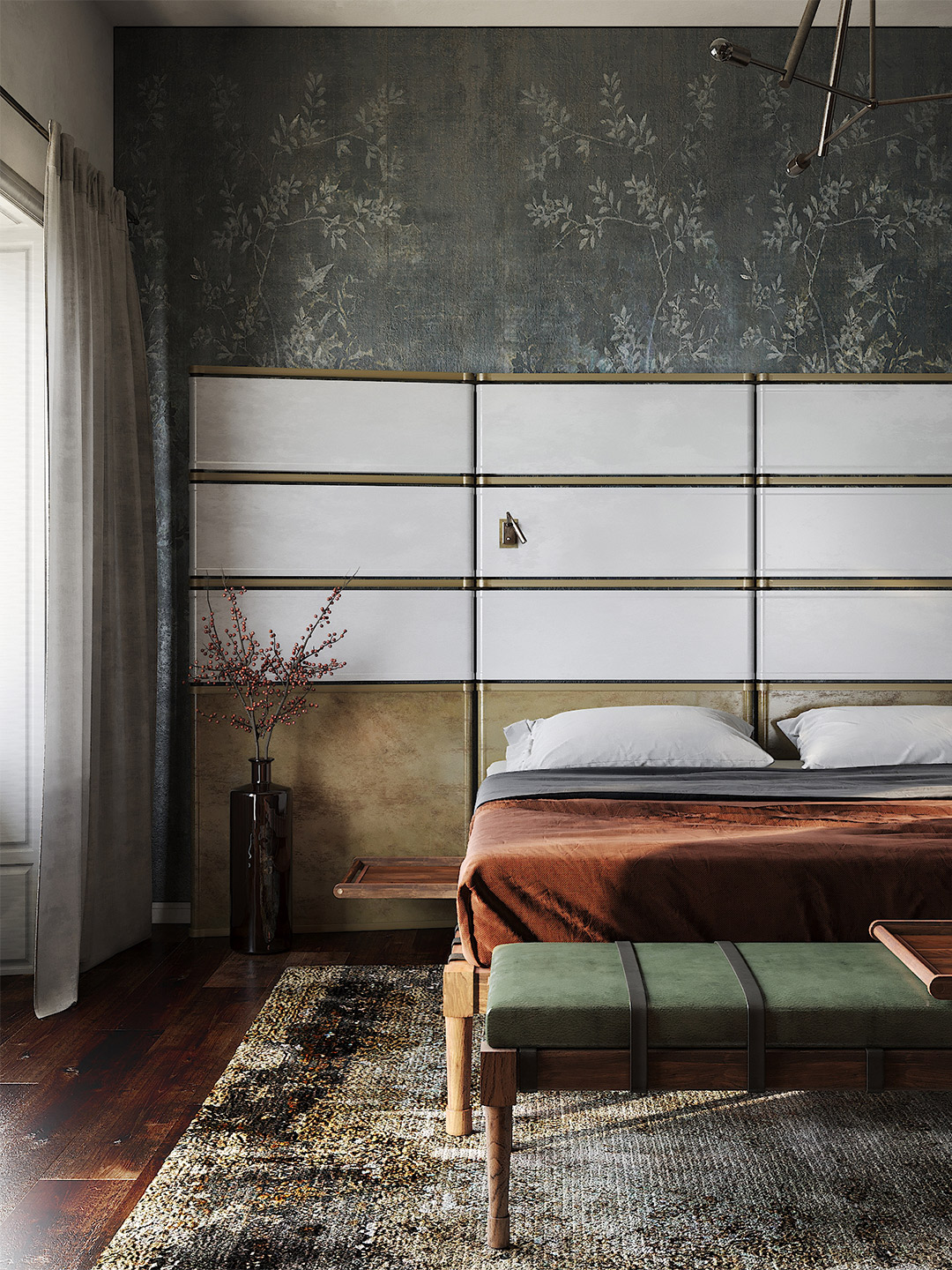
The project reflects the “vision of the family lifestyle”, Gema enthuses, adding that the aim of the completed residence was to achieve something which is “timeless and exudes a discreet luxury”. With this in mind, fine examples of classic furniture from France and Italy were playfully juxtaposed with contemporary and custom-made items, achieving the “desired mark of measured sobriety,” Gema says.
Casa R+1 residence in southern Spain by Puntofilipino
The melange of eclectic furnishings is a reflection of the owners’ deep-rooted passion for furniture; a love that’s matched only by the desire for peaceful spaces set aside for gardening, reading and meditation. Gema says: “The house is a paradigm of compositional delicacy, exemplifying how an urban dwelling can serve as a tranquil sanctuary.”
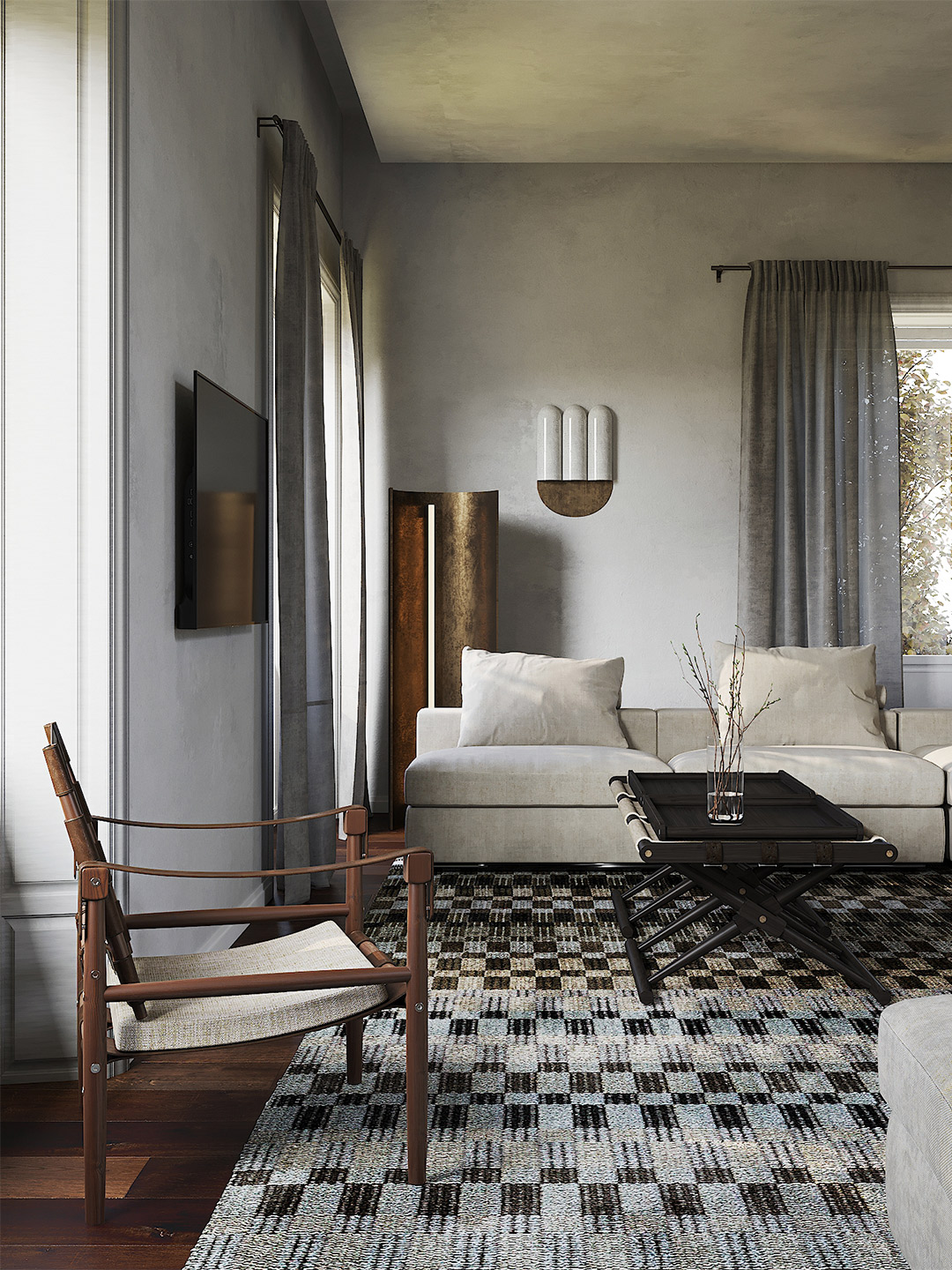
Bolstered by a restrained palette of muted tones and clean lines, the interiors are light and airy. It’s a feeling that arrives courtesy of high ceilings and sparse furnishings, and a series of expansive timber-framed windows, custom-designed by Puntofilipino. “Large windows allow green views of the gardens to take centre stage, complementing the understated interior design with vibrant accents,” Gema explains.
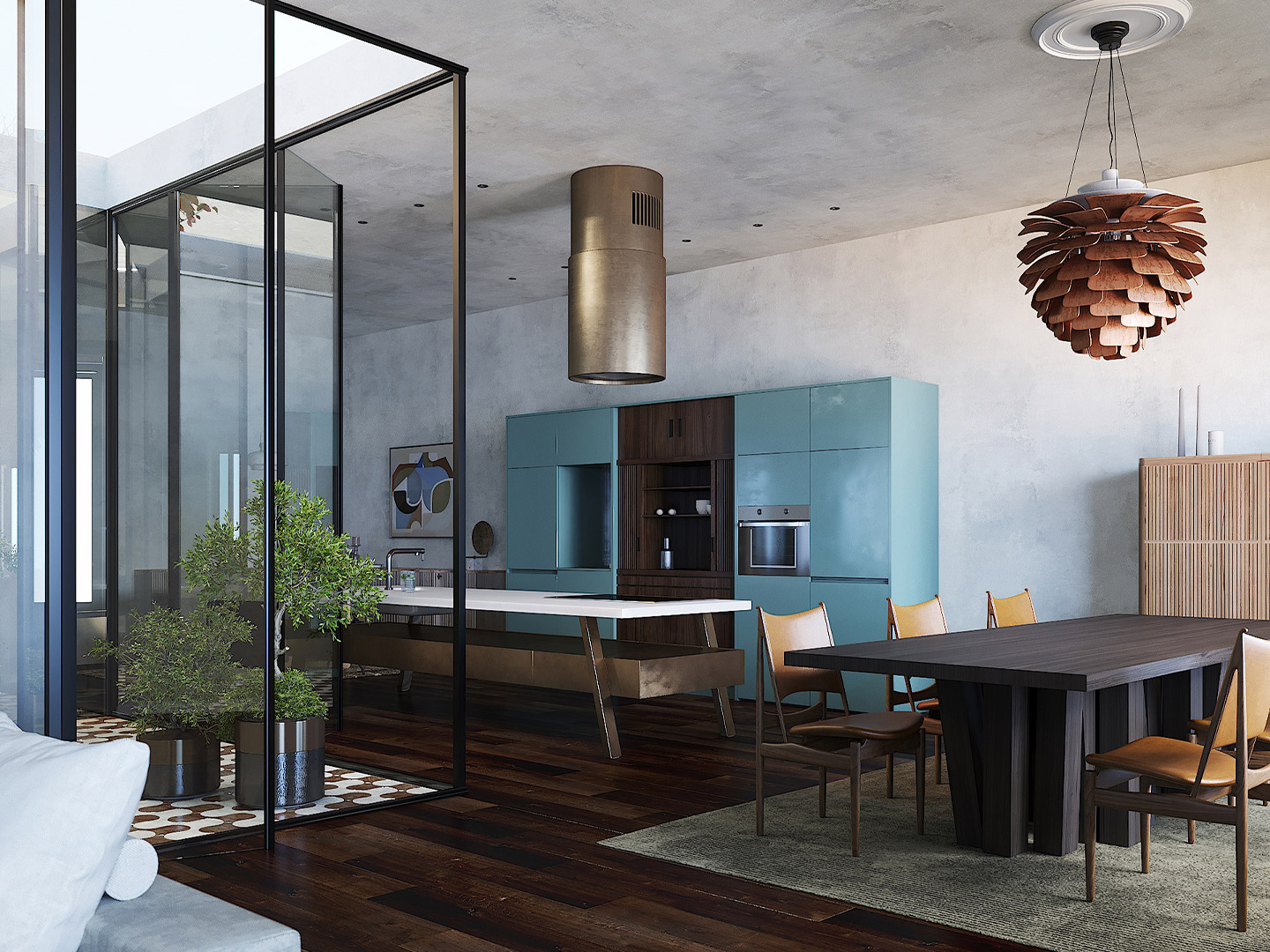
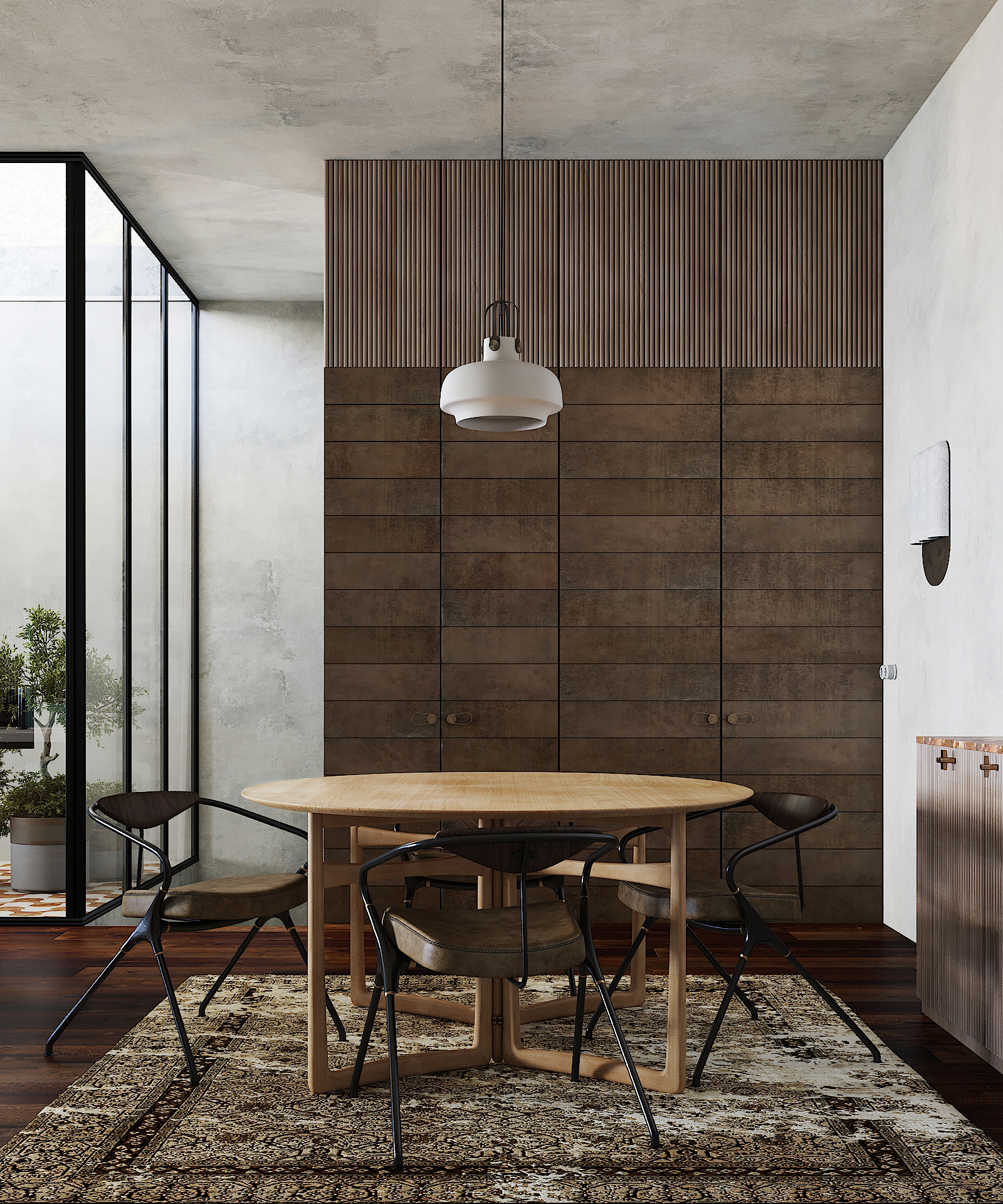
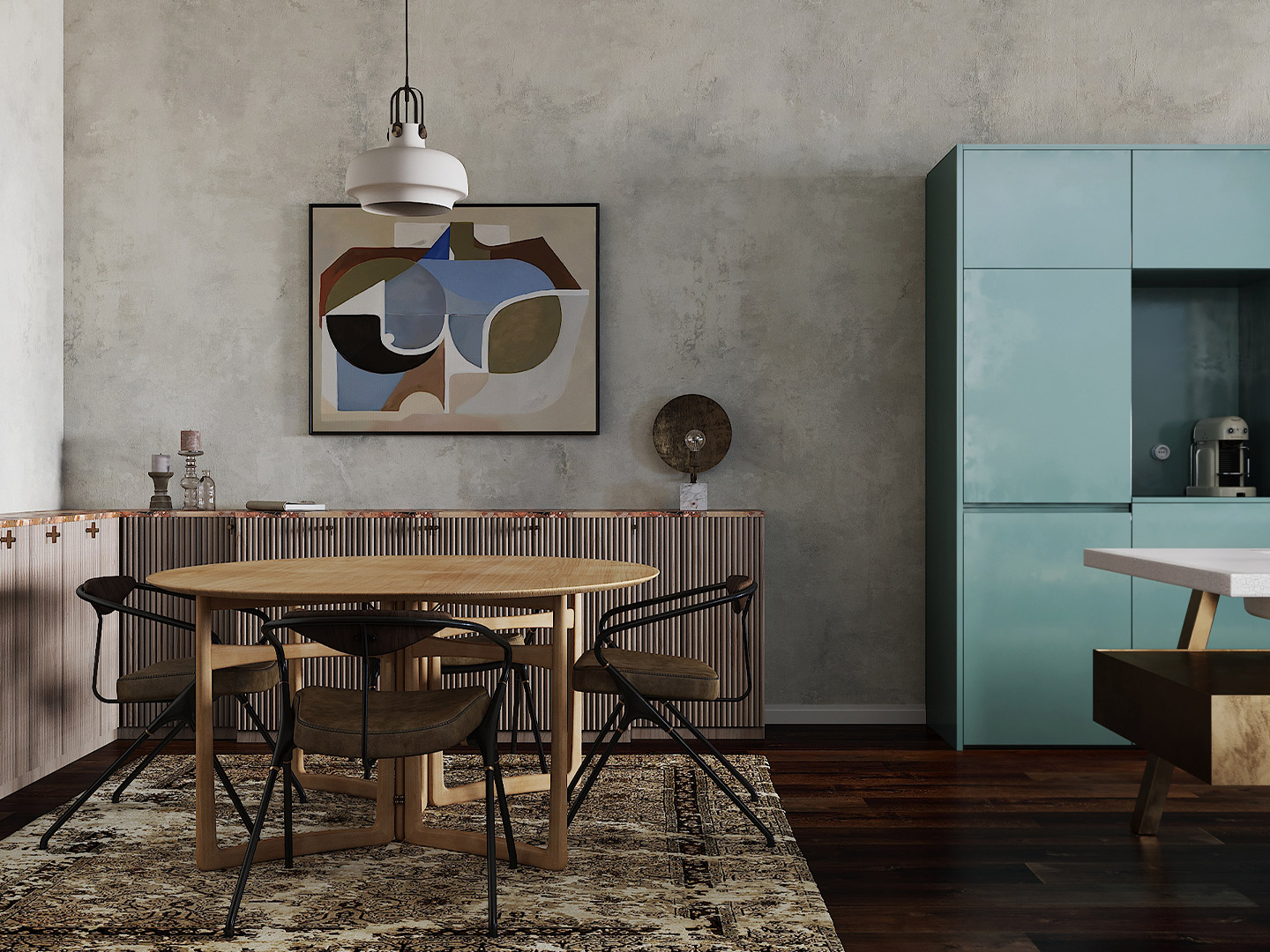
Beefing up the minimalist approach, the home is enhanced by a richly textured palette of handmade and natural materials, such as warm-white plaster finishes, hardwood floors and joinery, and exotic marble surfaces. Walls and cabinetry swathed in subtle blush and bolder turquoise add colourful accents; a series of bronze fixtures, including pendant lights and sconces by Emmanuelle Simon, infuse the home with sculptural exuberance.
Minimalist in design and, at times, austere in decoration, the interior of the CASA R+1 residence is furnished with carefully considered pieces, including examples from renowned firms Fornace Brioni, Gessi, Ceccotti Collezioni, Richard Wrightman Design, House of Finn Juhl and Vaselli.
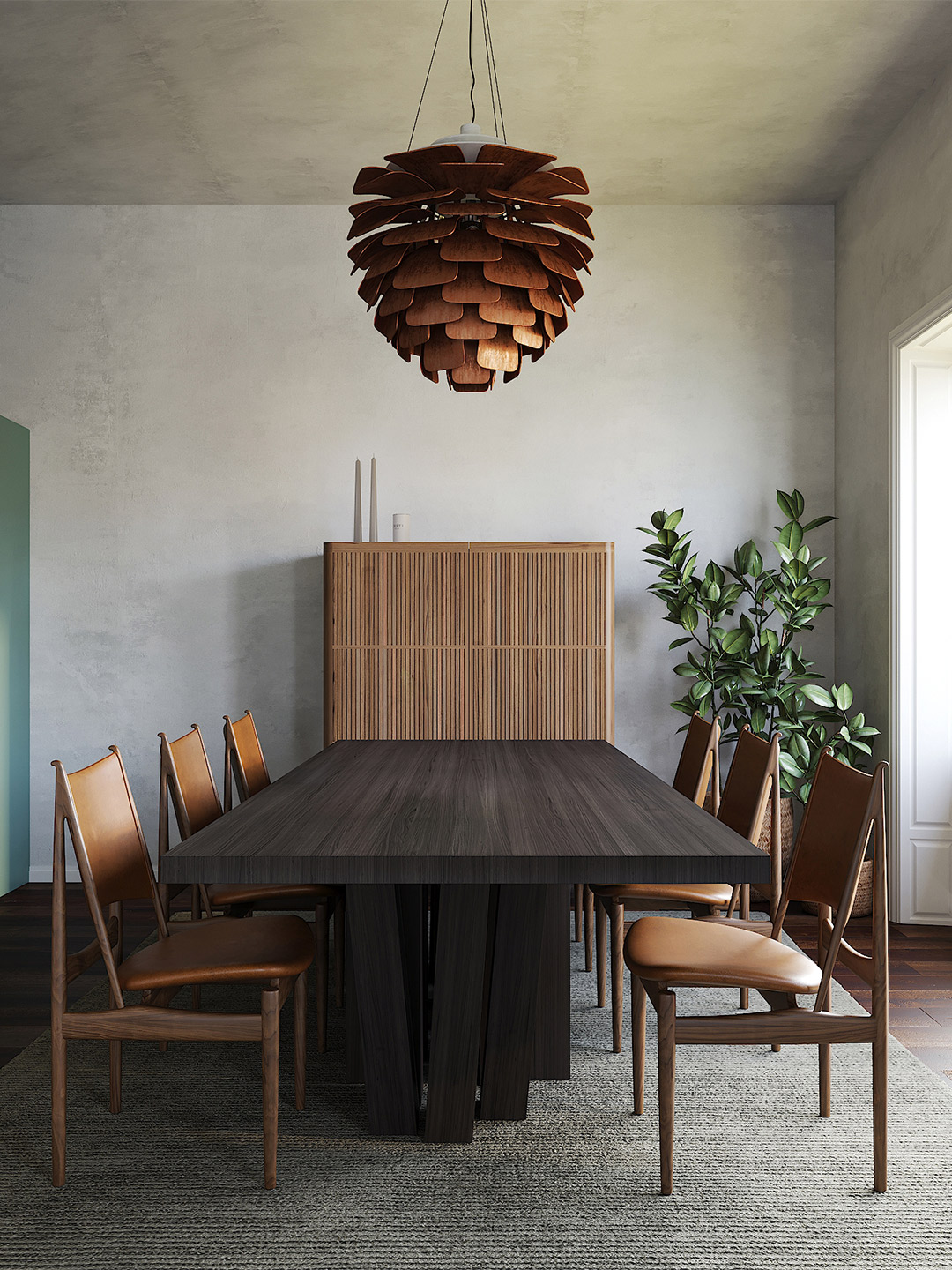
Among this stellar array, iconic pieces are mixed in. There’s the ‘PH Artichoke’ pendant by Louis Poulsen suspended above the dining table. And, in the sitting room, the traditional ‘Tessa’ chairs by Flexform: “chairs that pay tribute to the artisan heritage,” says Gema, whose thoughtful and meticulous design process has offered up a residence that feels remarkably fresh and modern, stamped with a sense of enduring sophistication.
The house is a paradigm of compositional delicacy, exemplifying how an urban dwelling can serve as a tranquil sanctuary.
Puntofilipino also designed the Memphis Milano apartment in Italy and the dark and moody Honeyz boutique in Berlin. Catch up on more architecture, art and design highlights. Plus, subscribe to receive the Daily Architecture News e-letter direct to your inbox.
Related stories
- Brooklyn’s famed brownstones inspired the Aesop Park Slope store.
- A 1960s London post office is now a swinging sushi restaurant.
- Designer diner: Los Alexis taquería in Mexico City by RA!.
Conceived as an urban oasis for a couple working in the construction industry, the Casa R+1 residence in Almería is inspired by artists who have long travelled to Spain’s Andalusian coast in search of a tranquil retreat. The home’s interiors, created by Madrid-based design office Puntofilipino, feature a symphony of minimalist, richly textured and exquisitely detailed spaces. Central to the floor plan, an open-air ‘room’ connects the combined kitchen, living and dining spaces, allowing for the seamless transition between indoors and out: “a must in southern Spain,” insists Gema Gutiérrez, Puntofilipino’s founder and principal designer.
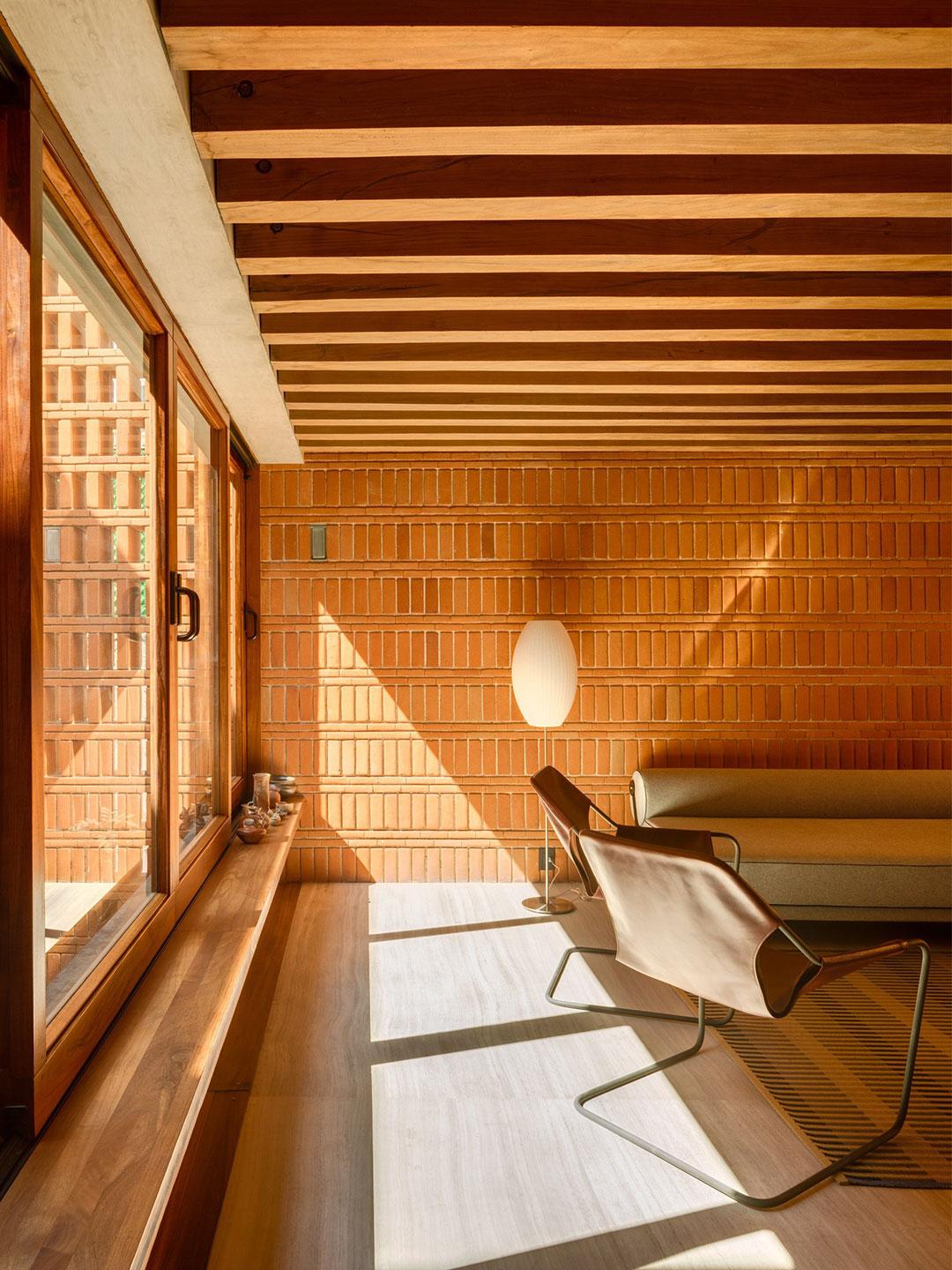
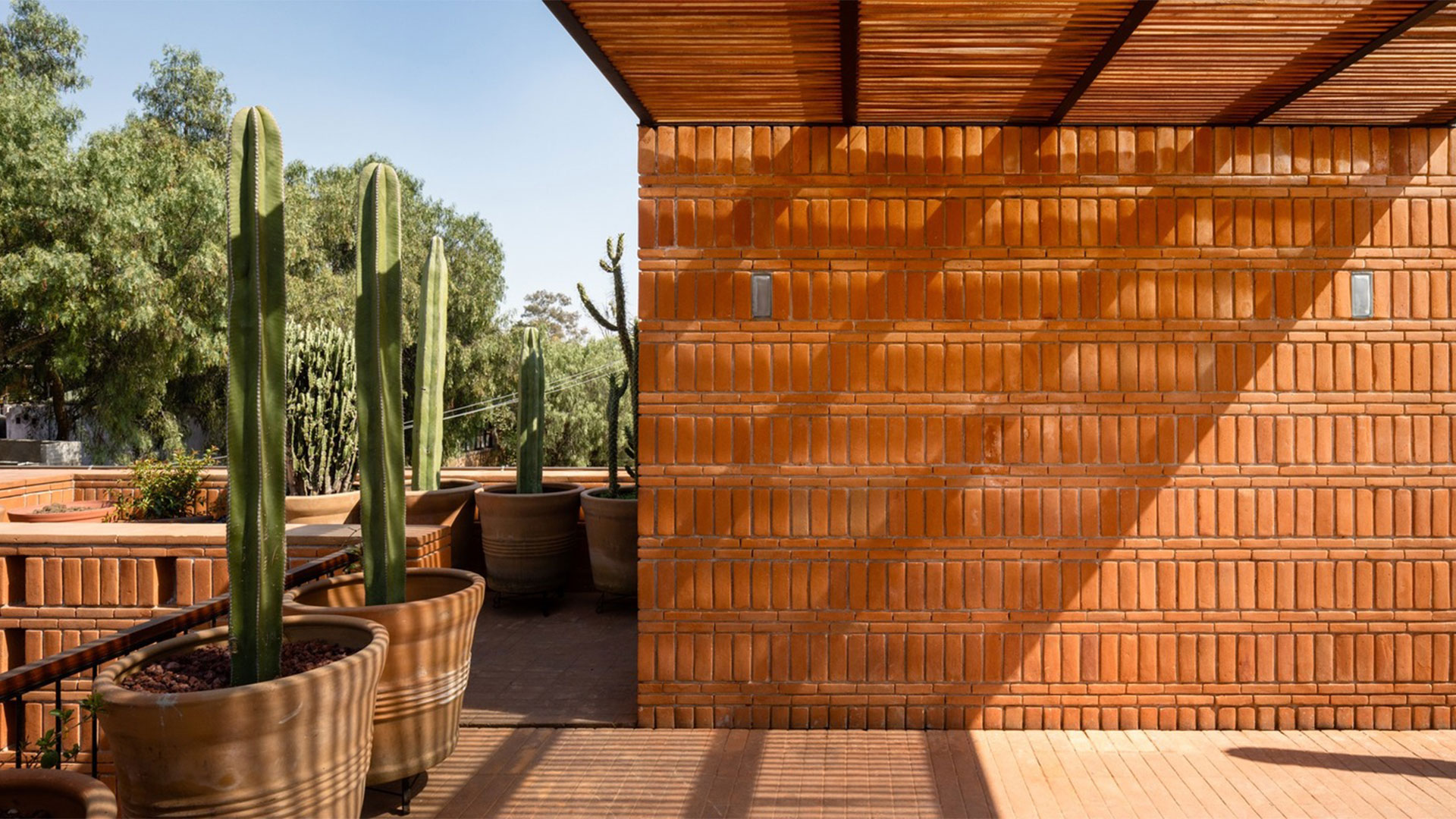
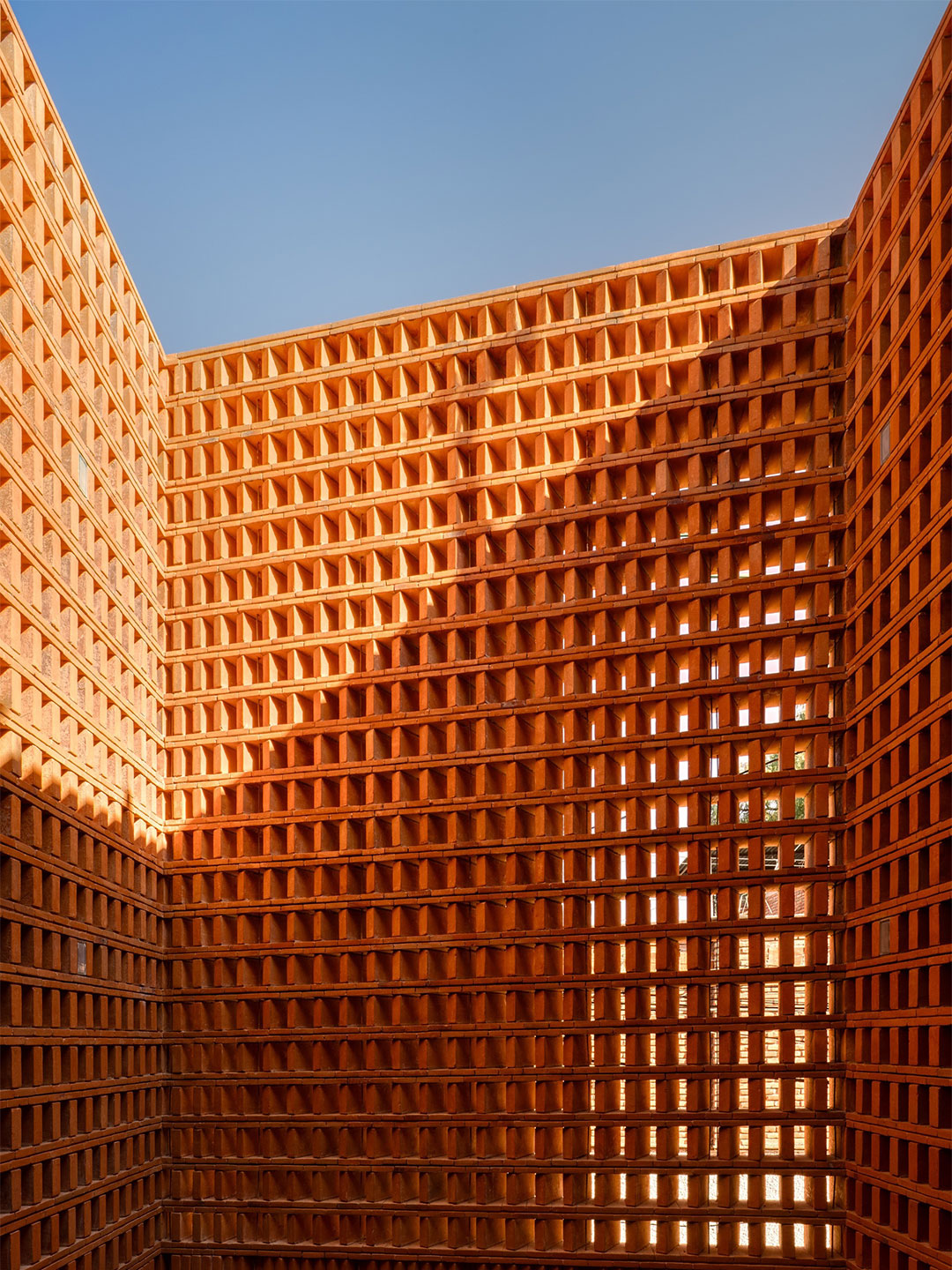
“Brick is a common material and very connected to certain areas of the country and especially to the city of Mexico. There have always been brickyards and the buildings have always been made out of bricks,” says Mauricio. “[At Iturbide Studio] it was important to us to investigate, to de-construct traditional brickwork, and transform it into contemporary brickwork.”
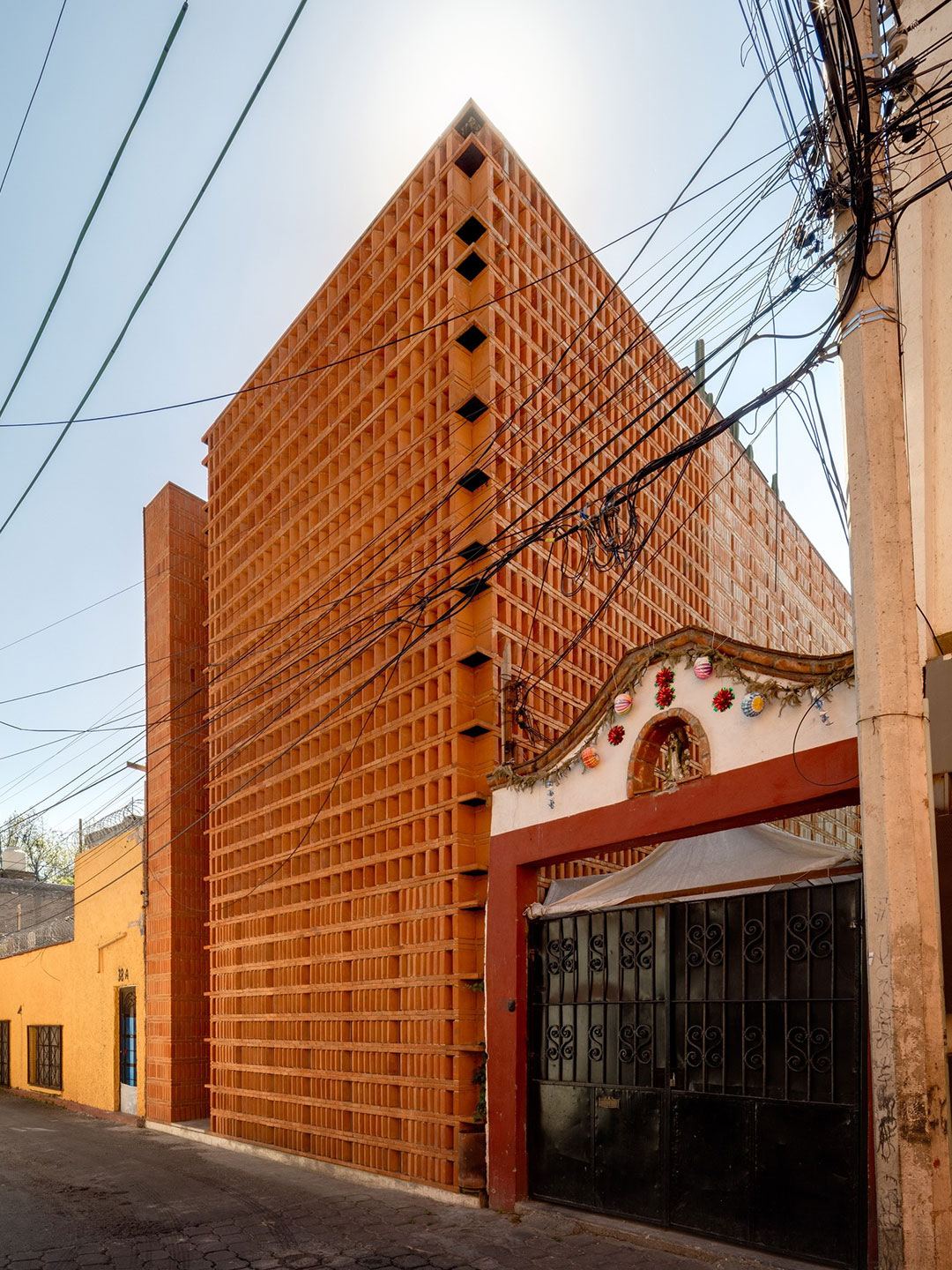
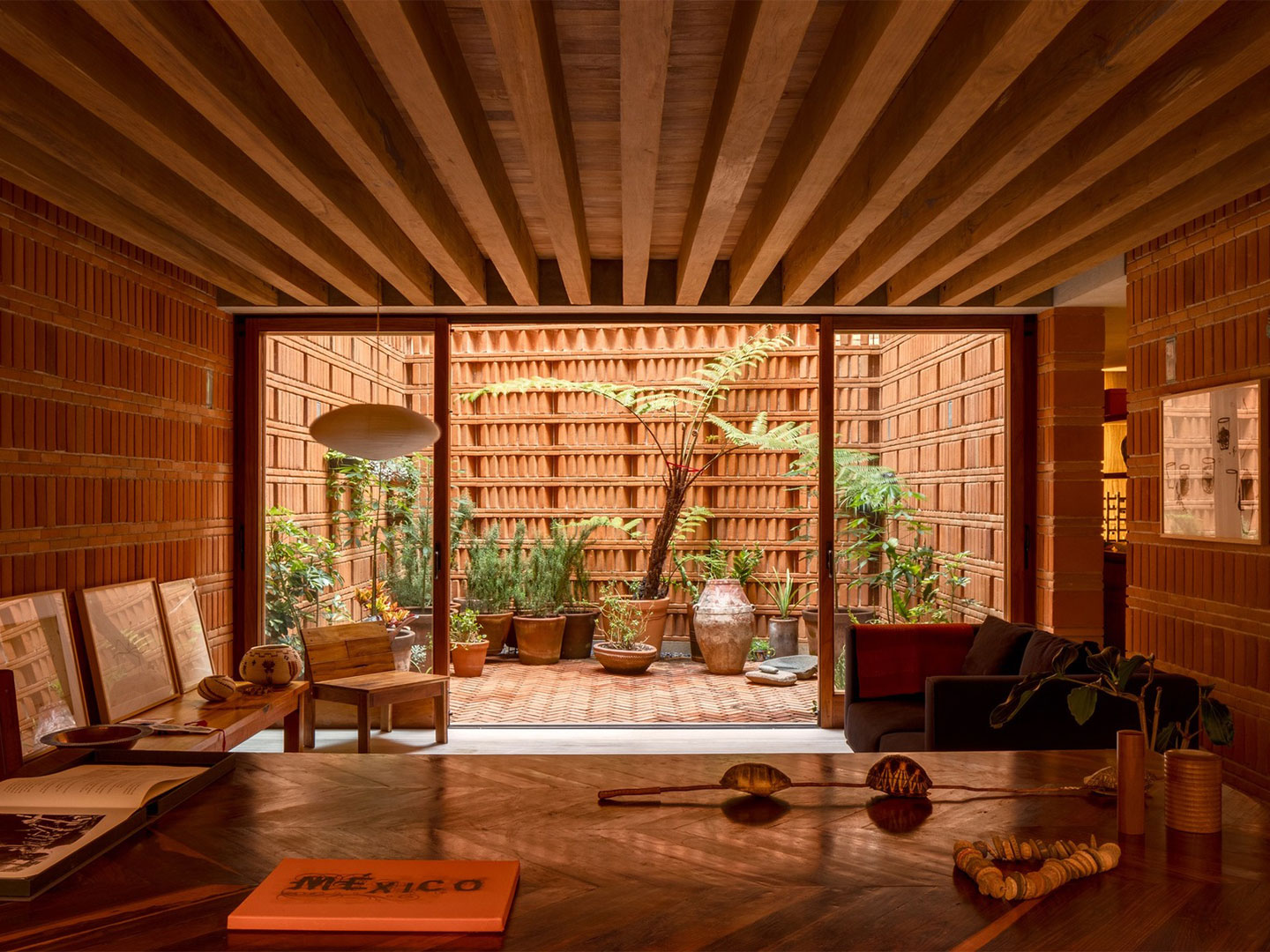
Iturbide Studio in Mexico City by Taller de Arquitectura Mauricio Rocha
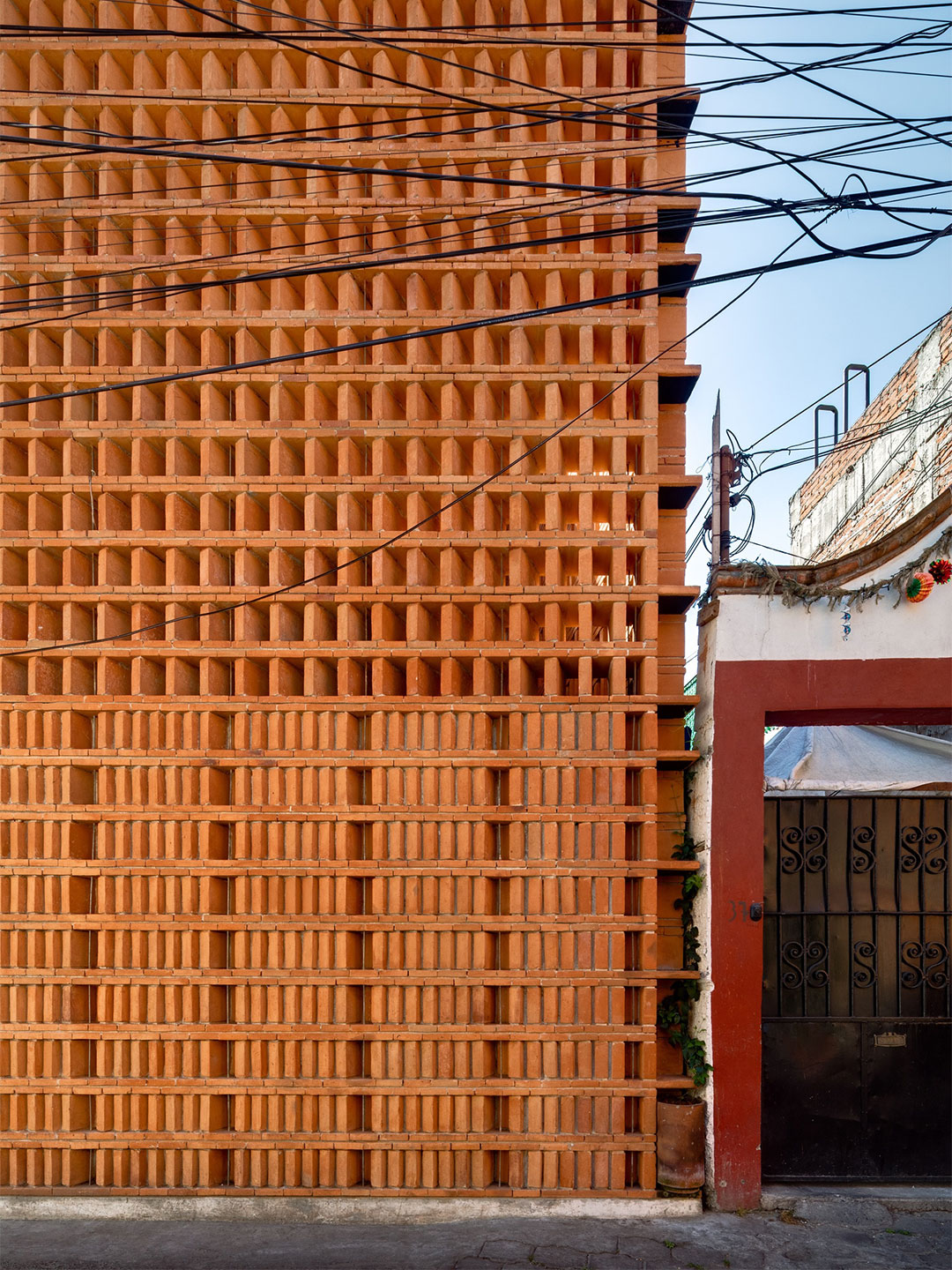
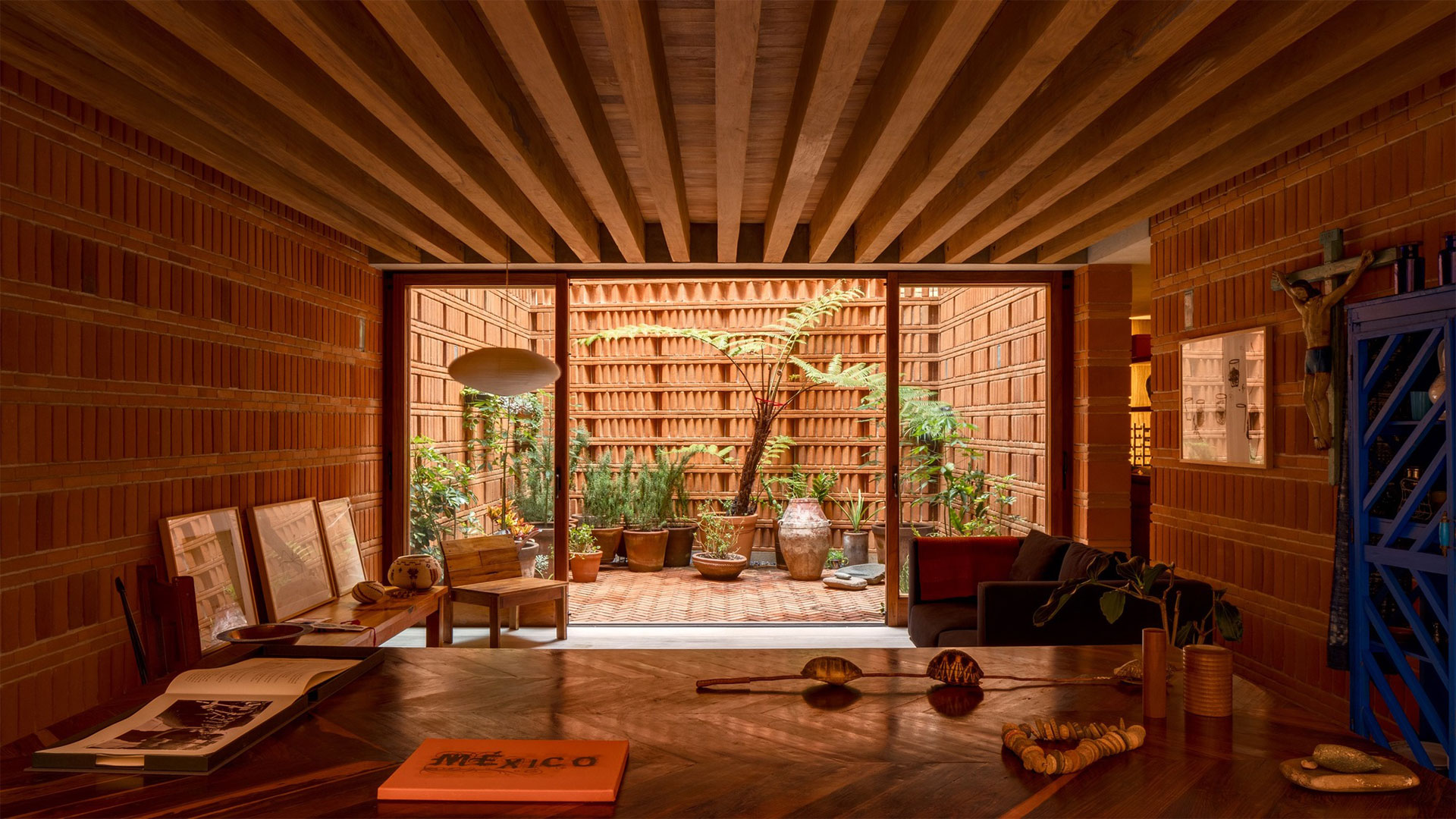
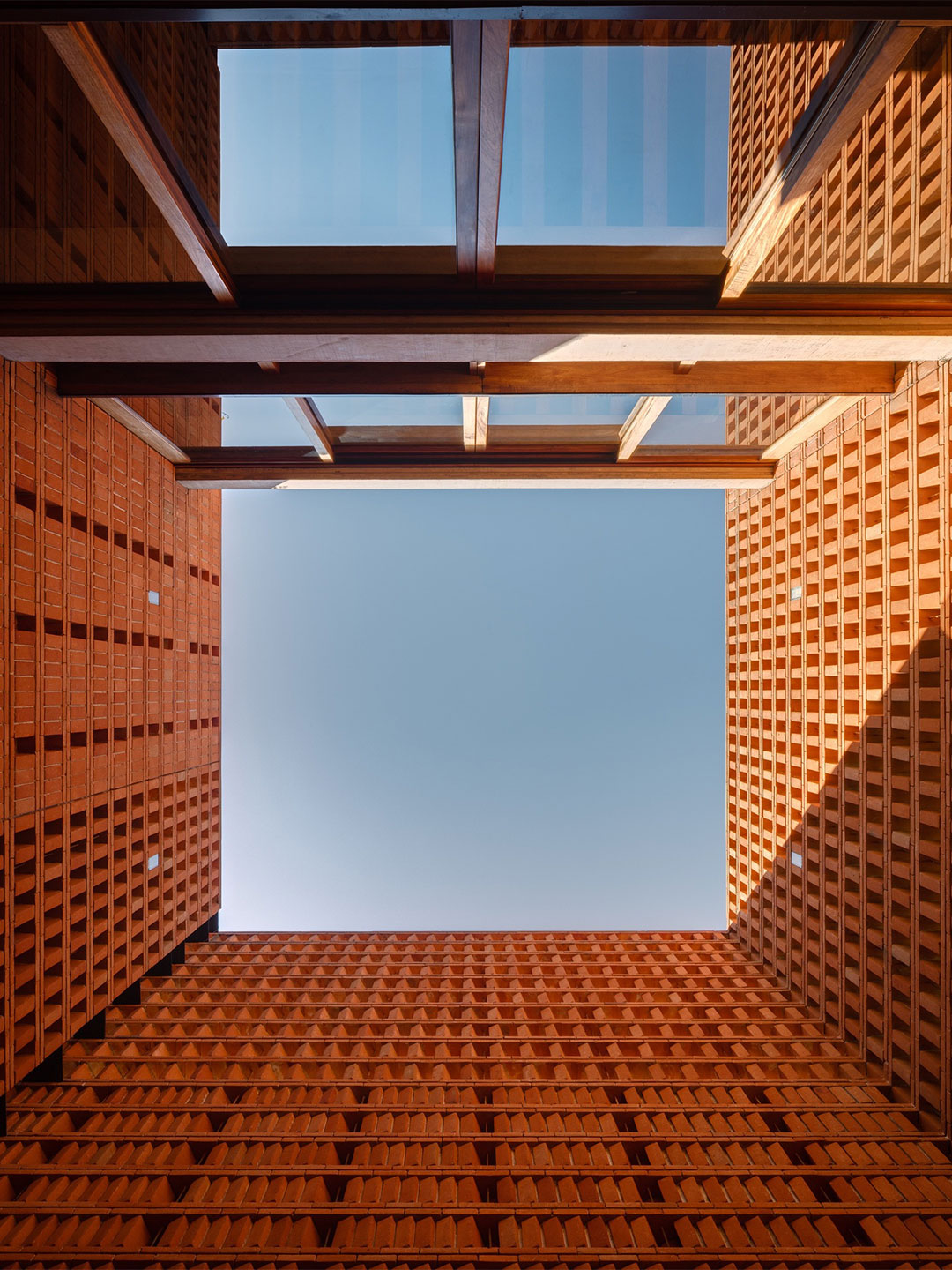
Two years in the making, the now-completed Iturbide Studio is affectionately called Graciela’s “small factory of bricks”: a compact, three-storey building that rises monument-like from a plot of only 7 x 14 metres. Behind the textured brick facade which glows in the afternoon light – as if to reflect the joy of its owner – three planes of timber, concrete and marble appear stretched from one end of the site to the other, flanked to the north and south by a pair of towering walled patios.
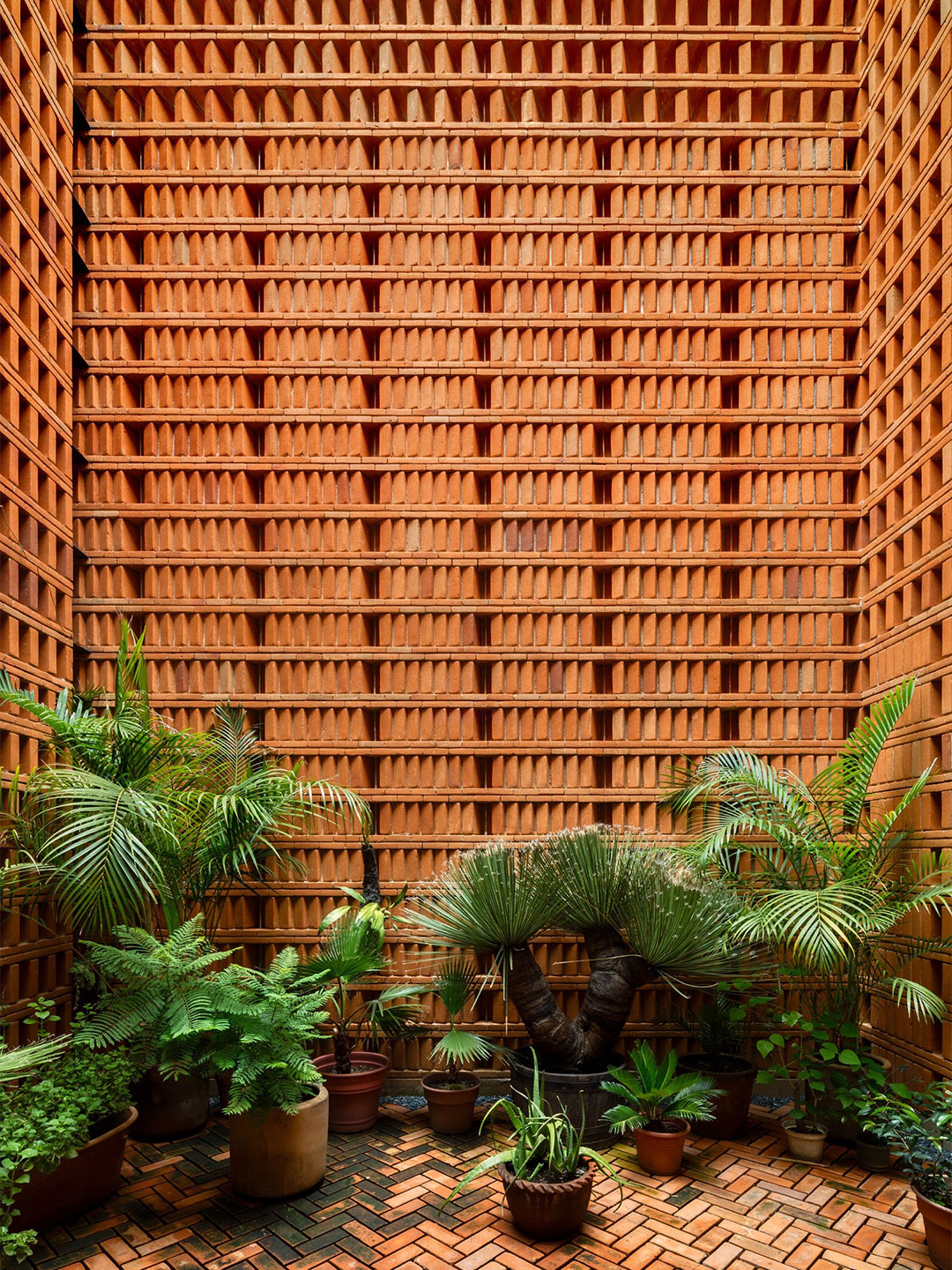
The patio walls feature four different custom-made bricks, sourced from Puebla, where special attention was given to the brick-laying techniques. The delicate balance of privacy and ventilation was achieved by the way in which bricks were angled to reduce sightlines yet encourage airflow, resulting in vertical planes of mesmerising brickwork. Now, as the sun moves overhead, the patio walls seemingly come alive in the background, presenting the occupants with a visual feast of light and shadow that imbues the interior spaces with soul-soothing mood.
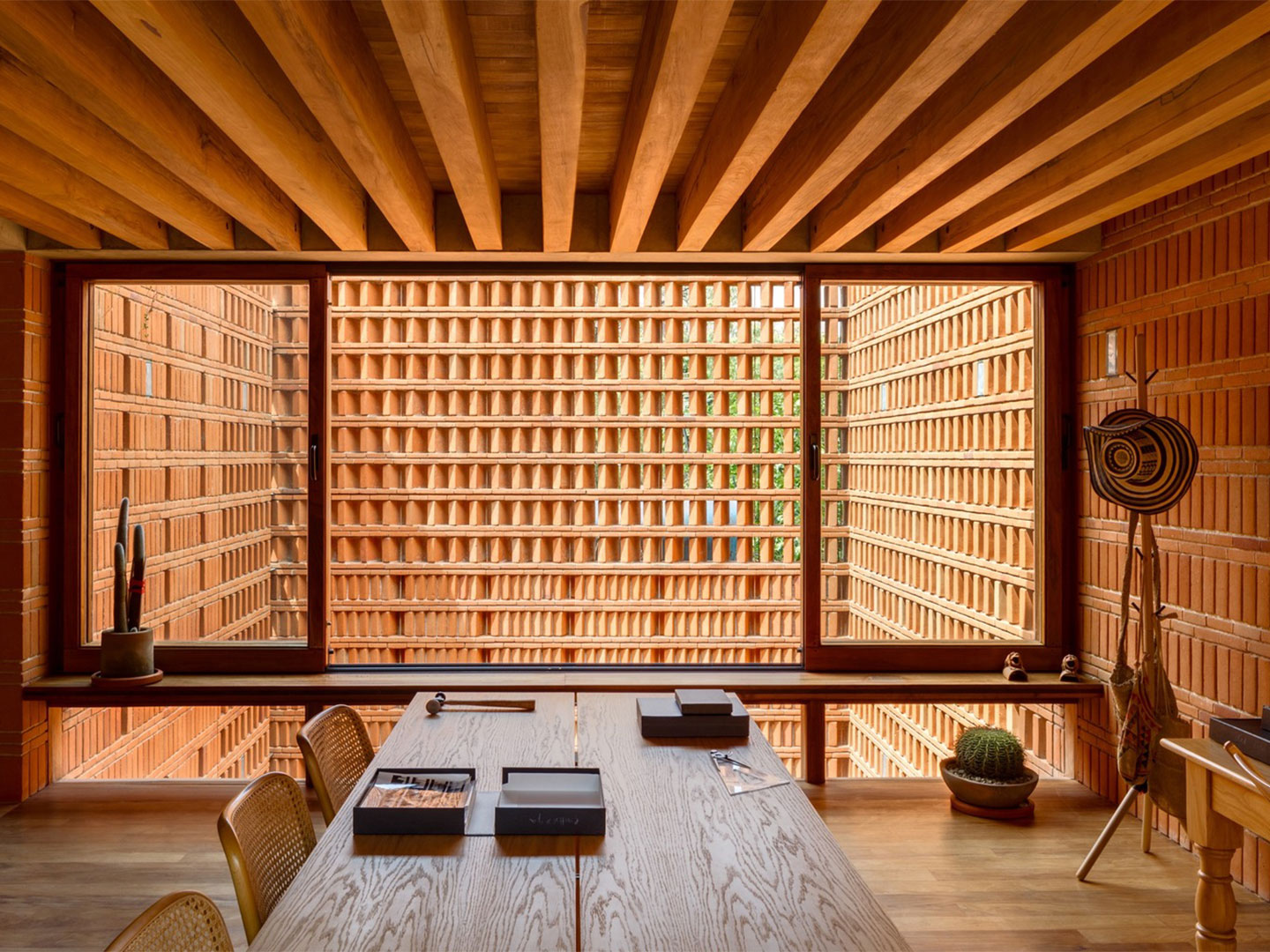
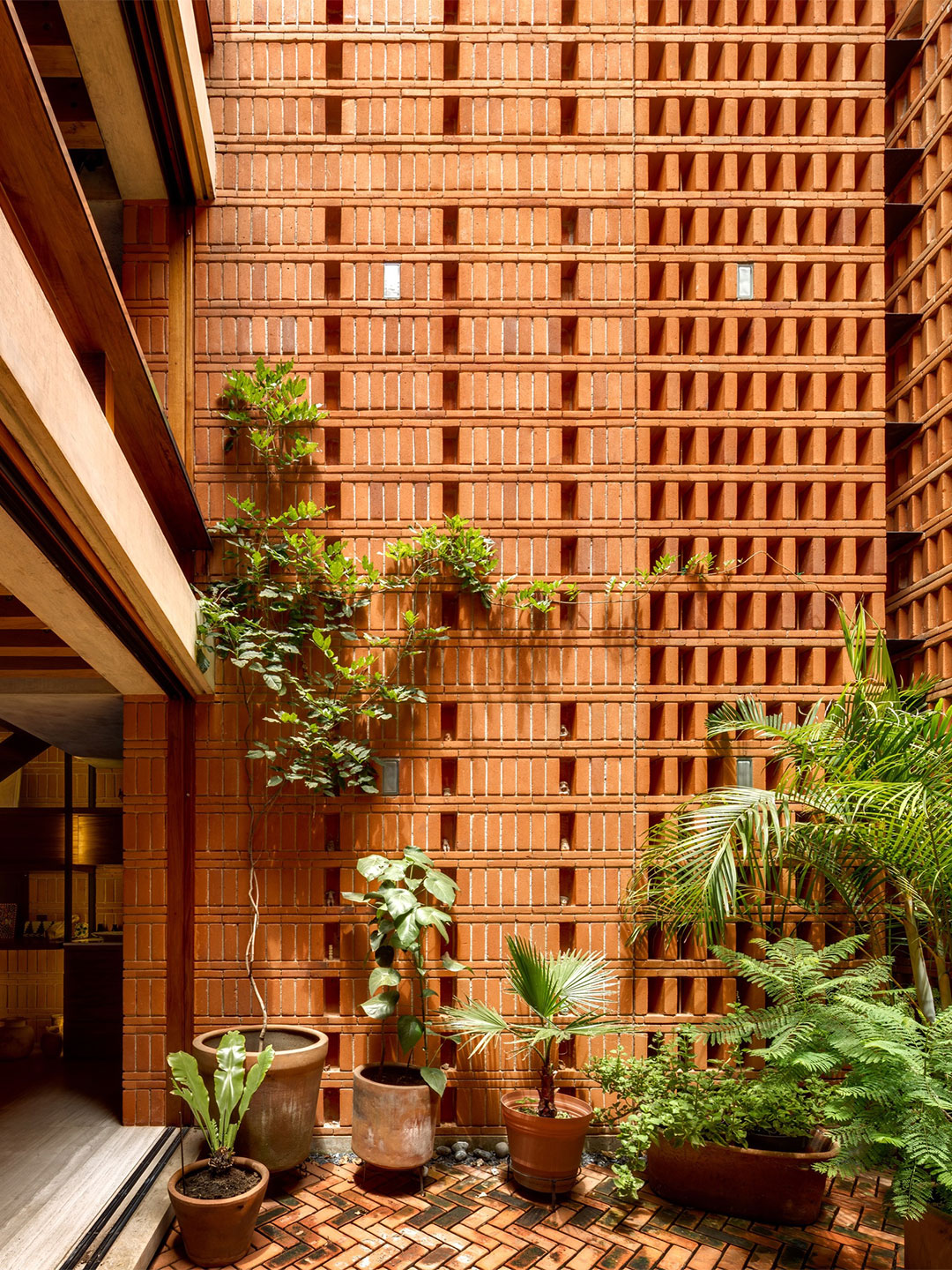
It was important to us to investigate, to de-construct traditional brickwork, and transform it into contemporary brickwork.
“It appears to me today that my mother lives in the building in an extraordinary way. I knew beforehand that she would place her objects, which she has been collecting throughout the past, that she would place plants and decorate the space with great taste,” says Mauricio. “The greatest challenge was that the architecture wouldn’t impose itself on the living space. That it would evolve into an instrument that can create atmosphere in which the client’s life is what matters most.”
Anchored to the long eastern wall, the studio’s staircases, bathroom and kitchen ammenities form the top stroke of a stacked T-shaped floor plan, making way in the body of the building for the service area, the circulation spaces and the large bookcase – “a vertical element that is integrated into the container walls to practically disappear and only give body to the volume,” explains Mauricio.
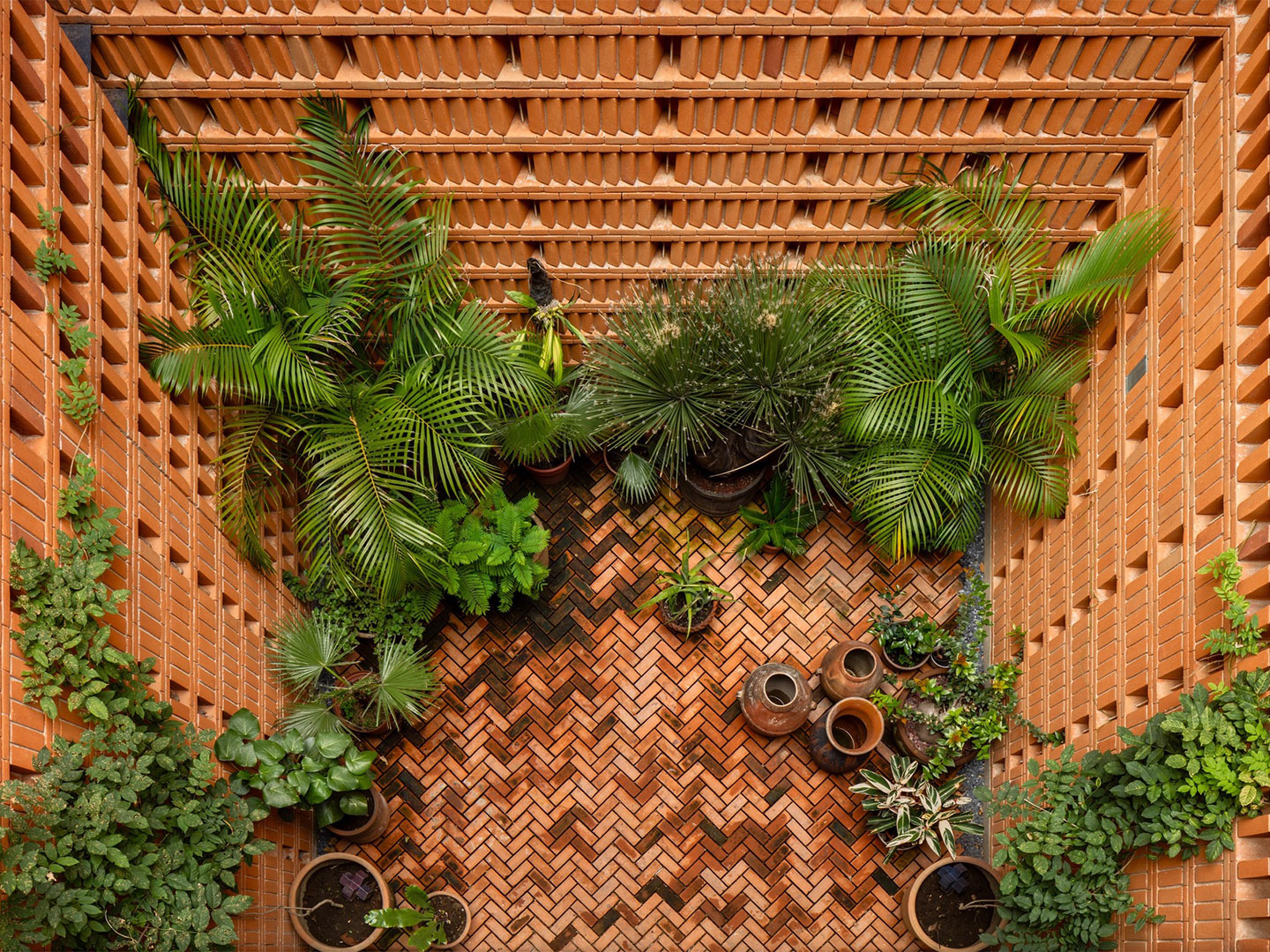
Fuelled by the desire to create the illusion of a brick-only building, the architects engaged the services of structural engineer Gerson Huerta to test-out various earthquake-proof solutions where brick could appear as the hero material. The landing point was a model where the brick facade is stabilised by invisible steel rods and plates with reinforced concrete framing the two upper levels and the eastern wall.
Above all else, the project “seeks silence and synthesis through the continuous, repetitive and almost obsessive use of a single material,” says Mauricio. An obsession which saw Taller de Arquitectura receive a prestigious Brick Award in late 2020: a tribute to the practice’s pursuits for high-quality brick architecture.
tallerdearquitectura.com.mx; brickaward.com
Catch up on more of the architecture highlights. Plus, subscribe to Daily Architecture News for weekly updates delivered direct to your inbox.
Related stories
- The bar and restaurant at La Sastrería in Valencia by Masquespacio.
- Resa San Mamés student accommodation in Spain by Masquespacio.
- Kennedy Nolan’s ‘Workplace’ puts the cool back into water-cooler conversation.
Have you ever arrived at the last day of your sun-kissed holiday, slumped yourself over a bulging suitcase, and announced to anyone who’s listening: “I wish I could live here?” Well, if you’ve been luxuriating at one of Soneva’s glamorous beachside properties – now you can.
The world-class resort operator welcomes guests (and non-guests) from all over the globe to become full-time residents in the Maldives under the Soneva Villa Ownership Scheme.
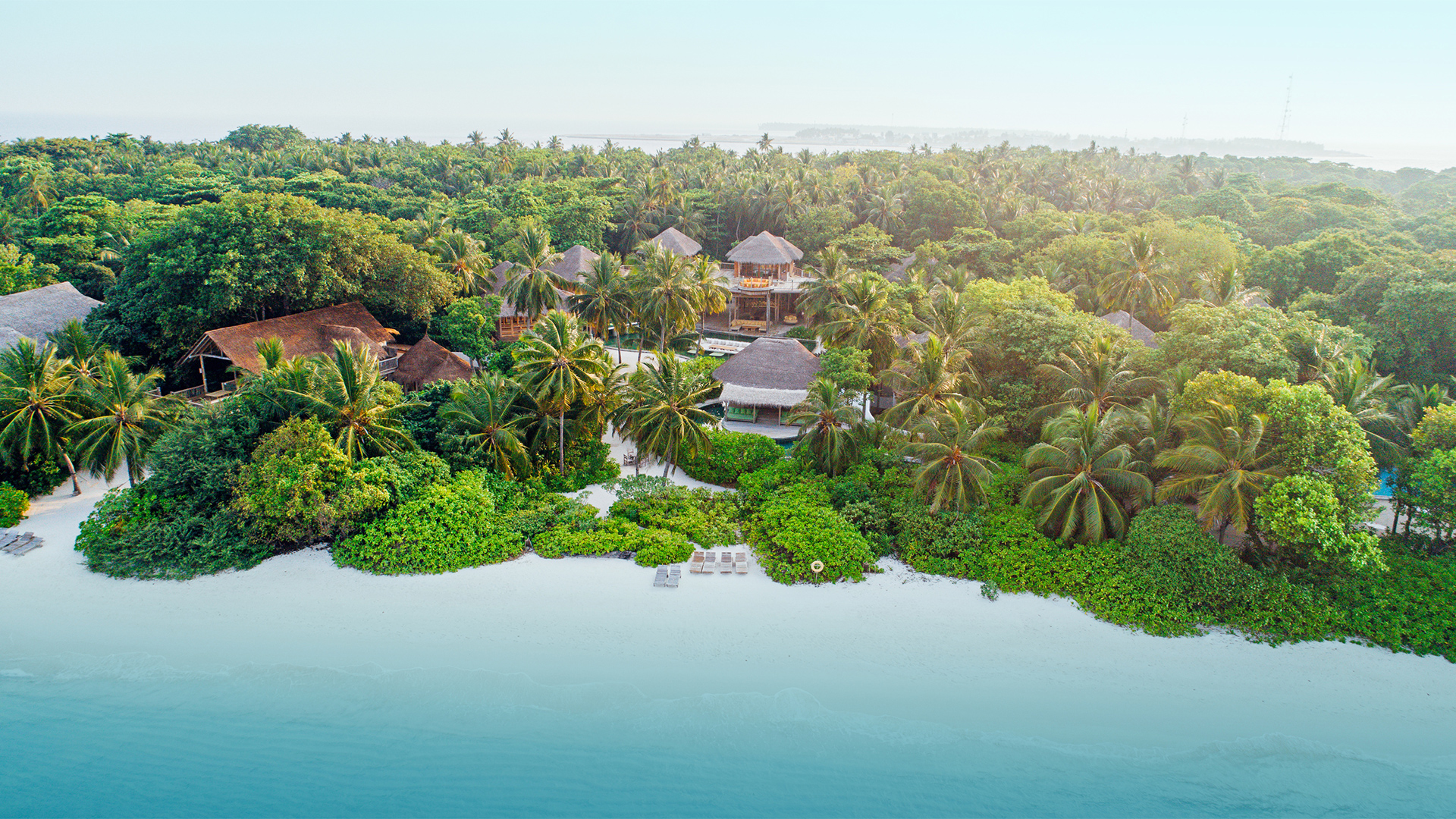
The Maldives awaits
Priced from US$3–15 million (AU$3.8–$19.2 million), the properties are sold though a renewable leasehold, ensuring that the keys to your home-away-from-home are ready and awaiting your arrival whenever you decide to touchdown.
Fully serviced and maintained by Soneva, including all property repairs, groundskeeping and furniture updates, the carefree days of pure white sand between your toes and an enviable holiday glow never have to end.
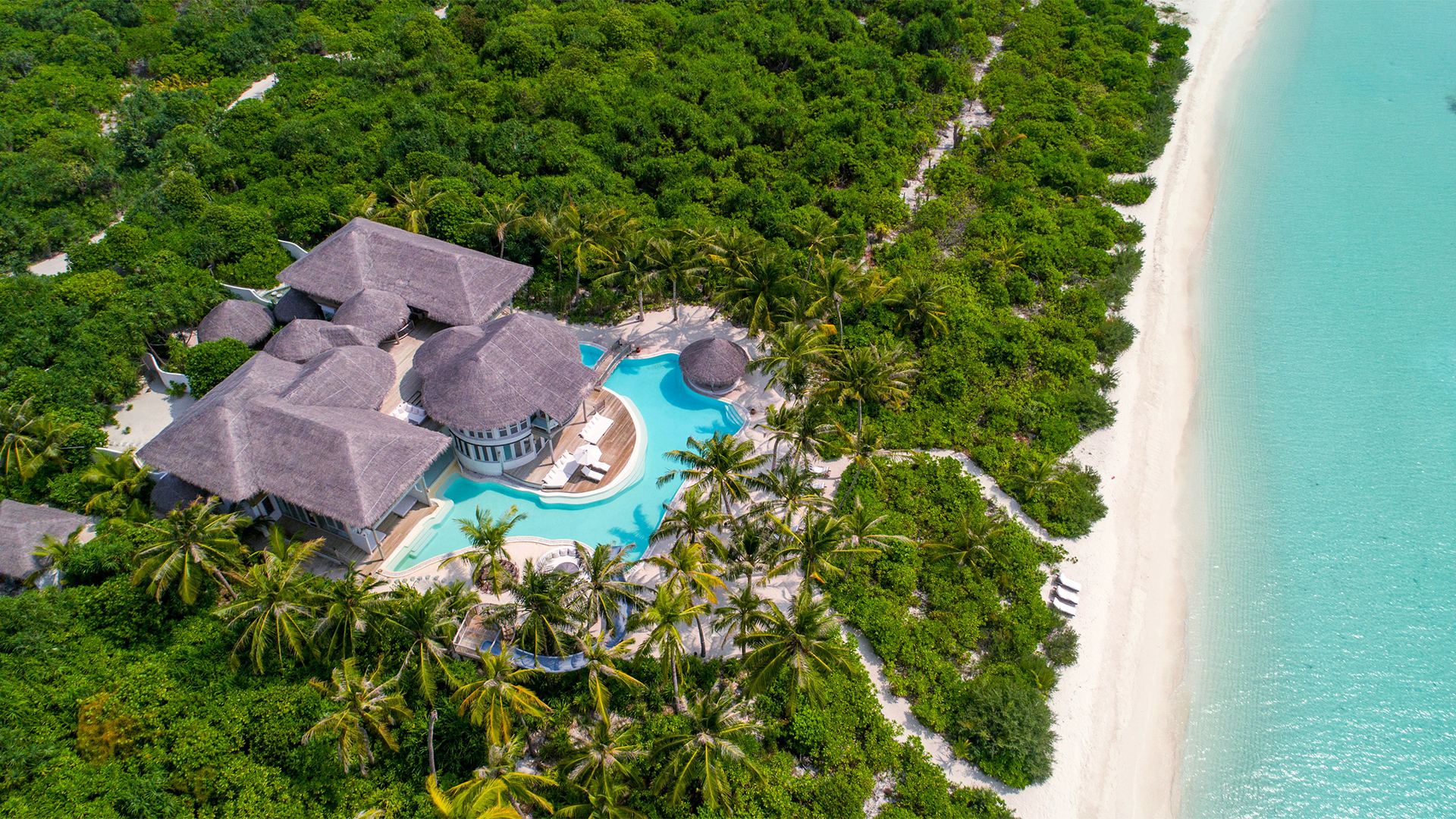
Currently on offer from Soneva are a selection of properties located in two of the world’s most unspoiled natural havens in the Maldives: Soneva Fushi in the Baa Atoll and Soneva Jani in the Noonu Atoll.
Some of the luxury residences are hidden among lush tropical jungle, with multiple bedrooms and a private pool, while others are perched blissfully over the region’s dazzling azure waters.
One thing’s for sure, though – the eco-friendly residences are all heavenly and waiting for you to unpack your bags.
Catch up on more residential designs and the latest architecture highlights, plus subscribe to the Daily Architecture News e-letter to receive weekly updates direct to your inbox.
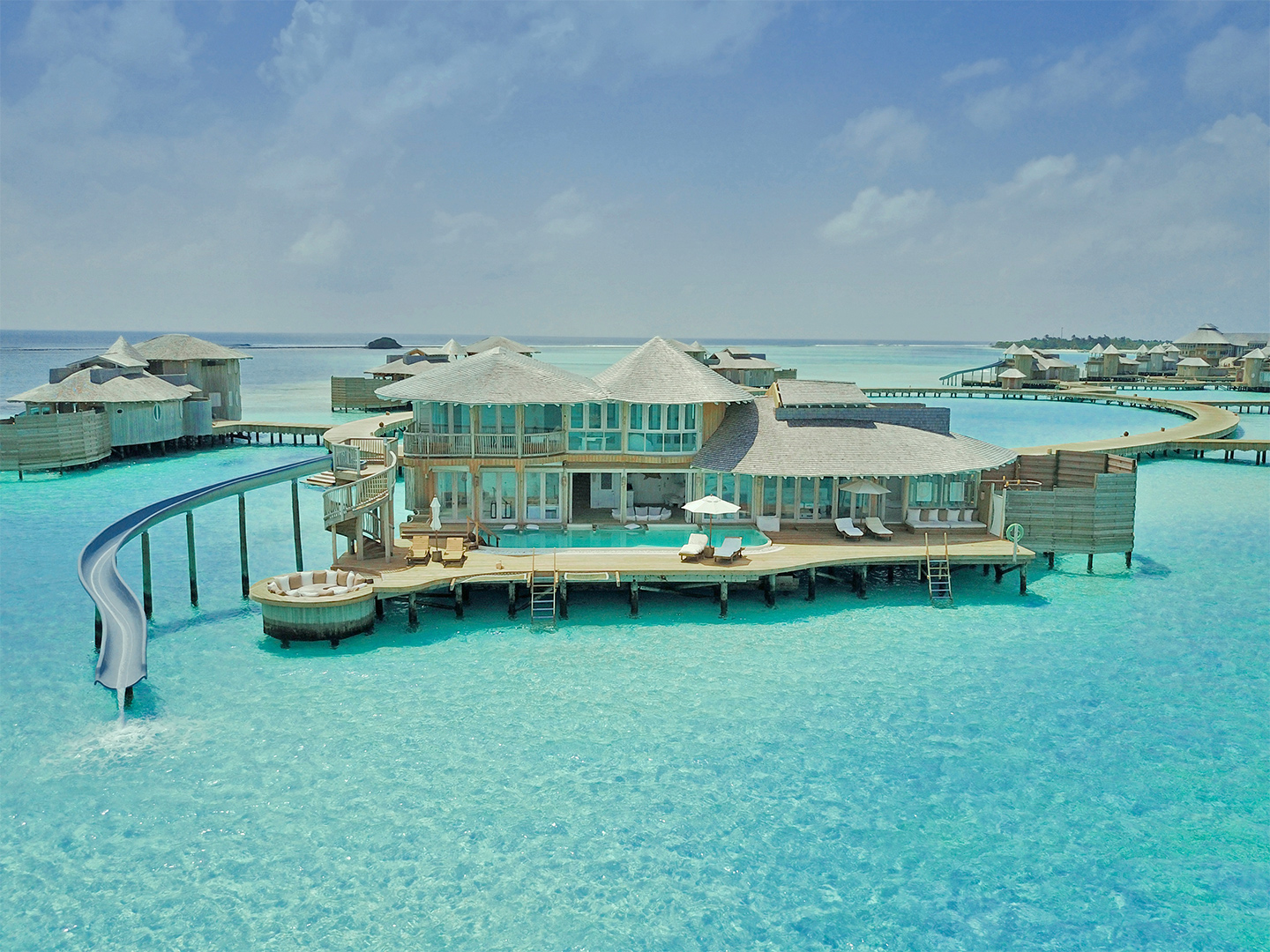
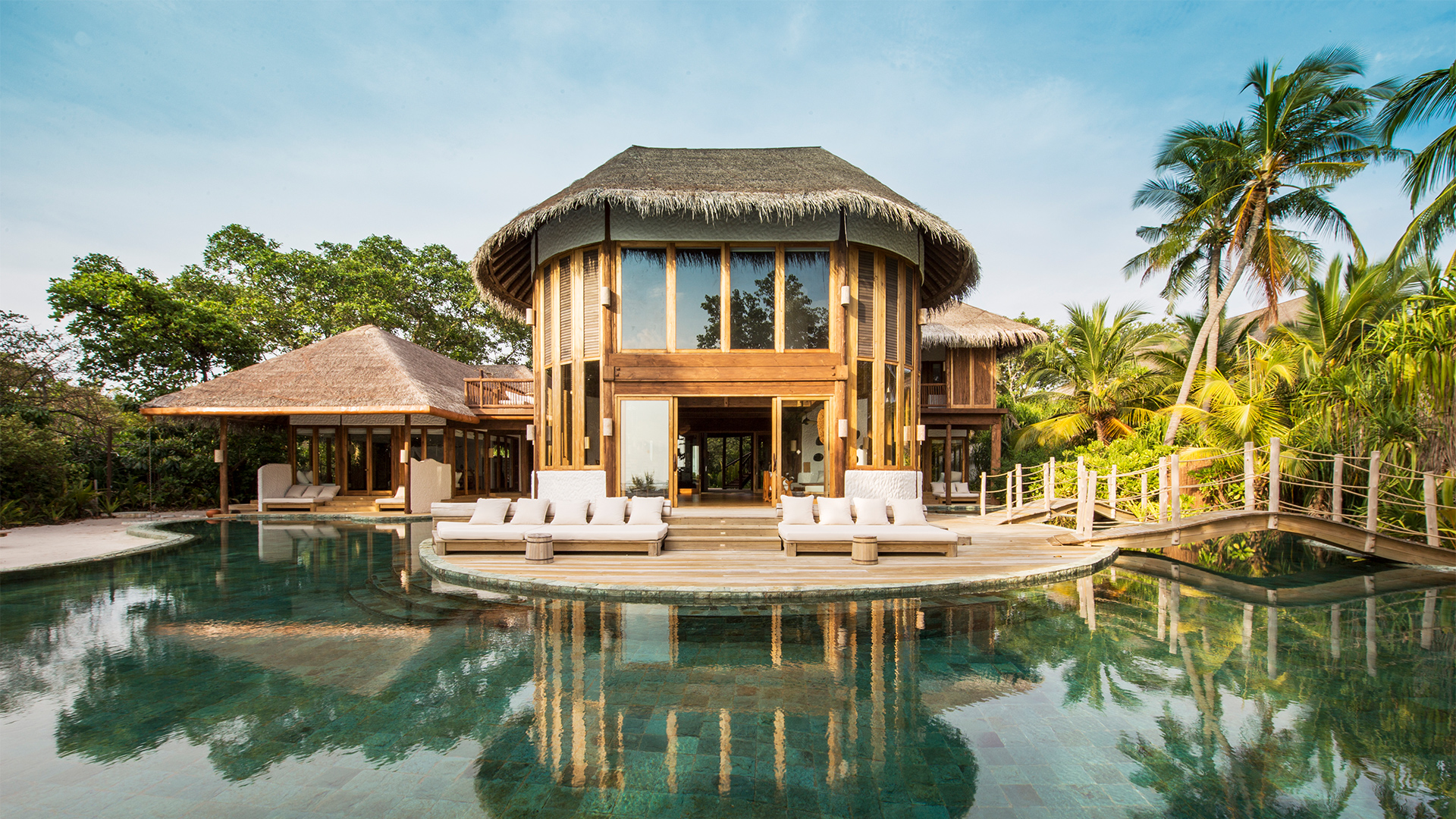
Have you ever arrived at the last day of your holiday, slumped yourself over a suitcase, and announced to anyone who’s listening: “I wish I could live here?”
Related stories
- First look: Maldives welcomes over-water villas at Soneva Fushi.
- Chapter Two: Soneva Jani expands luxury resort offering in the Maldives.
- Destination design: Aman Kyoto by Kerry Hill Architects.
- Plesner Architects delivers decadence at the Six Senses Shaharut resort in Israel.
- Inside the Ace Hotel Kyoto by Kengo Kuma and Commune.
Located a short commute from Sydney’s centre, Alexandria is a burgeoning suburb with industrial origins, observable by its skyline of sawtooth roofs, exposed trusses and utilitarian facades. For local Australian architect William Smart, creative director of Smart Design Studio, the conservation movement at the northern end of the precinct offered immense appeal.
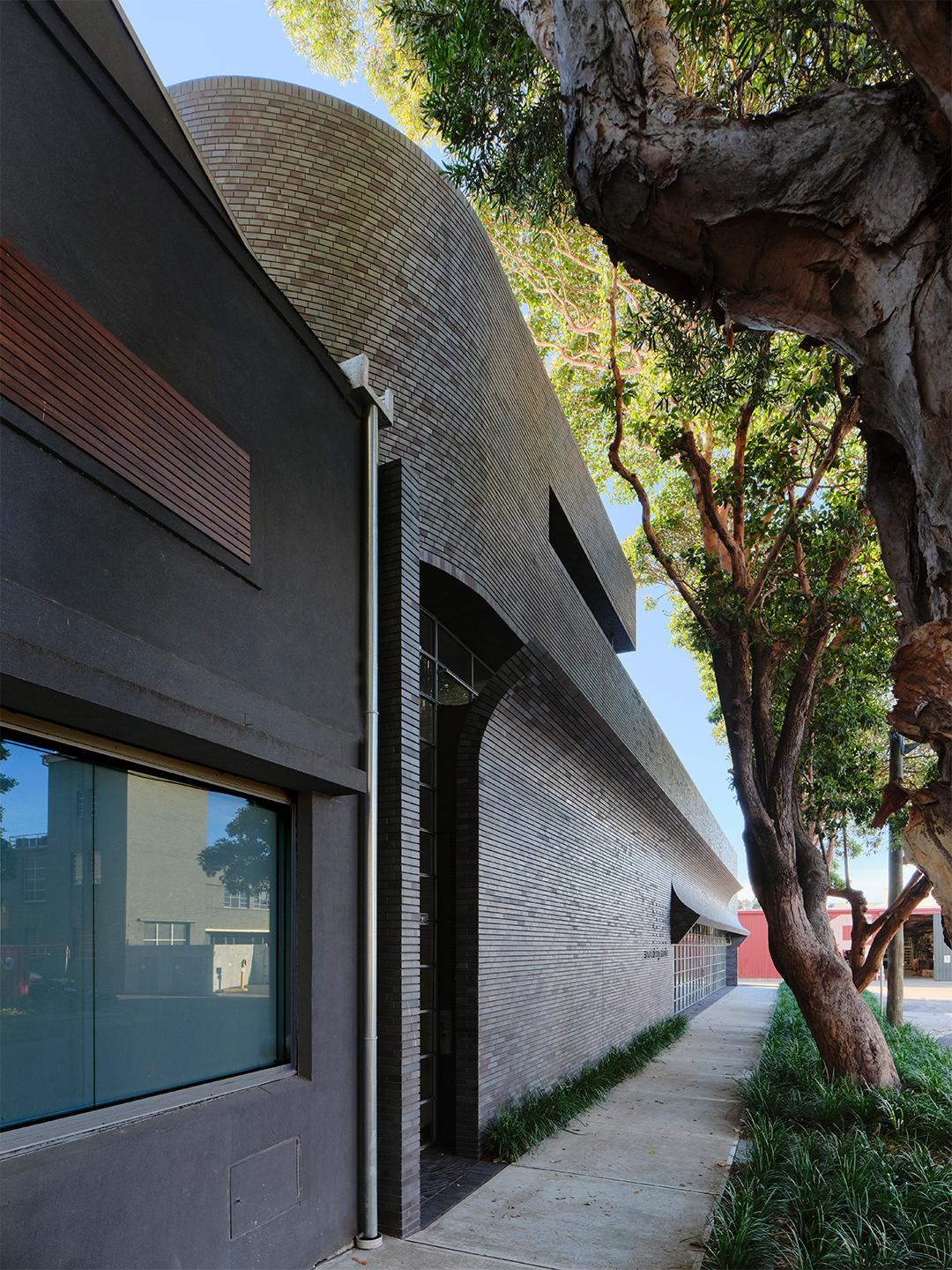
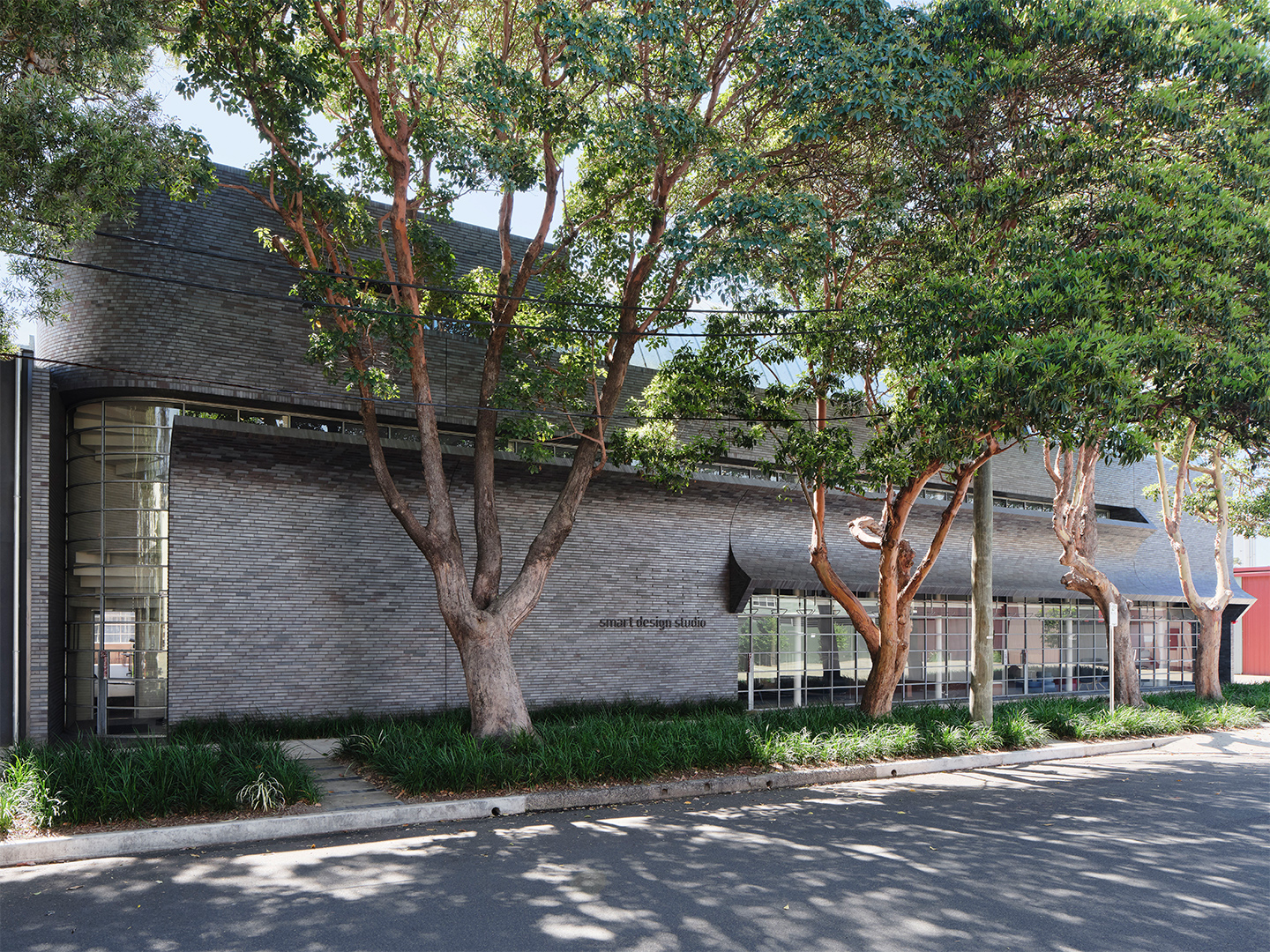
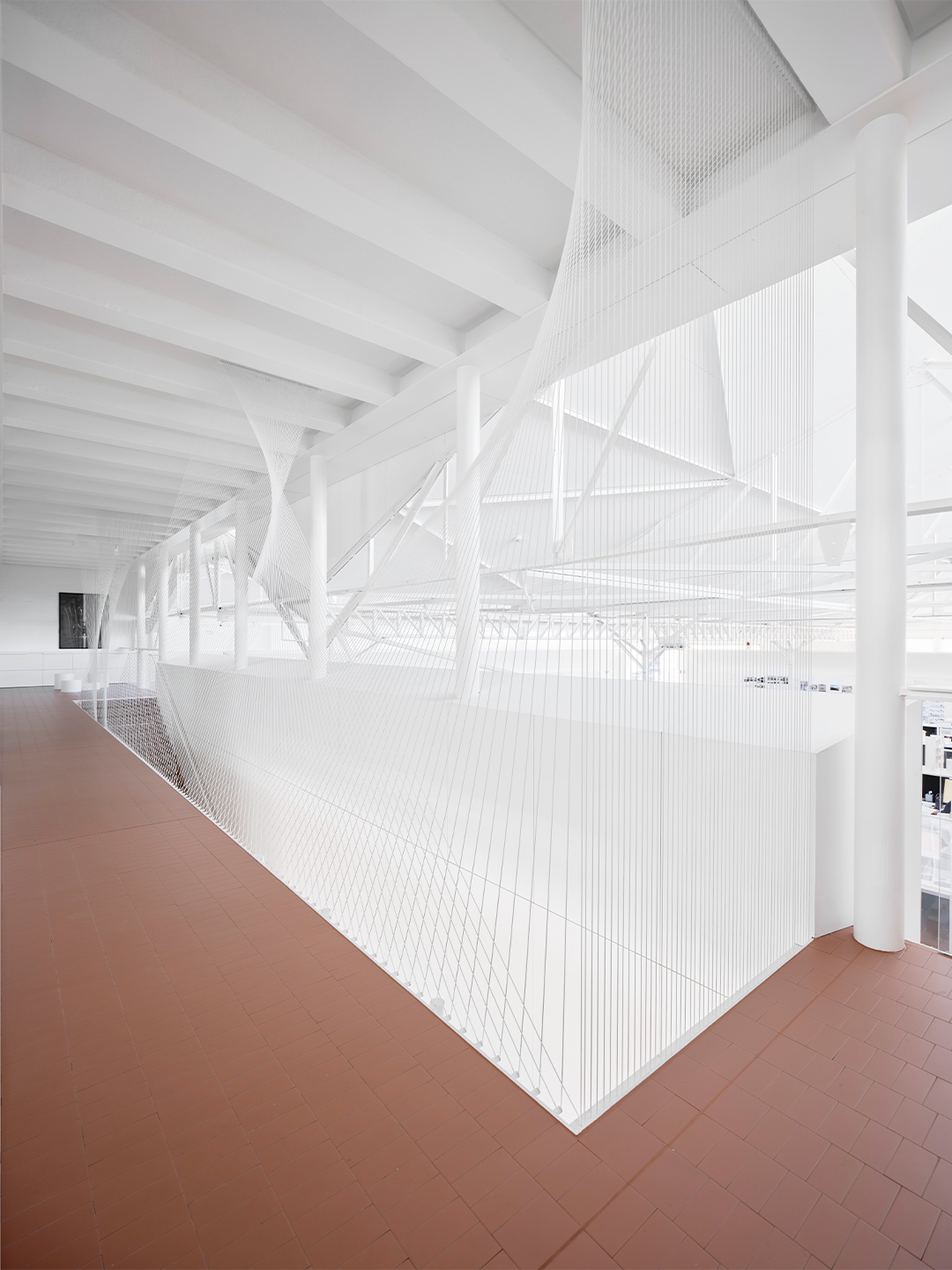
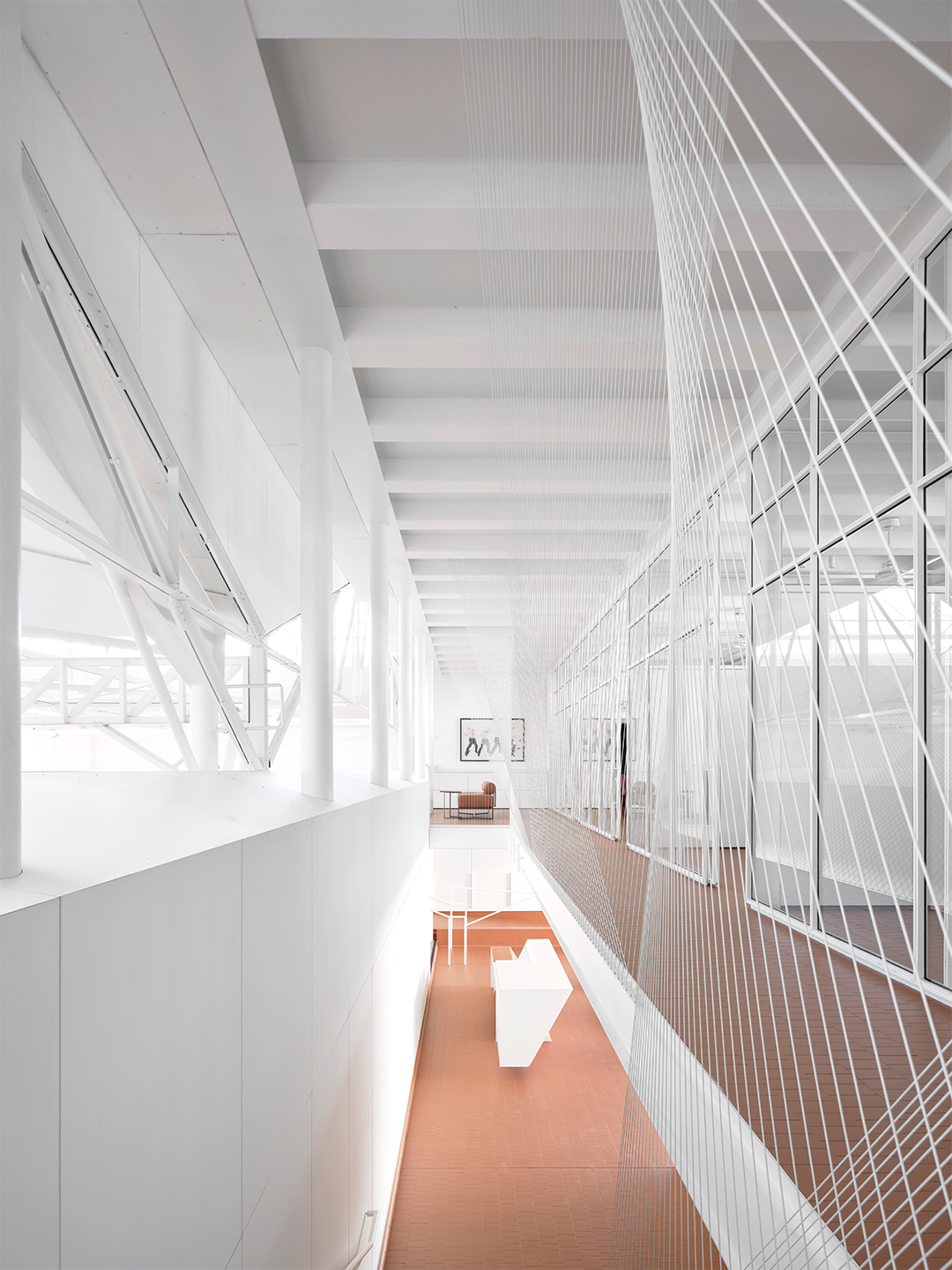
Upon finding a vacant warehouse in the area, he had also found the new home for his practice’s creative headquarters. The building at 14 Stokes Avenue (now called Stokes 14) was the subject of a visionary redevelopment by William and his team before reawakening as a multi-purpose facility, comprising a lower-level work space and an upper-level live/work residence sheltered by sweeping catenary vaults.
Shaping Stokes 14
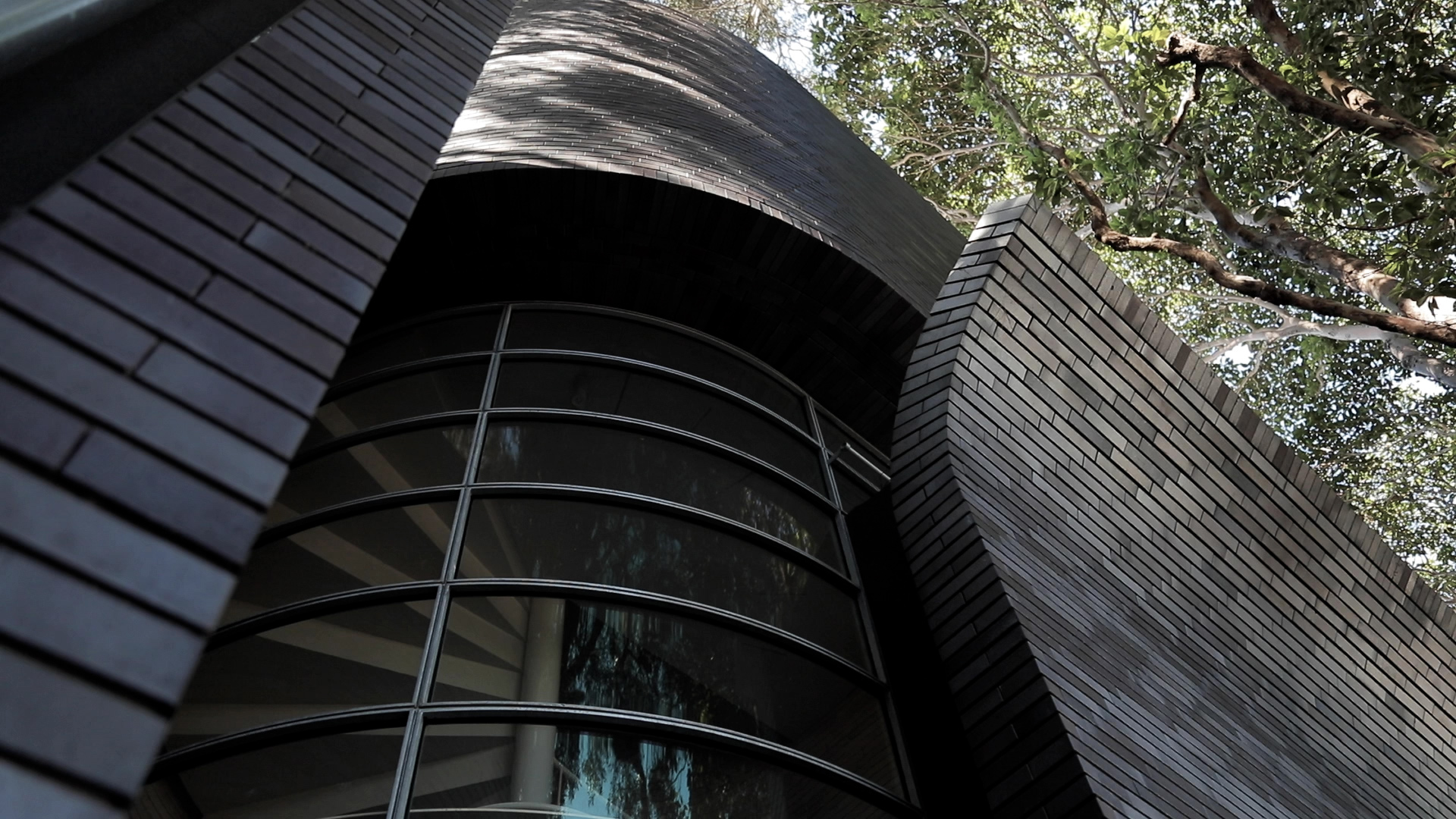
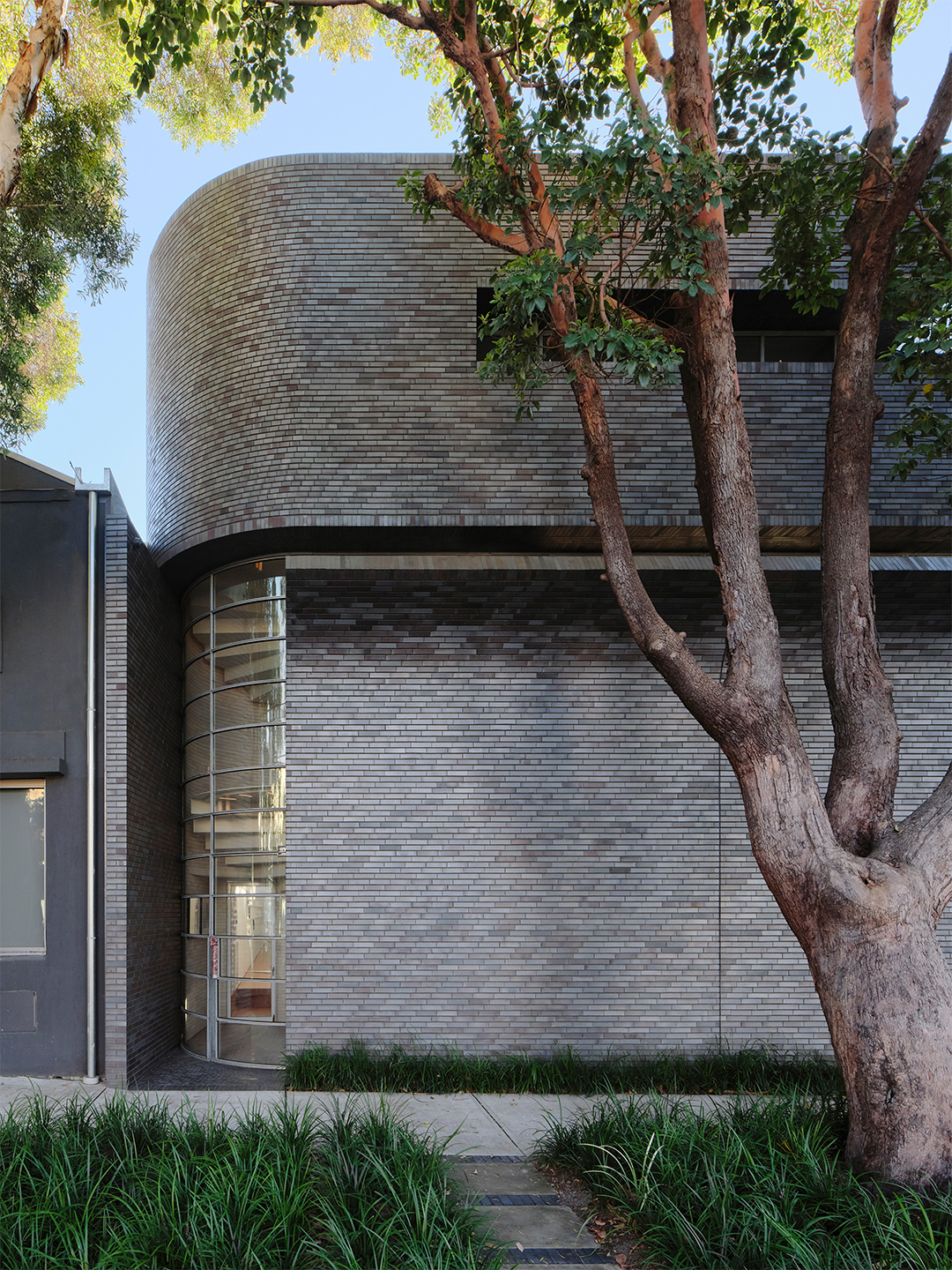
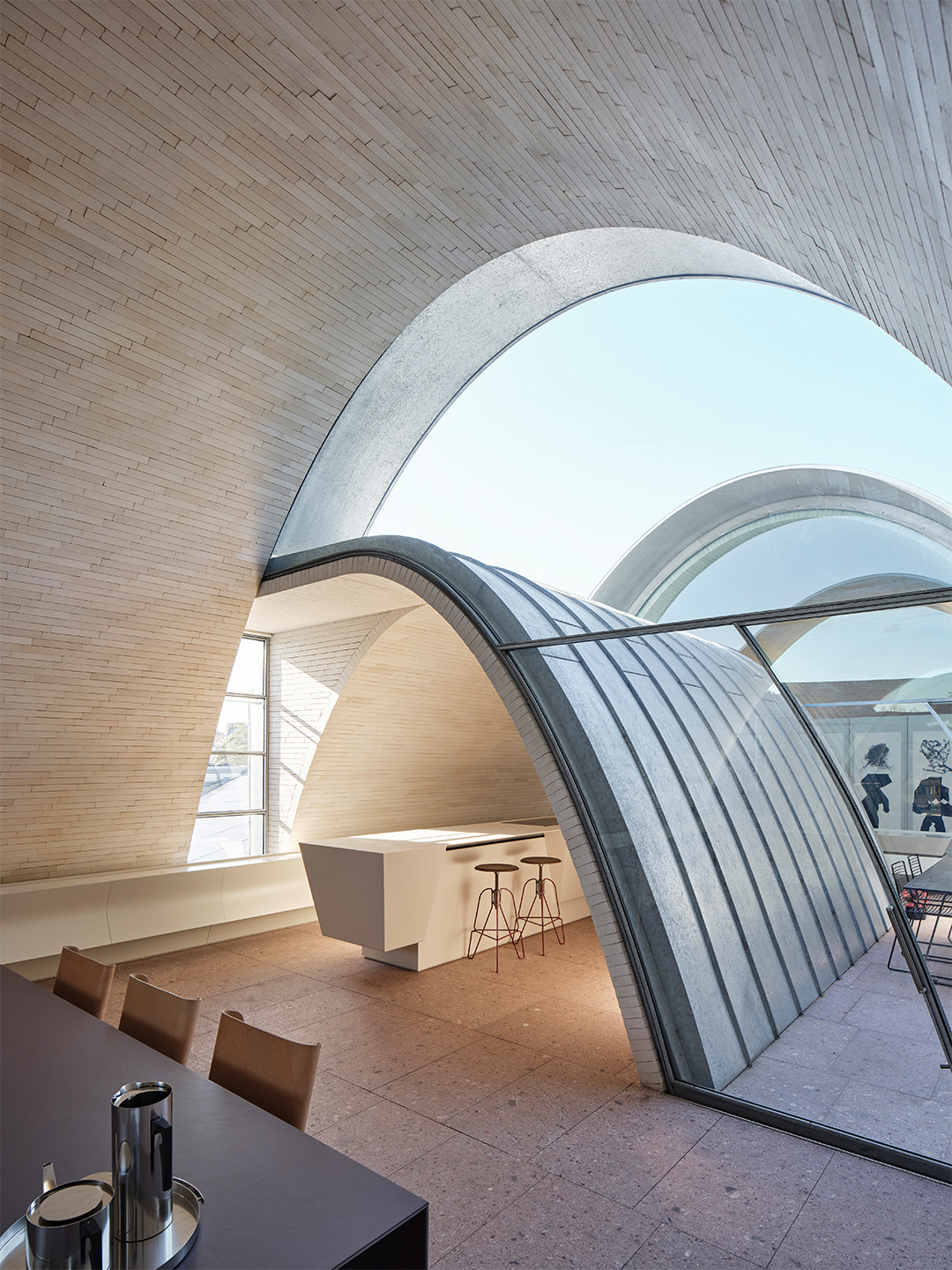
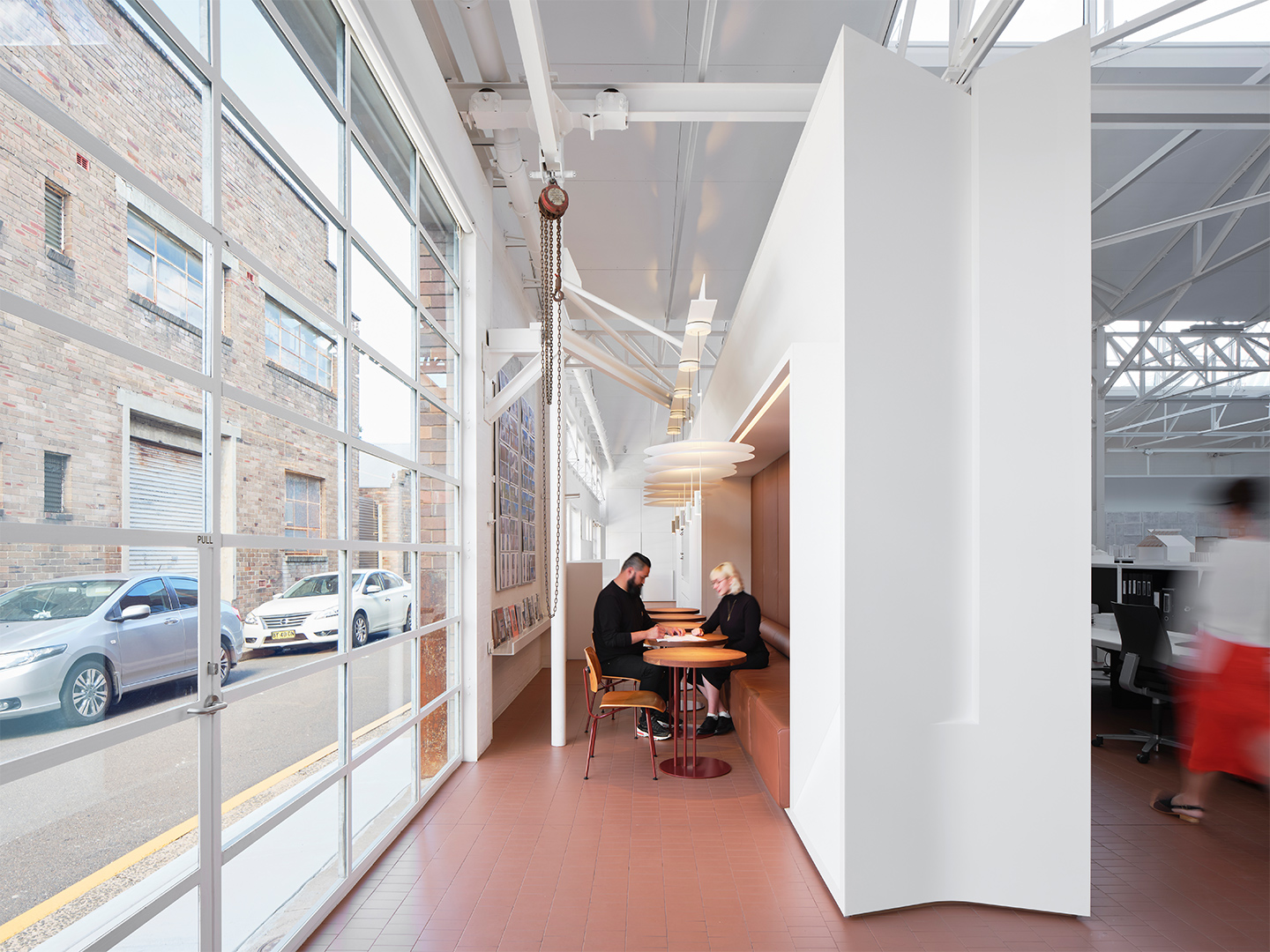
For the building’s redesign to align visually with the timeworn warehouses that connect the area to its storied past, the choice of brick for Stokes 14 was of absolute importance. The team at Smart Design Studio selected La Paloma Azul bricks from Austral Bricks for the new facade portion of the building, which elegantly peels back in places to reveal windows, doorways and awnings. “We chose to use brick because we could make it do things you don’t see it do. We could build vaults and create curved facades,” enthuses William. “It’s a small module that can be put together in beautiful ways.”
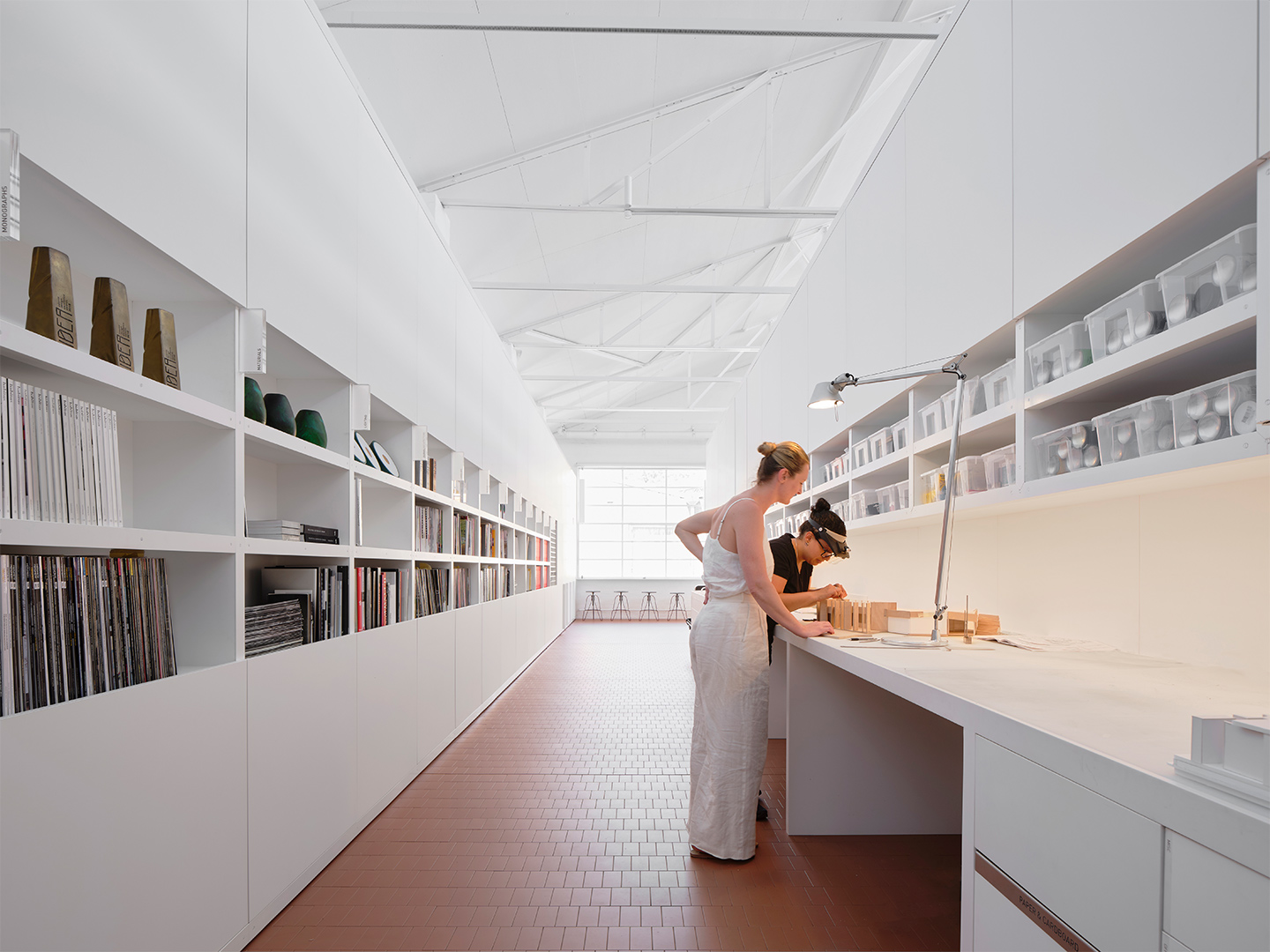
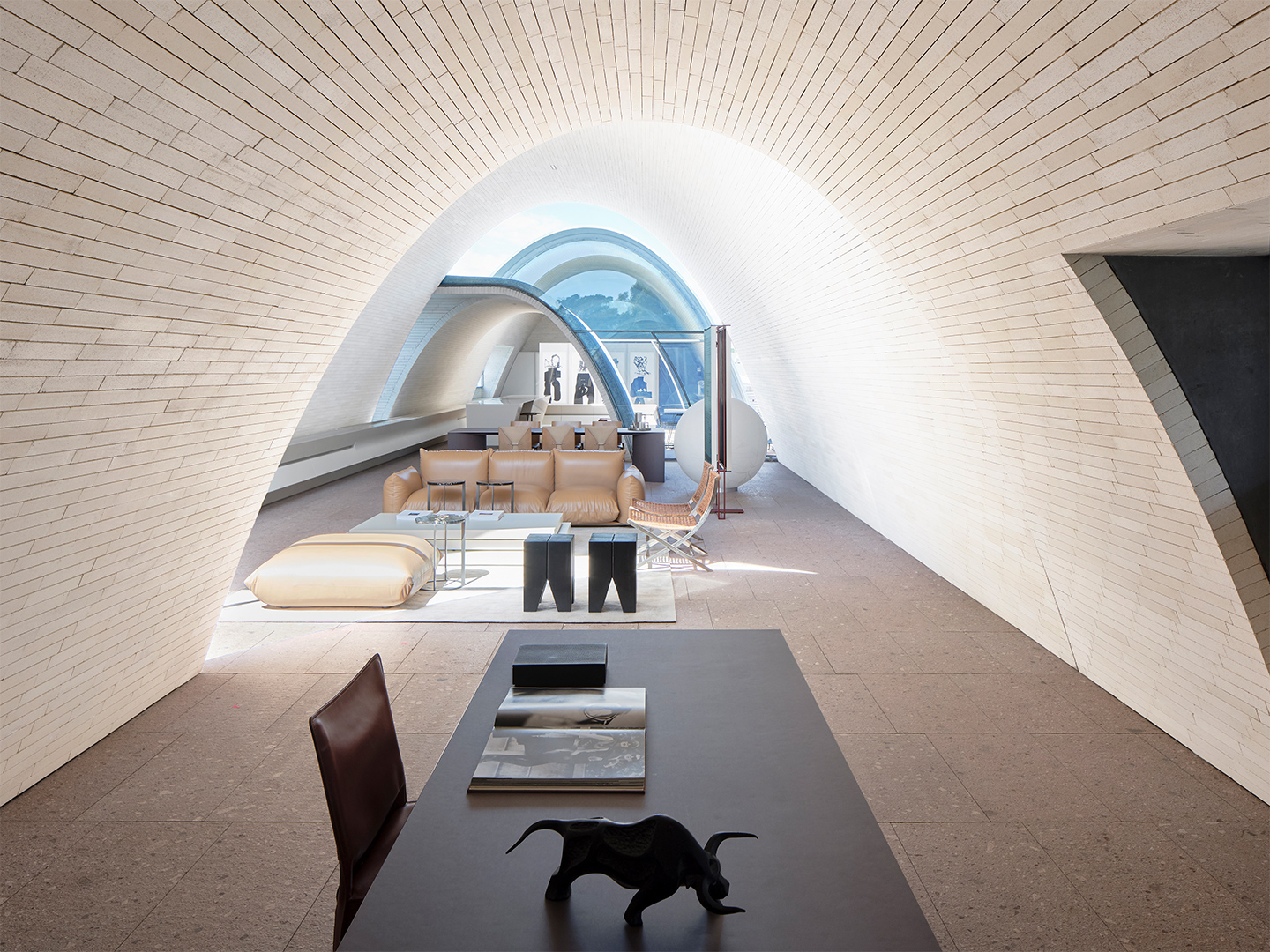
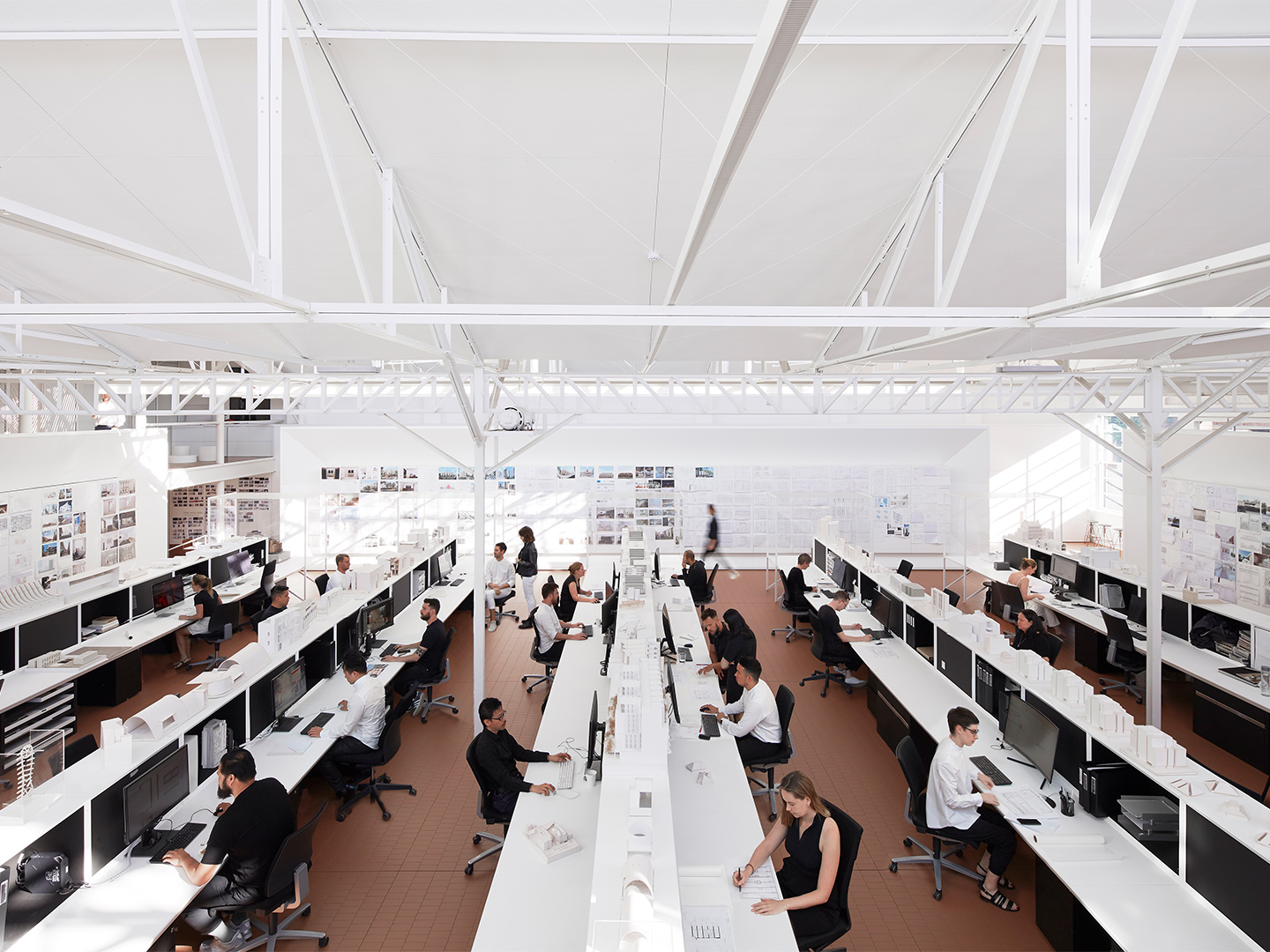
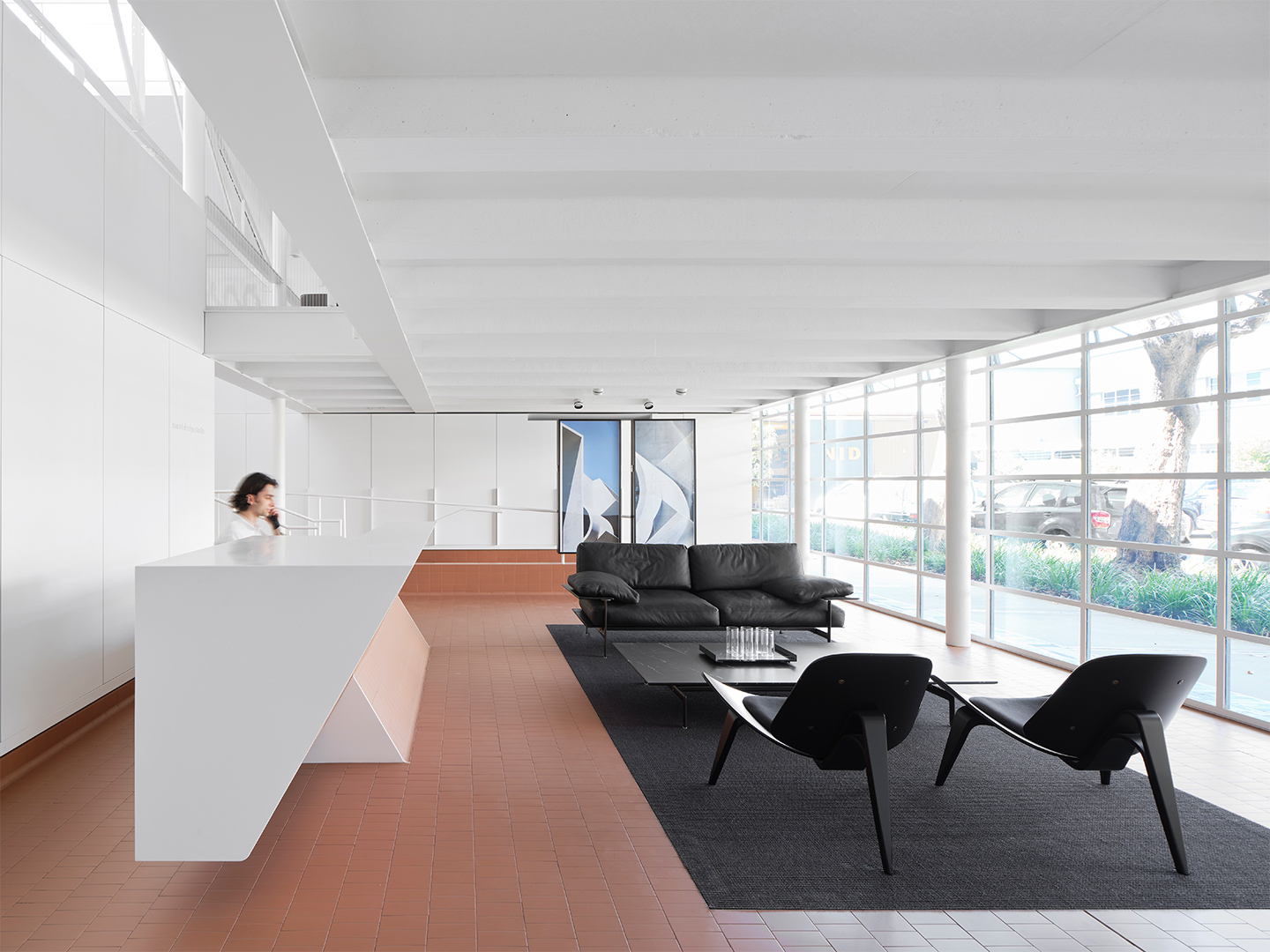
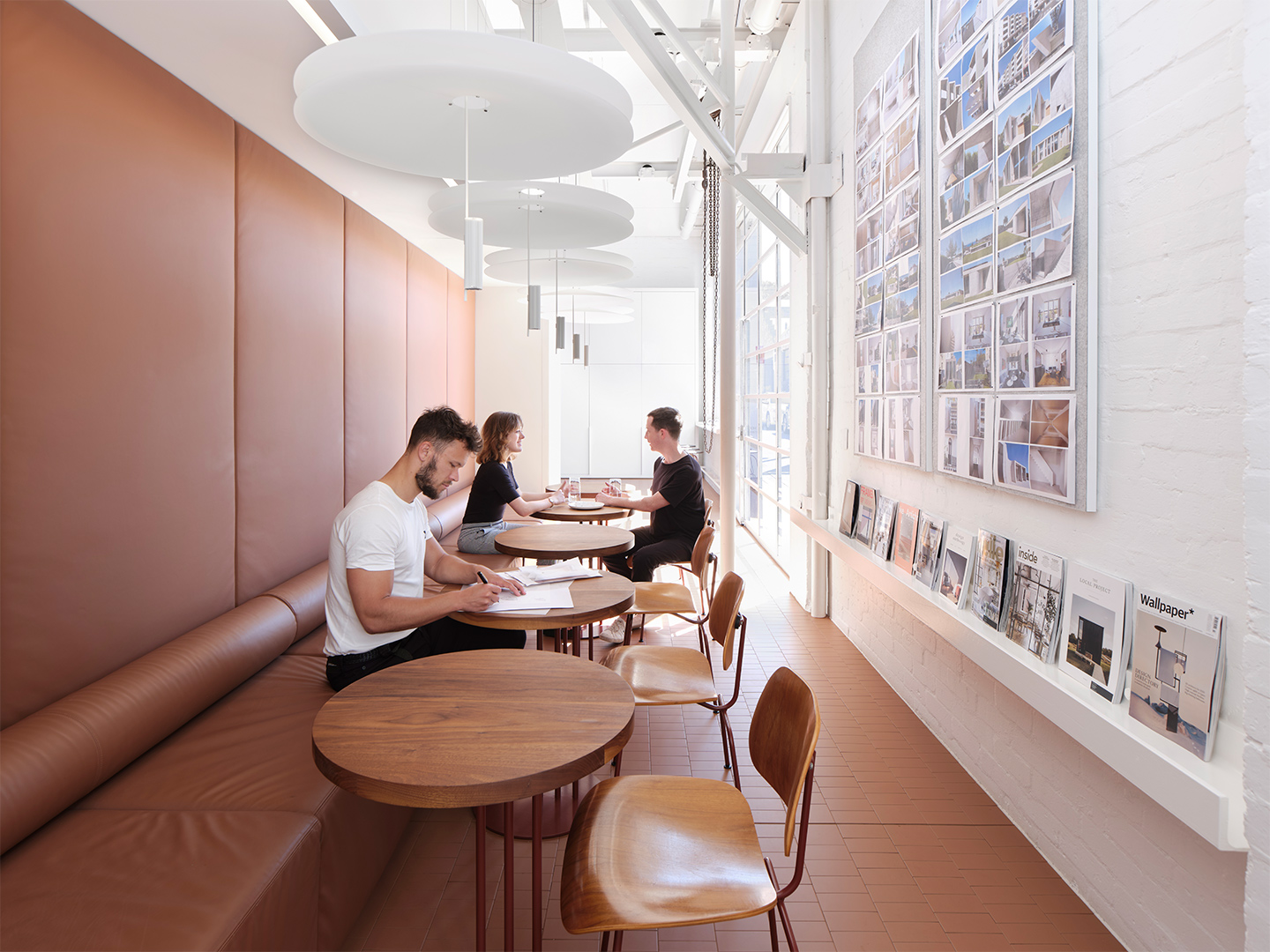
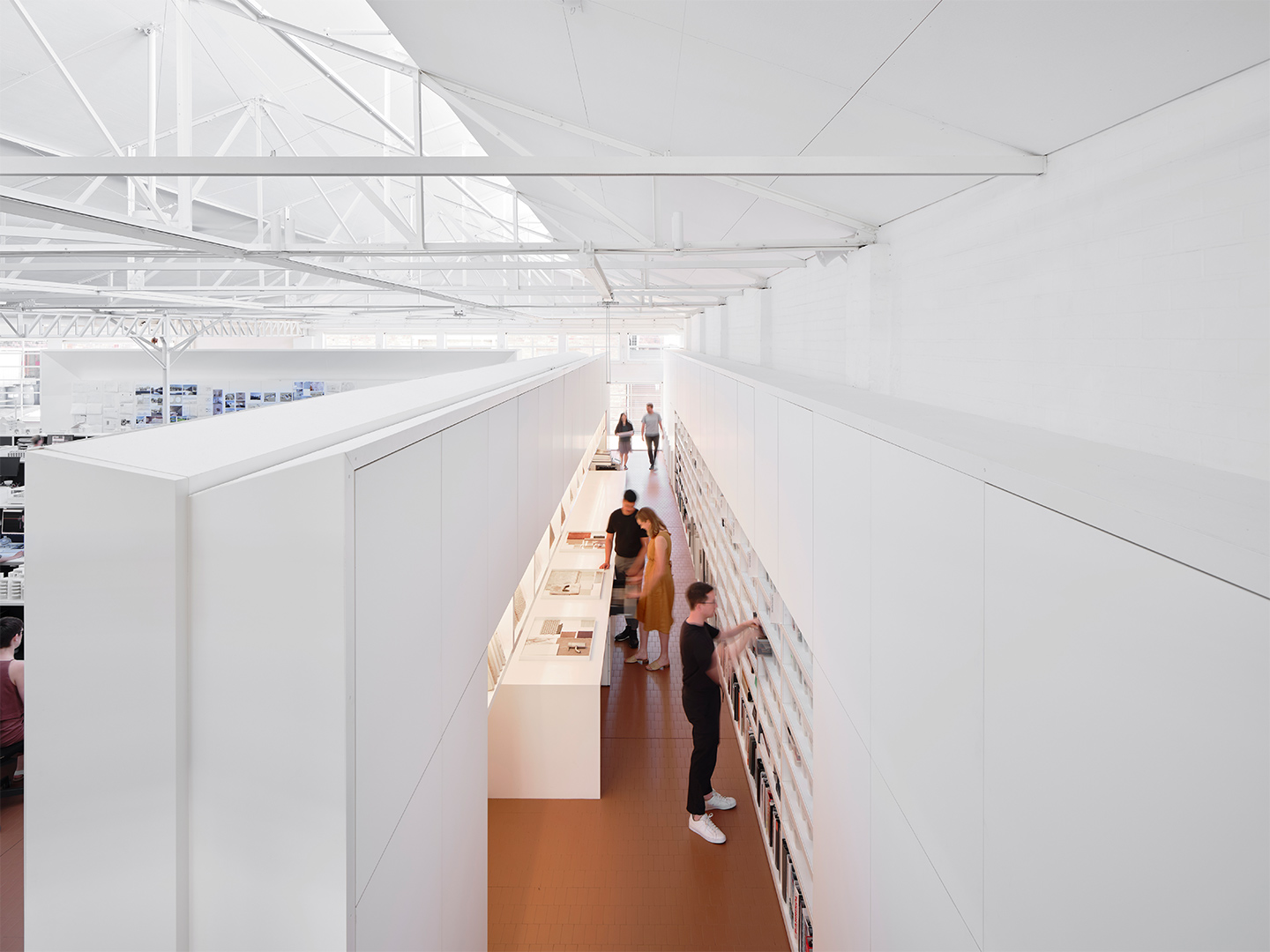
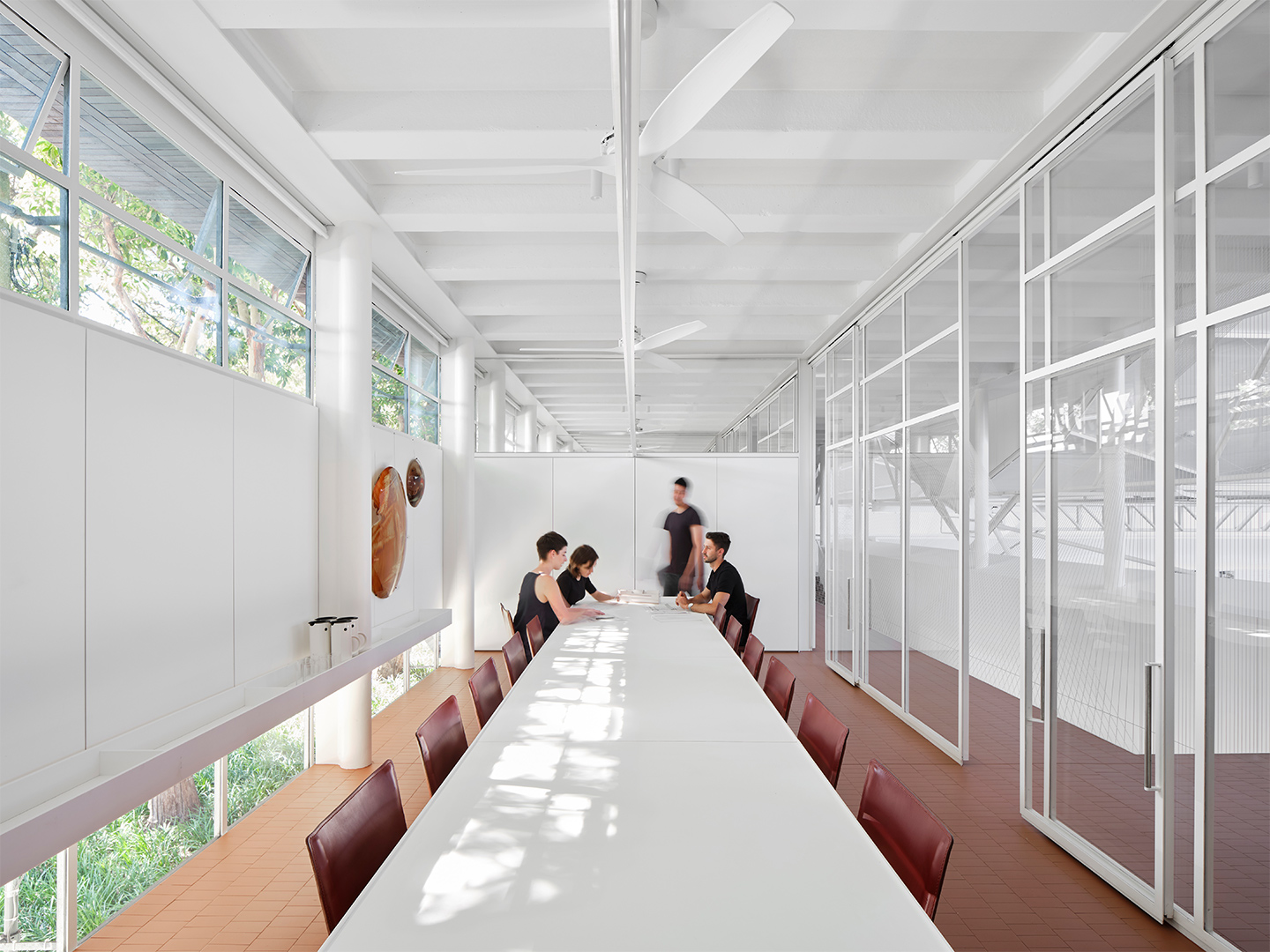
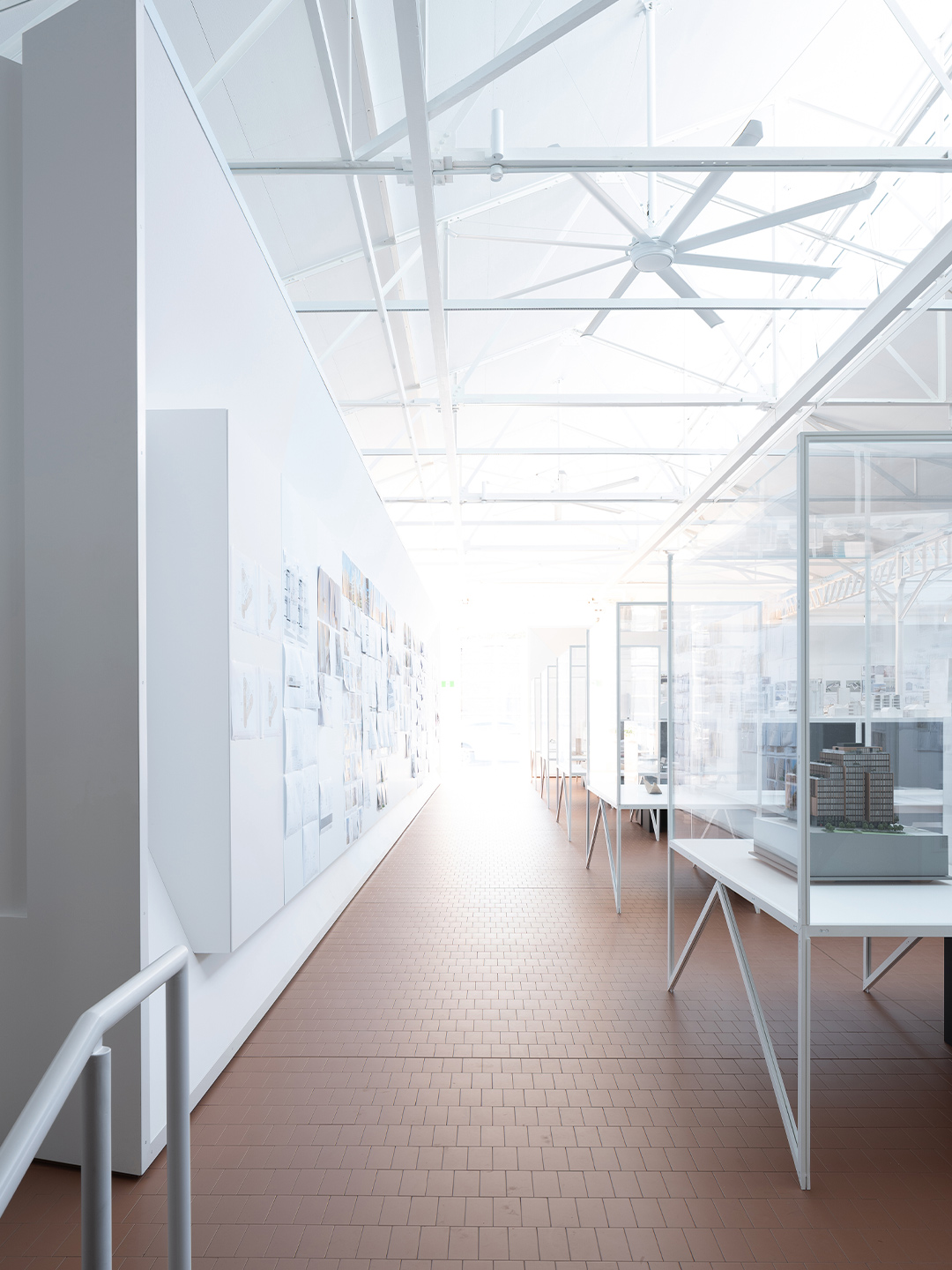
The purpose-designed office includes all the workings you’d expect of a bustling studio: a materials library, workshop and ample meeting spaces. There’s a canteen and relaxed breakout zones, too, and amenities such as bicycle storage and showers that ensure a high-quality work environment. Above the lower-level work space, a live/work residence runs the full length of the site, made by four self-supporting brick catenary vaults that are offset from each other to let in natural light. “With little outlook in this industrial area, the focus is on the interior architecture created by stacked bricks and gradations of light,” says the studio.
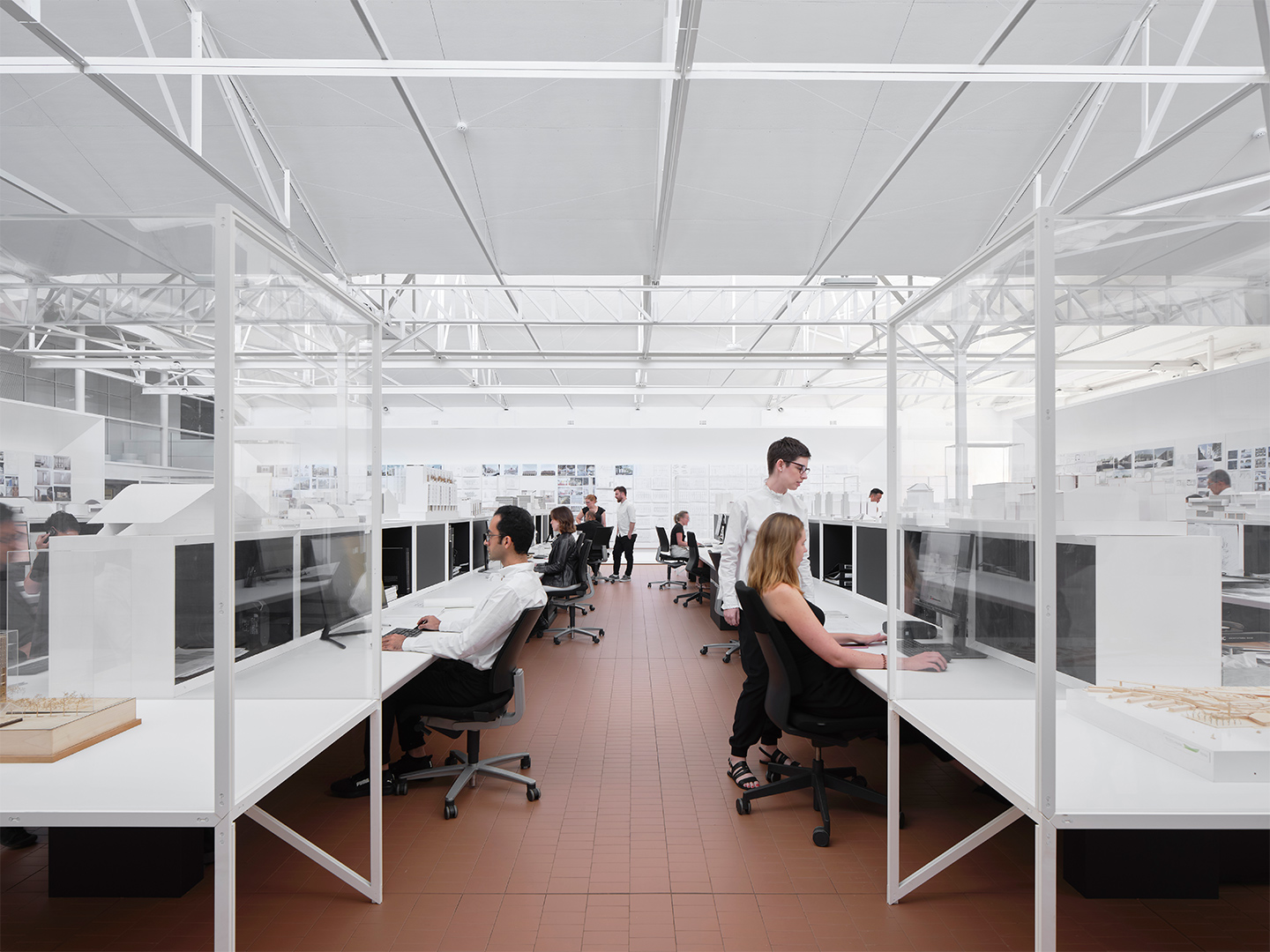
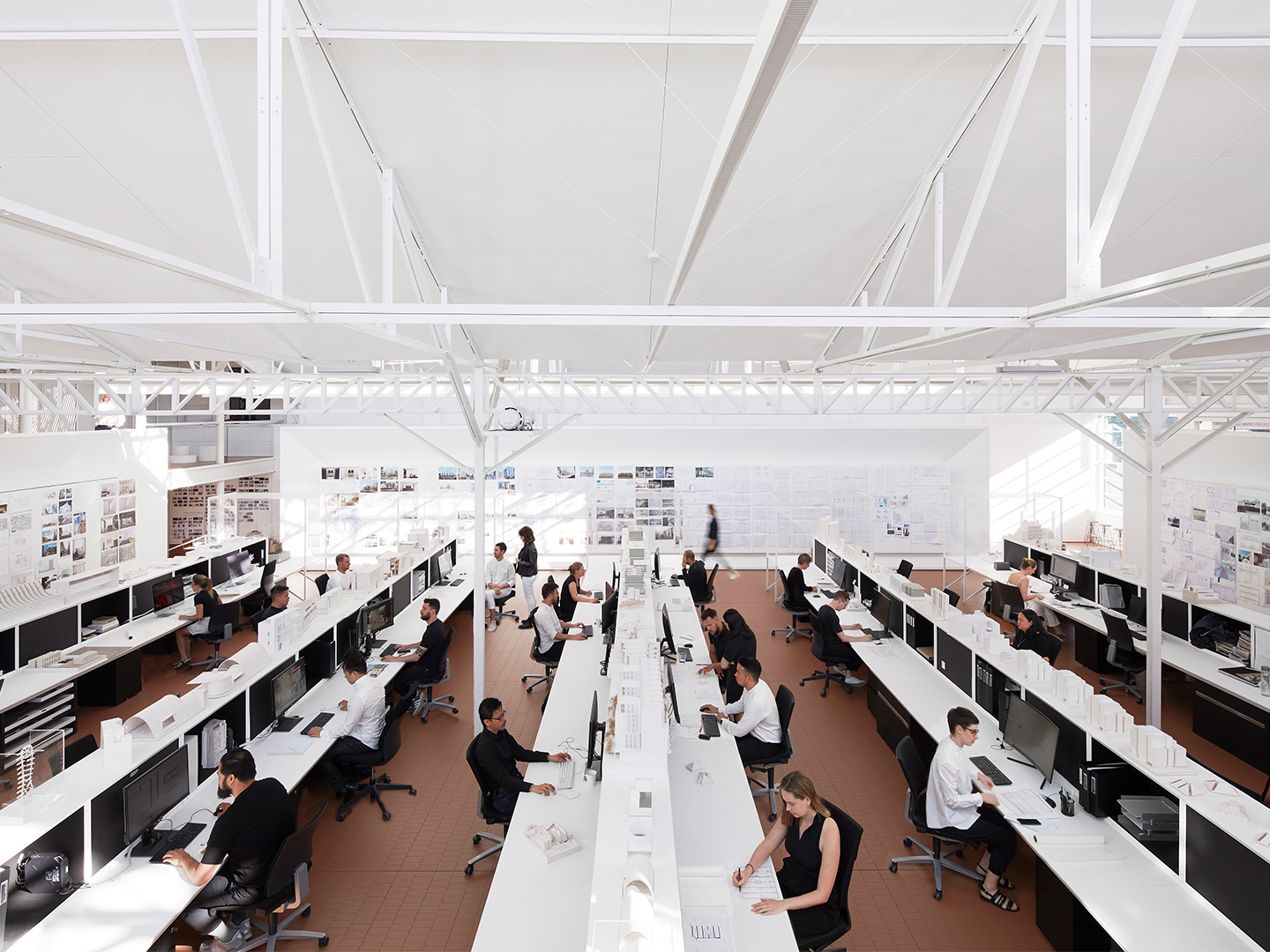
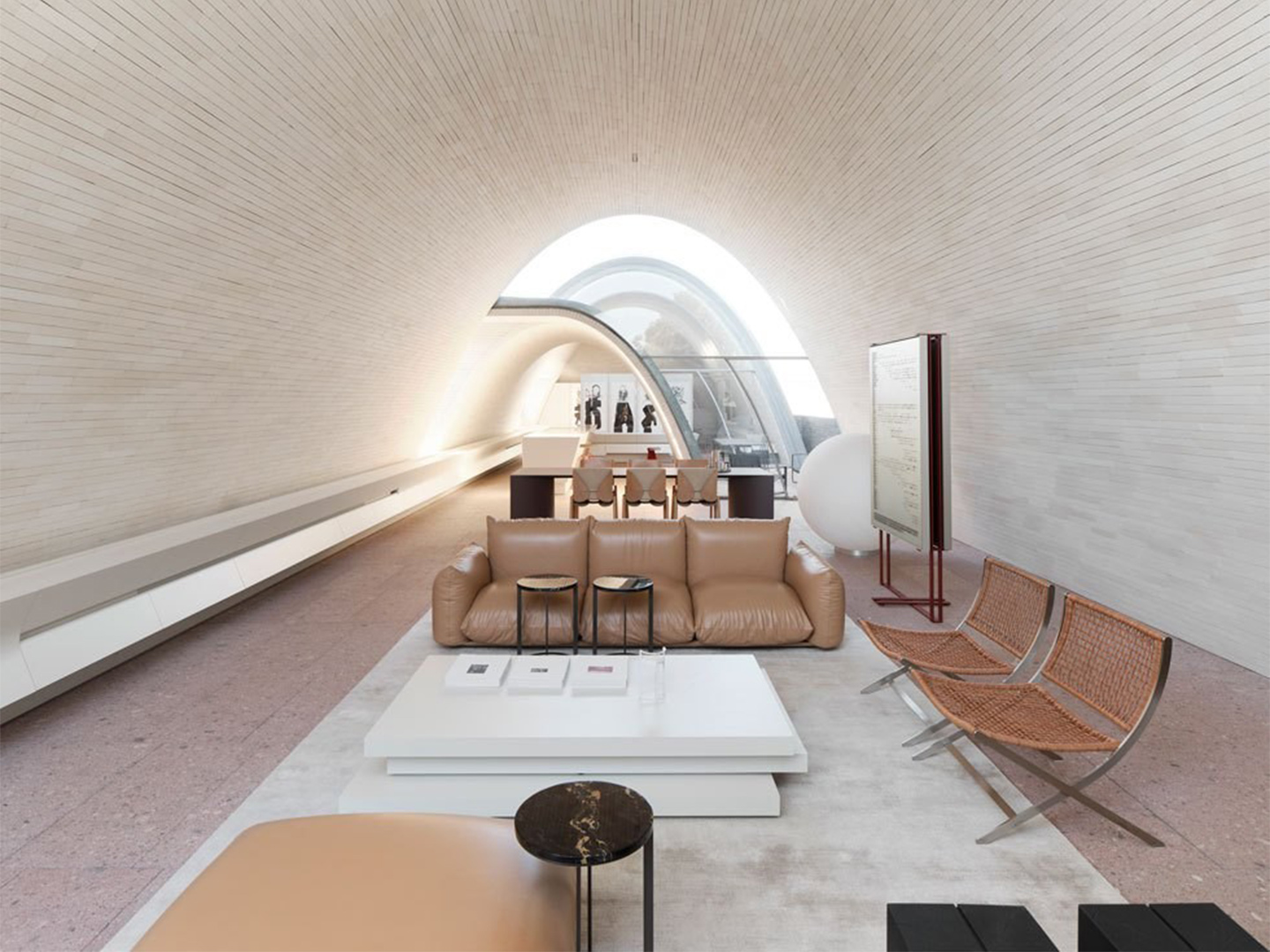
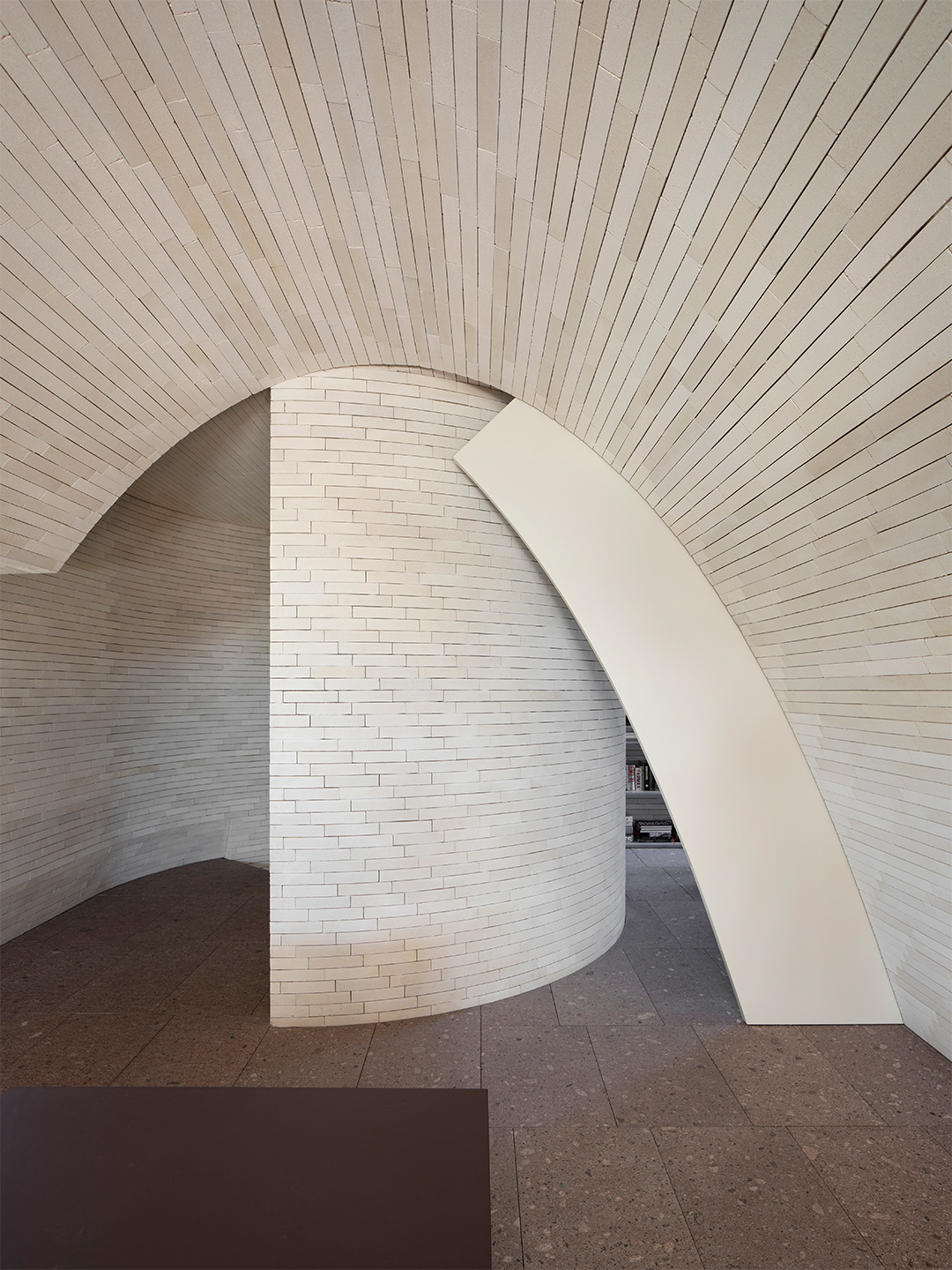
Creating a brick-lined space with no mortar joints was an opportunity for the studio to hero the materiality in an unconventional way. Chillingham White bricks from Bowral Bricks frame the upper-level interior, where the space at large proved rather difficult to work with. The windows were incredibly time-consuming to resolve and manufacture, as was the roofing and joinery, each calling for skilled design detailing and craftsmanship.
In forming the catenary shape of the building, no structural steel was required to hold up the roof. Rather, guided by the results of a prototype, a structural mould was devised in partnership with the University of Technology and Northrup Engineering, allowing the load of the brick to be evenly distributed toward the ground. The result is a poetic space born from precision, offset by the unexpected softer-side of bricks. “I love the precise shapes, like a perfectly shaped catenary vault, combined with a raw material that is chipped and rough, bent, irregular and chalky, and a little bit imperfect,” says William. “I think that the combination of roughness with precision is beautiful.”
We chose to use brick because we could make it do things you don’t see it do. We could build vaults and create curved facades.
A lasting legacy
A key outcome required of Stokes 14 was a six Green Star rating, says the studio. To achieve this, waste was kept to a minimum during the construction phase and considerations are in place to continue reductions during the building’s lifespan. An impressive 225 roof-mounted photovoltaic panels ensure the building is “energy-positive” while all materials were selected for their embodied energy, reduced impact on the environment and reuse opportunities. Air-conditioning has been replaced by natural cross-ventilation, ceiling fans and radiant underfloor heating and cooling.
Empowered to improve preservation and spearhead innovation, Smart Design Studio was able to test out new ideas at Stokes 14. The design team retained 80-percent of the existing building and constructed 20-percent as new. They reimagined the warehouse while still being sympathetic to its origins, and accommodated a team of 40-plus people in one dynamic, light-filled space. With sustainability, conservation and boundary-pushing ideas forming the project’s noble foundations, the studio has written a new chapter in the site’s heritage and contributed a compelling layer to the suburb’s ever-expanding story.
Catch up on more of the latest architectural gestures. Plus, subscribe to receive the Daily Architecture News e-letter direct to your inbox.
Parts of this story originally featured on the Brickworks Design Channel.
Related stories
- Skinny mini: The pencil thin hotel proposed for Sydney’s skyline.
- Sydney’s biggest pool since the 2000 Olympics is now open.
- Port Douglas retreat: Gurner reveals plans to open luxury hotel in Far North Queensland.
Located a short commute from Sydney’s centre, Alexandria is a burgeoning suburb with industrial origins, observable by its skyline of sawtooth roofs, exposed trusses and utilitarian facades. For local Australian architect William Smart, creative director of Smart Design Studio, the conservation movement at the northern end of the precinct offered immense appeal.
Upon finding a vacant warehouse in the area, he had also found the new home for his practice’s creative headquarters. The building at 14 Stokes Avenue (now called Stokes 14) was the subject of a visionary redevelopment by William and his team before reawakening as a multi-purpose facility, comprising a lower-level work space and an upper-level live/work residence sheltered by sweeping catenary vaults.
The harbourside site in Sydney is already known as the home to the most expensive residence in Australia – the penthouse of the Residences One building was sold in 2019 for over AU$140 million. But it’s the buzz that surrounds Residences Two, the next step in the One Sydney Harbour development, that’s capturing renewed attention.
Skyhomes at Residence One / News highlights
- The One Sydney Harbour development sees the reunion of Pritzker Prize-winning architect Renzo Piano and State of Craft interior designer Daniel Goldberg.
- The penthouse at the Residences One tower was sold for more than AU$140 million, making it Australia’s most expensive residence.
- Joining the harbourside site, Residences Two is a 68-storey residential tower with views across the city and beyond.
- Atop the Residences Two building, two penthouses, called Skyhomes, include an outdoor terrace with social space and a swimming pool.
- State of Craft will guide the interiors of each residence so they are personally curated to meet the vision of the owners.
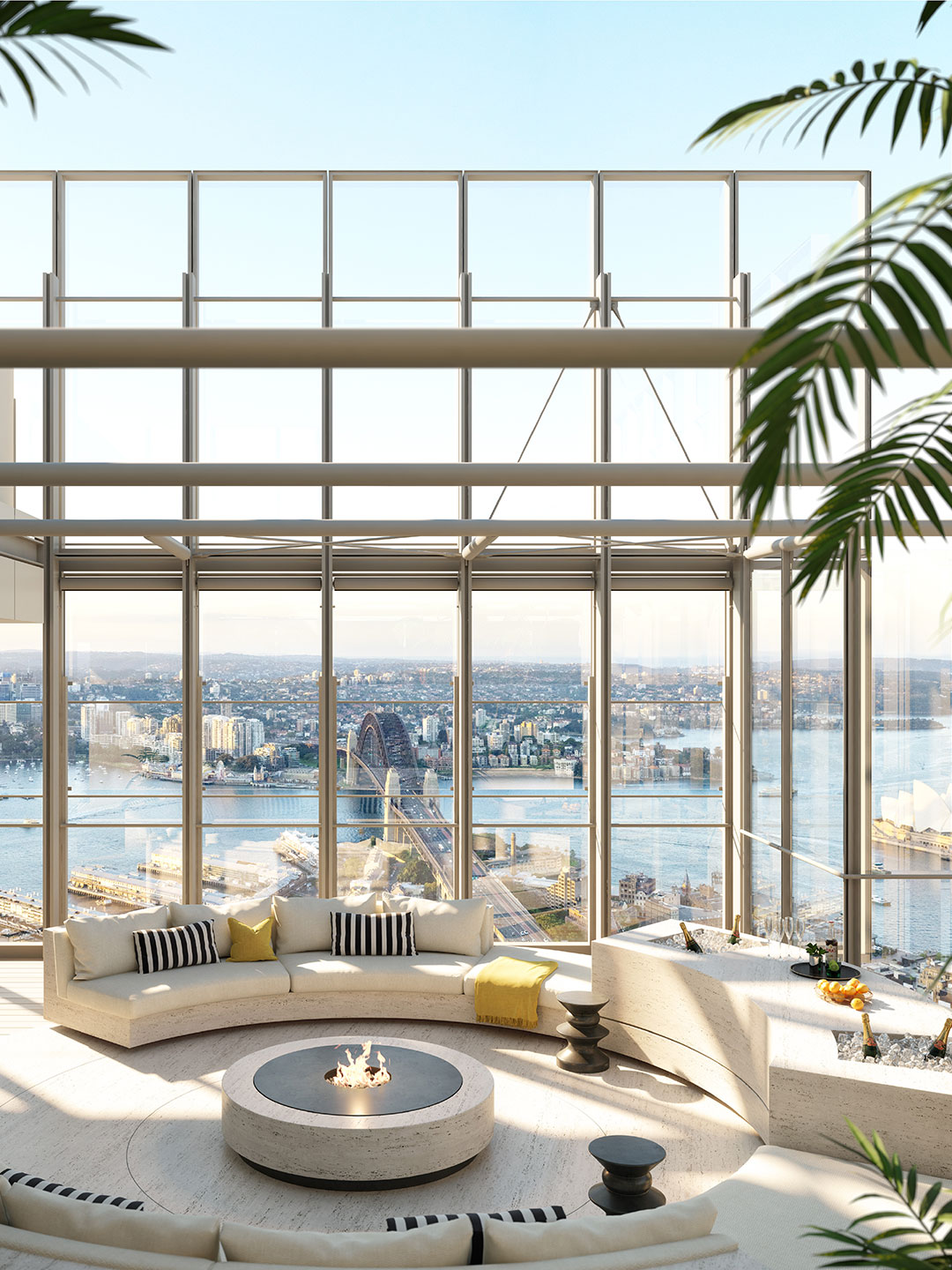
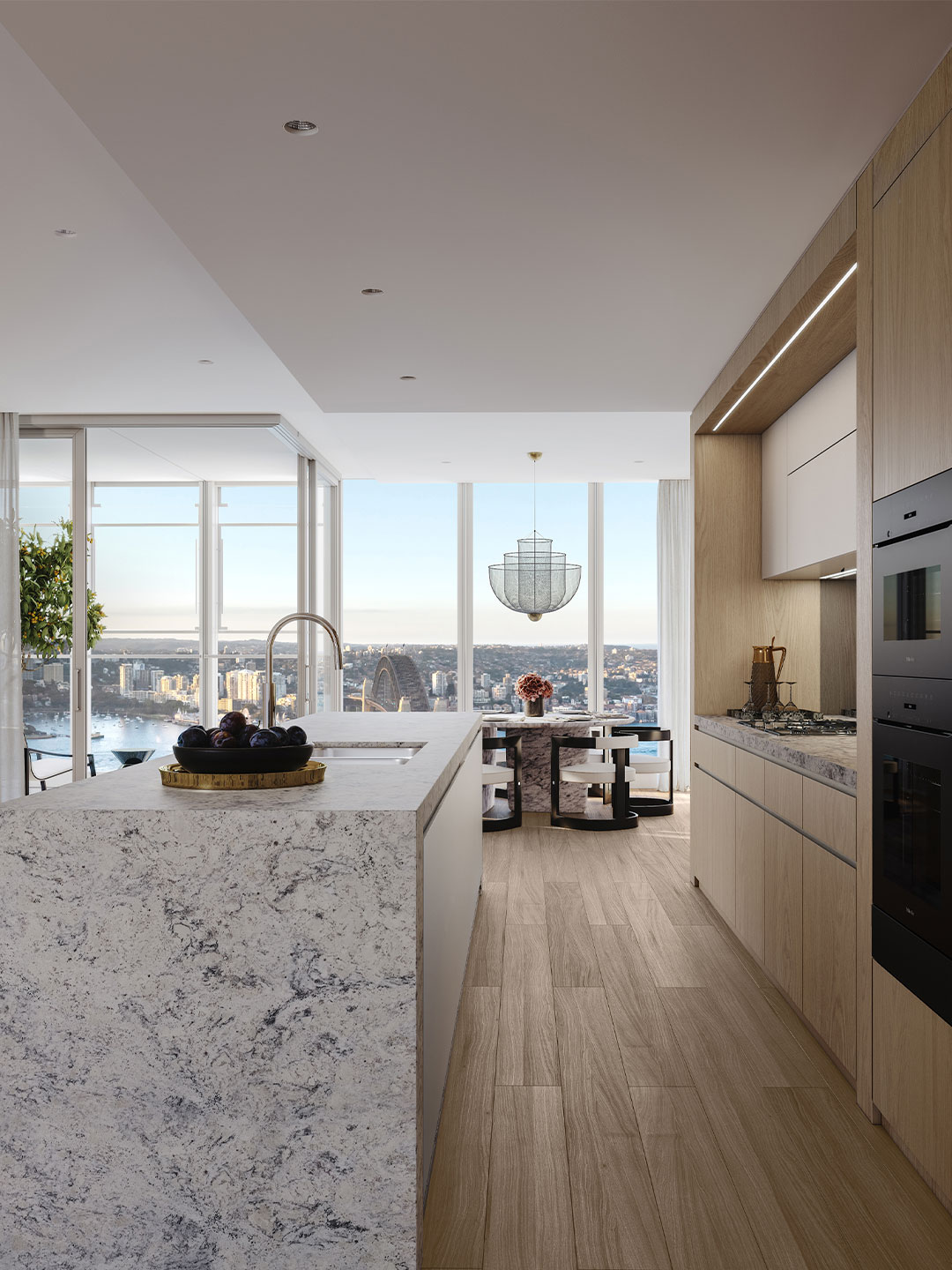
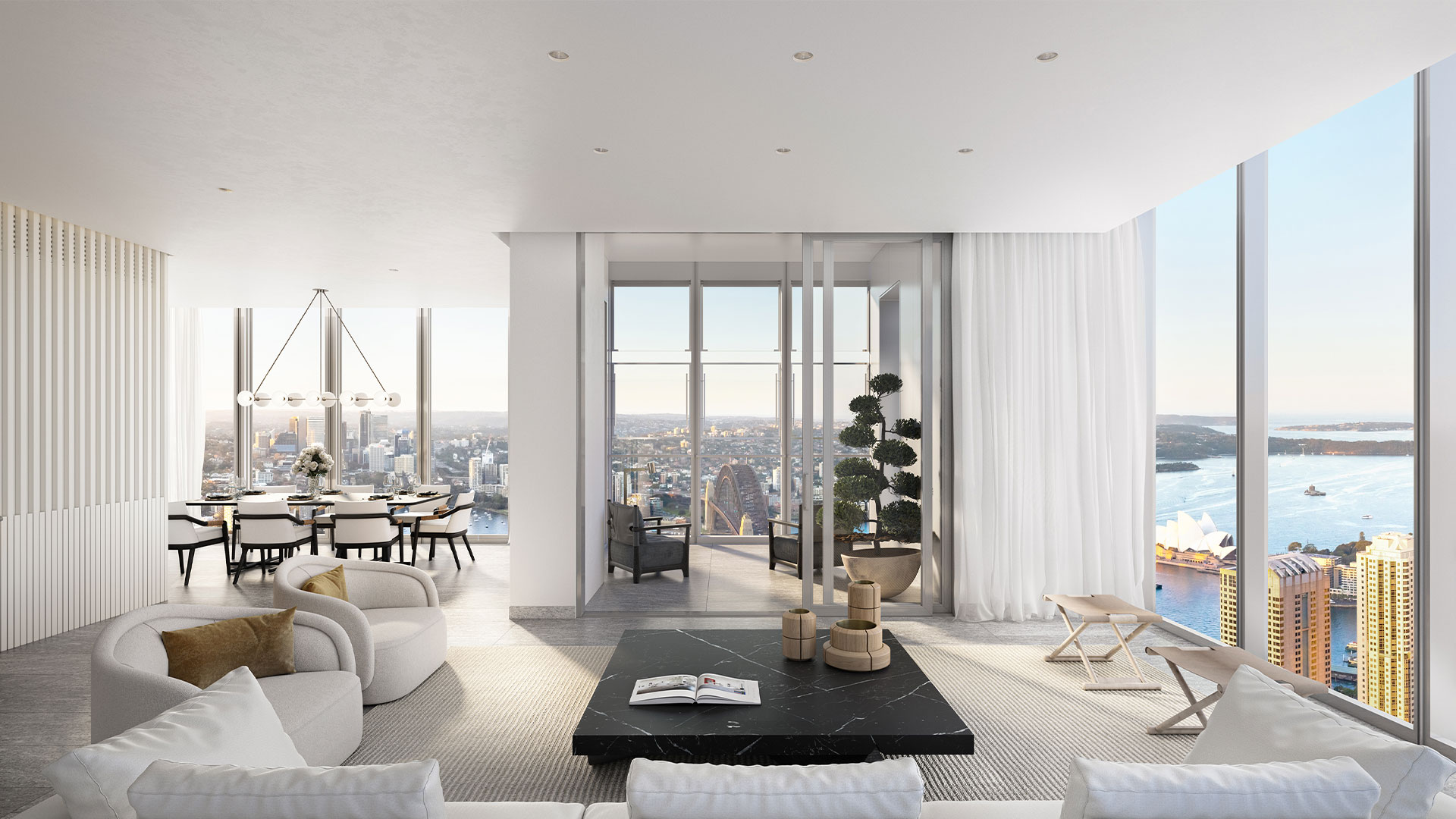
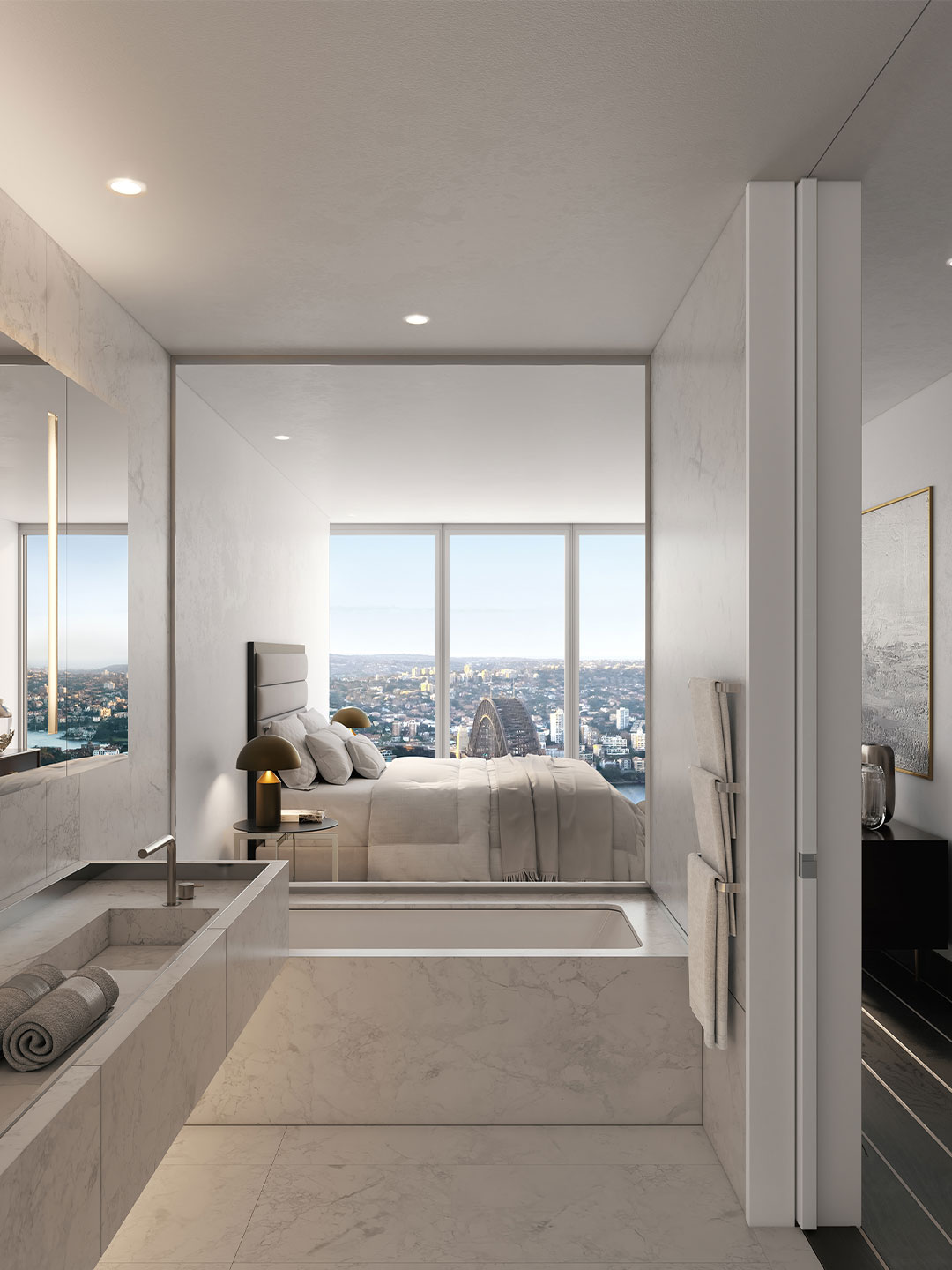
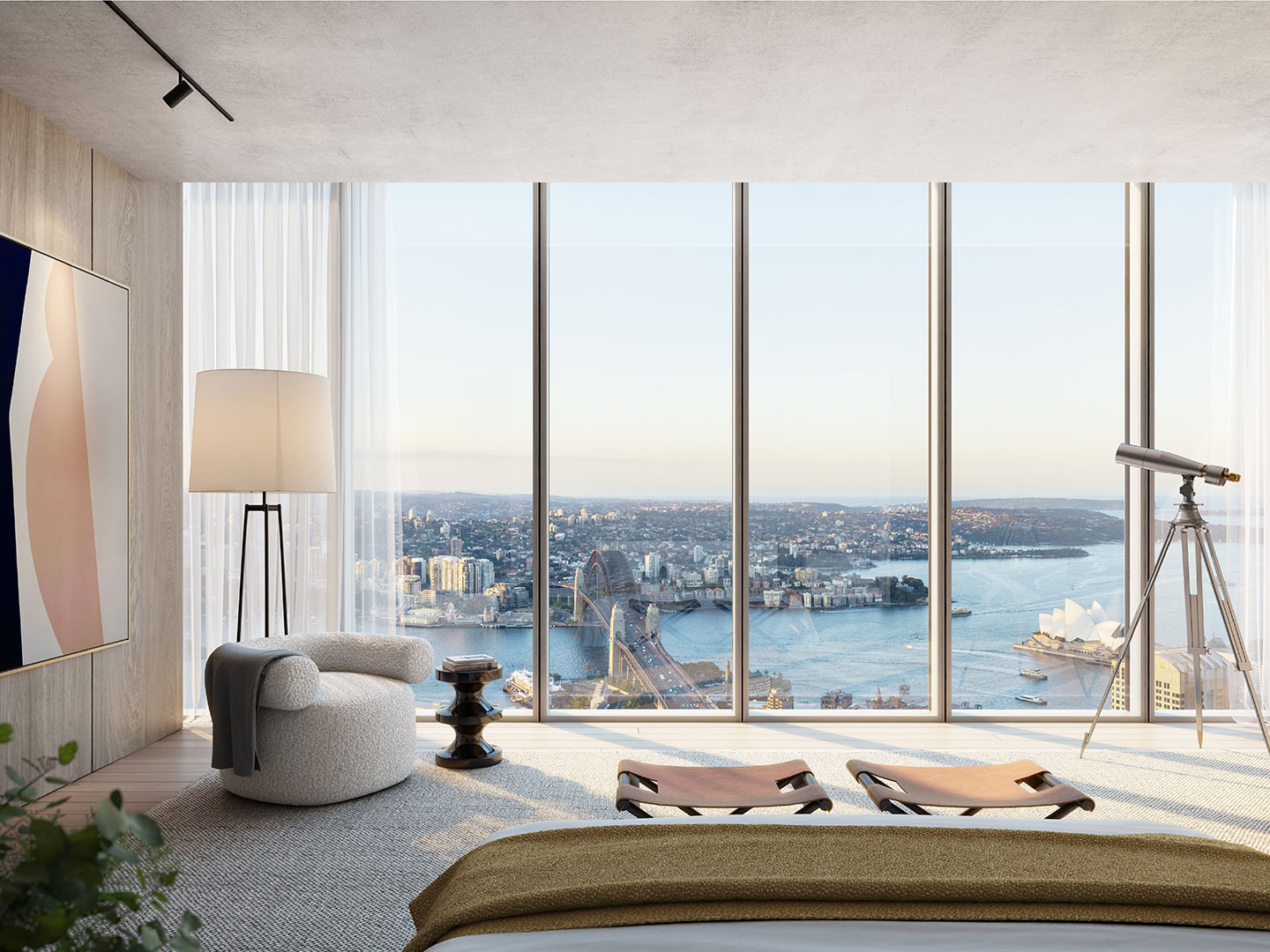
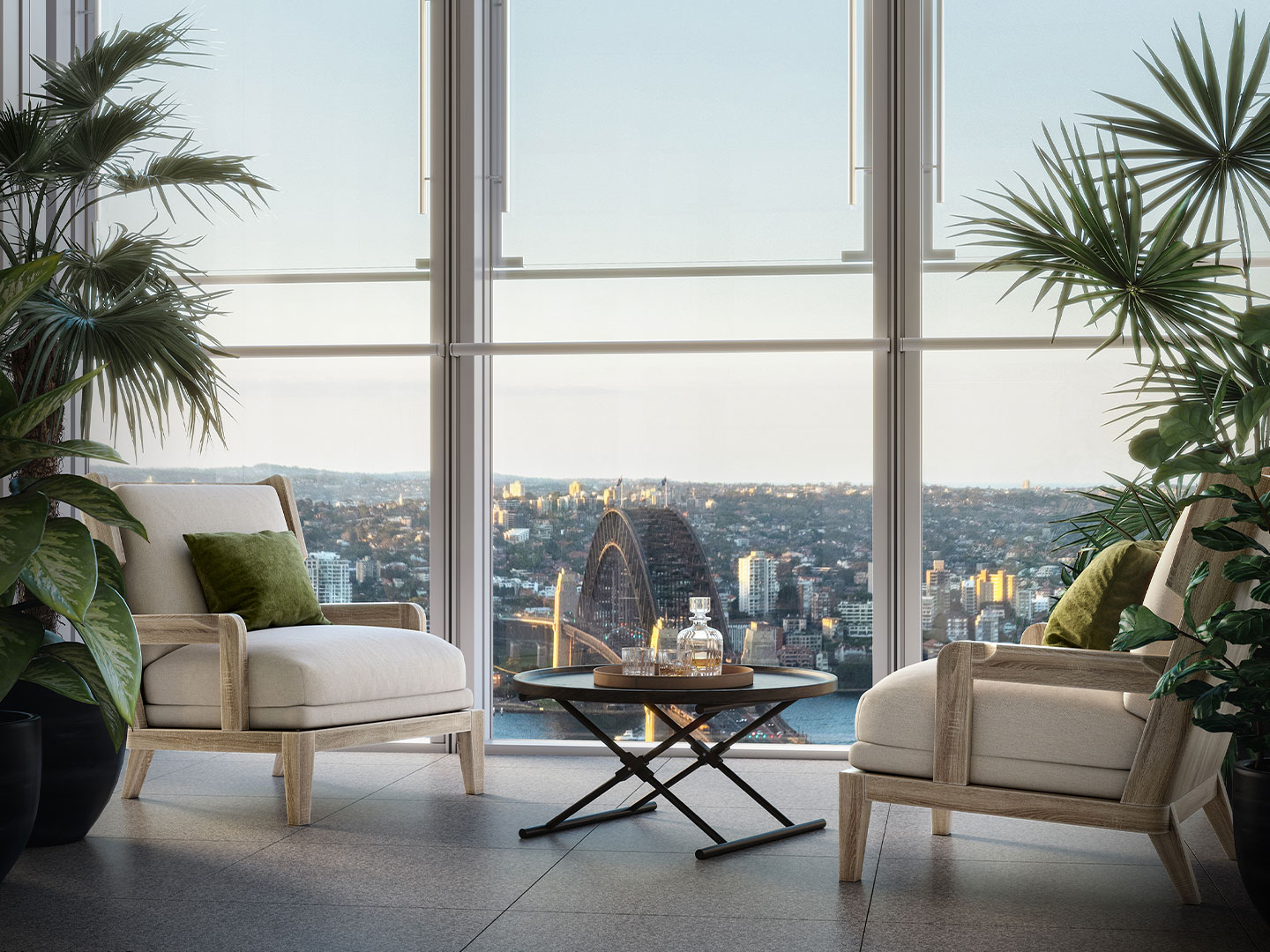
A 68-storey residential building, Residences Two will contain two impressive Skyhomes that each occupy a full level of the tower’s soaring crown. The largest of the homes measures in at a staggering 670 square metres. Both luxury penthouses flaunt 3-metre-high ceilings and are accessed via a private lift lobby.
Artist’s illustrations show that the pièce de résistance of the cloud-hugging homes is perhaps the rooftop terraces, each complete with generous entertaining space and a swimming pool, backdropped by panoramic views across the glittering city and beyond.
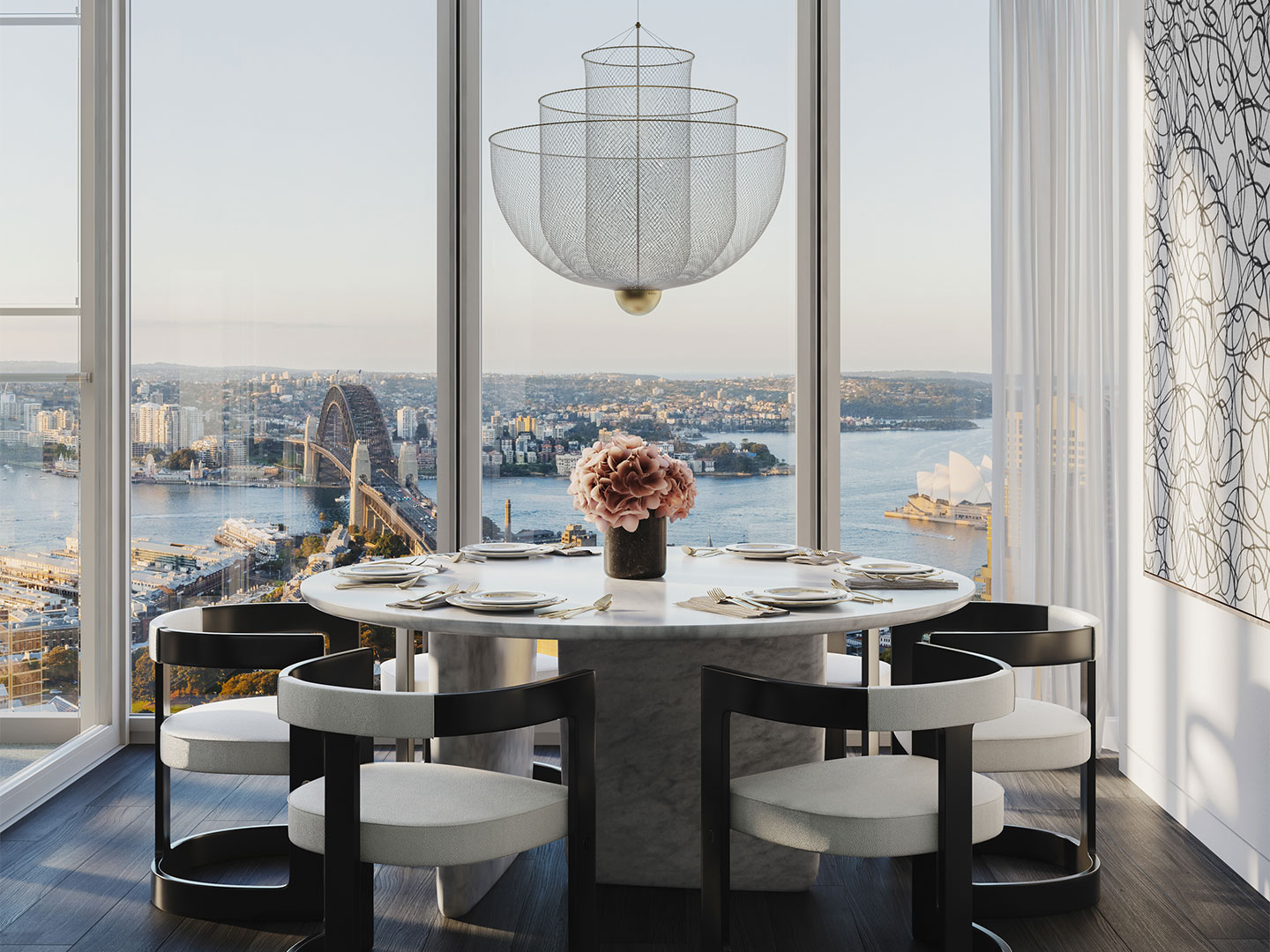
“We wanted to create two unique world-class homes in the sky that capture the essence of living high above Sydney Harbour,” Daniel says of the State of Craft-designed interiors. “The experience of being in the Skyhomes was inspired by life onboard private yachts with their seamless transition from inside to outside spaces, and the feeling of freedom and elegant comfort.”
All places have a story to tell, you just have to listen to that story, and I think Sydney has a great story to tell.
Working in tandem, Daniel’s interior design response set out to embrace Renzo Piano’s vision, creating thoughtful connections with the natural surrounds and paying homage to the tower’s presence and scale. Under State of Craft’s expertise, each Skyhome will be personally curated to meet the vision of its owners.
“Luxury is often confused with opulence,” Daniel suggests. “Our approach to luxury is very much about craftsmanship, telling the story of curation, a sense of authenticity. We wanted the interiors to be timeless, sophisticated and smart. Craftsmanship and attention to detail is really what sets these apartments apart.”
Applying a delicate and refined approach to design, Renzo and Daniel have together set a new benchmark for luxury living globally and, in turn, created a new landmark for the Sydney skyline. “We immediately started to think about these buildings being like crystals, playing one to the other,” Renzo says of the way in which the two residential towers reflect and refract the city’s famed light.
“All places have a story to tell, you just have to listen to that story, and I think Sydney has a great story to tell,” he adds. “In this case I think it’s very much about this, about making something that tells the essence of this city that is about sense of lightness, a sense of light, the sense of transparency.”
onesydneyharbour.com; rpbw.com; stateofcraft.co.uk
Catch up on more of the latest architectural gestures and residential design. Plus, subscribe to receive the Daily Architecture News e-letter direct to your inbox.