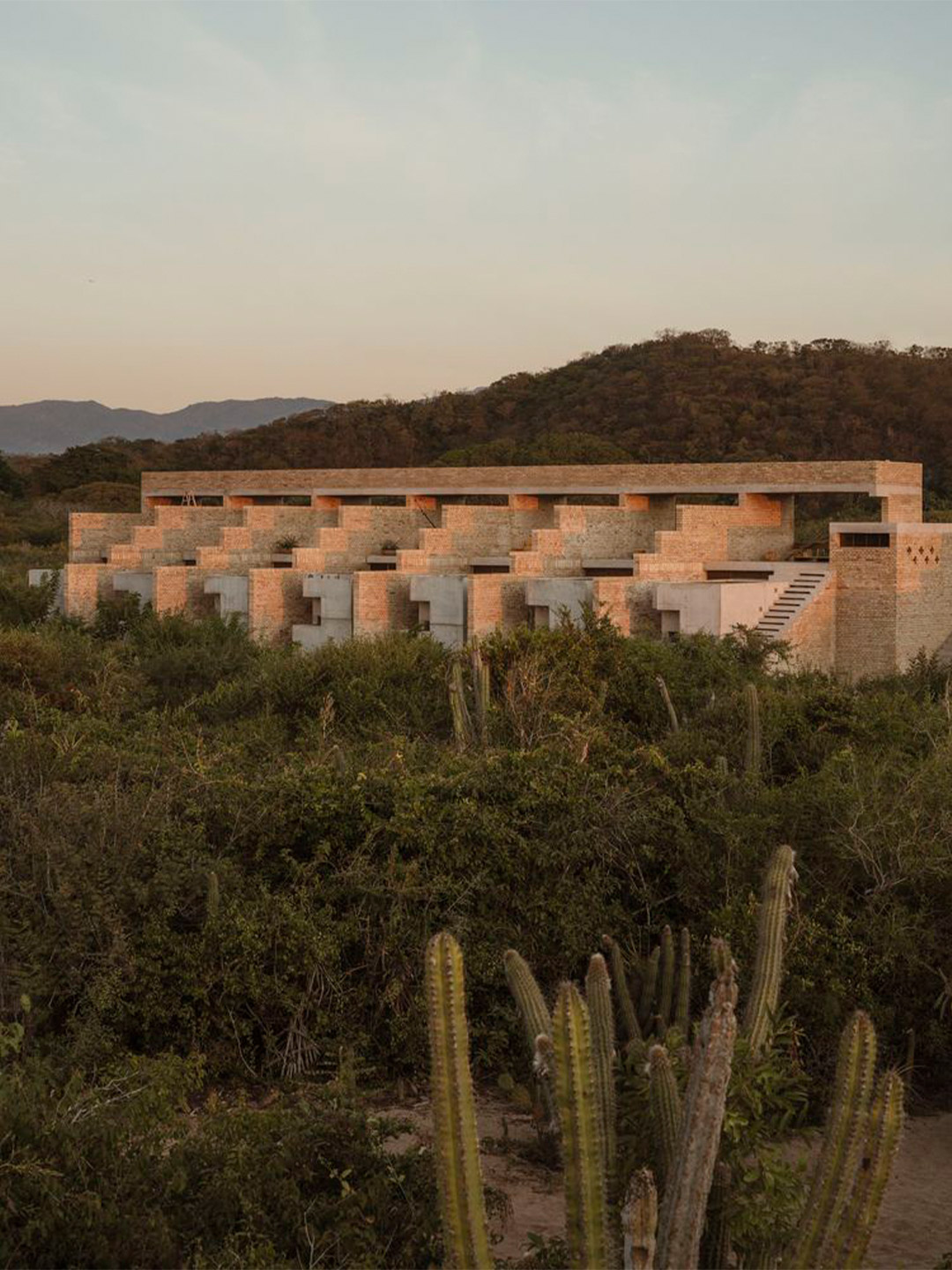
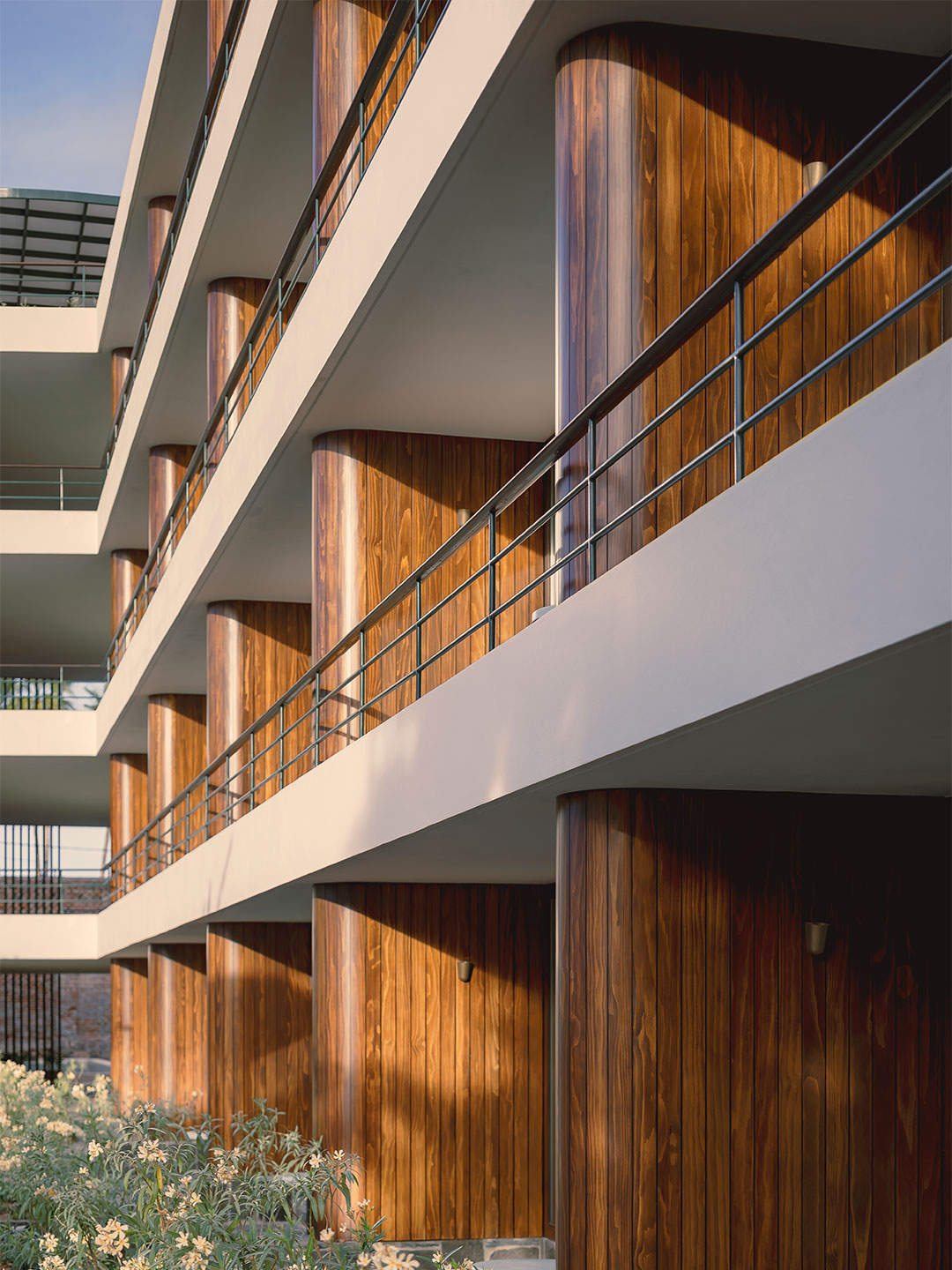
One of the latest establishments to pop-up in the state of Oaxaca, Hotel Terrestre is an architect-composed invitation to discover the southwestern coast of Mexico. But the designer destination is not only a paradise for culture-loving travellers. Intimately situated between the glittering beaches of Puerto Escondido and its impressive mountain ranges, the hotel takes the experience of sustainable tourism to new heights. Relying entirely on solar power, Terrestre encourages its guests to temporarily breakup with technology and reconnect with nature, synchronising their days with the cycle of the sun rather than the demands of wifi networks, blue-lit screens and hand-held devices.
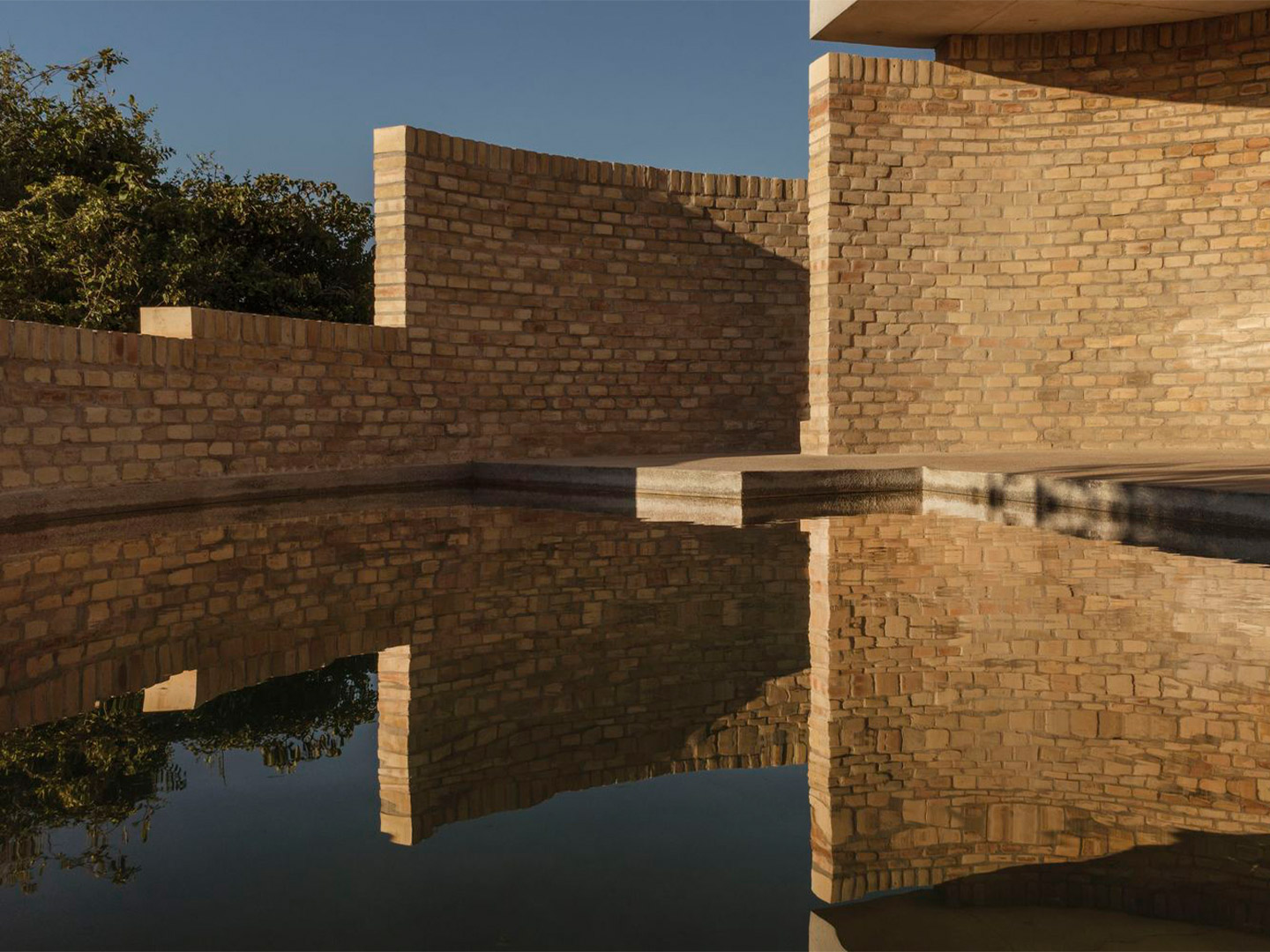
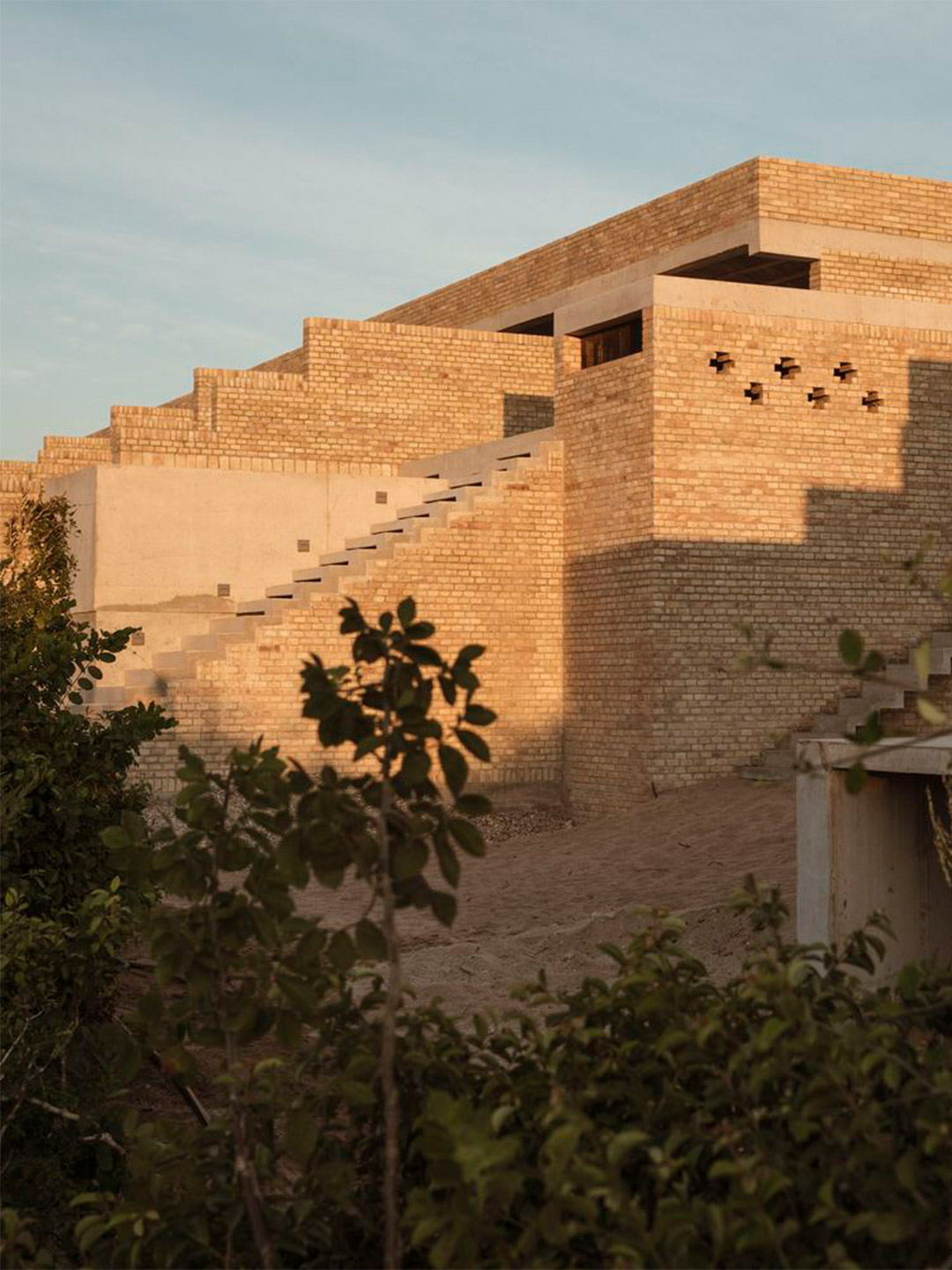
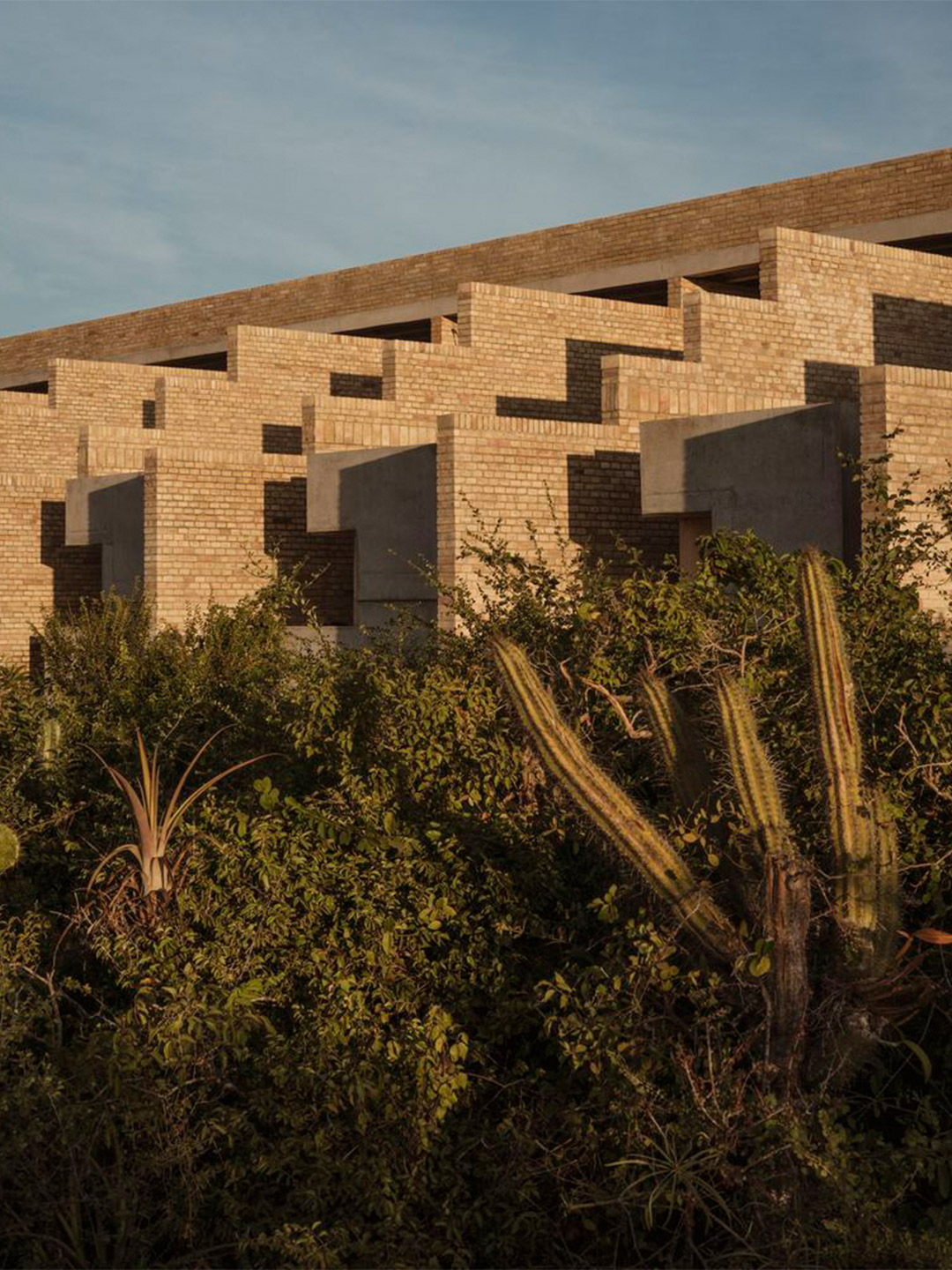
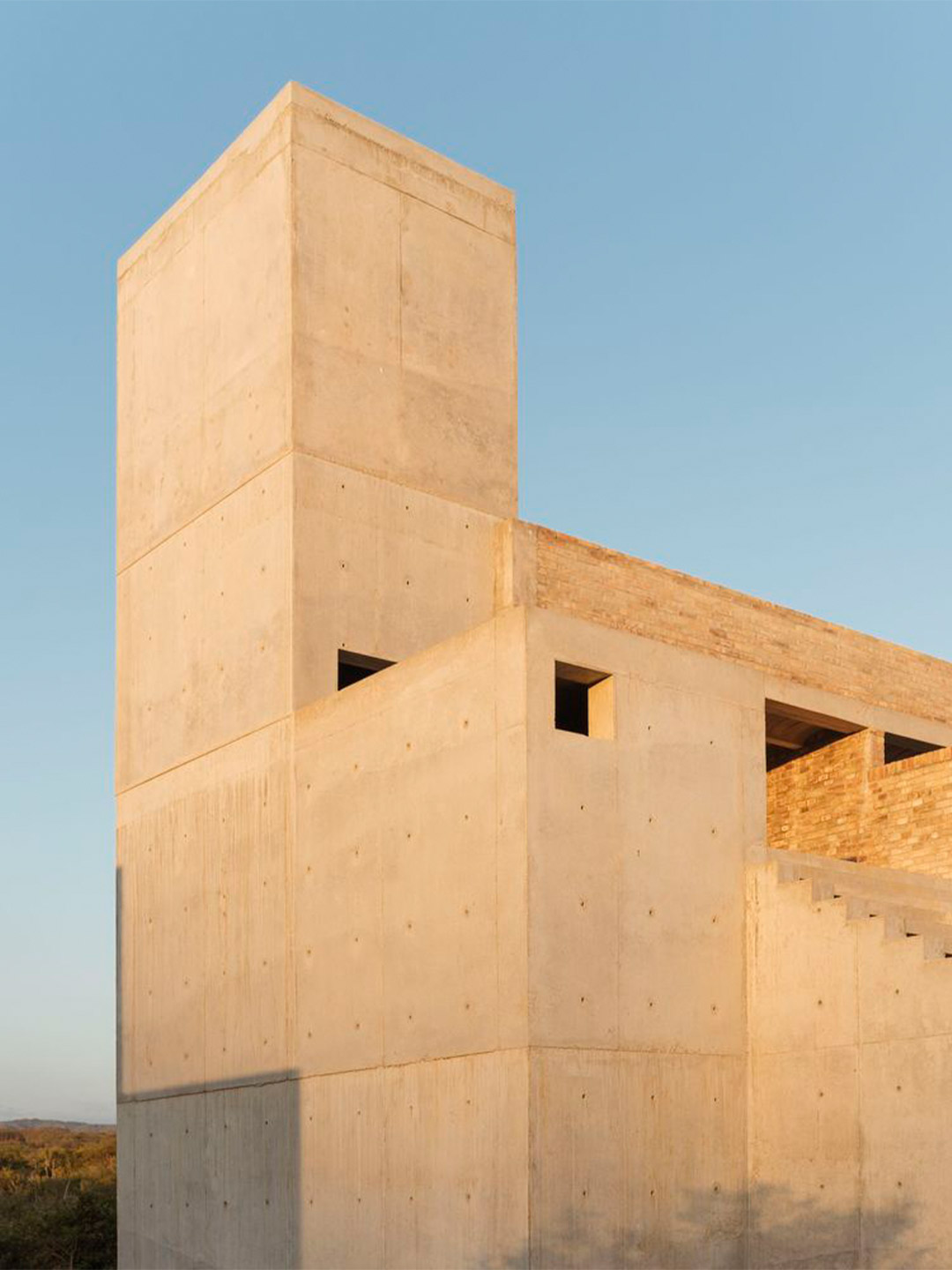
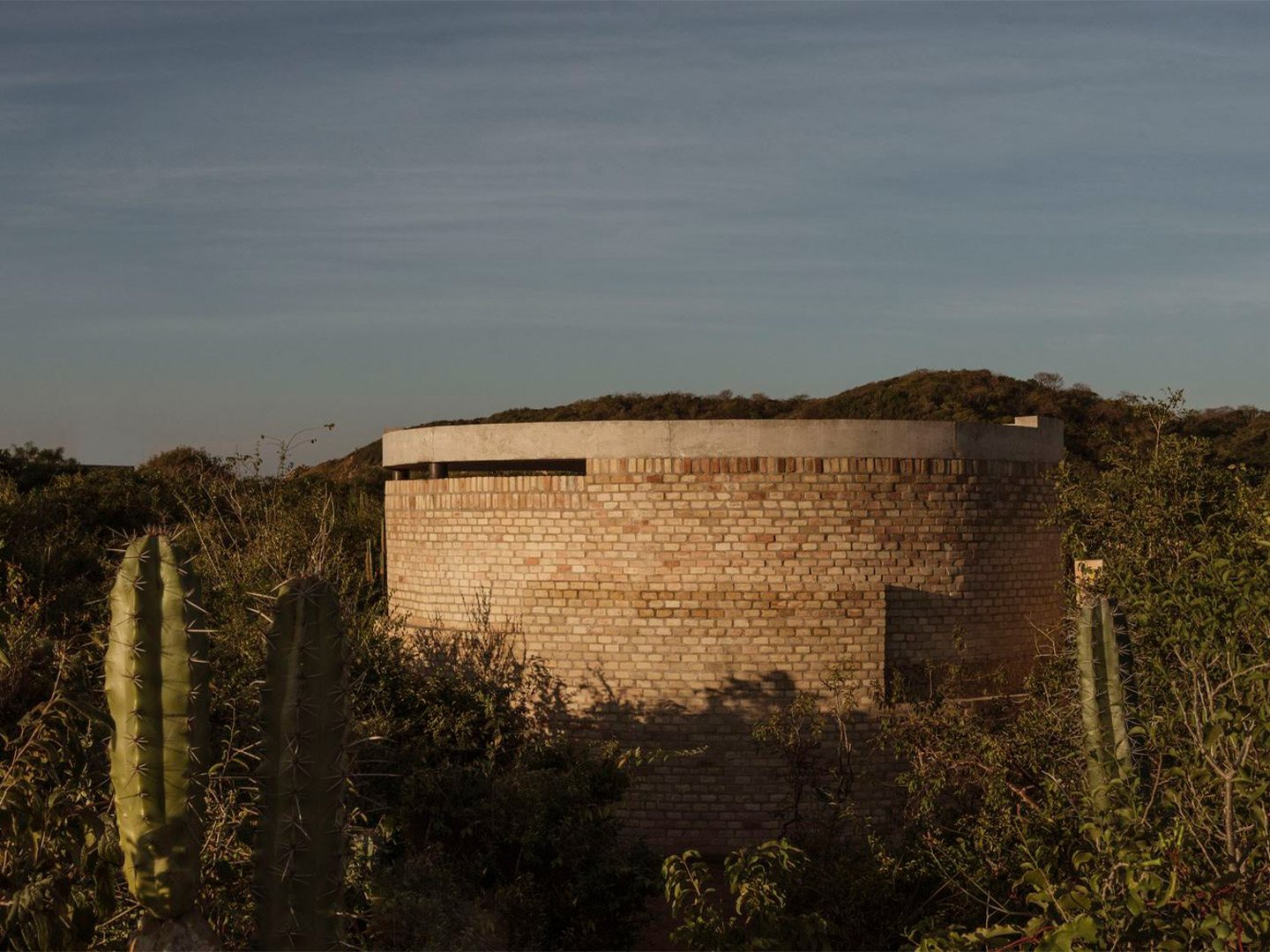
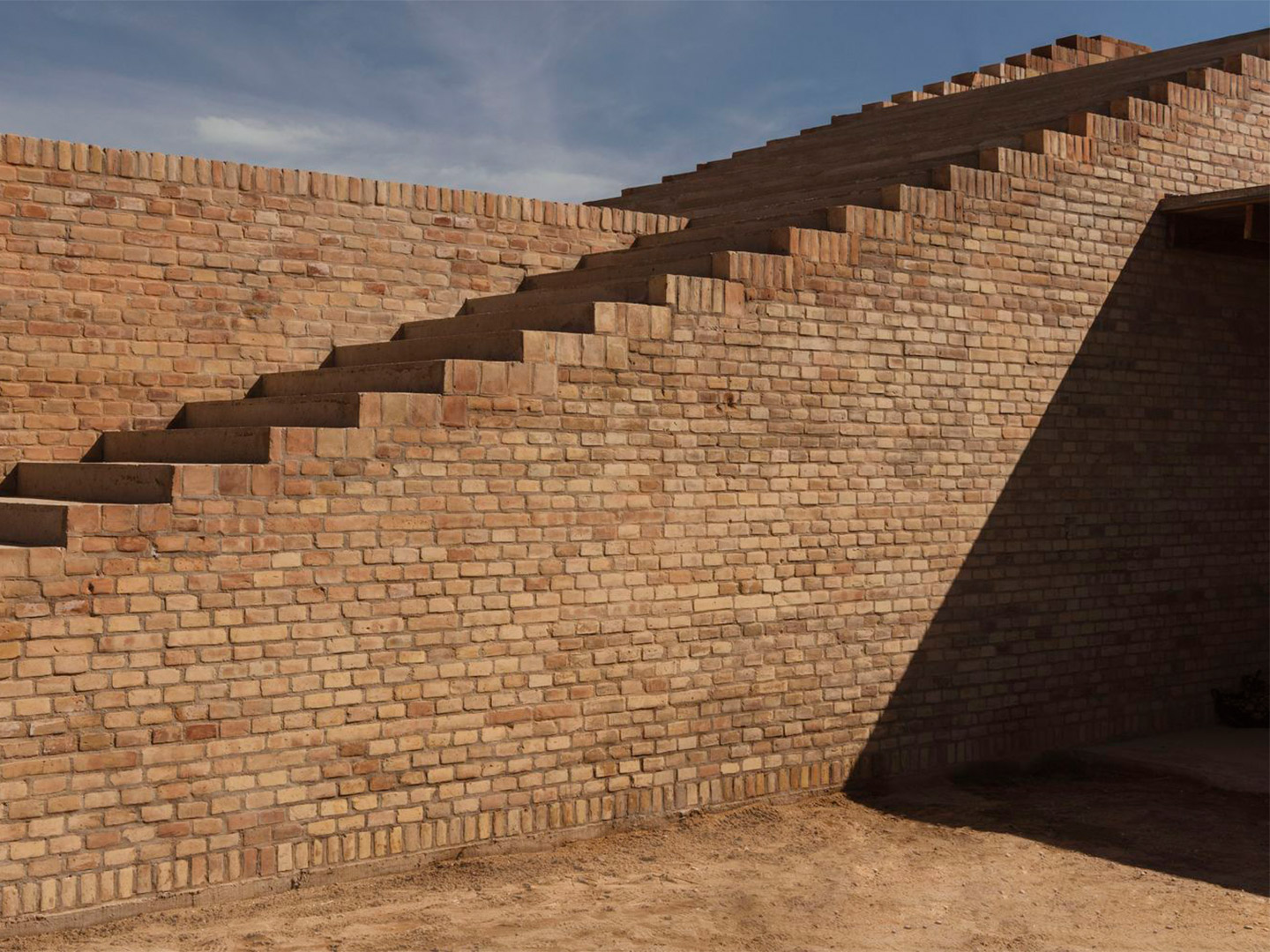
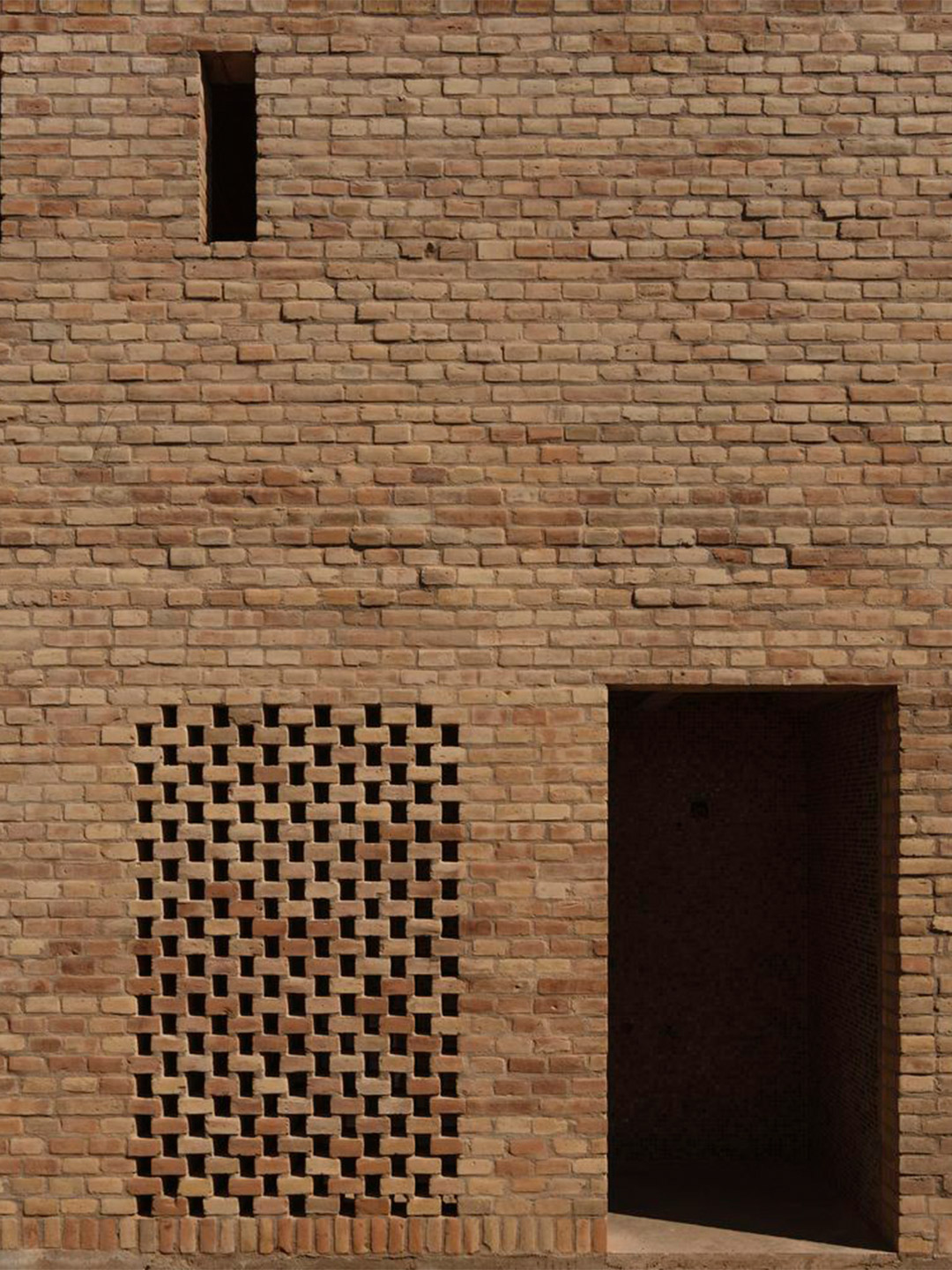
As the newest member of the Grupo Habita family of lifestyle hotels, Terrestre’s sustainable ethos and commitment to providing a “sanctuary of rest and relaxation” makes it an ideal getaway for rejuvenation. Architect Alberto Kalach and his team at Taller de Arquitectura X (known simply as TAX) took the client’s vision for the retreat and translated it into an idyllic contemporary oasis, constructed entirely of locally sourced materials including sand-coloured brick. Furthermore, the property embraces cooling methods achieved through innovative building techniques rather than relying on power hungry air-conditioning.
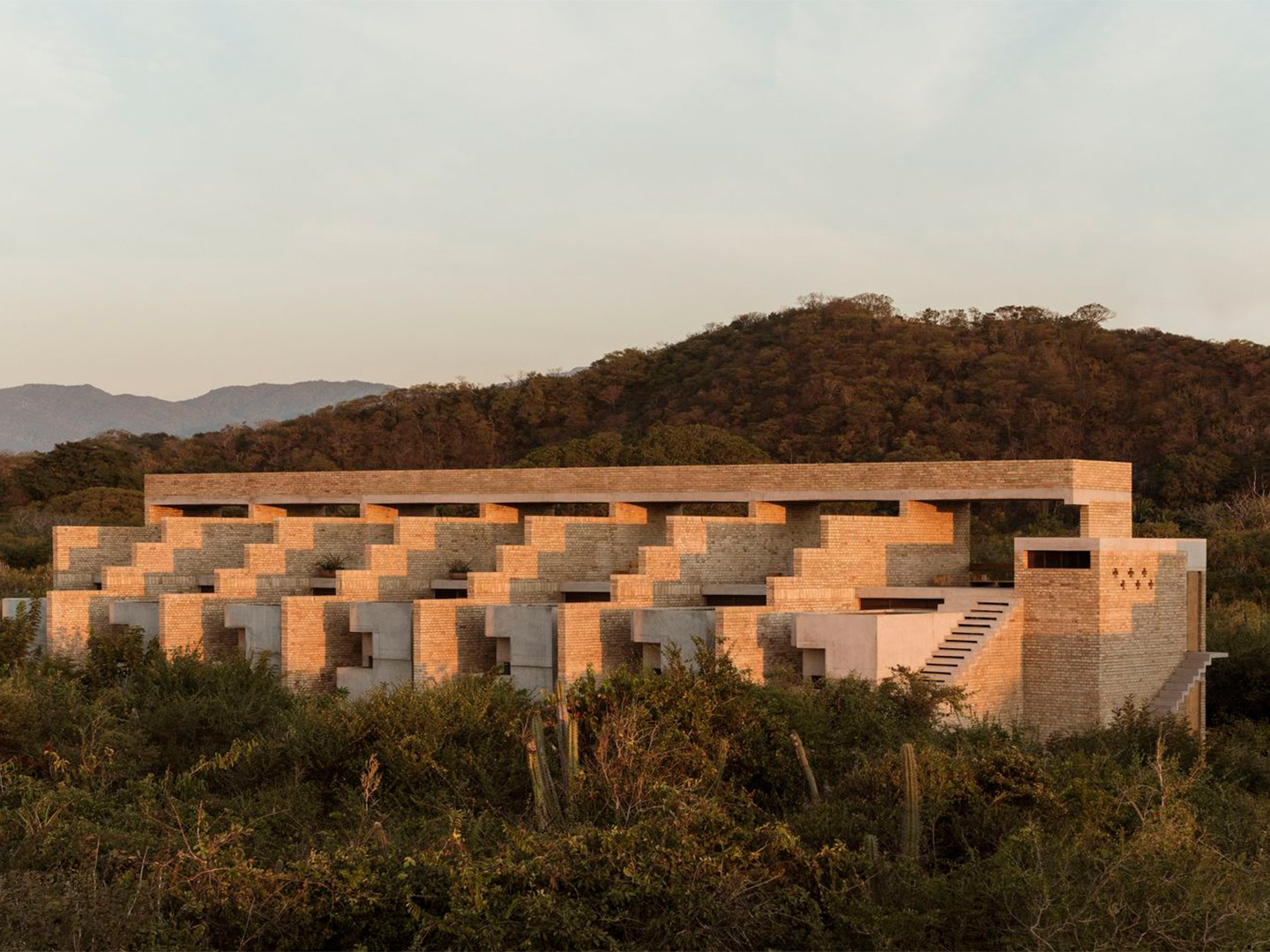
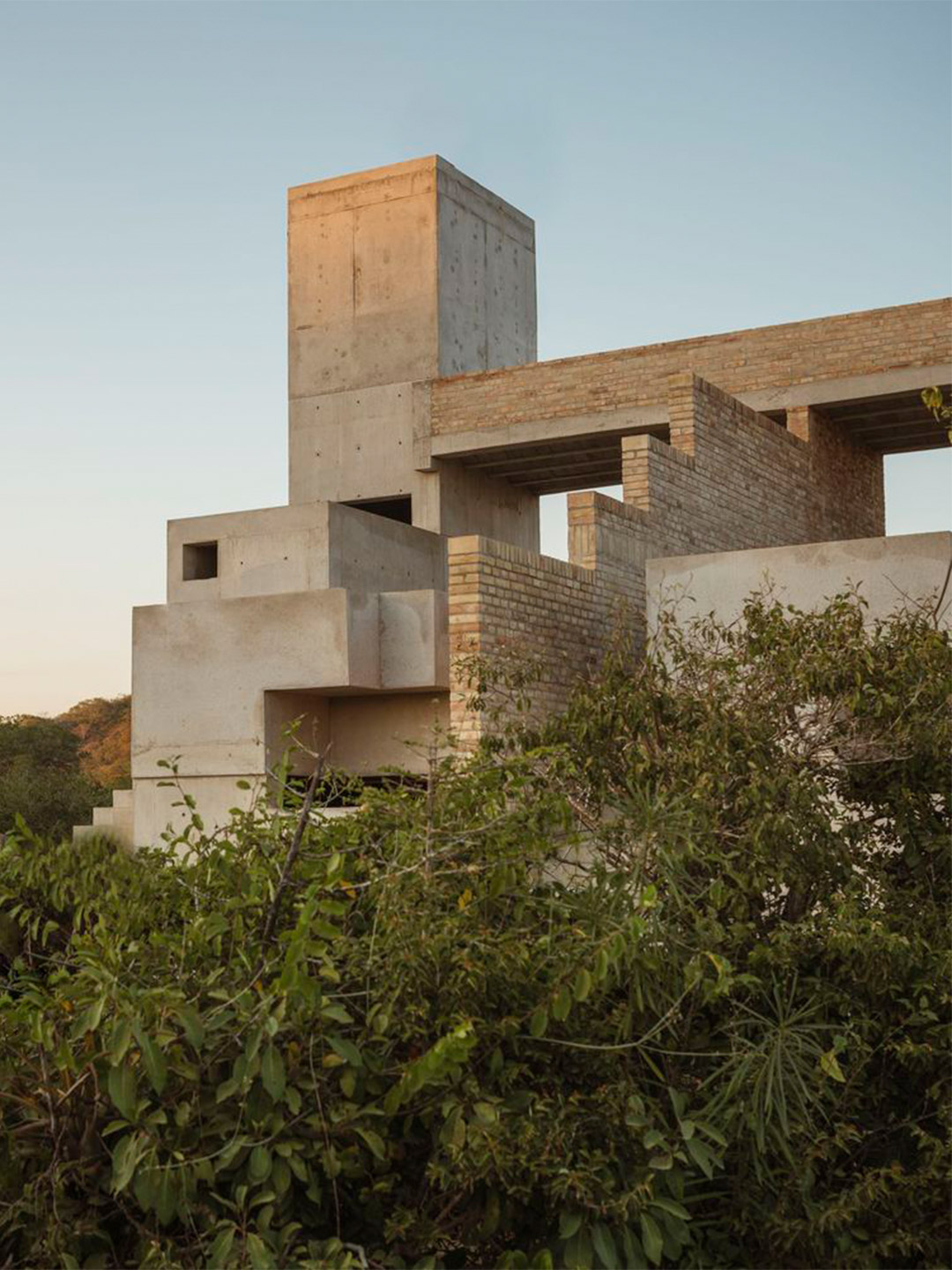
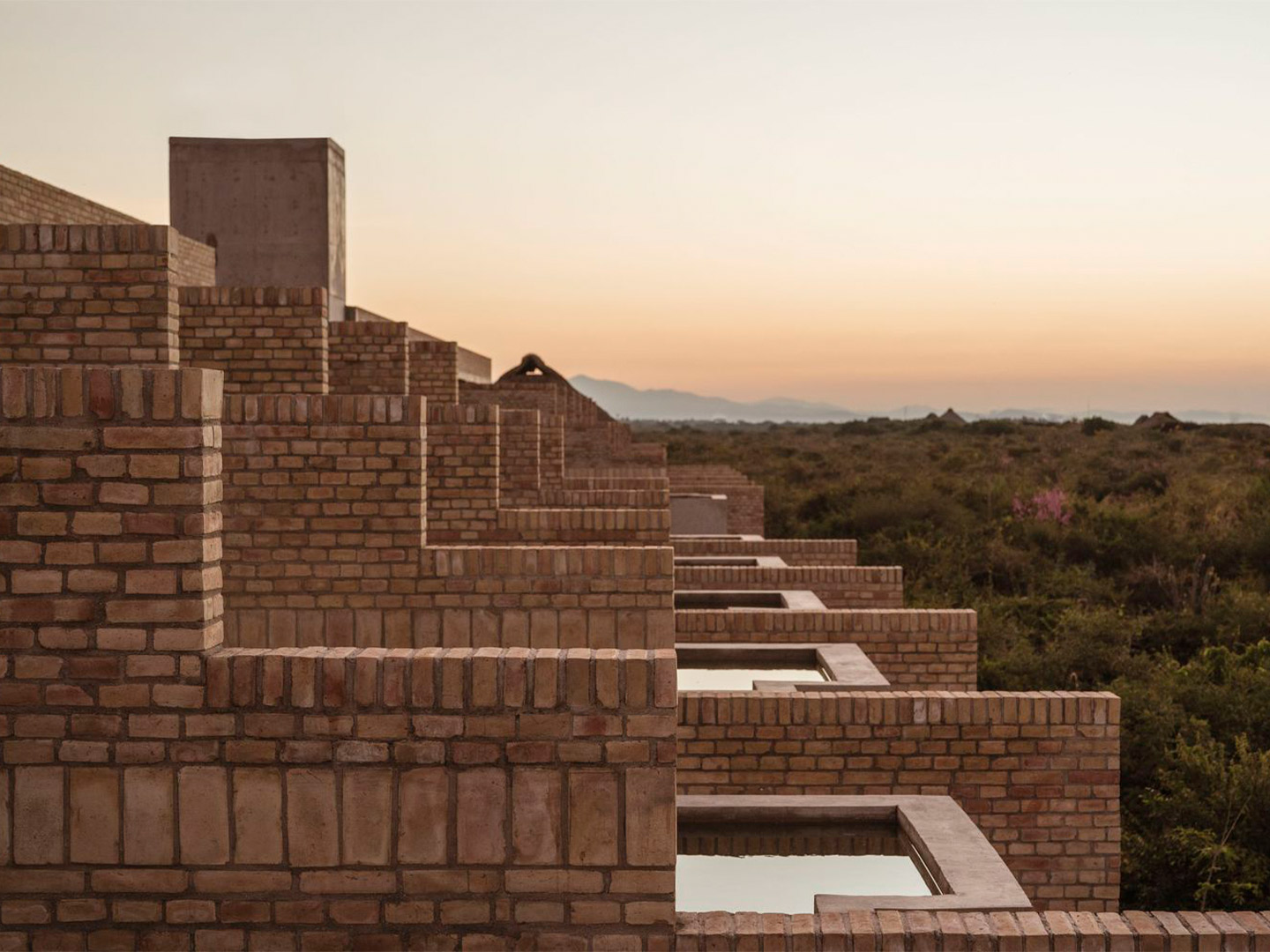
Hotel Terrestre in Mexico by Alberto Kalach/TAX
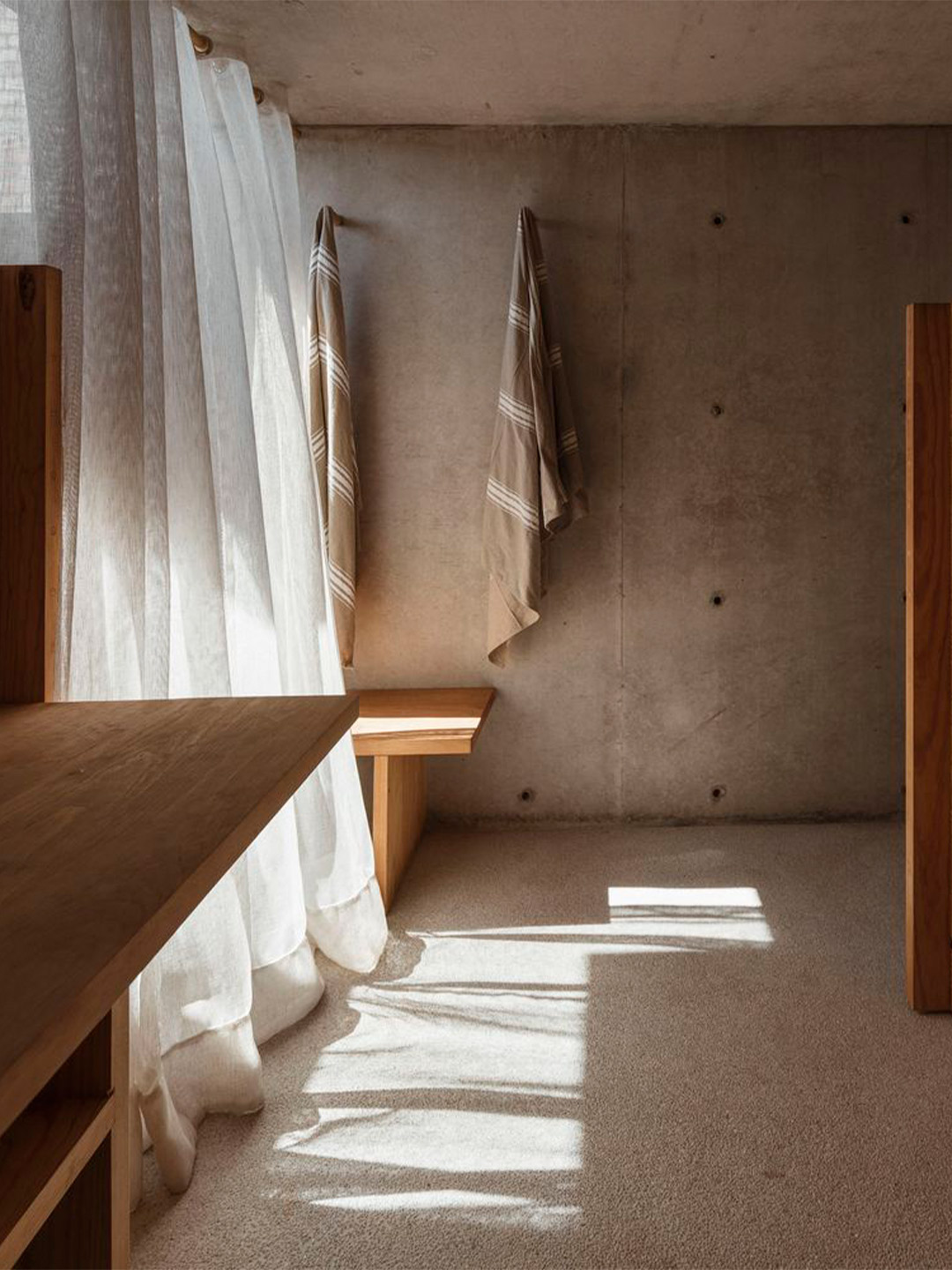
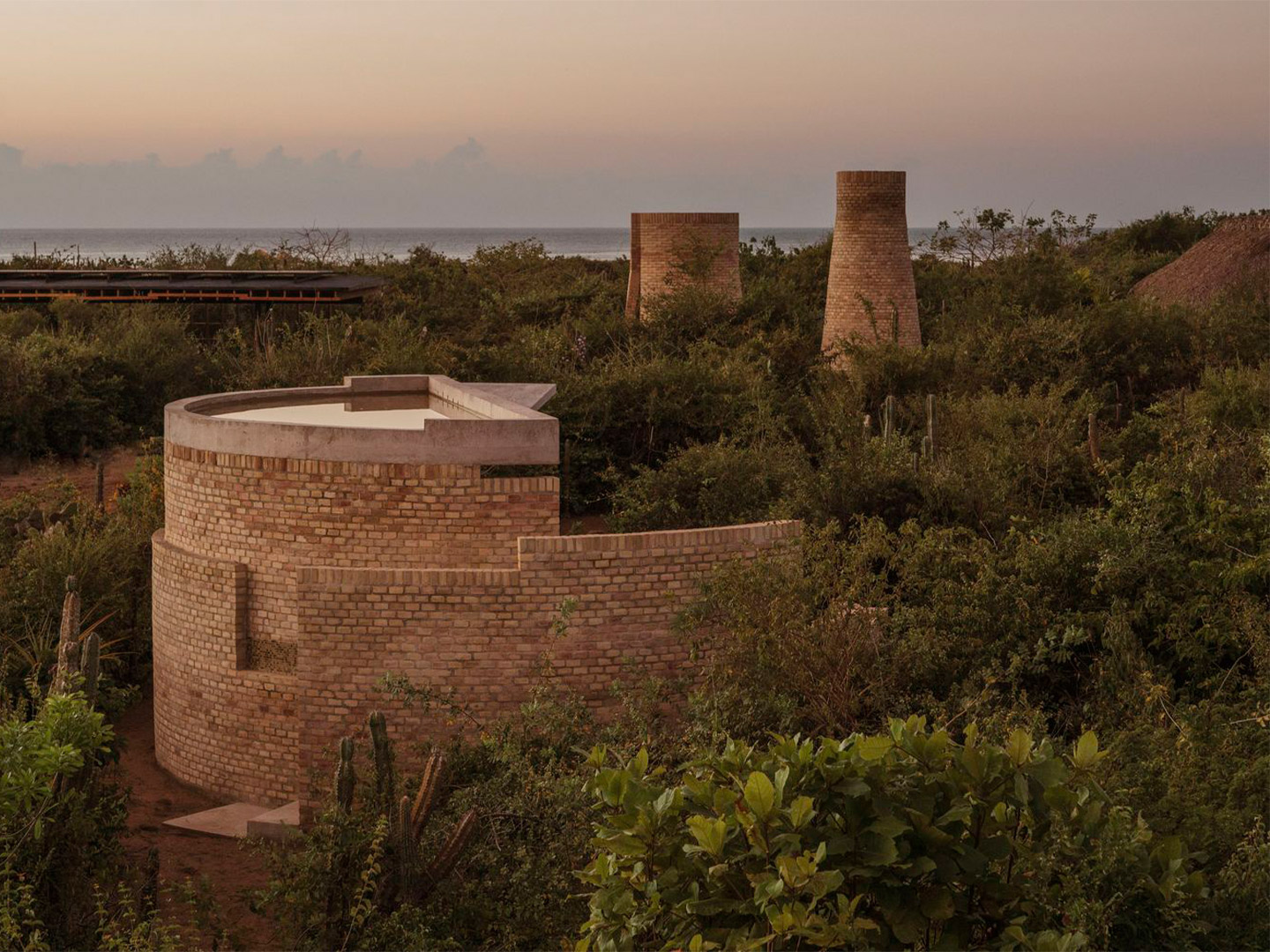
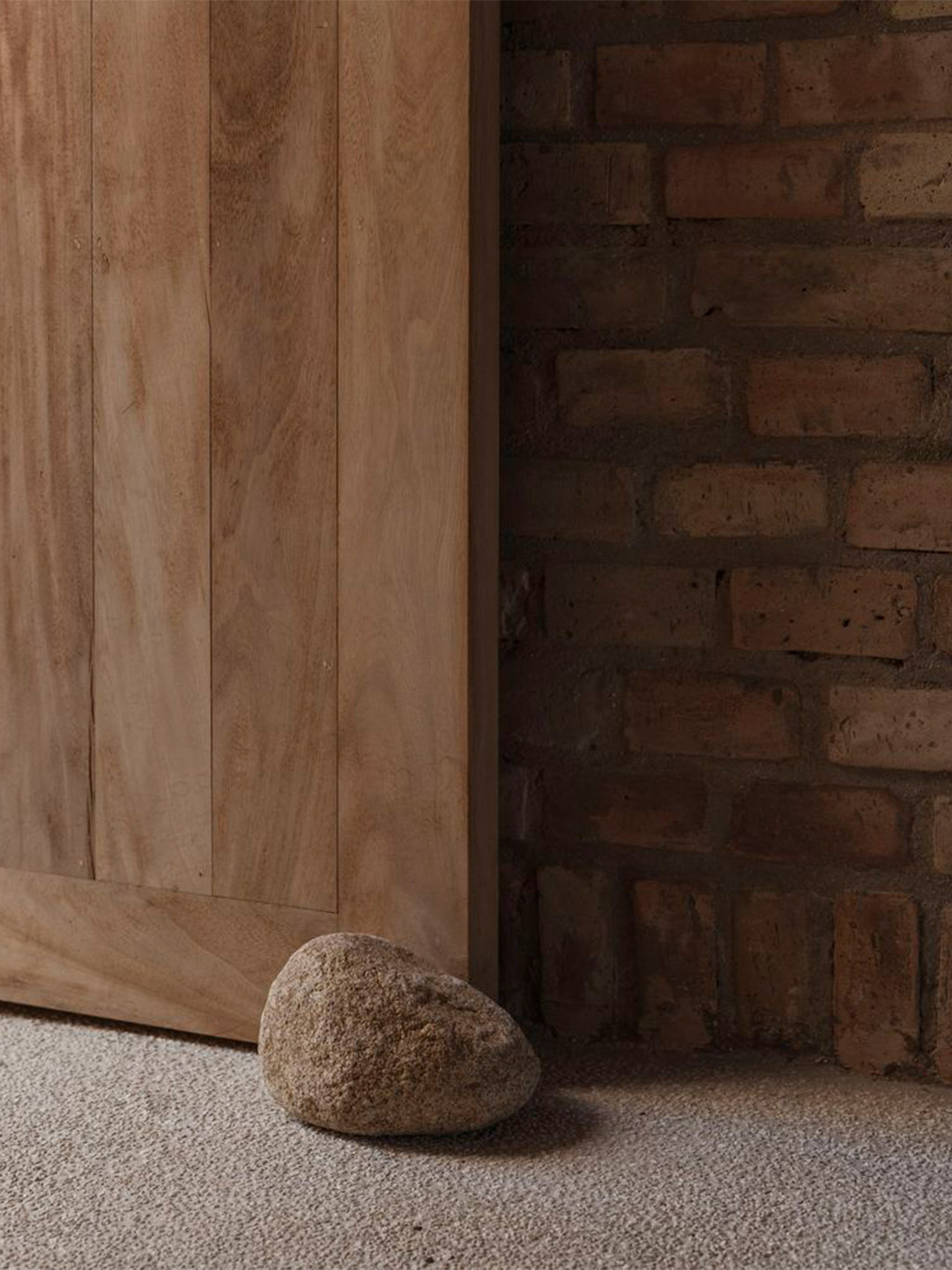
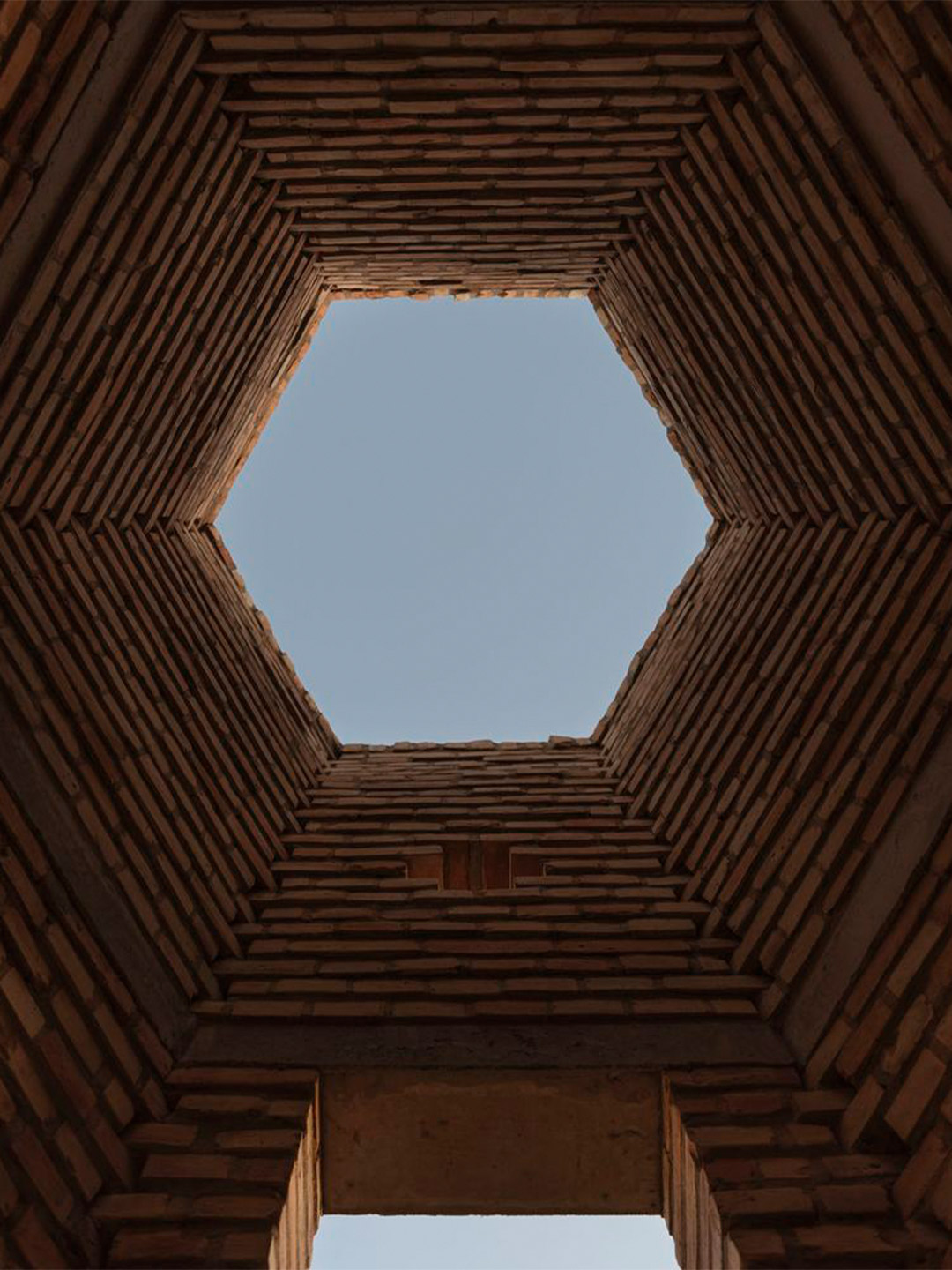
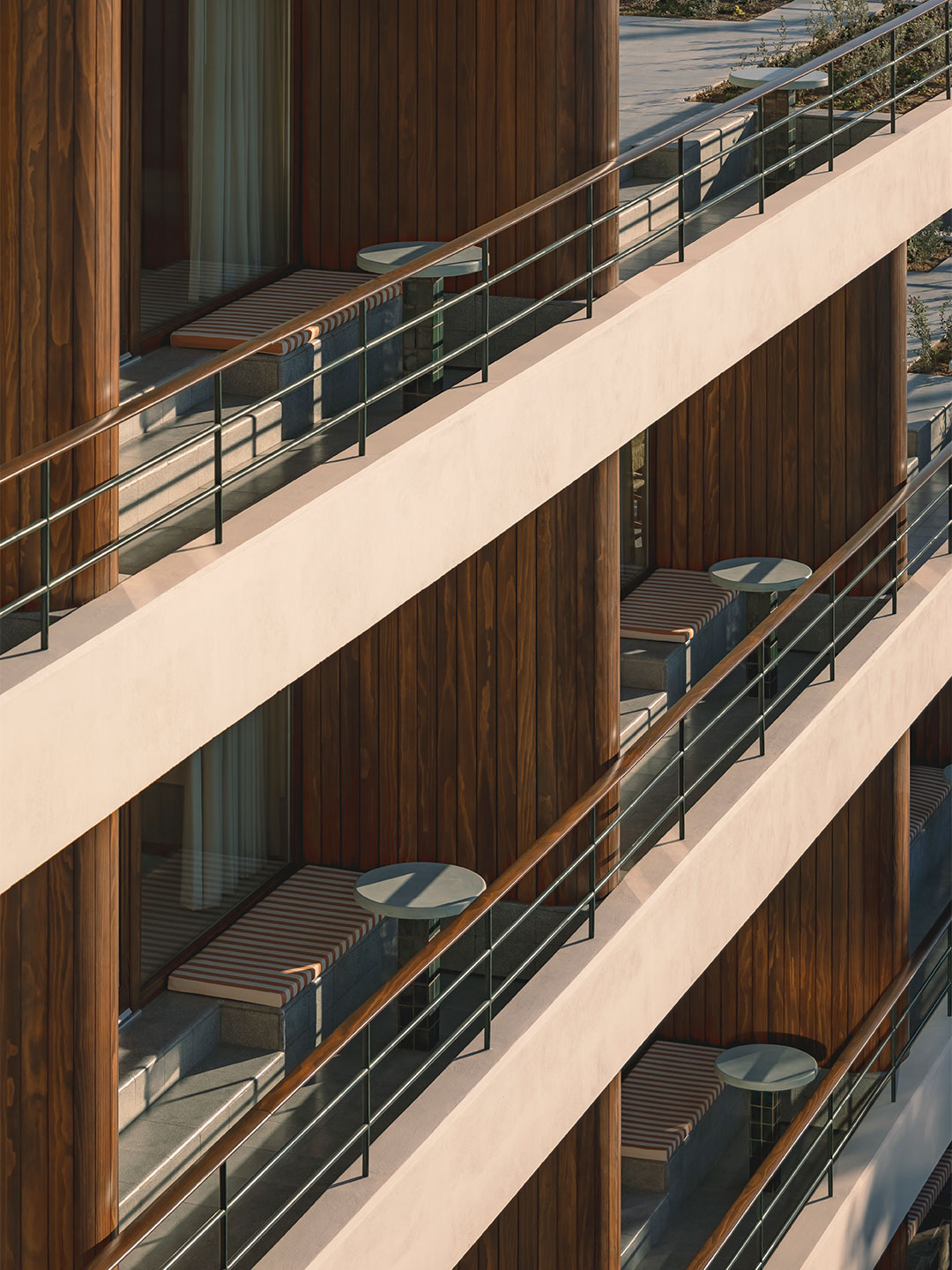
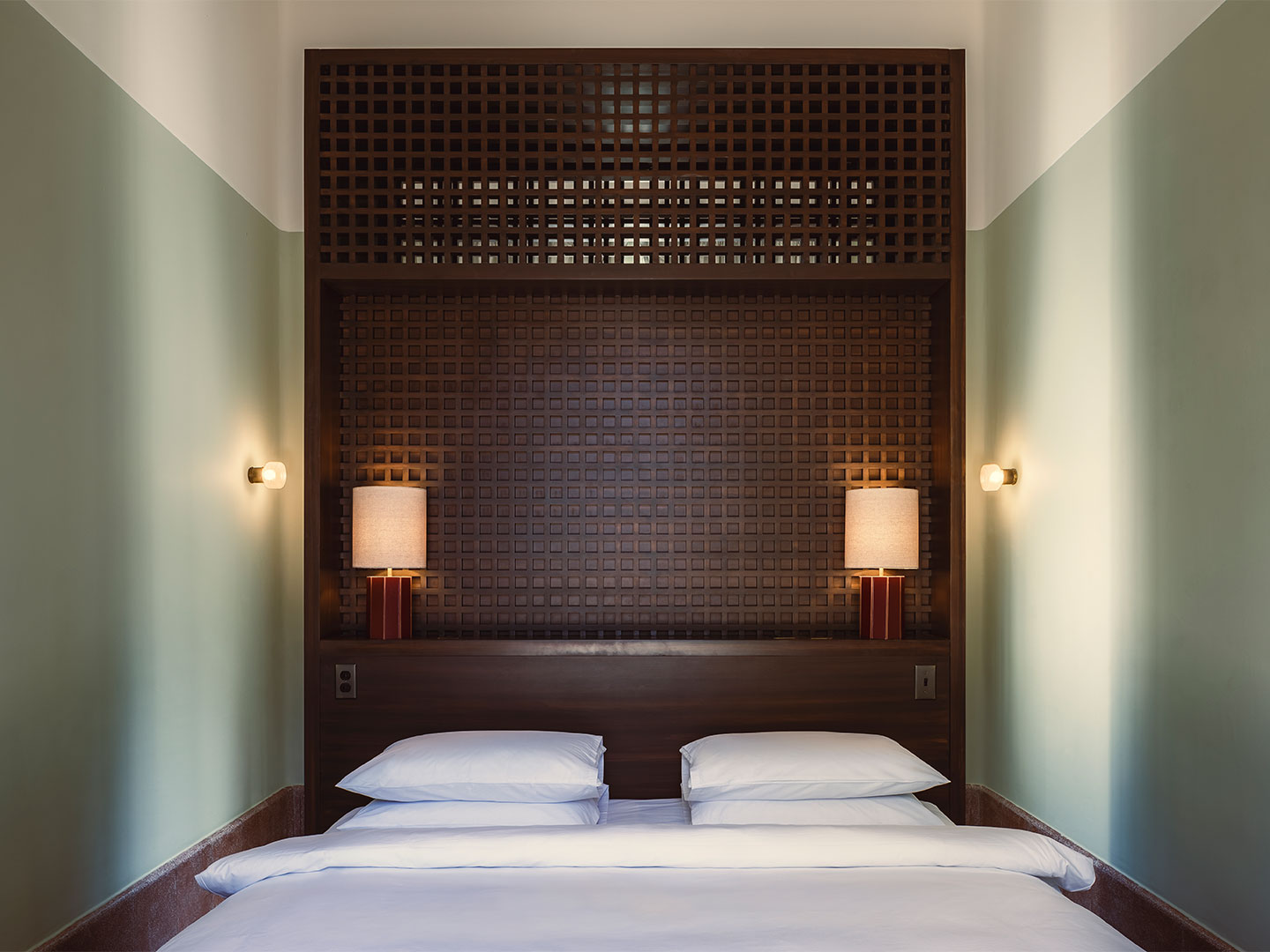
The hotel features fourteen villas, a standalone open-air restaurant, communal circular pool for treatments, a long swimming lane, and a striking hexagonal spa that contains a chilled water bathtub, steam, shower and outdoor shower. Each of the villas has its own private pool and is designed around an earthy palette of colours and textures. “Earth, wood, brick and concrete are delicately combined with clay and sand to immerse visitors in a unique spatial experience,” says the hotel team. “[It’s a place] where nature and architecture interact almost seamlessly.”
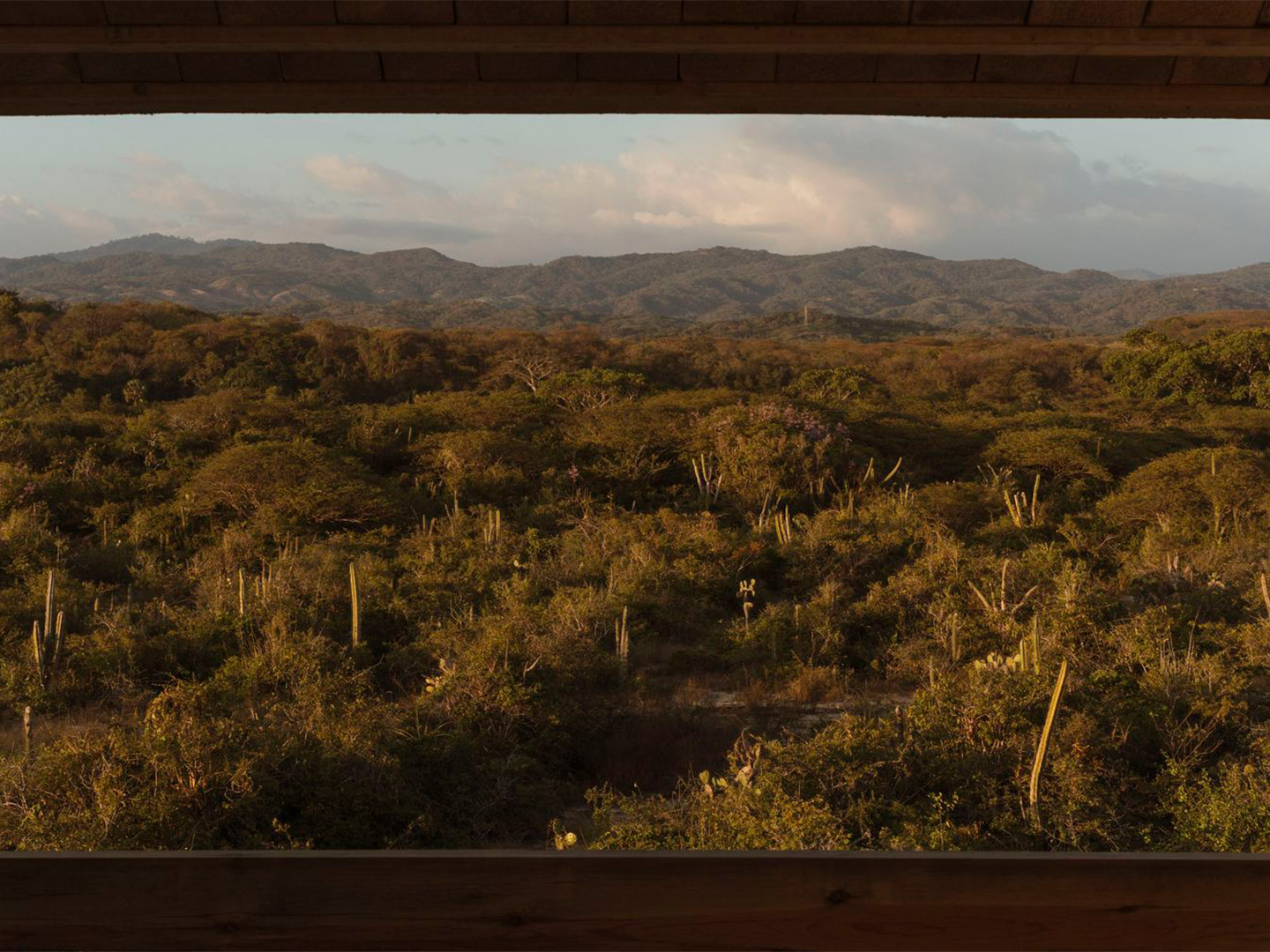
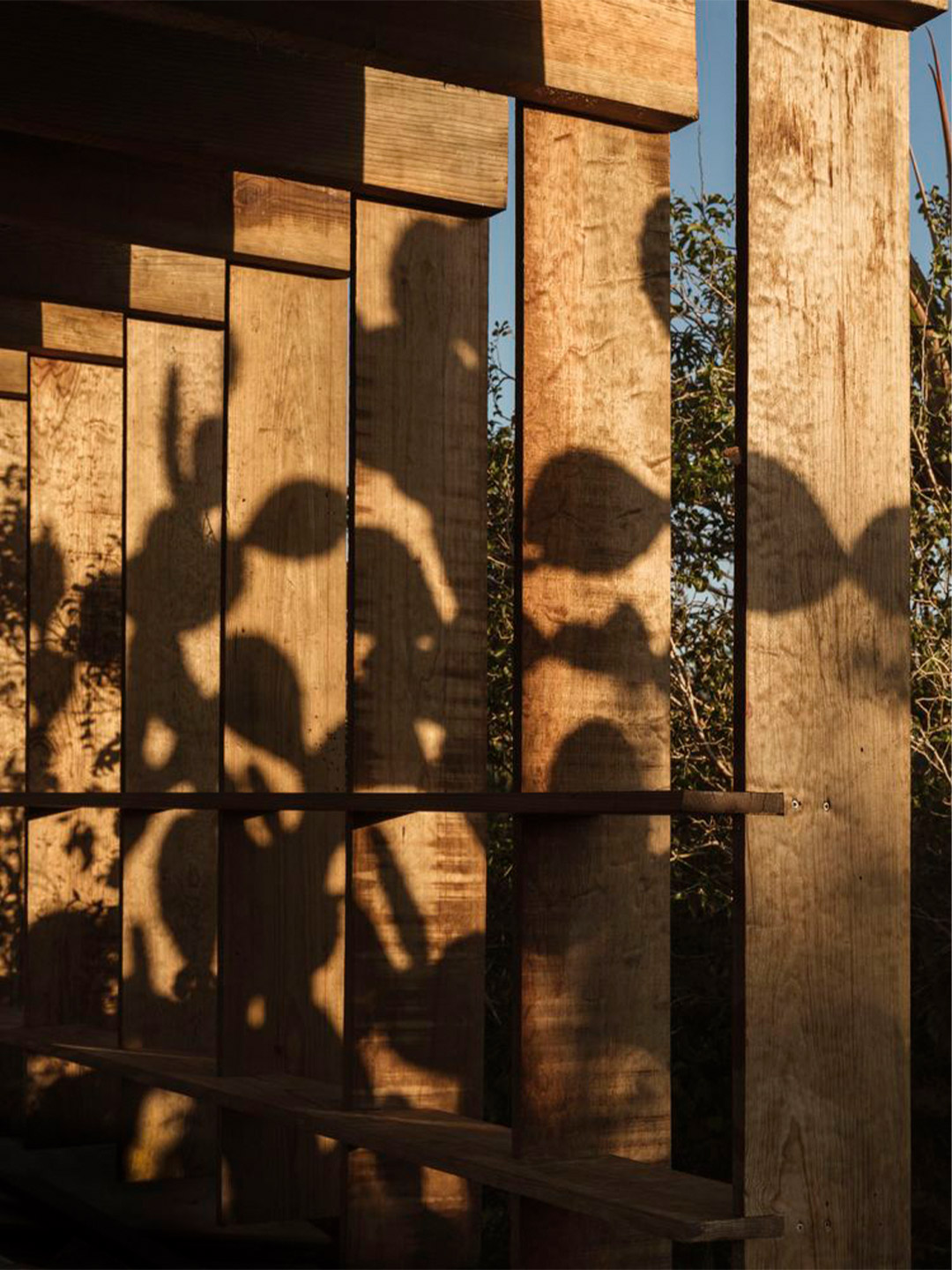
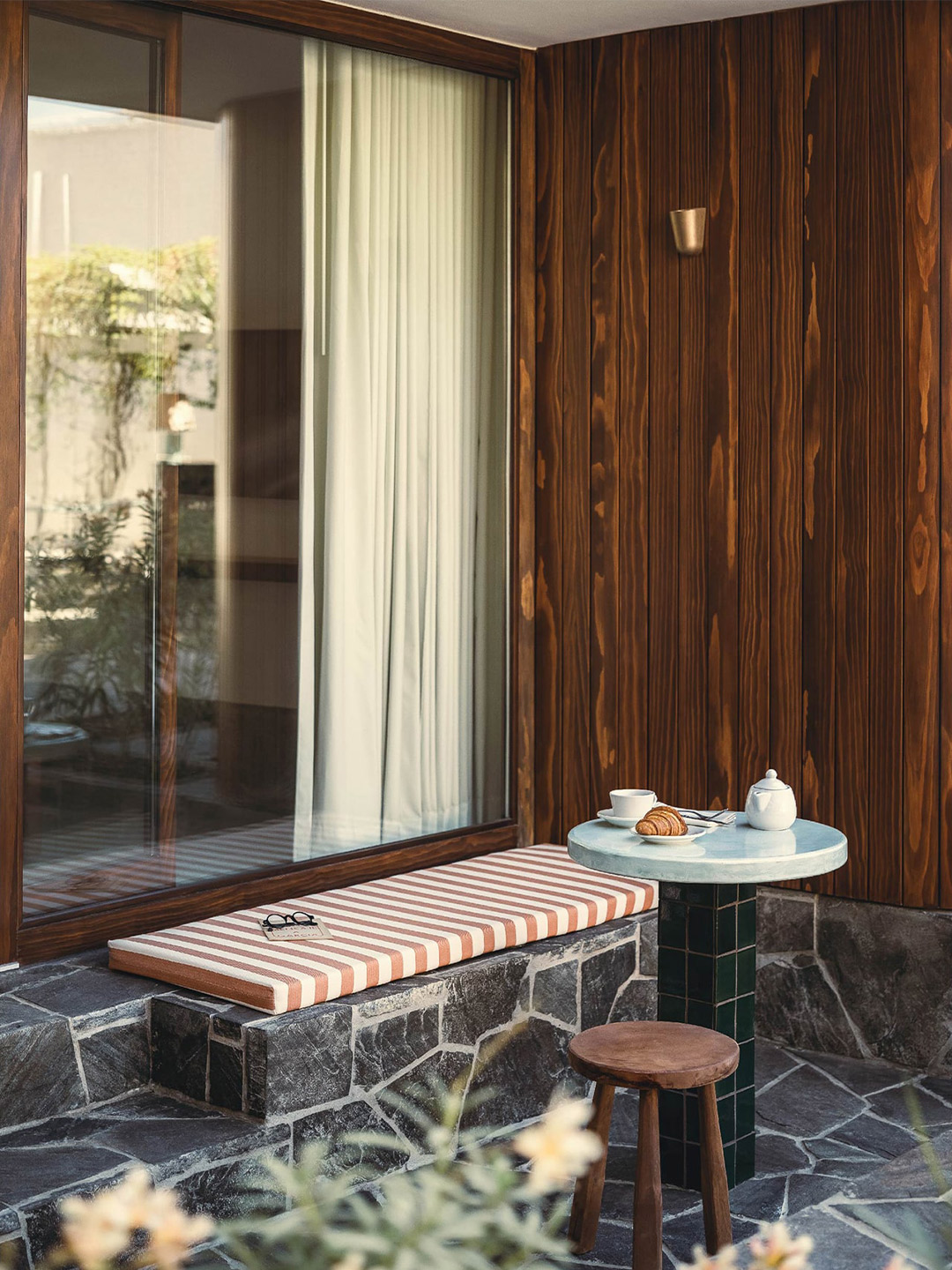
Custom-designed by celebrated Mexican architect and designer Oscar Hagerman, the furniture at Terrestre further enhances the one-of-a-kind sensorial atmosphere. The interior spaces of the villas merge harmoniously with the outside areas through a series of slatted timber doors and windows that open to lush private gardens and terraces, while also framing breathtaking mountain views or glimpses of the Pacific Ocean.
All the hotel’s amenities were produced by local hands and its spaces are infused with the ancient and mystical scent of copal (a light fragrance derived from the copal tree). Terrestre’s mood is inspired by an intimate dialogue with its natural surroundings – from its overall architectural statement to the smallest detail, the design blends quietly with the site’s seaside landscape. “Thus, water, flora, light, and air become intrinsic elements of Terrestre’s design,” explains the hotel team.
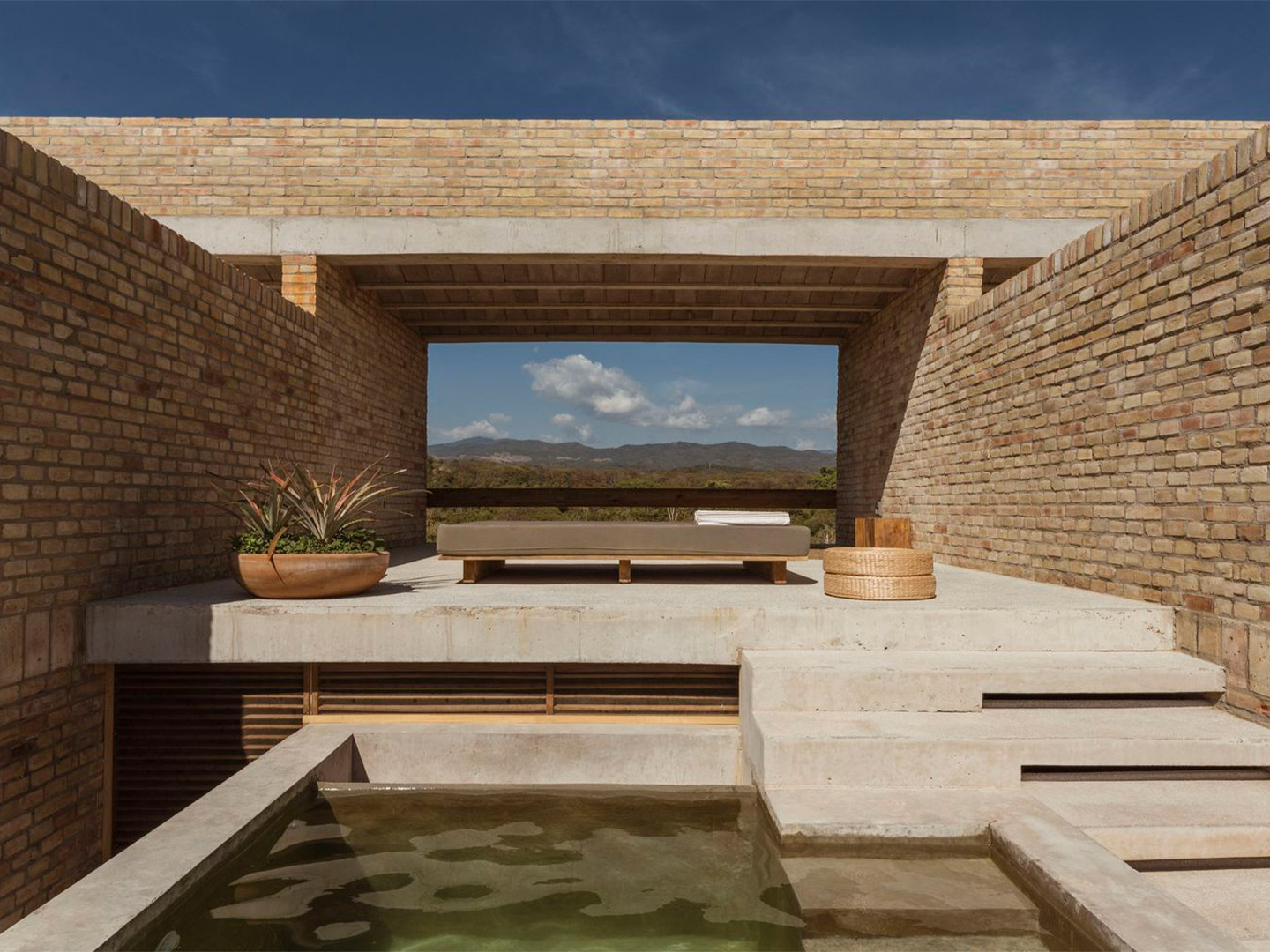
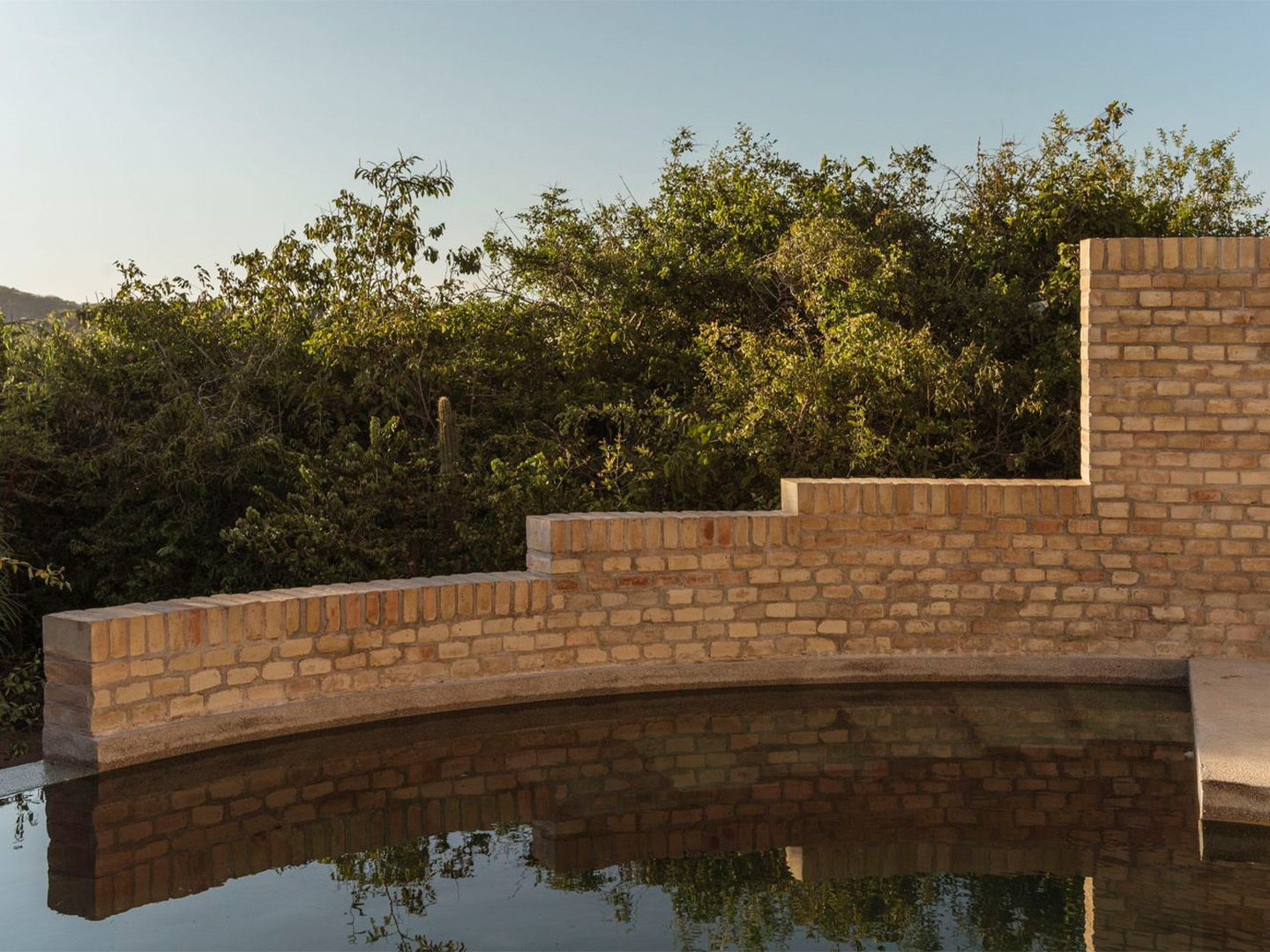
Beyond the stepped brick walls of the hotel, the Puerto Escondido region – one of the jewels in Mexico’s tourism crown – offers an endless array of both natural and cultural wonders for guests to discover. In addition to its pristine beaches (such as Zicatela Beach, renowned for its Mexican Pipeline surf break), Puerto Escondido provides an opportunity to experience the best of Oaxaca’s rich heritage. This includes impressive archeological sites and heart-stopping landscapes, world-famous cuisine, a burgeoning design scene and distinctive handicrafts.
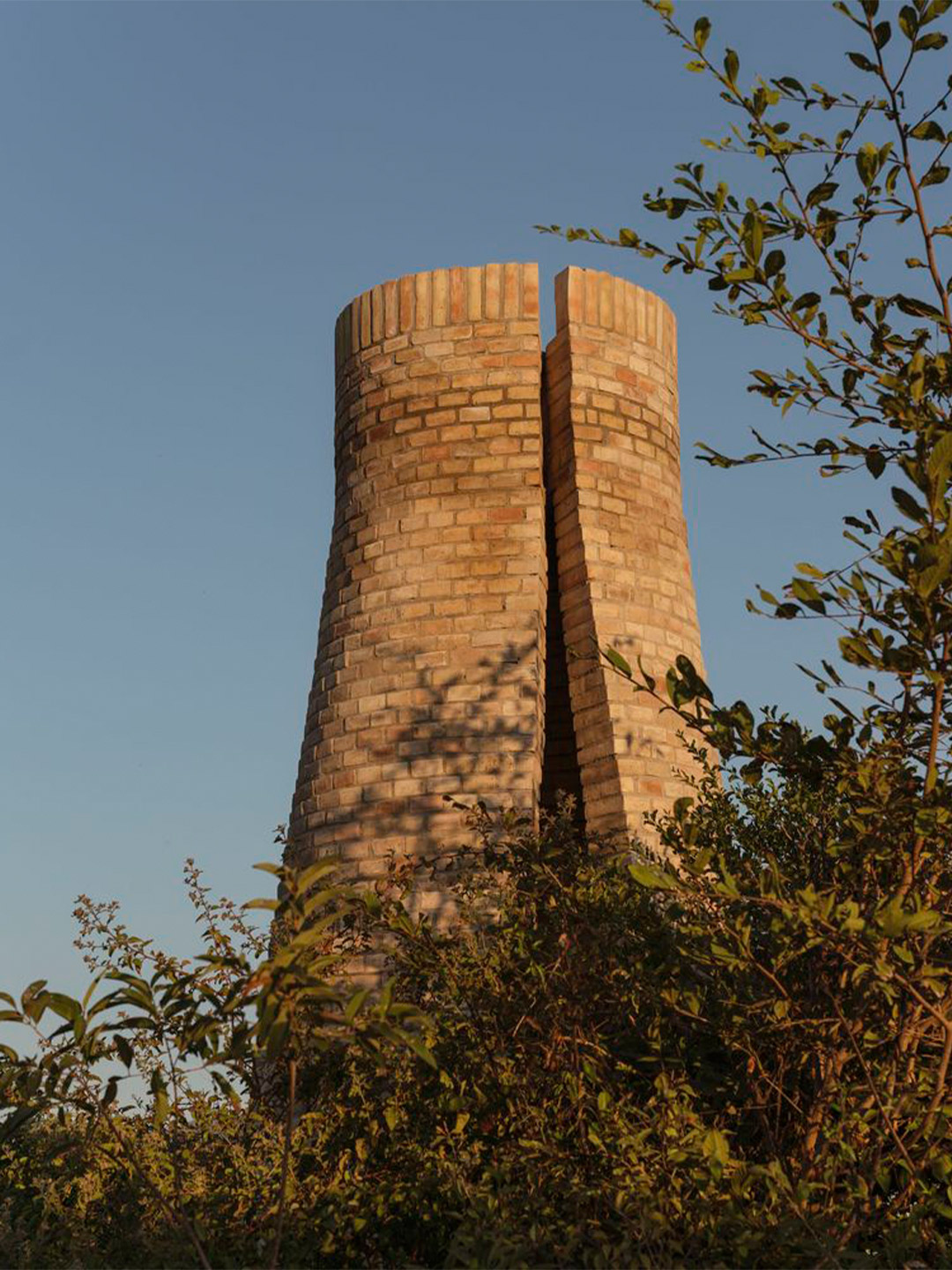
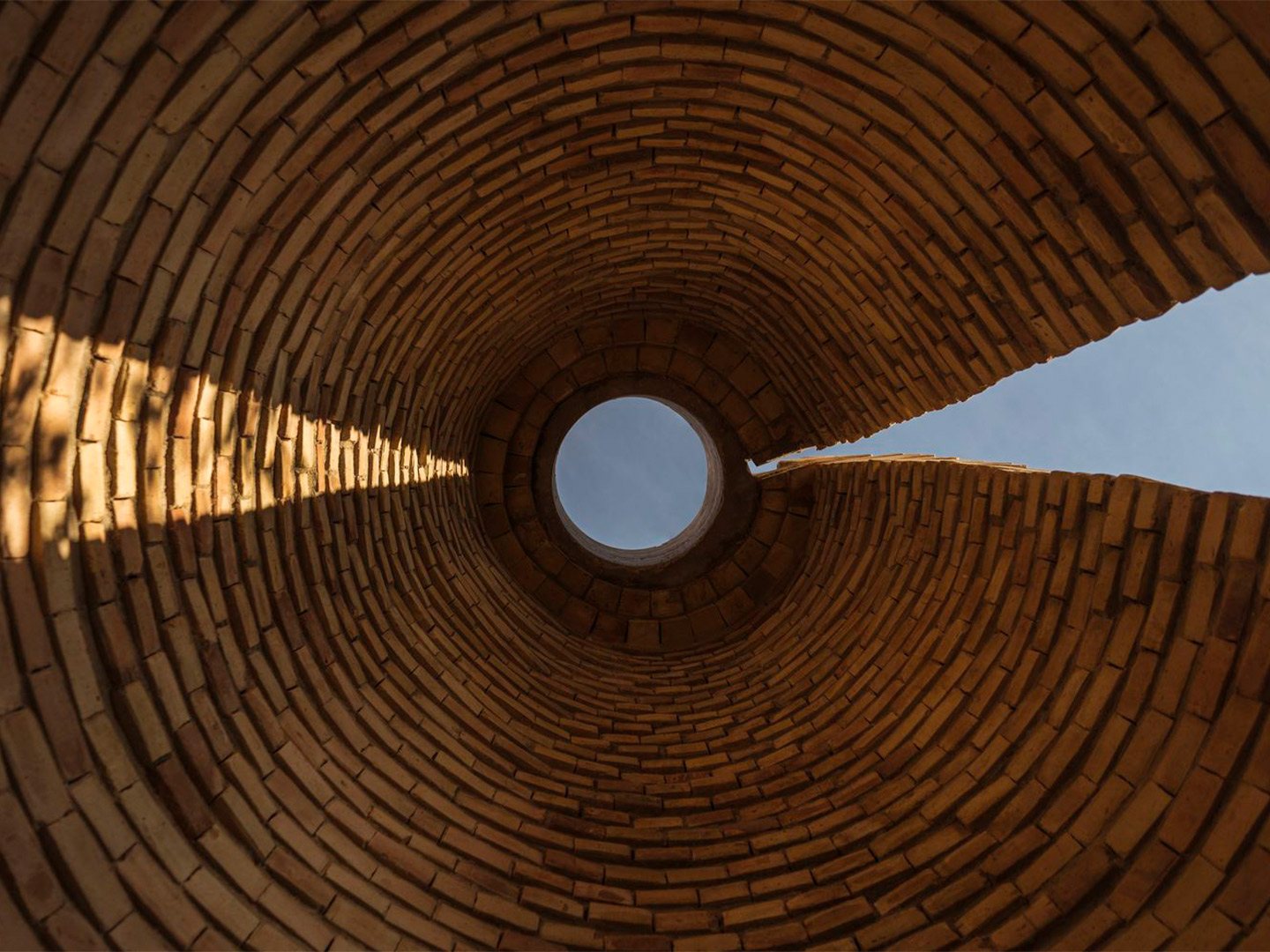
Terrestre is situated alongside cultural spaces such as Casa Wabi, a sprawling compound with a Tadao Ando–designed centre that hosts artist residencies and exhibitions; a ceramic workshop space with a 22-metre-tall chimney designed by Taller de Arquitectura X / Alberto Kalach; and a permanent large-scale outdoor art installation by Mexican artist Bosco Sodi. Nearby are destination restaurants like Kakurega Omakase (also designed by Kalach) and small-batch mezcalerias such as Cobarde. If adventure calls, there are spots for activities including surfing, bird watching, meditating, hiking, horseback riding, luminiscencia experiences and bathing in natural hot springs.
kalach.com; terrestrehotel.com
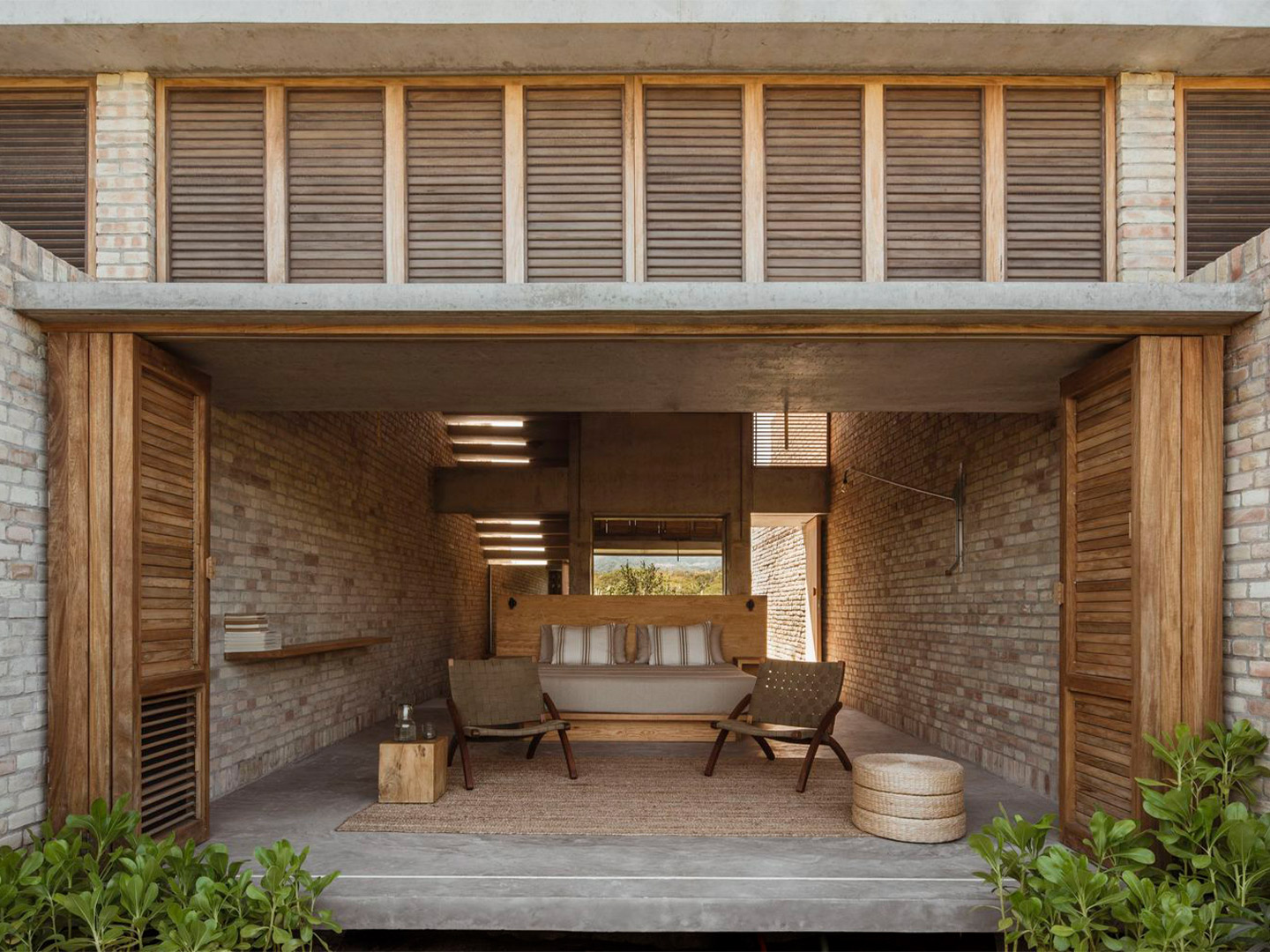
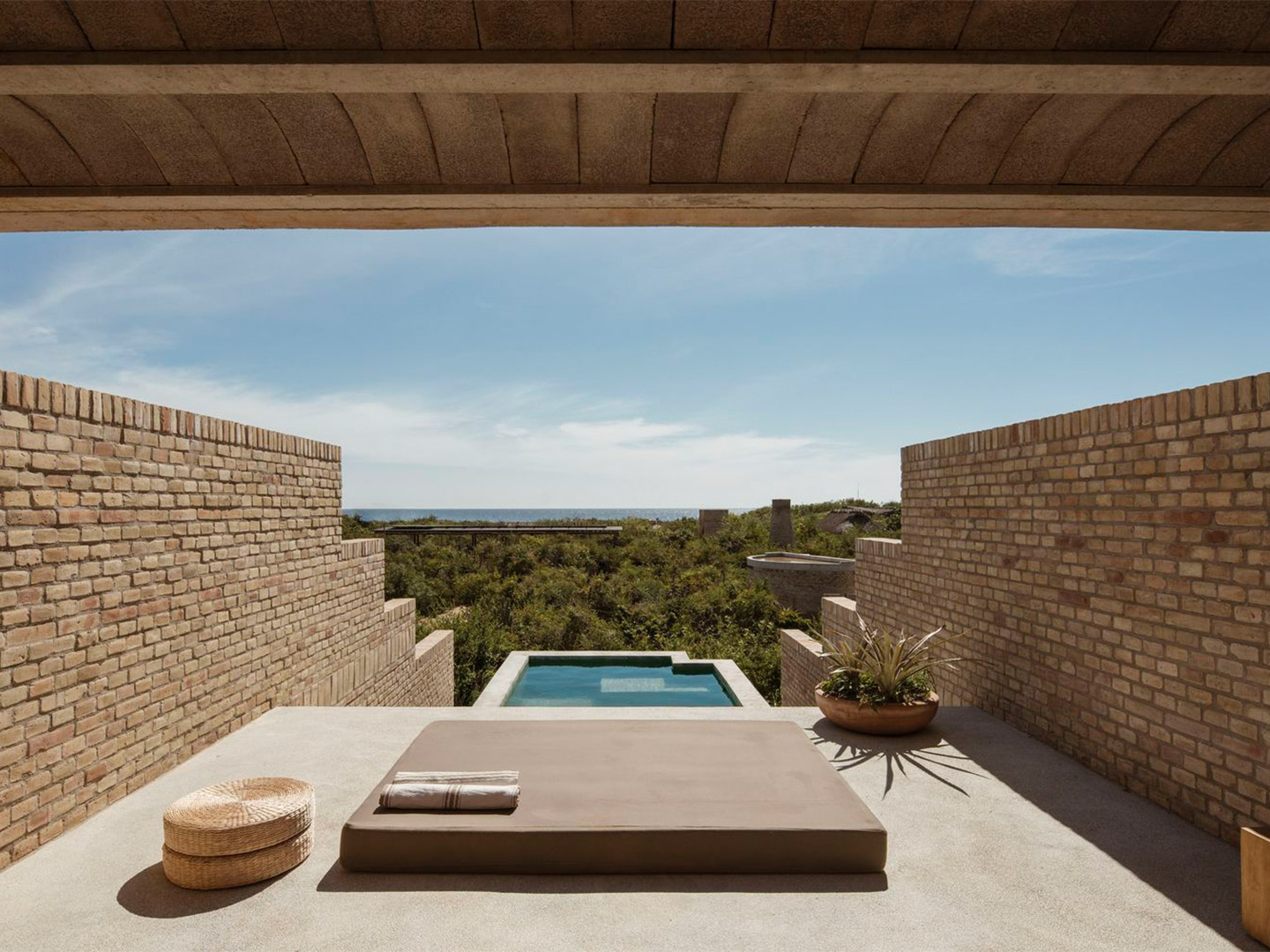
Relying entirely on solar power, the hotel encourages its guests to temporarily breakup with technology and reconnect with nature.
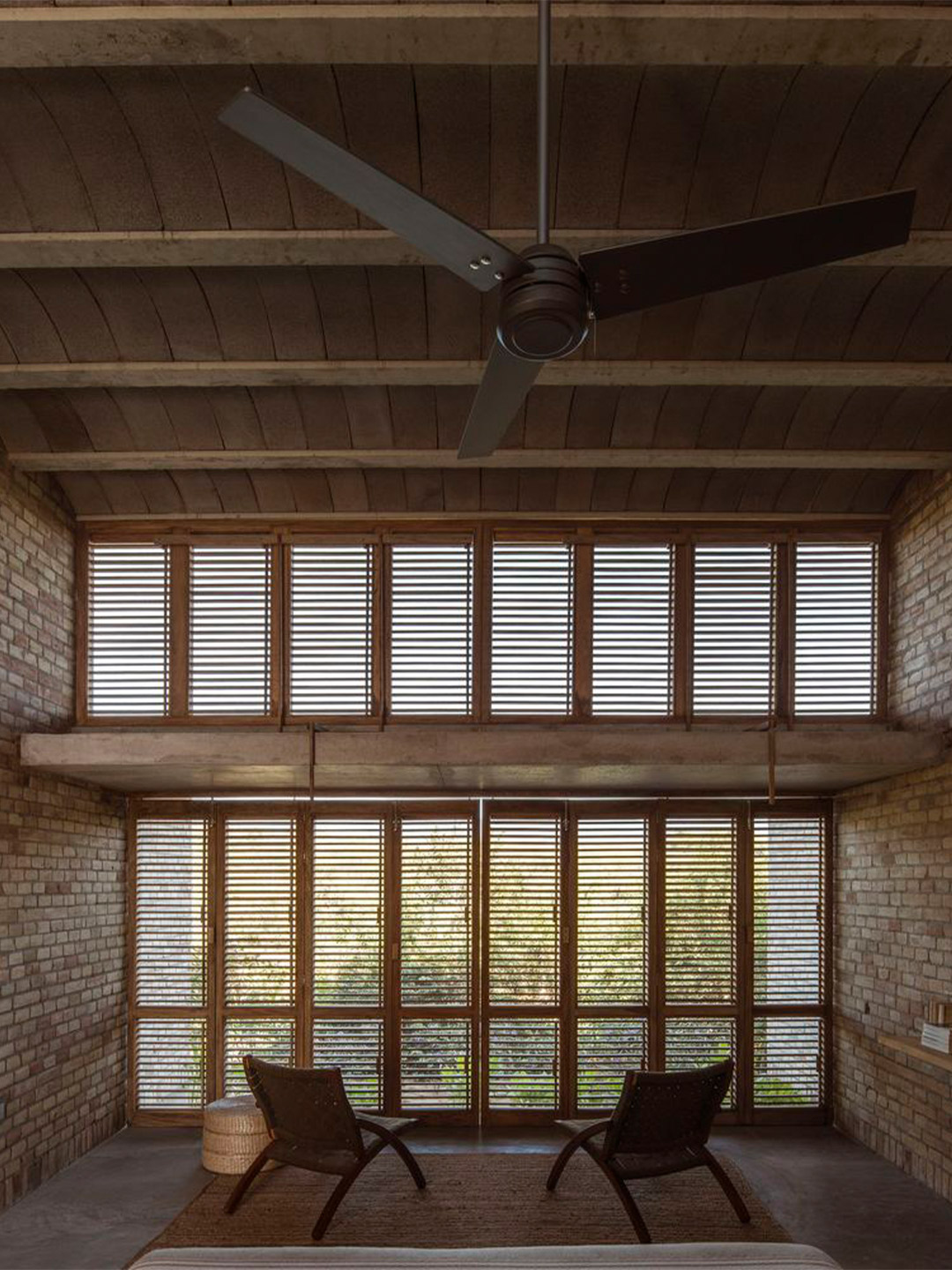
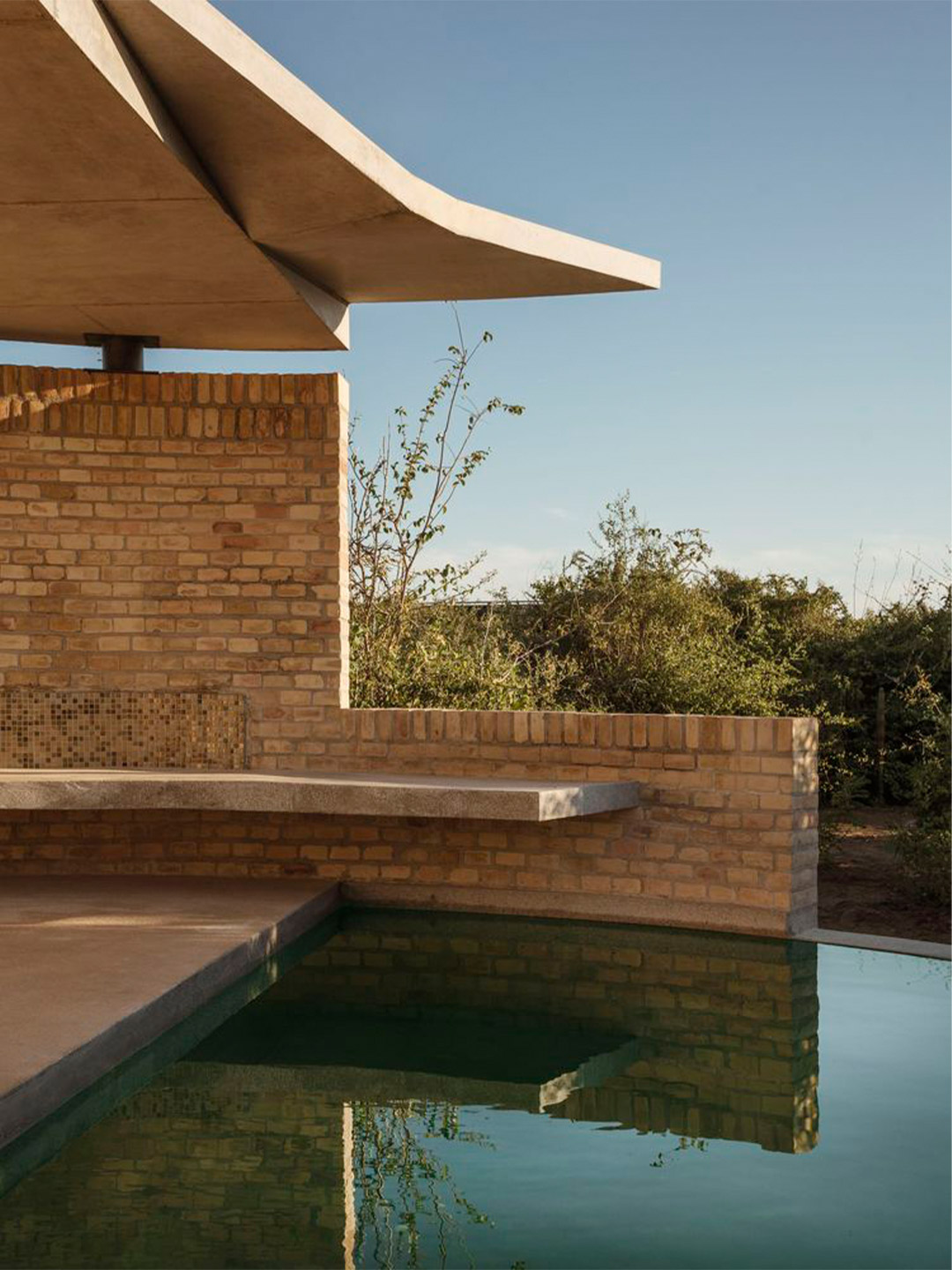
Love Hotel Terrestre in Mexico by Alberto Kalach and the team at TAX? Catch up on more hospitality design and architecture and commercial spaces. Plus, subscribe to the Daily Architecture News e-letter to receive weekly updates of the world’s best projects, ideas and exhibitions.
Related stories
- Hotel Les Deux Gares in Paris by Luke Edward Hall.
- Inside the Ace Hotel Kyoto by Kengo Kuma and Commune.
- Holiday maker: The Calile Hotel by Richards and Spence.
- Plesner Architects delivers decadence at the Six Senses Shaharut resort in Israel.
Sydney has a new contemporary art gallery. Well, not officially. But with the amount of all-Australian works procured and placed (or painted directly onto the surfaces) throughout the pensive 257-room Ace Hotel – it could easily be mistaken for just that. Located in Surry Hills, in the storied Tyne factory building, the first phase of the David Flack-designed hotel is now open to the public. With three of four drink-and-dine establishments also designed by David and his team at Melbourne-based Flack Studio (KILN by Fiona Lynch Office will open later in the year) there are even more reasons to visit this hip hotel besides simply checking in and bunking the night.
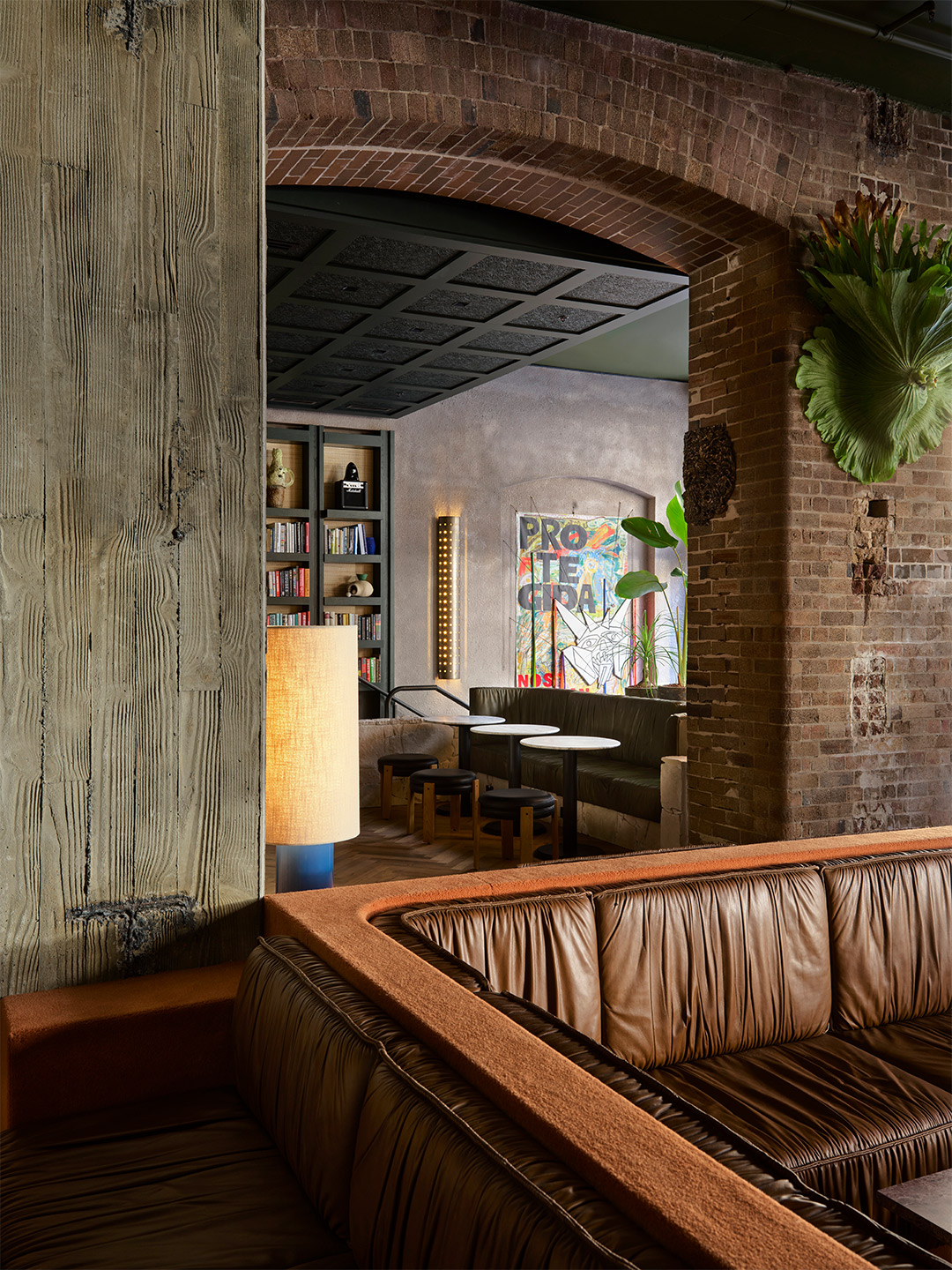
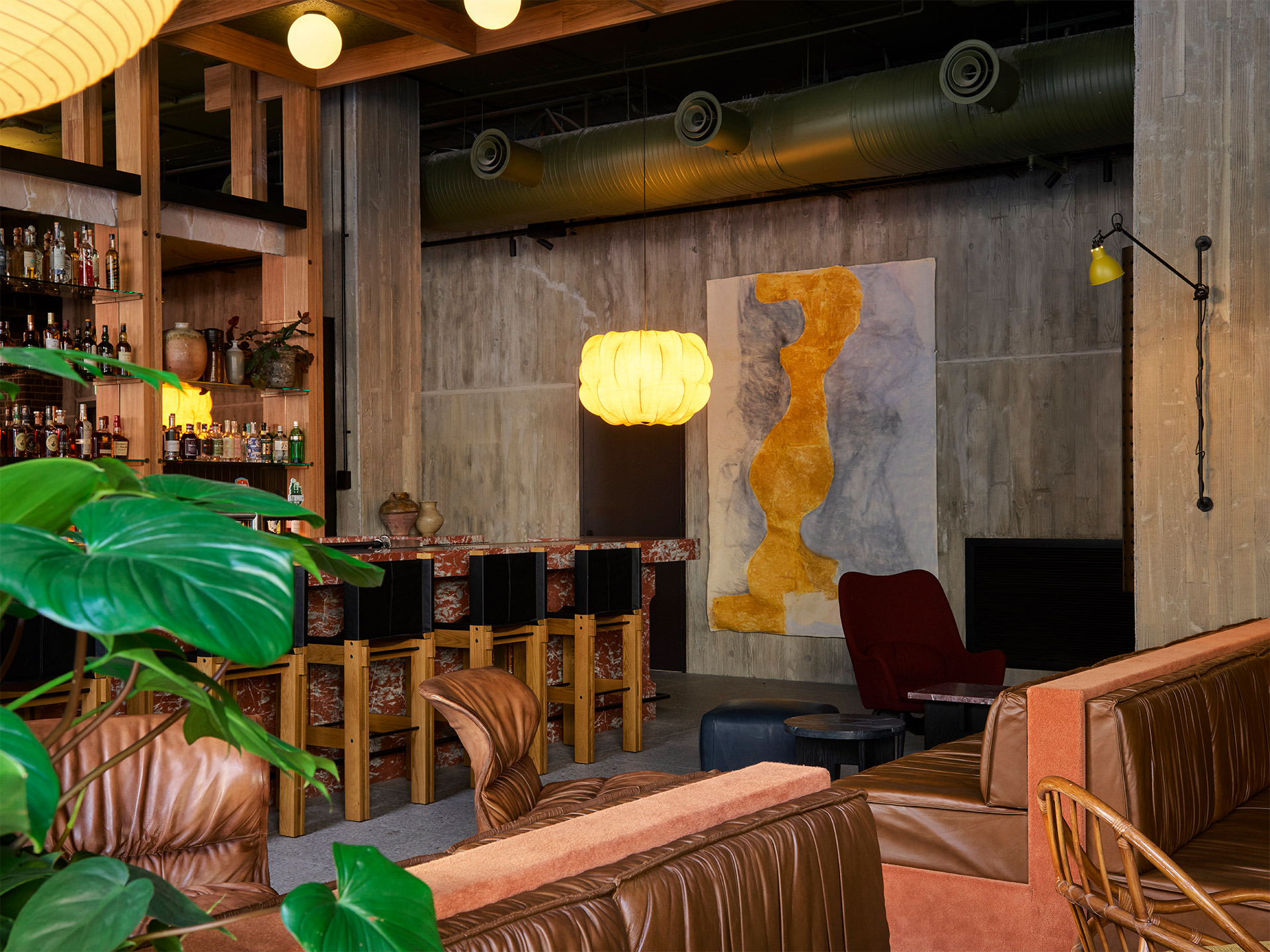
Inspired by the visionary modernist architect Robin Boyd and his 1960s book, The Australian Ugliness, Ace Hotel Sydney tells its story with a palette reflective of the hard-working history of its industrial shell. The use of raw, tactile and moody materials, exampled by off-form concrete walls, locally sourced timber and aged brass, nods to the surrounding neighbourhood. But at the same time, these finishes honour the history-rich site, resulting in a series of comfortable and communal spaces for everyone – not just guests clutching a room key – to enjoy.
Artful lodger: Inside the Ace Hotel Sydney by Flack Studio
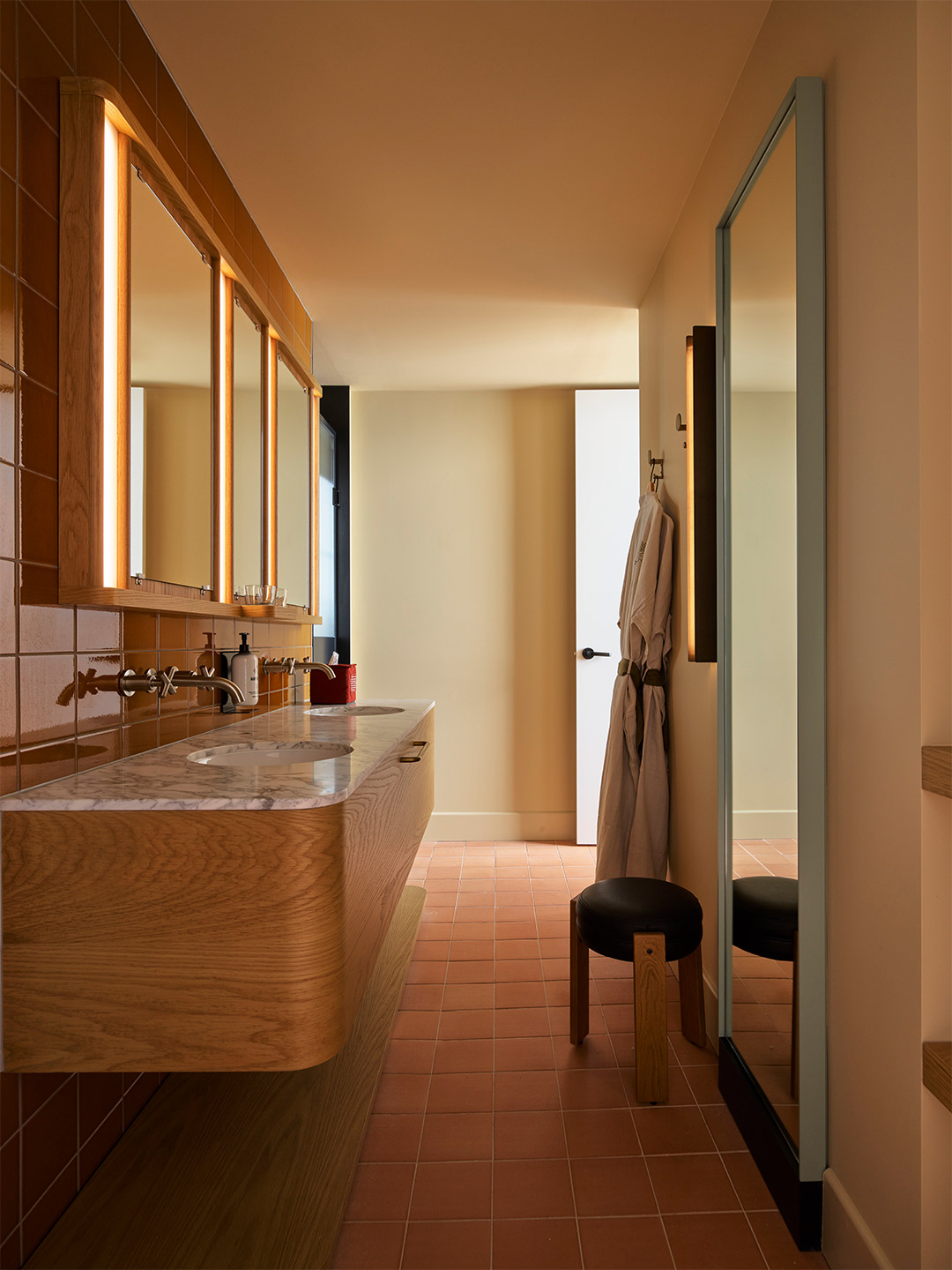
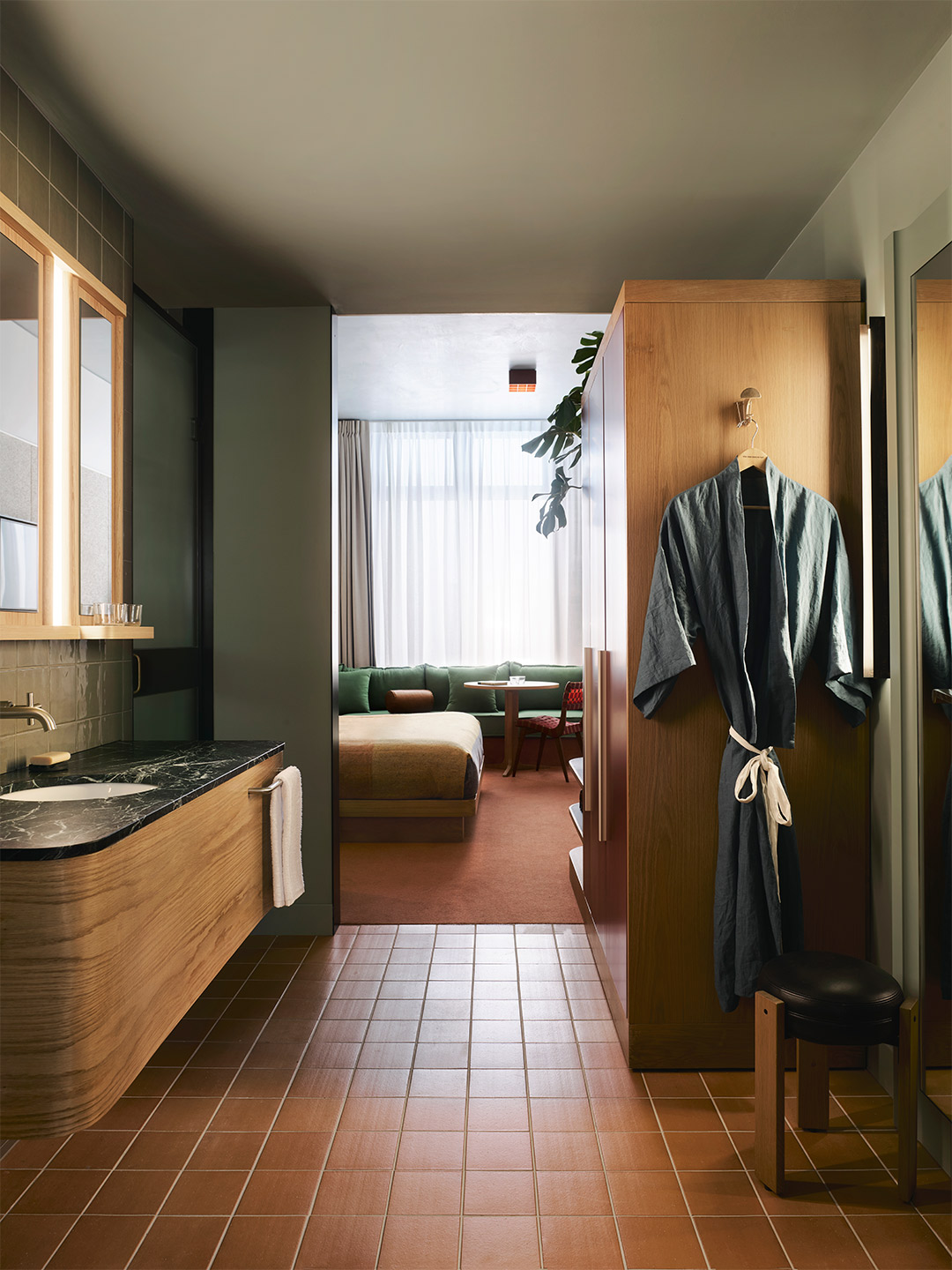
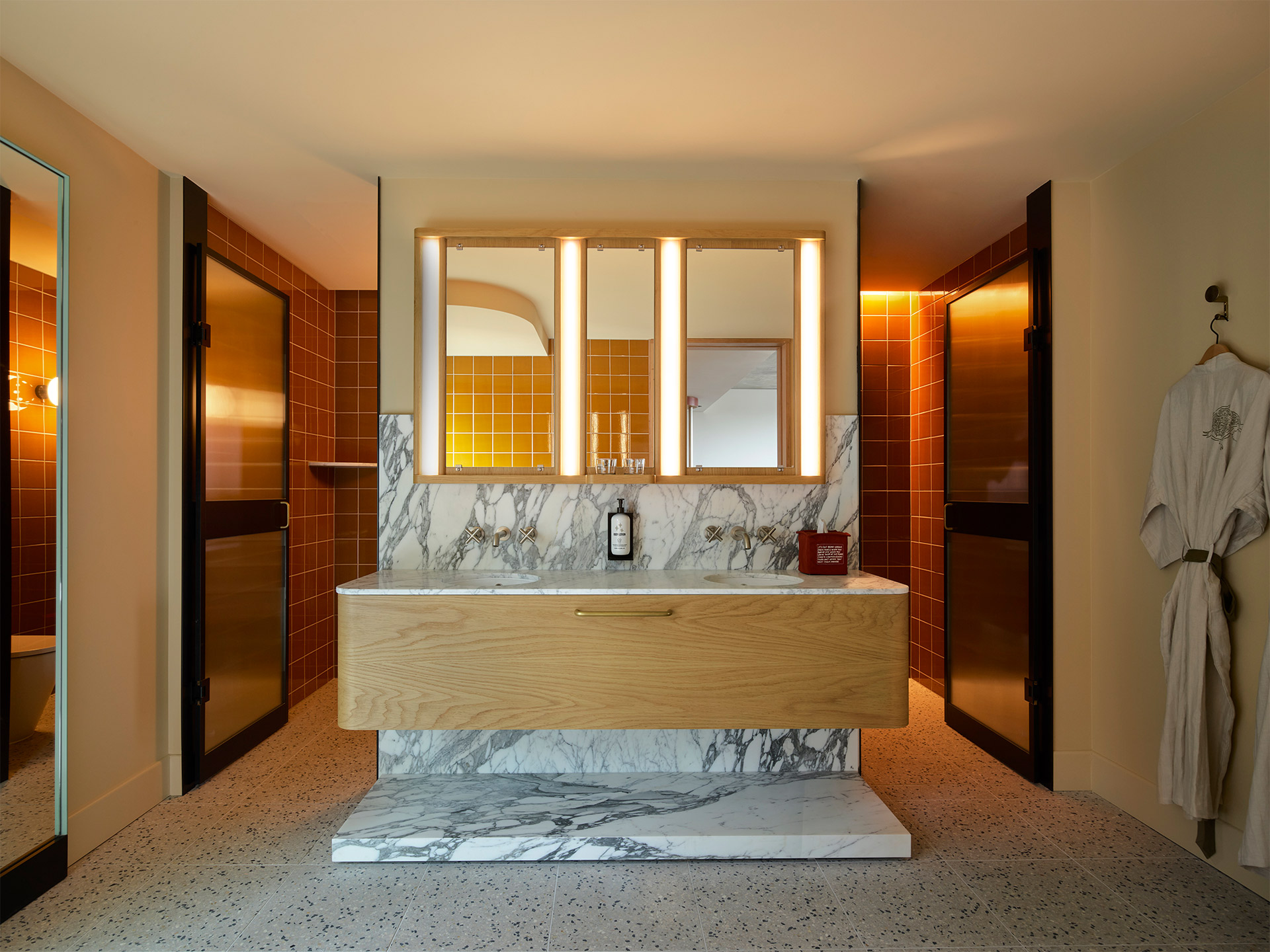
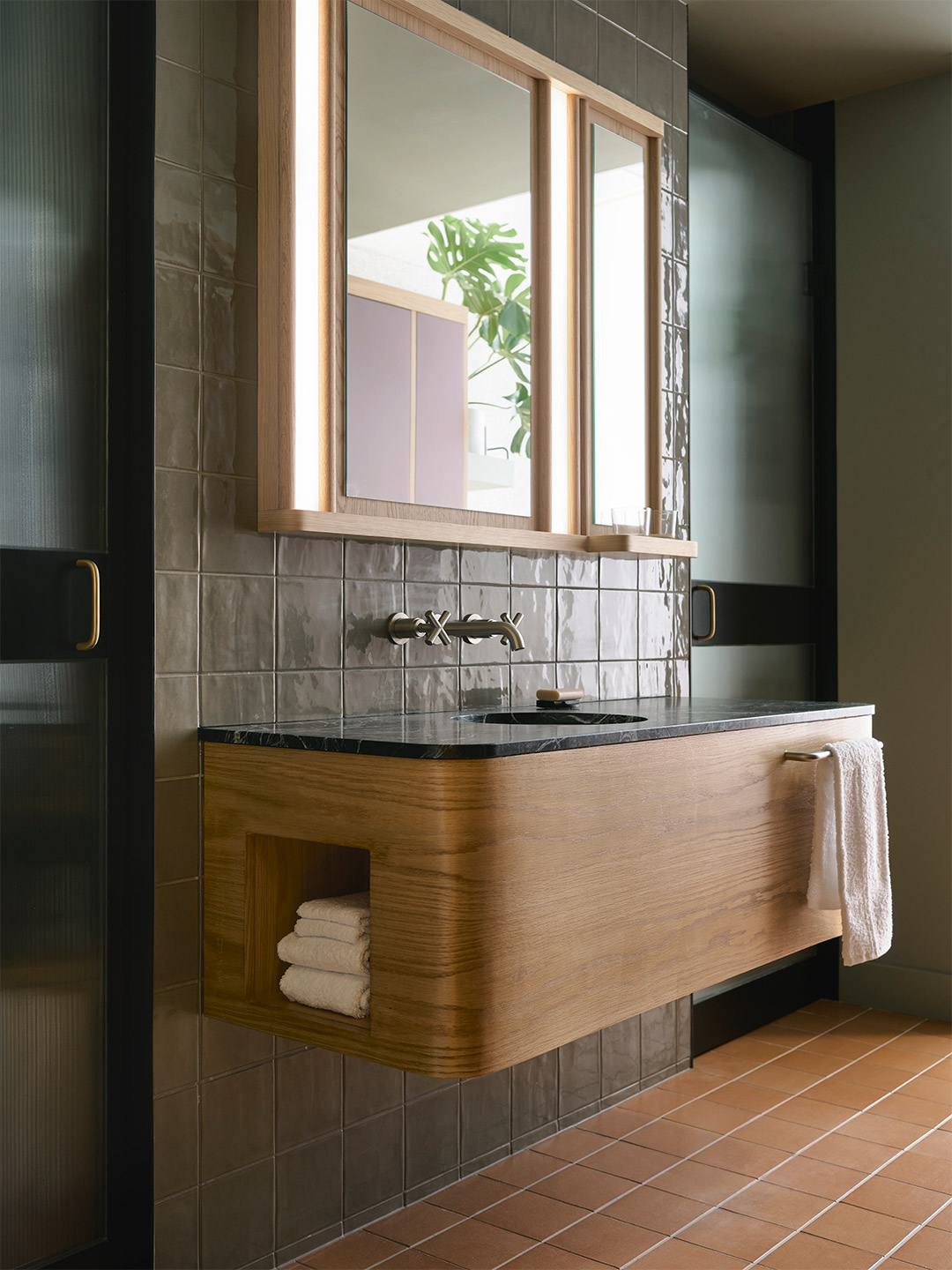
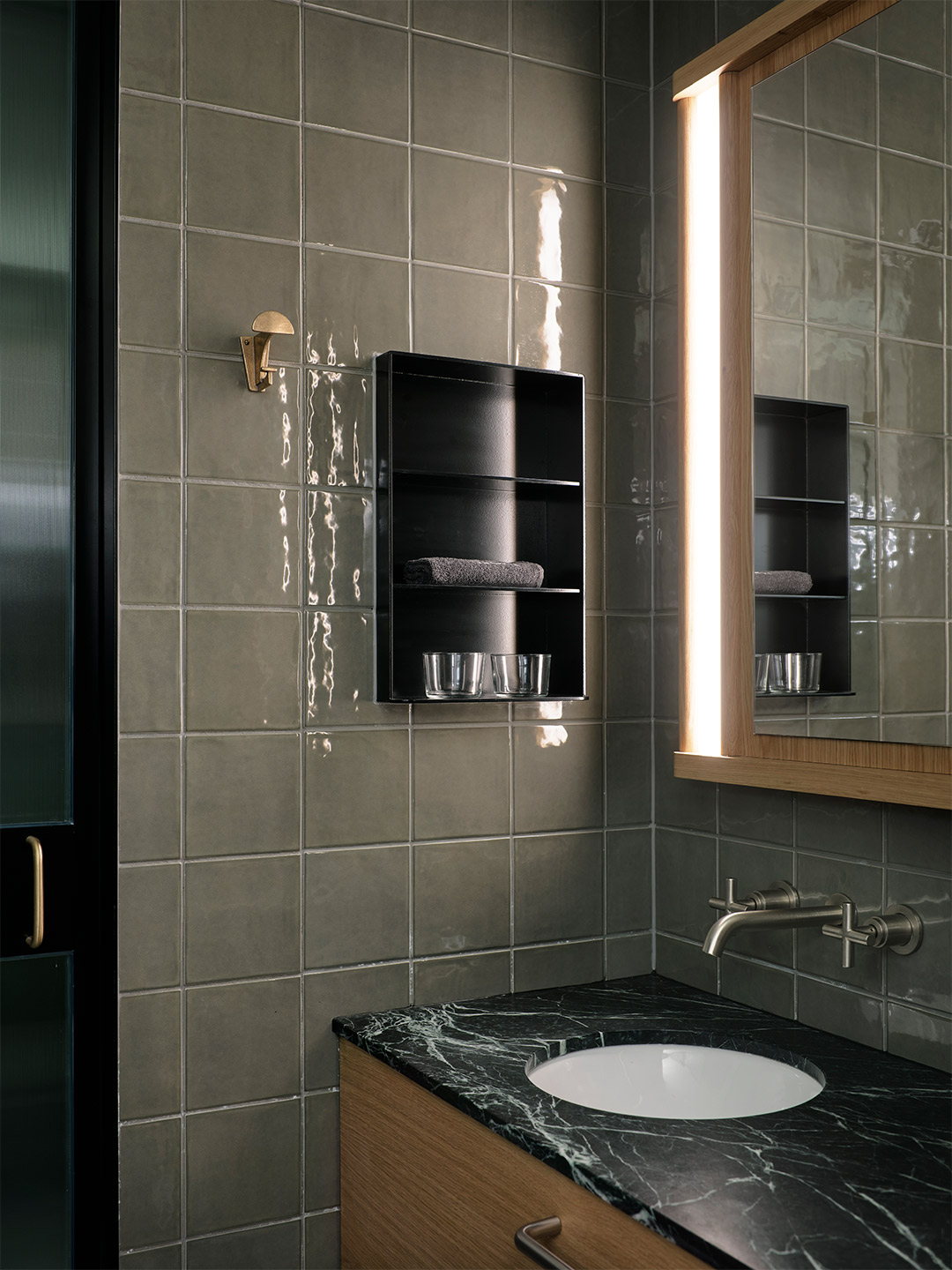
The materiality throughout the hotel’s interior speaks to Sydney’s broader natural landscape and its resources: glowing terracotta tiles make an appearance in the guest rooms, local sandstone features on the wall of the ground floor and a delicious red marble staircase leads from the ground floor to the first level. Applied in inventive ways, typically classic materials – think oak, brick, leather, raw concrete, steel and marble – then adopt the important role of merging the historic with the cutting-edge inside the building’s four patinated walls.
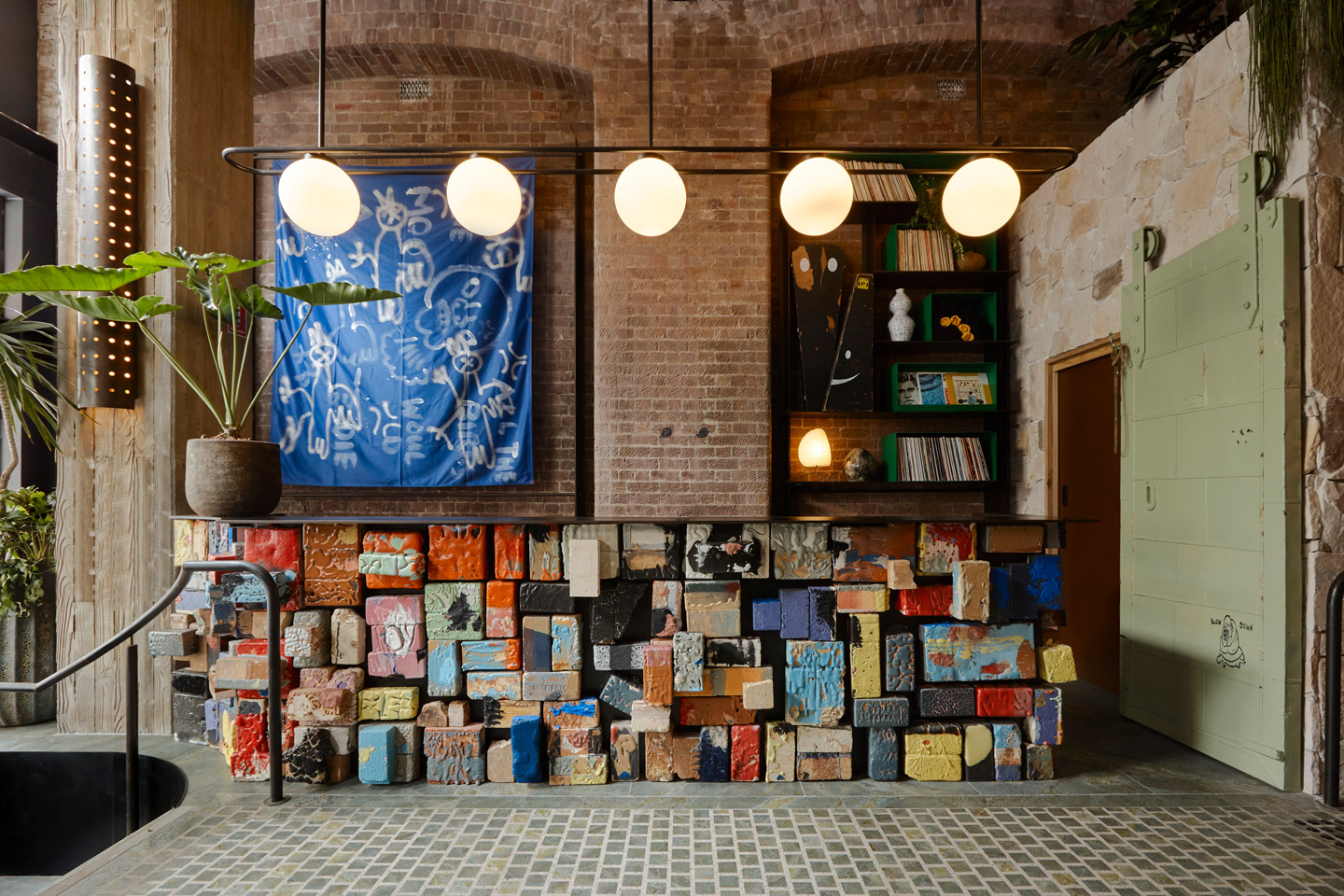
Ace Hotel Sydney’s main entrance is on Wentworth Avenue, a thoroughfare connecting the city’s central railway station to the CBD. It’s upon entering from Wentworth Avenue that guests encounter the first striking art installation: the hotel’s reception desk, a commissioned piece by ceramicist James Lemon. Made up of polychromatic glazed brick in recognition of the site’s industrial past, the desk becomes a beacon representing the building’s dynamic new life. Framing the reception desk are works by Sydney-based artist Nell, a favourite of Flack’s, whose pop culture-referencing work is on display with Two Sounds (2011). There’s also a large wall-hung work by multidisciplinary artist Jason Phu, who uses references from traditional ink painting and calligraphy in if the moon farted all the birds would die (2021).
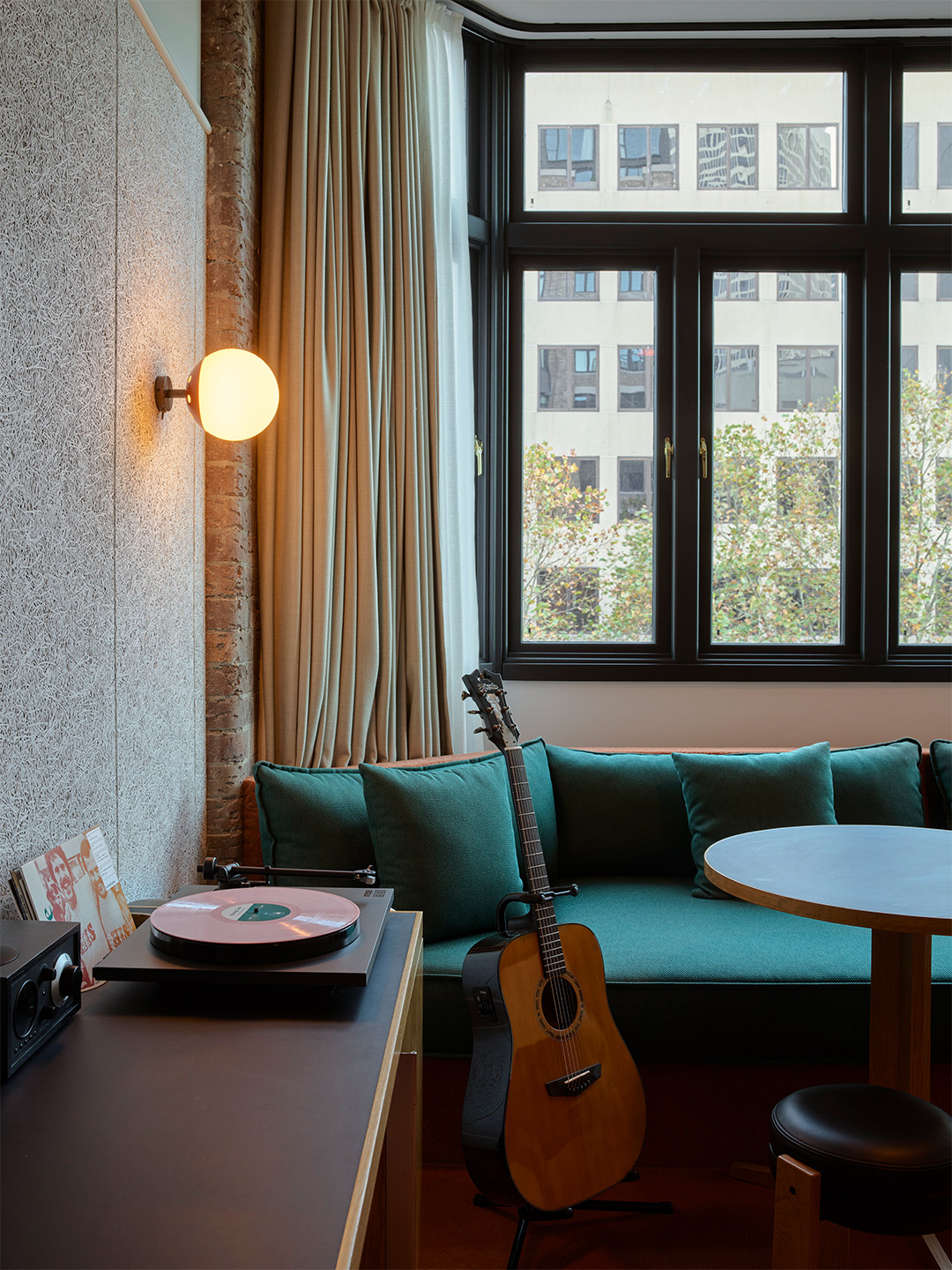
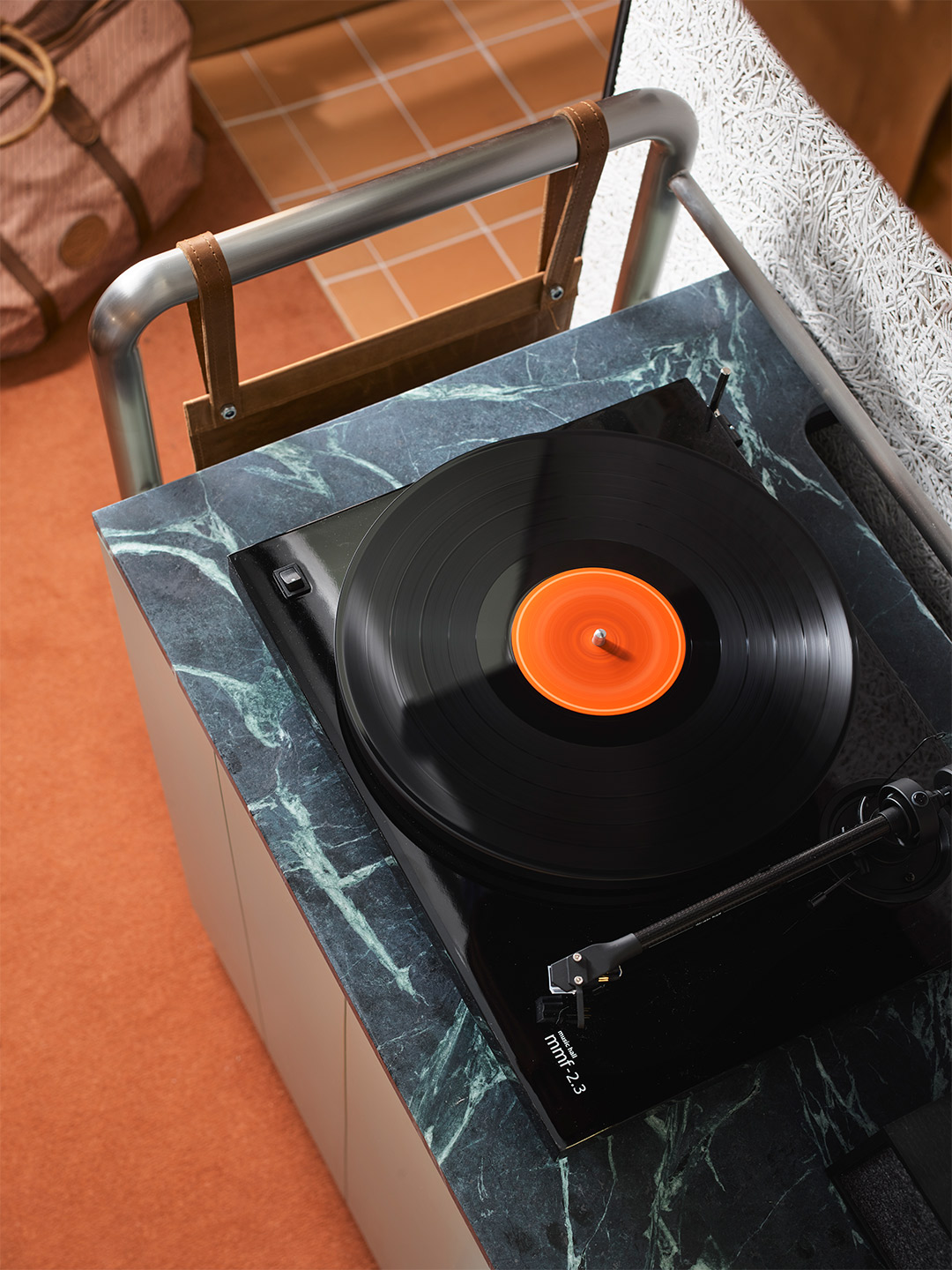
Opposite the front desk sits the hotel’s retail collection; a curation of apparel and gifts designed by the in-house creative team at Atelier Ace. But this is no run-of-the-mill giftshop. Also featured in the ever-rotating offering is a selection of items found inside the guest rooms – a sign of things to come in the upper levels. These shoppable wares include the custom-designed Rega record players and Tivoli radios, Byron-sourced Deiji Studios robes with insignias by artist Jason Phu, Studio Henry Wilson-designed brass wall hooks, a Flack Studio-designed stool, and an Ace signature item: a custom-created blanket, made in collaboration with New Zealand wool-weavers Stansborough and Flack Studio, featuring colours inspired by the landscape paintings of Indigenous Australian artist Albert Namatjira.
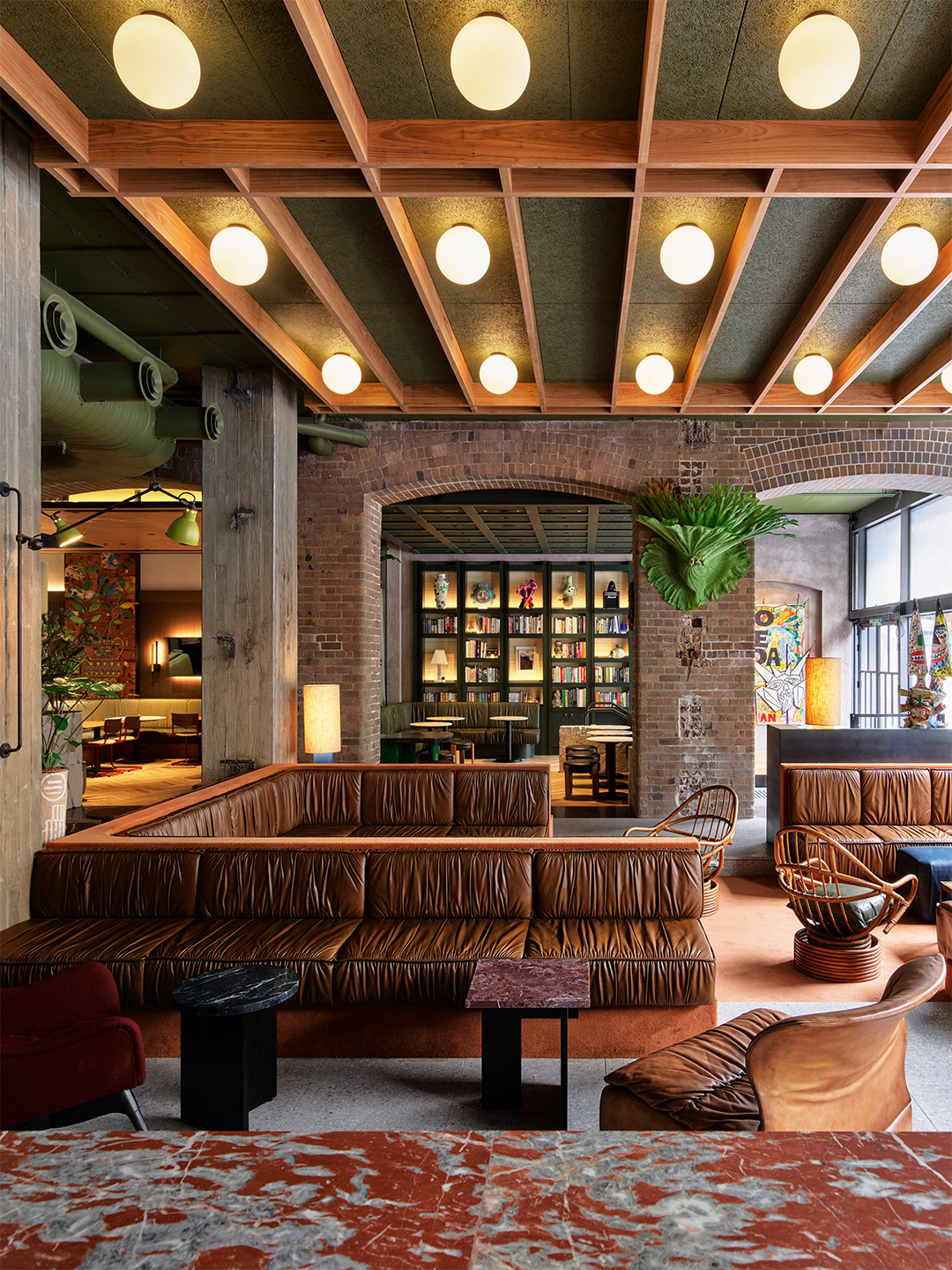
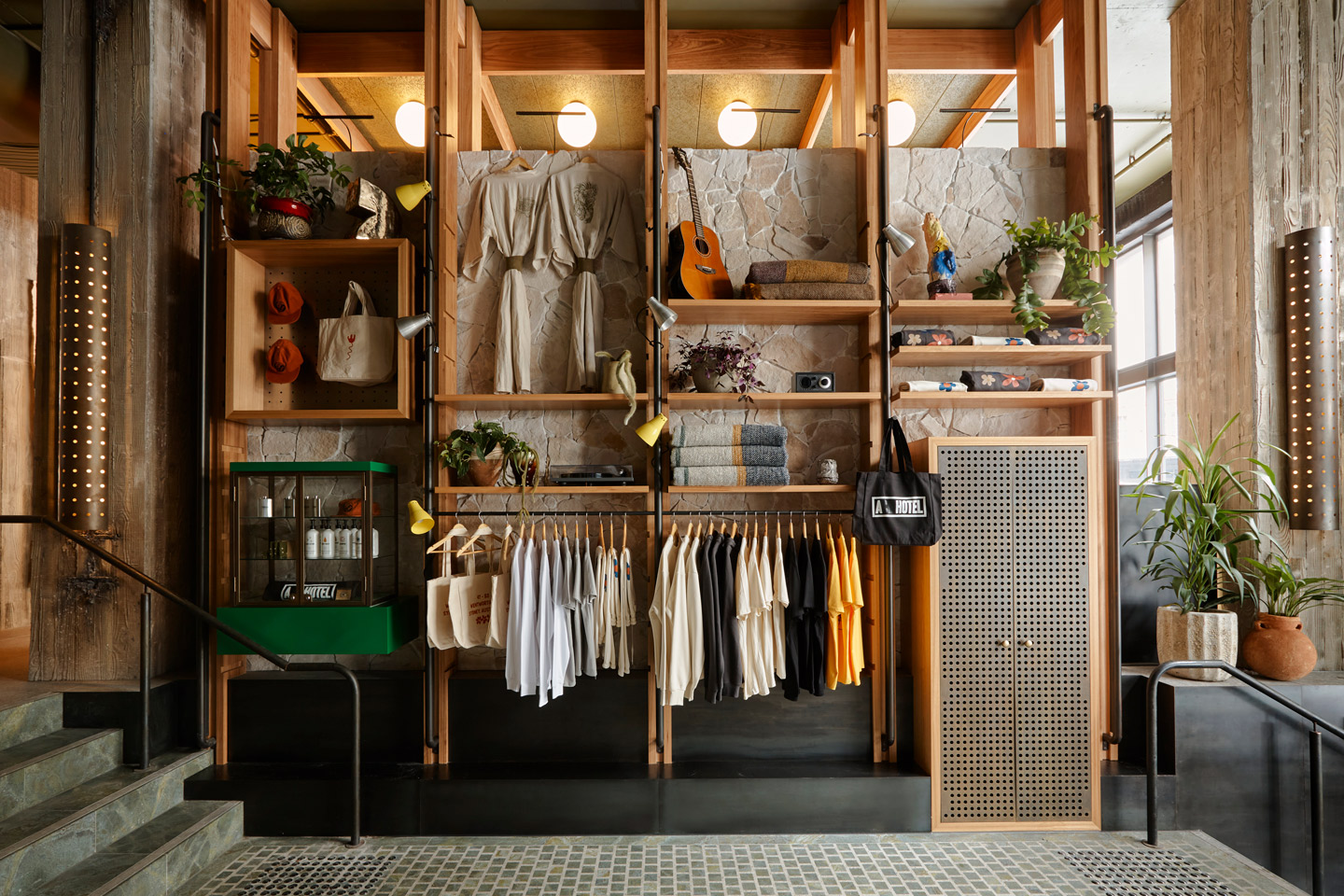
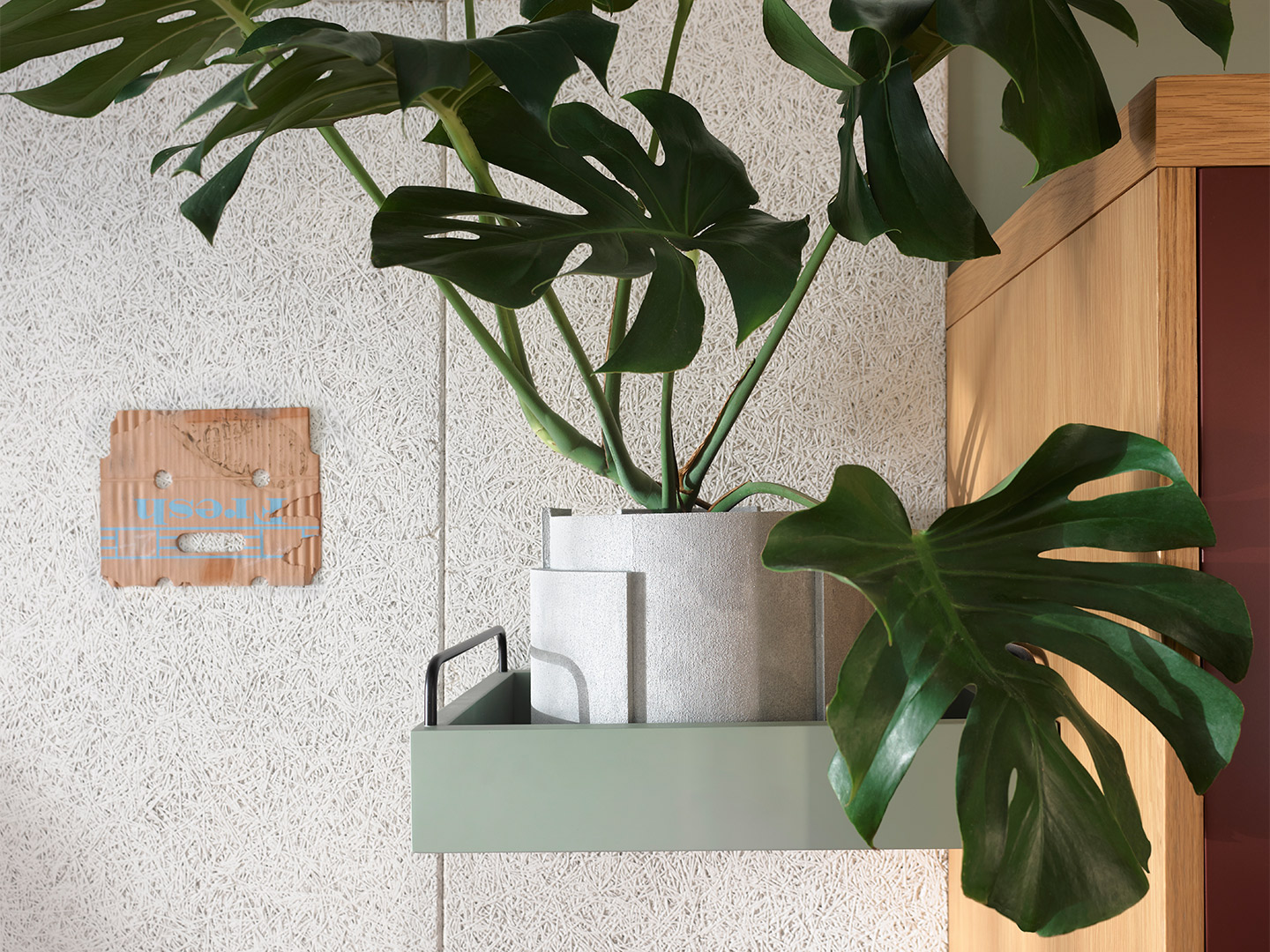
Looking in the direction of the main entry, floor-to-ceiling windows peering onto bustling Wentworth Avenue illuminate The Lobby lounge – a common space open to the public, activated by music and art, and a hallmark of the Ace brand. The Lobby’s glass frontage delivers a bright, relaxed feel to the space, which is framed with sandstone walls and lush foliage. Reclaimed earth-toned brickwork, warm terracottas, tans and lush greenery are continued throughout the floor, continuing the efforts to bring to life the evocative colours of the Australian panorama.
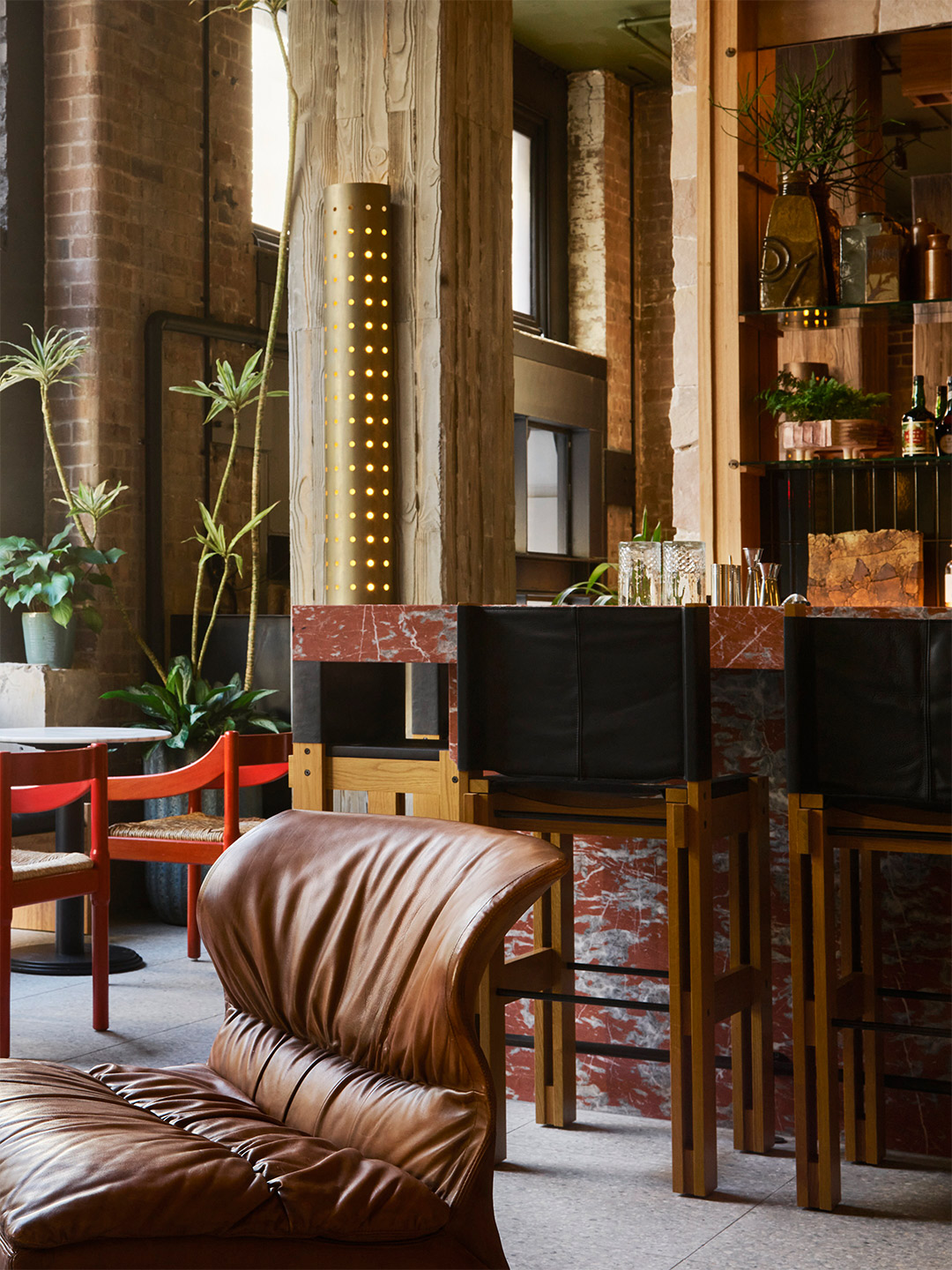
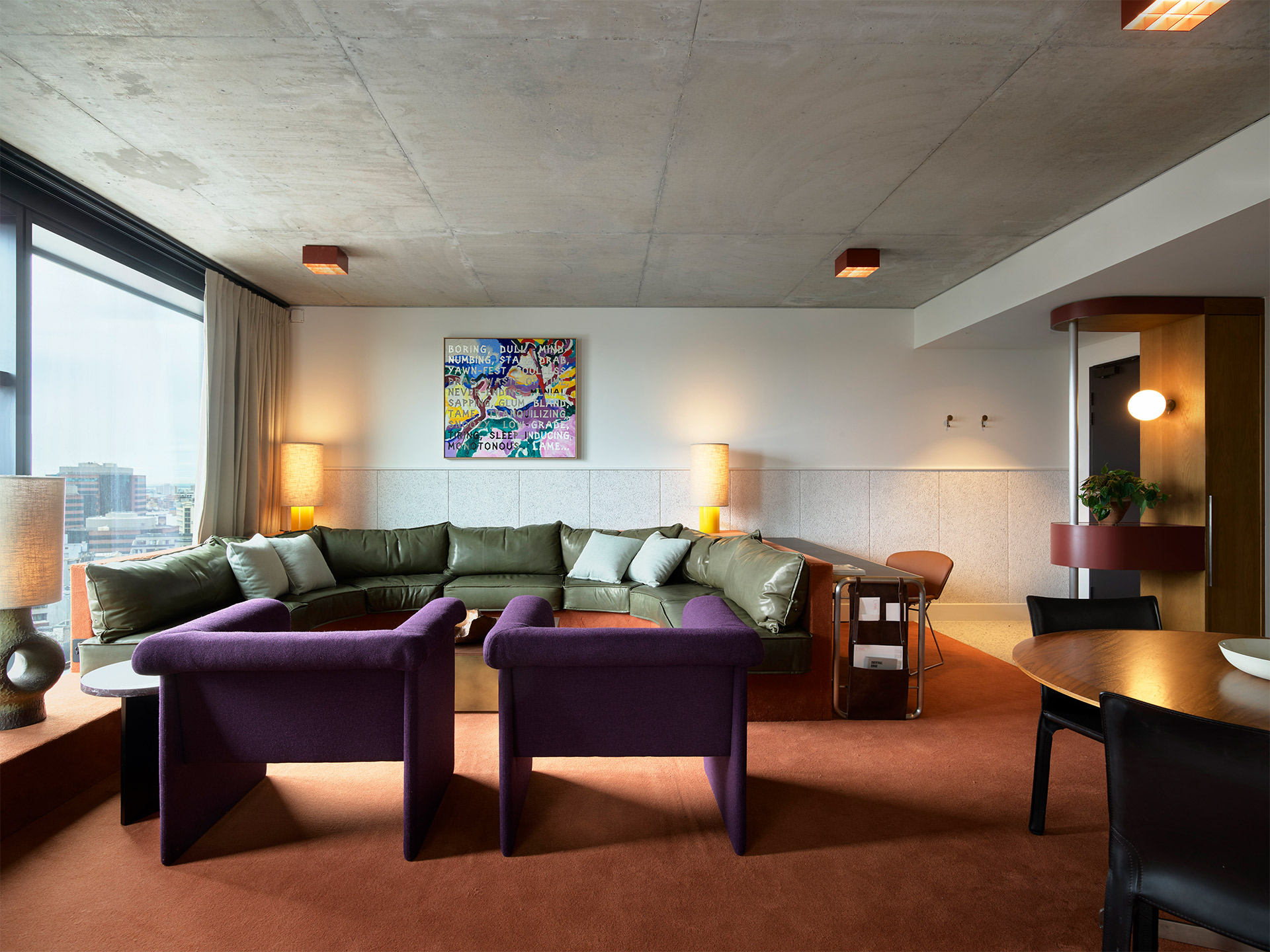
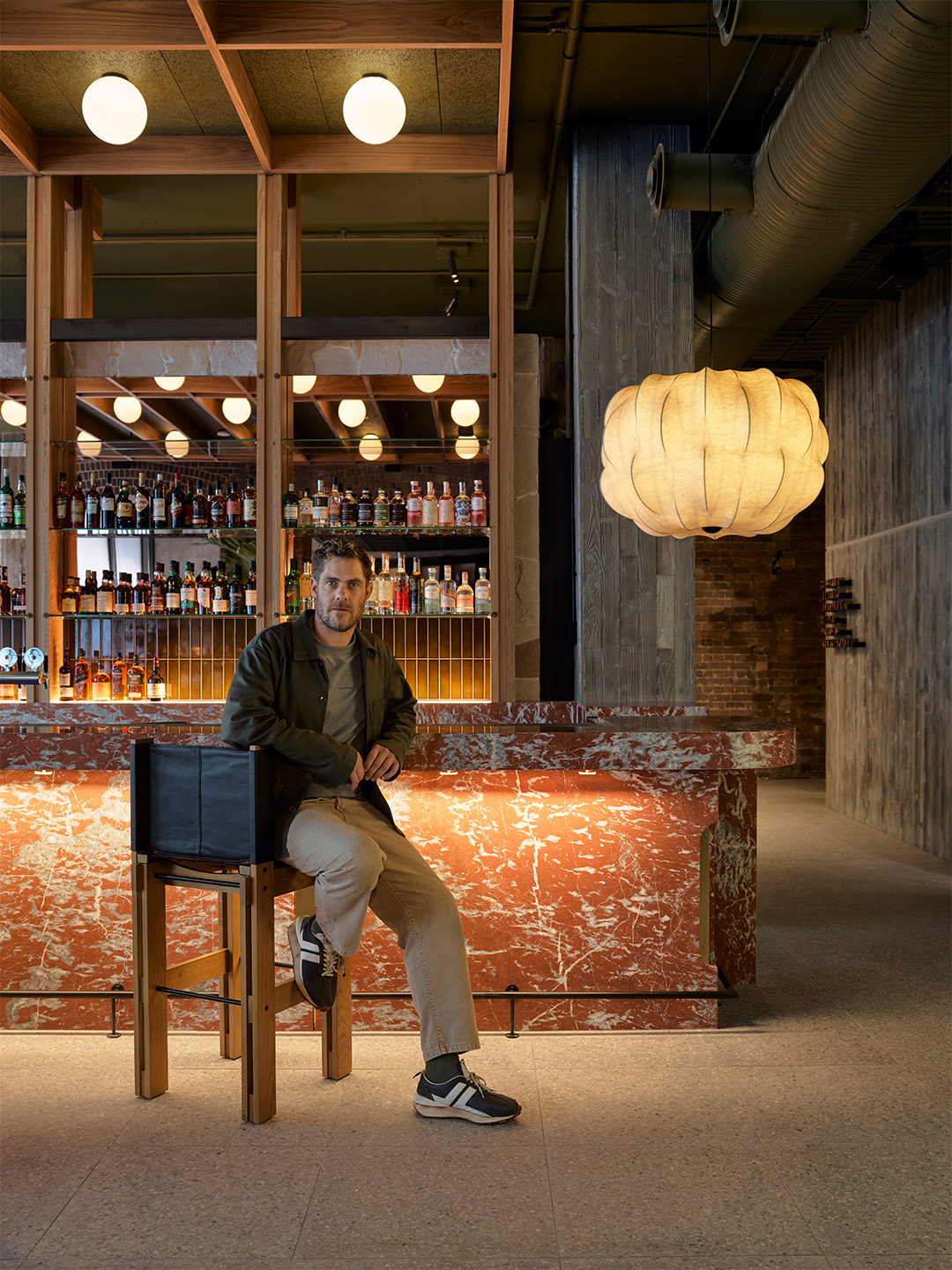
The Lobby showcases a marble-topped bar, with stools created especially for the venue lining the service area. The sunken lounge, which rests in the centre of the room, offers a delightful wink to 1970s suburban Australia. Made from an ochre-orange carpet, with pleated tan leather cushions, it invites guests to sink into conversation – martini in-hand. The central lounge of The Lobby is echoed in the design of the guest rooms, with most of the rooms featuring an inviting nook in which visitors can recline or converse. A ceramic piece by out-of-the-box sculptor Ramesh Mario Nithiyendran – another of Flack’s go-tos – watches over the space.
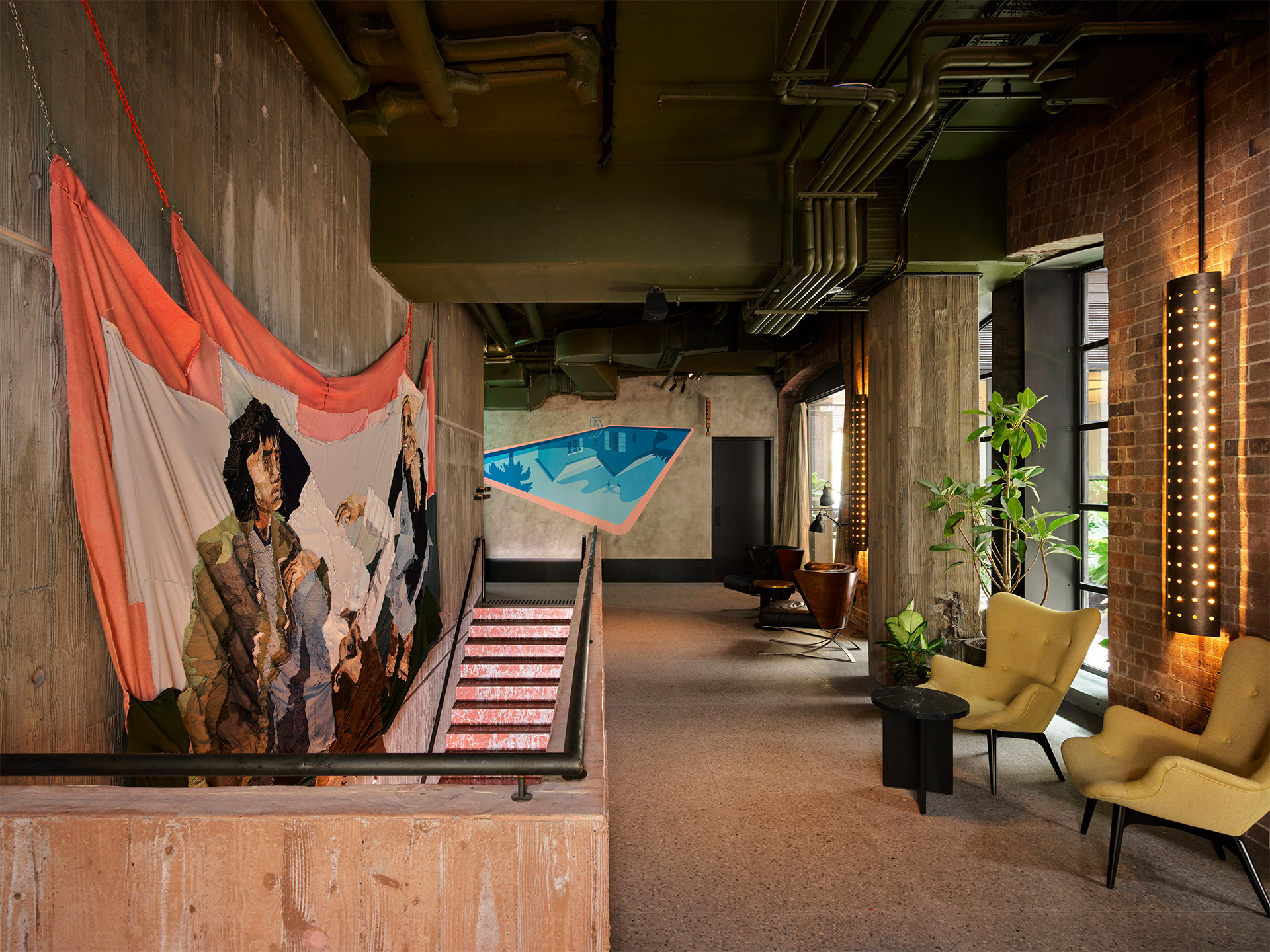
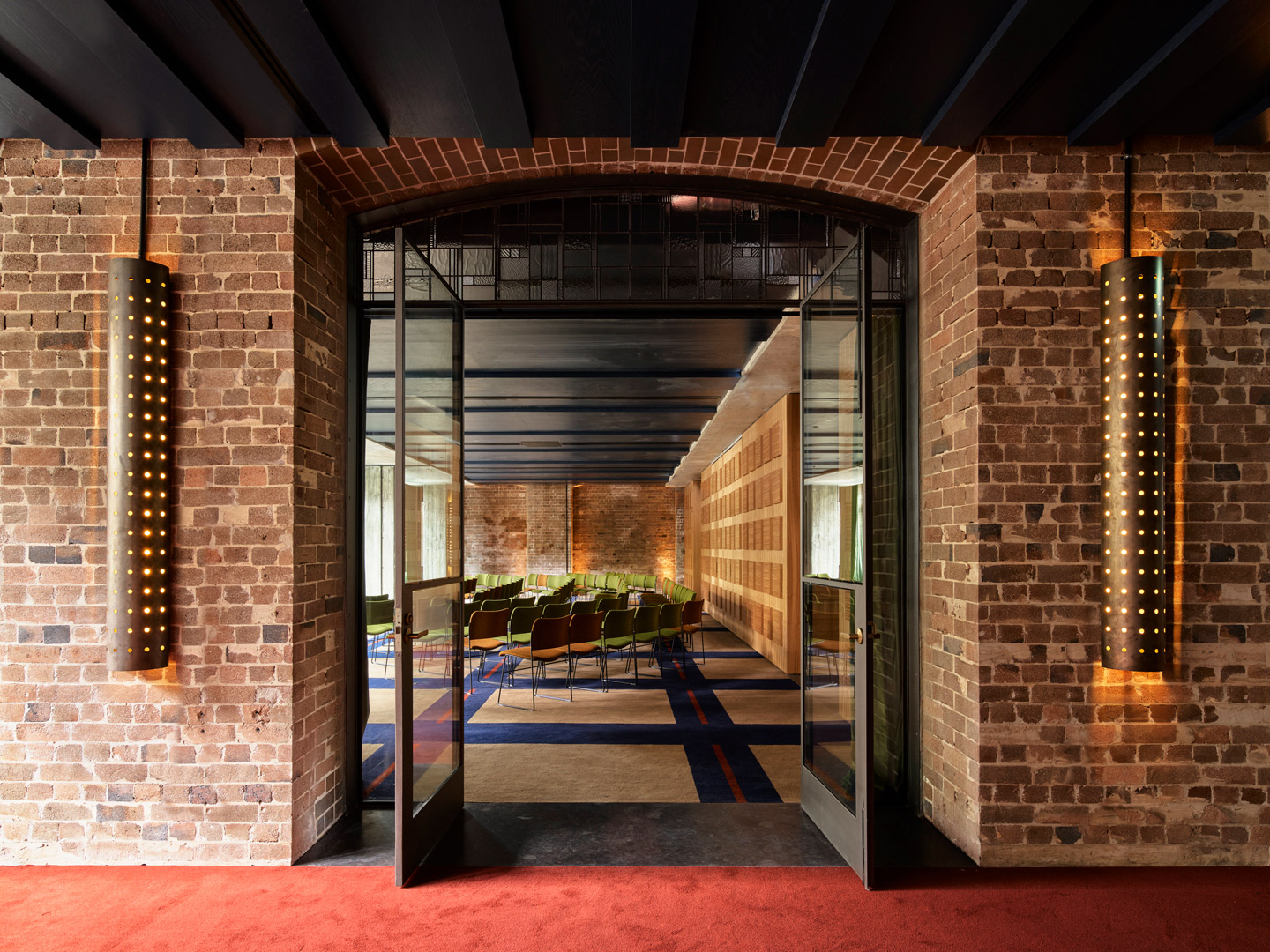
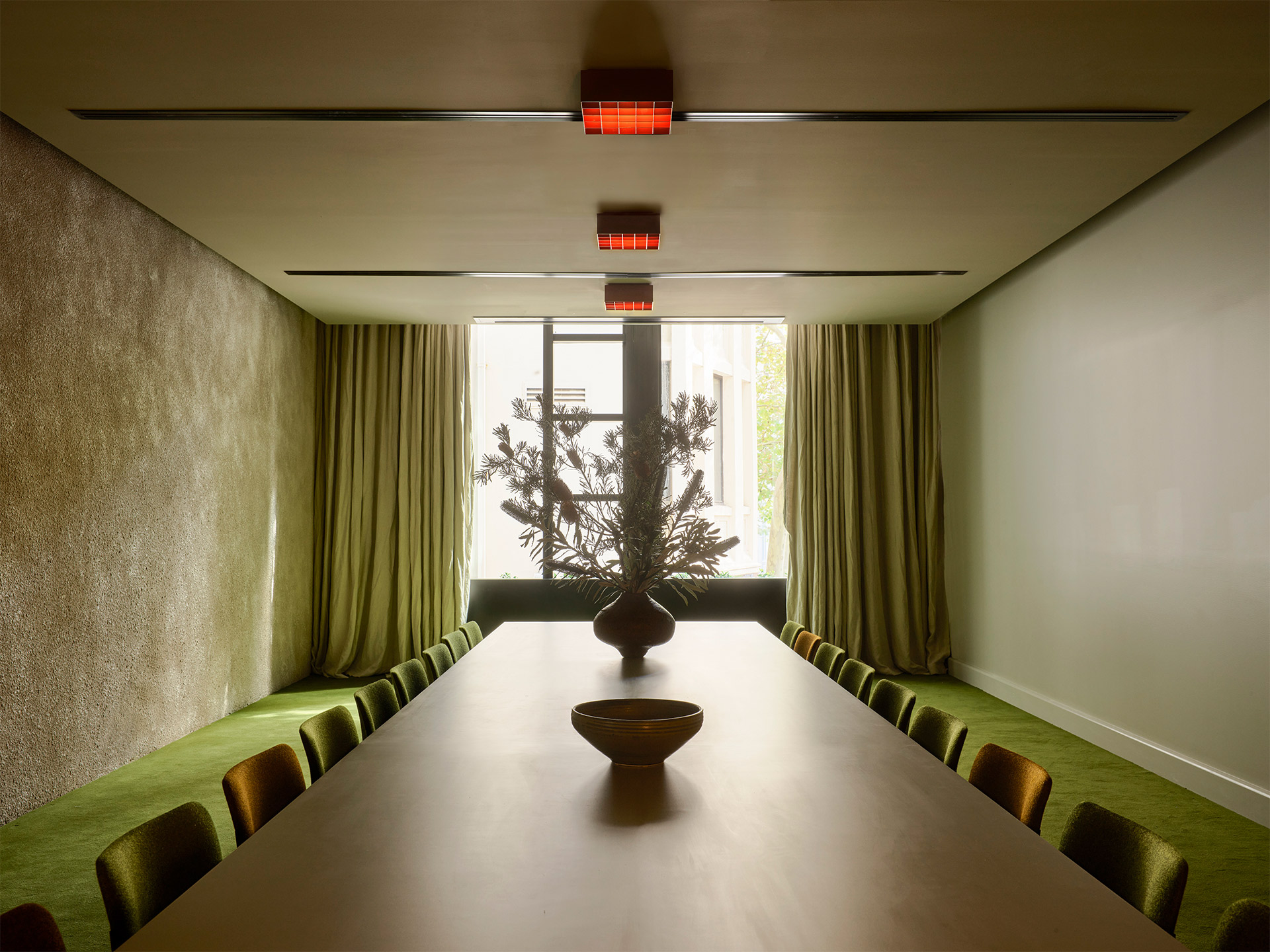
Ascending from the ground floor, the deep ochre-red marble staircase delivers hotel guests to the level-one event quarters. Three event spaces are available on this floor and can be combined to suit any occasion. Framing the staircase to the left is Julia Gutman’s large-scale tapestry, Once More, with Feeling, made from clothing previously owned by the artist and her friends. Upon reaching the level-one landing, guests are greeted with a commissioned painting by the Perth-based artist Joanna Lamb – one from her ongoing series of paintings depicting suburban swimming pools.
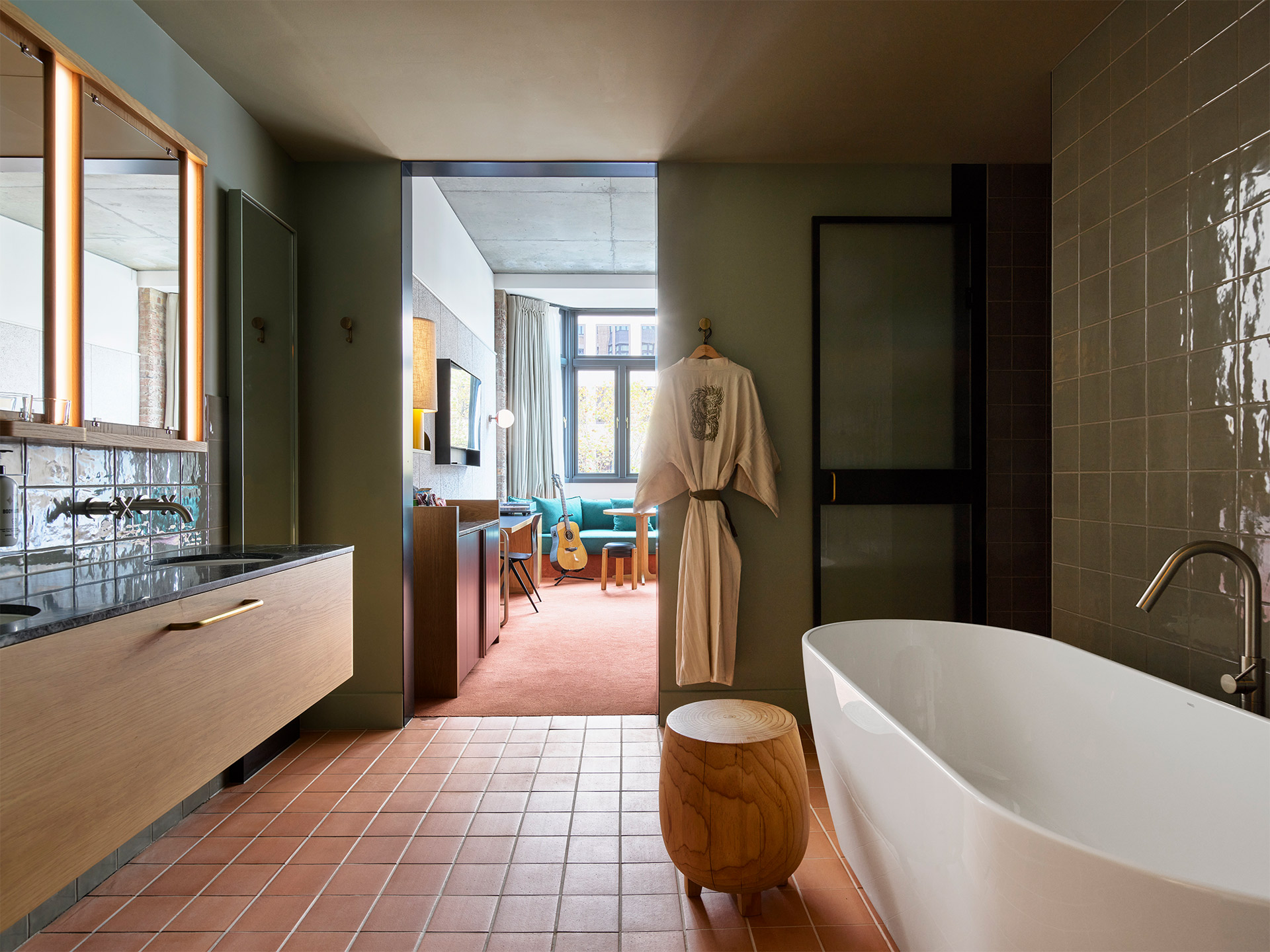
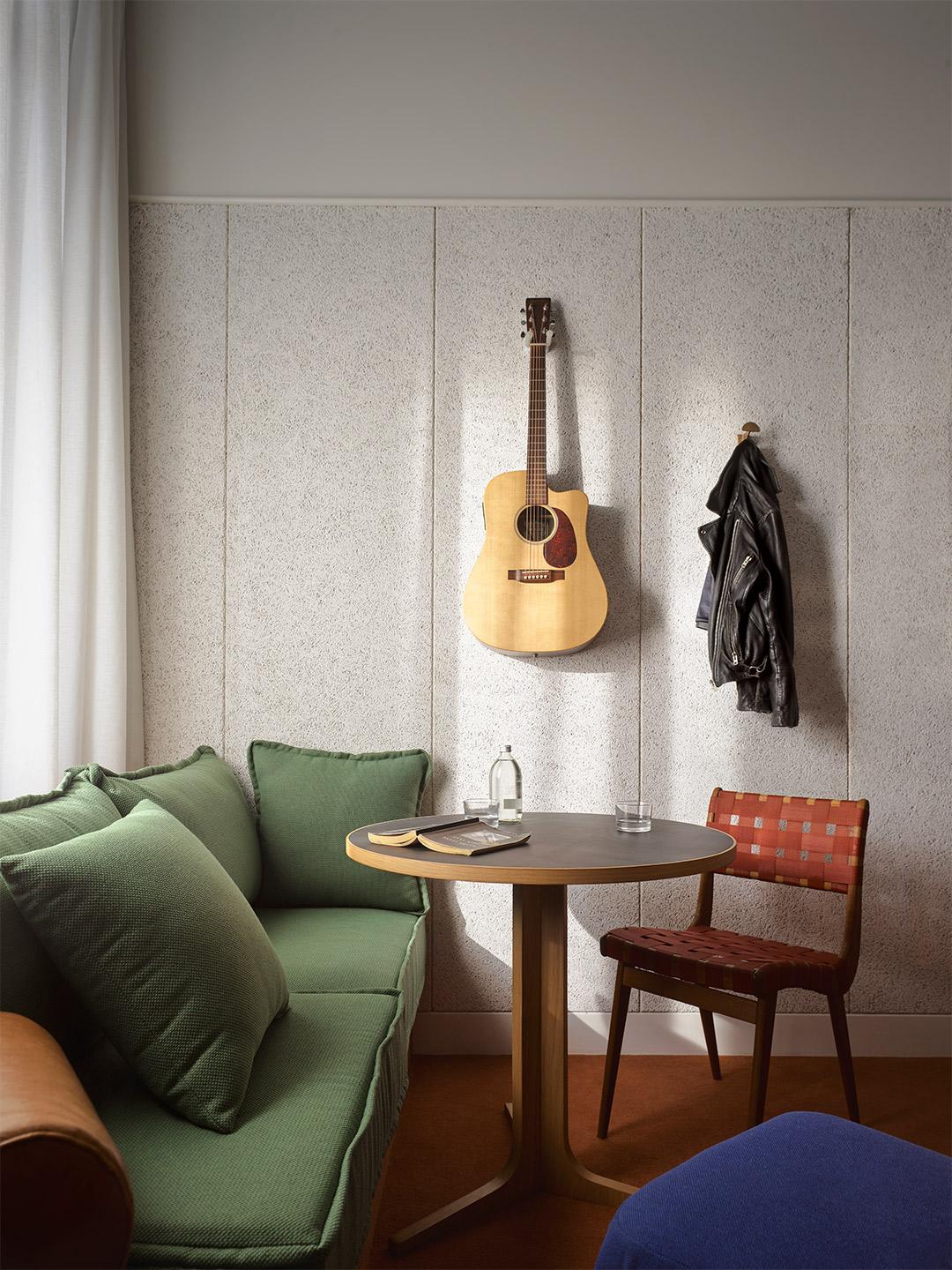
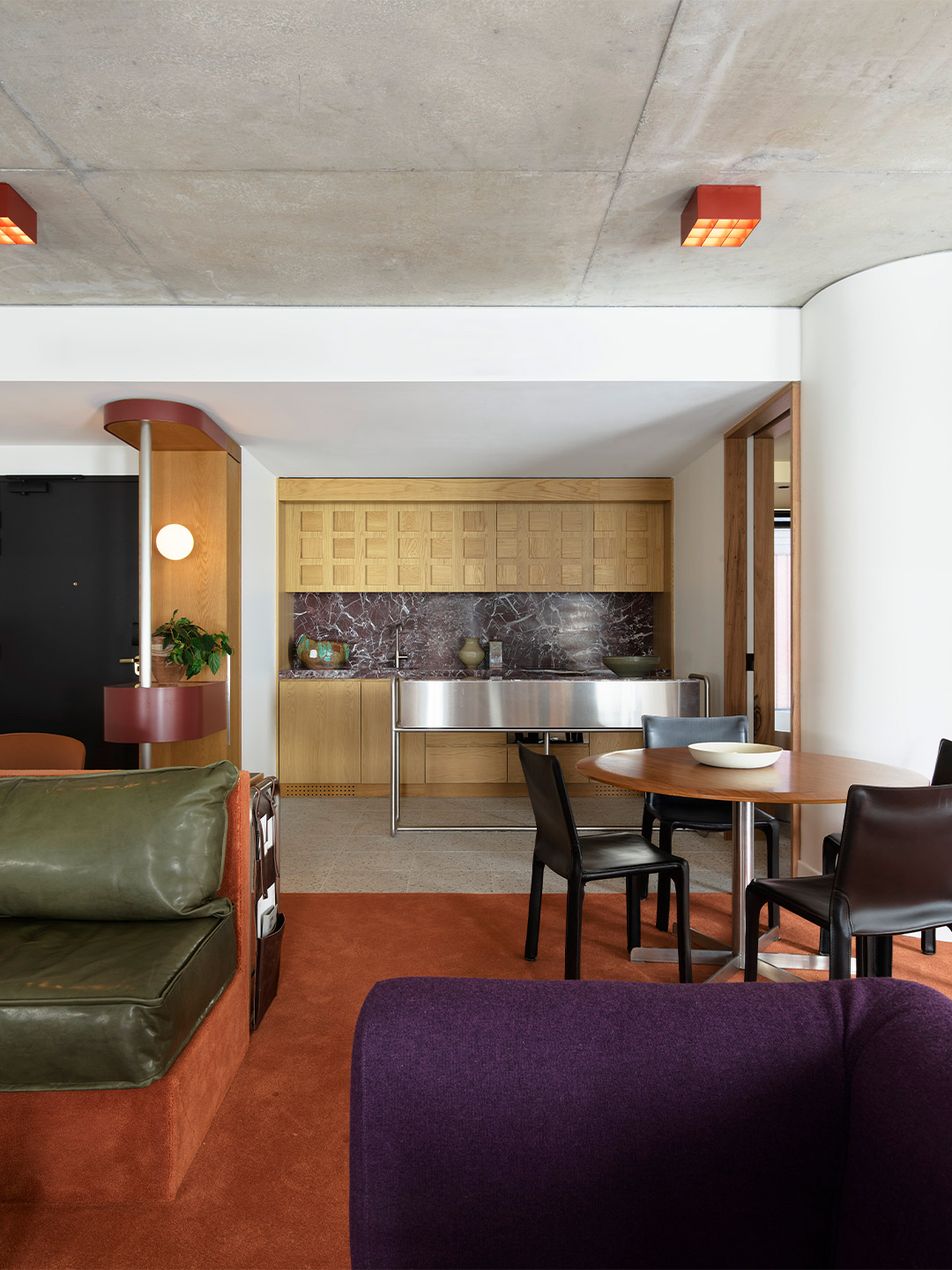
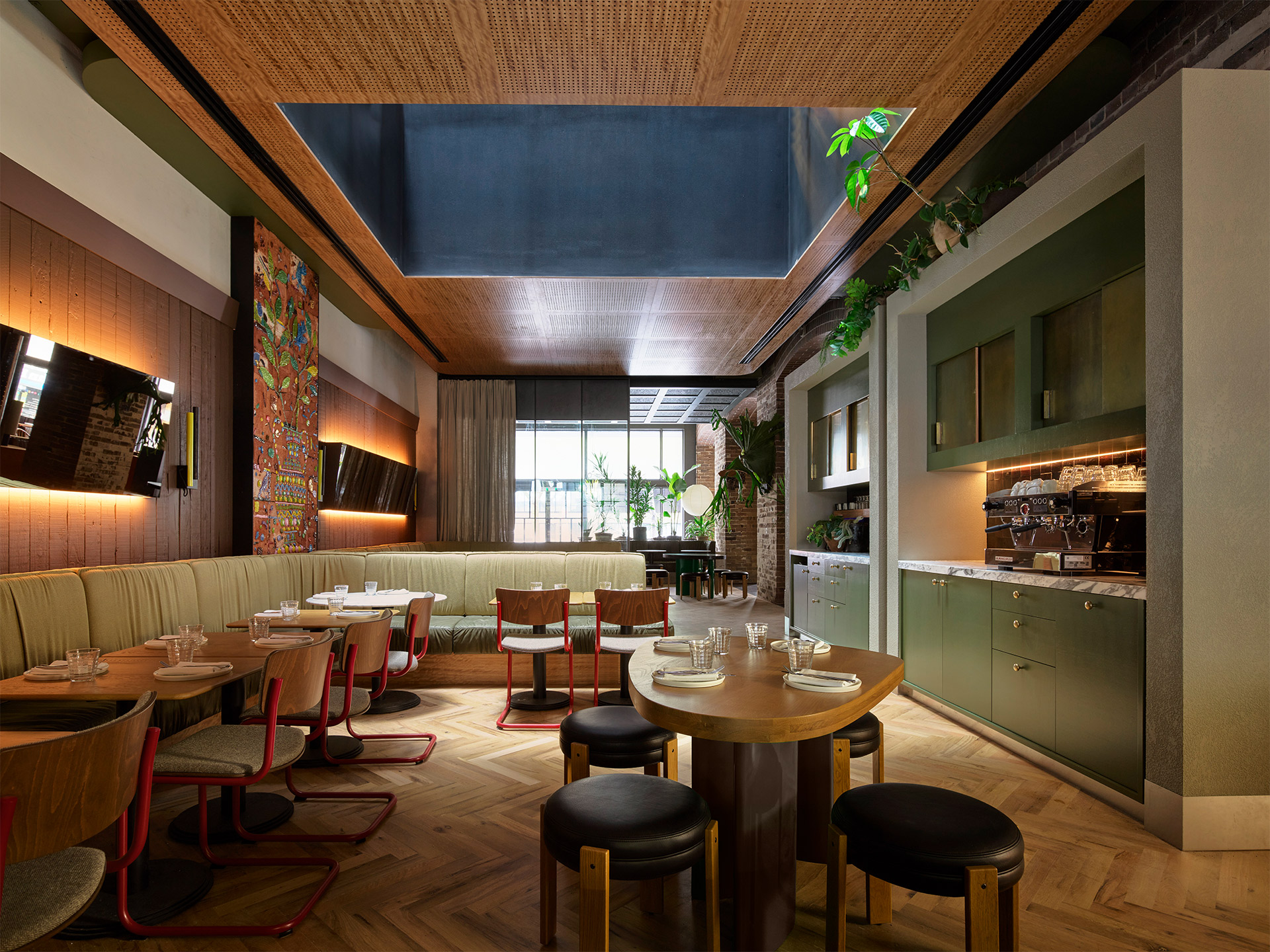
Almost all of the furniture and lighting in the hotel is custom-designed by Flack Studio and their collaborators – from the banquette seating in LOAM (sister restaurant to LOAM in Downtown Los Angeles), to the stellar sconces placed throughout the ground floor. Woven in-between the custom works by Flack are iconic modernist designs: lighting by Isamu Noguchi, the Tobia Scarpa “Nuvola” lamp and select vintage chairs scattered throughout the hotel’s interior. In keeping with the building’s design, the materials used by Flack are raw yet refined, with a modern edge: armchairs and stools of oak, accents of green velvet or black leather, marble tabletops and linen lamp shades.
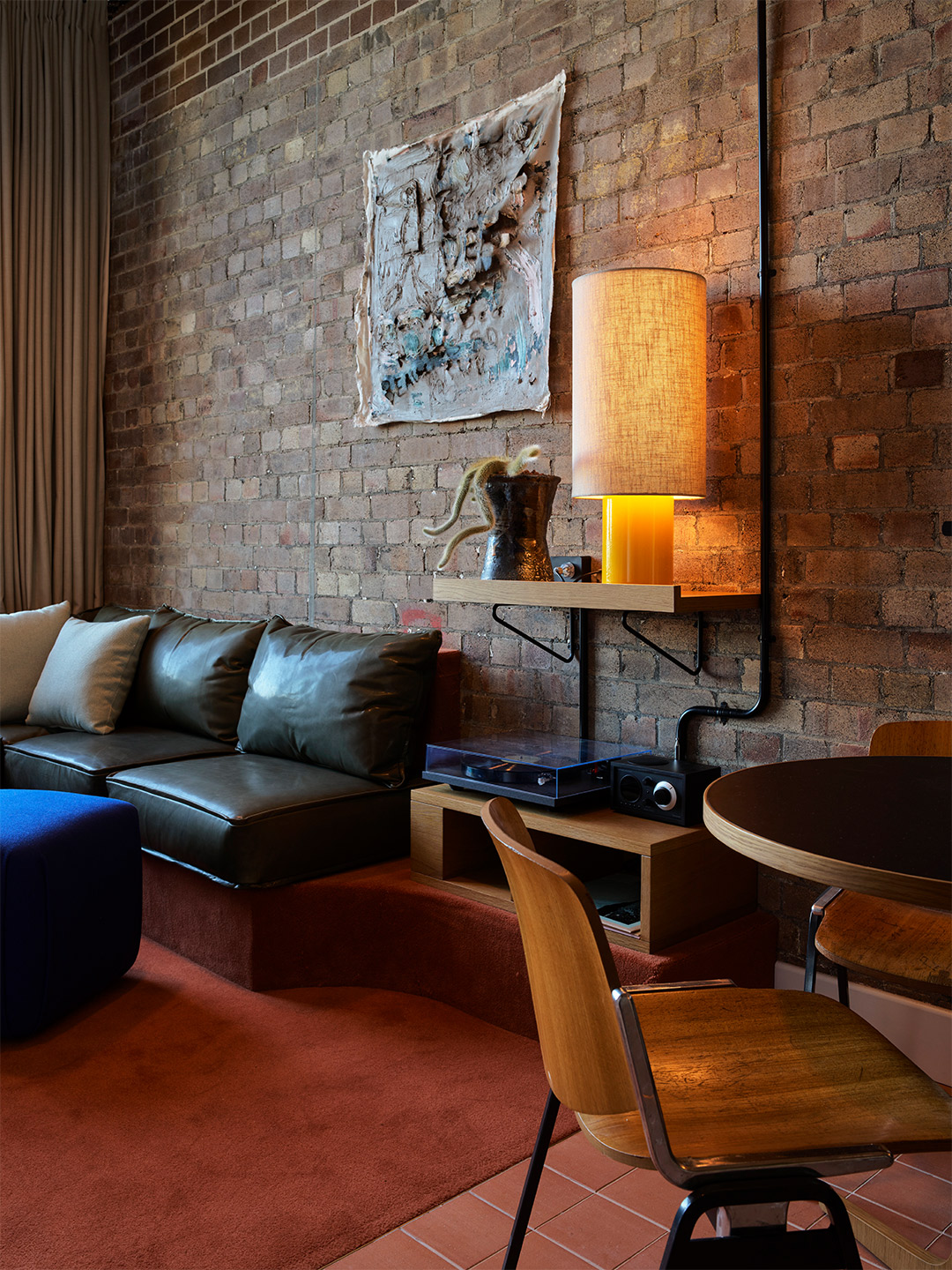
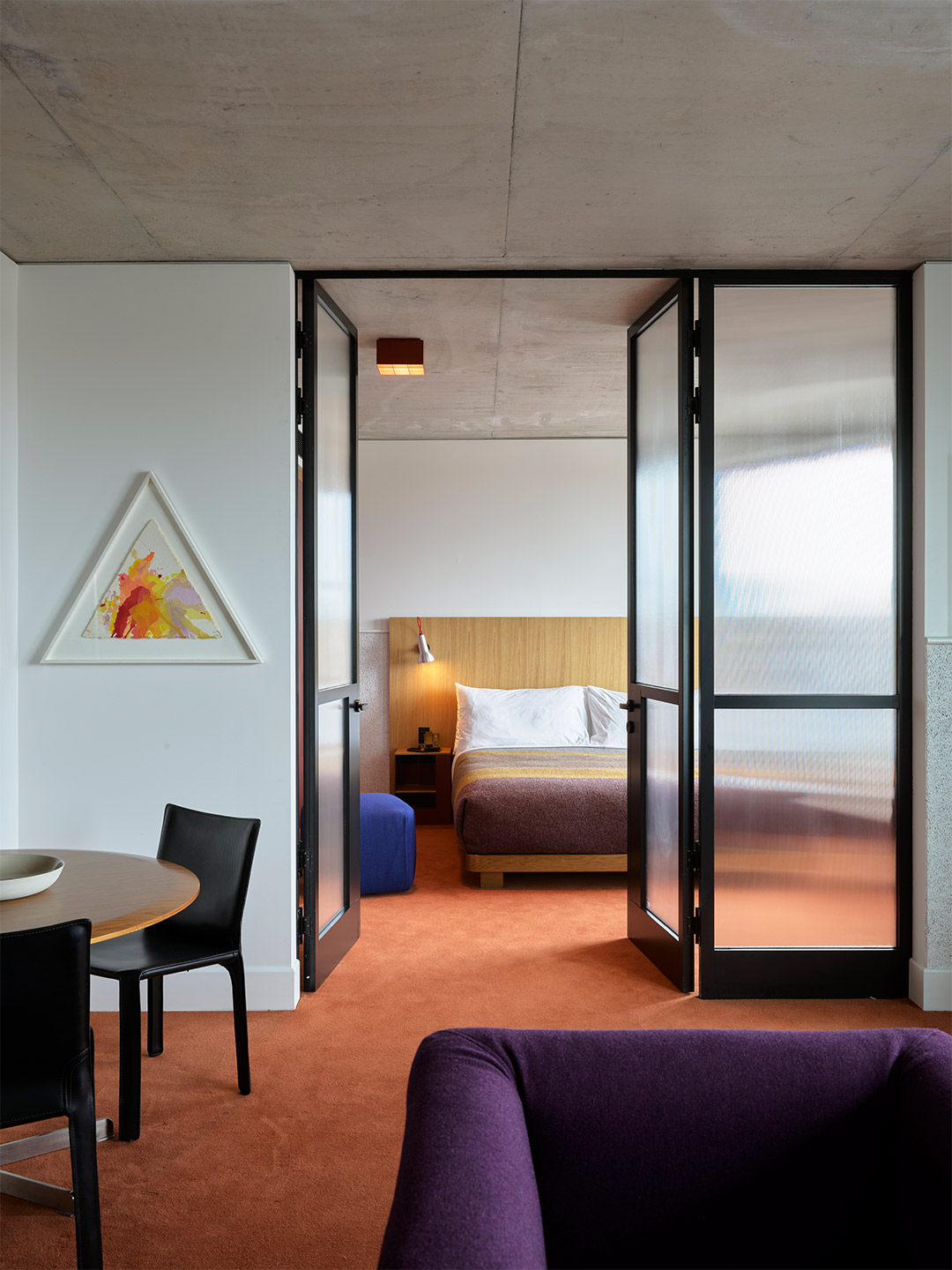
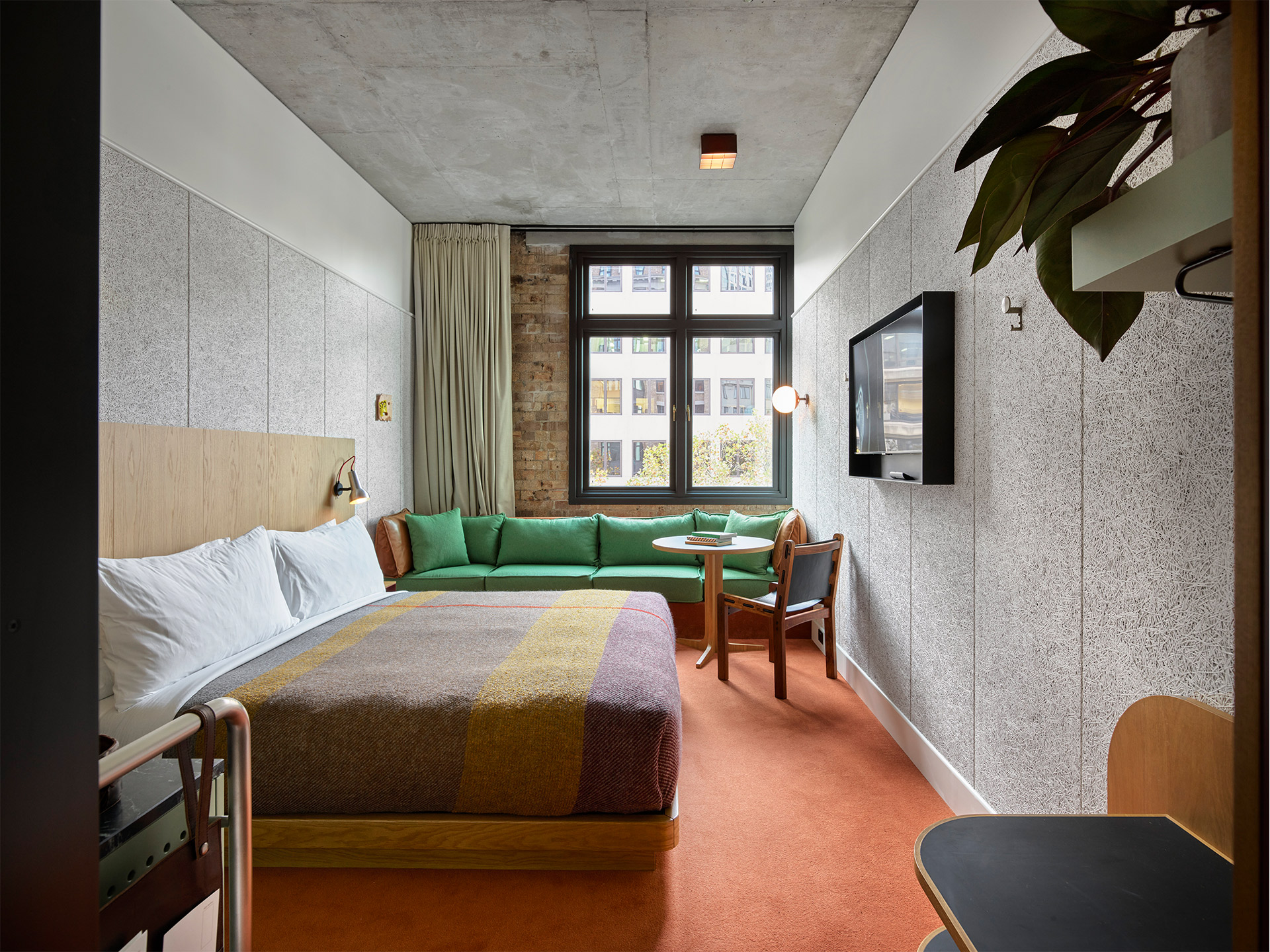
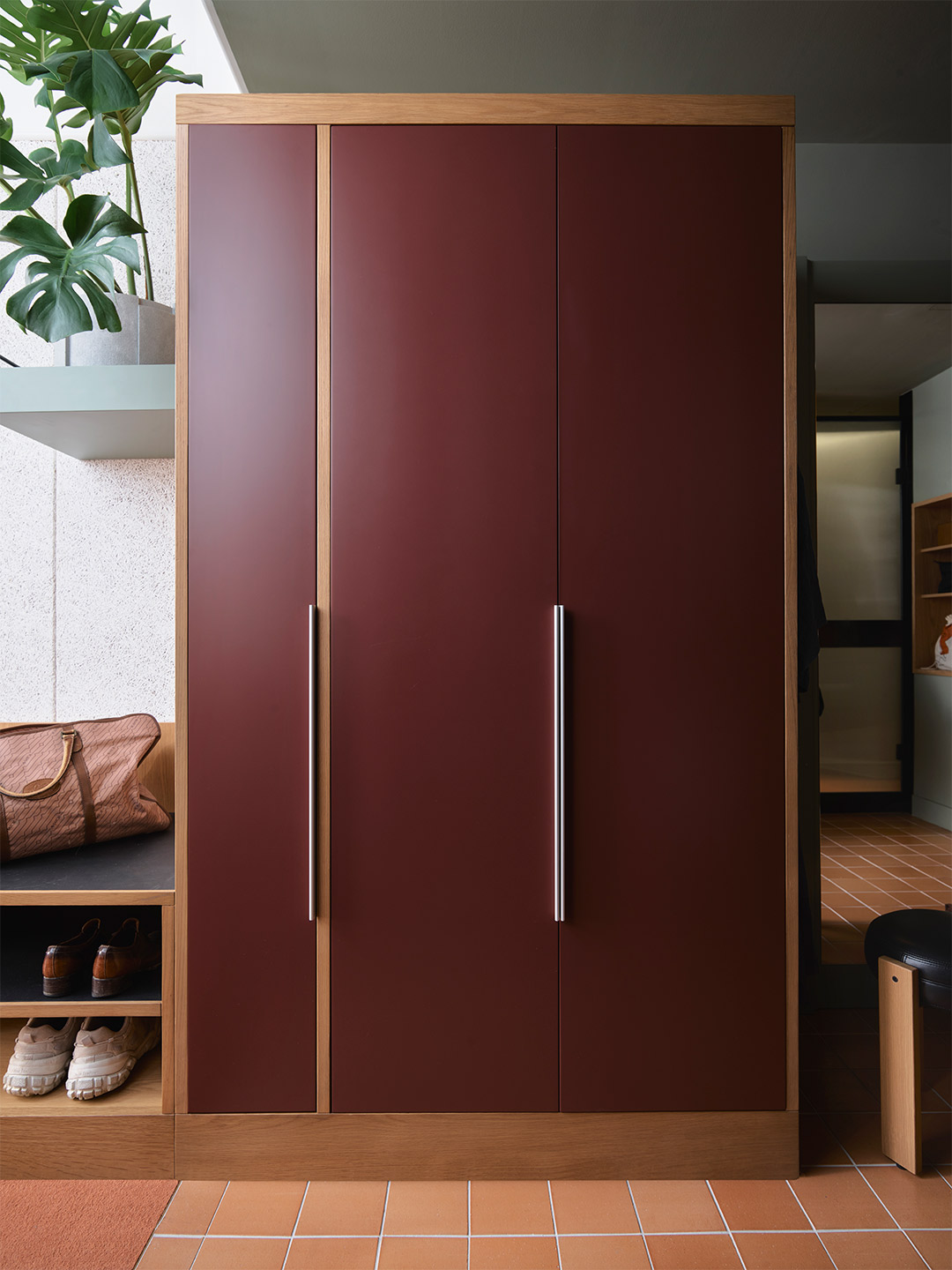
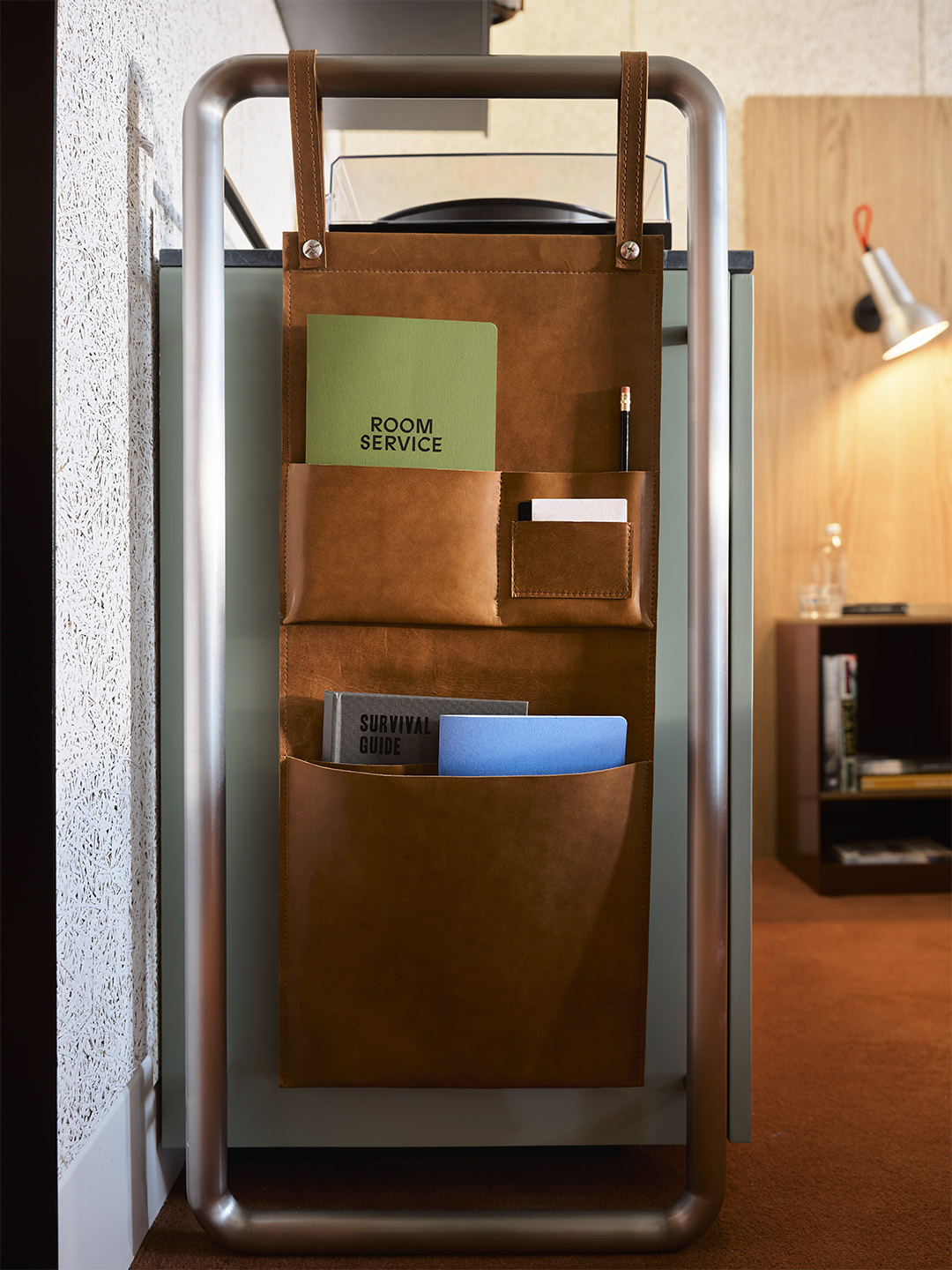
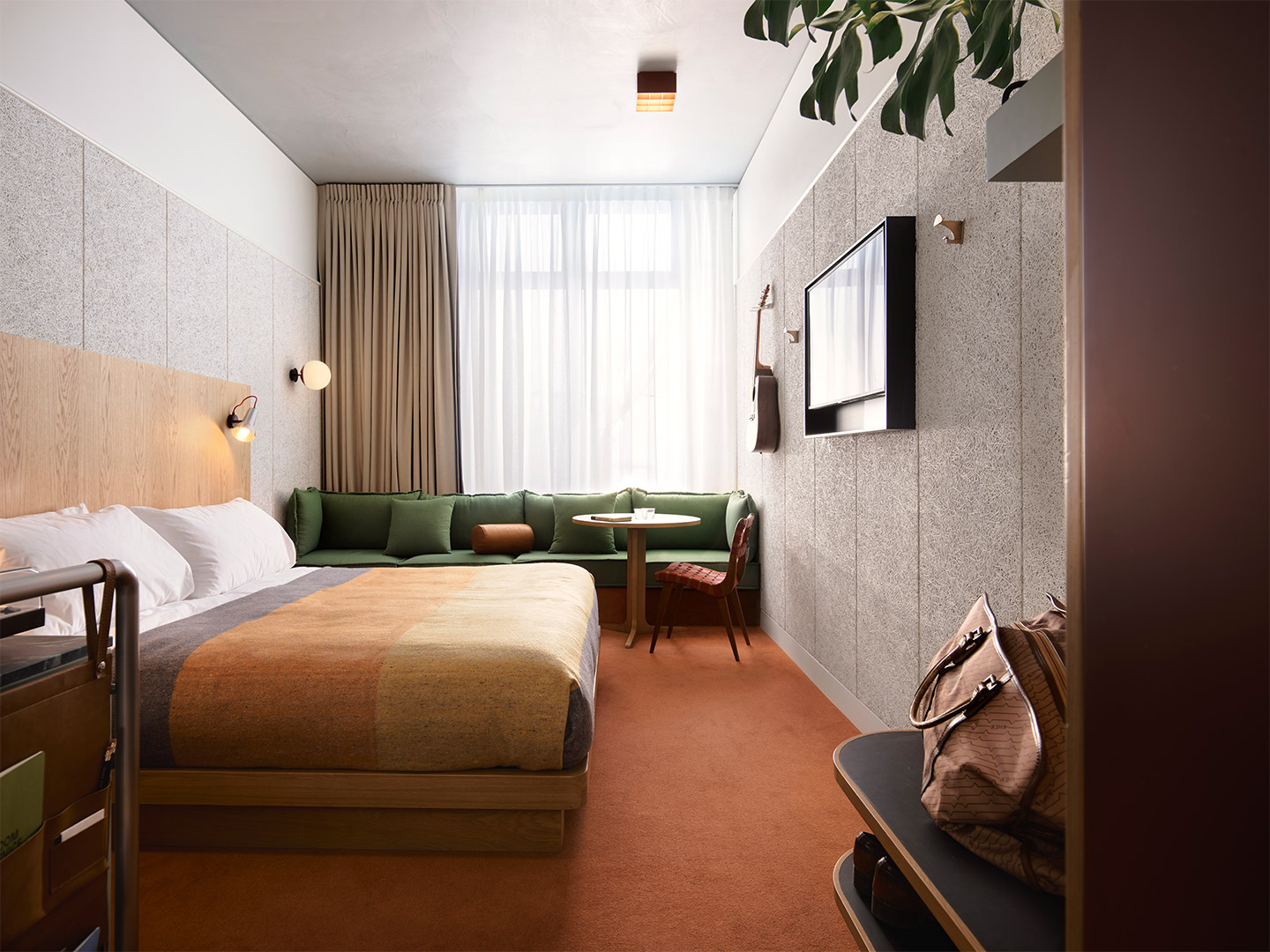
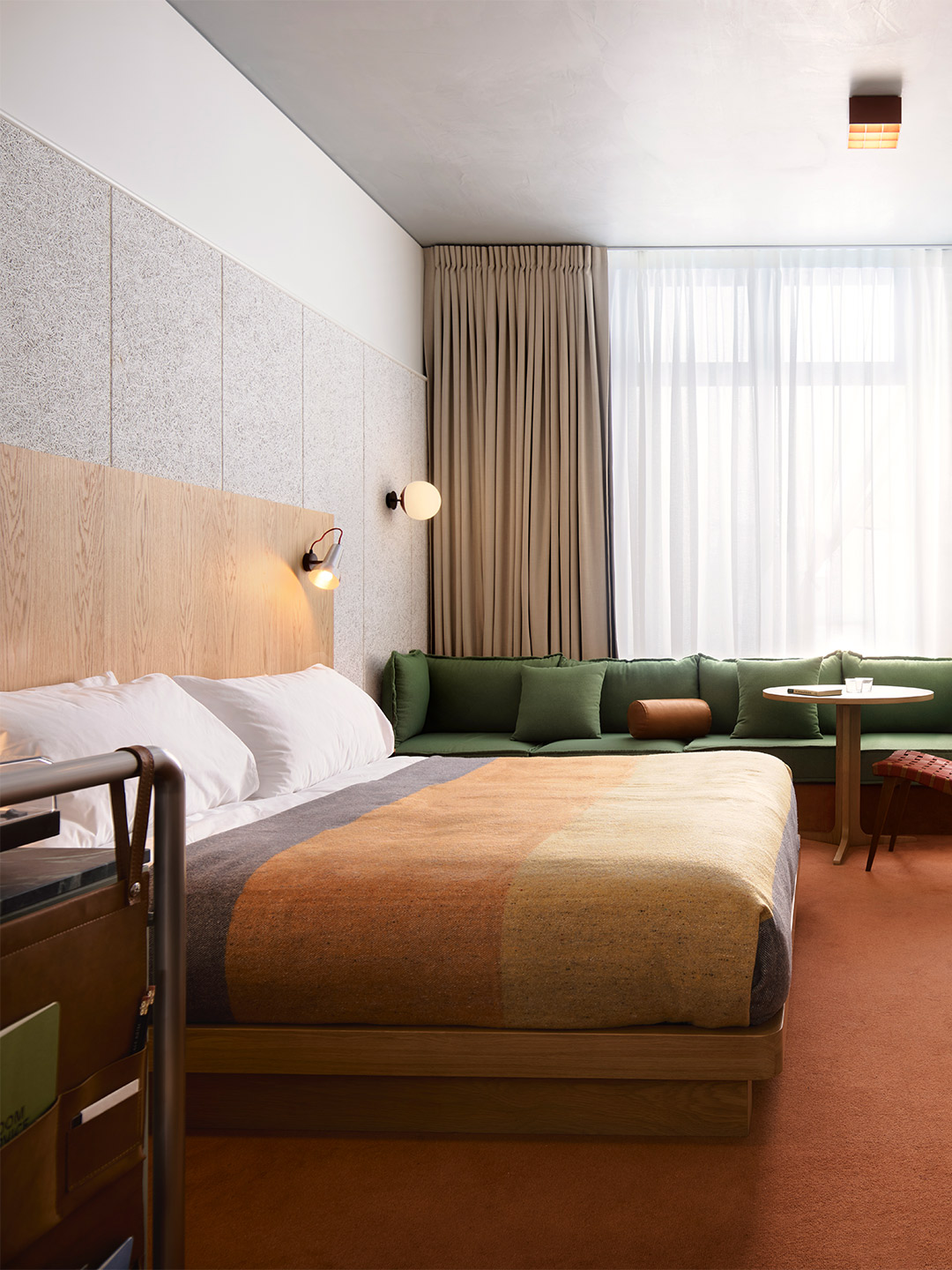
In designing the guest rooms, Flack Studio followed the modernist principle “that everything should have its proper home,” says the team from Atelier Ace. Thus, each detail was carefully considered: from the colour palette of warm ochres, terracottas and sunset orange, designed to envelop guests and offer a counterpoint to the urban environment outside; to the custom-built furniture and joinery, made to nestle into the idiosyncrasies of the heritage building with ease. Then there’s the custom-designed leather accessories in each room, made to house the minibar and amenities, as well as create handy nooks for travellers to store their sundries.
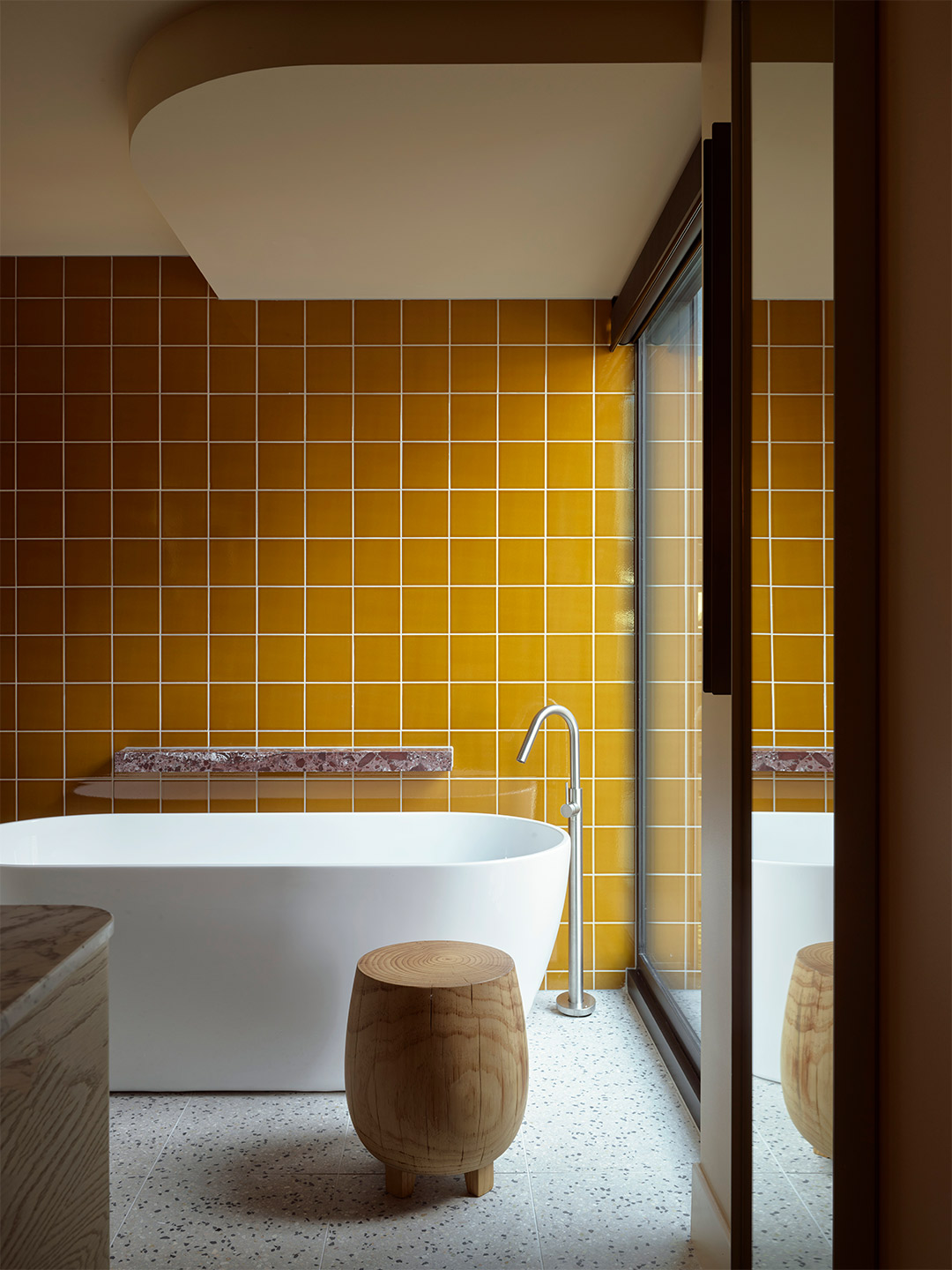
The first 10 floors of the hotel belong to the original building, while eight additional floors have been added above (with architecture by Bates Smart). The custom joinery and furniture give the rooms a residential feel. But the nuances between the old building and the new addition mean rooms are unique in detail and character. In the heritage rooms on the lower levels of the hotel, exposed brickwork is seen, while the newer levels display terrazzo flooring. Some of the rooms have open-air terrace balconies – a result of the vertical tower addition – then others feature charming bay windows overlooking Wentworth Avenue to the east, or oversized steel and glass factory windows facing Foy Lane to the west.
Returning to the hotel’s agenda-setting art program – perhaps Ace Sydney’s most memorable feature – Flack Studio curated an excitingly diverse selection of Australian artists’ works to display throughout the building. Beginning from the front desk, the artists in the collection are at the forefront of contemporary Australian art; a group that shares Ace’s playful creativity in their approach. One highlight includes the unexpected discovery of the ceramic library, inspired by the building’s former life as a ceramic kiln. Here, works by Nabilah Nordin, Scott Duncan, Ben Mazey, Laith McGregor, Kenya Peterson and others come together to time-capsule a moment in Australian ceramic history.
Tony Albert, a First Nations artist whose work incorporates what he calls “Aboriginalia” (kitsch objects adorned with stereotypes of Indigenous Australians) is another must-see, featured on the ground floor with a series of collaborative pieces titled Mid Century Modern. Then there’s Jason Phu’s work, which can be spotted in multiple locations throughout the hotel – his commissioned ink drawings appearing in corridors on various levels, on surfaces amid passageways and even inside the guest rooms, offering up a find-them-all challenge for the young or young-at-heart.
acehotel.com; flackstudio.com.au
Surry Hills has been home to so many culturally important movements and people, and has always been a home for creatives and migrating cultures.
Related stories
- Room service: Inside the Ace Hotel Sydney by Flack Studio.
- The LittleNap ‘luxury hostel’ in Hangzhou by Say Architects.
- Pitch perfect: Utah’s luxury tented pavilions.
- Plesner Architects delivers decadence at the Six Senses Shaharut resort in Israel.
What do destinations such as Kyoto, Seattle, New York and Sydney have in common? Soon enough, they’ll all be home to one of the world’s hippest hotels. The long-awaited Ace Hotel Sydney is poised to swing open its style-studded doors in May of next year, joining a portfolio of ten other boutique hotels, from Palm Springs to Portland, curated specifically for the “people who make cities interesting”.
News of the hotel arrives as many Australians continue to endure lockdowns, while international travel has been a no-go for almost two years. But as the state of New South Wales now moves swiftly to open its borders, and the city of Sydney prepares to once again unfurl its glittering splendours, overseas tourists won’t be the only ones to enjoy a sleepover at the newest Ace. The outpost’s 264 rooms are just as likely to pull a local crowd of design-loving, travel-starved Sydneysiders who are eager to enjoy a staycation in the cultural heart of the city.
Ace Hotel Sydney by Flack Studio
Located in Surry Hills, where money meets a dash of mayhem, Ace Hotel Sydney has hung its hat within the historic Tyne House brick factory – the site of one of Australia’s pioneering ceramic kilns. The project follows the 2020 opening of Asia’s first Ace Hotel, located in Kyoto, the unofficial culture capital of Japan. Featuring interiors by Commune Design, the Japanese outpost resides in a red-brick heritage building from 1926 and a new-build by heavyweight architect Kengo Kuma.
By the time it opens, about two years on from Kyoto, the launch of the Sydney hotel will mark yet another first for Ace – the hospitality group’s debut into the southern hemisphere, made possible through a partnership with Golden Age Group. “We’ve always felt a strong affinity with Australia,” says Brad Wilson, president of the Ace Hotel Group. “Though its culture and character are all its own … its intrepid optimism and renegade spirit resonates with Ace’s roots on the Pacific Coast of America.”
Melbourne-based design outfit Flack Studio, led by founder and director David Flack, was unsurprisingly snagged as the primary design partner for the hotel, forging a creative direction that’s aligned with Ace’s reputation for cultivating cutting-edge experiences. “We love [Australia’s] distinctive brand of modernism, particularly in the use of local organic materials, and were lucky enough to find a perfectly modernist partner in Flack Studio,” Brad says. “David’s eye for colour and space is completely singular – a dream design collaborator for our first hotel in Australia.”
Fuelled by a commitment to creating warm spaces that bring together Australia’s cultural history and Ace’s community-centric approach to hospitality, David says the storied site and its melting pot locale each played a significant role in his studio’s design response. “Surry Hills has been home to so many culturally important movements and people, and has always been a home for creatives and migrating cultures,” he explains. “We wanted to preserve the creative, slightly renegade energy of the space since its origins as one of Australia’s early brickworks.”
Brought to life in the cinematic colours of the Australian landscape, the design of Ace Hotel Sydney superimposes the city’s many eras and evolutions in a contrast of natural textures and tones. Ace’s in-house creative agency, Atelier Ace, explain that Flack Studio cited a number of historical references in this process, including the razor gang wars and underground liquor trade of the 1920s and ’30s, the modernist art boom of the ’60s and the Gay Solidarity Group protests of the ’70s.
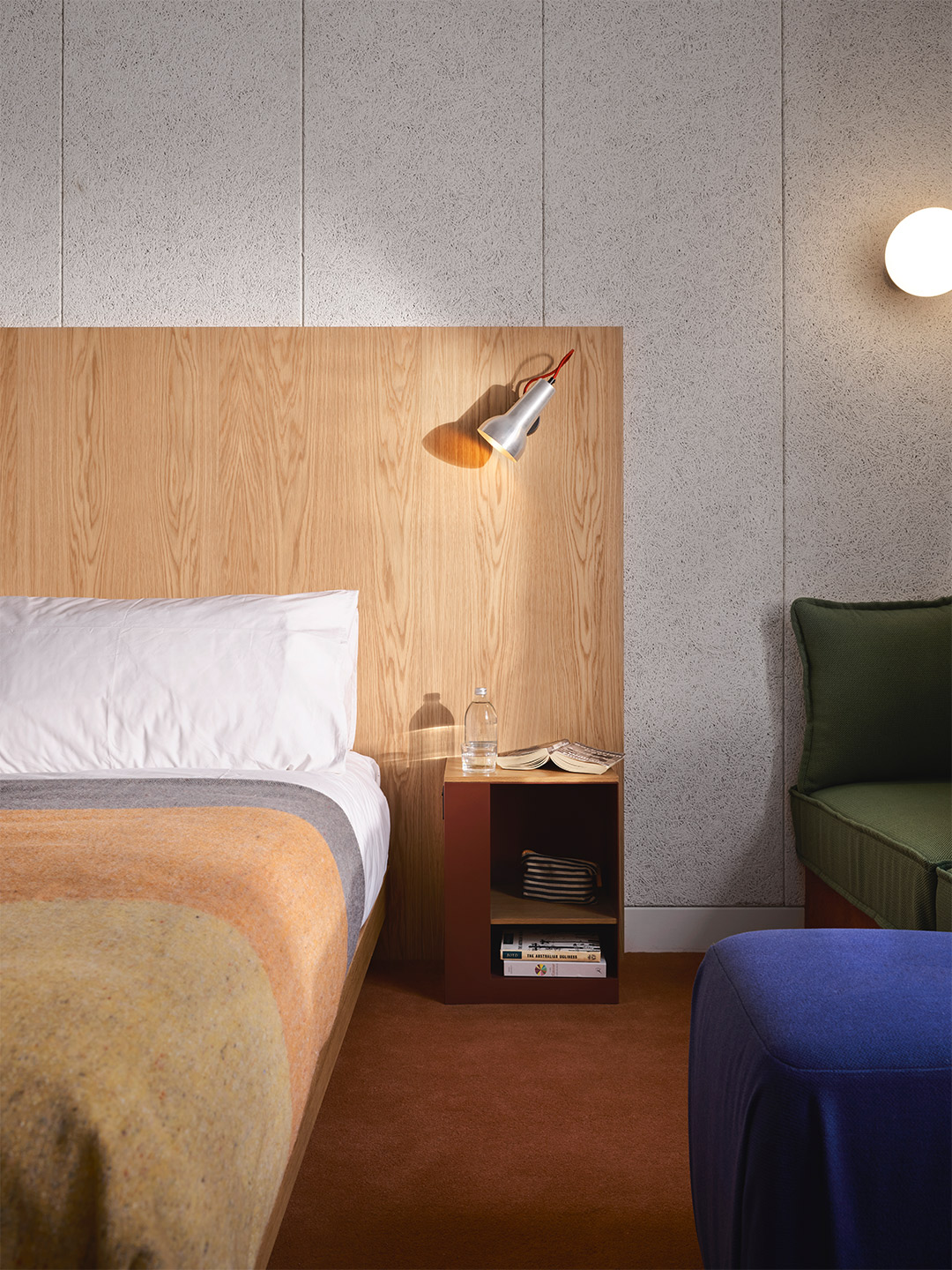
“The neighbourhood has long served as home to the most trailblazing and resilient voices of modern Australia – a culture coalesced from Surry Hills’ vibrant migrant communities,” say the Atelier Ace team. “Flack Studio embraced organic materials to create spaces [that are] honest to this history – from the acoustic textural straw walls of the hotel’s guest rooms to the striking ochre red off-form concrete staircase in its lobby.”
As is key at other hotels in the Ace group, an unwavering respect for craftsmanship is woven into the Sydney hotel, with many of the property’s furnishings, artworks and interior flourishes created specifically for the project. The custom furniture, joinery and lighting of the guest rooms was all designed by David and his team, including the textile-adorned window seats that encourage conversation, energised by the eclectic buzz of the streetscape beyond. “Ace Hotel Sydney invites the ready rhythm of Surry Hills inside,” enthuse the Atelier Ace team. “[It will be] an active commons for culture, commerce, art and community.”
Atelier Ace has revealed that Sydney’s Ace Hotel (located at 47-53 Wentworth Avenue, Surry Hills) will also feature a ground-floor restaurant, bar and cafe in the communal lobby, as well as a rooftop restaurant and bar. Would-be guests are invited to make reservations at the hotel from October 1, with rooms available from May 1, 2022.
acehotel.com; flackstudio.com.au
Surry Hills has been home to so many culturally important movements and people, and has always been a home for creatives and migrating cultures.
Related stories
- The LittleNap ‘luxury hostel’ in Hangzhou by Say Architects.
- Pitch perfect: Utah’s luxury tented pavilions.
- Plesner Architects delivers decadence at the Six Senses Shaharut resort in Israel.
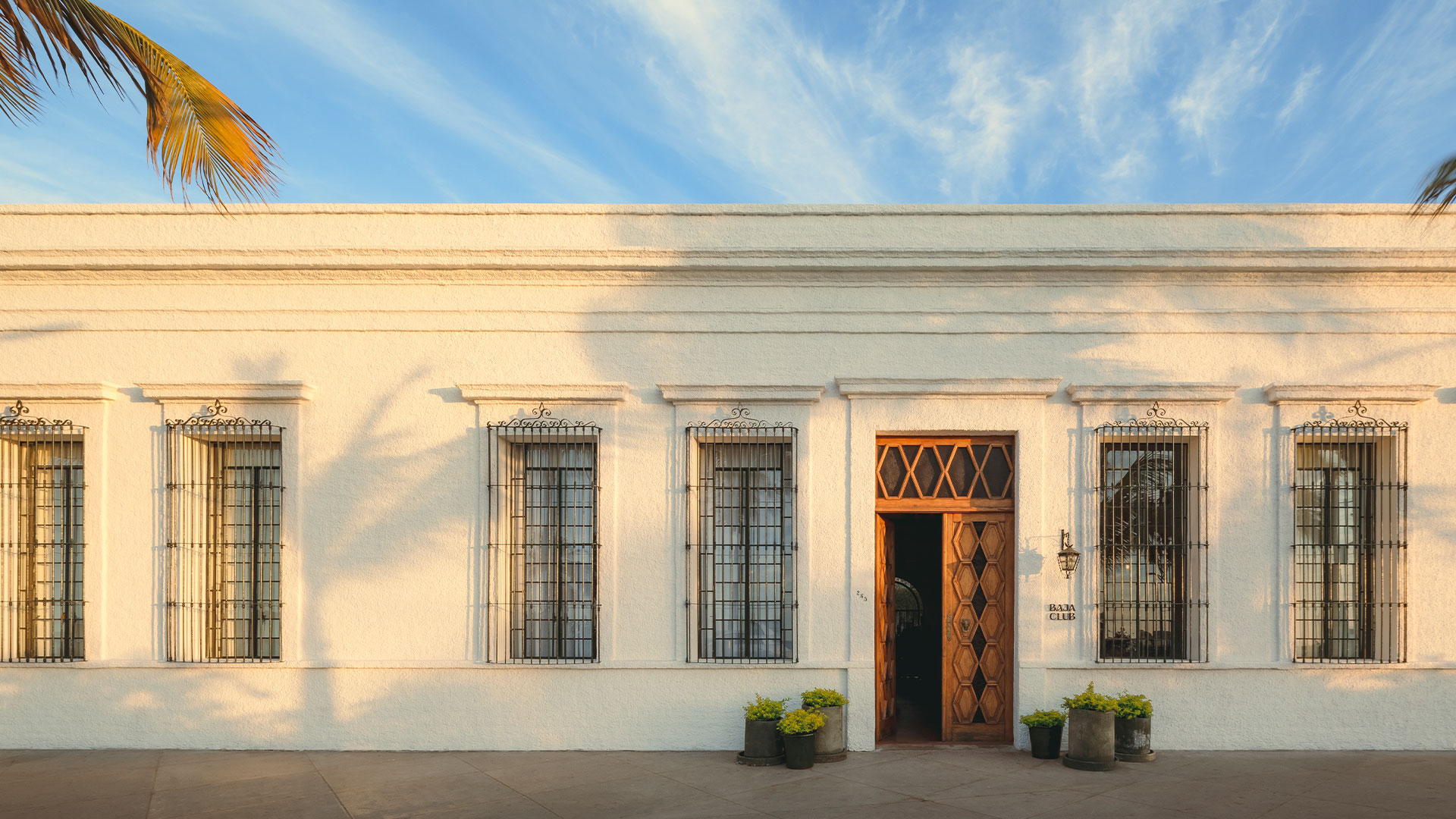
Overlooking the famed Malecón promenade in the historic heart of La Paz, Mexico, the Baja Club Hotel’s springtime opening is a welcome ray of sunshine on the global travel horizon. Located on the Baja California Peninsula in Mexico’s northwest, the Grupo Habita-owned venue occupies an early 20th century hacienda, reborn at the hands of design studios Max von Werz Arquitectos and Jaune Architecture. The designer destination now stands as a glorious example of adaptive reuse, comprising 32 guest rooms and suites, a pool and spa, restaurant, and a rooftop bar that’s already a smash-hit. “After all, this wouldn’t be a Grupo Habita project if it didn’t have the hippest sundowner joint in town,” quips Grupo Habita co-founders Carlos Couturier and Moisés Micha.
Grupo Habita’s Baja Club Hotel in northwest Mexico
Grupo Habita has been at the forefront of a design-led venue revolution in Mexico’s hospitality industry since 2000 when it opened the Habita Hotel, its first “lifestyle hotel” in Latin America. Since then, the hospitality group has amassed over a dozen diverse, award-winning hotels across Mexico, and in the United States with The Robey in Chicago. The edgy operators excel at pinpointing untapped locations in Mexico where they unleash their vision and adapt it to suit the personality of the neighbourhood and the city at-large. “It’s about creating experiences for your guests and making the world better through hospitality,” they preach.
In realising the Baja Club Hotel, their 14th project together, Carlos and Moisés looked to the legendary Sea of Cortés and their own patch of coastline to find inspiration. Through this process they discovered that La Paz was, for centuries, one of the world’s foremost pearl fishing centres, as documented in John Steinbeck’s novel The Pearl. The area boasts such rich biodiversity that French explorer Jacques Cousteau once referred to it as “the aquarium of the world”. While the site of the hotel, a classic mission-style villa built in 1910, was revealed to be the location of oyster pearl harvesting in a former life. This storied past naturally informed the transformation from hacienda to hotel.
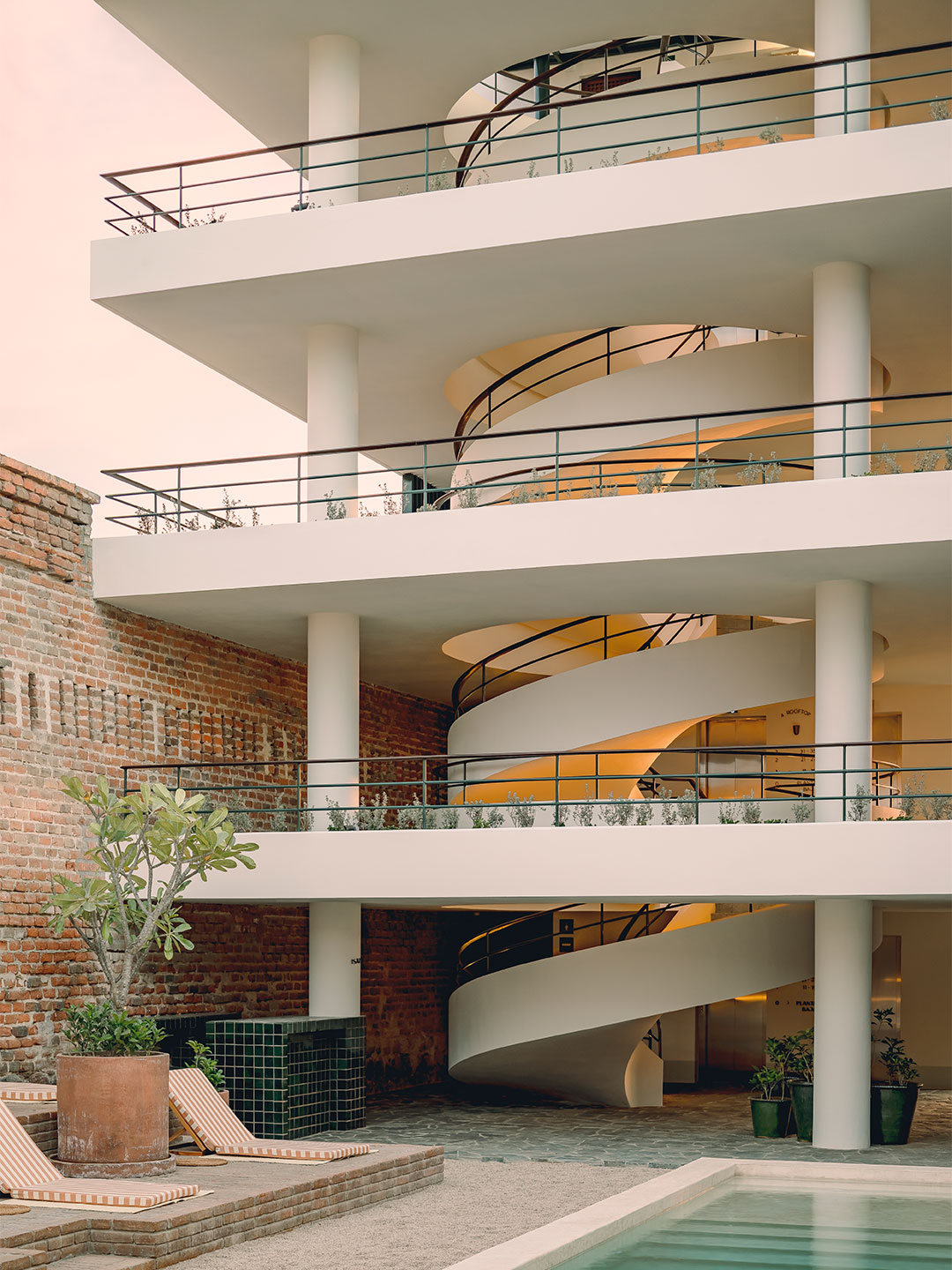
Tasked with repurposing the old villa, architecture and design firms Max von Werz Arquitectos and Jaune Architecture collaborated closely with the client on the new vision. Perhaps their boldest gesture was the addition of a chic four-storey extension with a show-stopping spiral staircase that masterfully merges old with new. The tiered additions maintain the sleek low-profile of the original home and provide generous terraces with views across La Paz Bay. “Subtle nautical connotations such as the new-build’s horizontal streamlining and the use of prominent timber elements throughout the project play on the maritime context of the hotel,” explains the Grupo Habita team.
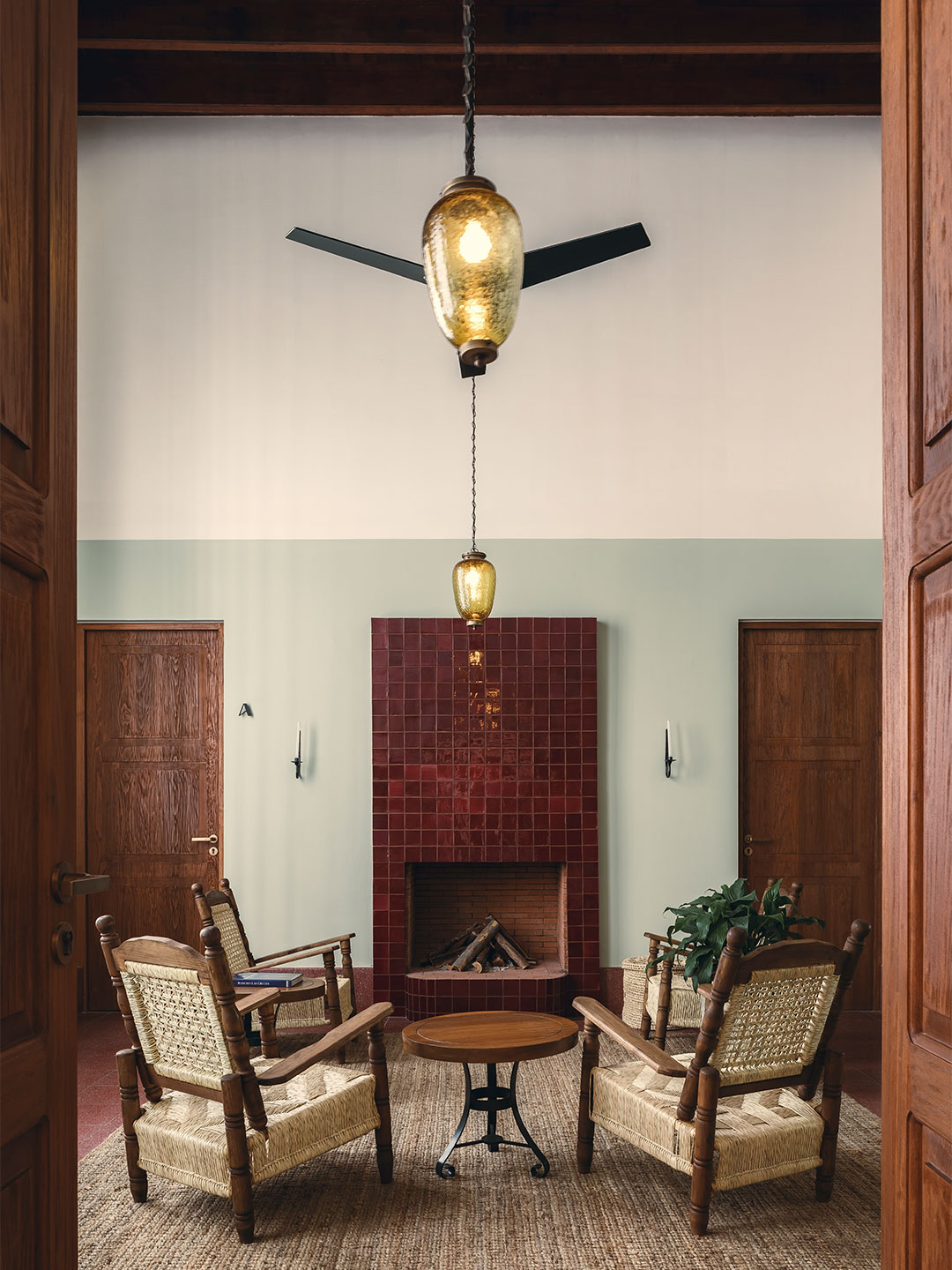
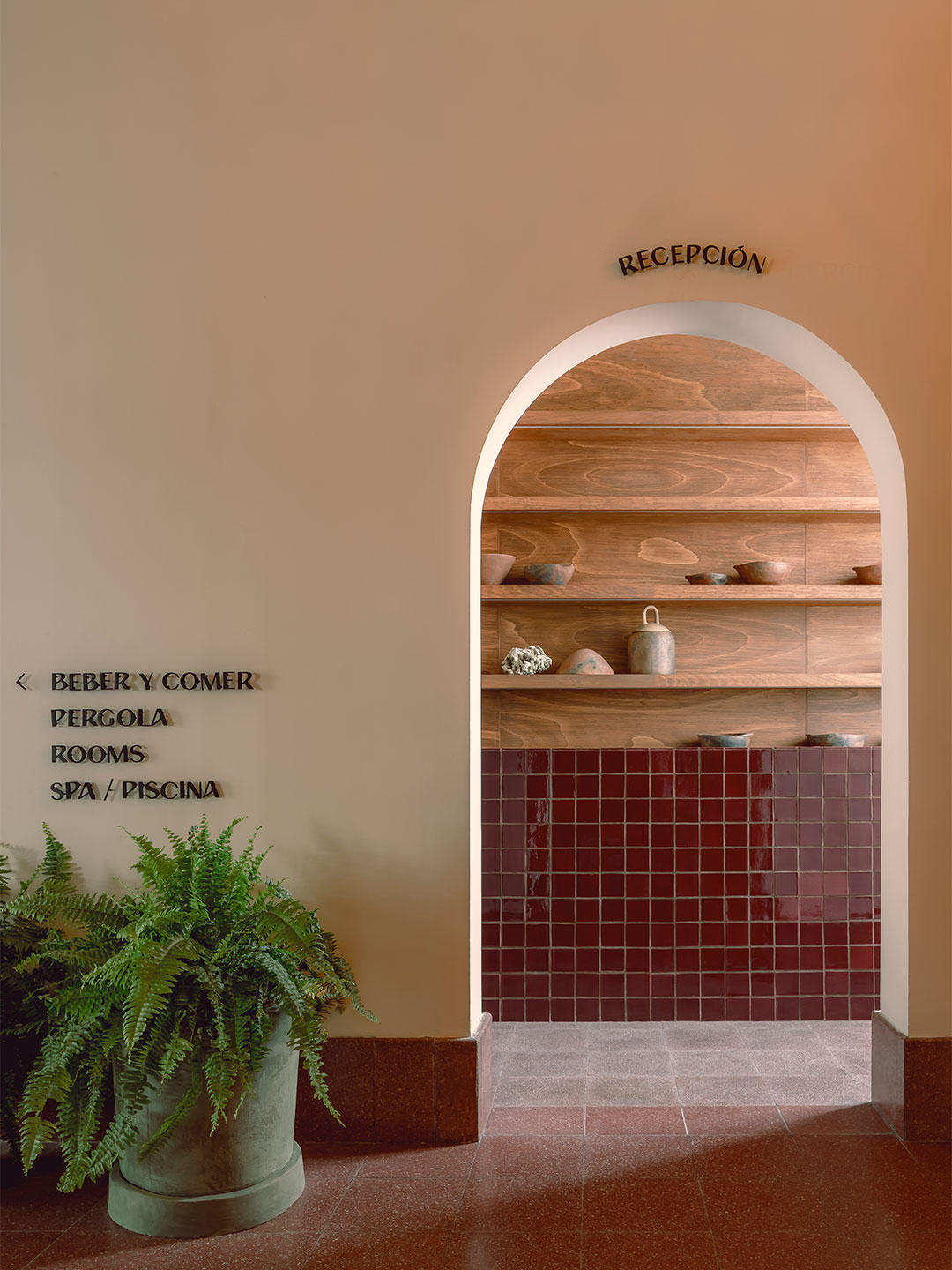
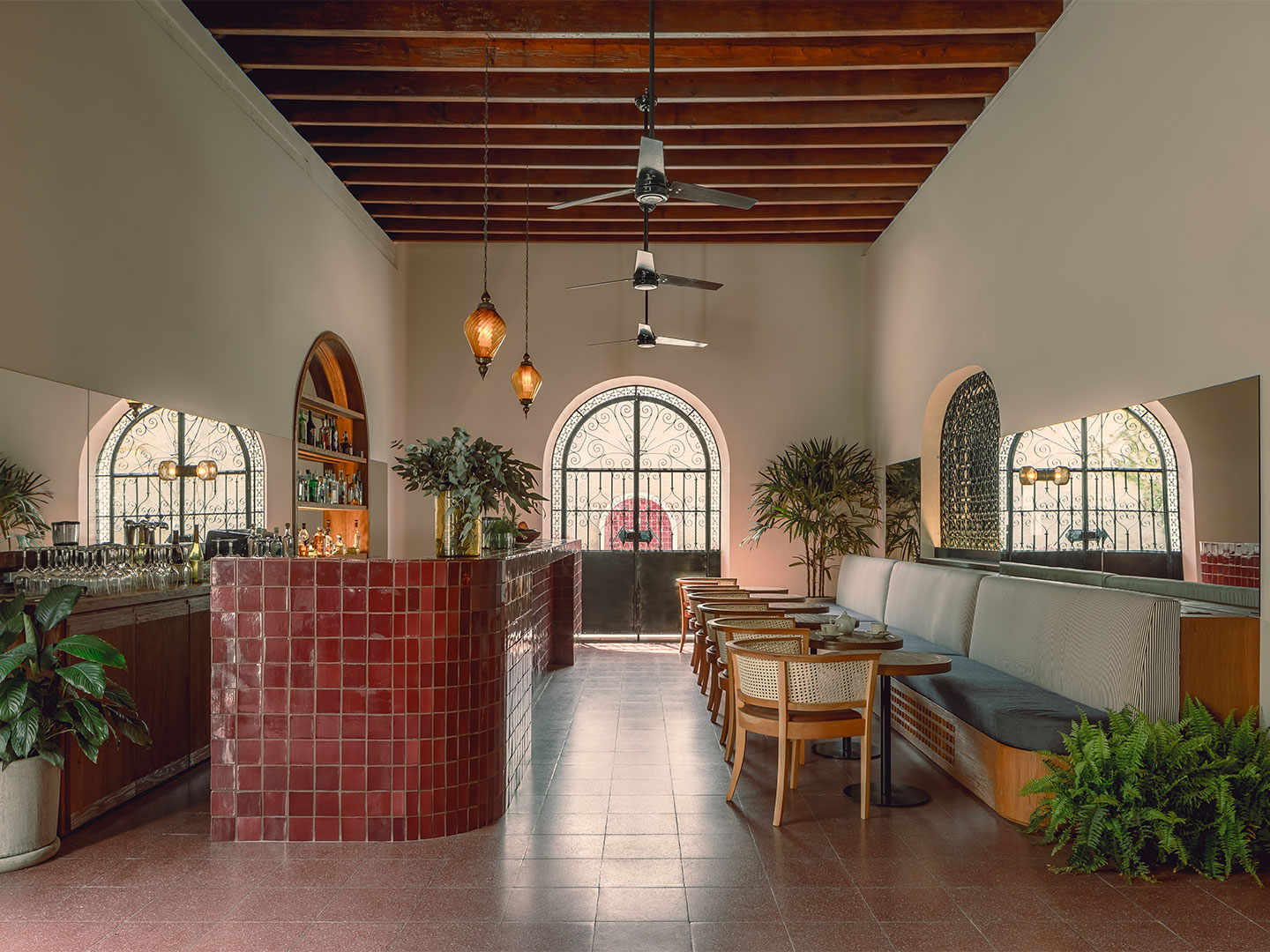
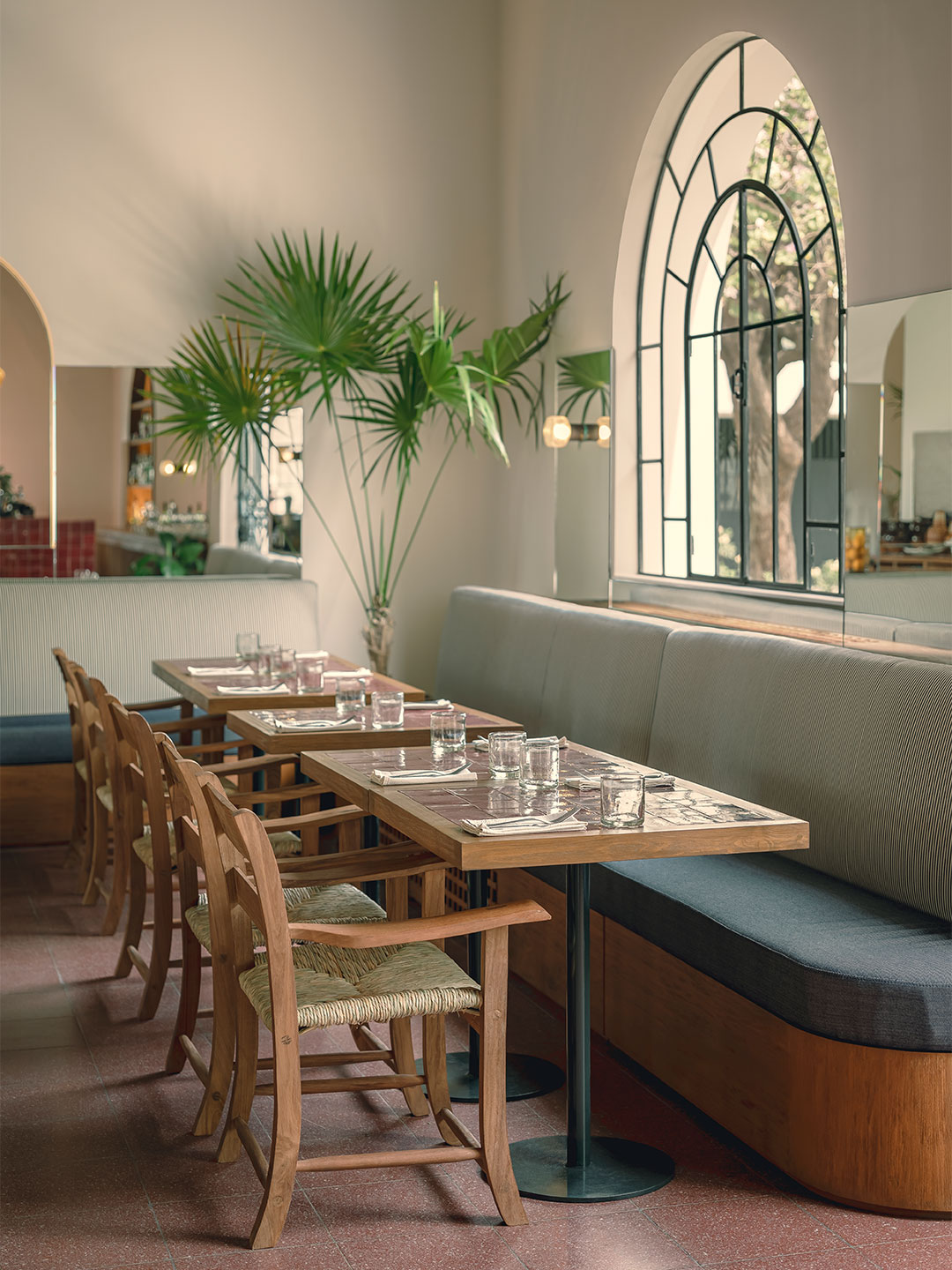
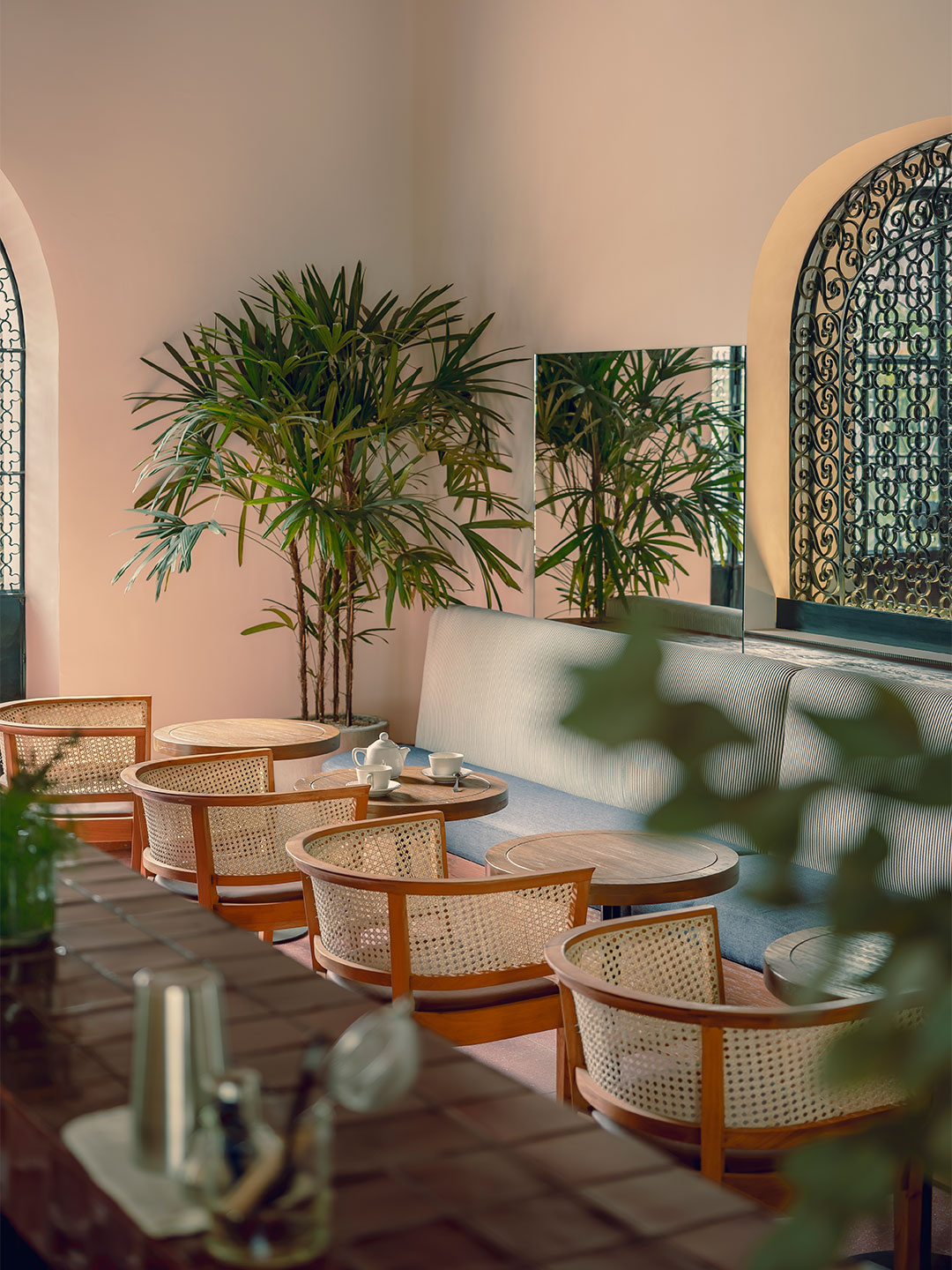
Taking cues from the country’s rich culture of colour, texture, and craftsmanship, spaces in the hotel are swathed in the same green and red tones commonly seen on the streets and found in Mexican earthenware and woven materials. Nods to Mexico’s architectural past arrive in the form of an imposing double-door main entrance with original ironmongery, tall windows dressed in intricate ironwork, exposed timber beams, colourfully tiled bathrooms and sensational red terrazzo floors.
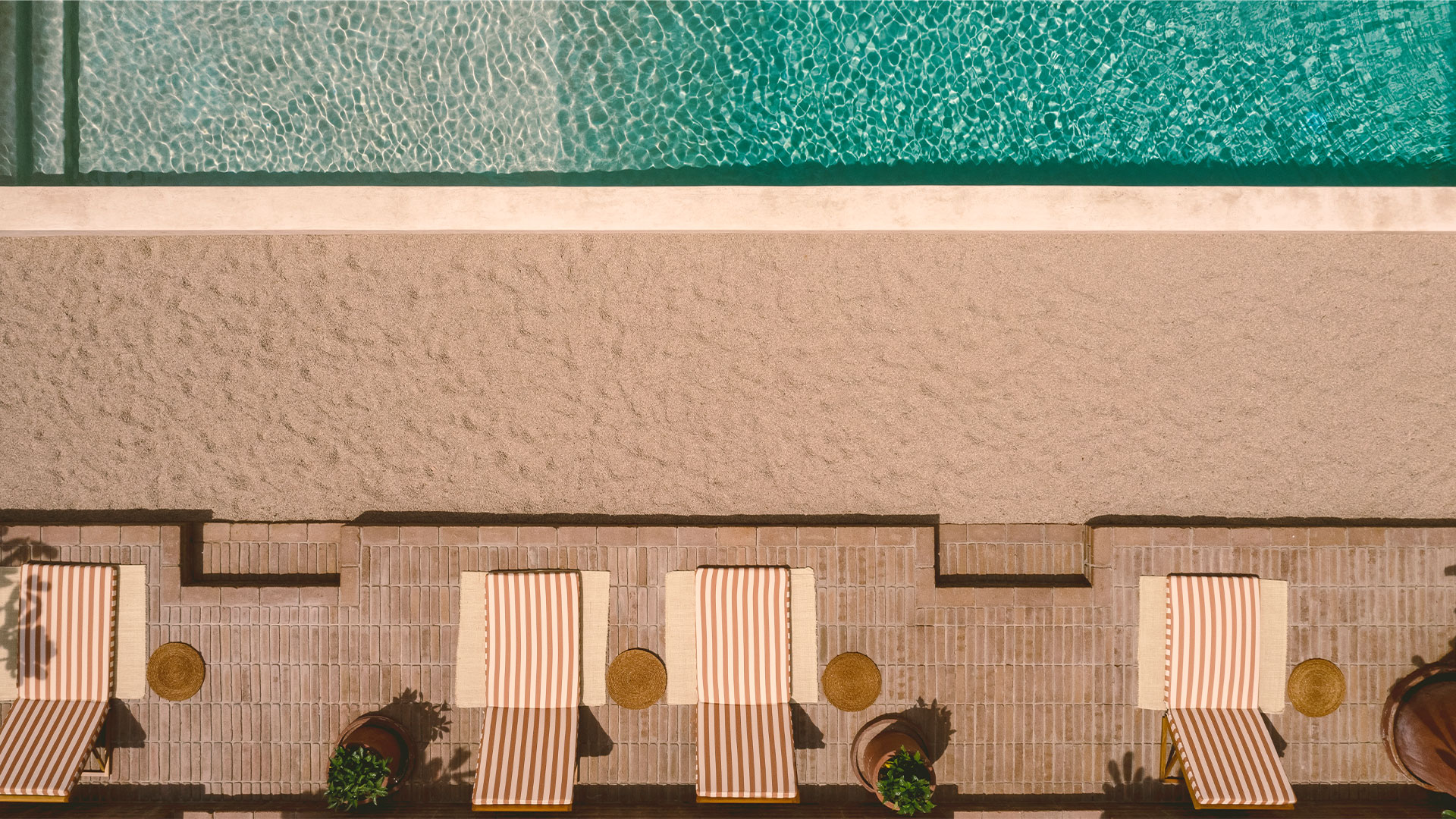
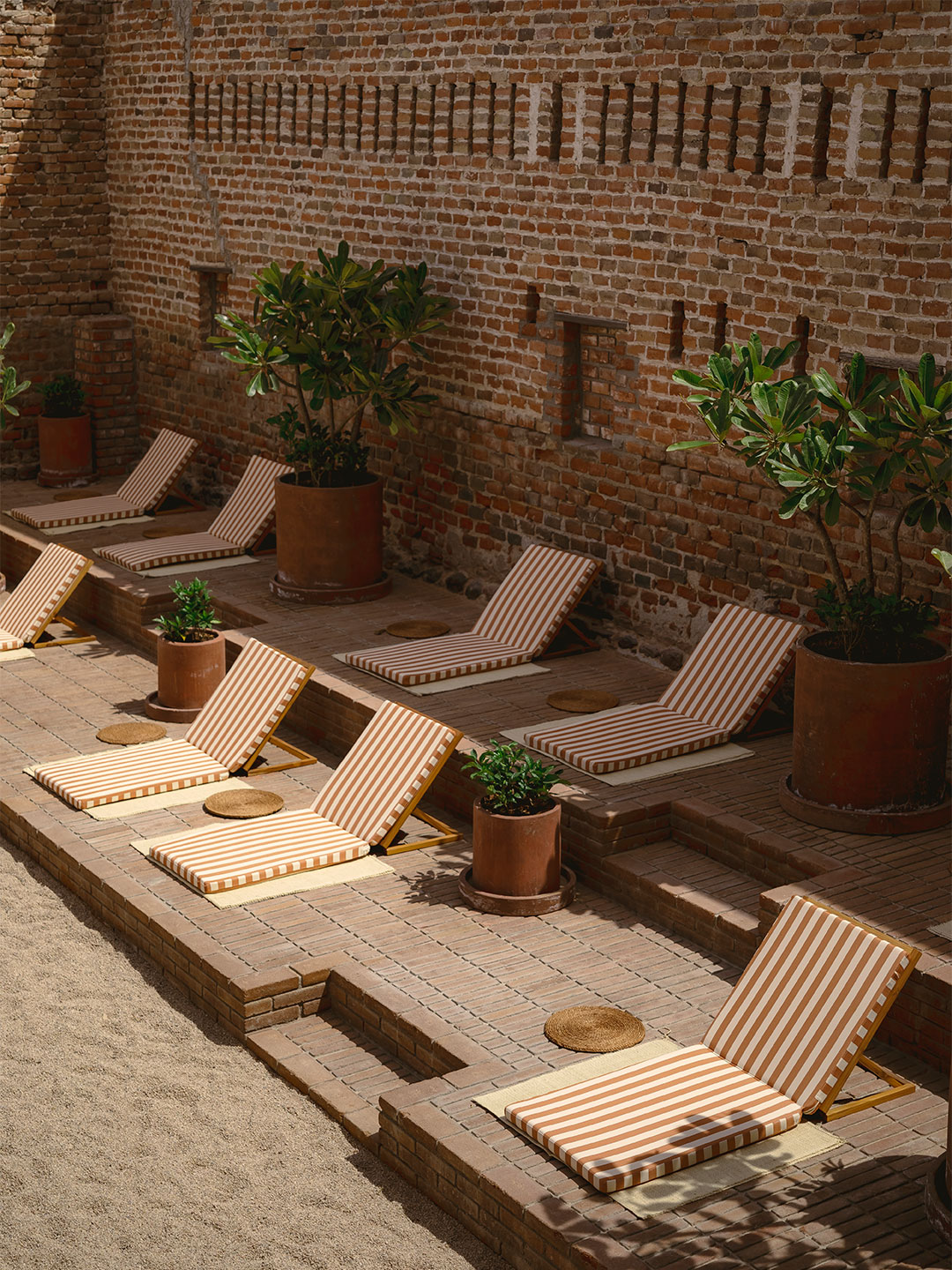
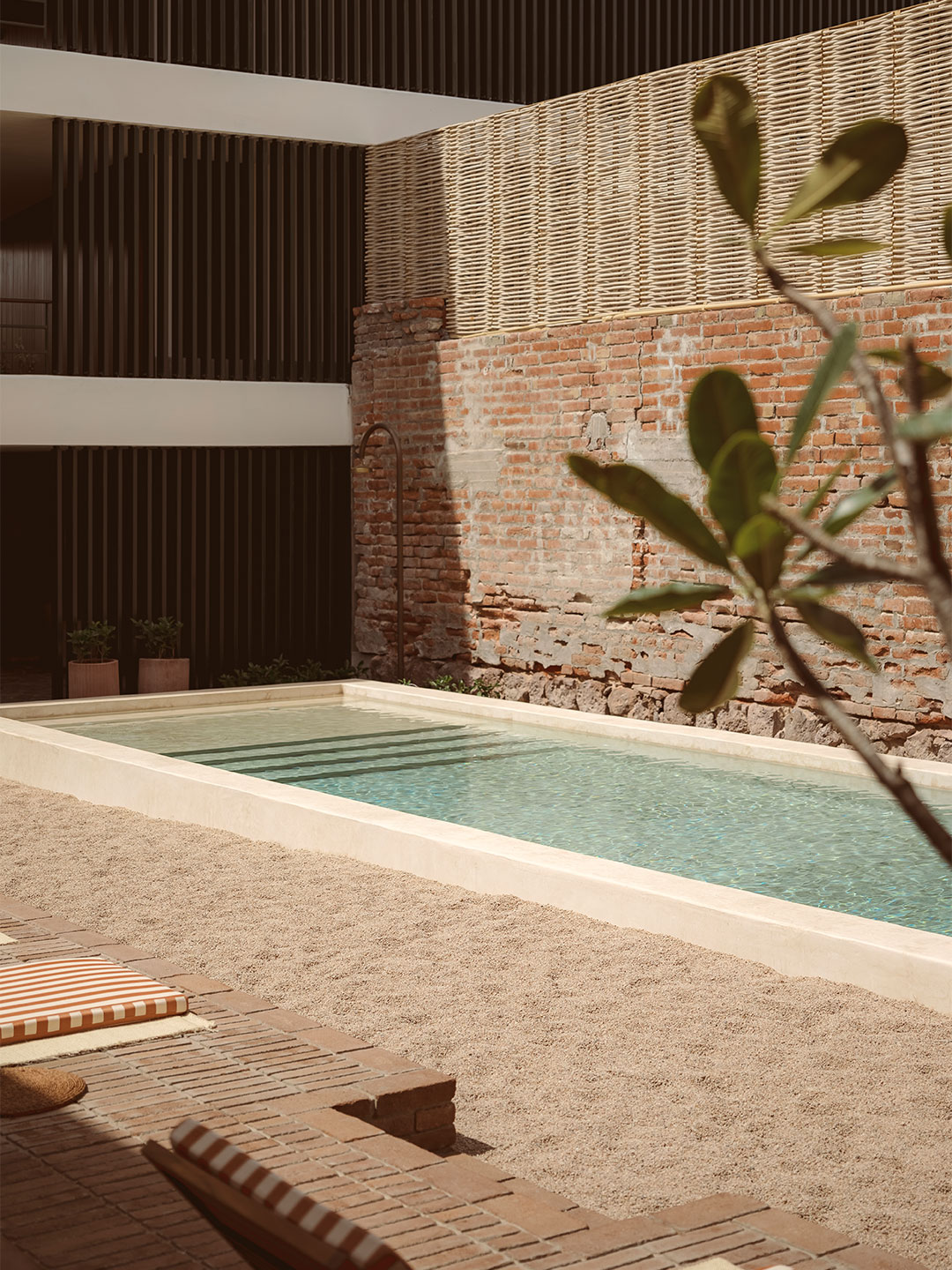
Viewed from the street, a rough stucco facade highlights the villa’s original character, while the new L-shaped building and its 32 rooms frame the pool and walled courtyard, creating clusters of peaceful patios and sun-drenched gardens. From the central courtyard, guests are to feel cocooned in the intimate nature of the property, while a full spa experience is available, as is a restaurant concept centred around Greek flavours.
Working with local artisans, the architecture and design team paid special attention to respecting the surrounding environment through an implementation of “bioclimatic design”. Central to this approach, an original pergola was restored – integral to the preservation of native vegetation on-site – while an outdoor kitchen further encourages guests to interact in the open-air.
As with previous projects in their portfolio, Grupo Habita’s commitment to infusing the local experience into every aspect of the hotel comes from collaborating in a holistic sense. “We use a local team every time we build a hotel – the surroundings and their local traditions are the very heartbeat of our projects,” Carlos says, who in the same breath reveals the simple secret at the core of the business: “The idea is for guests to feel welcomed.”
maxvonwerz.com; jaunearchitecture.com; bajaclubhotel.com
We use a local team every time we build a hotel – the surroundings and their local traditions are the very heartbeat of our projects.
Related stories
- Hotel Les Deux Gares in Paris by Luke Edward Hall.
- Inside the Ace Hotel Kyoto by Kengo Kuma and Commune.
- Holiday maker: The Calile Hotel by Richards and Spence.
- Plesner Architects delivers decadence at the Six Senses Shaharut resort in Israel.
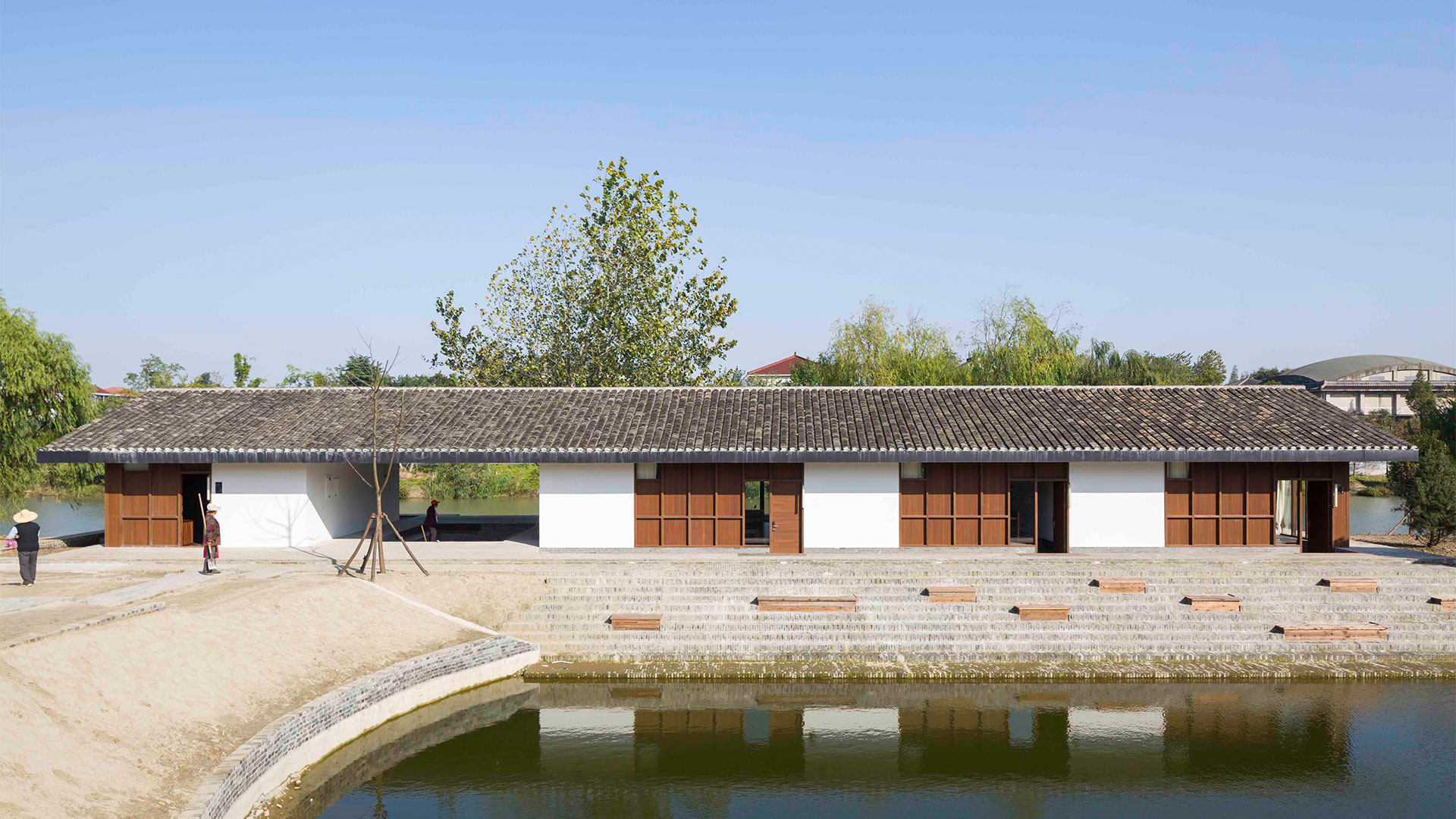
Situated on a peaceful plot surrounded by small lagoons, in close proximity to the scenic Slender West Lake in China’s Jiangsu Province, the Tsingpu Yangzhou Retreat in China presented Shanghai-based architectural design practice Neri&Hu with its fair share of challenges. The firm – which was co-founded by Lyndon Neri and Rossana Hu – reused several existing structures for the boutique hotel, bestowing them with updated functions fit for hotel service, while also adding new structures to unify the site and complement the serene locale.
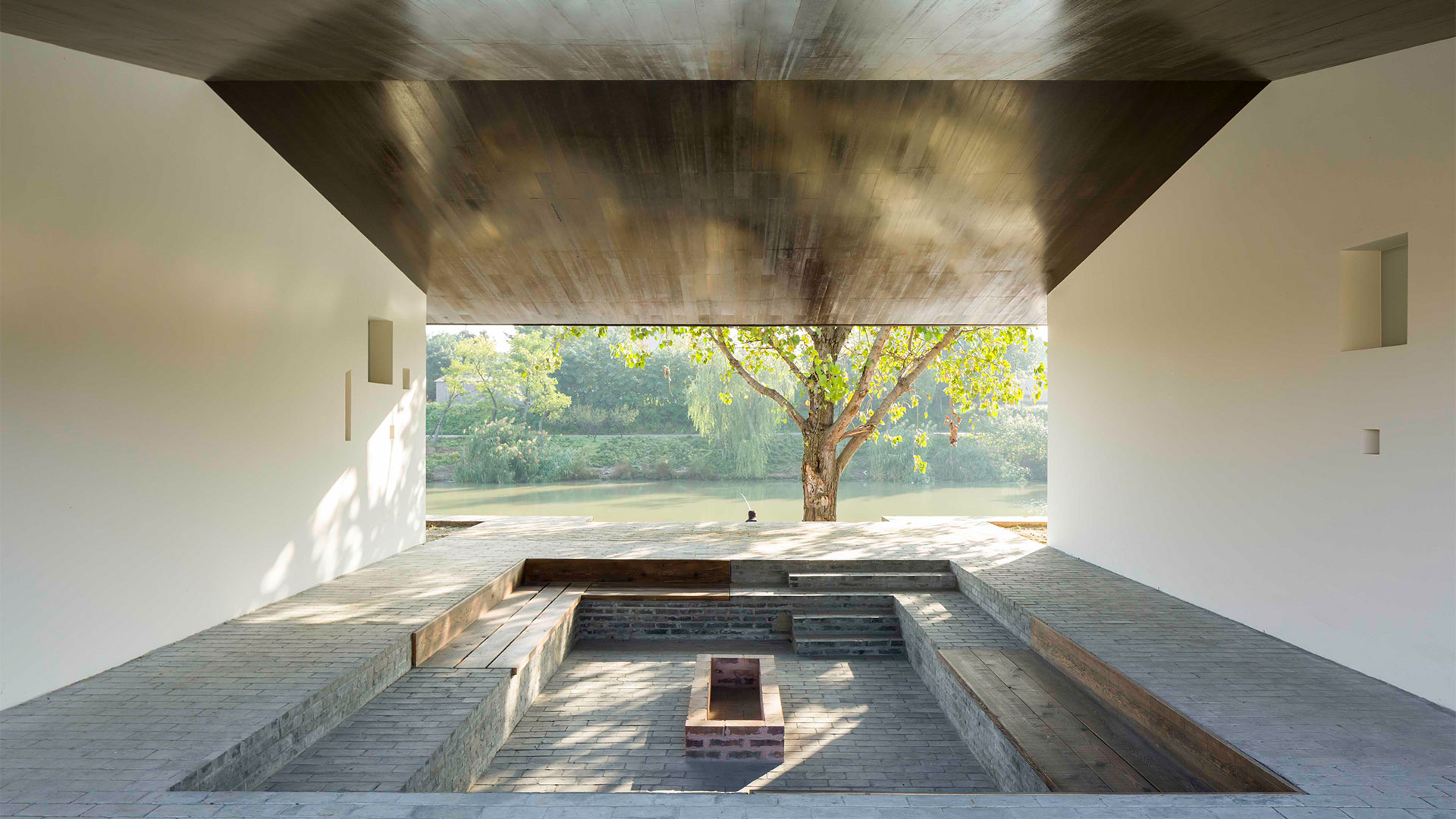
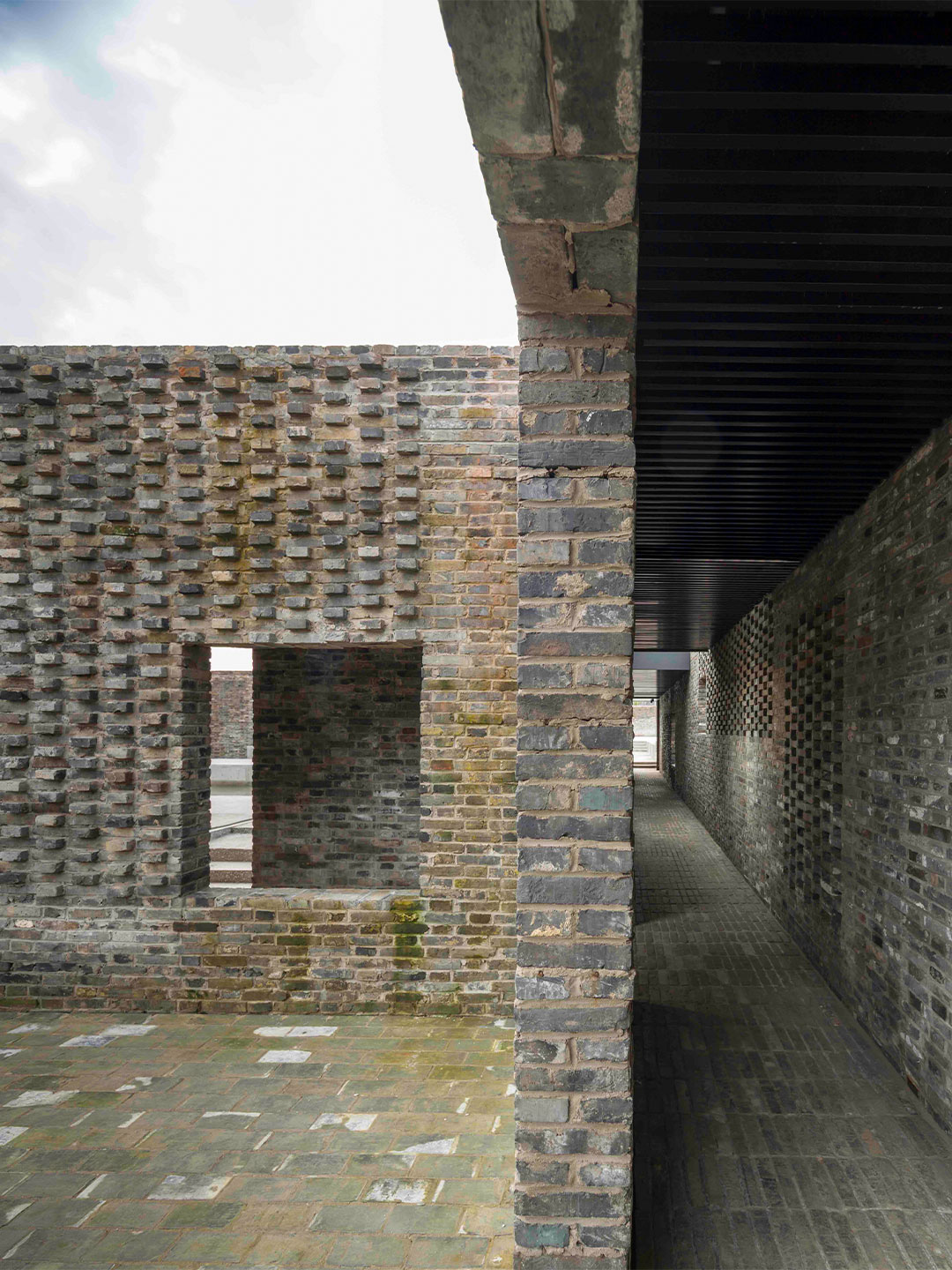
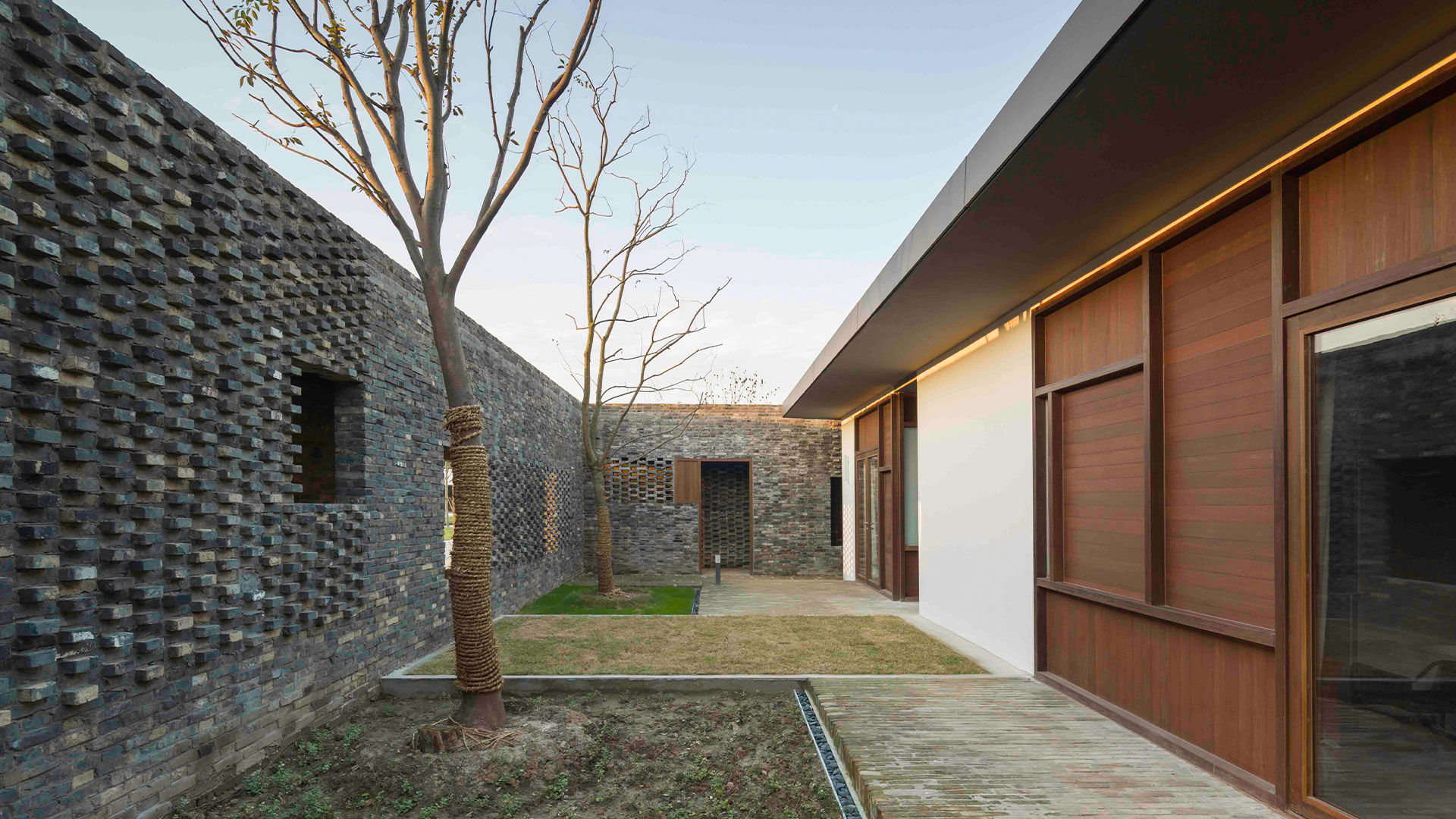
In bringing the project to life, the key source of inspiration for the designers was the courtyard house typology of vernacular Chinese architecture. Neri&Hu connected the peaceful interior spaces and the partially enclosed pathways – which lead guests through the hotel – with multiple patios that adopt the essential role of establishing a hierarchy among old and new structures.
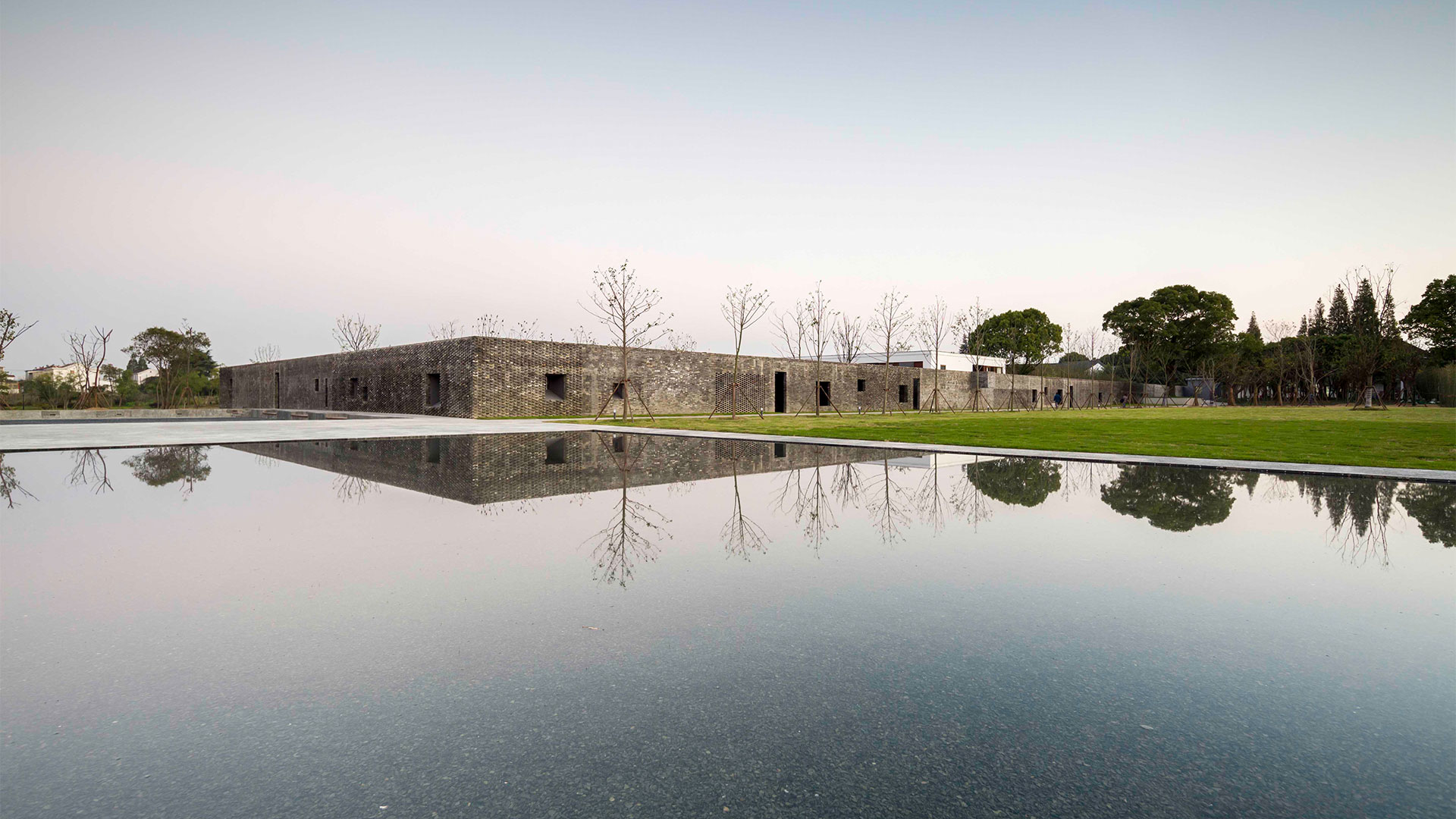
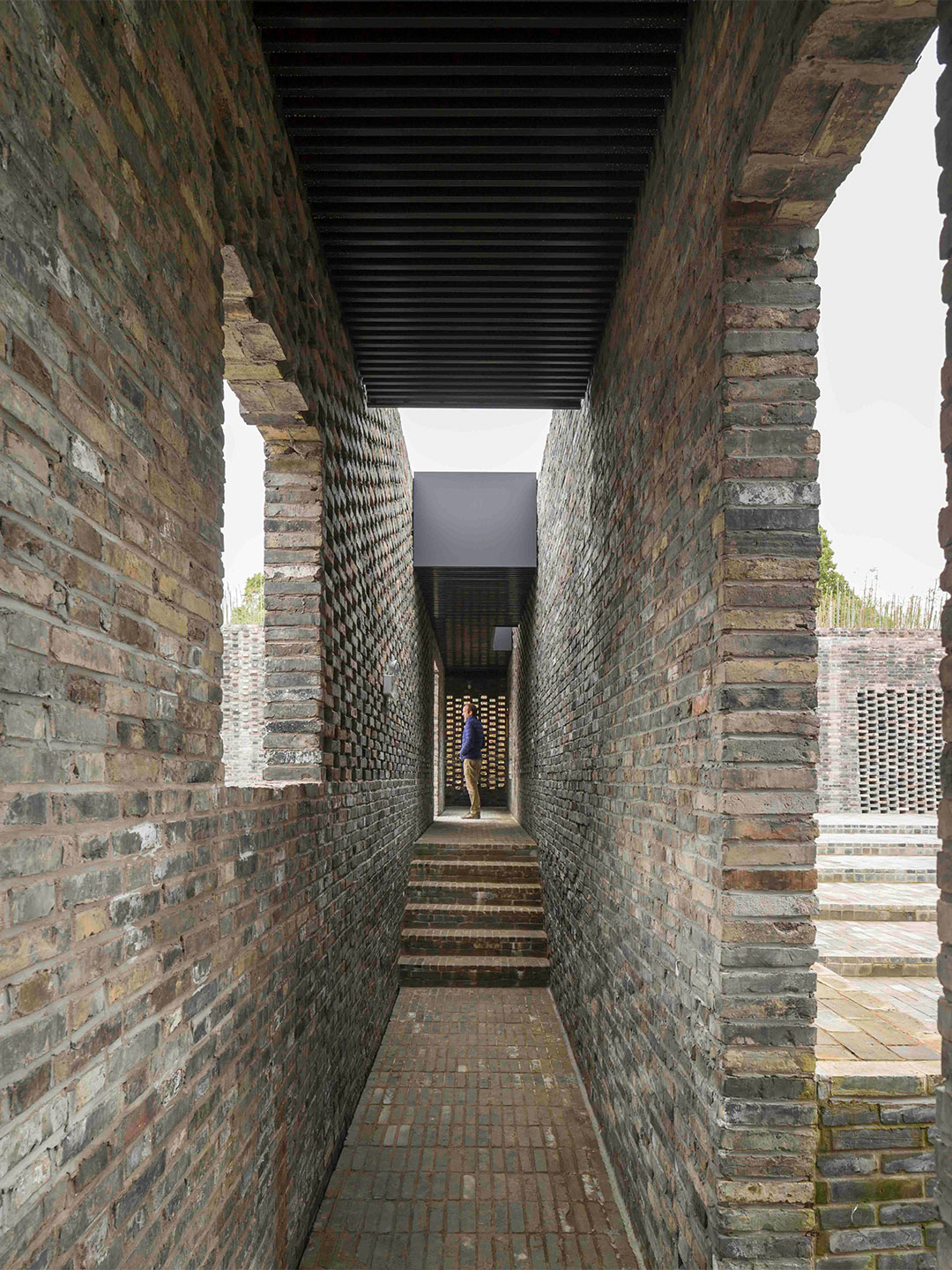
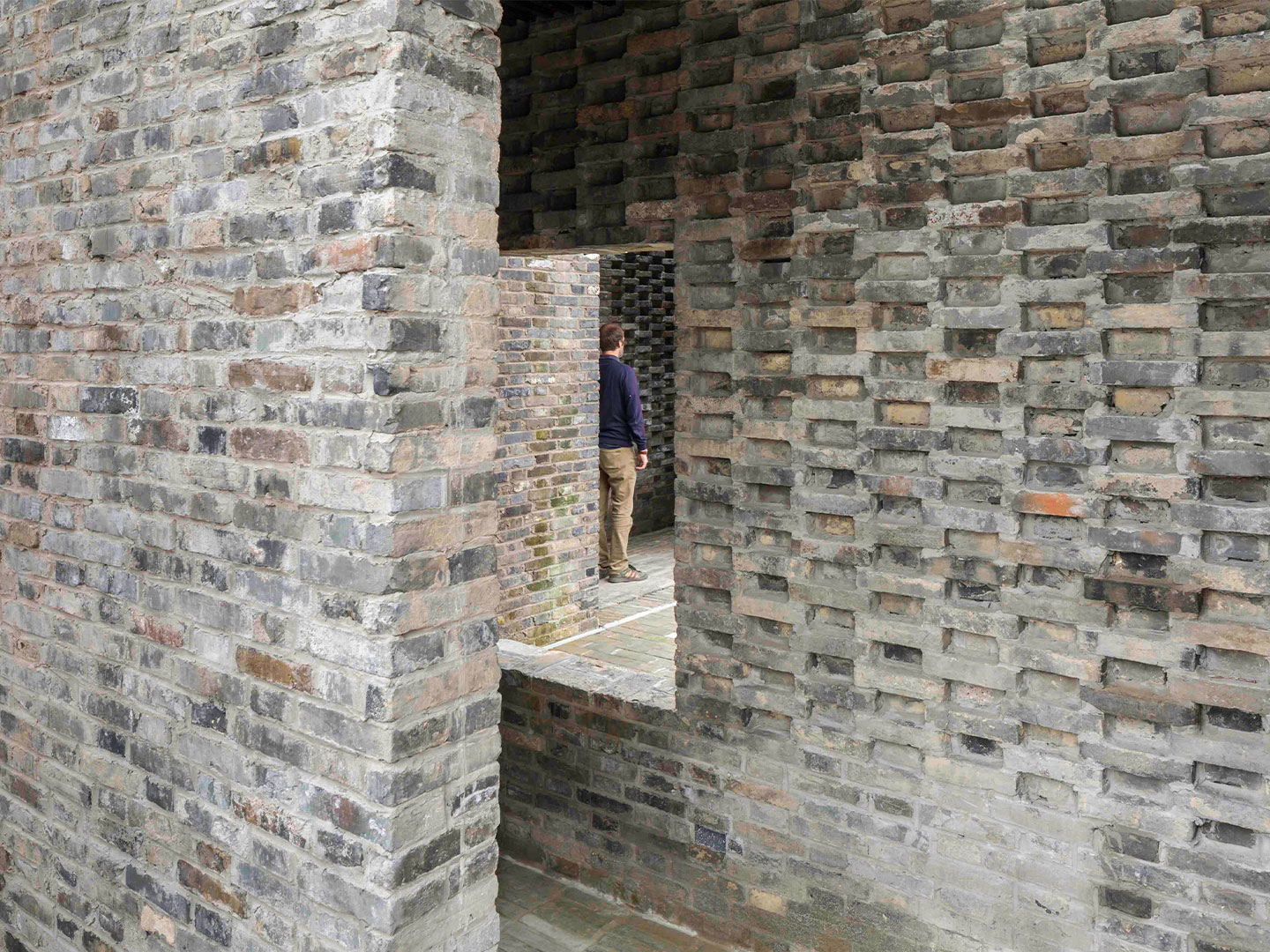
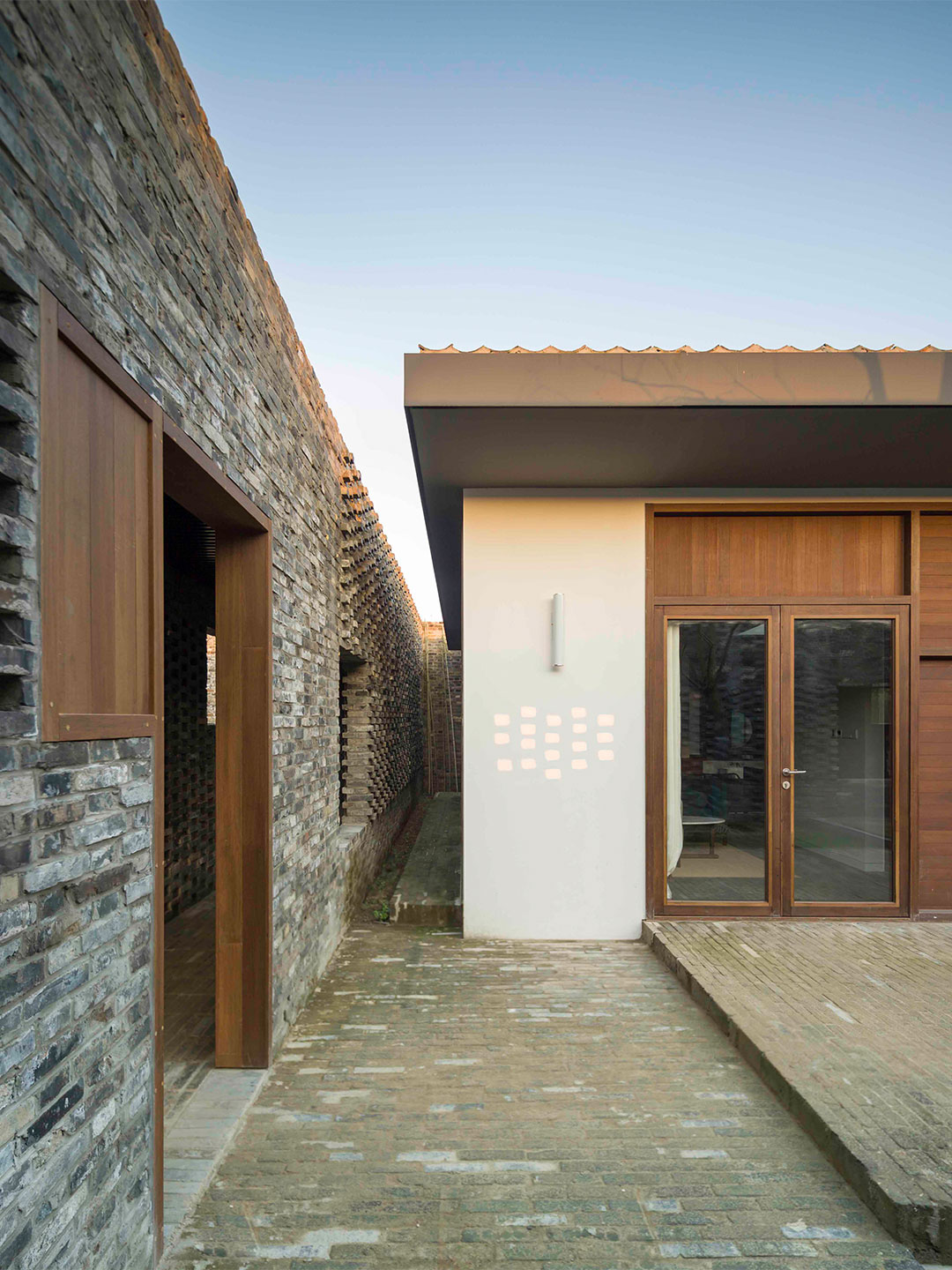
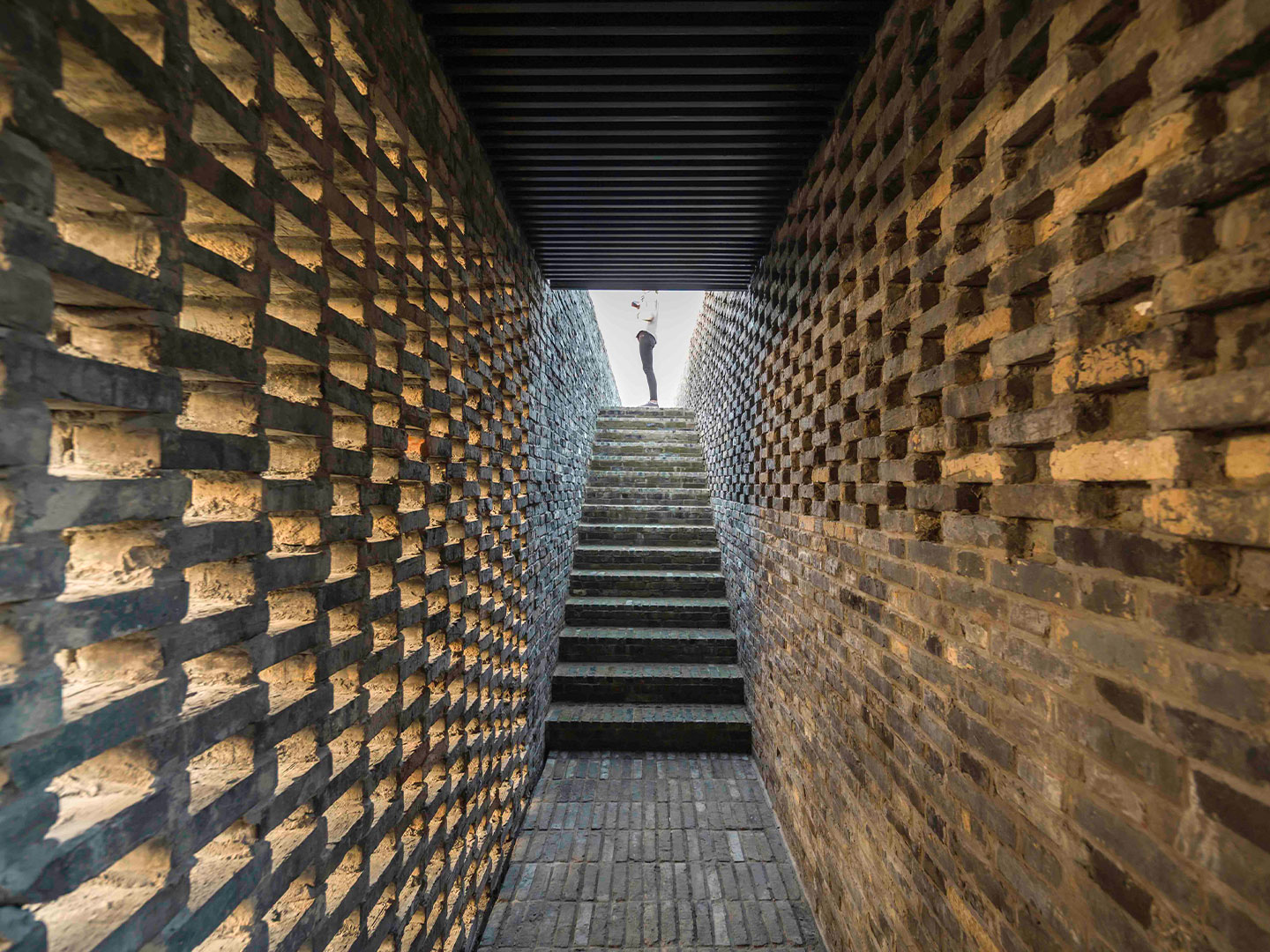
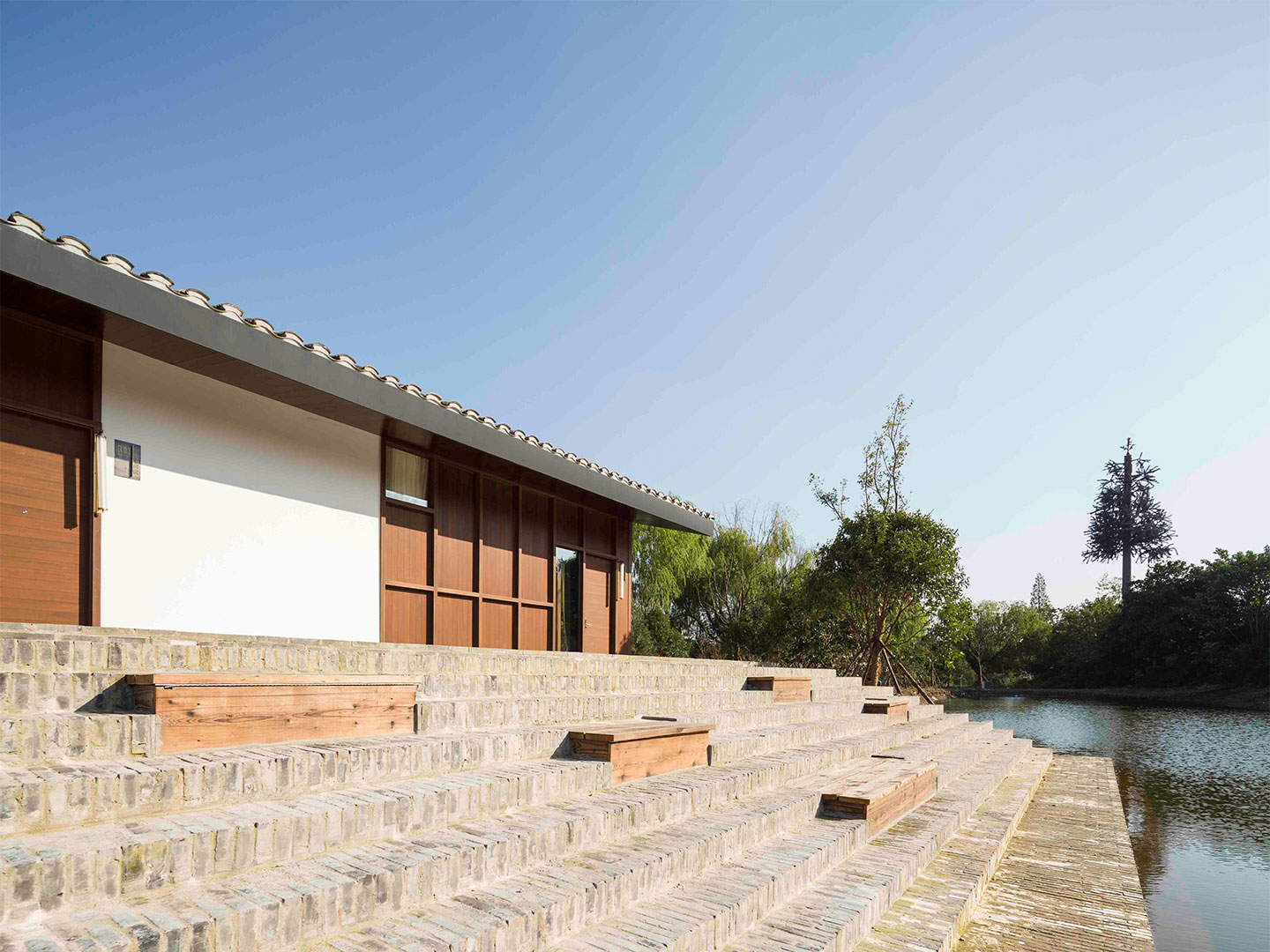
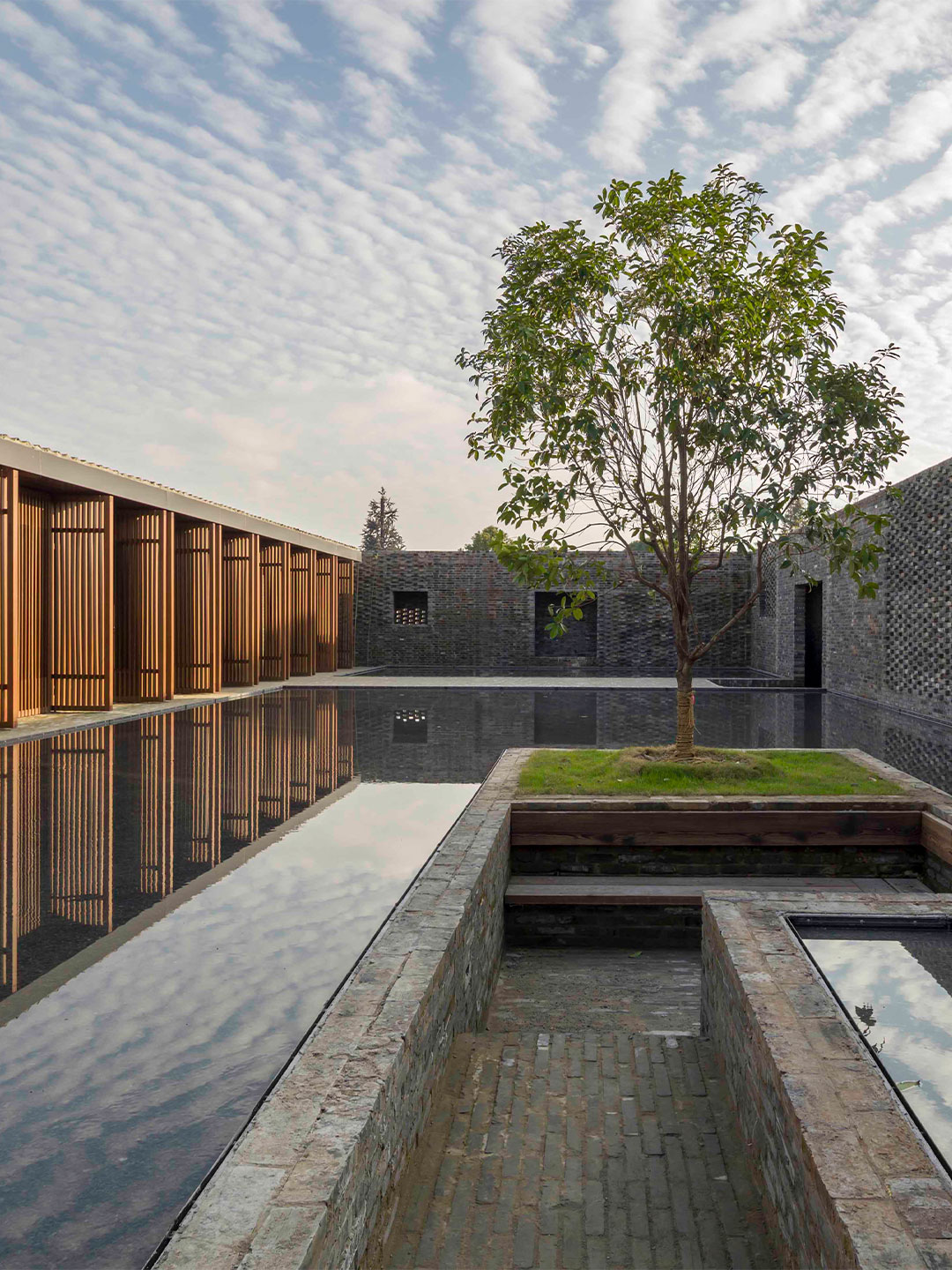
Built entirely from reclaimed grey-toned bricks, the walls of the new transition areas offer perspective and frame views of the land and sky, while the various brick-laying techniques, including an open-air ‘lattice’ method of construction, facilitates eye-pleasing light and shadow play throughout the day.
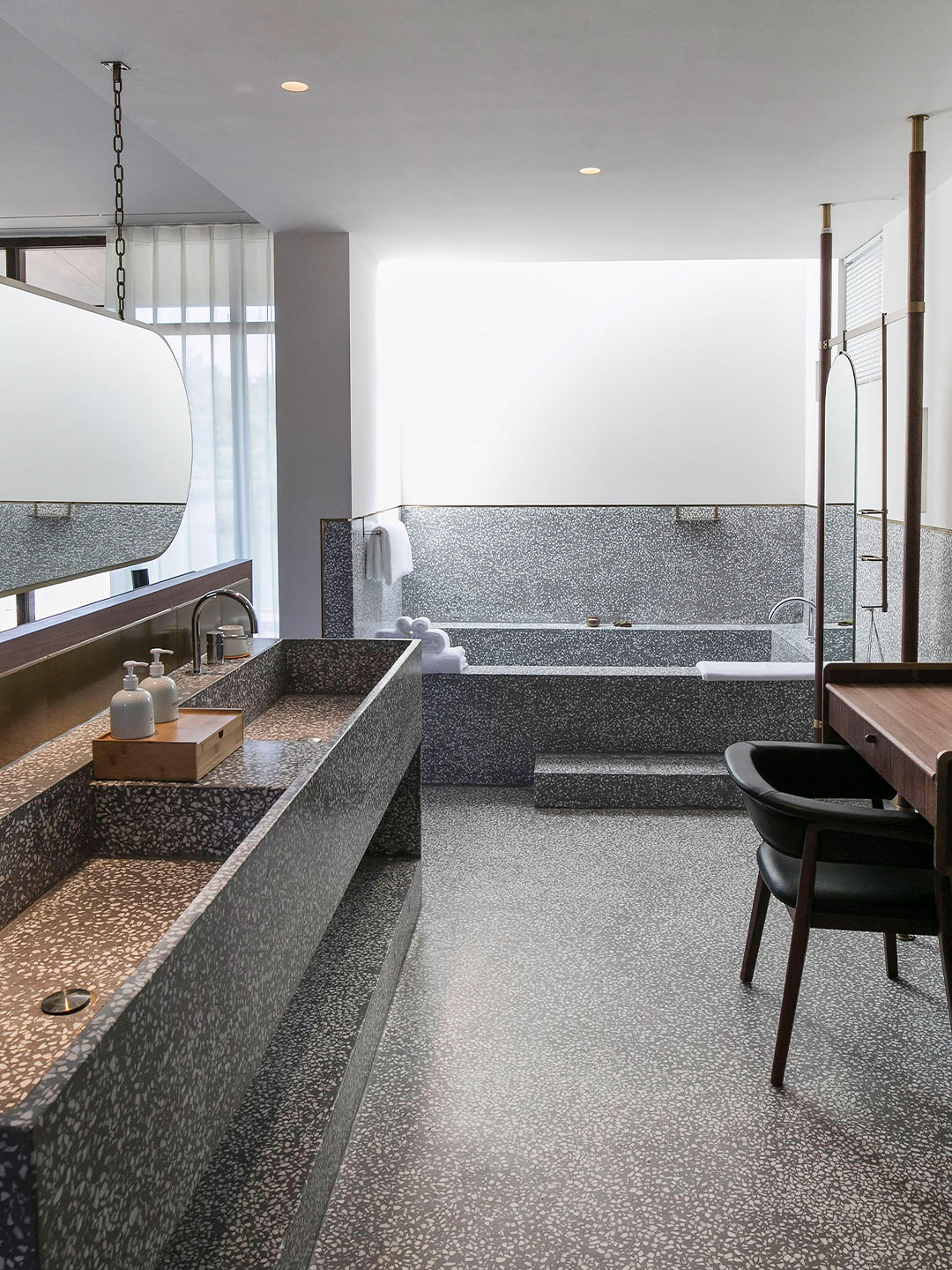
Dotted with contemplative nooks, the lodging hosts only 20 rooms – ranging from 33 to 78 square meters in size – each adorned with natural materials such as dark timbers and stone that echo the earthy palette of the surrounding environment. Viewed from a reclined bathtub position in the bathrooms, the skylight openings offer guests uninterrupted skyward glimpses, increasing the communion with nature.
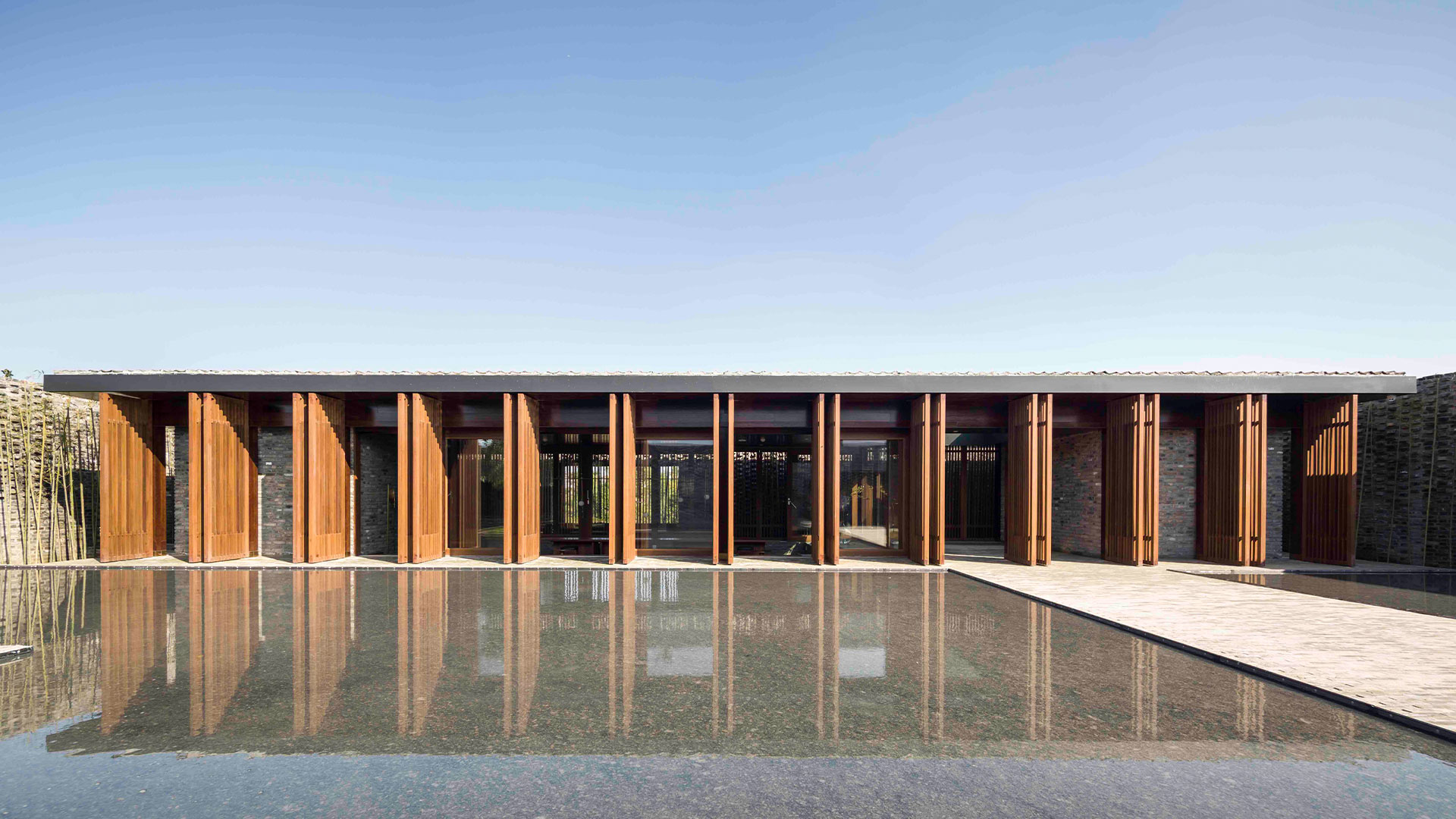
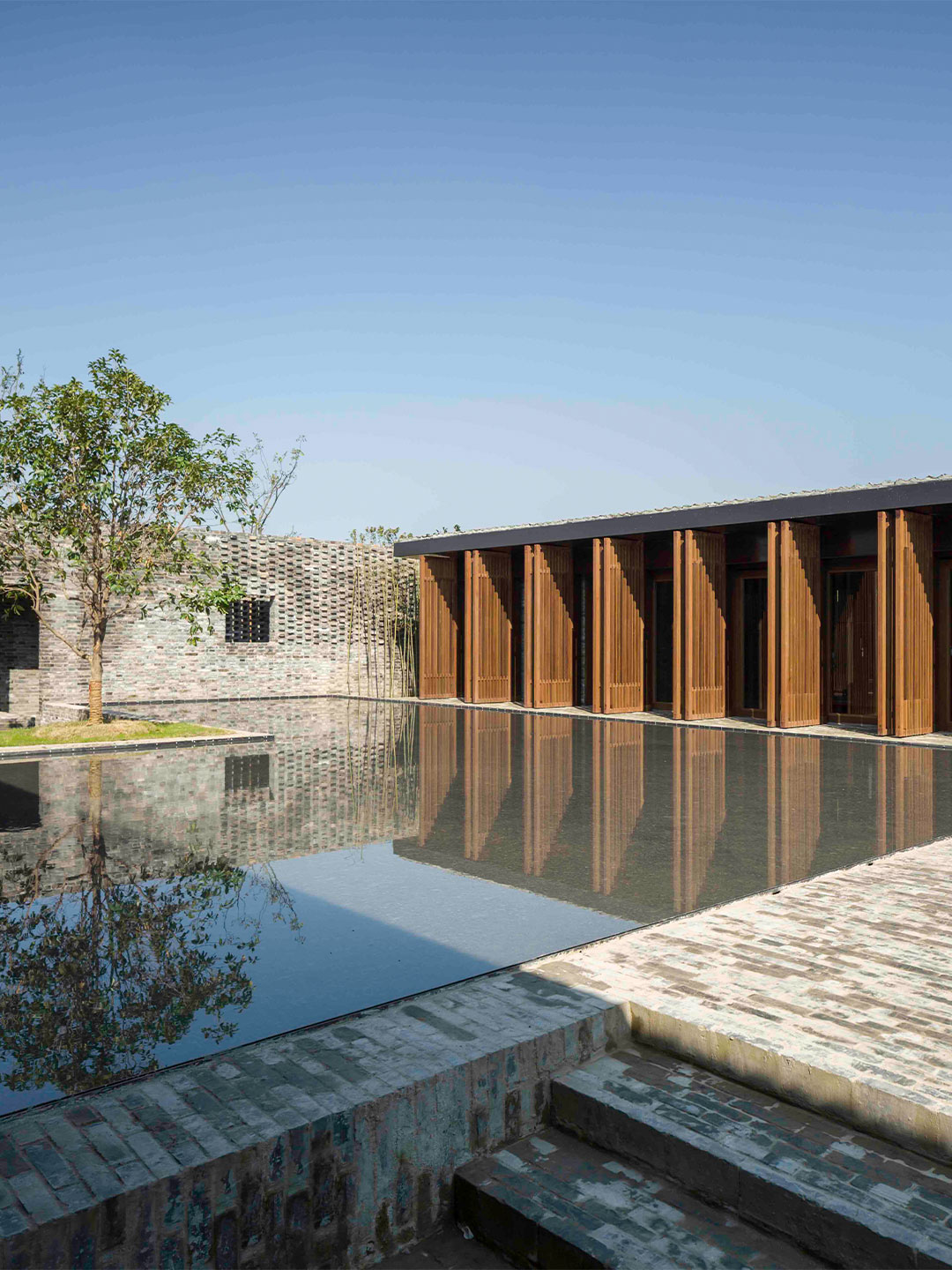
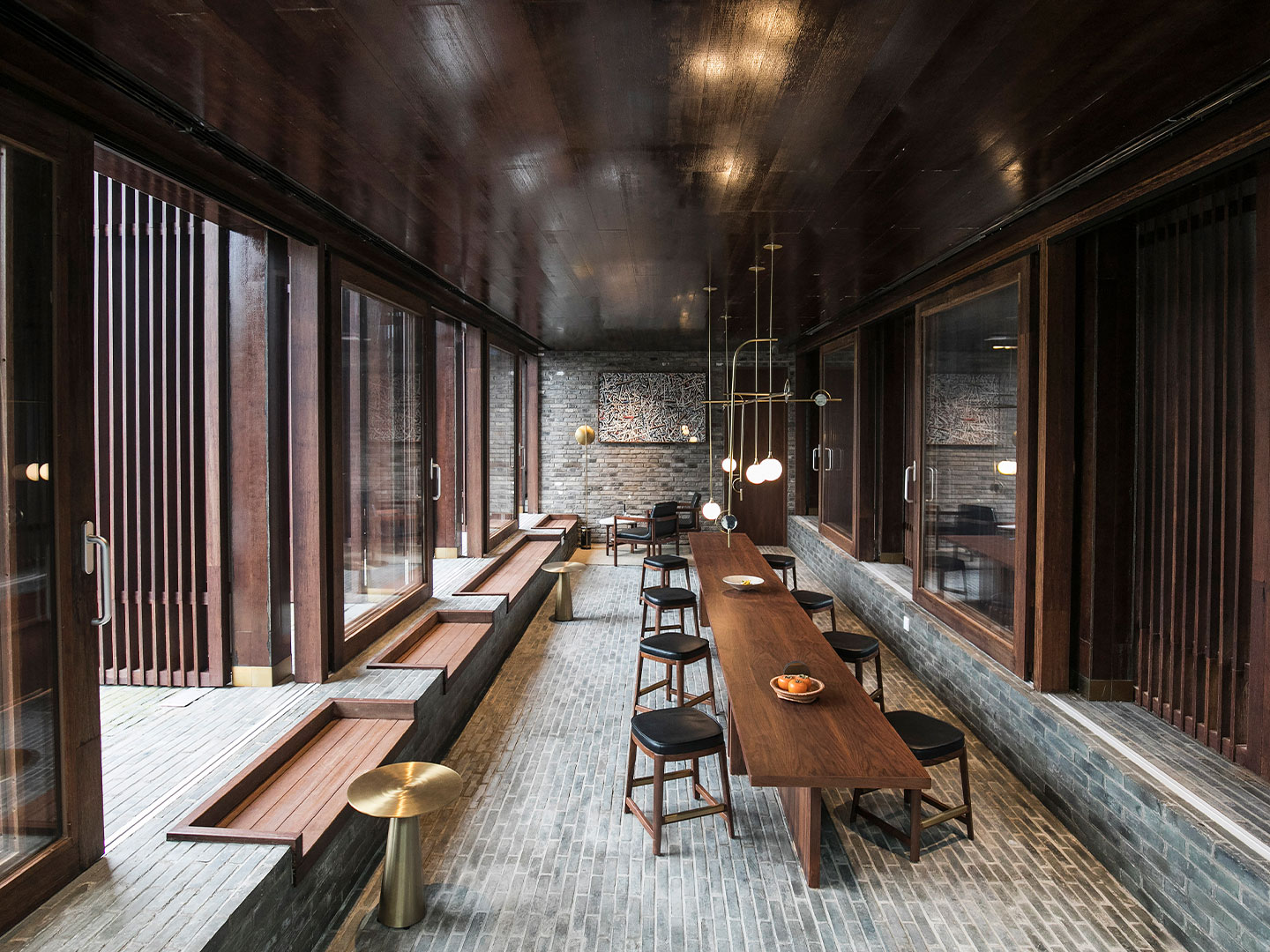
A selection of the hotel’s many courtyards were transformed into small yet charming gardens, abundant in verdant foliage, while others accommodate shallow reflection pools. A formerly derelict warehouse building was renovated to include a new concrete addition and now houses the hotel’s restaurant, a theatre and an exhibition space. Here, guests are welcome to join cooking classes and dine on organic cuisine at long communal tables that promote a sense of community among travellers. The lakeside pavilion contains four additional guestrooms.
For the designers, blending architecture and landscape was key throughout the process of realising the Tsingpu Yangzhou Retreat, characterised by the firm’s use of rustic yet poetic materiality. In every direction, the hotel’s neatly gridded walls and patchwork of courtyards and passageways intertwine to create a harmonious balance between void and matter, private and public, and sky and earth, placing traditional Chinese architecture on a new path paved with contemporary influences.
Related stories
- Queensland’s ‘coral ark’ by Contreras Earl Architecture set to spearhead global rescue mission.
- Koichi Takada and Lat27 envision the world’s greenest residential building.
- Singapore’s Eden building and its skyward gardens are in sync with the city-state’s biophilic vision.
Situated on a peaceful plot surrounded by small lagoons, in close proximity to the scenic Slender West Lake in China’s Jiangsu Province, the Tsingpu Yangzhou Retreat in China presented Shanghai-based architectural design practice Neri&Hu with its fair share of challenges. The firm – which was co-founded by Lyndon Neri and Rossana Hu – reused several existing structures for the boutique hotel, bestowing them with updated functions fit for hotel service, while also adding new structures to unify the site and complement the serene locale.
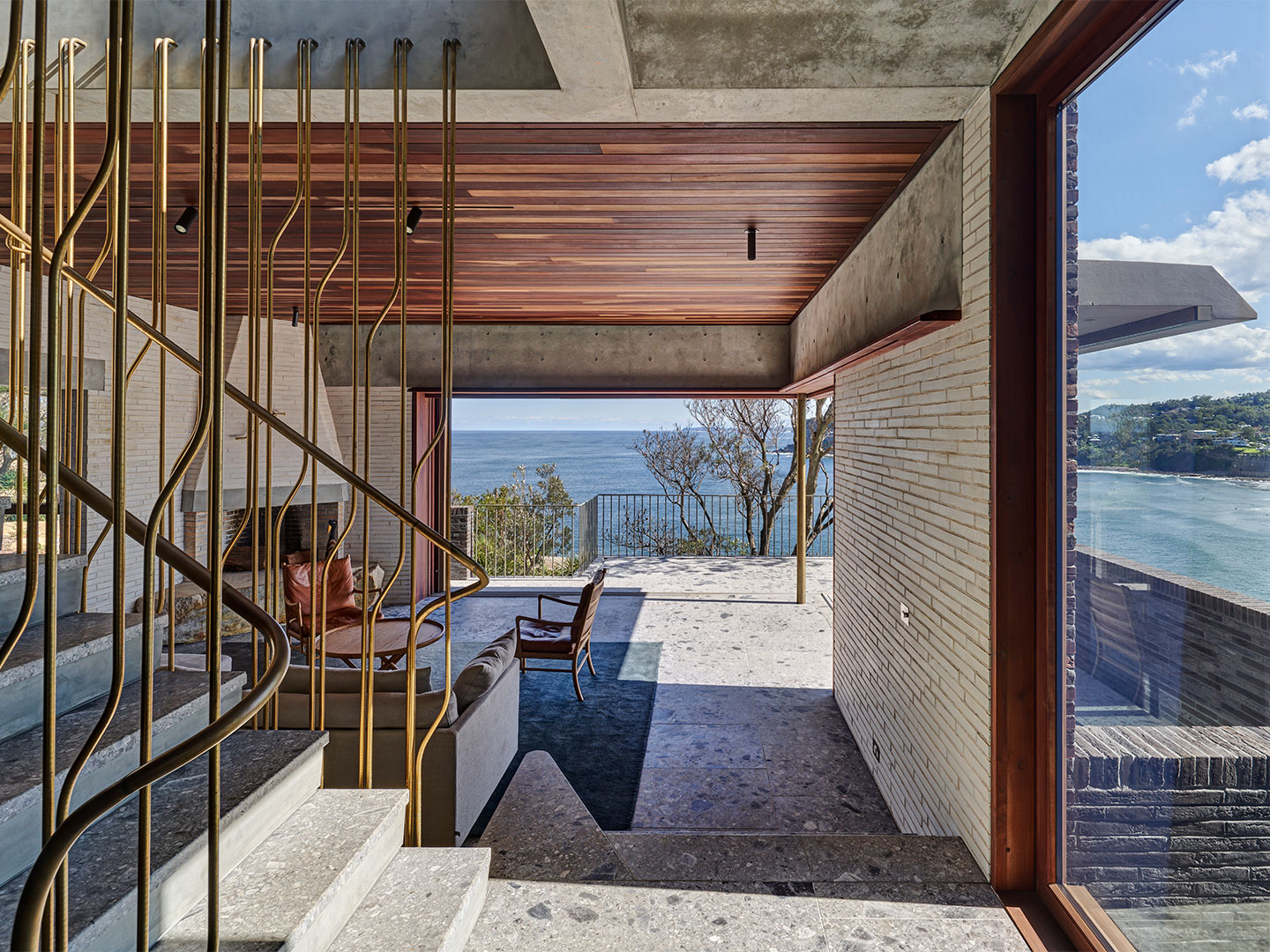
- Beautiful homes: From inner-city abodes to breathtaking beachside beauties, the year’s most popular residences include La Scala by Richards and Spence and Casey Brown Architecture’s Bangalley House (pictured). Read more.
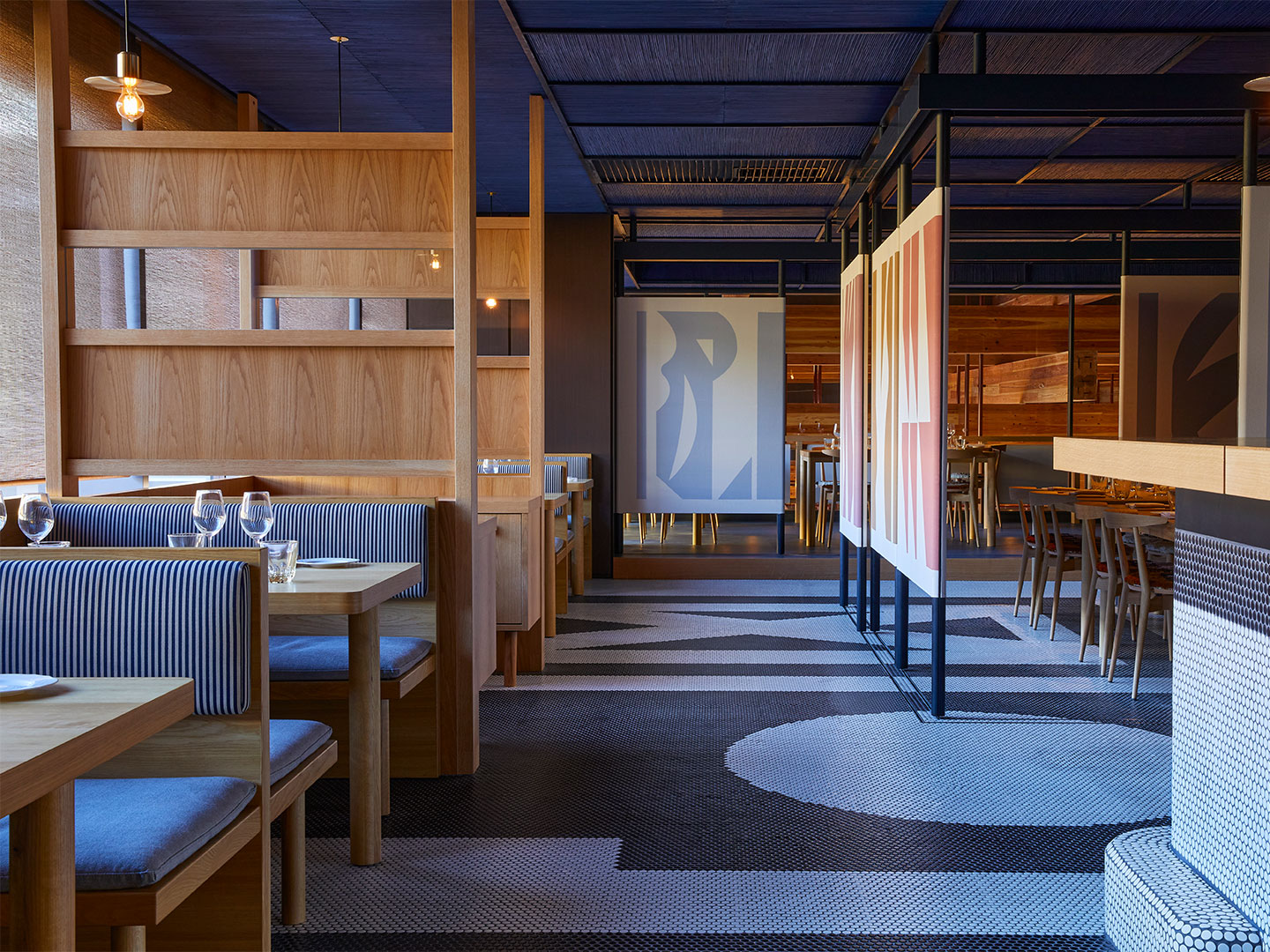
- Hot hotels: Heading around the globe, 2020’s hottest designer destinations include Camp Sarika by Amangiri in Utah and Japan’s Ace Hotel Kyoto (pictured) by Kengo Kuma and Commune Design. Read more.
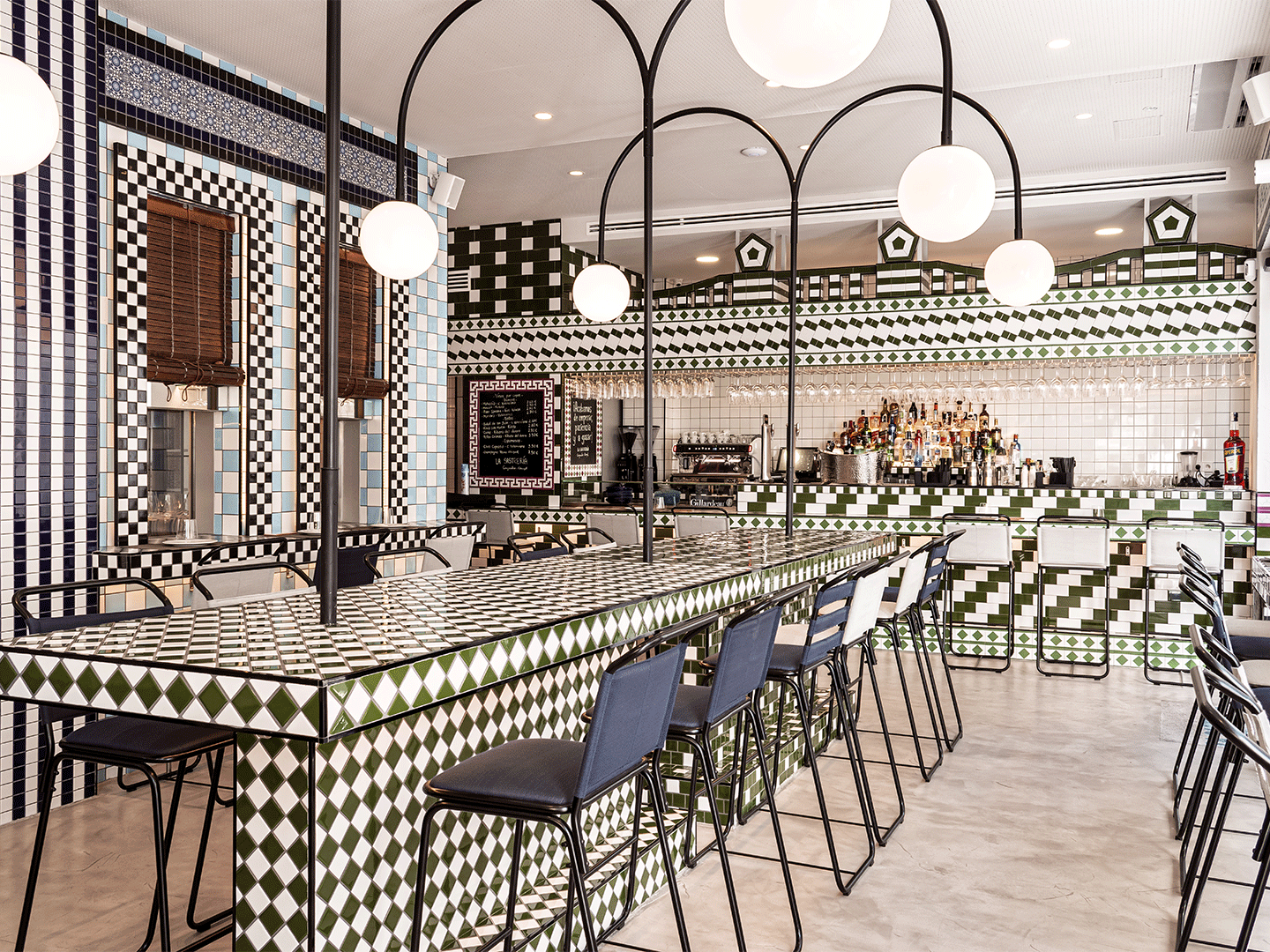
- Brilliant bars: Emerging and established designers are responsible for some of the world’s greatest watering holes this year, from Sydney’s Four Pillars Laboratory to the bar at La Sastrería in Spain (pictured). Read more.
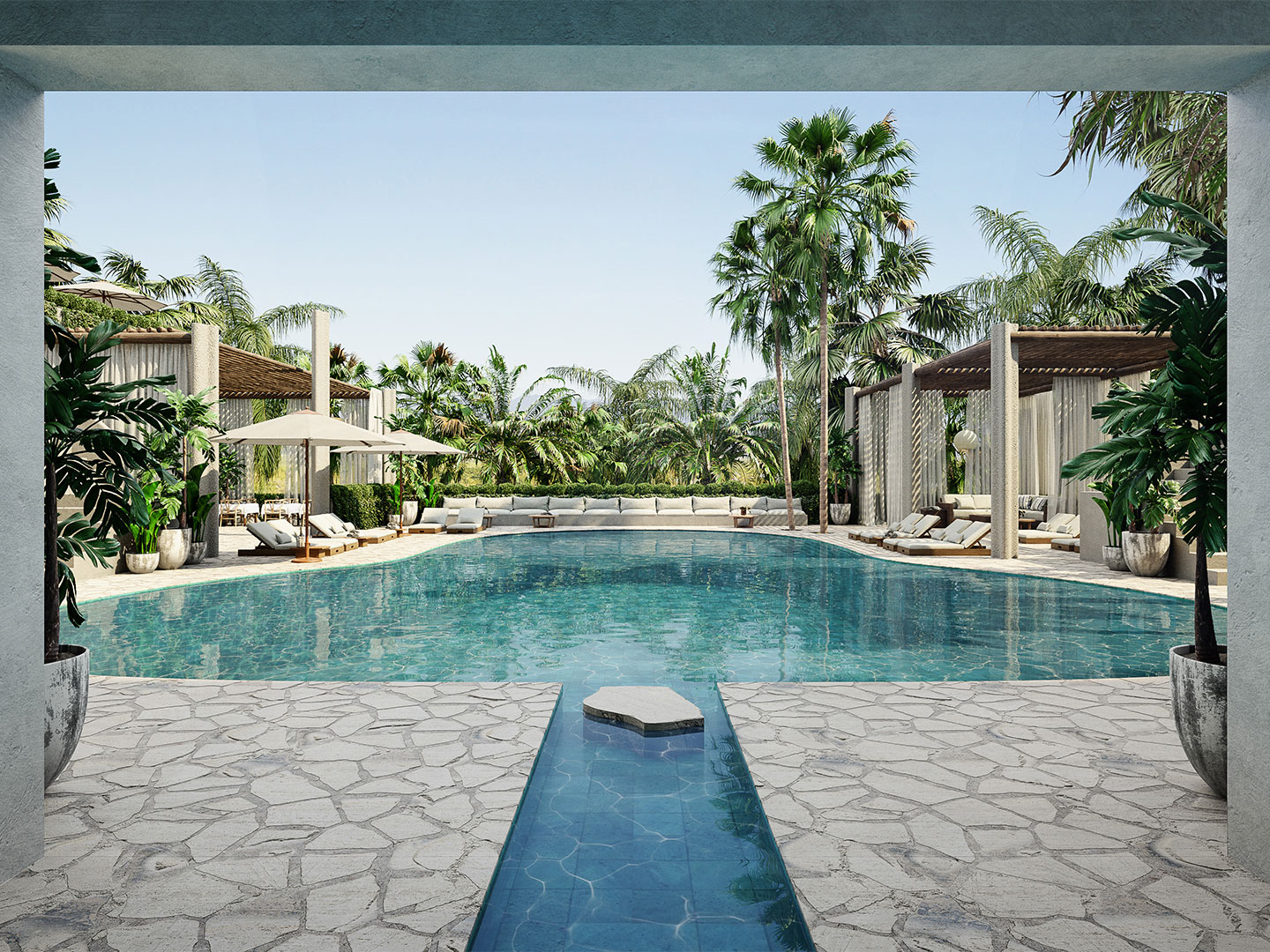
- Future-focussed projects: Vertical landscaping was popular in proposed developments in 2020, and Gurner’s plan for a luxury hotel in Port Douglas (pictured) is set to capture attention in 2021. Read more.
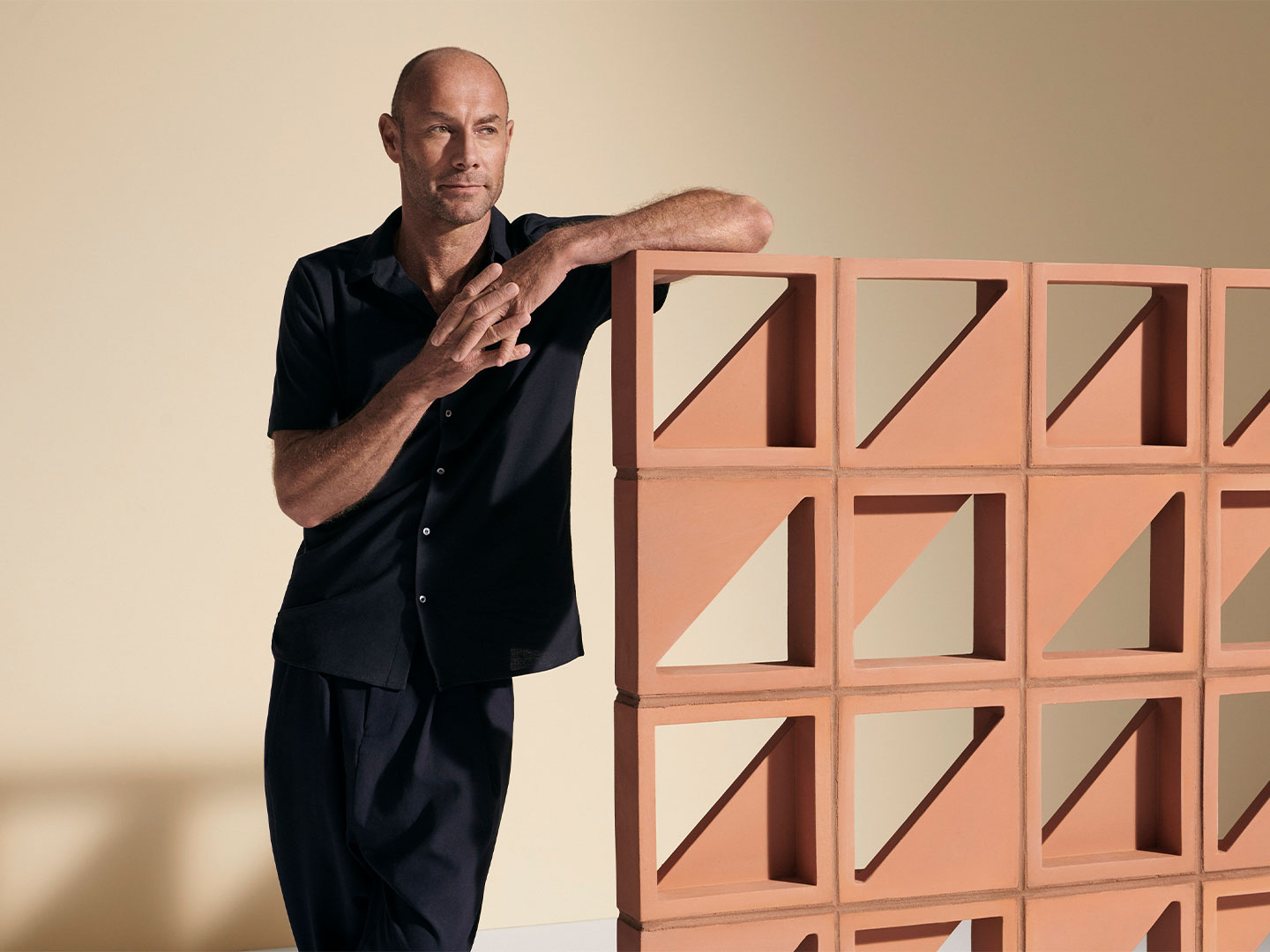
- Legendary launches: From new inventions to reimagining classic designs, such as Adam Goodrum’s breezeblock for Austral Bricks (pictured), 2020 witnessed product launches with a particular focus on game-changing technology. Read more.
During an extraordinary year, cutting-edge design and inspiring architecture has continued to pave the way for a bright future.
Related stories
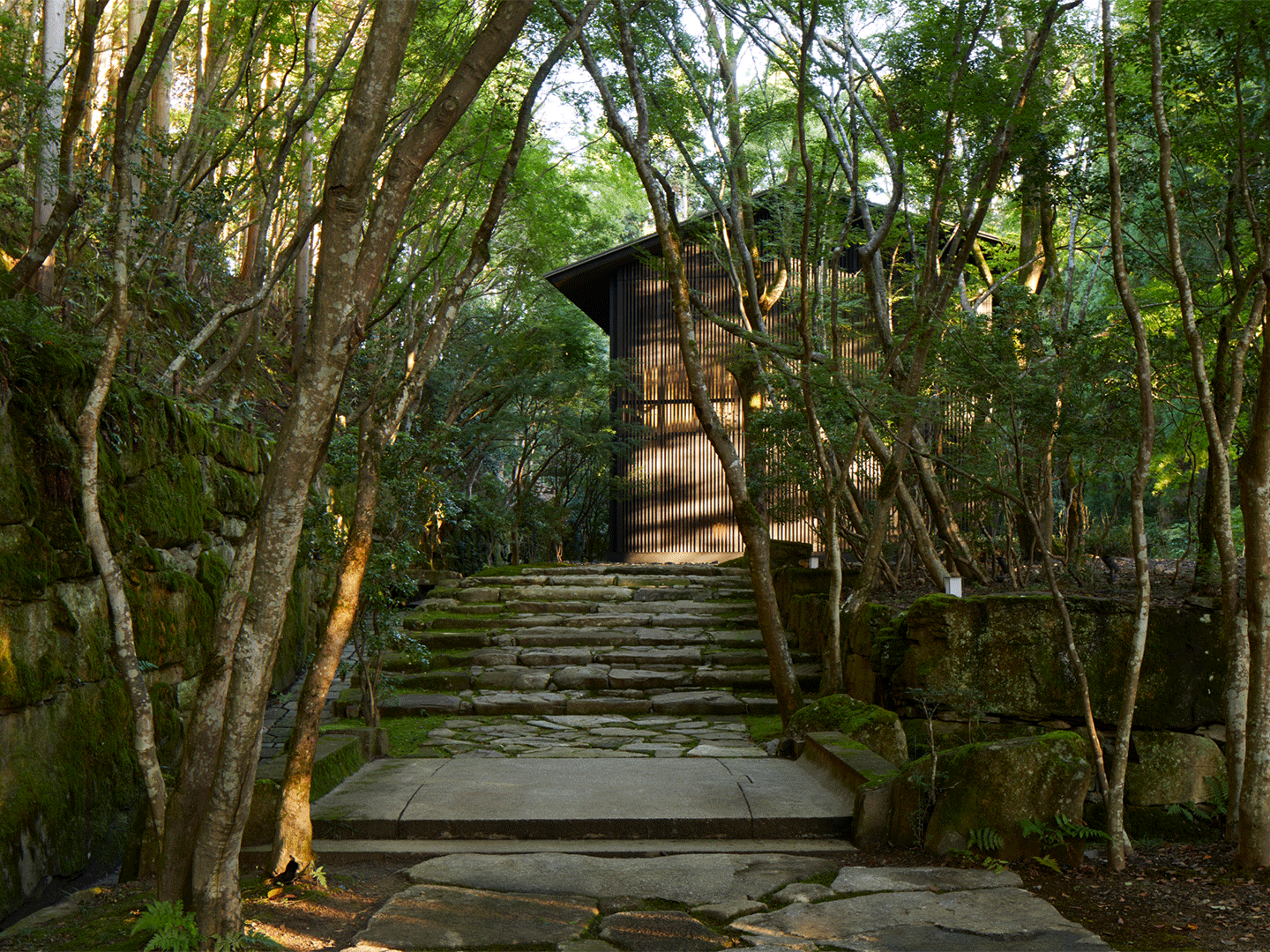
Nestled in the verdant foothills of the symbolic mountain of Hidari Daimonji, a one-hour drive from Japan’s Osaka International Airport, Aman Kyoto is a place of immense beauty, where jizo statues sit contentedly among deciduous yamamomiji maples and luminescent mosses. The understated resort perfectly tempers privacy, relaxation and rejuvenation with the vibrancy of Japan’s ancient imperial capital, home to 17 UNESCO World Heritage Sites including Kinkaku-ji Temple.
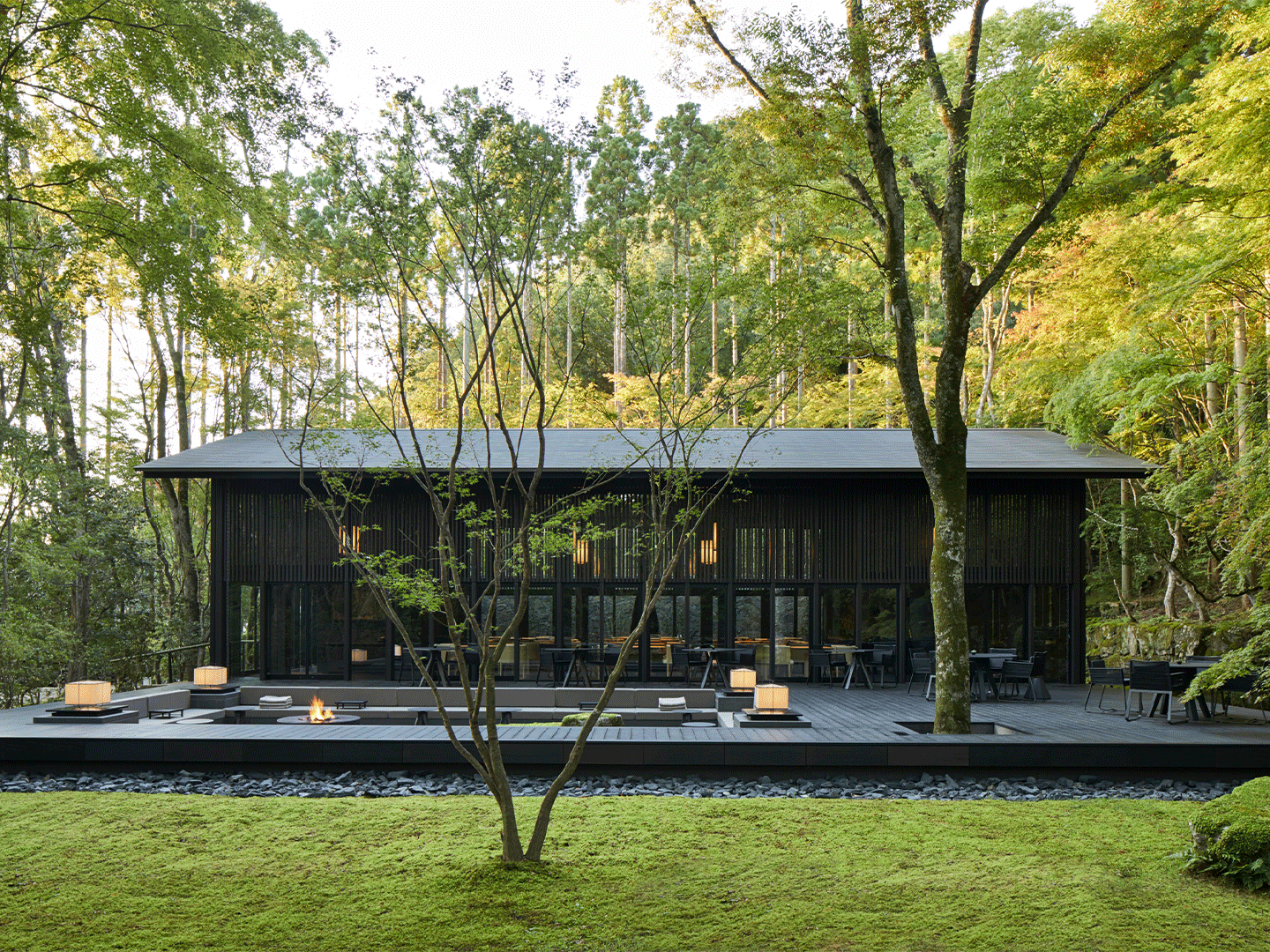
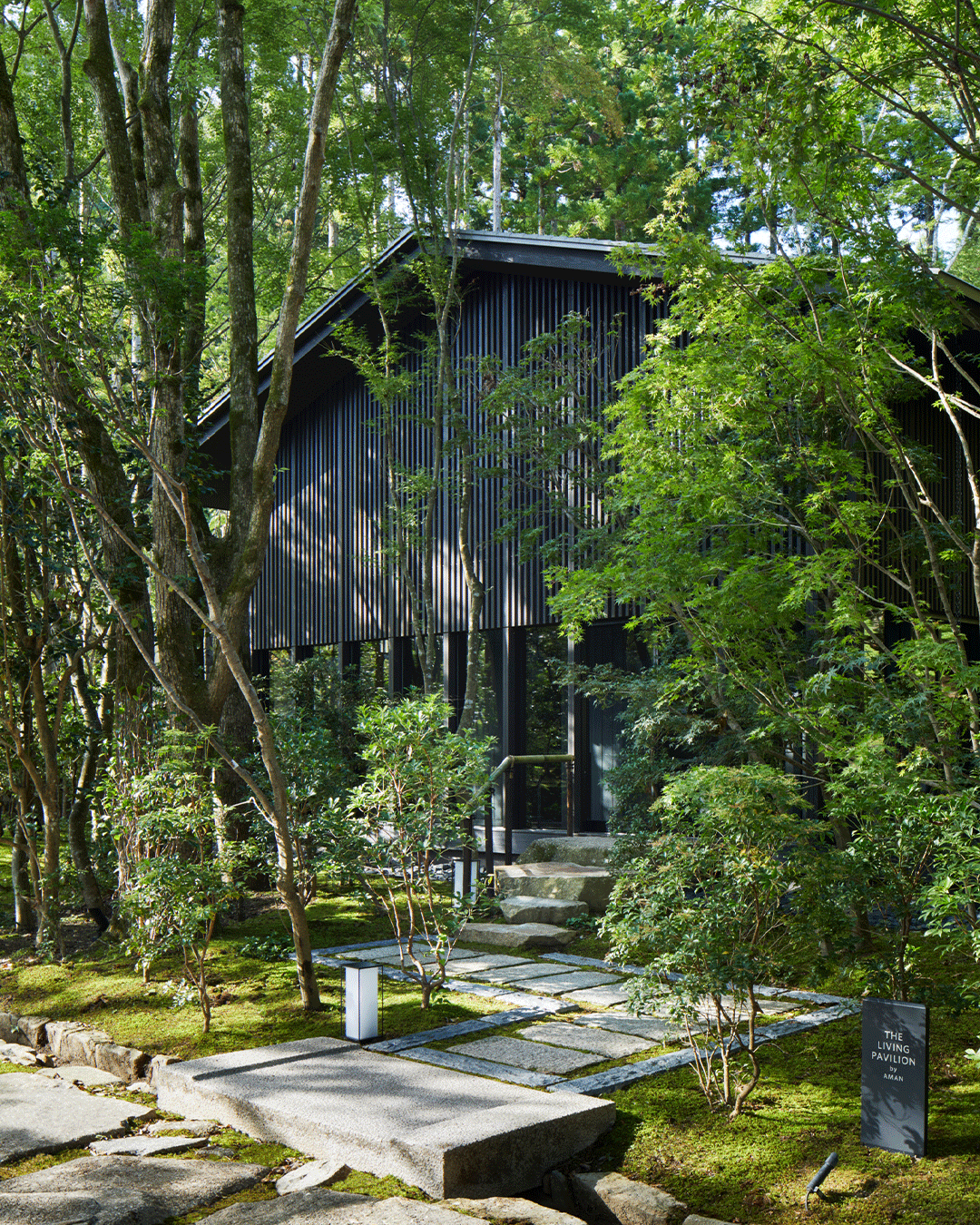
Designed by the late Australian architect Kerry Hill, Aman Kyoto is an architectural masterclass in eschewing the obvious while embracing the subtle, picture-framed by a once-forgotten location that is as peaceful as it is otherworldly.
The resort’s 26 luxurious suites, housed in six latticed pavilions, are a contemporary homage to the traditional Japanese ryokan. Strikingly minimalist in geometry, the interiors are spacious and light-filled – ingeniously crafted by the architect to foster peace, relaxation and contemplation. The intimate scale of the pavilions and their considered placement within the well-established gardens respects the simplicity and appropriateness of traditional Japanese architecture on one hand, while allowing these contemporary buildings to exist and breathe with the landscape on the other.
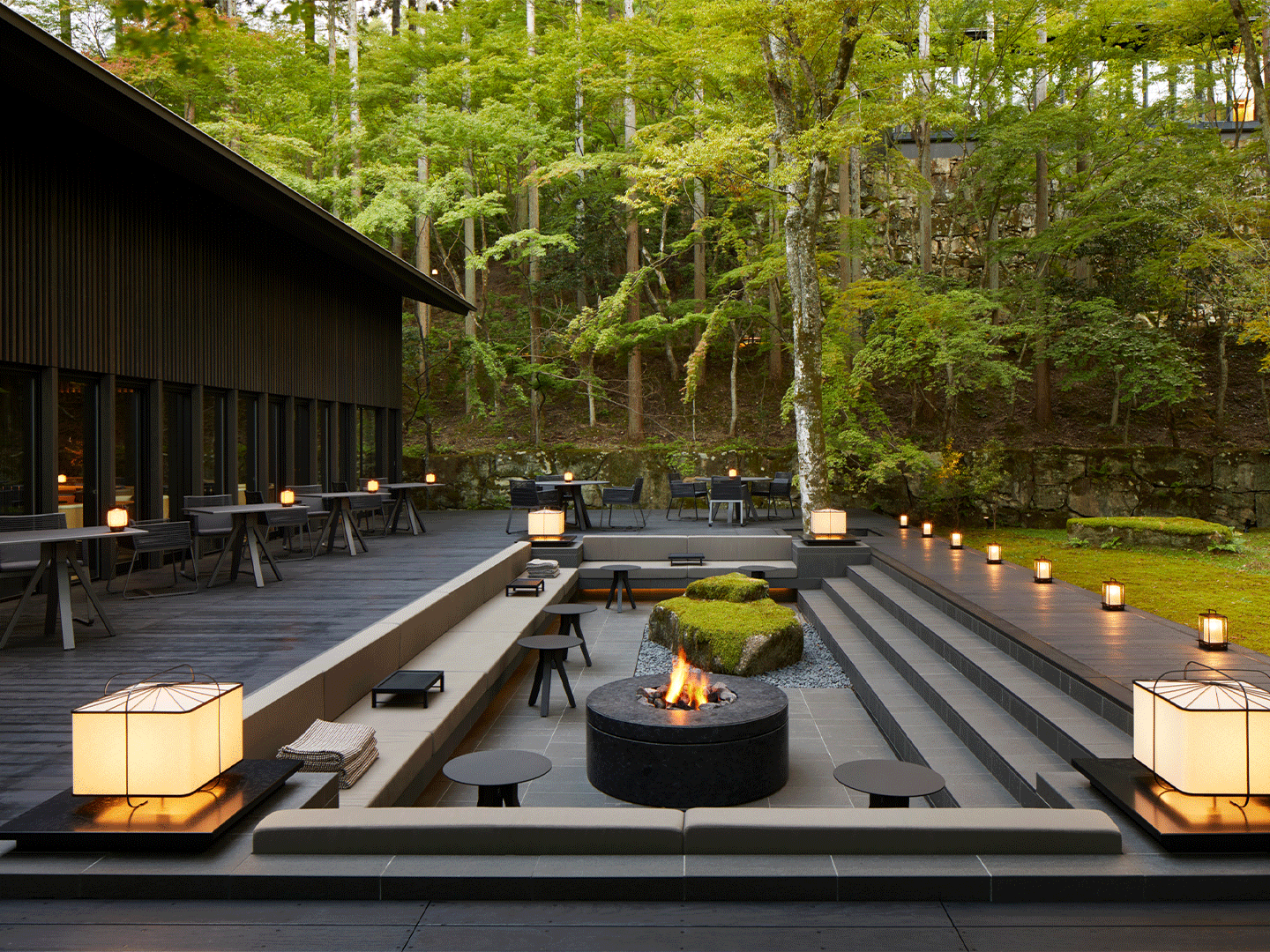
With its centrally located fireplace and floor-to-ceiling glass doors opening onto a garden terrace, the convivial Living Pavilion is undoubtedly the beating heart of Aman Kyoto. Specialising in home-style Kyoto cuisine, the pavilion also offers guests a chic bar which spills out onto a sunken deck area, and is the pick-up spot for picnic hampers that can be unpacked and enjoyed in the property’s exquisite 32-hectares of manicured gardens or forest glades.
The fresh spring water that flows near Aman Kyoto is central to the philosophy of the resort’s on-site spa. Here, the traditional onsen bathing facilities deliver relaxation and healing in the purest form, dovetailed with a range of treatments that tap into Japan’s plentiful natural apothecary including Kyoto green tea, Tanba Kuromame black beans, local sake, cold-pressed Camellia oil and Kyoto silk cocoon.
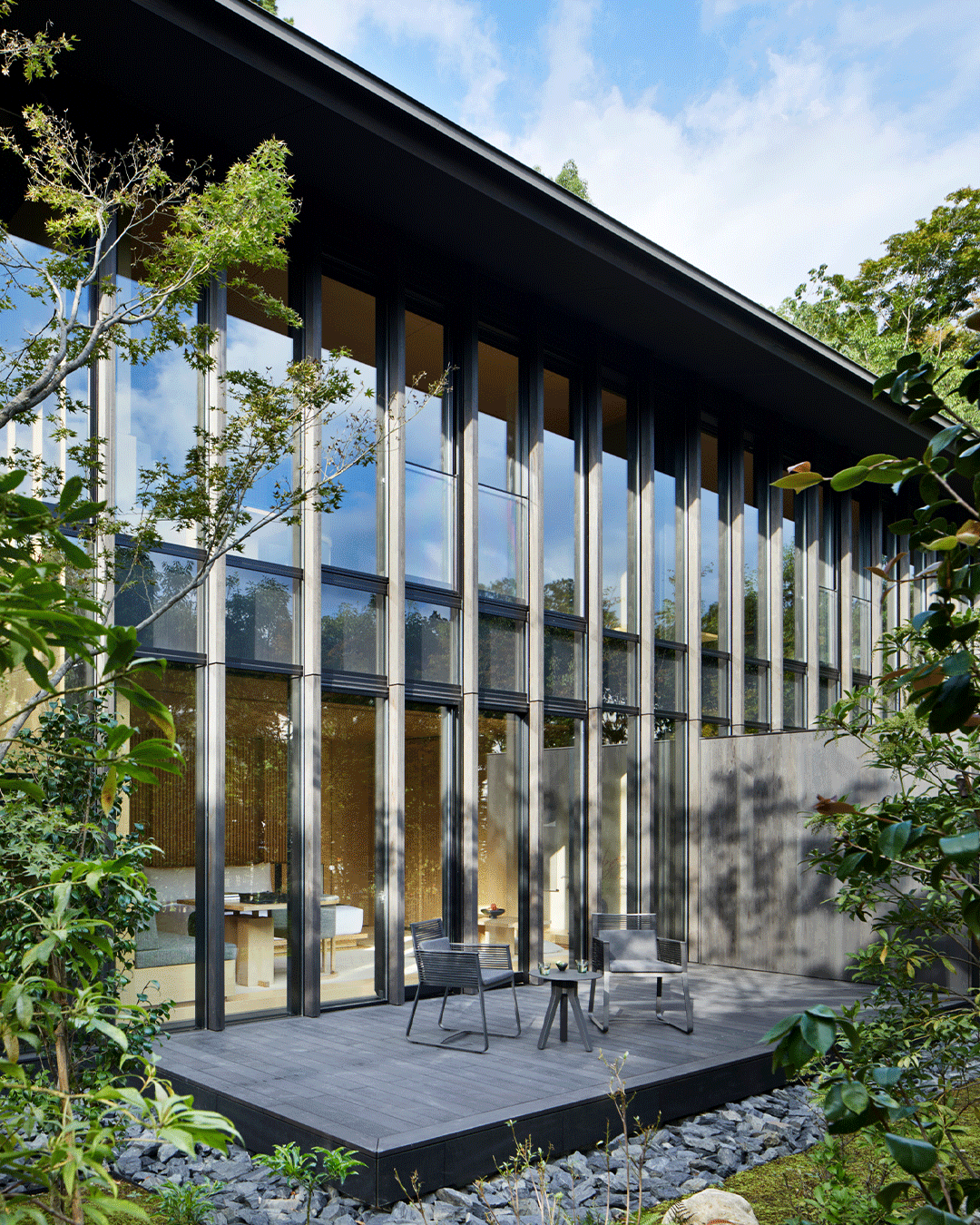
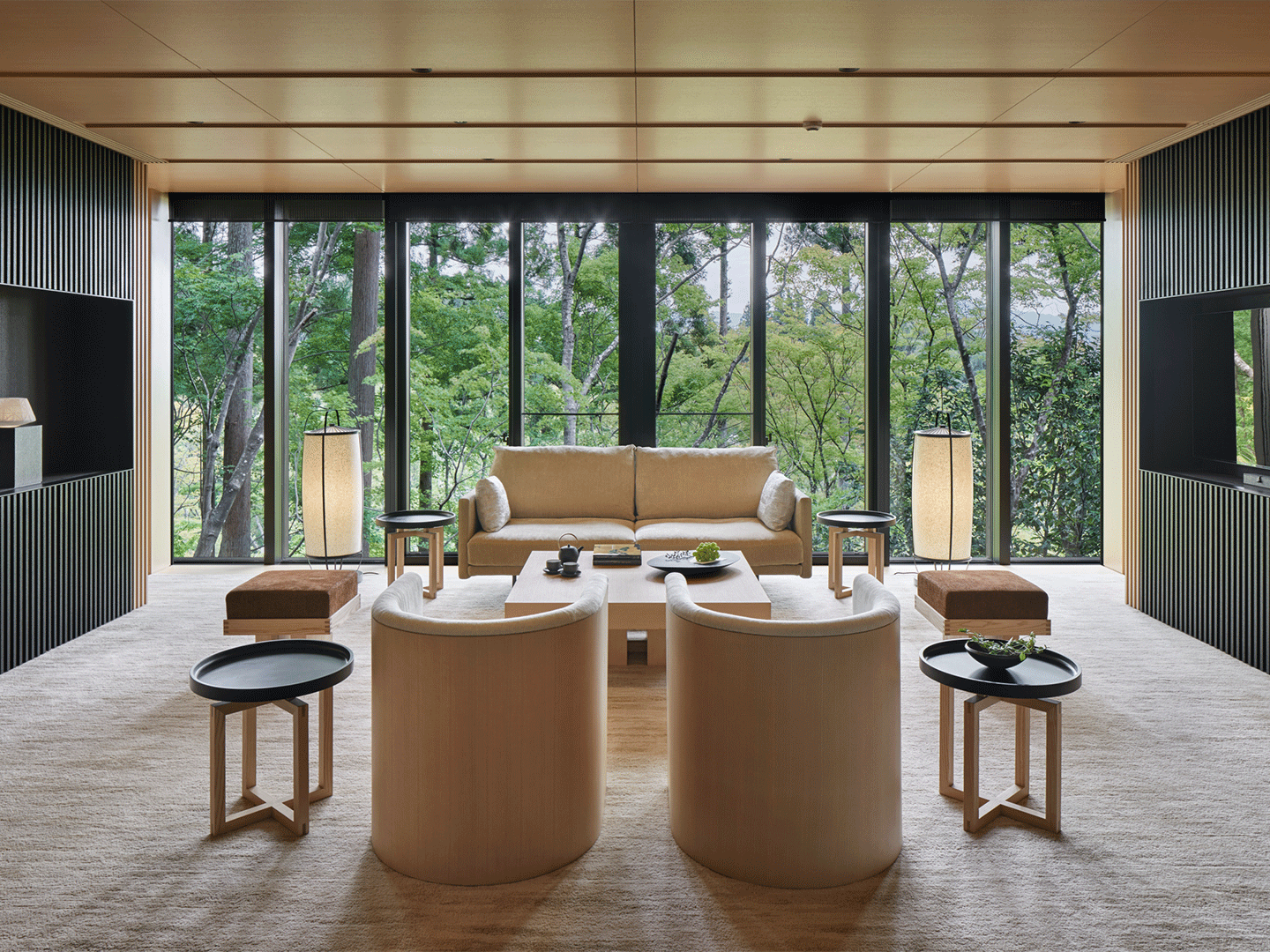
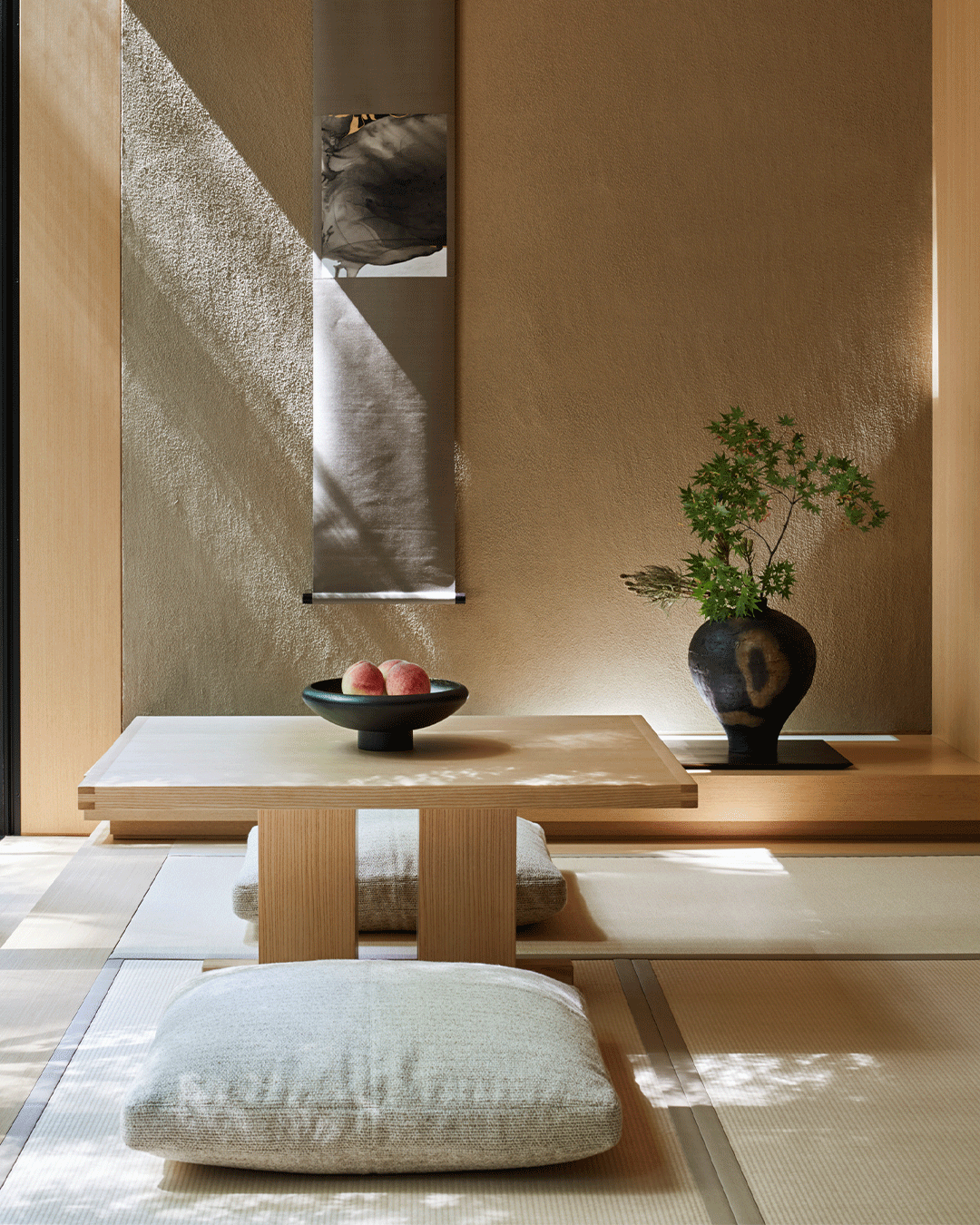
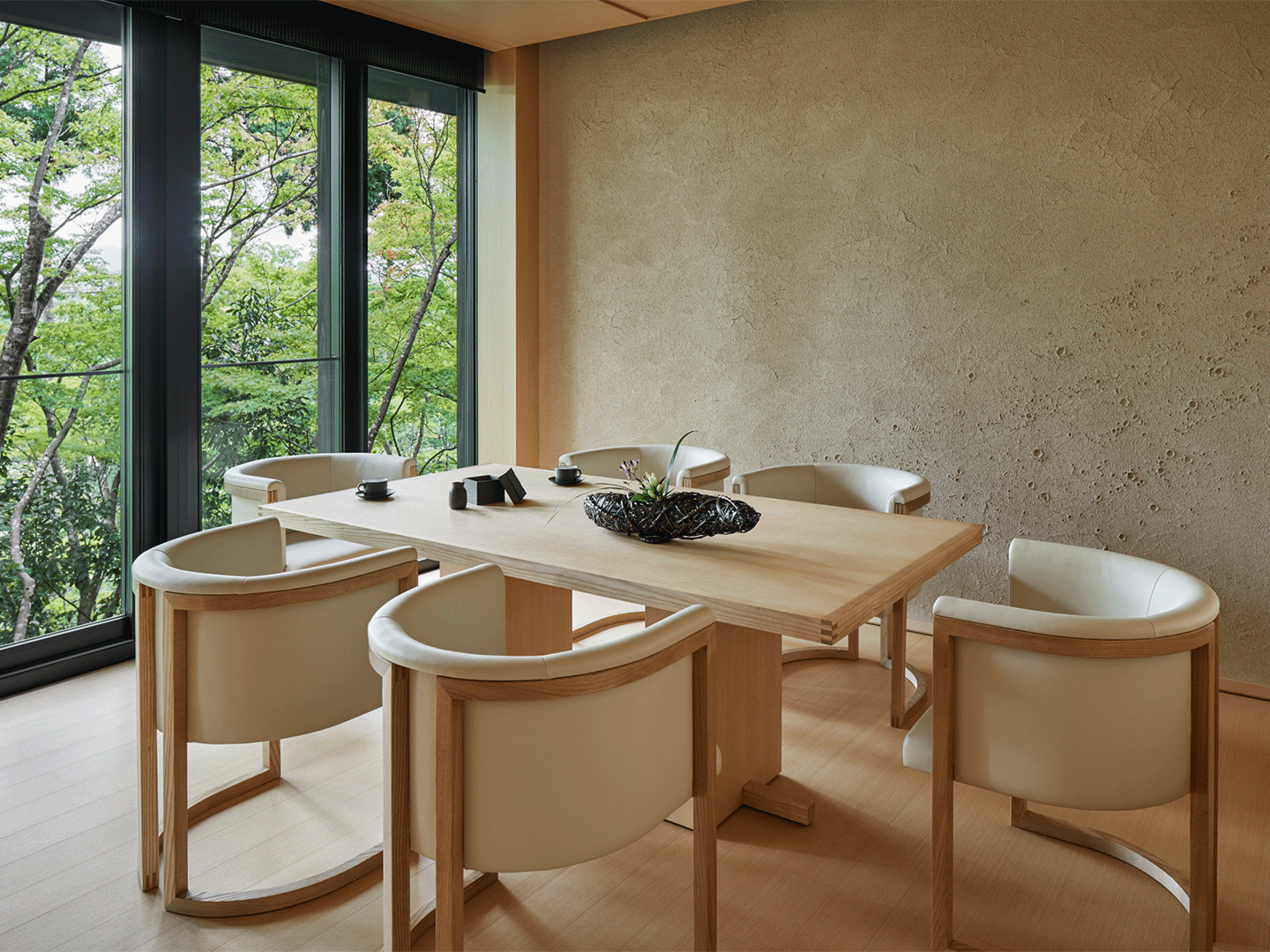
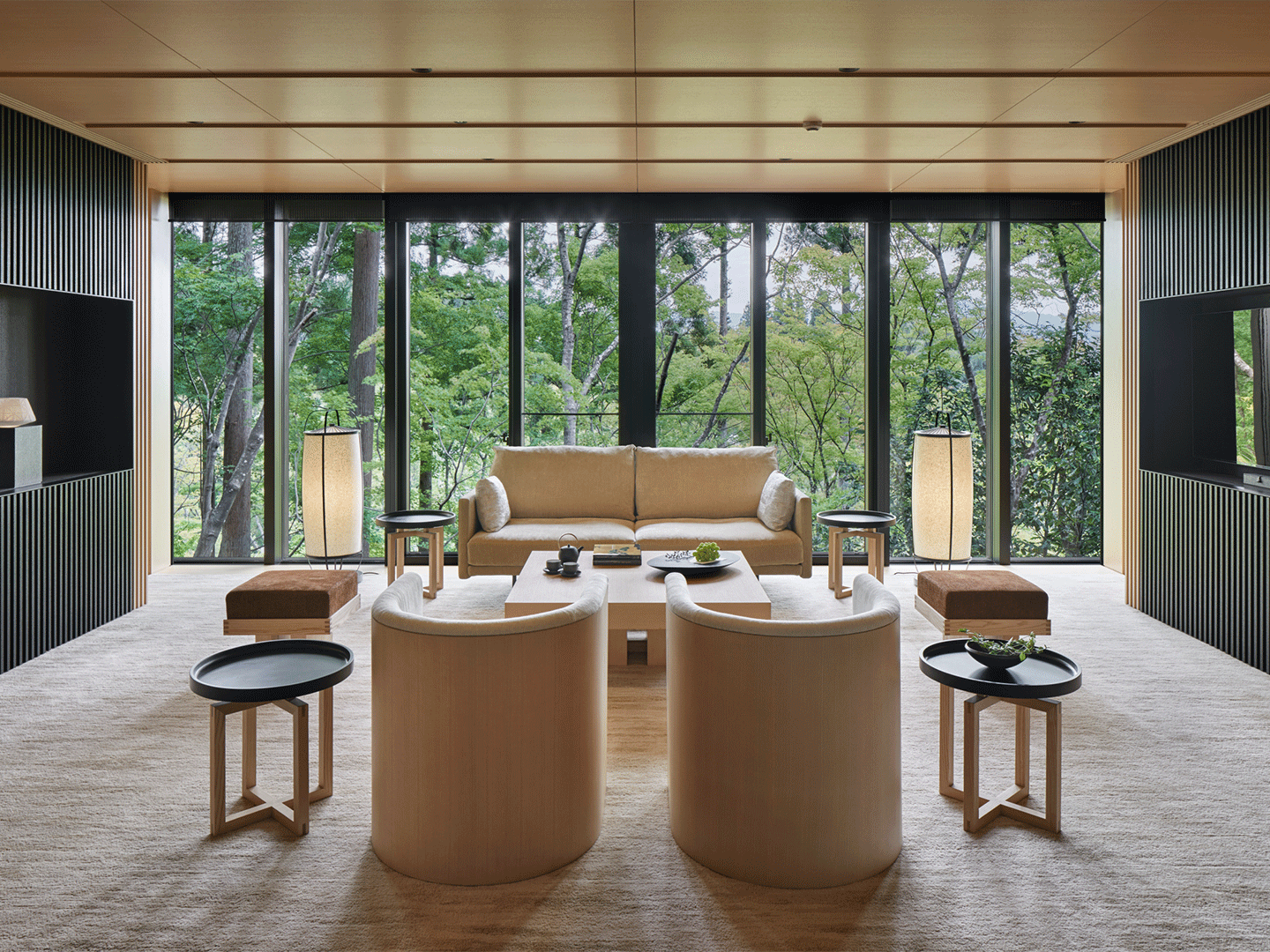
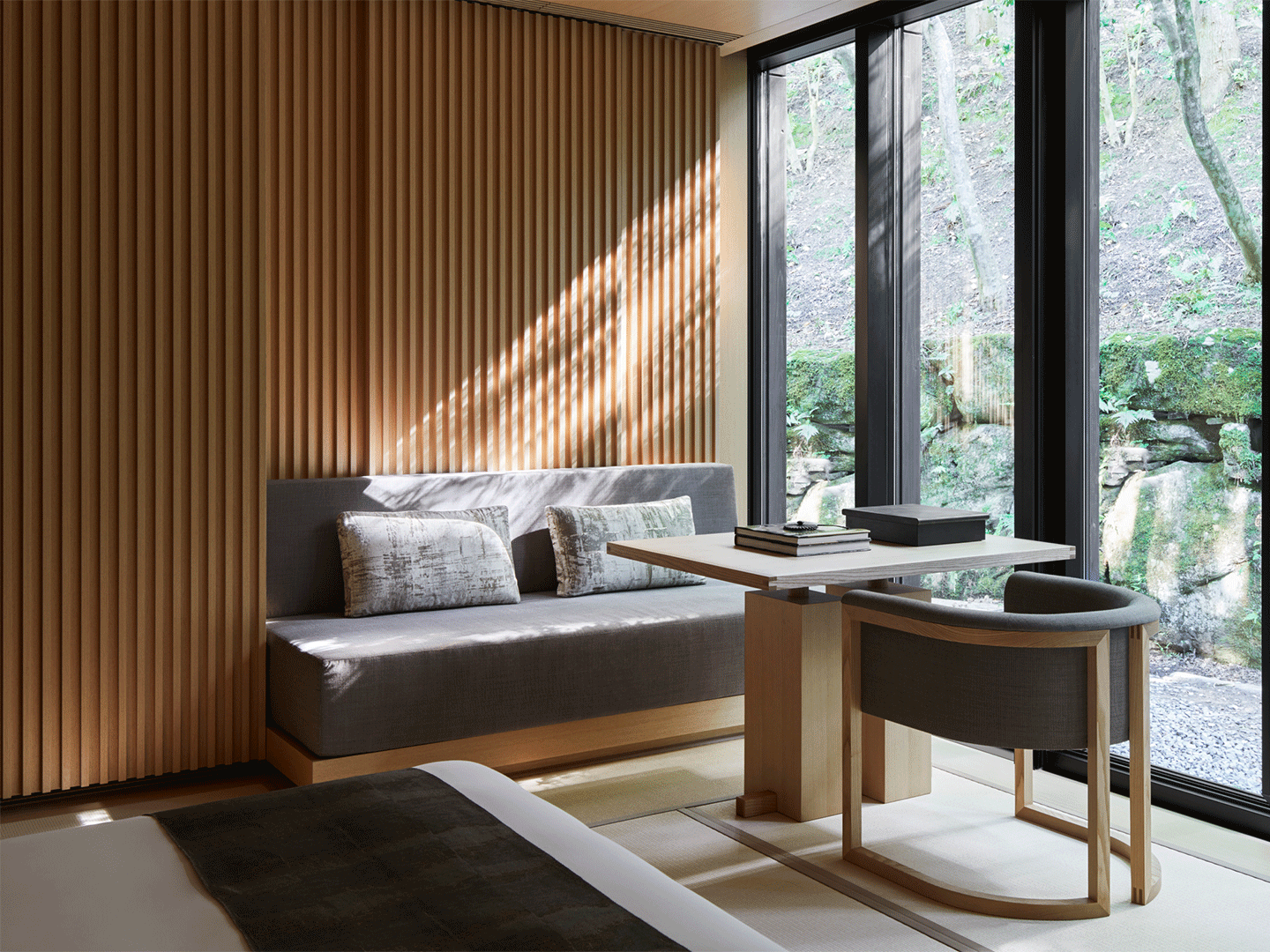
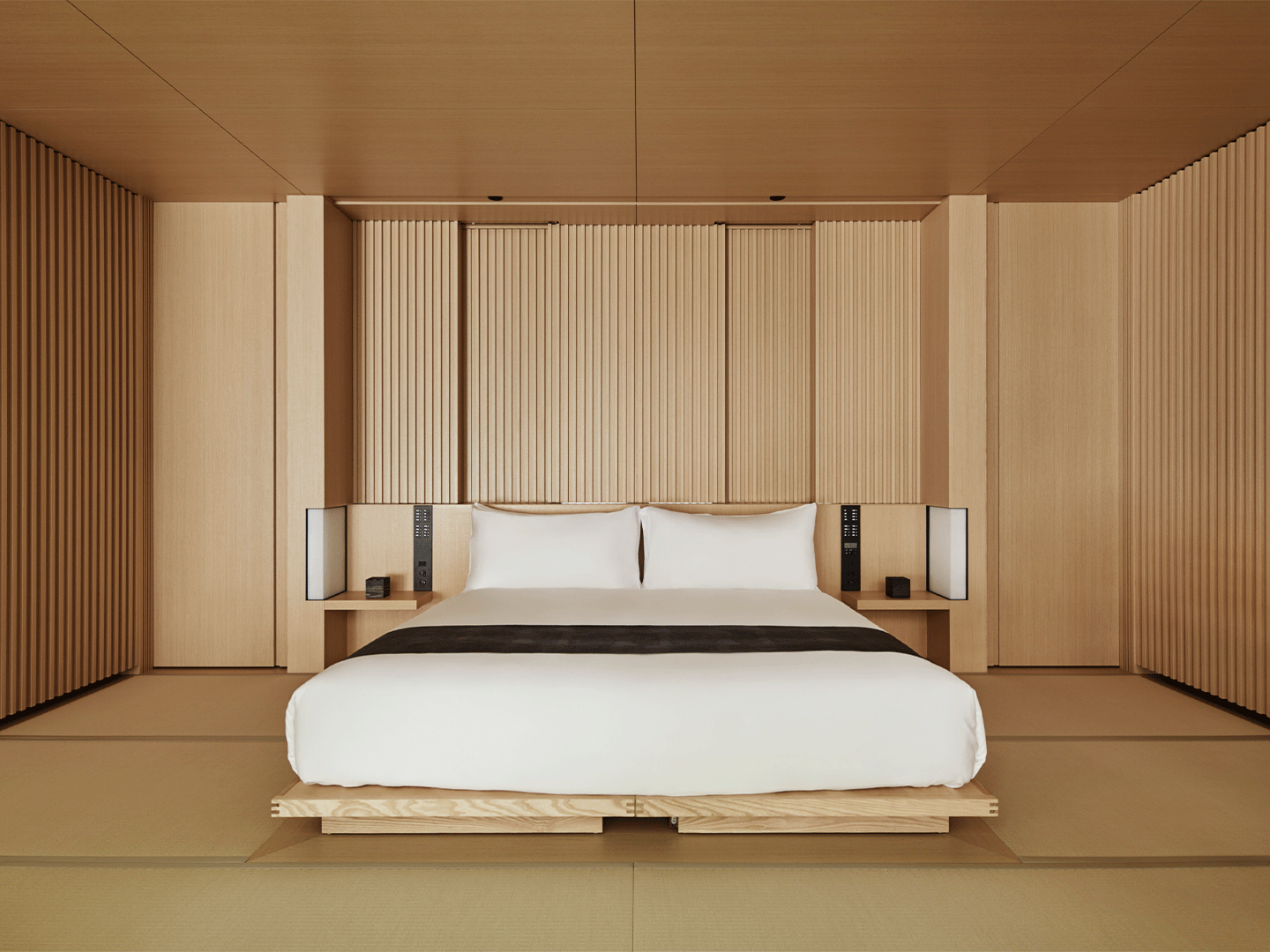
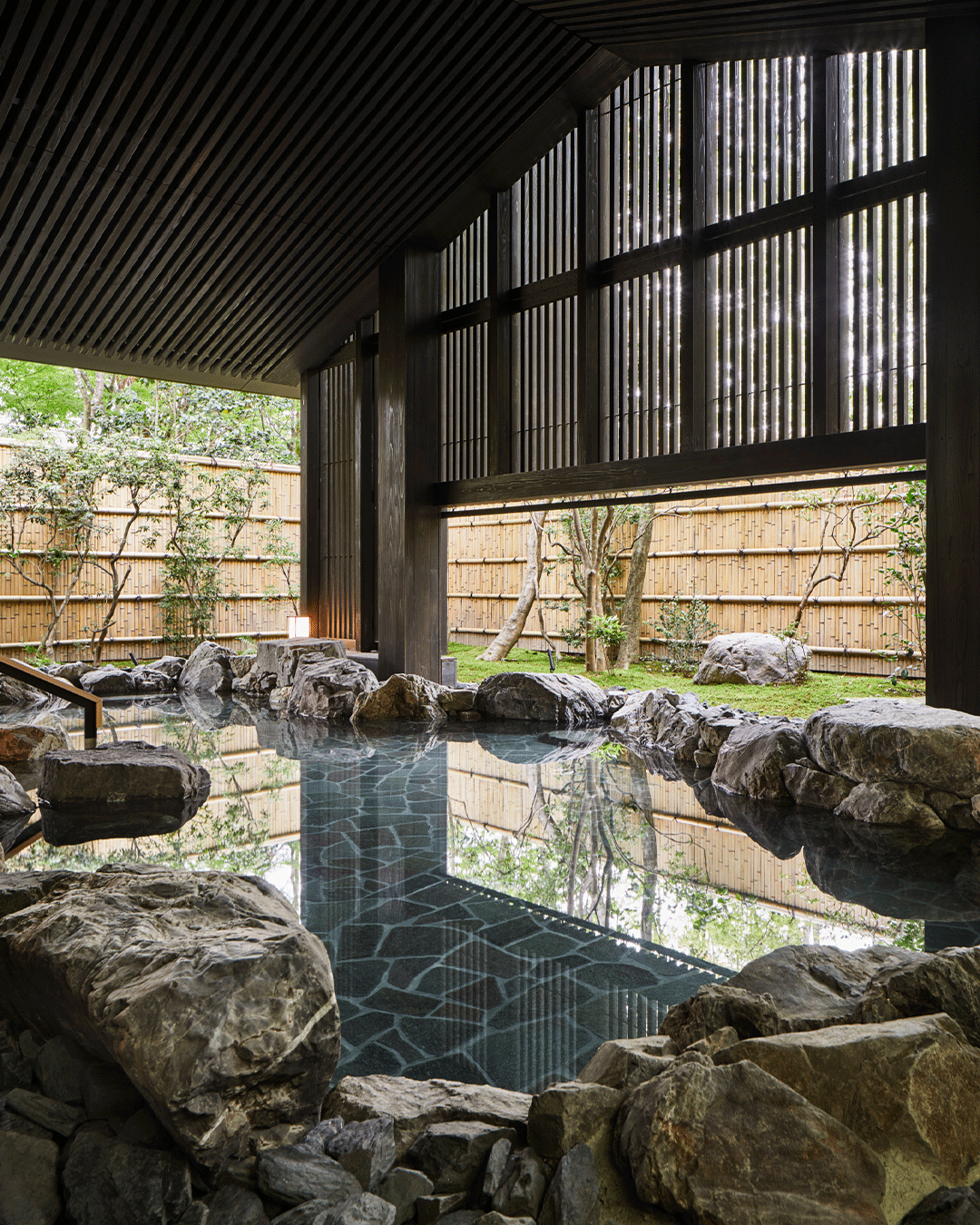
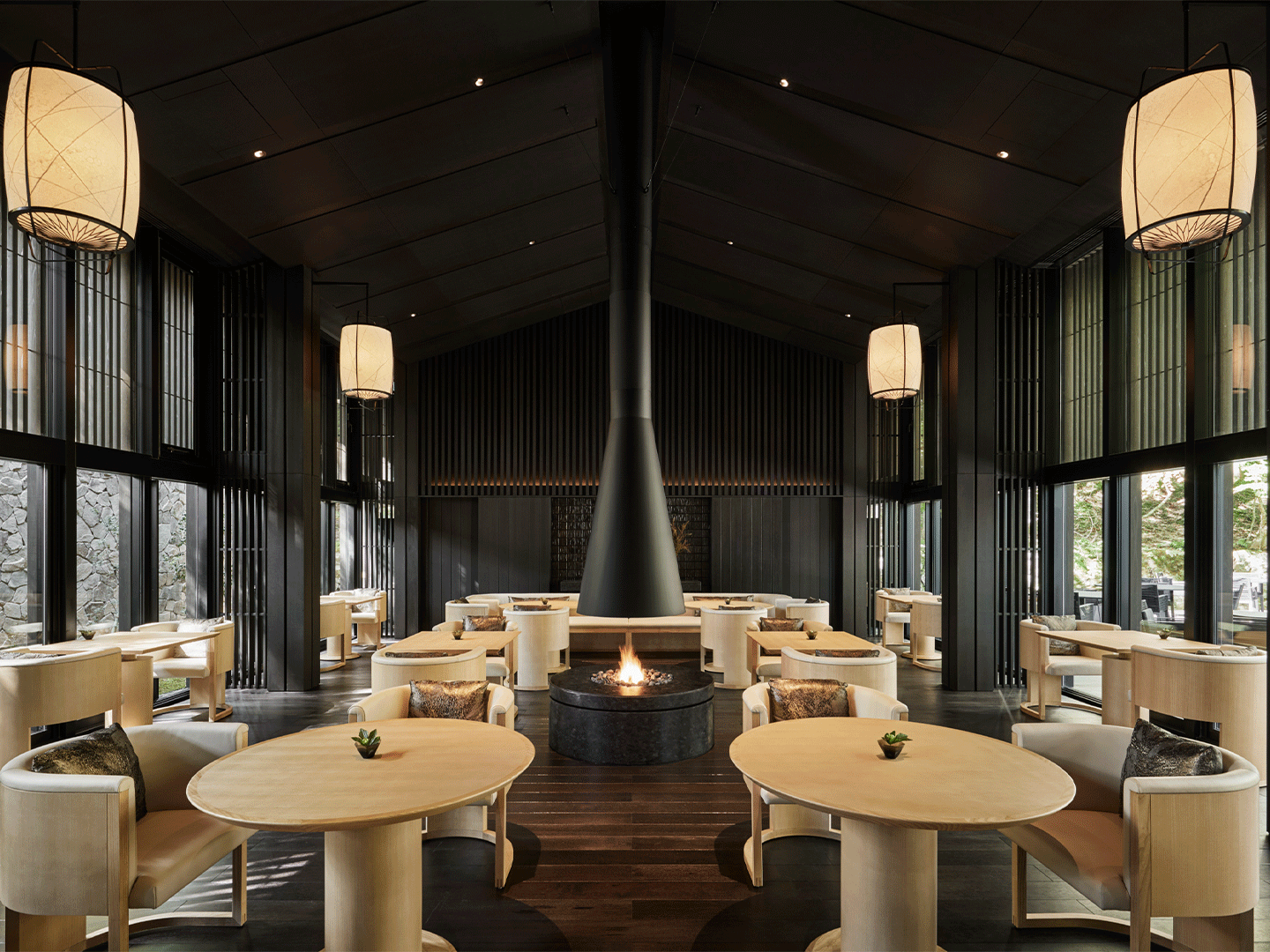
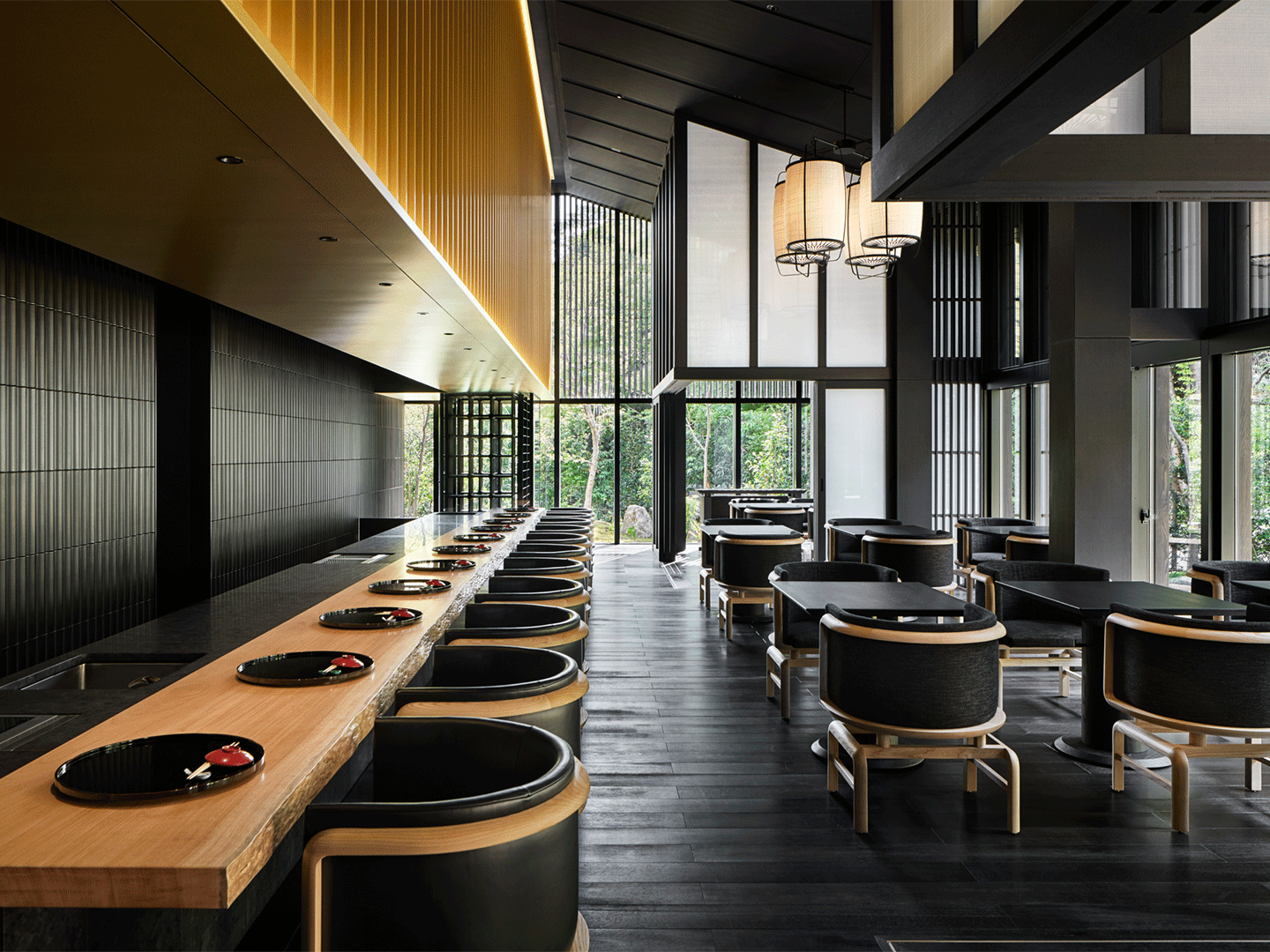
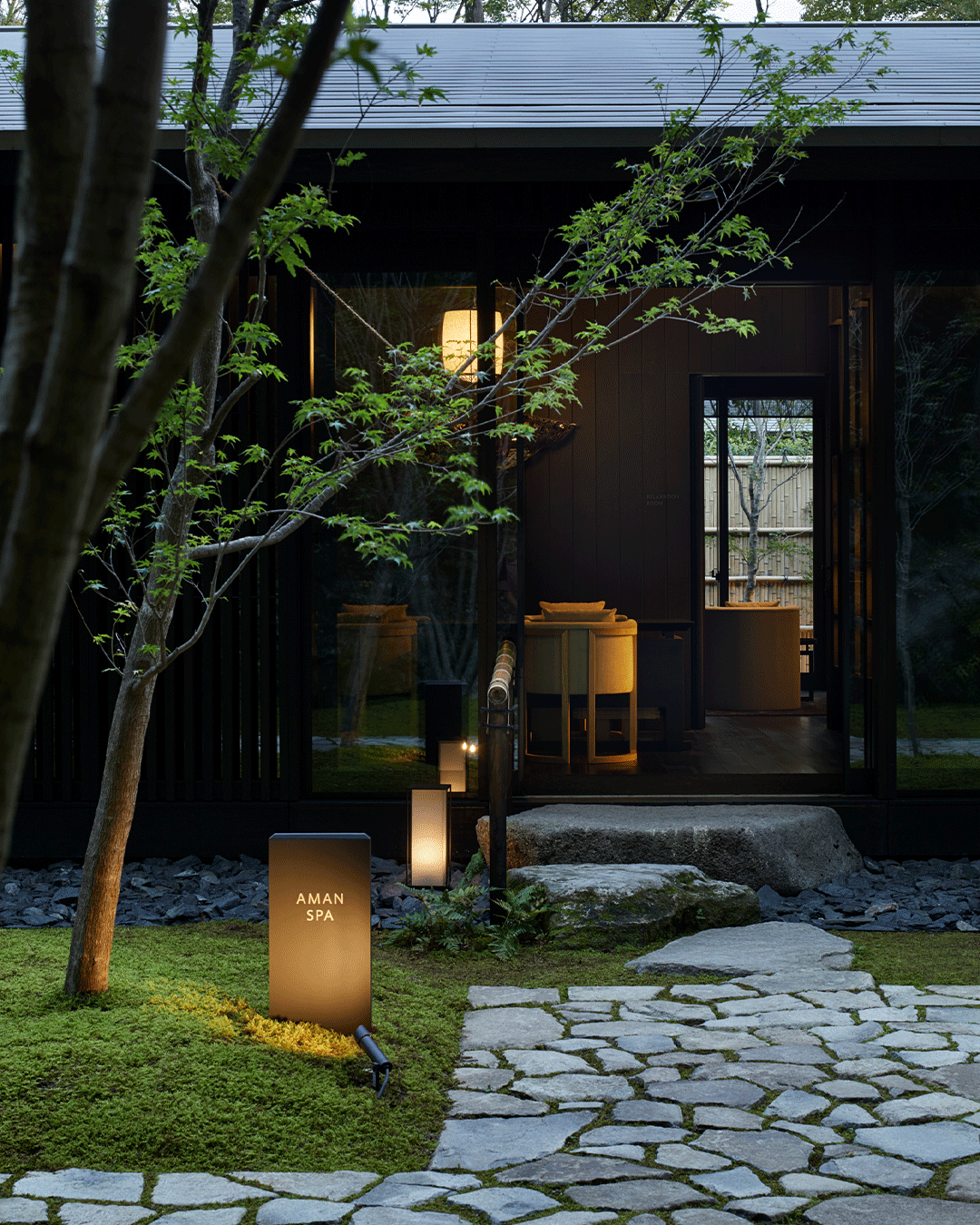
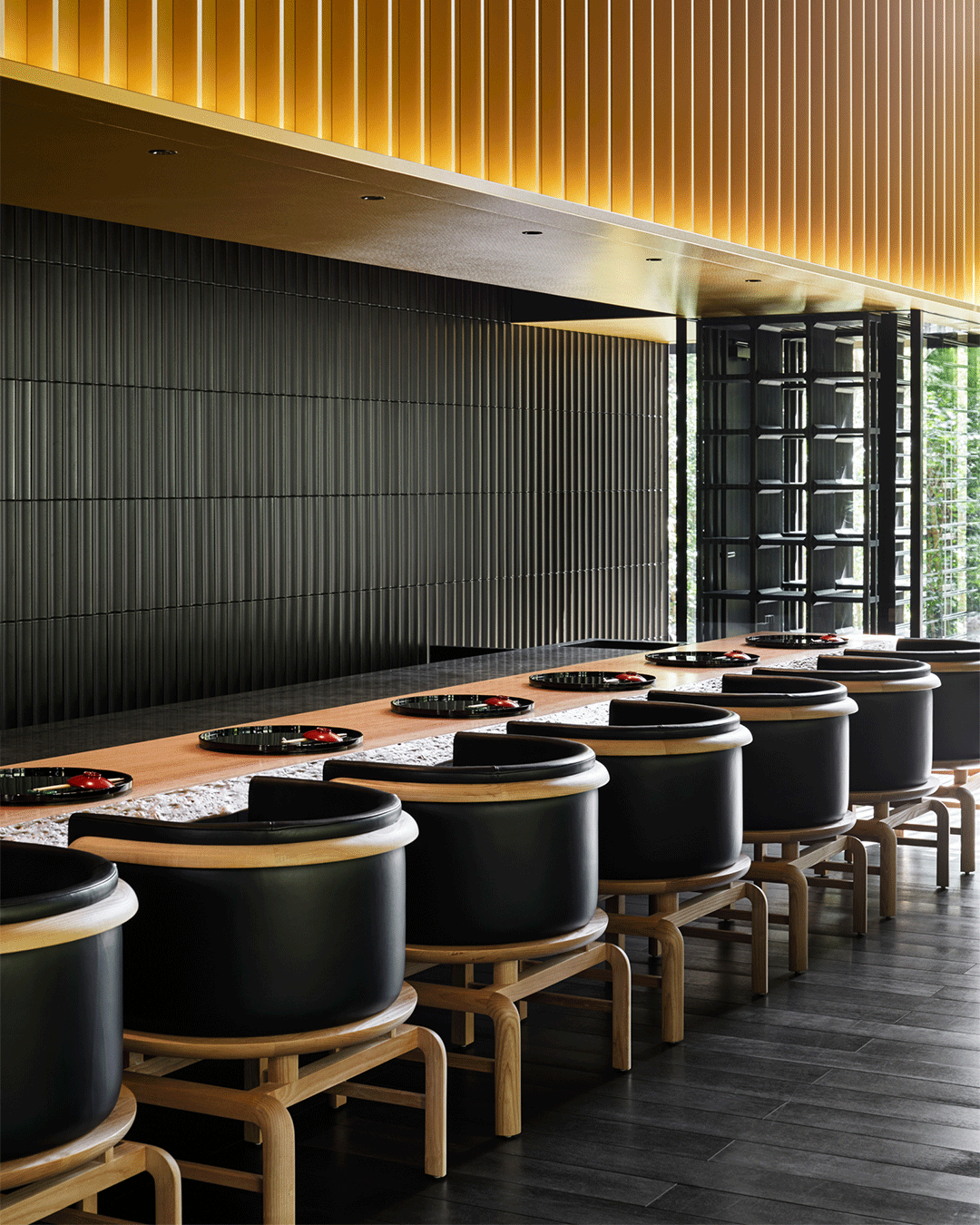
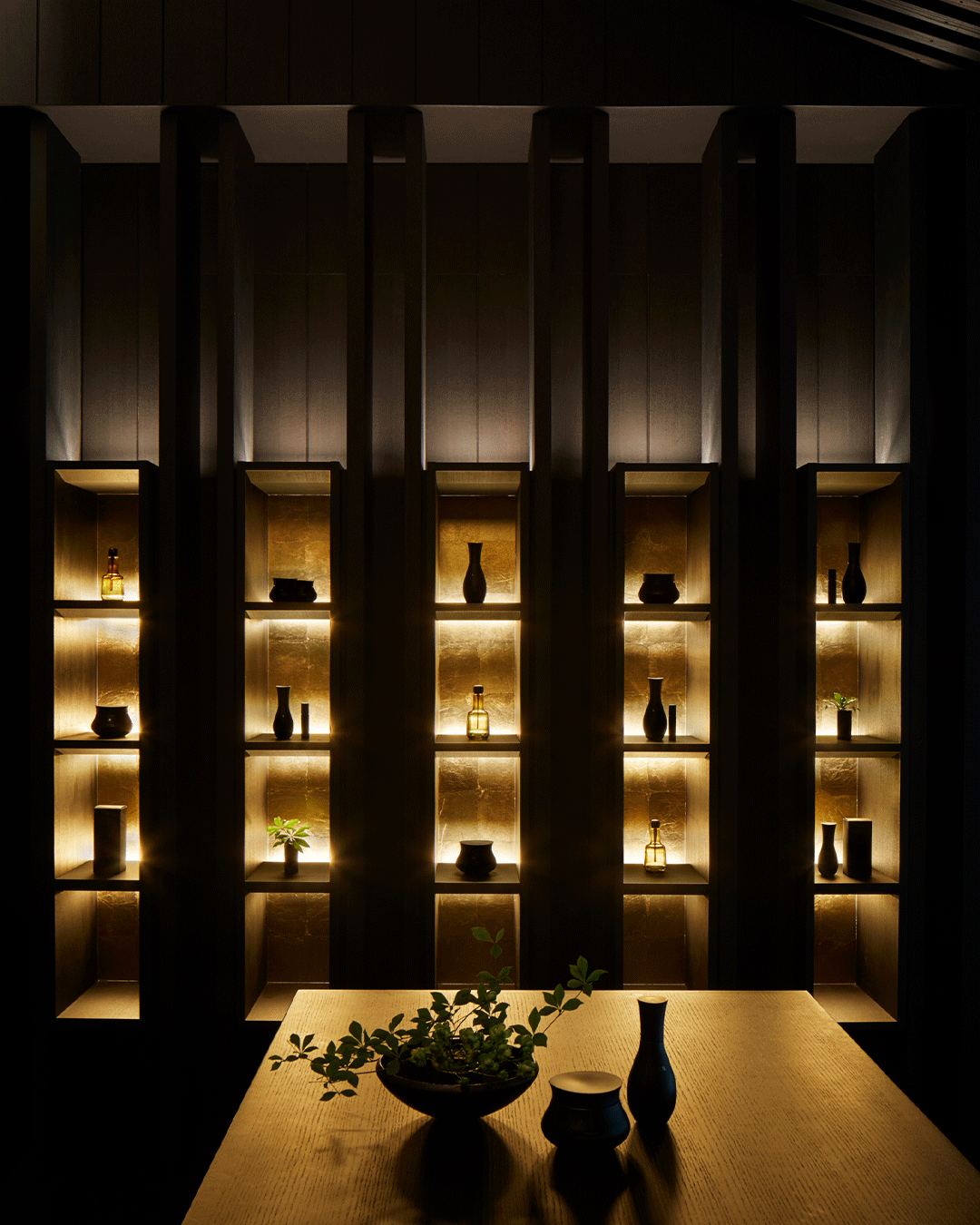
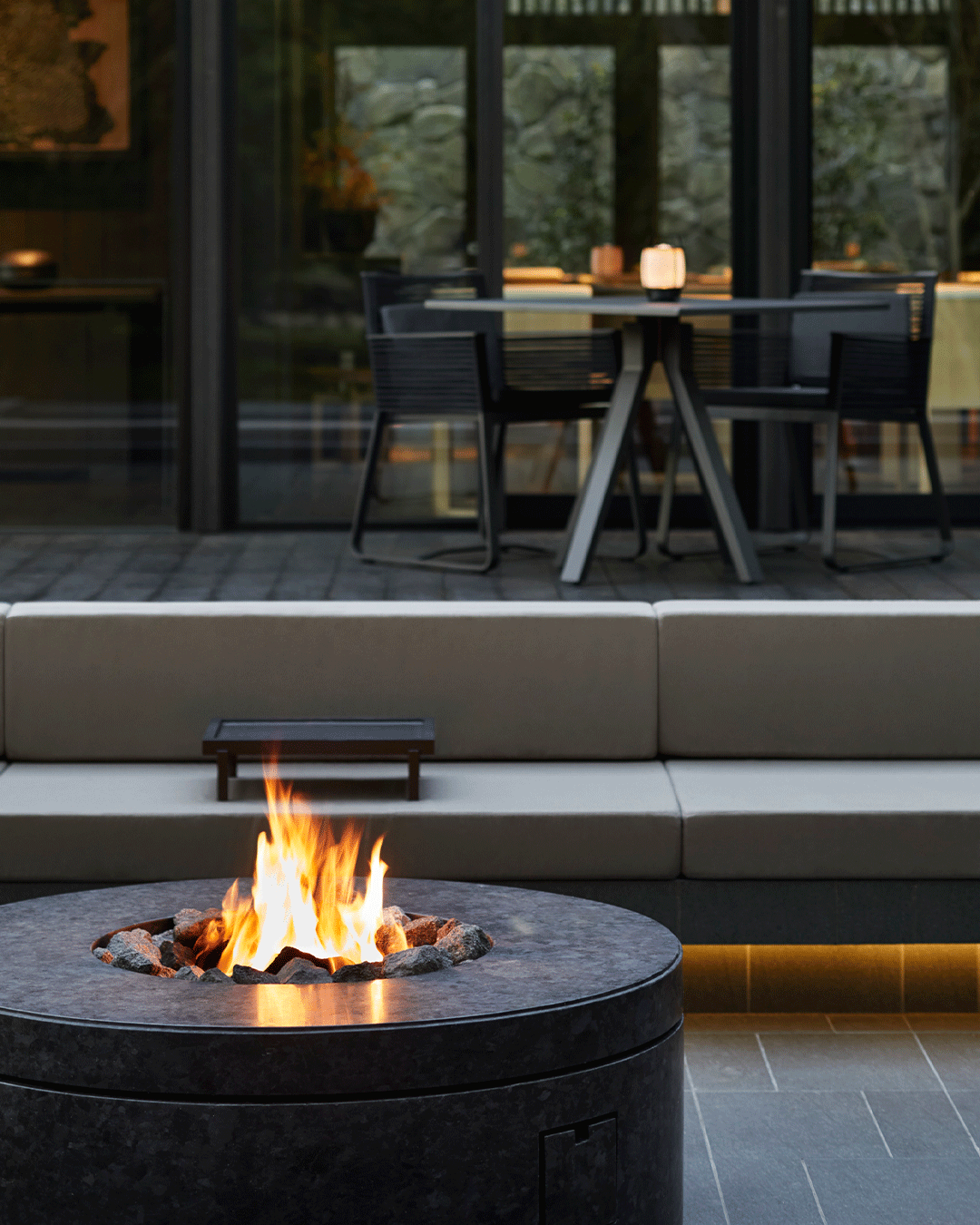
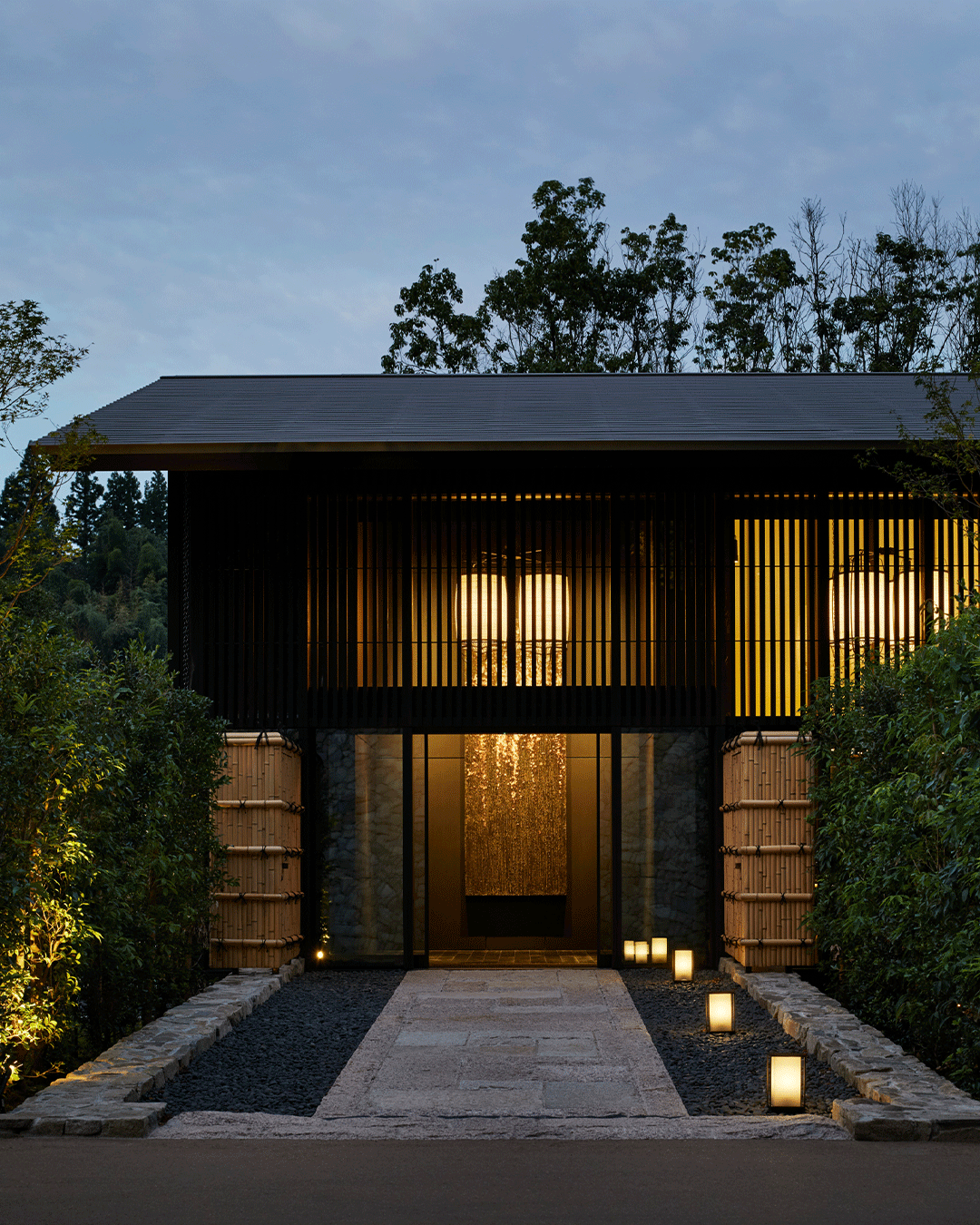
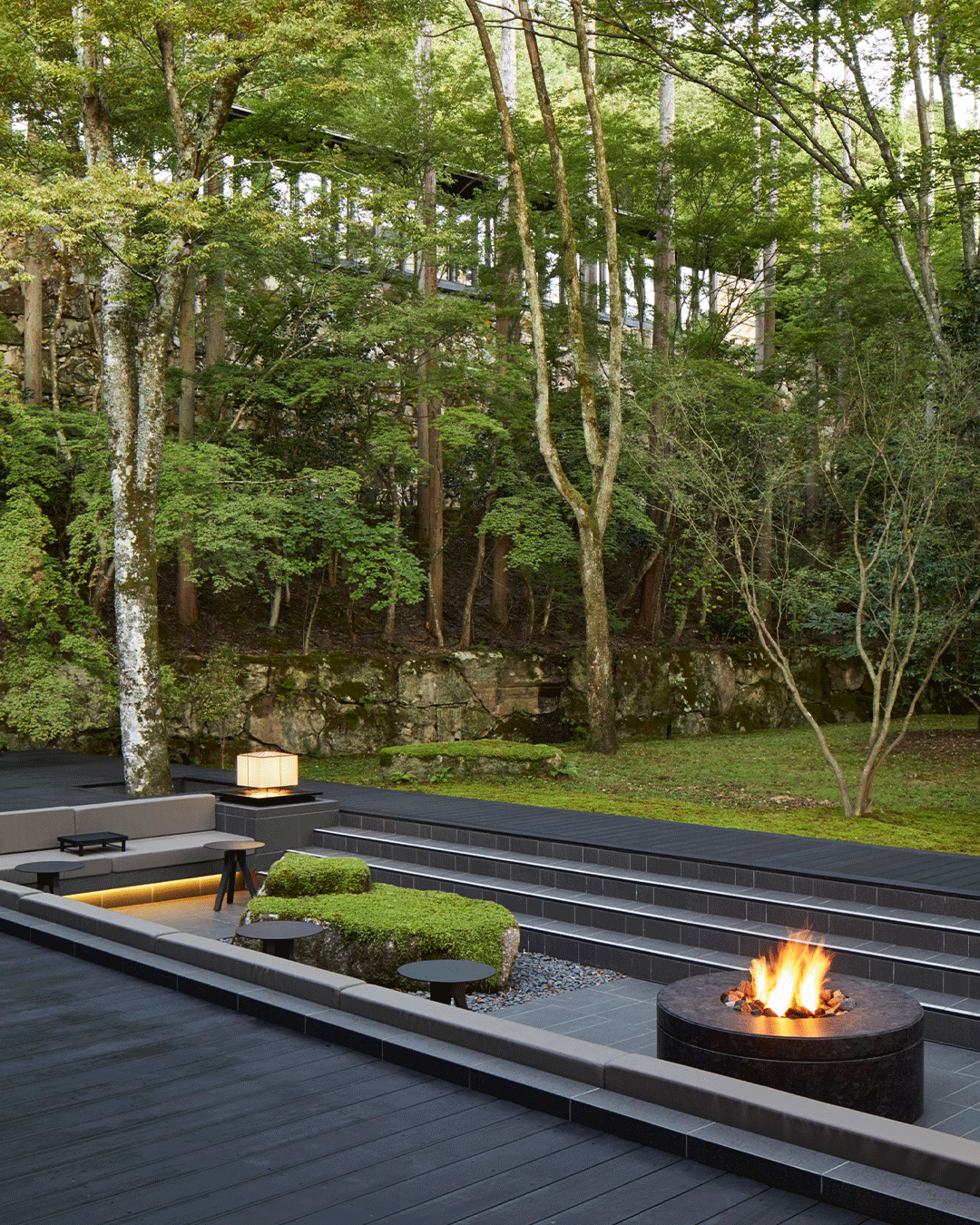
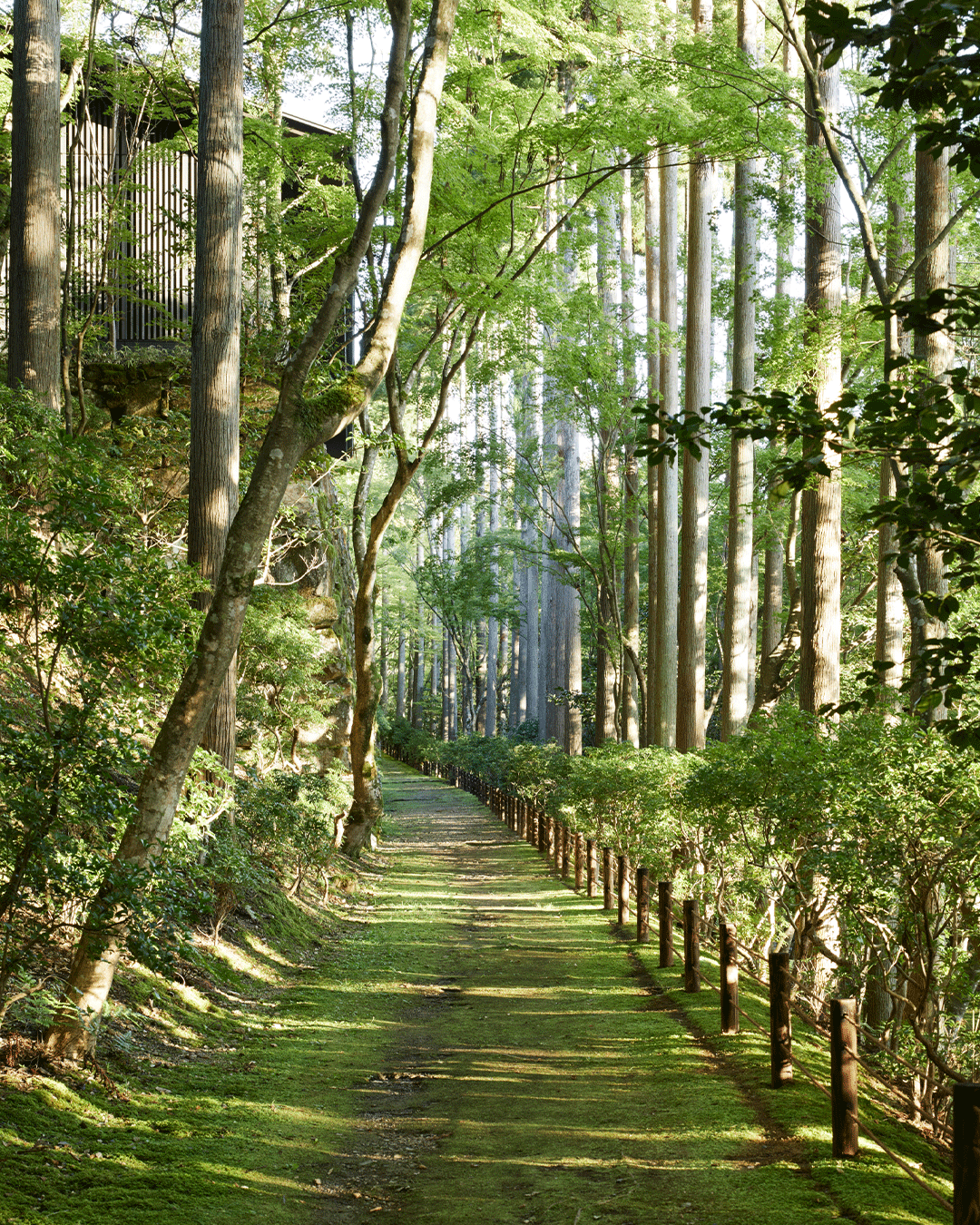
Aman Kyoto is an architectural masterclass in eschewing the obvious while embracing the subtle, picture-framed by a location that is as peaceful as it is otherworldly.
Related stories
- Pitch perfect: Utah’s luxury tented pavilions.
- Plesner Architects delivers decadence at the Six Senses Shaharut resort in Israel.
- Inside the Ace Hotel Kyoto by Kengo Kuma and Commune.
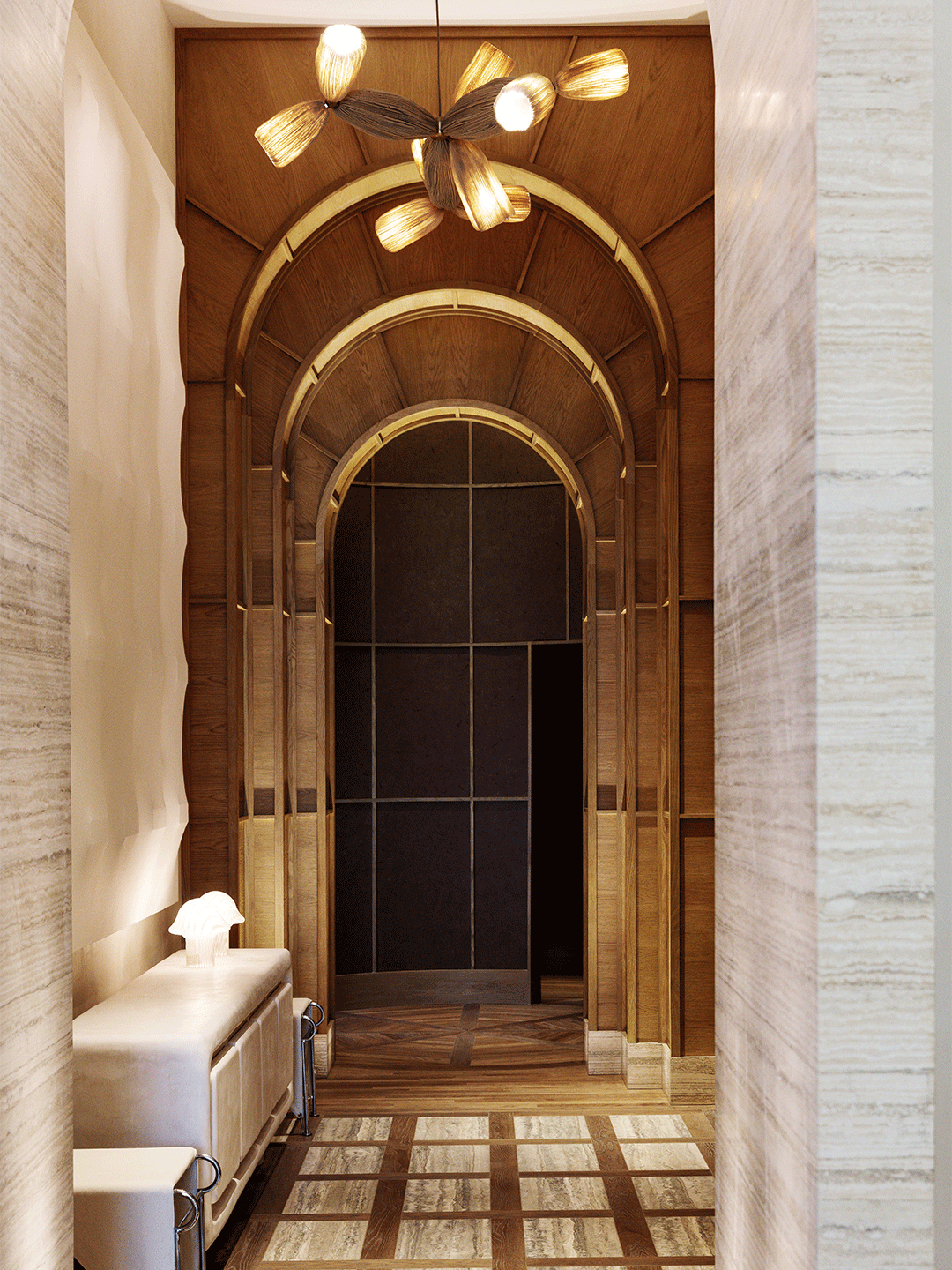
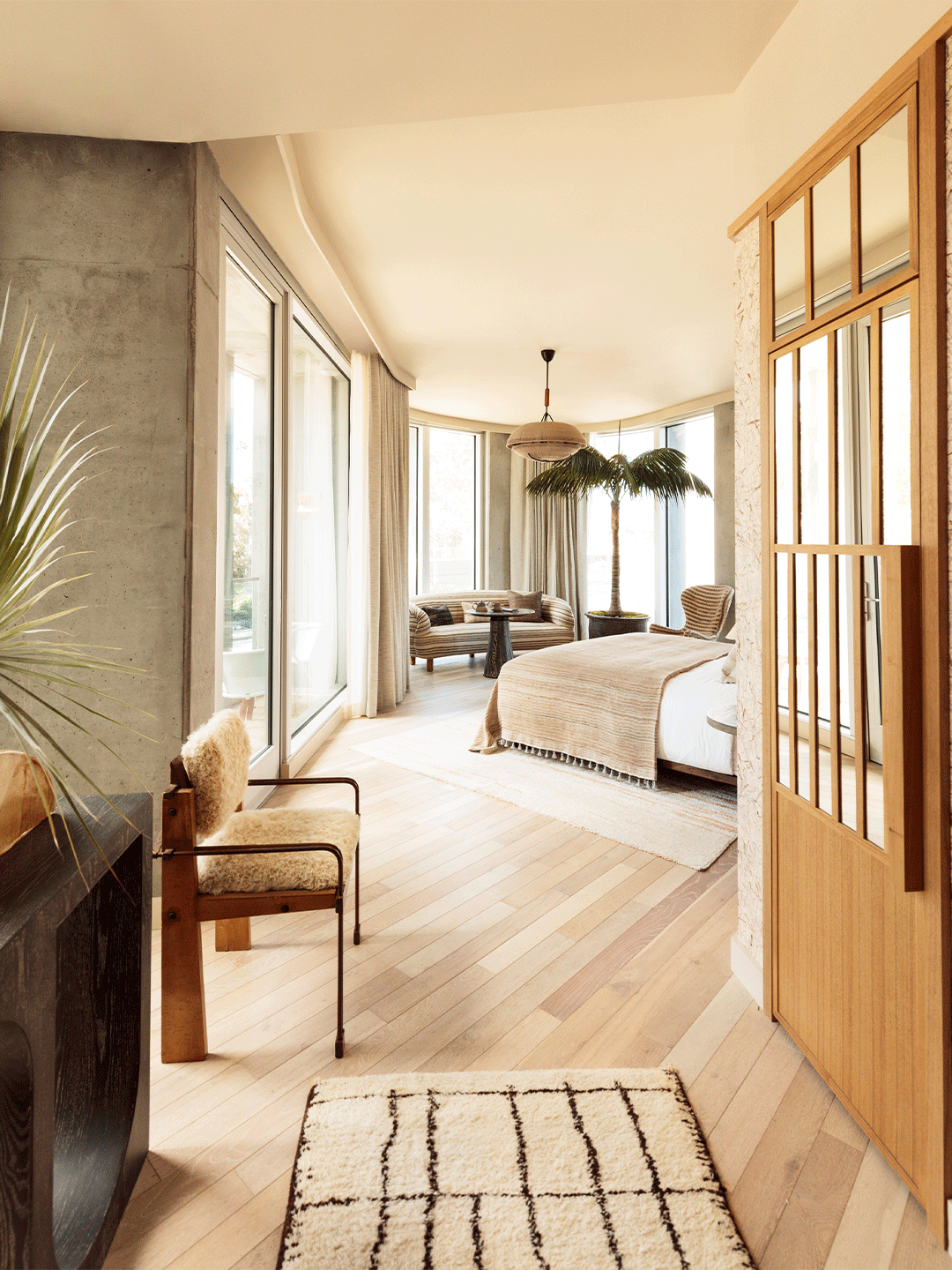
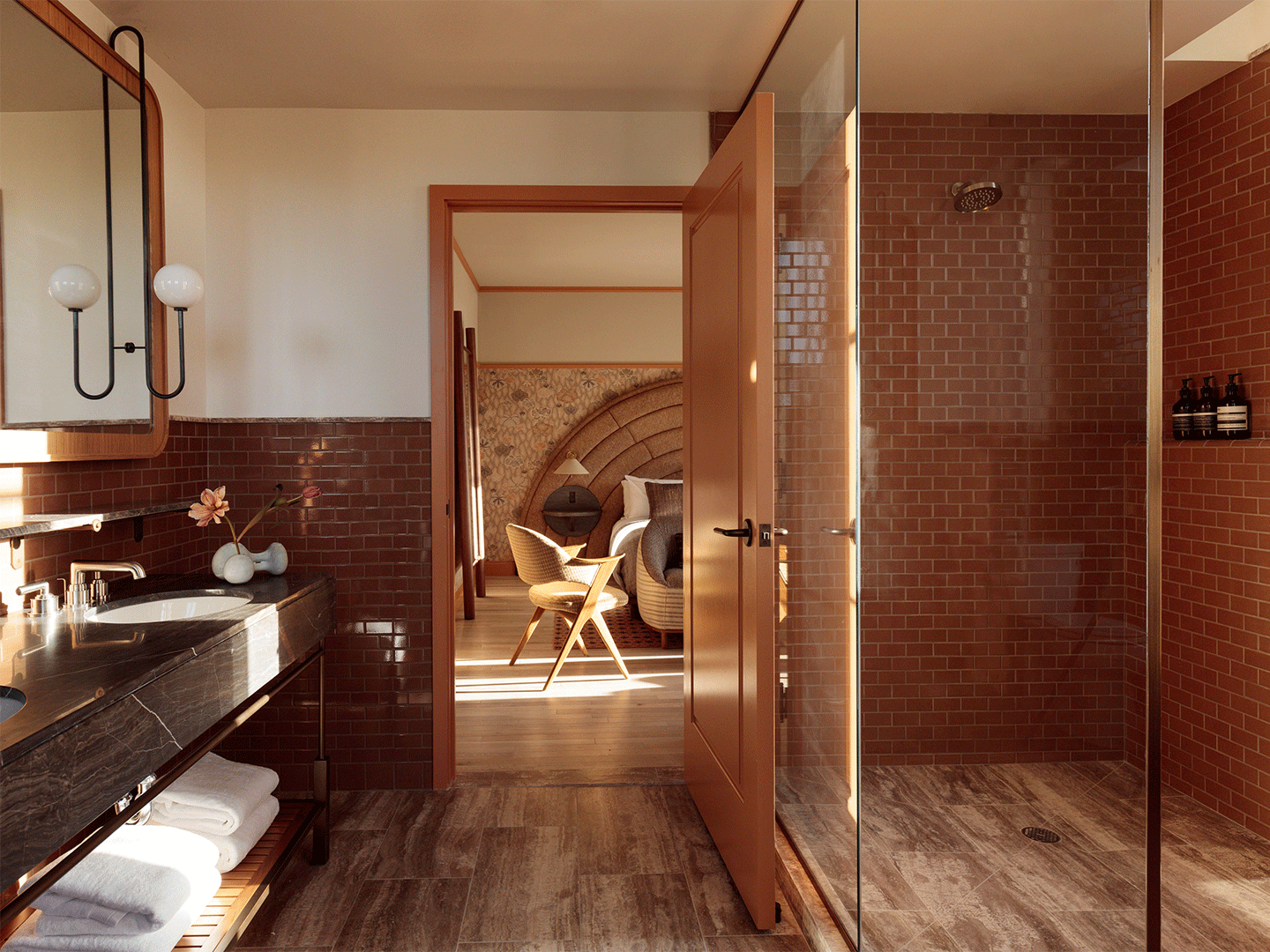
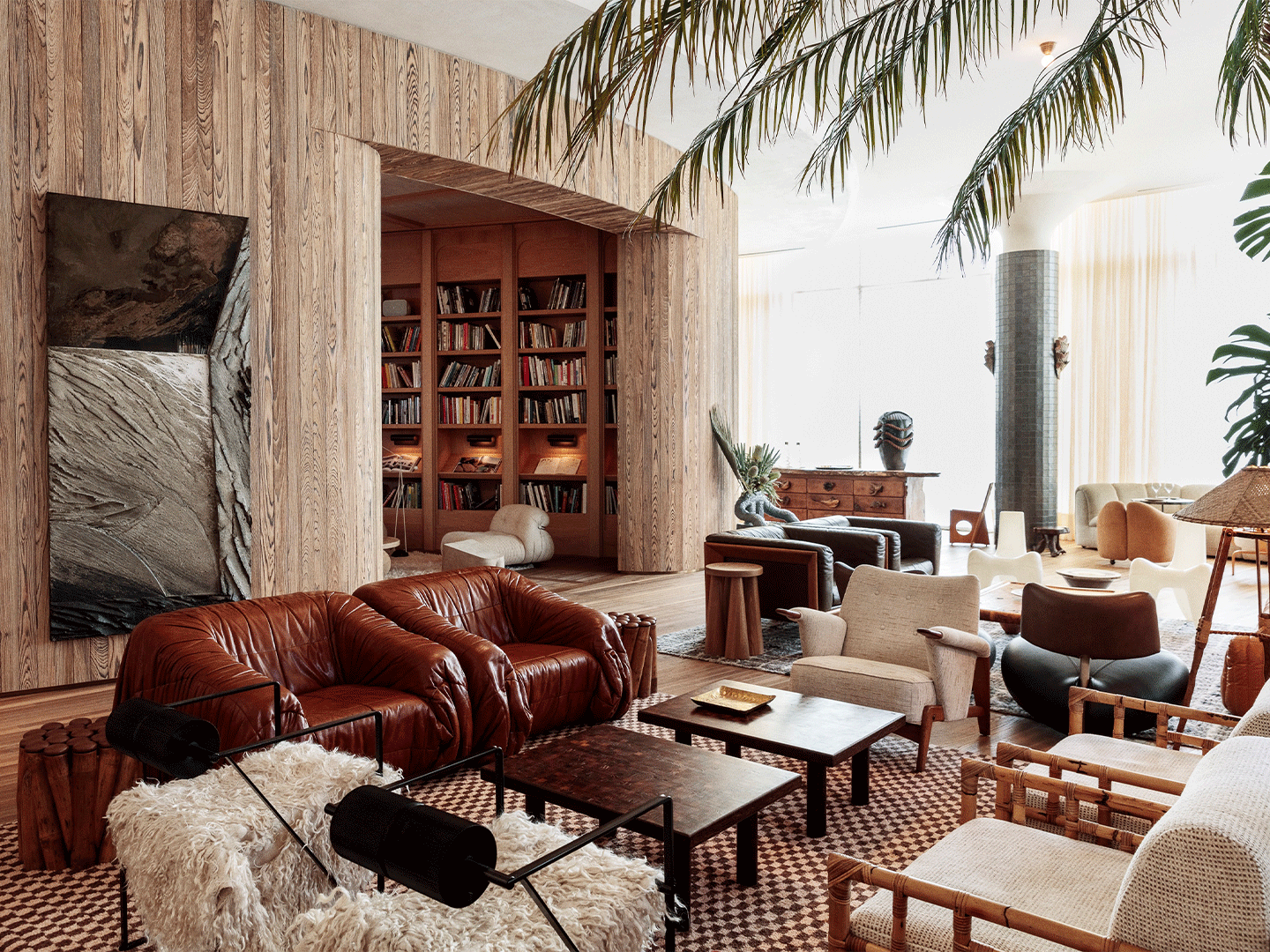
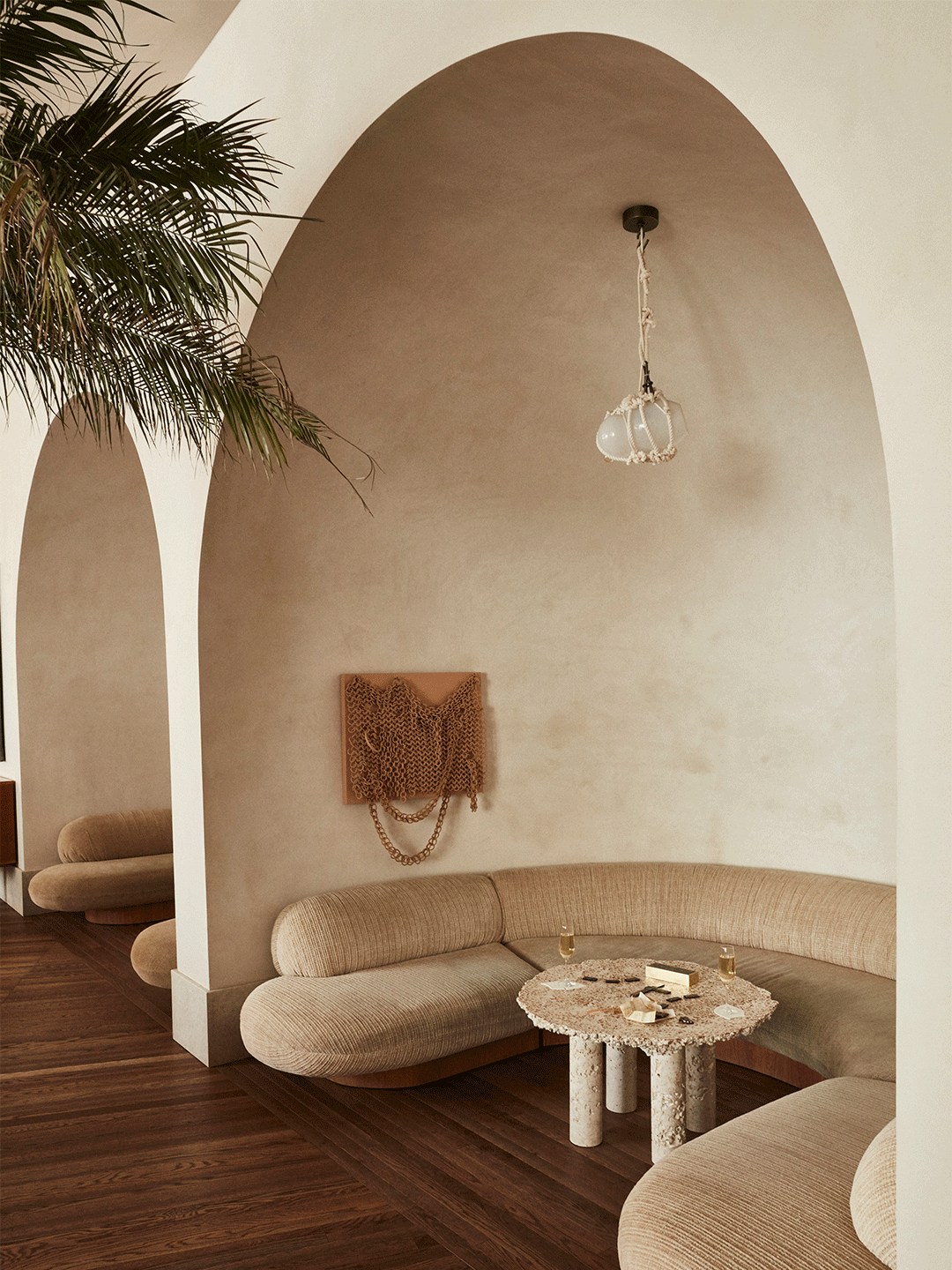
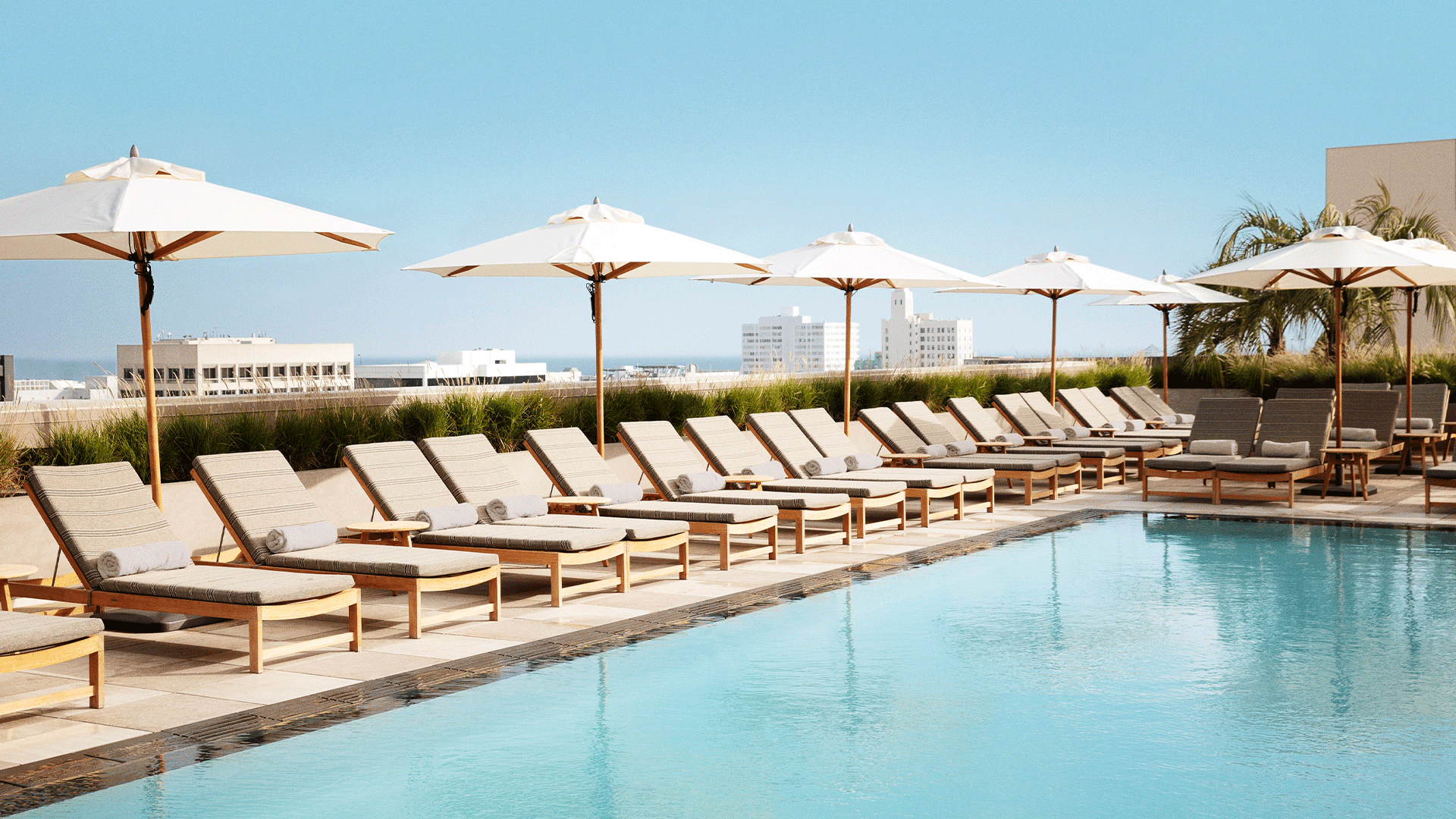
In Los Angeles, locals describe the Santa Monica neighbourhood as Silicon Beach, the surfside equivalent of Silicon Valley, due to the concentration of technology, entertainment and digital media companies that have established offices just a few blocks from the ocean. Among the liveliness, the Santa Monica Proper hotel has become a smash-hit since opening mid-2019, winning the hearts of visitors and locals alike. Nestled within a six-storey Spanish Colonial Revival-style building originally designed by Arthur E. Harvey in 1928 and renovated by Howard Laks Architects, the light-filled interiors of the hotel were created by famed American designer Kelly Wearstler.
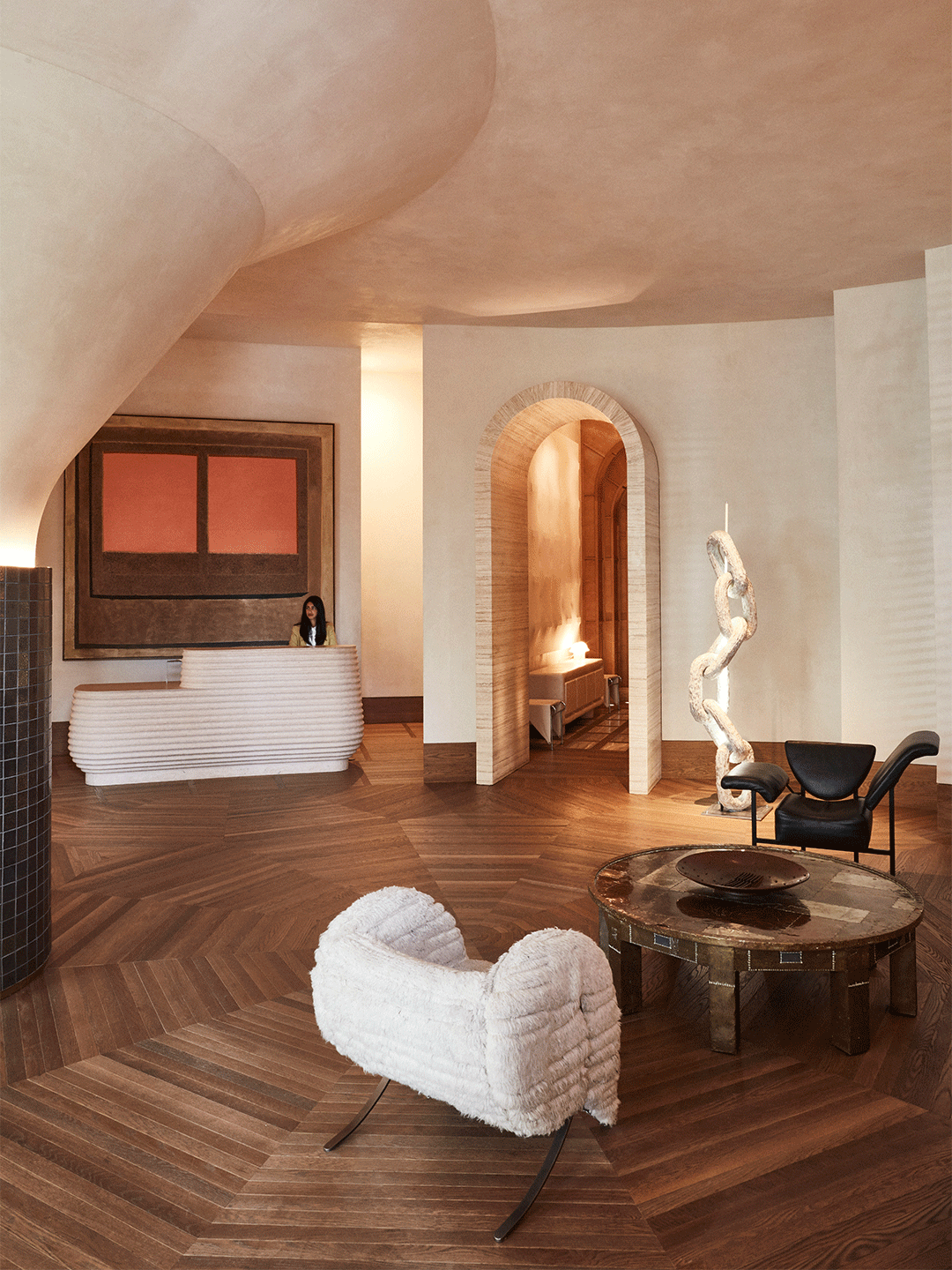
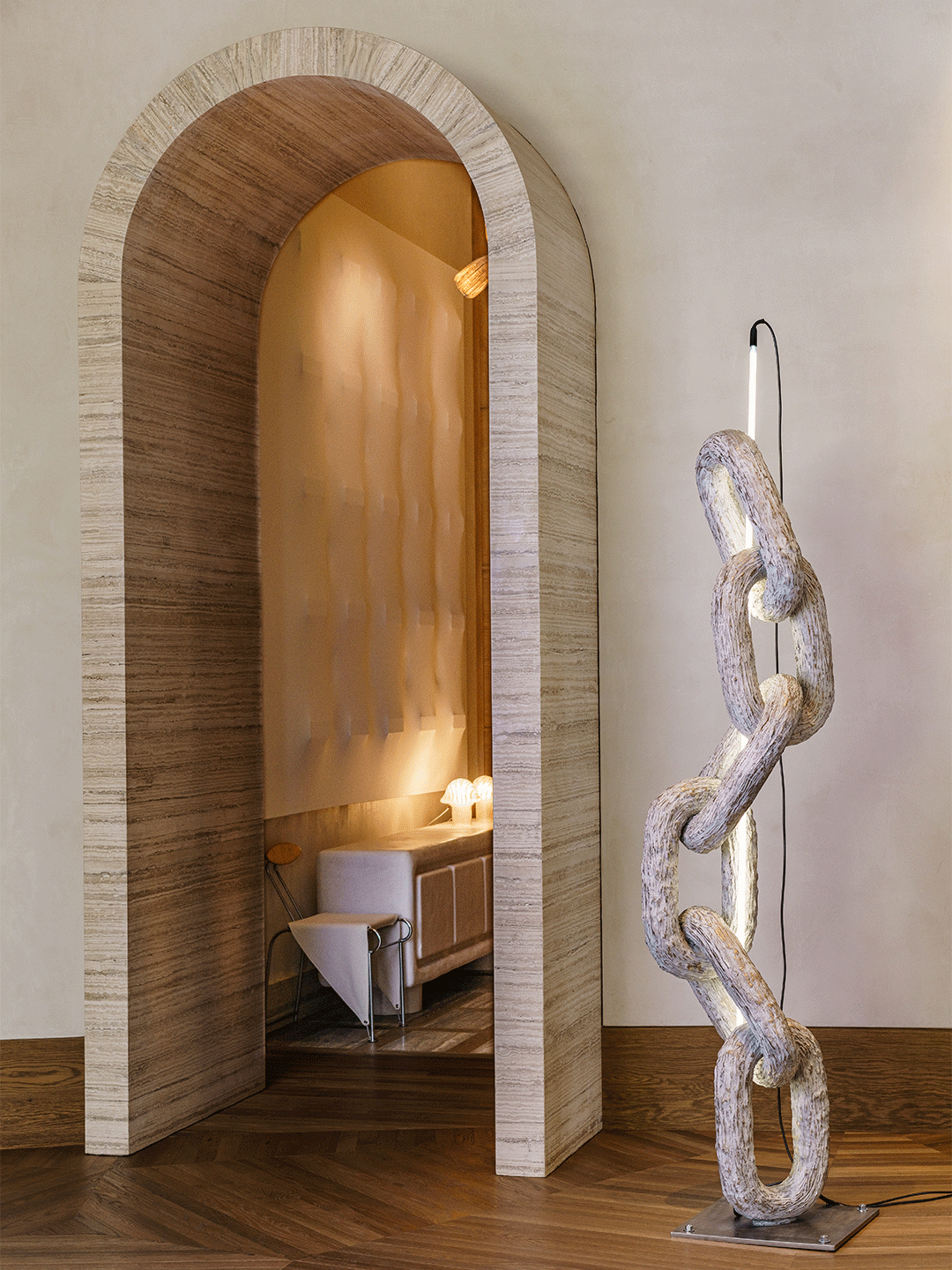
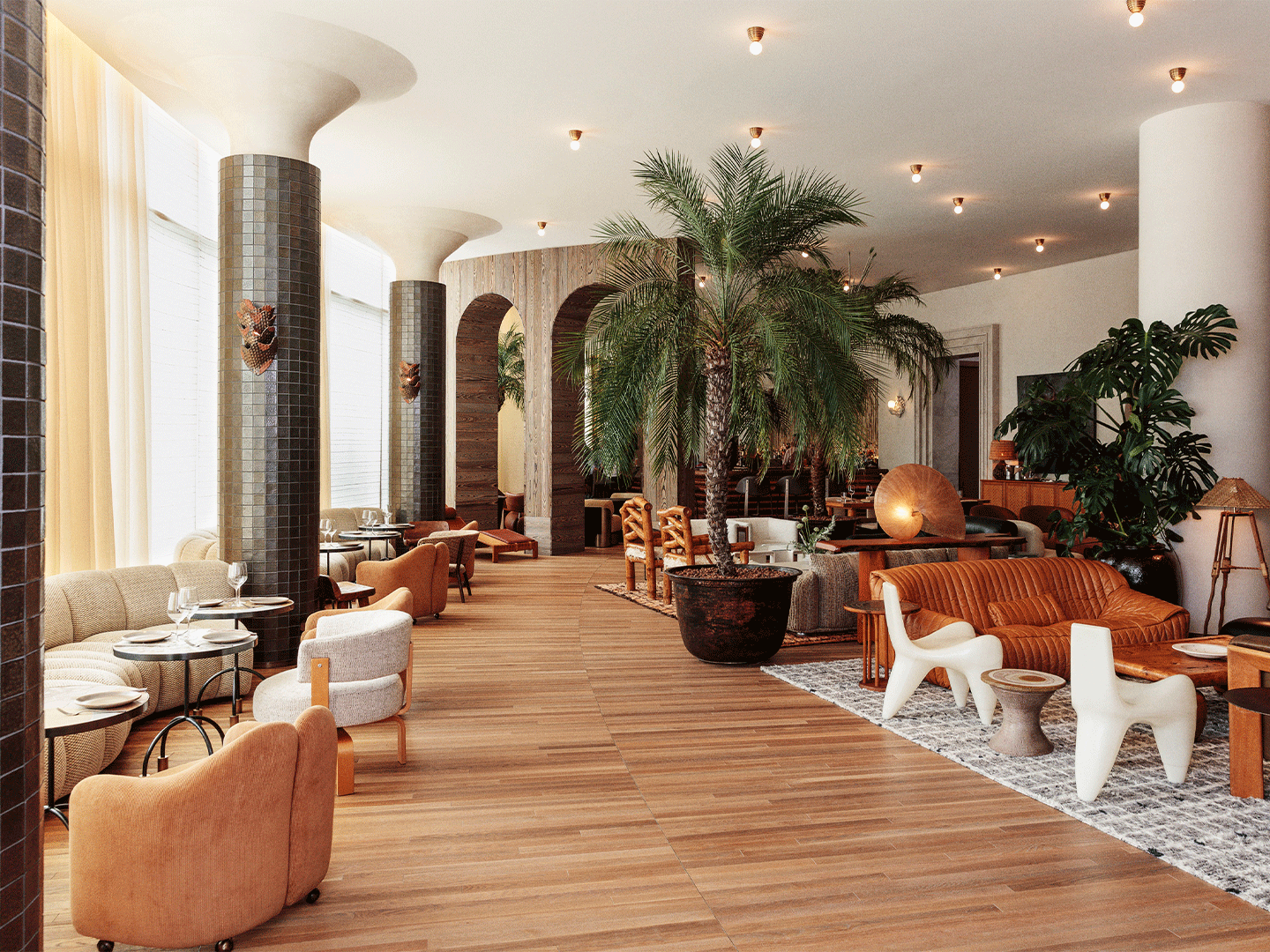
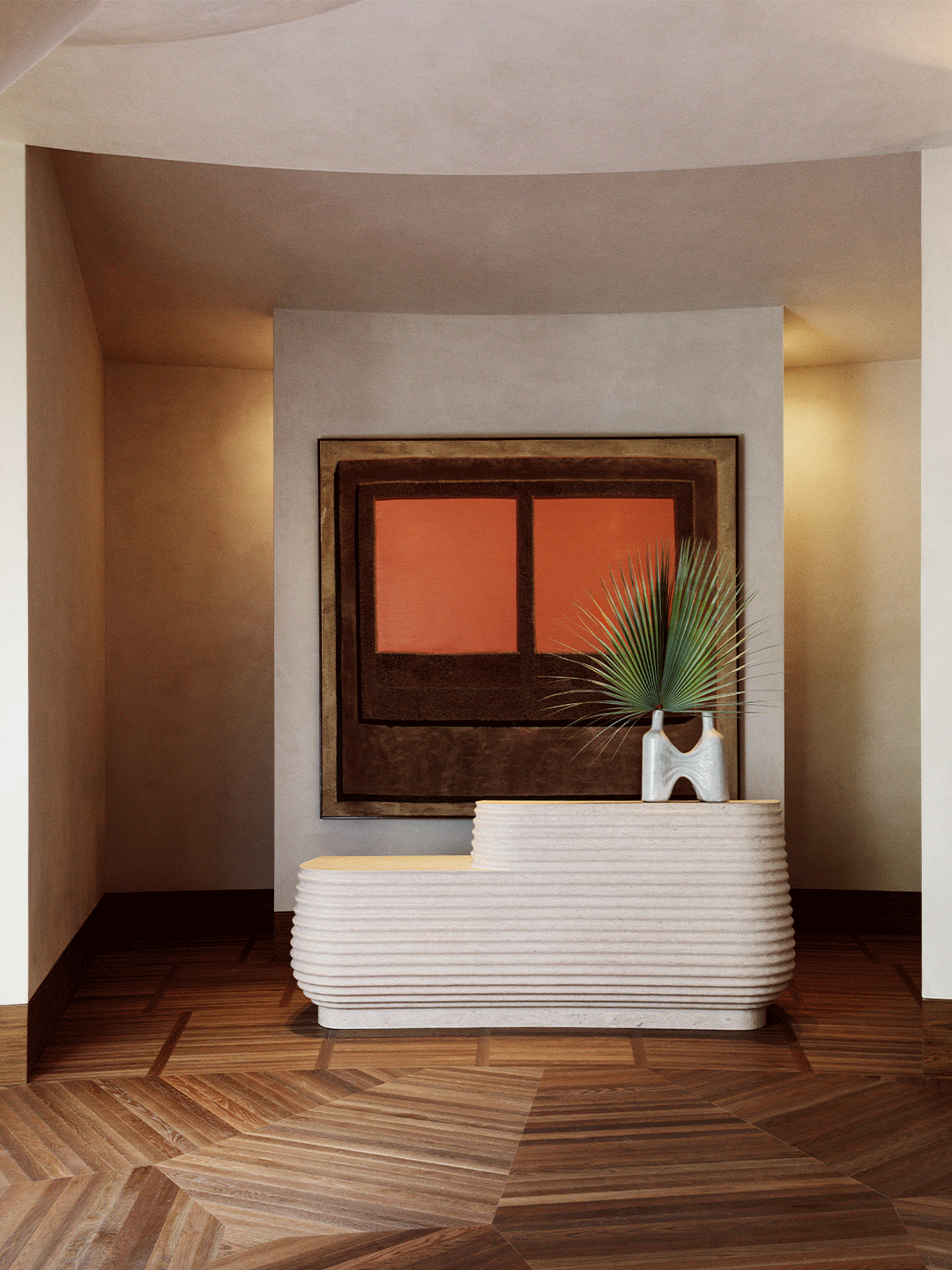
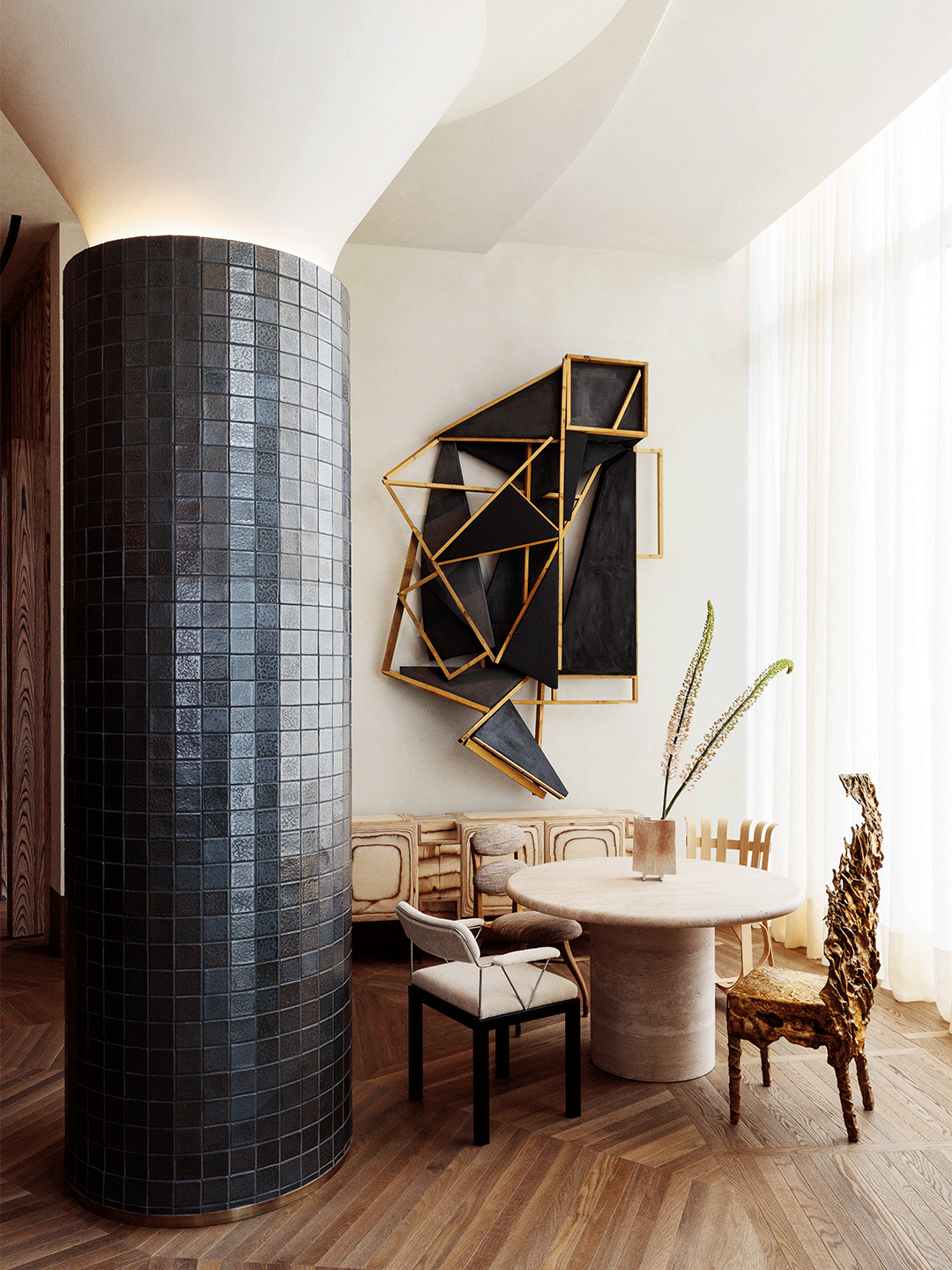
The Santa Monica Proper hotel by Kelly Wearstler
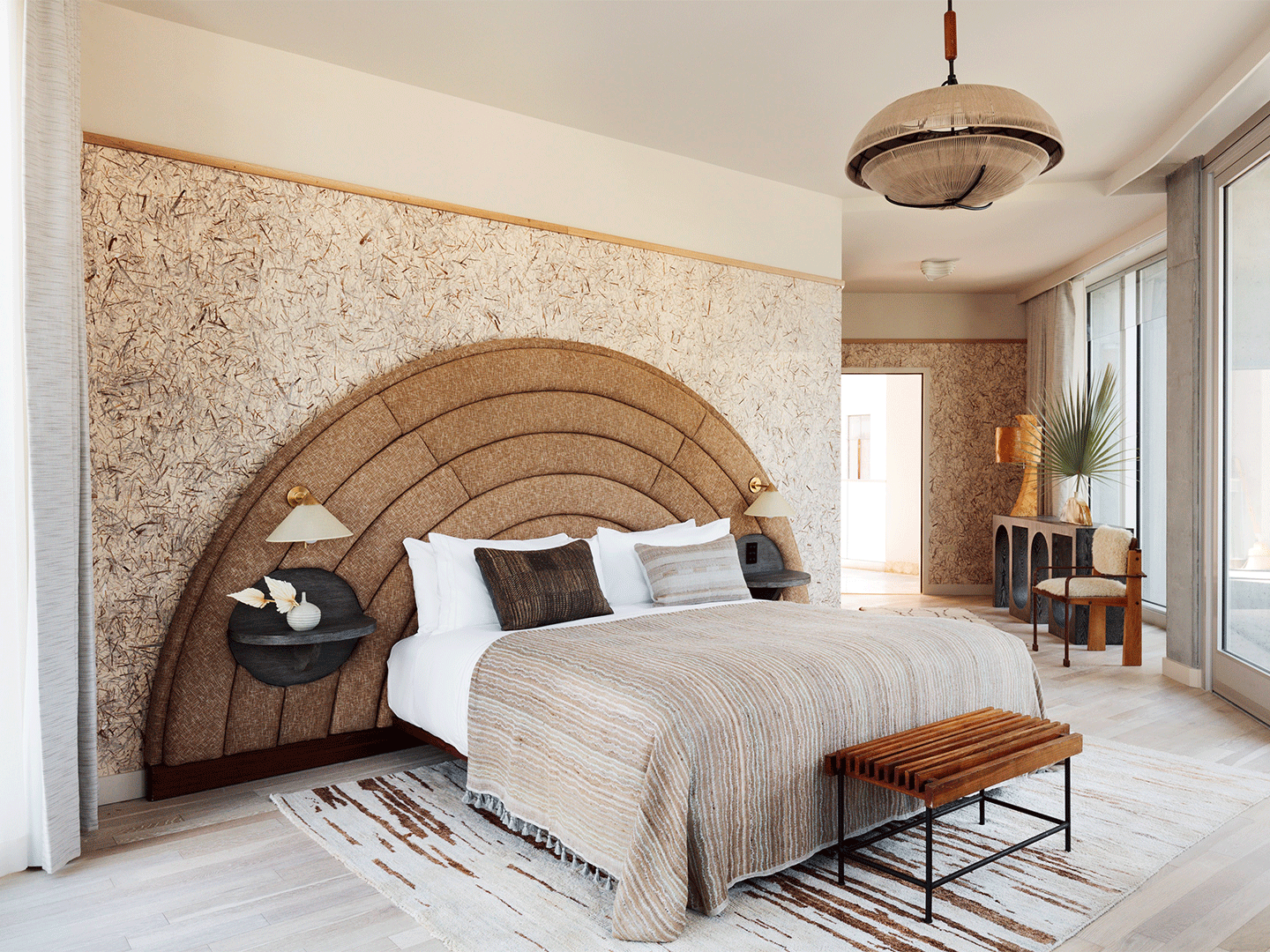
The designer bestowed the hotel with collected wares among her signature palette of soft and warm colours. Raw materials including wood, stone and marble envelop each space alongside organic textiles and an abundance of artworks by local artists. In the 271 serene rooms and suites, many with sun-filled terraces, Kelly curated European-style, mid-century furniture against floral wallpapers and geometric motifs, evident in swoon-worthy pieces such as wall sconces and arc-shaped headboards.
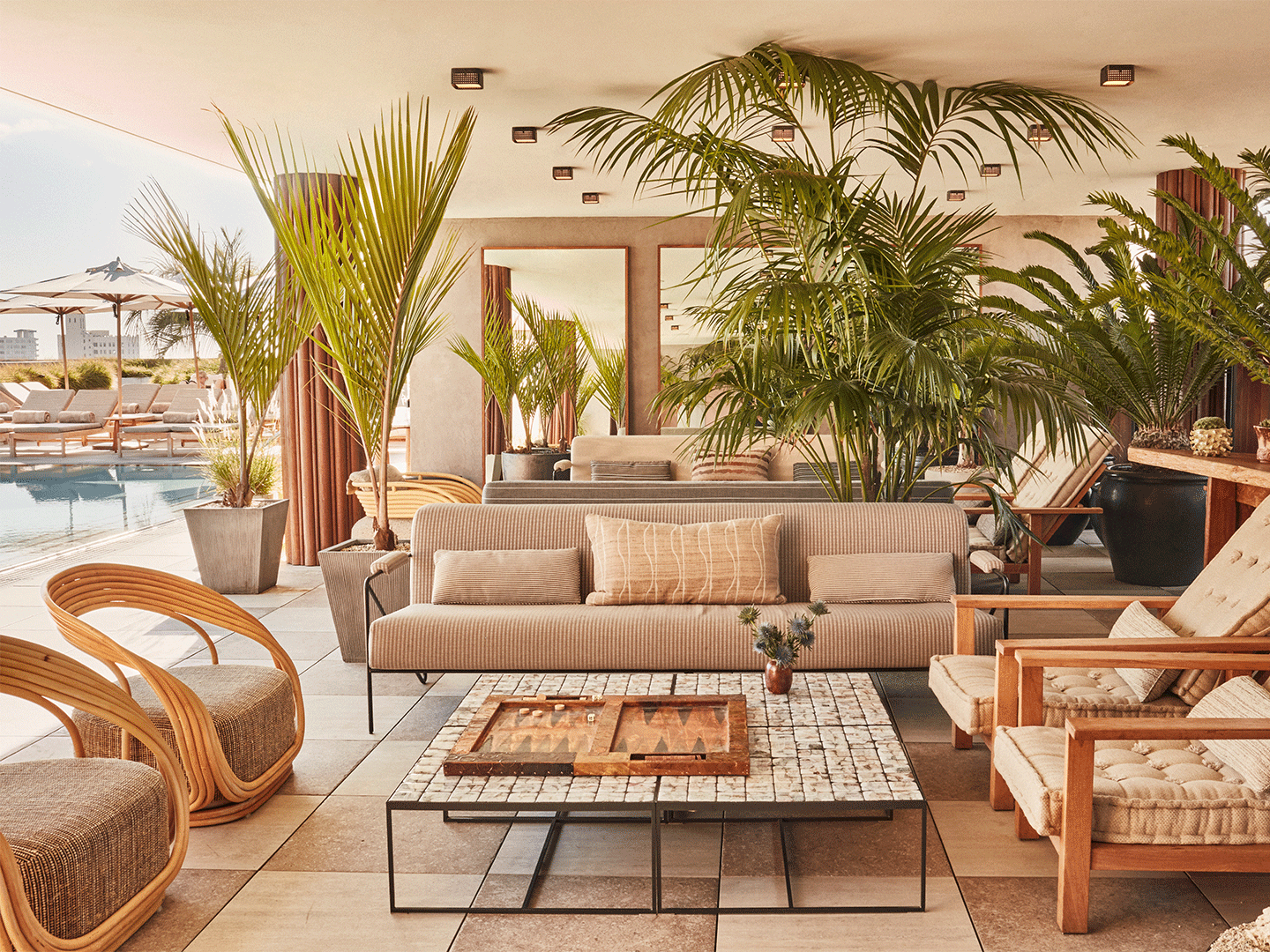
Outside the sleeping quarters, the public grounds of the hotel continue the refined and relaxed beachside aesthetic. The ground floor comprises the Palma lounge and a relaxed library nook. On the rooftop, the Calabra restaurant and bar offers sparkling ocean views against which to savour Mediterranean and local cuisine.
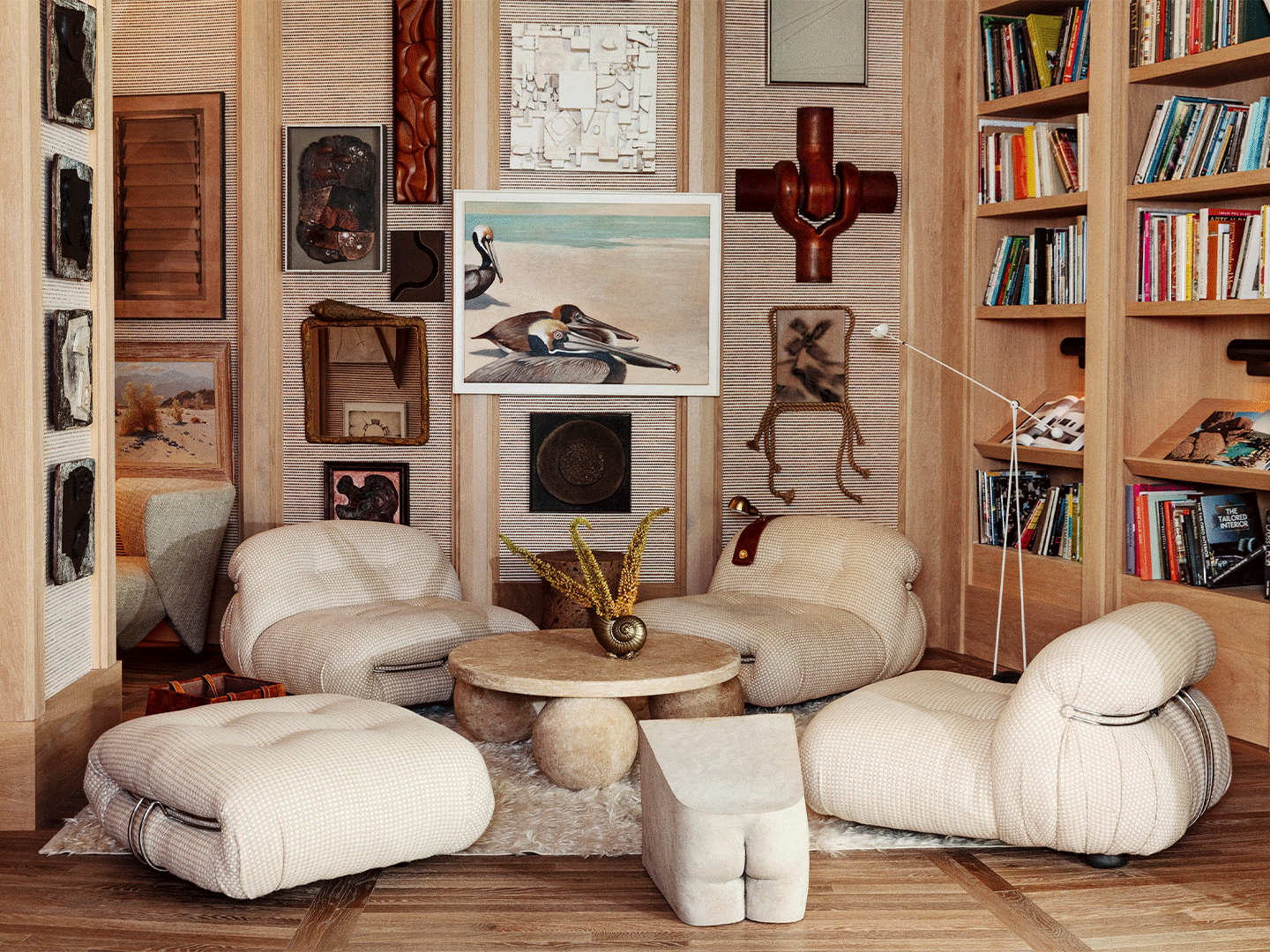
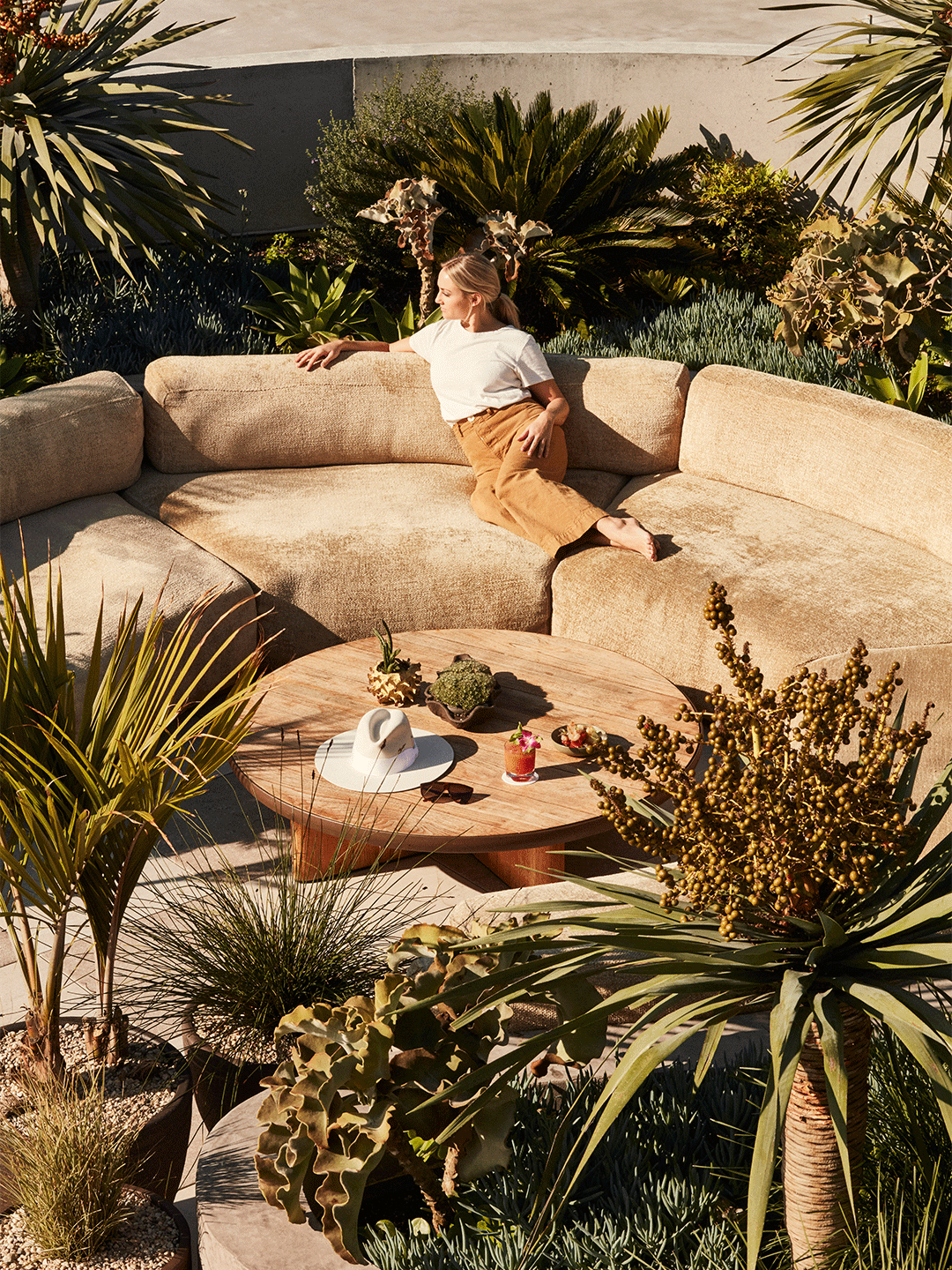
As can be expected, the hotel pool is a star attraction for sun-seeking holidaymakers while event spaces and an on-site shop provide relief from the rays. The Surya Spa, created in collaboration with internationally acclaimed Ayurvedic doctor, chef and herbalist Martha Soffer, is also on-hand to allow guests a moment to luxuriate.
Santa Monica Proper forms the latest offering from Proper Hospitality, a company that Kelly’s husband Brad Korzen founded with Brian De Lowe. Located on Wilshire Boulevard in the coastal city, every corner of the impressive property is an ode to the spirit of Southern California.
kellywearstler.com; properhotel.com
Related stories
- Hotel Les Deux Gares in Paris by Luke Edward Hall.
- Inside the Ace Hotel Kyoto by Kengo Kuma and Commune.
- Holiday maker: The Calile Hotel by Richards and Spence.
- Plesner Architects delivers decadence at the Six Senses Shaharut resort in Israel.
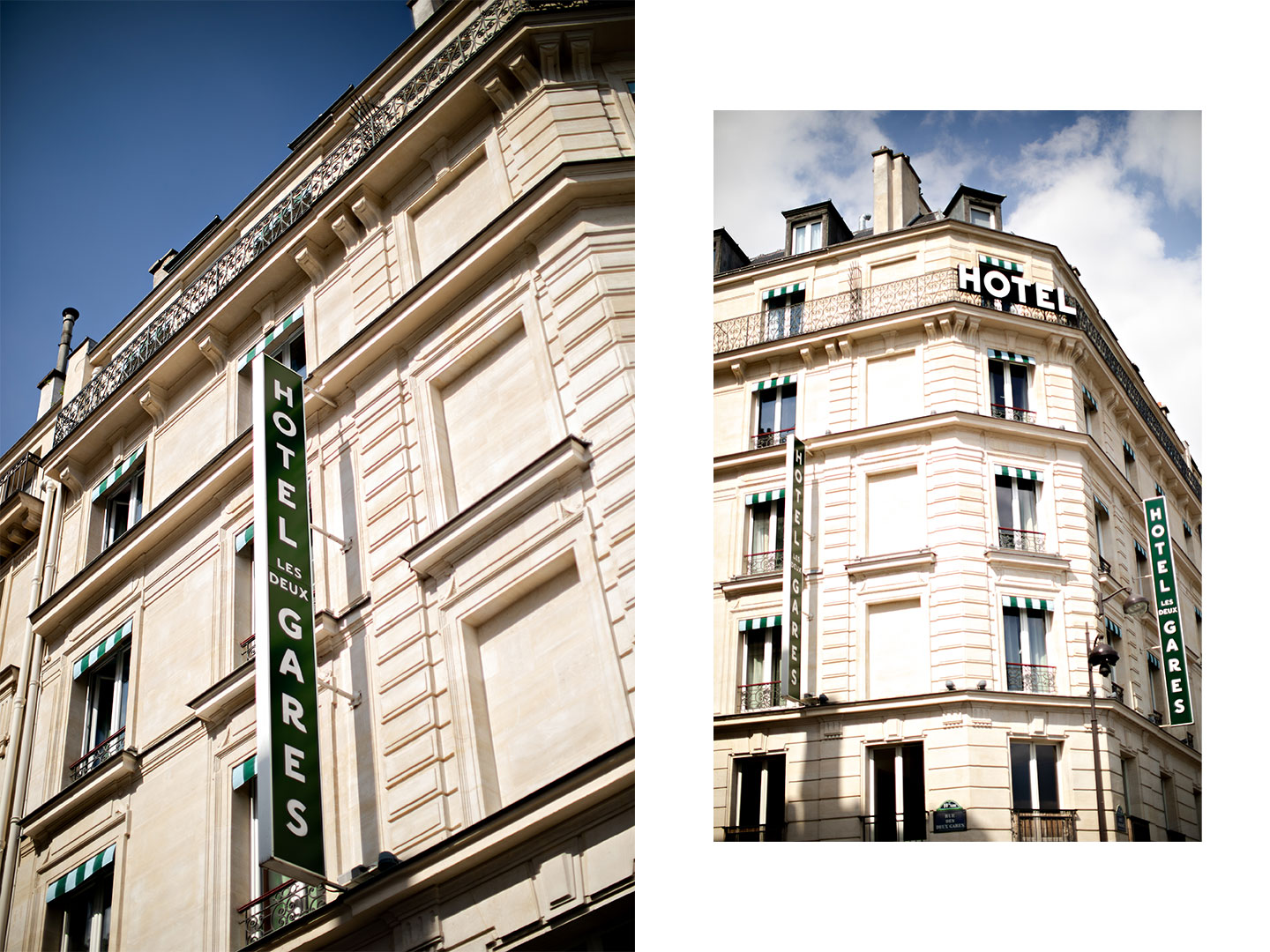
Occupying a discrete history-rich building in the 10th arrondissement of Paris, halfway between Gare du Nord and Gare de l’Est, the new Hotel Les Deux Gares is poised mischievously, ready to treat visitors to a wild and wonderful joyride. The once abandoned bourgeois edifice is now frocked up in the signature stylings of its art director Luke Edward Hall, and offers a bar, restaurant, fitness room and sauna. Not to mention the 40 petite rooms where guests are warmly invited into the eccentric universe of the British tastemaker.
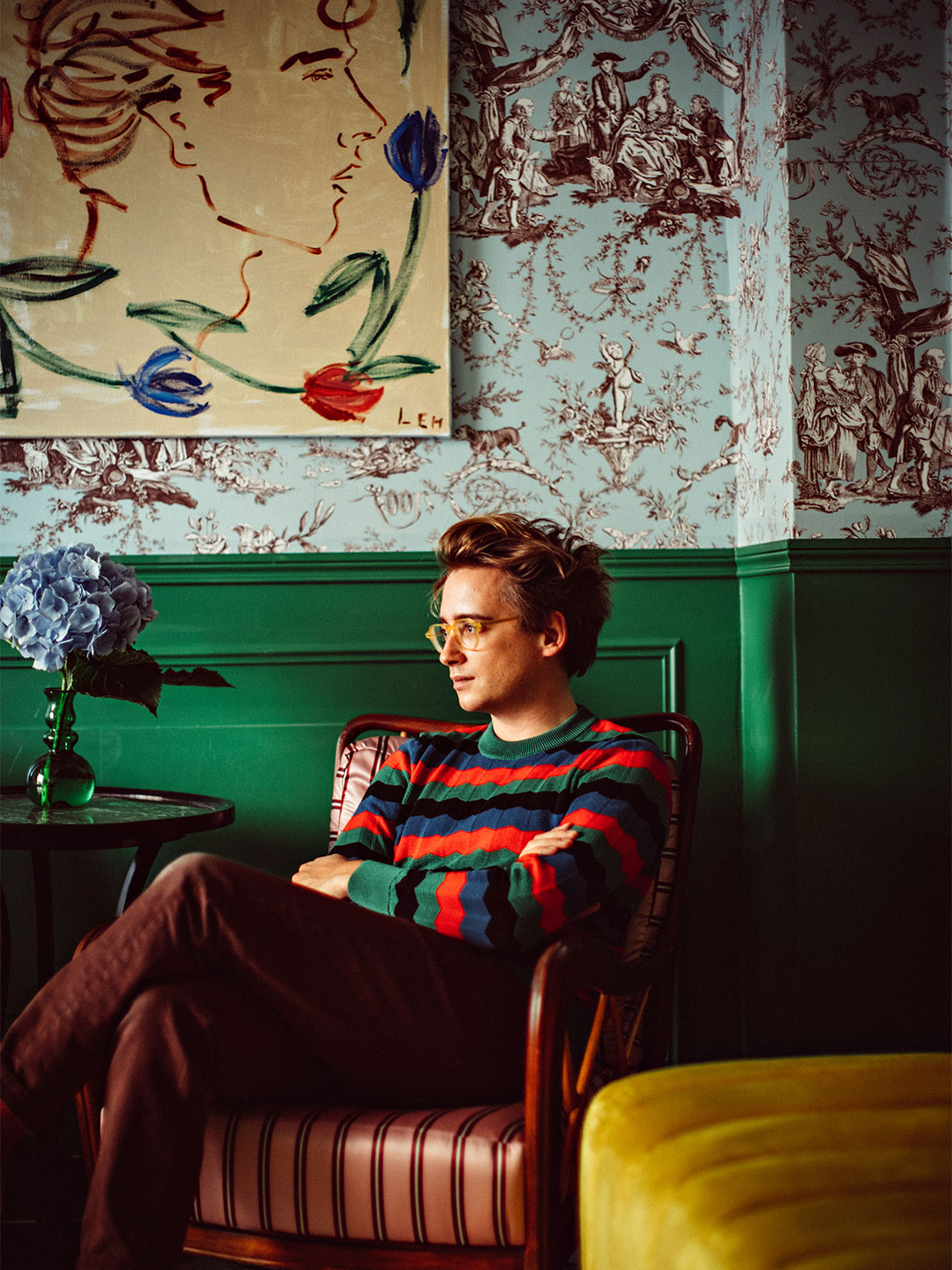
This is the first hotel that Luke has lent his inimitable finesse. And the rebellious designer-artist has embraced the opportunity with fervour, choosing to adorn every nook and cranny of the former railway station hotel with a combination of English chic and French soul amid mind-boggling colour and Art Deco flair. Antique furniture from various decades, French wallpapers and English carpets, mid-century lighting pieces and sumptuous fabrics combine – sometimes conform, sometimes collide – to establish a ravishing place of respite for travellers to the City of Lights.
Immersed in the 1960s-70s cinematic charms of the hotel’s lobby, it’s easy to understand why the designer queried whether this is “a hotel or the home of a bohemian Parisian collector?” throughout the design process, of which he oversaw every intricate detail. The tales imagined by such a question were an ongoing creative influence at Les Deux Gares, says Luke, and the terminus a quo of the hotel’s concept.
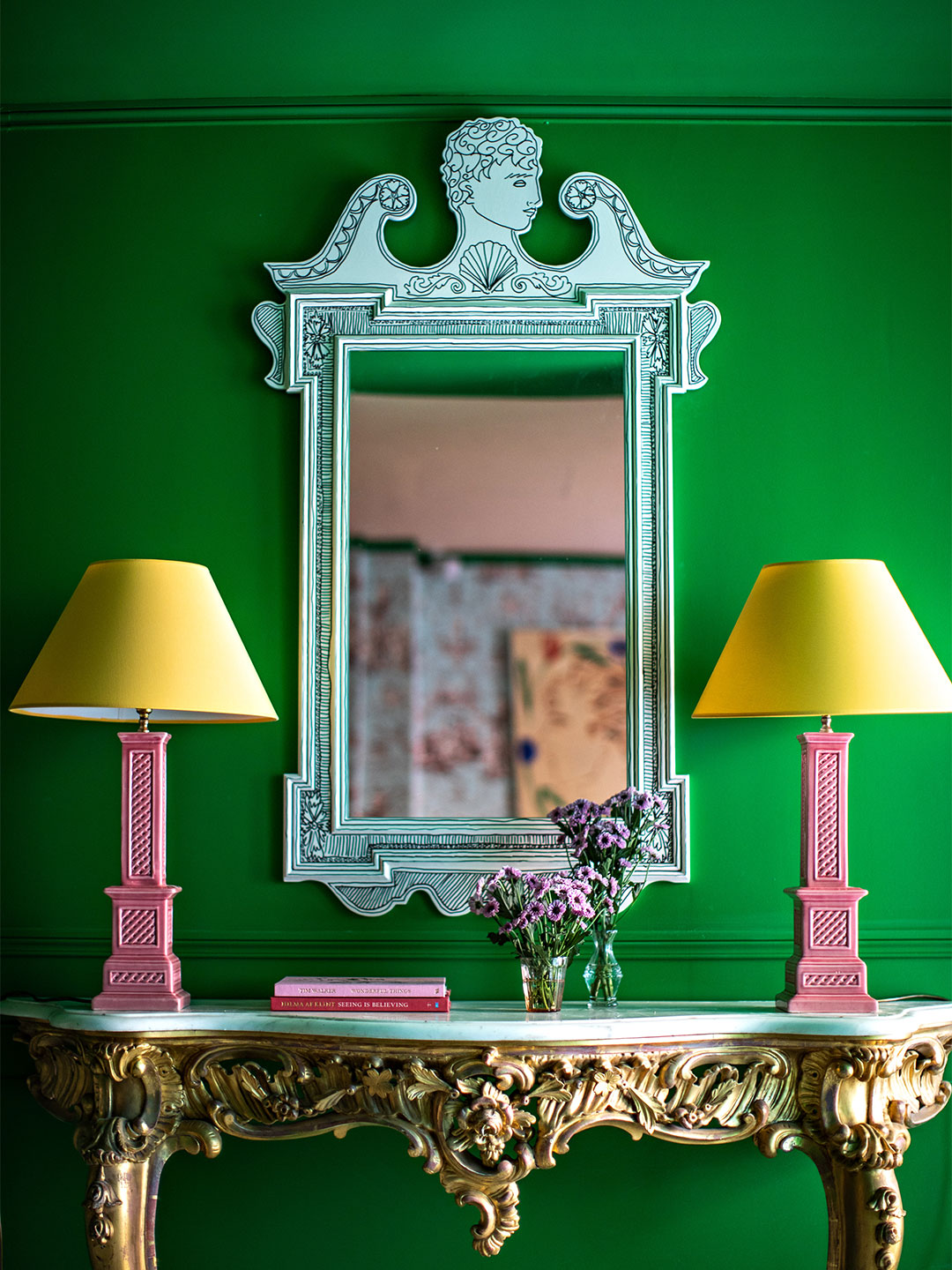
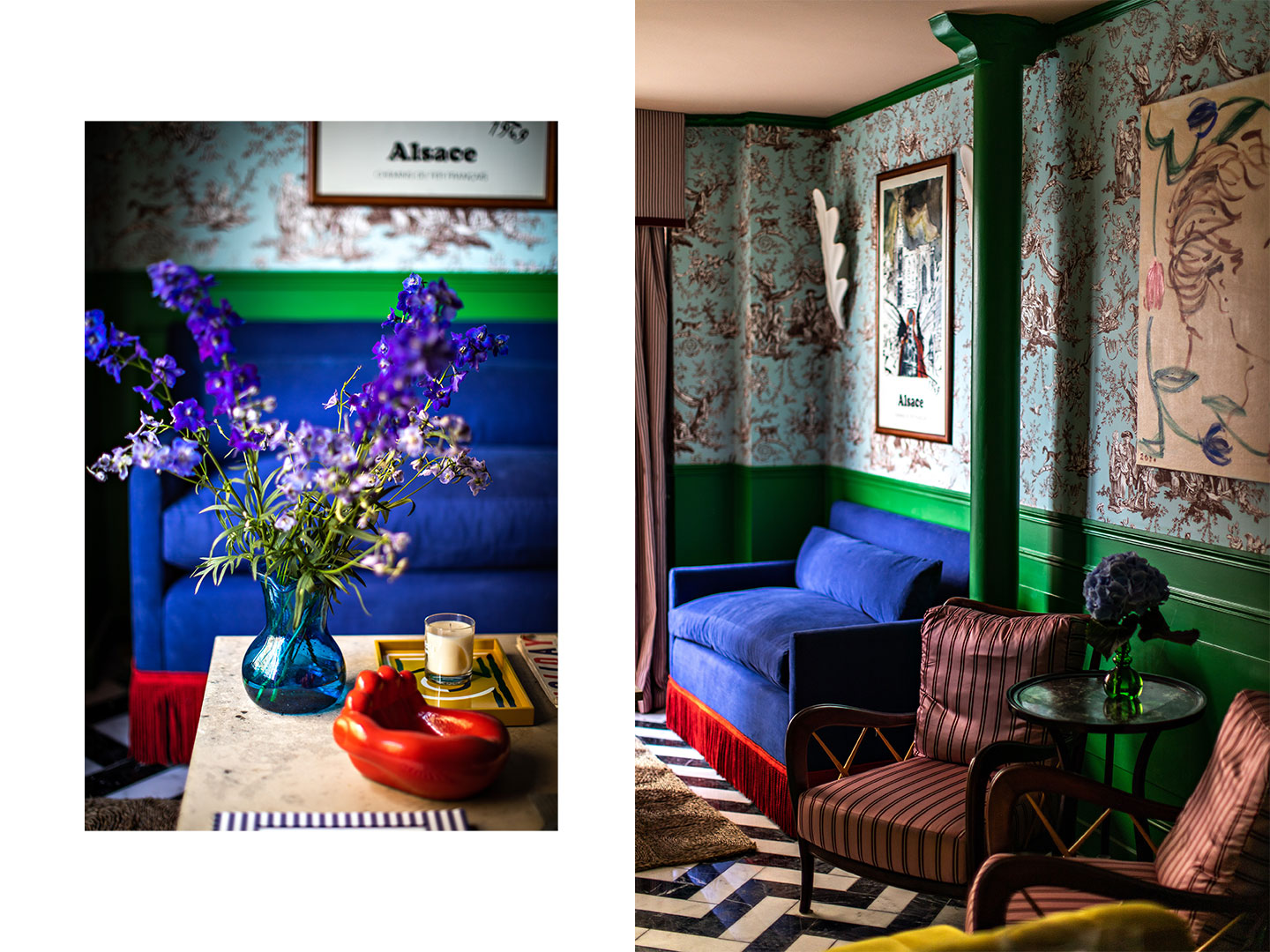
The pea green walls of the ground floor lobby set the tantalising tone for the rest of the hotel and serve as an “electric” backdrop to an effervescent mix of furniture: a 19th-century gilt wood table, a pair of mid-century Spanish pink ceramic table lamps and a mirror designed and decorated by Luke himself, inspired by the Palladian masterpieces of William Kent.
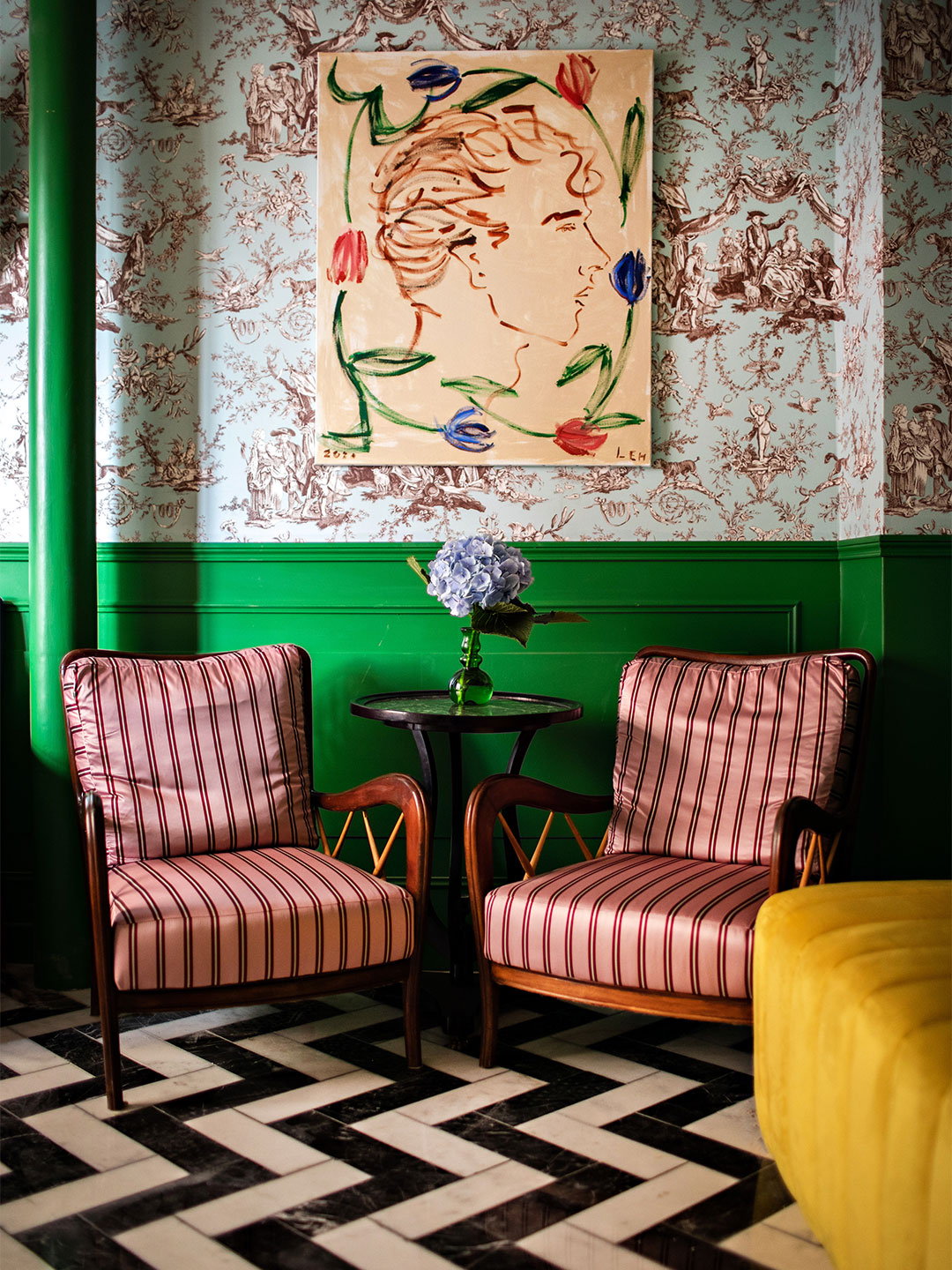
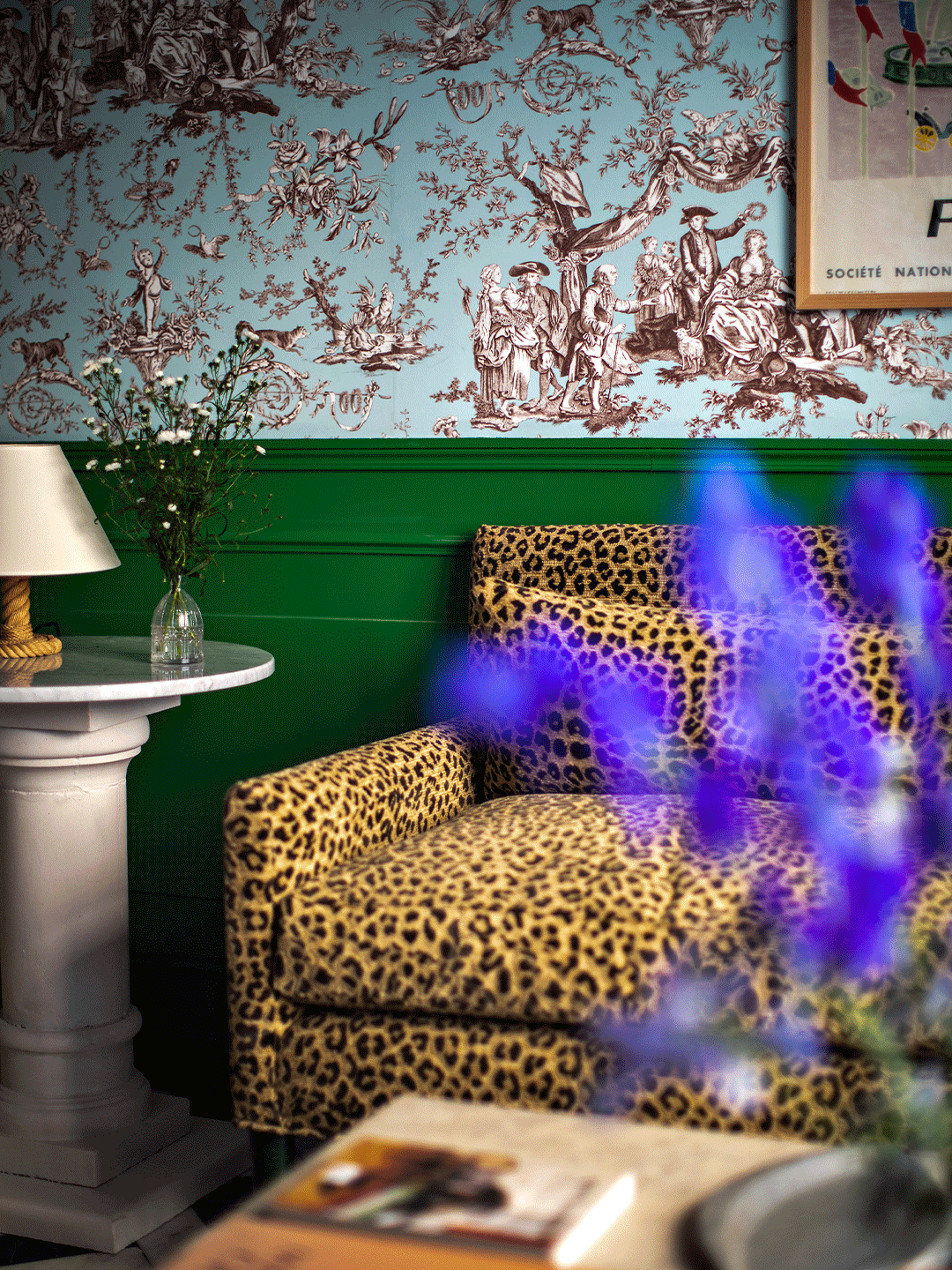
Peer into the toile de jouy wallpaper of the lobby’s sitting room and expect to drift-off into a whole other magnificent world. Depictions of villagers, cherubs and an exotic menagerie return the gaze, arranged among romantic garlands of scrolling foliage. The coffee table is in the style of Jean Royère and the duo of armchairs are from the workshop of Italian architect and designer Paolo Buffa.
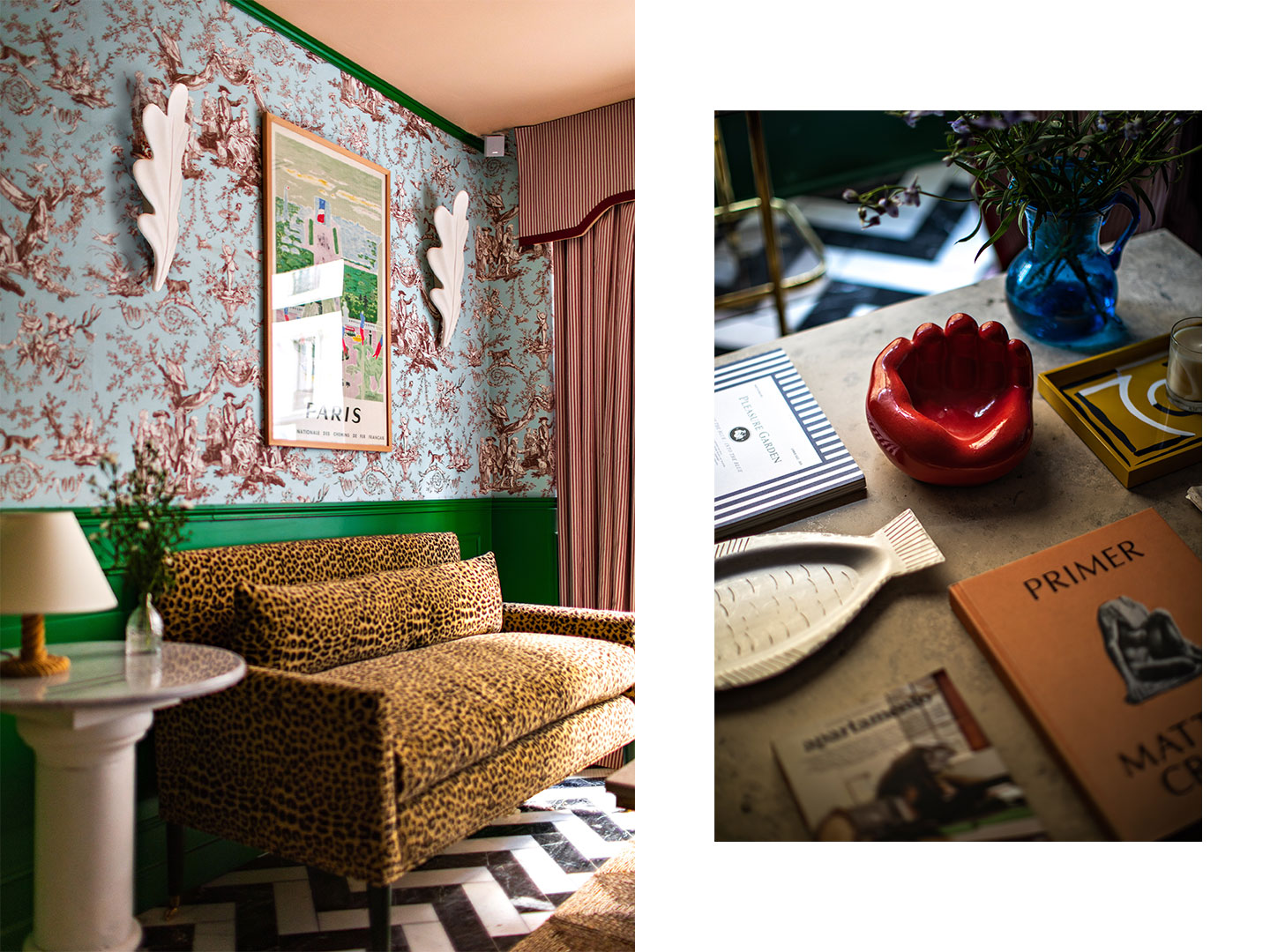
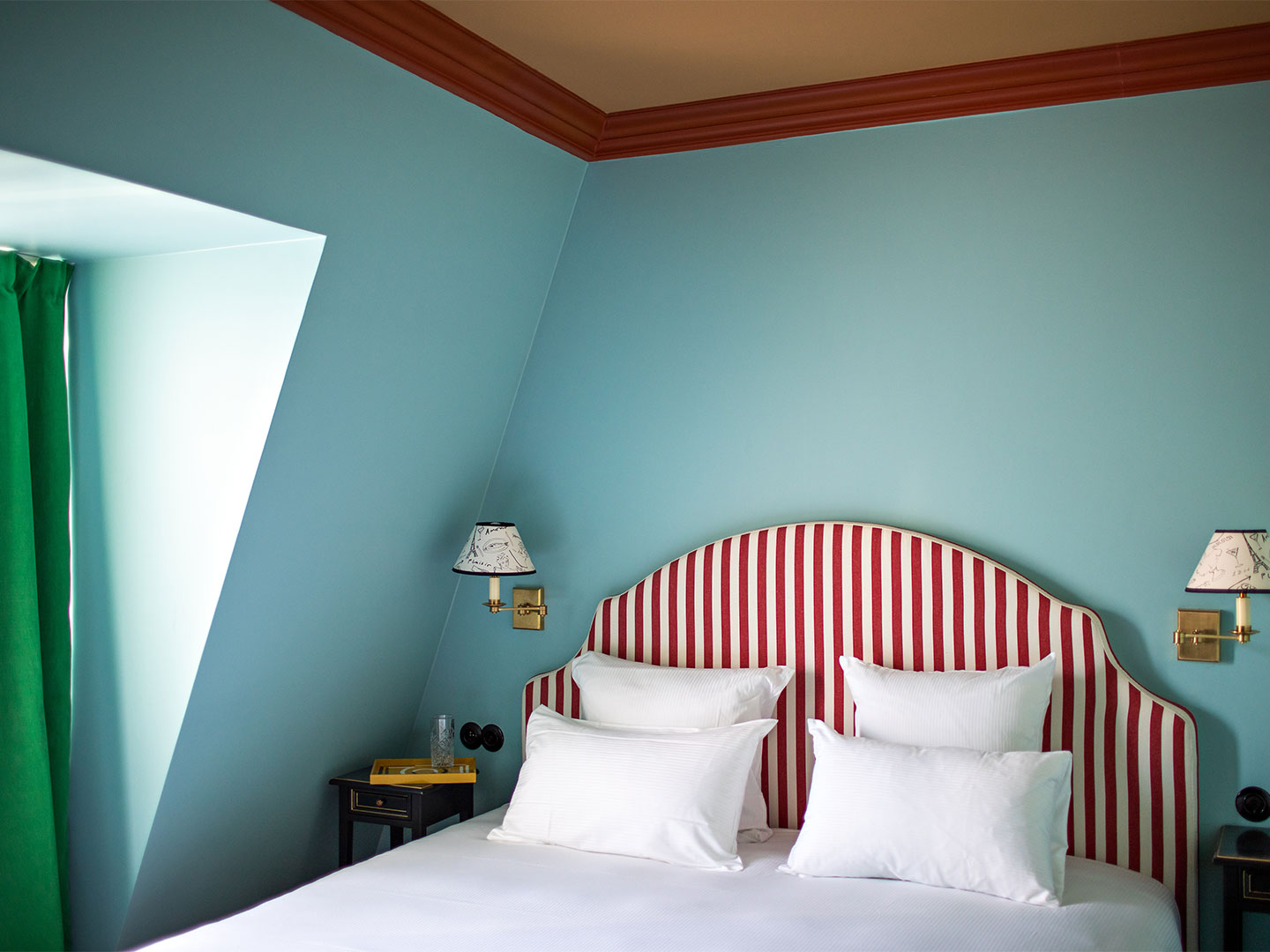
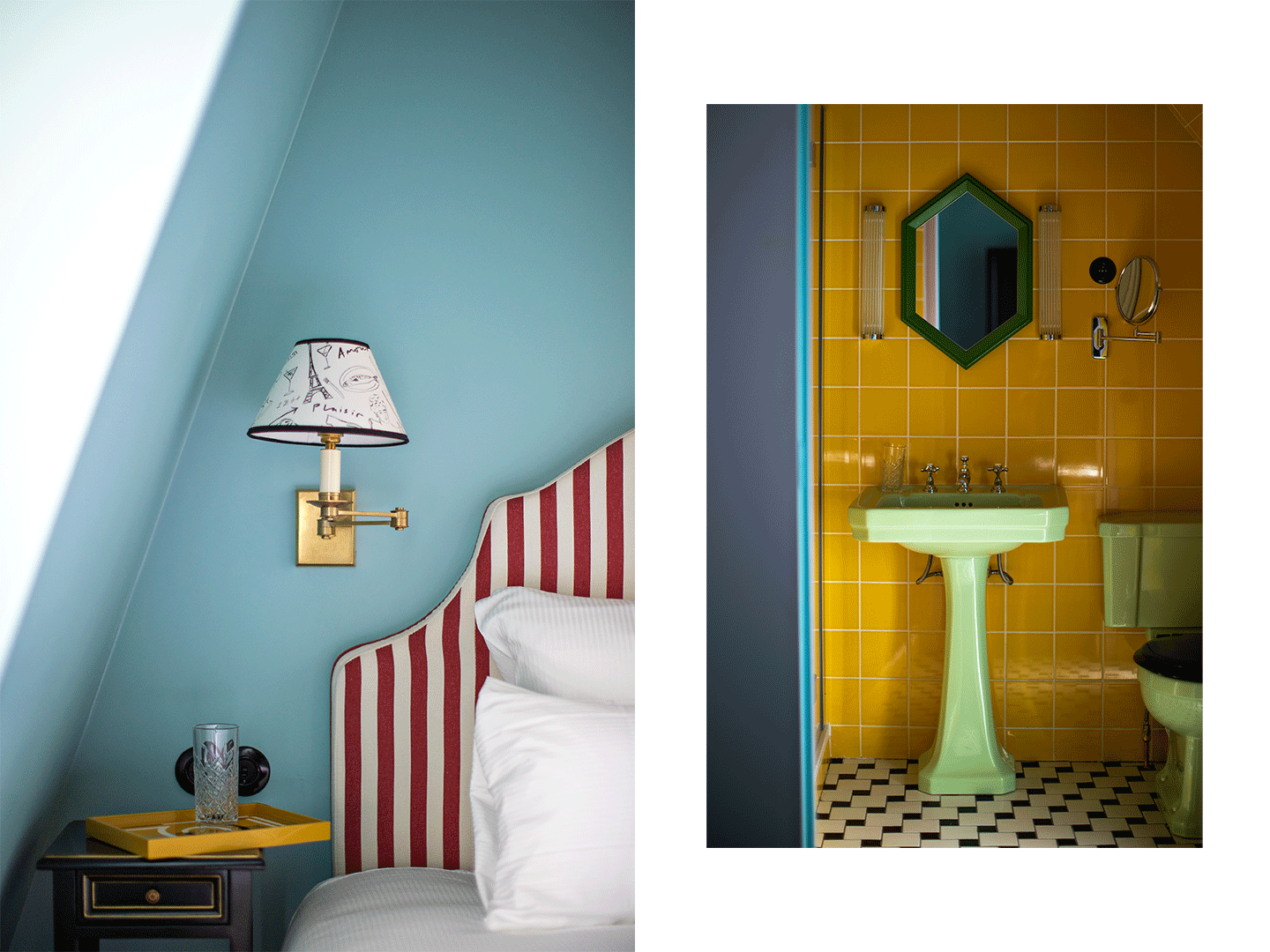
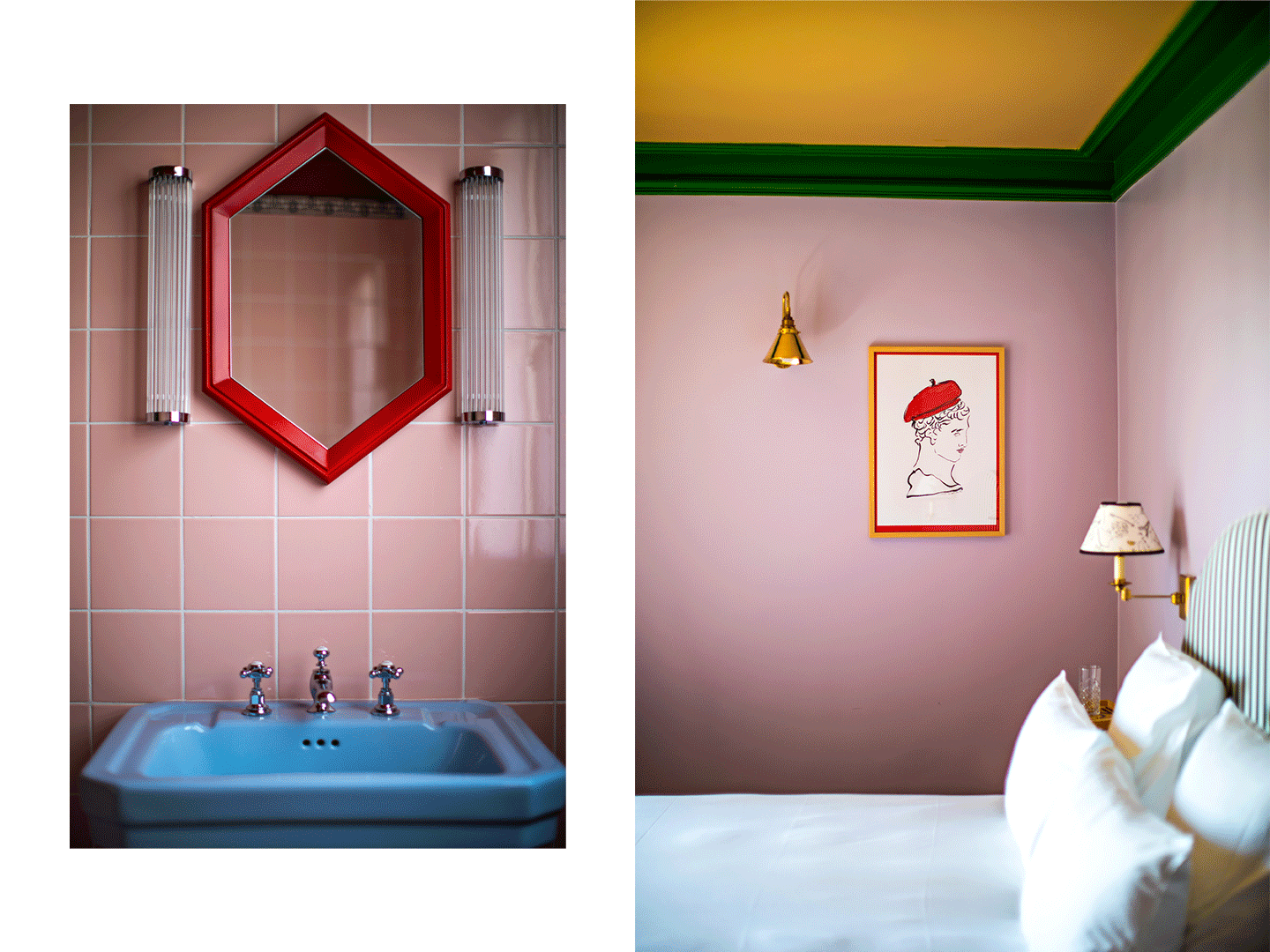
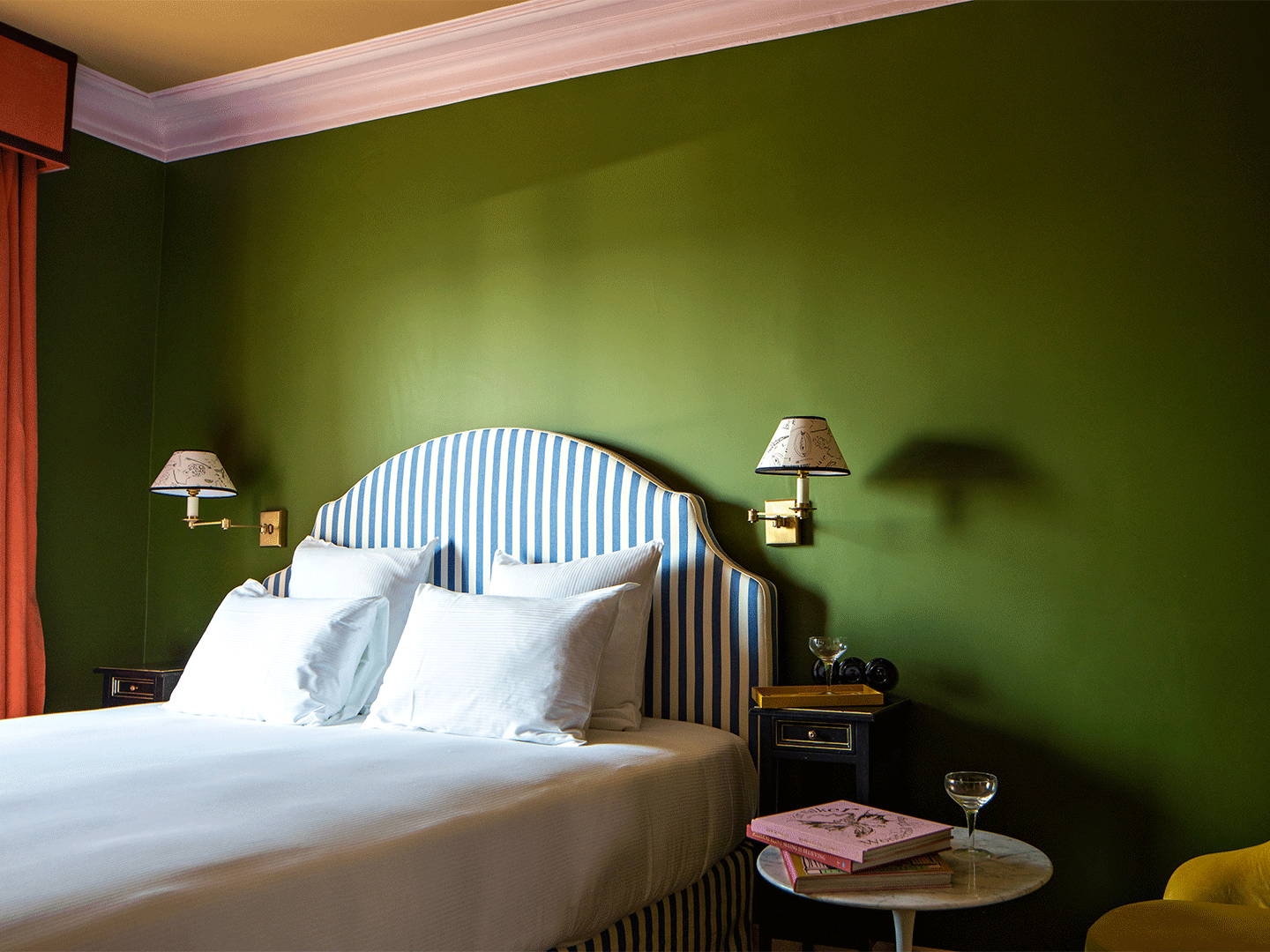
Venture upstairs and one of the world’s most fabulous lucky-dips continues. The rooms at Les Deux Gares are divided into three cheerful schemes, offering ebonised and gilt furnishings informed by the style of French Empire antiques, woven geometric carpets that nod to the 1970s and velvet-fringed armchairs in myriad colourways. On each side of the striped bedheads, the lampshades of the wall lights are emblazoned with Luke’s illustrations, some of which are frequently shared by the designer on Instagram.
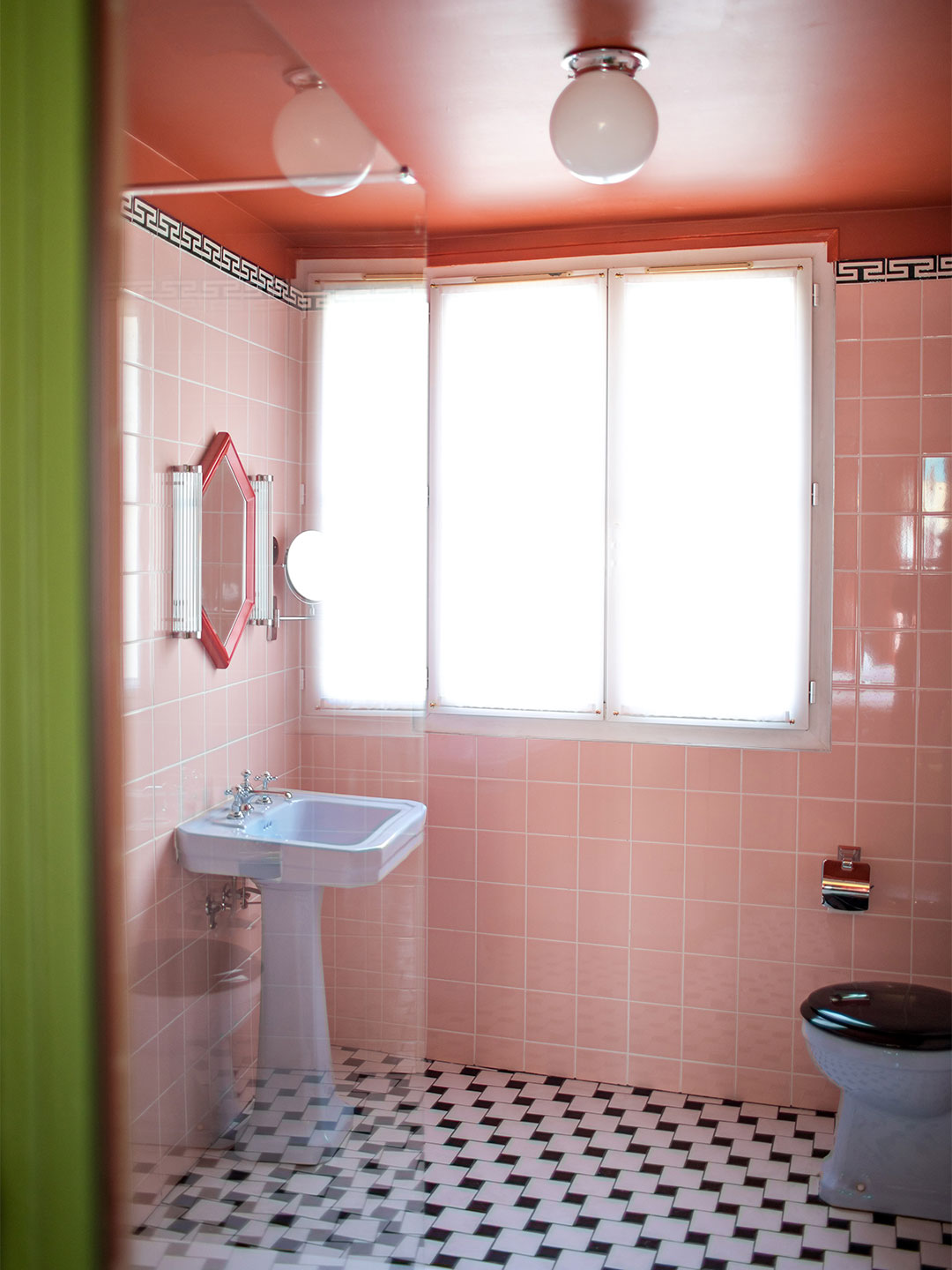
Drawing upon 1920s sophistication, the bathrooms are a bold spin on Art Deco style, spotlighting a joyous mismatch of pastel-coloured fixtures and fittings sourced by Luke, including pillar wall lights, yolk-yellow wall tiles and border tiles with Greek-key motifs. Guests can opt for breakfast in bed – an absolute indulgence – though a journey to the nearby Café Les Deux Gares is worthy of donning one’s Sunday best.
I love listening to stories from the past and feeling as though I’m entering another, more elegant era.
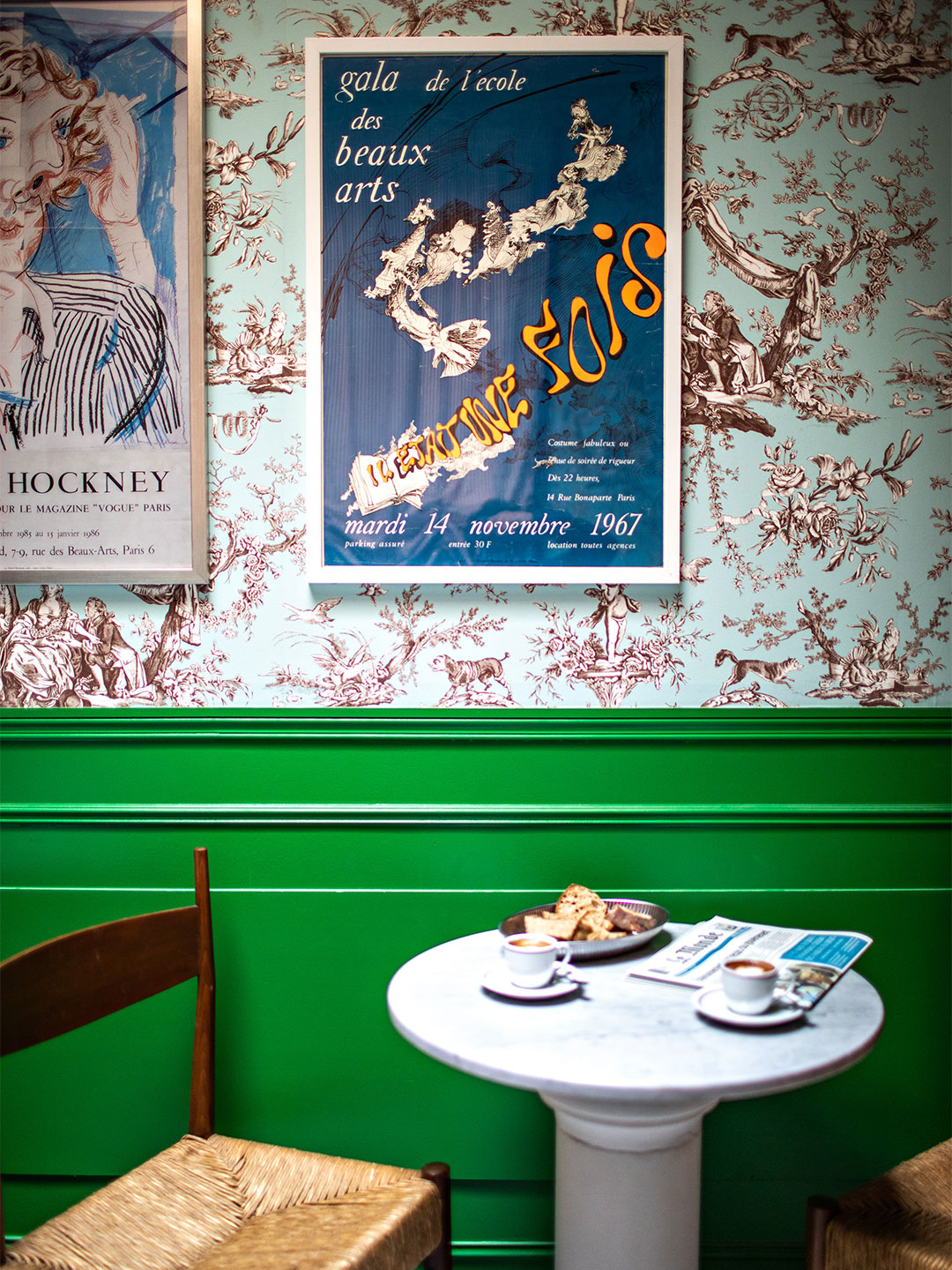
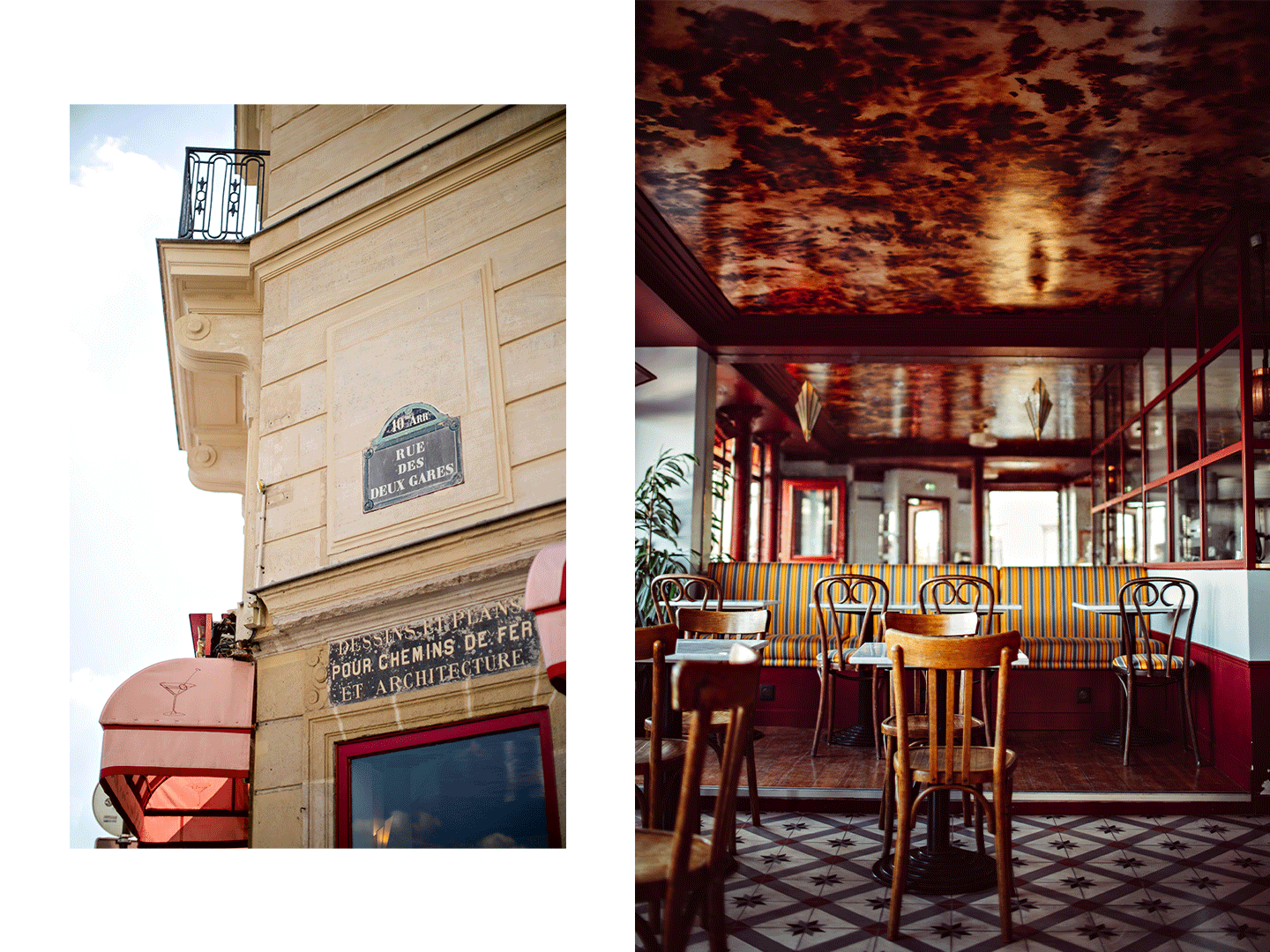
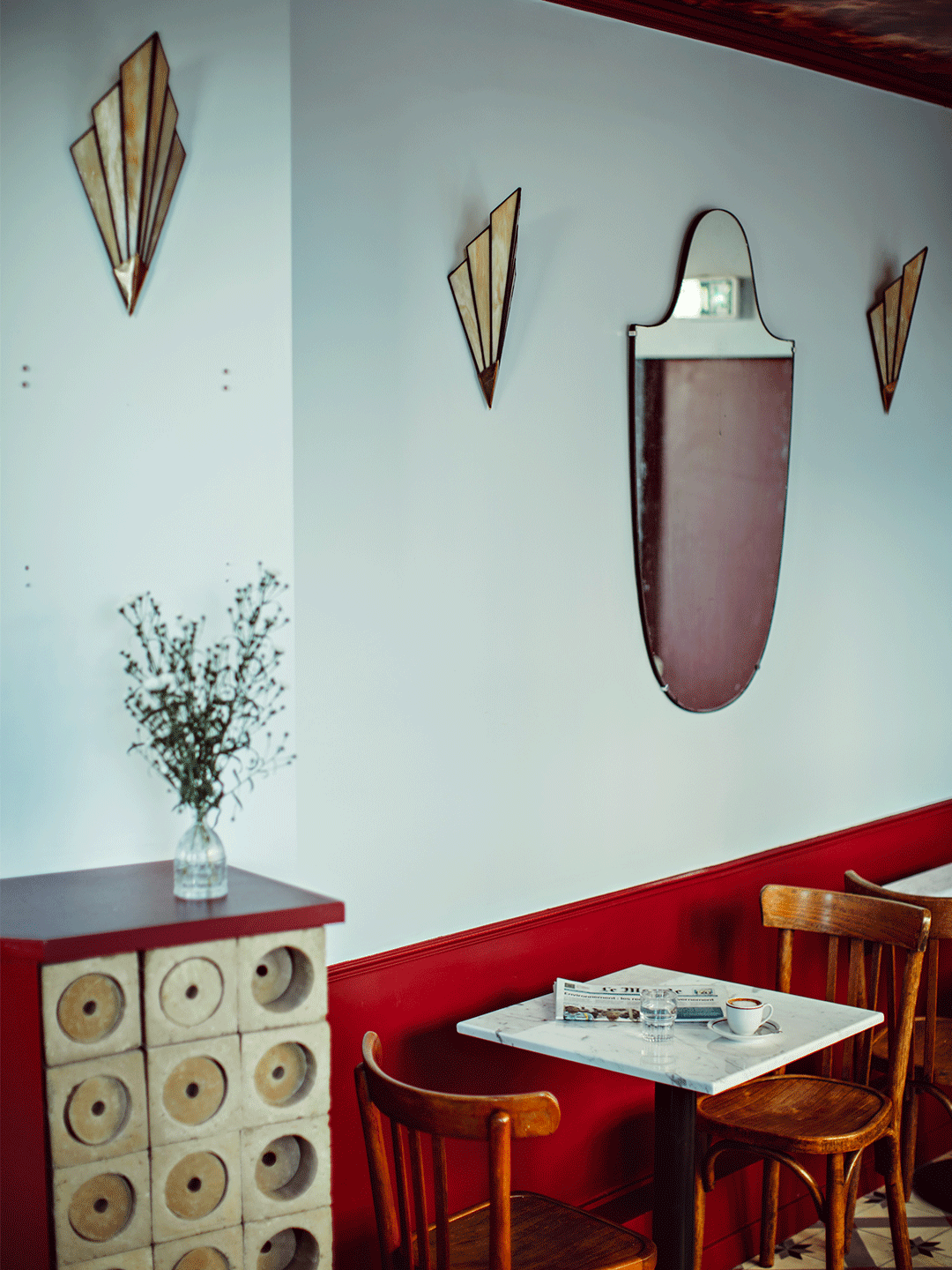
The interior of Café Les Deux Gares is also the work of protean wild-child Luke and continues the hotel’s colourful story. Cherry red and pale blue mix with the conventions set by old-world Parisian cafe culture: cement floor tiles, Thonet bentwood chairs from the Paris flea market (“luckily we came across a really good seat of sixty,” says Luke), an upholstered banquette and charming bistro tables.
A number of offbeat touches speak to the playfulness of the designer’s decorative approach. The ceiling is finished in a tortoiseshell motif by painter Pauline Leravaud and the pale pink and red exterior awnings are adorned with martini glasses hand-drawn by Luke. The wall lights, made in London, recall the devotion to Art Deco style. “I love listening to stories from the past and feeling as though I’m entering another, more elegant era,” says Luke.
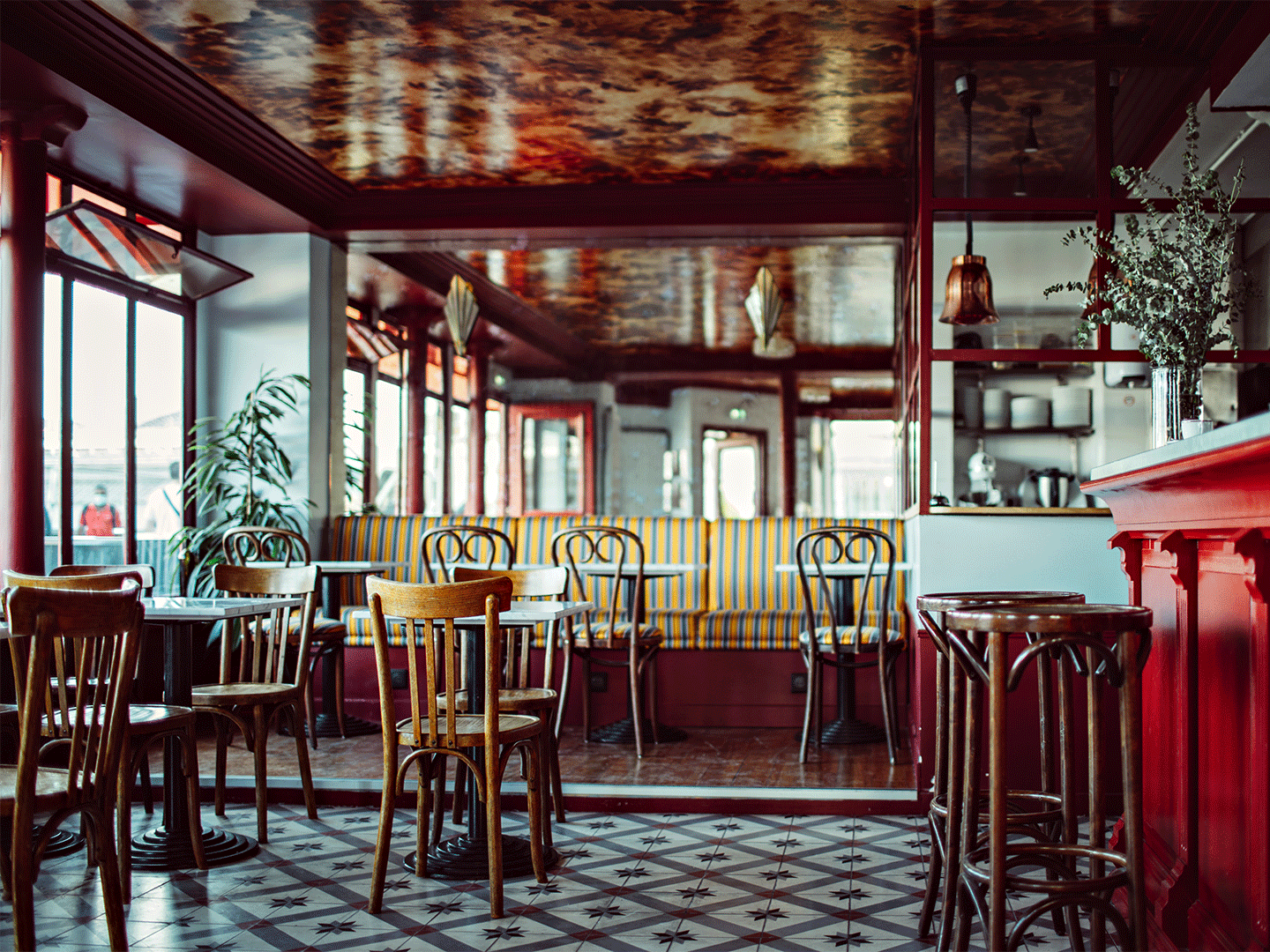
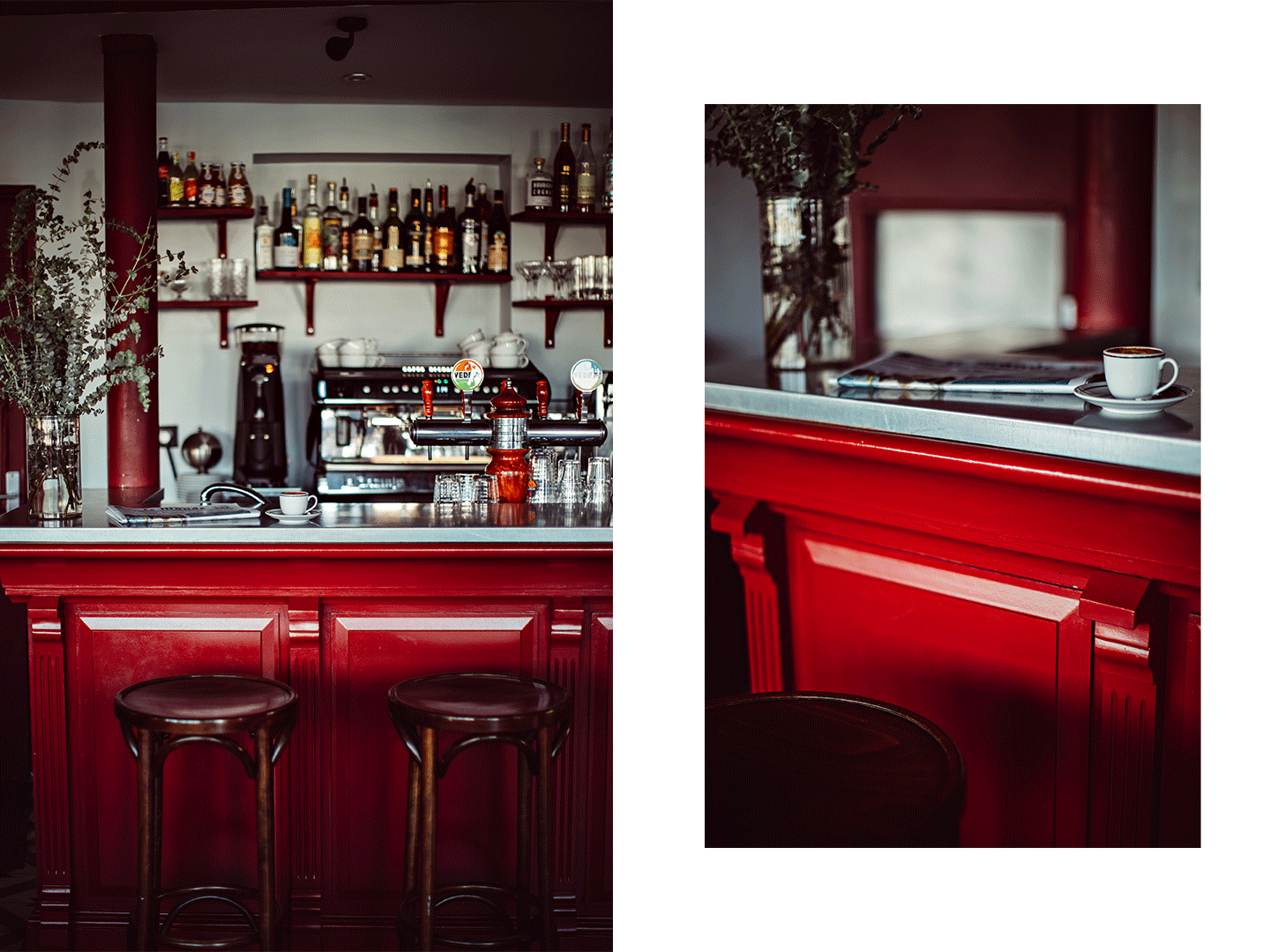
Vintage Paris exhibition posters nod to a time when the primary mission of the local cafes was to be places of social and cultural exchange. Then there is the finely crafted bar by metalworker Frédéric Lesire. Behind the bar, expect libations from the boss, Frederic Lesire. In the kitchen, delectable dishes are prepared by chef Jonathan Schweizer, supported by Frédérico Suarez, who promise to serve up simple yet exacting cuisine.
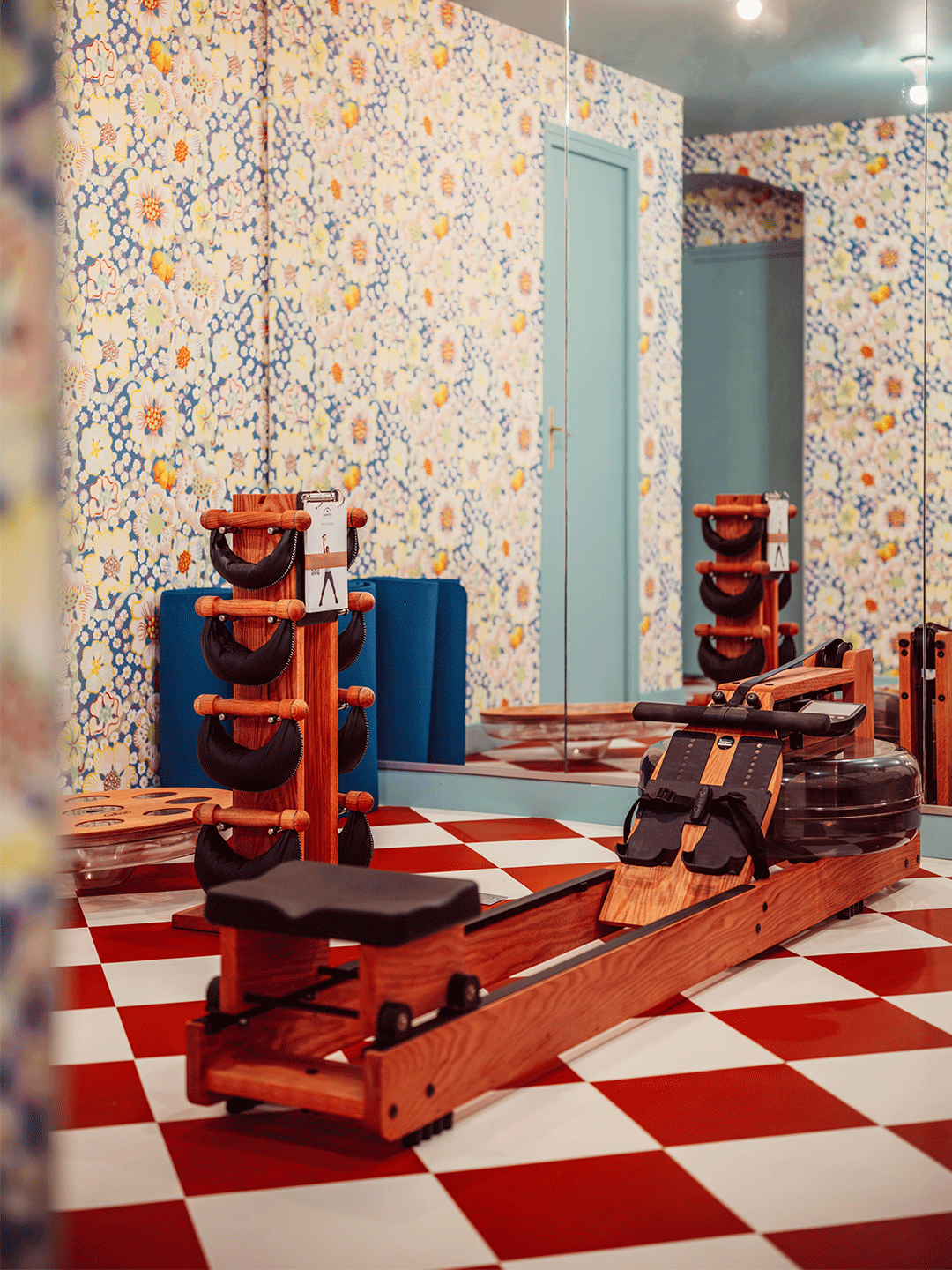
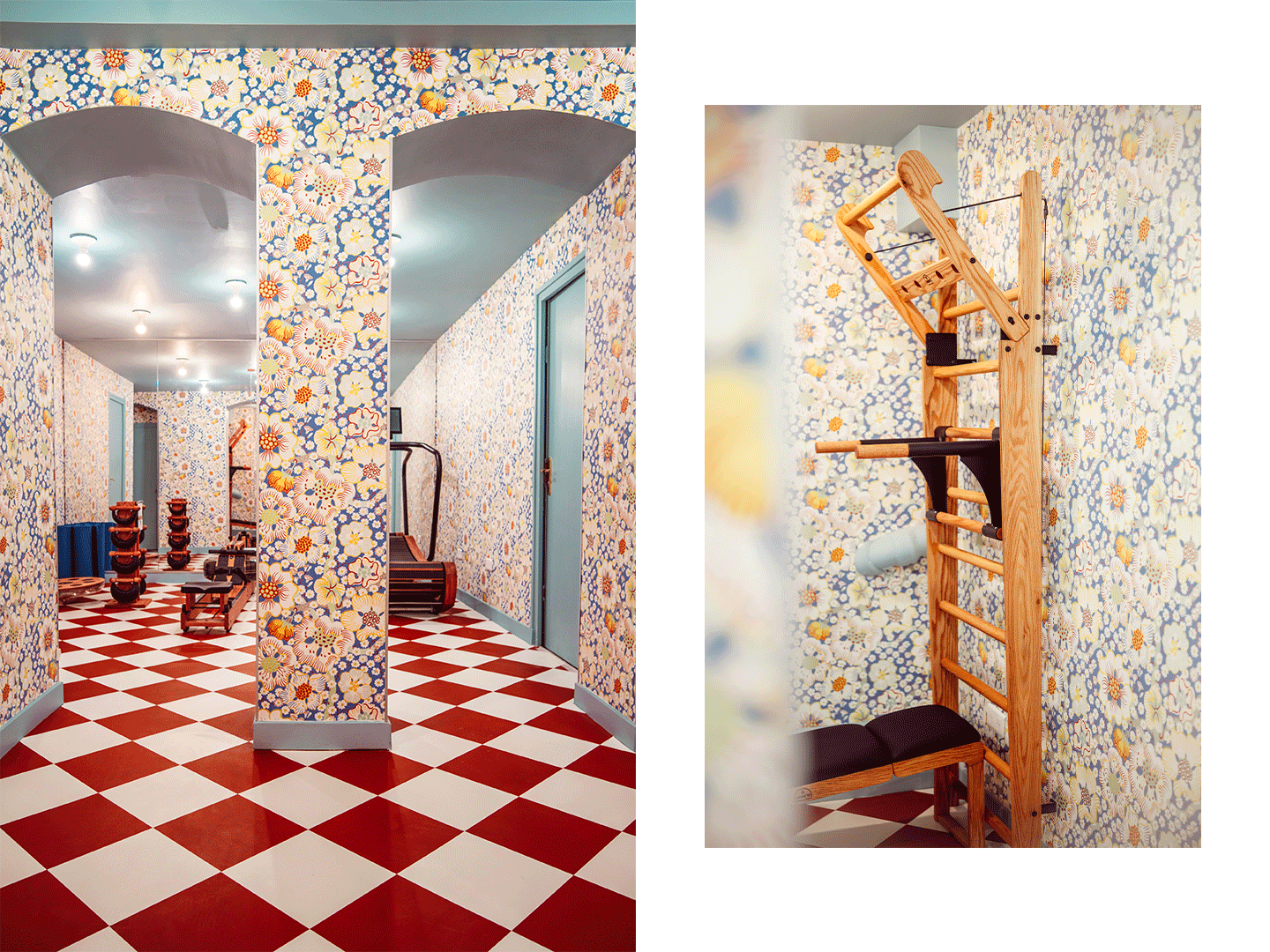
And while a trip to the gymnasium is unlikely to rank high on a traveller’s ‘when in Paris’ to-do list, a pre-checkout sweat session at Les Deux Gares’ fitness room and sauna is a must. Even if it’s just for the eye candy. On the walls, of course.
hoteldeuxgares.com; lukeedwardhall.com
Related stories
- Inside the Ace Hotel Kyoto by Kengo Kuma and Commune.
- Holiday maker: The Calile Hotel by Richards and Spence.
- Plesner Architects delivers decadence at the Six Senses Shaharut resort in Israel.
- Pitch perfect: Utah’s luxury tented pavilions.
Occupying a discrete history-rich building in the 10th arrondissement of Paris, halfway between Gare du Nord and Gare de l’Est, the new Hotel Les Deux Gares is poised mischievously, ready to treat visitors to a wild and wonderful joyride. The once abandoned bourgeois edifice is now frocked up in the signature stylings of its art director Luke Edward Hall, and offers a bar, restaurant, fitness room and sauna. Not to mention the 40 petite rooms where guests are warmly invited into the eccentric universe of the British tastemaker.
As with any emerging holiday destination (Japan only overtook Thailand as Australia’s go-to Asian holiday destination in 2014), the reasons why Aussies adore Japan are wide and varied. Its culture and natural beauty is spectacular, the skiing is incredible – as are the onsen! – and the traditional and contemporary cuisines are unbeatable.
Then there’s the downright weird, the whacky and the wonderful. Where else in the world can you dress up as Mario or Luigi and motor through the metropolis in a go-kart? The fashion, art, architecture and design scene is fittingly cutting-edge; the country’s hospitality ranks in the same league.
Dressed in a fusion of American-meets-Japanese sophistication, the much-anticipated Ace Hotel Kyoto opened its doors to an unfamiliar world in mid-2020. Here, Karine Monié revisits the designer destination and shines a spotlight on the charms that place this epic lodging high on our must-visit list when flight paths reopen.
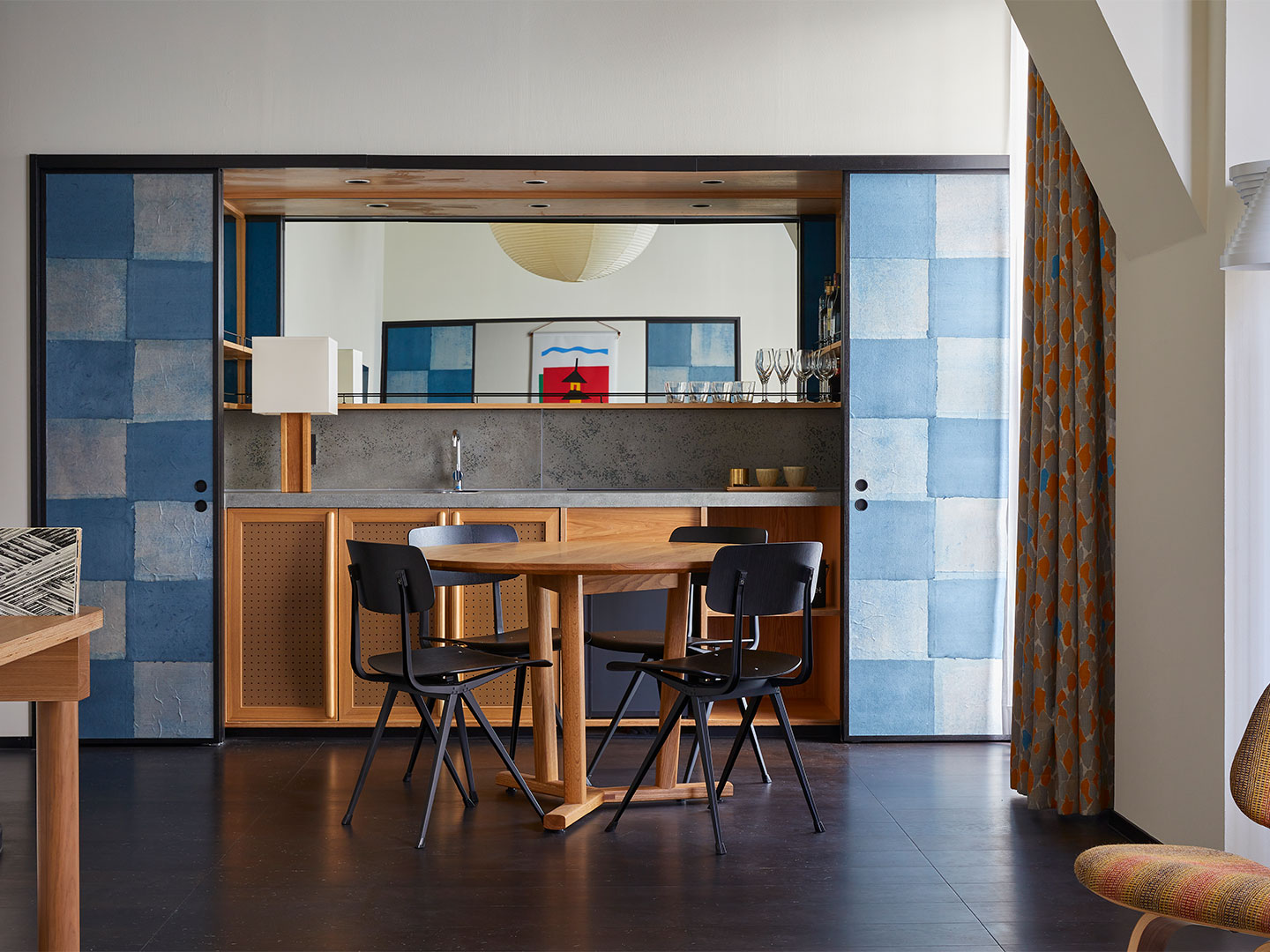
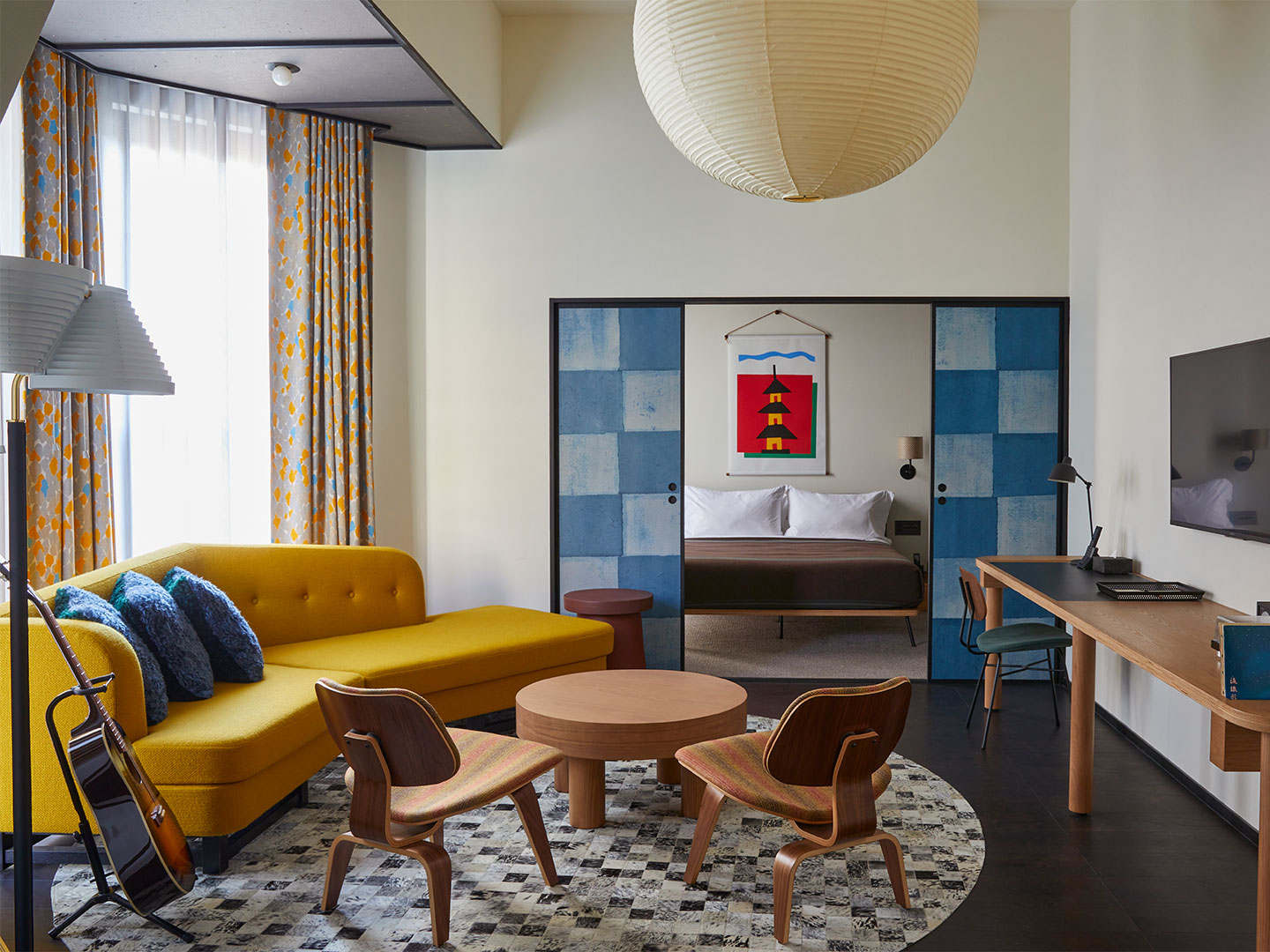
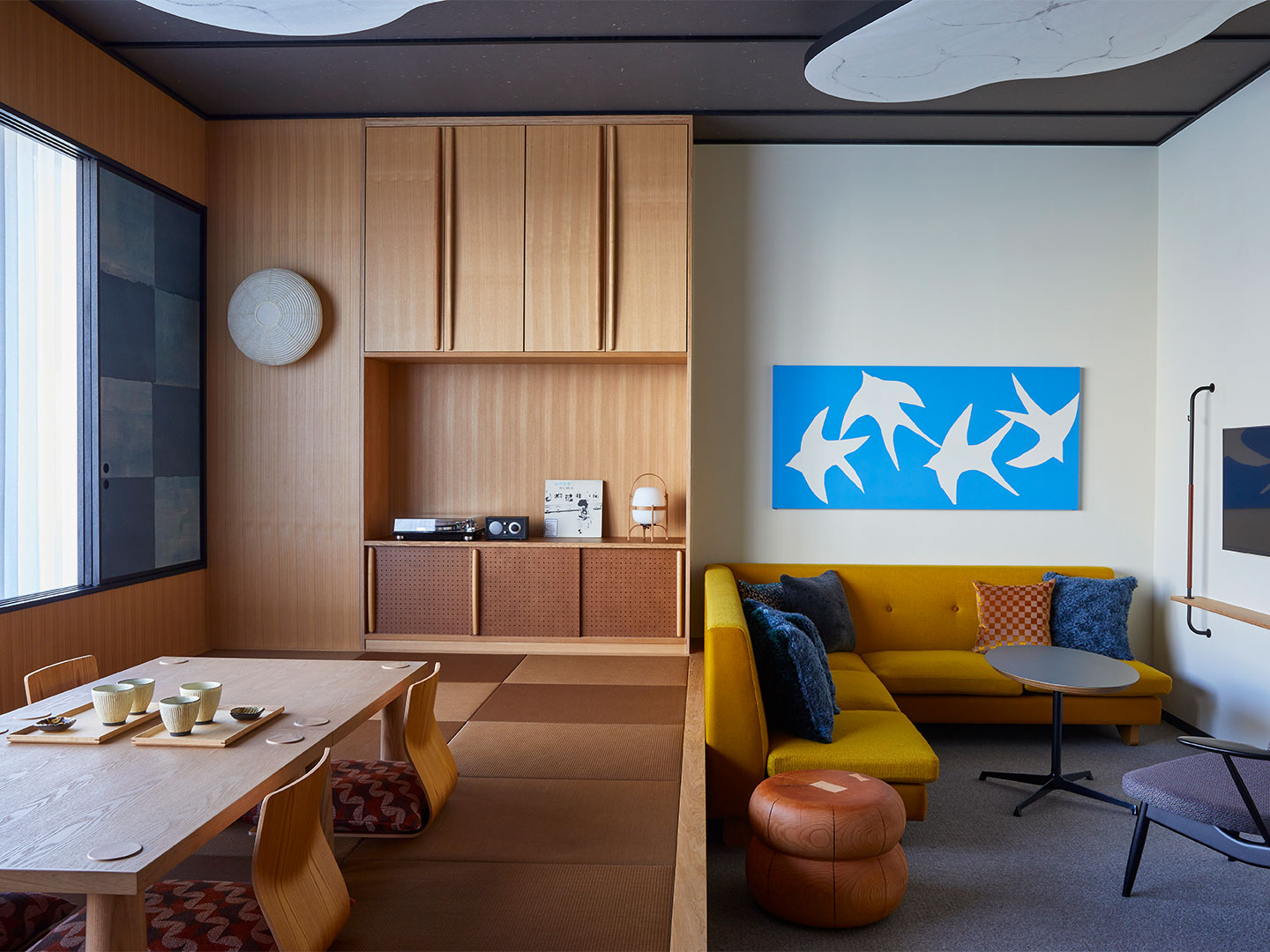
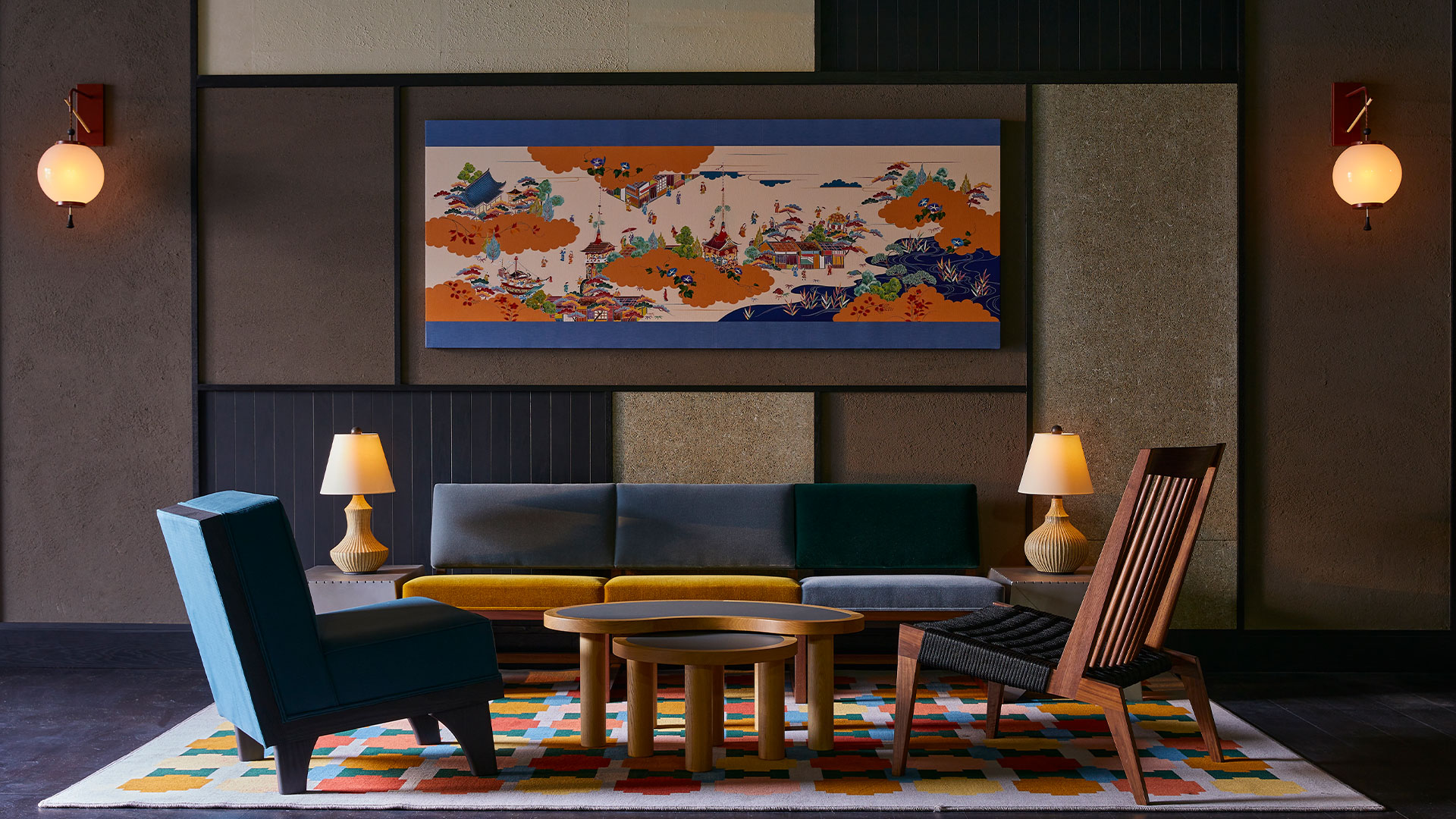
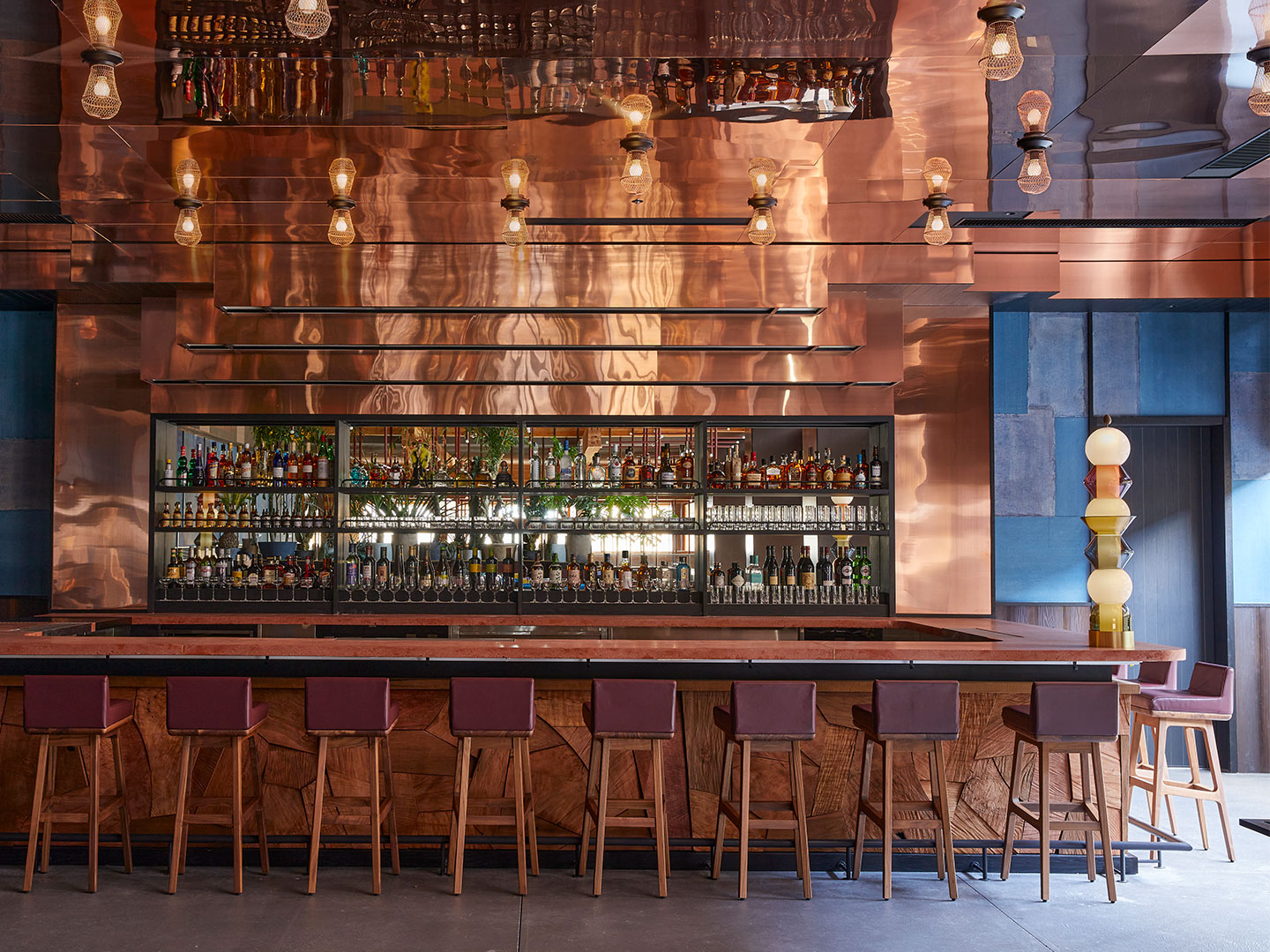
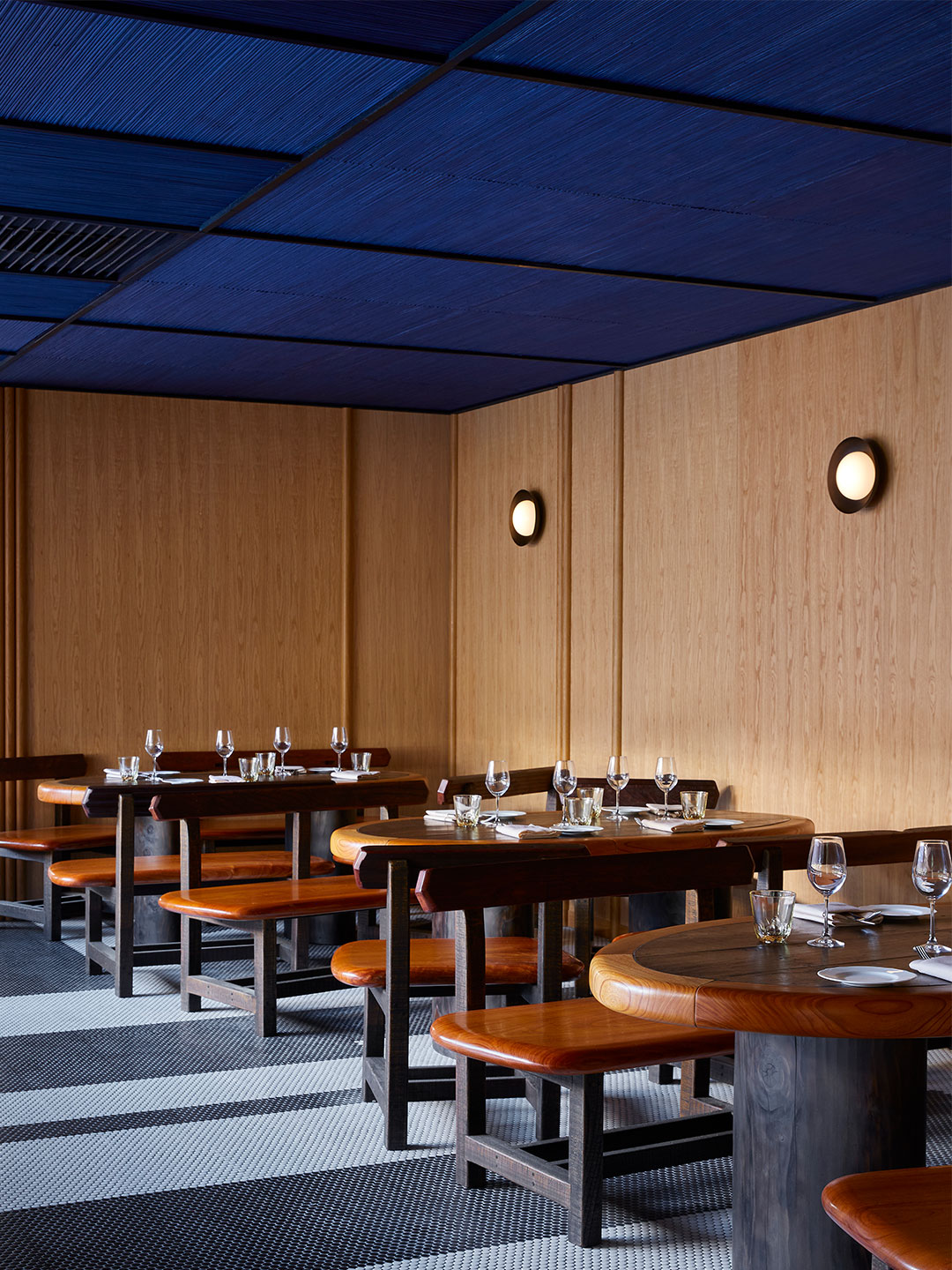
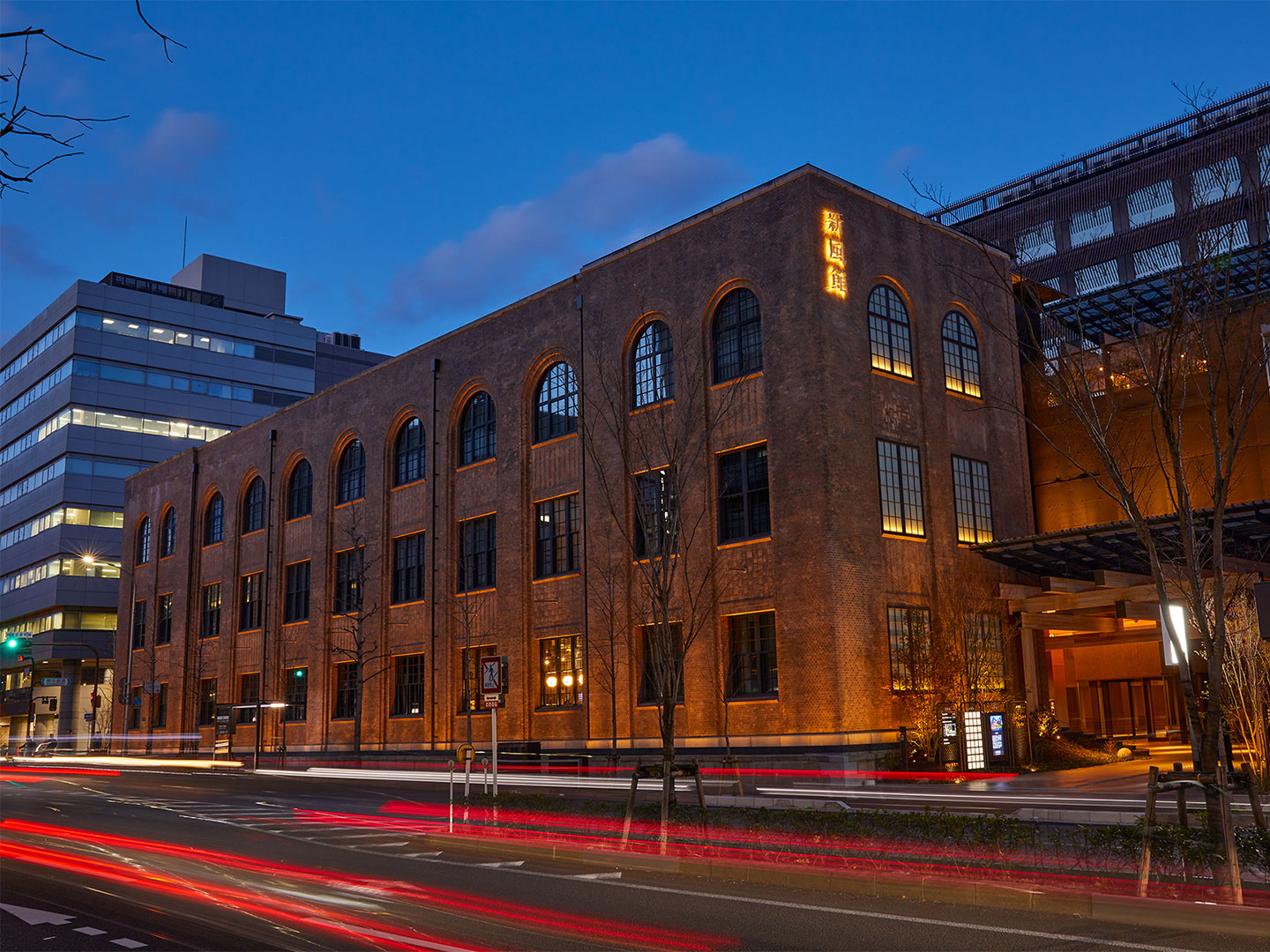
With its 213 rooms, several patios and gardens, event spaces, gallery, coffee place and three restaurants, Ace Hotel Kyoto has the ambition of being a new cultural hub where tradition and modernity blend. Located near the Nishiki Market, Museum of Kyoto and Kyoto Art Center, the first Ace Hotel in Asia occupies a historic red brick building from 1926 – originally designed by Tetsuro Yoshida, one of the most important Japanese modern architects – and a new structure by renowned architect Kengo Kuma.
“The thought was to create a hotel that is connected to Kyoto and open to the surrounding area,” says Kengo. “The proposition was to create a dense garden where communities, as well as the past and the present, are [linked] to this venerable land with its various gardens, which have existed since the Heian period.” The Heian period ran from 794 to 1185 and was a time in Japan’s history when Buddhism, Daoism and other Chinese influences were at their height.
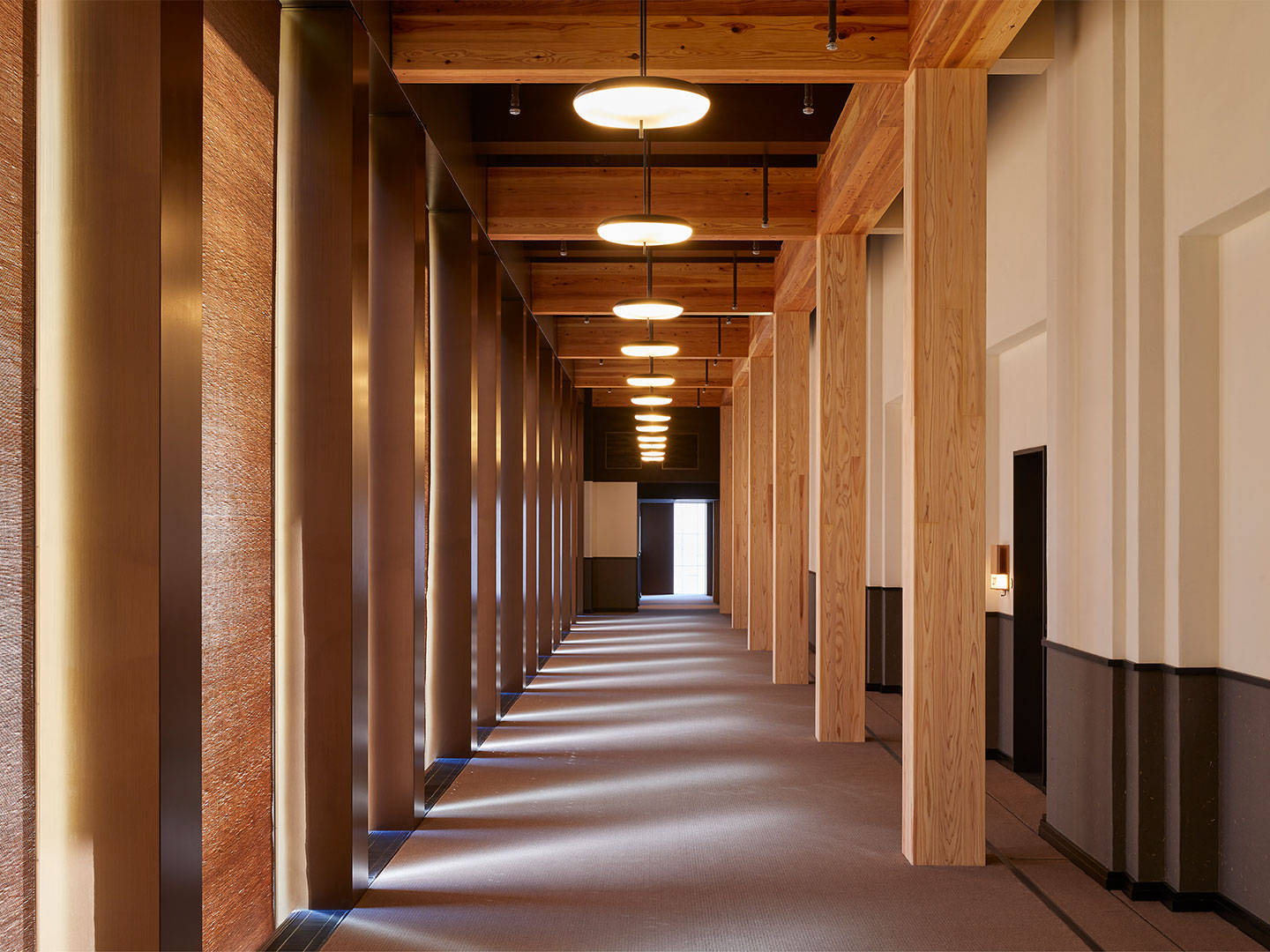
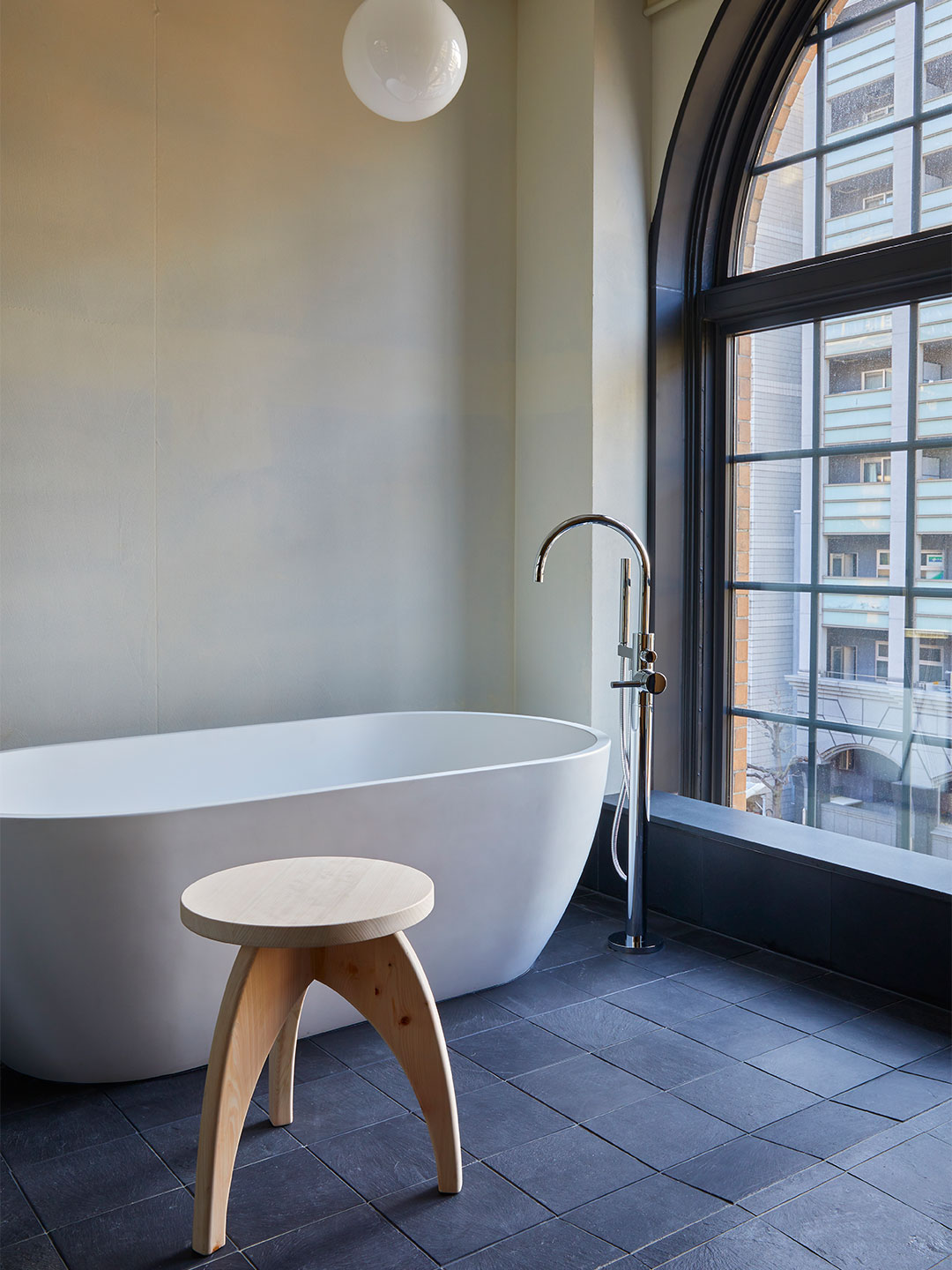
The architect wanted to build a dialogue between the two buildings – the old and the new – and create harmony through the use of louvers and meshes that filter the natural light and wind. The concrete was mixed with iron oxide to give life to a warm colour that could not have been done with paint. The gridded facade system of the new building nods to the traditional architecture of Kyoto, including the machiya houses that are particular to the city.
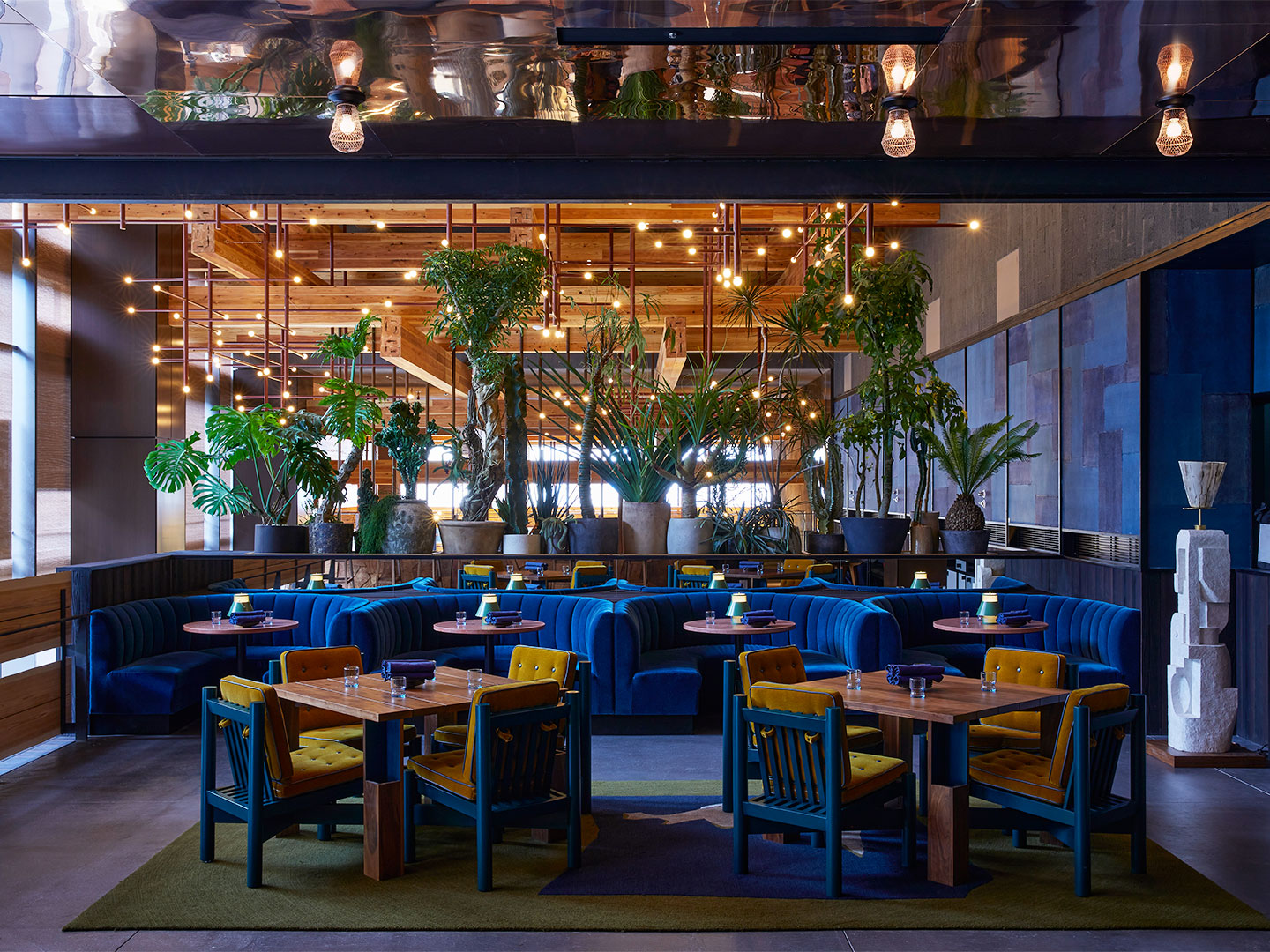
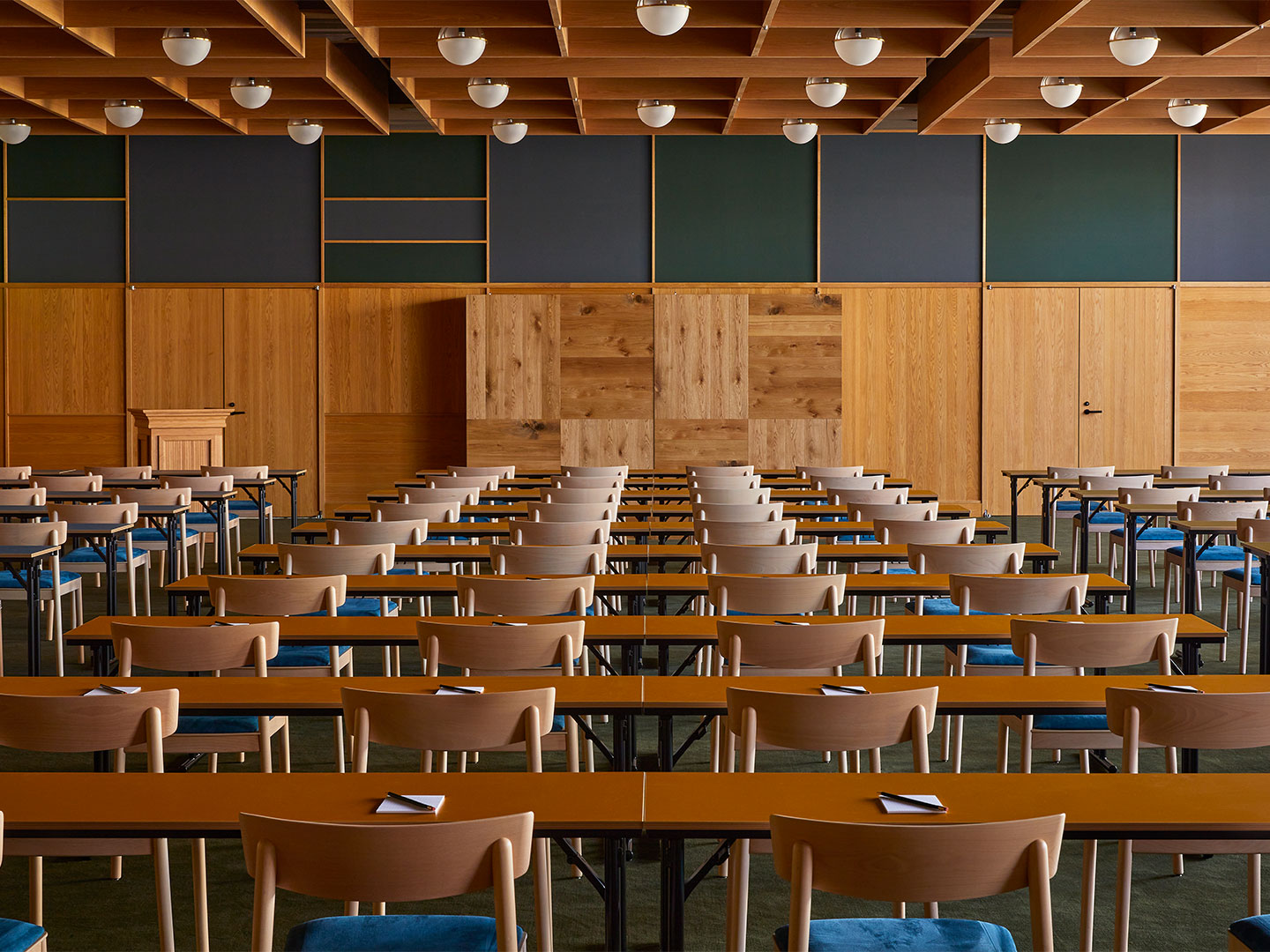
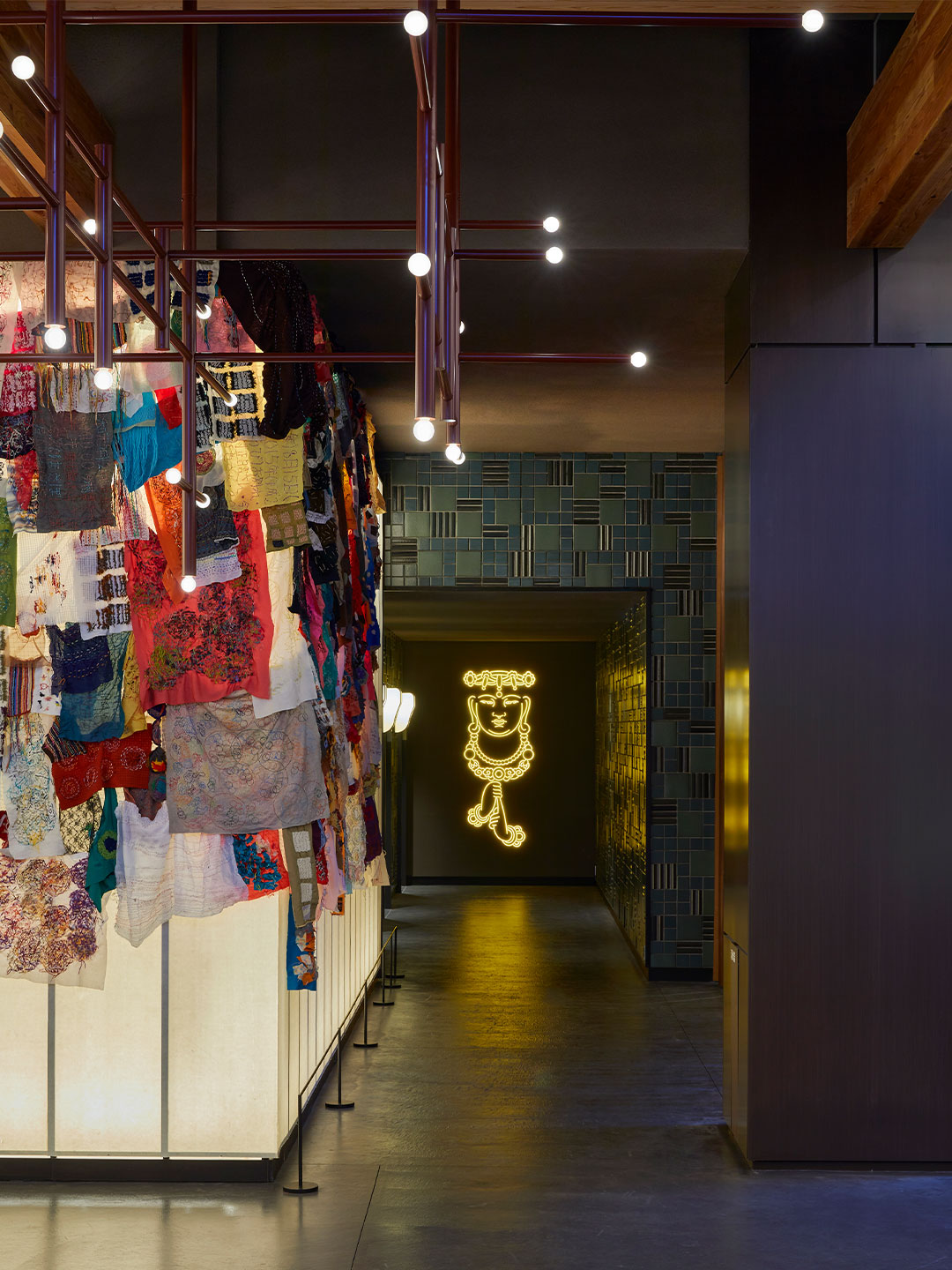
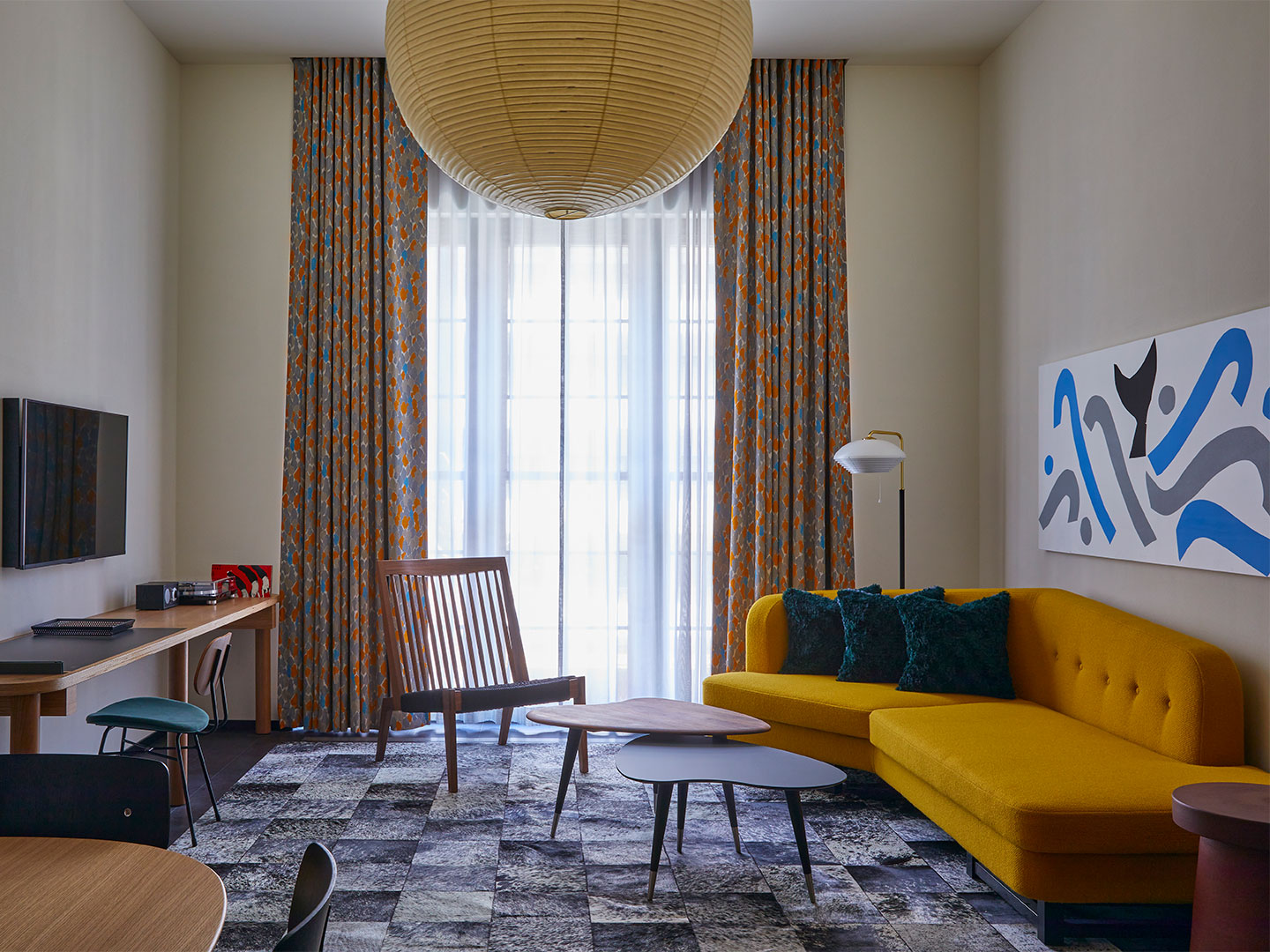
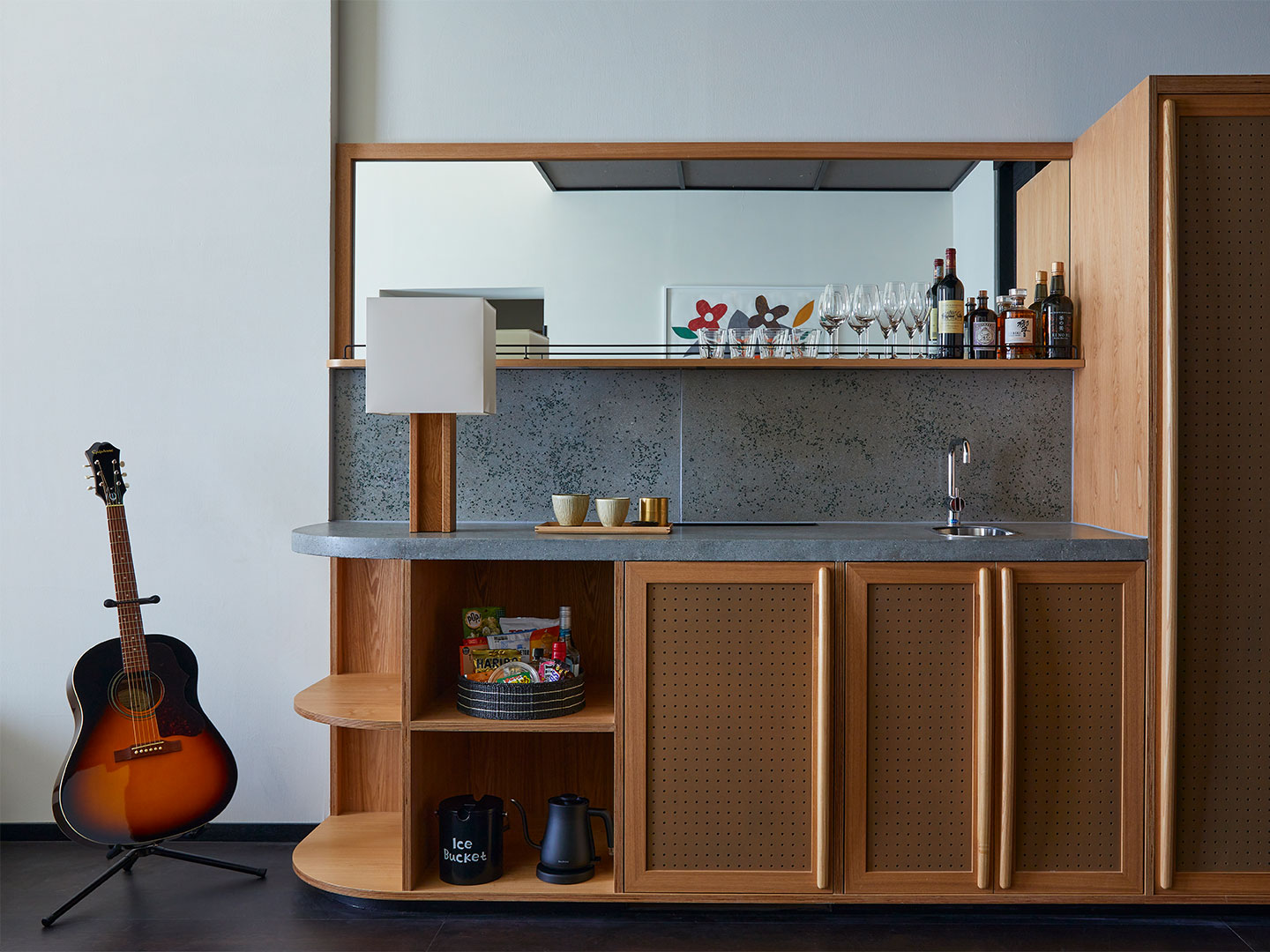
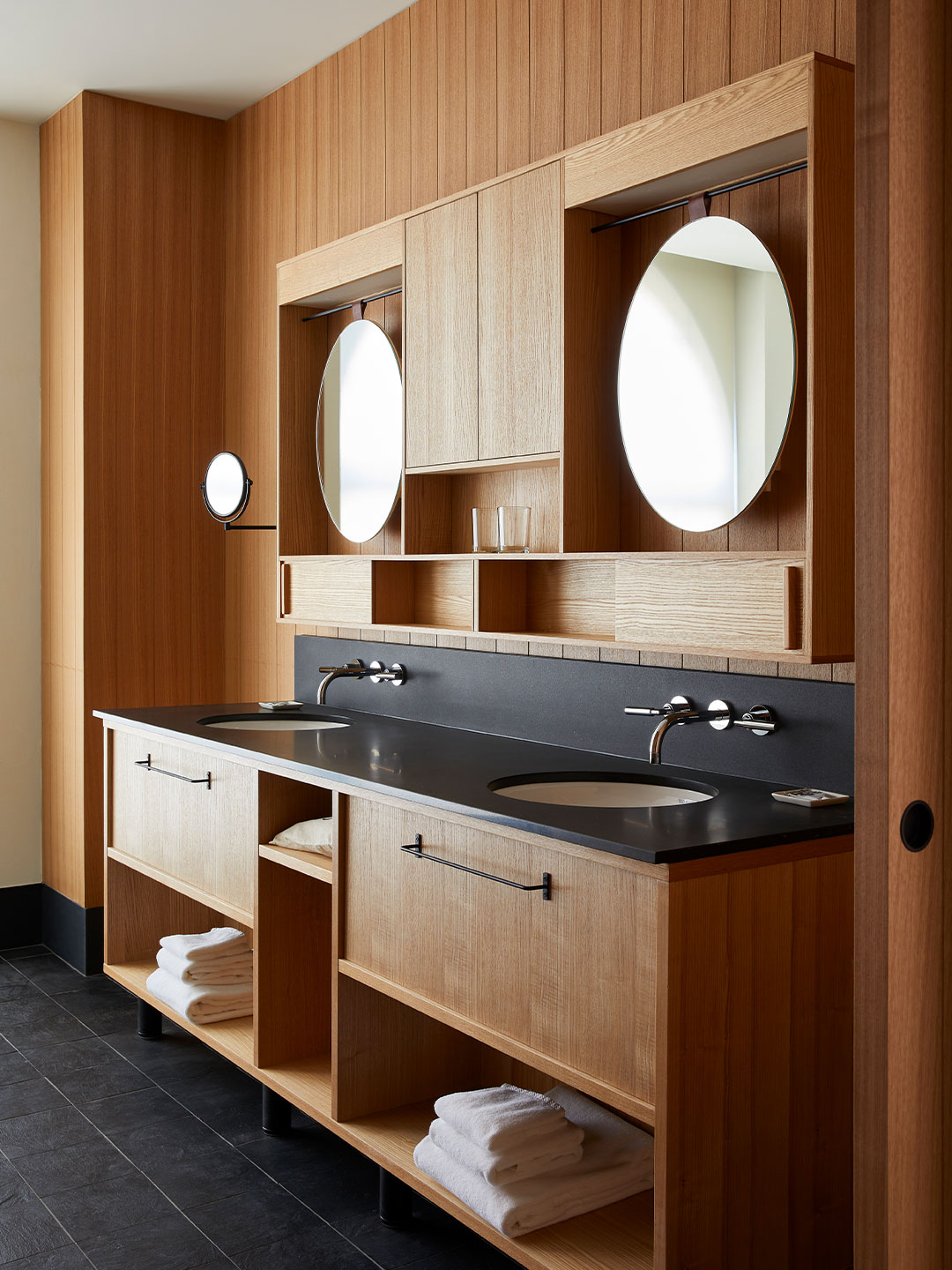
Kyoto has long been an inspiring place for artists, designers, musicians, film directors and poets. This creative spirit pervades the interior spaces shaped by Atelier Ace in collaboration with Los Angeles-based studio Commune Design around an East-meets-West aesthetic philosophy.
The team worked with local craftsmen and artists to honour this idea of exchange between cultures, contributing to the interplay of nature, art, history and inventiveness at Ace Hotel Kyoto.
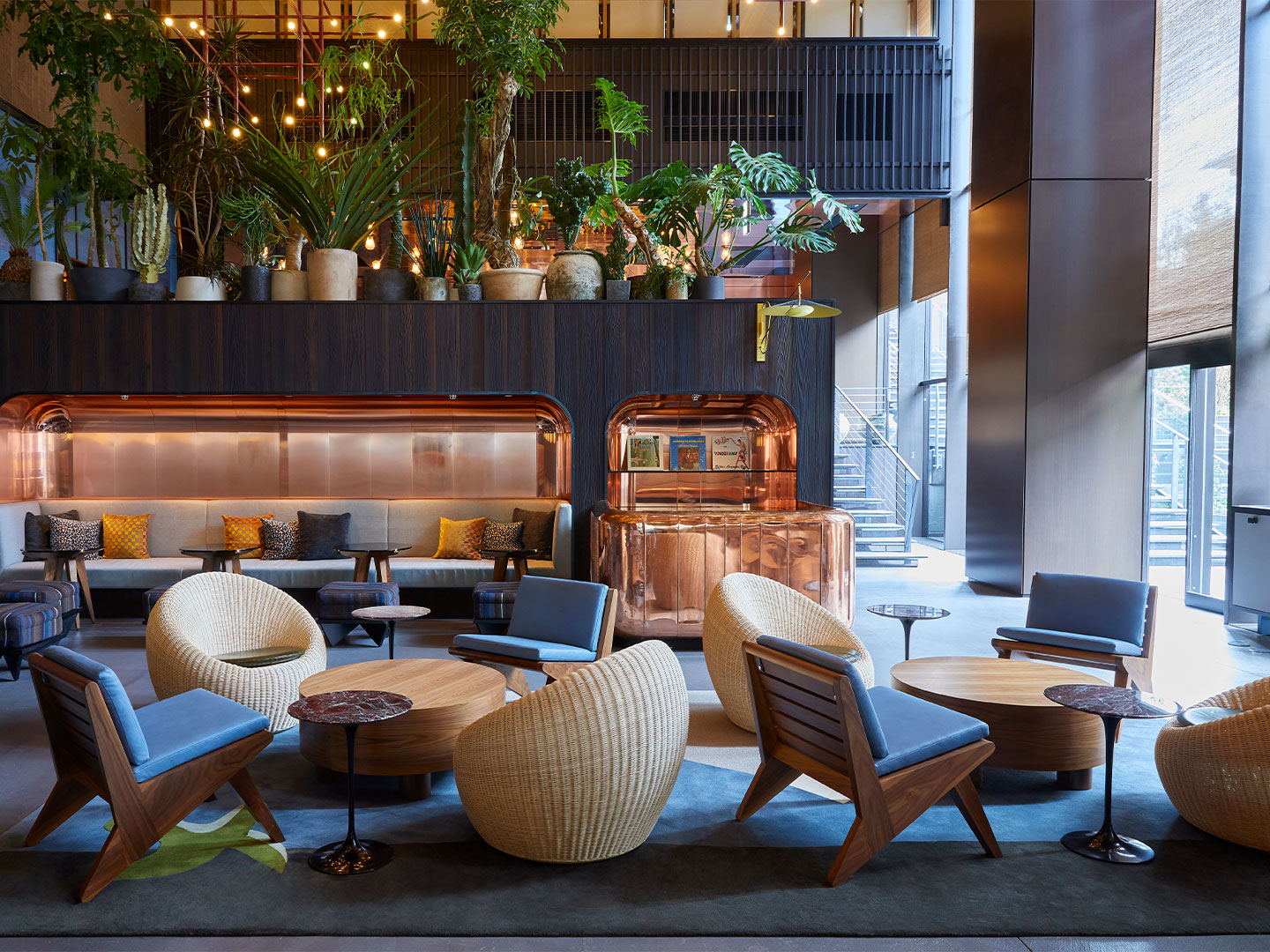
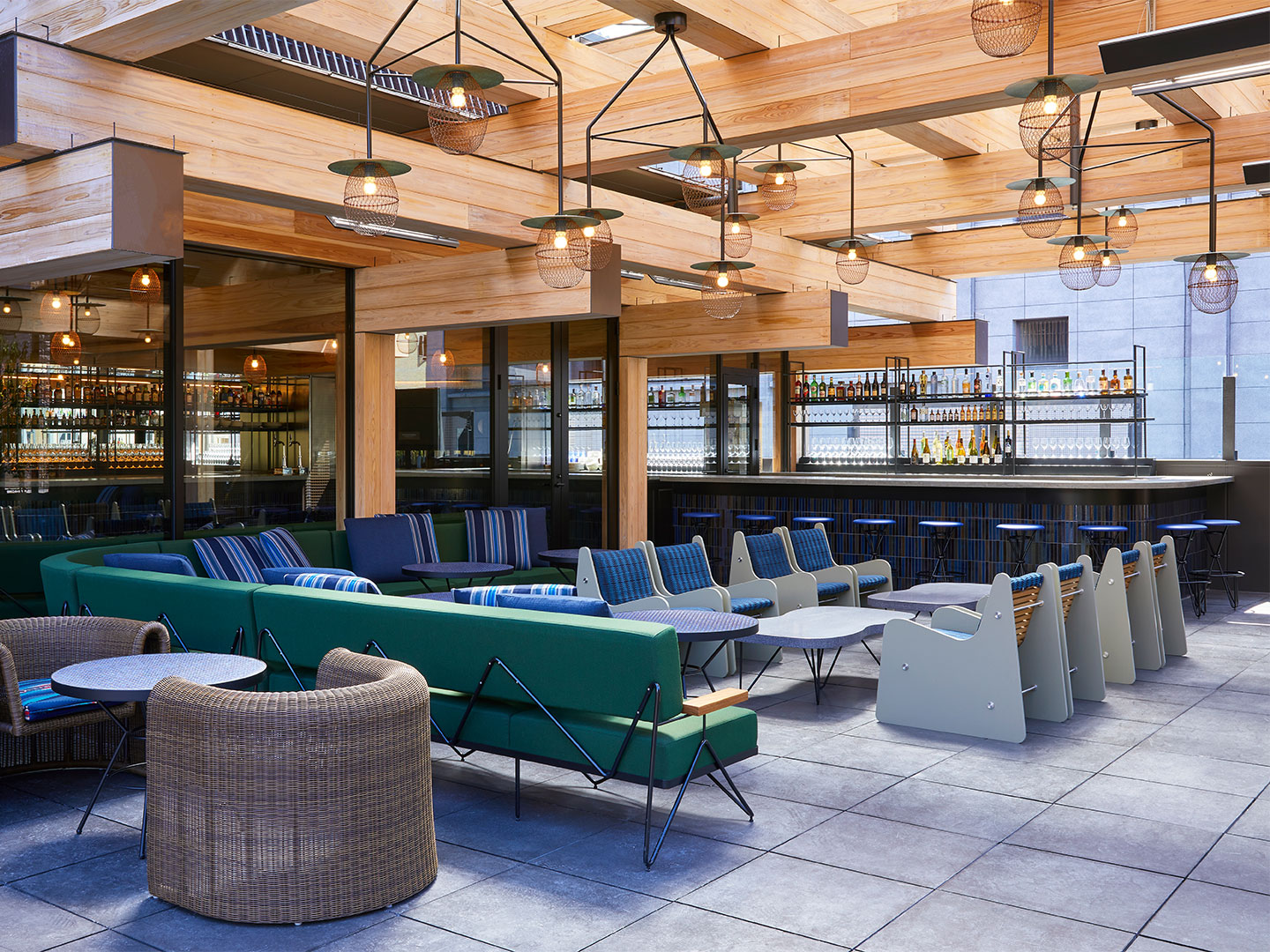
The first Ace Hotel was opened in Seattle in 1999. Since then, the dynamic hotel brand has unveiled a number of edgy establishments including the much-Instagrammed Ace Hotel and Swim Club in Palm Springs, California, and the Shoreditch outpost in London, imagined by Universal Design Studio.
The Ace Hotel Kyoto is welcomed as the tenth hotel in the Ace Hotel Group.
acehotel.com; kkaa.co.jp; communedesign.com
The thought was to create a hotel that is connected to Kyoto and open to the surrounding area.
Related stories
- Pull up an all-blue pew at Sydney’s newest gin bar, designed by YSG.
- The LittleNap ‘luxury hostel’ in Hangzhou by Say Architects.
- Pitch perfect: Utah’s luxury tented pavilions.
- Plesner Architects delivers decadence at the Six Senses Shaharut resort in Israel.
Occupying a discrete history-rich building in the 10th arrondissement of Paris, halfway between Gare du Nord and Gare de l’Est, the new Hotel Les Deux Gares is poised mischievously, ready to treat visitors to a wild and wonderful joyride. The once abandoned bourgeois edifice is now frocked up in the signature stylings of its art director Luke Edward Hall, and offers a bar, restaurant, fitness room and sauna. Not to mention the 40 petite rooms where guests are warmly invited into the eccentric universe of the British tastemaker.
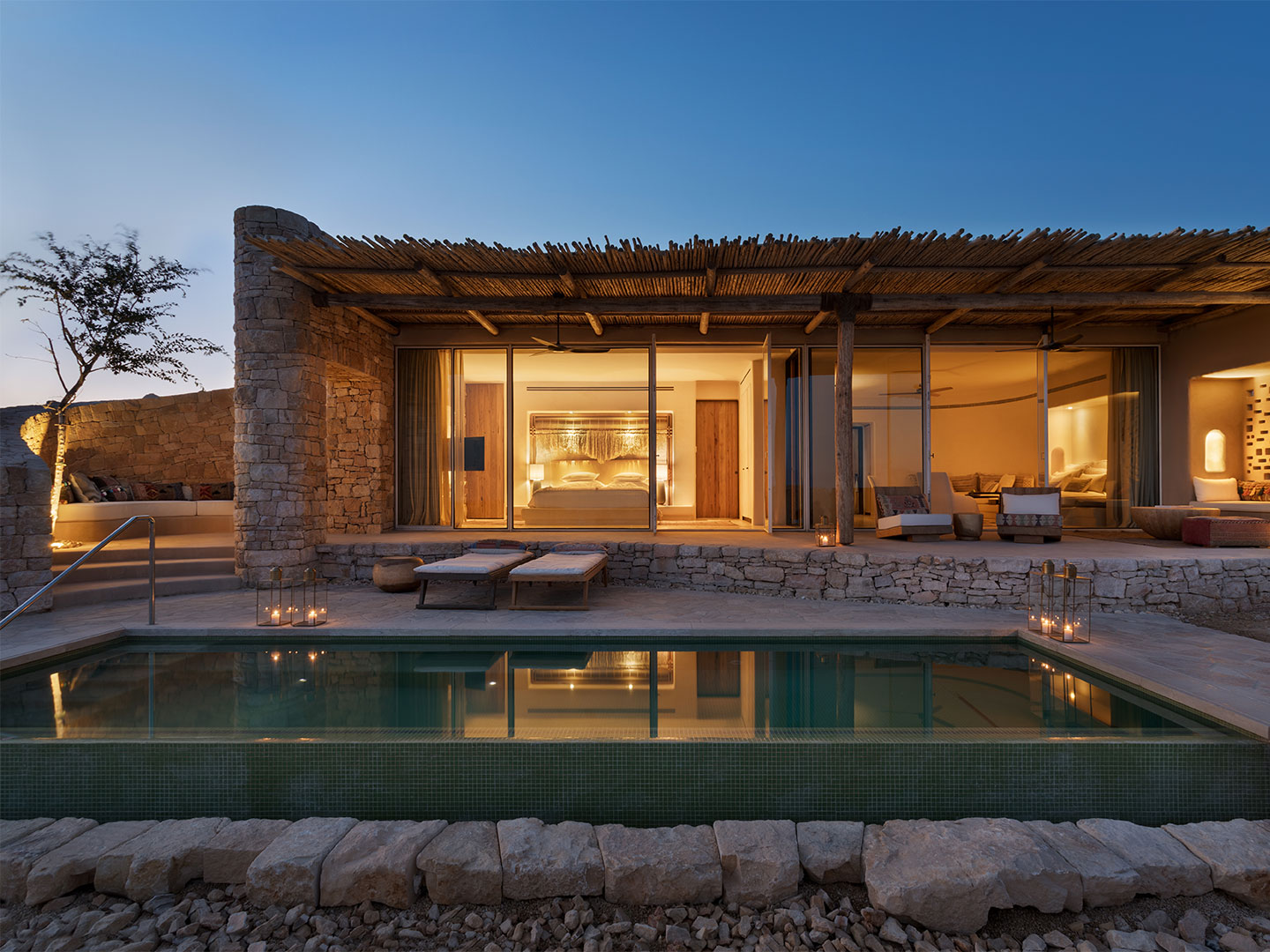
Located toward the pointy end of the map in Israel’s south, the new Six Senses Shaharut hotel by Tel Aviv firm Plesner Architects, founded by Danish architect Ulrik Plesner in the 1970s, is due to open to guests in December. While the highly anticipated opening comes a little later than first planned, the hotel promises to make up for the unexpected lag by providing guests with “uplifting experiences at every turn”.
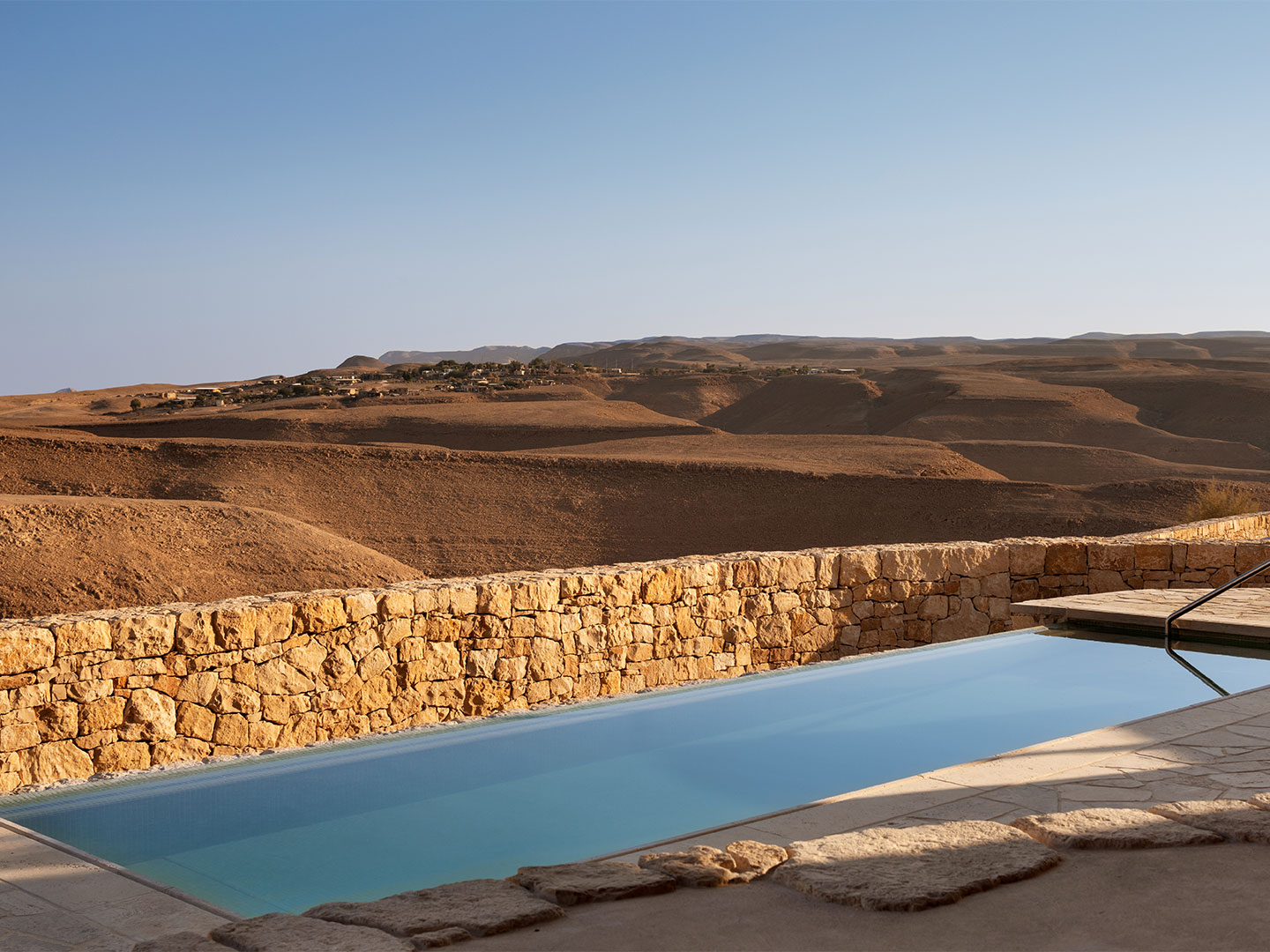
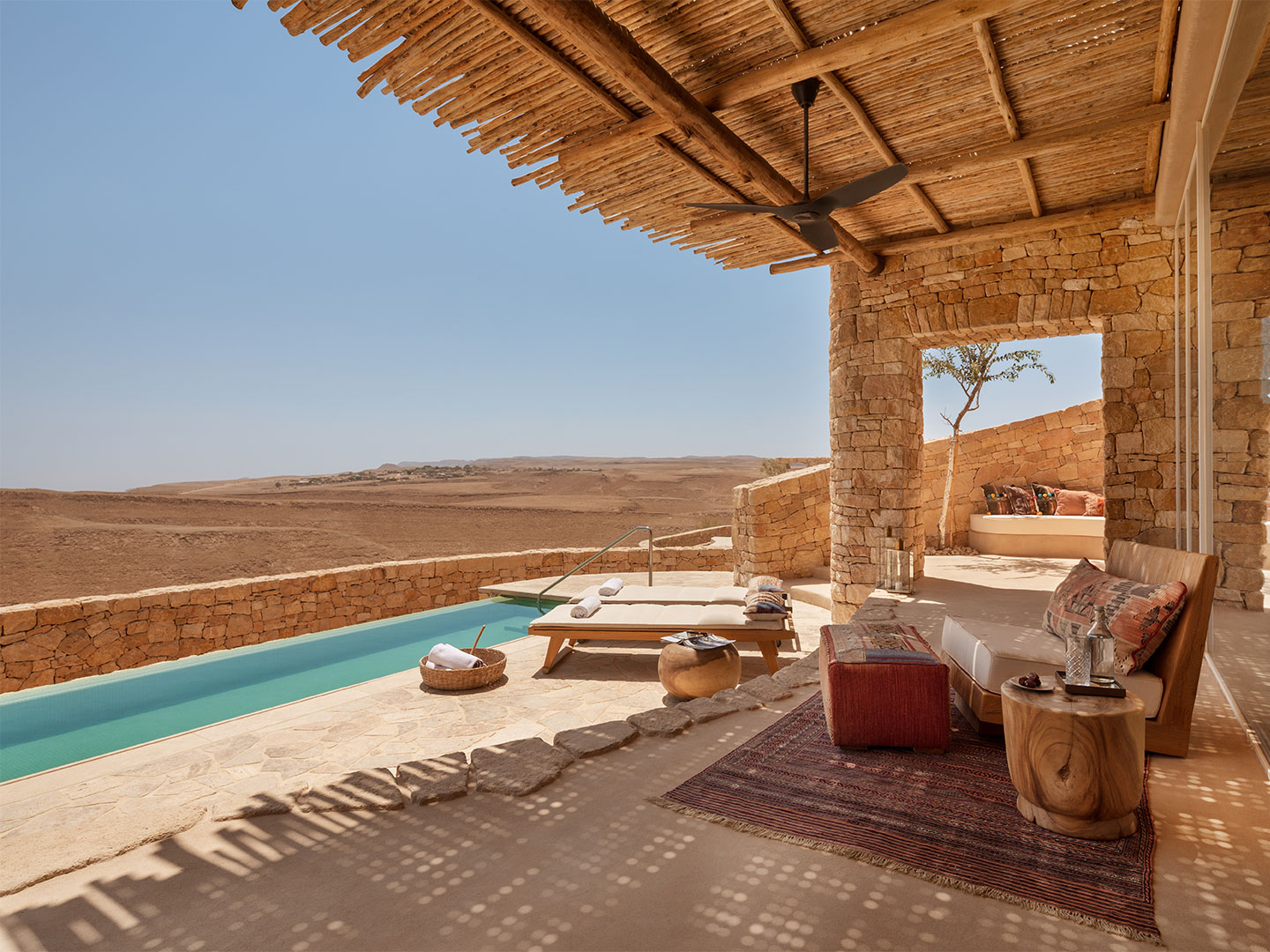
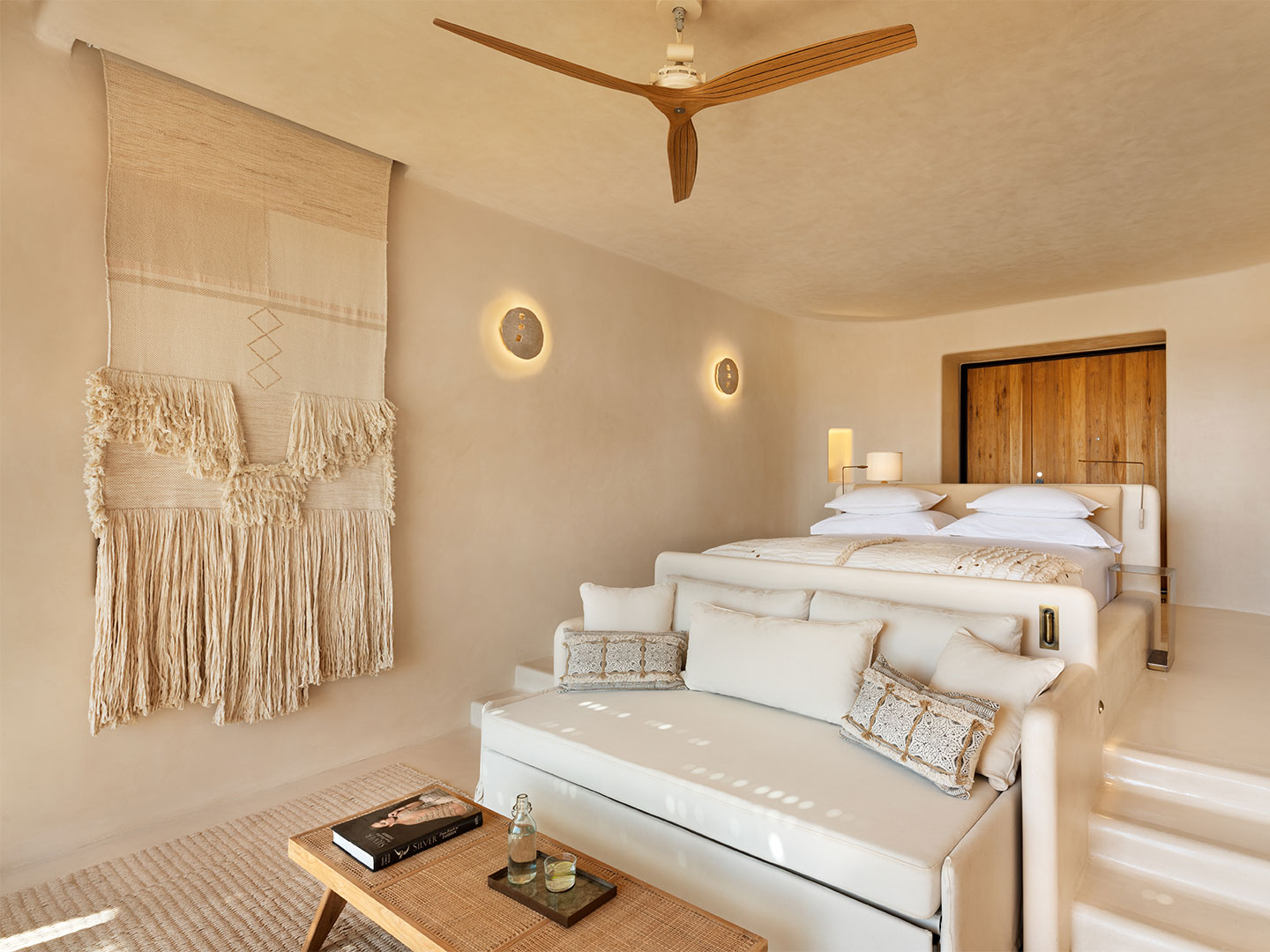
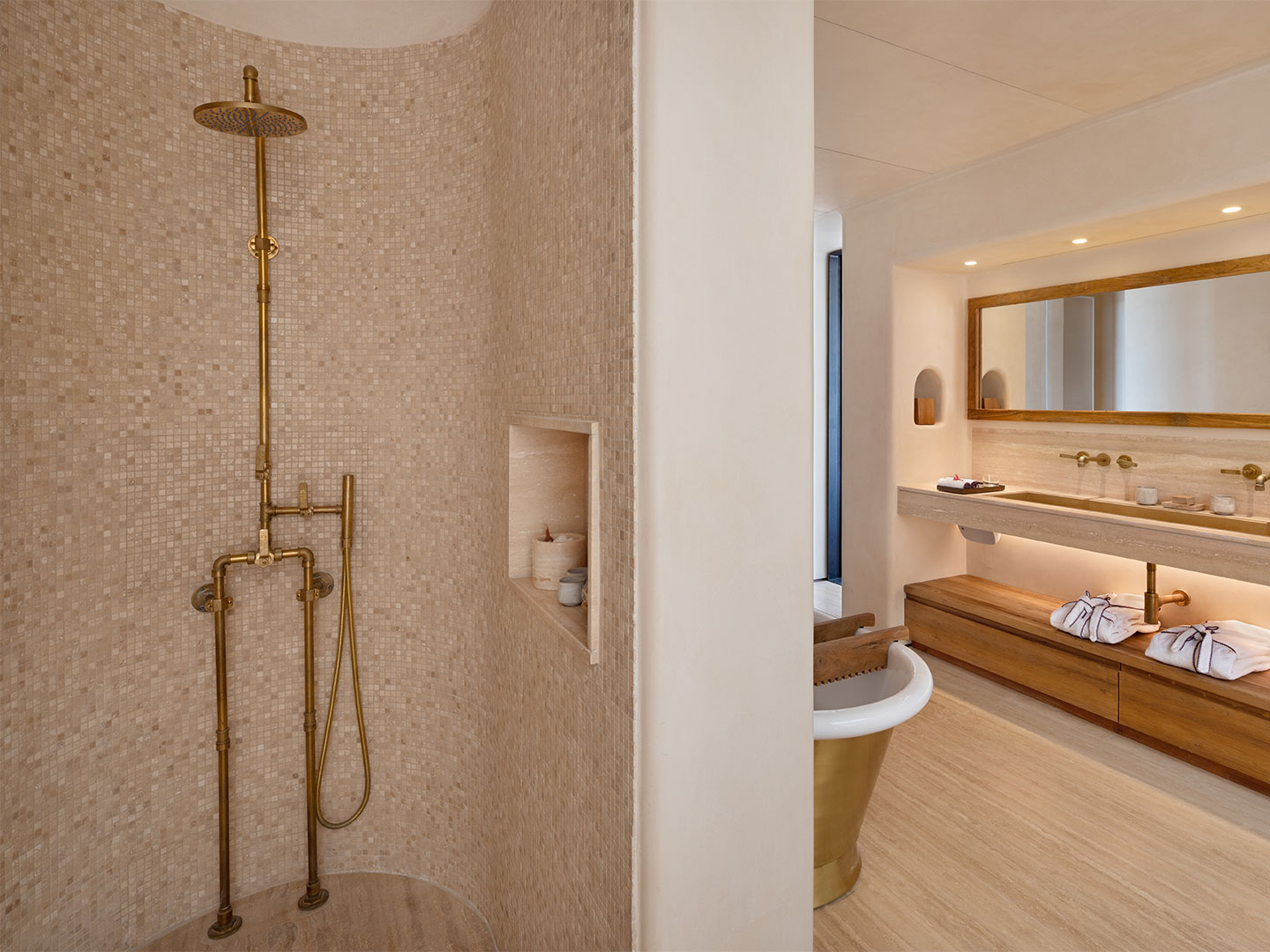
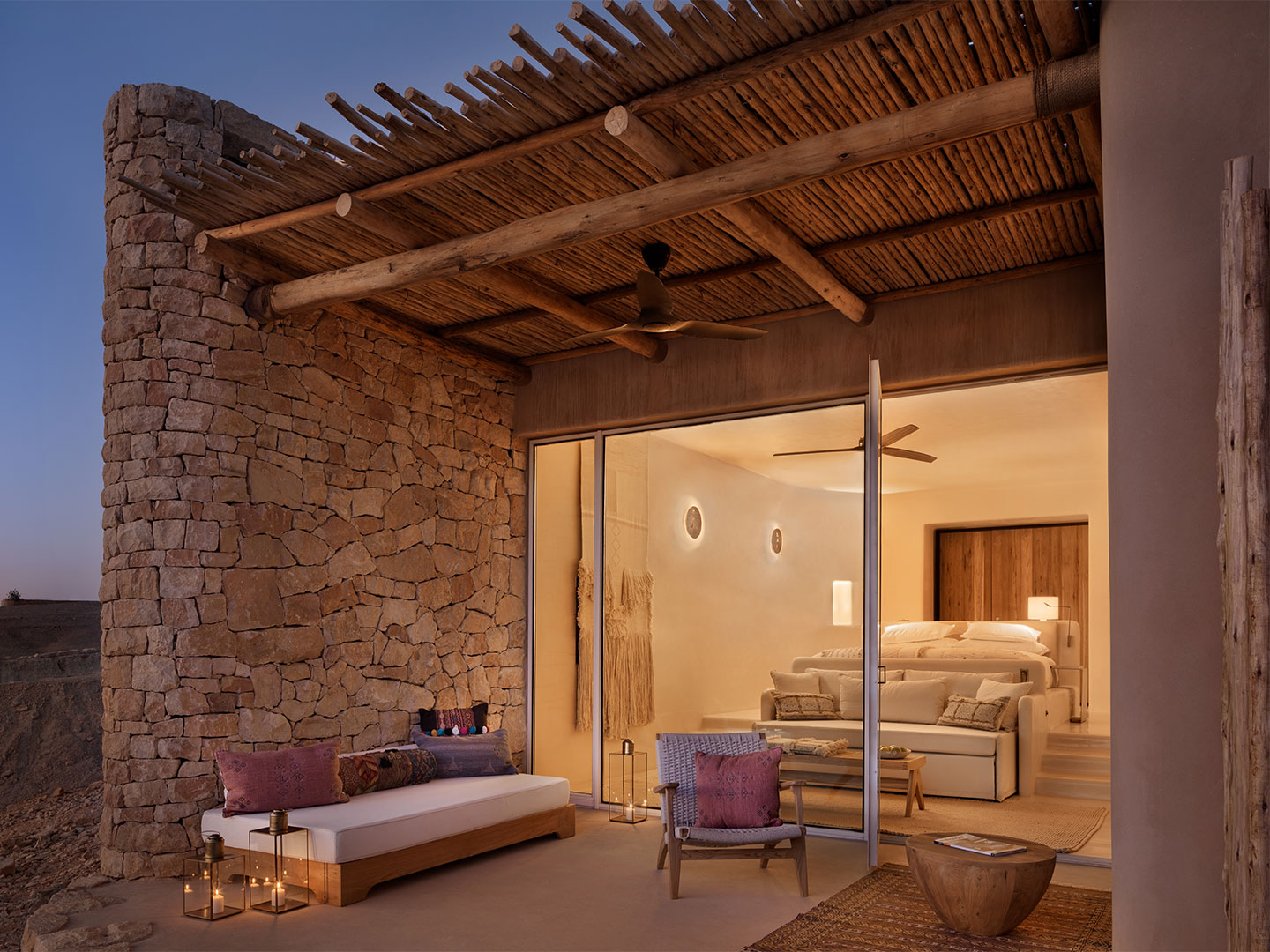
Intimate in scale, the peaceful desert oasis will host guests in its 60 suites and villas against a backdrop of breathtaking rock and sand formations. Each of the resort’s suites presents guests with private outdoor decks, and the large villas feature relaxed living rooms and individual swimming pools. A generously sized three-bedroom villa also offers guests a spa, steam room and gym.
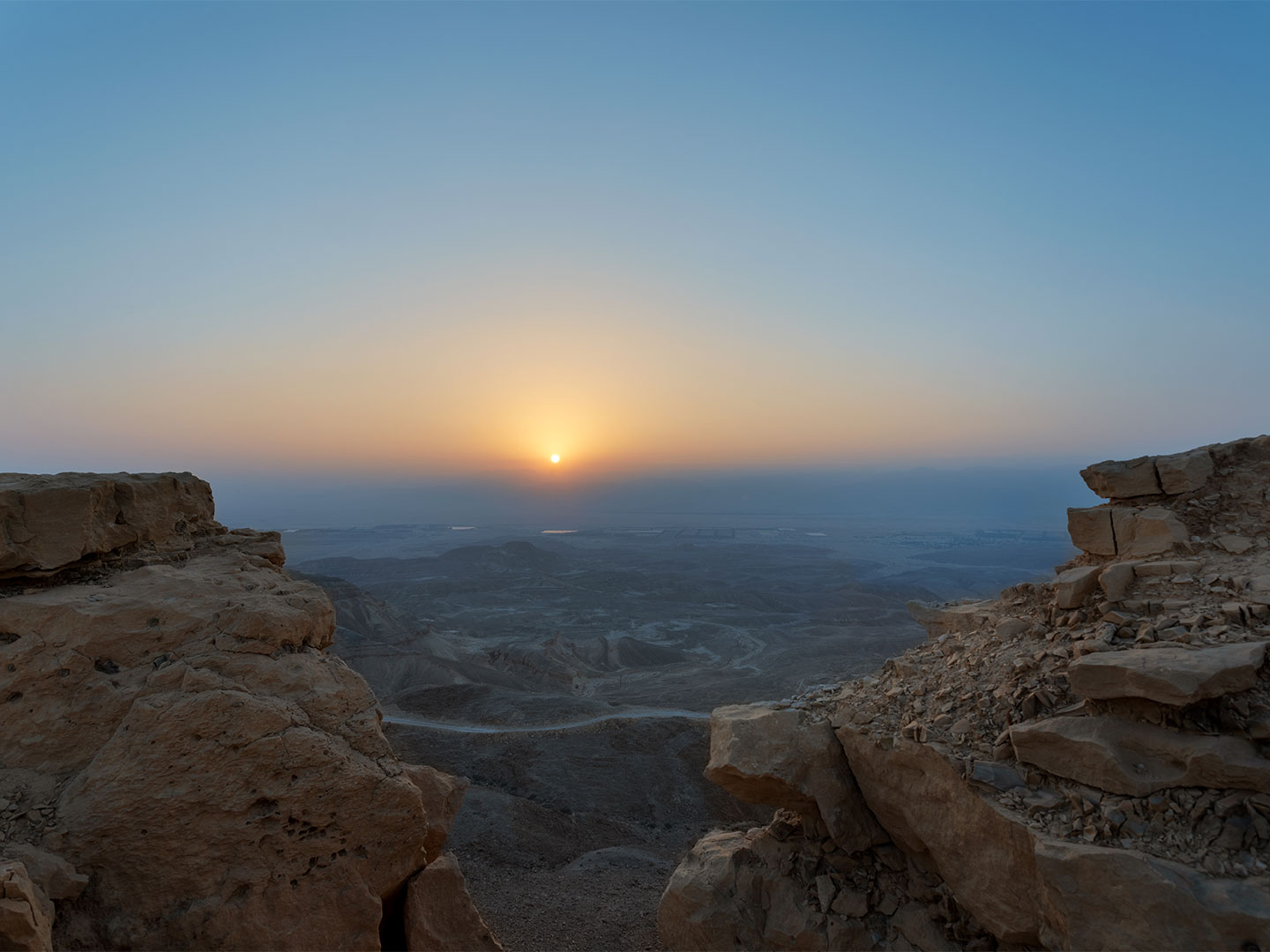
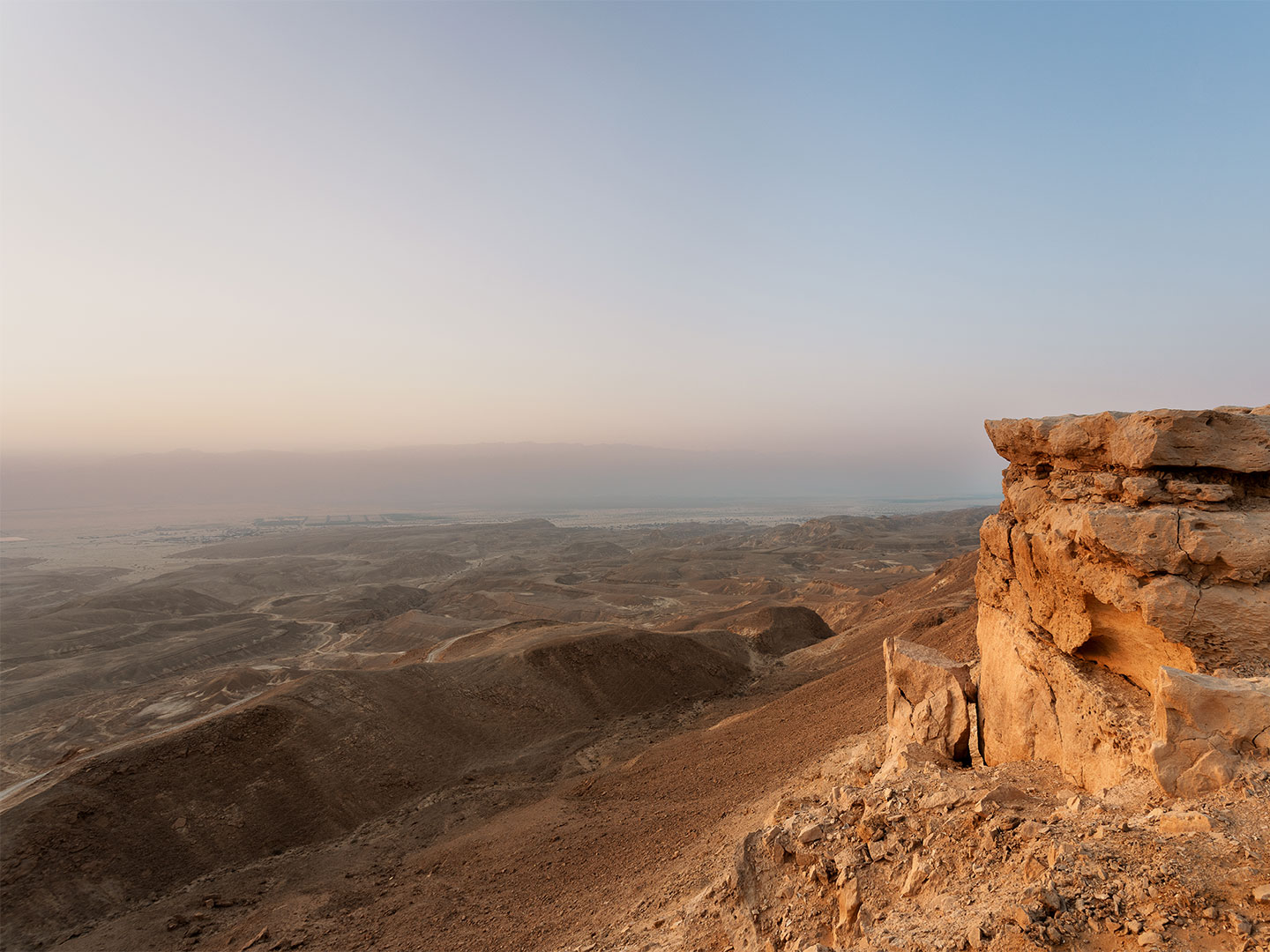
The quiet Shaharut community where the new Six Senses property is located was once home to the Nabataeans, a nomadic people who travelled this region over 2000 years ago, with their livestock, to wherever they could be sufficiently fed and watered. The Nabataeans are known for being skilled traders in these parts and for the magnificent cliff carvings of Petra in neighbouring Jordan.
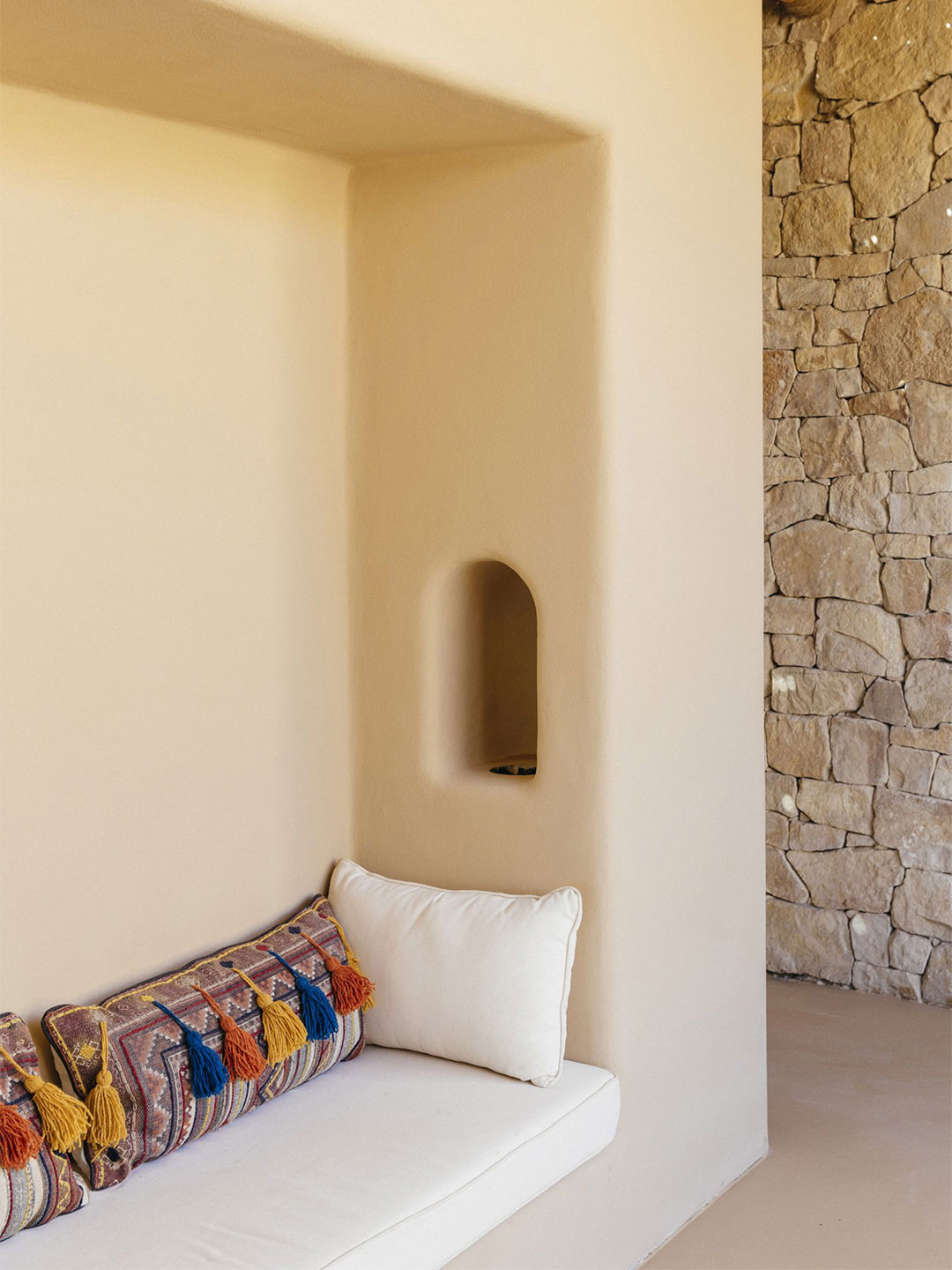
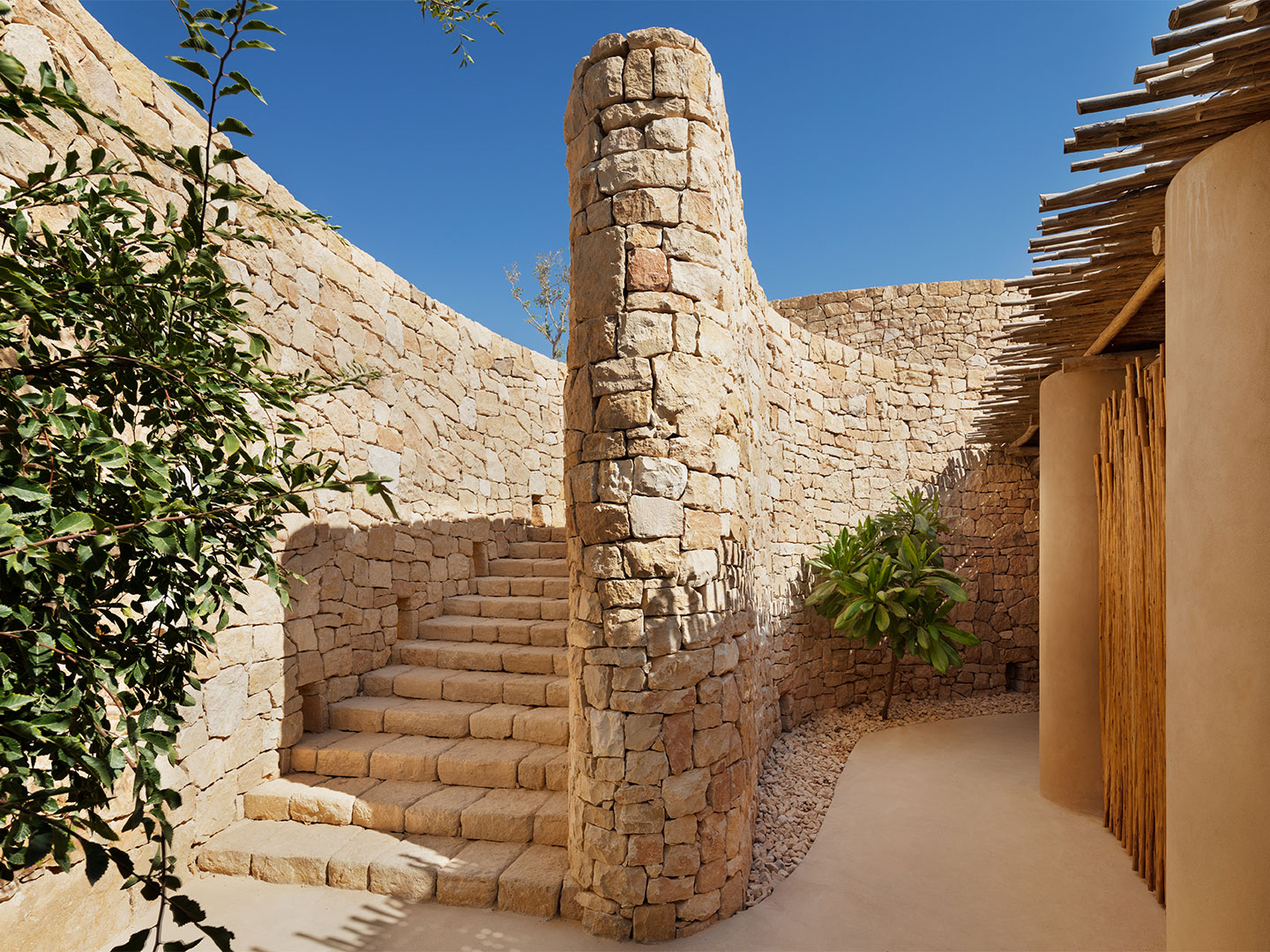
Awed by the history and vast natural beauty of the region, the architects say, “the main idea of the hotel is to keep the spirit of the desert”. As such, the organic architecture employs textured limestone, locally excavated flint and thatched roofs in its contemporary reinterpretation of the ancient nomadic structures of the area. “All buildings are located half dug into the land, so we keep the desert skyline clear,” says the architects. “The materials used for the hotel are mostly from the area, the local stone is used for the walls and roofs.”
The design of Six Senses Shaharut aims to synchronise guests with the natural dunescape by maintaining a consistent relationship between indoor and outdoor living experiences. Six Senses says the interiors of the dwellings draw on the spoils of the incense trade route – ancient trails that stretched from Mediterranean ports across the Levant to India and further afield – as the inspiration to create spaces and experiences that reflect the essence of the locale.
The main idea of the hotel is to keep the spirit of the desert.
Throughout the property, the furniture and fittings have been thoughtfully curated to include copper and timber, and natural stonewares hewn by local artisans, ensuring parallels with the colourway of the weathered rock and sand formations that define the site. The interiors are lavished with intricate local textiles, while the internal doors are beautifully crafted from 200-year-old reclaimed teak which was sourced from disused boats, houses and footbridges.
Getting there
The journey to Six Senses Shaharut is part of the storytelling experience as guests travel through the history-rich landscape. The drive from Tel Aviv or Jerusalem takes around three-and-a-half hours or it’s a three-hour drive from Petra in Jordan. Alternatively, guests can book a 50-minute domestic flight from Tel Aviv to the Ramon International Airport (ETM) near Eilat. From there, it is a 45-minute car trip to the resort.