An important milestone in the growth of BEEAH Group was chalked up in 2013 when London-based Zaha Hadid Architects won an international competition to design the company’s headquarters. Based in Sharjah, in the United Arab Emirates, BEEAH describes itself as a “sustainability pioneer” working across six key industries including waste management and recycling, clean energy, environmental consulting, education and green mobility. The new HQ would signal its expansion from a company founded to proactively tackle environmental issues in the UAE, to an international group with businesses in industries that are critical to realising a sustainable future.
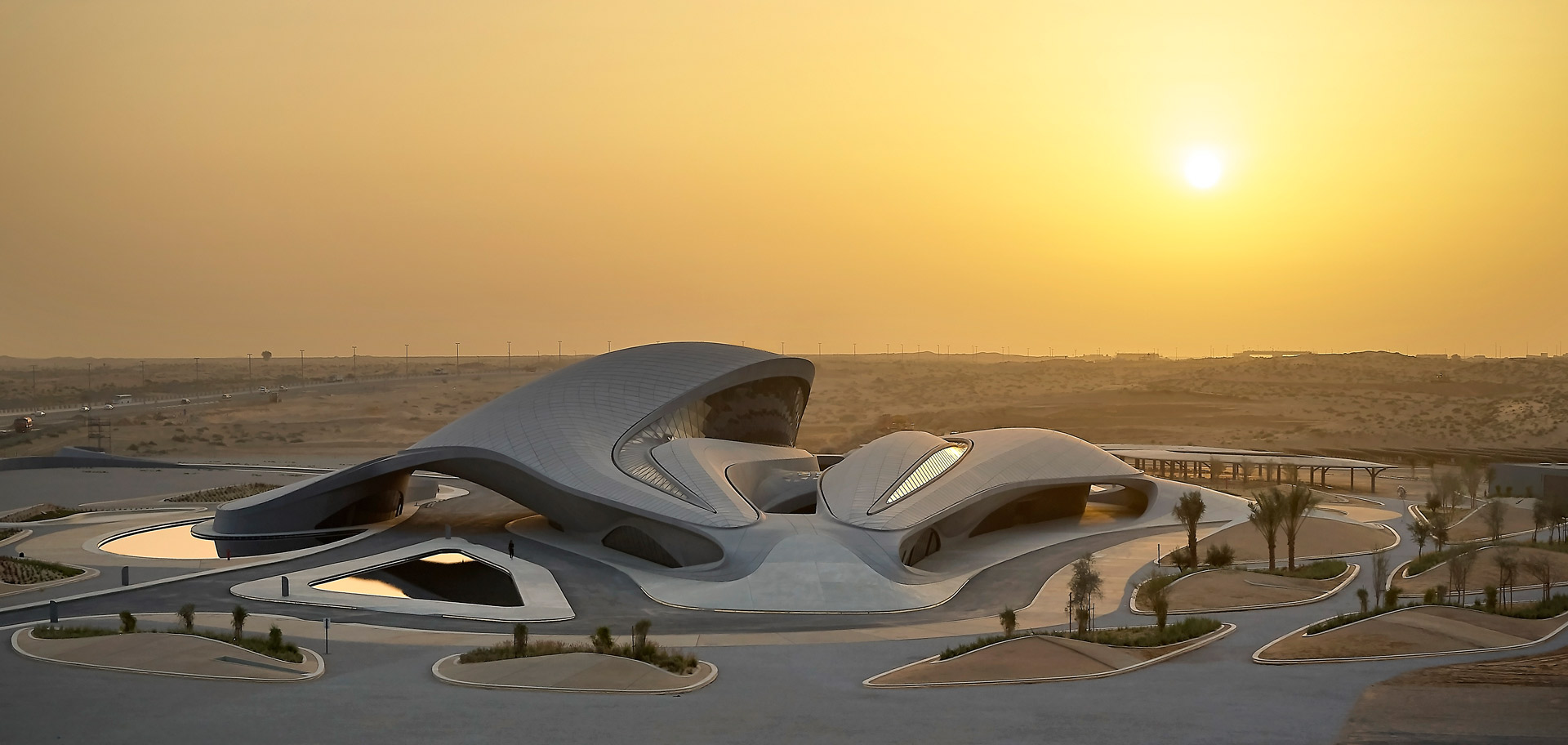
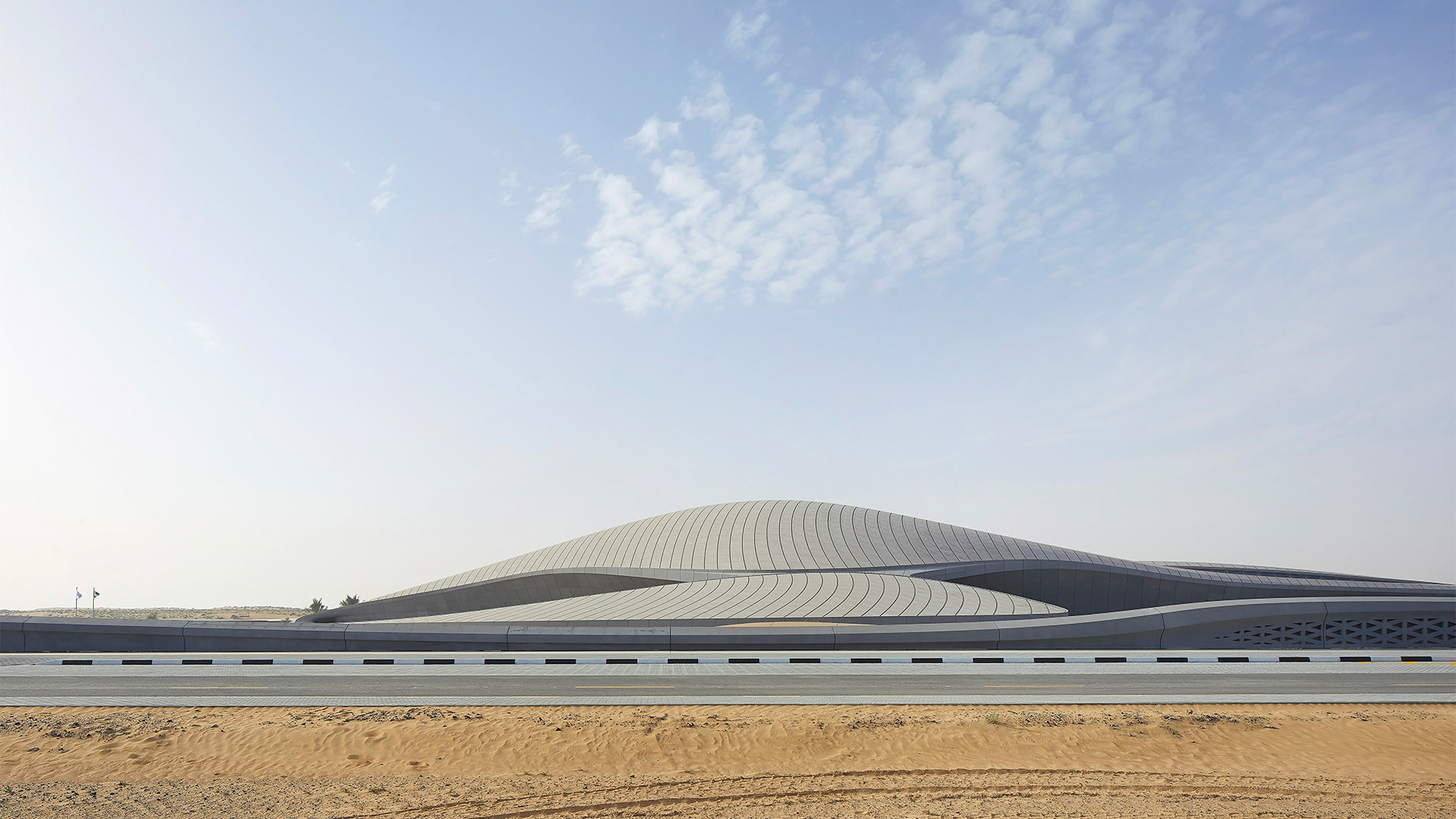
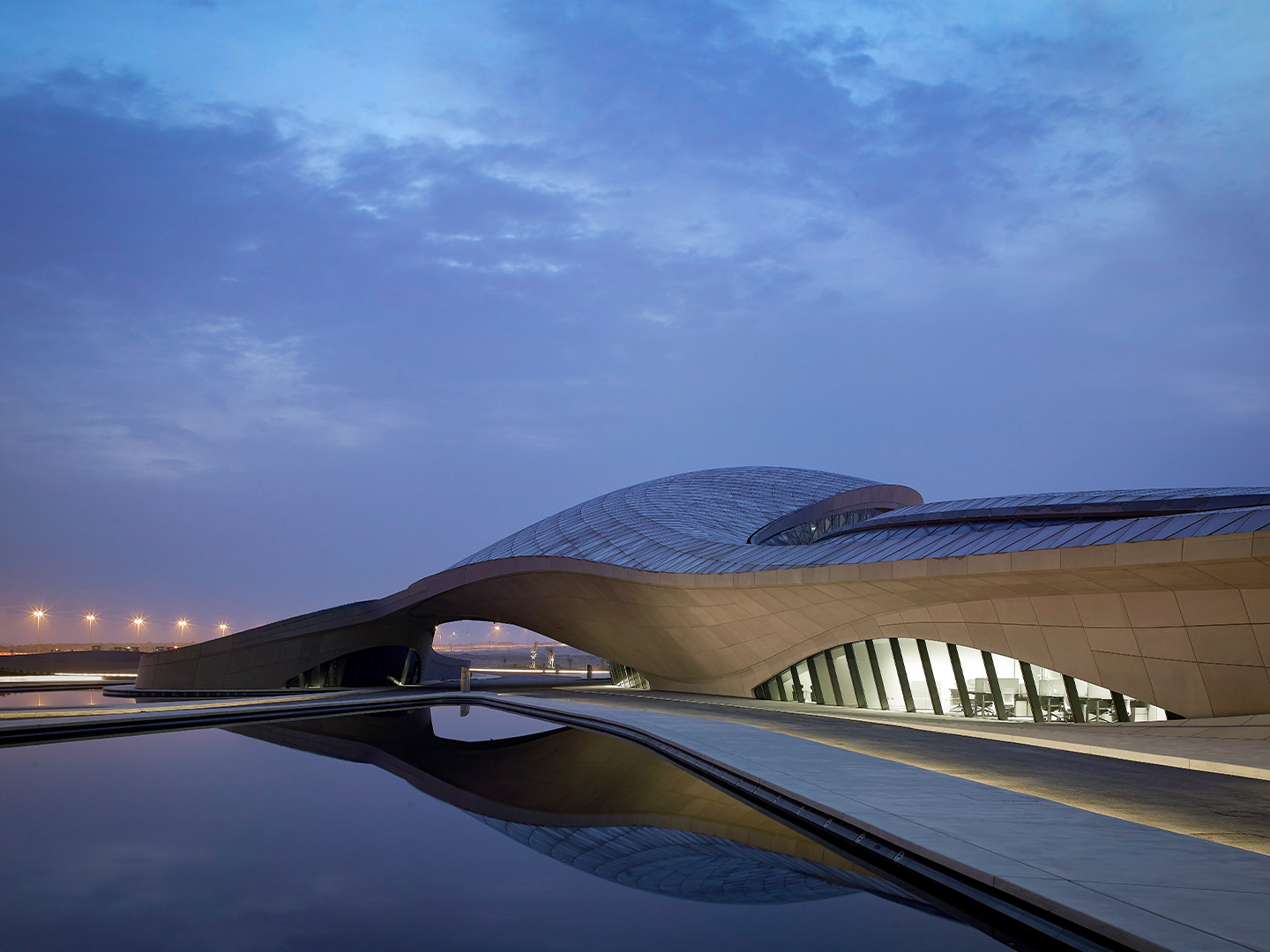
Under the leadership of ZHA practice principal Patrik Schumacher, the now-completed BEEAH Group headquarters has been designed to respond to its environment, rising from the desert as a series of low-slung interconnecting “dunes” orientated and shaped to optimise local climatic conditions. “Embedded within its context of Sharjah’s Al Sajaa desert, the design echoes the surrounding landscape [which has been] shaped by prevailing winds into concave sand dunes and ridges that become convex when they intersect,” the architects say in a statement.
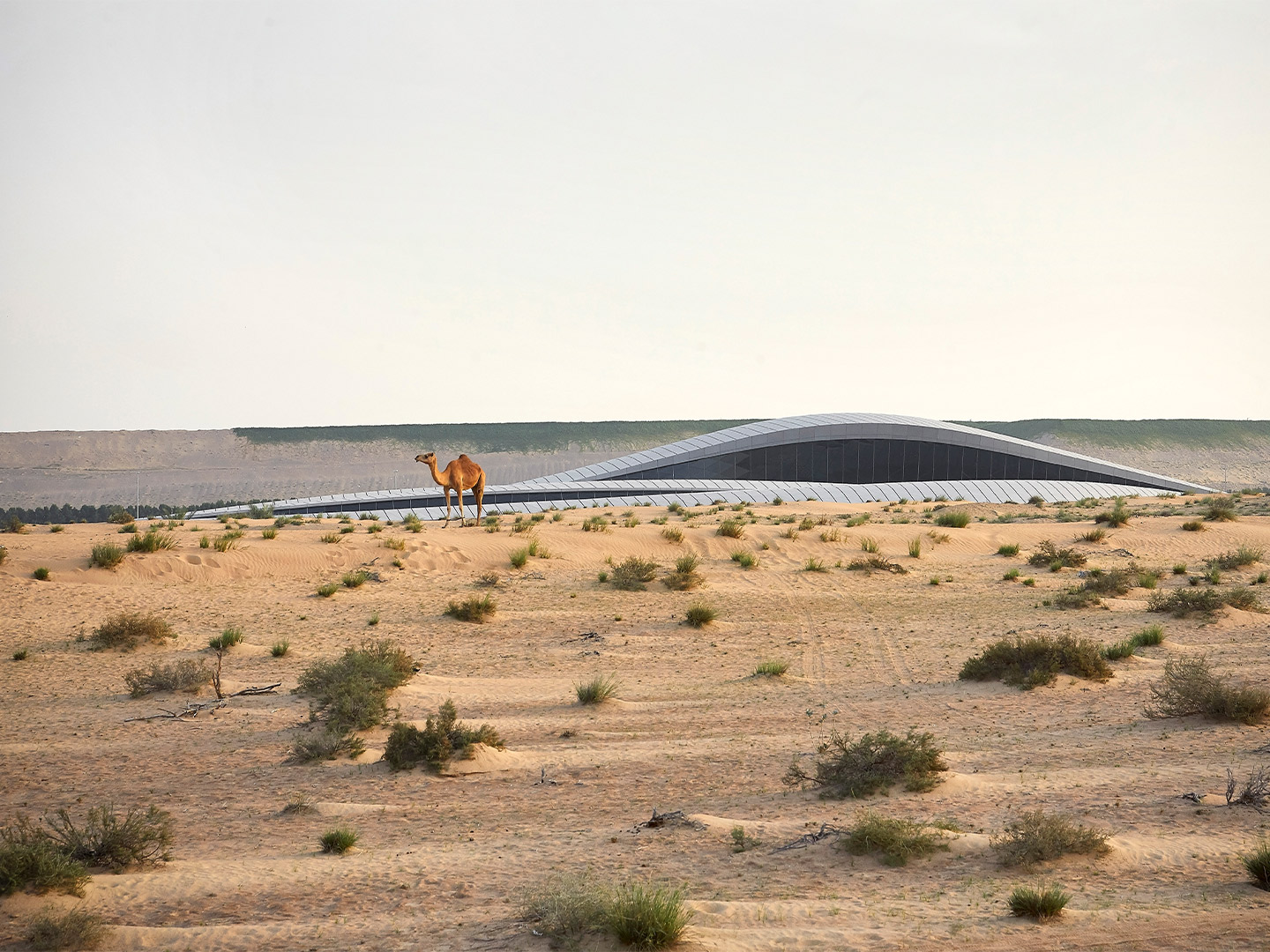
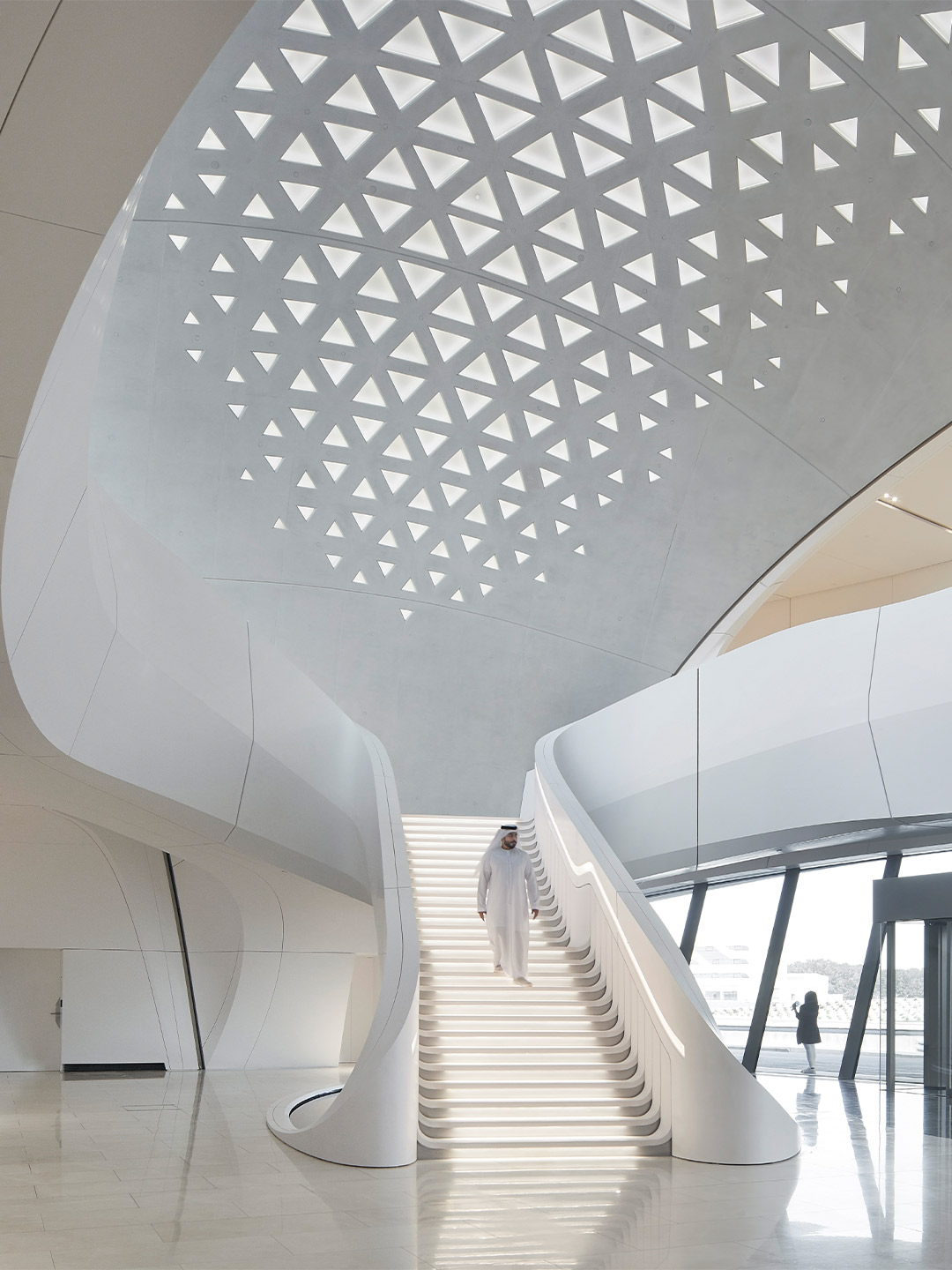
BEEAH Group headquarters in Sharjah by Zaha Hadid Architects
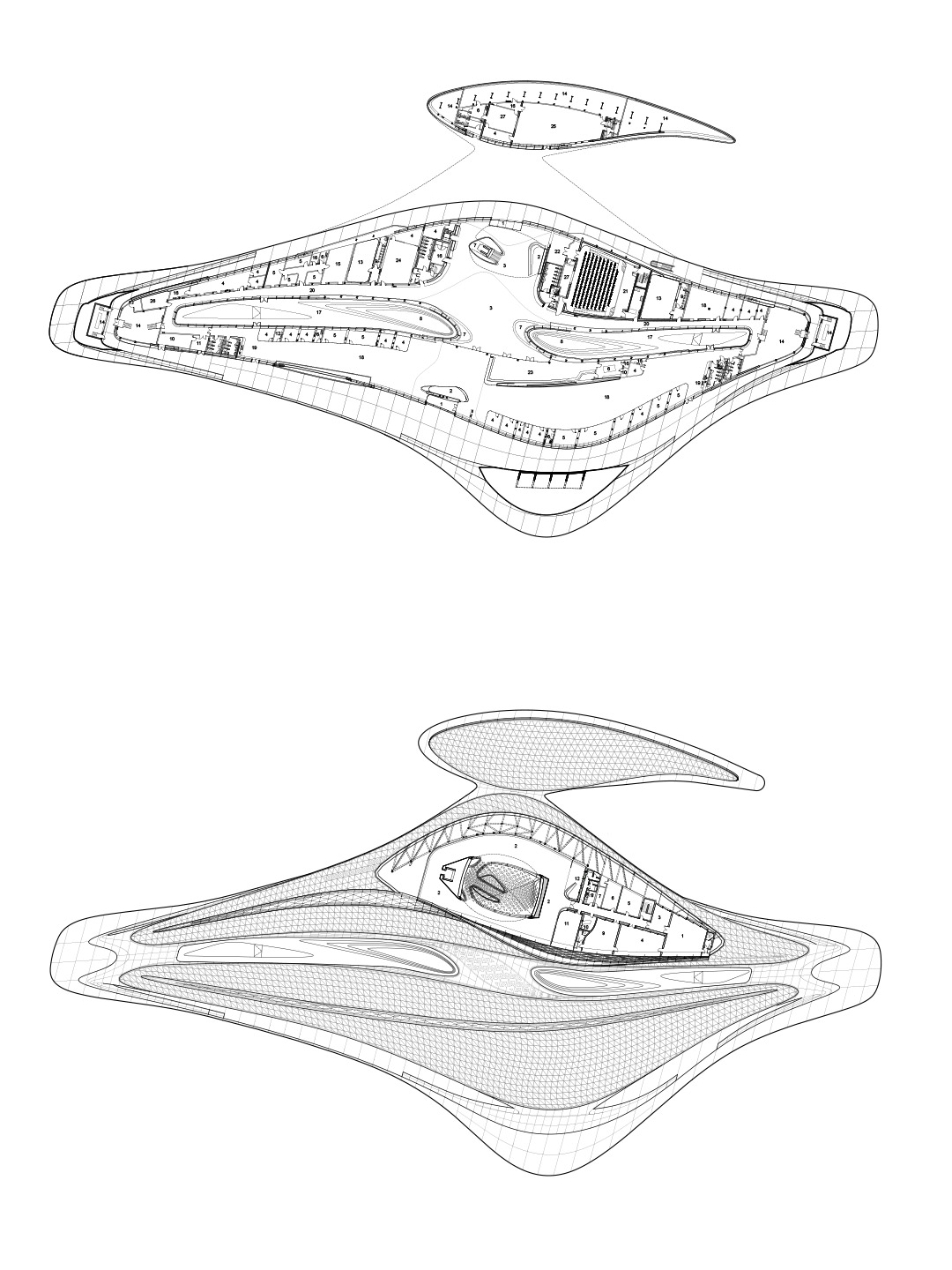
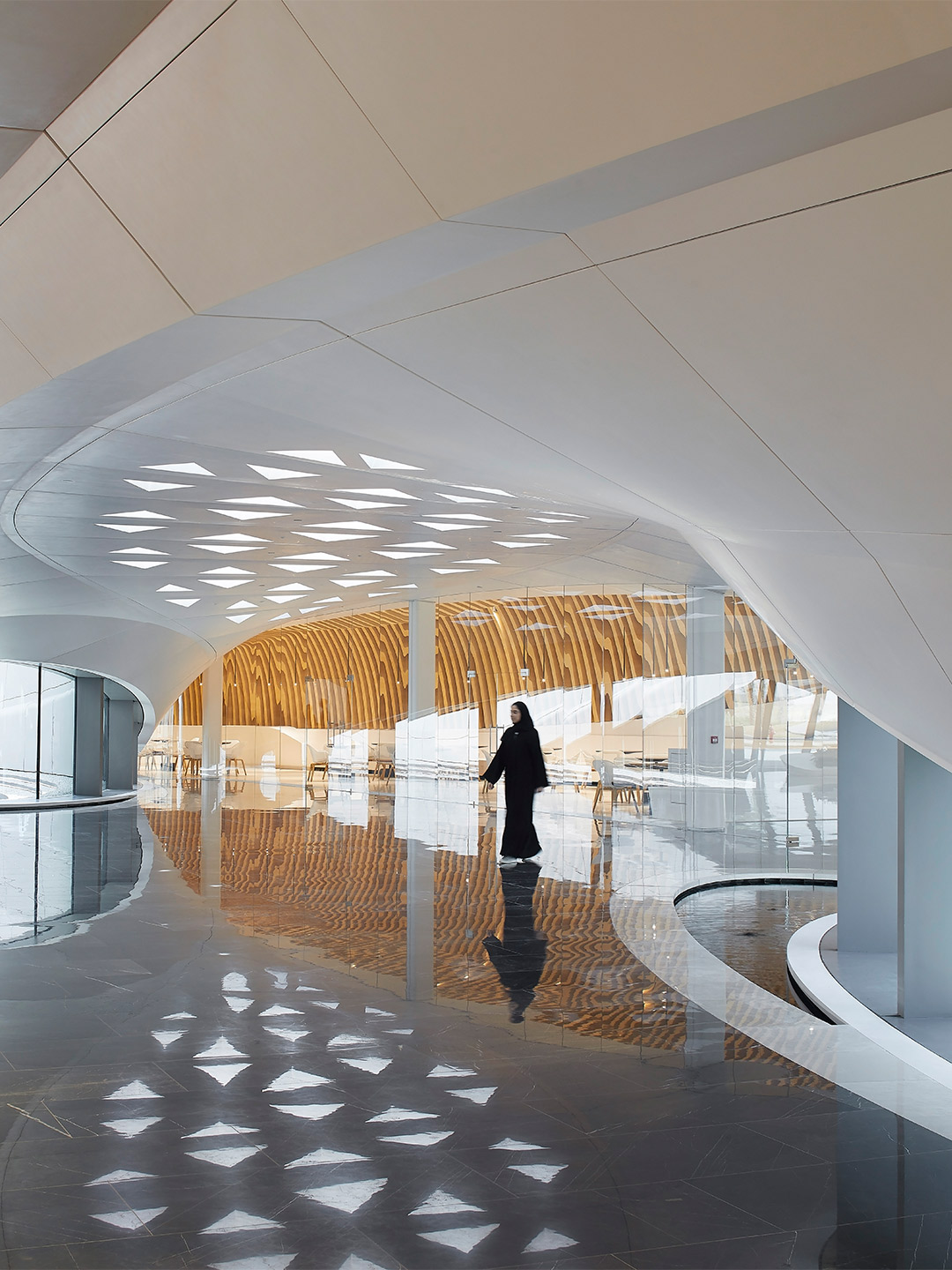
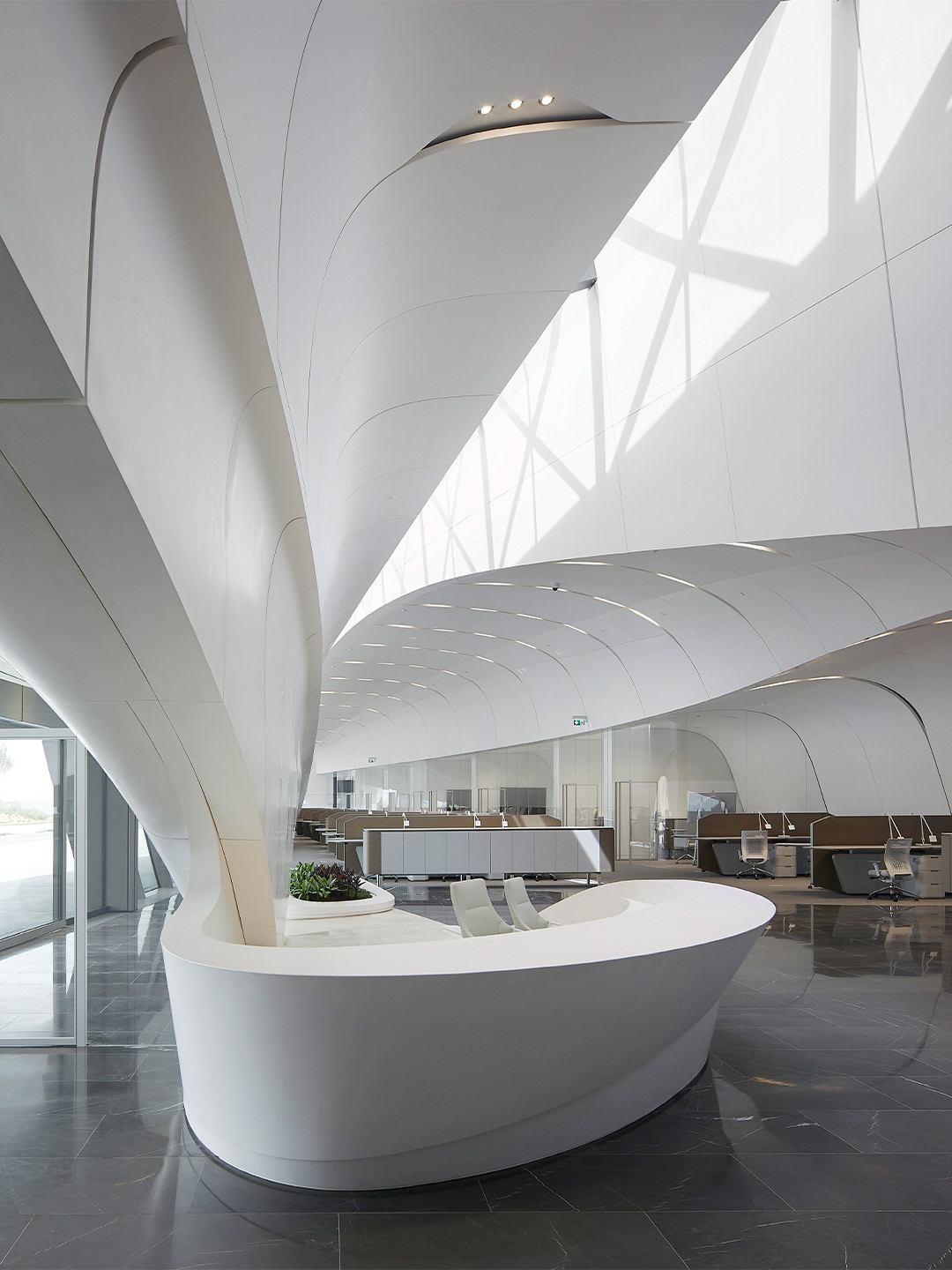
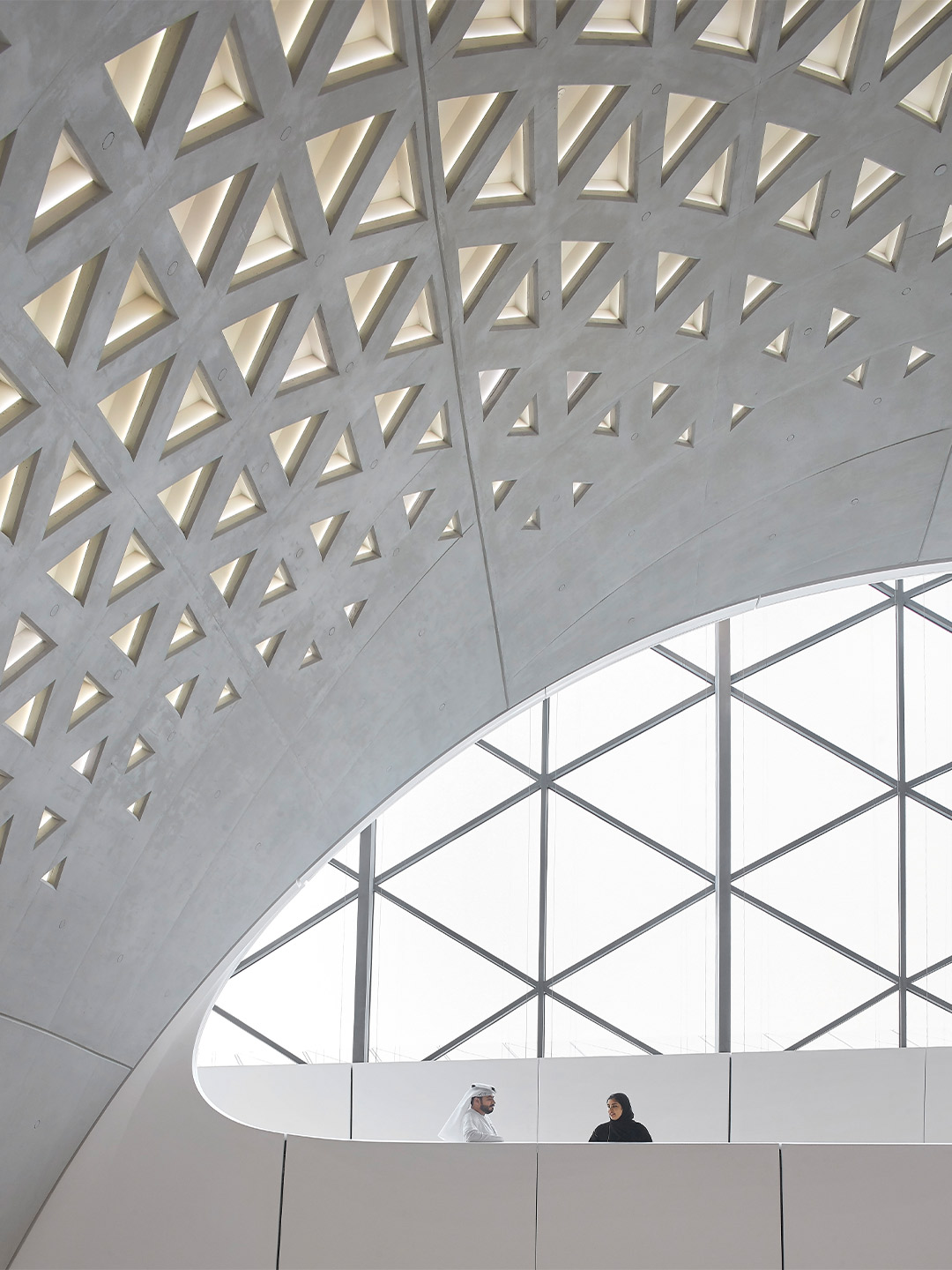
Performing the role of the group’s management and administrative centre, the facility has been built to achieve net-zero emission status. It’s powered by an on-site solar array and equipped with next-generation technologies, allowing it to operate efficiently. Ensuring all internal spaces are provided with ample daylight and views, while limiting the quantity of glazing exposed to the harsh sun, the two main “dunes” of the HQ contain the public and management departments (together with the administrative zone) that interconnect via a central courtyard, defining an oasis within the building which is integral to its natural ventilation strategy.
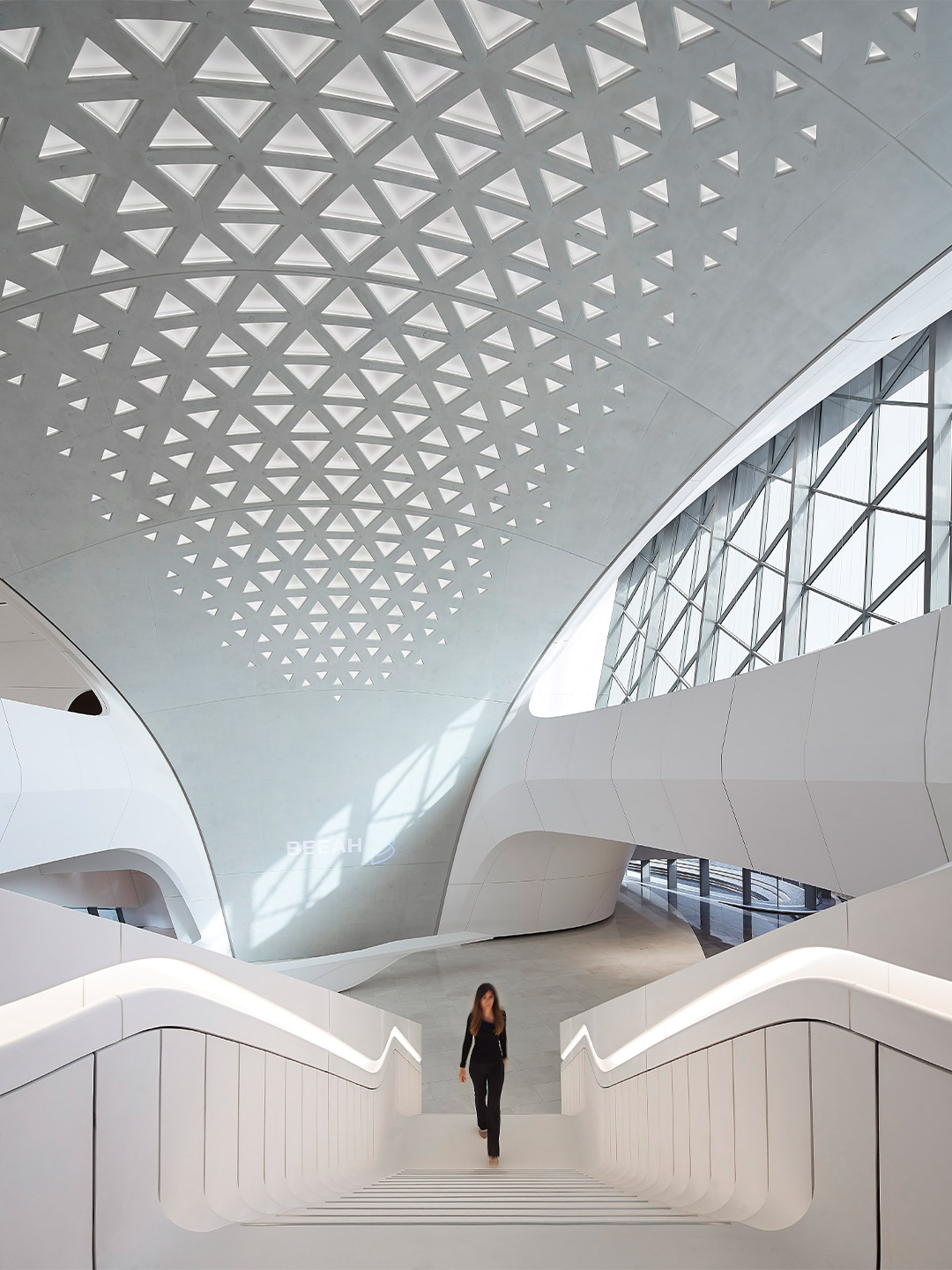
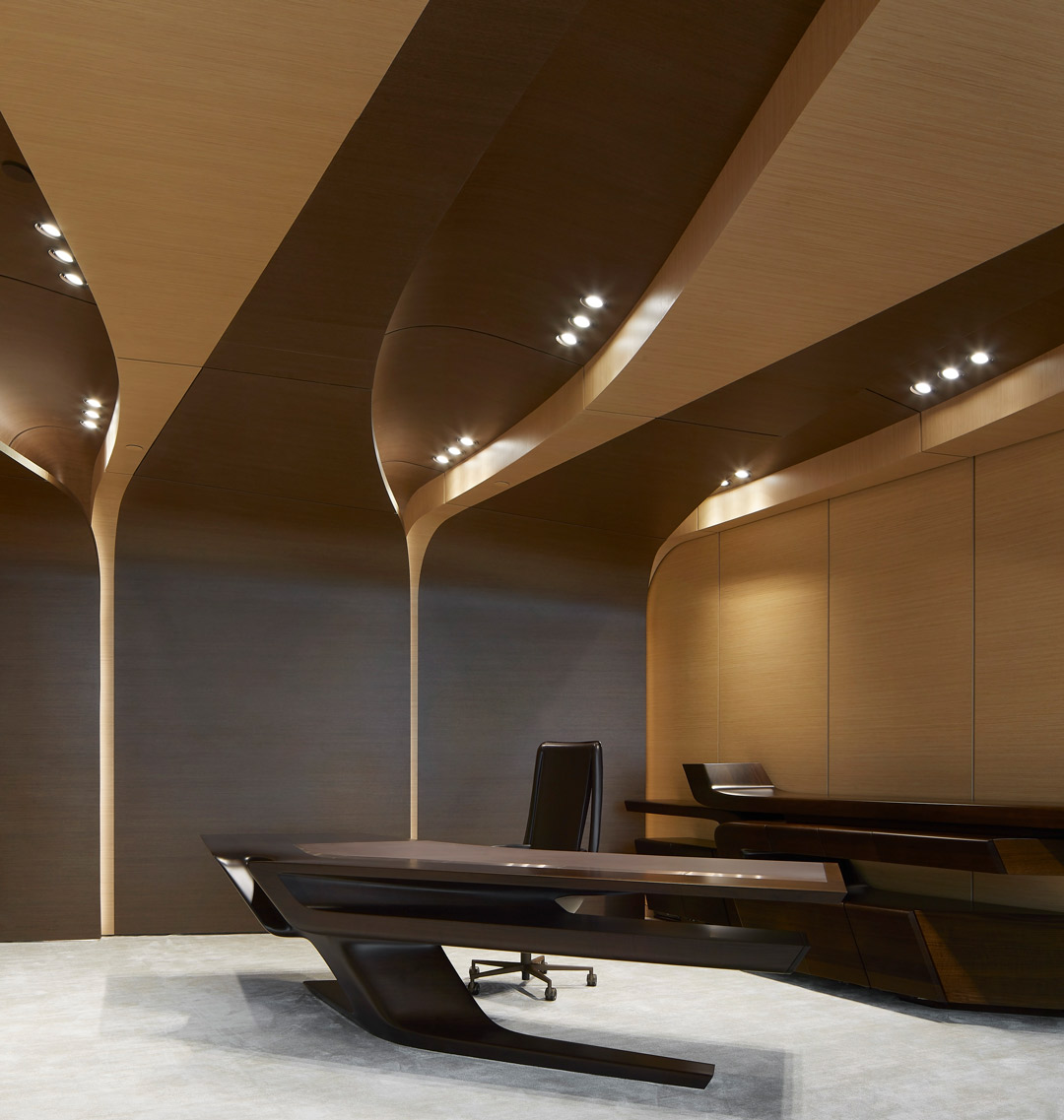
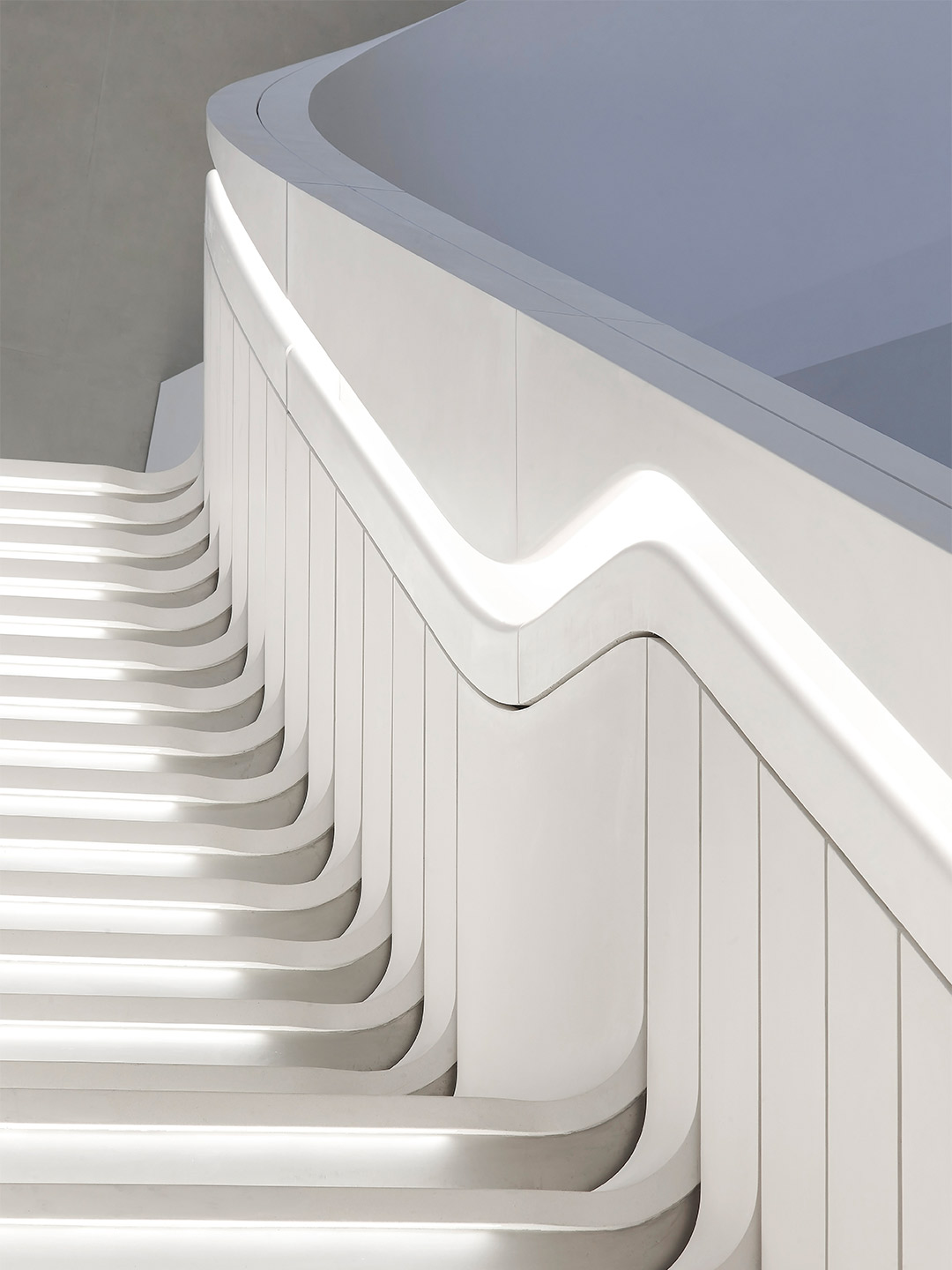
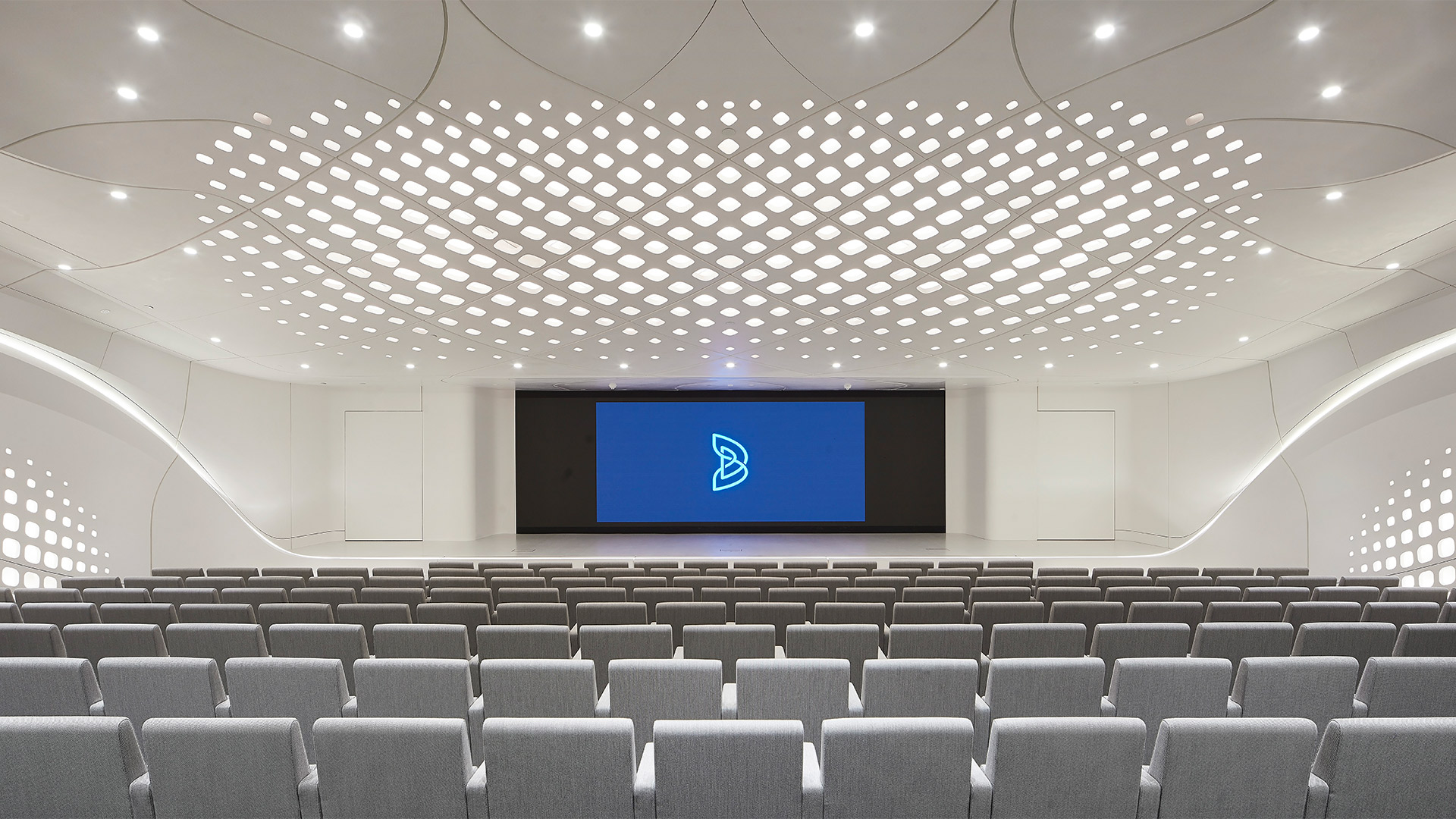
Visitors enter beneath the 15-metre-high dome which further enhances natural ventilation and allows passive daylight to enter the building. In addition to the central courtyard and open-plan office, the headquarters incorporates smart meeting rooms, an immersive visitors centre and an auditorium. The employee experience includes contactless pathways, a virtual concierge, smart meeting rooms and a companion app that automates day-to-day tasks. The building’s smart management system automatically adjusts lighting and temperature depending on occupancy and time of day. The rooms are also equipped for remote and hybrid work scenarios with powerful collaboration tools.
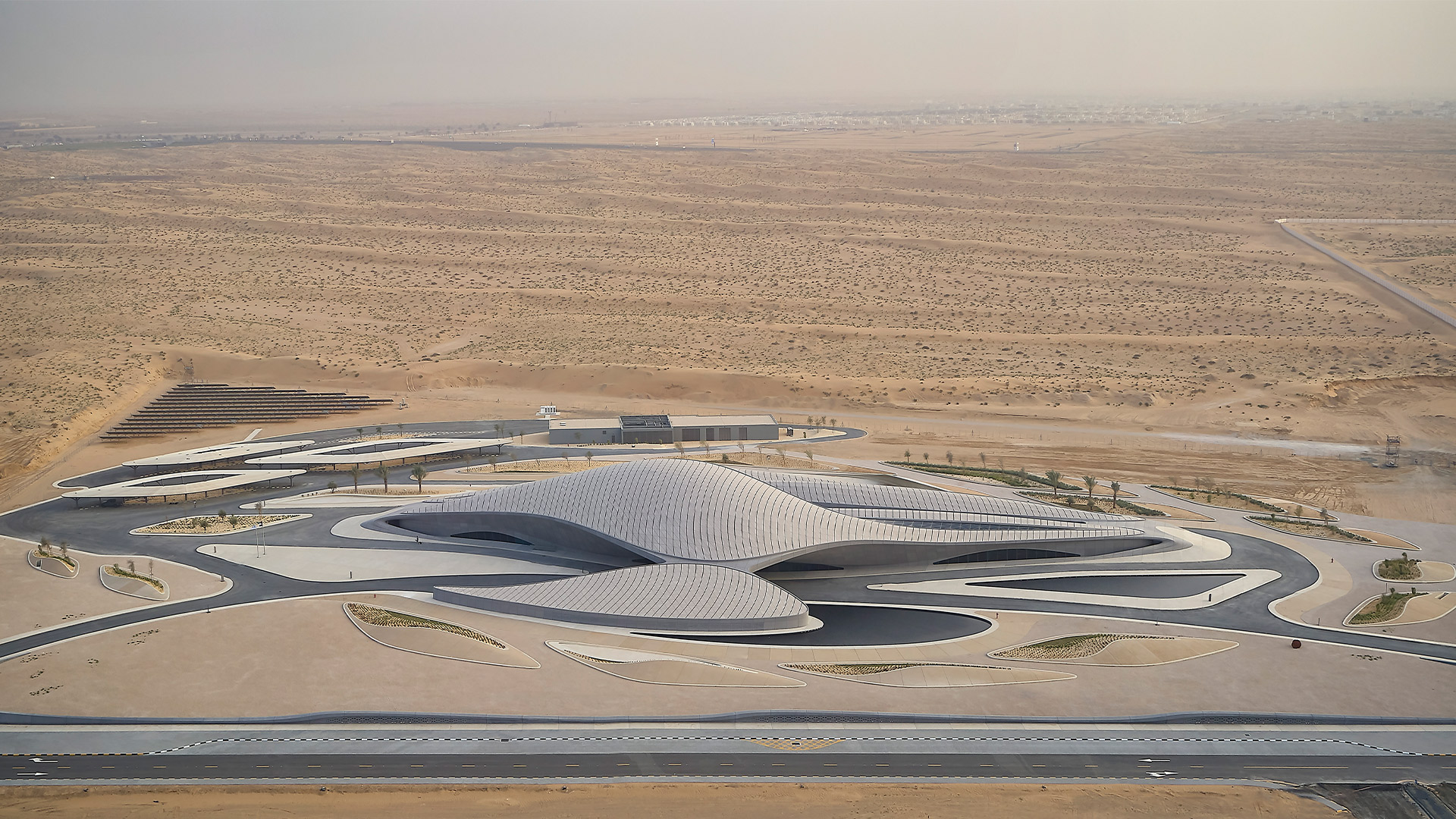
The 9000-square-metre BEEAH Headquarters has sustainability at its core with a high percentage of locally procured materials and is equipped with future-ready technologies to enable operations with minimal energy consumption. Glass reinforced fibre panels reduce solar gain while slab and glass cooling regulate interior temperatures for optimum comfort. On-site water treatment filtrates waste-water to minimise consumption and the “solar farm” charges Tesla battery packs to meet the building’s energy demand each day and night.
“The headquarters is the latest milestone for BEEAH Group as it continues to pioneer innovations for Sharjah and across the globe, establishing a base of operations for the group to diversify into future-critical industries,” the Zaha Hadid Architects team says. “With their new headquarters, BEEAH demonstrates how technology can scale sustainable impact and ultimately serve as a blueprint for tomorrow’s smart, sustainable cities.”
ZHA delivered the BEEAH headquarters in collaboration with sustainability engineers and consultants Atelier Ten and Buro Happold, project managers Matthews Southwest, construction contractor Al Futtaim Construction, and MEP engineers Al Futtaim Engineering. Smart building technologies by Microsoft, Johnson Controls and EVOTEQ, a BEEAH Digital venture.
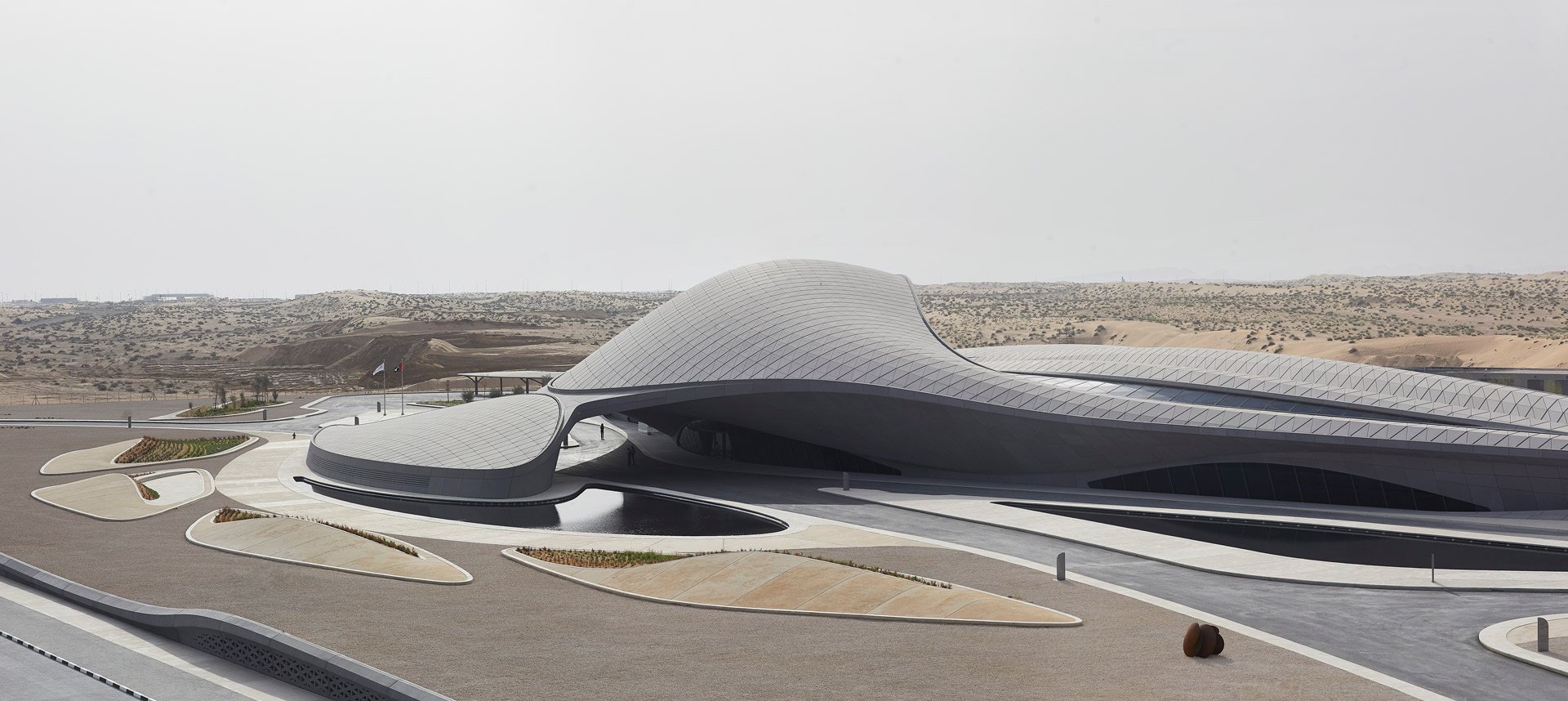
Embedded within its context of Sharjah’s Al Sajaa desert, the design echoes the surrounding landscape, shaped by prevailing winds into concave sand dunes and ridges.
Catch up on more of the latest architectural gestures and commercial design. Plus, join the mailing list to receive the Daily Architecture News e-letter direct to your inbox.
Related stories
- Could this be the new look for Sydney’s brutalist Sirius building?
- Skinny mini: The pencil thin hotel proposed for Sydney’s skyline.
- Sydney’s biggest pool since the 2000 Olympics is now open.
- Port Douglas retreat: Gurner reveals plans to open luxury hotel in Far North Queensland.
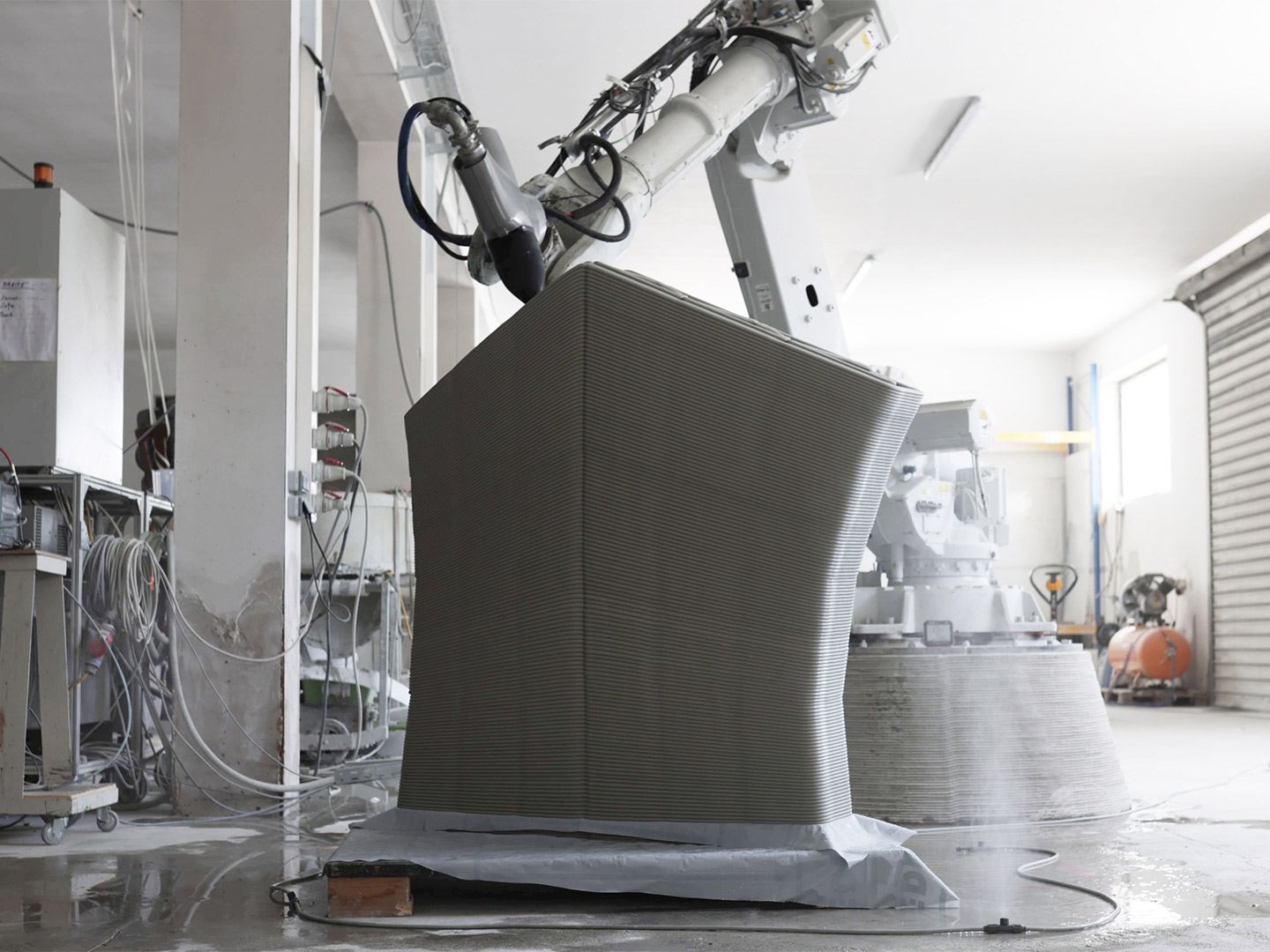
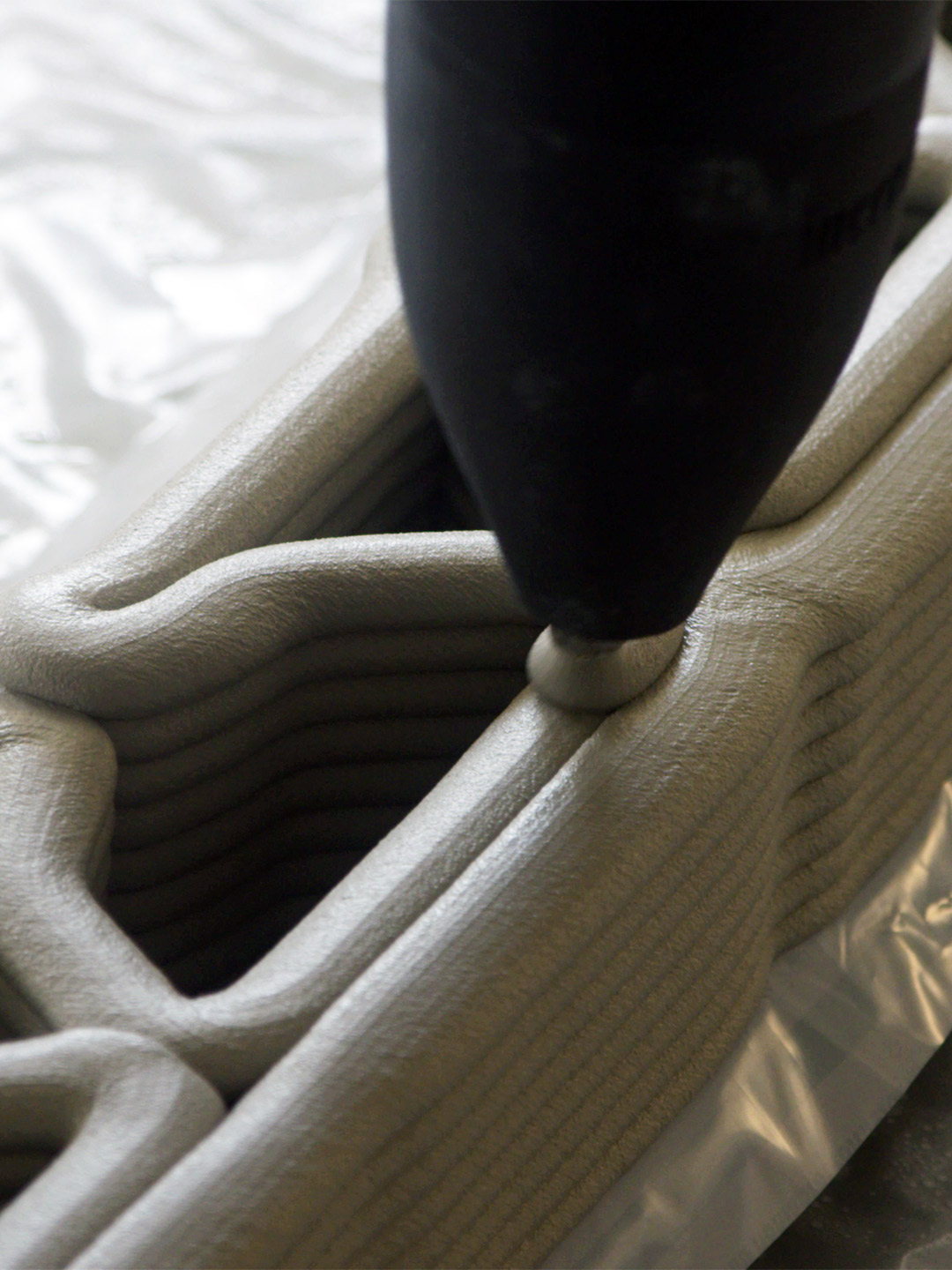
Designed by Zaha Hadid Architects and Block Research Group, in collaboration with incremental3D and Holcim, a “first of its kind” 3D-concrete-printed bridge has opened to the public in Venice. The unveiling is aligned with the city’s Biennale of Architecture that runs through until November. Titled Striatus, the footbridge is said to establish a new language for concrete that is digital, environmentally advanced and circular by design. It’s held together through compression – with no reinforcements – applying computational design and 3D printing for minimal material use and maximum strength.
“The name Striatus reflects the bridge’s structural logic and fabrication process,” says Philippe Block, co-director of the Block Research Group at ETH Zurich. “In arched and vaulted structures, material is placed such that forces can travel to the supports in pure compression. Strength is created through geometry, using a fraction of the materials used in conventional concrete beams.”
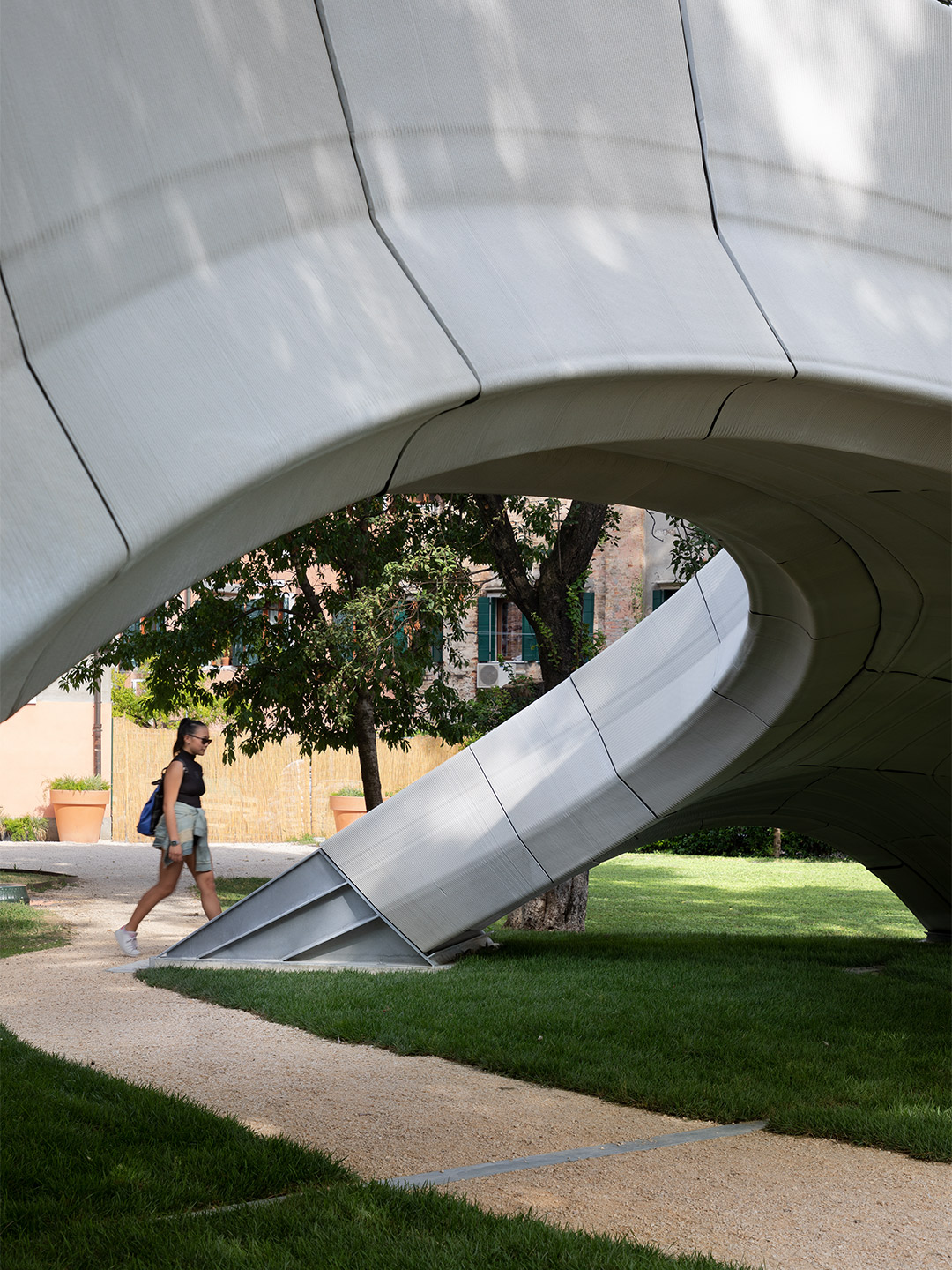
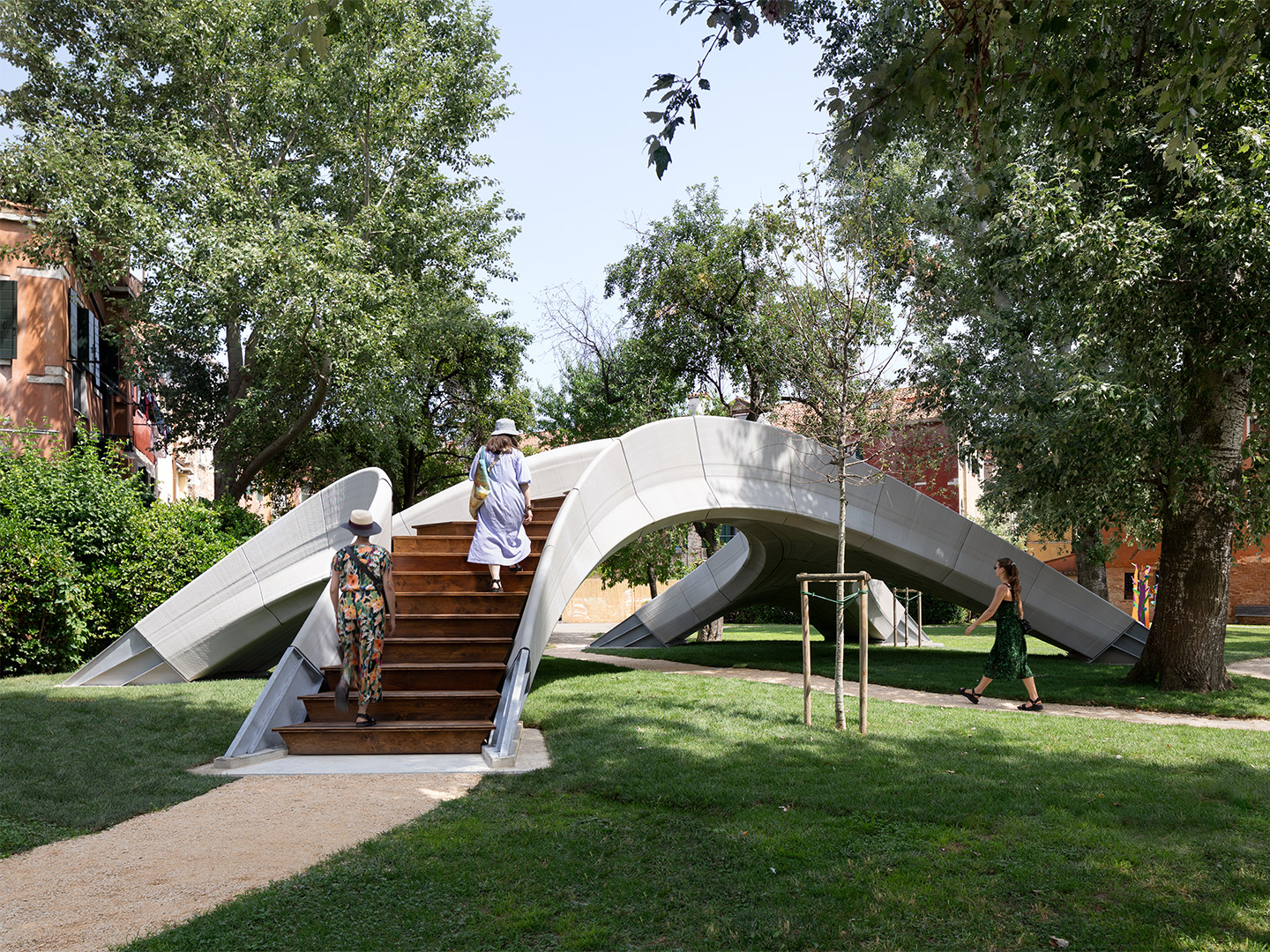
Striatus concrete-printed bridge in Venice / News highlights
- A “first of its kind” 3D-concrete-printed bridge has opened to the public in Venice.
- Titled Striatus, the footbridge was designed by Zaha Hadid Architects and Block Research Group, in collaboration with incremental3D and Holcim.
- It’s held together through compression – with no reinforcements – applying computational design and 3D printing for minimal material use and maximum strength.
- Holcim is working on a range of 3D Concrete Printing applications, from complex infrastructure to affordable housing.
- The unveiling of Striatus is aligned with the city’s Biennale of Architecture that runs through until November.
Striatus is made possible by a specific, custom-made ink, from Holcim’s TectorPrint range, developed by its 3D Concrete Printing research team. It sets a blueprint for the future using advanced technologies; the next generation of inks can include Holcim’s green building solutions, such as ECOPact green concrete, which comprises recycled construction and demolition waste.
“Striatus stands on the shoulders of giants: it revives ancestral techniques of the past, taking the structural logic of the 1600s into the future with digital computation, engineering and robotic manufacturing technologies,” says Shajay Bhooshan, Head of CODE, Zaha Hadid Architects’ Computation and Design research arm.
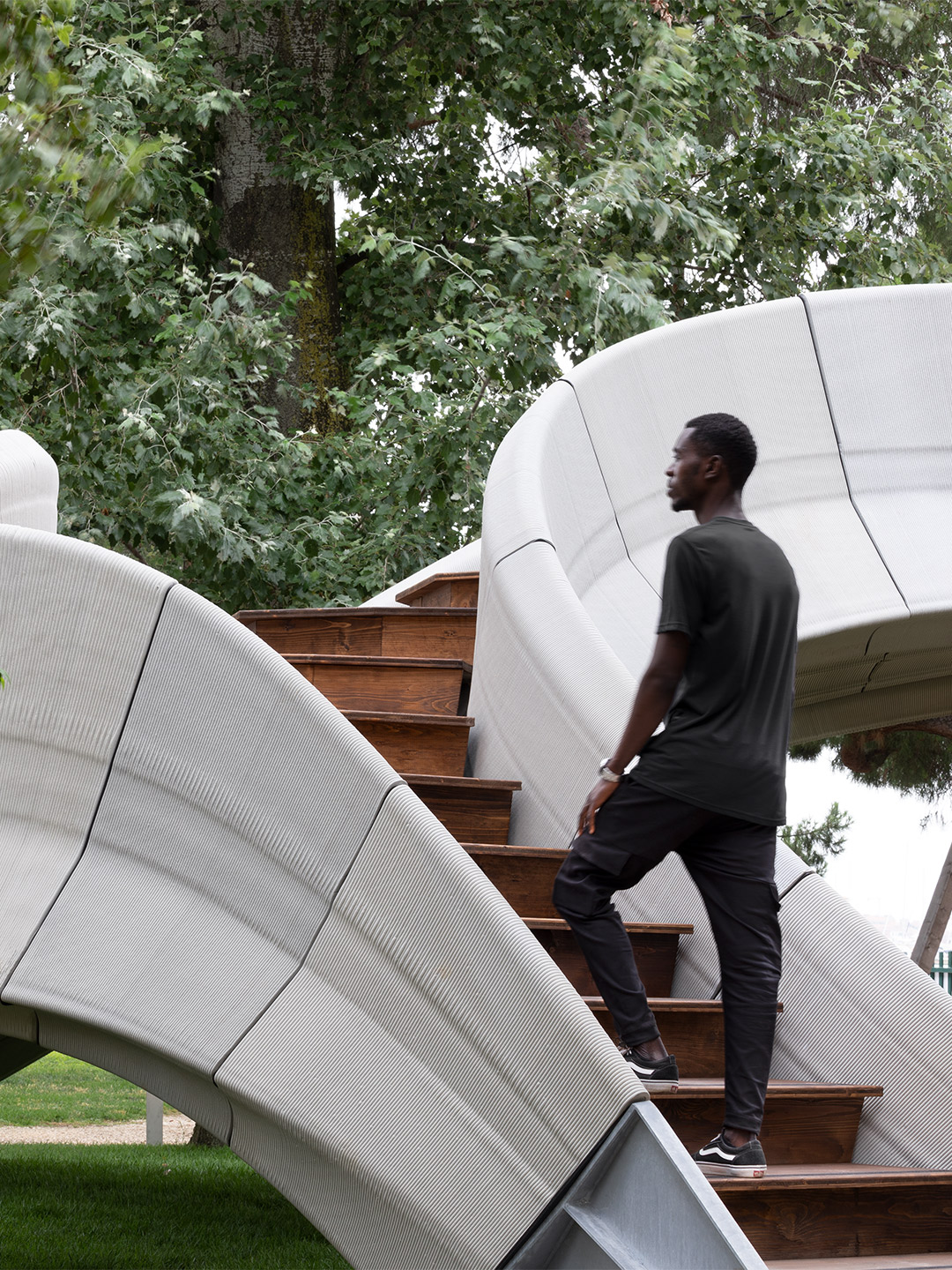
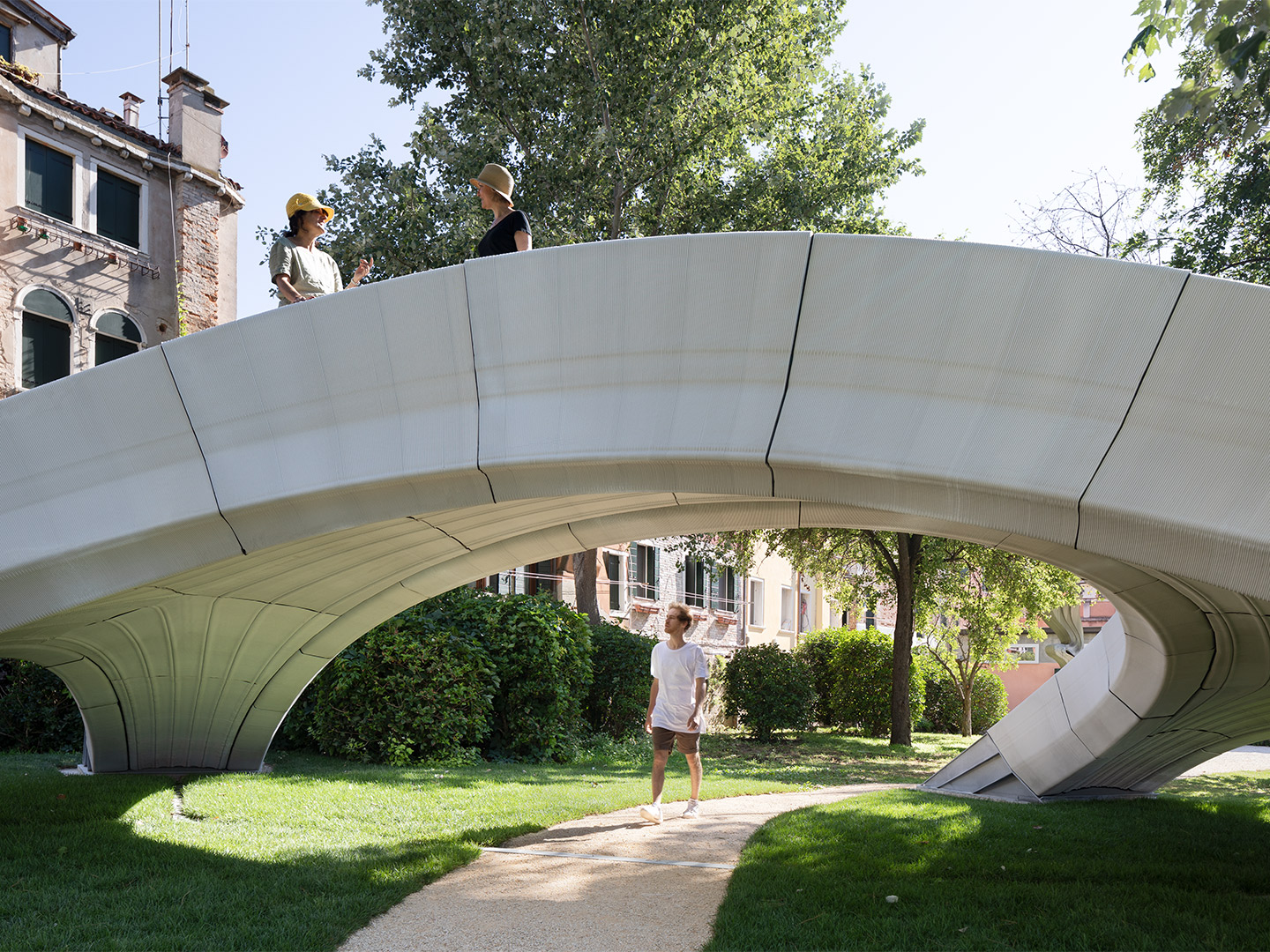
It was designed by some of the best architectural and creative minds in their fields and demonstrates the infinite possibilities of 3D concrete printing in enabling more sustainable, faster and effective building structures, without compromise on aesthetics and functionality. “Its digital and circular design uses concrete at its best, with minimal material use and blocks that can be repeatedly reassembled and infinitely recycled,” adds Jan Jenisch, CEO of Holcim.
Holcim is working on a range of 3D Concrete Printing applications, from complex infrastructure to affordable housing. In Malawi, the company launched the world’s-first 3D concrete printed school, taking only 18 hours to build the walls and using 70% less materials than traditional building techniques.
The organisation is also working with GE Renewable Energy and COBOD to 3D concrete-print taller wind turbine towers on-site, doubling their height to harness stronger winds and capture 33% more renewable electricity at lower cost.
“Holcim continues to push the boundaries of innovation and sustainability around the world – and locally in Australia and New Zealand,” says George Agriogiannis, CEO of Holcim Australia and New Zealand. “In April we launched ECOPact concrete in Australia to offer architects and builders options to reduce embodied carbon by 30 to 60%. [The] opening of Striatus pushes the frontier again to show what is possible with smart collaboration and design ingenuity.”
[The] opening of Striatus pushes the frontier again to show what is possible with smart collaboration and design ingenuity.
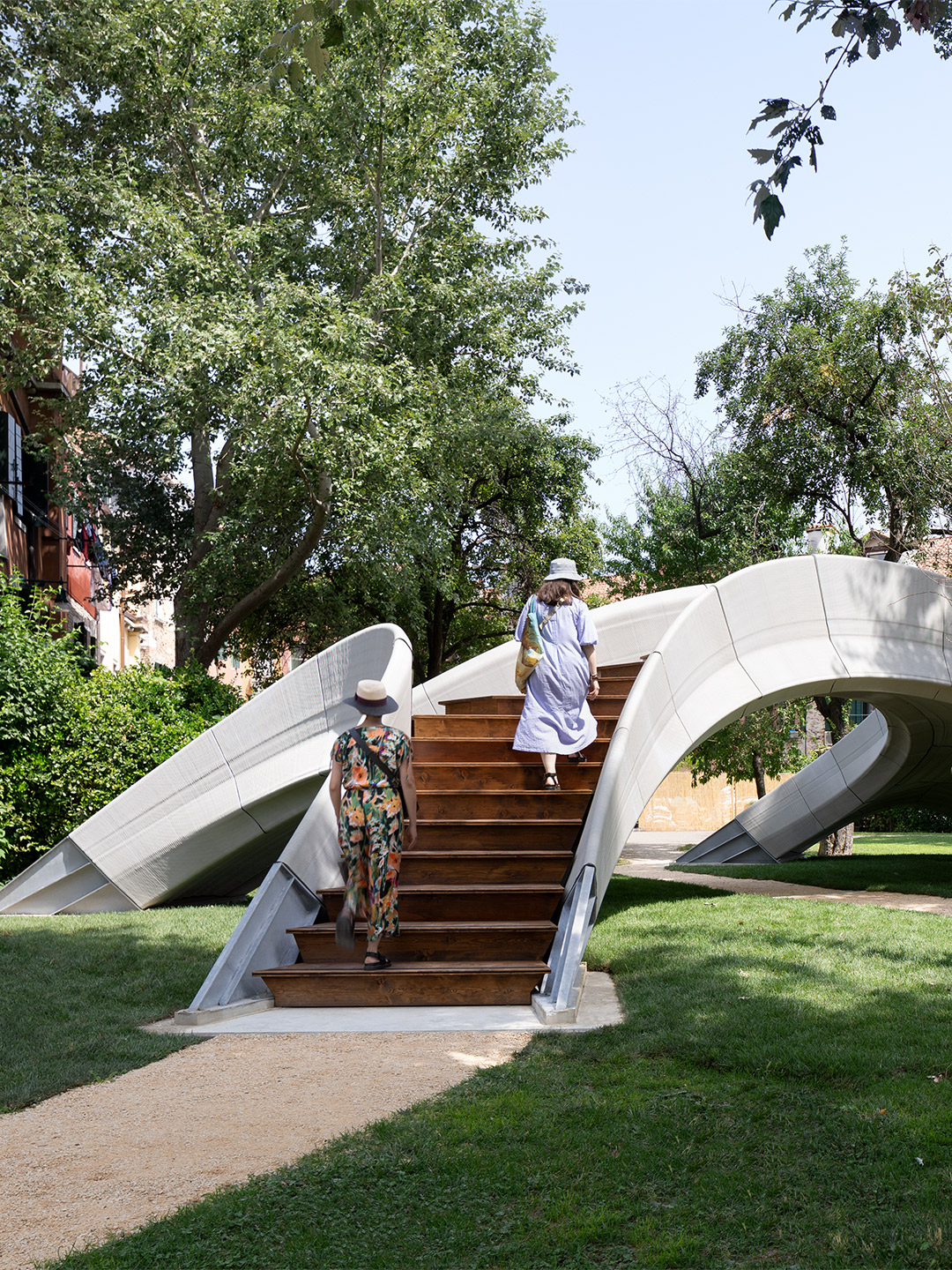
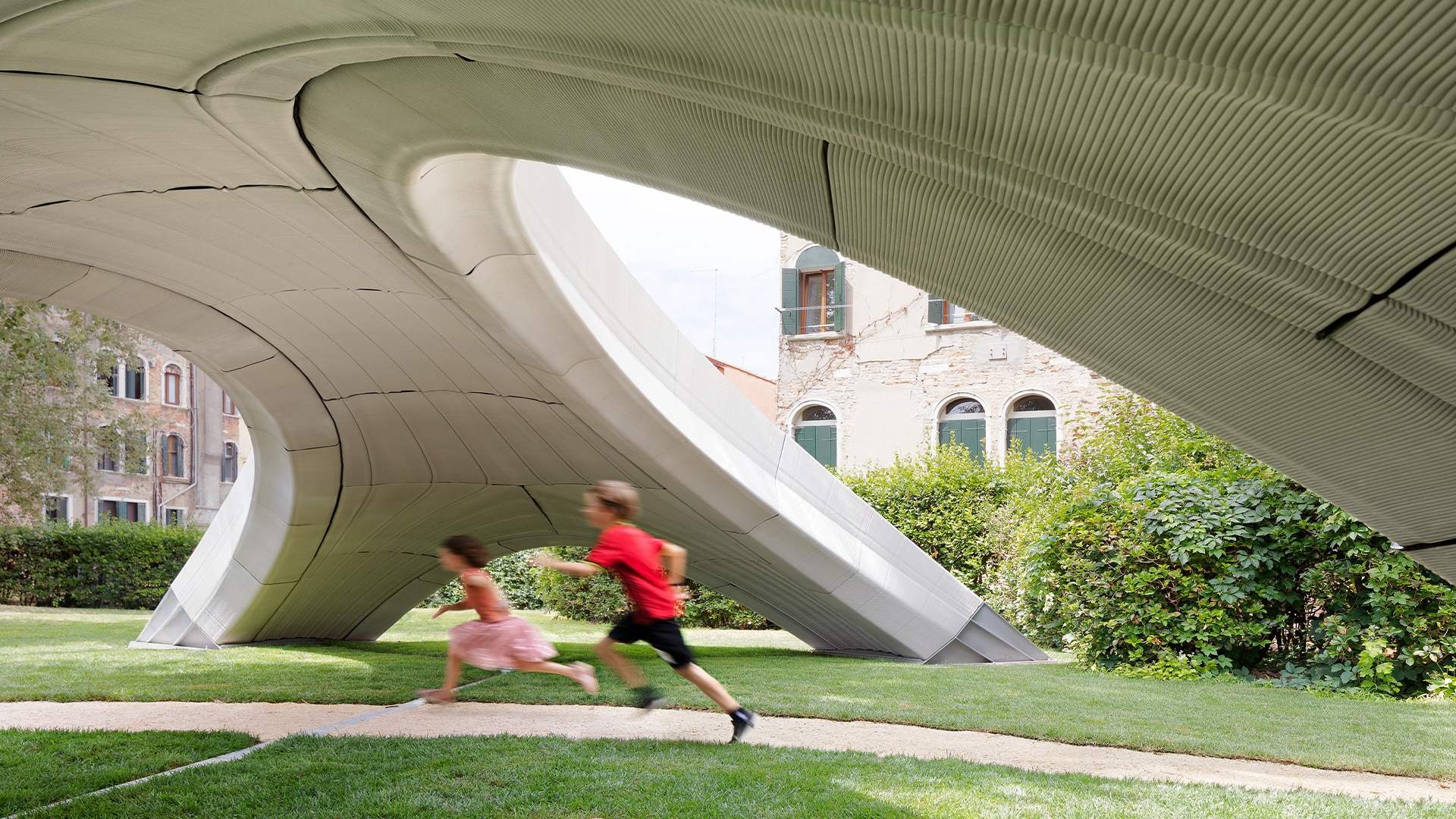
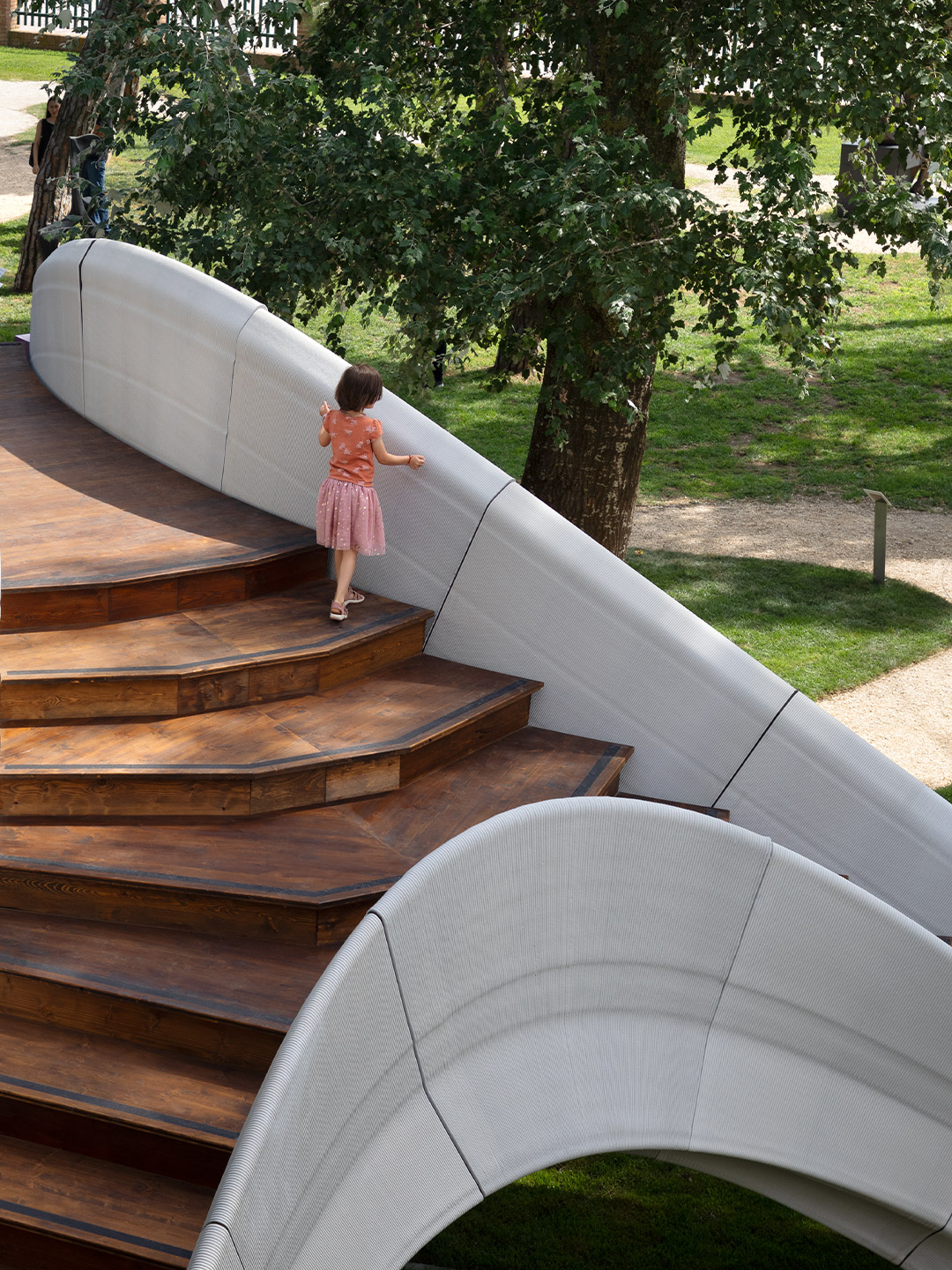
Catch up on more architecture, art and design highlights. Plus, subscribe to receive the Daily Architecture News e-letter direct to your inbox.
Related stories
- ‘The Apple tree’ by Foster + Partners blossoms in Bangkok.
- Carla Sozzani curates new colours for classic Arne Jacobsen chairs.
- Adam Goodrum stamps all-Australian style on new breezeblock design.
In this week’s architecture and design video round-up (above), New York-based creative studio Roman and Williams has designed the new Ace Hotel Brooklyn. Created in collaboration with Atelier Ace, the hotel is expected to open during late spring in the city.
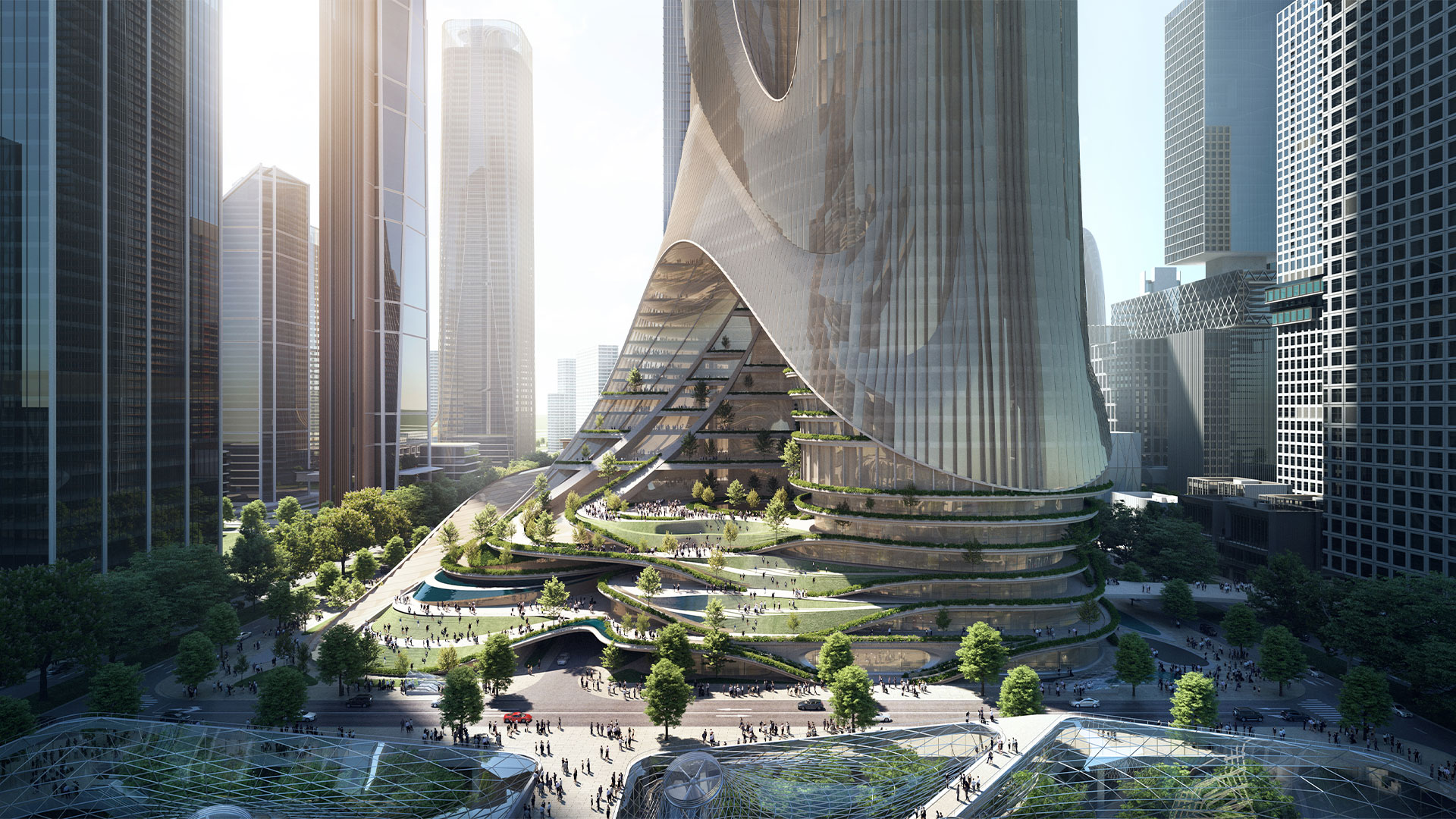
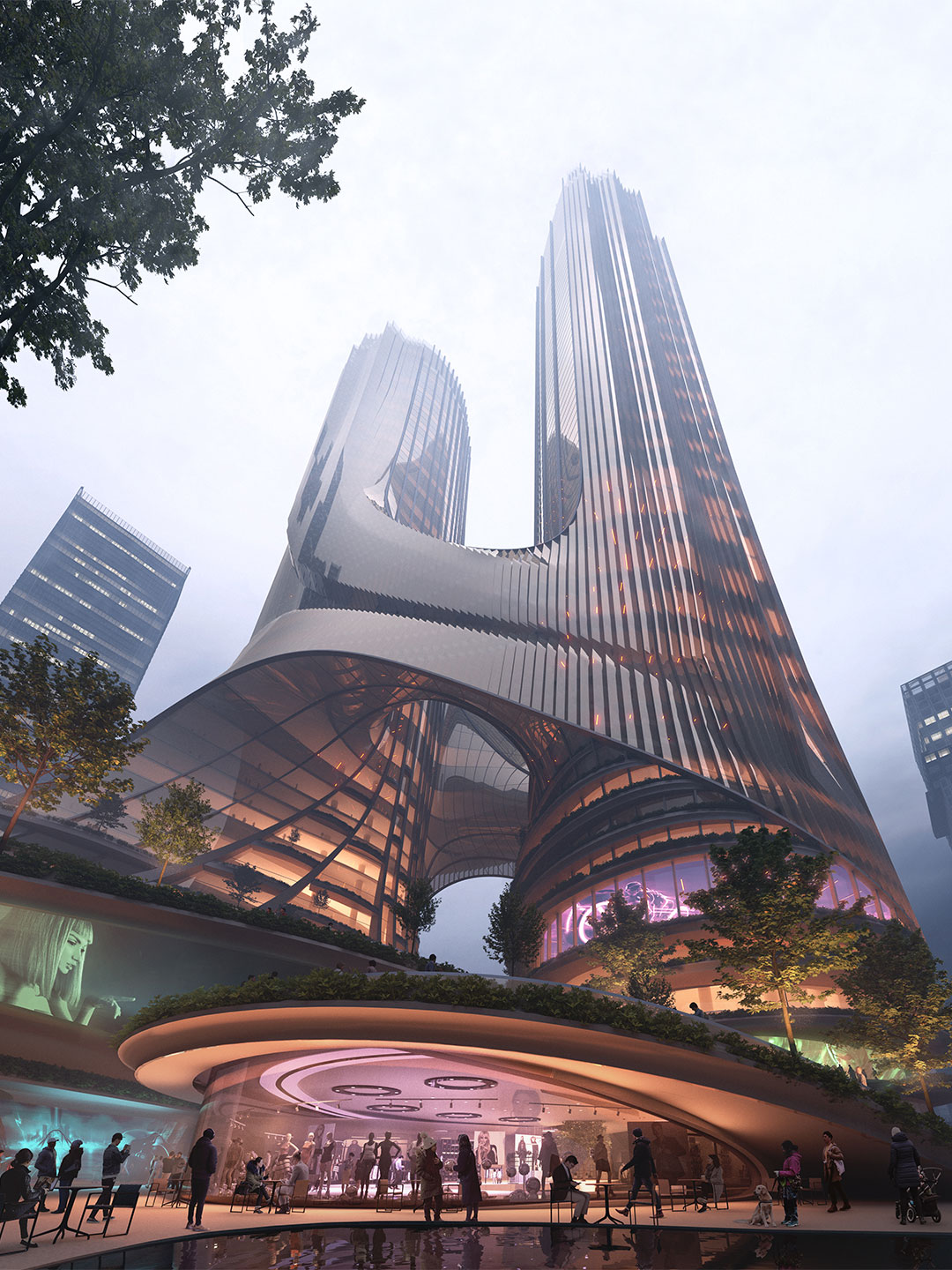
Take a look at the winning competition entry for Tower C in China. Devised by Zaha Hadid Architects, the proposal includes open-air public terraces below two super-tall towers that stretch to a dizzying 400 metres in height.
The Tsingpu Yangzhou Retreat by Heri&Hu architects places a sense of sustainability front and centre by reusing several old buildings and employing reclaimed bricks for most of the new structures. Take a tour.
And finally this week, luxury resort and hotel group Aman has announced bespoke driving journeys that offer guests fully supported road trips through some of the world’s most spectacular terrain.
For more information on each of these stories, see below.
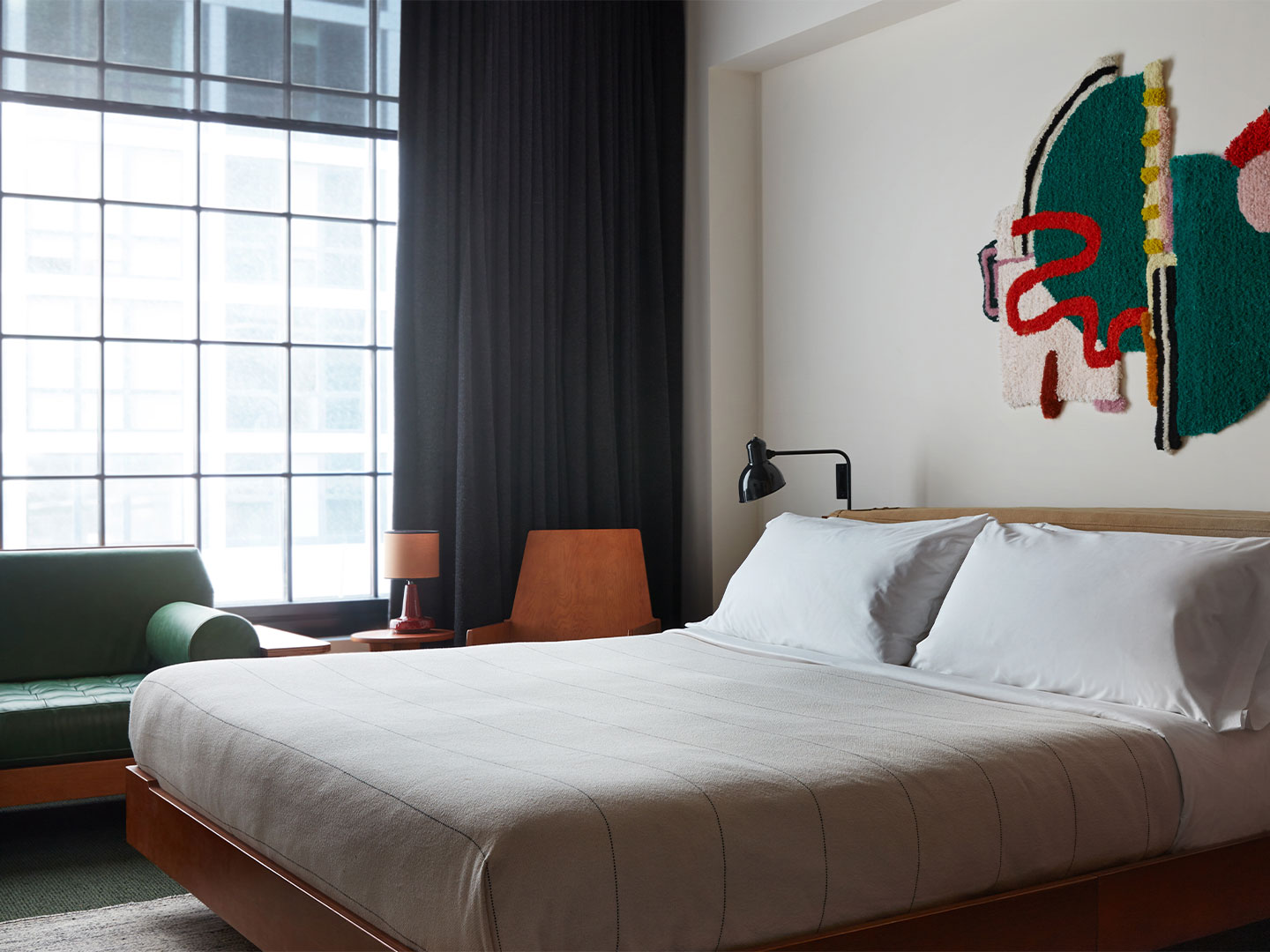
- Ace Hotel Brooklyn: Opening during springtime in New York City, Ace Hotel Brooklyn was designed by local creative studio Roman and Williams in collaboration with Atelier Ace. Read more.
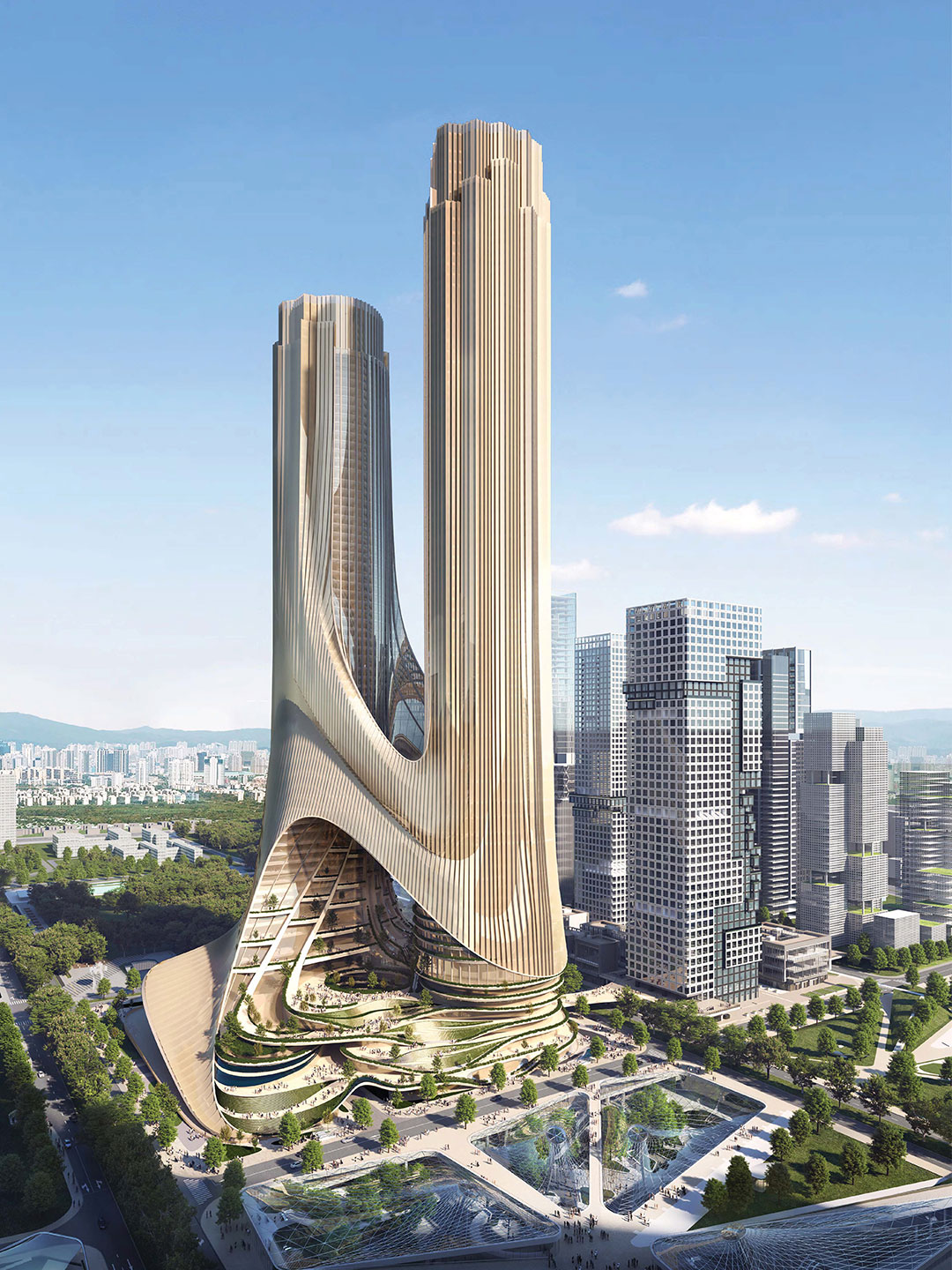
- Tower C by ZHA: The winning design for Tower C by Zaha Hadid Architects proposes to integrate the surrounding city and nature, creating a dazzling “superscape” with futuristic ambitions. Read more.
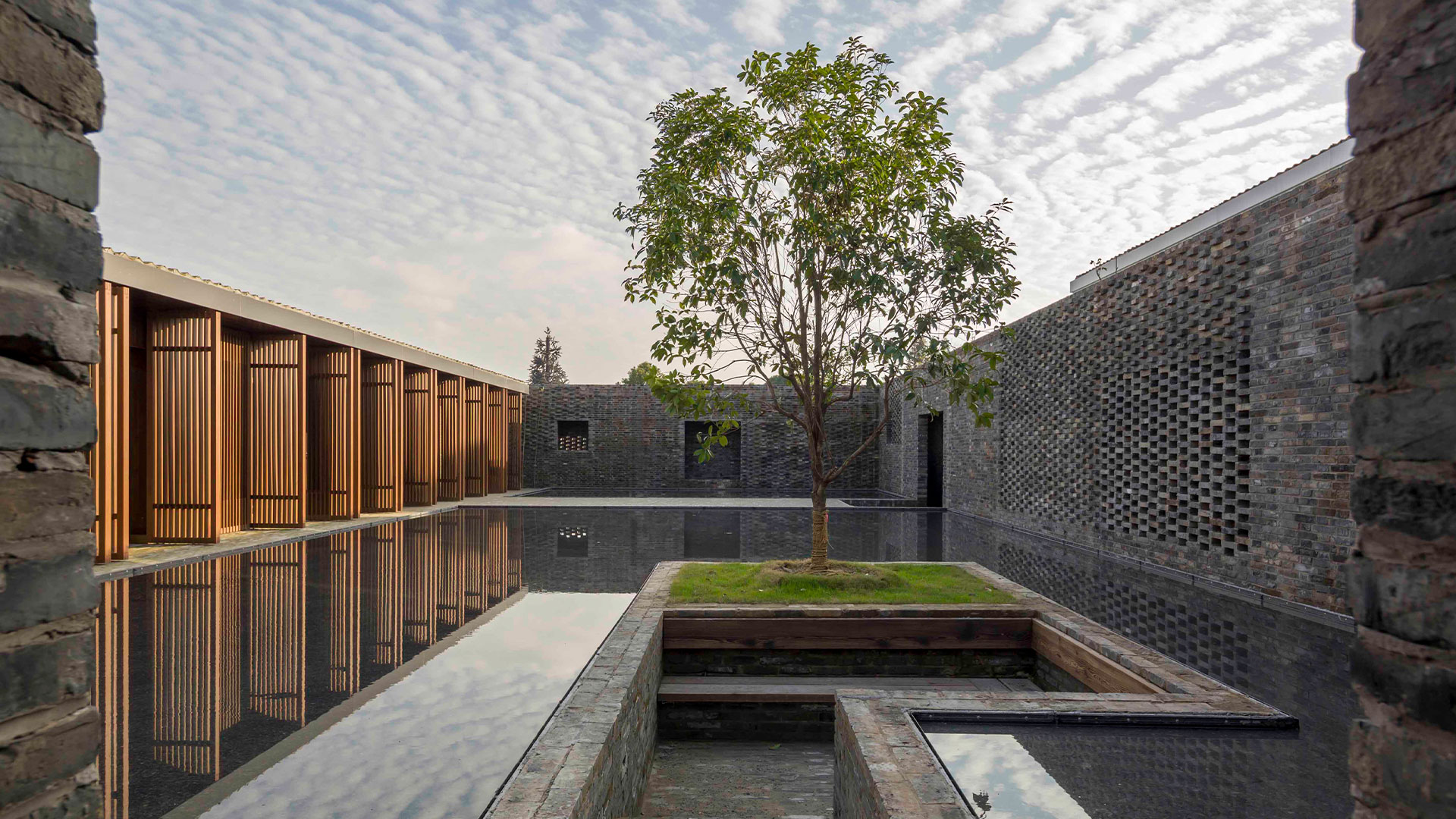
- Tsingpu Yangzhou Retreat: Reclaimed bricks form the partially enclosed passageways of Tsingpu Yangzhou Retreat, guiding guests through the peaceful property while also creating eye-pleasing effects. Read more.

- Aman driving journeys: Luxury resort group Aman delivers its legendary service to the open road with bespoke driving journeys through some of the world’s most spectacular terrain. Read more.
Stroll through the passageways of Tsingpu Yangzho Retreat and make plans for the road trip of a lifetime.
Related stories
In this week’s architecture and design video round-up (above), New York-based creative studio Roman and Williams has designed the new Ace Hotel Brooklyn. Created in collaboration with Atelier Ace, the hotel is expected to open during late spring in the city.
Upon completion, the precinct is slated to be an important business and financial centre in Shenzhen, serving the Greater Bay Area of Guangdong, Hong Kong and Macau. The base will include venues for international conferences, exhibitions, cultural and art programs, plus residential developments, a transportation centre, botanical grasslands and a coastal wetland zone.
News highlights
- ZHA has been chosen to build Tower C at Shenzhen Bay Super Headquarters Base in China.
- The proposal for Tower C illustrates two super-tall towers, one reaching 400 metres in height.
- At the base of the development, a series of publicly accessible garden terraces connect to a nearby park and plazas.
- Continuing the district’s goals to increase efficiencies and well-being, Tower C promises to target carbon reductions and spearhead recycling initiatives.
- Once completed, the base expects to host 300,000 people per day.
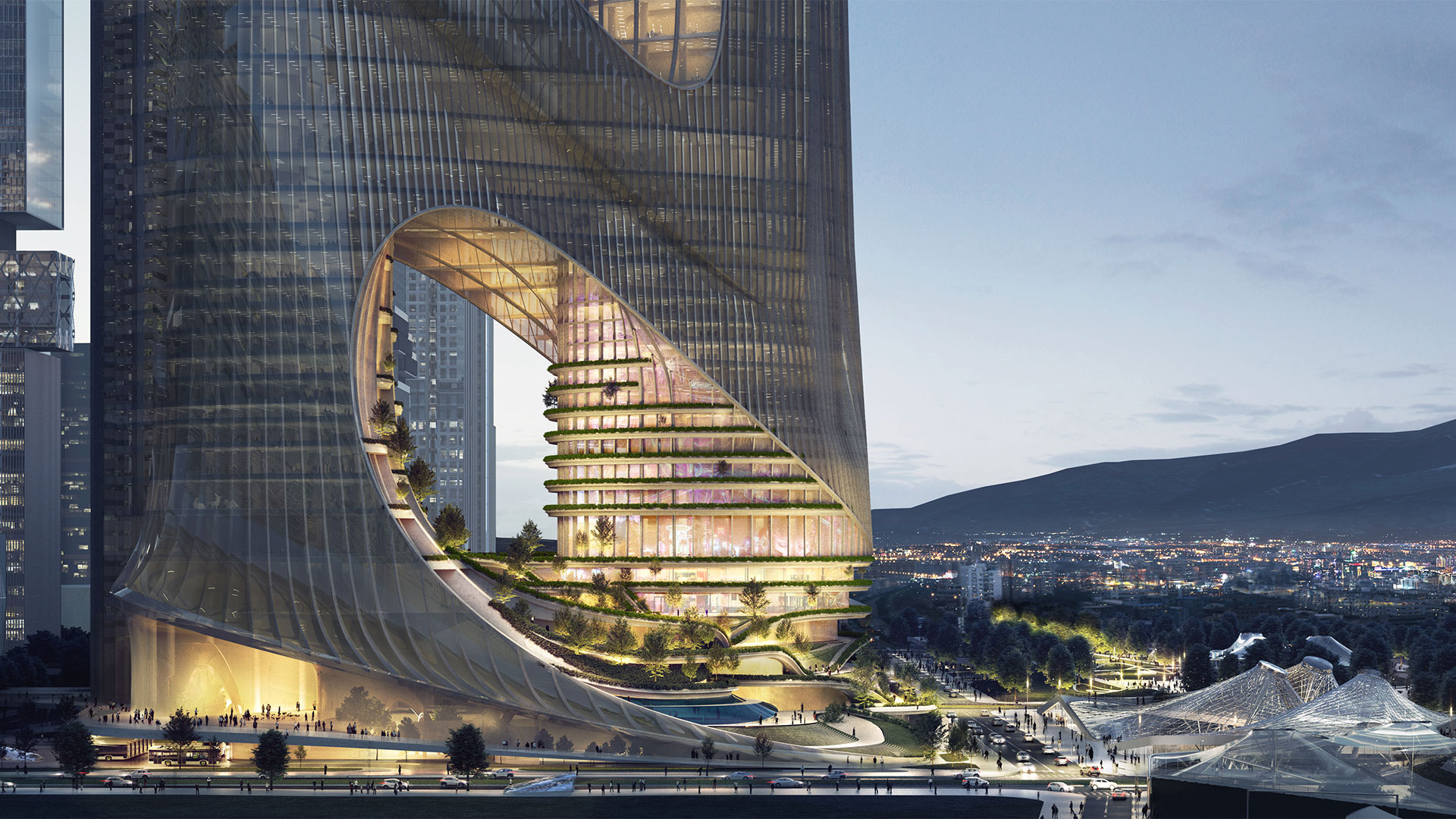
Located at the intersection of the city’s planned north-south green axis and Shenzhen’s east-west urban corridor, Tower C by ZHA responds to its location by connecting directly with the adjacent park and open plazas. These green zones transform into a terraced landscape extending upwards within the building’s two super-tall towers, inviting the public into the heart of the building. Here, cultural and leisure attractions are housed in “sweeping bridges”, says the designers, that unite the towers and offer access to panoramic views.
“Served by the expanding Shenzhen Metro network, Tower C’s stepped podium integrates with the park to create a new public space for this dynamic city that has grown to become a global centre of technology innovation,” says a statement from ZHA. “Uniting the park’s landscapes with the civic plazas of the tower’s lower levels provides direct pedestrian access and daylight to the public transport interchange below ground.” The hub is also expected to include extensive bicycle parking and recharging facilities.
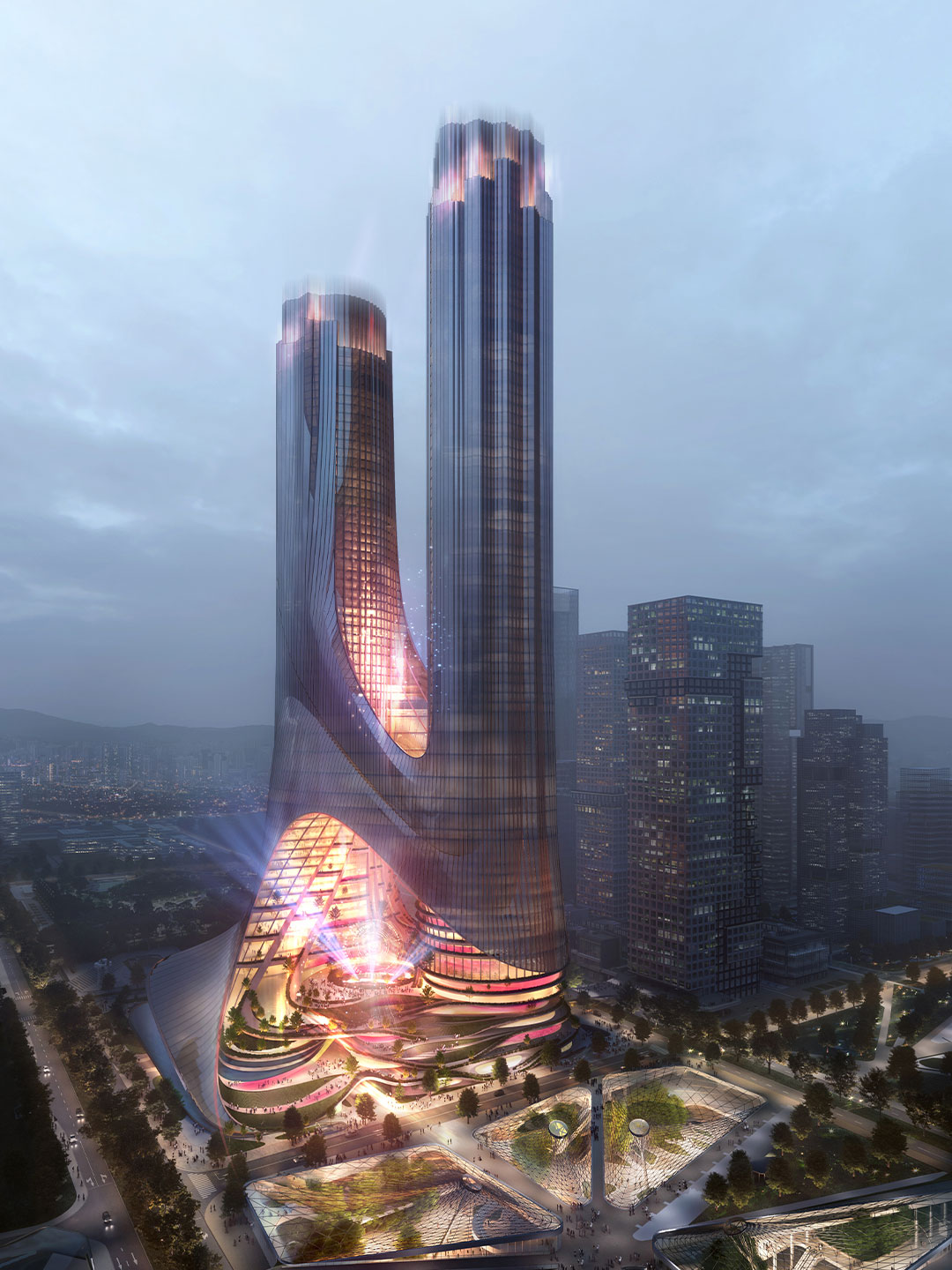
The designers describe Tower C as a “vertical city”, providing column-free naturally lit office space, shopping, entertainment and dining amenities, partnered with a hotel and convention centre. The double-insulated glass curtain wall of the towers facilitates self-shading and incorporates ventilation channels that draw outside air through operable cavities, providing climate control to each floor. Indoor environmental controls will adjust automatically to reduce energy consumption.
Continuing the district’s goals to increase efficiencies and well-being, Tower C promises to target carbon reductions and spearhead the use of recycled materials. Water will be collected and reused on-site. Photovoltaic systems will be positioned to harvest solar energy for the local area. Aquaponics gardens on all terraced levels will filter contaminants from the local environment while low-volatile organic compound materials are to be installed to minimise indoor pollutants and particulates.