What’s bright pink, super slender and soars high in the sky? Besides “a flamingo”, as a colleague suggested amusingly, the real answer goes by the name of The Podium – a new event space coming to the rooftop of Rotterdam’s Het Nieuwe Instituut building during the peak of Northern Hemisphere’s summertime. Perched at a height of 29 metres above ground level – accessed via a narrow 143-step staircase – The Podium’s high-octane visage will be catapulted across the city, courtesy of the striking hot-pink colour set to saturate all the surfaces of the temporary intervention.
Designed by the architects at Netherlands-based firm MVRDV, the 600-square-metre event space will be programmed by a variety of Rotterdam institutions and creatives. By enabling the use of a rooftop that has previously been off-limits to the public, the structure will provide a unique opportunity to experience the city and its architecture from a completely new perspective. The space will be used for mixed events until August 17, but upon its opening on June 1, it will form the core of the Rotterdam Architecture Month, furthering the conversation about the underutilisation of rooftop spaces.
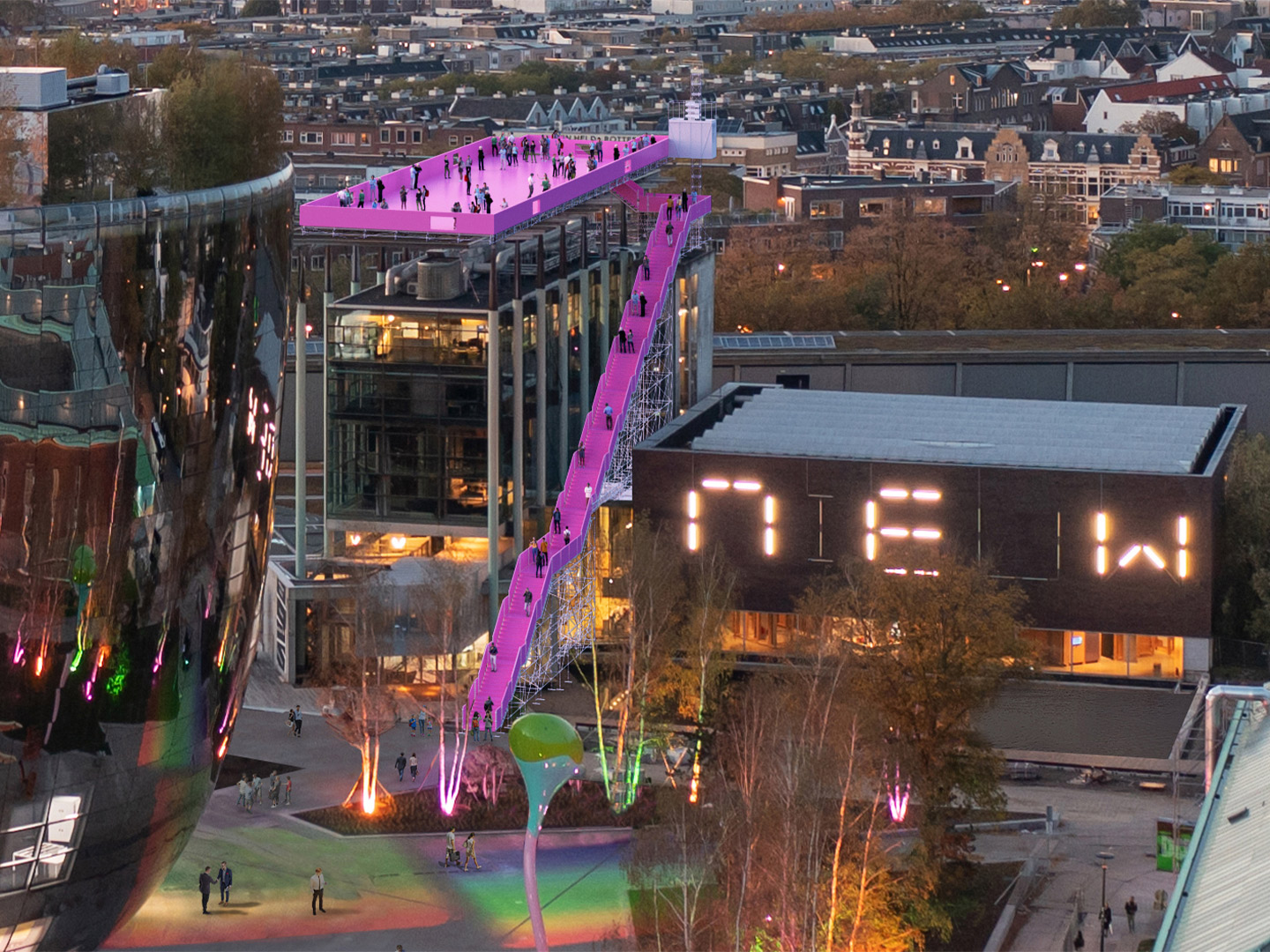
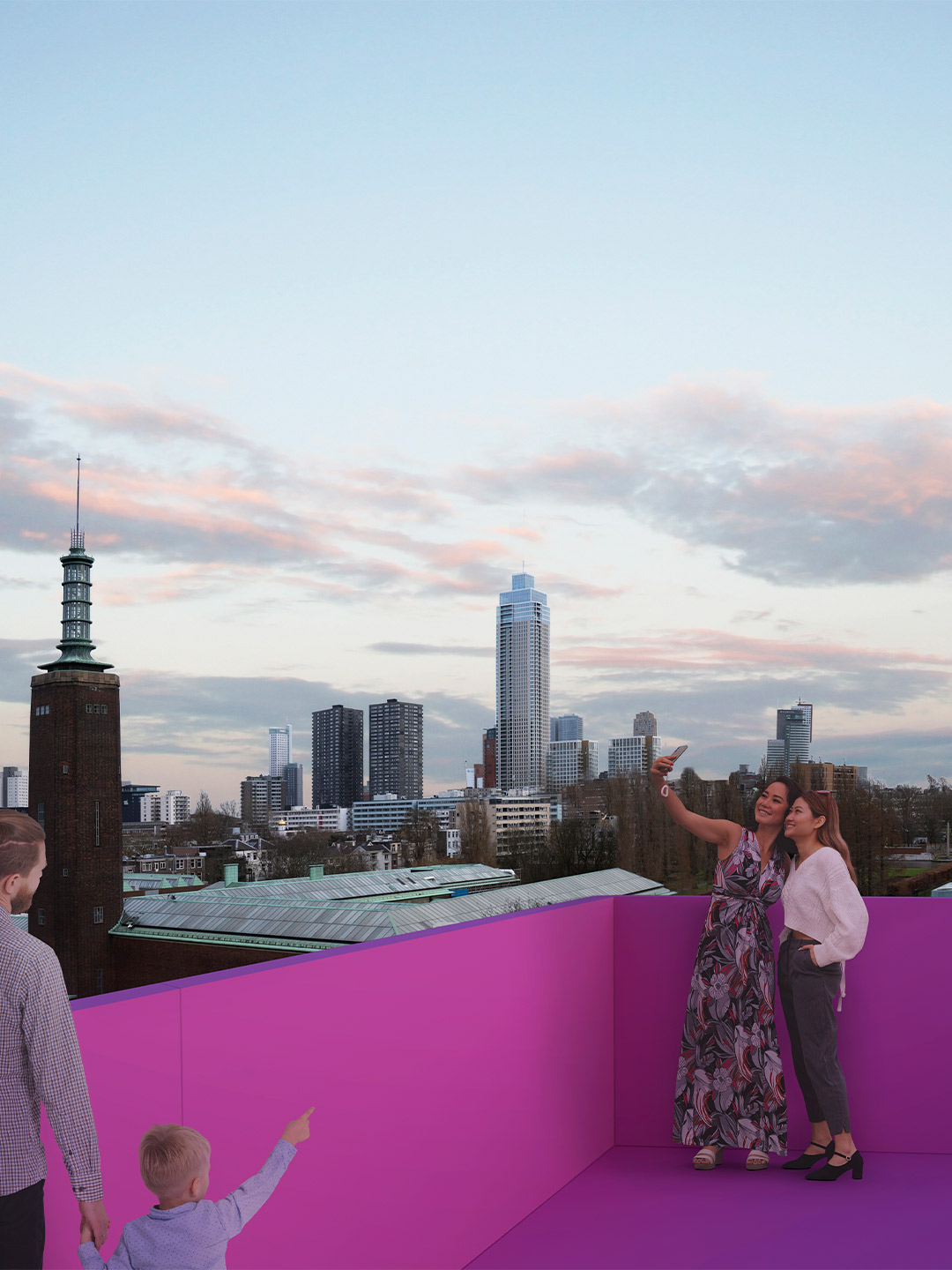
The Podium temporary event space in Rotterdam by MVRDV
“The roofs of Rotterdam have enormous potential,” insists the team from MVRDV, helmed by architect Winy Maas. “Especially those of Het Nieuwe Instituut,” they add, hinting at the panoramic view from its distinctive pergola. The building, designed by Jo Coenen and built in 1993, inspired the architects to create the eye-popping platform with a floor area large enough to host a variety of events and meetings. But perhaps its greatest perk is the views it offers: of the city, the surrounding Museumpark (created by OMA) and the shimmering Depot Boijmans Van Beuningen building, also designed by MVRDV.
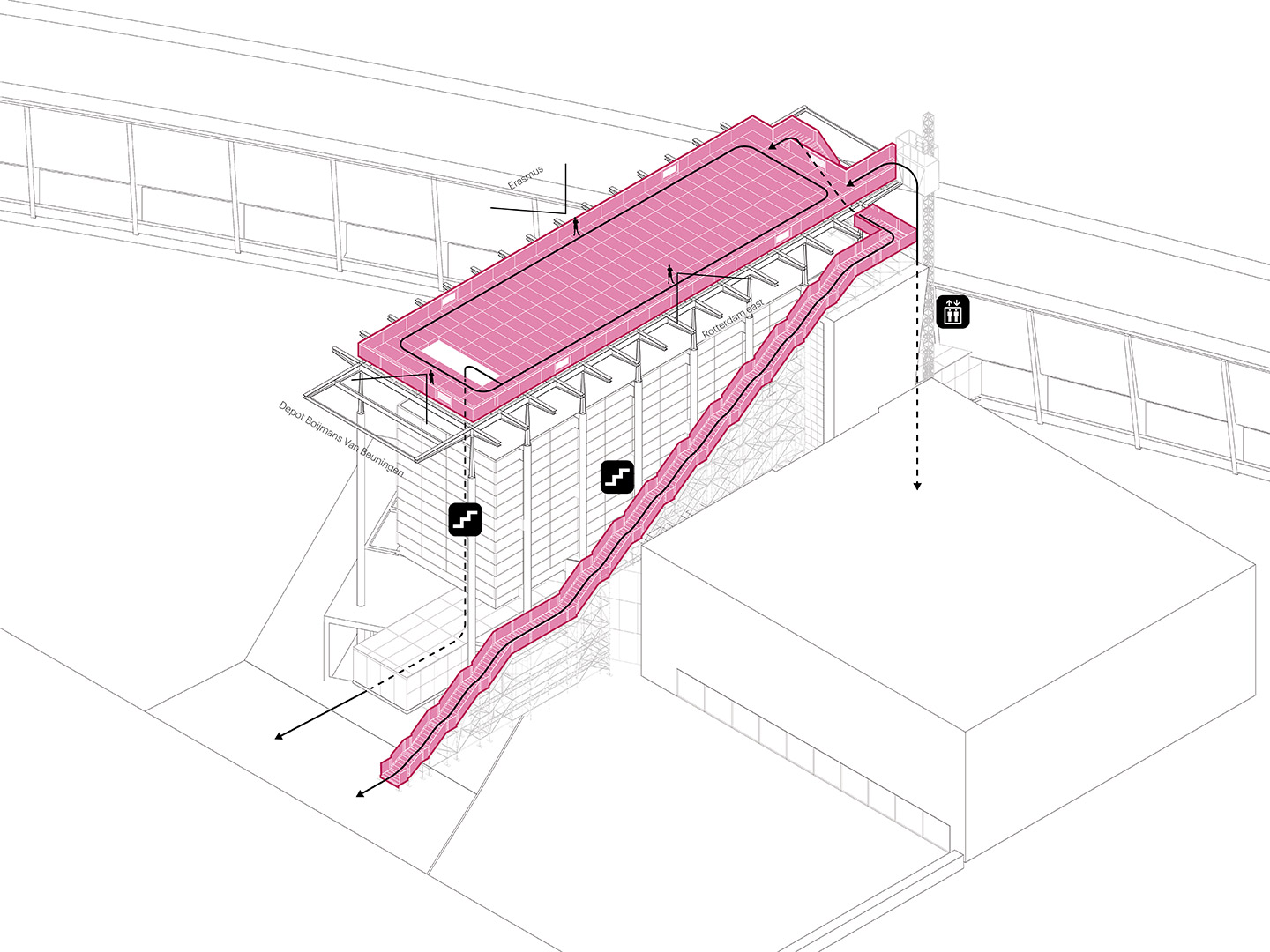
The Podium is to be supported by a structure of reusable scaffolding with floor finishes that can later be recycled. Access will be granted by an exterior staircase, a temporary elevator or via the top floor of the building beneath it, which is currently hosting an exhibition of MVRDV’s early architectural work. “The Podium represents the ambition of Het Nieuwe Instituut to increase public knowledge about architecture,” says the designers. It’s also a demonstration of MVRDV’s agenda to make better use of the city’s rooftops and an important leap towards “densifying the city,” they say, that will allow it to develop sustainably by limiting urban sprawl.
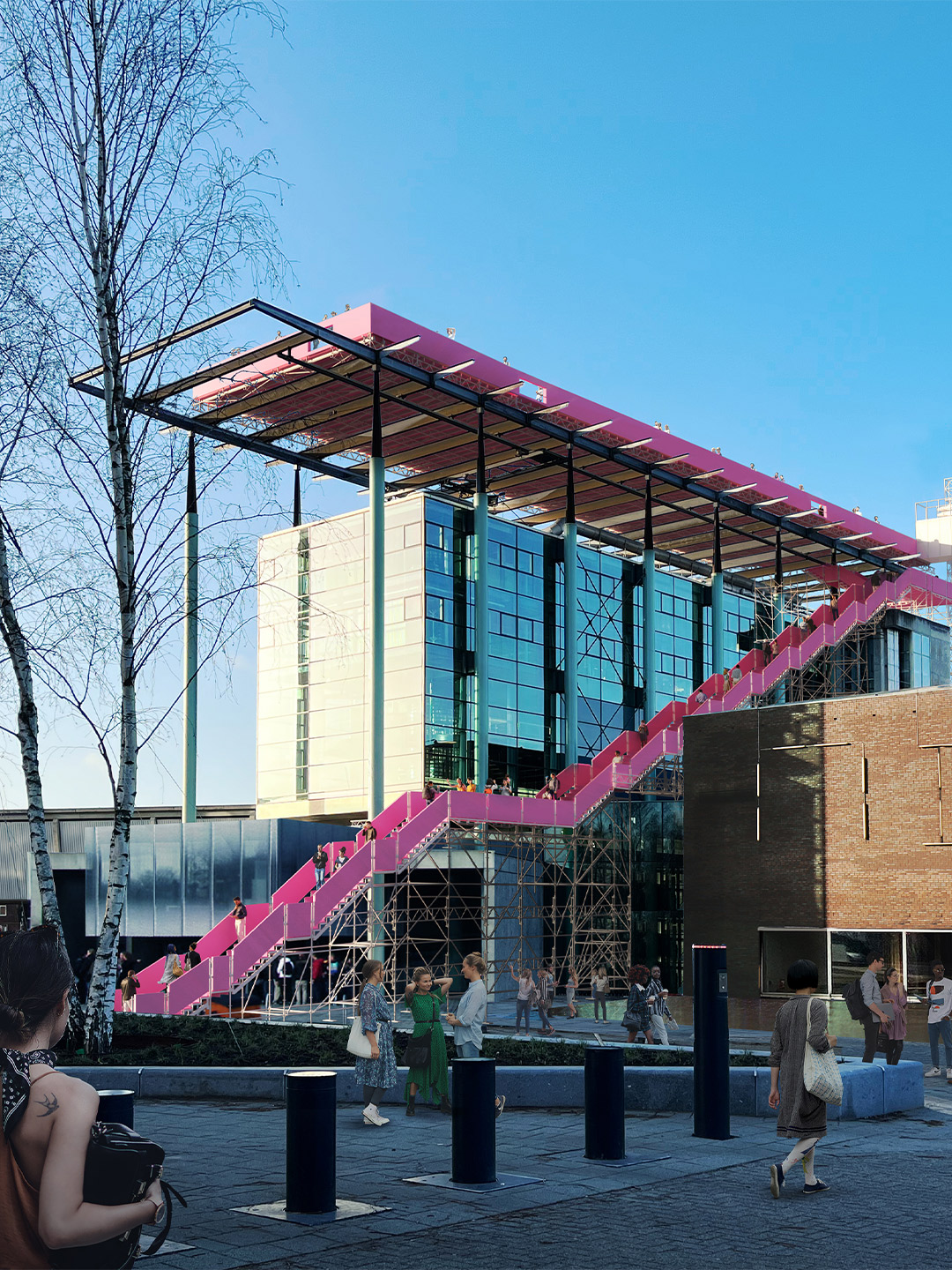
Launching in conjunction with Rotterdam Architecture Month, The Podium will be the hot-pink-heart of the festival for the entirety of June, hosting lectures, tours, films and other activities focused on the built environment. Throughout July and August, The Podium will continue to be open for other activities, from sports classes and rooftop dinners to a suite of programs specifically designed for a younger demographic.
More broadly, the installation forms part of a tradition MVRDV has now established in rooftop programming, from the Rooftop Catalogue project (comprising 130 innovative ideas to make use of Rotterdam’s empty flat roofs) to the Stairs to Kriterion – the staircase to the top of the Groot Handelsgebouw building that attracted over 350,000 visitors in 2017. Additionally, just before The Podium opens, May 26 will see the opening of the Rotterdam Rooftop Walk, an initiative also featuring a design by MVRDV.
Covering a series of neighbouring roofs in the city centre, The Rooftop Walk will give visitors free month-long access to areas that are normally closed to the public, allowing them to experience first-hand how making use of rooftops can contribute to a better future for city dwellers. “The Rooftop Walk also has symbolic and educational objectives, with the intention of showing people the potential of rooftops and the need to make better use of them,” the MVRDV team explains. “This fits in with Rotterdam’s ambition to give the large area of flat roofs in the city a function [such as] public programming, water storage, energy production or greenery.”
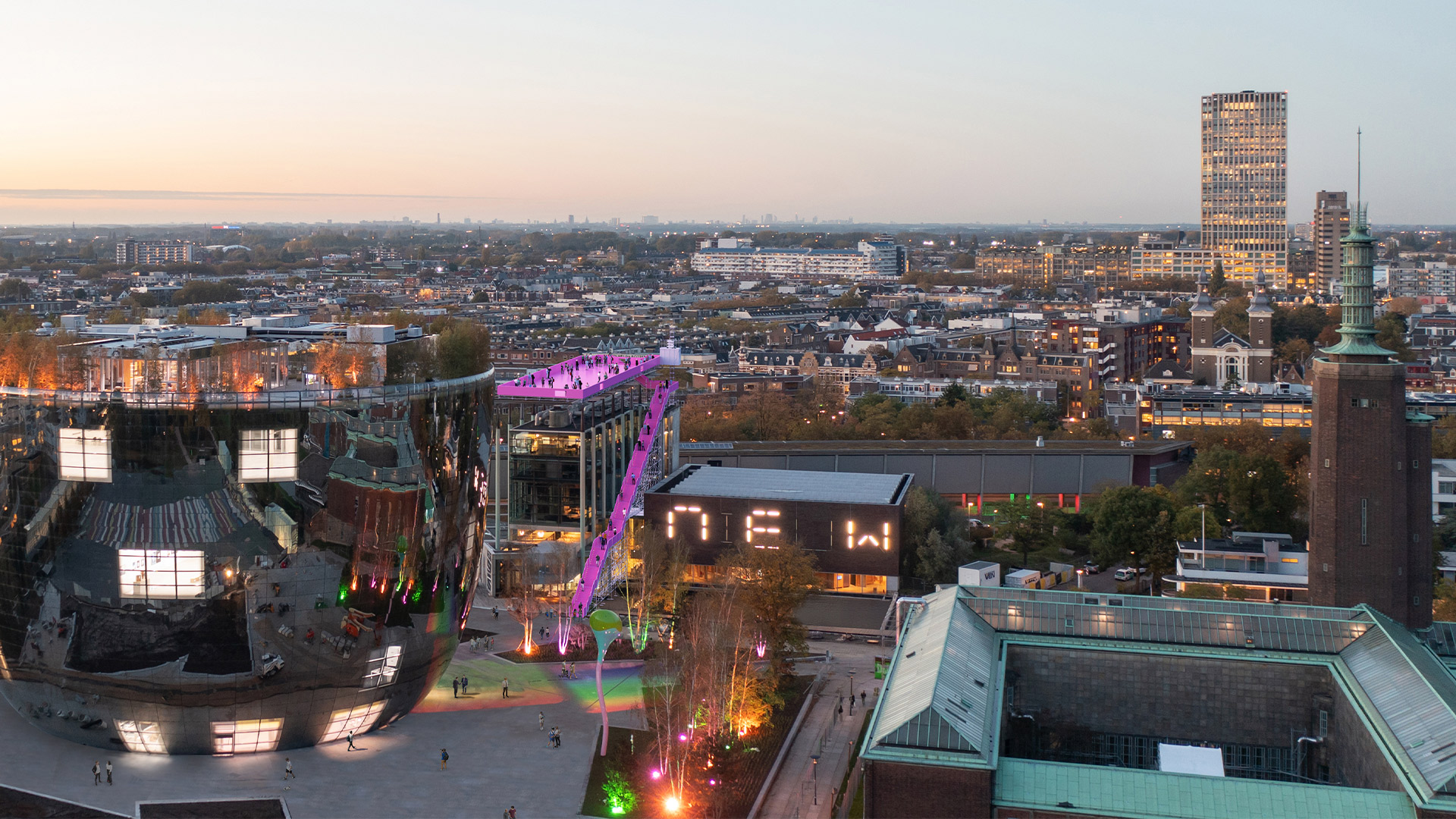
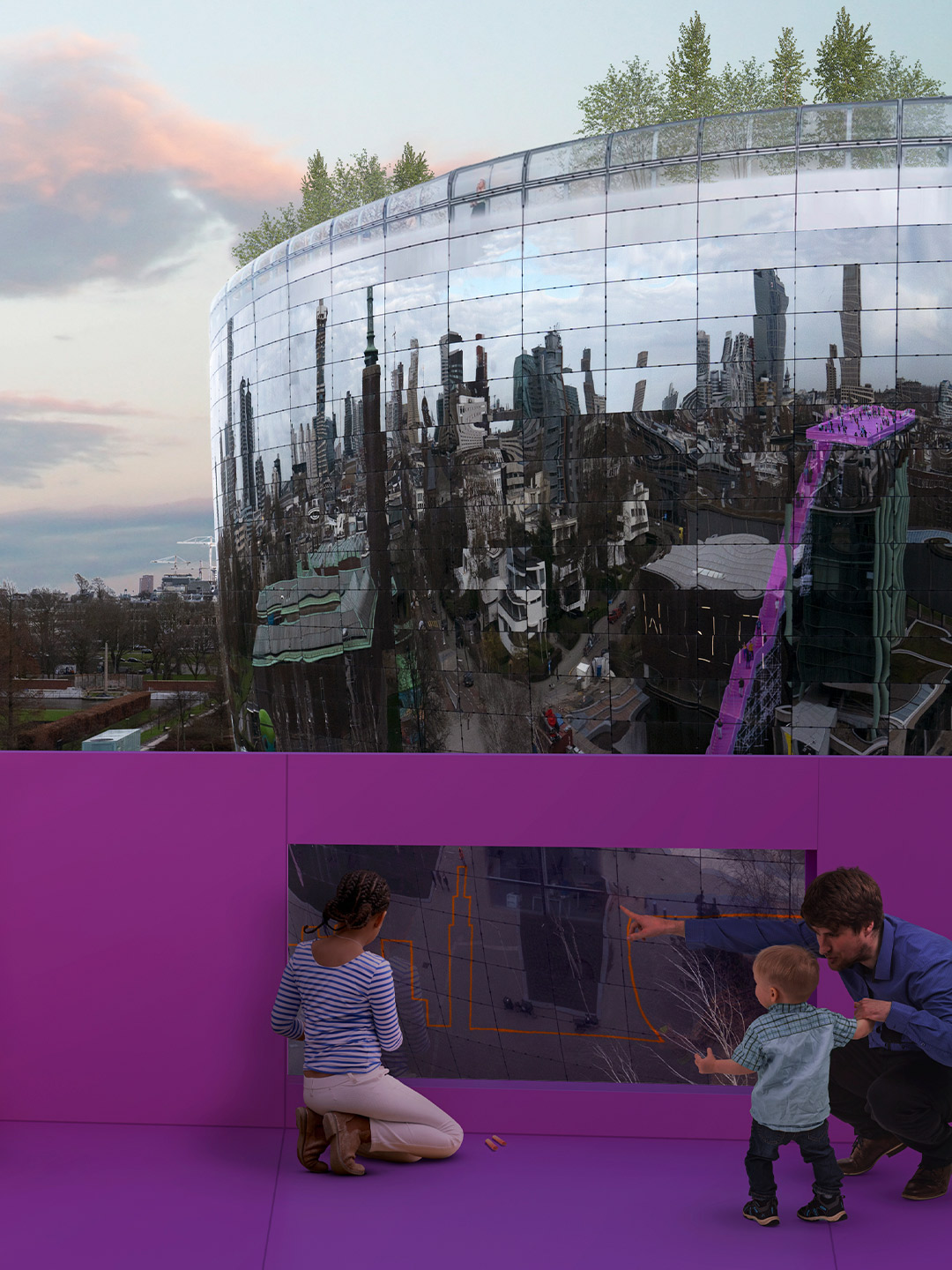
The Podium’s high-octane visage will be catapulted across the city, courtesy of the striking hot-pink colour set to saturate all the surfaces of the temporary intervention.
Catch up on more architecture, art and design highlights. Plus, subscribe to receive the Daily Architecture News e-letter direct to your inbox.
Related stories
- ‘The Apple tree’ by Foster + Partners blossoms in Bangkok.
- Carla Sozzani curates new colours for classic Arne Jacobsen chairs.
- Adam Goodrum stamps all-Australian style on new breezeblock design.
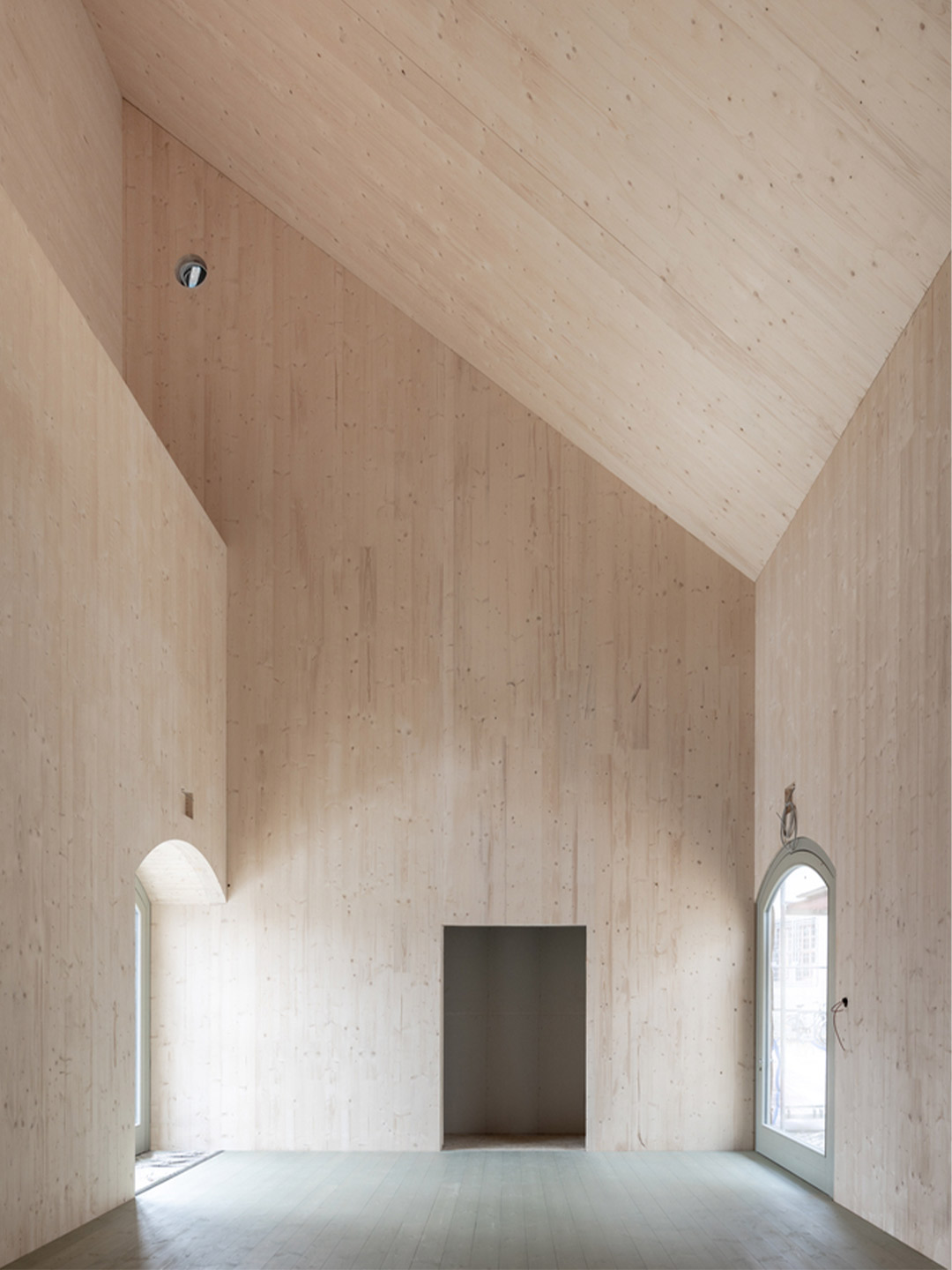
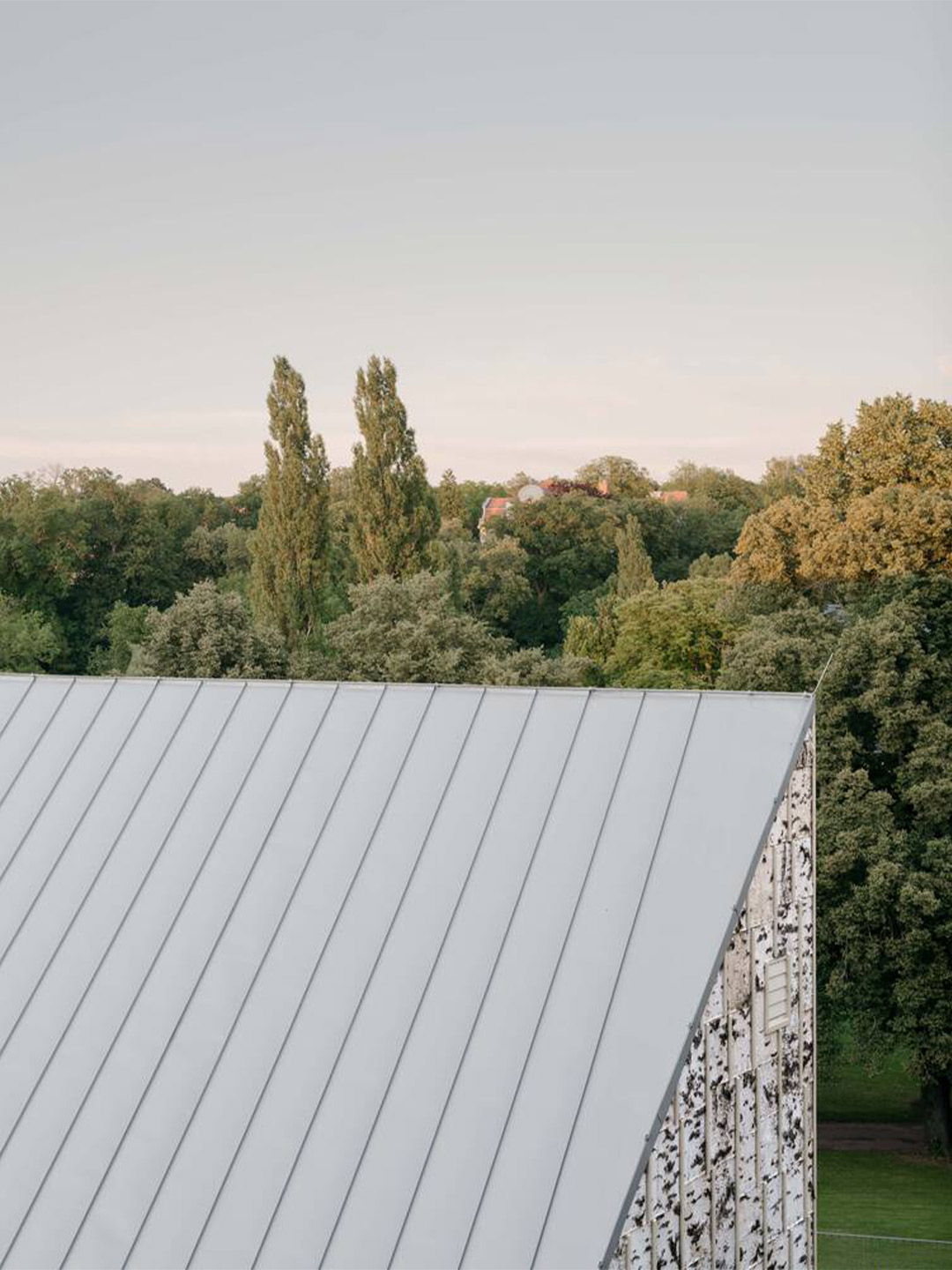
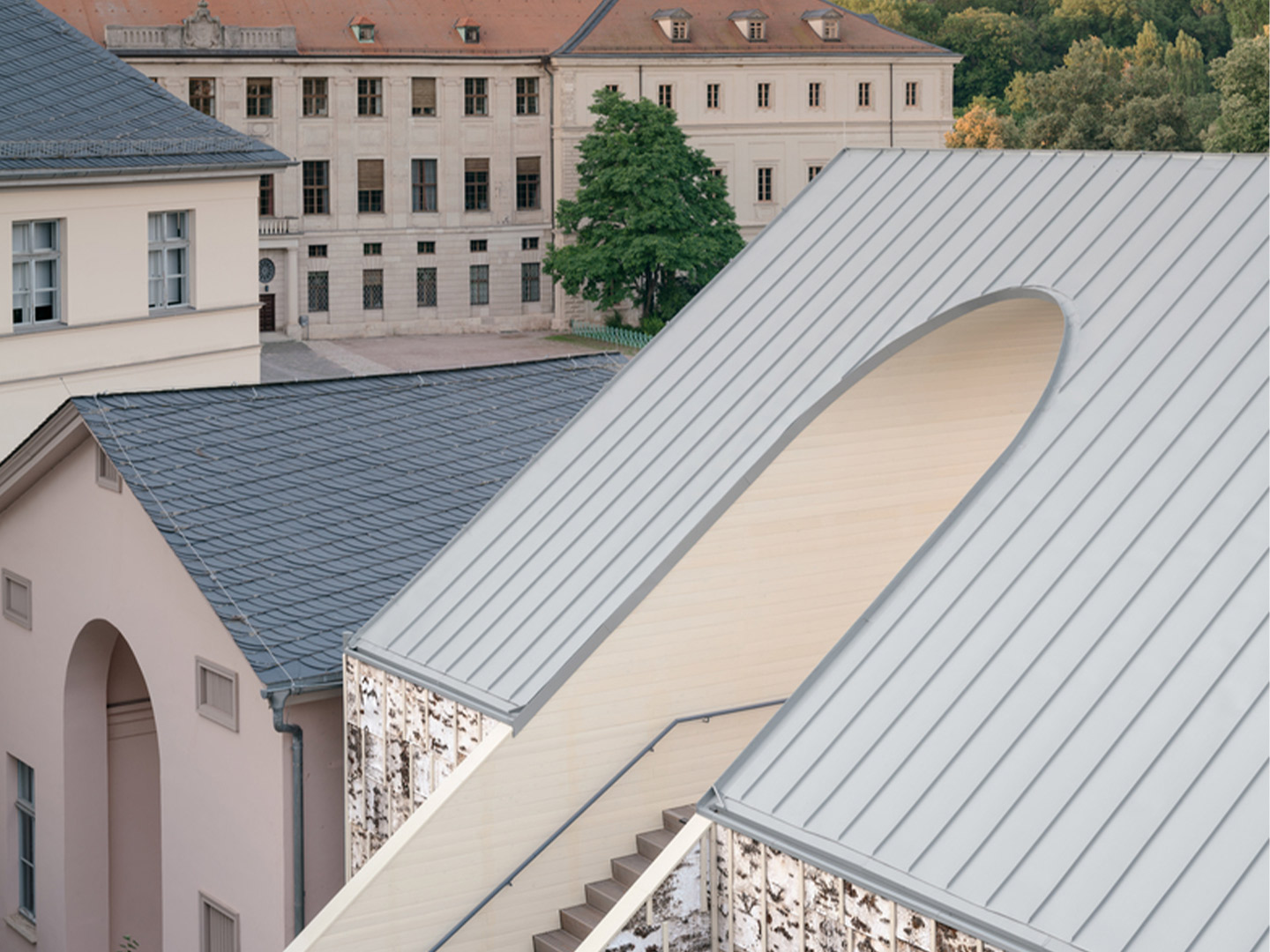
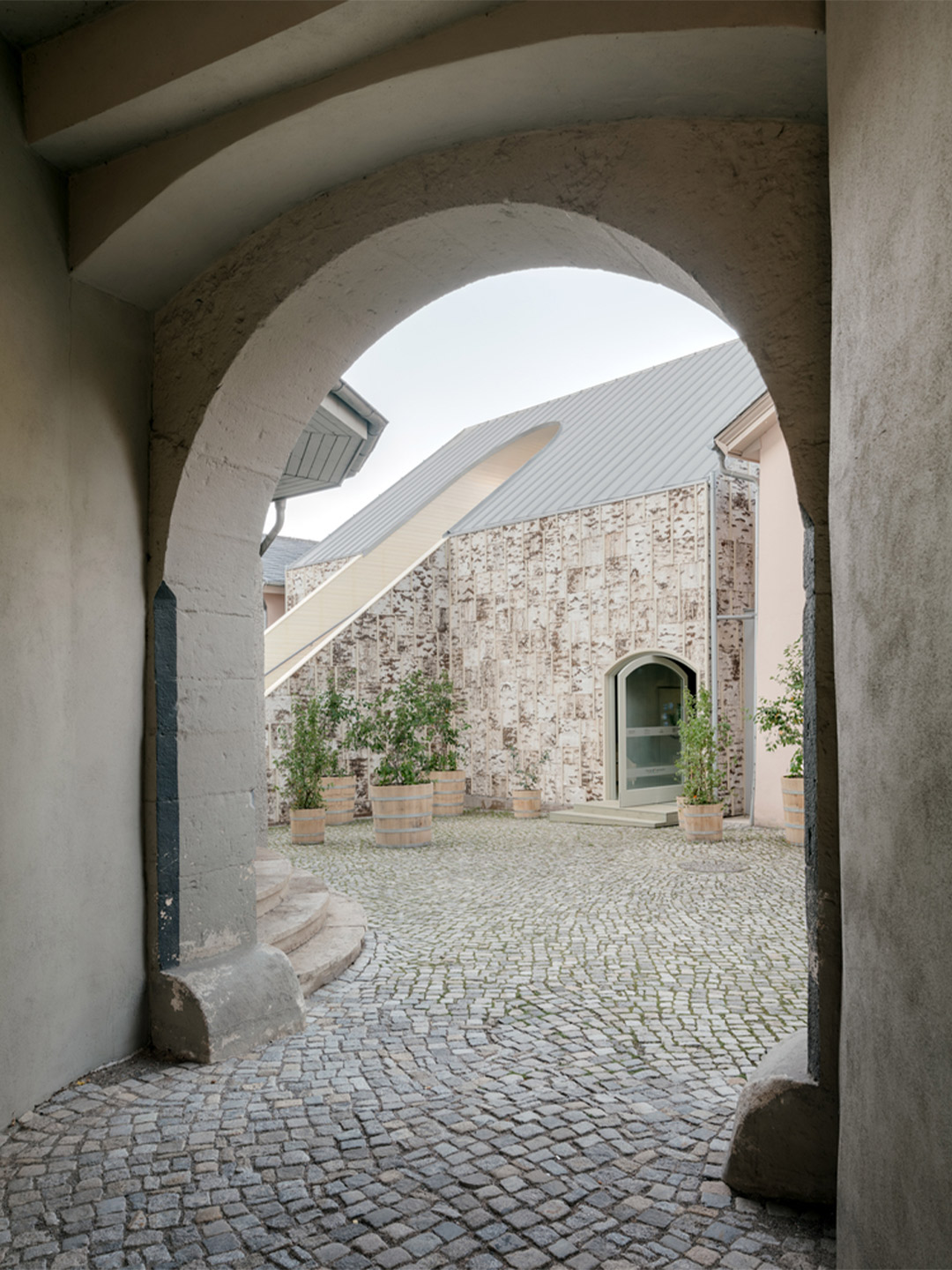
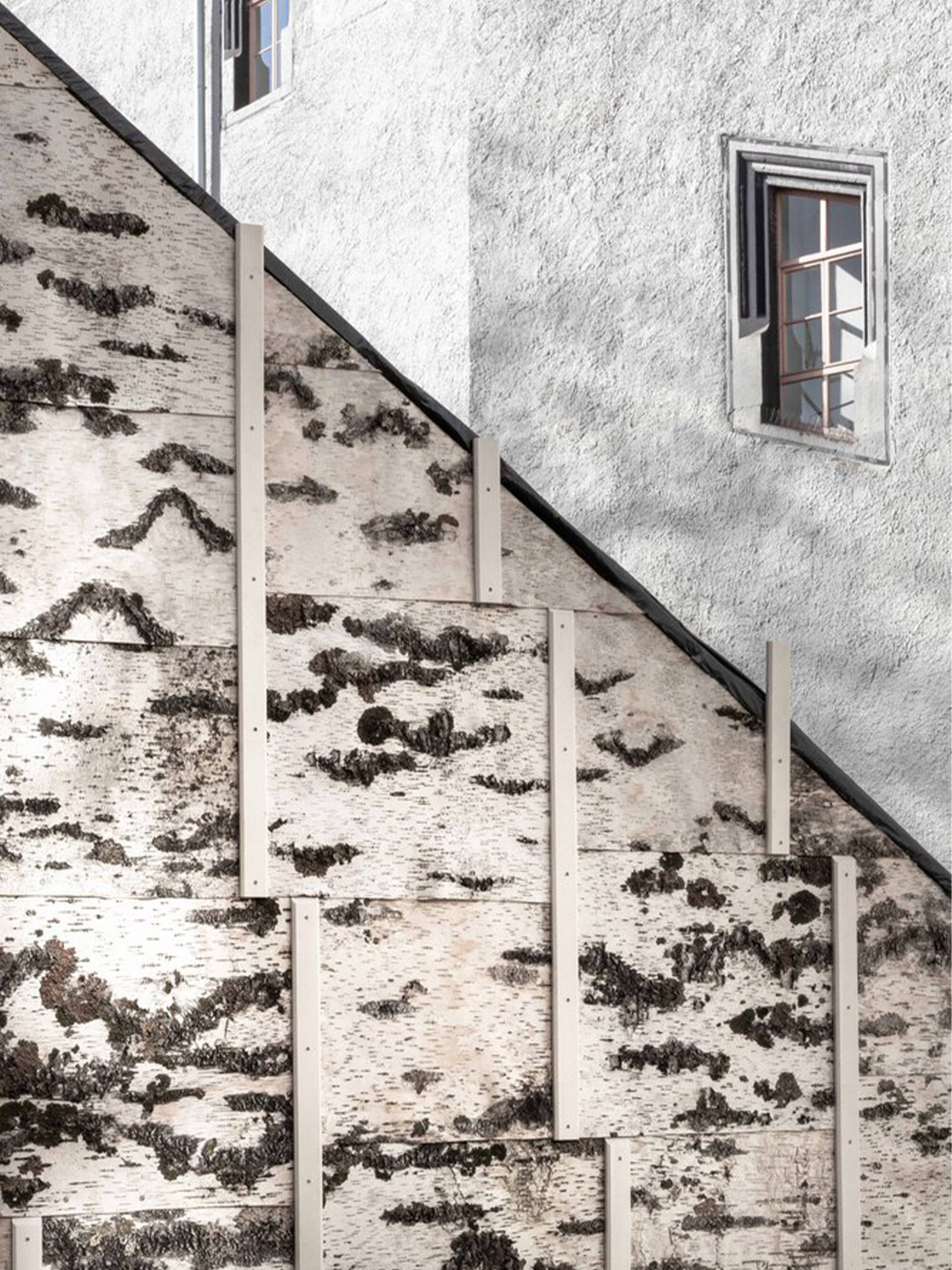
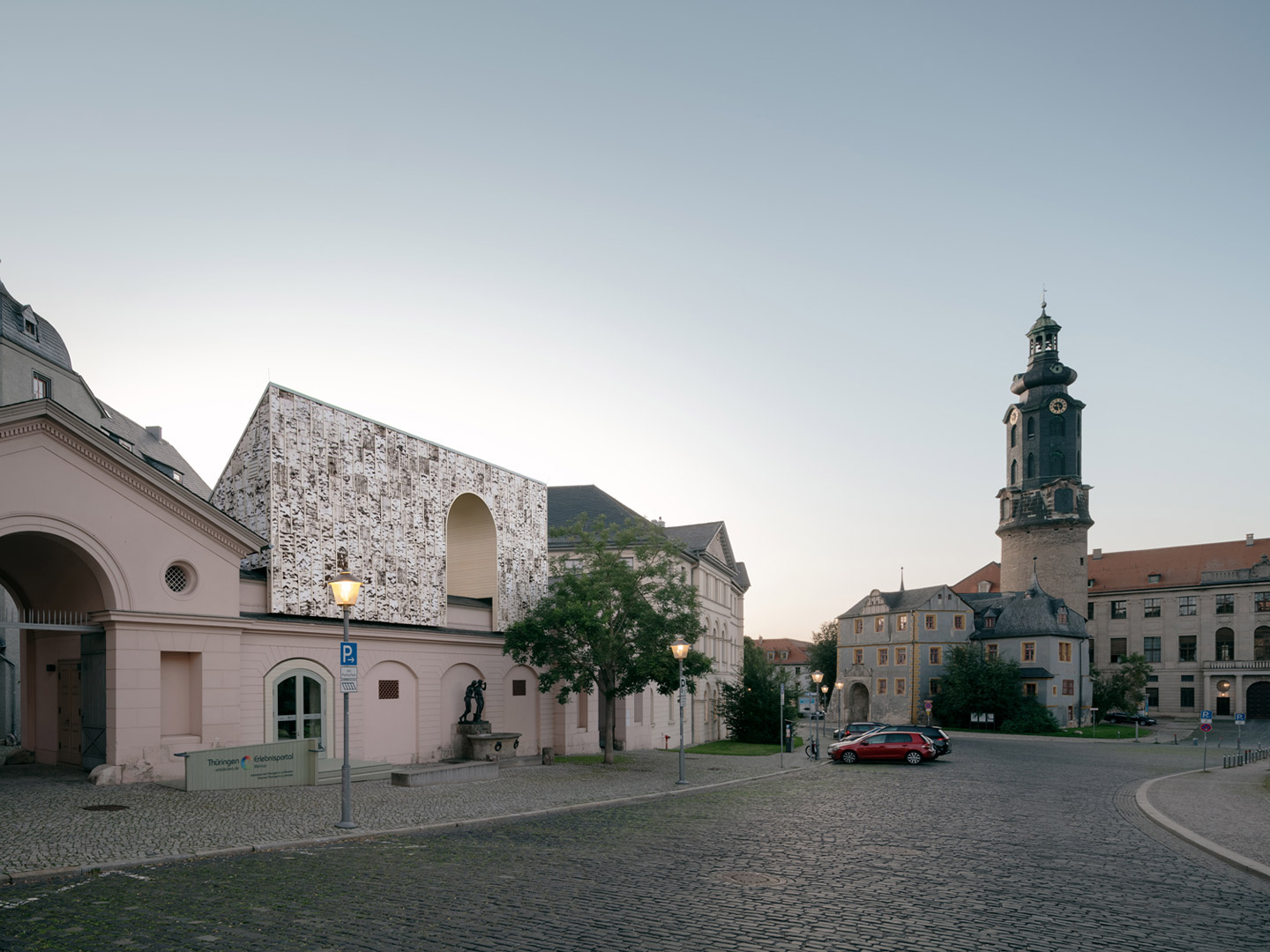
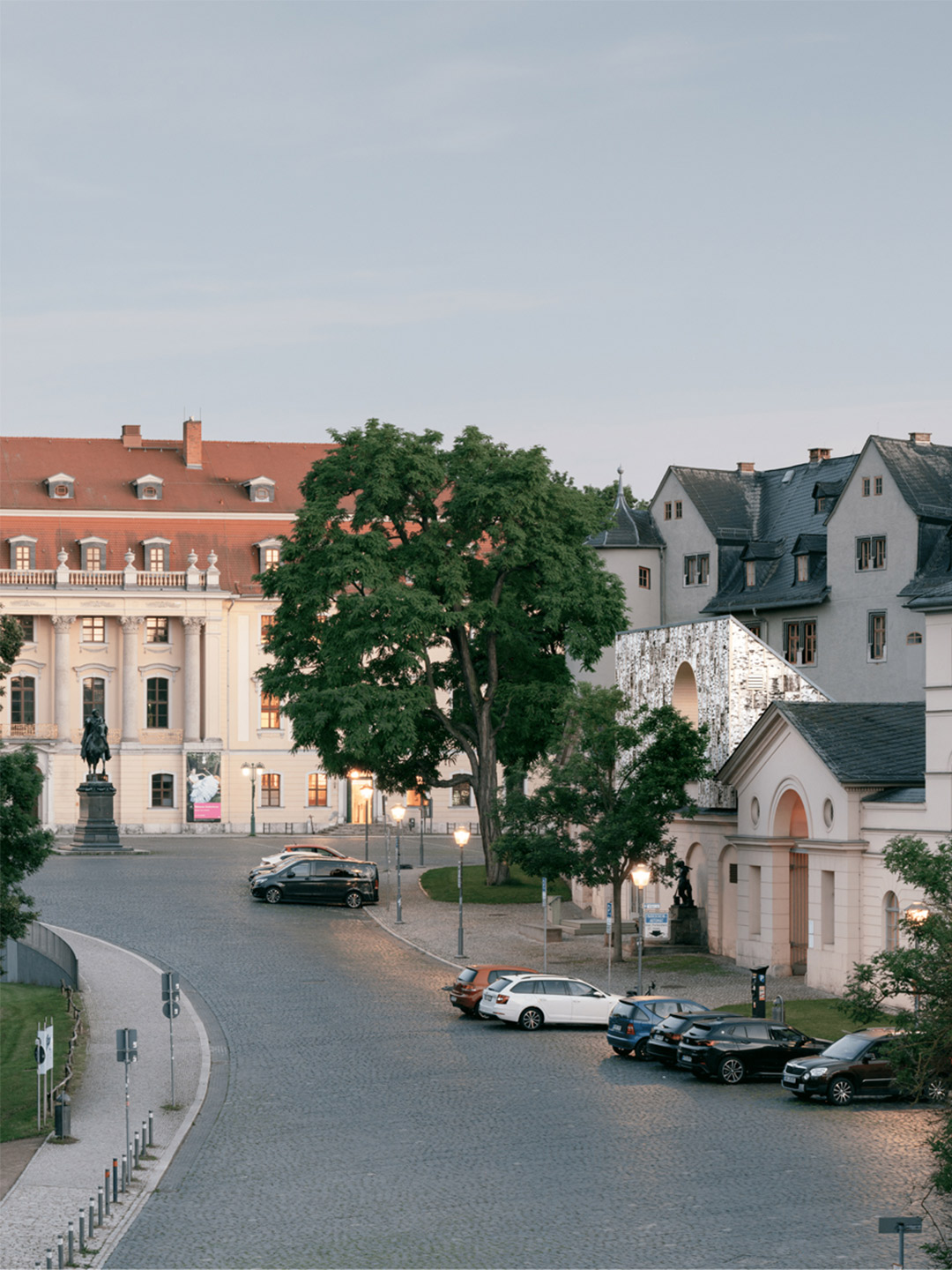
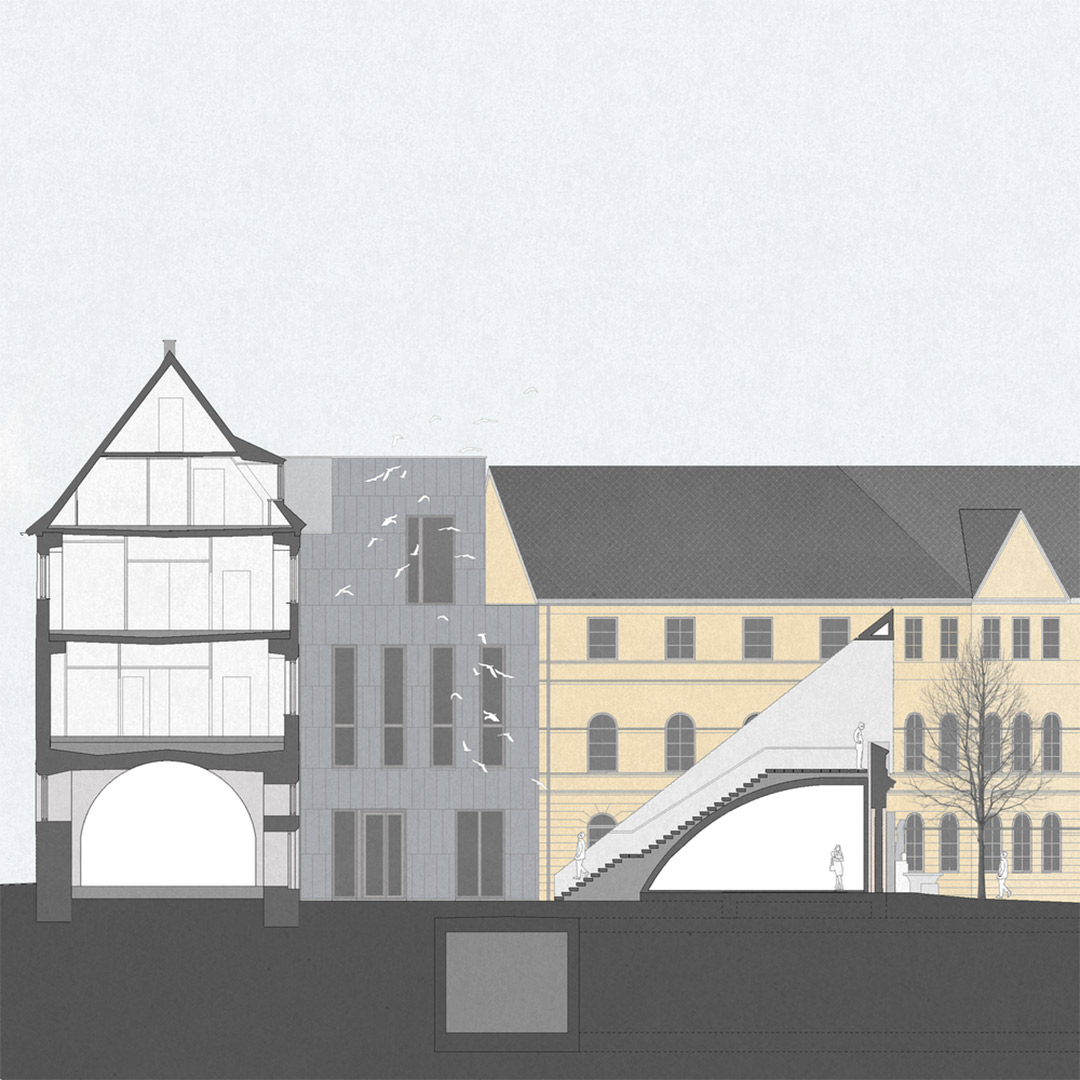
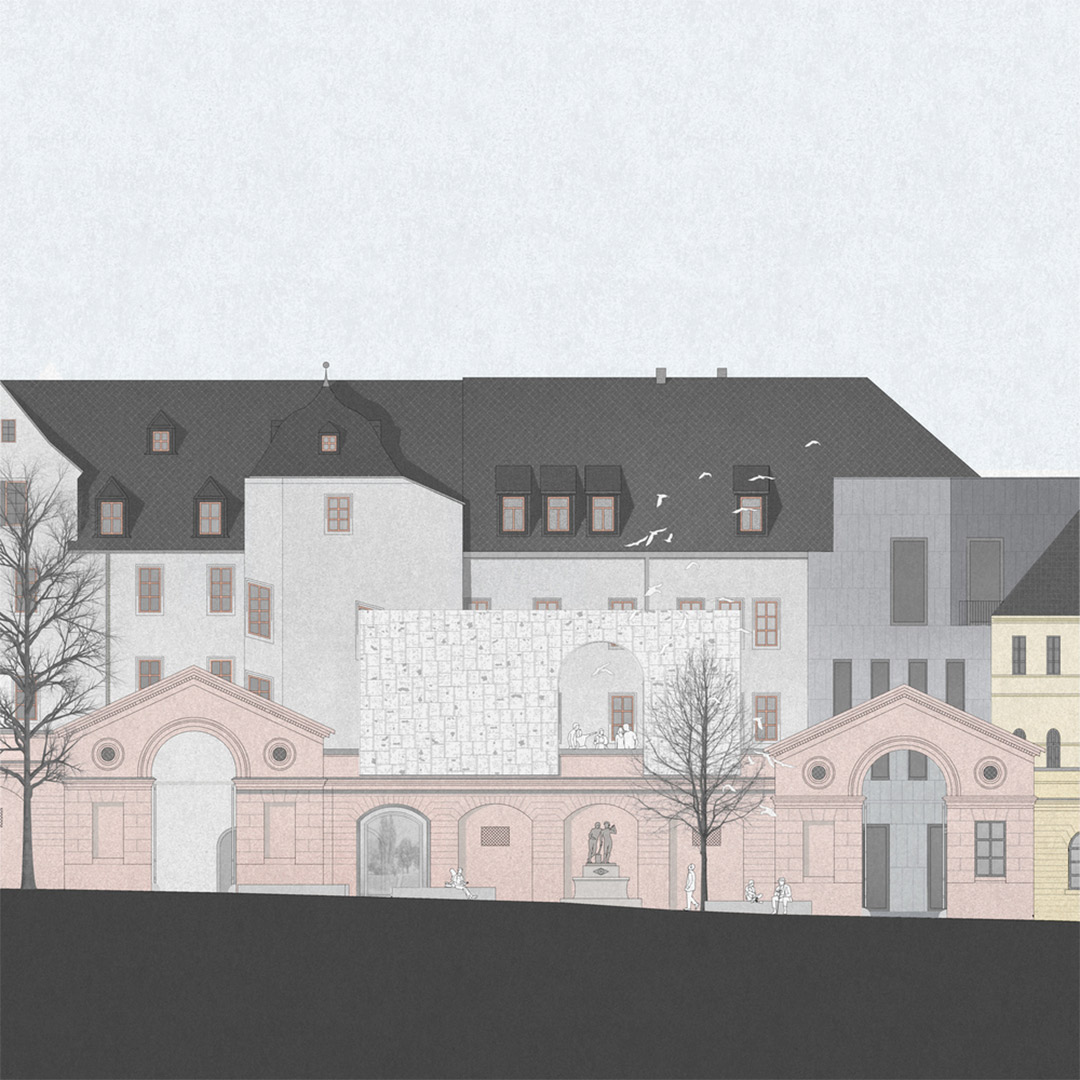
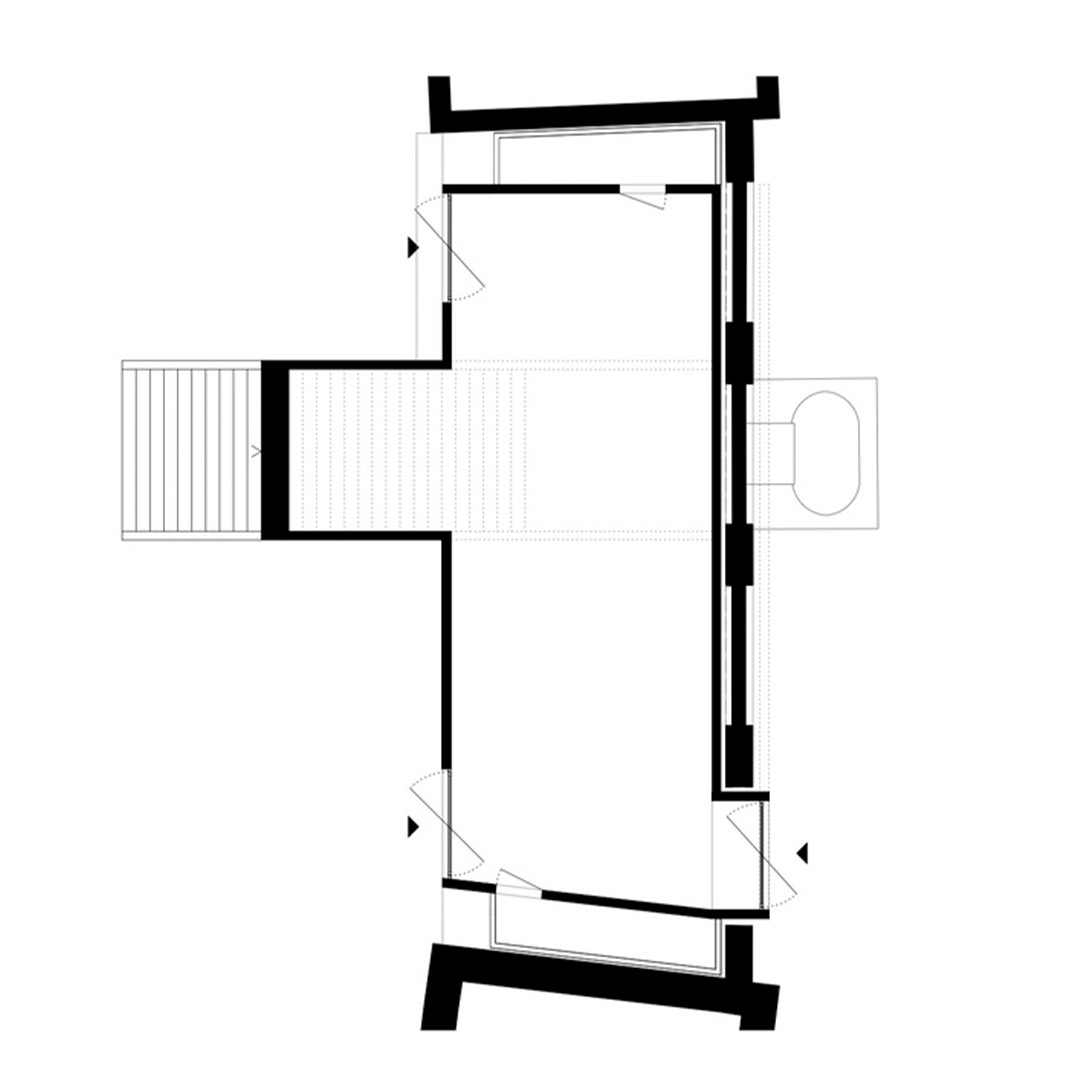
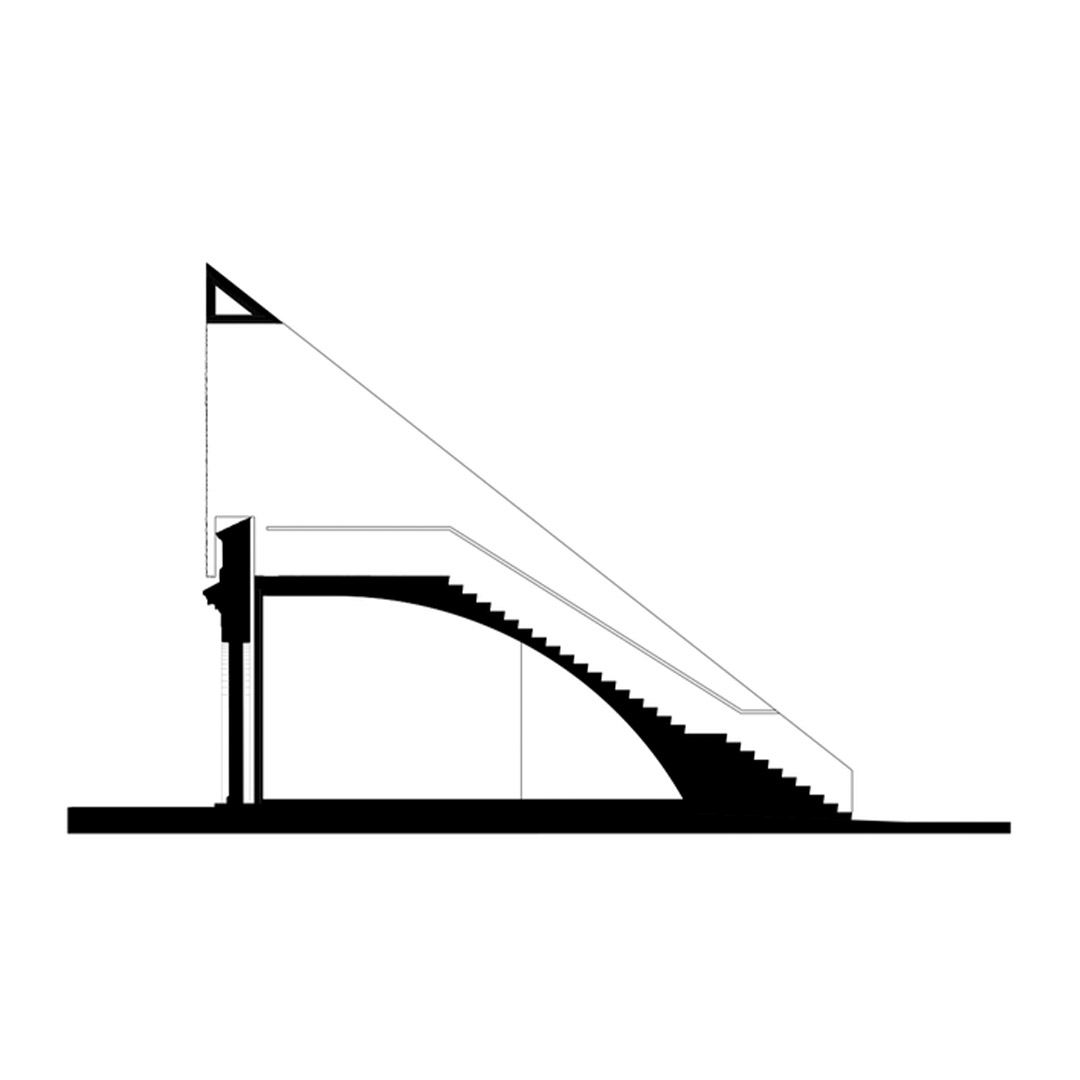
Located on Democracy Square in Weimar, Germany, a temporary exhibition pavilion has been installed by Berlin-based architect Helga Blocksdorf. But this is no ordinary pop-up. Clad in a layer of birch bark and titled Portal at the Stadtschloss, the installation tempts visitors from the stone-lined plaza up a series of steps to a second-storey height. They’re invited inside the upper exhibition space by an alluring archway – given the name Erlebnisportal (translating to ‘experience portal’) – that was devised in direct response to the heritage of the site.
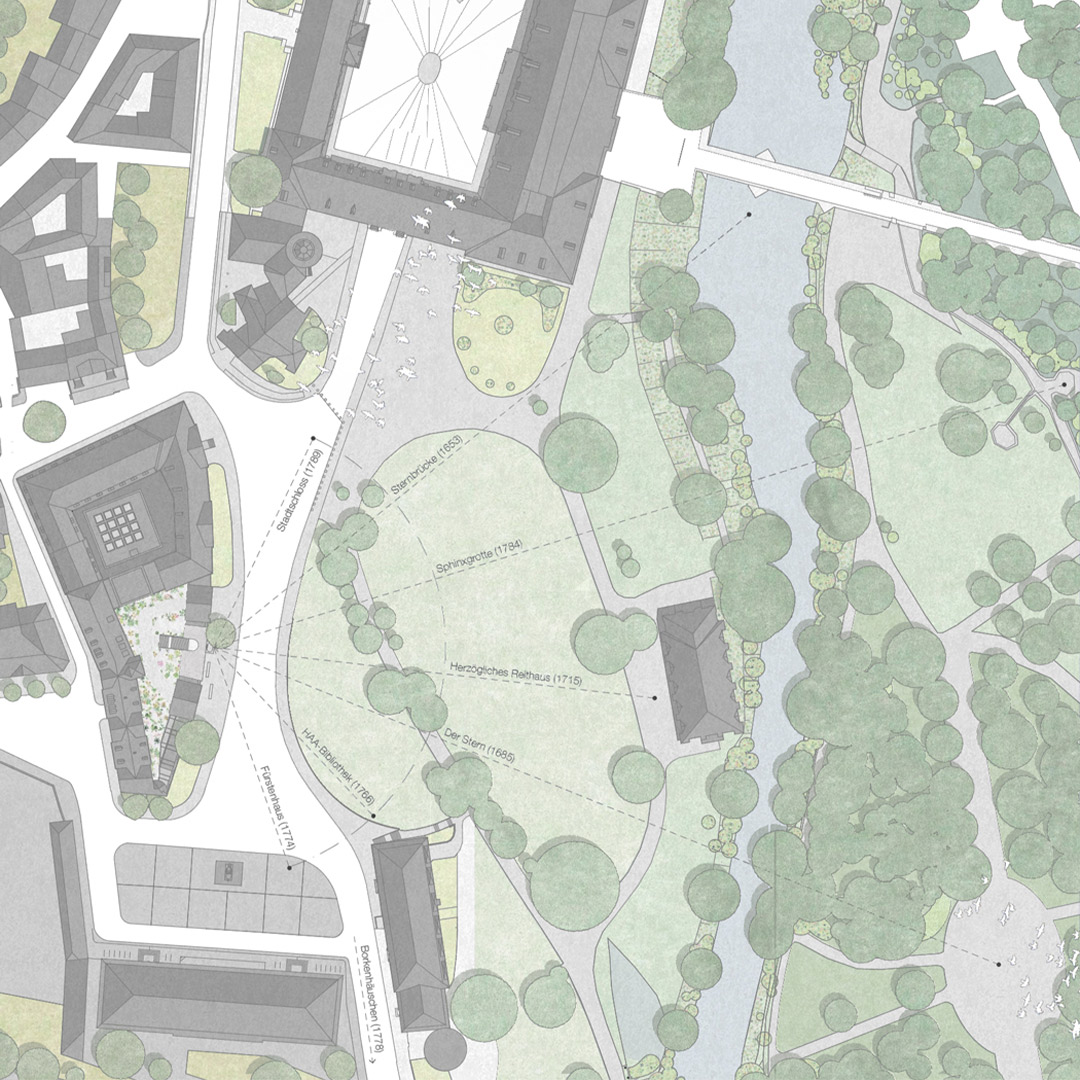
More specifically, the new archway mirrors the architecture of Coudray’s wall – a barrier designed by and subsequently named after Clemens W. Coudray. The German-born architect originally created a series of five basket-handle arches in the wall, both in the north and the south, to furnish the simple wooden stables on the way to the palace with a stately air. One of the arches, which lent the remaining Ildefonso Fountain its symmetric setting, was removed in 1911 to expand the New Guard House, leaving the site out of balance.
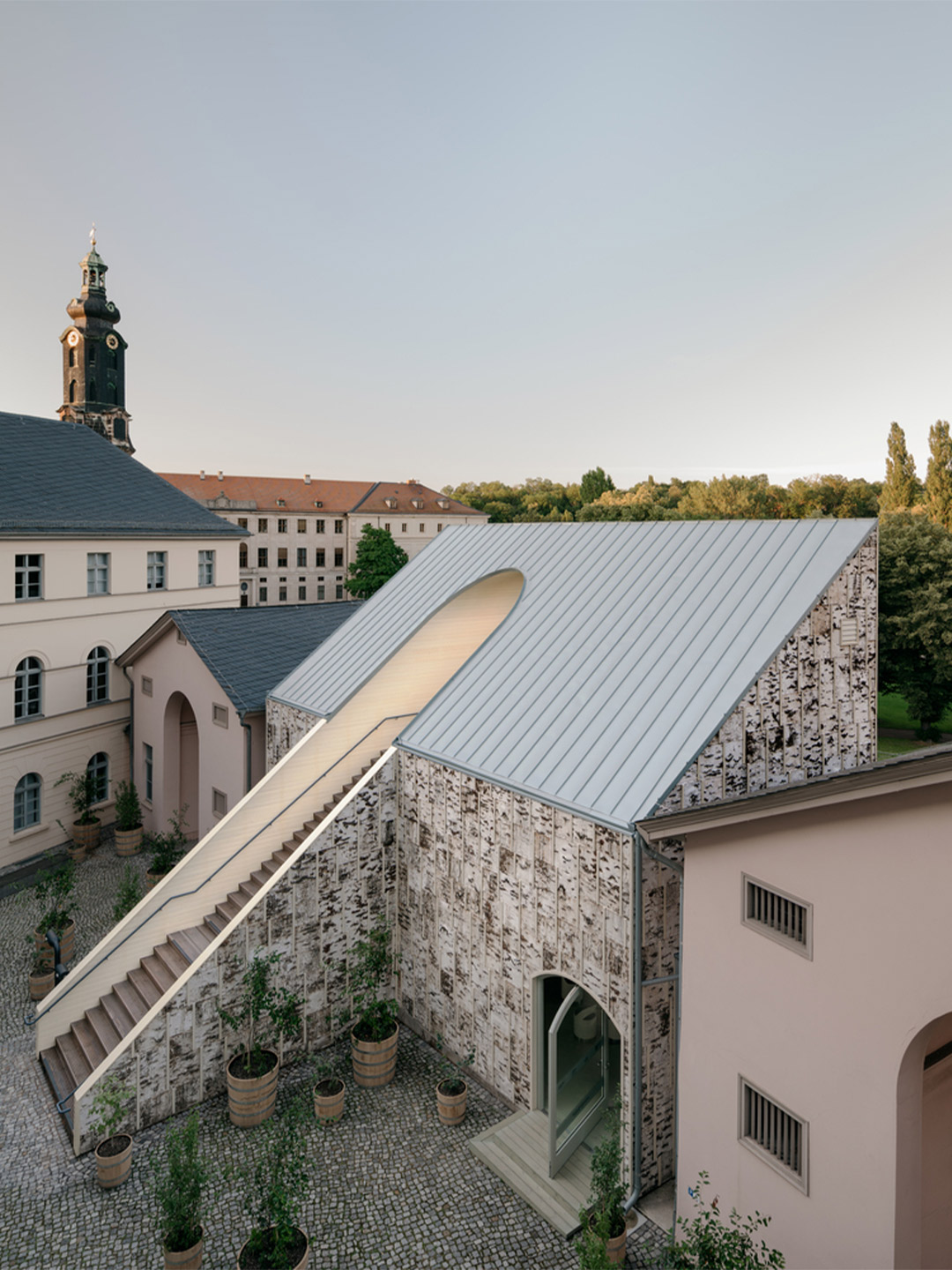
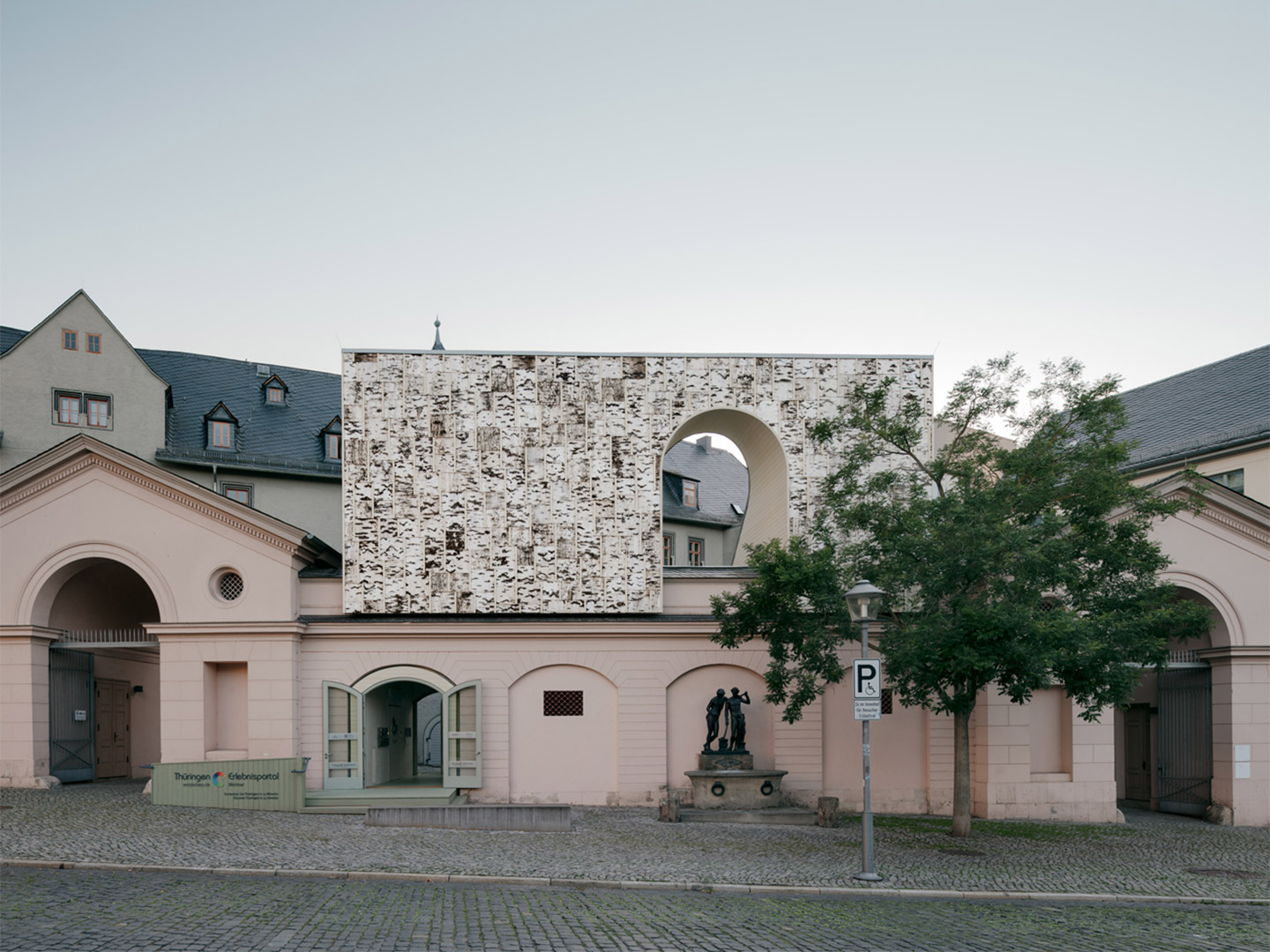
Portal at the Stadtschloss in Germany by Helga Blocksdorf Architektur
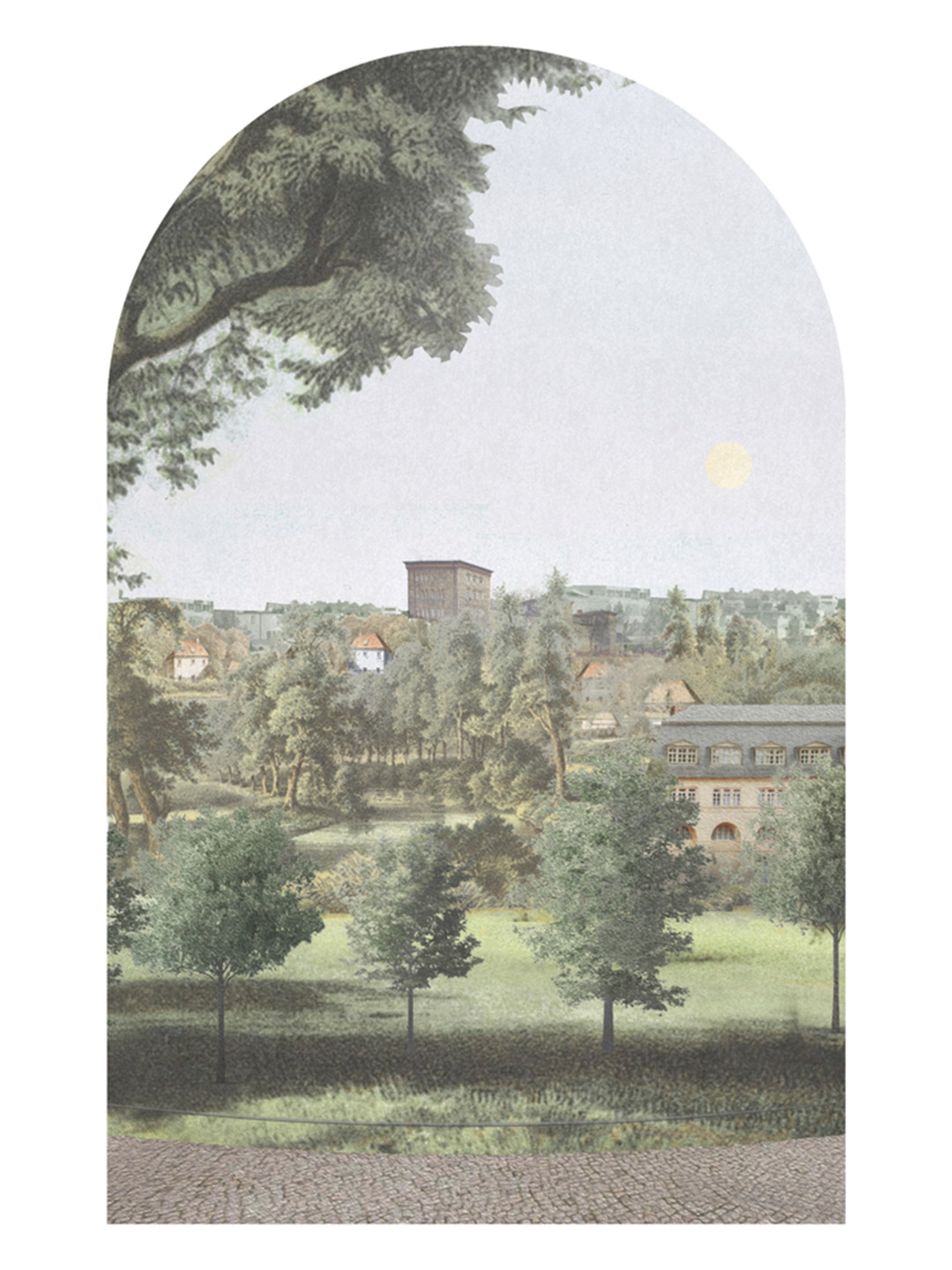
The newly installed archway now not only forms the entrance to the elevated exhibition space. It also shifts the fountain back into the centre of focus and temporarily restores the site, “opening up a new dialogue between the classicistic wall and the exhibition pavilion,” the architect says. From upstairs, visitors to the pavilion can take in the view directly above the historical figures of the fountain. From the ground, the ‘experience portal’ extends the picturesque elements of the park’s romantic landscaping into the inner courtyard of the nearby Weimar Stiftung Institution and frames views of the ever-changing sky.
Over the coming weather cycles, Helga’s experimental use of birch bark as the pavilion’s exterior cladding material will be evaluated through a wood-moisture and interior humidity monitoring program, spearheaded by the Technical University of Braunschweig. The architect says this will establish a comparison throughout the year between computer-modelled, simulated and actual values, allowing for the future integration of birch-bark on timber construction (with no additional component layers) into the framework of valid norms. “The aim of the investigation into the response of the bark is to expand the diversity of structures in which regional and renewable resources are used,” the architect concludes.
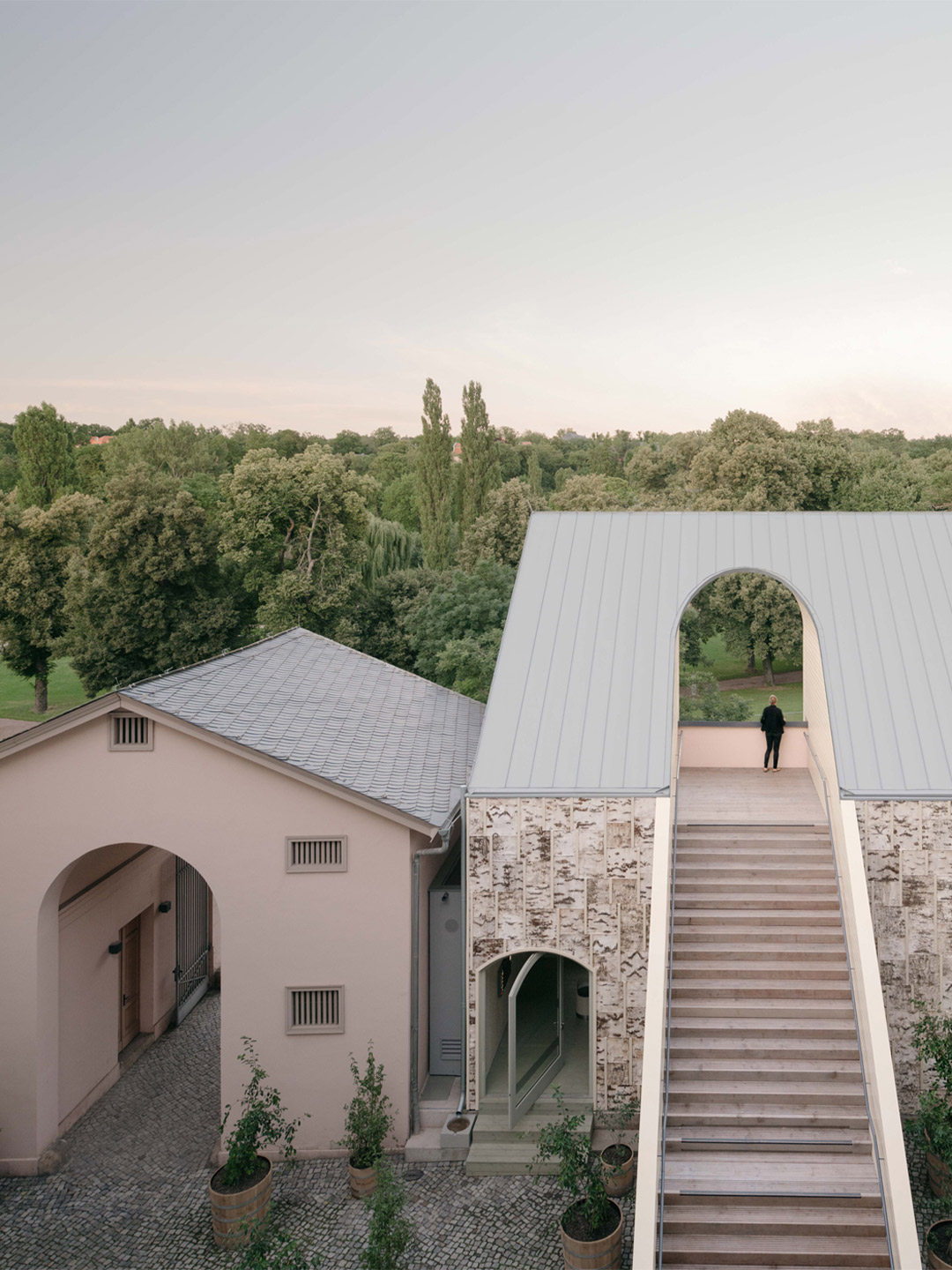
Now, the newly installed archway not only forms the entrance to the elevated exhibition space. It also shifts the fountain back into the centre of focus and temporarily restores the site.
Catch up on more architecture, art and design highlights. Plus, subscribe to receive the Daily Architecture News e-letter direct to your inbox.