For architects Polina Sandström and Madeleine Klingspor, founders of Swedish practice ASKA, the 1930s aesthetic of a building in Stockholm was a rich source of inspiration. The design duo reawakened the modern Scandinavian style of the site (often categorised as Nordic functionalism or Funkis) for their latest rejuvenation project – a beauty clinic in the MBS by Malika portfolio. “The goal of the project [was] to create a specific and memorable experience,” Madeleine reveals.
The atmosphere within the MBS by Malika clinic is described by the ASKA team as feeling something akin to “modern nostalgia”. They arrived at this thematic title due to the way in which some of the design elements appear recognisable, giving the space “a rigid and trustworthy flavour,” the architects say. Other fragments, however, arrive unexpectedly, adding a “sharp and slightly playful touch,” they add. “This makes the design feel effortless while at the same time managing to surprise”.
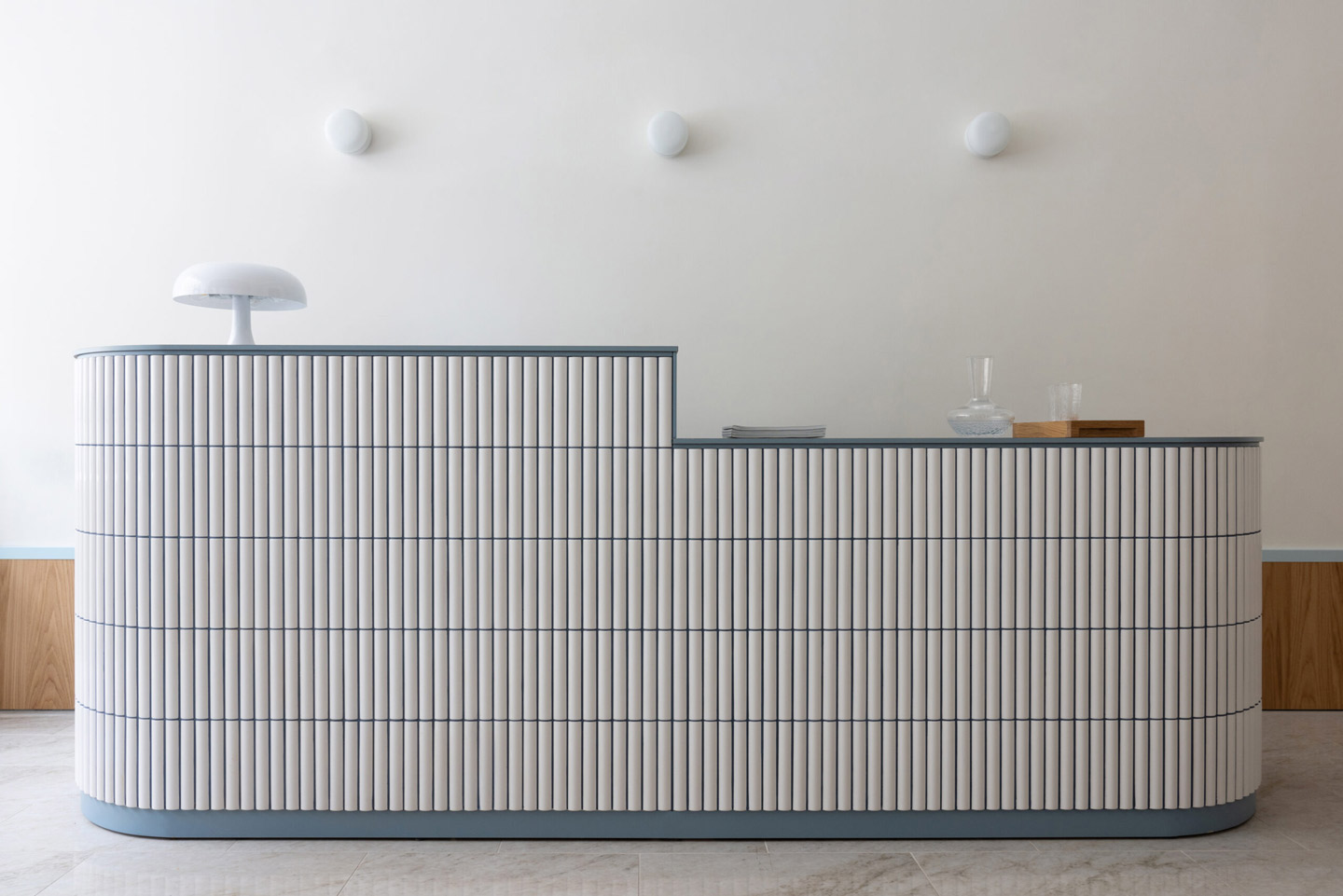
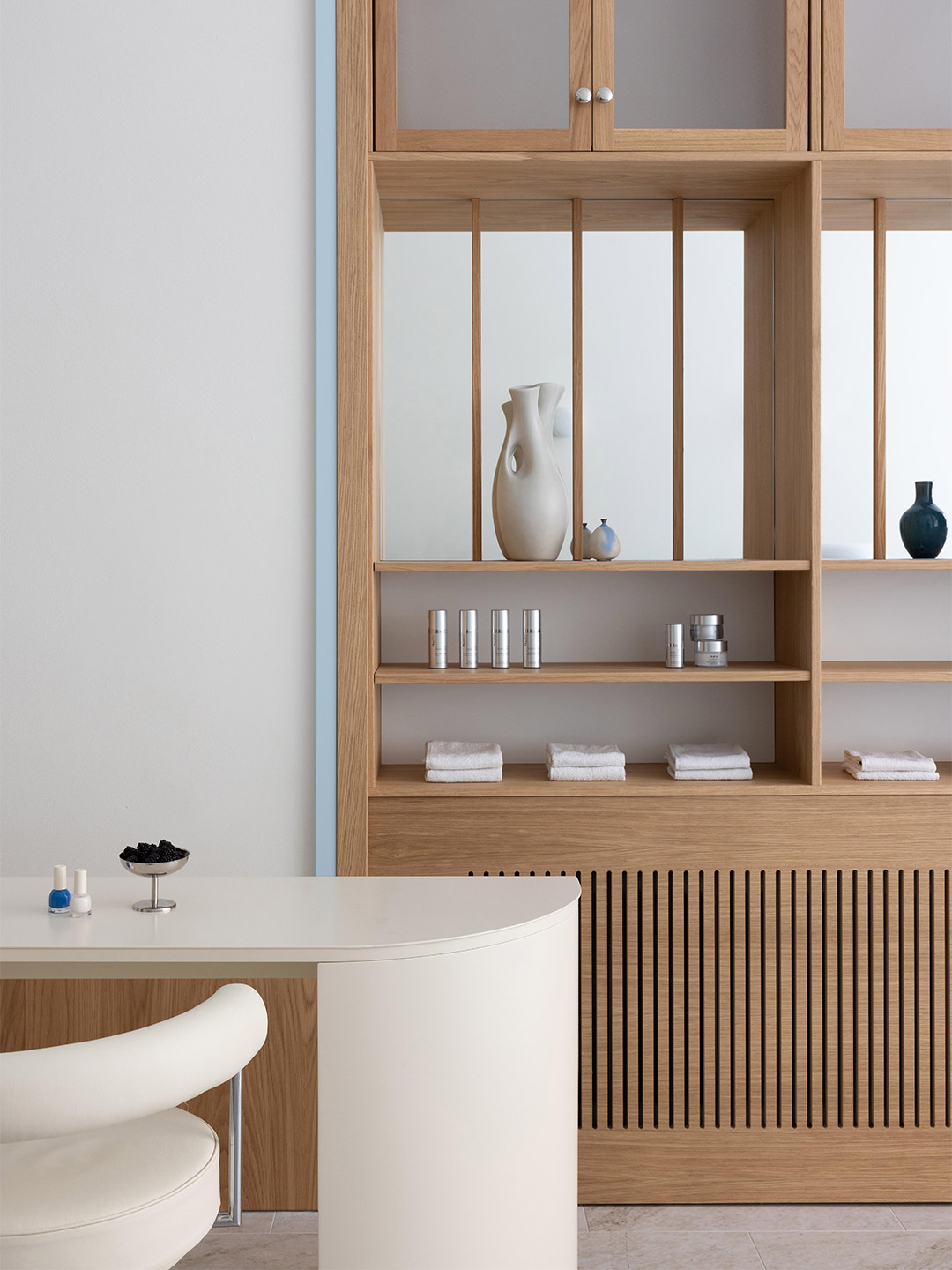
MBS by Malika beauty clinic in Stockholm by ASKA
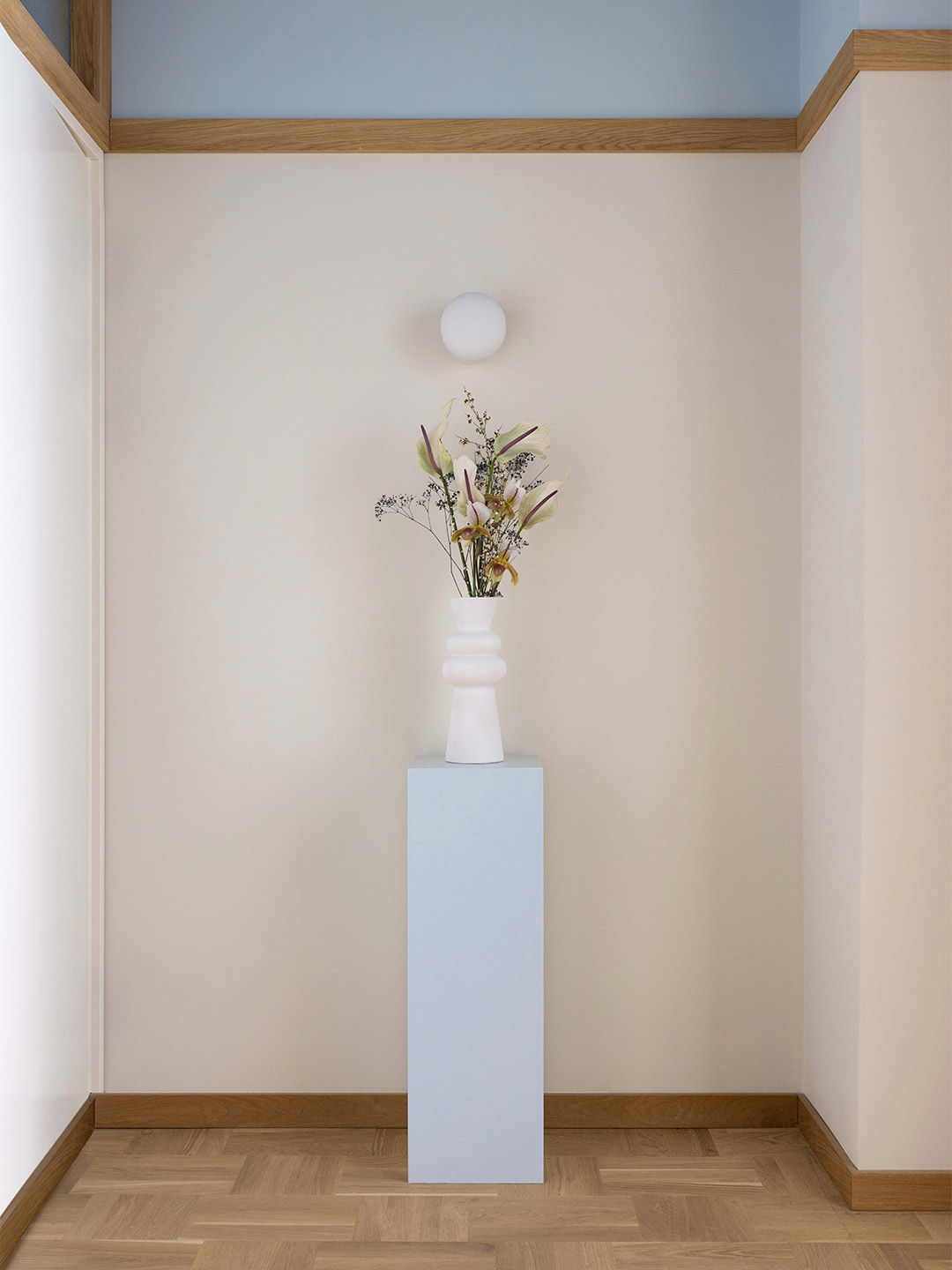
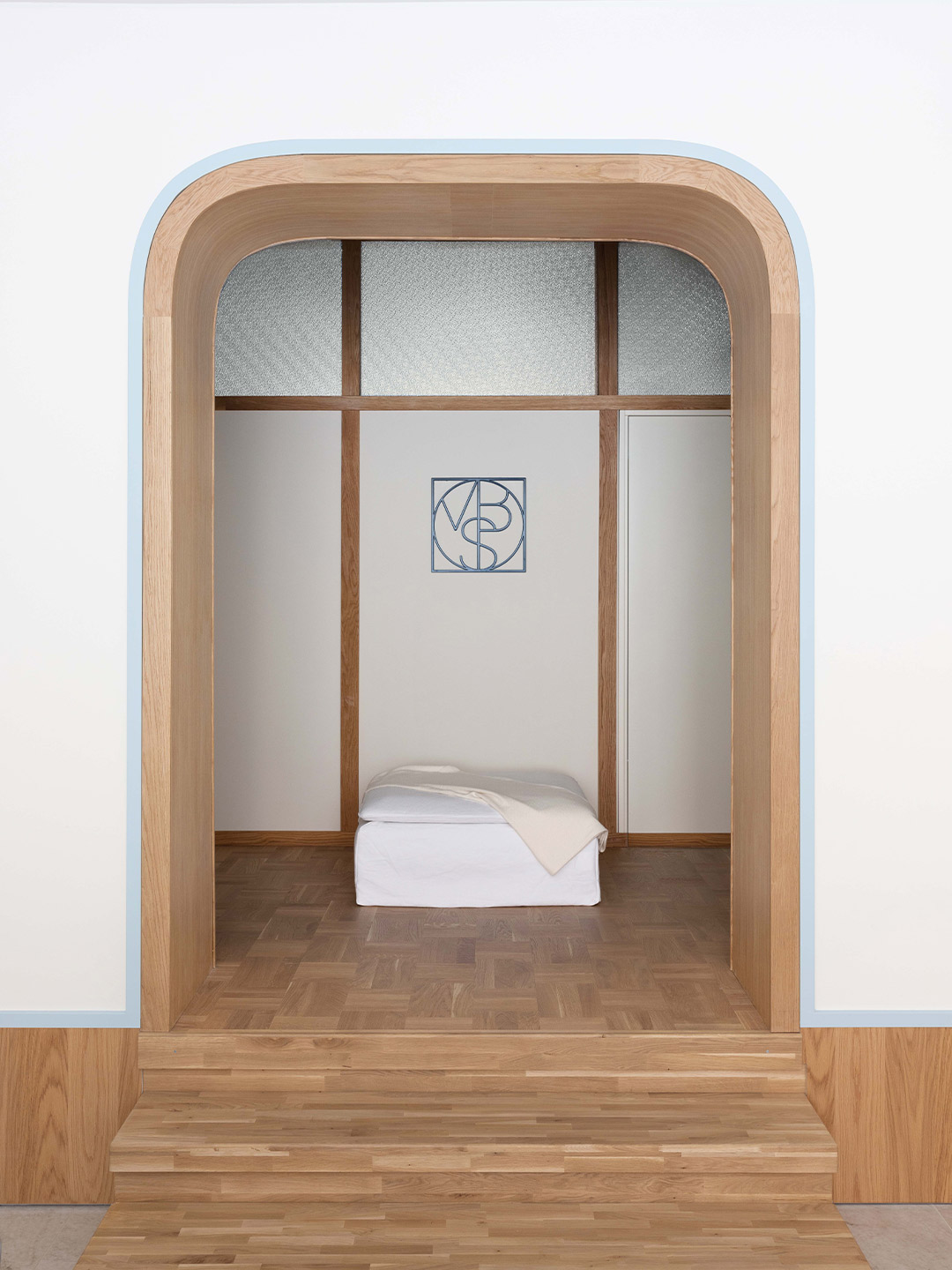
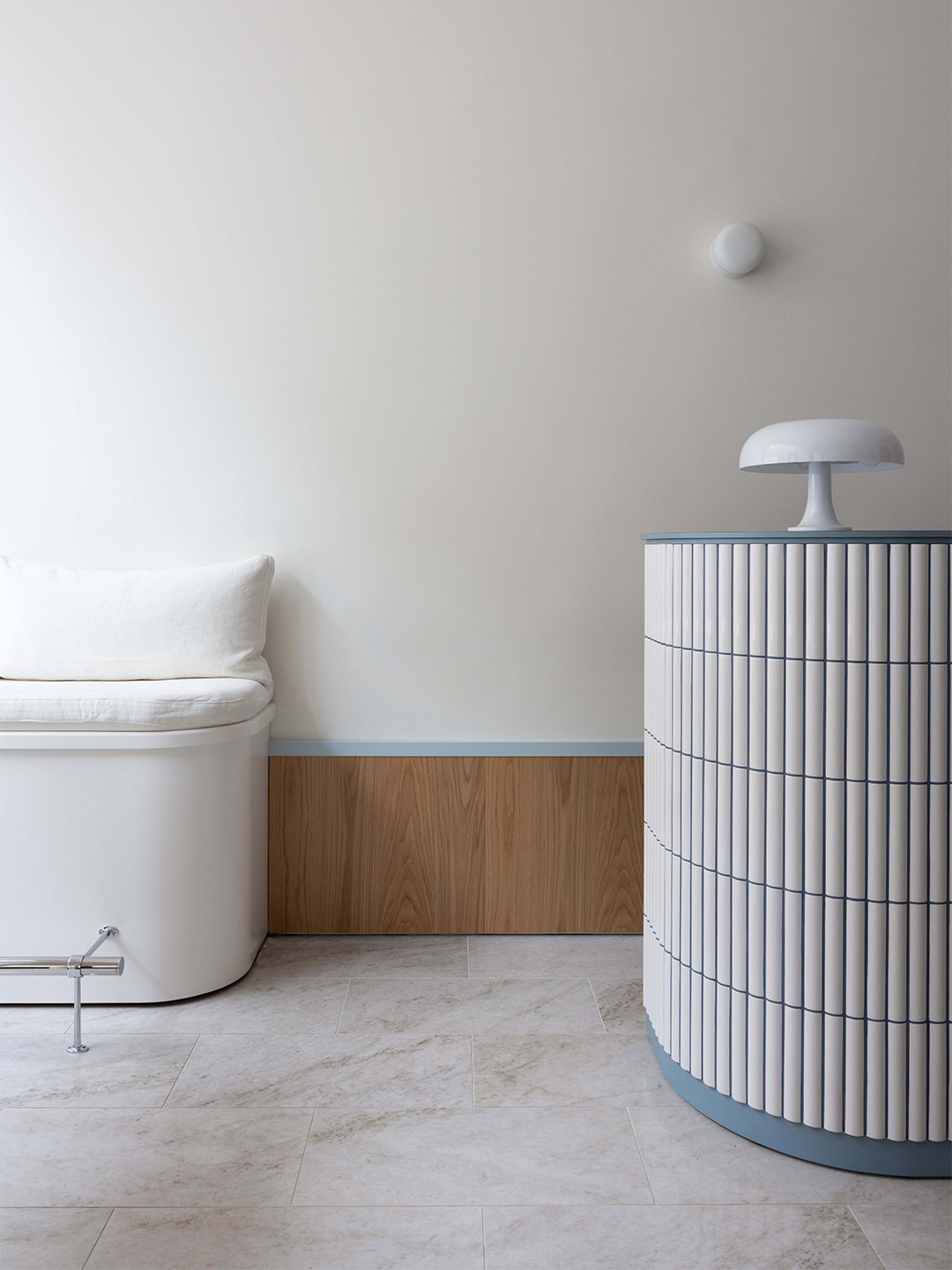
Typical Funkis-style materials, such as white Alvar Aalto-inspired tiles, oak veneer, compact laminate and structured glass dominate ASKA’s design response. But by adding details like the nickel-plated brass handles, linen fabrics and porcelain floor tiles (inspired by the Swedish Ekeberg marble), the architects were able to layer contemporary elegance and an air of exclusivity into the user experience.
“We saw potential in adding luxury, softness and a young vibe to this simple, strict and socialistic style,” Polina says of ASKA’s vision for the clinic. “[We believed] that something new and unique could rise from the merger,” she adds, which includes the layering of light and dark blue colour accents to deliver a modern and fresh feeling to the space.
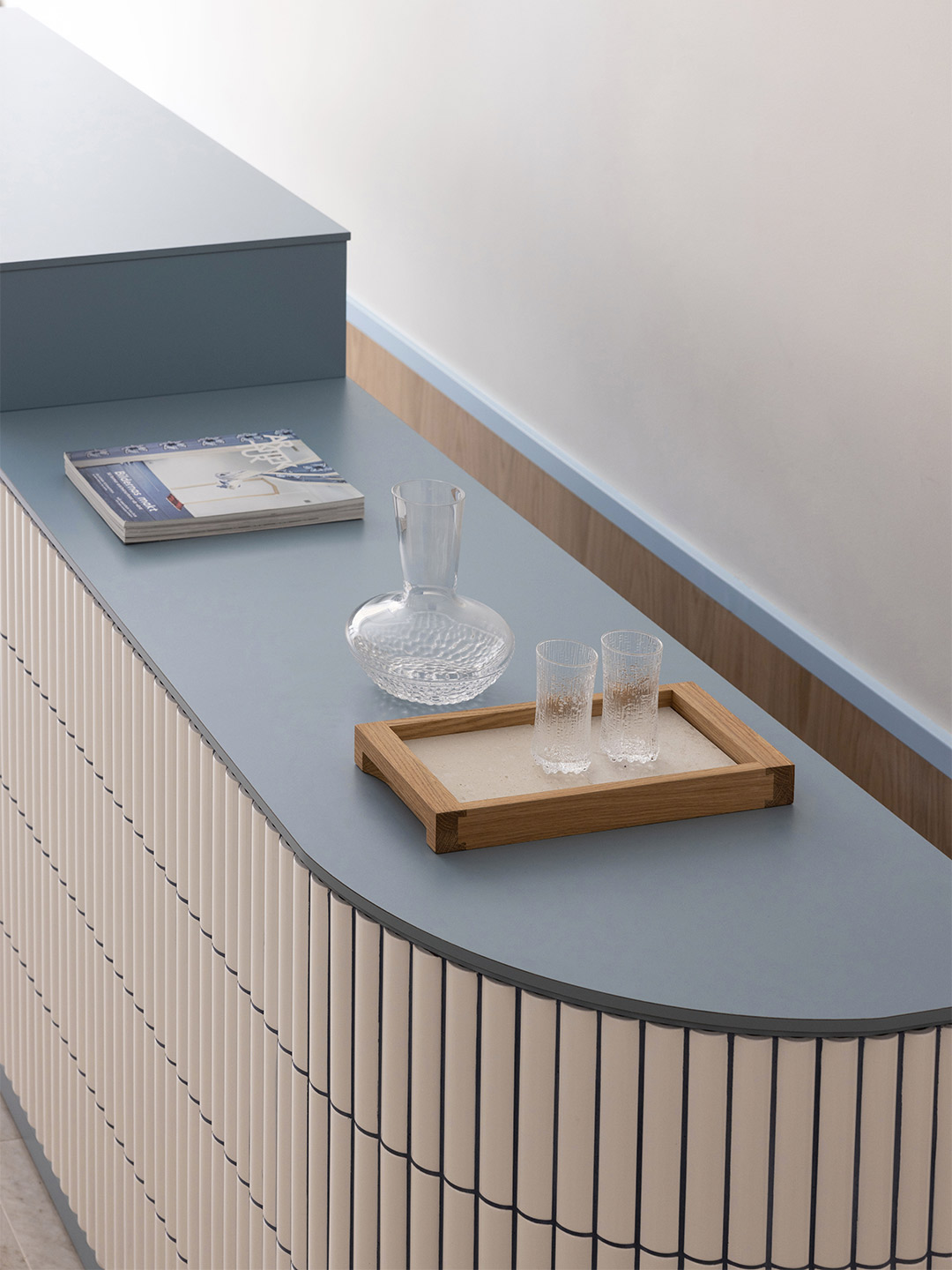
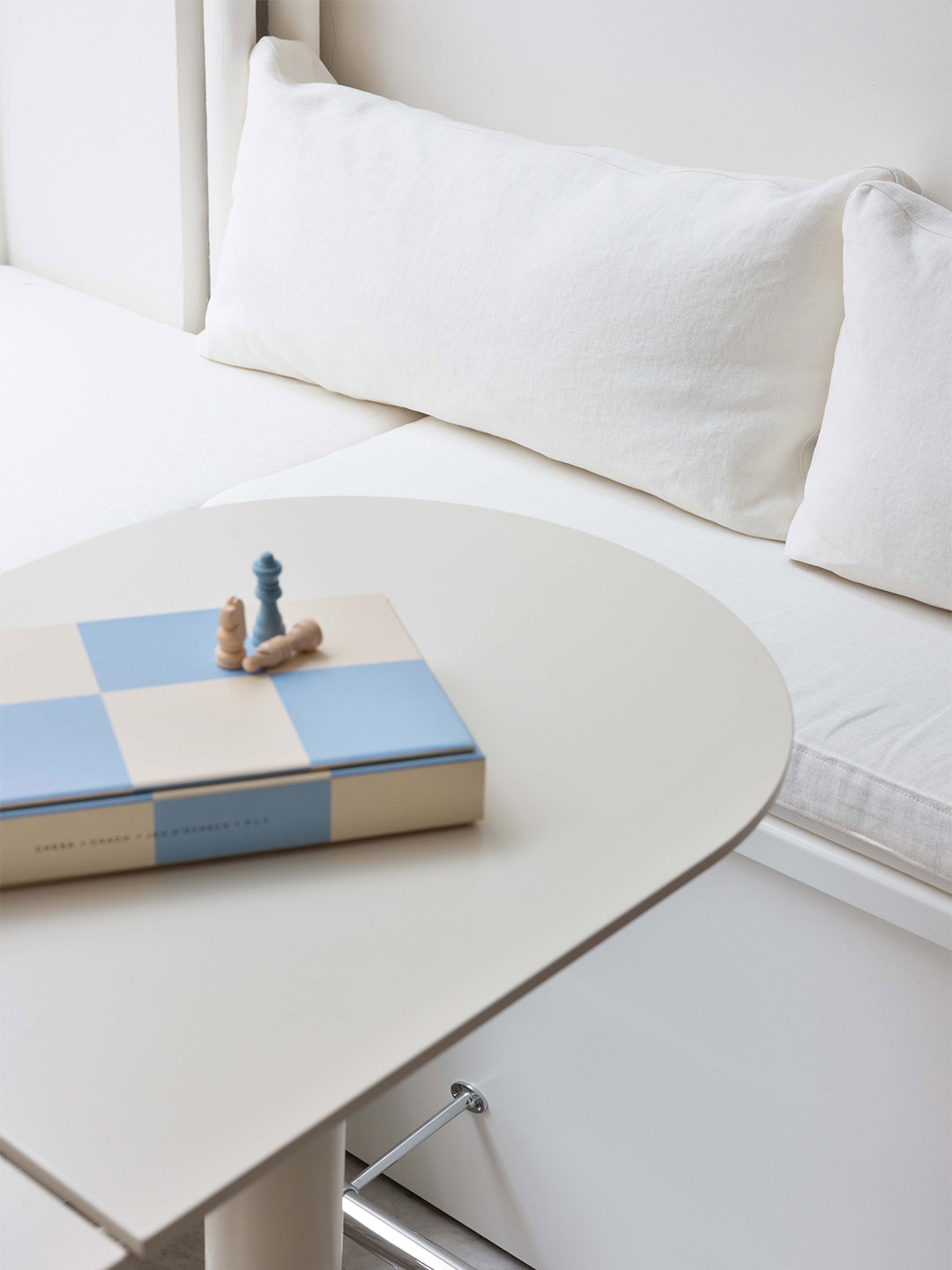
In order to reach a conceptually strong and effective spatial composition, Polina and Madeleine worked across differing scales and disciplines, including designing most of the furniture. The cream-coloured lounge tables and nail manicure stations are just some of the items created exclusively for the venue. “[These pieces] aim to blend into the environment in a smooth, seamless way,” the designers say. “The reception desk, on the other hand, is something of a key piece, designed to capture the visitors’ focus thanks to its size and level of detailing.”
Sitting somewhere between blending in and standing out, all other finishing touches have been designed to reference and complement each other. “The shape of the three pseudo arches reappears in the form of the table-tops,” the designers point out. “The foot panel melts together with the product shelf [and] the dark blue tone of the grout on the reception desk goes hand-in-hand with the MBS logo.”
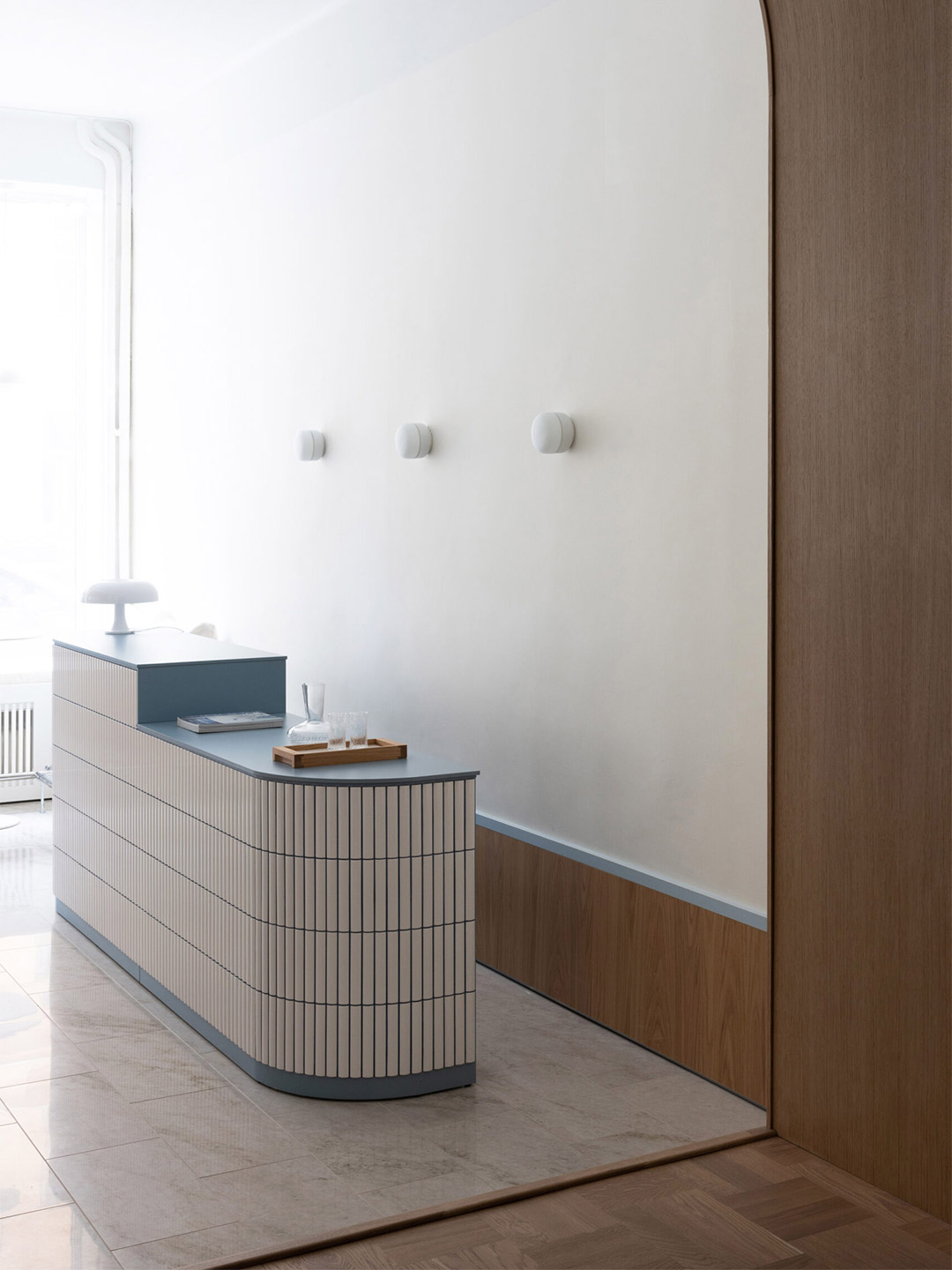
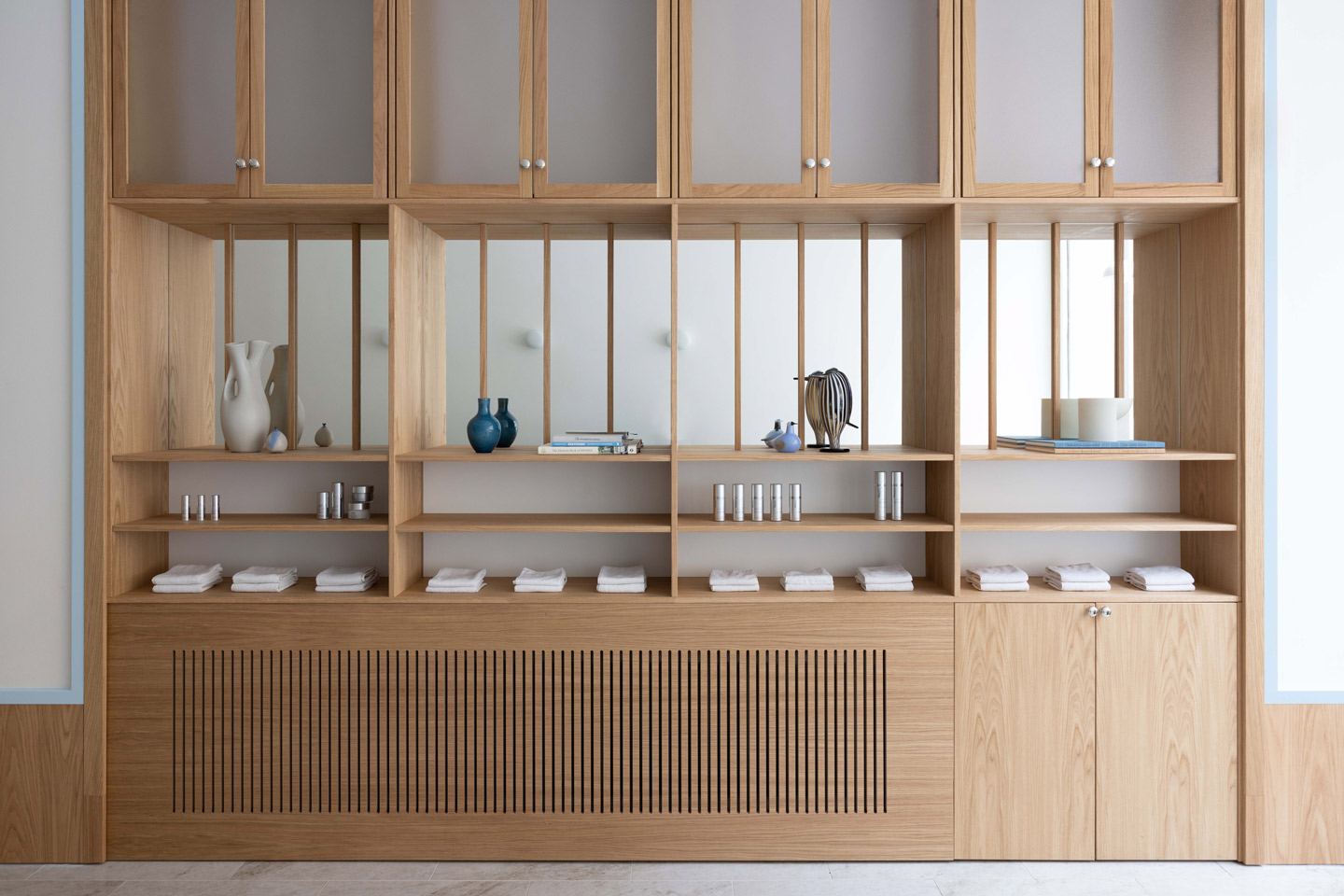
We saw potential in adding luxury, softness and a young vibe to this simple, strict and socialistic style.
Renesa Architecture also created the Tin Tin bar and restaurant in India. Catch up on more architecture, art and design highlights. Plus, subscribe to receive the Daily Architecture News e-letter direct to your inbox.
Related stories
- Introducing the New Wave collection of 80s-inspired vases by Greg Natale.
- Greg Natale launches 70s-inspired glassware (and a signature cocktail for summer).
- Swatch list: Kelly Wearstler curates paint range for Farrow & Ball.
- Stokes 14: Architect William Smart’s creative studio in Sydney.
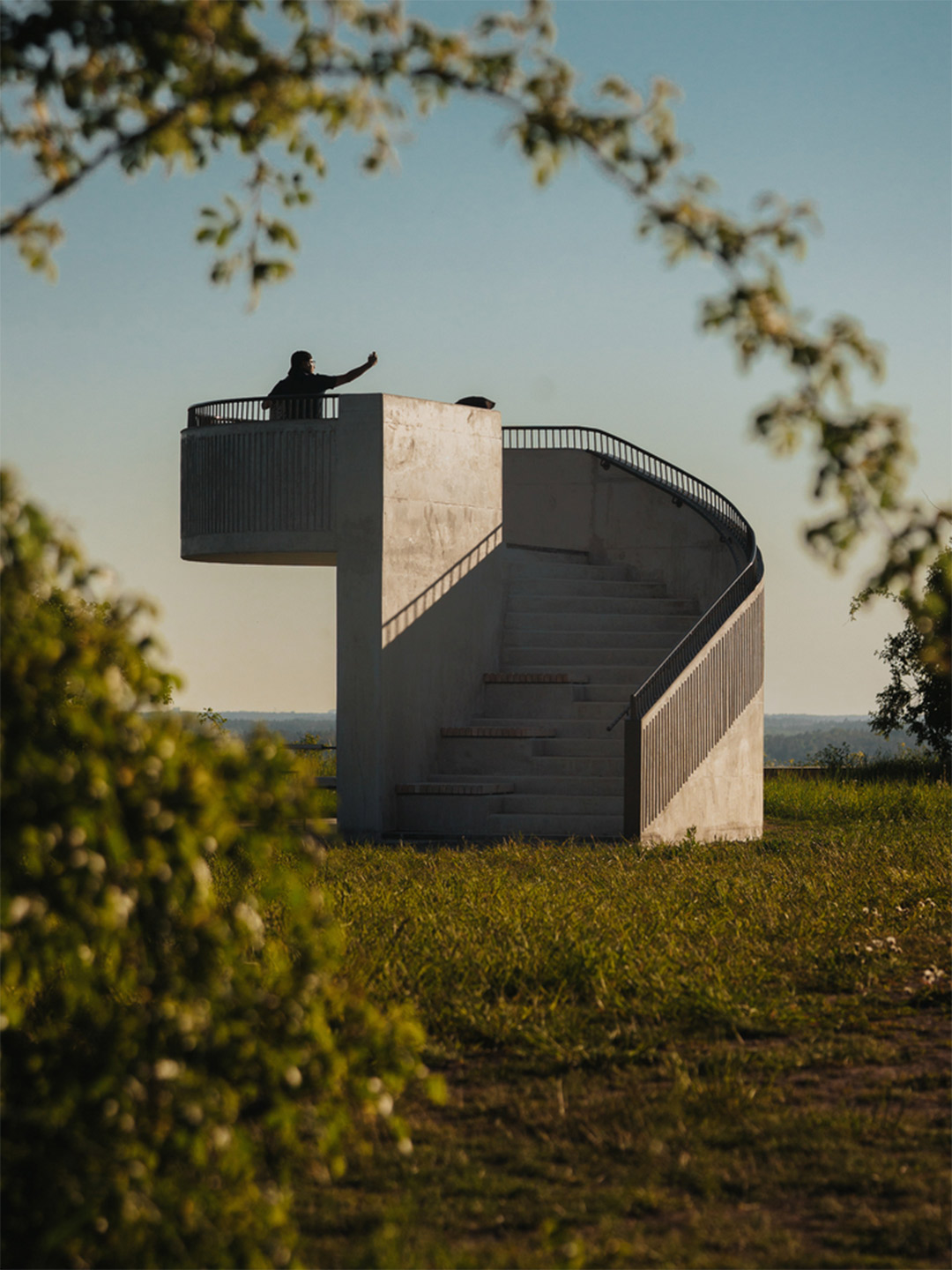
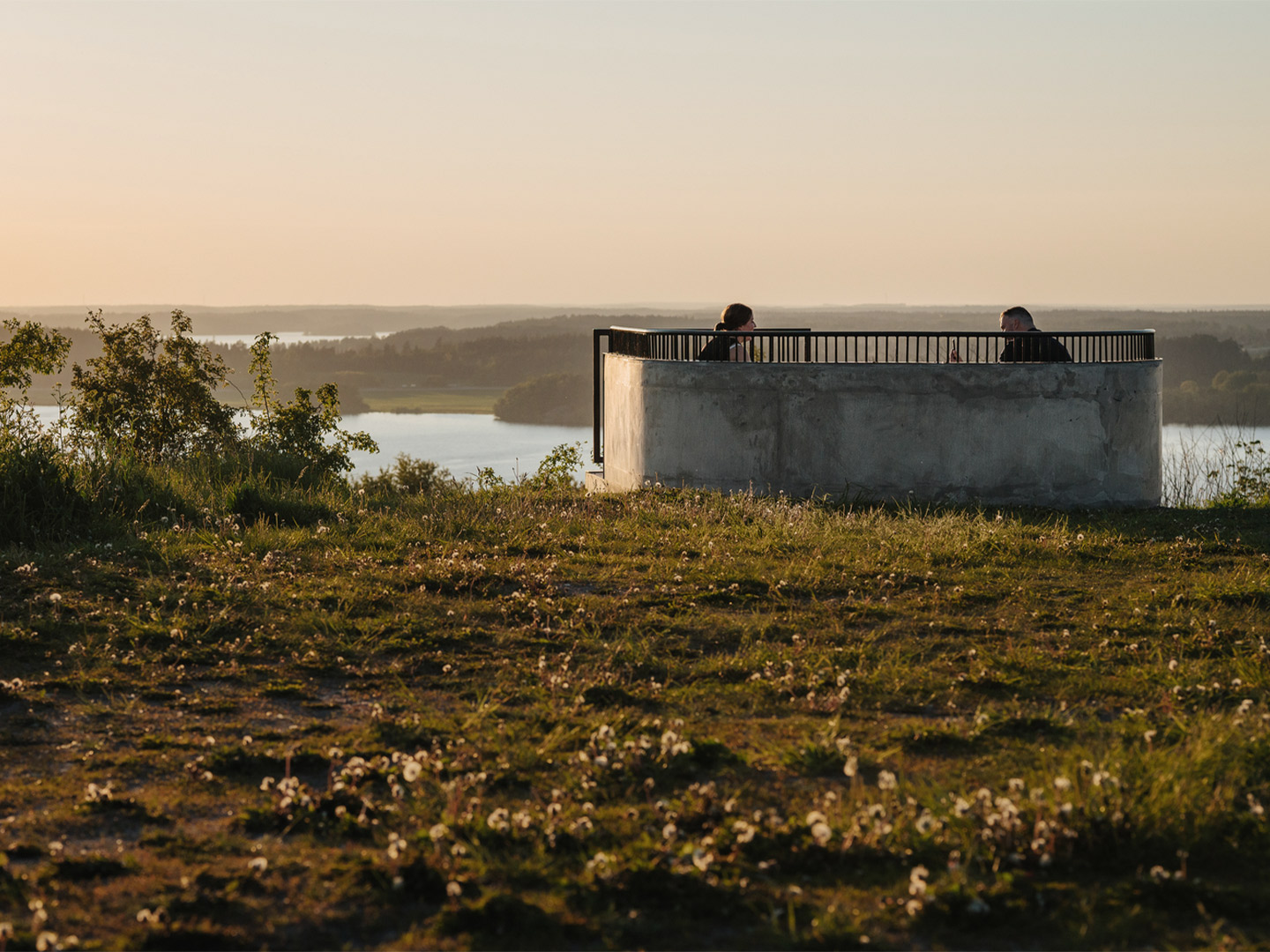
Vårbergstoppen is an artificial park landscape in Stockholm that was first established after landslides from the nearby subway construction in the 1960s. The city gardener at the time, Holger Blom, led the process of designing two artificial peaks on the site, positioned around a circular crater with a perfect diameter of 100 meters.
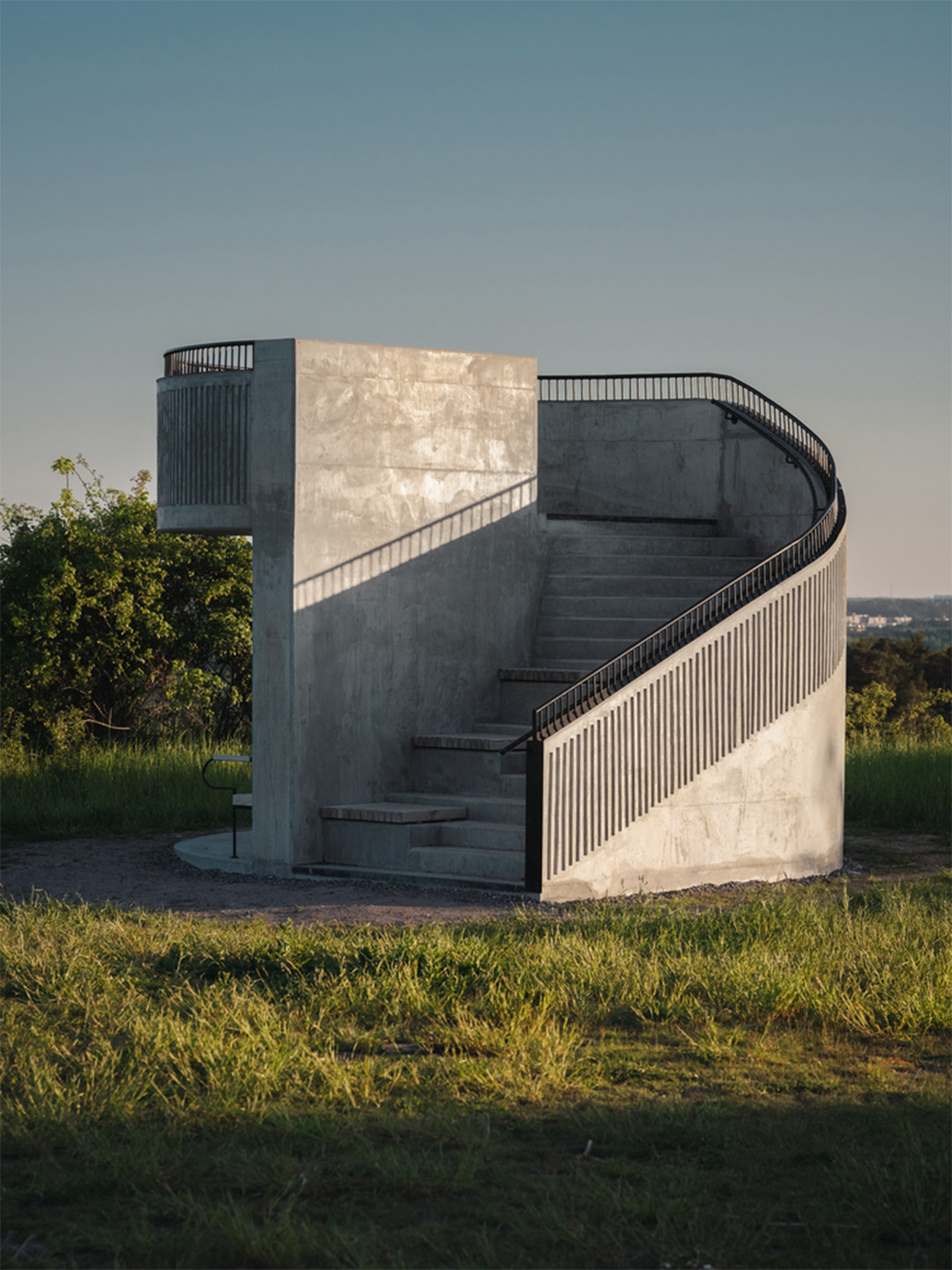
In recent times, the fabricated character of the landscape and its clear geometry was a source of inspiration for Andrén Fogelström, the local architects responsible for designing a suite of lookout points, bird towers, signs and play equipment for the refurbished parkland.
Concrete bird-watching pavilions in Stockholm by Andrén Fogelström
The work marks a new chapter of development at Vårbergstoppen, aligned with the region’s population growth; the city of Stockholm is moving towards a “cared-for” park with activities for residents all ages. But human visitors aren’t the only cohort that need consideration, explains the architects. “Migratory birds navigate with the help of heights in the landscape, and the place is therefore a well-known destination for bird watching,” they say.
To carve out an enriching experience for all visitors to Vårbergstoppen, the architects, together with the traffic office and the Stockholm Ornithological Society, imagined a “hiding place for ornithologists”; a place defined by a series of lookout points and towers that “create stay value and attractiveness” for the general public as well as bird enthusiasts.
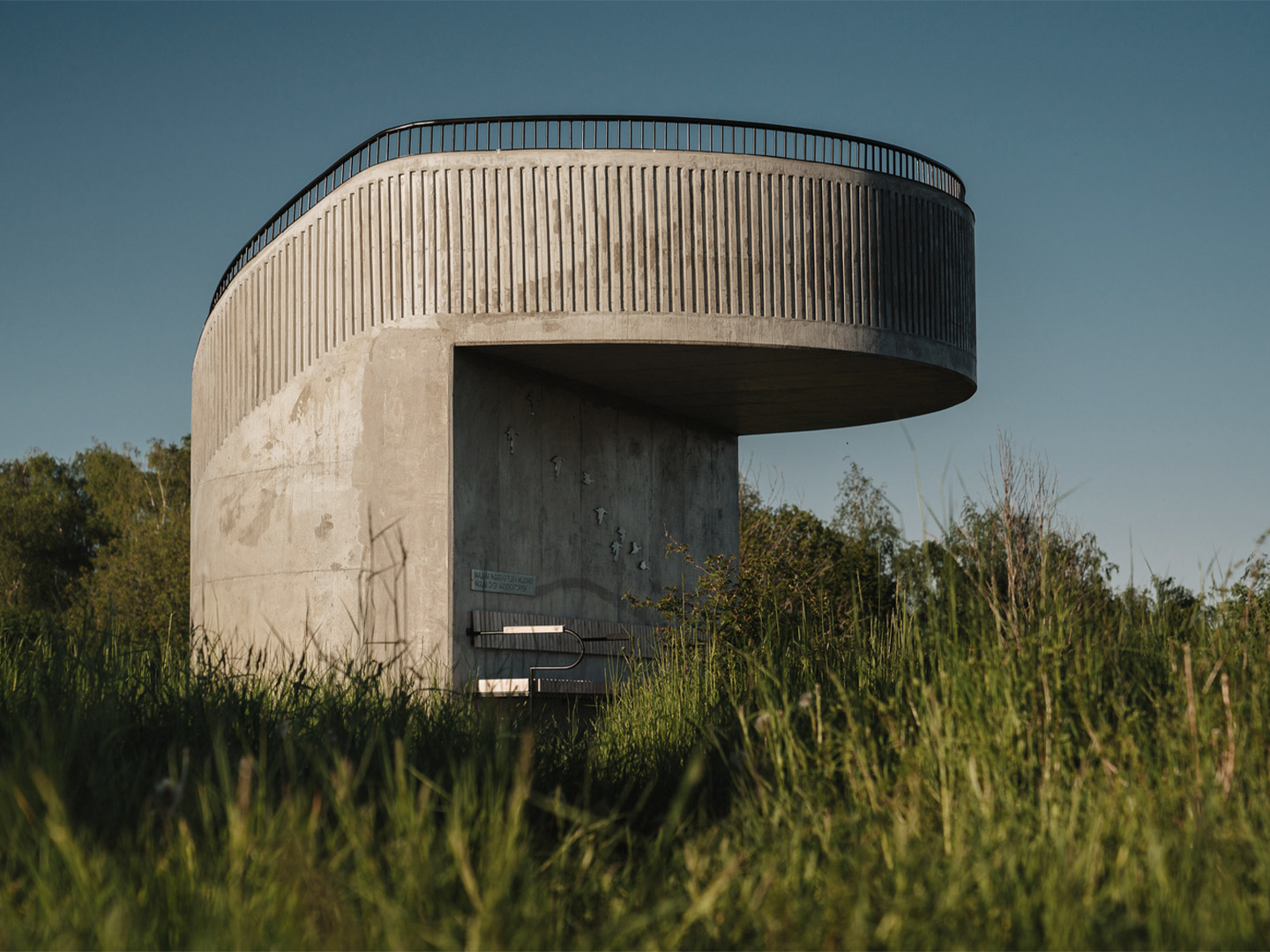
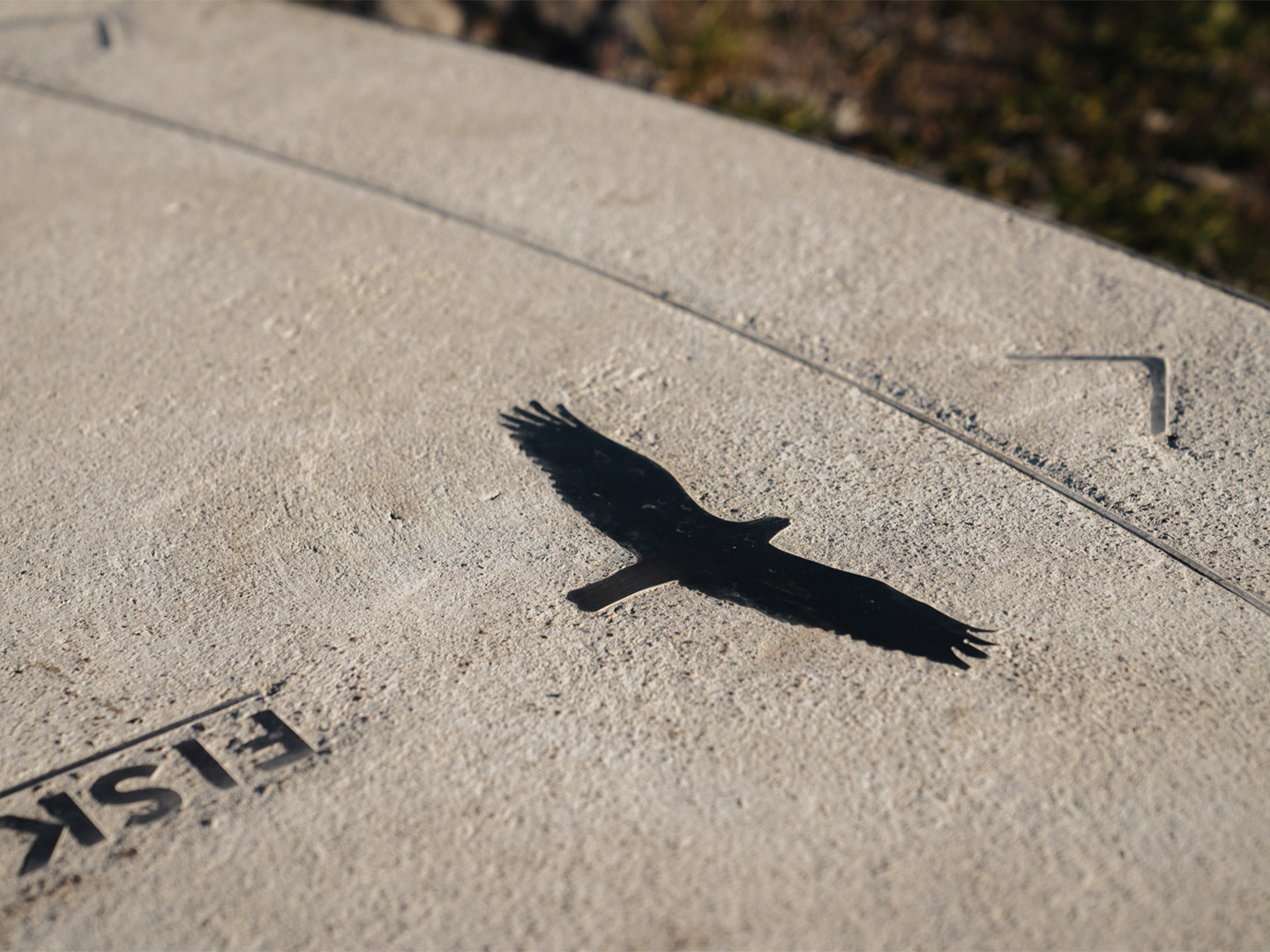
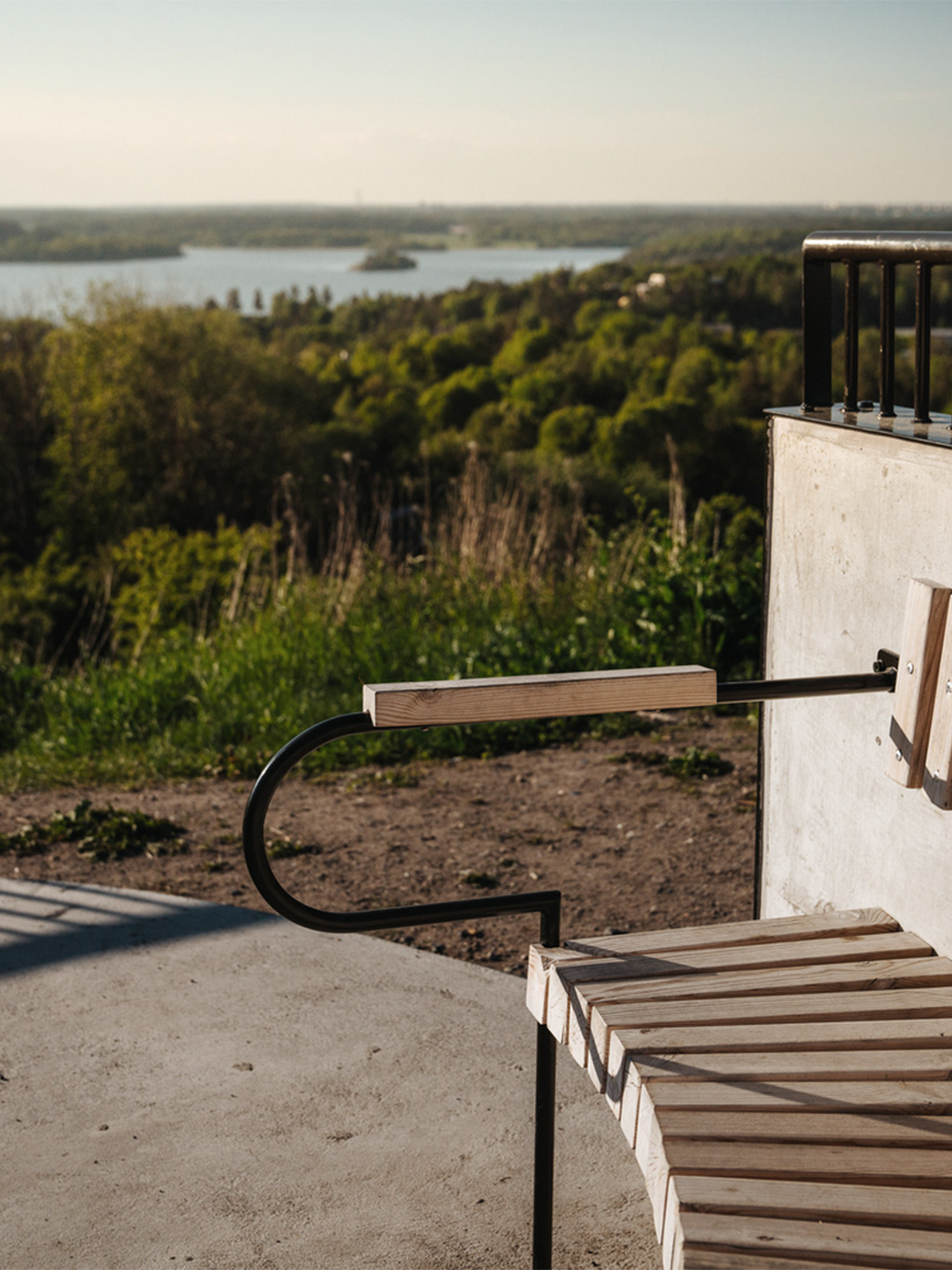
At the highest northern peak of the park, there is a low windbreak with a rounded bench that faces the view. A low “compass rose” is embedded in the ground, indicating the direction and distance for both the birds’ migration and physical locations. On the lower southern peak, visitors will find a lookout tower with weatherproof seating and a terrace from which to enjoy spectacular views of lake Mälaren.
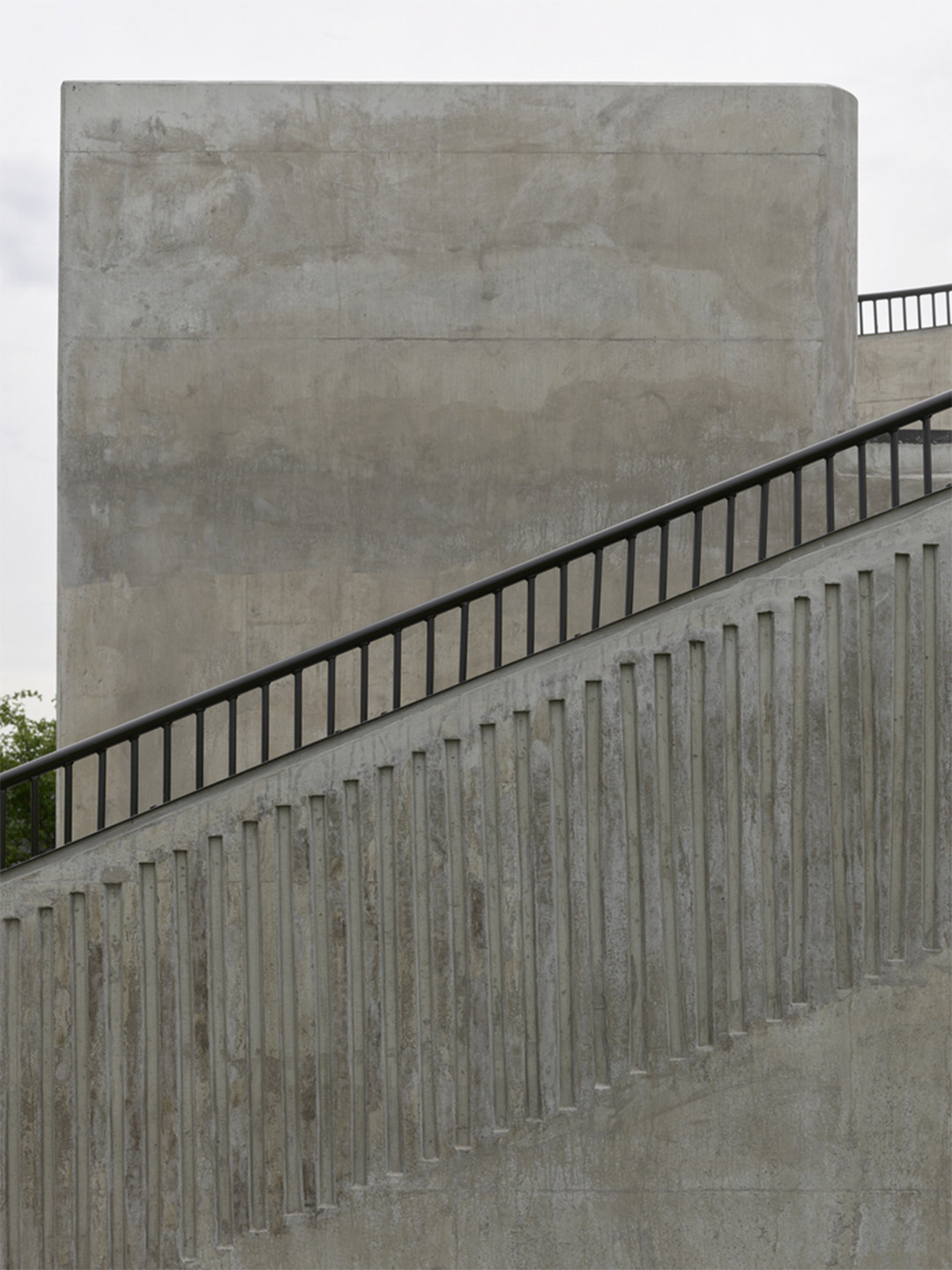
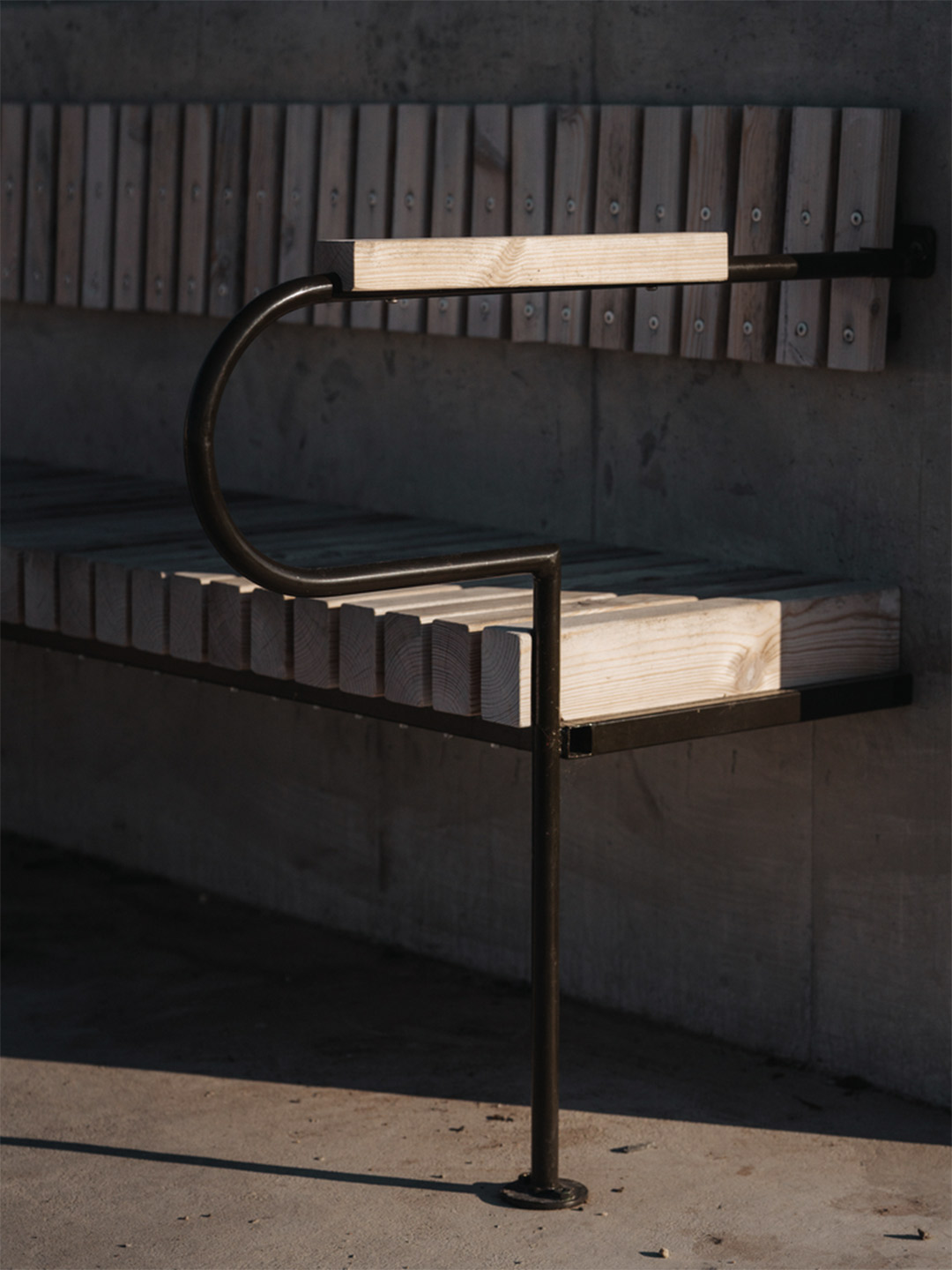
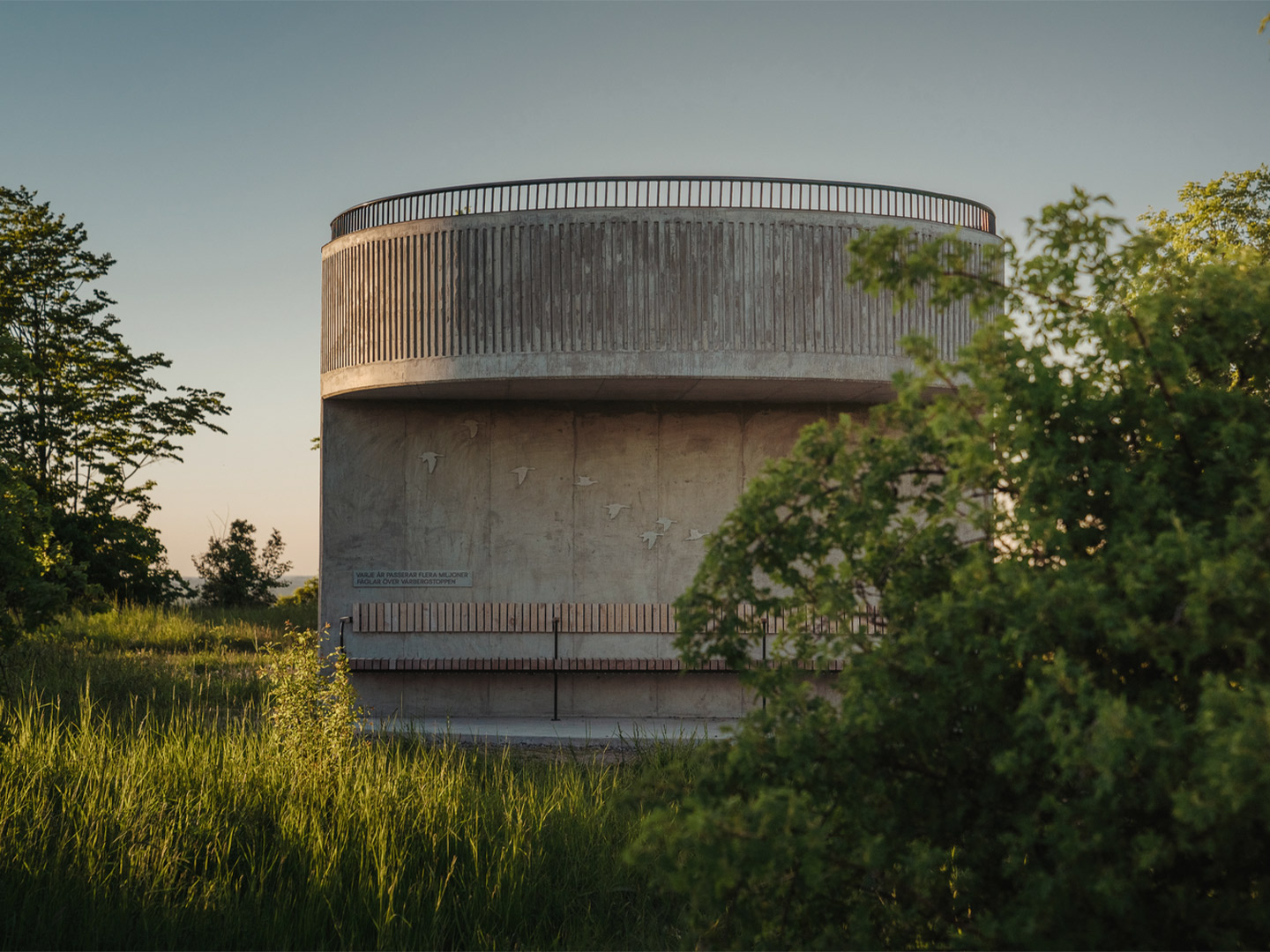
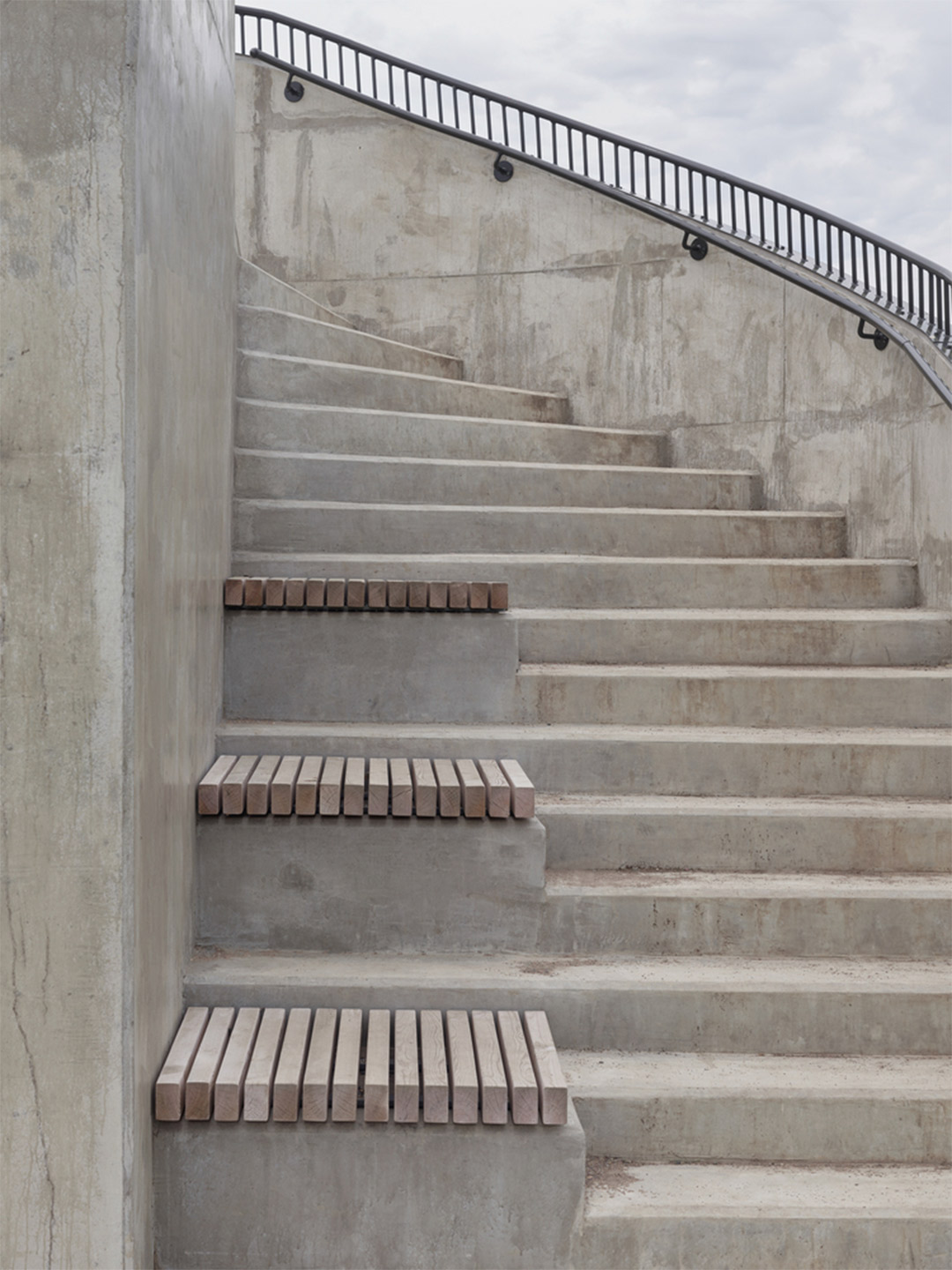
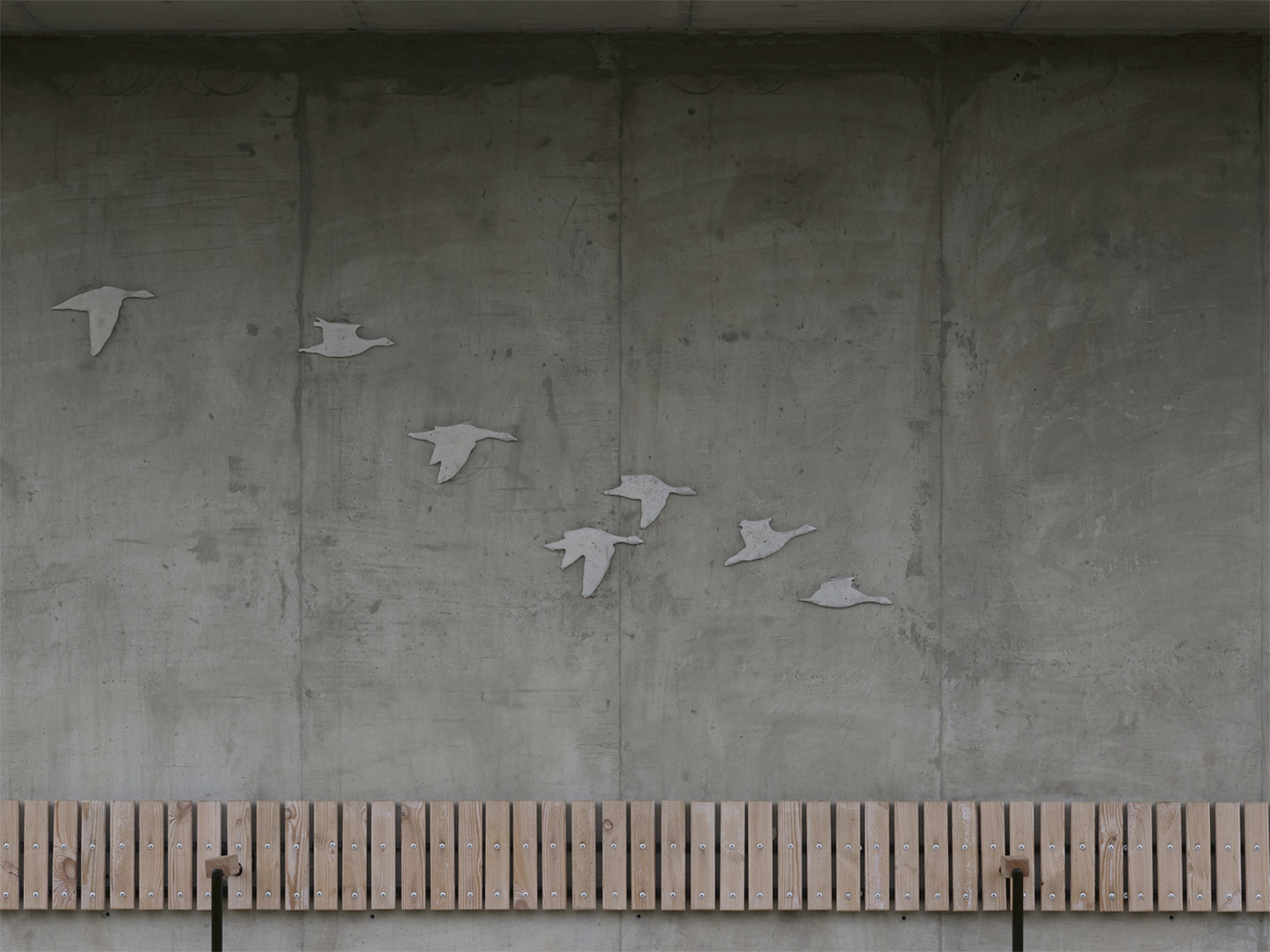
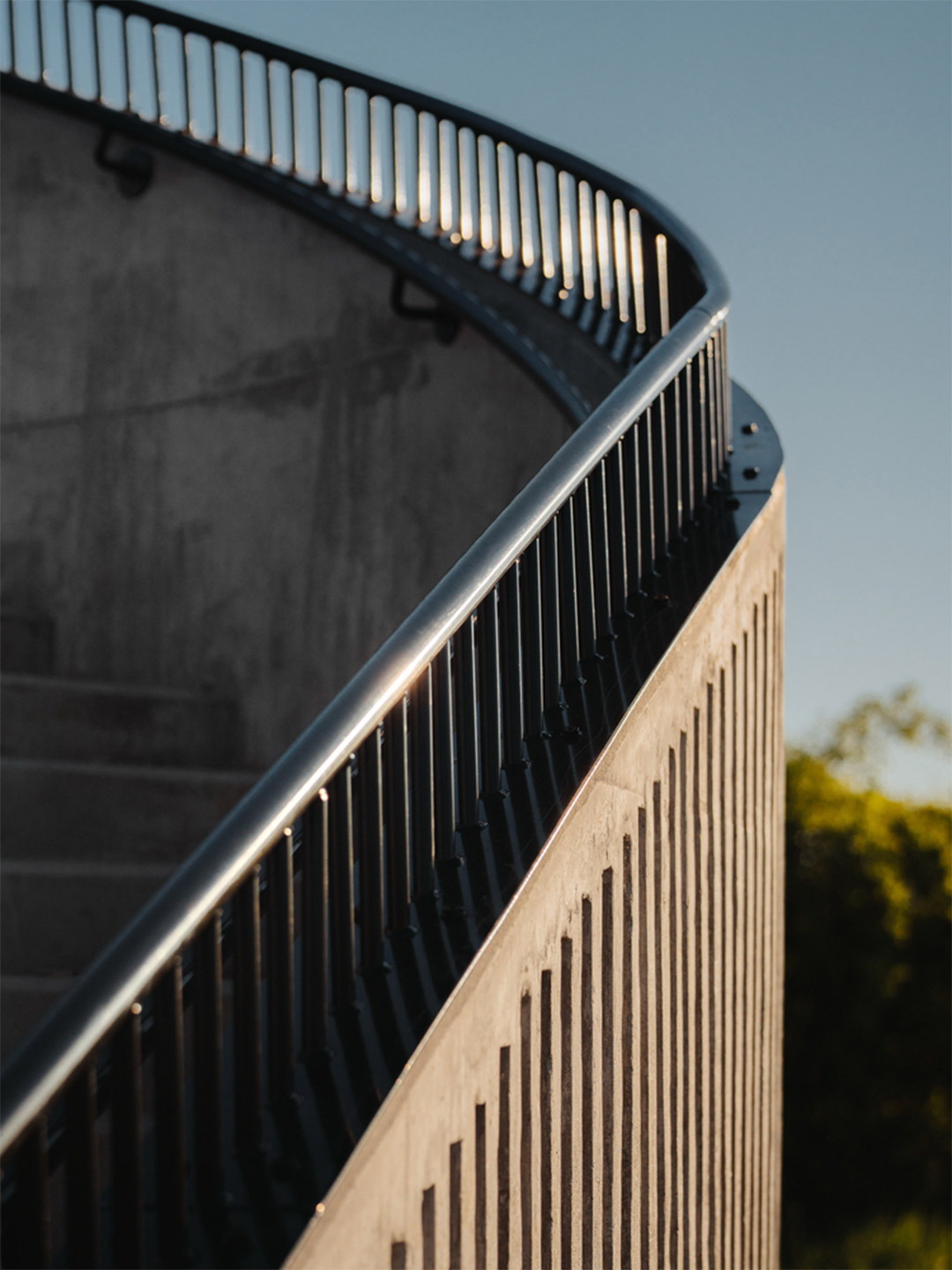
In the slope below the southern peak, there is a hiding place where visitors can watch the birds that fly in and out of the thickets nearby. As with all of the new lookouts, the structure is made from bright concrete, poured on-site. “The light concrete structures are all based on the circle’s perfect geometry and are made with details in lacquered steel and wooden benches,” the architects conclude.
Migratory birds navigate with the help of heights in the landscape, and the place is therefore a well-known destination for bird watching.
Catch up on more architecture, art and design highlights. Plus, subscribe to receive the Daily Architecture News e-letter direct to your inbox.
Related stories
- ‘The Apple tree’ by Foster + Partners blossoms in Bangkok.
- Carla Sozzani curates new colours for classic Arne Jacobsen chairs.
- Adam Goodrum stamps all-Australian style on new breezeblock design.
In conjunction with Gothenburg’s 400th anniversary, The Röhsska Museum is presenting speculative conceptualisations for public space in the Swedish city. Titled Architecture Projects: Brunnsparken, the exhibition explores imaginative visions for one of Gothenburg’s most talked-about spaces – known as Brunnsparken – by eight teams of architects and designers.
The teams were asked to present their “utopian visions” through the traditional means of a plan drawing, a model, a manifesto and inspirational objects.
Offering a material manifestation that recalls something we all long for after the pandemic – the public party – the proposal by Sweden-based architects Bornstein Lyckefors is described as a “party memorial”.
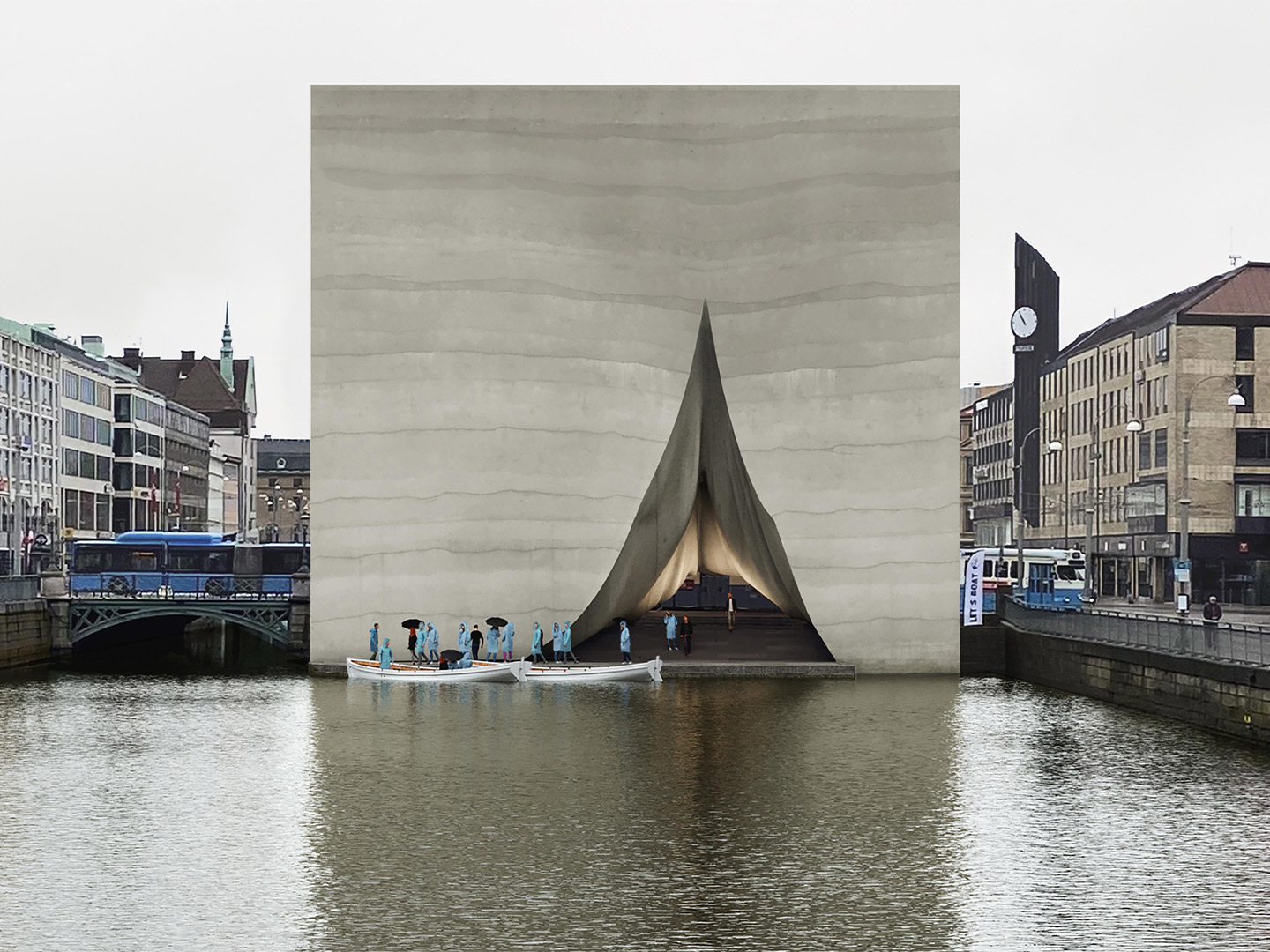
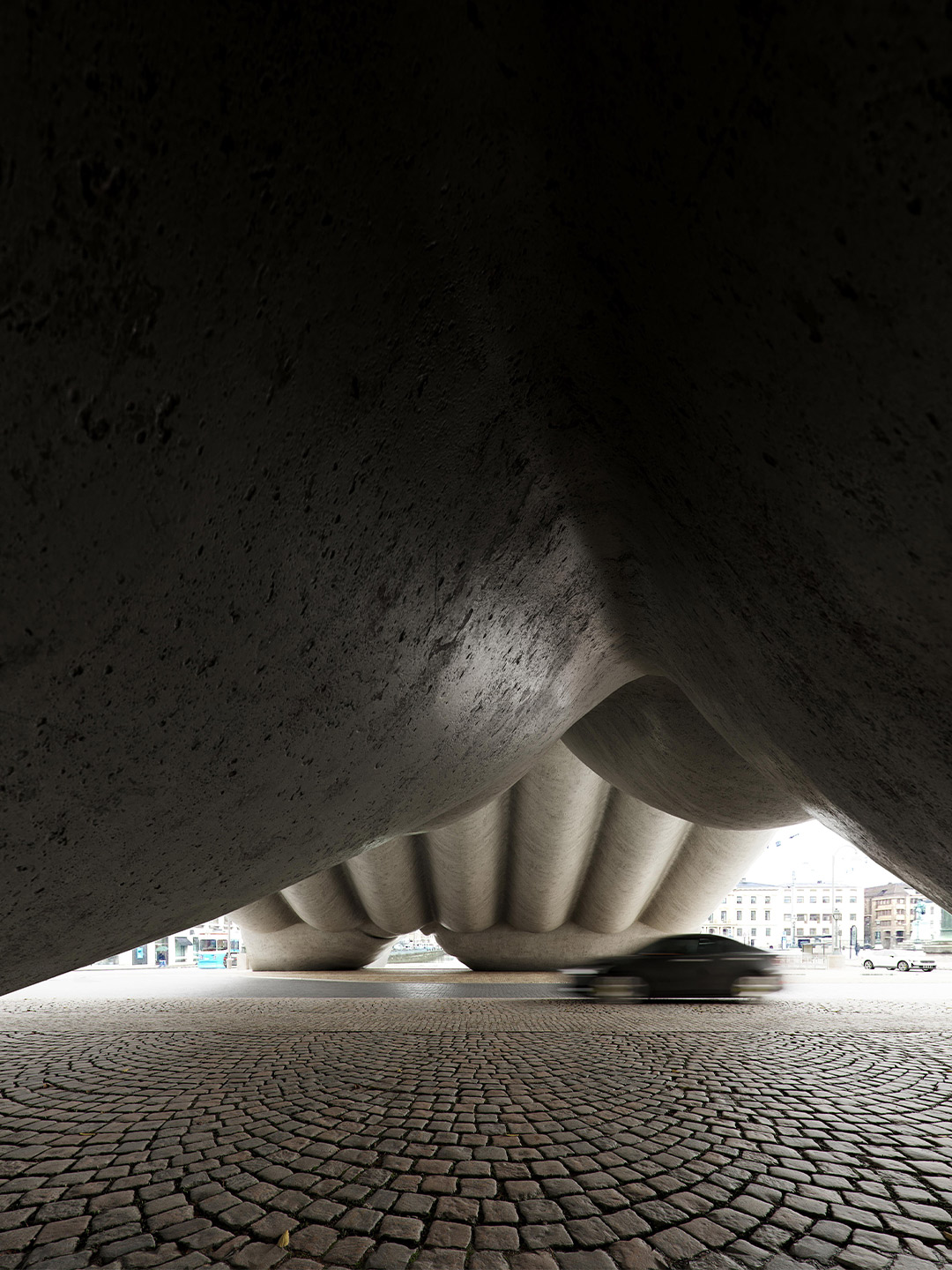
The Brunnsparken ‘party memorial’ in Sweden by Bornstein Lyckefors Arkitekter
“Parties are substantially transient,” explains the Bornstein Lyckefors team, noting that the architectural manifestation of parties typically takes the form of gazebos, temporary marquees and decorated glades: “physical forms that will not last forever.”
The same can be said of the artefacts associated with a party: glitter withers, smoke machines get switched off and plastic party hats are destined for a short-lived existence.
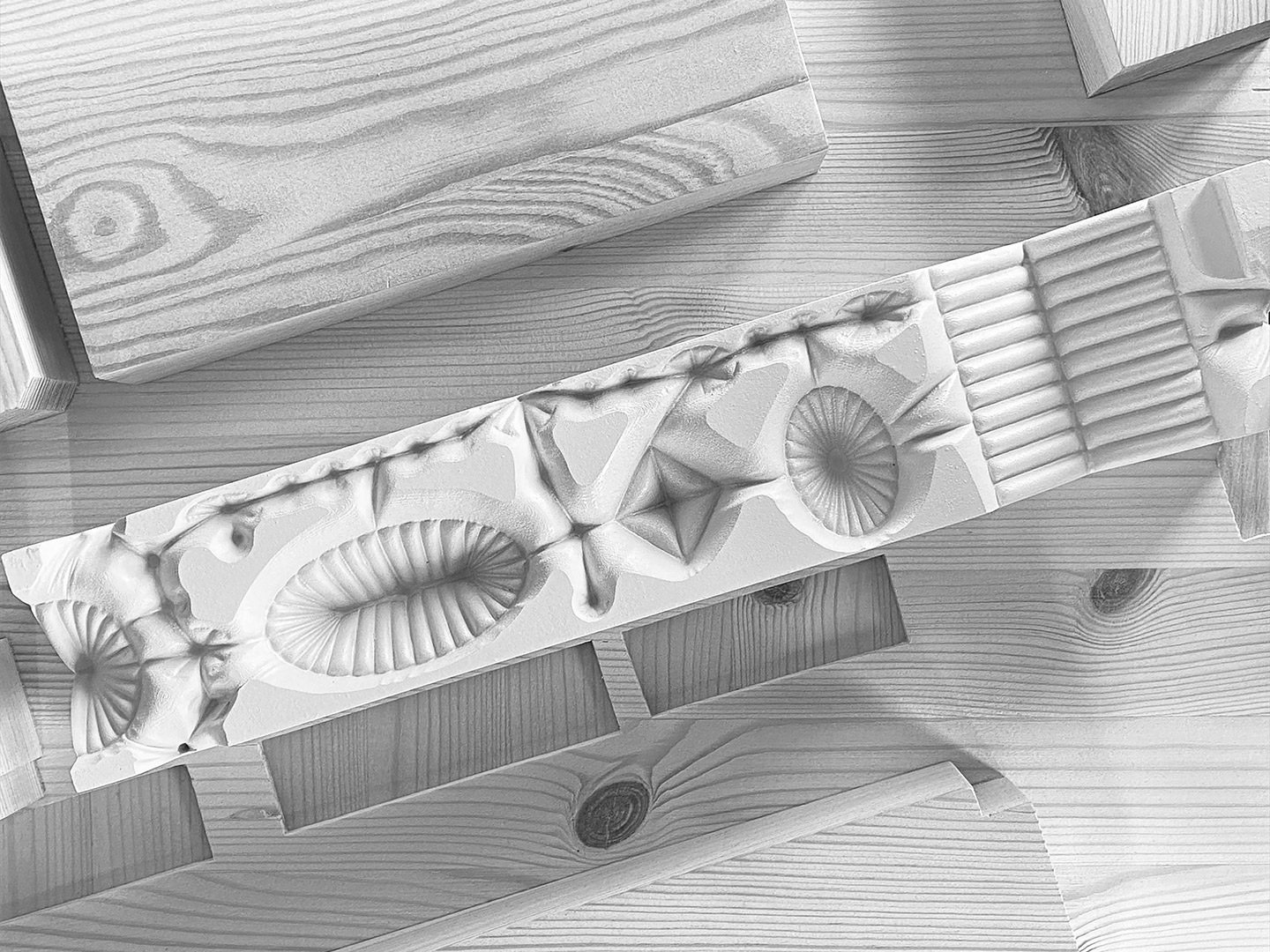
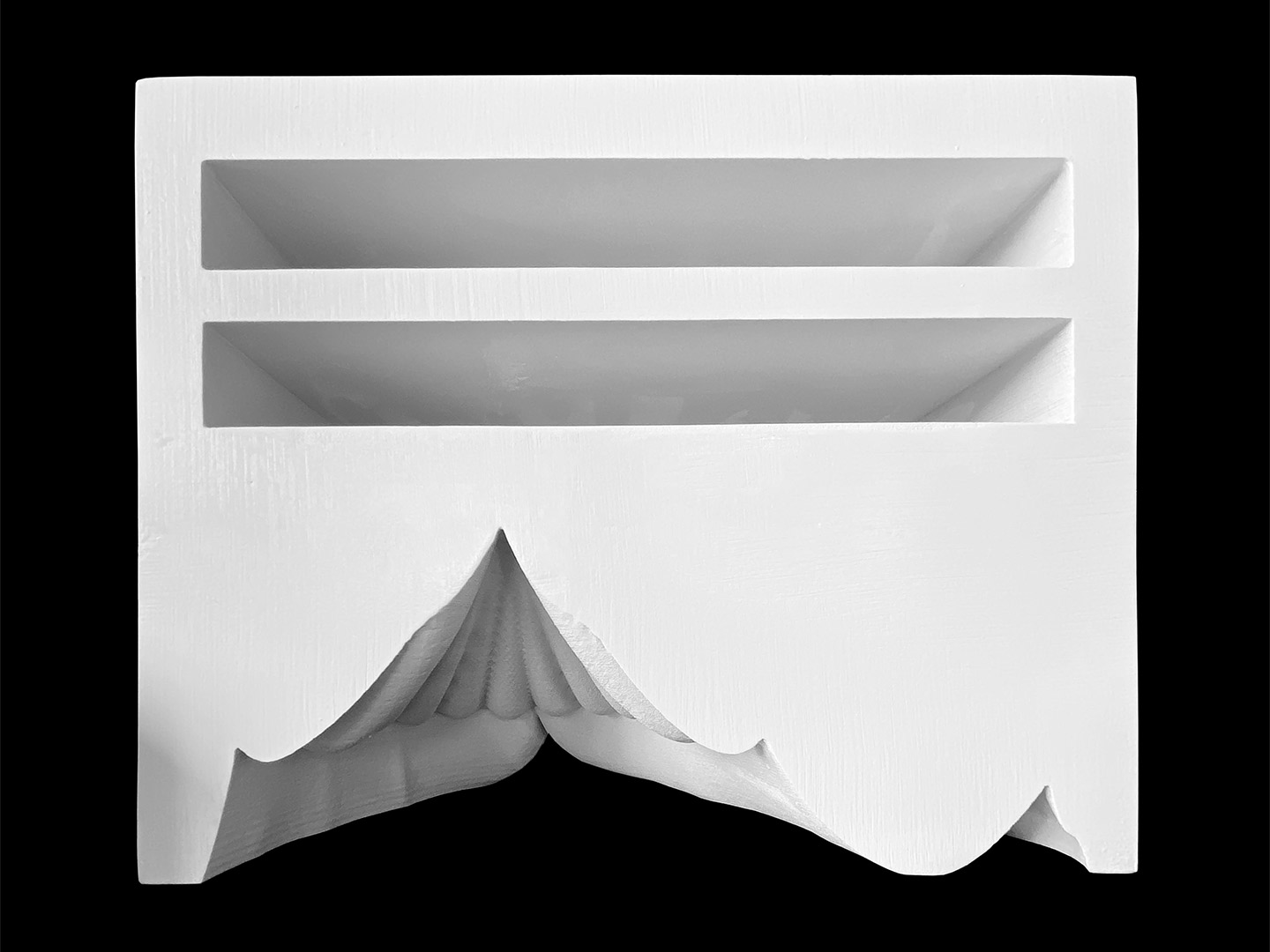
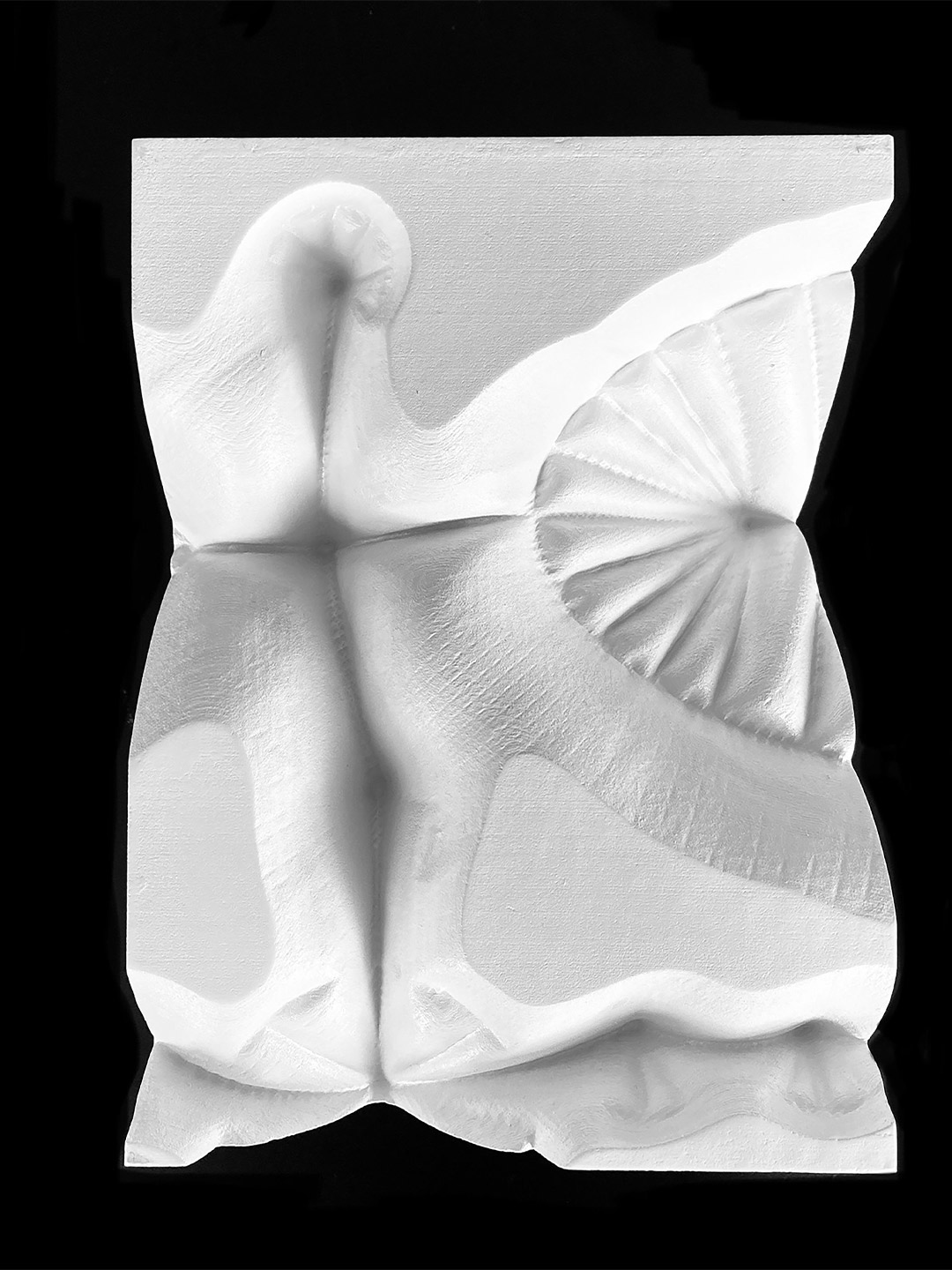
The form of the proposed Brunnsparken monument stems from an experiment by the architects in which a cast was taken of tent structures that shared a single common tarp.
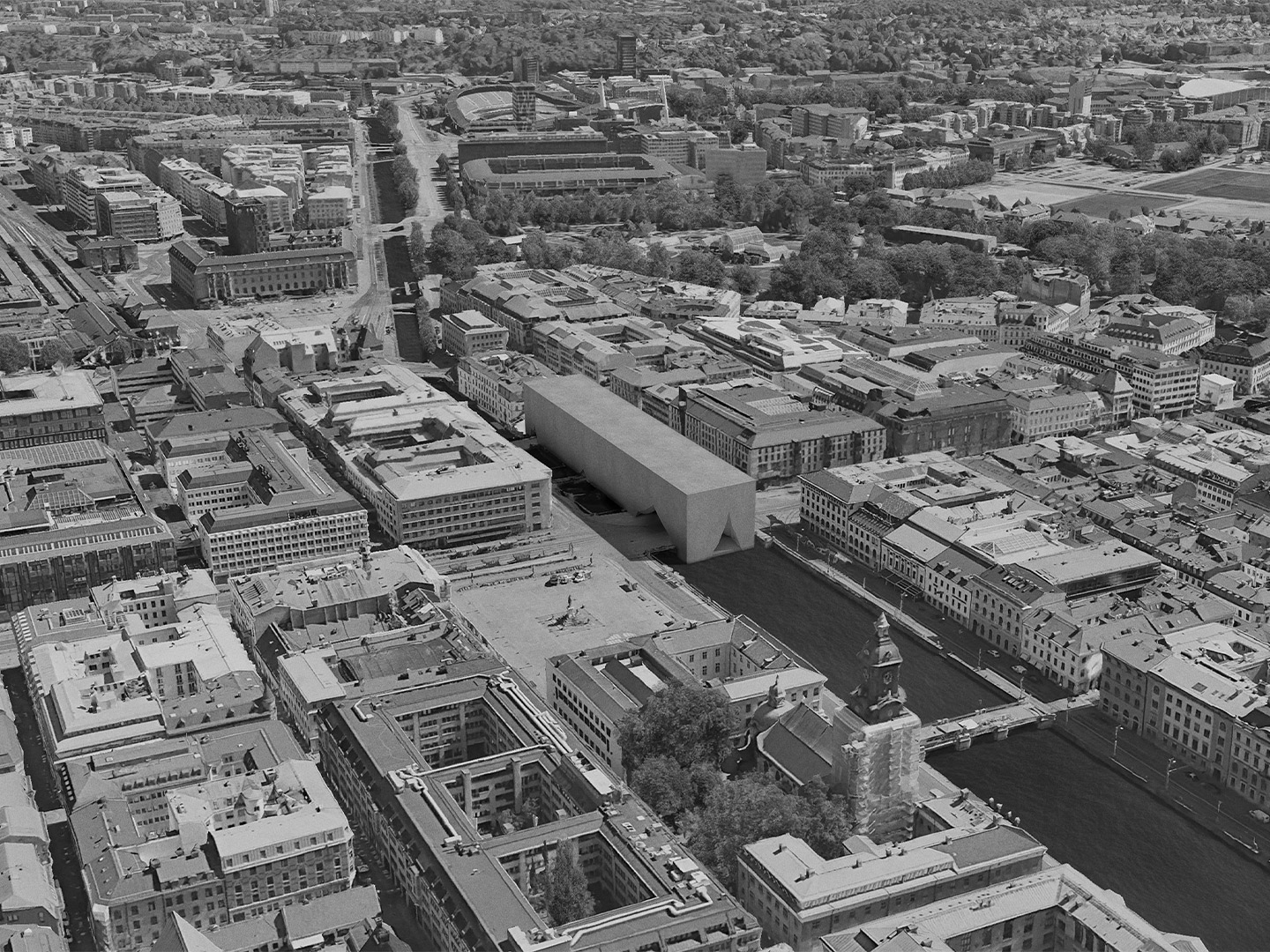
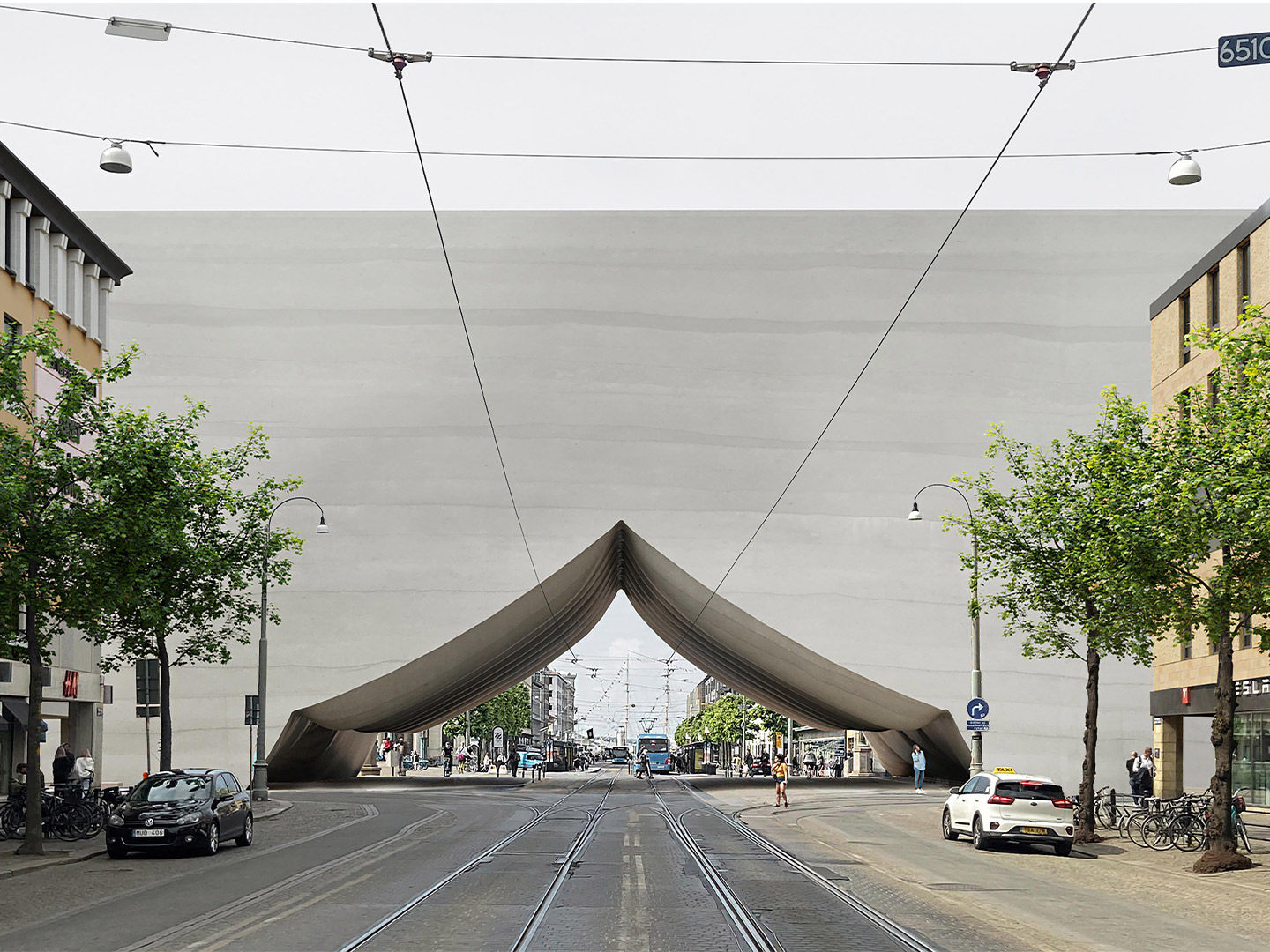
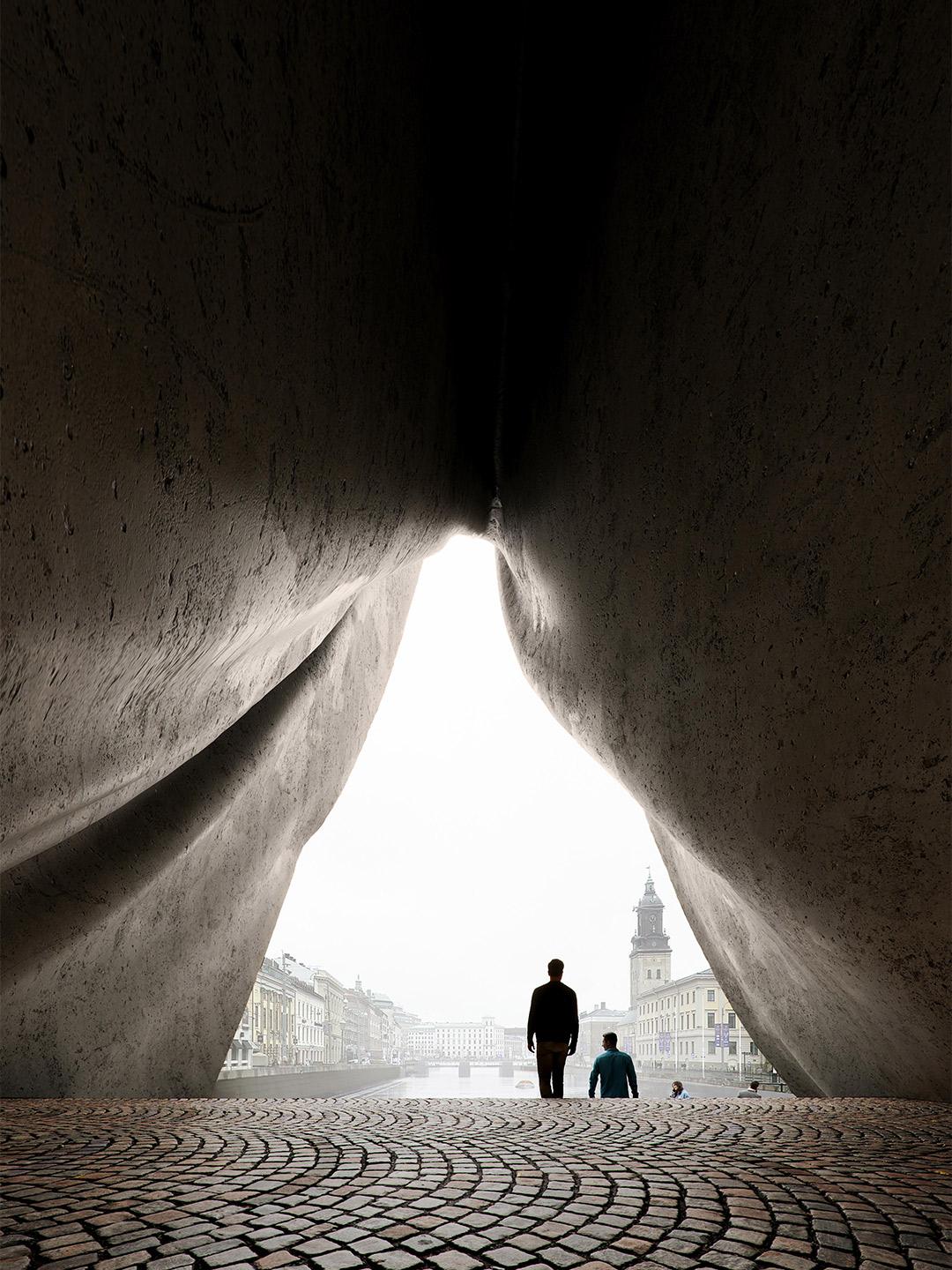
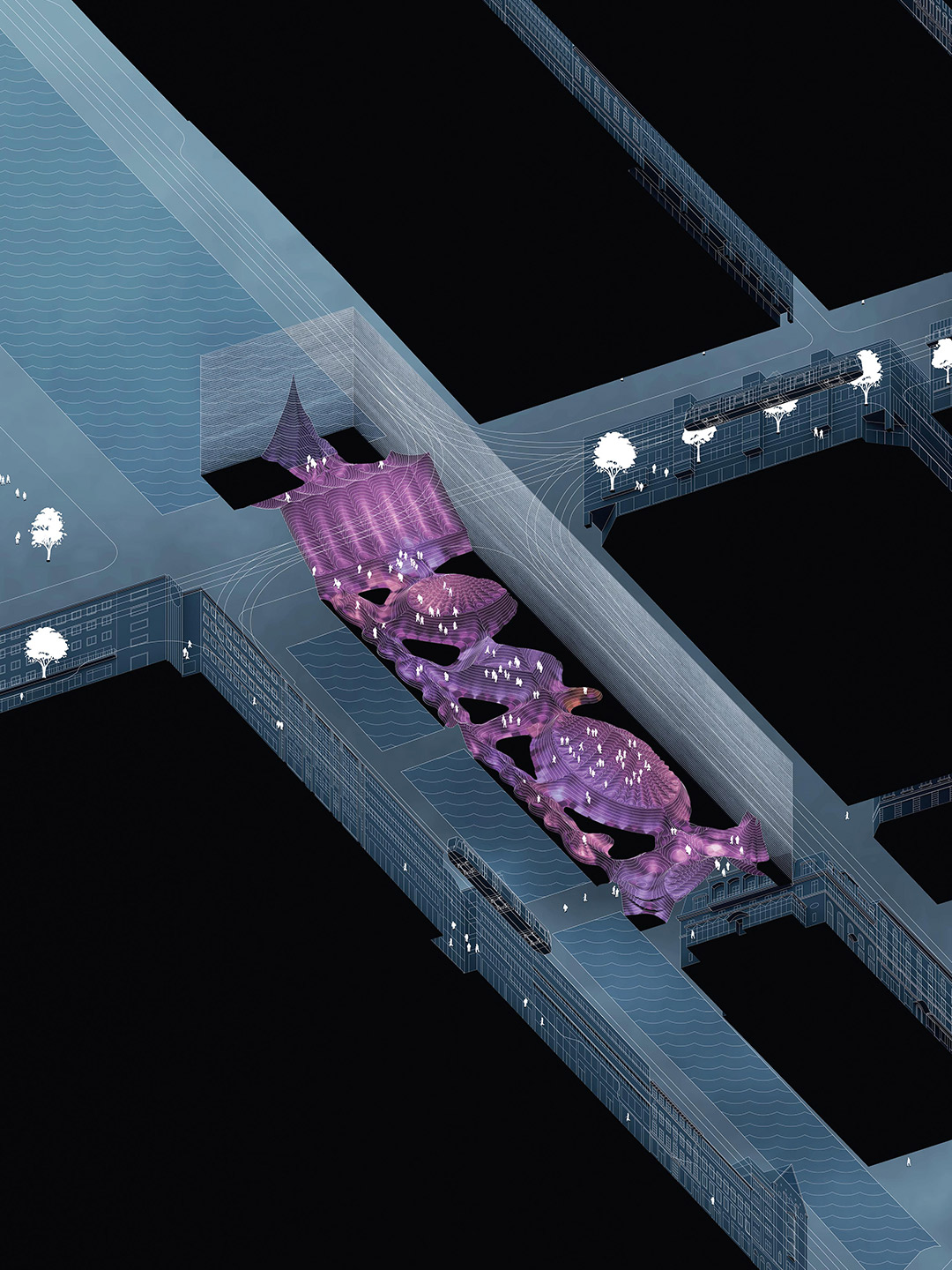
Intended to be cast in concrete, “the imagined monument houses party halls, secret rooms and an archive of party ephemera to encapsulate the perishable nature of parties,” the architects say.
Larger halls are arranged along an axis running between the stone steps of the Lejontrappan building and the 18th-century Palace House. Above the halls sits the archive, and the spaces between them shapes the monument’s hidden rooms.
Trams, motor vehicles and pedestrians would then pass underneath the imposing structure while access to the monument would also be provided by boats arriving from the canal.
Joining Bornstein Lyckefors, the seven other participating exhibitors in the Architecture Projects: Brunnsparken showcase are Erik Järkil Arkitektur, Fabel Arkitektur, Mareld Landskapsarkitekter, Studio Johan Linton, Hedlund/Ekenstam, Unit Arkitektur and Per Nadén Arkitektur.
The exhibition continues until September 26.
The imagined monument houses party halls, secret rooms and an archive of party ephemera to encapsulate the perishable nature of parties.

Catch up on more architecture, art and design highlights. Plus, subscribe to receive the Daily Architecture News e-letter direct to your inbox.
Related stories
- ‘The Apple tree’ by Foster + Partners blossoms in Bangkok.
- Carla Sozzani curates new colours for classic Arne Jacobsen chairs.
- Adam Goodrum stamps all-Australian style on new breezeblock design.
Swedish fashion brand Axel Arigato is fond of describing itself as a “digitally native” business. So the steady expansion from online to offline, by way of bricks-and-mortar stores, is not only a surprising move – it’s one that bucks the trend. After launching its first physical store in 2016, Axel Arigato has continued to expand its presence; putting its foot in the door of cities that are key to business growth. The latest store to join the enlarging lineup is located in the Marais district of Paris. Backdropped by a lively neighbourhood, where many French traditions remain intact, the Axel Arigato store disrupts the typical retail model.
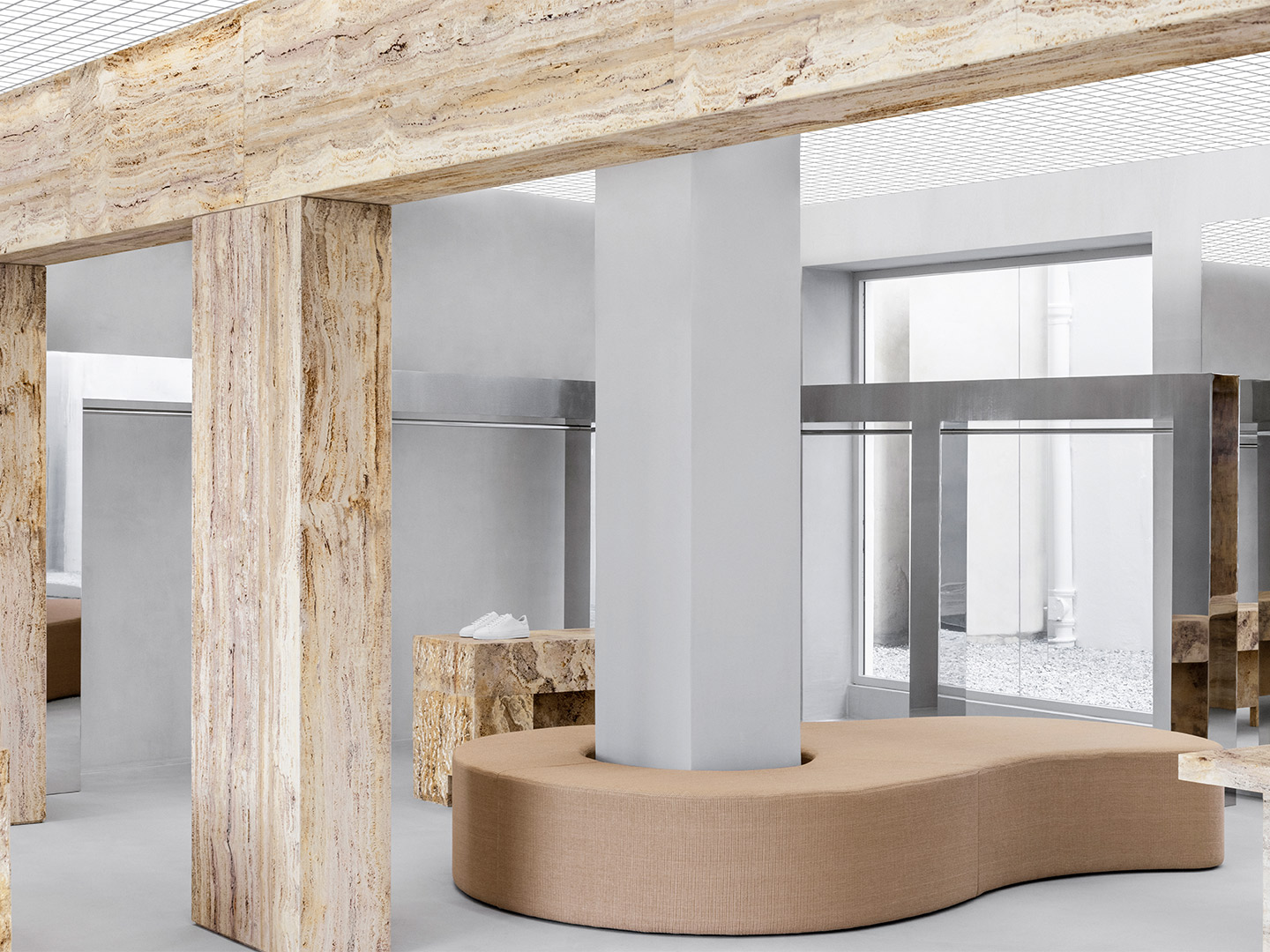
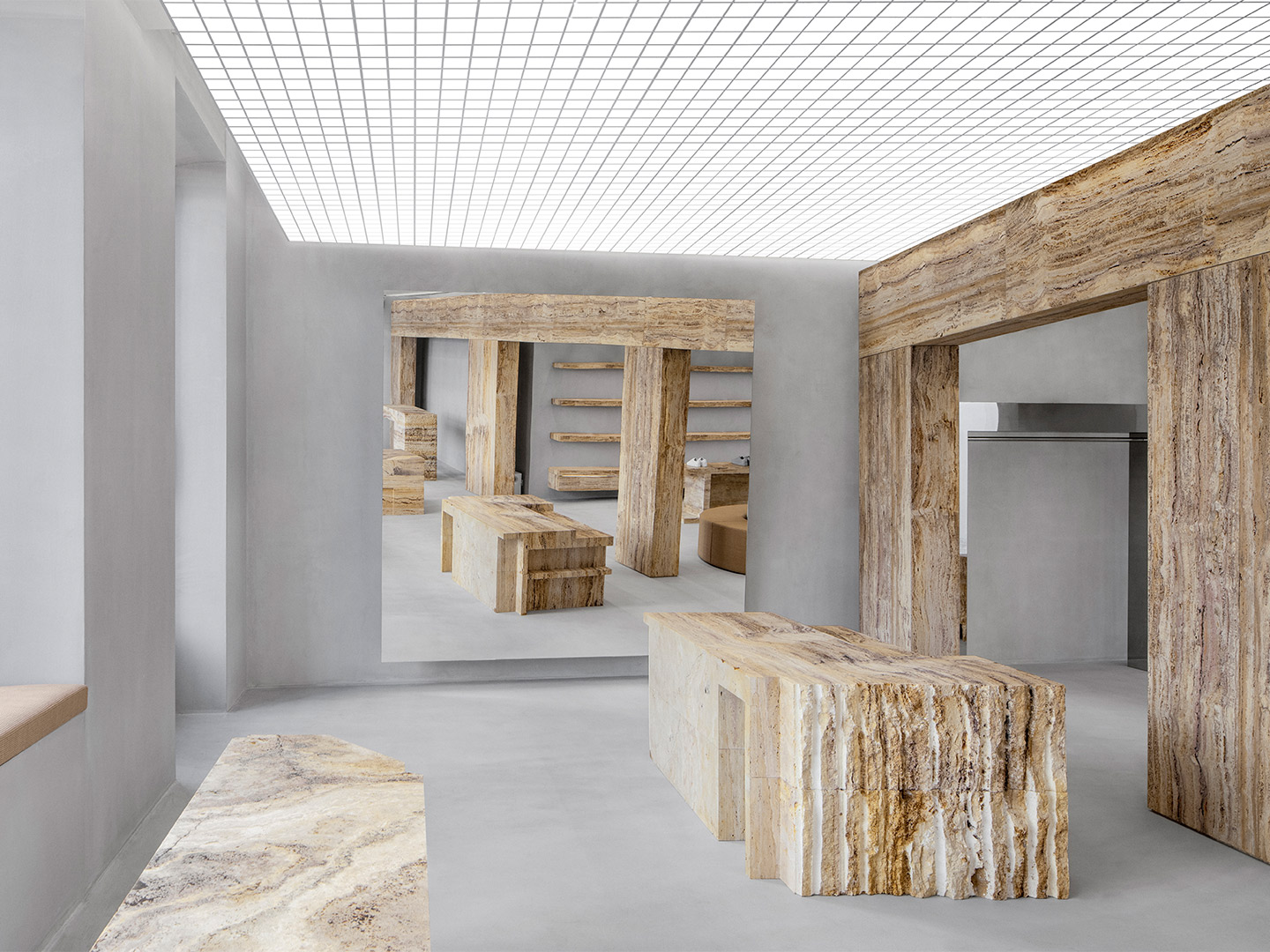
Designed by Scandinavian architecture studio Halleroed, the outlet is driven by the desire to forge real connections with customers, inviting them into a unique experience of the world of Axel Arigato. The store’s aesthetic is glaringly modern, combining art gallery techniques with classical architecture references, as well as different materials and colours. The clean and bright colour palette blends brutalism with minimalism as the sleek interiors juxtapose the robust use of concrete.
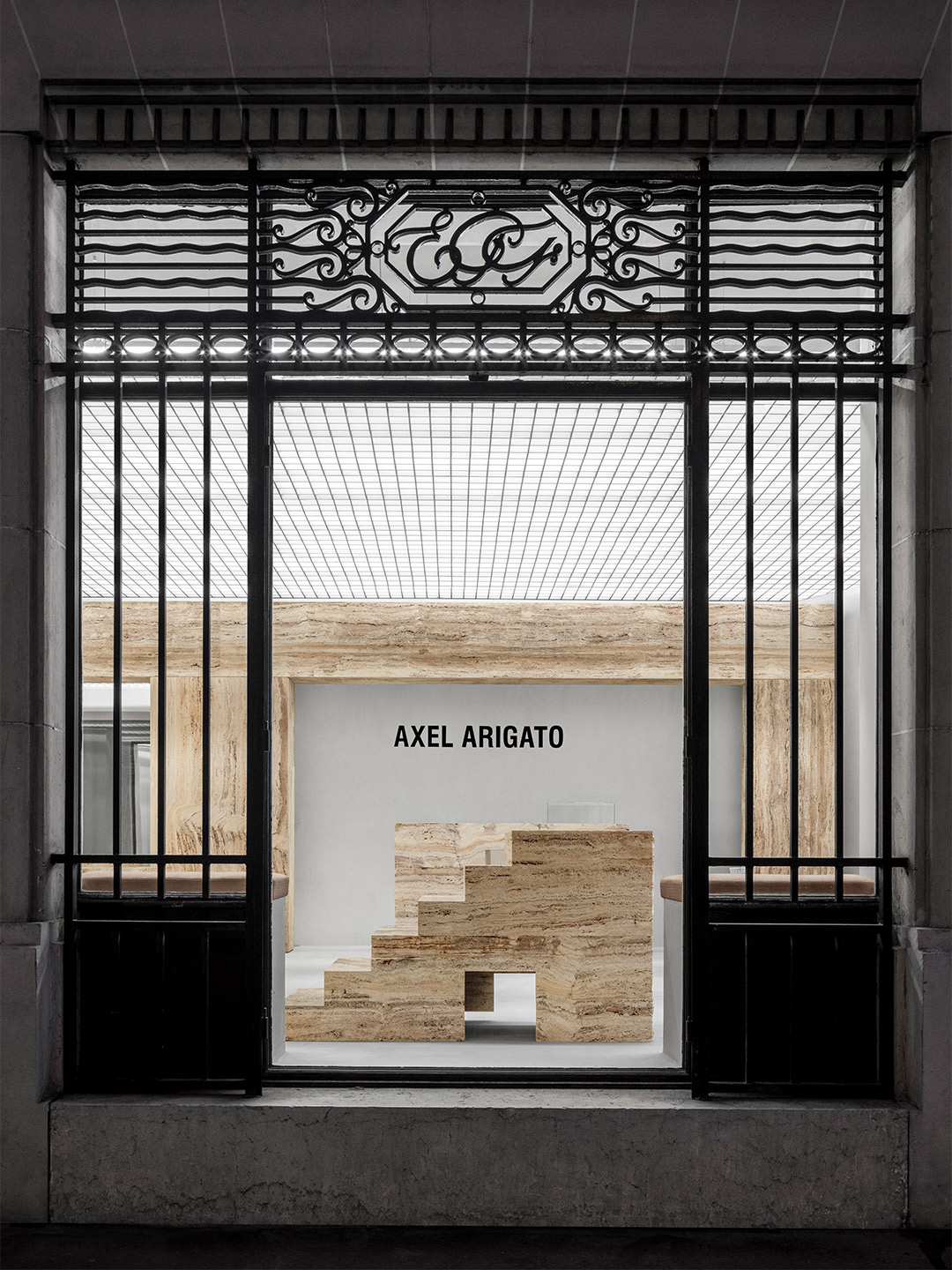
Axel Arigato Paris by Halleroed
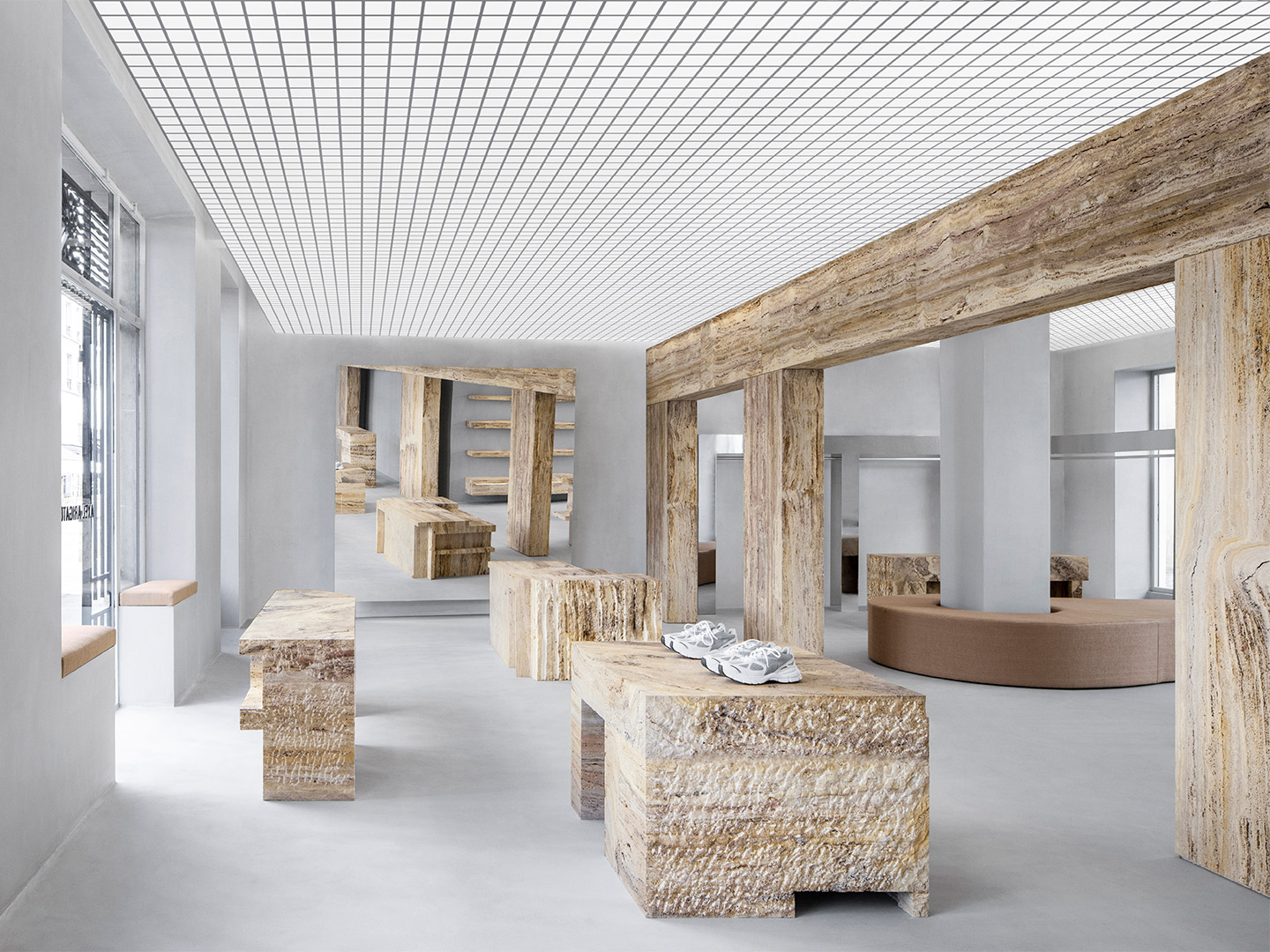
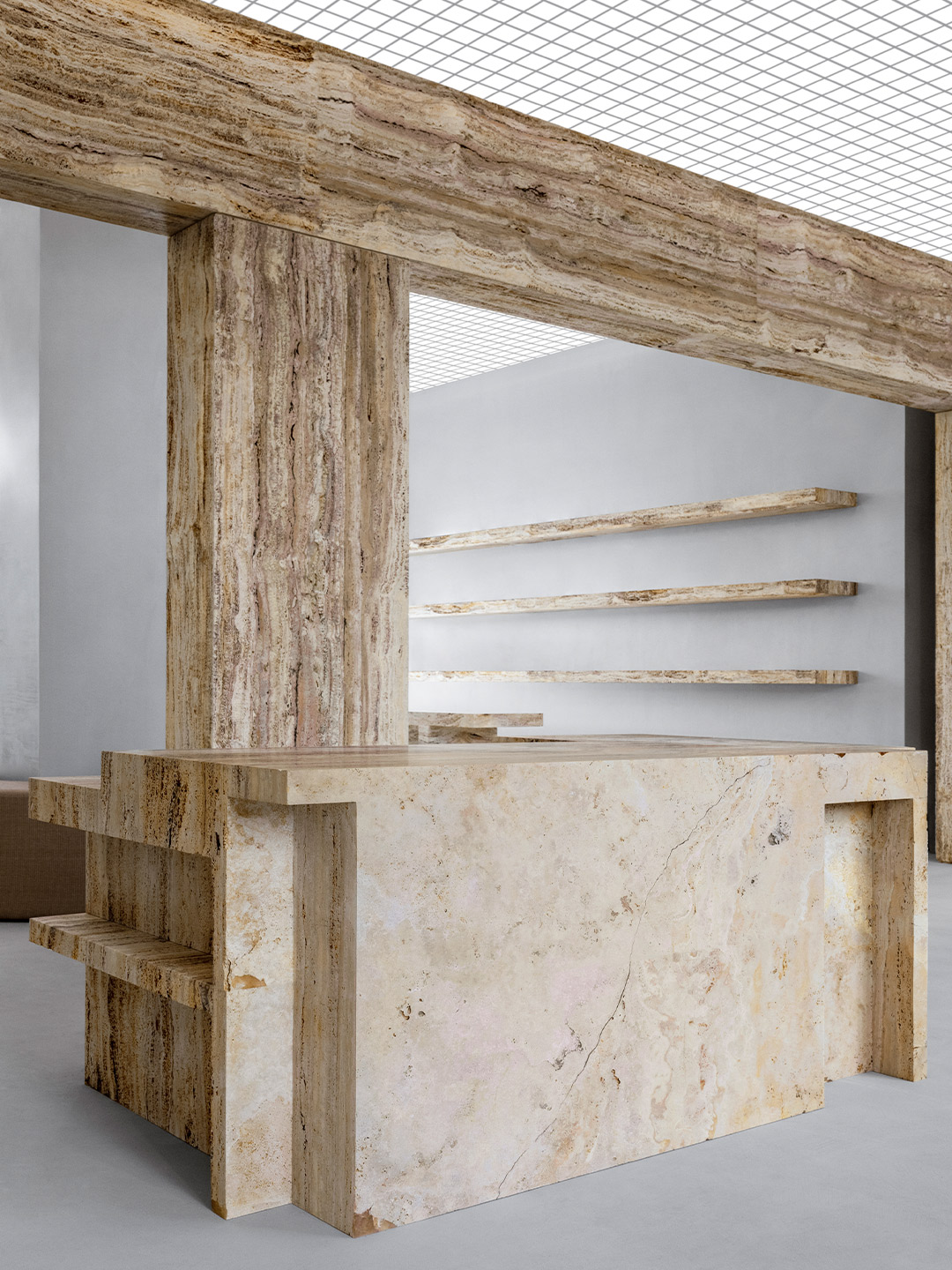
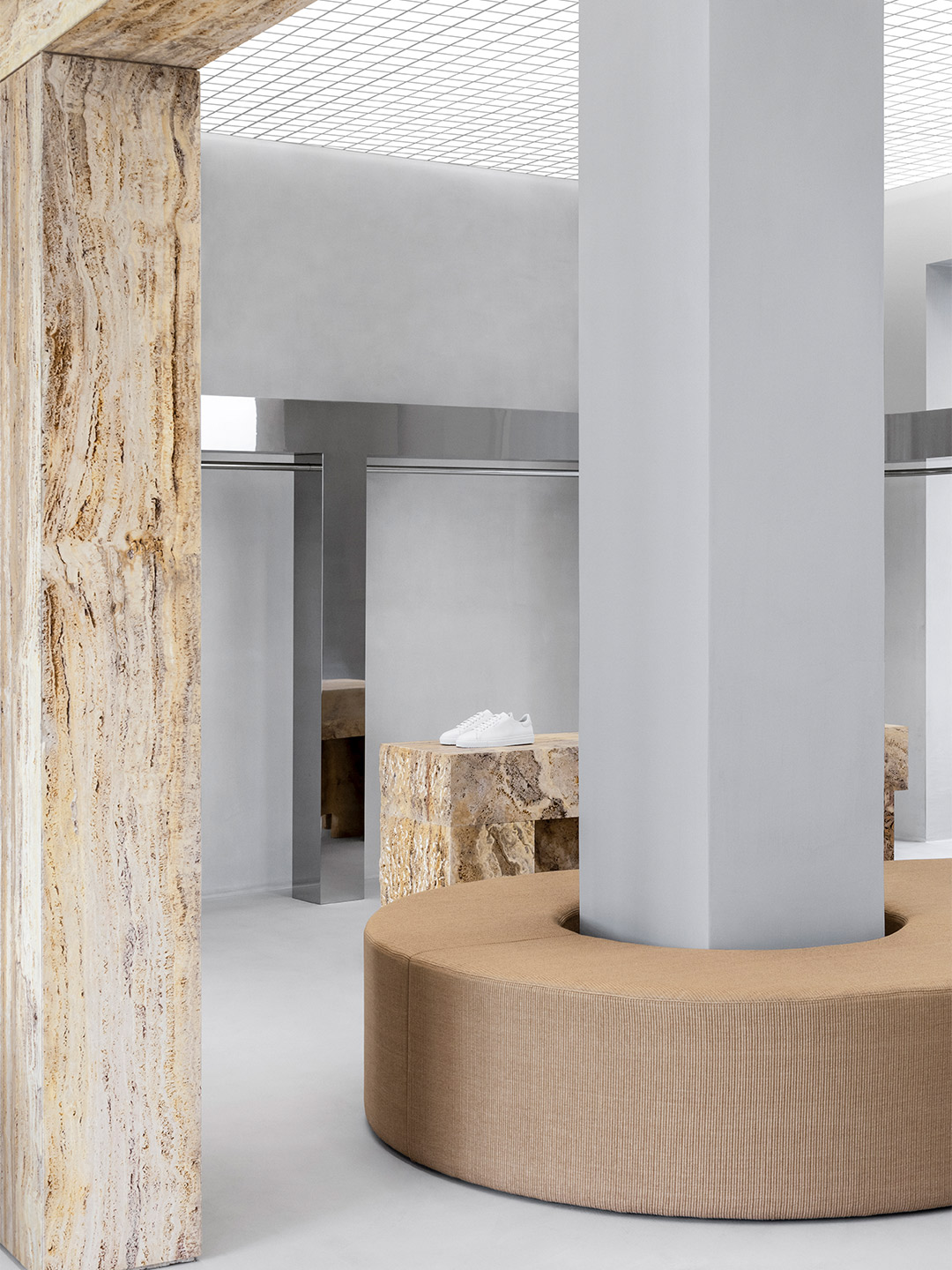
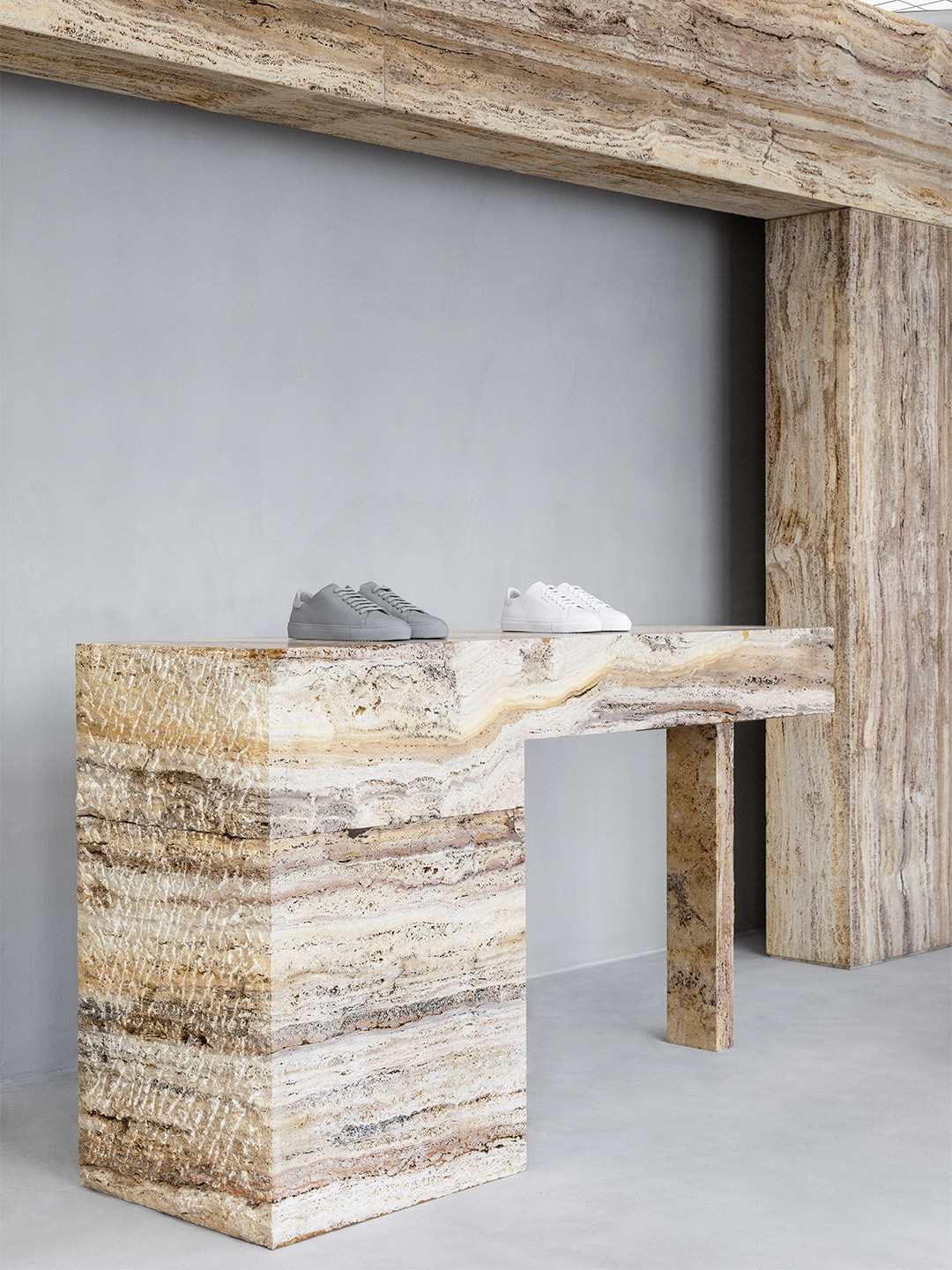
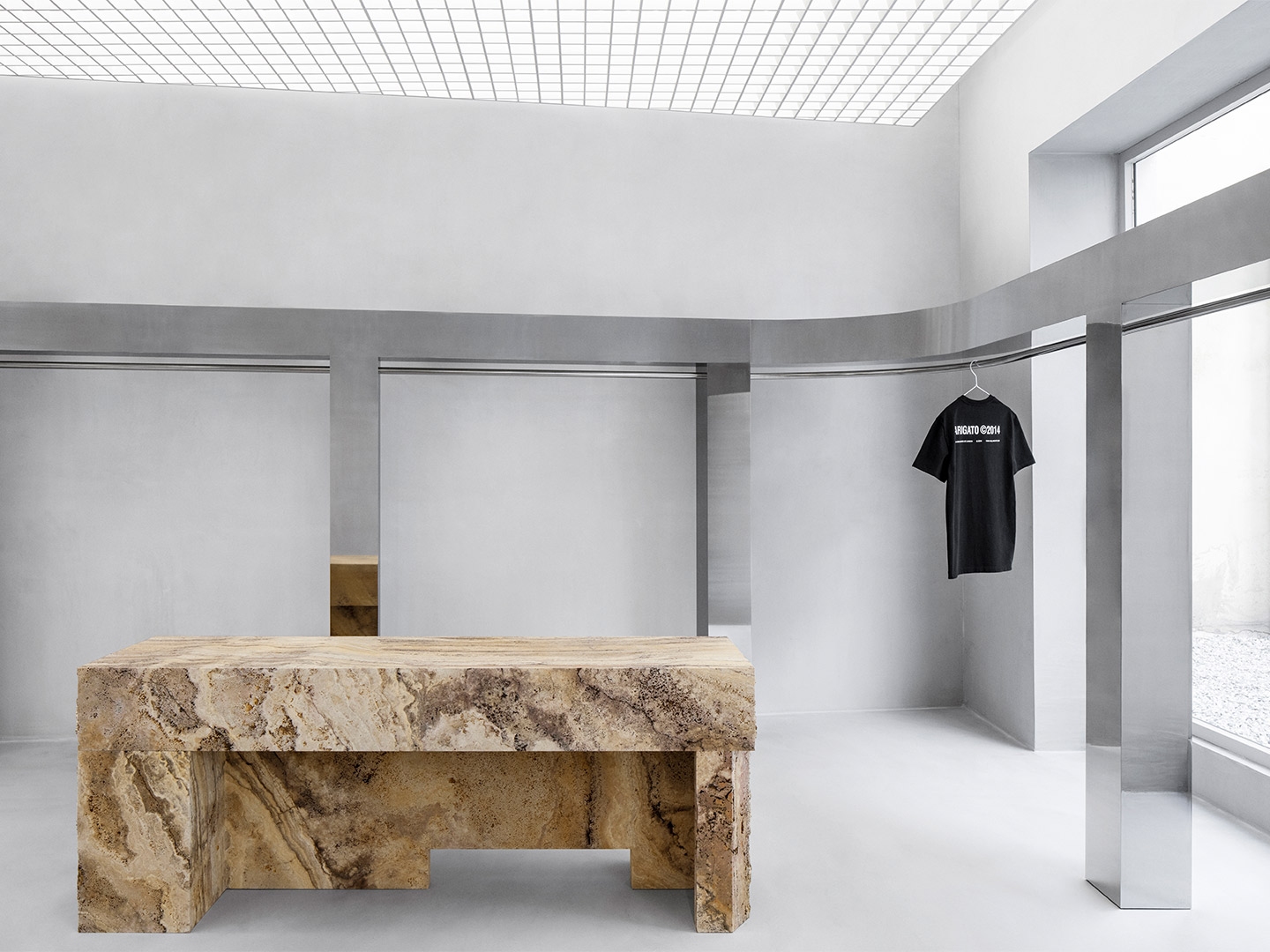
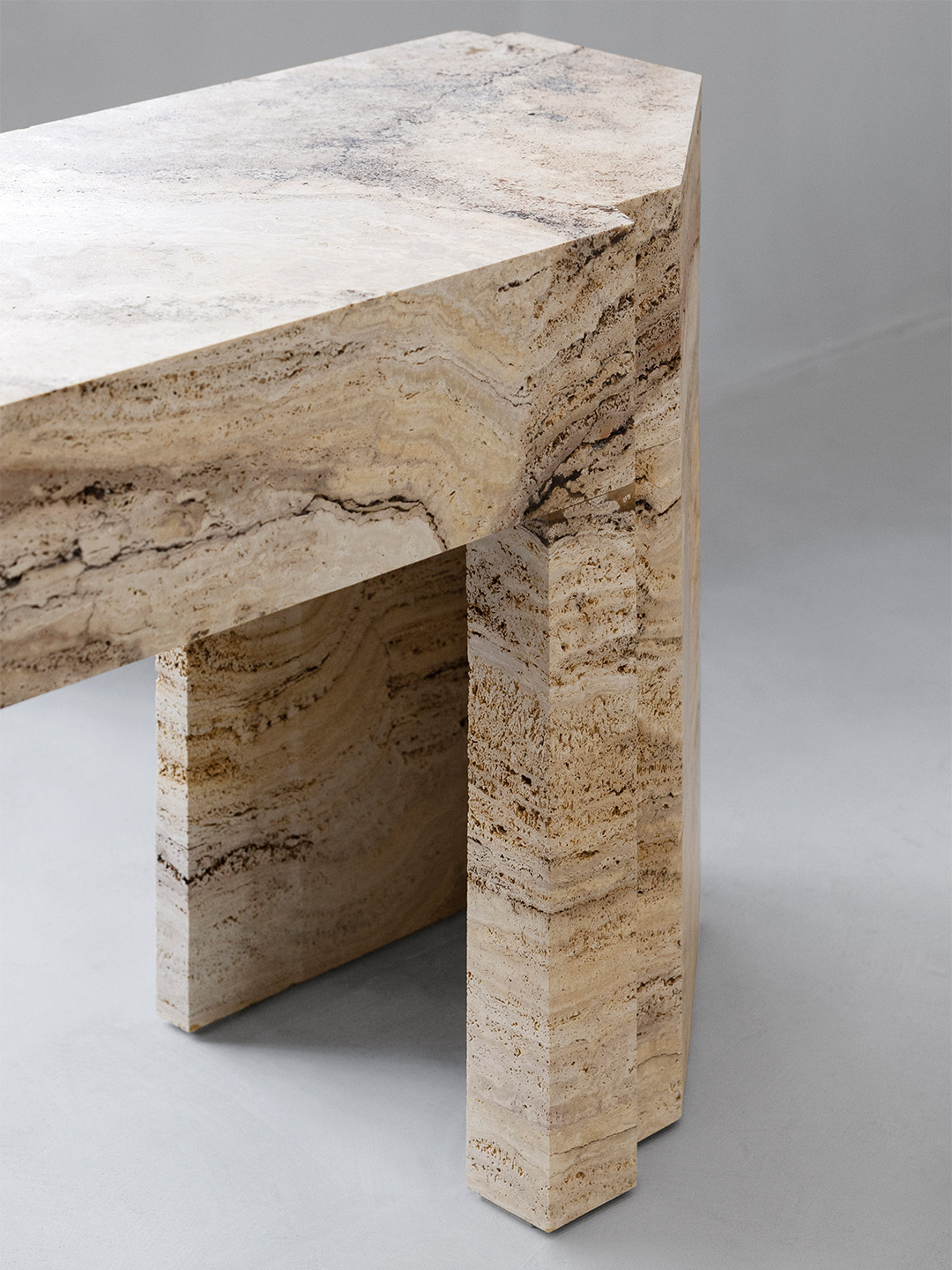
The interior is curated to play with forms and shapes and features light-yellow travertine in an array of finishes, such as honed, bush-hammered and natural. The space consists of two main rooms divided by a freestanding travertine wall; an abstraction of the classical architectural elements of a column and beam. Overhead, the punctured grid ceiling with concealed lighting is visually connected by the largely monochromatic palette featured in the warm yet raw concrete walls and floors.
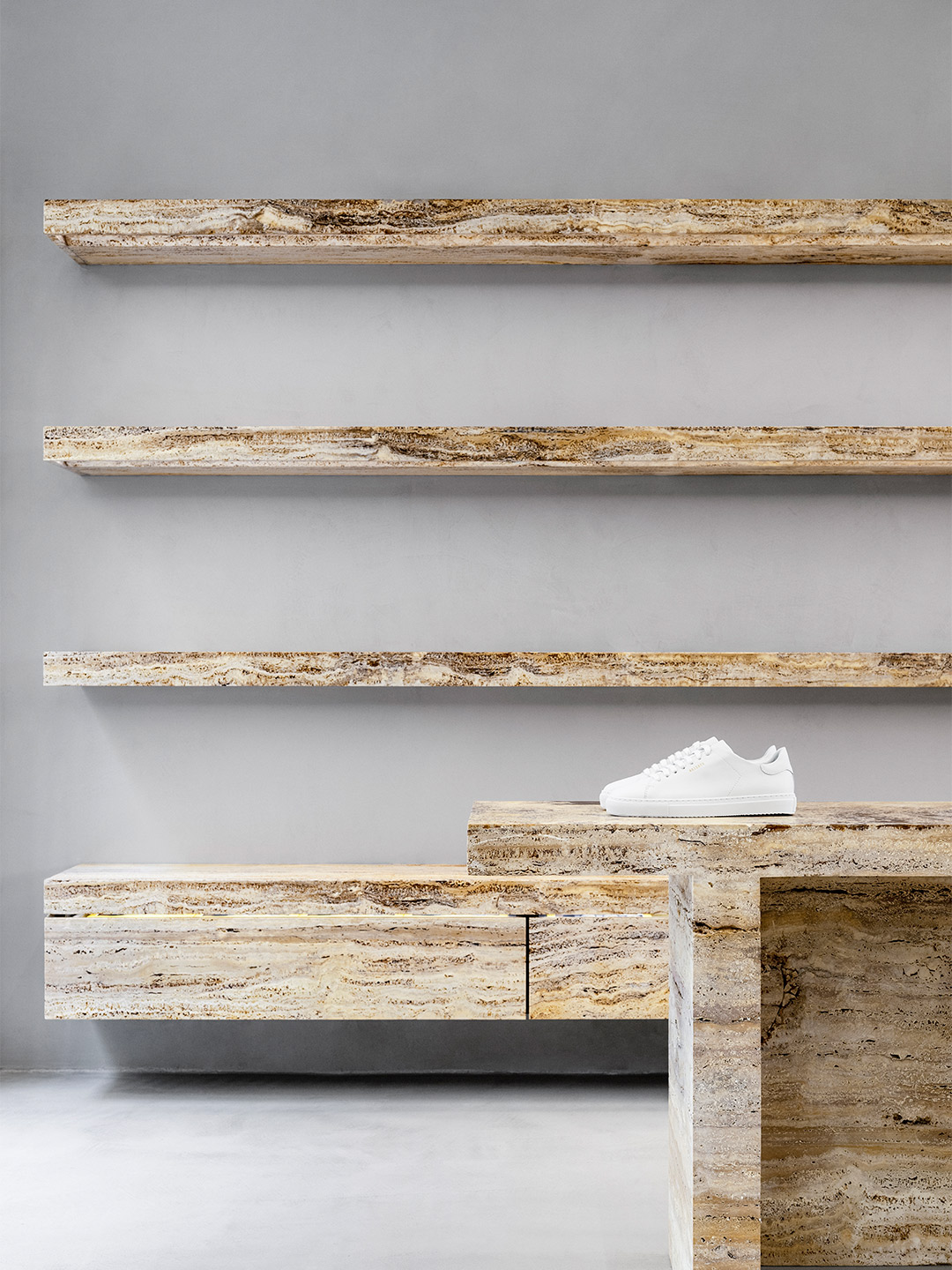
Placed rhythmically in the centre of the space to form a grandiose entrance and create a gallery-like surrounding, the sculptural merchandising podiums are made in travertine (as are the shelves and the dressing room’s custom-designed chairs). The podiums are emphasised by the mirror component of the stainless steel rails, creating a contrast between the materials. The mirror feature extends out into the store’s rear backyard, where its surface, surrounded by small stones, reflects a peaceful oasis in the beating heart of Paris.
Designed by Scandinavian architecture studio Halleroed, the outlet is driven by the desire to forge real connections with customers, inviting them into a unique experience of the world of Axel Arigato.
Catch up on more architecture, art and design highlights. Plus, subscribe to receive the Daily Architecture News e-letter direct to your inbox.