Brisbane’s cultural precinct, made up of the Queensland Performing Arts Centre, Gallery of Modern Art, State Library and the Queensland Art Gallery, lines the southern bank of the Brisbane River as it winds its way through the city. This precinct provides a wonderful public and cultural asset, drawing people to the area – and with that, the vibrancy that makes cities desirable places to live.
Brisbane is booming. Currently, the Queensland capital has the highest growth rate of any Australian city. This has had an impact on the grain of the region – in areas such as West End and South Brisbane, residential towers are replacing the rambling boarding houses, workers’ cottages and industrial buildings. Some wish this change would occur at a slower rate, or at a more considered scale. Remnants, however, are there in parts of the city; they hold the potential to become cherished and celebrated.
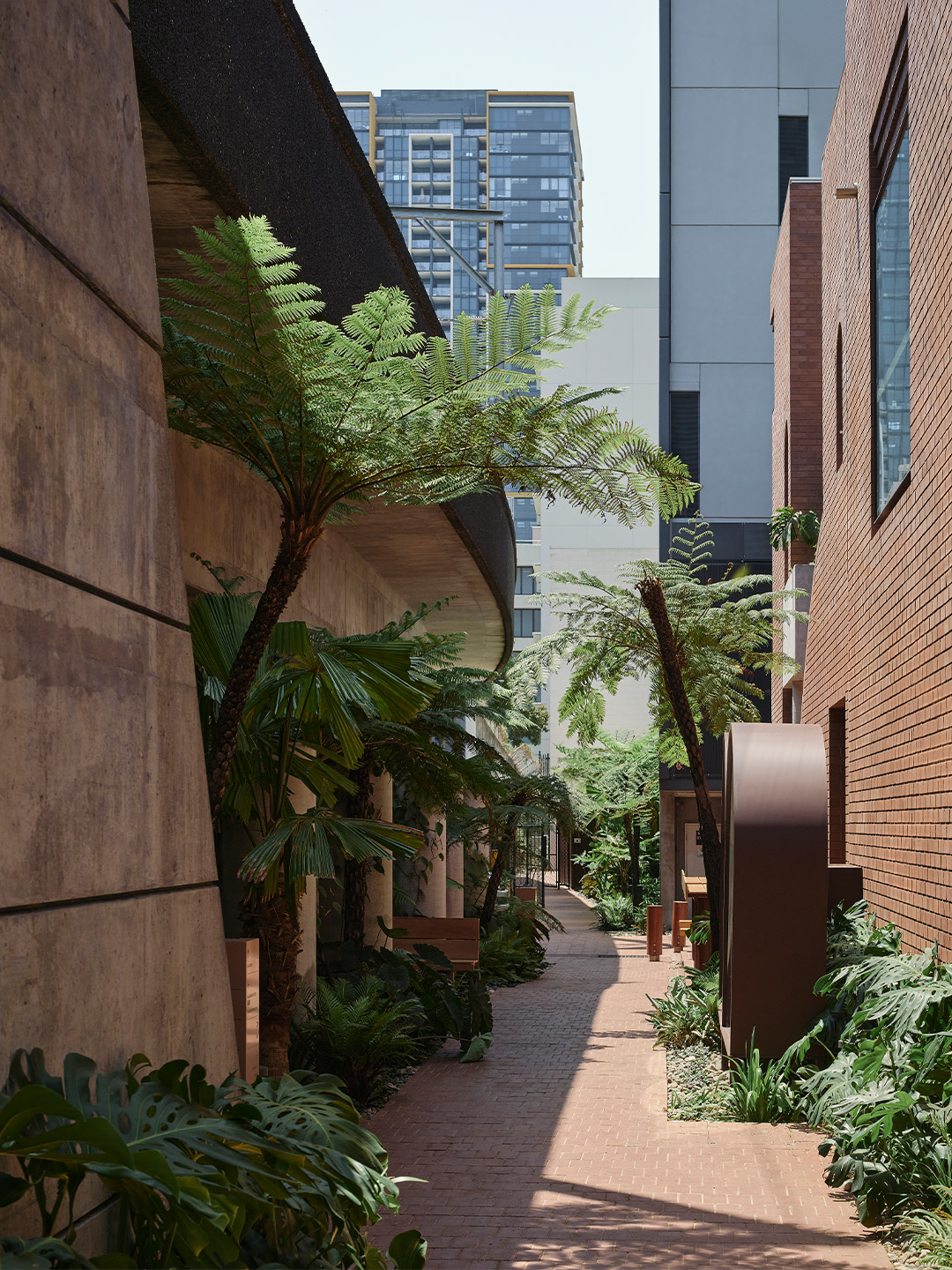
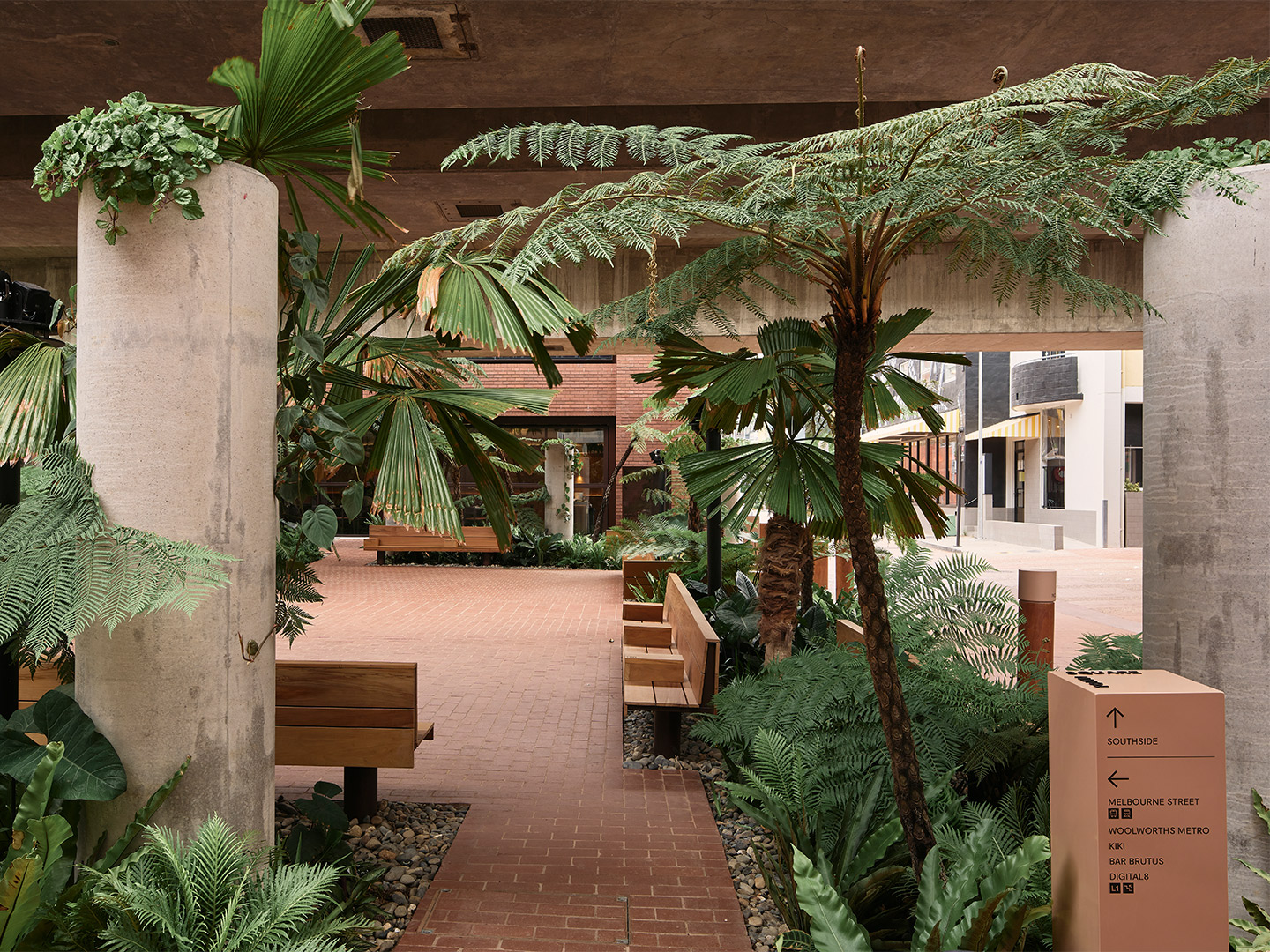
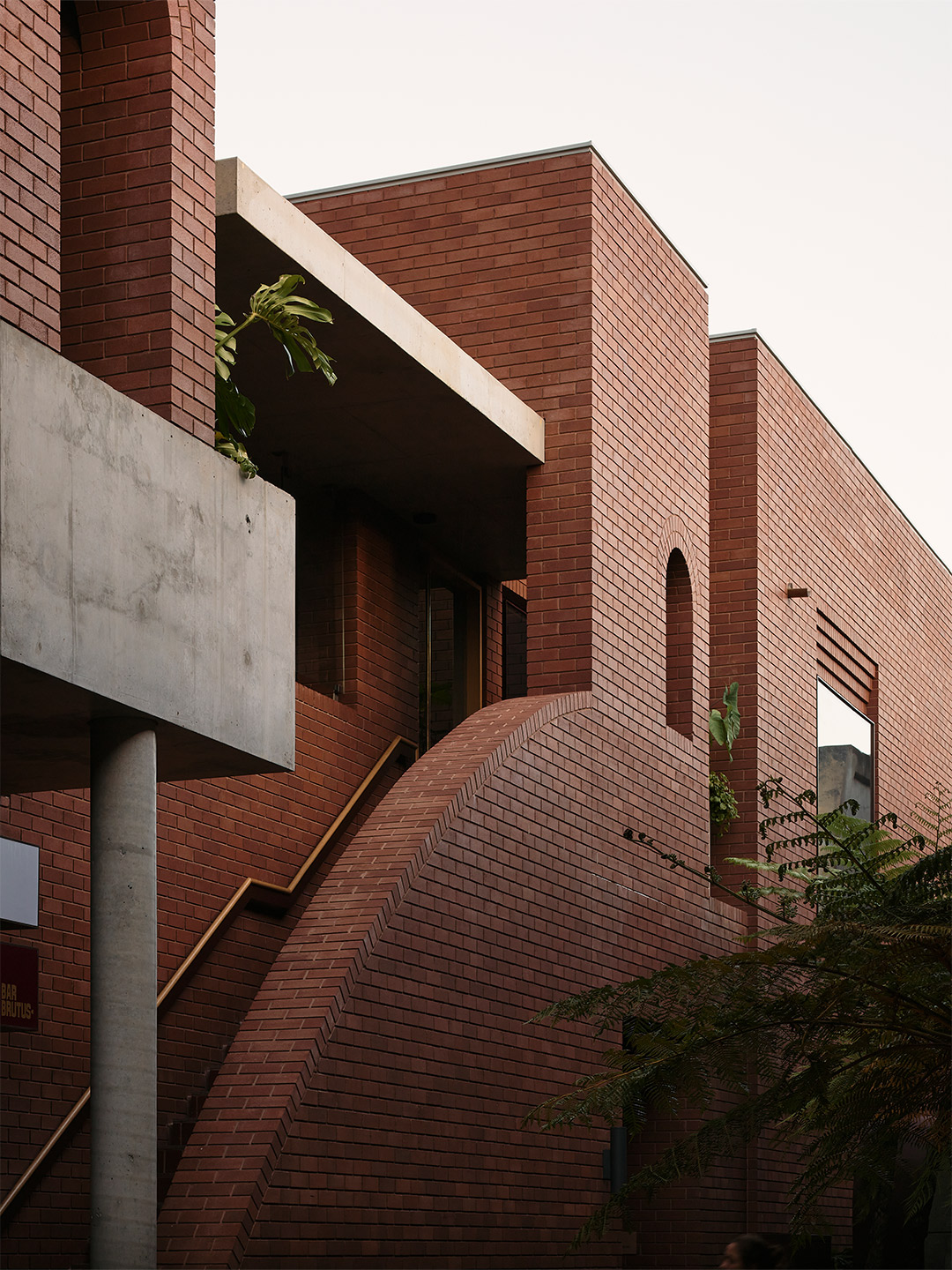
Fish Lane Town Square by Richards & Spence
Fish Lane in South Brisbane is such a place. It’s a laneway that services during the day a collection of old and new with unplanned qualities, allowing a shortcut between the cultural precinct and West End. In recent years, the laneway, with landscape design by RPS Group, has undergone renewal. Public art was incorporated in a meaningful way; bars, cafes and other tenancies have established themselves; and the laneway has come to life, particularly at night and on weekends.
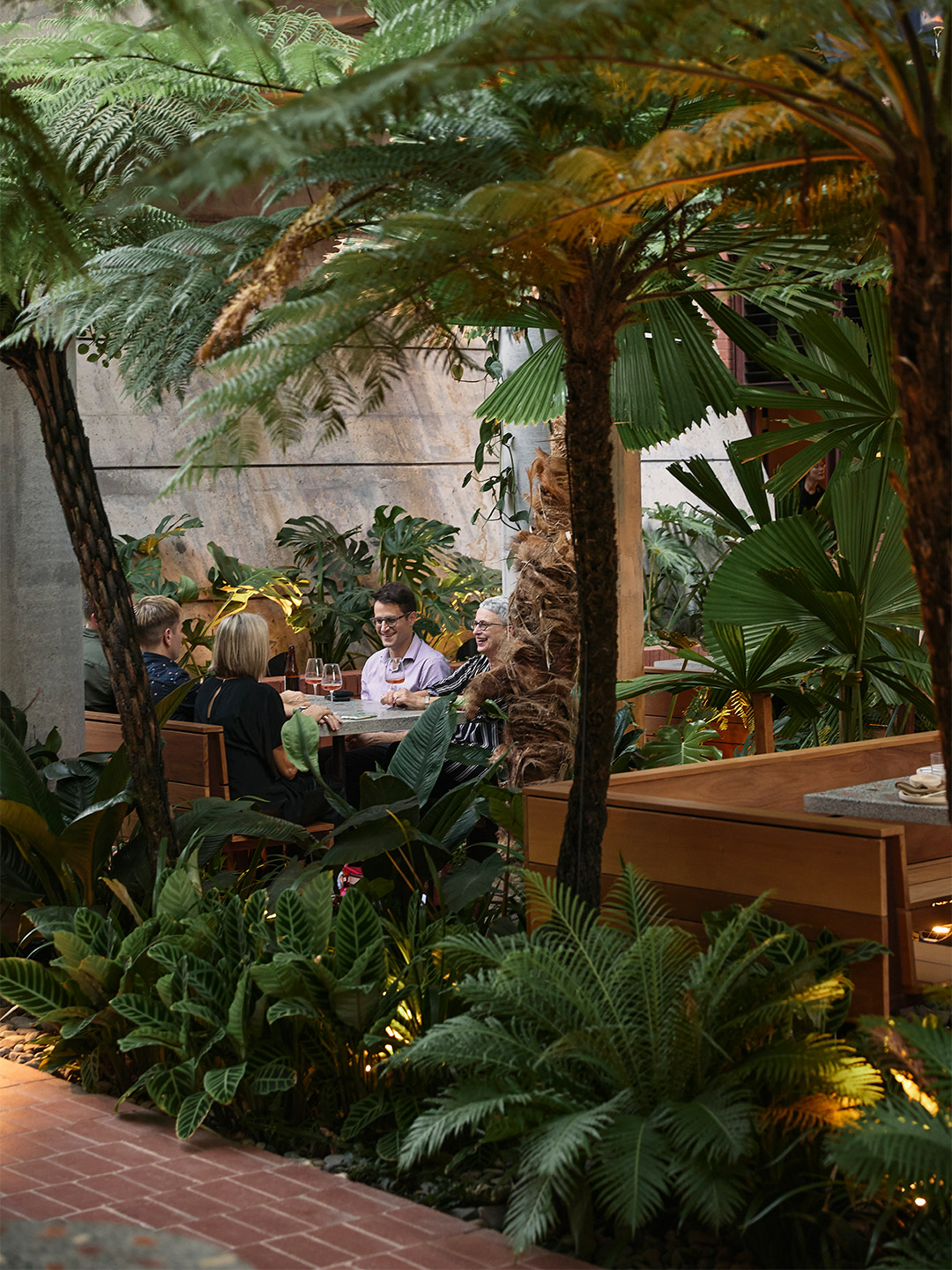
Fish Lane Town Square is the most recent addition to this renewal. Carefully and skilfully designed by Richards & Spence for Aria Property Group, it is an intriguing project. What was once a neglected space now offers the city a different type of public place, a meeting point and an urban setting to sit, relax and people watch.
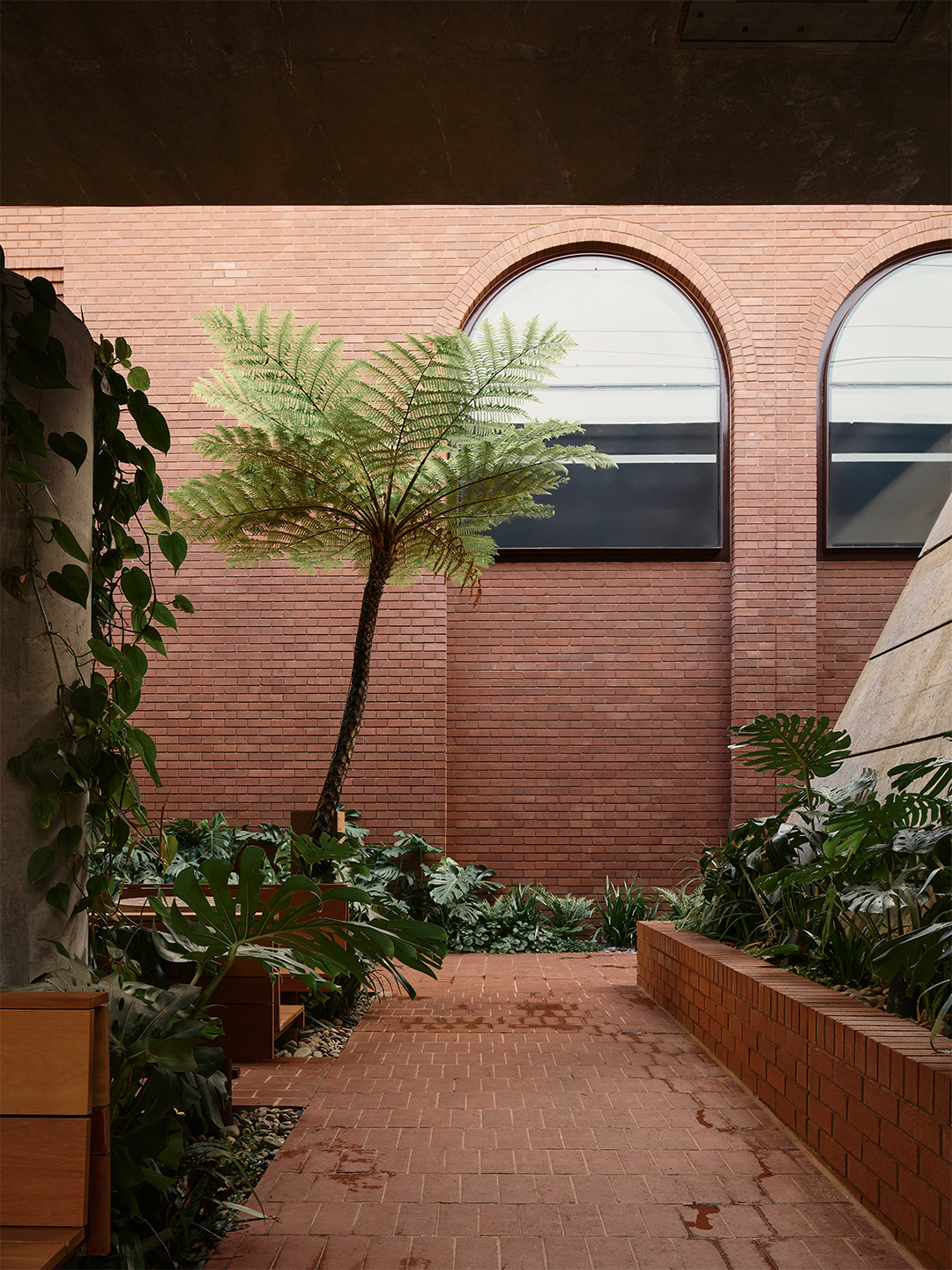
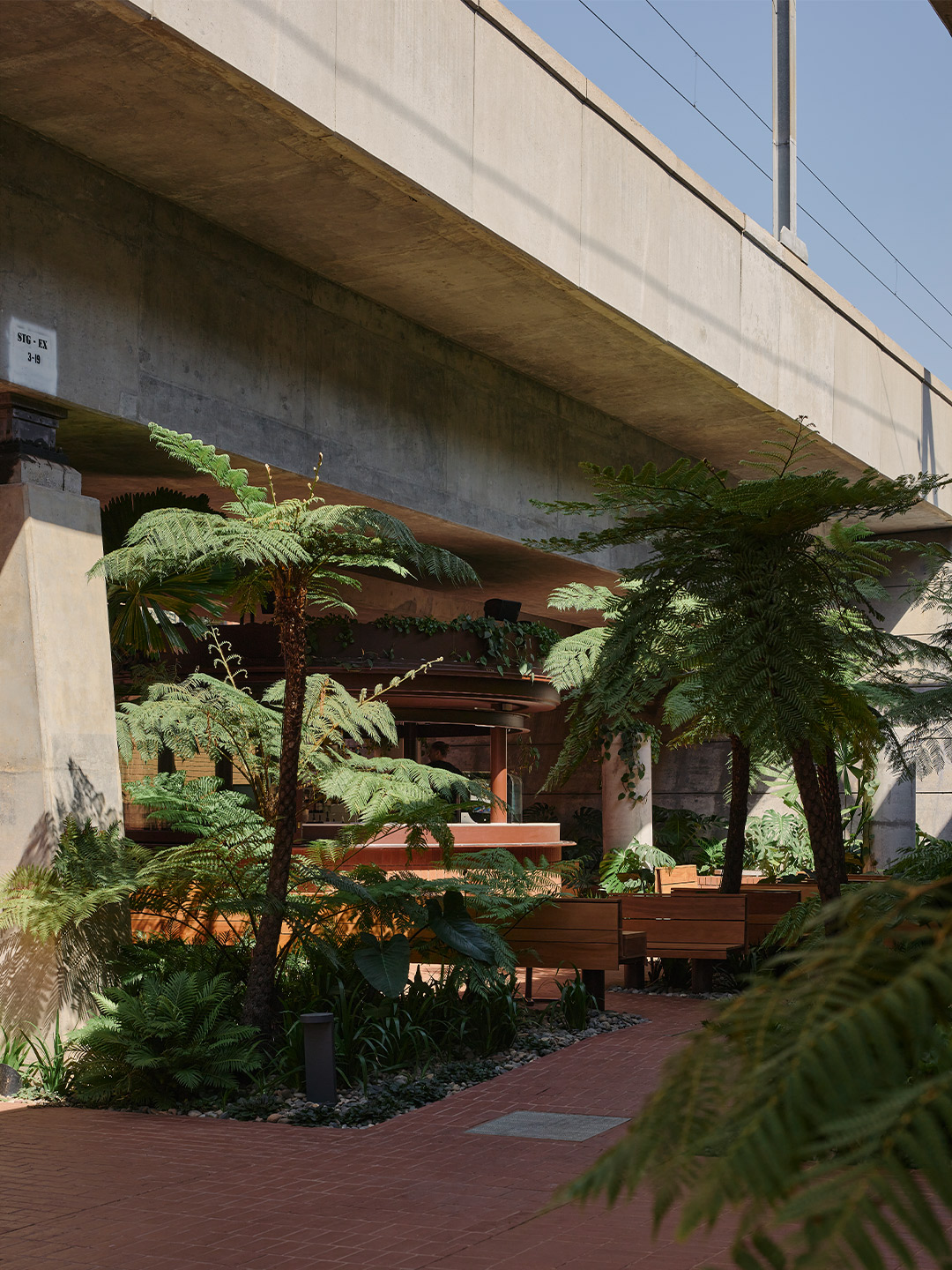
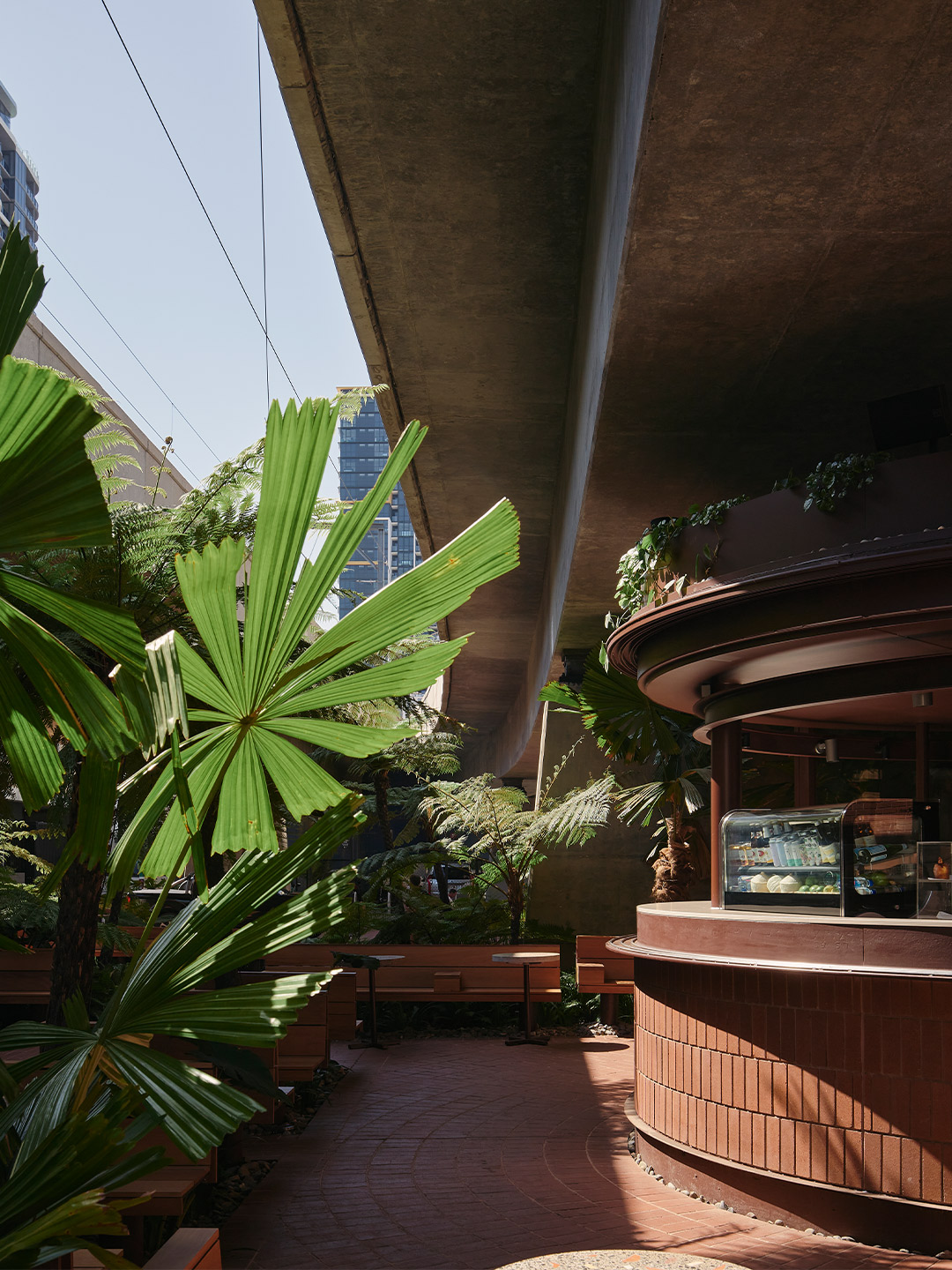
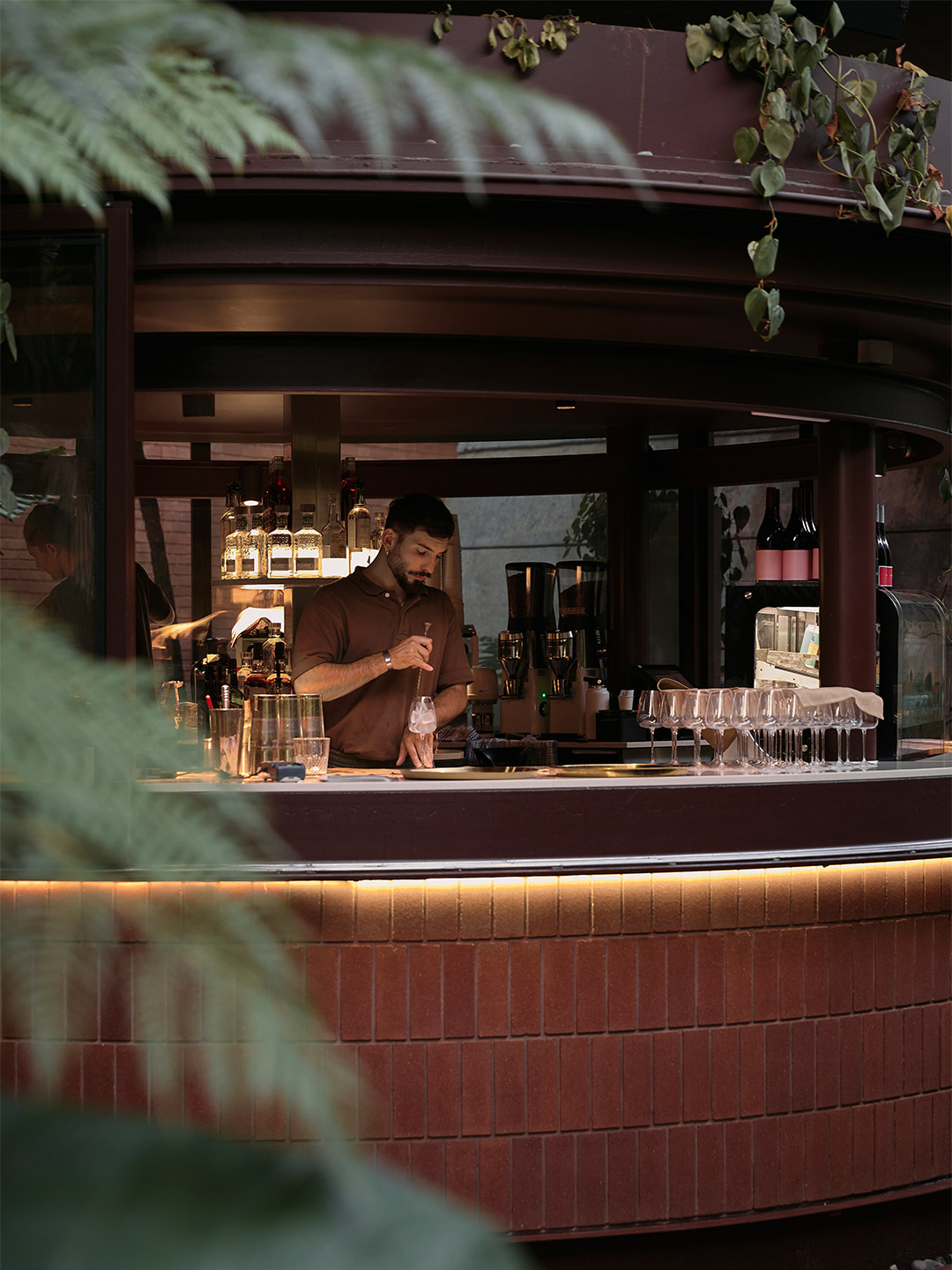
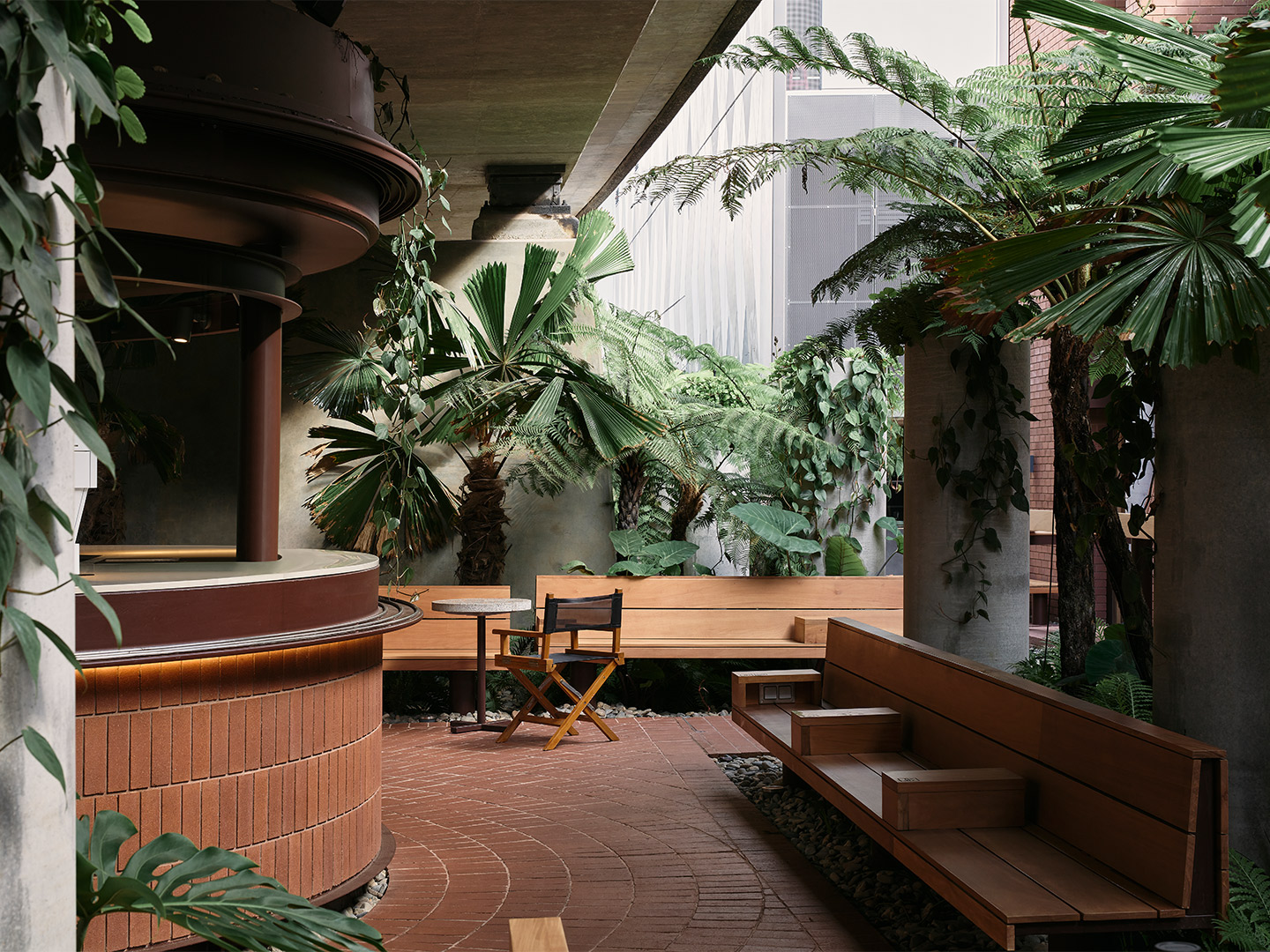
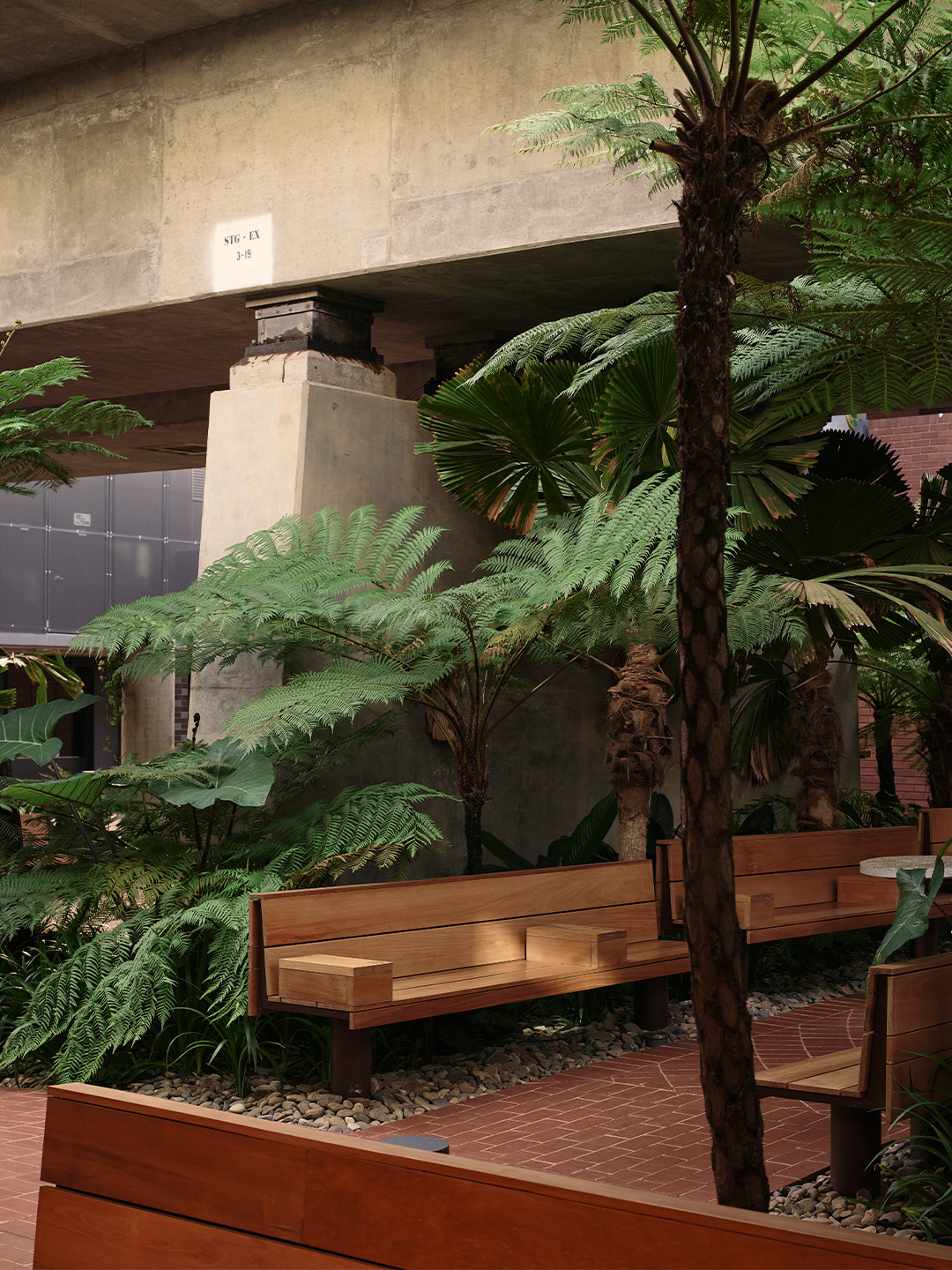
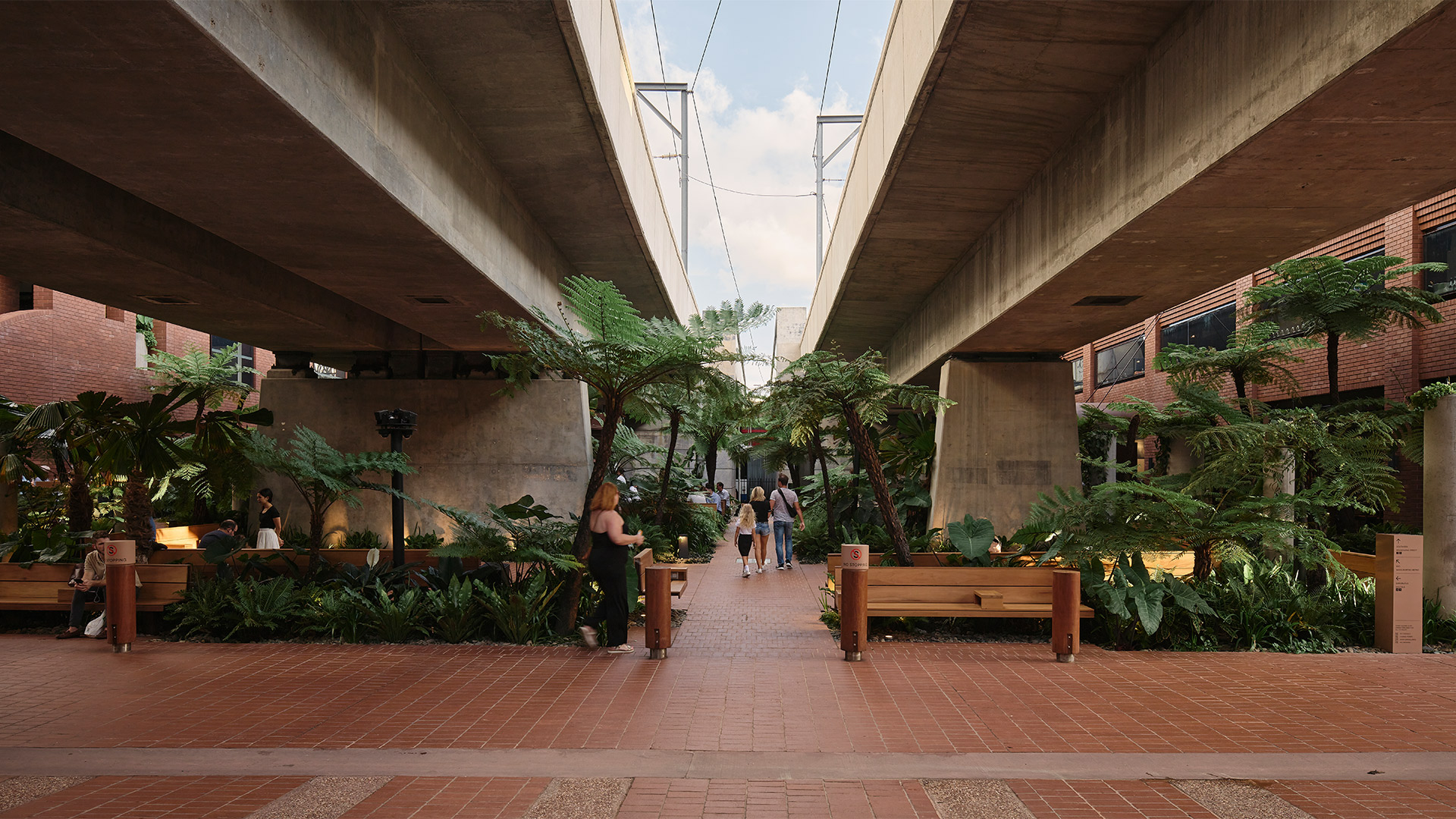
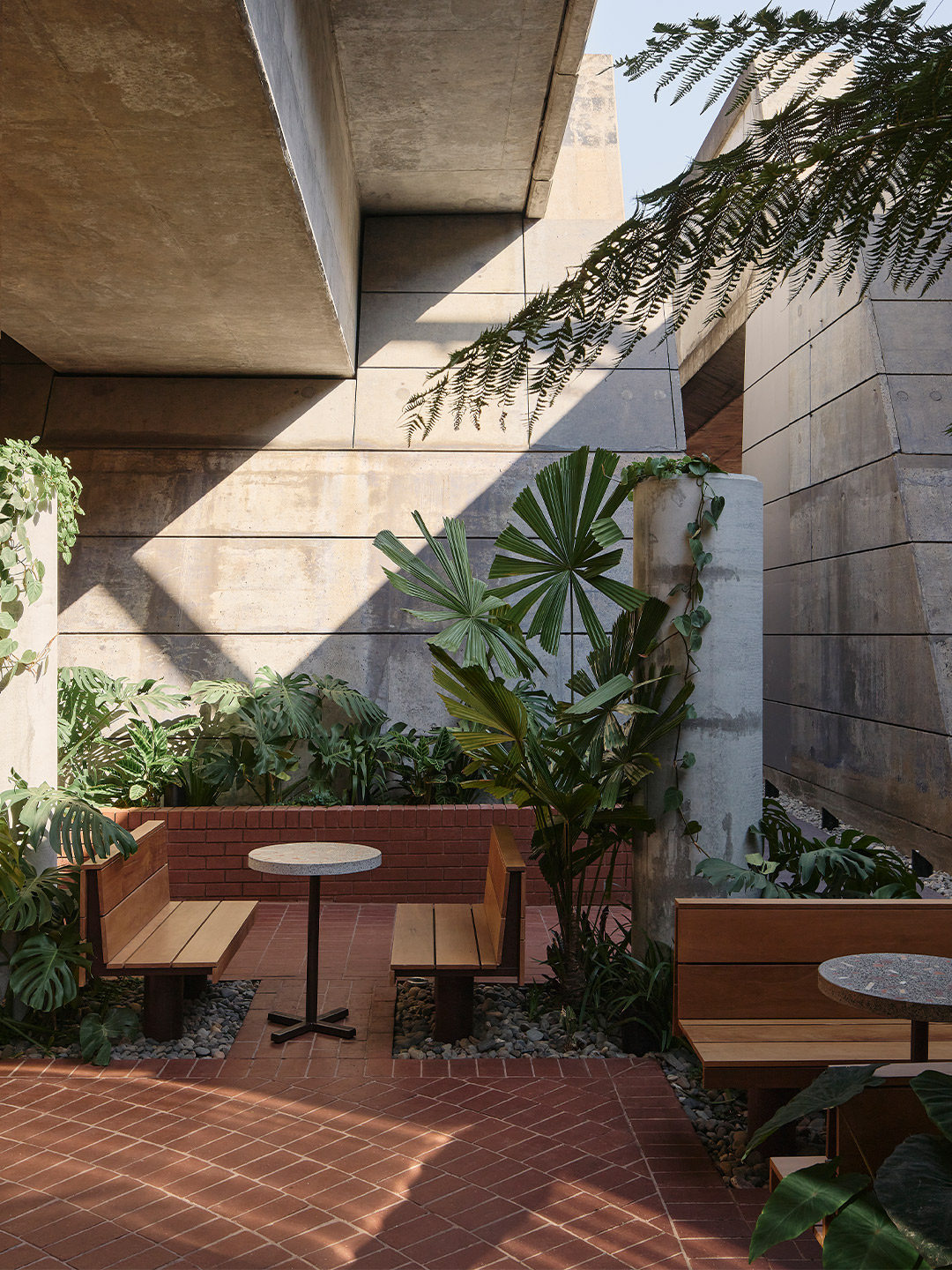
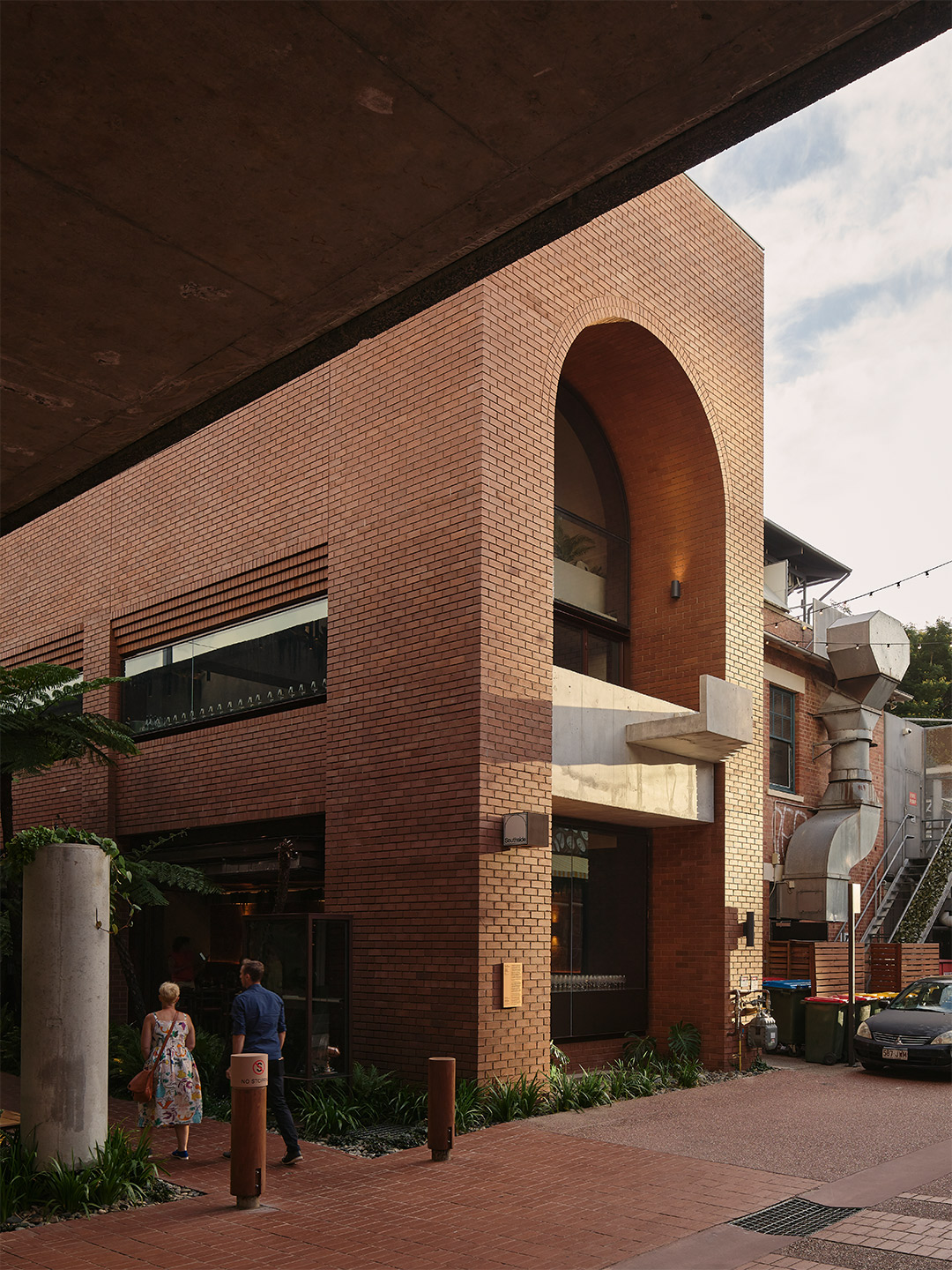
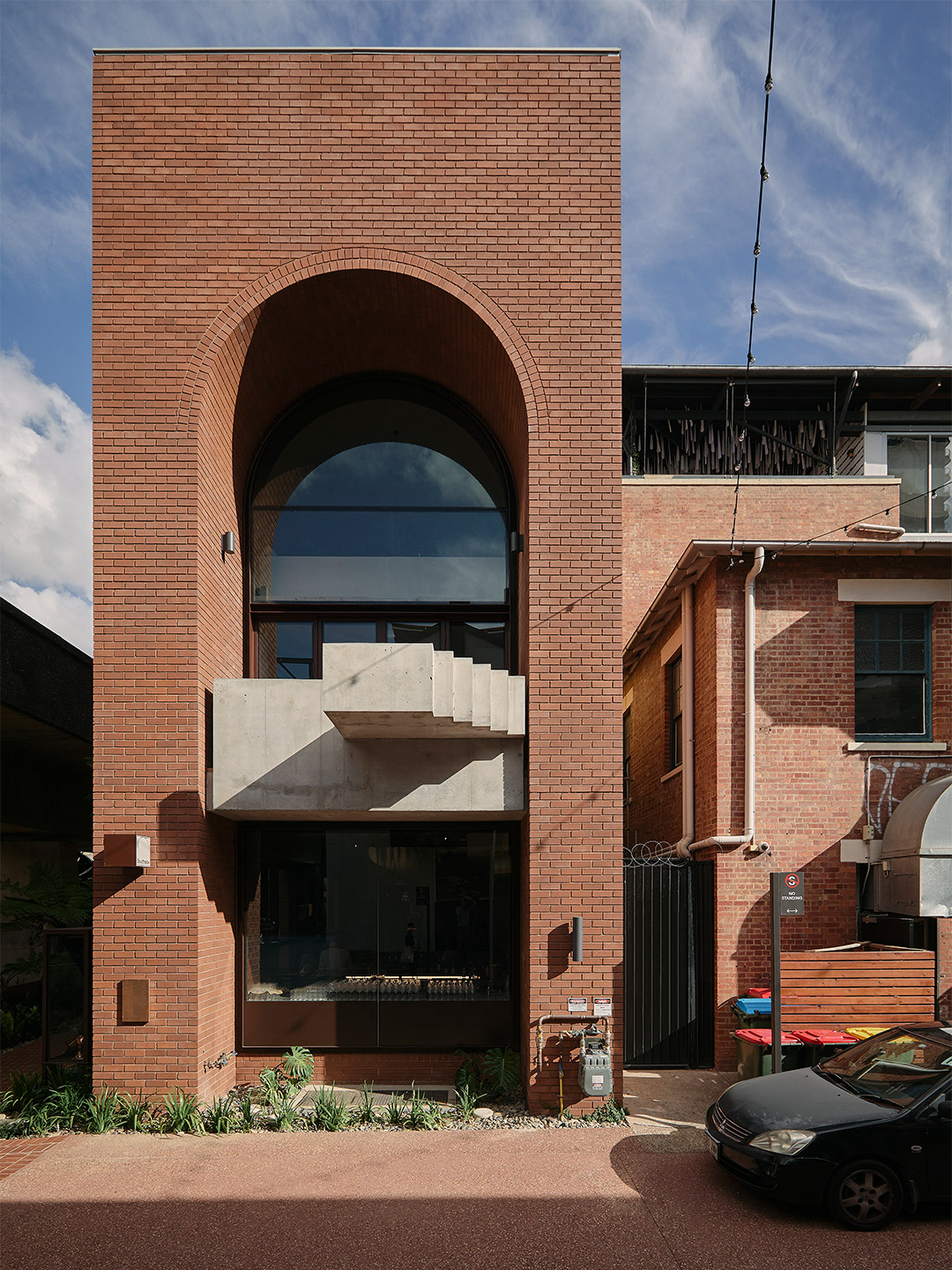
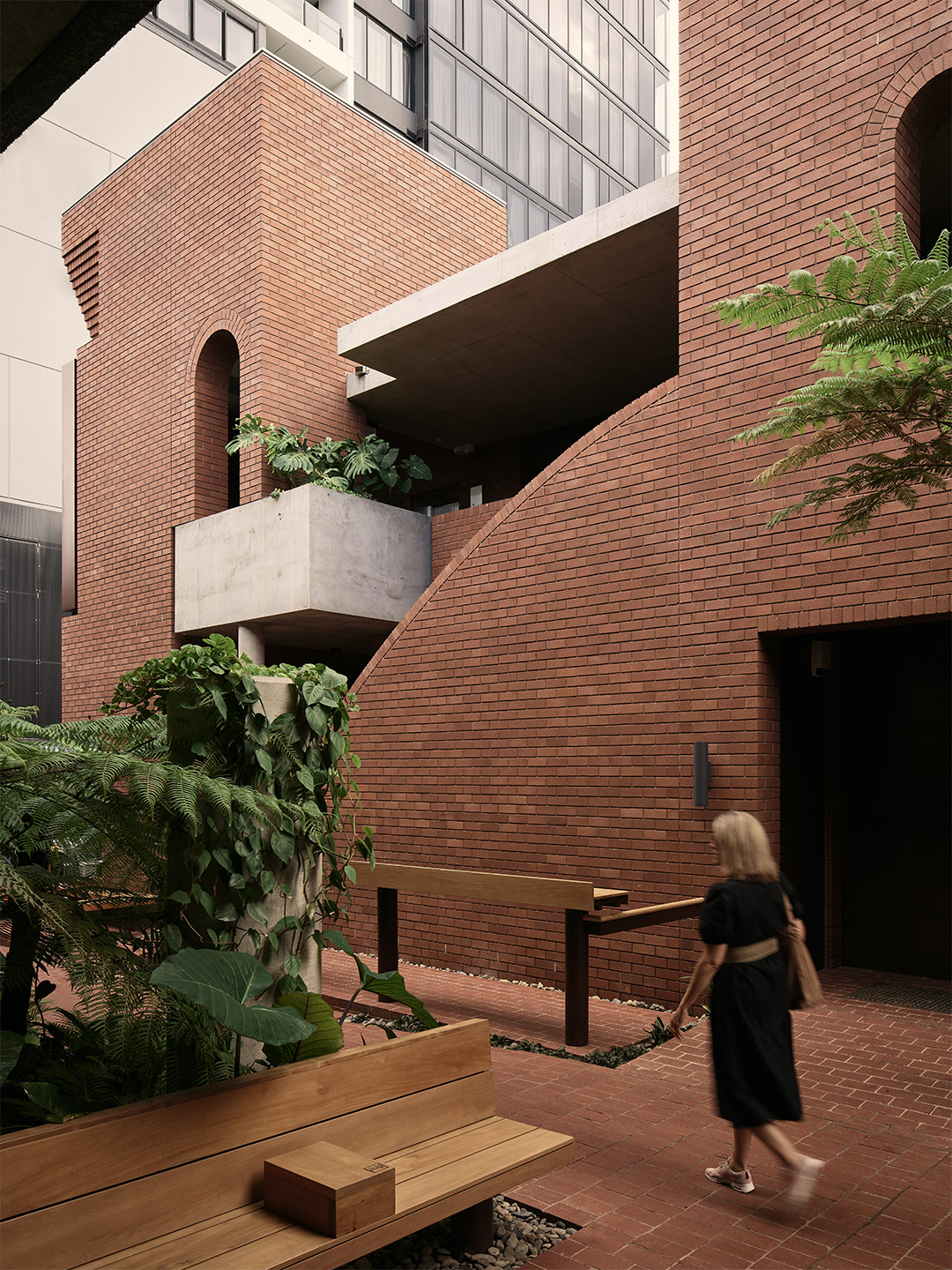
The site is not typical: it is a series of leftover spaces and is highly constrained. It fronts Fish Lane, a busy busway on Melbourne Street and is dissected by a rail overpass. Sites like these are often put in the too-hard basket, but Richards & Spence challenged these constraints to produce an outcome that is cohesive and rich. In many ways Fish Lane Town Square is not one project, but a series of smaller ones. Two thin masonry buildings run between Fish Lane and Melbourne Street, and act as edges to the outdoor space, which is sheltered by the rail overpass. There is a circular cafe-bar and considered hardwood seating distributed throughout the space, which creates more intimate areas.
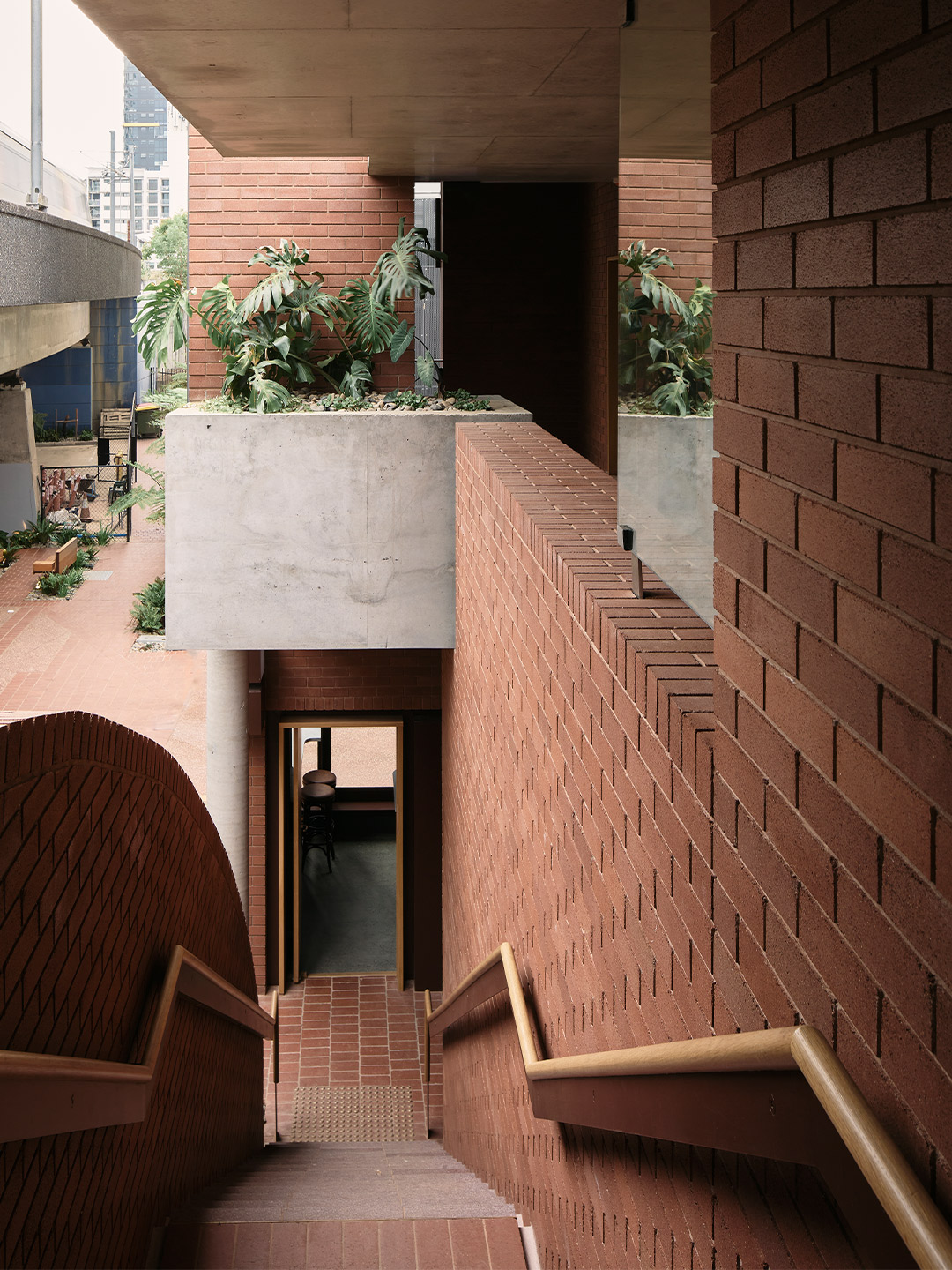
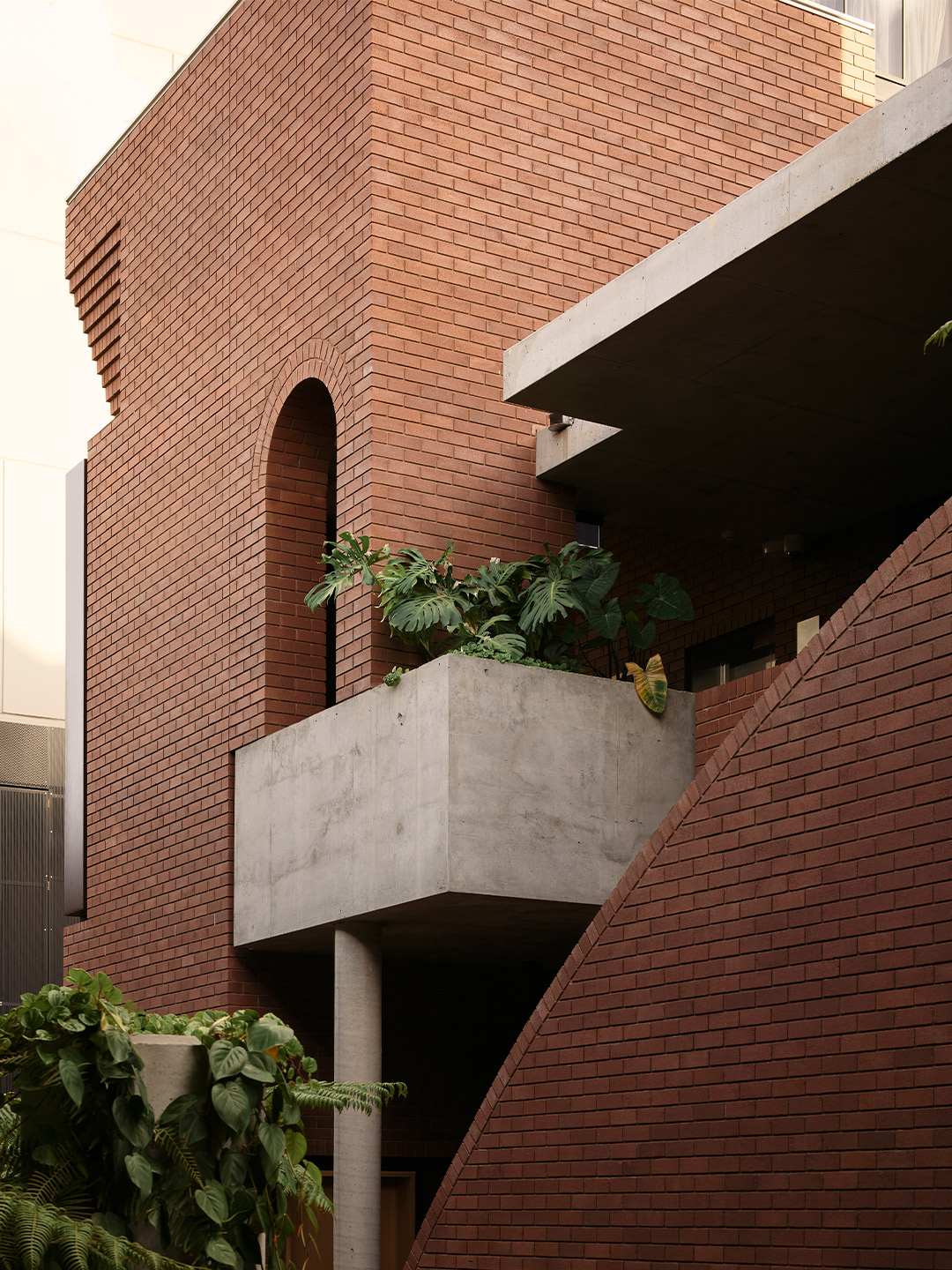
The design of the square knits-in well with the surrounding urban fabric and the brickwork continues the masonry language of the locality. The materials palette is restrained: red bricks, red pavers, raw concrete, painted metal, river stones, hardwood seats and bollards. It’s a beautiful sight when combined with the lush plantings and off-form concrete of the overpass. As the subtropical plantings, which include 3500 varieties, such as native violet, birds nest ferns, blue ginger and over 70 Australian tree ferns establish themselves, the square is taking on a life of its own and will continue to change with the seasons.
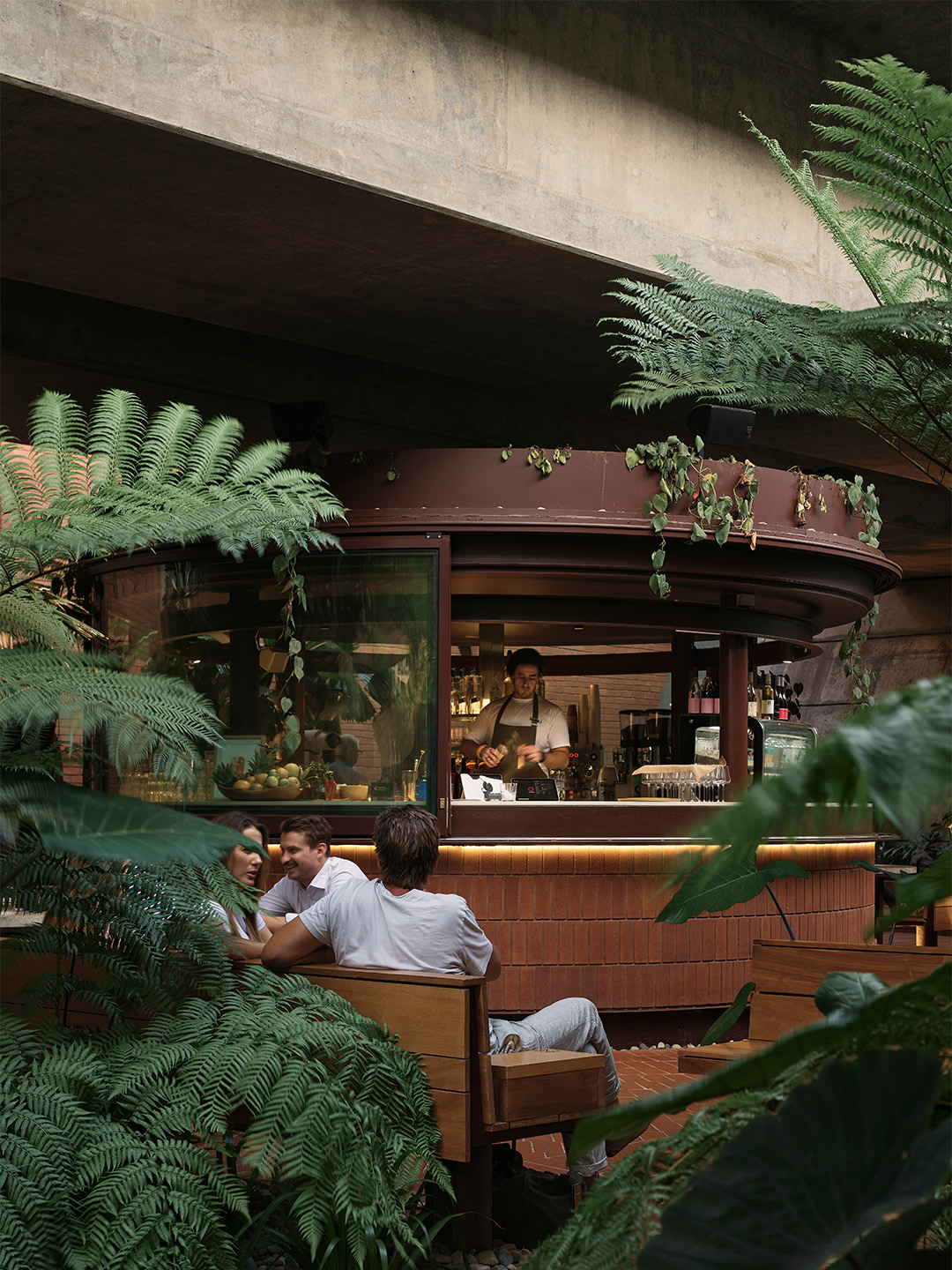
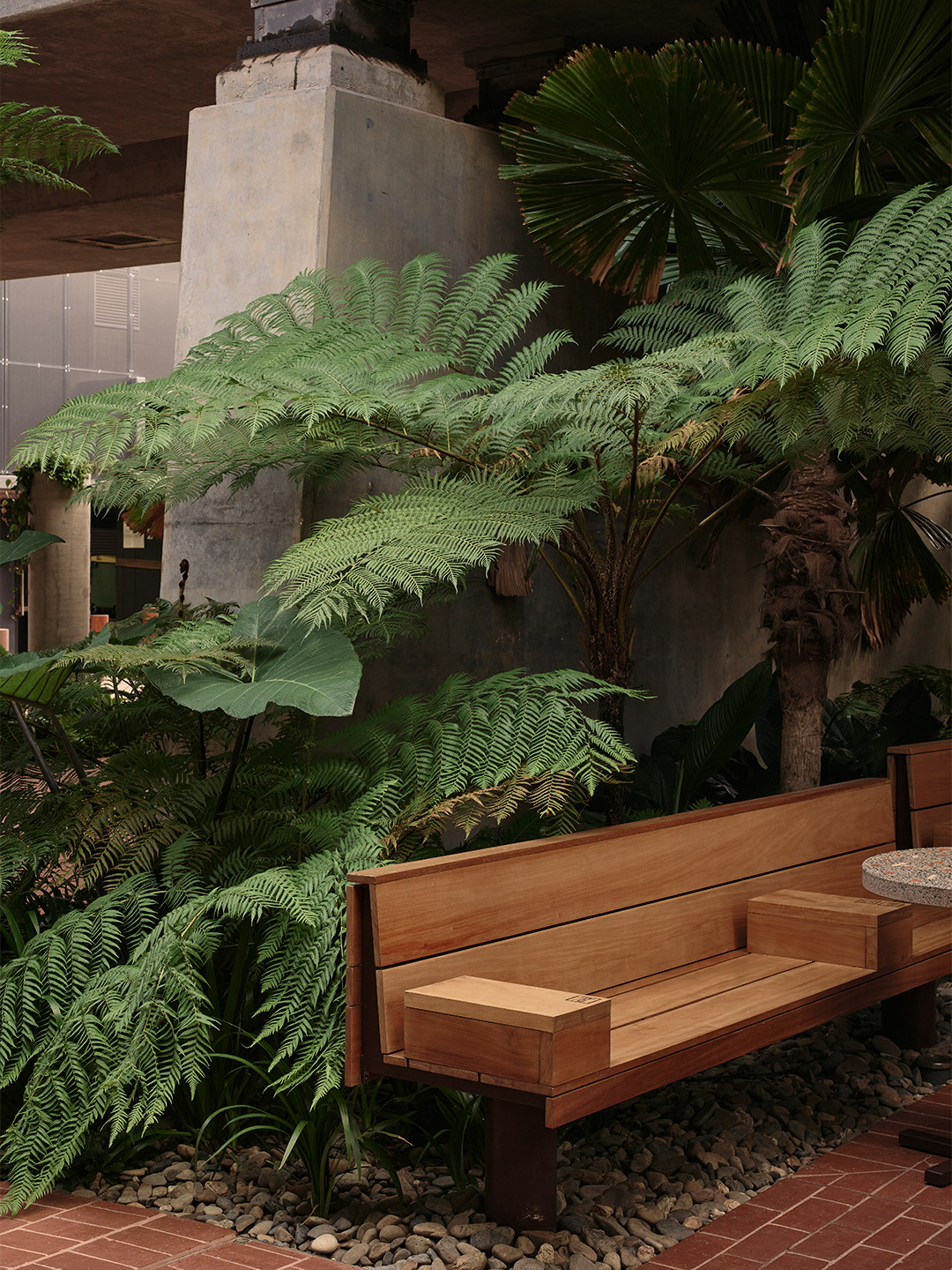
When walking up and down Fish Lane, the brickwork relates seamlessly to both old and new, and the pavers spill out and blur the edge of pedestrian territory. Richards & Spence has explored the language and detailing of brickwork: enjoying moments that provide relief within facades, depth to window recesses, test the skills of trades and have tipped their hat to architectural influences like Carlo Scarpa. Windows are detailed so as to not compromise the brickwork and provide moments within the overall composition of the buildings.
It is important to remember that, until recently, this space was an unloved car park. The architecture, landscape and materiality are all impressive, but it is perhaps the urban gesture that is most compelling. It recalls other unused spaces within the city, and what potential they hold in creating places and connections for people where previously there were none.
richardsandspence.com; explorefishlane.com.au
This feature first appeared in the fifth edition of FOLIO, a publication by Brickworks. Devoted to exploring how architectural ideas are turned into reality, the magazine presents world-class projects and experimental ideas in architecture and design. Request your free hard copy here.
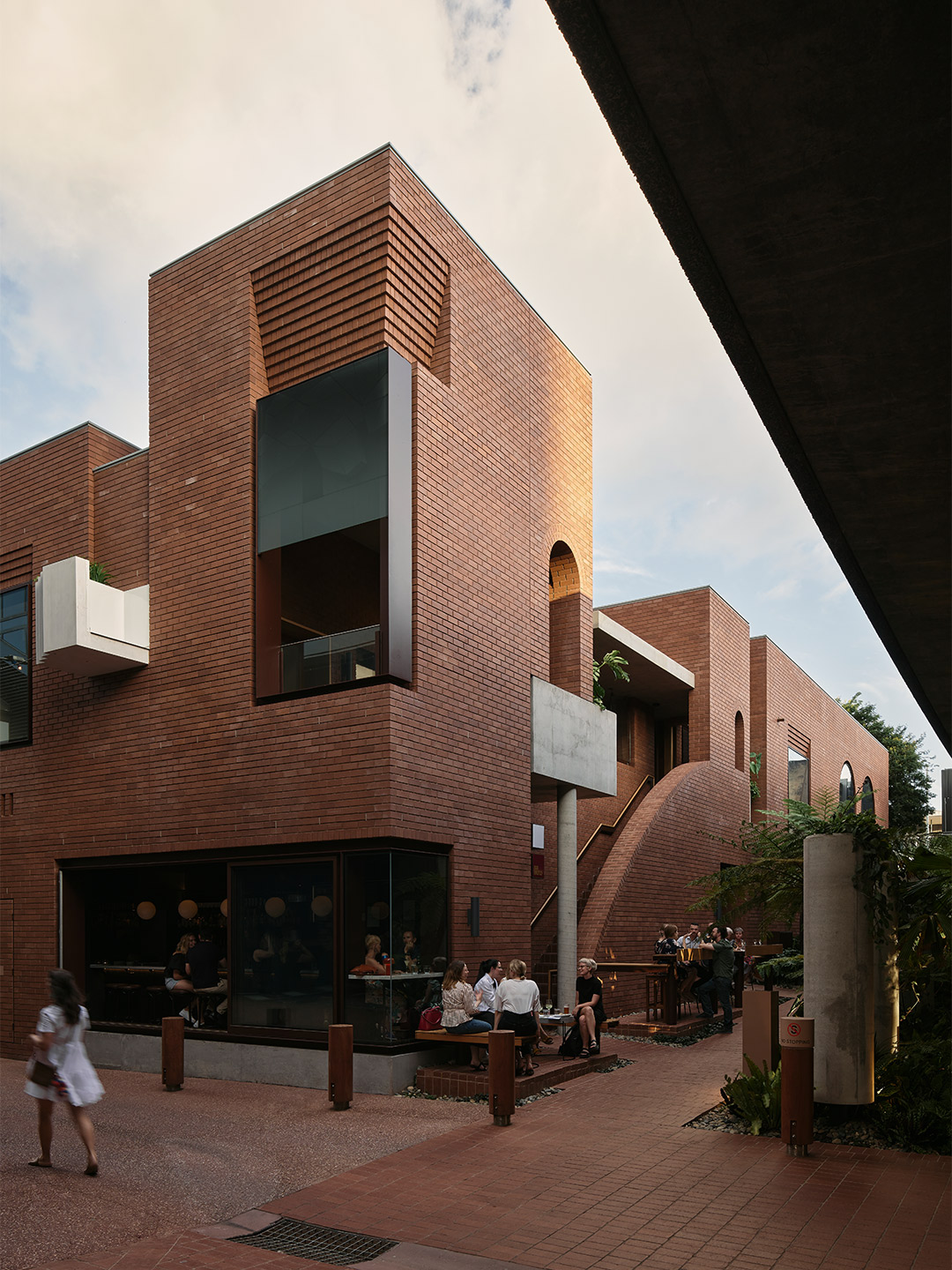

Fish Lane Town Square is a refined public project by Richards & Spence that contributes strongly to Brisbane’s evolving city character.
Love the Fish Lane Town Square in Brisbane by Richards & Spence? Catch up on more hospitality design and architecture and commercial spaces. Plus, subscribe to the Daily Architecture News e-letter to receive weekly updates of the world’s best projects, ideas and exhibitions.
Related stories
- Hotel Les Deux Gares in Paris by Luke Edward Hall.
- Inside the Ace Hotel Kyoto by Kengo Kuma and Commune.
- Holiday maker: The Calile Hotel by Richards and Spence.
- Plesner Architects delivers decadence at the Six Senses Shaharut resort in Israel.
In this week’s architecture and design video round-up (above), architects Ingrid Richards and Adrian Spence open the door to their private residence in Bowen Hills near Brisbane. Few homes have an outdoor swimming pool at the heart, and, of those few, it’s unlikely any match the glimmering beauty of La Scala.
With light-filled interiors by famed American designer Kelly Wearstler, Santa Monica Proper has already become a smash-hit in Los Angeles’ bustling ‘Silicon Beach’. Step inside the glamorous coastal hotel.
Kyiv-based architecture and interiors firm Balbek Bureau has recently completed the Mama Manana restaurant, a four-level establishment in Ukraine that showcases generous Georgian hospitality. And finally this week, B20 has unveiled the latest collection from Brickworks – over 100 new and innovative products, each destined to influence the future of the built environment.
For more information on each of this week’s stories, see below.
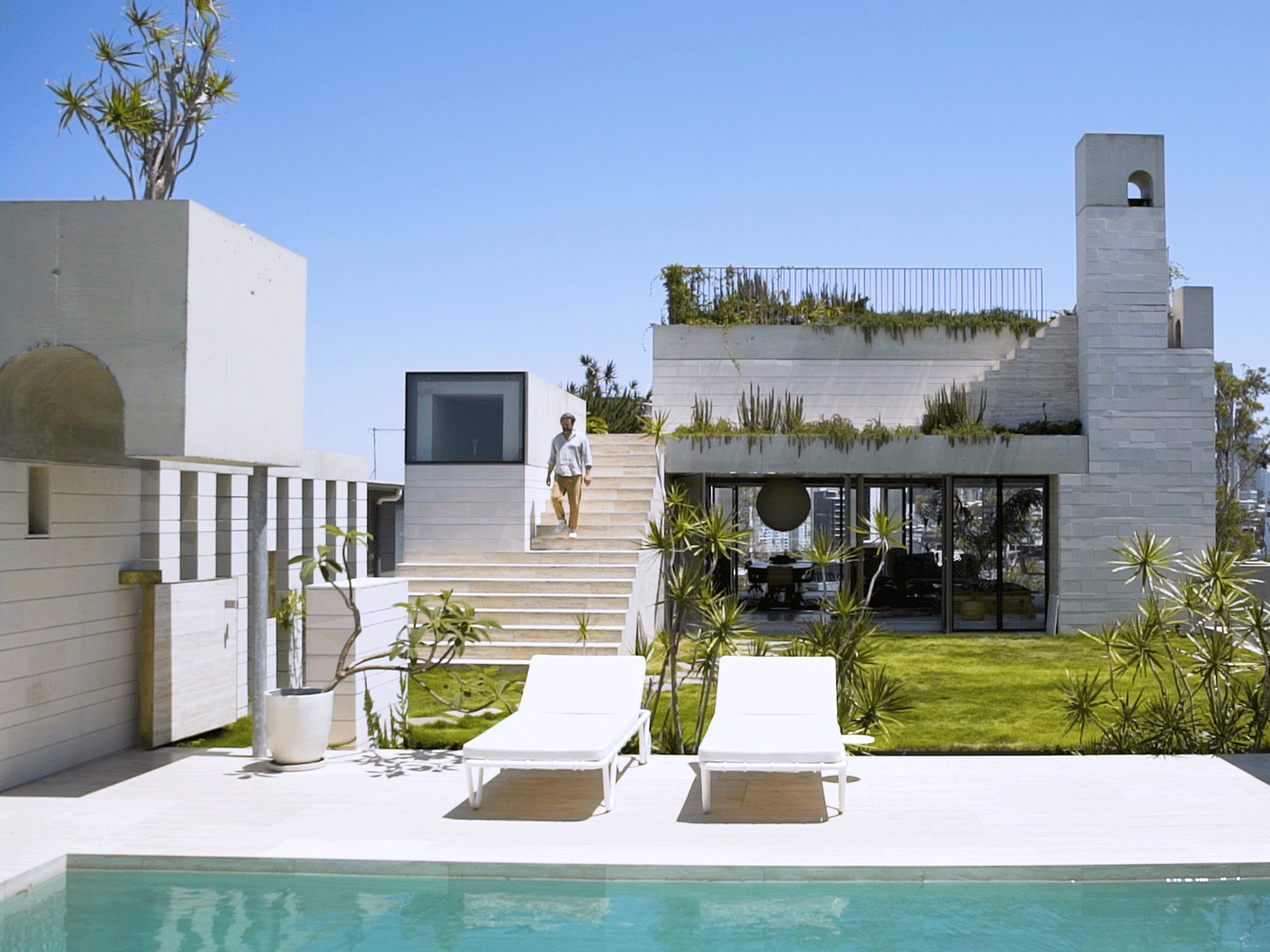
- La Scala by Richards and Spence: The private residence of architects Ingrid Richards and Adrian Spence, La Scala is the culmination of four years of ideas where the outdoor space acts solidly as its centrepiece. Read more.
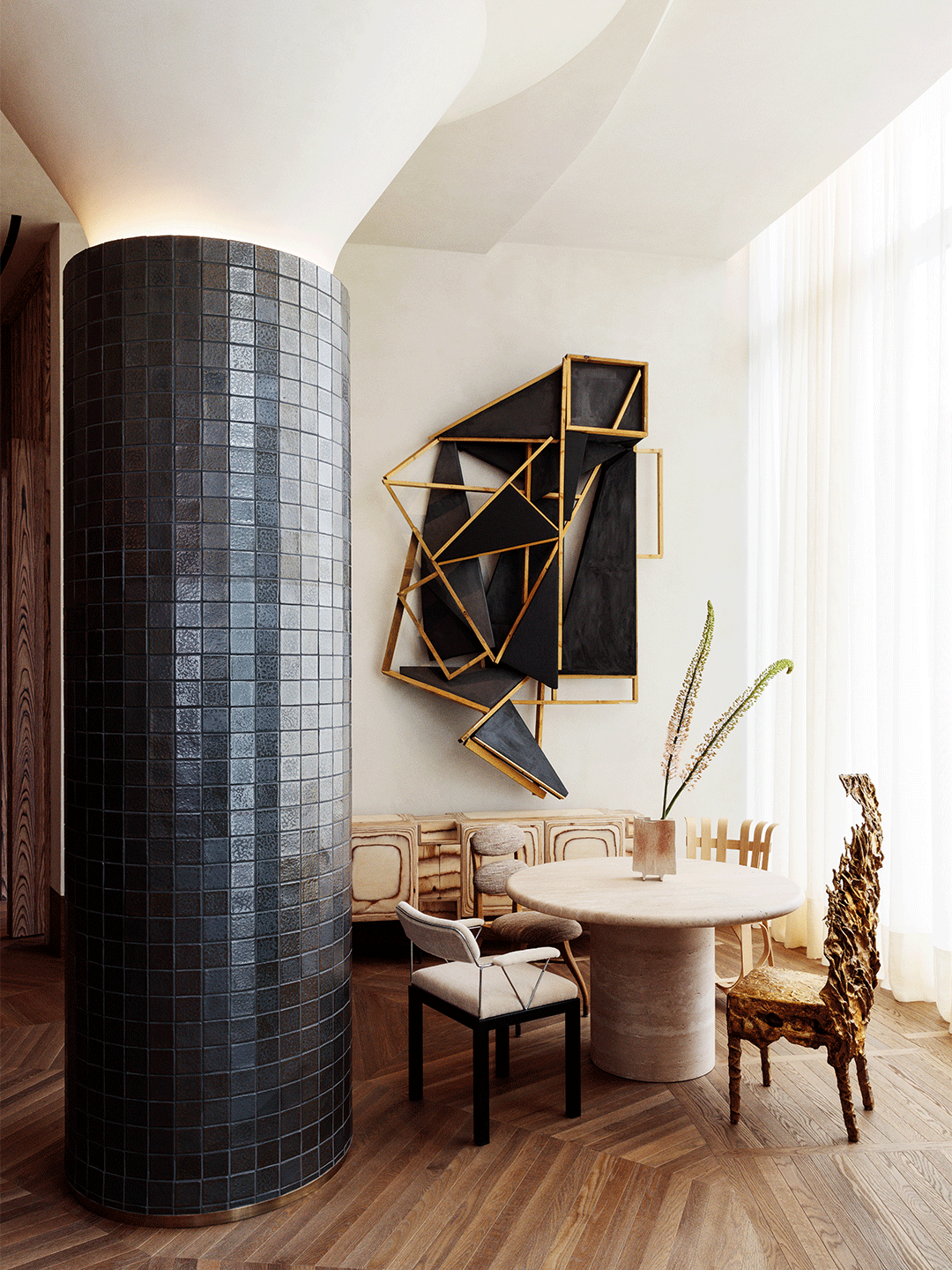
- Santa Monica Proper: With light-filled interiors by famed American designer Kelly Wearstler, Santa Monica Proper has already become a smash-hit with visitors and locals alike. Read more.
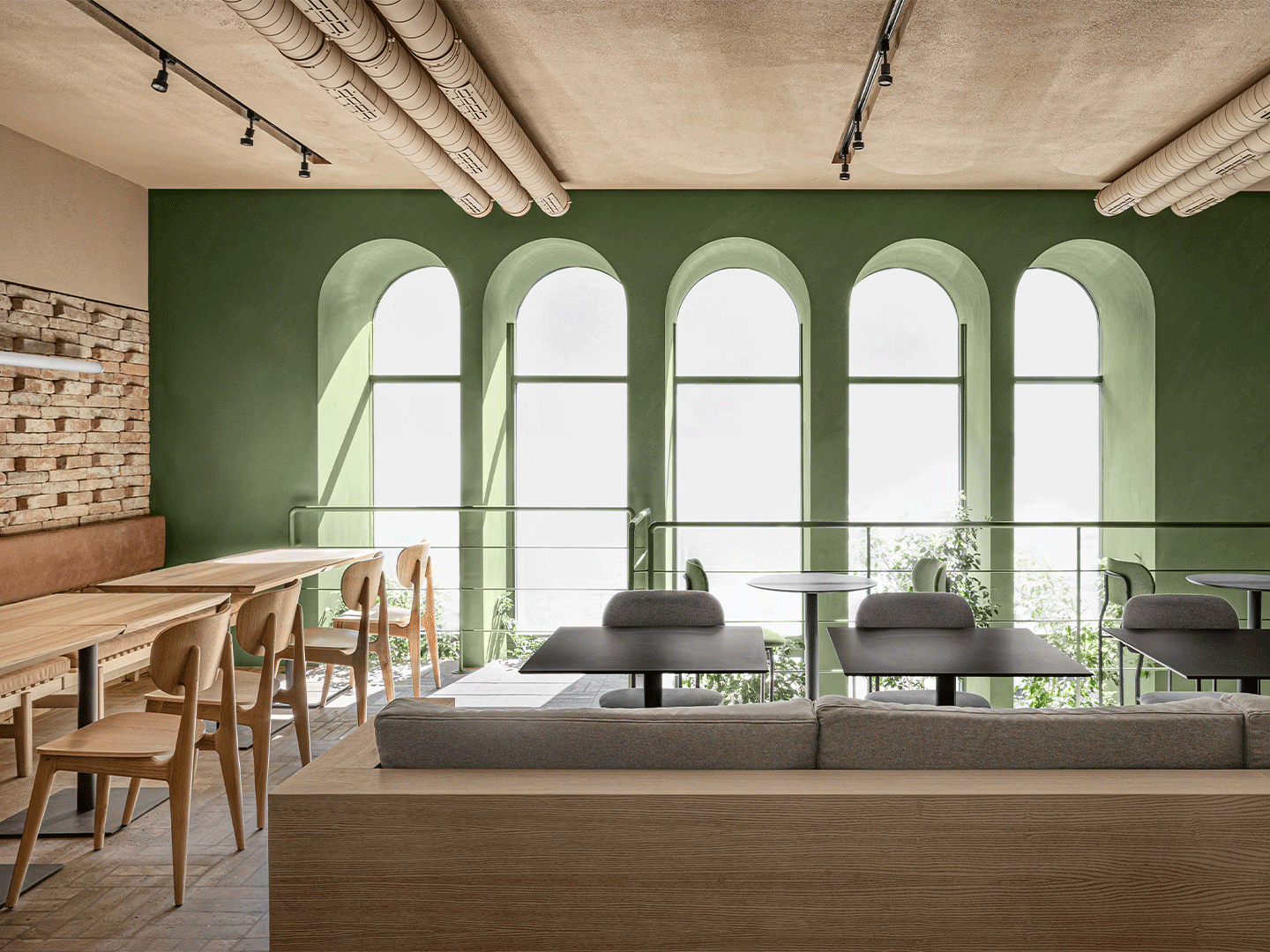
- Mana Manana restaurant: Kyiv-based architecture and interiors firm Balbek Bureau harnessed the spirit of Georgian hospitality when designing Mana Manana restaurant in Ukraine. Read more.
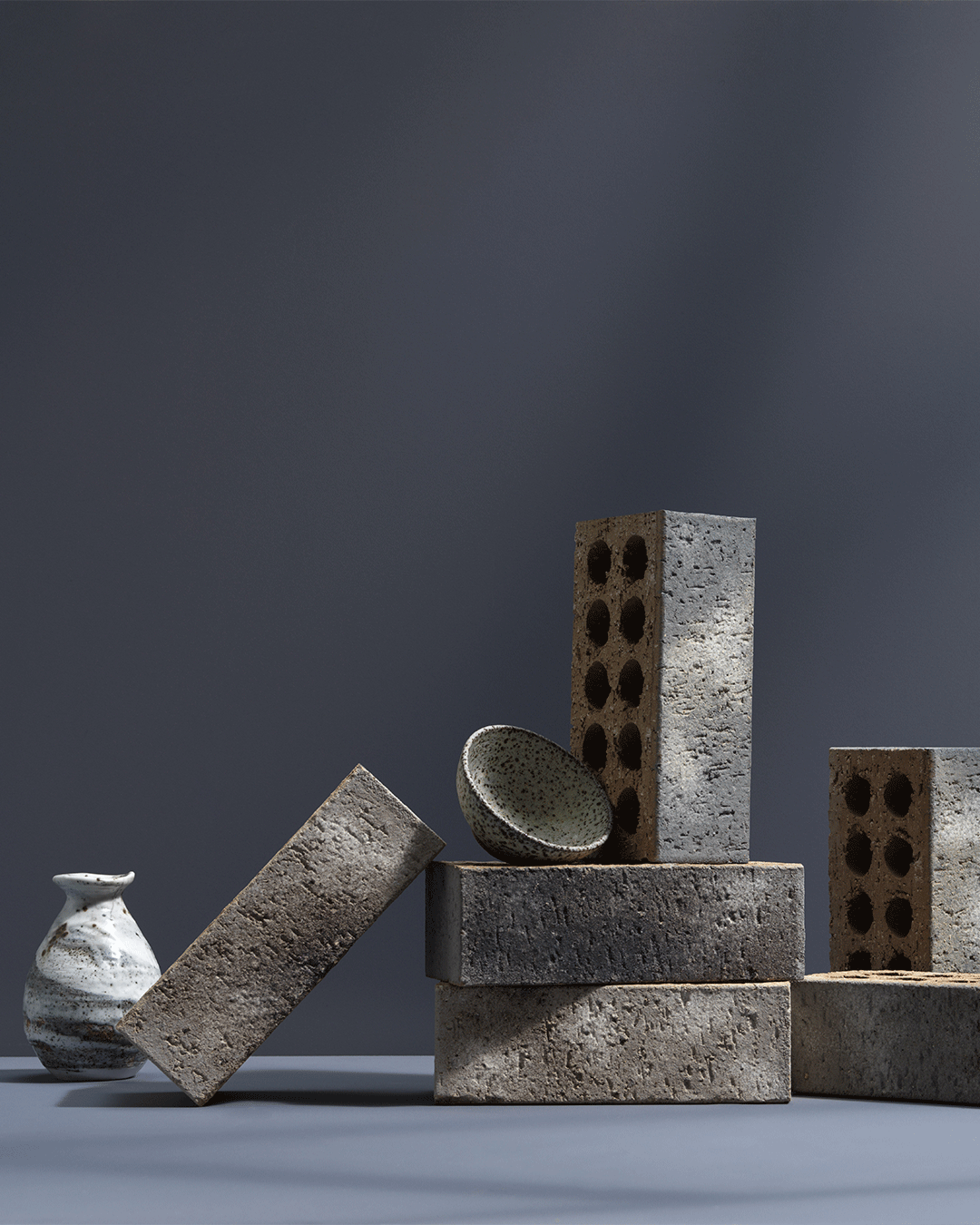
- B20 by Brickworks: Created in collaboration with experts from around the globe, the new Brickworks collection launched during B20 is destined to inspire, excite and endure. Read more.
From a residence in sunny Queensland to a four-storey restaurant in the heart of historic Kyiv.
Related stories
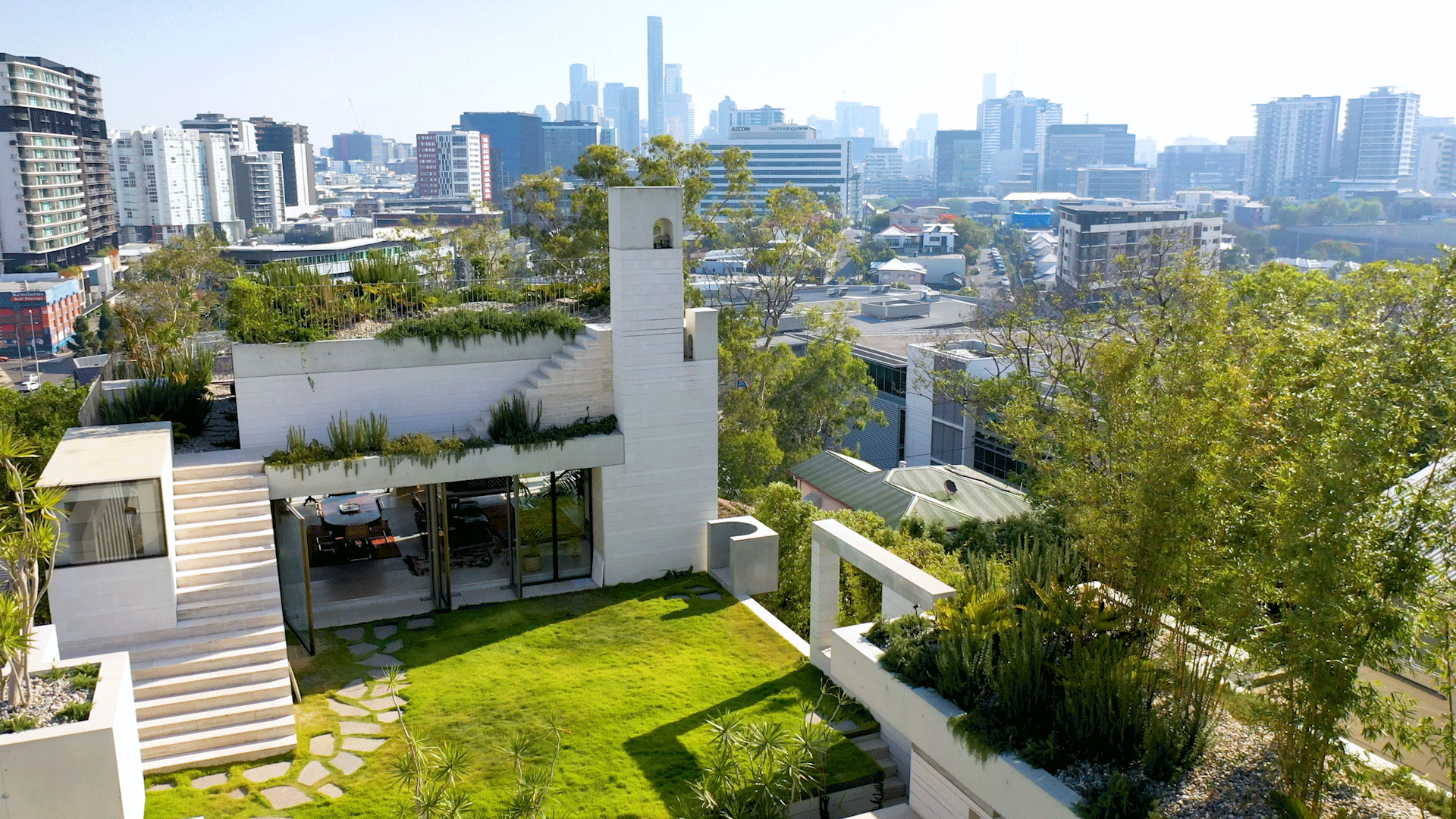
Perched high on a cliffside plot in Bowen Hills, a suburb just north of Brisbane’s CBD, La Scala is the private residence of Ingrid Richards and Adrian Spence of Richards and Spence. Drawing upon four years of collected ideas, the architects desired to create a house where the outside space acted solidly as its centrepiece. The resulting dwelling – a section of which was resolved by Ingrid with a sketch on a napkin while on holidays – evokes snapshots of the Mediterranean and Central and South America. Its bare masonry standing out under Queensland’s famed blue skies.
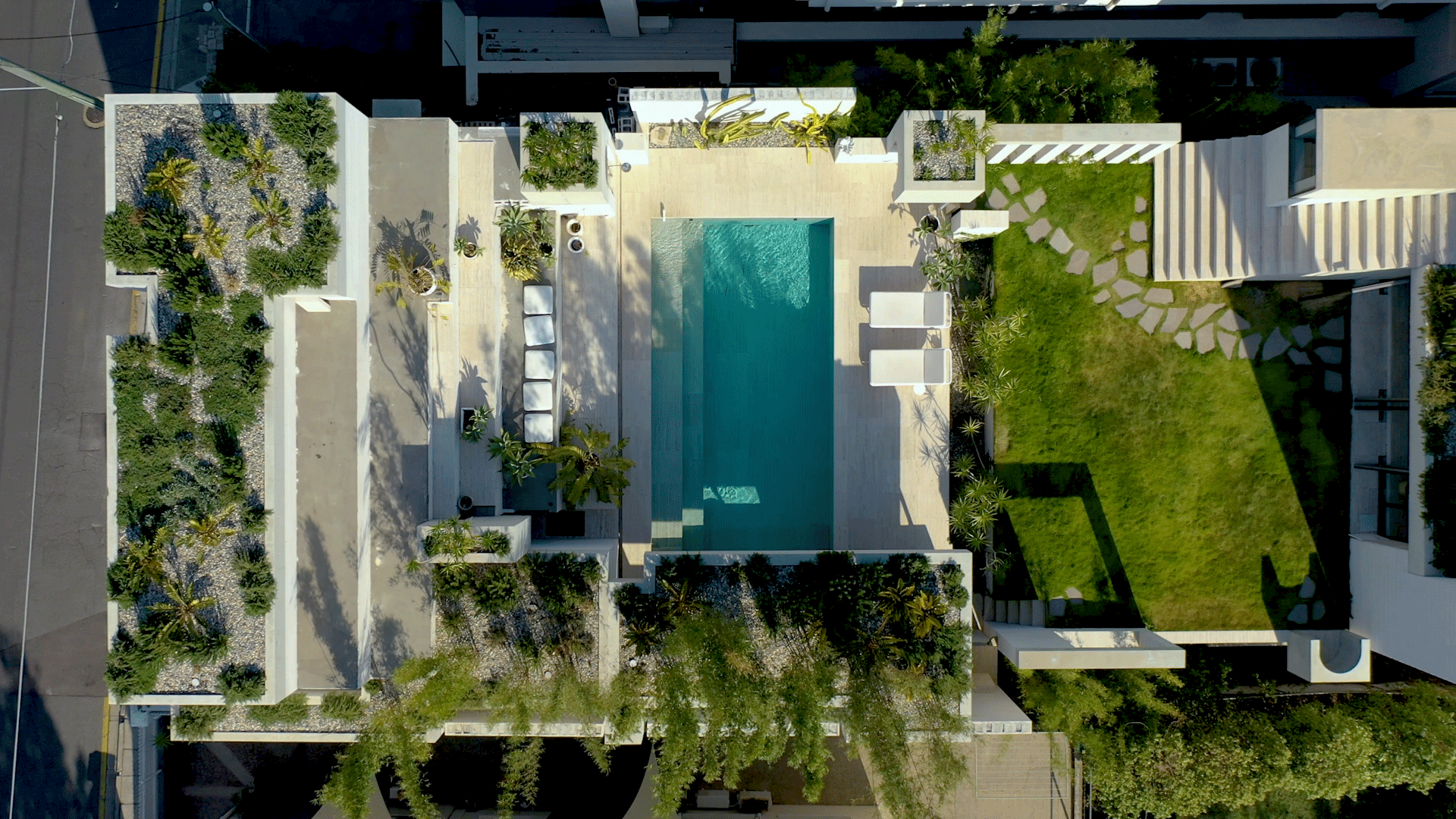
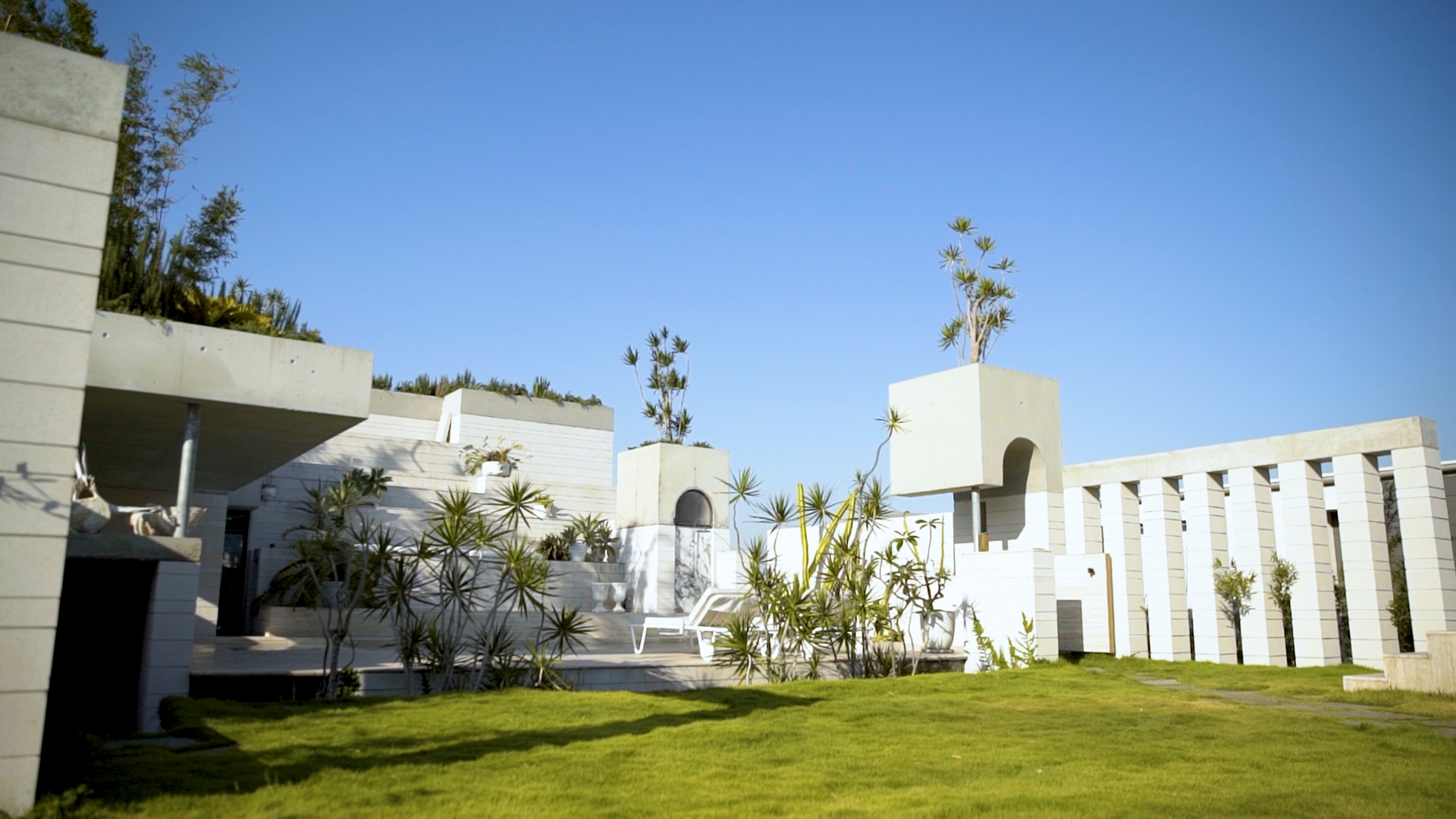
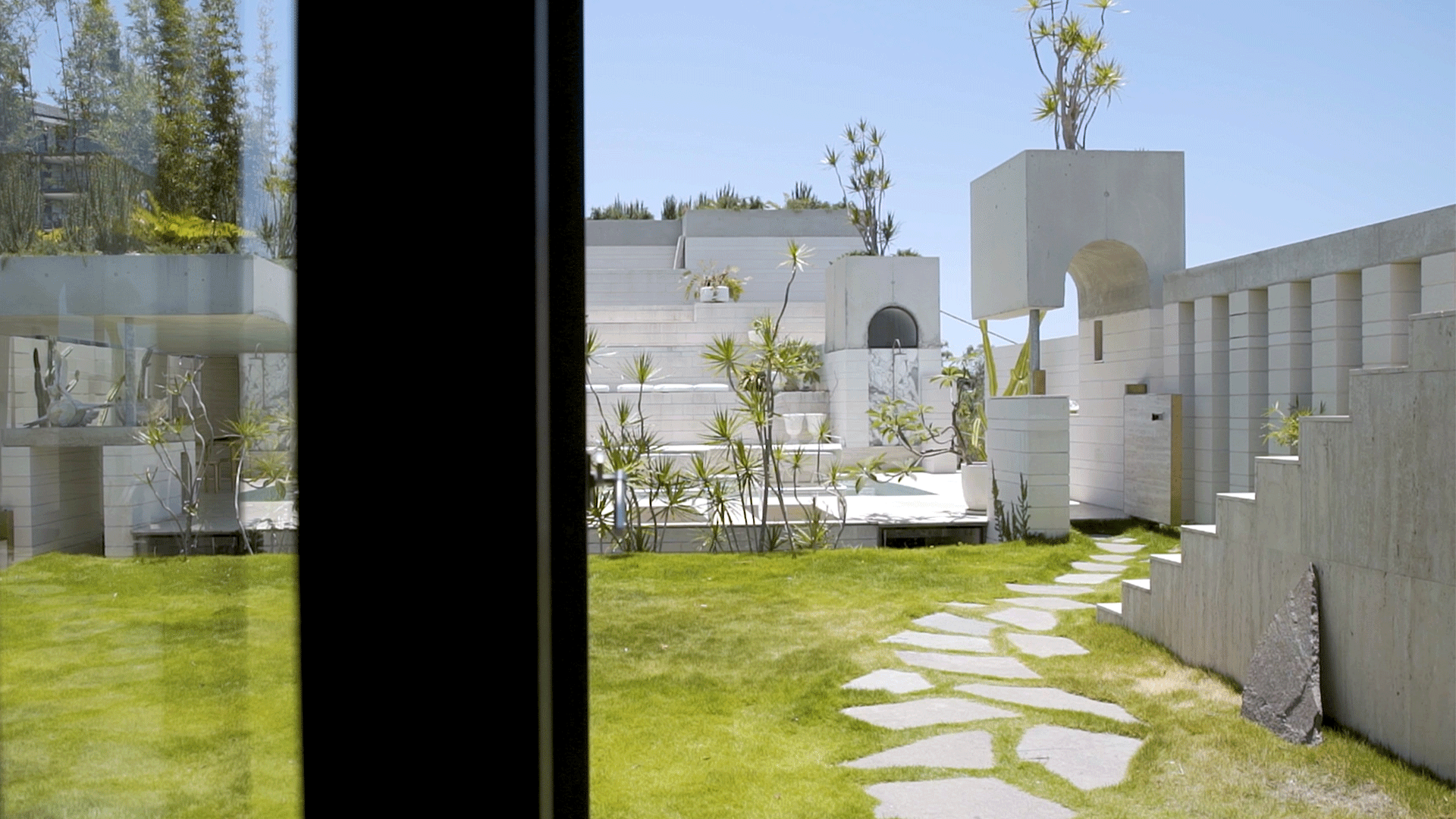
Bookended by two distinct sections of the house, the outdoor oasis reads as a multi-level amphitheatre-like arrangement of full- and half-height concrete masonry blocks, laid in horizontal gestures. Gently tiered terraces contain tufted grass and rambling foliage, while glistening reflections off the enticing pool dance across the garden walls. Few homes have an outdoor swimming pool at the heart and, of those few, it’s unlikely any match the glimmering beauty of La Scala.
The home represents a defiant inversion of the norm. “Our town planning regulations are very prescriptive in the way that they assume you are going to put a house in the middle of the block and have a yard around it – and we wanted to do the opposite,” says Adrian. Placing emphasis on the outdoors and specifying raw, light concrete blocks for the construction were appropriate choices in a city that basks in seemingly endless sunshine. The bold material choice also marks a continuing theme for the architecture practice who has employed near-whitewashed concrete blocks in other designs, including the Calile Hotel, with both aesthetics and sustainability in mind.
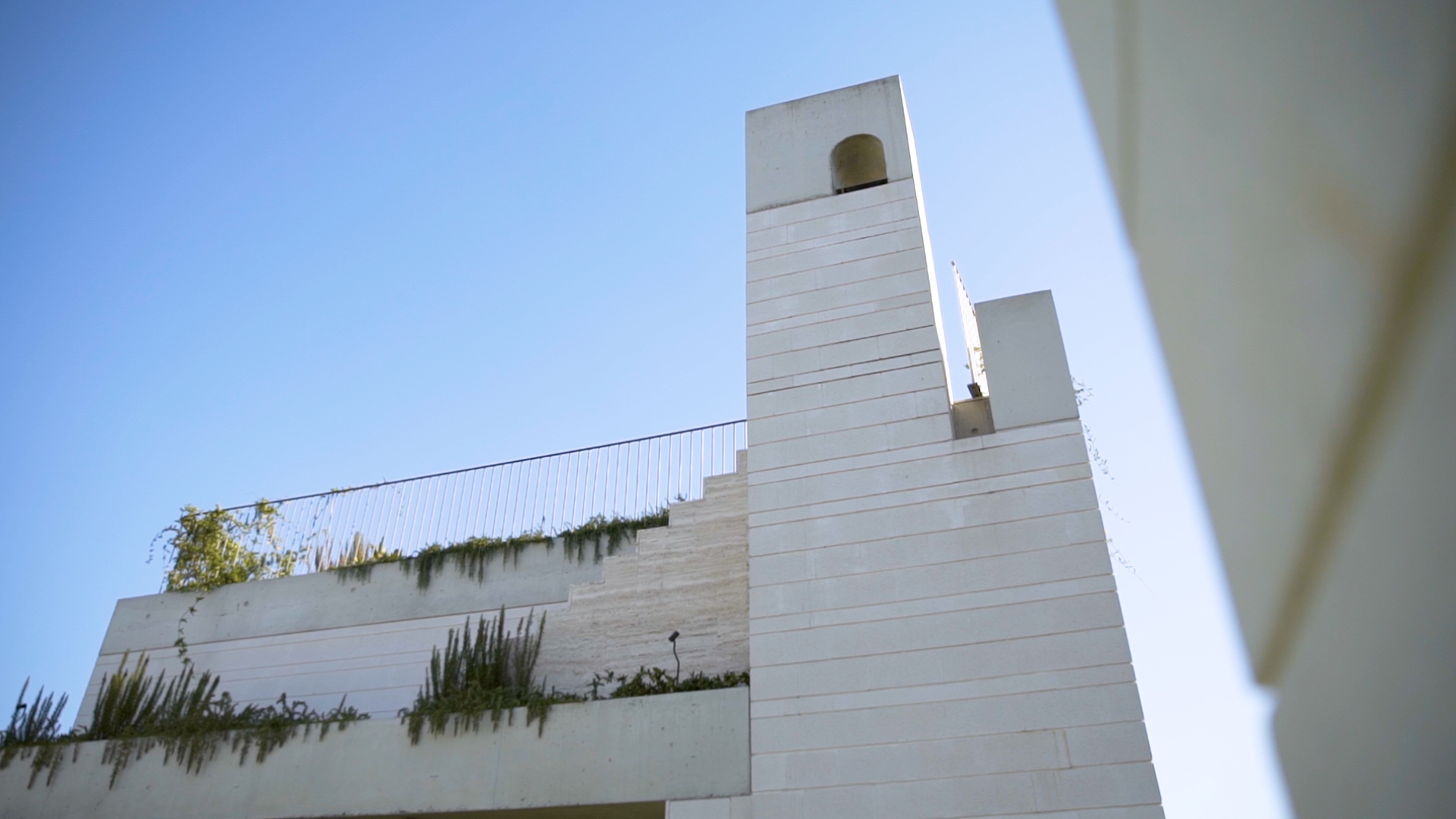
“For our work in Brisbane, we’ve tended to use a light-coloured masonry,” says Adrian. “I think that’s because we feel it’s appropriate for the hot-weather city we’re in.” Longevity has also played a part in the home’s design, with Richards and Spence giving consideration to the life cycle of the building beyond their own residence, and, according to Ingrid, tapping into “the kind of sustainability that’s about not having to keep rebuilding the same thing over and over again”.
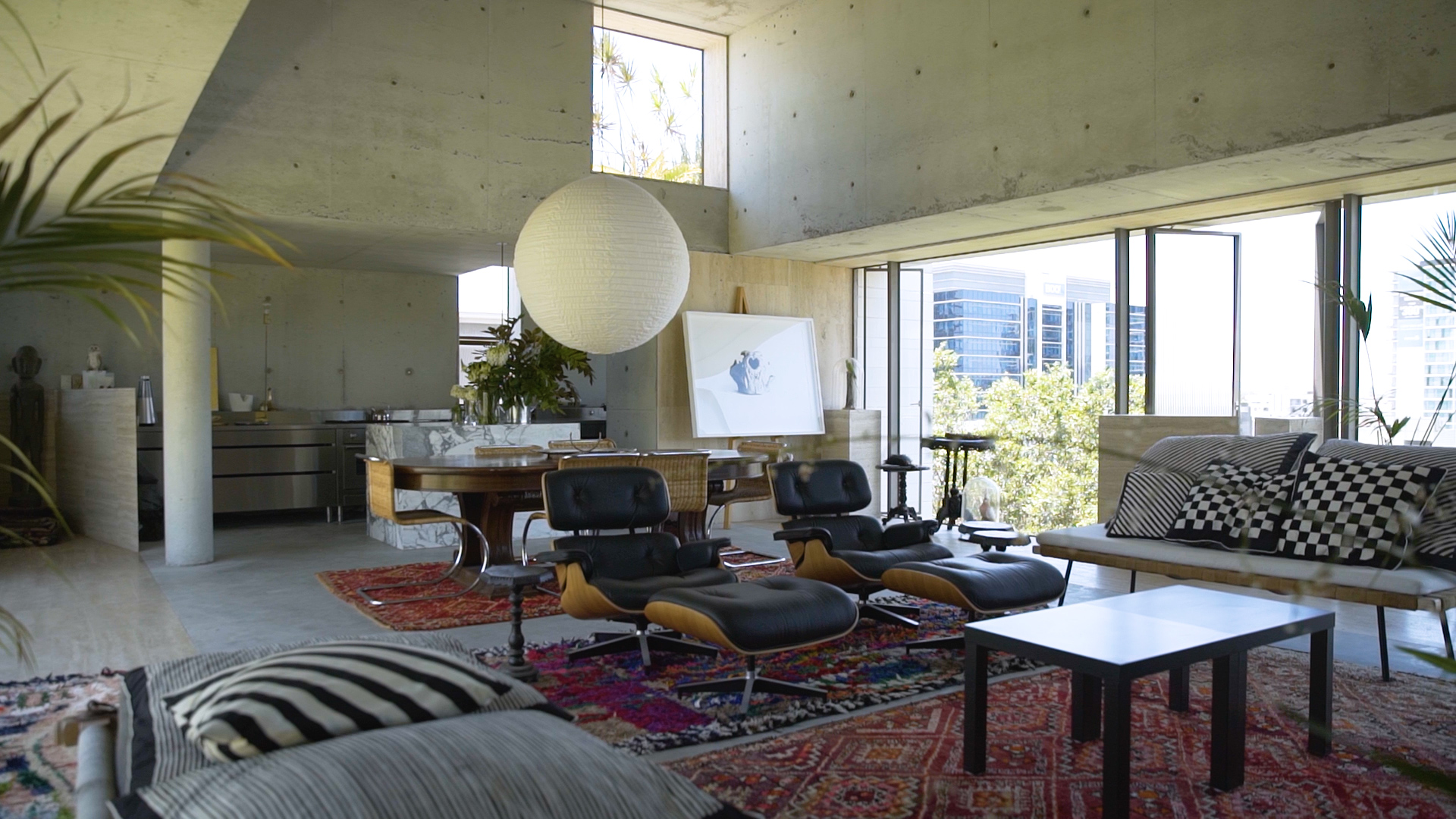
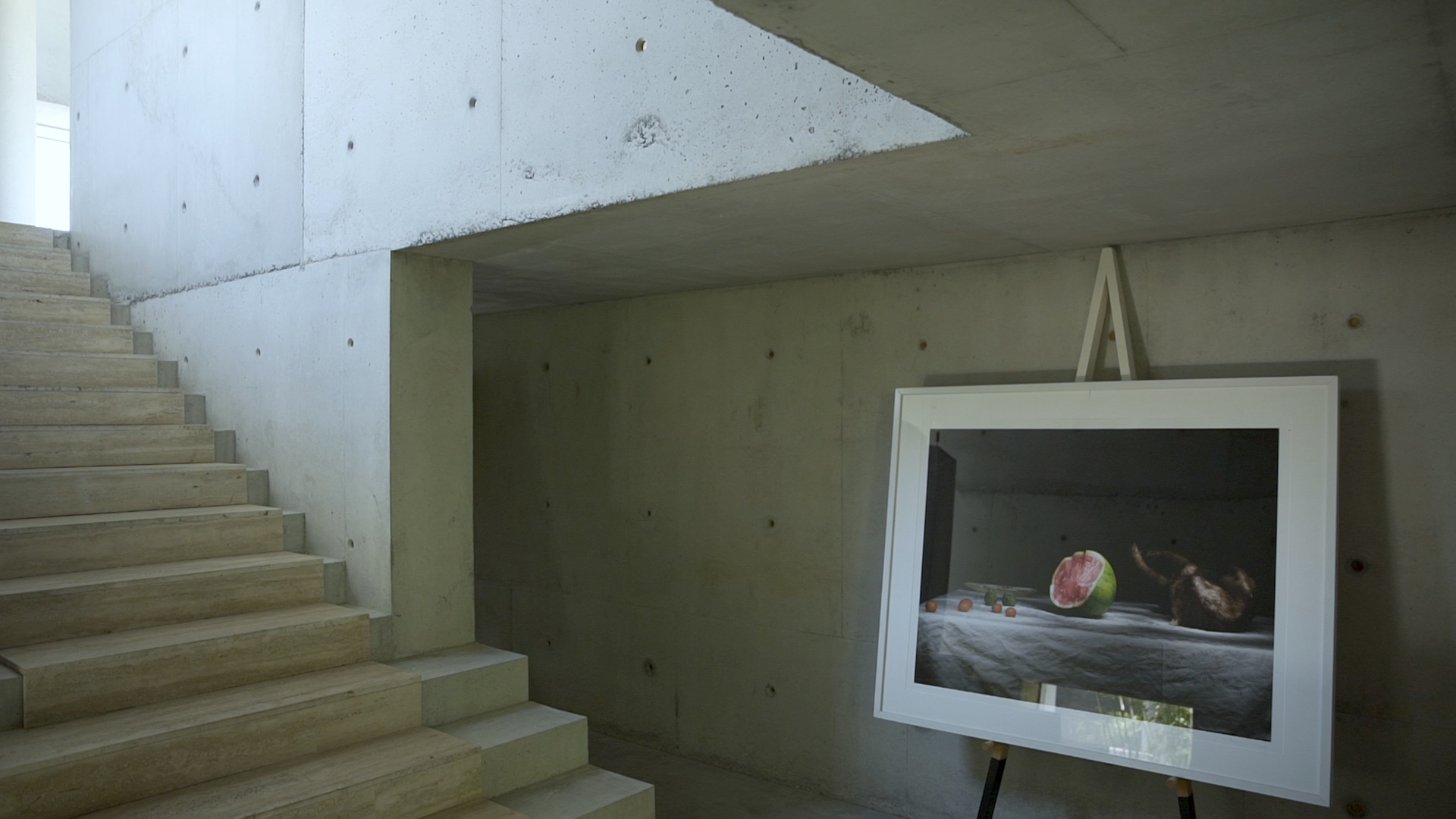
“We thought this building in another 10 years could become a gallery or a restaurant or have some other use beyond purely domestic,” says Adrian. “We try to make things that are flexible so they can endure different types of occupation.” While Adrian describes the masonry as looking “almost like a ruin in the way it’s kind of naked … in its detailing”, the house has a glamorous, sun-kissed vibe that’s undoubtedly ideal for entertaining.
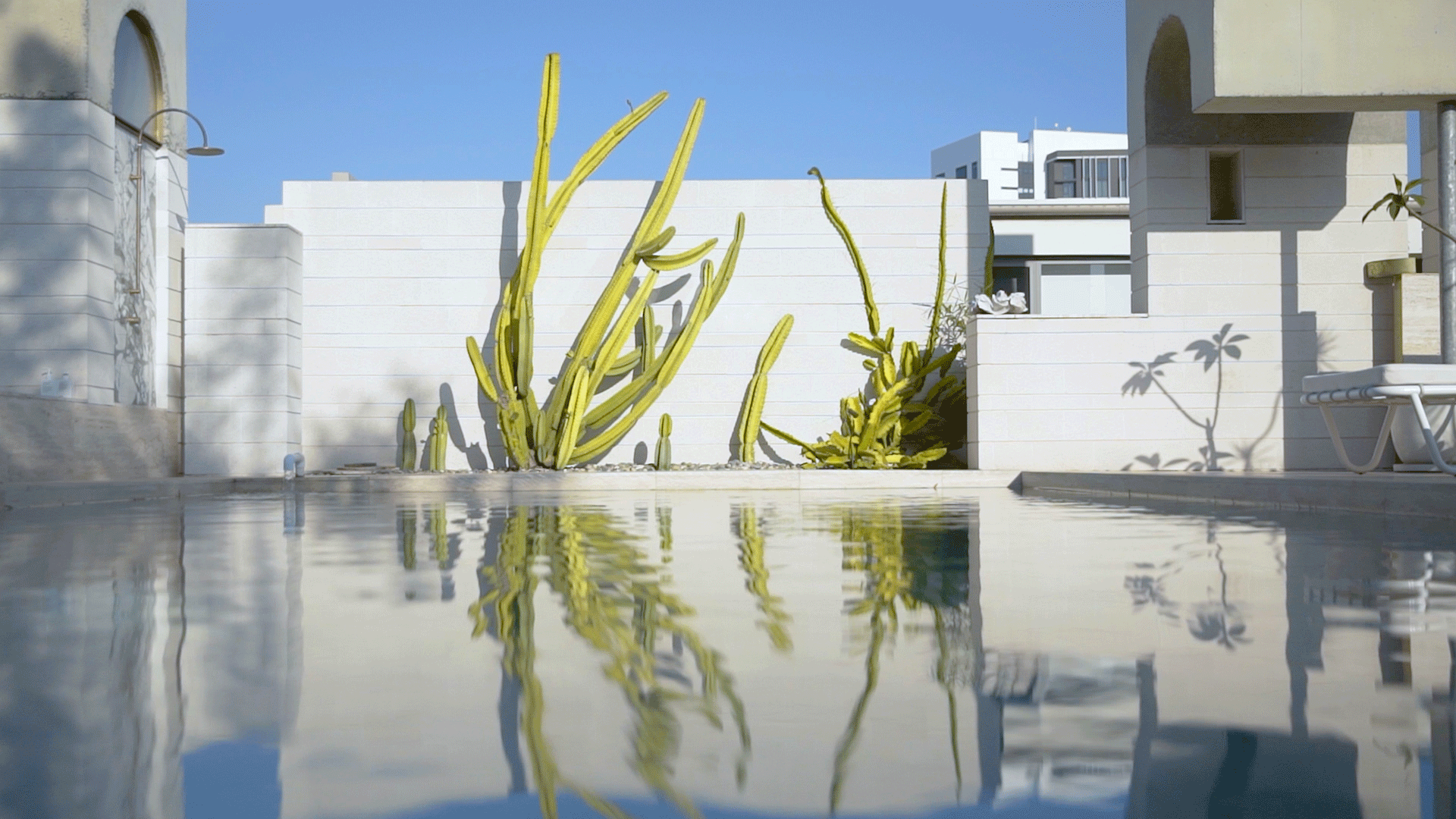
For now, Richards and Spence can do just that, making particular use of the monumental outdoor space – whether for parties or in private. “There’s a point where, if you’re lying in the pool facing the building, you get a silhouette of the sky and it feels really wonderful,” says Ingrid. “It feels like you’re alone even though we’re quite close to the centre of the city.”
We thought this building in another 10 years could become a gallery or a restaurant or have some other use beyond purely domestic.
Related stories
- Home tour: Couldrey House in sub-tropical Queensland by architect Peter Besley.
- Home tour: A contemporary house in Subiaco with quaint cottage appeal.
- Home tour: A concrete house in Singapore with lush tropical gardens.
Perched high on a cliffside plot in Bowen Hills, a suburb just north of Brisbane’s CBD, La Scala is the private residence of Ingrid Richards and Adrian Spence of Richards and Spence. Drawing upon four years of collected ideas, the architects desired to create a house where the outside space acted solidly as its centrepiece. The resulting dwelling – a section of which was resolved by Ingrid with a sketch on a napkin while on holidays – evokes snapshots of the Mediterranean and Central and South America. Its bare masonry standing out under Queensland’s famed blue skies.
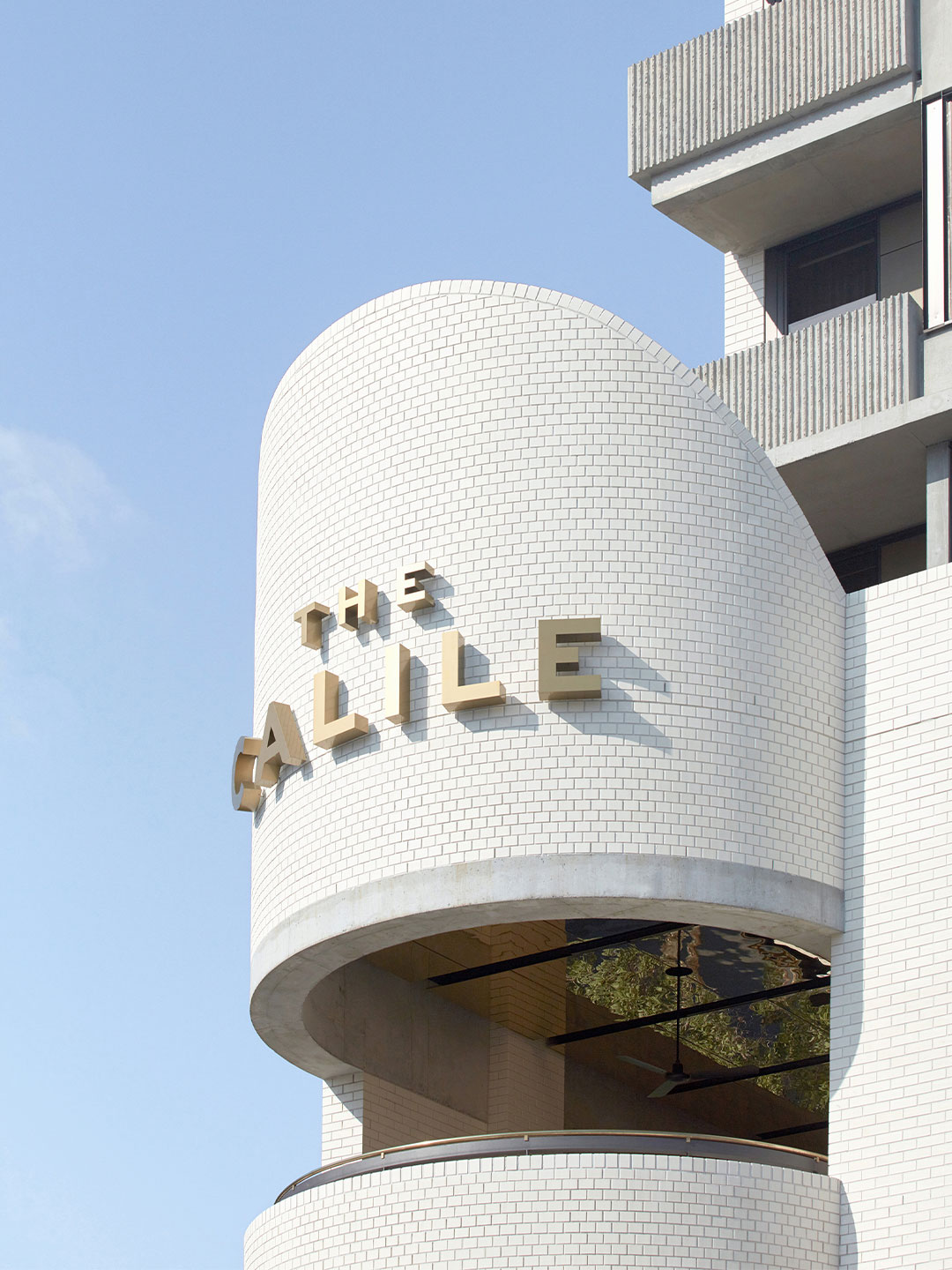
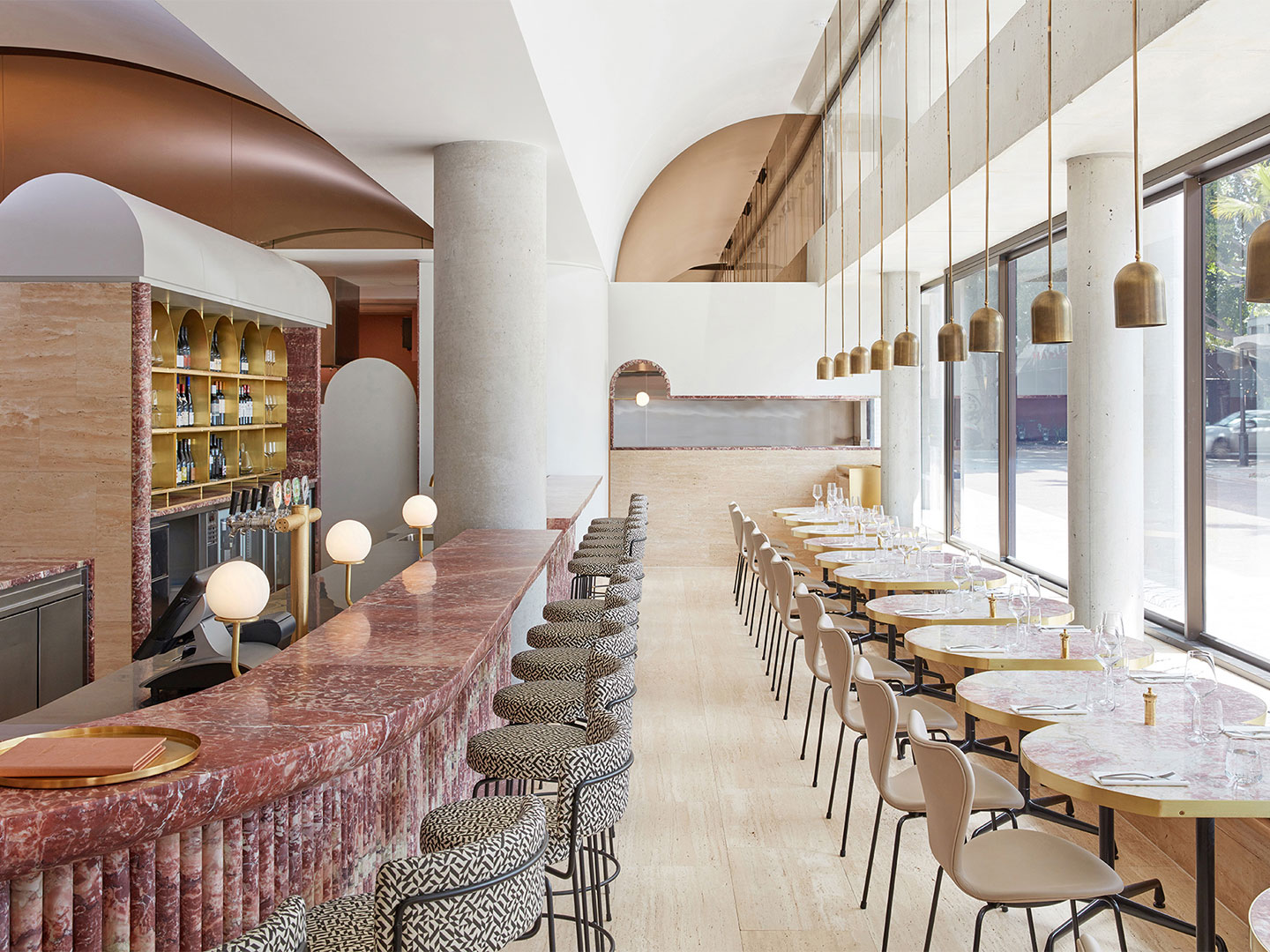
Before The Calile Hotel was conceived, there were a host of interventions across the James Street precinct to rejuvenate sites also owned by the development team, Calile Malouf Investments. The first was James Street Market (2003) designed by Cox Architecture with Ingrid Richards as design and project architect. Richards and Spence then made further enhancements through projects including 19 James Street (2012) and 19 Wandoo Street (2015). The latter proposals set retail tenancies within a framework of colonnades, laneways and immersive gardens, committing to the idea that leisure pursuits – shopping and dining – could be greatly enhanced by place-sensitive urban design strategies.
The Calile Hotel is the culmination of ideas that Richards and Spence has tested and refined during the preceding two decades. The architecture builds on the formal and material language of the rejuvenated precinct and extends its climate-sensitive agenda. Masonry and concrete serve as both construction and finish materials. Gardens are generously deployed. Public and semi-public circulation areas are passively cooled and outdoor territories are made into principle rooms. These approaches embed the architecture in its surrounds, harnessing all the favourable qualities of Brisbane’s subtropical climate and this exquisitely curated leisure precinct.
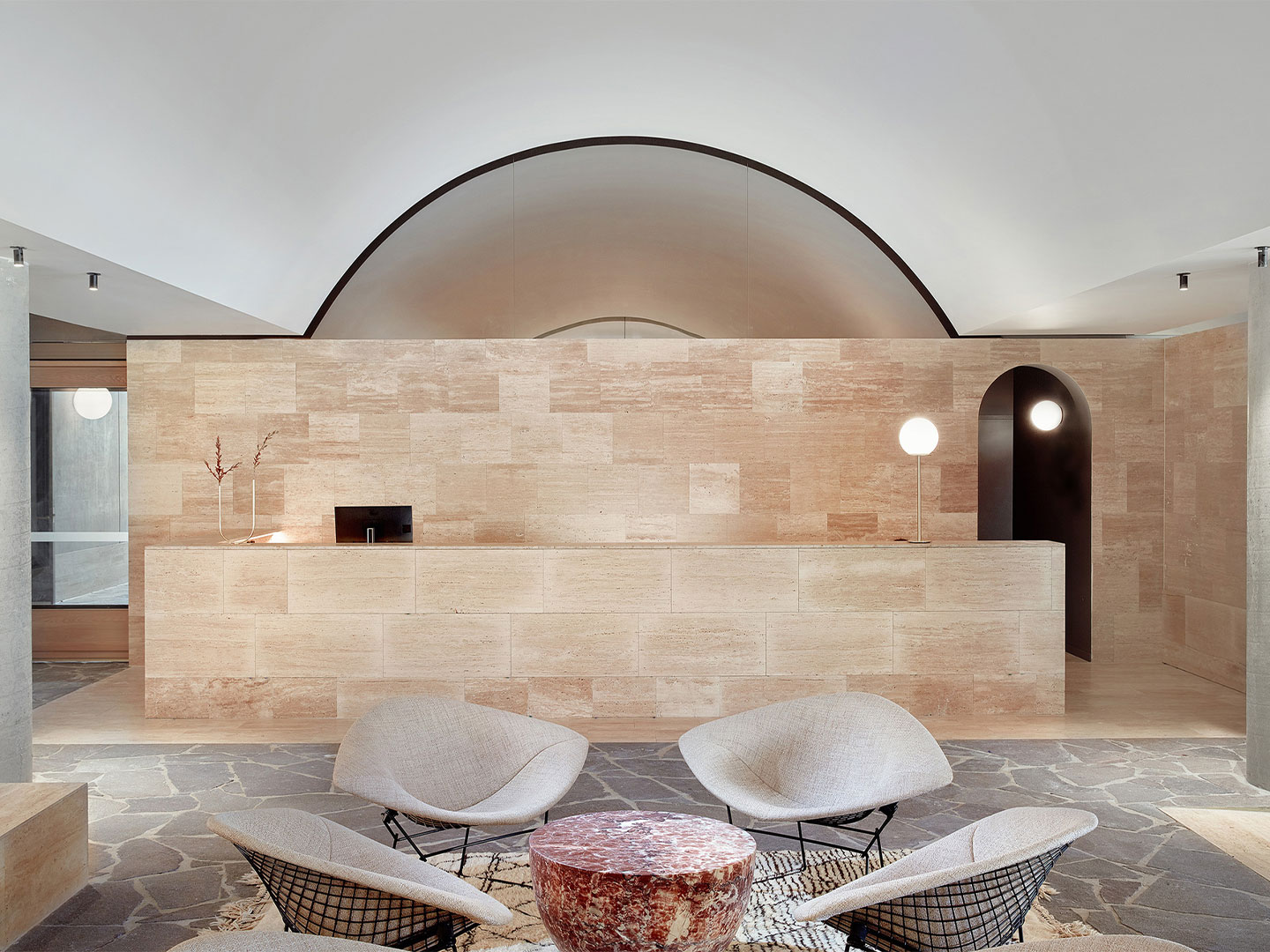
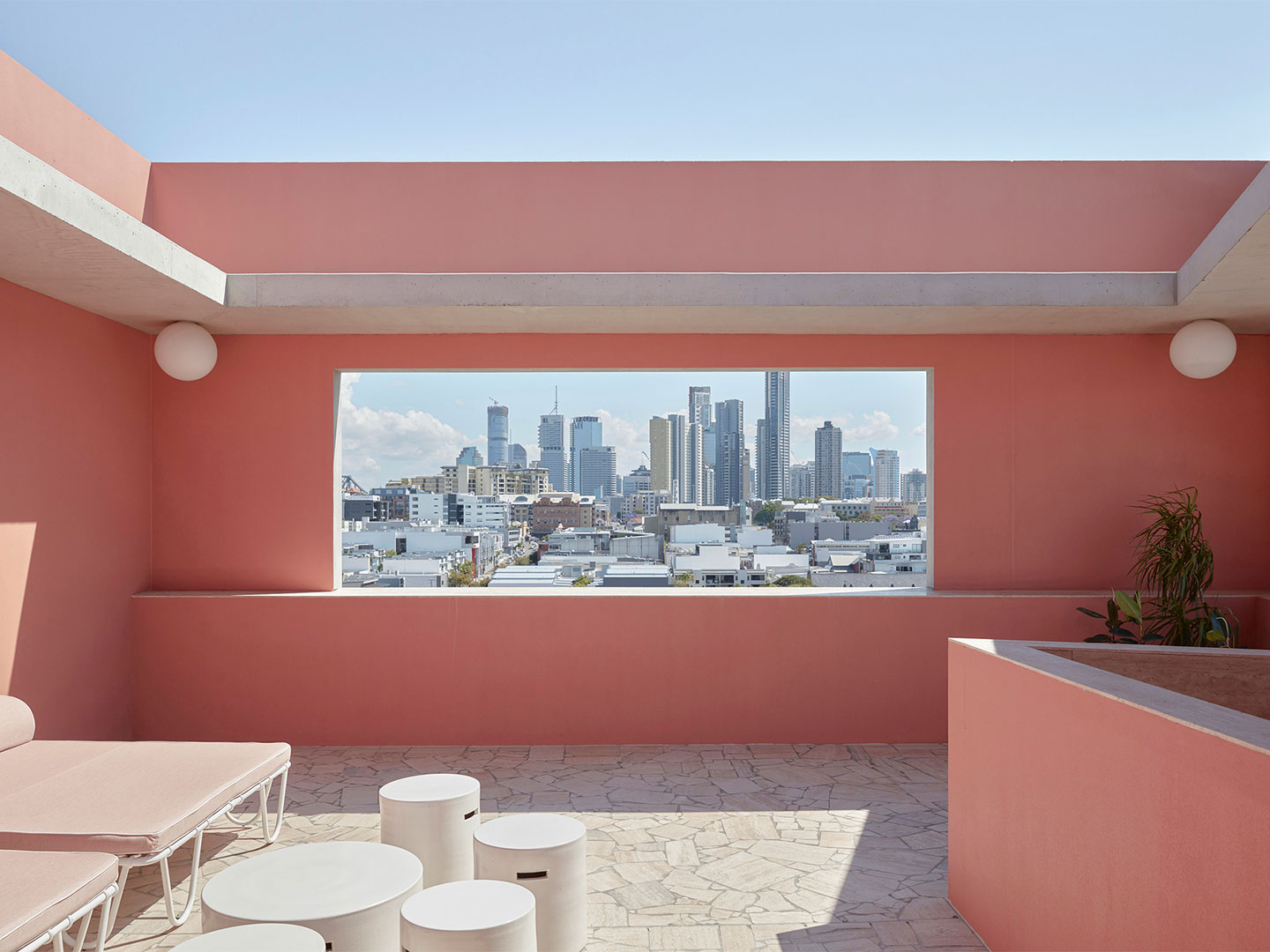
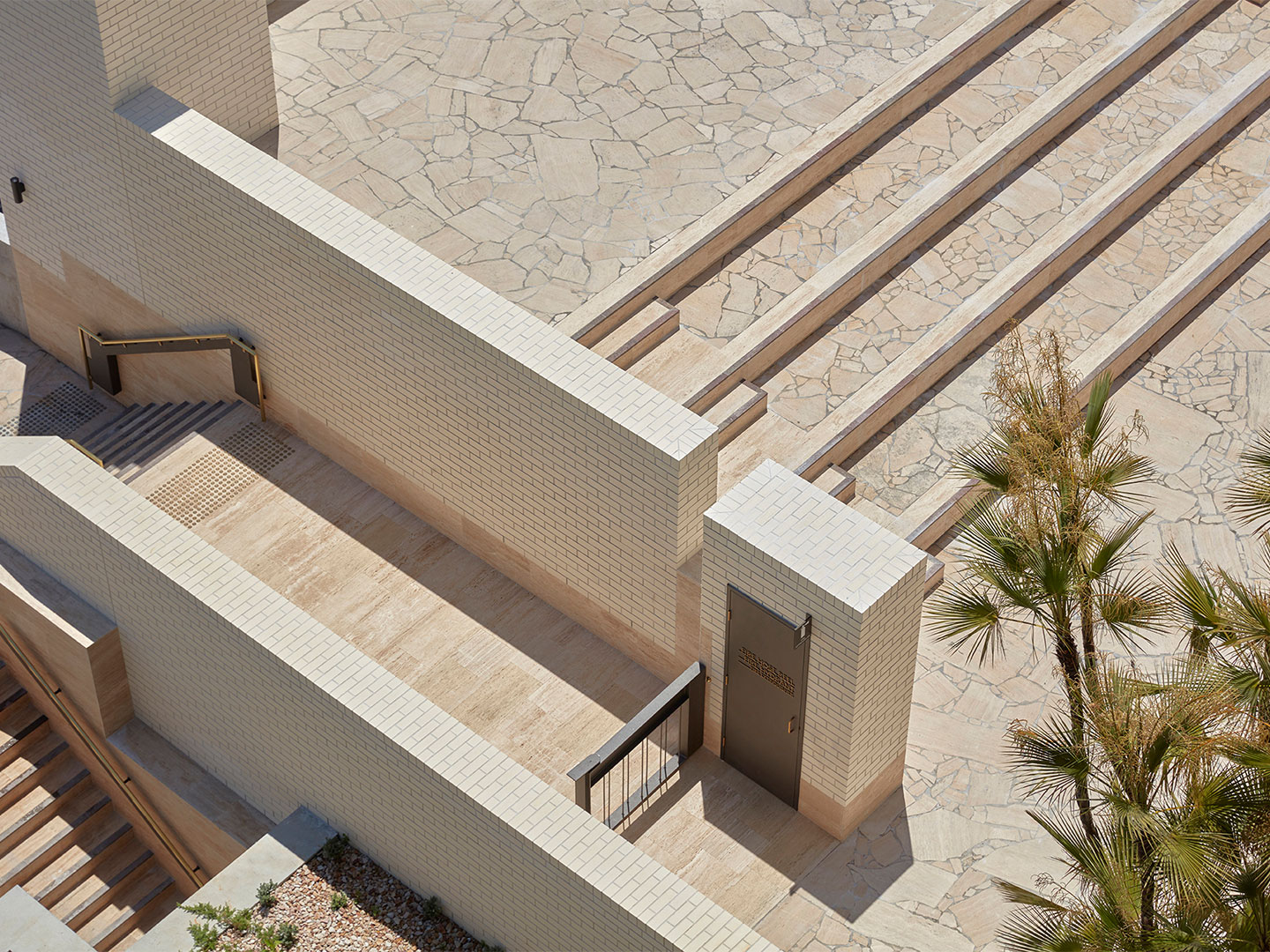
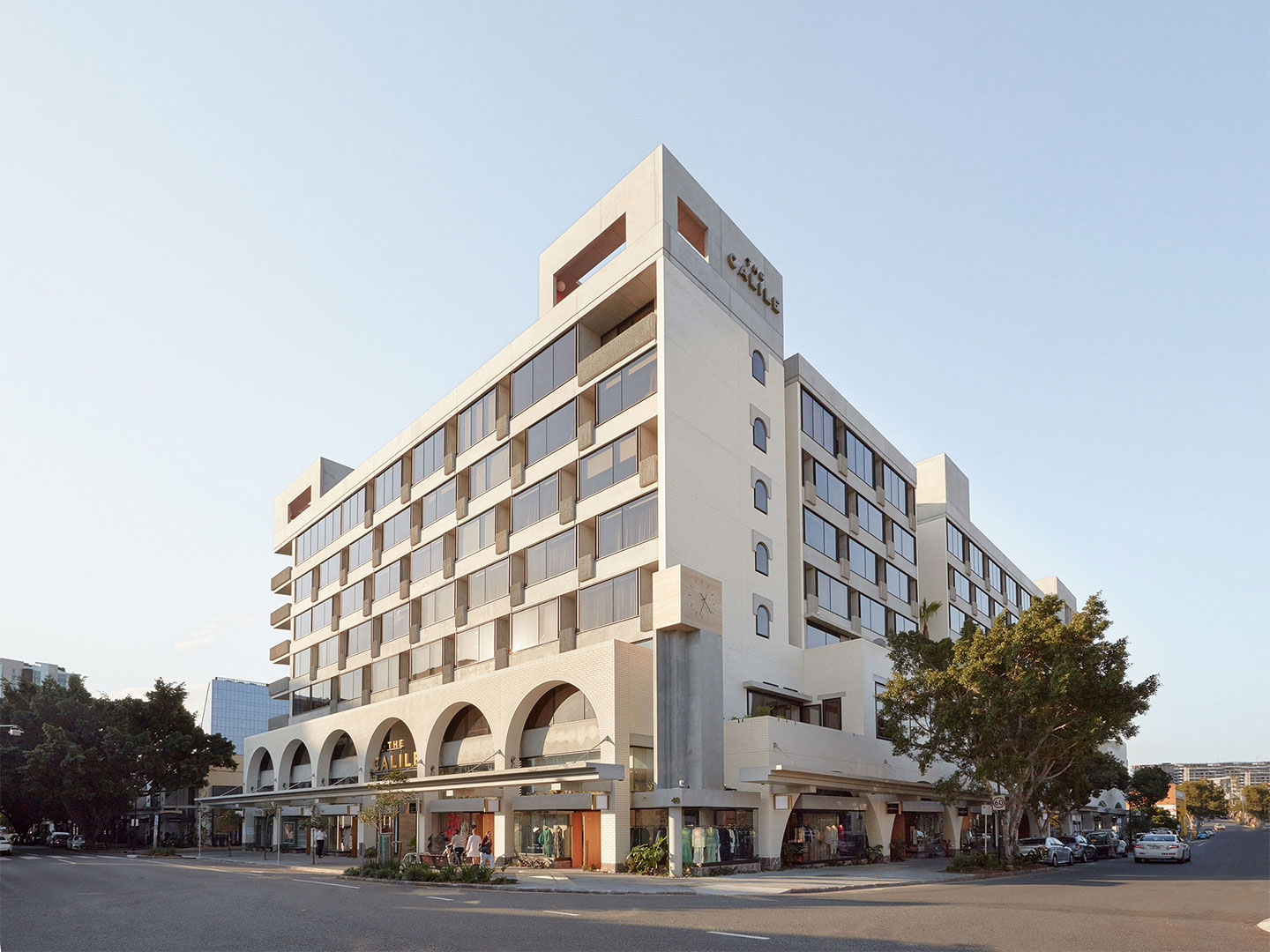
Street front retail tenancies activate three sides of the hotel at ground levels. Each is afforded a beautifully detailed window box, framed by an arching cadence expressed in white brick. Pedestrians are drawn into the hotel below a signature archway on James Street, separated from the porte cochere, which syphons automobiles from Doggett Street into another vaulted space. Regardless of the approach, the gentle hubbub emanating from the pool deck above invites visitors to the fluid ascent to the podium terrace. Here, mature palms strike a silhouette against Queensland’s dazzling sky, endorsing this terrace as the principal place of gathering, for both the hotel and the city.
Every visual reference and material finish seems poised to trigger the memory of a thousand holidays past.
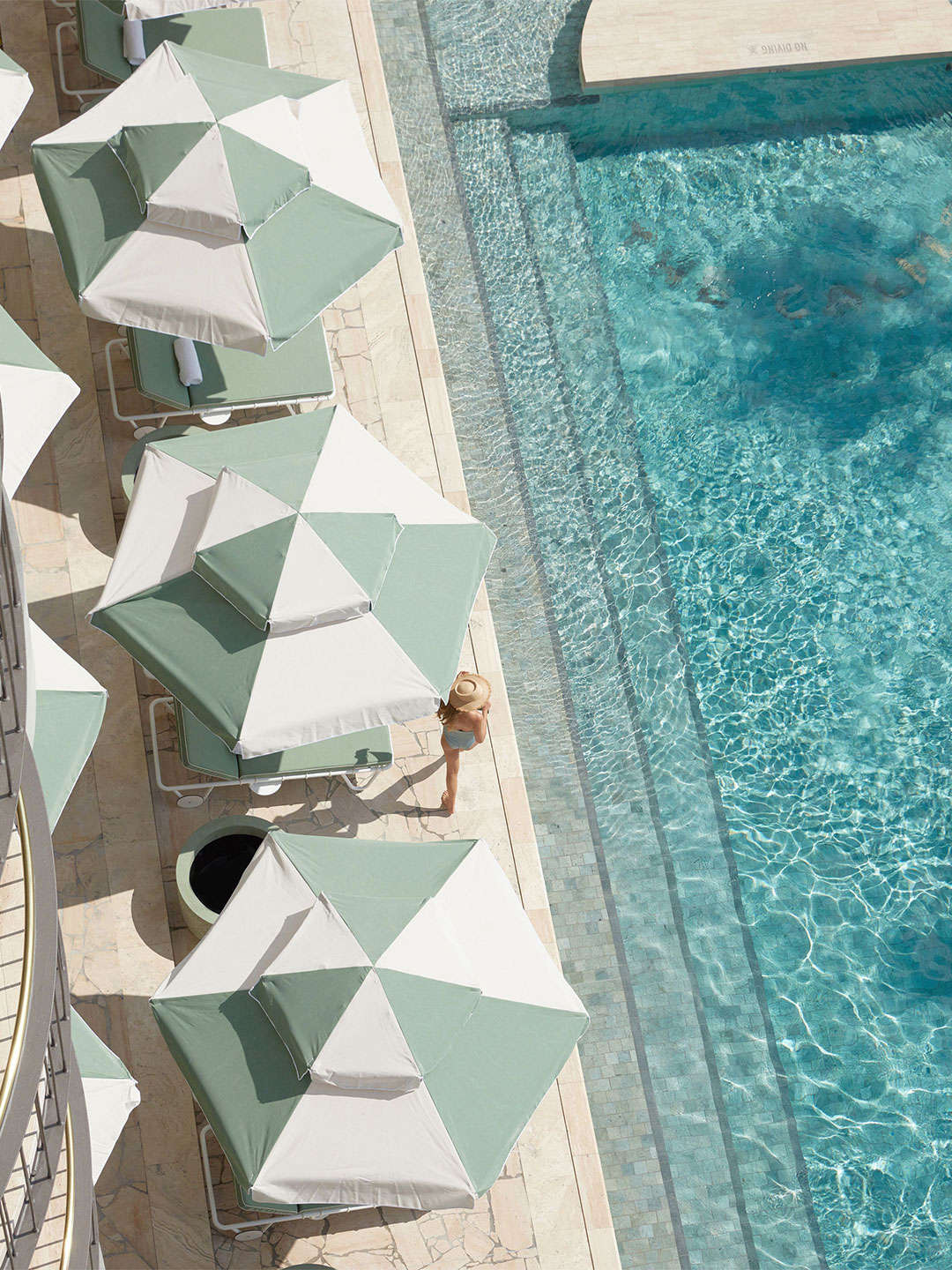
Every visual reference and material finish seems poised to trigger the memory of a thousand holidays past – sparkling pool, sun-drenched terrace, spritely sun umbrellas and glamorous lounge chairs – encouraging all who enter to unwind, breathe deeply. As Adrian warns: descending onto bustling James Street in a holiday-fuelled daze, wearing nothing but a swimsuit, is a very real threat.
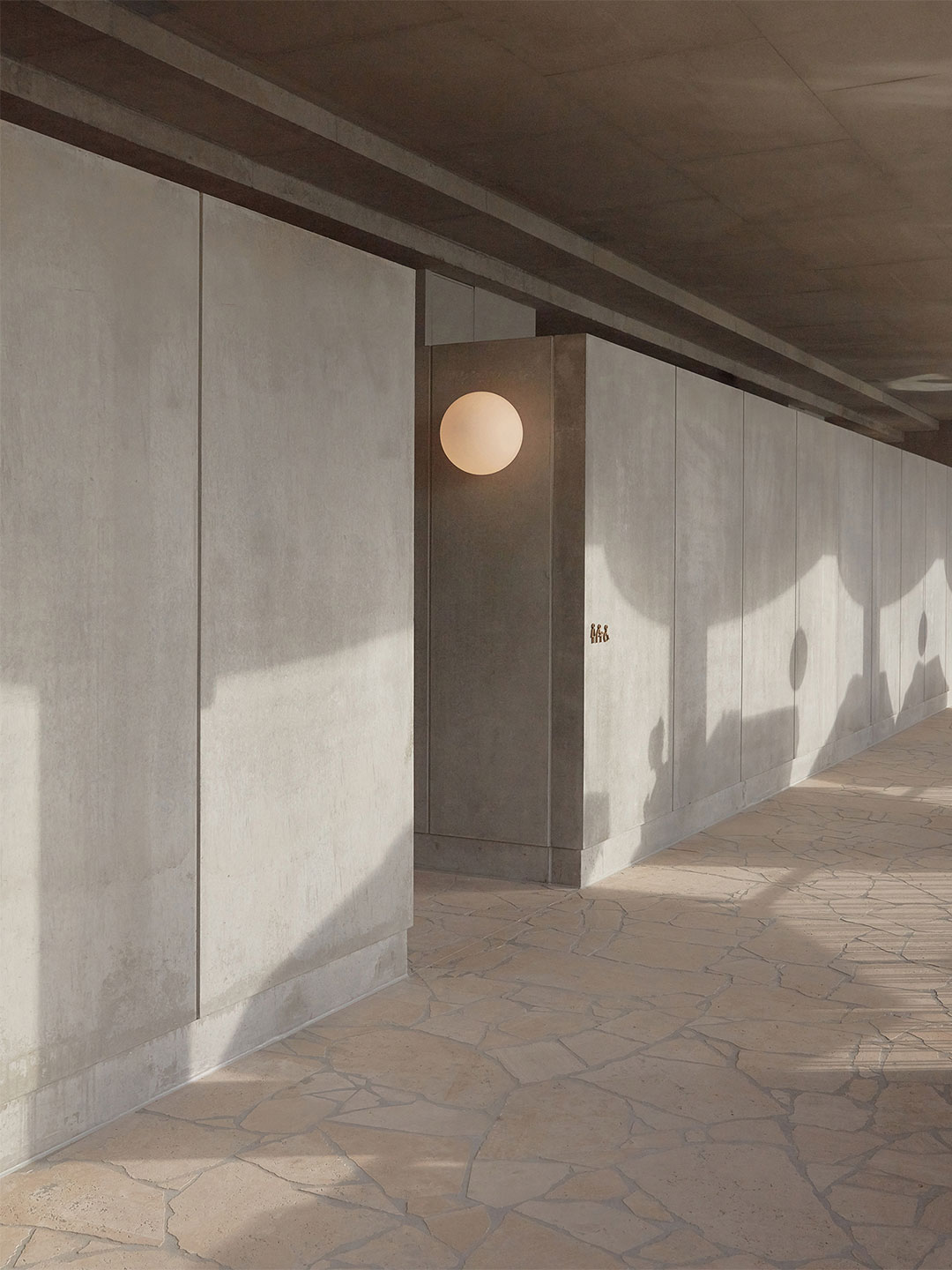
One of the most memorable experiences of The Calile Hotel unfolds in the quiet spaces of the hotel concourse where naturally ventilated corridors service hotel rooms on both sides. As the lift doors open, a picturesque scene of suburban life is framed by a large opening looking out across the neighbourhood.
Warm subtropical air fills the lungs as breezes circulate gently overhead. In this moment, guests are immersed in both climate and place; a warm and sunny Brisbane neighbourhood. Here, as in the suburban surroundings, garden beds and pots cradle tropical plants and sunlight pours in through breeze block walls.
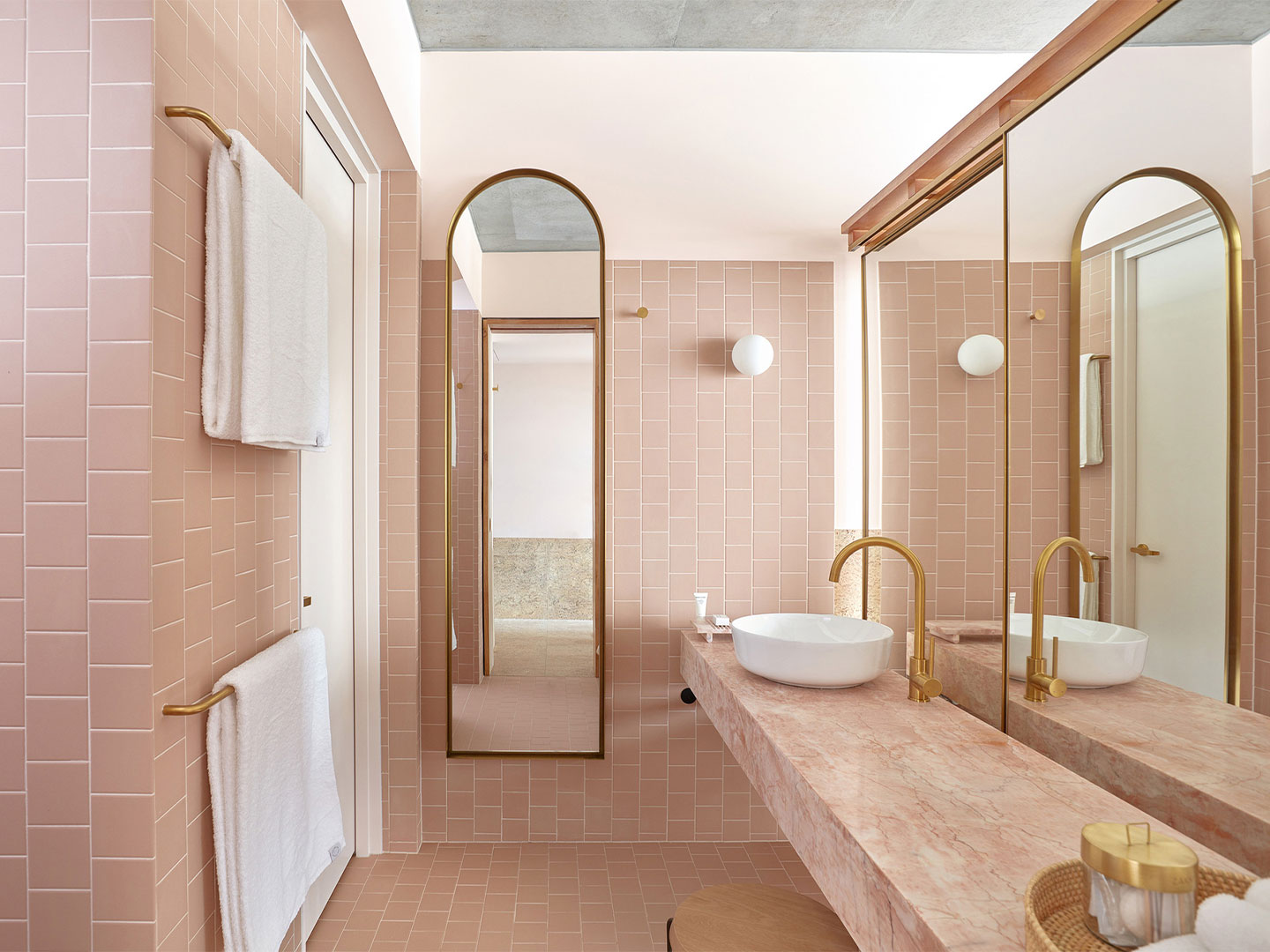
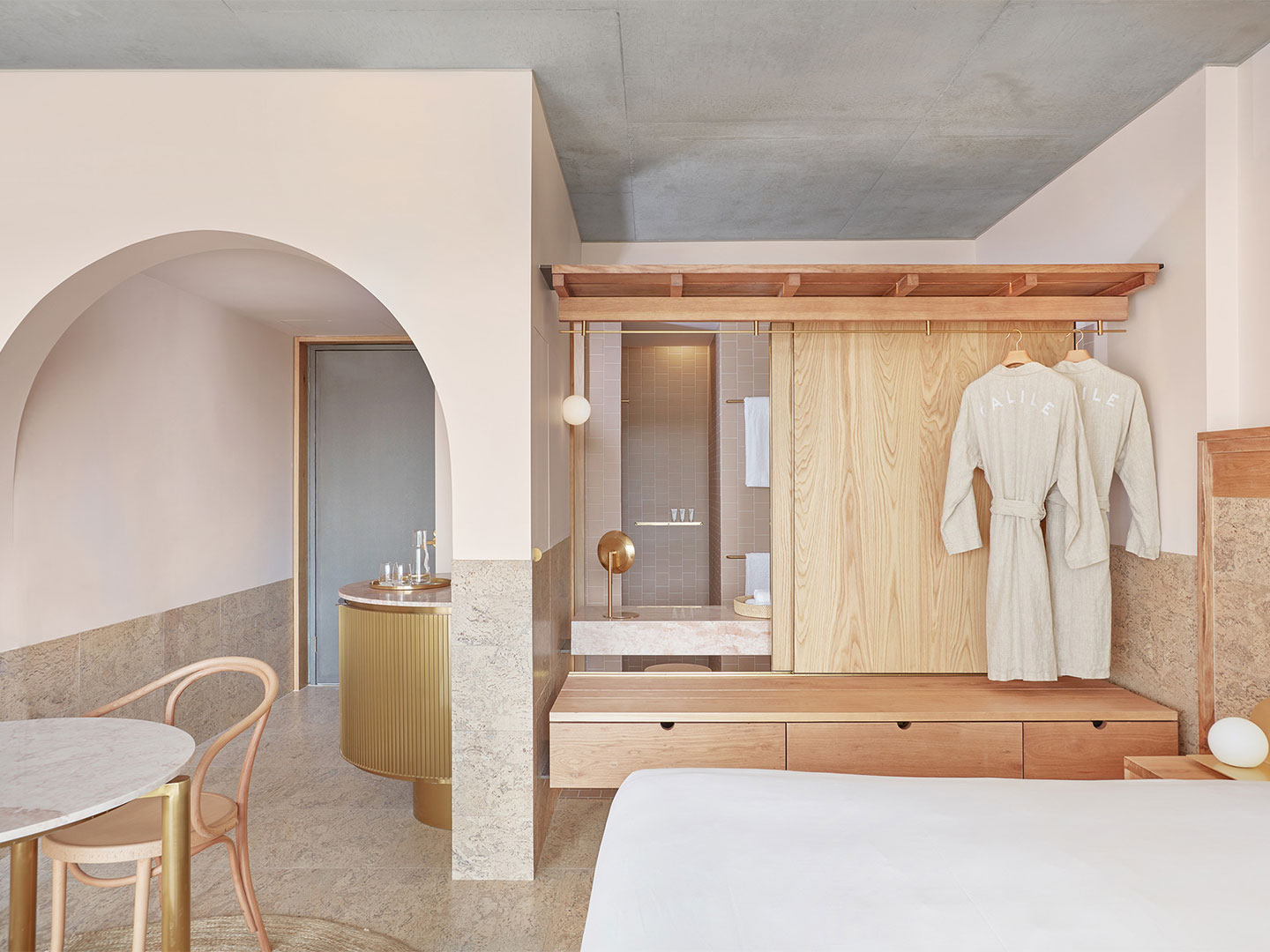
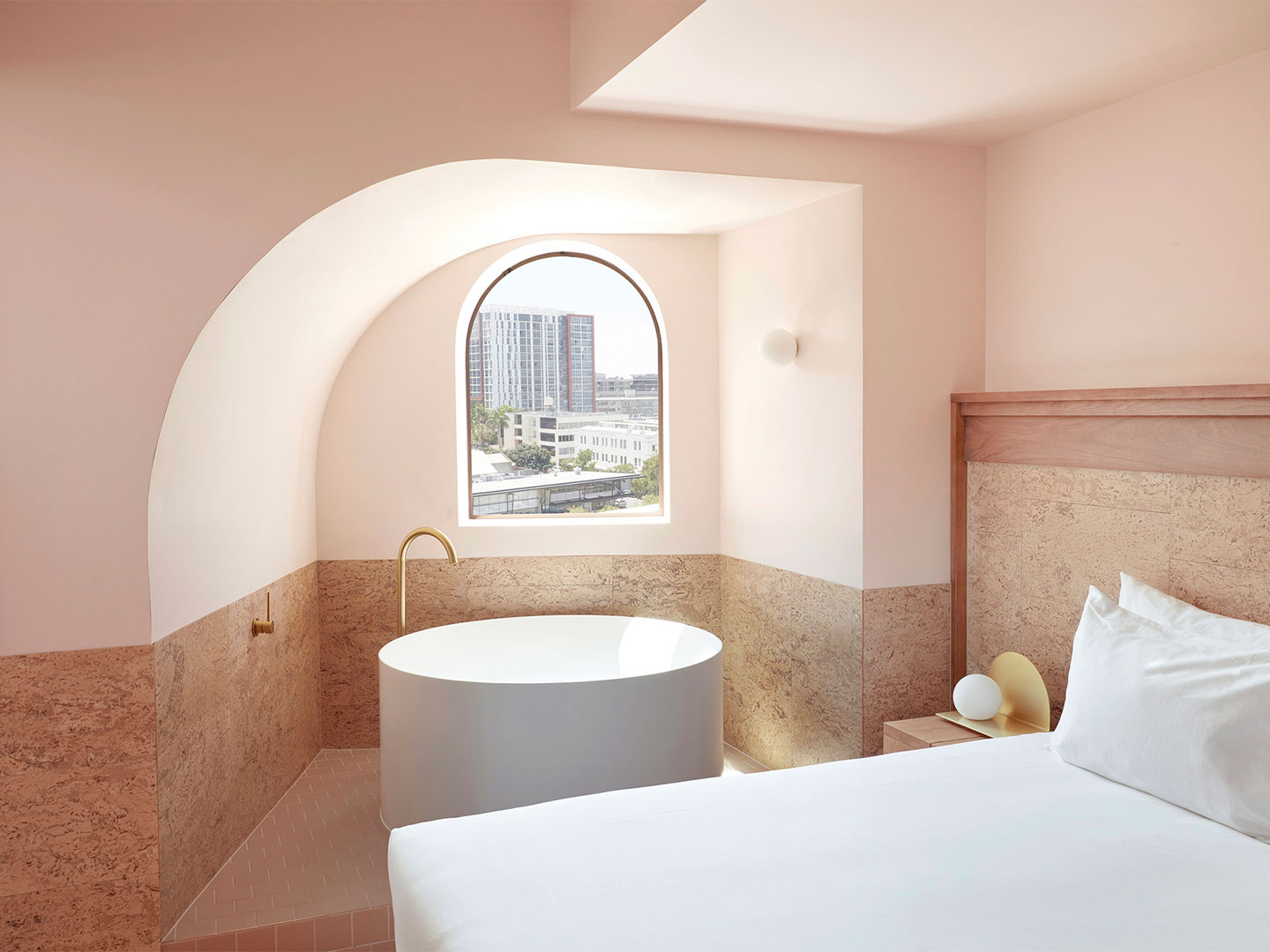
Inside hotel rooms, the visual and material language of the broader enclave is reimagined. The massive brick arches witnessed at street level are brought inside but reduced to the scale of fingertips. Hemispherical finger-pulls carved in timber and etched in brass echo the curved edges of marble-top credenzas and brass-backed night lights. Surfaces deliver tactile and visual impact. Most notable is the cork, which wraps floors and walls and at first glance appears like travertine with its vein-like pigmentation. Beyond delivering tactile and chromatic appeal, the cork surfaces bring a visual and acoustic softening to the interior.
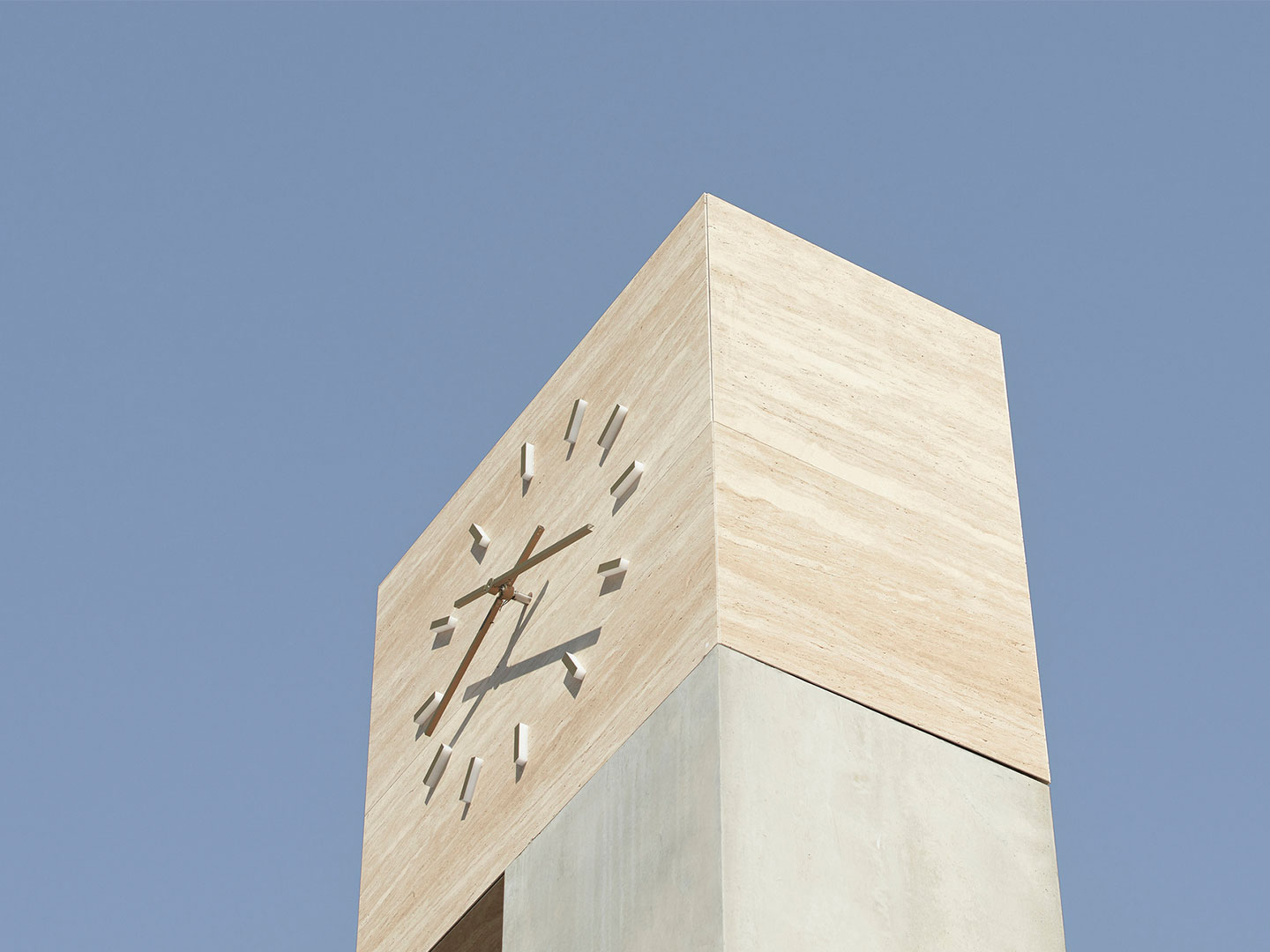
As focus returns to the magnificent clocktower at the street, Ingrid and Adrian make the modest suggestion that its making speaks of the generosity of the owners, Cal and Michael Malouf. That it does. But more than this, it crystallises the collective drive of both owners and architects to engage a private building in the public act of city-making. The generosity of spirit exuded by this building in this city-fringe neighbourhood will profoundly influence the character and expression of this warm-weather city.
thecalilehotel.com; richardsandspence.com
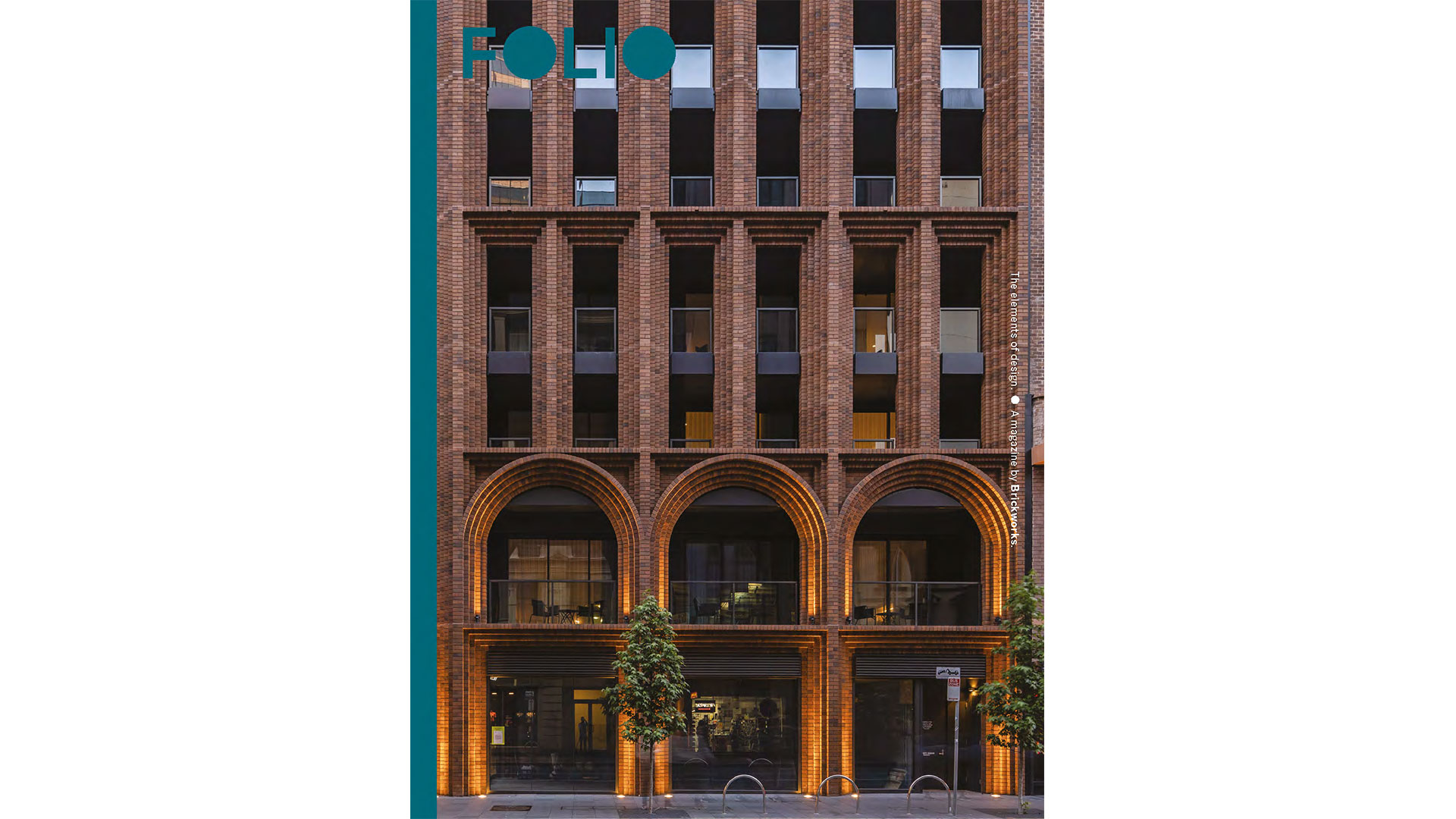
This story was first published in the fourth edition of FOLIO, a magazine by Brickworks. Register now for your free copy.