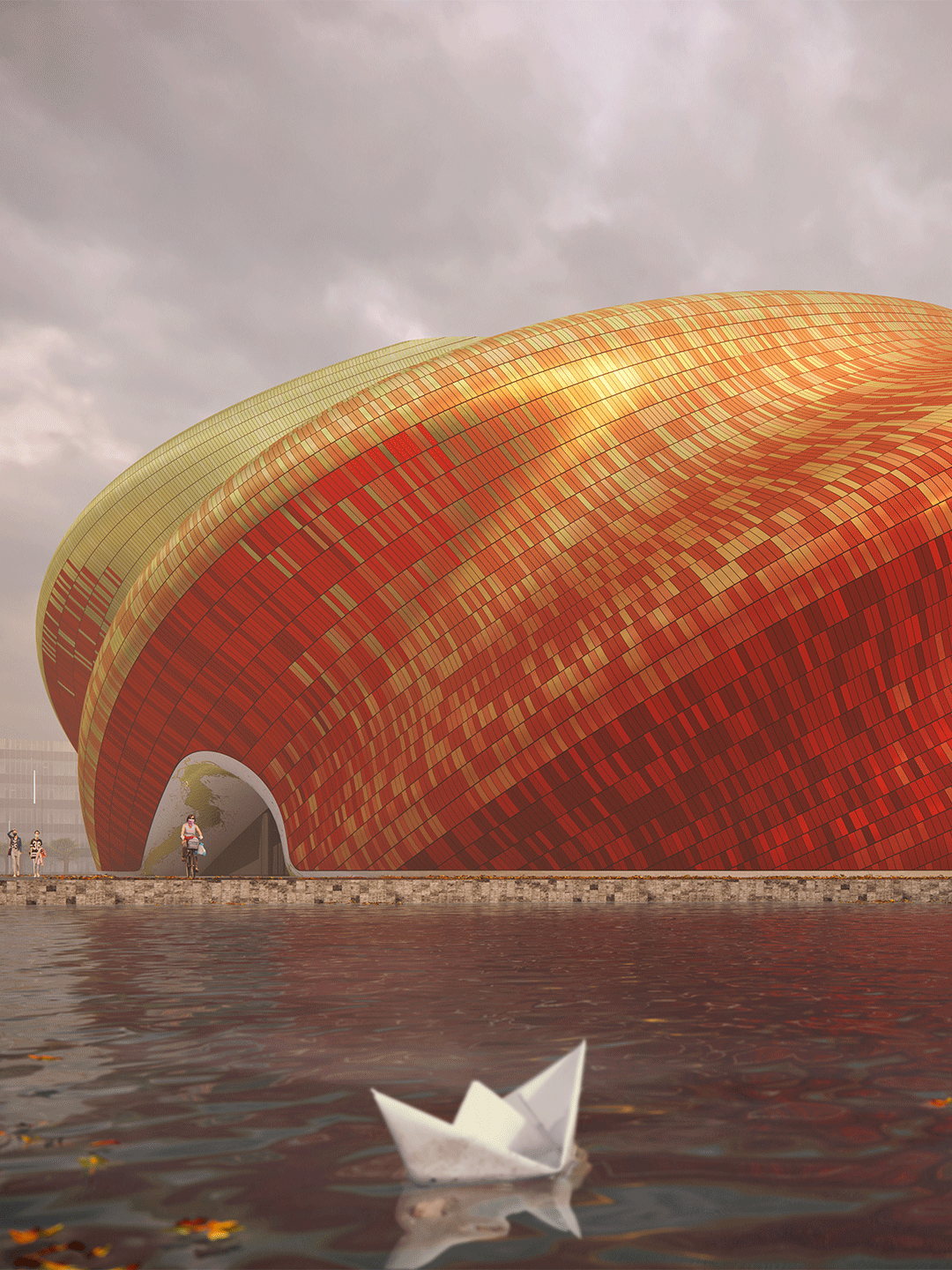
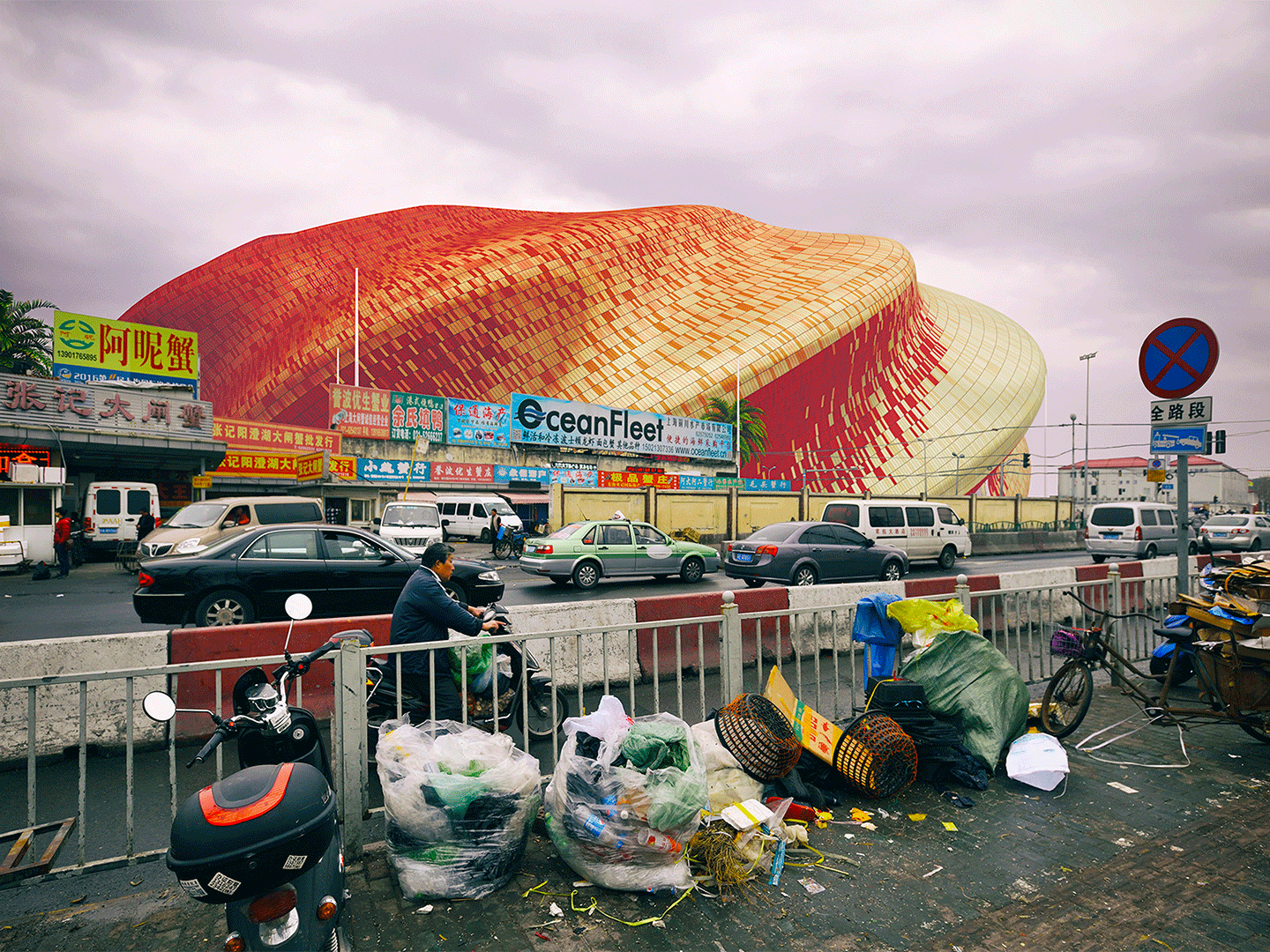
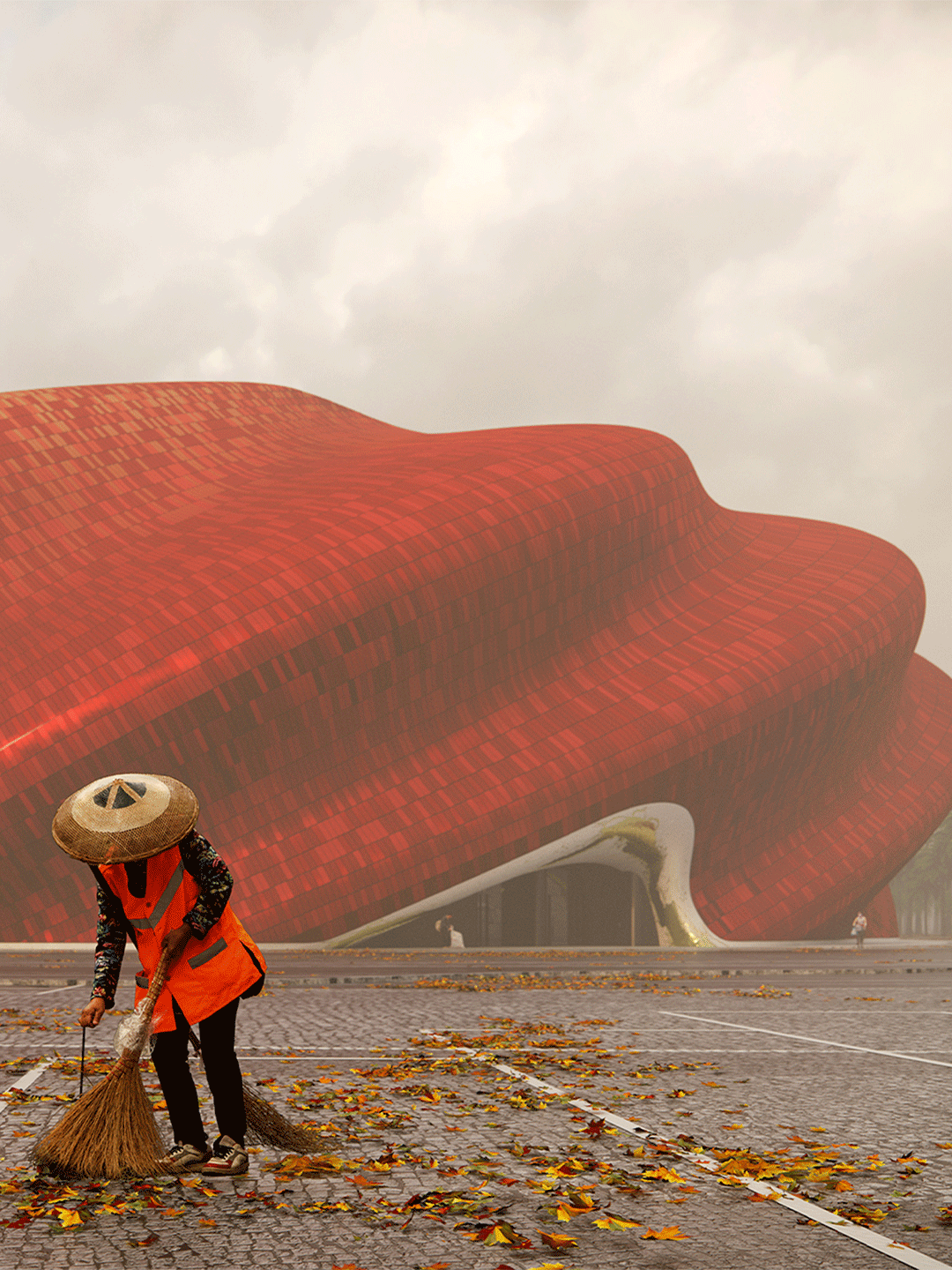
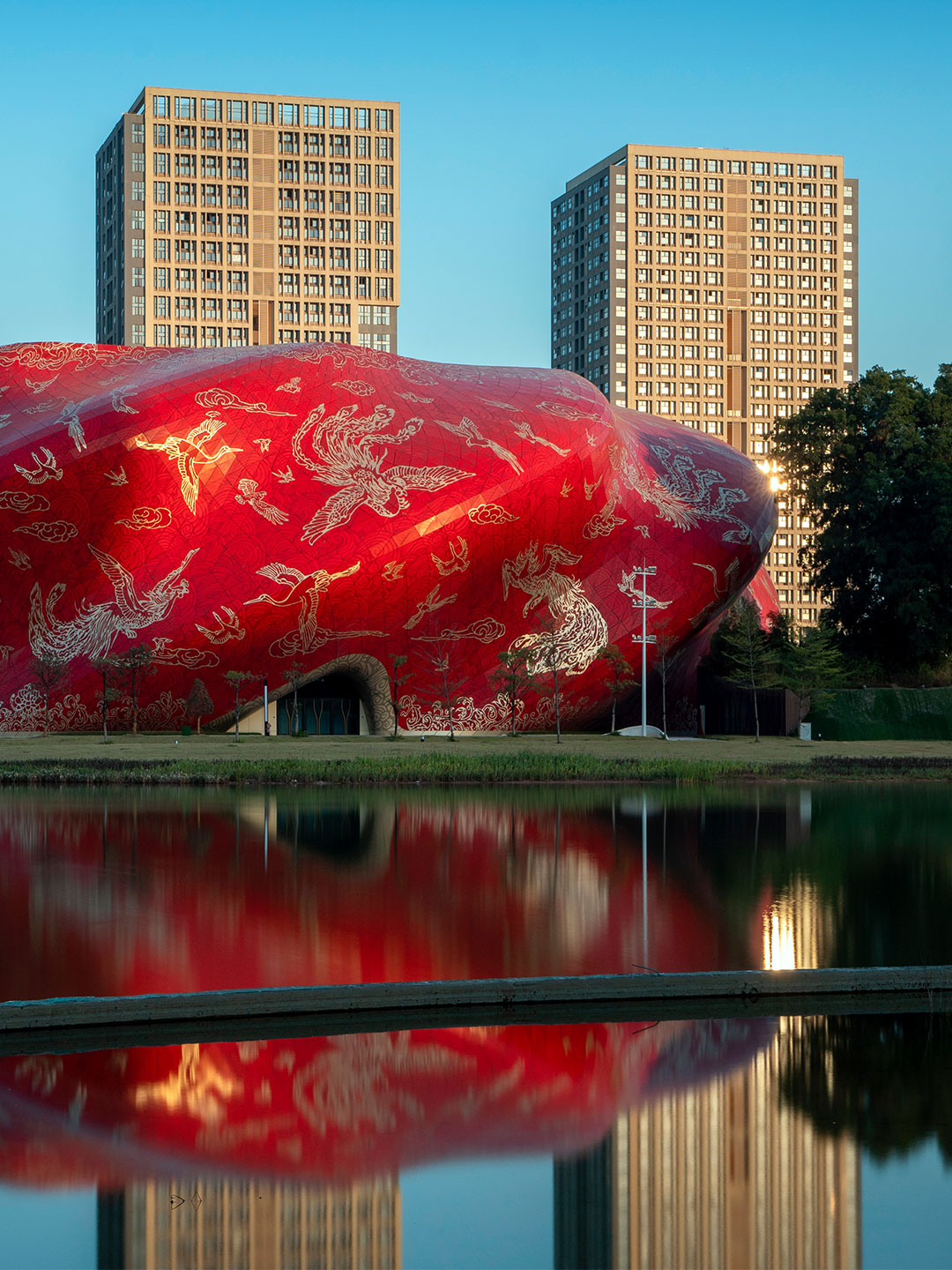

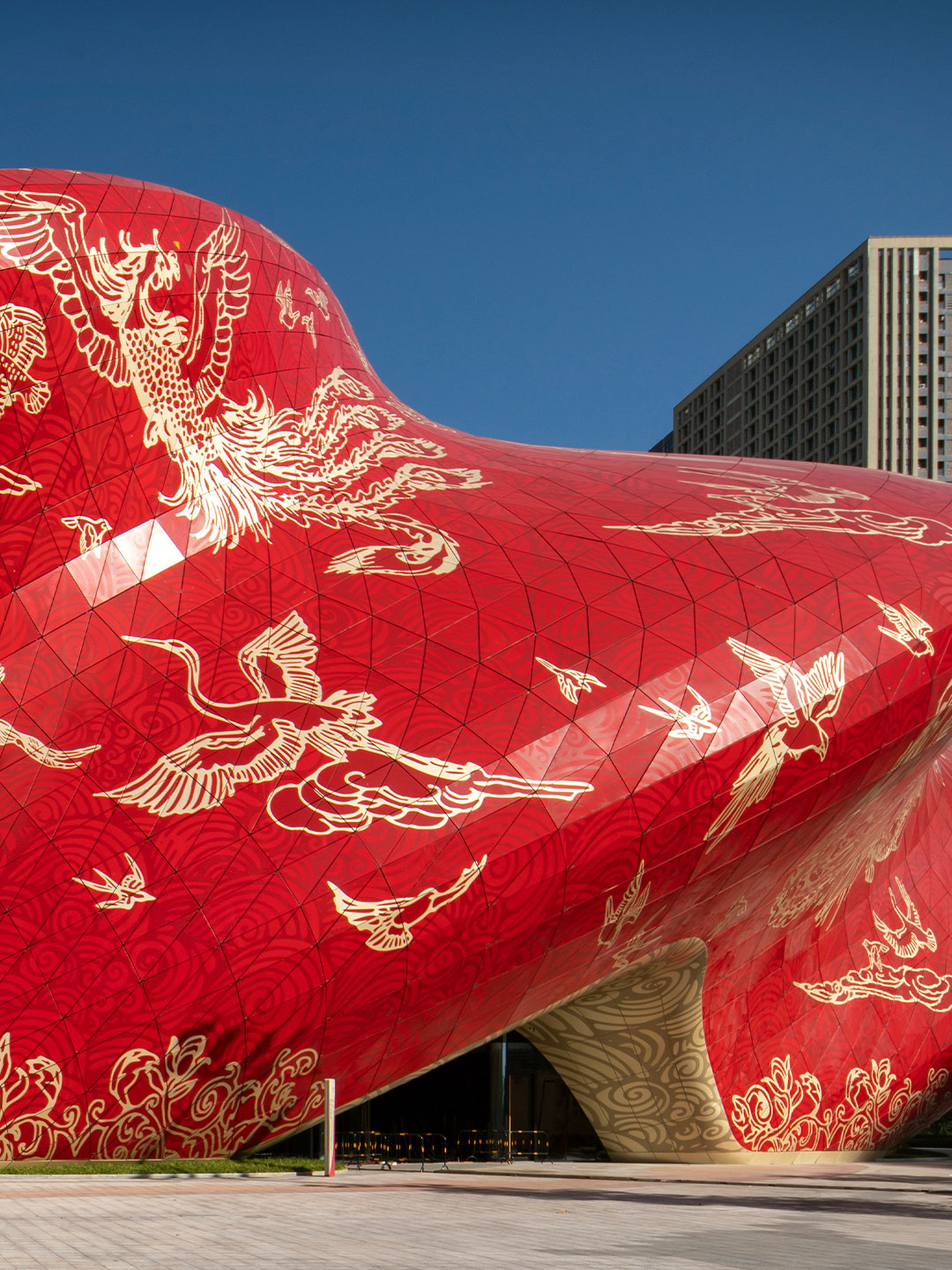
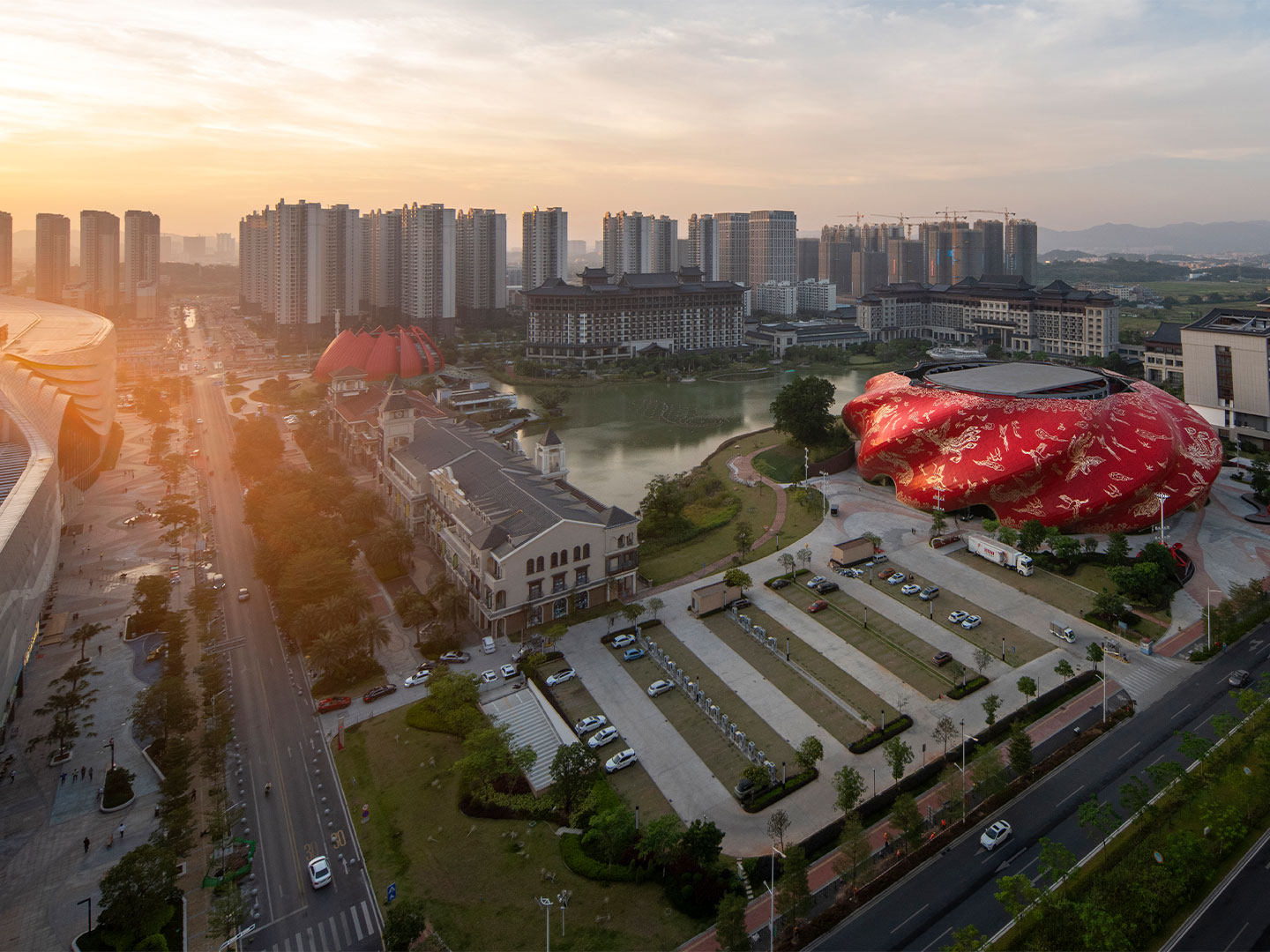
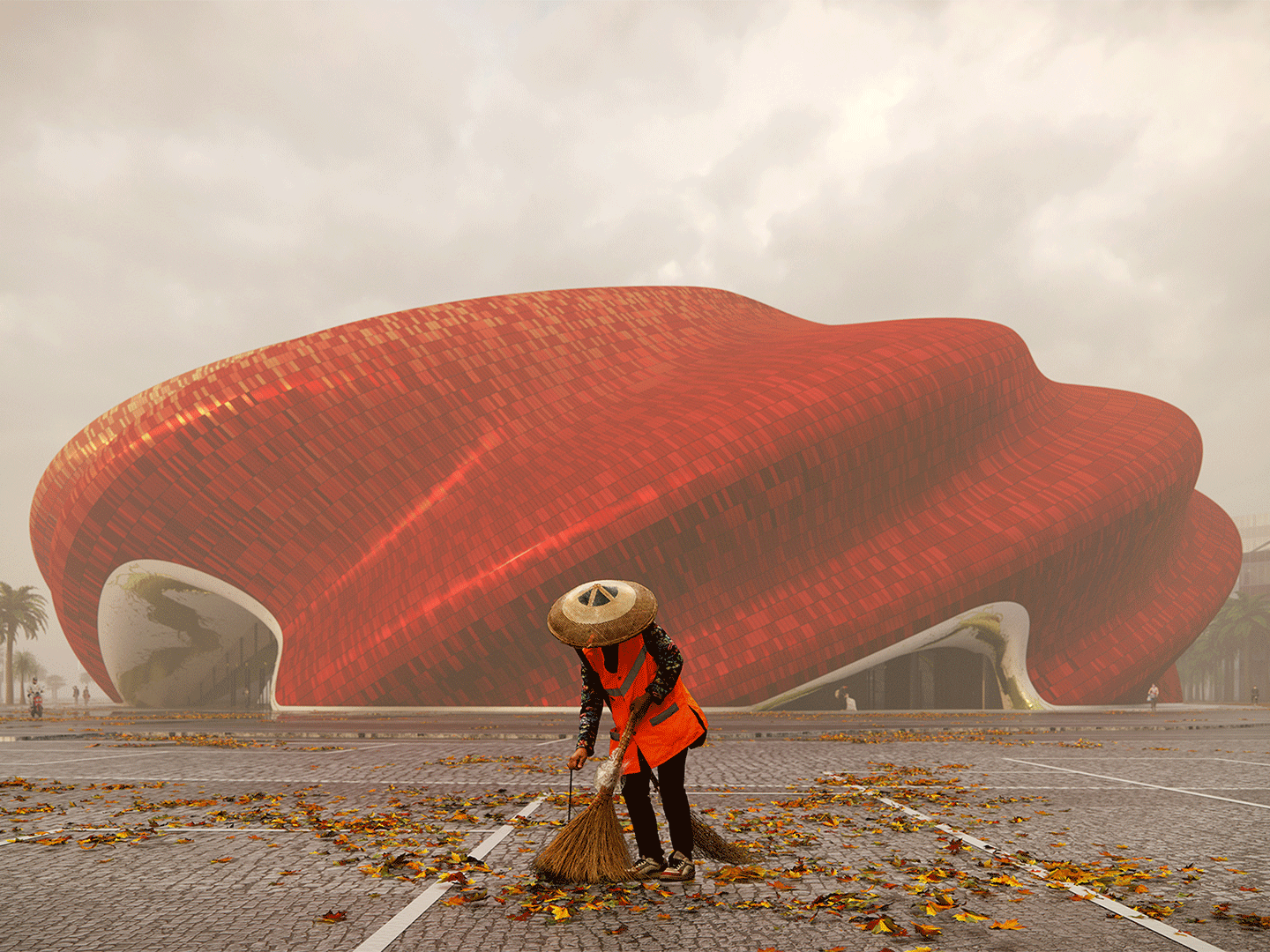
In Guangzhou, China, the 2000-seat performance theatre by Steven Chilton Architects is ready to welcome world-class productions to its stage in early 2021. Officially called the Sumac Guangzhou Grand Theatre, the centre’s mission to cultivate theatrical talent is expressed through the imagery applied to the surface of its silk-inspired cladding. “We were influenced by a beloved local myth [known as] 100 Birds Paying Homage to the Phoenix,” says architect Steven Chilton. “The Phoenix or ‘Fenghuang’ stands for virtue and grace whilst the allegory signifies notions of recognition, leadership and mentoring.”
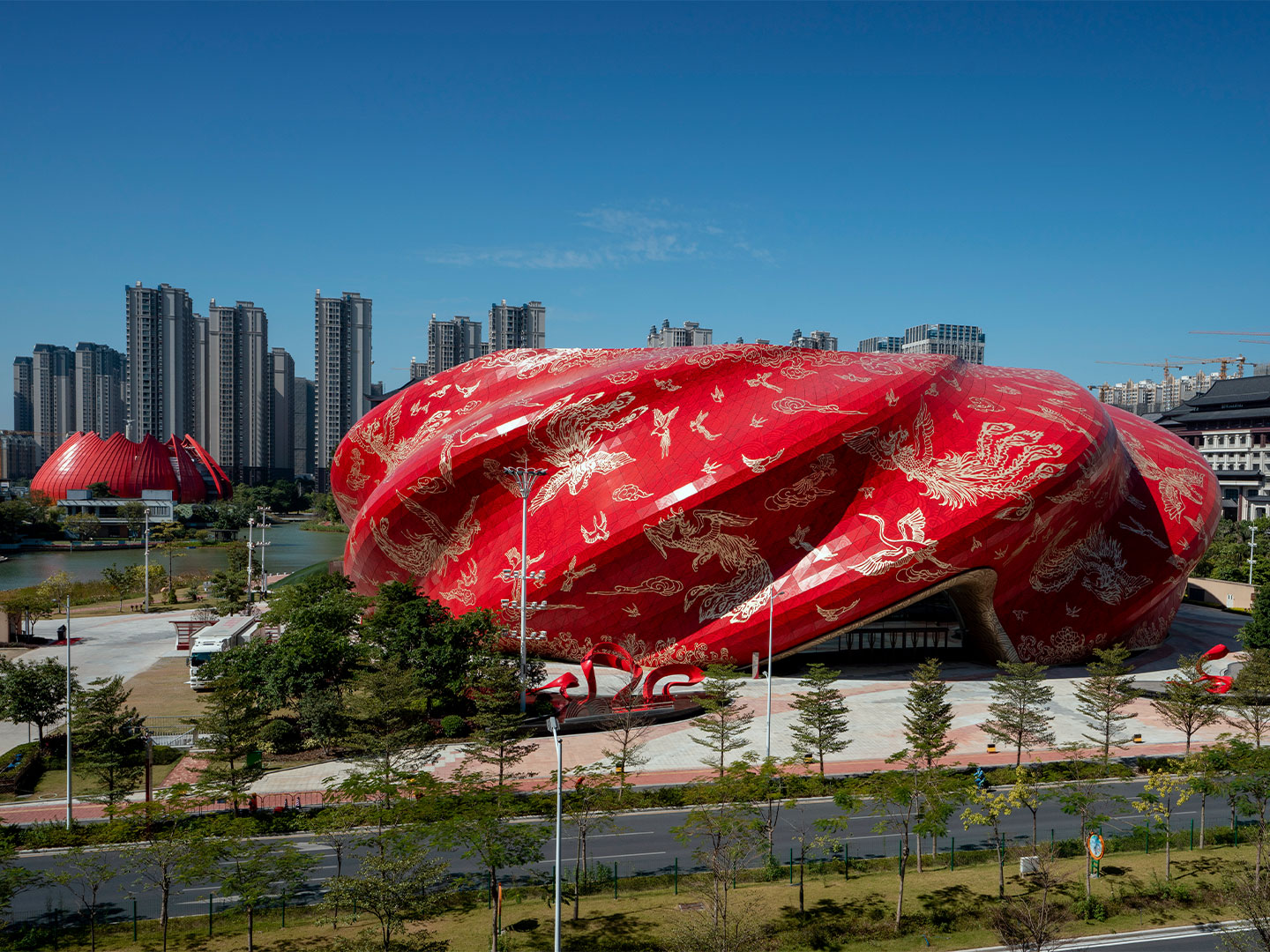
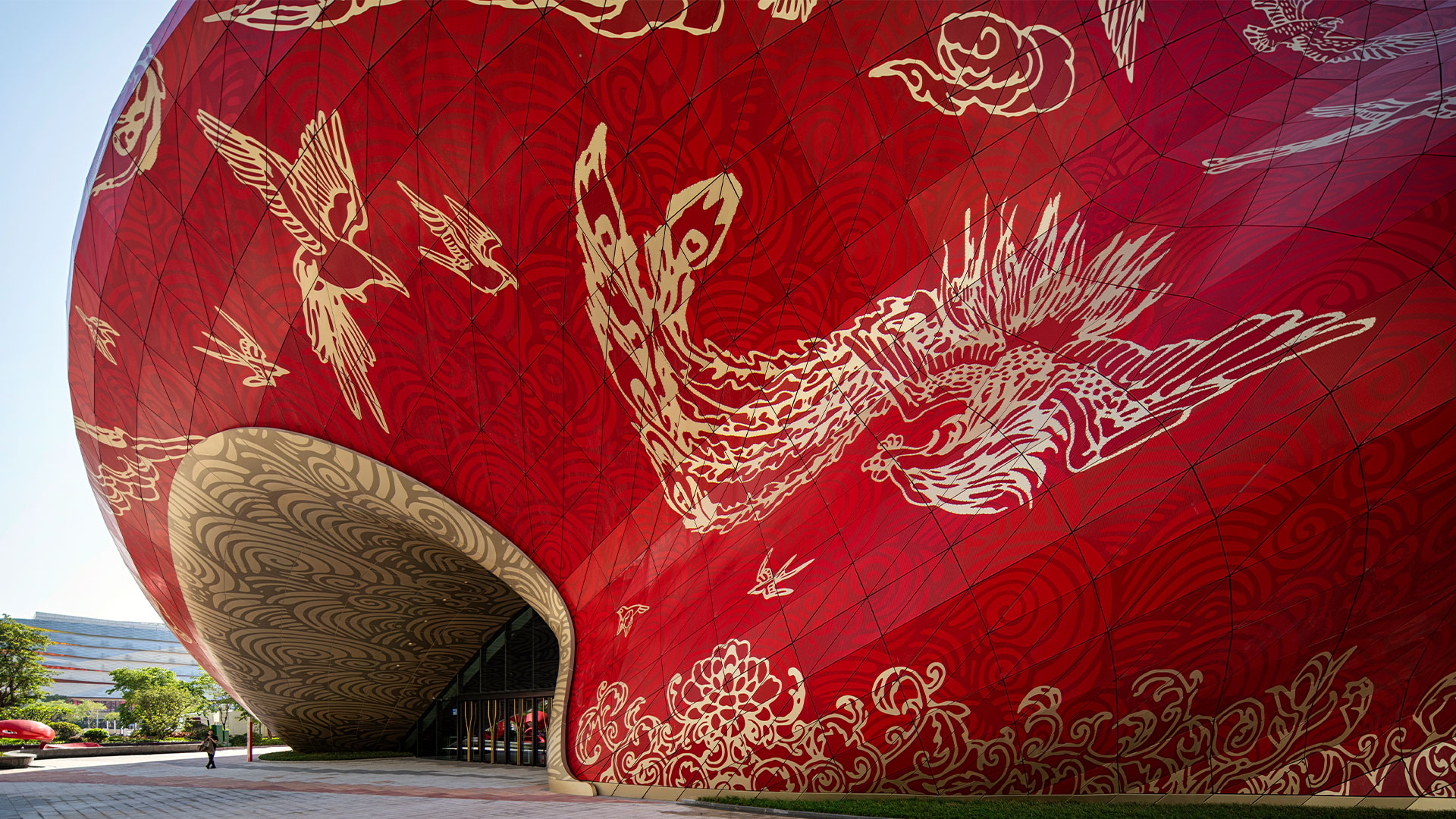
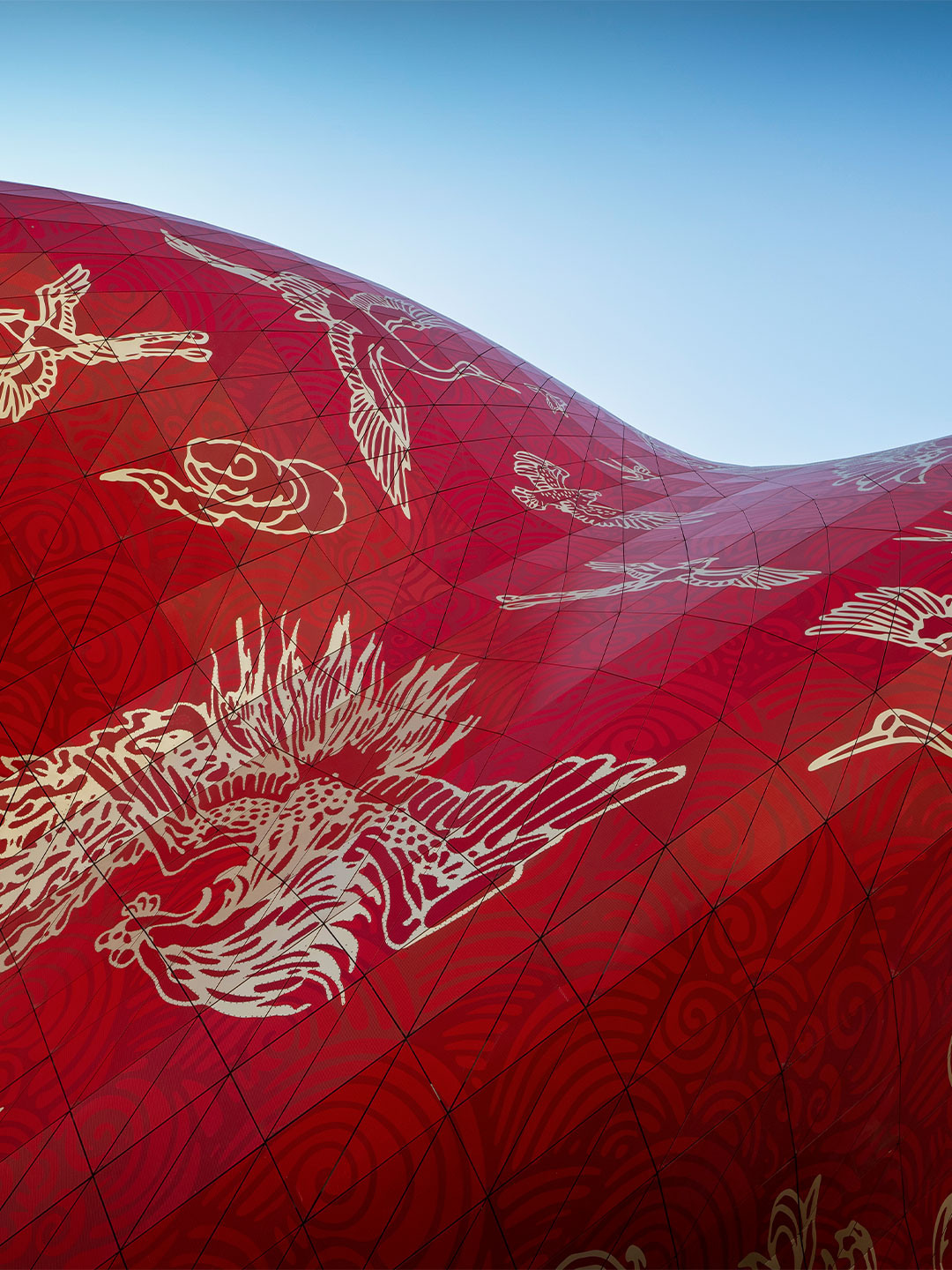

Using illustrations created by artist Zhang Hongfei, the architecture practice digitised and interpreted the hand drawings before applying each figure to the building’s perforated aluminium panels. “We developed a compositional style inspired by tattoo art aesthetics,” says Steven, who placed key characters such as the phoenix in prominent positions on the “body” of the theatre’s undulating facade. Secondary figures such as birds, cloud formations and floral motifs were arranged to occupy the spaces in-between.
As initially reported by Daily Architecture News, the building’s mesmerising ring-shaped shell is inspired by the drape of Chinese silk, a sumptuous textile which has a long-running connection with this part of China. “Guangzhou is the birthplace of the Silk Road on the sea and has been a significant centre for the arts and trading since the Han Dynasty,” says the architect.
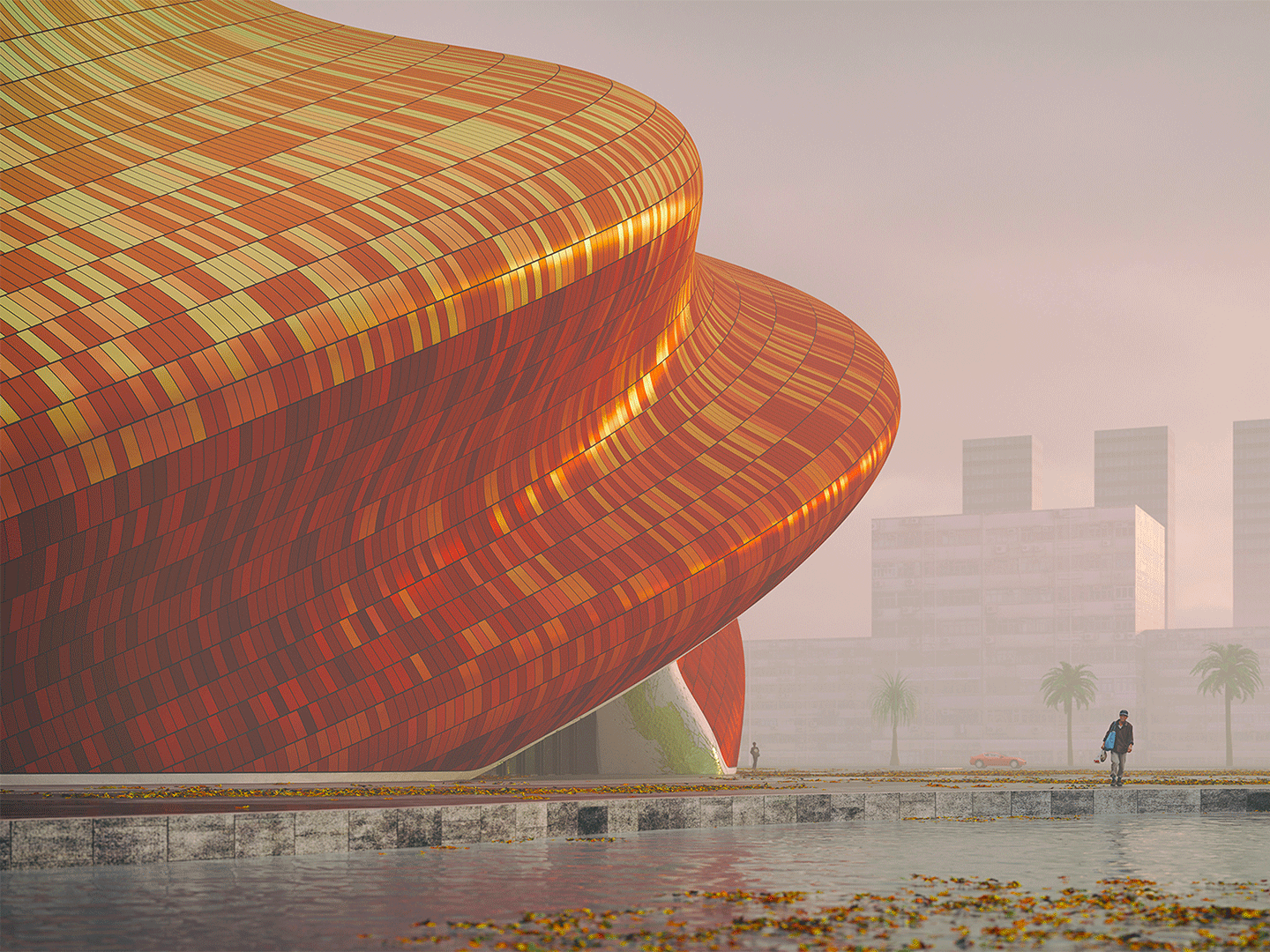
The cladding which gives the building its fluid form is composed of thousands of perforated aluminium panels, coloured in traditional red and gold. The panels are supported by a complex structure of concealed steel tubes “that work interdependently with the concrete superstructure supporting the theatre floors”.
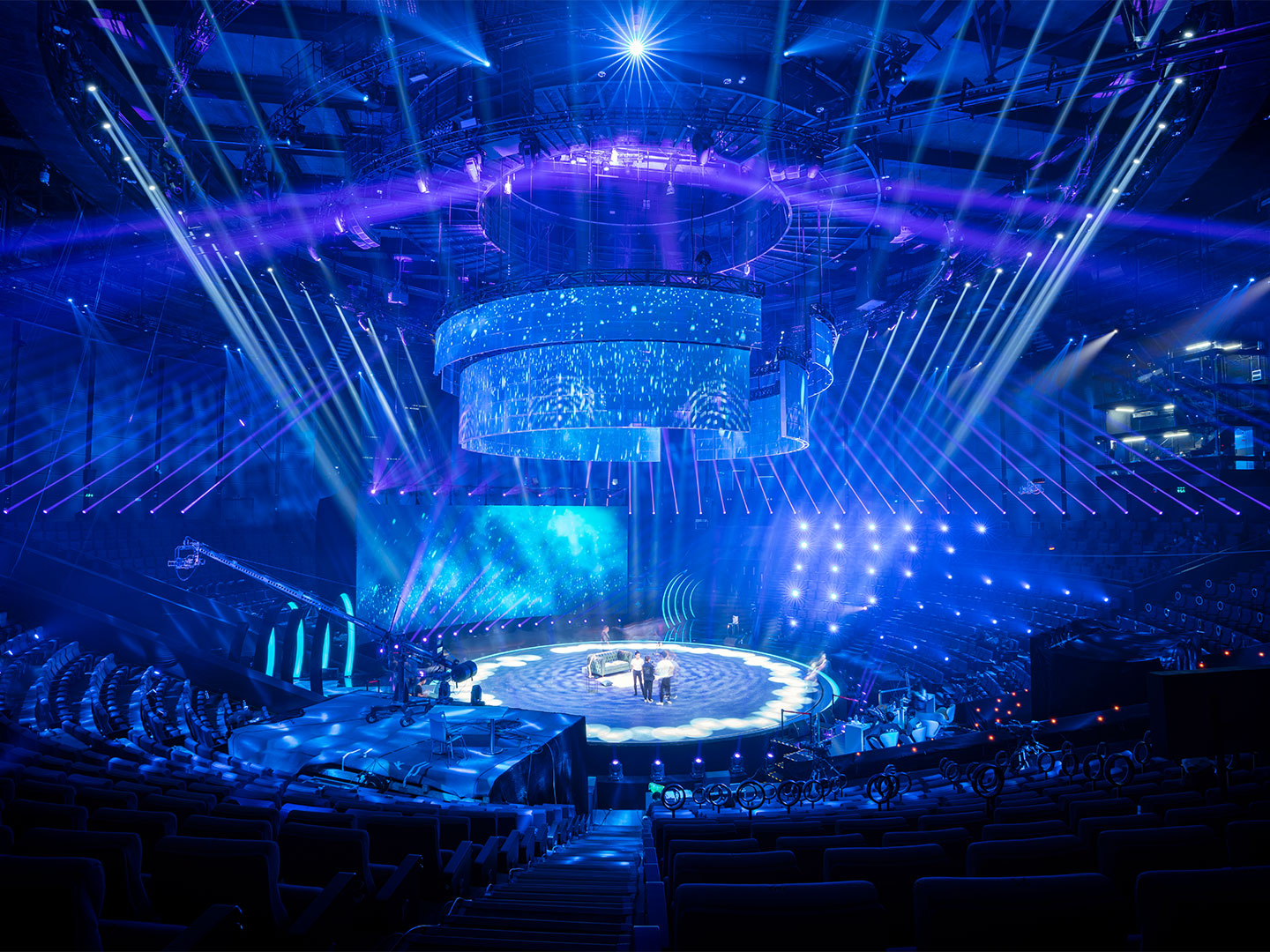
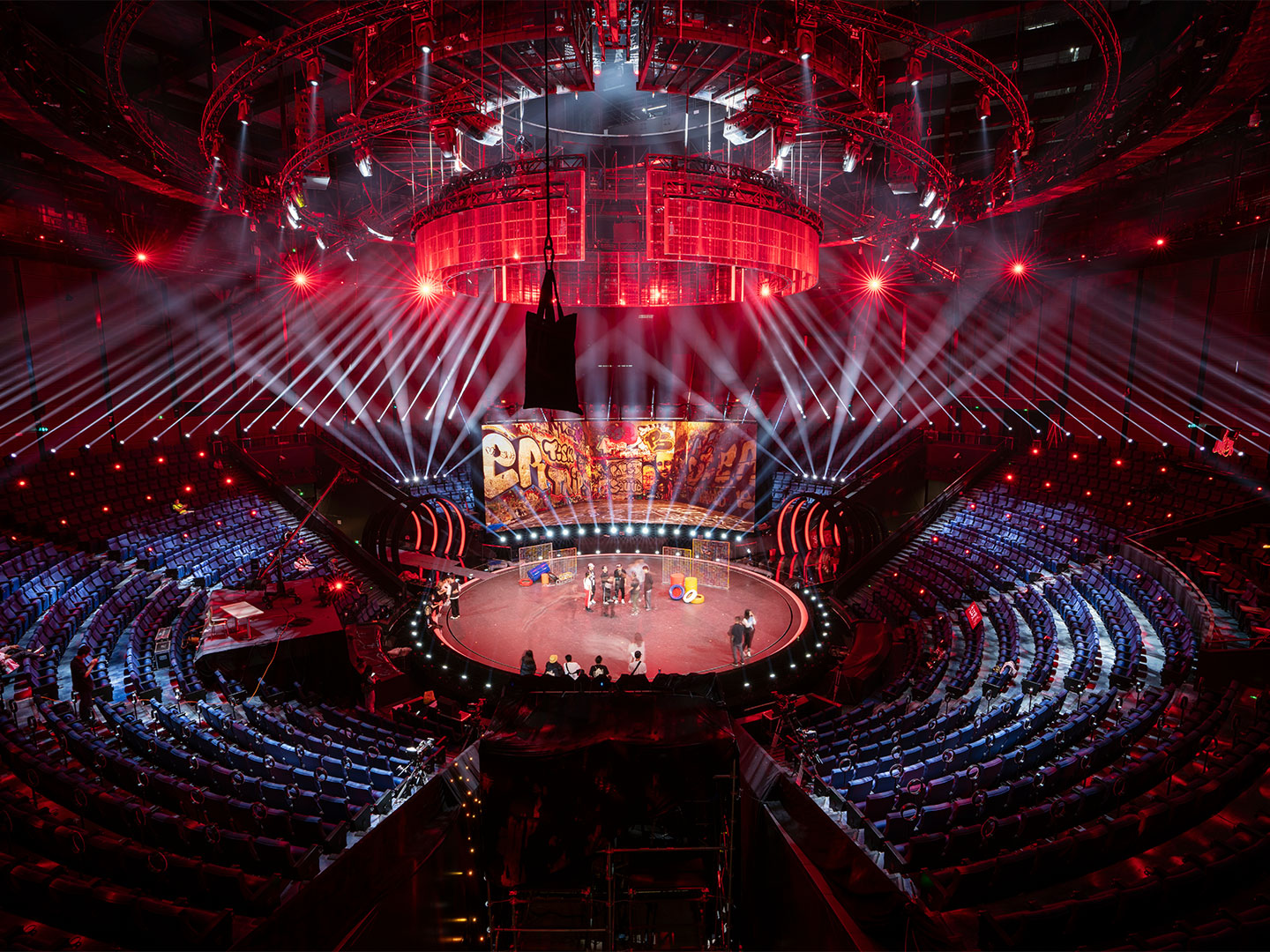
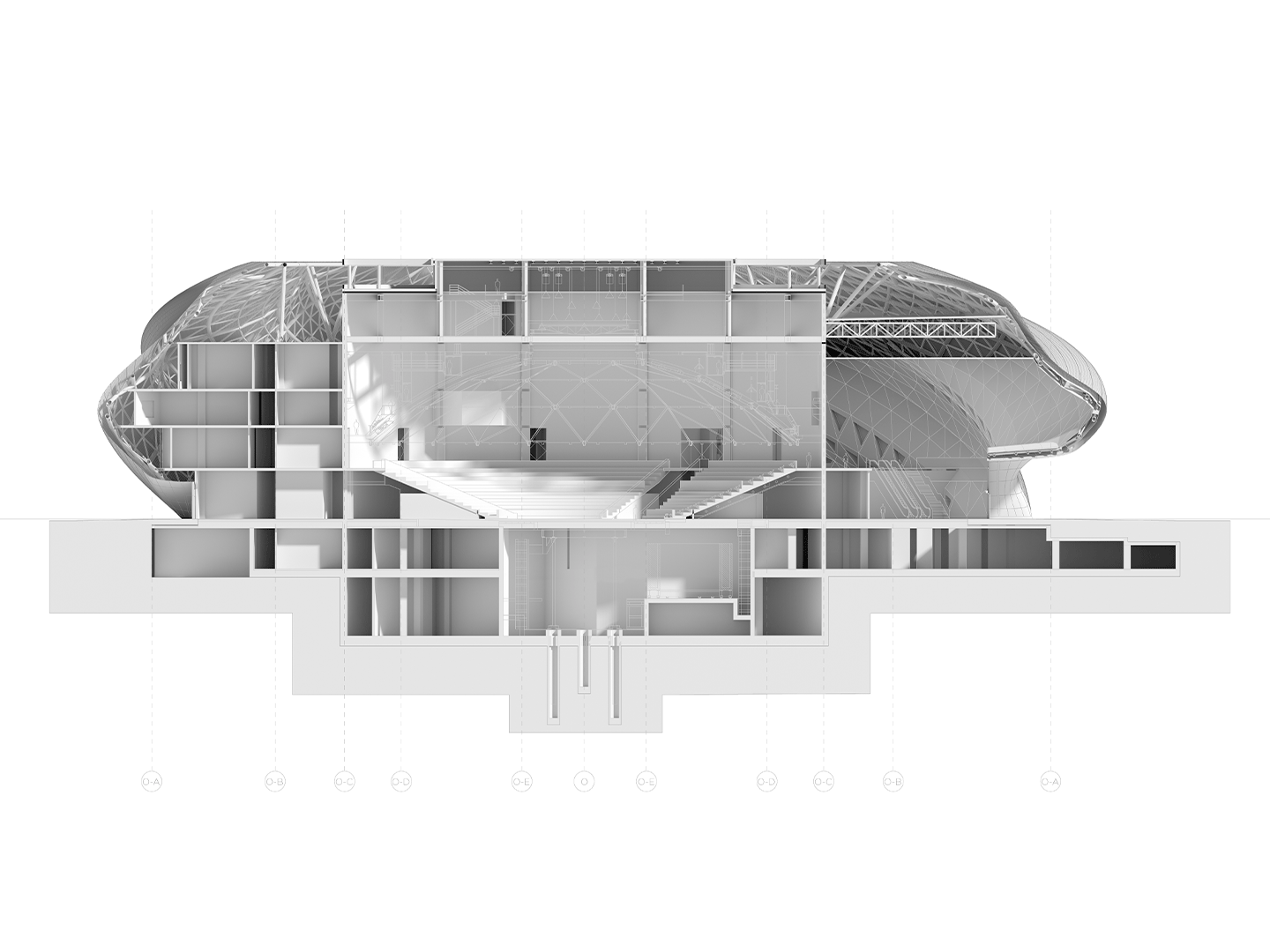
A first look inside the theatre shines the spotlight on the breadth of production types that can be brought to life on stage. The architects say that the immersive performance environment can be transformed from a 360-degree theatre into any number of configurations, partnered with overhead LED screens, facilities for acrobatic acts and a wide range of set-changing mechanisms. The architects add: “While the theatre can be used for more typical productions, it can also be transformed for productions that have spectacular water effects.”
Guangzhou is the birthplace of the Silk Road on the sea and has been a significant centre for the arts and trading since the Han Dynasty.
Related stories
- Steven Chilton Architects previews 2000-seat theatre inspired by Chinese silk.
- The LittleNap ‘luxury hostel’ in Hangzhou by Say Architects.
- Angelot patisserie in Hangzhou by Say Architects.
In Guangzhou, China, the 2000-seat performance theatre by Steven Chilton Architects is ready to welcome world-class productions to its stage in early 2021. Officially called the Sumac Guangzhou Grand Theatre, the centre’s mission to cultivate theatrical talent is expressed through the imagery applied to the surface of its silk-inspired cladding. “We were influenced by a beloved local myth [known as] 100 Birds Paying Homage to the Phoenix,” says architect Steven Chilton. “The Phoenix or ‘Fenghuang’ stands for virtue and grace whilst the allegory signifies notions of recognition, leadership and mentoring.”
Prized for its exquisite texture, the earliest known examples of Chinese silk textiles pre-date 3500 BC. The lustrous fibre, derived from silkworms, jump-started pre‐industrial international trade and led to the creation of travel routes that connected Europe and Asia, known today as the Silk Road. Guangzhou is the birthplace of the Silk Road by the sea and has remained a significant trading port since the Qin/Han Dynasties.
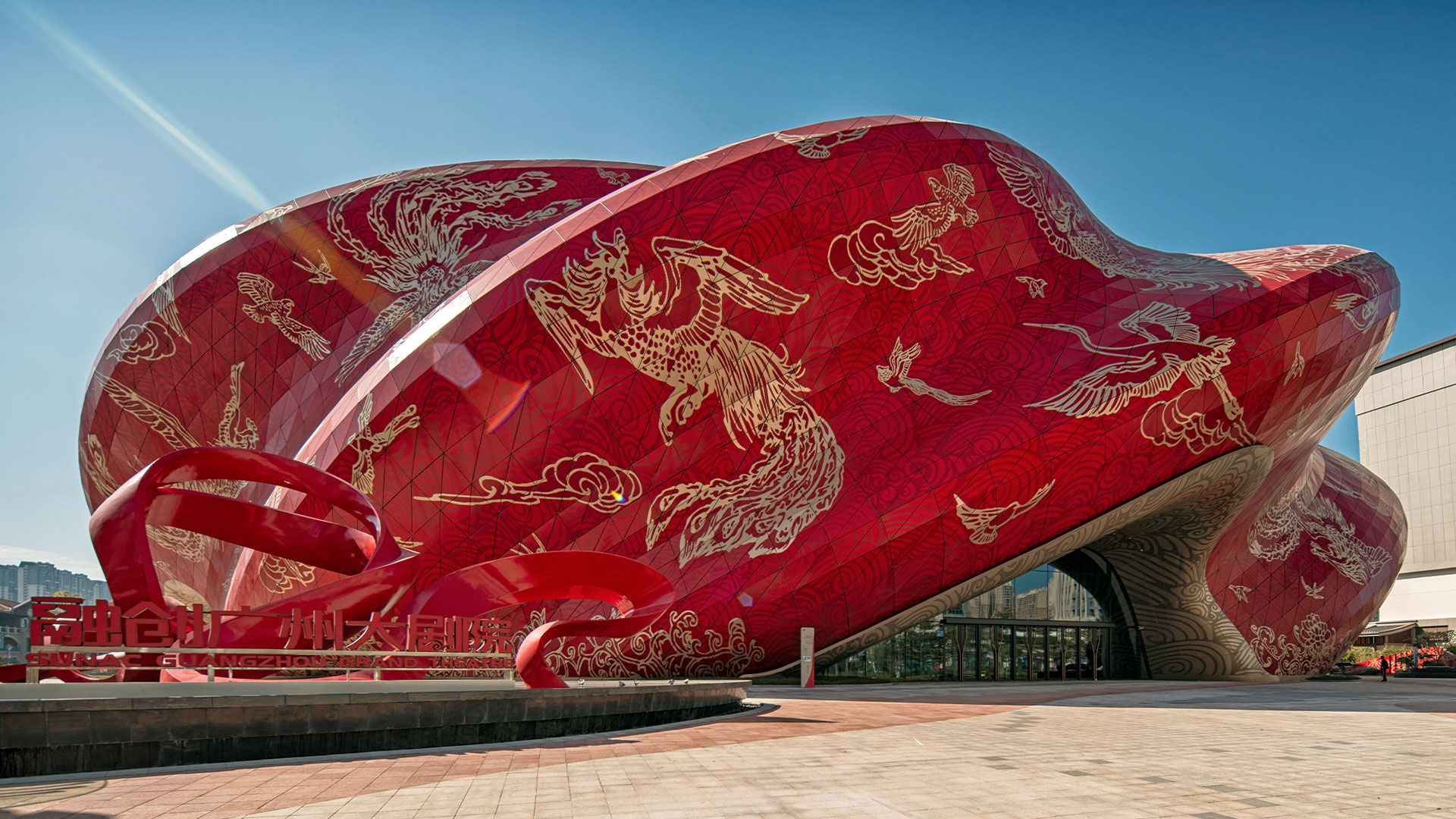
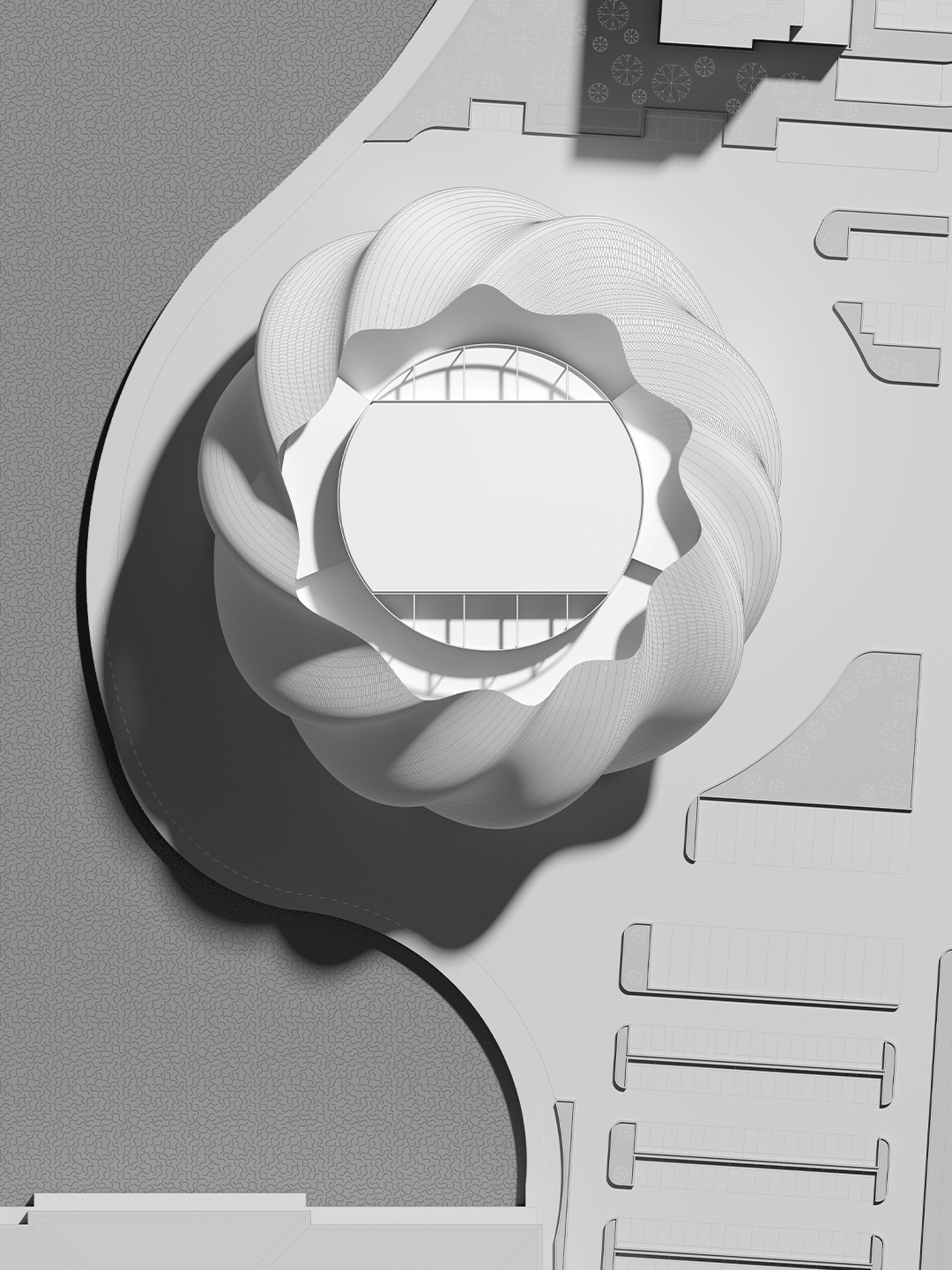
In present-day Guangzhou, the client wished for a monumental architectural contribution that resonates with the region’s ancient history and rich culture. The theatre’s plan is therefore composed of ten gently curving and twisting folds, explains Steven. “Dramatic entrances into the building are formed by the seamless continuation of the ‘silk’ material as it is ‘tucked’ into itself at ground level,” he says.
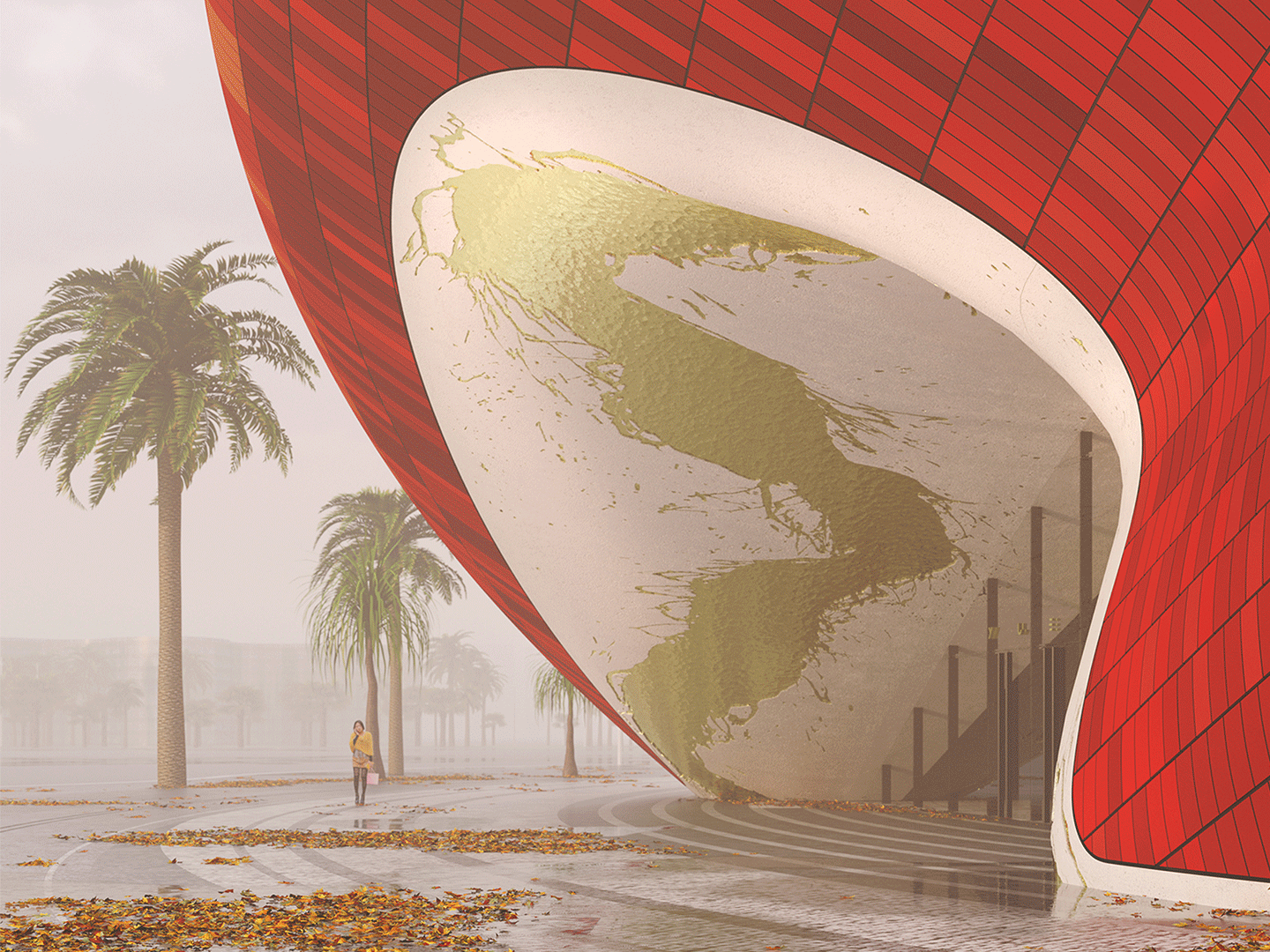
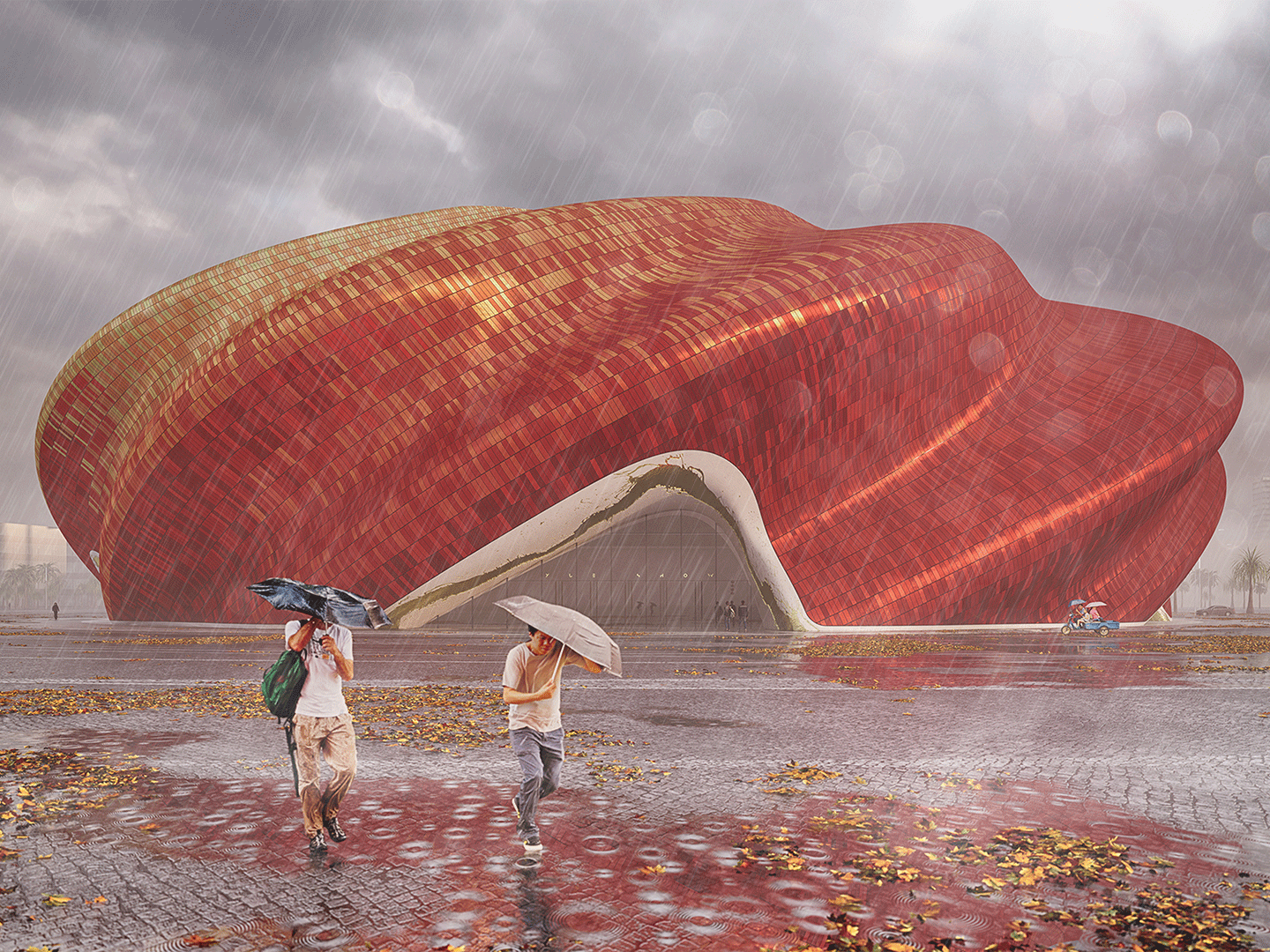
Dramatic entrances into the building are formed by the seamless continuation of the ‘silk’ material.
“The inset walls of the various entrances are protected by natural canopies formed by the ‘silk’ as it overhangs before tucking into meet and define their outer edges.” Inside, the circle-shaped main auditorium is to be located in the middle of the theatre while supplementary spaces will appear around it, including an impressive entrance hall.
The “rain screen cladding” surface is formed of flat and curved panels of perforated anodised aluminium which are supported by a hidden network of steel rails. As light and shadow moves across the building, the anodised coating of the shell will conjure a likeness to the lustrous sheen of genuine Chinese silk.
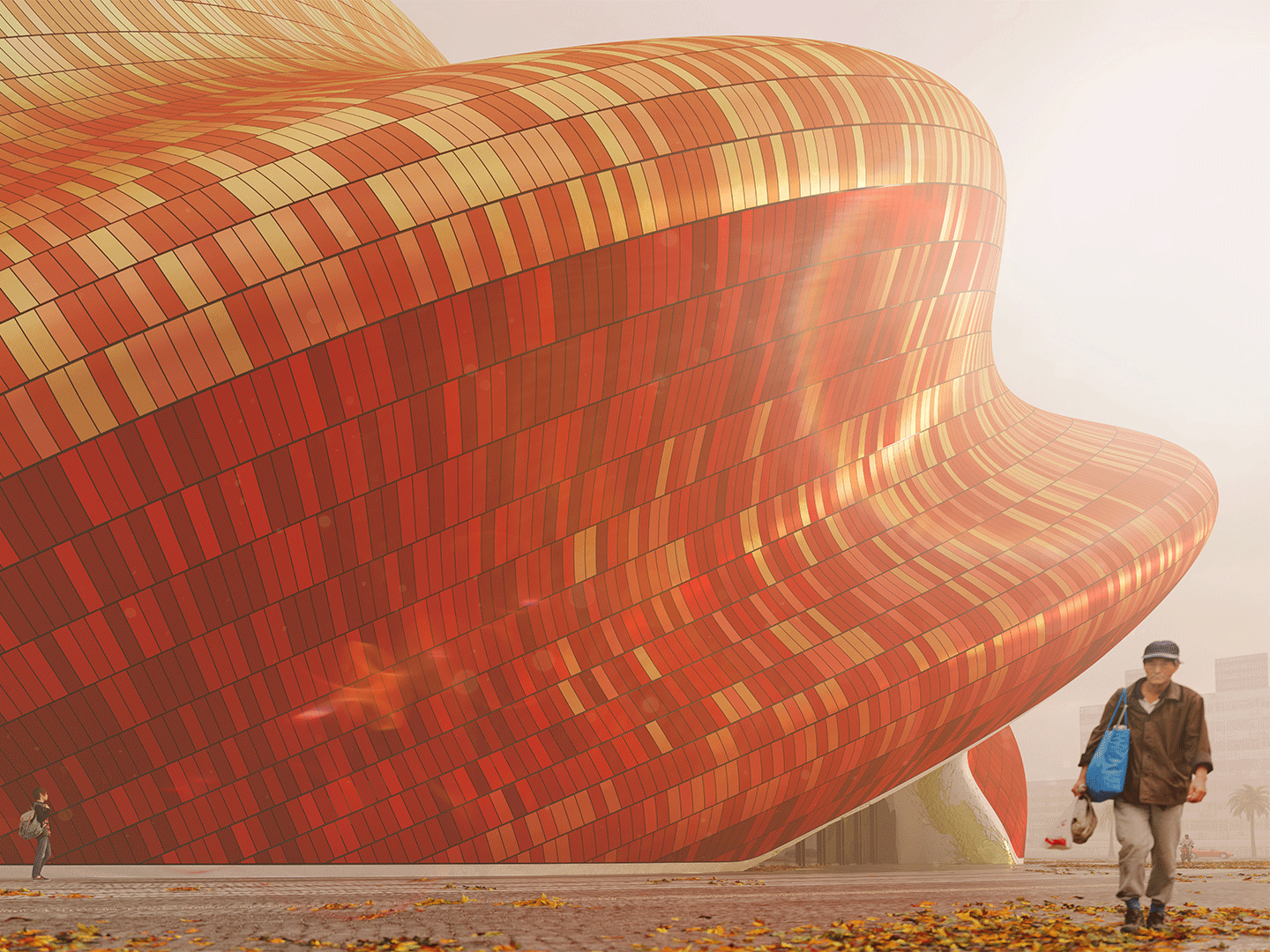
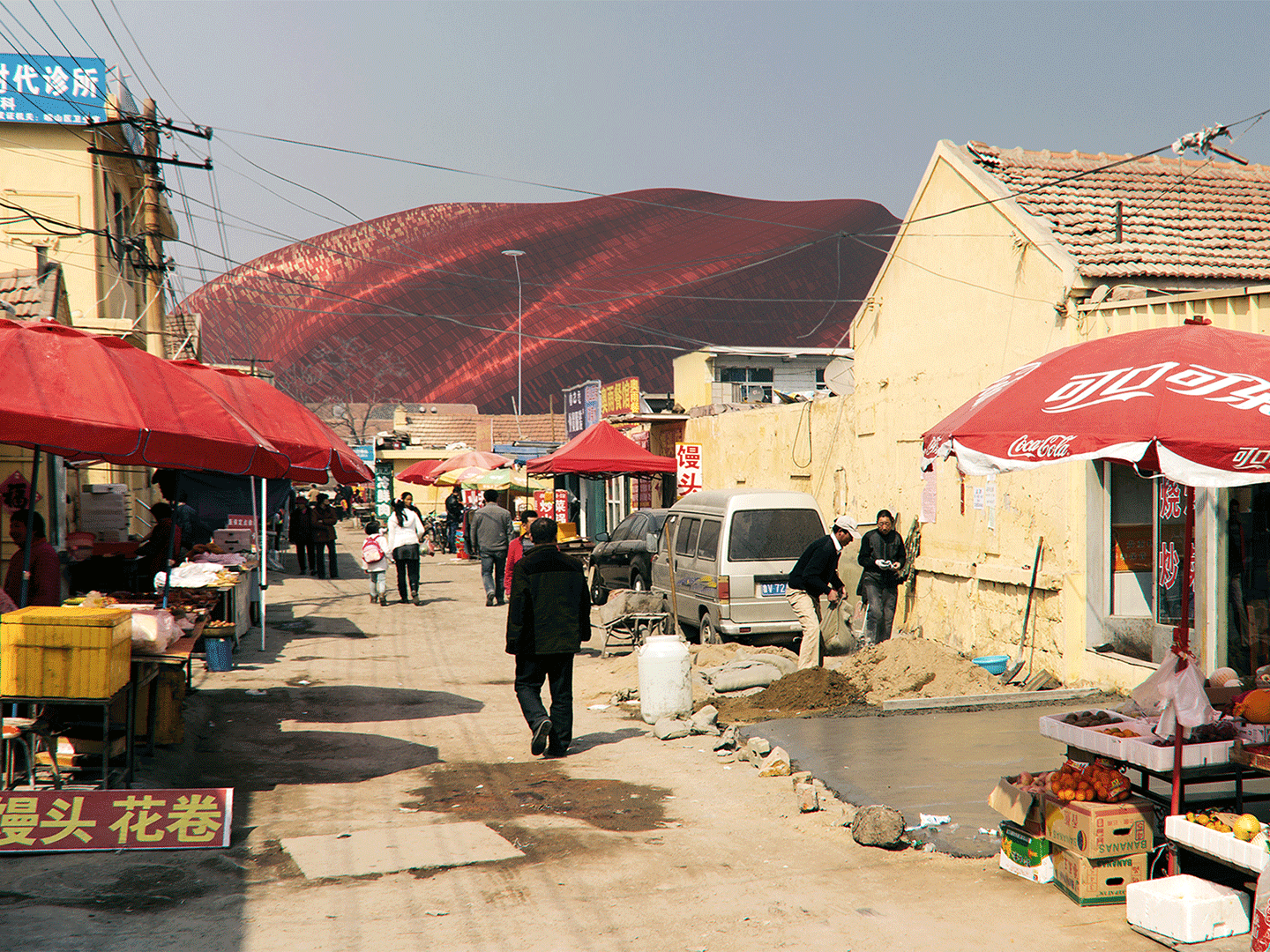
The dominant red-coloured surface of the building’s exterior achieves richness and depth through the use of a variety of shades and textures, explains Steven. “The folds of the surface are emphasised by using darker hues on downward-facing areas that fall into shadow as the sun rises,” he says. “The south-facing area of cladding is composed of predominantly gold-coloured anodised aluminium panels to help reflect heat away from the building.”
Destined to be visible from across the city of Guangzhou, as it peers above existing dwellings or commands attention at centrestage, the theatre’s gold and red armour alludes to the classic colour combination found in contemporary and ancient Chinese silk garments, a visage that’s bound to lend it landmark status after its first of many curtain calls.