Beijing-based MAD Architects, led by founding architect Ma Yansong, has unveiled its designs for the Hainan Science and Technology Museum in Haikou, the capital of Hainan, one of China’s island provinces. Planned for Haikou’s west coast, surrounded by sports stadiums and a National Wetland Park, the museum will mark MAD’s second major public project in Hainan, following the Cloudscape of Haikou library which opened earlier this year.
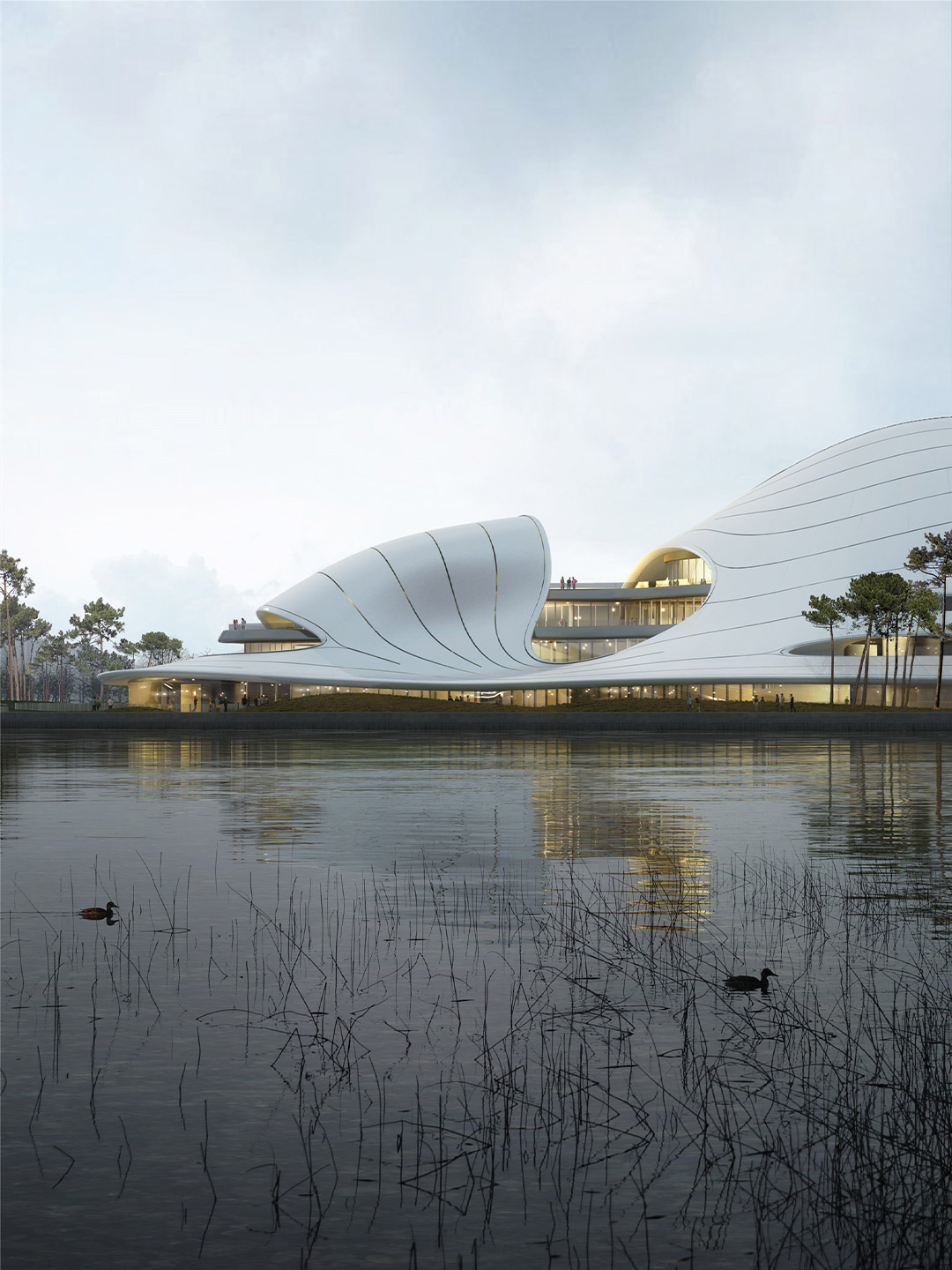
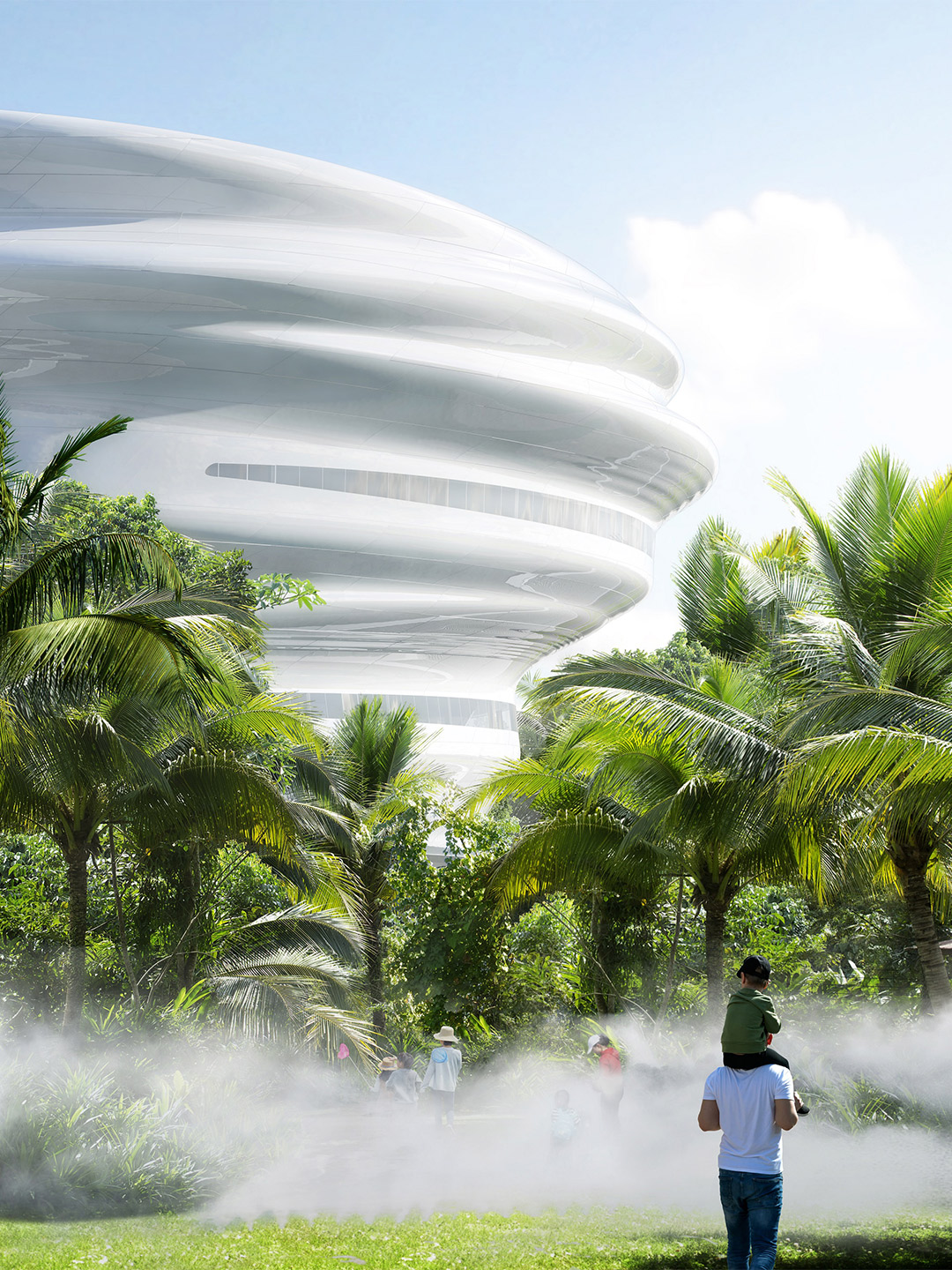
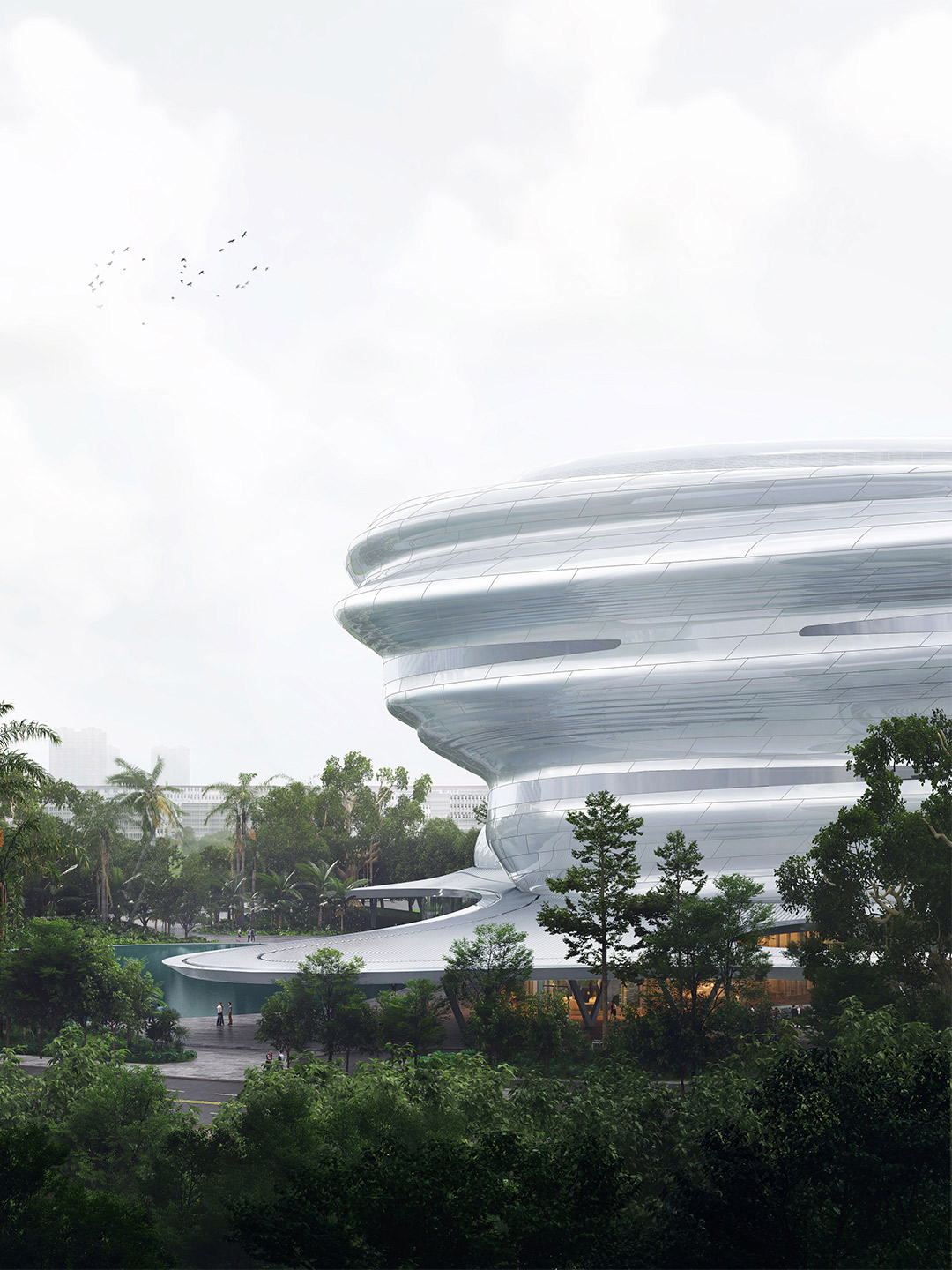
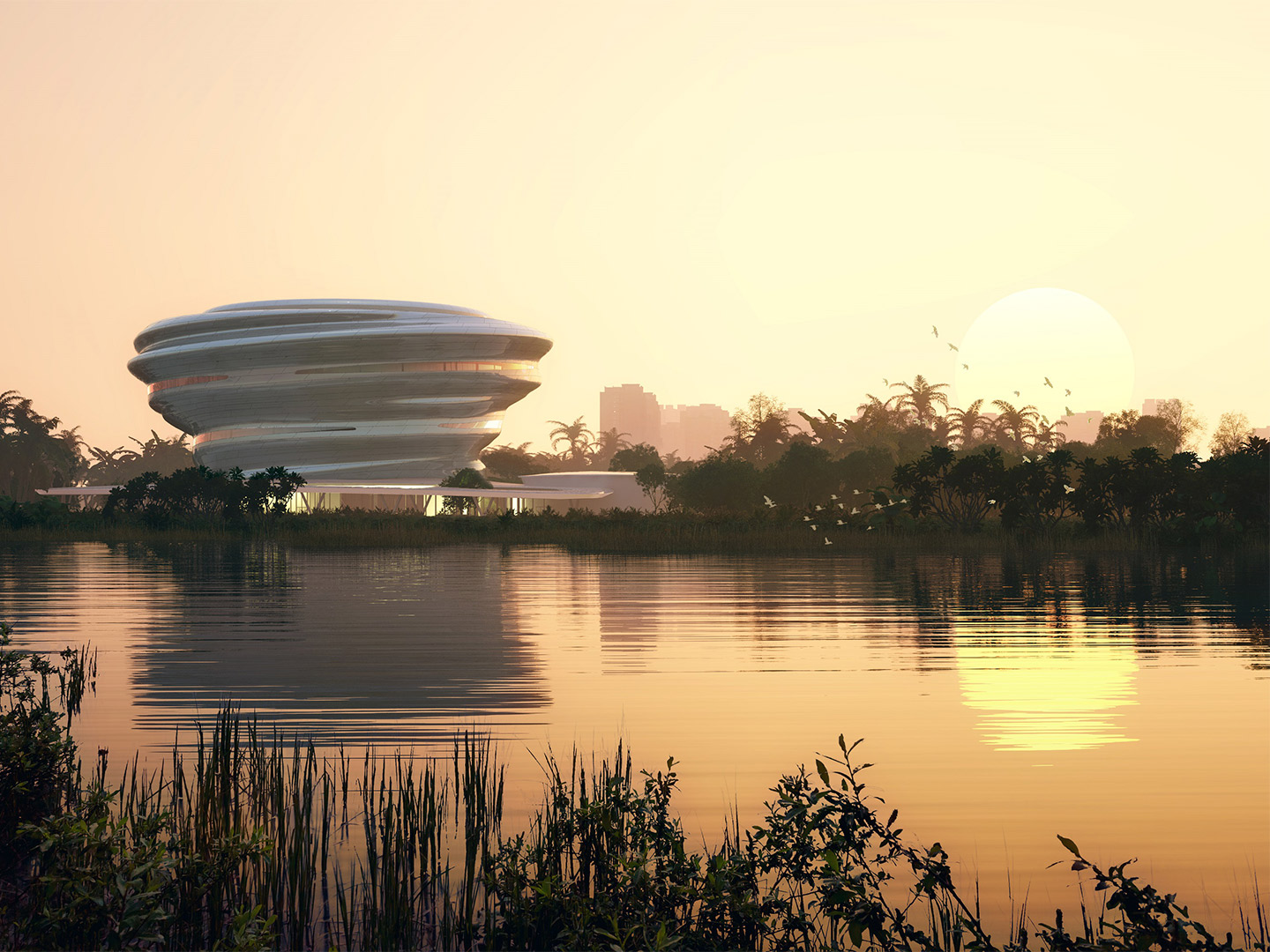
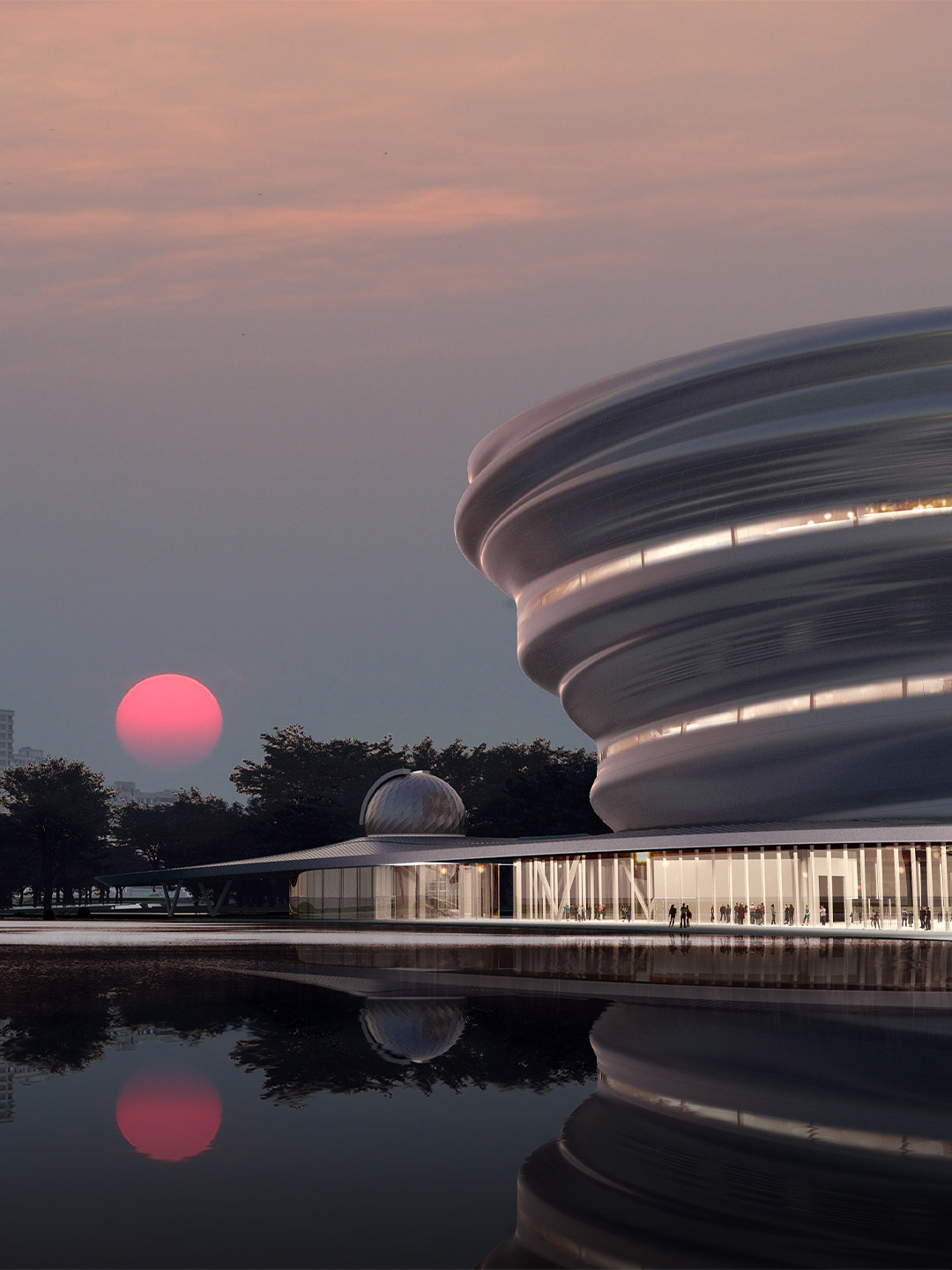
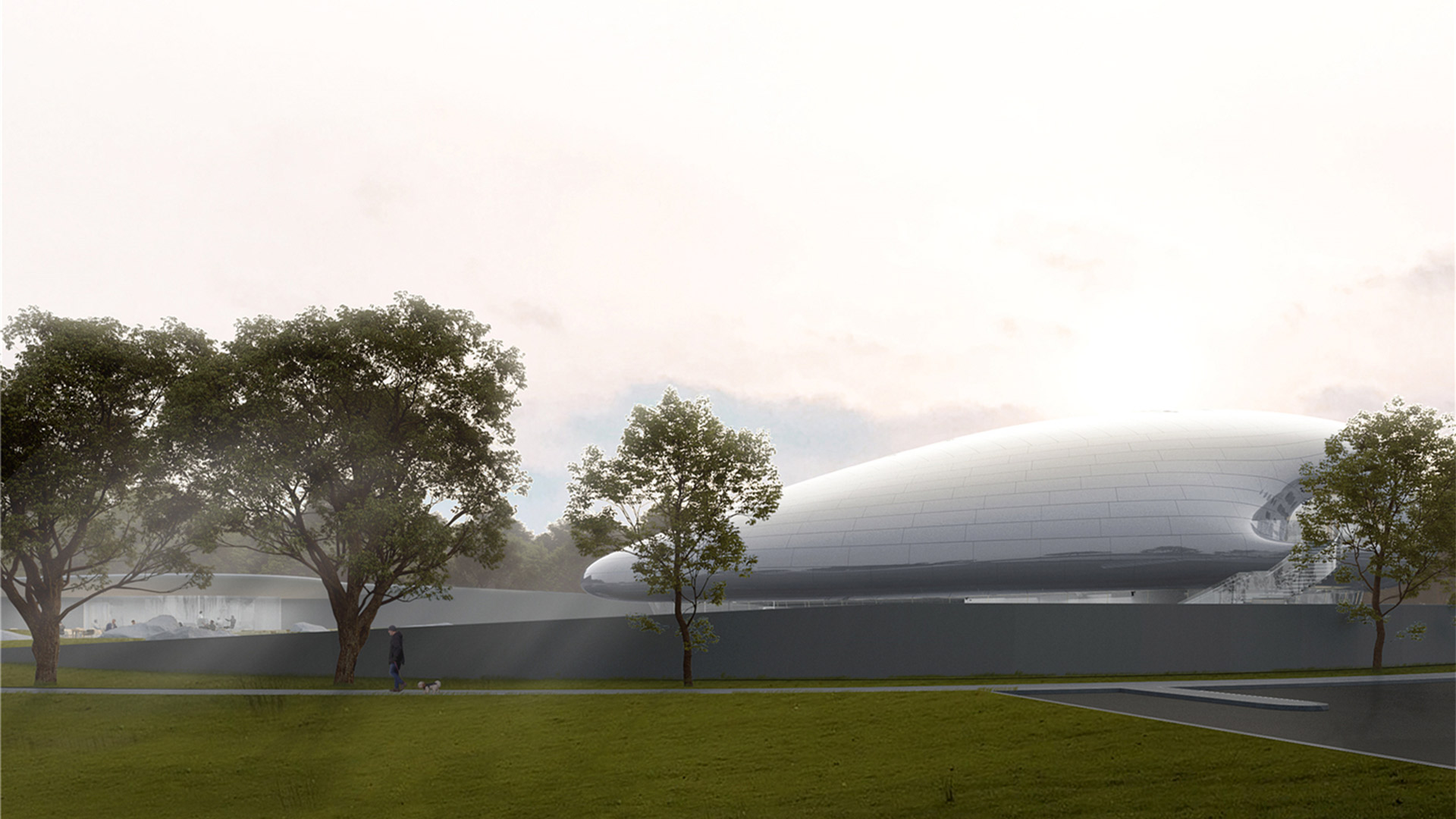
MAD’s design for the museum draws from the site’s dual urban and natural context; one where a “primeval rainforest and technology of the future meet,” explains the architects. Set against the backdrop of verdant tropical rainforest, the museum’s main pavilion is shown to be shaped like a cloud in dialogue with nature.
MAD Architects: Hainan Science and Technology Museum
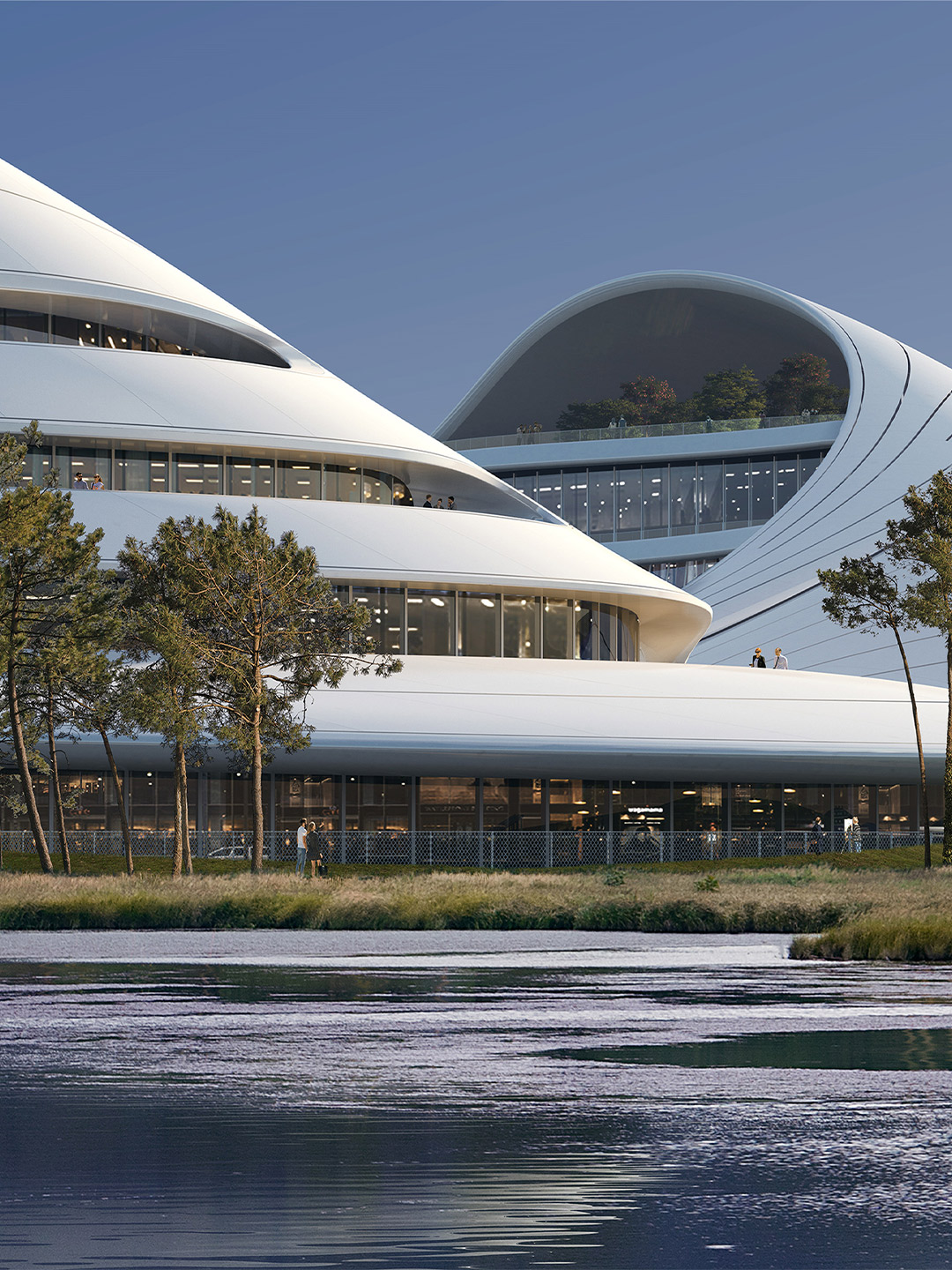
When viewed from a distance, the futuristic building will appear to emerge from the city, while visitors entering the museum will experience it “floating” high above the jungle. “The museum’s facade of fibre-reinforced plastic makes the building distinctive from both near and afar with its silver, reflective exterior and visionary aesthetic,” adds the MAD team.
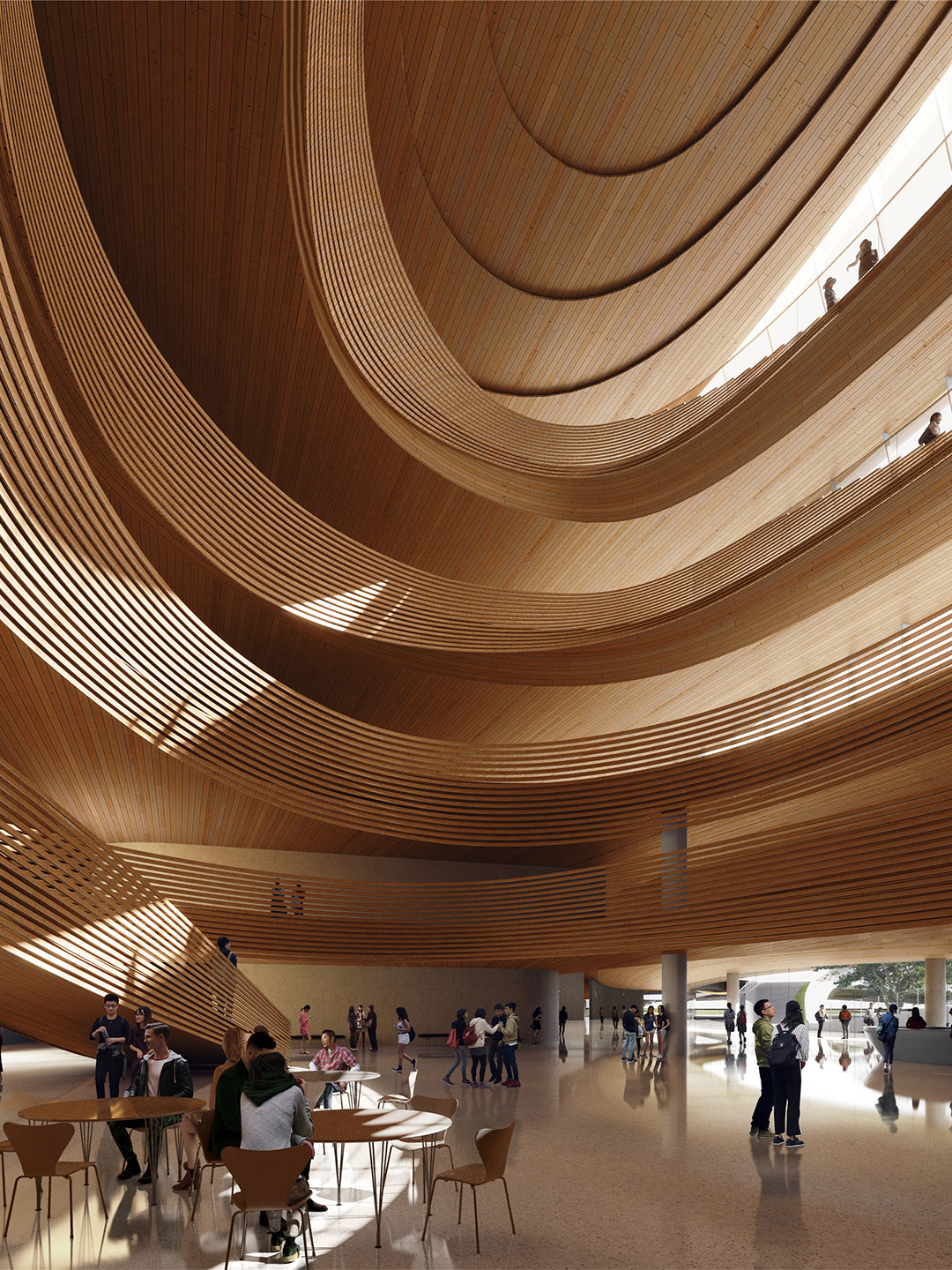
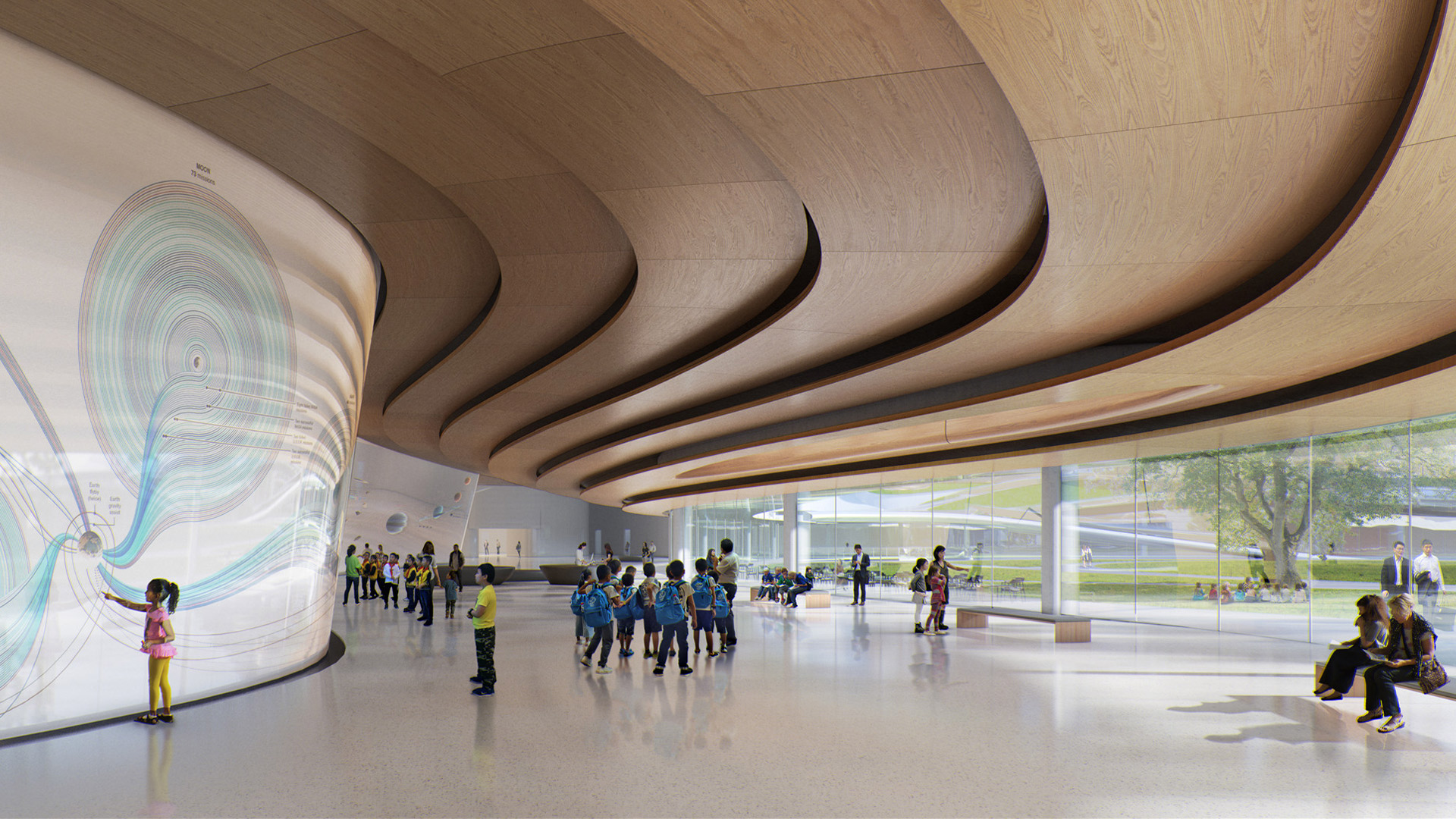
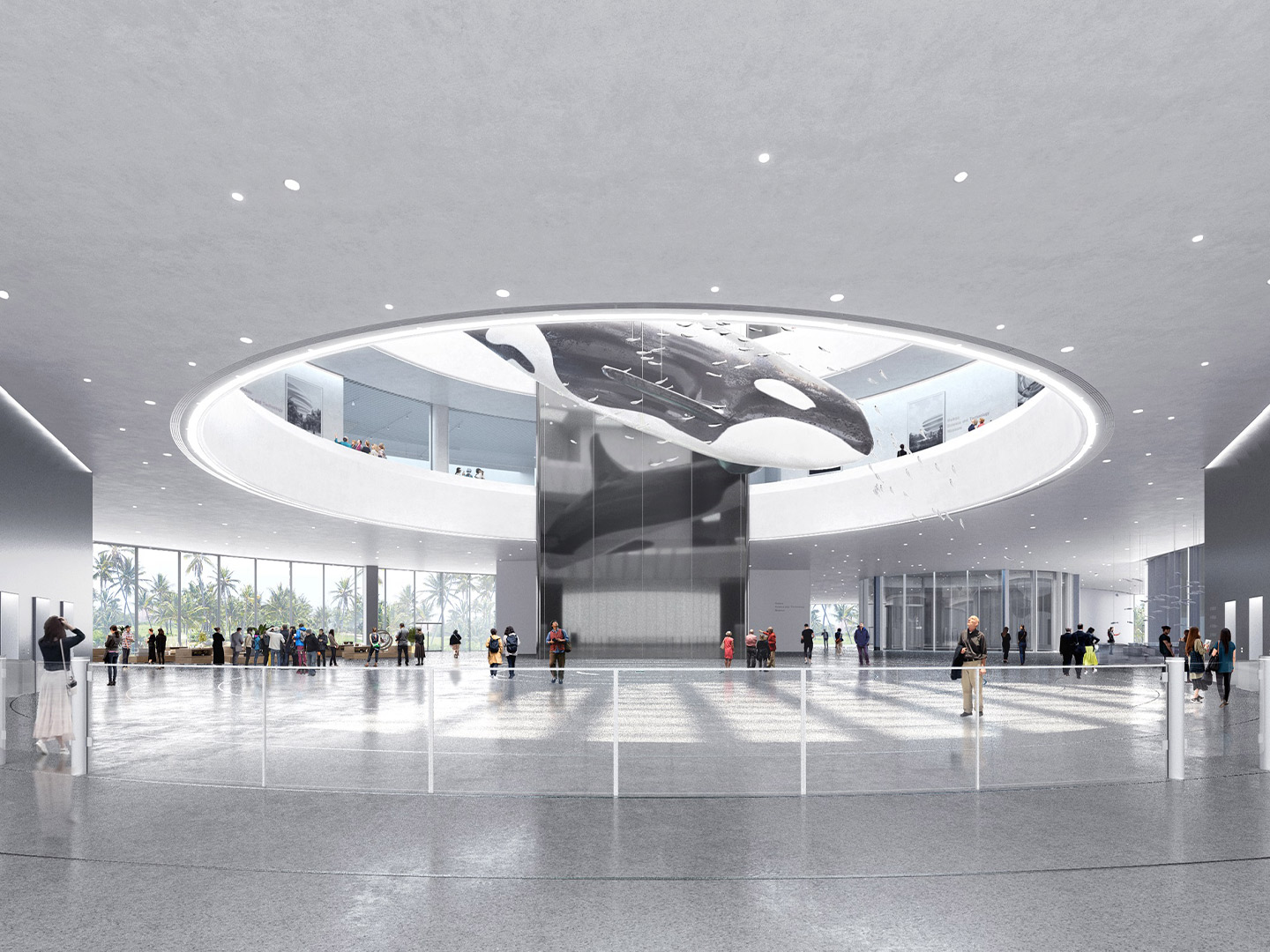
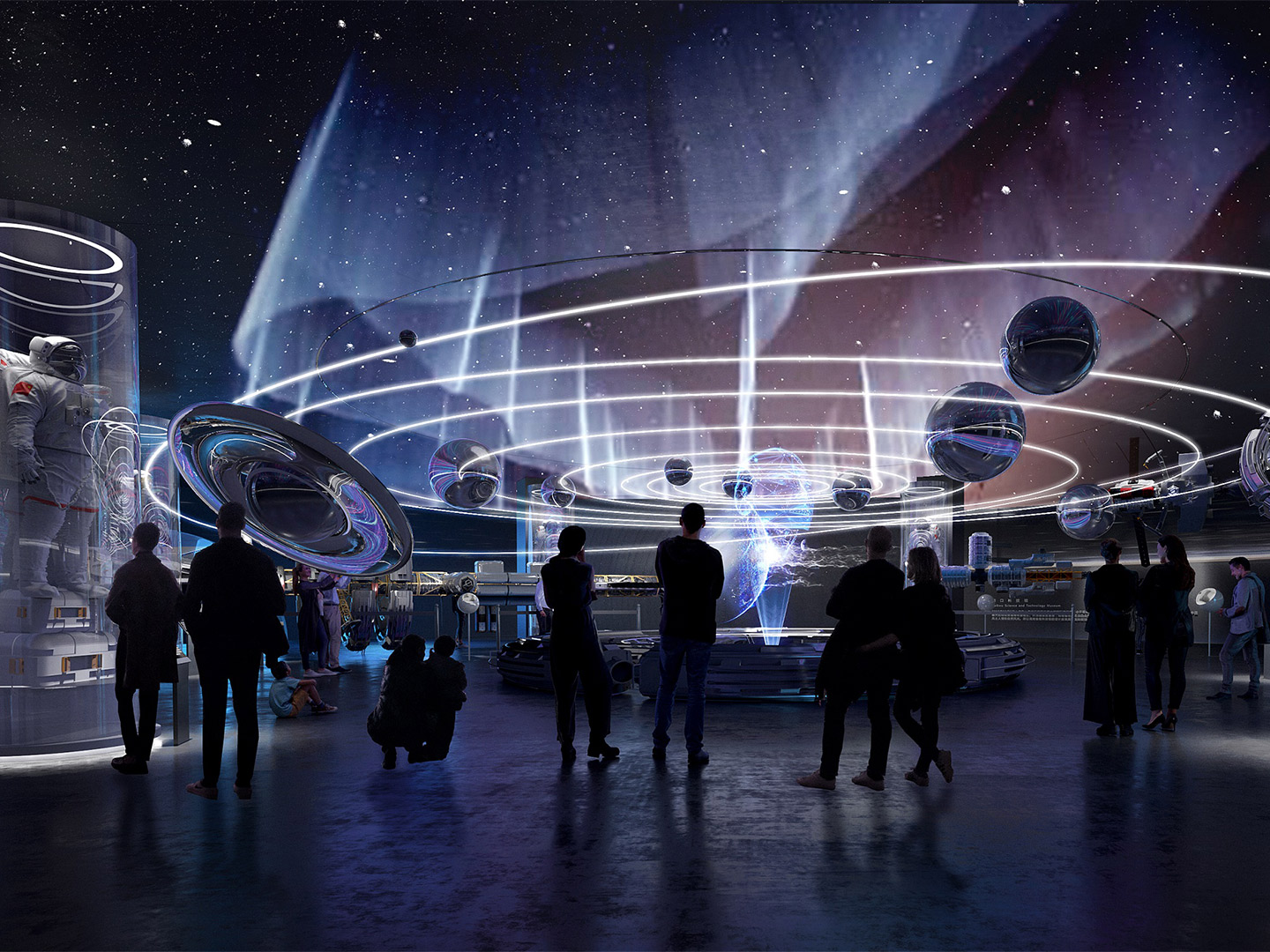
Encompassing 46,528 square meters, the museum will feature 27,782 square meters of above-ground facilities, including permanent exhibition spaces, a planetarium, a giant-screen theatre and a “flying theatre”. The museum’s interior structure will consist of three floor-to-ceiling cores, curved trusses, spiral ramps, and a roof, “all exposed to achieve harmony between the architectural forms and structural system,” the architects say.
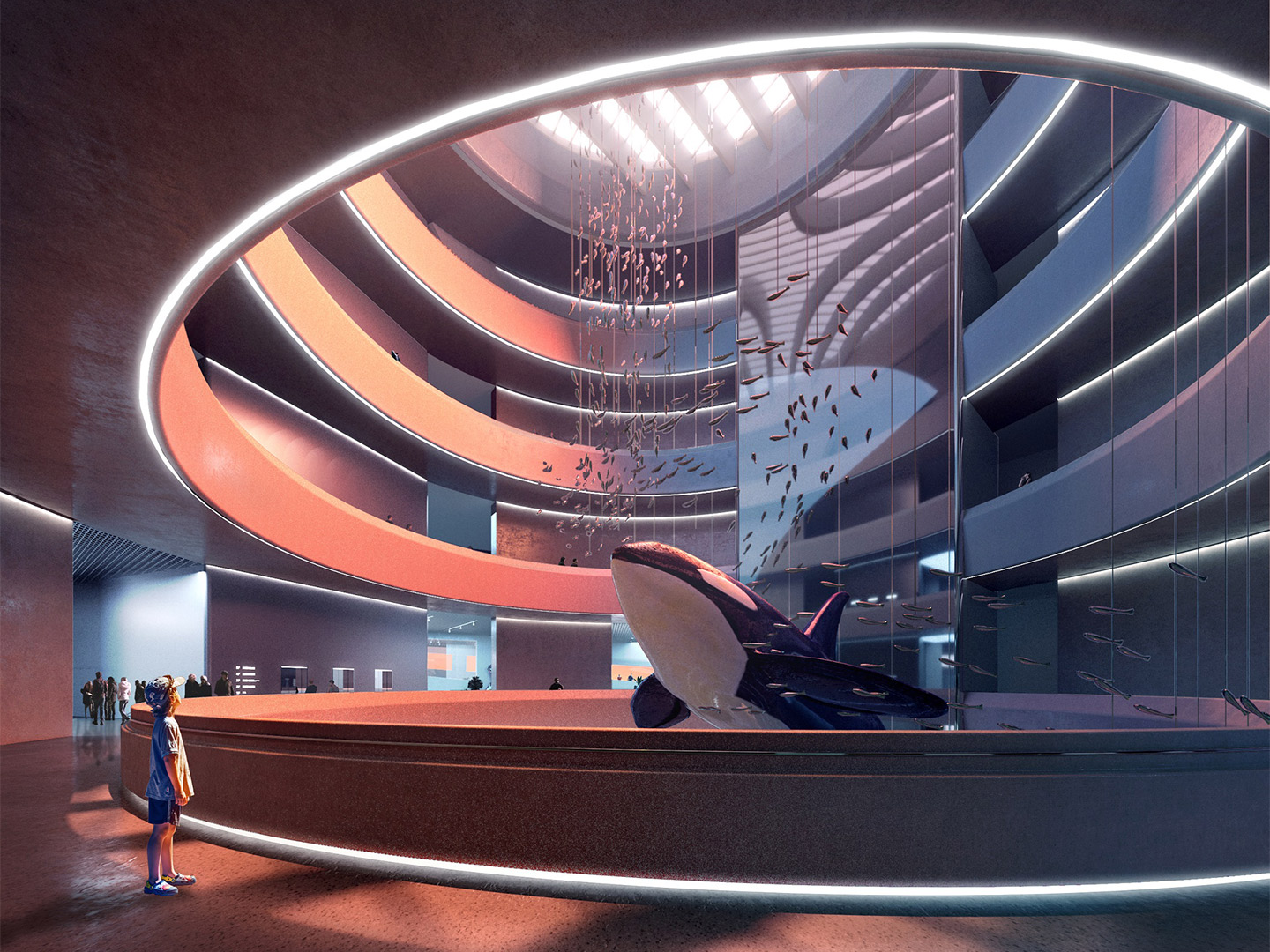
A skylight in the museum’s dome will bathe the spacious atrium in natural light, creating a bright and transparent environment. A spiralling, sloping exhibition space will then ascend from the central hall over five floors, connecting visitors across the museum.
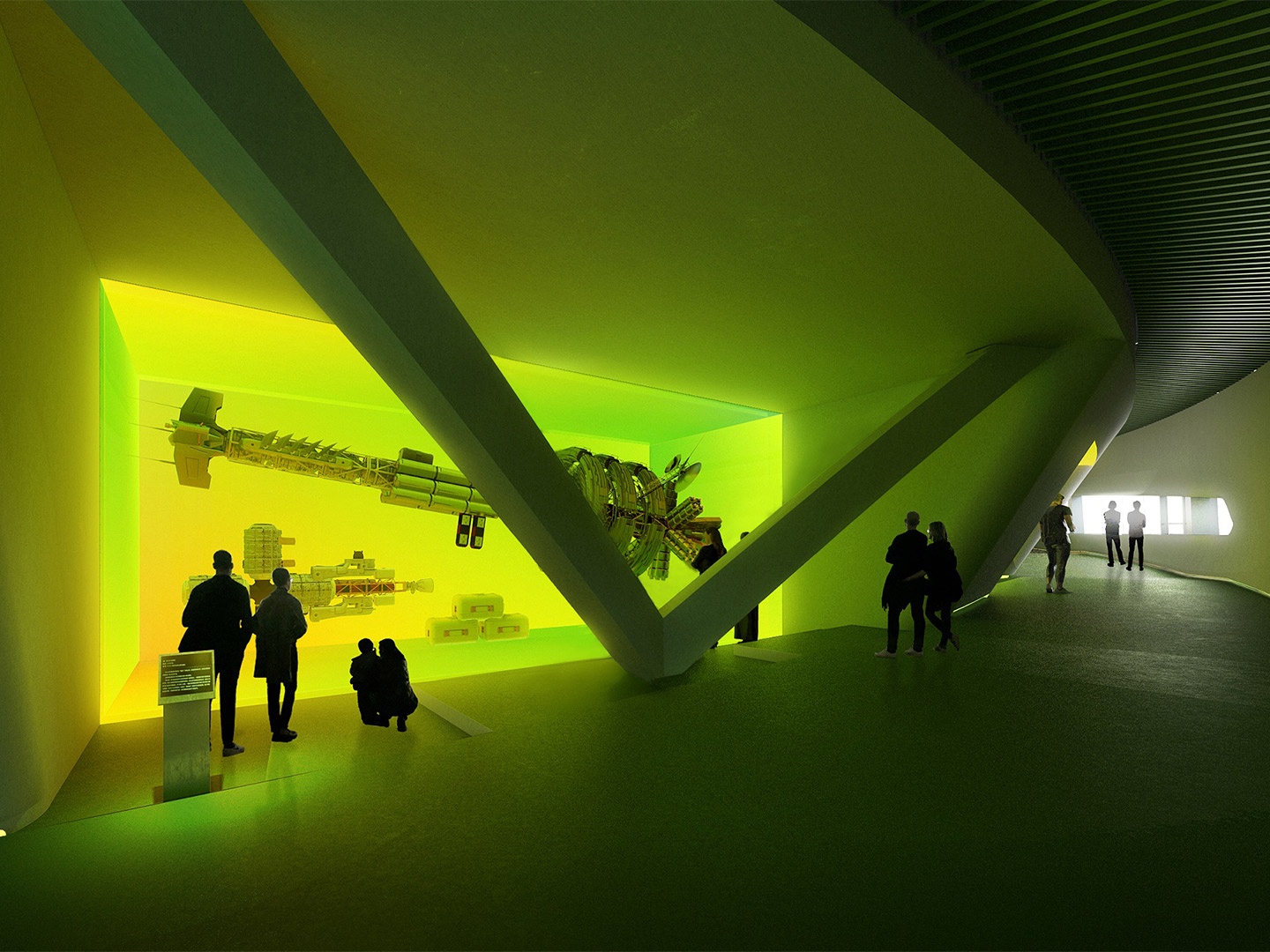
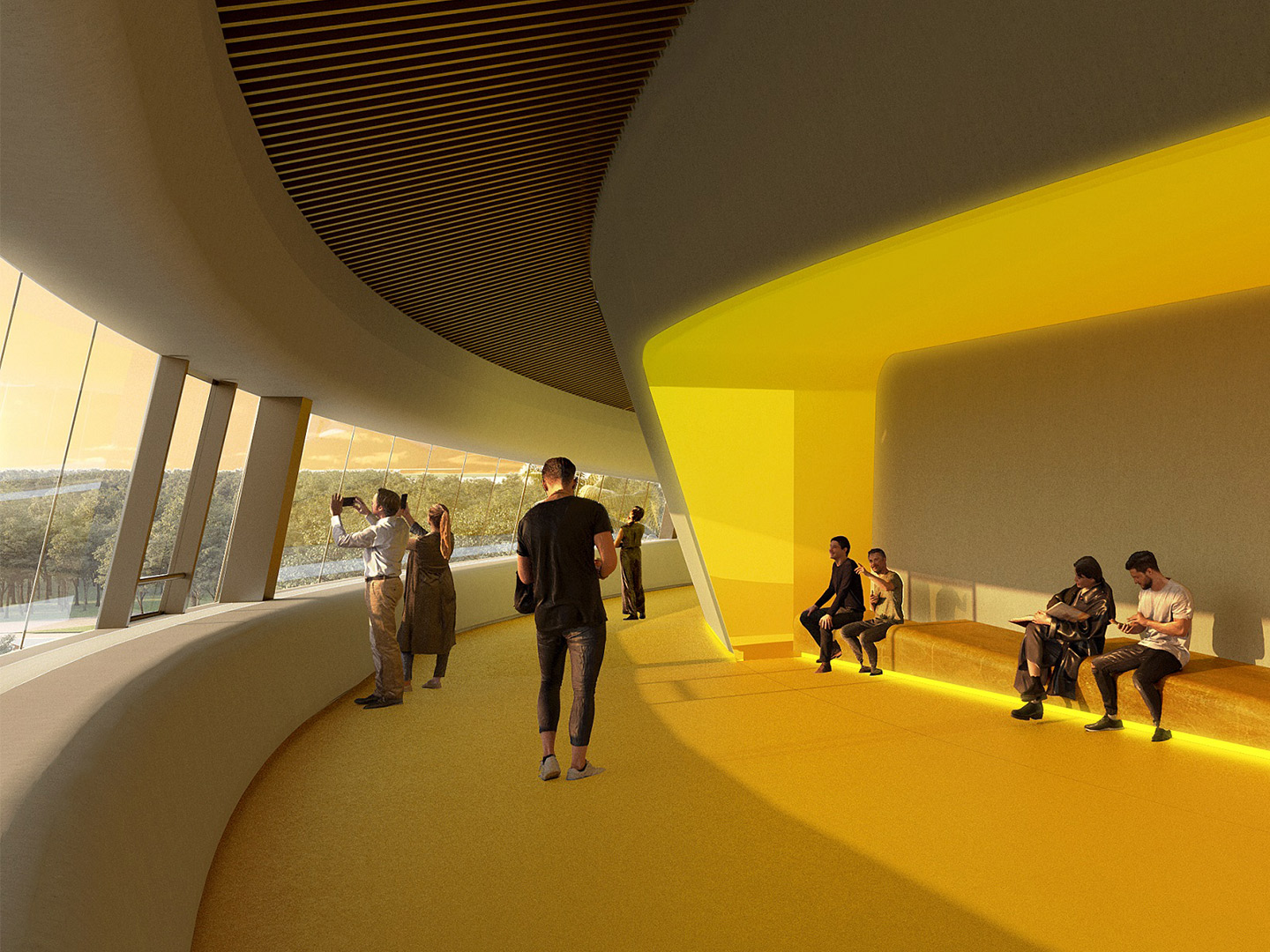
The exhibition experience begins on the fifth floor, where the elevator opens to an observation platform with 360-degree views to the sea and cityscape in the distance. “Visitors on this uppermost floor will begin by exploring the technology and space galleries before proceeding down the ramp to the ocean and life science galleries on the fourth floor,” says the MAD team.
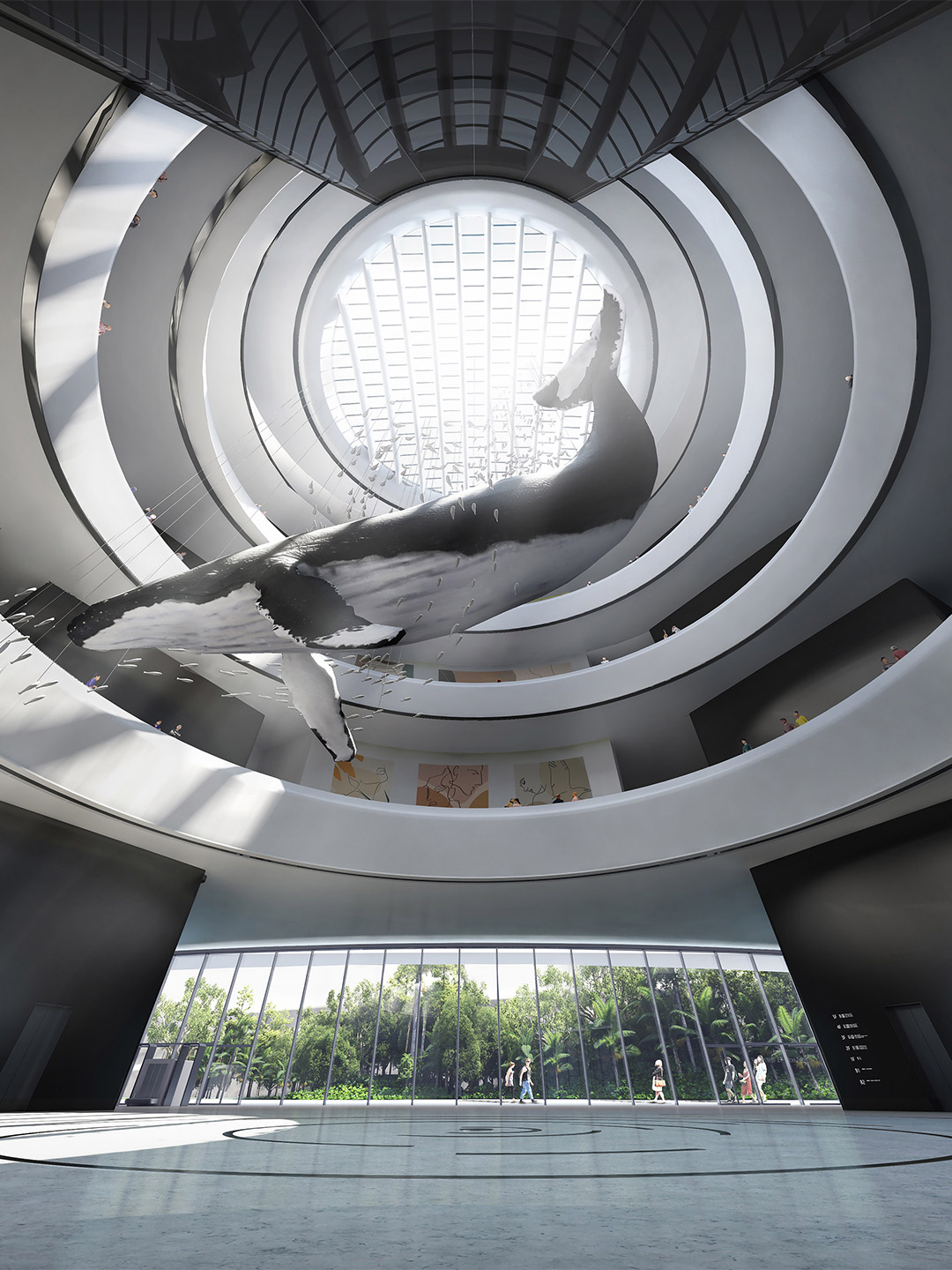
“The math and science galleries [will be] on the third floor, and the multimedia interactive experience area and children’s playground on the second floor.” As visitors travel down the ramp, they can simultaneously enjoy the scenery and the exhibitions, while a gallery running alongside the ramp is designed to extend the viewing experience.
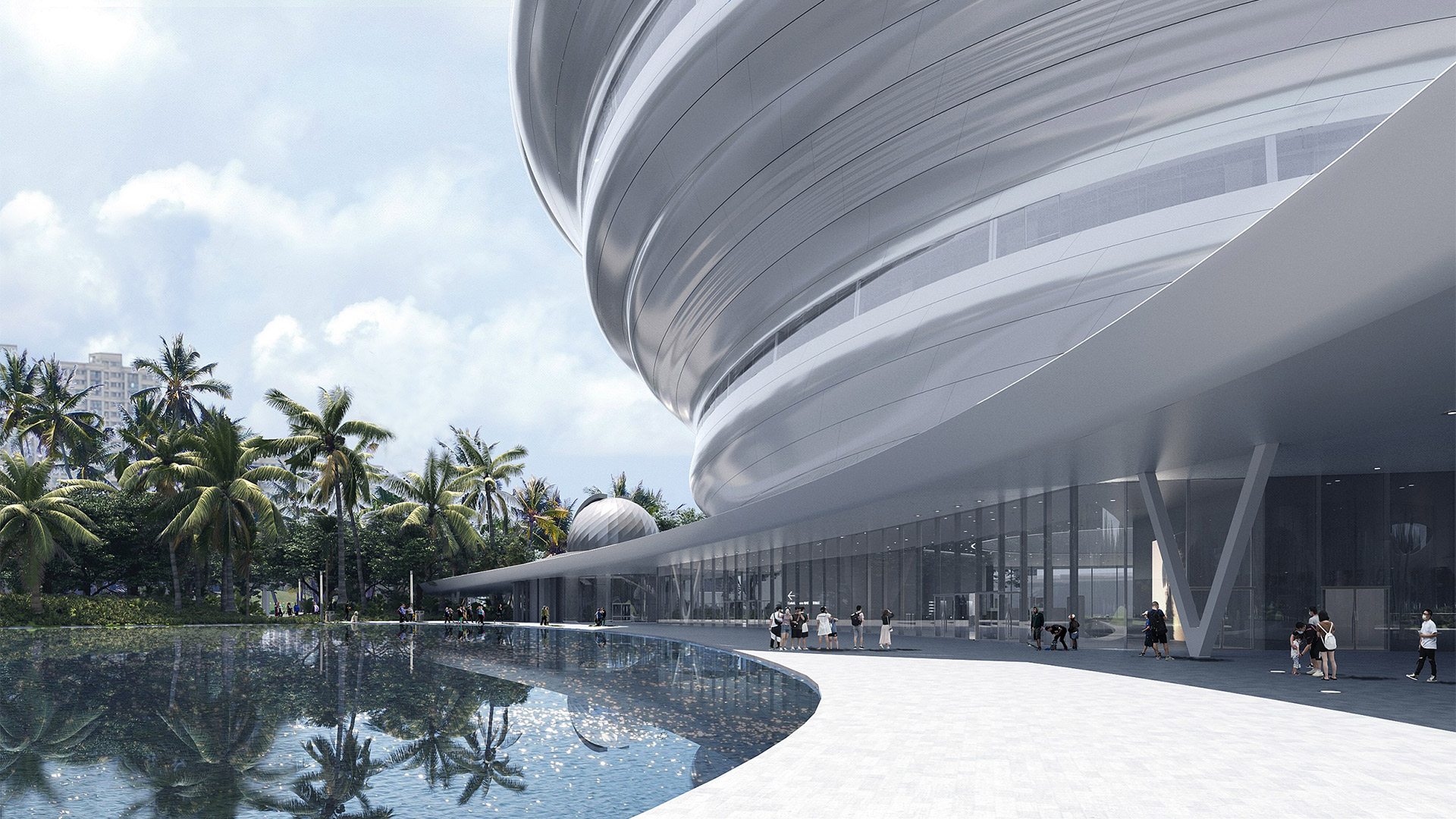
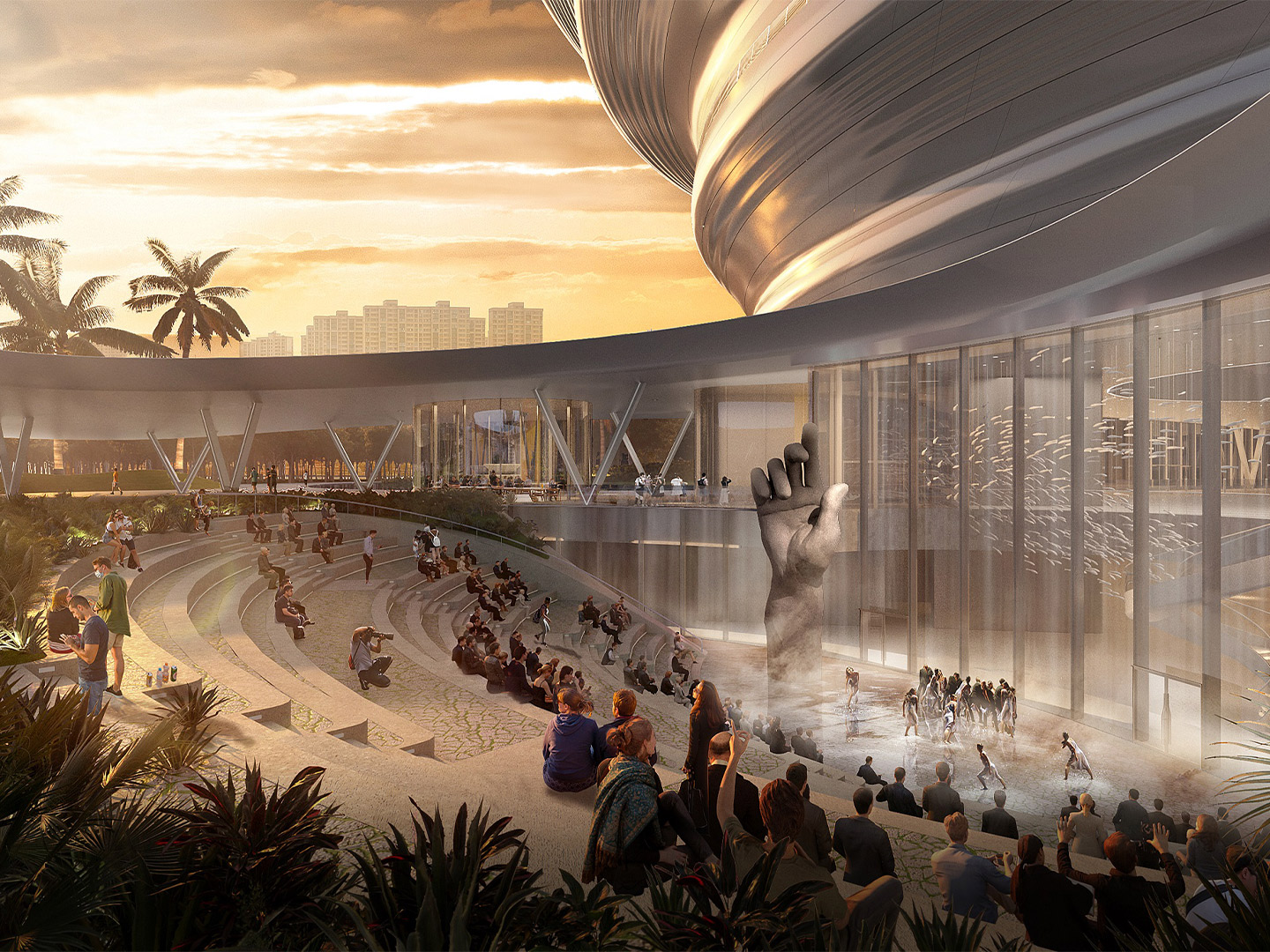
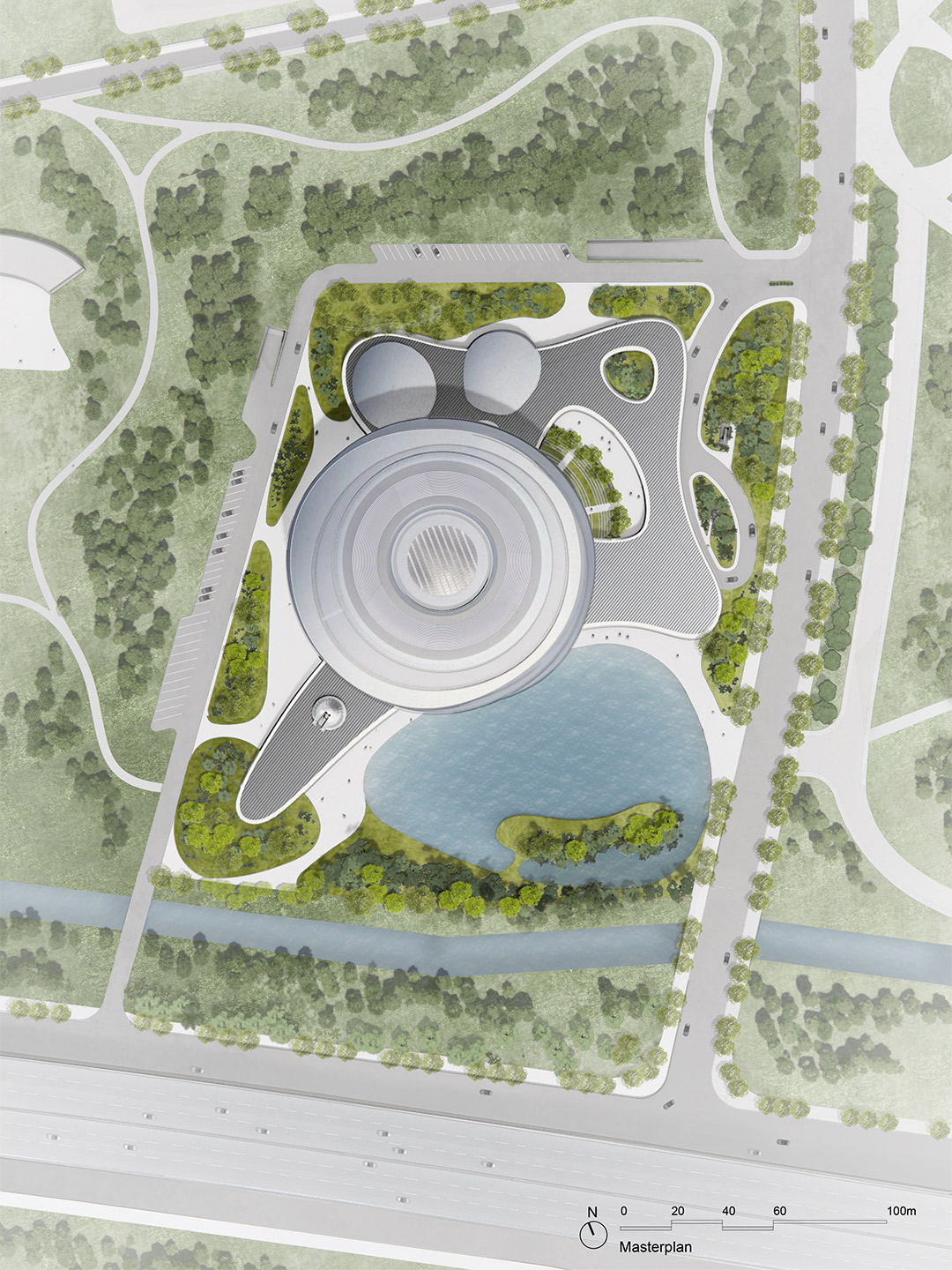
Outside the museum, an undulating canopy is shown to extend from the main pavilion in all directions “to create a space specifically conceived to accommodate the public in Haikou’s humid and rainy climate”. The north side of the canopy will also host the giant screen and flying theatre and, in the southwest corner, the planetarium and observatory.
The museum’s various outdoor public spaces, including a crater-like sunken plaza and reflection pool, offer areas for rest and relaxation. “The diversity of the surrounding tropical plants makes this an ideal setting for learning about nature,” says the architects, adding that visitors will be treated to “more than simply an exhibition-viewing experience”.
An important science venue and a major tourist attraction for Hainan’s trade port, the Hainan Science and Technology Museum will break ground later this month, and is scheduled to be completed and open to the public in 2024. Once up and running, the facility will serve as a destination for the exploration of science, technology and nature, encouraging visitors to seek inspiration from both the urban and natural setting.
The diversity of the surrounding tropical plants makes this an ideal setting for learning about nature.
MAD Architects also designed the Jiaxing Civic Centre in China. While Sou Fujimoto Architects has revealed designs for a ‘floating’ tower in Shenzhen. Catch up on more architecture and design highlights. Plus, subscribe to receive the Daily Architecture News e-letter direct to your inbox.
Related stories
- Ateliers Jean Nouvel wins competition to build opera house in Shenzhen.
- Tattoo-like illustrations embellish the silk-inspired theatre by Steven Chilton Architects.
- The Tower C ‘superscape’ in Shenzhen by Zaha Hadid Architects.
- The Tsingpu Yangzhou Retreat in China by Neri&Hu.
Beijing-based MAD Architects, led by founding architect Ma Yansong, has unveiled its designs for the Hainan Science and Technology Museum in Haikou, the capital of Hainan, one of China’s island provinces. Planned for Haikou’s west coast, surrounded by sports stadiums and a National Wetland Park, the museum will mark MAD’s second major public project in Hainan, following the Cloudscape of Haikou library which opened earlier this year.
Given the title Aranya Cloud Centre for this very reason, the building will bring a dynamic multi-purpose public space to the Aranya region – “one of China’s most vibrant seaside arts and culture communities,” enthuses the architects. Preliminary illustrations of the facility, recently unveiled by MAD, offer a walk-though of the building’s varied functions, including press conference spaces, a small theatre for productions and exhibition rooms.
Aranya Cloud Centre / News highlights
- Located on the Beidaihe coastline in China’s northeast, the Aranya Cloud Centre by MAD Architects has broken ground and is on-track for delivery this year.
- The building will provide multi-purpose facilities to the vibrant arts and culture community of Aranya, including press conference spaces, a small theatre for productions and exhibition rooms.
- The “Cloud Centre” received its name for its resemblance to a “floating cloud by the sea”.
- Made from hyperbolic white-stained glass, the building’s polished, reflective form is activated by the changing light and landscape.
- The perceived “cloud” form is made possible through a series of structural overhangs – the largest stretching 30 metres in length.
- Aranya Cloud Centre is planned to open to the public in 2022.
MAD Architects: Imagining a “floating cloud by the sea”
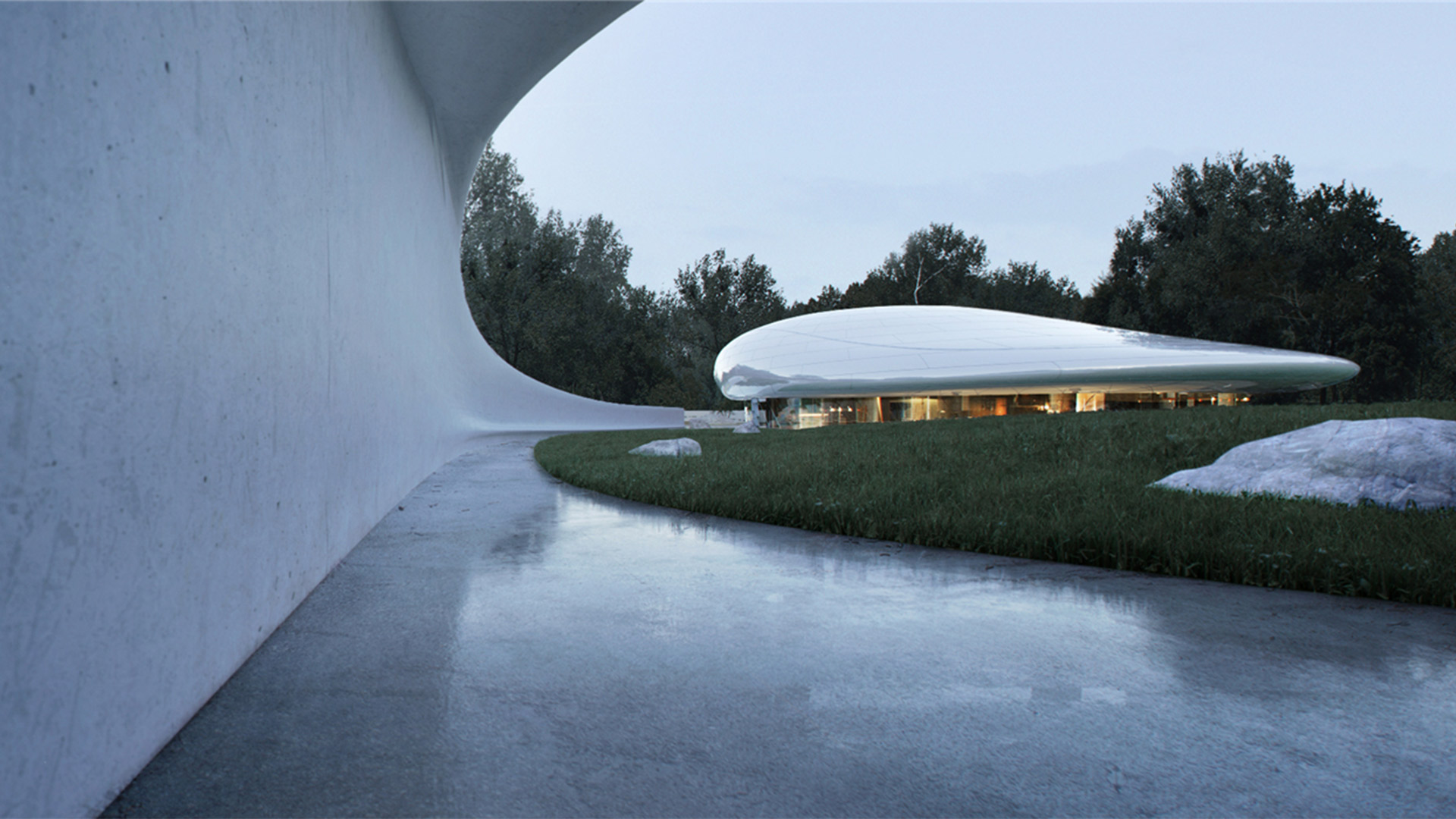
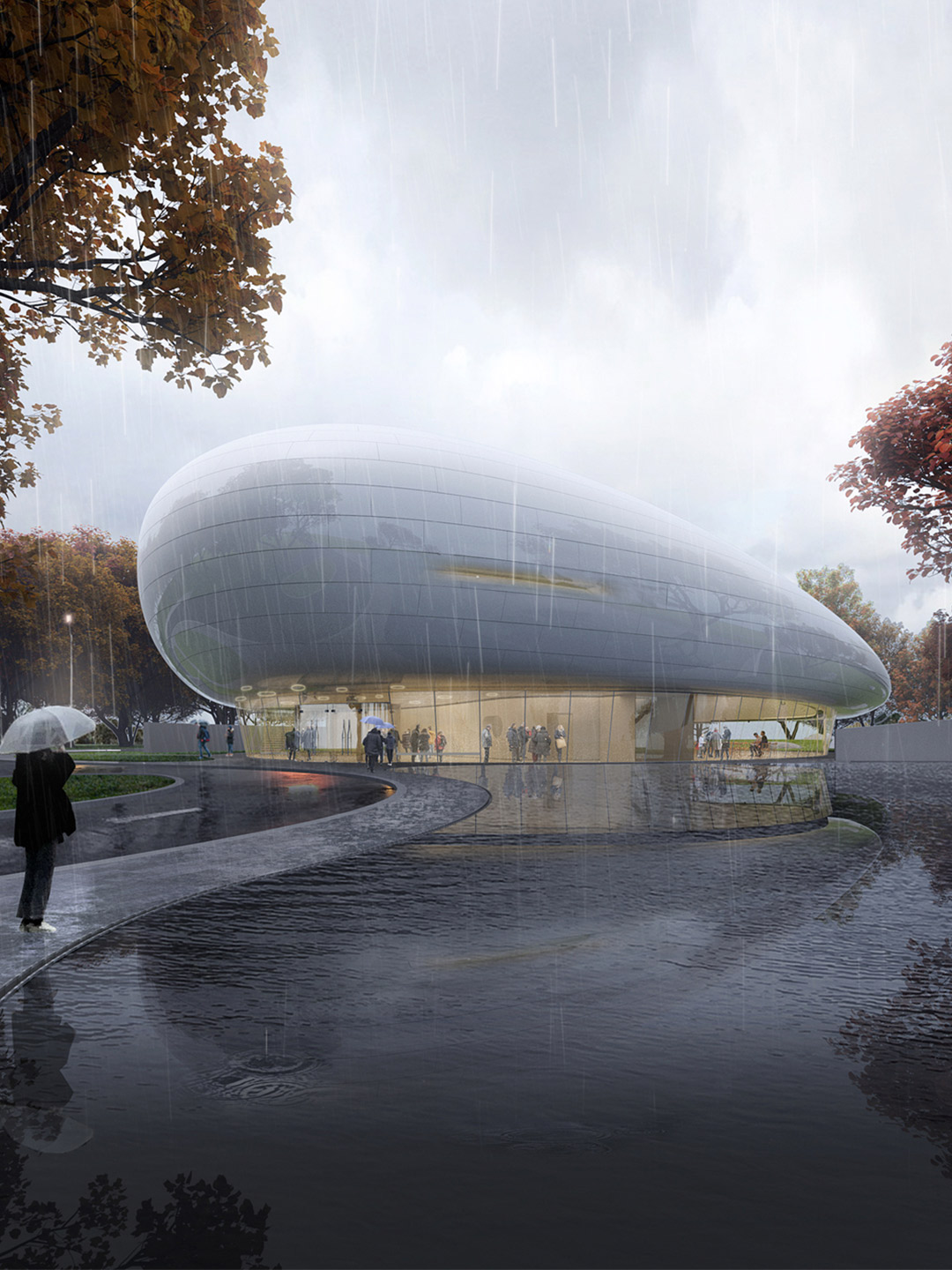
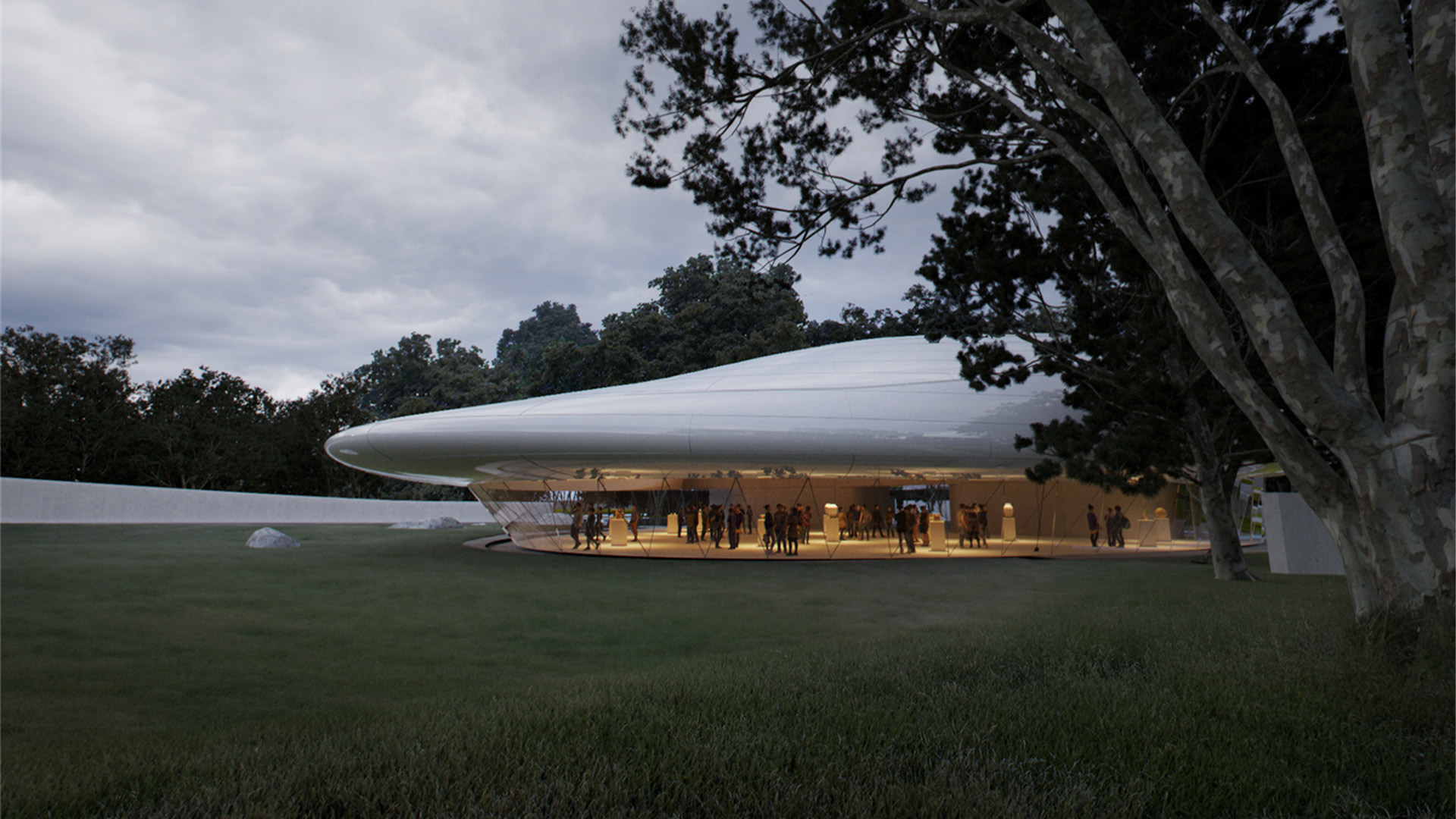
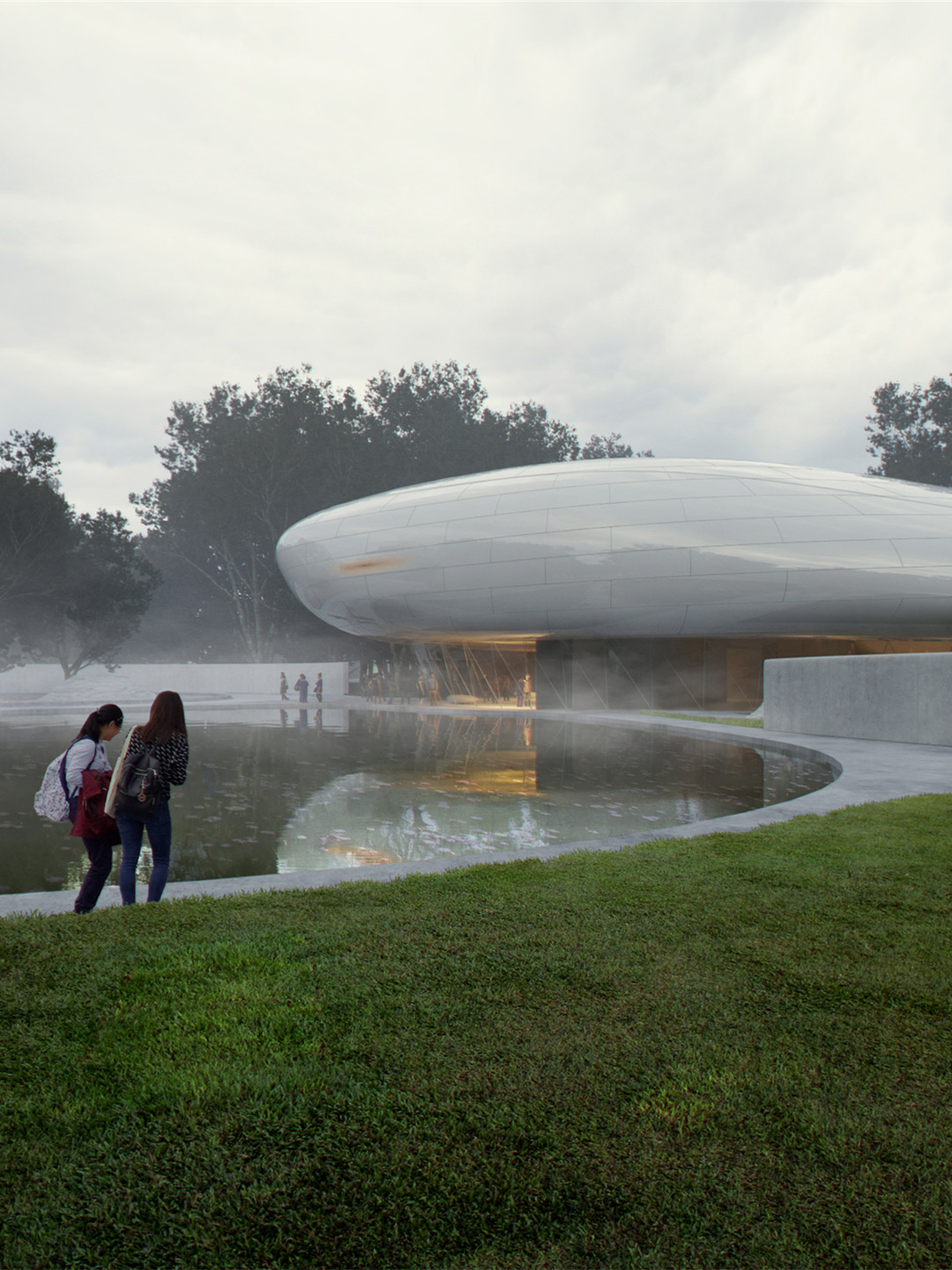
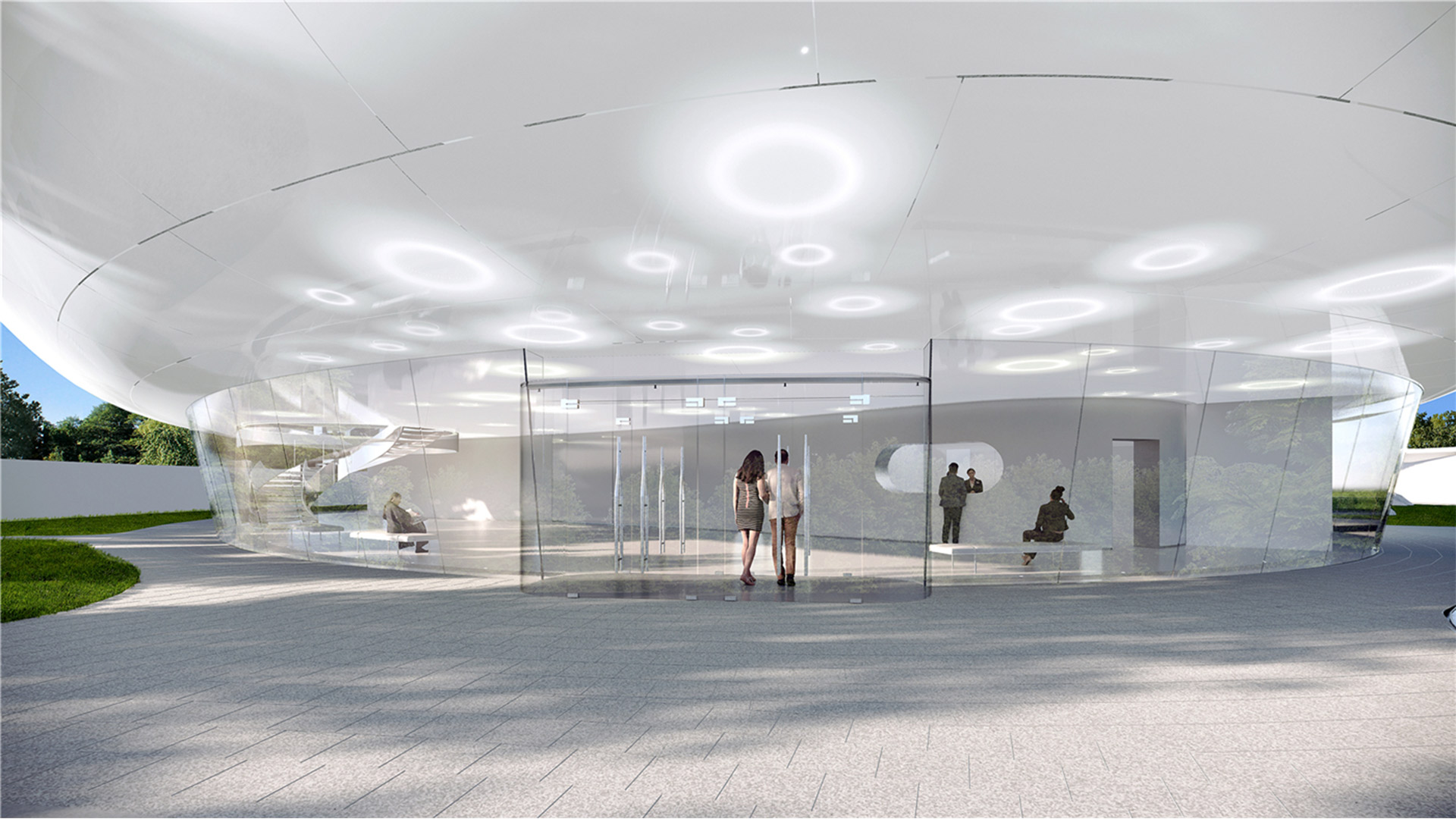
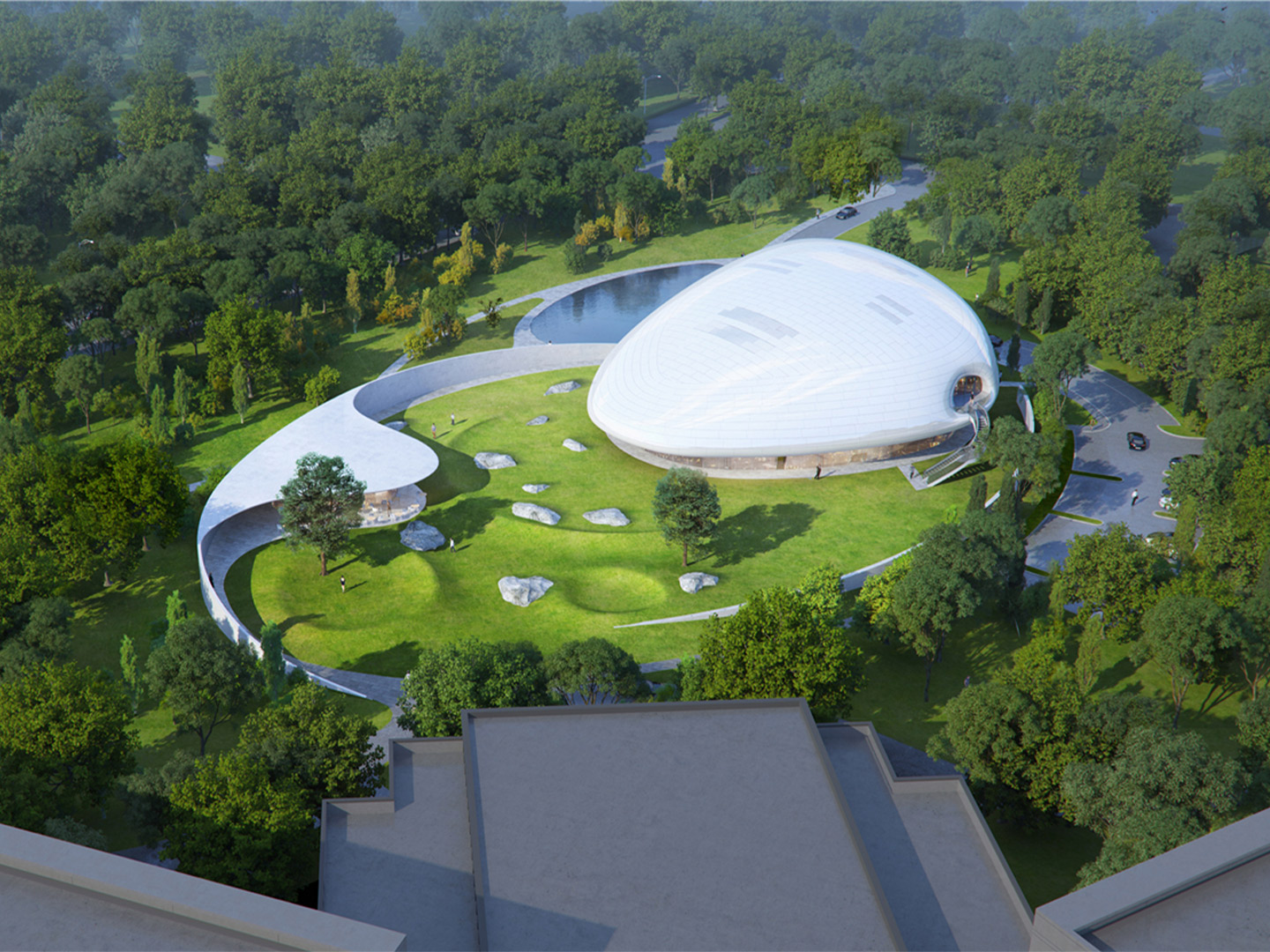
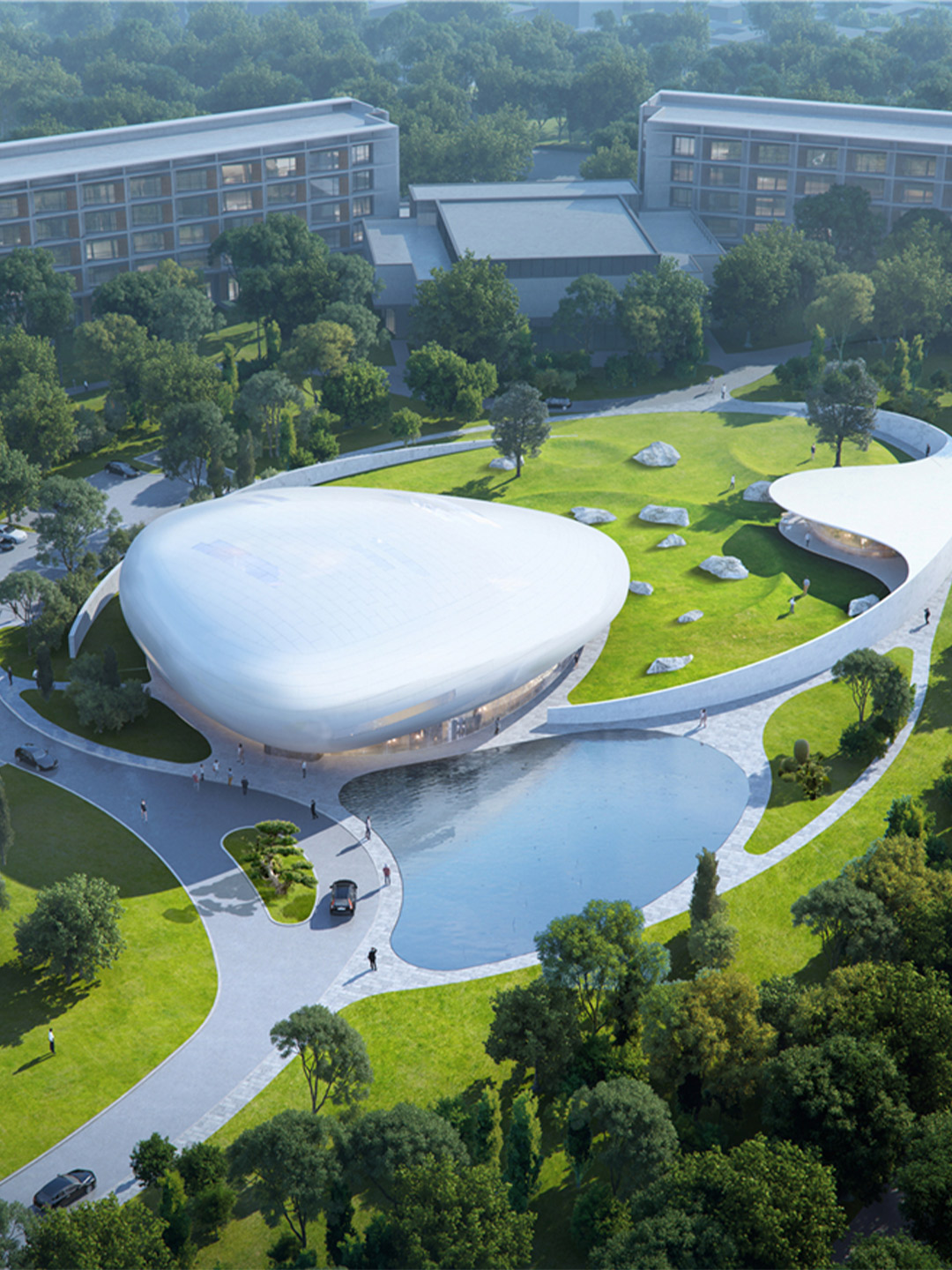
But it’s not until the centre is viewed from a distance – albeit digitally, for now – that the floating illusion comes to life. The building’s polished, reflective form is activated by the changing light and landscape. “The simple, pure aesthetic of the building is achieved through a facade of hyperbolic white-stained glass, creating a seemingly floating form when viewed from afar,” says the architects. “Upon approach, the winding entry road opens up, and the building’s cloud-like form becomes visible.” At its entrance, a pool of water reflects both the building and the clouds above, blurring the line between interior and exterior, architecture and nature.
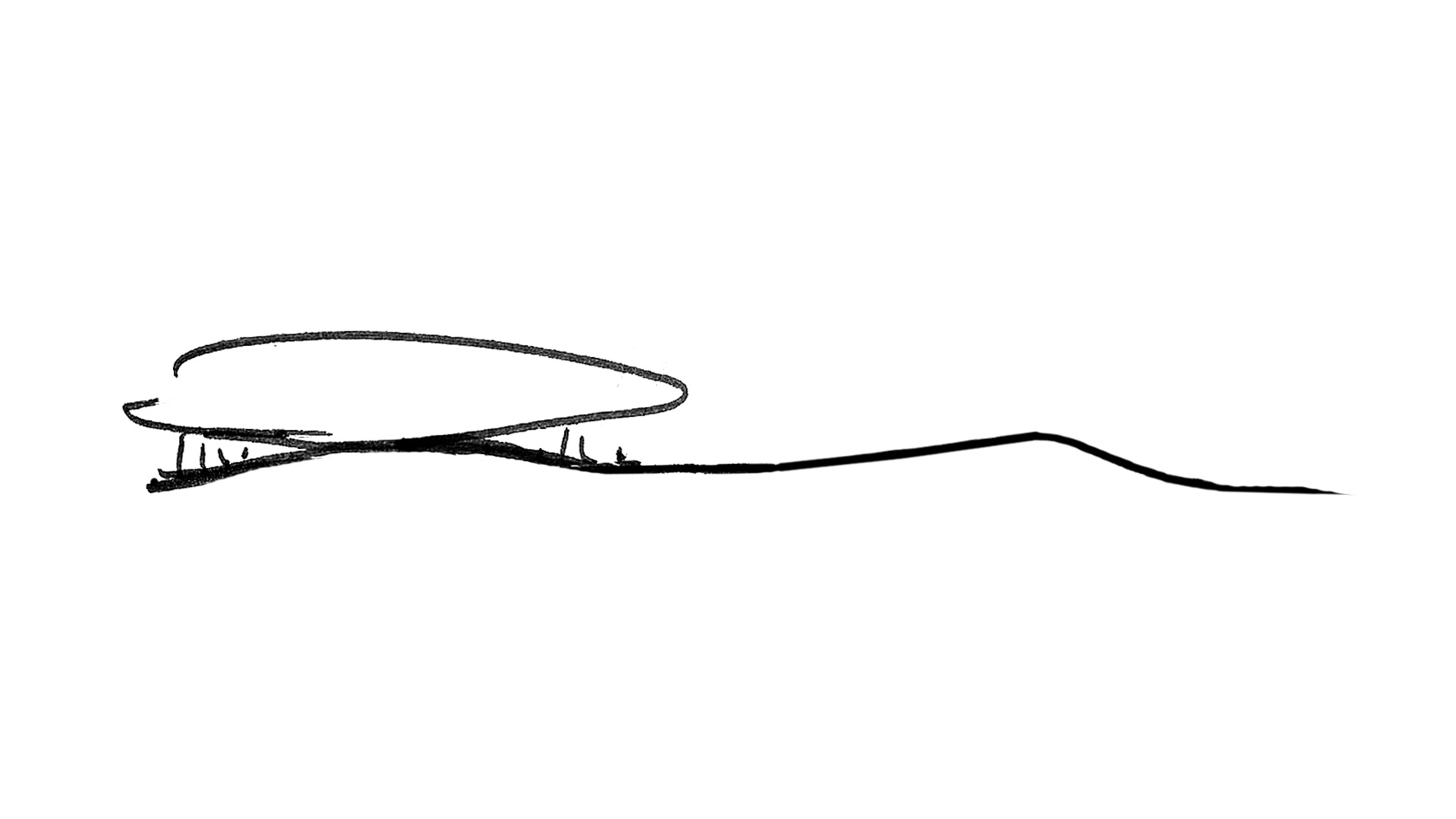
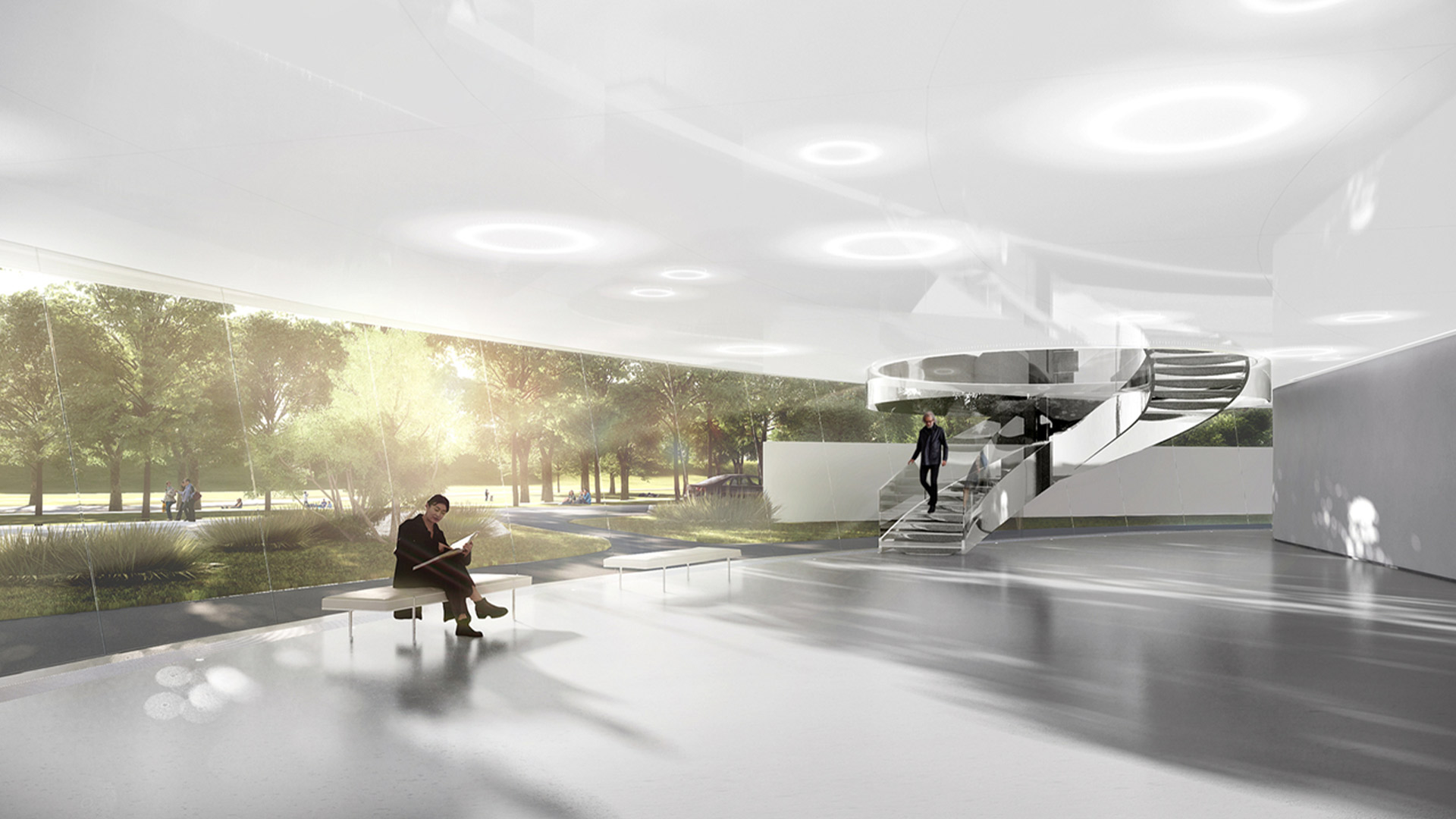
The perceived “cloud” form is made possible through a series of structural overhangs – the largest stretching 30 metres in length. As a result of these overhangs, the solid white mass of the building appears to hover over a predominately glazed ground floor. “The Cloud’s massing is balanced and suspended from the building’s central core, which provides support for the entire structure and makes its column-free interior space possible,” the architects explain.
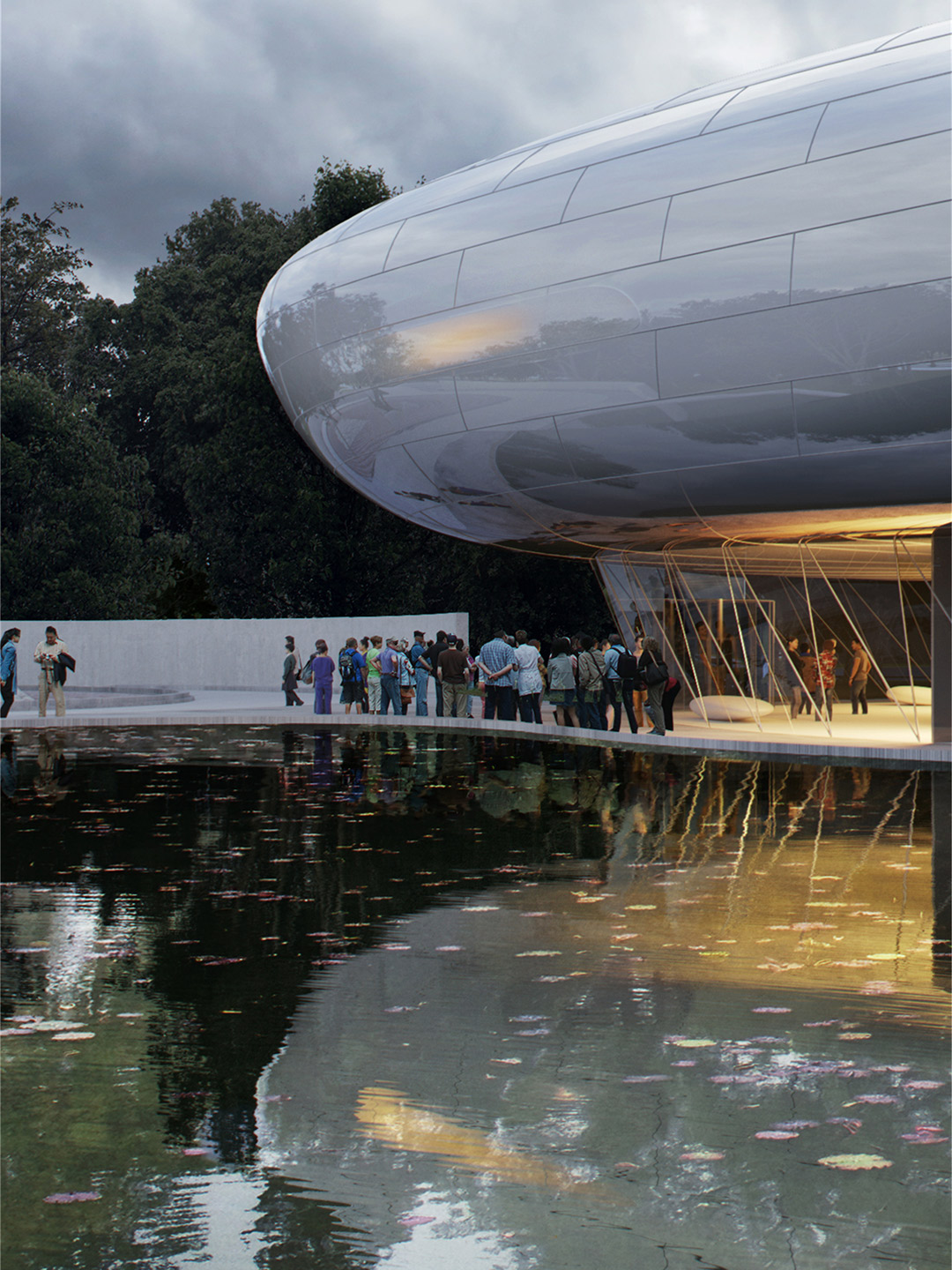
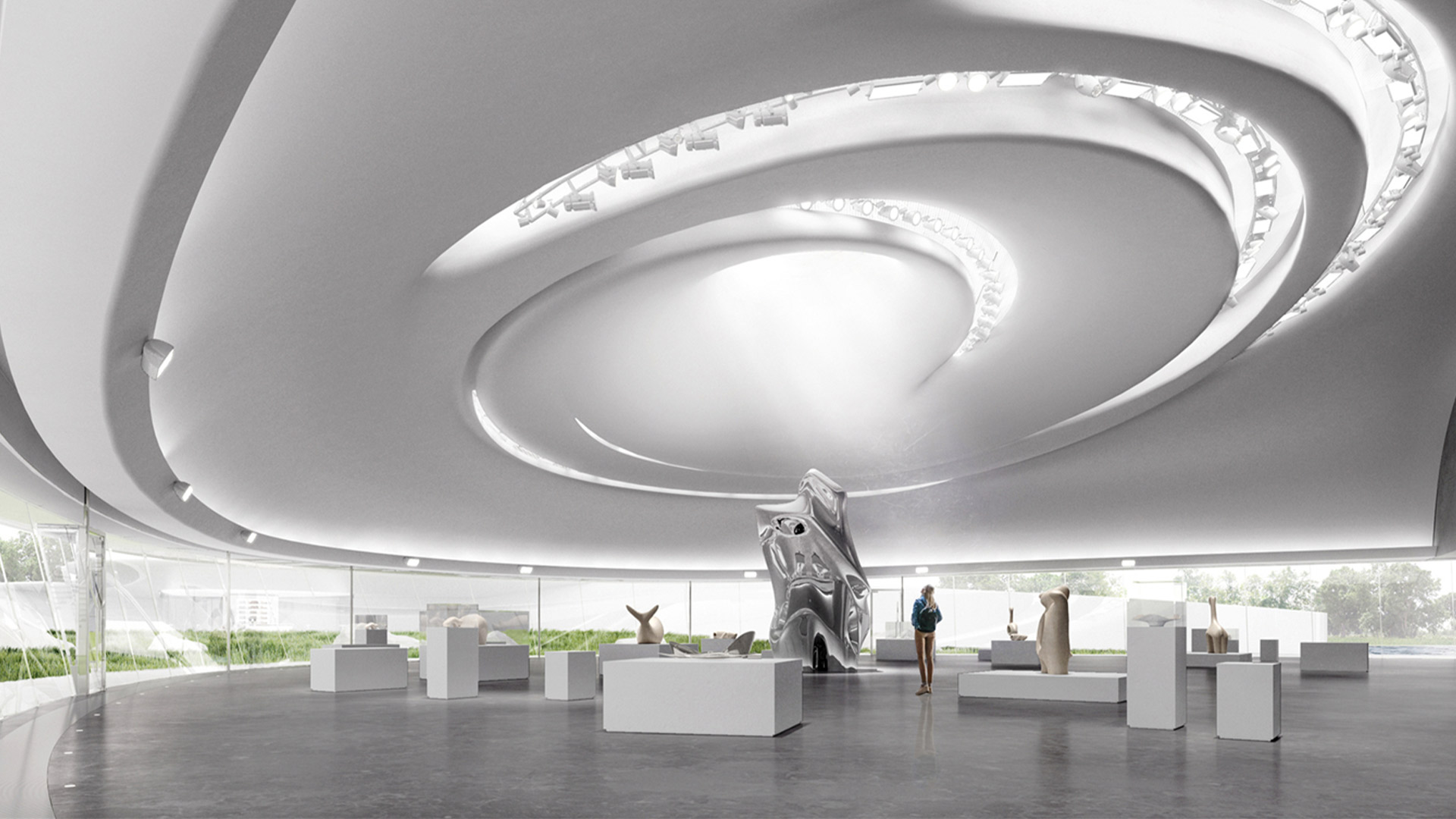
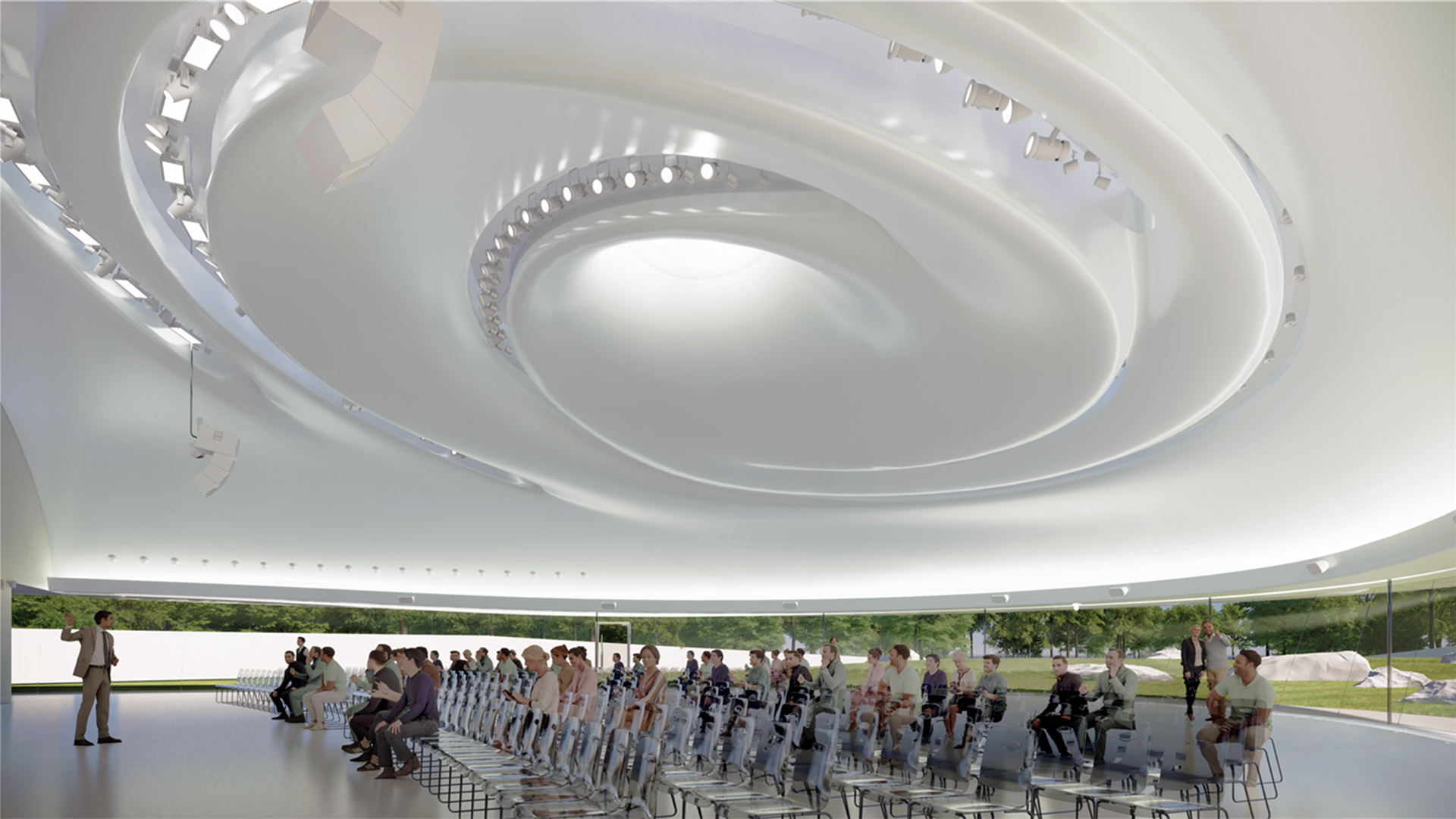
The building’s primary internal space – a multi-purpose volume – extends skyward through a swirling ceiling. “Above the spaces, a series of skylights allows ample natural light into the interior to enhance the building’s energy efficiency,” adds the team at MAD. “The building’s open spaces and movable walls offer a high degree of spatial flexibility to meet the needs of exhibitions, theatrical performances, conferences, and a variety of other functions.”
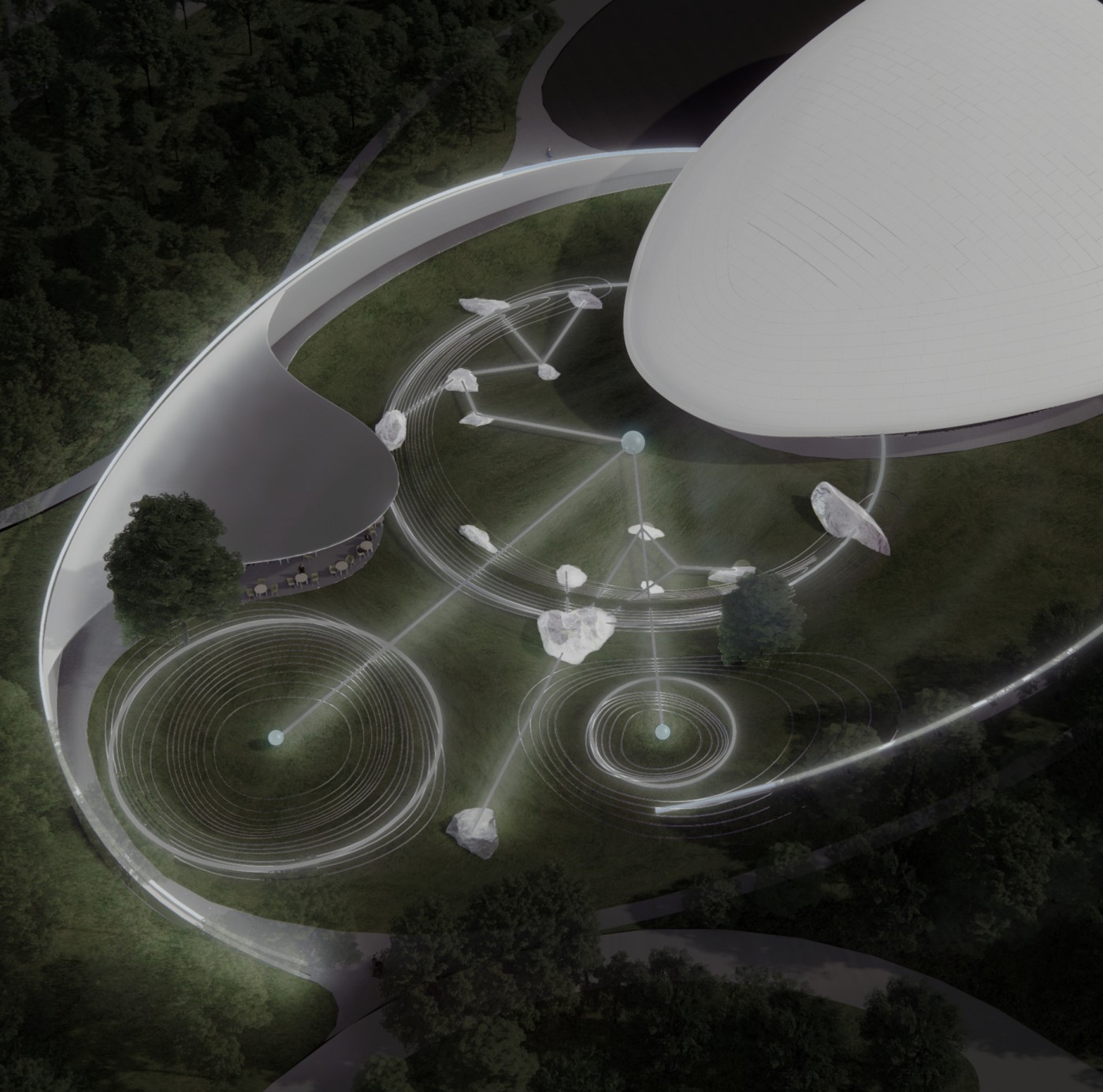
Surrounding the Cloud Centre’s exterior, a low circular wall forms the boundary of a tranquil landscape that appears “detached from reality”. This outwardly cosmic theme continues within the garden, where a series of white-coloured rocks and undulating greenery evokes what the architects equate to “imagery of floating planets dotted across the universe”.
The Aranya Cloud Centre is expected to be completed this year and open to the public in 2022.
Above the spaces, a series of skylights allows ample natural light into the interior to enhance the building’s energy efficiency.
MAD Architects also designed the Jiaxing Civic Centre in China. While Sou Fujimoto Architects has revealed designs for a ‘floating’ tower in Shenzhen. Catch up on more architecture and design highlights. Plus, subscribe to receive the Daily Architecture News e-letter direct to your inbox.
Related stories
- Ateliers Jean Nouvel wins competition to build opera house in Shenzhen.
- Tattoo-like illustrations embellish the silk-inspired theatre by Steven Chilton Architects.
- The Tower C ‘superscape’ in Shenzhen by Zaha Hadid Architects.
- The Tsingpu Yangzhou Retreat in China by Neri&Hu.
After Hurricane Sandy rendered Pier 54 in New York irreparable, businessman and philanthropist Barry Diller recognised a rare opportunity to replace the pier with a completely different kind of public park – one where nature and art could unite. “What was in my mind was to build something for the people of New York and for anyone who visits; a space that on first sight was dazzling and upon use made people happy,” Barry said at the time.
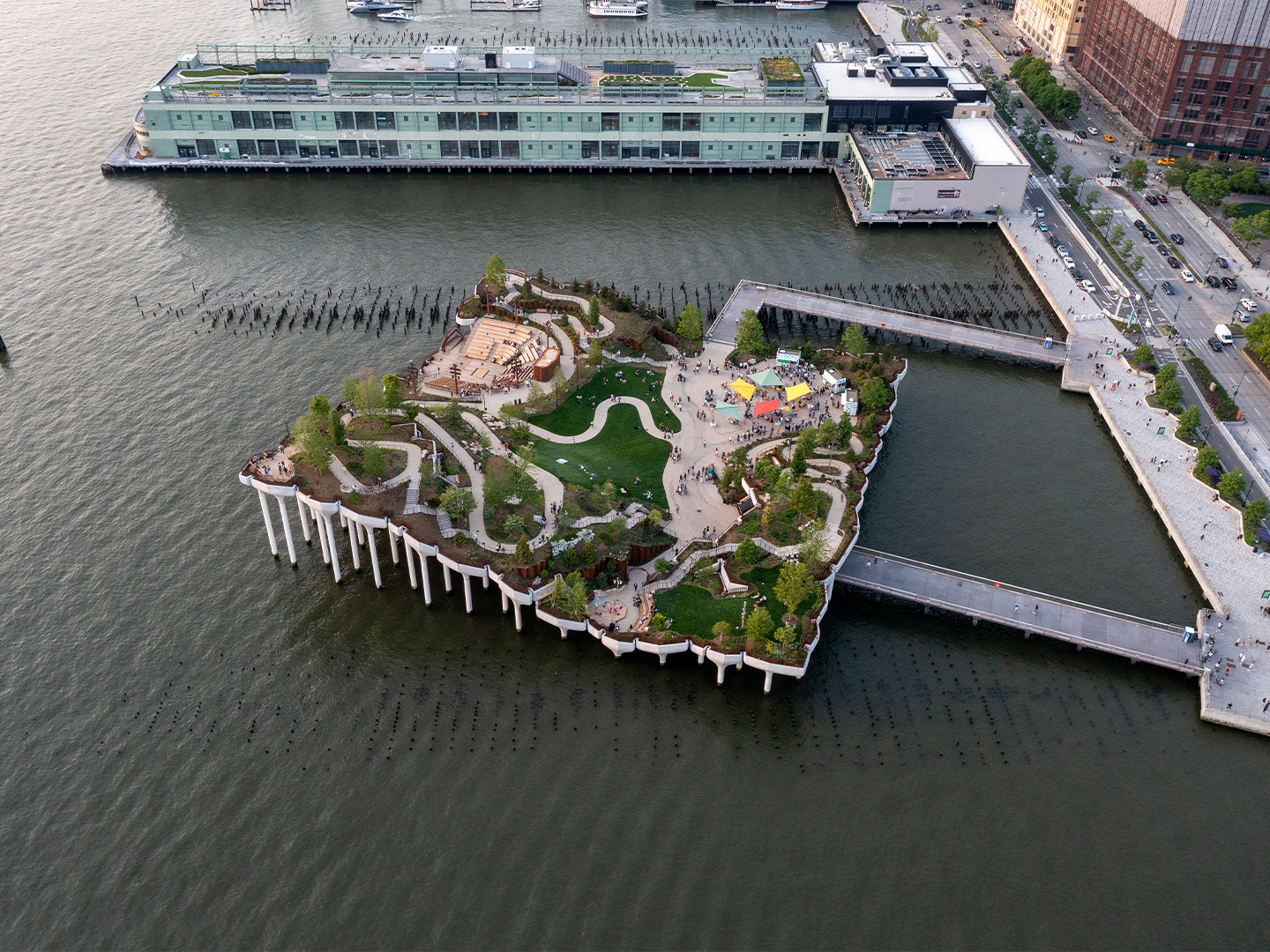
A design competition followed in 2013, resulting in British architecture practice Heatherwick Studio and New York-based landscape architects MNLA being chosen to spearhead the bold vision. The design team combined architectural innovation with a captivating landscape to imagine a ‘floating’ park, then named Pier 55, and construction began in 2016. But work came to a halt in 2017 after advocacy group The City Club of New York lobbied against it. Relaunched two years later and renamed Little Island, the recently completed project is a 2.4-acre oasis amid urban life where residents and visitors of New York can relax, imagine and recharge.
Little Island in New York by Heathwerwick Studio and MNLA
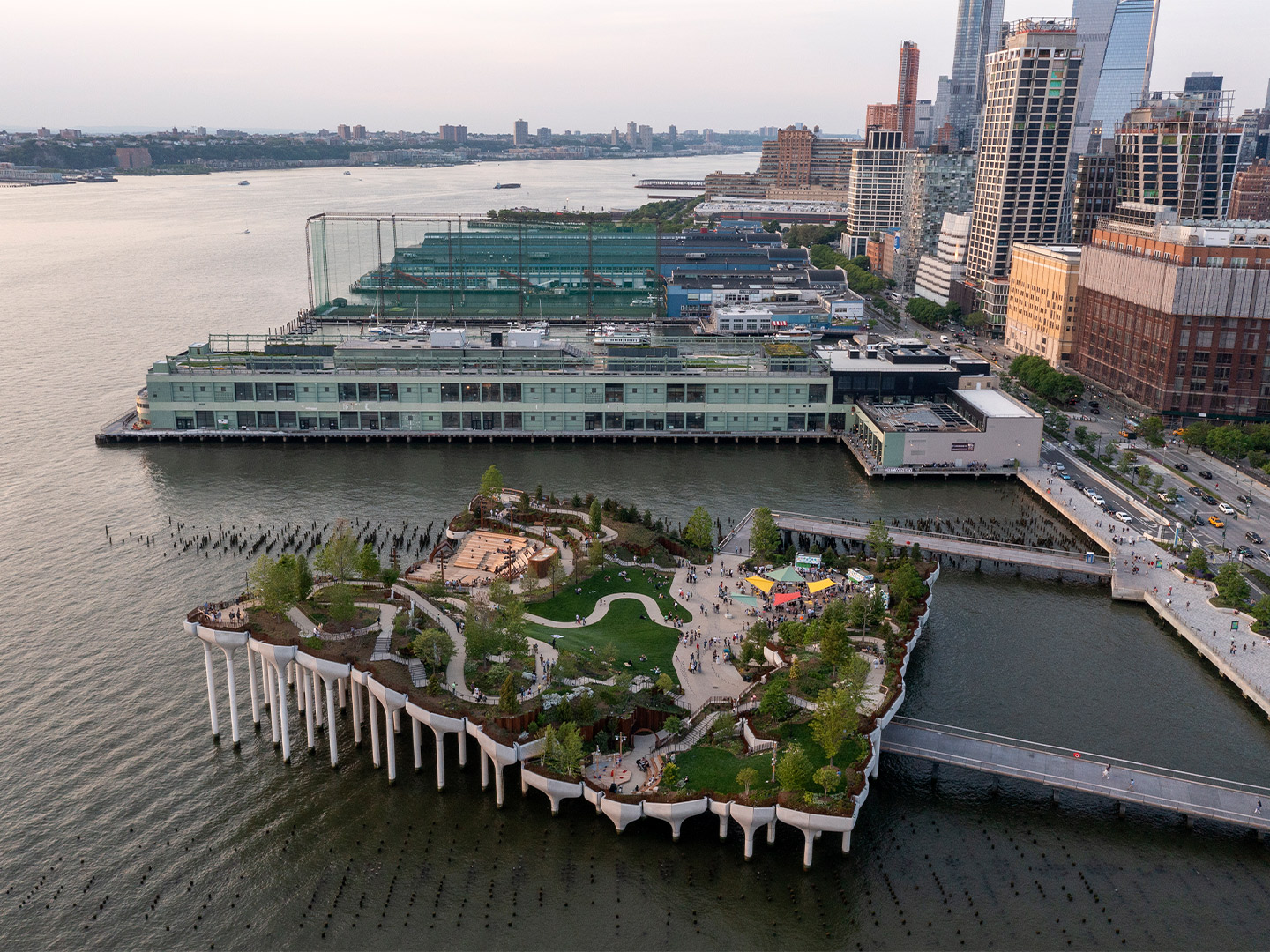
Early discussions about the project toyed with a pavilion-style structure occupying the site, further connecting Manhattan’s West Side waterfront precinct with the Hudson River. But the Heatherwick team felt this was a chance to make a significant urban space that reimagined what a pier could be. “The project was interesting, but we saw the opportunity to create a more engaging experience for New Yorkers and to build on the city’s heritage of inventing exciting new public spaces,” says Thomas Heatherwick, founder of Heatherwick Studio.
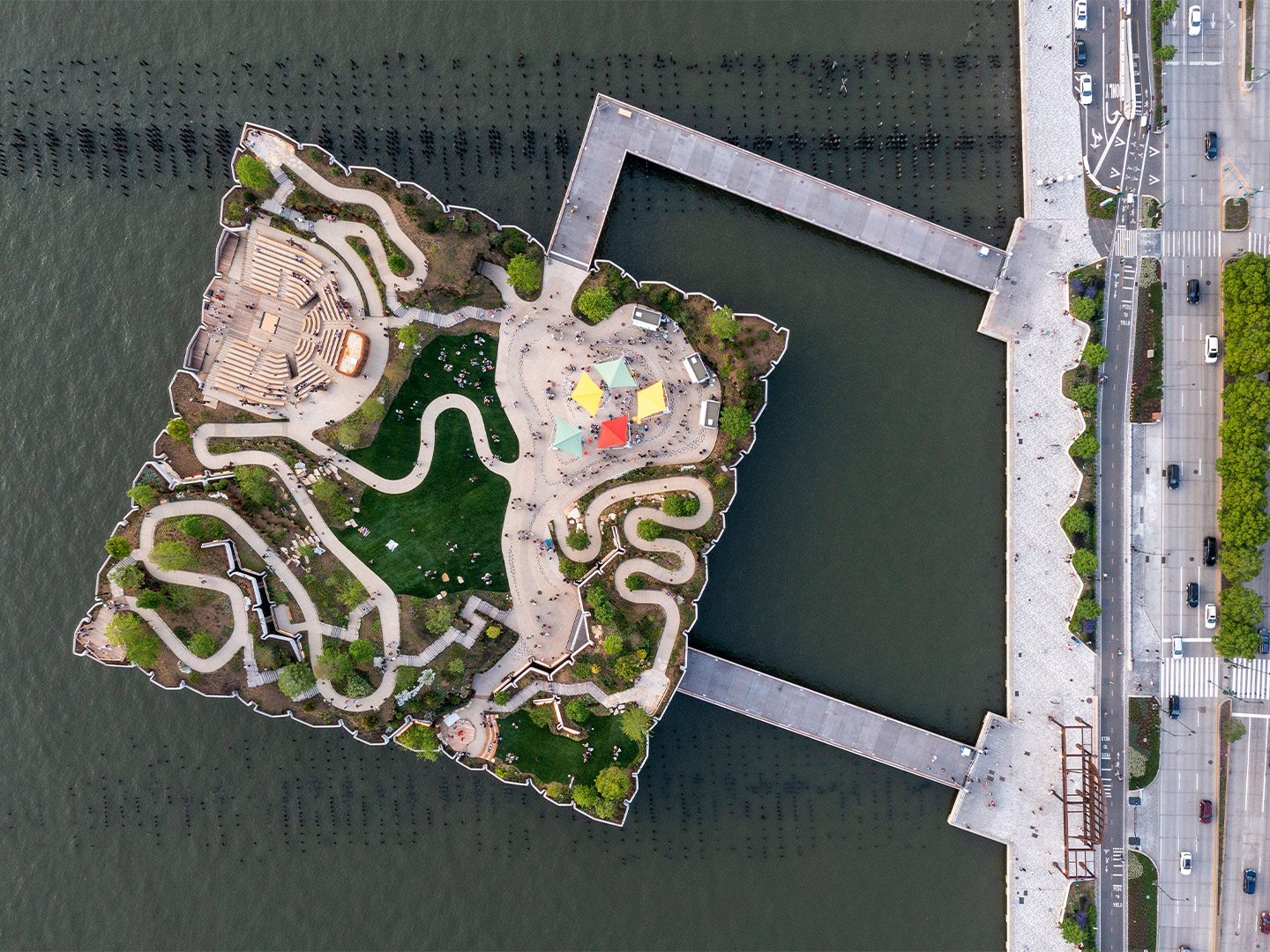
Rather than creating “another flat jetty”, the architects worked with Arup civil engineers to develop a new piece of topography that would rise and fall to form a variety of spaces and functions, including performance facilities. “We had the idea to make an entirely new type of pier as a lush rectangular garden island, connected to the land with generous gang-planks as bridges, aligned to the street grid of New York,” Thomas adds.
We saw the opportunity to create a more engaging experience for New Yorkers and to build on the city’s heritage of inventing exciting new public spaces.
Raising the park up into the air could not only counteract the windswept quality of the adjacent roadway but also assist the need for outdoor theatre and performance spaces, as amphitheatre-style seating could be embedded into the landscape to give the audience better views. “As well as making multiple spaces for different activities and performances, this new public space could also take advantage of the water to create a more meaningful threshold that allows visitors to feel they’re having a break from the hecticness of the city,” says Thomas.
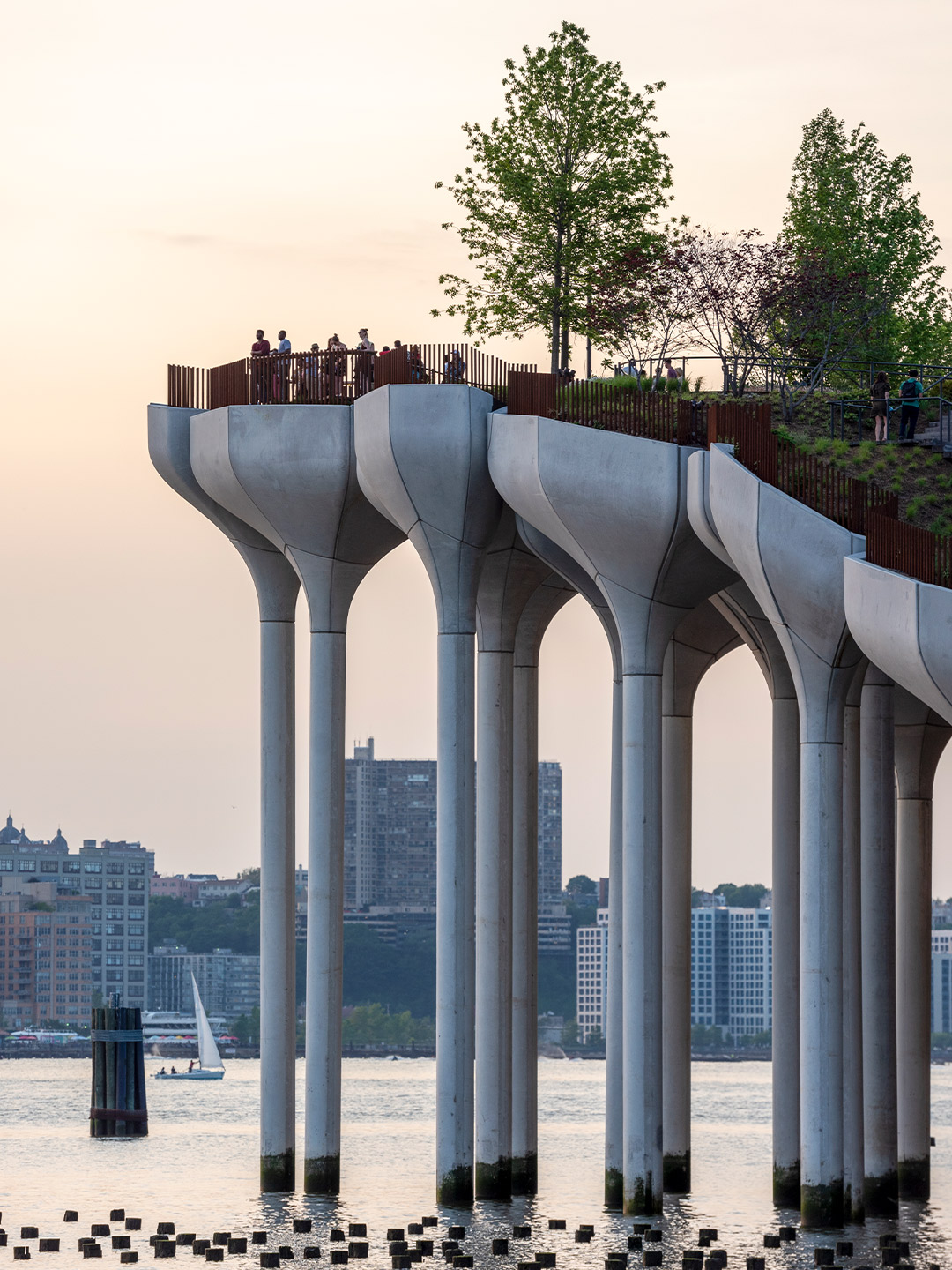
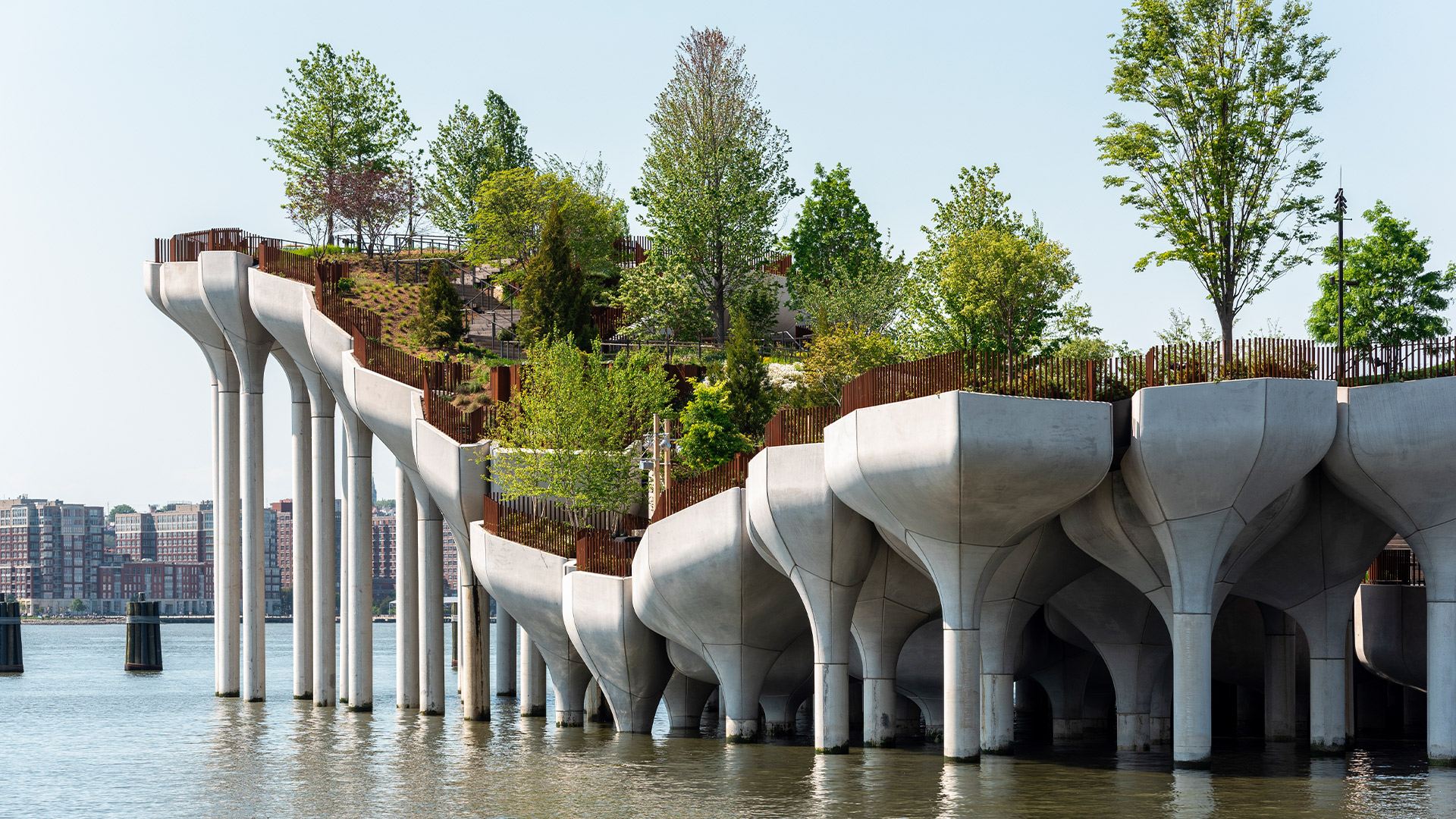
Fascinated by the hundreds of old timber piles which jut out from the Hudson River (the structural remains of the old piers), Heatherwick Studio wondered if the identity of the new gesture could come from focusing on these structural piles, making them the “heroes” of the project rather than hiding them away. This idea stuck, and evolved into taking the 132 concrete piers that would be needed to hold up the new structure and continuing them further out of the water, extending skyward to support the landscape.
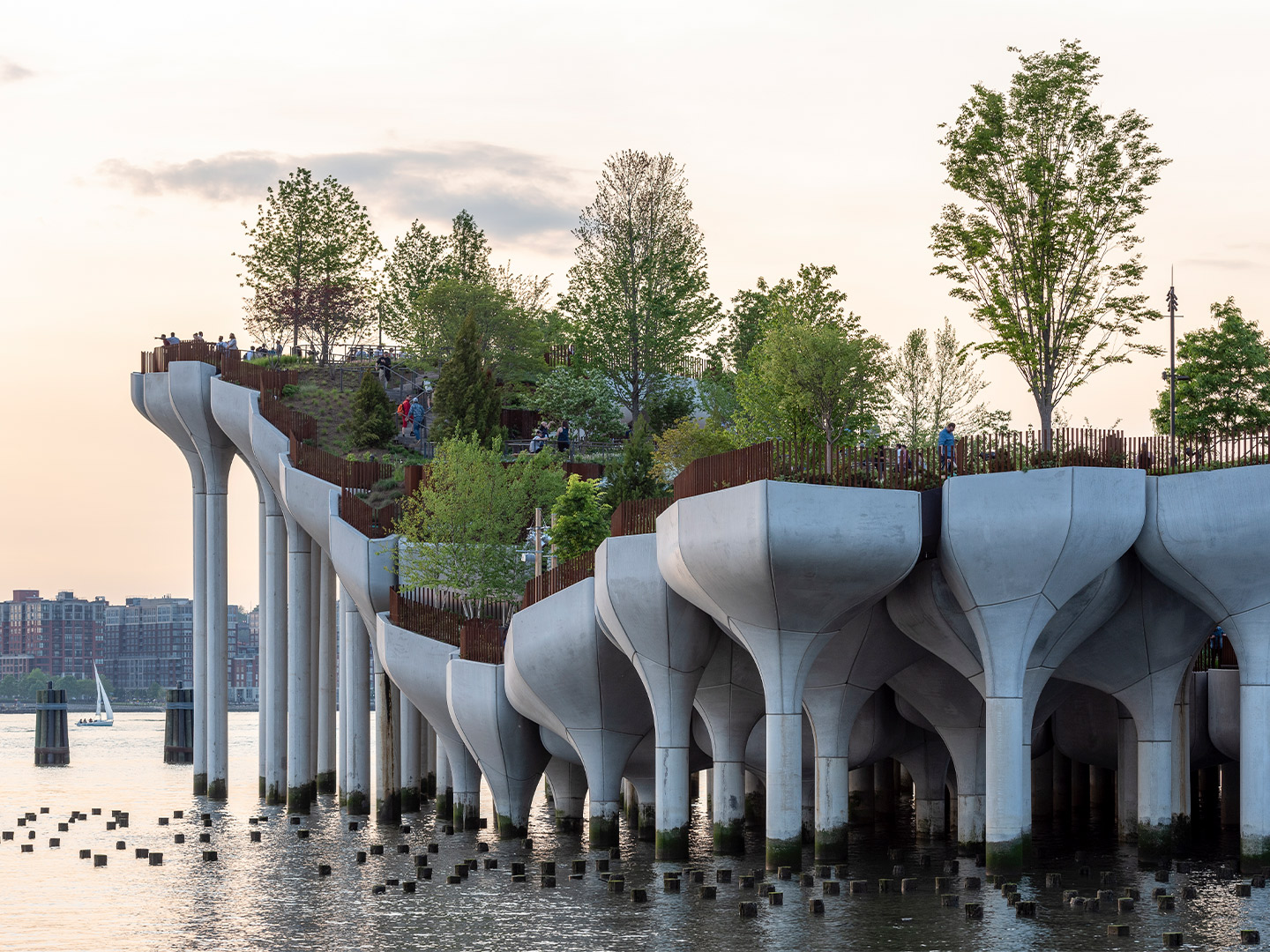
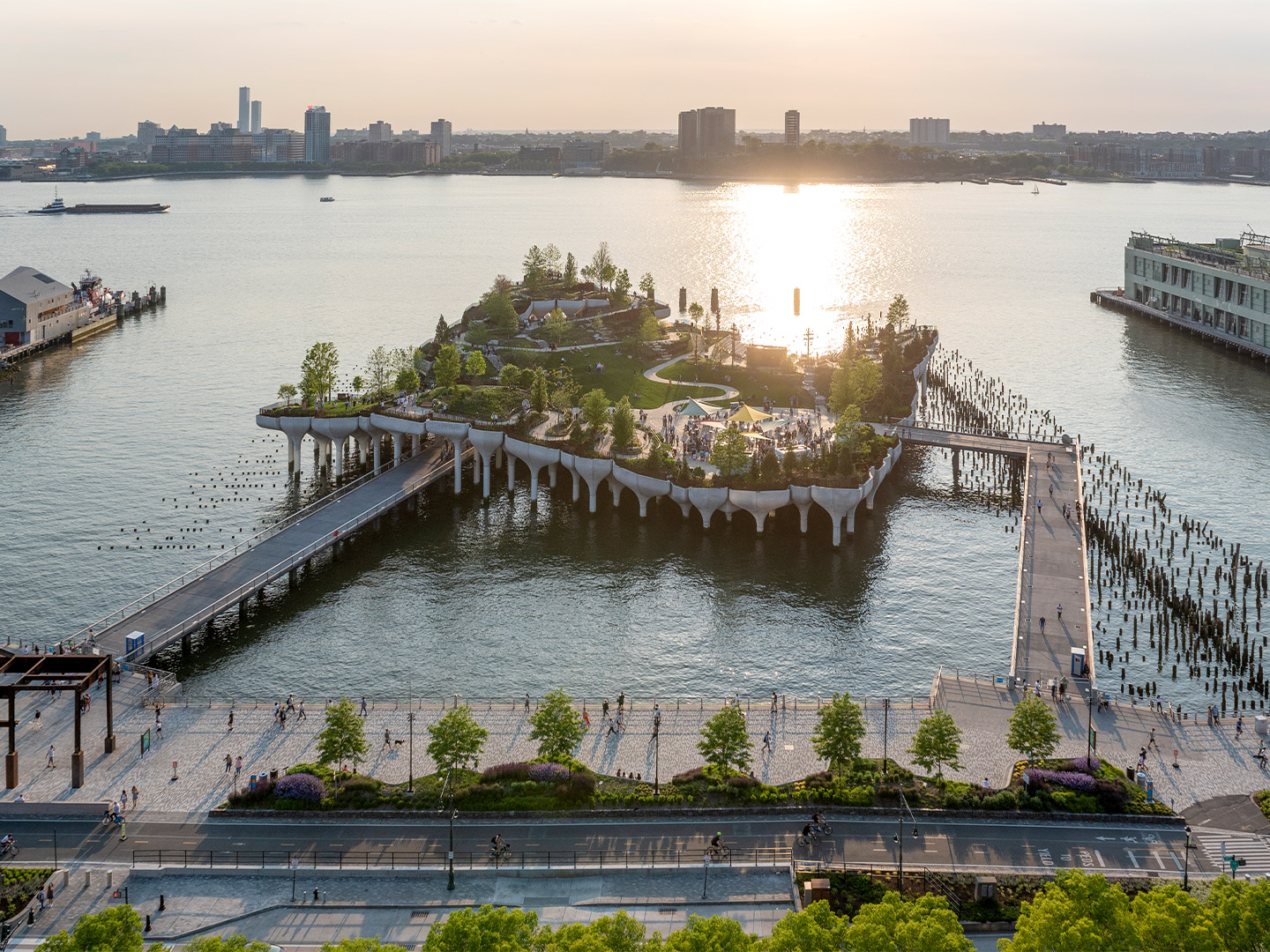
The resulting design developed as a system of repeating piles which each form a generous planter at their top. Every soil-filled planter then connects in a tessellating pattern at different heights to create a manipulated landscape. Visitors now stroll underneath the island to enter the park where the peaks and troughs of the site can be experienced. They can also take in the blossoming biodiversity; the piles have become a habitat for marine life and are a protected breeding ground for fish while the different species of indigenous trees and plants afford food, shelter and nesting sites for birds and pollinators.
Different planting typologies define three distinct overlooks – the northeast, the southwest and the northwest. “Each of these is engulfed by a unique landscape that transitions from a rich diversity of colours and textures to open grasslands as one ascends the three hills,” says Signe Nielsen, founding principal of MNLA. The effects of four seasons are displayed through flowering trees and shrubs in spring, evolving perennial displays in summer, foliage blended with softer hues of grasses in autumn and evergreen trees and shrubs in winter. “My hope is that visitors are surprised and delighted each time they come,” Signe adds.
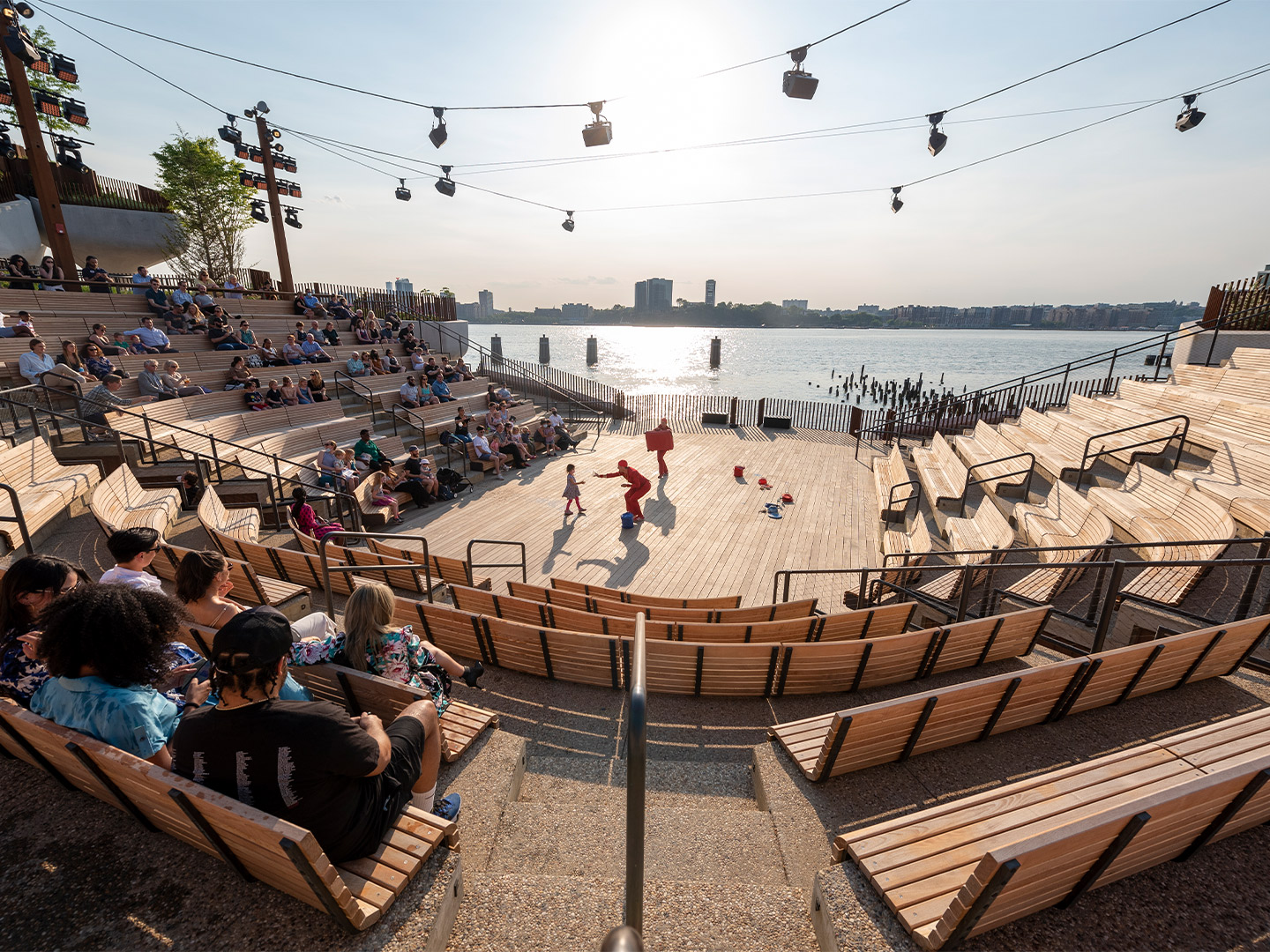
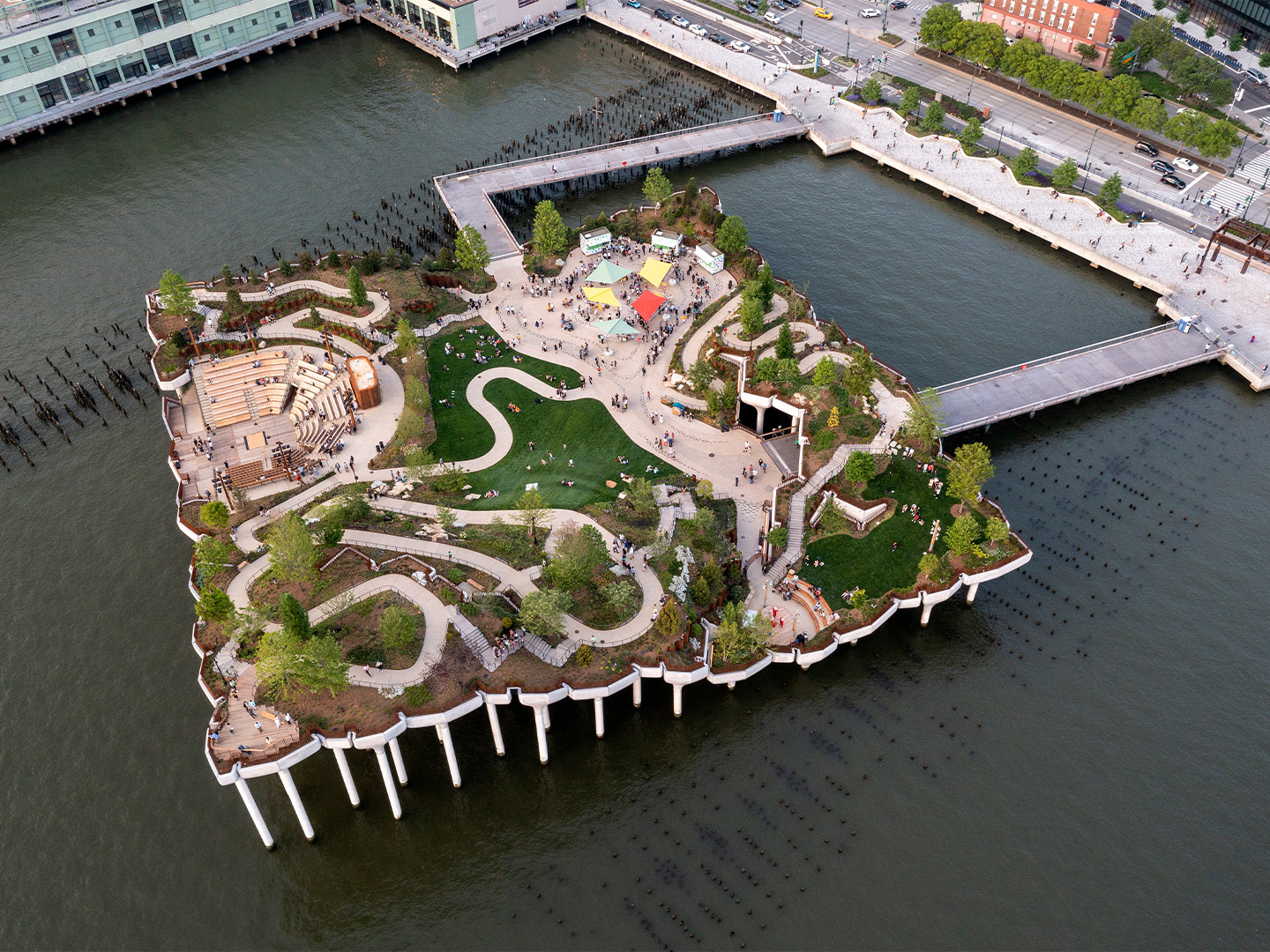
Half a kilometre of walking paths meander through the trees, past cultural venues with ever-changing programs, sloping lawns for picnics and seating nooks with contemplative sights. “As one strolls through the park many destinations beckon,” enthuses Signe. Evergreen trees buffer the winter winds and highway views, gathering and cultural venues receive ample sun to facilitate comfortable use in the “shoulder seasons”, and plant material is carefully calibrated to the ecological forces, creating suitable micro-environments to activate the spaces year-round.
Restoring the entertainment quarter that was lost when Pier 54 fell into disrepair – a key component of the brief – Little Island integrates three rather large performance spaces: an acoustically-optimised 700-seat amphitheatre, a more intimate 200-seat theatre and a flexible venue with capacity for 3500 people at the centre. Arup’s venue experts utilised Arup SoundLab technology to aid in the development of soundscaping, acoustics, sightline and seating strategies that optimise performance quality and user comfort.
All the bells and whistles aside, the project’s primary objective was to create a public park where people could come together; a welcome pause in the pace of Manhattan and a place where New Yorkers and visitors to the city can cross the river to lie under a tree, watch the sun go down and feel connected to the Hudson River. “We saw this as an unmissable opportunity to make a more dynamic social experience for visitors,” Thomas says. “Our intention has been to make an exciting space that is free for everybody to come to.”
Little Island in New York by Heatherwick Studio and MNLA is now open to the public and can be accessed with free timed ticketing.
heatherwick.com; mnlandscape.com
Our intention has been to make an exciting space that is free for everybody to come to.
Catch up on more architecture and design highlights. Plus, subscribe to receive the Daily Architecture News e-letter direct to your inbox.
Related stories
- Ateliers Jean Nouvel wins competition to build opera house in Shenzhen.
- Tattoo-like illustrations embellish the silk-inspired theatre by Steven Chilton Architects.
- The Tower C ‘superscape’ in Shenzhen by Zaha Hadid Architects.
- The Tsingpu Yangzhou Retreat in China by Neri&Hu.
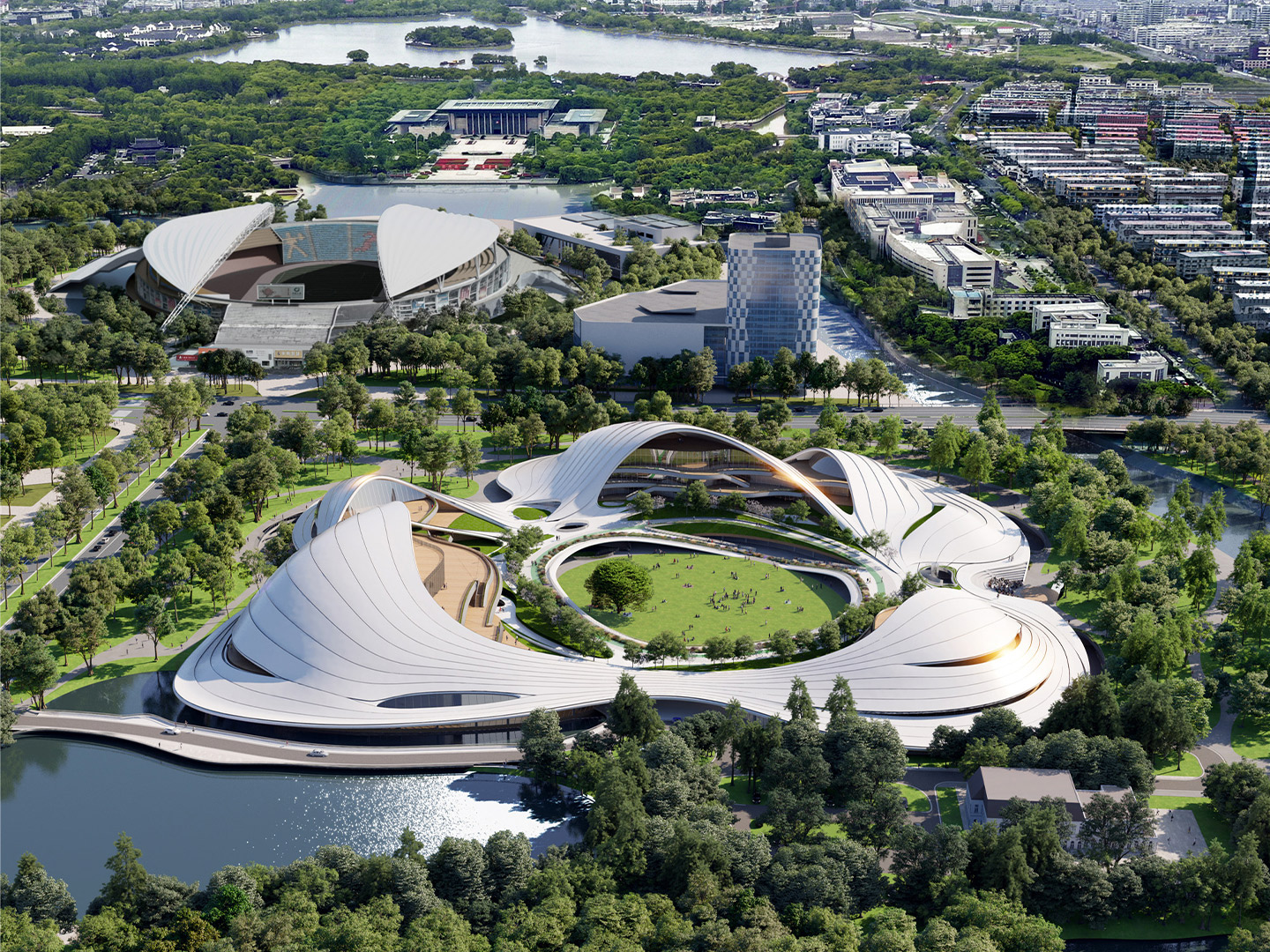
Headquartered in Beijing, MAD Architects has released preliminary illustrations of the Jiaxing Civic Centre in China. The development signals MAD’s latest significant public project in the city, after the firm’s plans for the Jiaxing Train Station were unveiled in early 2021. Shown to enjoy elegant river views amid forest-lined parklands, the centre is to be situated along Jiaxing’s central axis; a prominent position adjacent to South Lake and Central Park.
“A civic centre, first and foremost, must be a place that attracts people; a place where children, youth, seniors and families are willing to come together on a daily and weekly basis,” enthuses Ma Yansong, founder and principal of MAD Architects. Spanning approximately 130,000 square metres, the Jiaxing Civic Centre site will contain three key venues: the Science and Technology Museum, the Women and Children Activity Centre and the Youth Activity Centre, forming a total construction area of 180,000 square meters with a site footprint of 72,000 square meters.
Jiaxing Civic Centre by MAD Architects / News highlights
- Shanghai-based MAD Architects has released preliminary illustrations of the Jiaxing Civic Centre in China.
- Shown to enjoy river views amid forest-lined parklands, the centre is to be situated along the city’s central axis; a prominent position adjacent to South Lake and Central Park.
- The site also lies next to the Haiyan River channel, a body of water that connects Jiaxing with the neighbouring city of Haiyan.
- “A civic centre, first and foremost, must be a place that attracts people; a place where children, youth, seniors and families are willing to come together on a daily and weekly basis,” says Ma Yansong, founder and principal of MAD Architects.
- The centre will contain three venues: the Science and Technology Museum, the Women and Children Activity Centre and the Youth Activity Centre.
- Jiaxing Civic Center by MAD Architects is expected to be completed by the end of 2023.
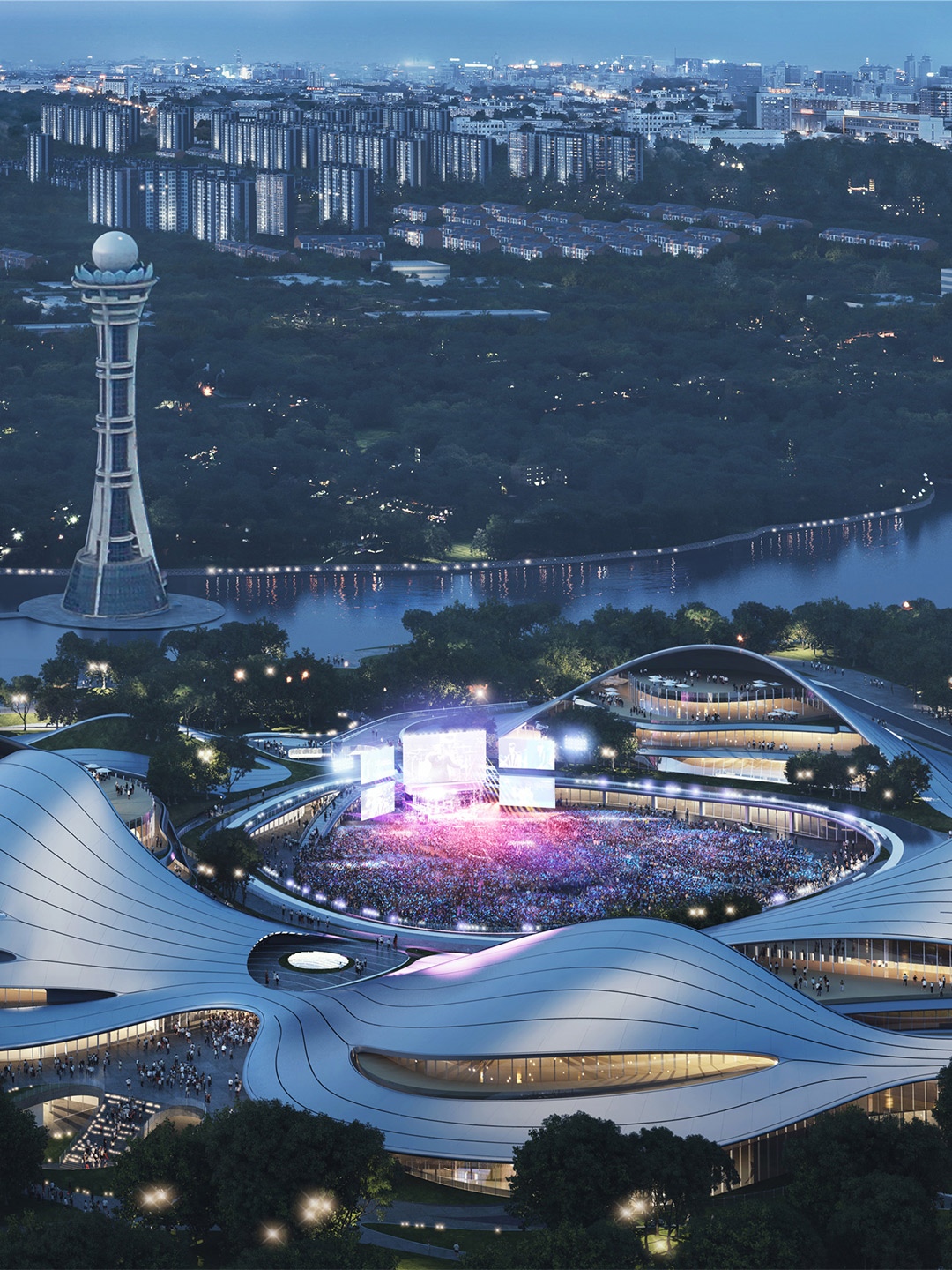
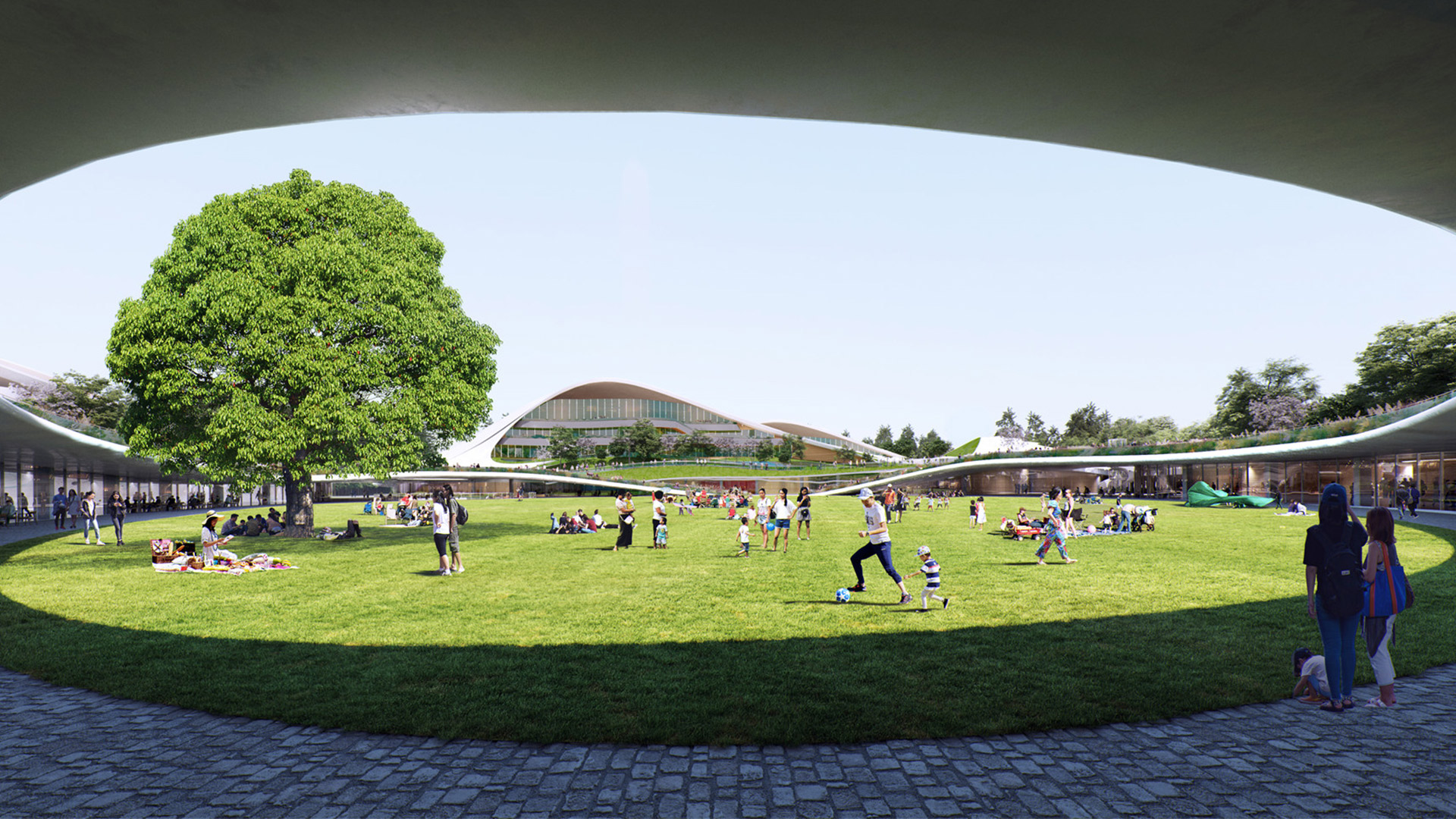
For the Jiaxing Civic Centre, MAD feel they have designed an artistic entity on an urban scale, where architectural forms and landscapes fuse together. “We have created an undulating ring to serve as a garden-like living room for the city: an embrace,” explains Ma. “With a large circular lawn as its centrepiece, the project is one where both people and buildings can interact and share, forming a more open, intimate, dynamic urban space.”
The centre’s three venues are linked together “hand in hand”, enclosed by a circular roof to form a single entity. The organic flow of the lines throughout the project echoes the grace of the ancient canal towns that line the southern banks of the Yangtze River in eastern China. “The central circular lawn that anchors the buildings allows for the large architectural volumes to dissipate and dissolve into the landscape,” says the architects.
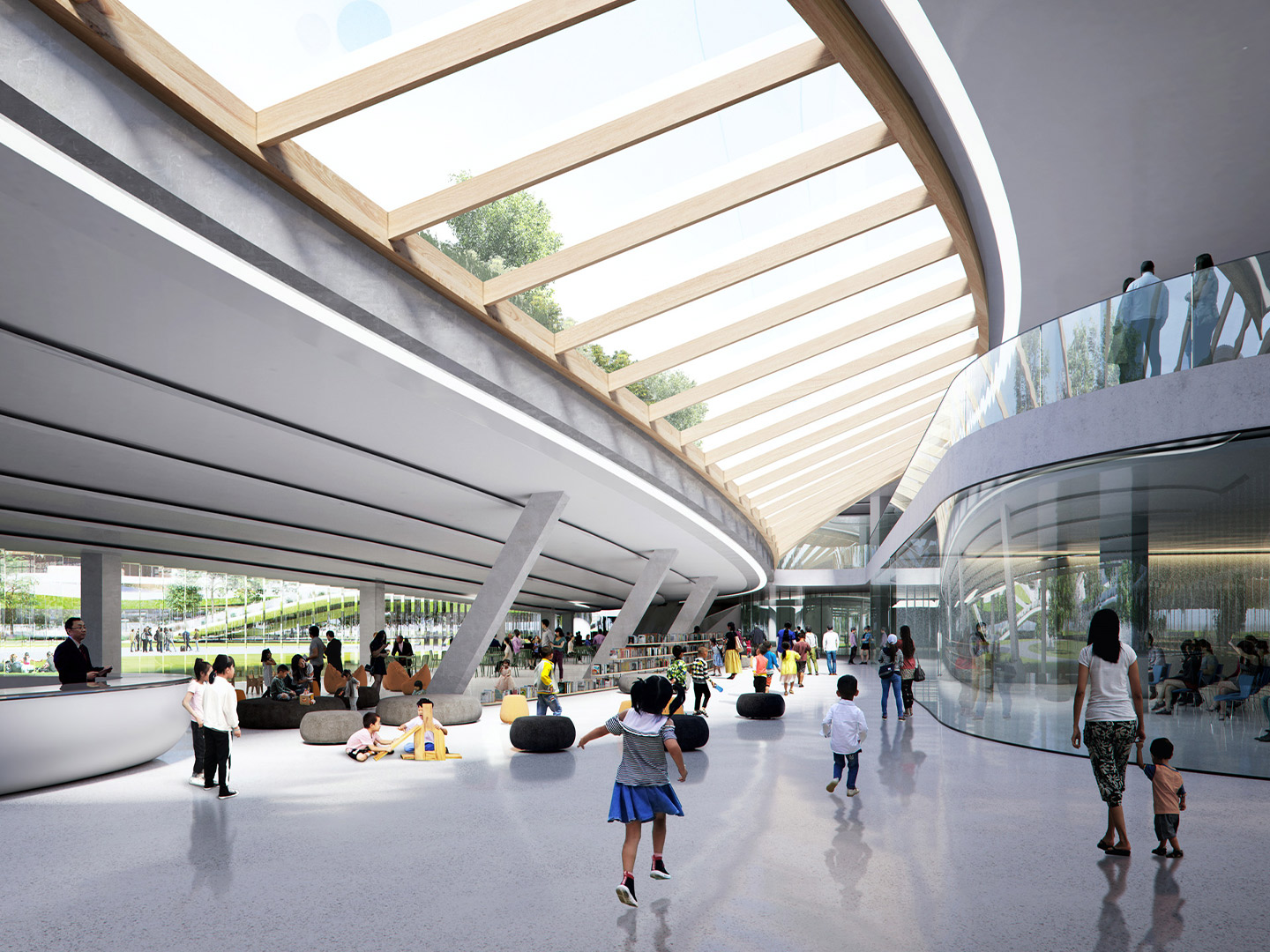
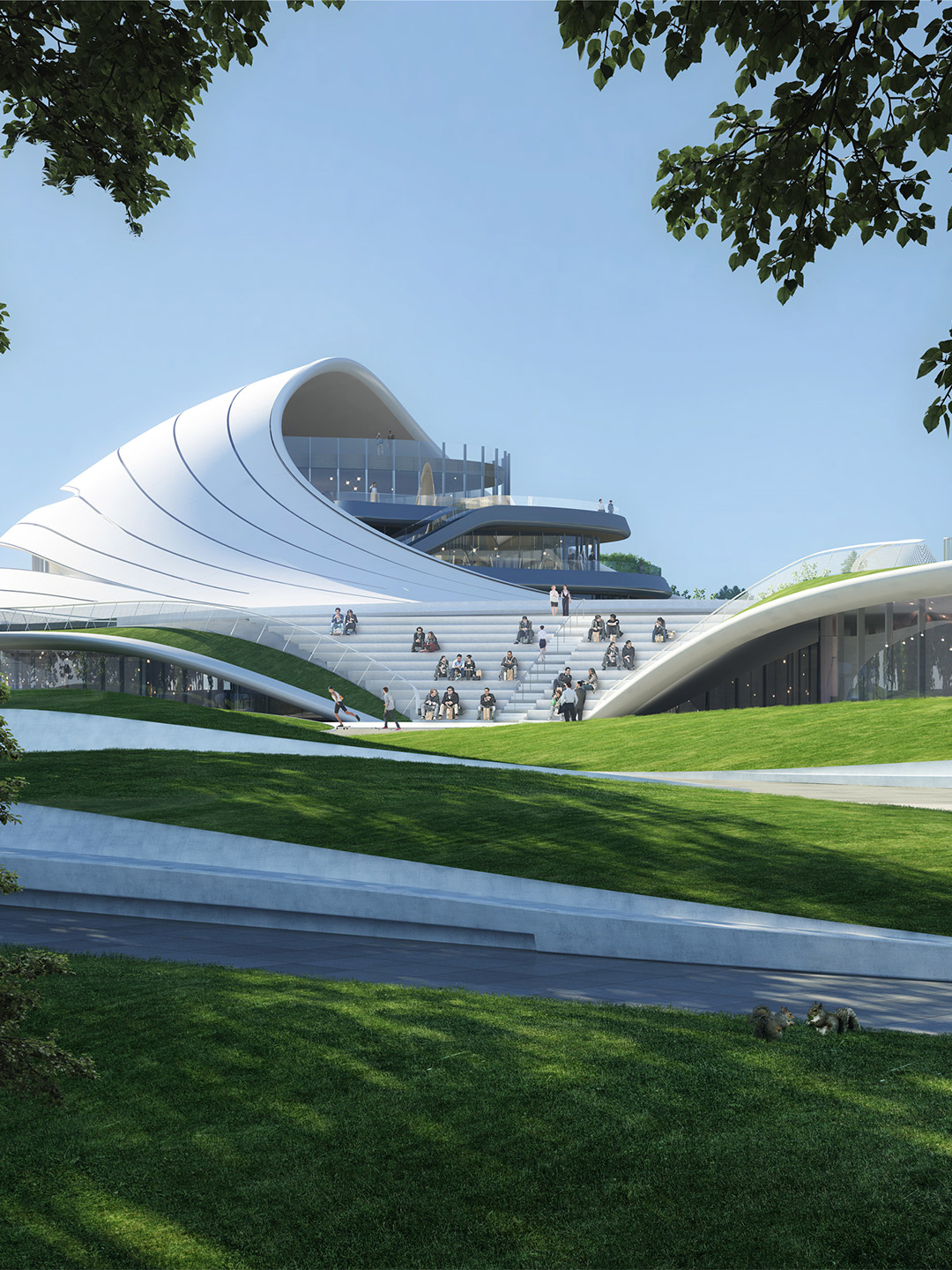
Reflecting the materials employed in local architecture, the centre is to be covered with locally produced white ceramic panels. “The panels respond to the traditional barrel tile roofs of the local village, while also enhancing the scheme’s economic and energy efficiency.” Meanwhile, the project’s large-scale ‘floating’ roof forms a continuous skyline – “like a tarp blown by the wind,” the architects say – bringing a sense of softness to the form.
To maintain the cohesiveness of a single entity, the three venues serving exhibition, education and amenity functions are all corralled under the curvaceous roof, forming an interdependent group with a flowing line of movement. The spaces for exhibition, theatre, education, activity, entertainment, and so on, are organically woven together to complement one another.
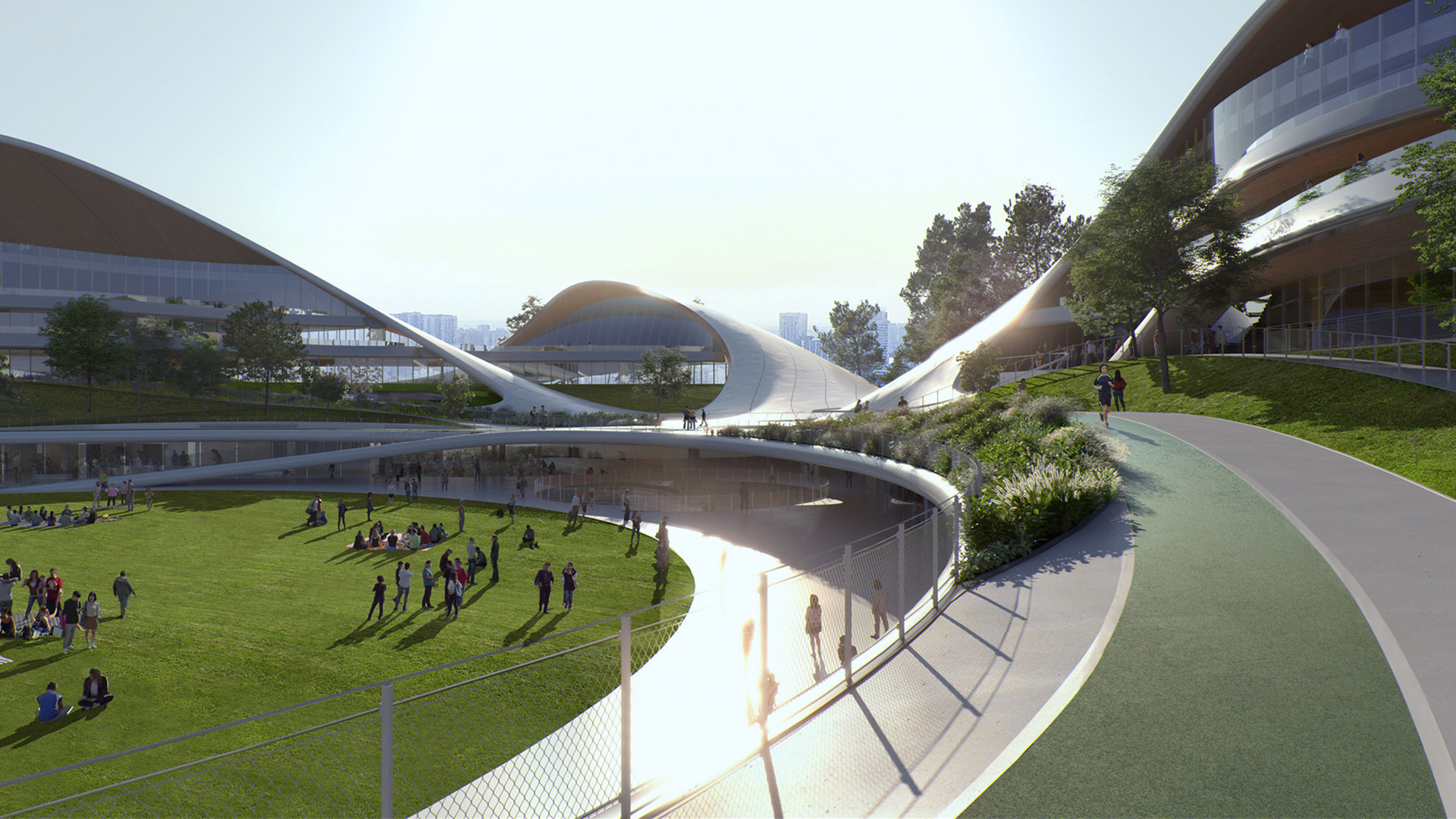
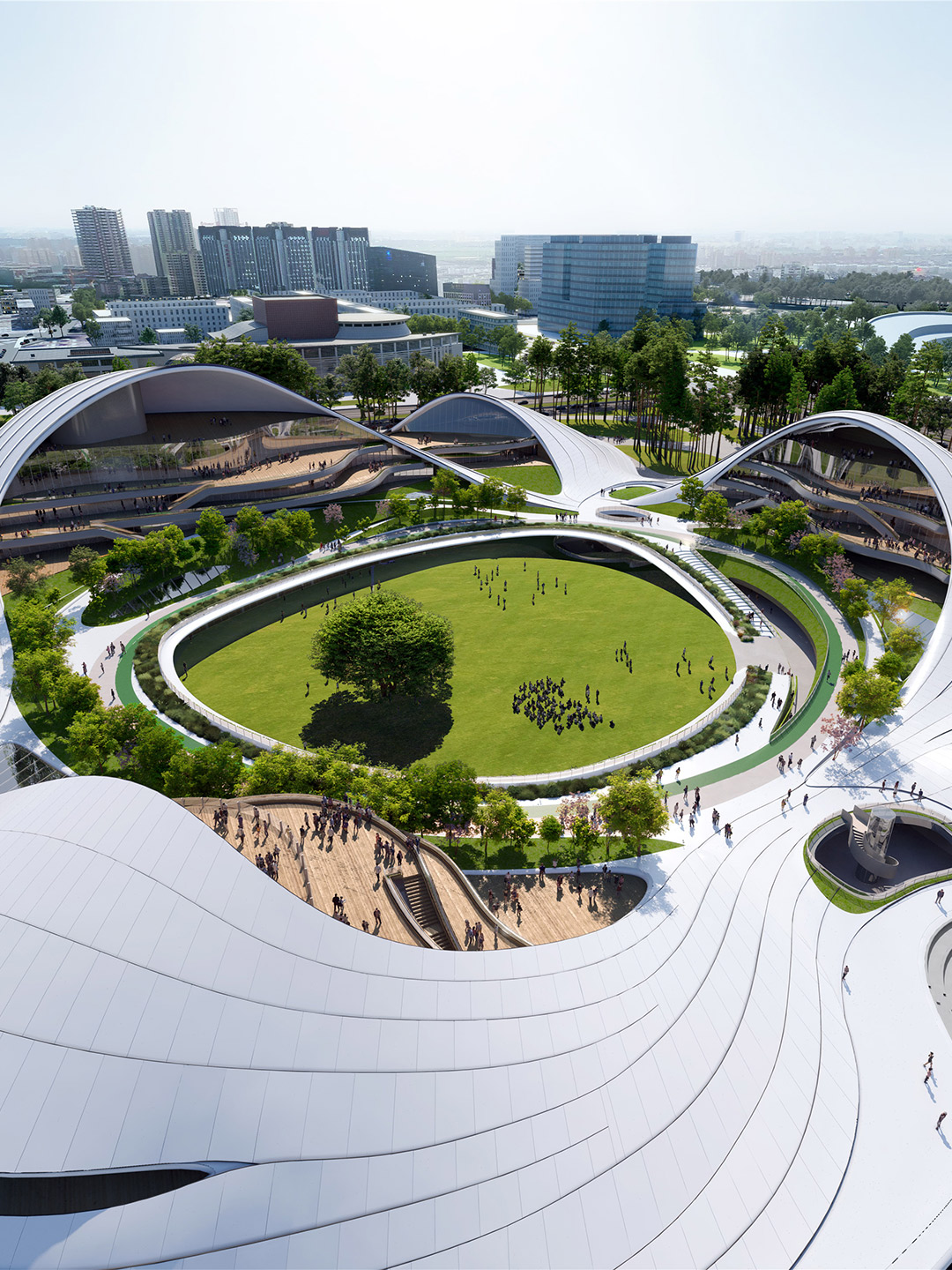
By avoiding the wasteful duplication of service areas, the design allocates more space to people and nature. “The 6000-square-meter lawn becomes a new type of urban public space, where every citizen can gather, rest and play, in addition to participating in a variety of activities or visiting exhibitions,” explains MAD.
The first floor of the centre is connected to the surrounding environment on all sides “through bordering the municipal traffic and wider landscape or connecting the central lawn with the parklands on the periphery of the building,” says the architects. This partially open, partially private space can be put to use in a variety of ways, including for daily activities or as an open-air plaza for large cultural events.
“A cascading terrace facing the central lawn in the interior of the building acts in a dialogue with the white curved roof,” says MAD. The elements interlock and overlap into multiple semi-outdoor spaces, separated by floor-to-ceiling glazing that blurs the line between interior and exterior. “This is an urban public space for citizens to gather – a fresh [place] for people to wash away the city’s complex clutter.”
Jiaxing Civic Center by MAD Architects is expected to be completed by the end of 2023.
Catch up on more architecture and design highlights. Plus, subscribe to receive the Daily Architecture News e-letter direct to your inbox.
This is an urban public space for citizens to gather – a fresh [place] for people to wash away the city’s complex clutter.